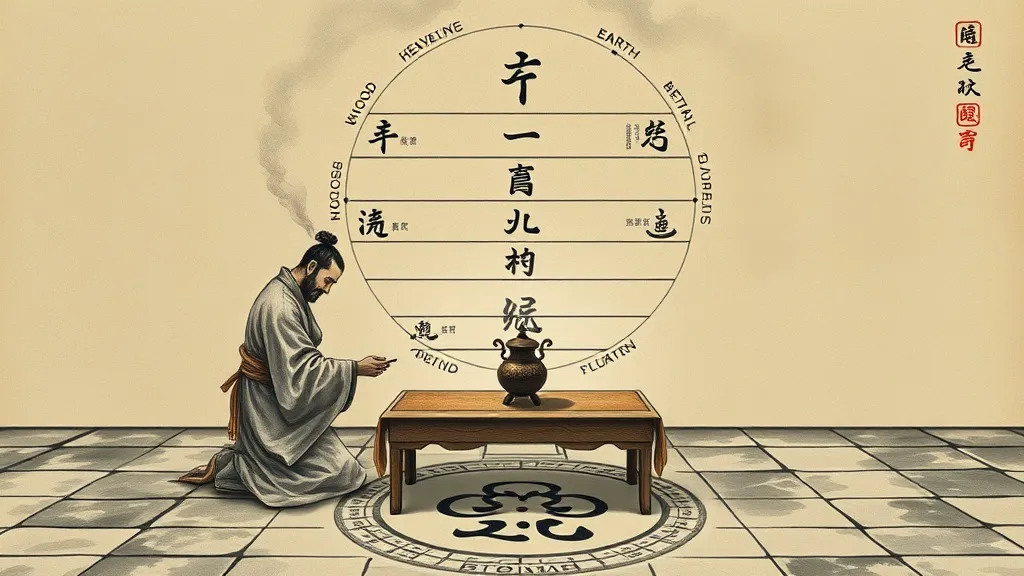
Part 1
Attaching the Stems: How Najia Makes Hexagrams Readable
A hexagram is six lines. Without Najia, that is all it is. Najia assigns each line a Heavenly Stem and Earthly Branch, turning the pattern into a working diagram.
Series
The canonical Liu Yao manual, walked through with worked examples. Six Relatives, line strength, and real case studies.
Part 1
A hexagram is six lines. Without Najia, that is all it is. Najia assigns each line a Heavenly Stem and Earthly Branch, turning the pattern into a working diagram.
Part 2
Najia gave each line an address. The Six Relatives give each line a role — Parent, Sibling, Child, Wealth, or Official — based on its Five Element relationship to the palace.
Part 3
You've cast a hexagram. Six lines, each with a role. Now which one do you watch? The Useful Spirit is the focal line — the one whose strength or weakness answers your specific question.
Part 4
The same hexagram cast in January and July produces different readings — not because the hexagram changed, but because time did. The month decides who is strong. The day decides who acts.
Part 5
A static hexagram is a photograph. Moving lines make it a movie. When a line changes, it produces a transformed hexagram showing the direction of movement. Advancing spirits, retreating spirits, and the return-head feedback loop.
Part 6
Theory is nice. Here are three worked examples from the 18th-century text — walked through step by step using Najia, Six Relatives, Useful Spirit, and Line Strength.