Daily Hexagram
Tuesday, August 25, 2026
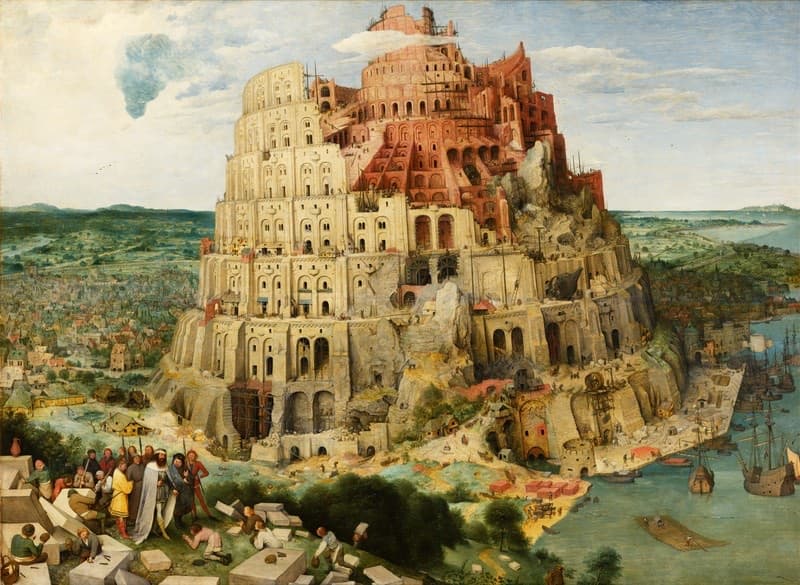
Obstruction
Pieter Bruegel the Elder, 1563
Hexagram 39
蹇
Obstruction
Active Line: 2
The Judgment
利西南。不利東北。利見大人。貞吉。
The southwest is supported. The northeast is not supported. Seeing the great person is supported. Sustained orientation resolves well. Two directions, two verdicts. Southwest works, northeast doesn't. And the solution isn't to push harder — it's to find the great person. The text is describing a situation where individual effort fails and collective wisdom succeeds. The obstruction isn't testing your strength. It's testing whether you'll ask for help.
Line 2
六二 王臣蹇蹇。匪躬之故。
The sovereign's minister, obstruction upon obstruction. It is not a personal matter. Obstruction piled on obstruction, and it's not about you. The minister serves the ruler and walks into difficulty after difficulty — not from personal choice but from duty. The text makes the distinction explicit: this isn't your mess. But it is your job. The person who serves a cause larger than themselves doesn't get to choose which obstacles belong to them.
Obstruction
Pieter Bruegel the Elder painted the Biblical Tower of Babel in 1563, depicting a massive spiral structure rising toward the heavens but visibly incomplete. The tower dominates the landscape, its thousands of arches and levels creating a cityscape turned vertical. Workers swarm across scaffolding, cranes lift materials, yet the upper levels remain unfinished, exposed to sky. Bruegel renders the architecture with precise detail drawn from Rome's Colosseum, but the structure cannot complete itself—the top remains open, the ambition literally interrupted. The painting captures monumental effort meeting immovable obstacle, human construction confronting limits it cannot overcome. This is Jiǎn (蹇), Obstruction. The character depicts a lame person, someone whose progress is impeded. Ancient diviners saw this configuration when Water (Kǎn) sits above Mountain (Gèn)—danger and difficulty piling up ahead, stillness and immobility beneath. Bruegel's tower embodies this structure: the workers face the insurmountable task above (water's abyss) while the massive foundation locks them into commitment to a project that cannot be finished (mountain's immobility). The painting captures what practitioners described as "danger in front, inability to advance." Bruegel painted this in 1563 depicting the Biblical Tower of Babel, a massive structure spiraling toward the heavens but incomplete. The painting shows human ambition encountering obstruction, with the tower representing plans that cannot be completed due to divine intervention and human discord. The Judgment text speaks with careful emphasis: "Obstruction. The southwest furthers. The northeast does not further. It furthers one to see the great man. Perseverance brings good fortune." Zhou Dynasty practitioners understood that obstruction requires recognizing what cannot be overcome through direct advance. The text specifies direction—southwest represents the yielding and receptive approach, while northeast suggests pushing against resistance. Ancient commentators noted this hexagram appeared when military campaigns faced impassable terrain, when projects encountered fundamental barriers, when plans met obstacles that force revision rather than merely delay. The tower builders press forward when the text counsels turning back. The Image Text reveals the method for navigating obstruction: "Water on the mountain: the image of Obstruction. Thus the superior man turns his attention to himself and molds his character." When external advance proves impossible, the energy redirects inward. Bruegel painted this during the religious conflicts that would tear the Netherlands apart—his tower depicts collective ambition meeting divine refusal, human unity fragmenting through language confusion. In the I-Ching's sequence, Jiǎn follows Kuí (Opposition): after recognizing fundamental divergence, one encounters the obstacles that prevent forcing unity. The painting stands as permanent monument to incomplete ambition, to the moment when obstruction becomes absolute and the only question becomes what to do with energy that cannot move forward.
Read full treatise ↓