Reading the Manuscript
There is a digital text of the Yilin on the internet. We are checking it against the actual paper — a manuscript hand-copied in the 1780s — one character at a time. So far 3,363 of its 4,096 verses have been read off the page.
The Object
The Yilin pairs each of the 64 hexagrams with each of the others — 4,096 short verses, attributed to Jiao Yanshou of the Western Han. The copy we read was made for the Siku Quanshu, the imperial library compiled under the Qianlong emperor. It is not printed. Clerks copied it out by hand in a formal chancery script so regular that it reads almost like type.
That distinction does real work. A printed page repeats one carved block, so variation between two instances of a character is an anomaly worth investigating. A manuscript carries a person's hand, so variation is expected — and mistaking the second case for the first sends you hunting a software bug that was never there.
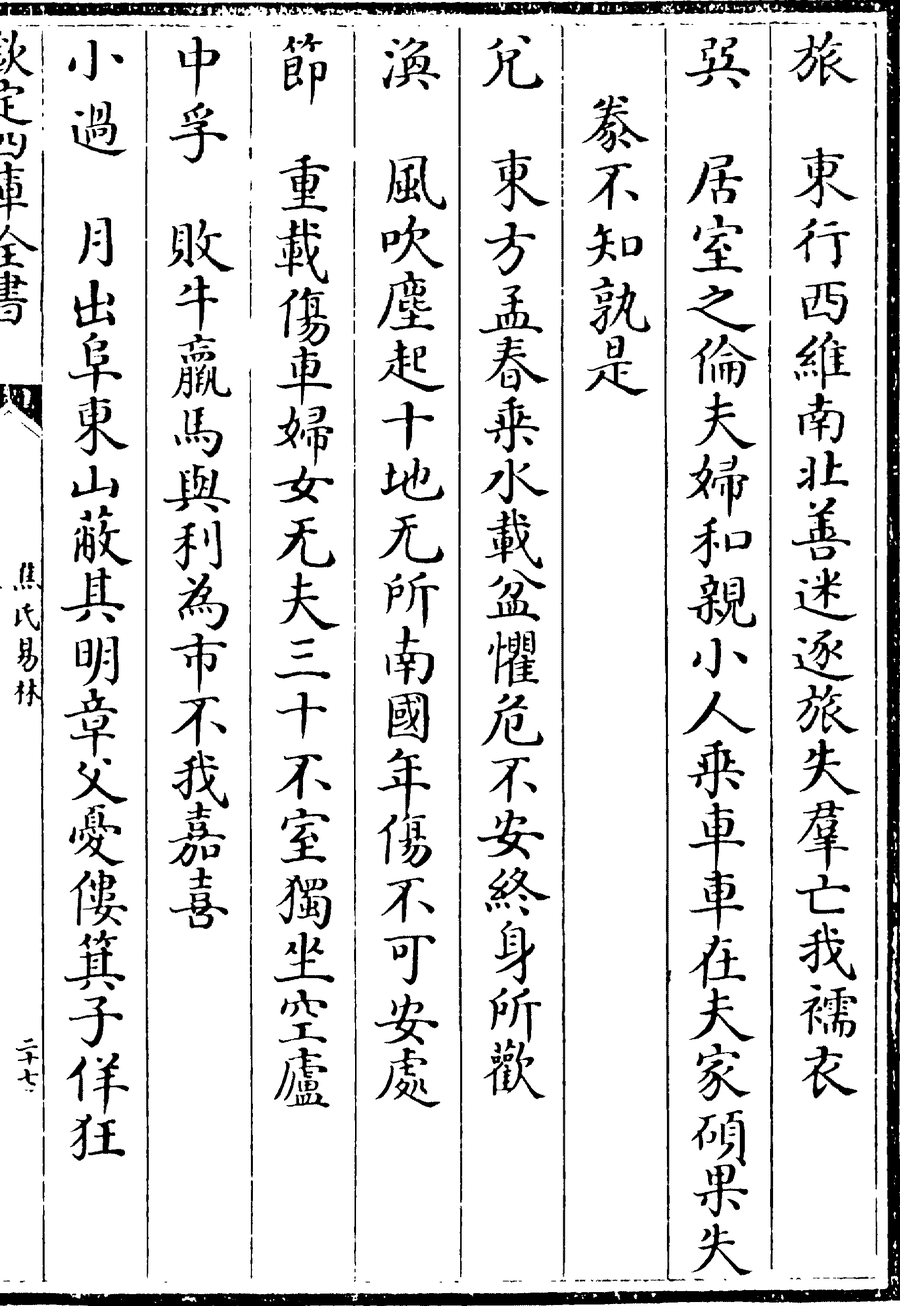
vol 3 / leaf 55One leaf. Seven verses in eight ruled columns, read top to bottom and right to left, roughly sixteen characters to a column. Two characters on this page settled a question that had been open for four rounds of checking.
What Goes Wrong
Optical character recognition produces a plausible text. Its failures are not gibberish — they are the wrong character, correctly formed, sitting in a line that still scans as classical Chinese. Those survive every automatic check, because nothing about them is malformed.
The second failure is quieter, and it is the one that motivated all of this. Chinese has variant forms of the same character. When a digital text spells one word two ways, that looks like evidence about the scribe. Usually it is evidence about the software.
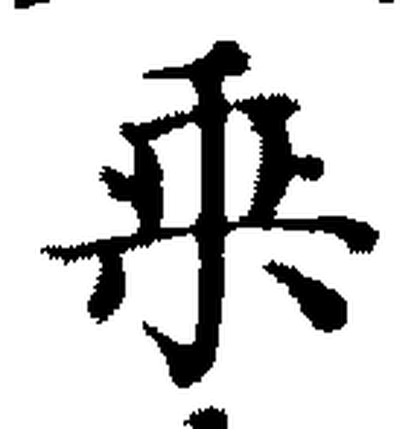
verse 35-57 · col 11
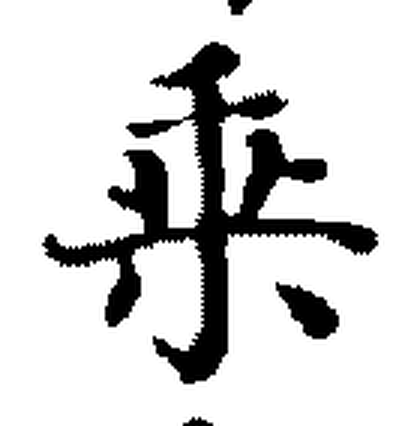
verse 35-58 · col 5
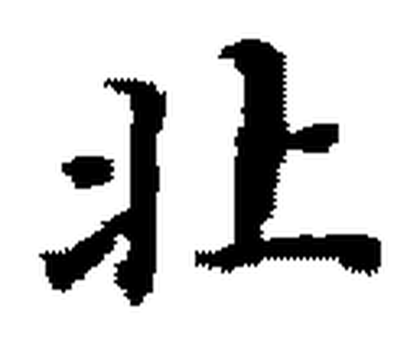
verse 35-56 · col 6
vol 3 / leaf 55The digital text spells these two characters differently. They sit two columns apart, on one leaf, in one hand — and the scribe drew the same thing both times. The third image is the control: the component 北, which the shorter variant cannot produce.

vol 3 / leaves 30, 33, 74The same story in a different character. Two of these four are stored as 高 and two as 髙. On the paper they are one glyph. A scribe does not switch spellings mid-volume; a recogniser does.
How a Reading Gets Settled
A reader is not permitted to say “that looks like X.” Describing a glyph is not evidence. To make a claim about a component, you must fetch a control — another instance of that component, by the same hand, ideally on the same leaf — and put the two pictures side by side.
Two Chinese radicals differ by a single stroke: 礻 carries one mark to the right of the vertical, 衤 carries two. Our own notes had recorded that this scribe did not distinguish them.
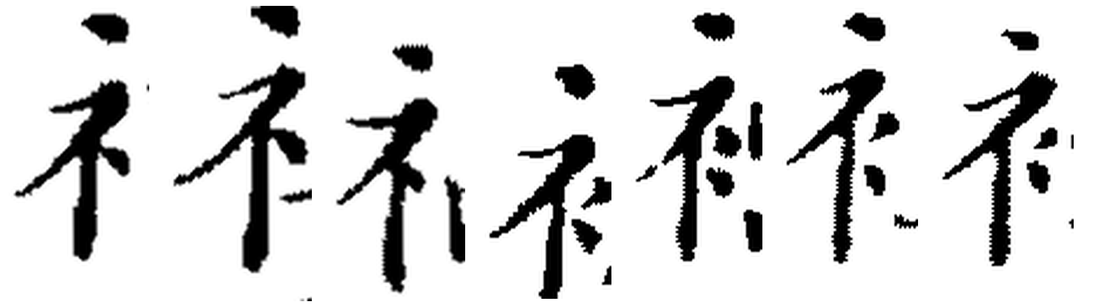
vol 3 / leaves 18–70He distinguishes them cleanly. The claim that he did not rested on a single pair of characters on a single leaf; with seven controls it collapses — and the character under test turned out to be 襌, not 禪.
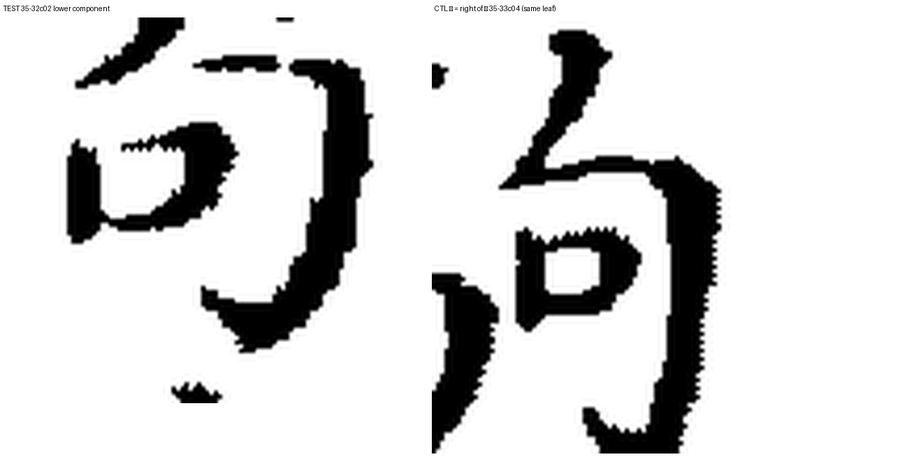
vol 3 / leaf 51Left, the component under test. Right, a known instance of 句 from four glyphs away in the same column. The digital text read 笥; the page says 笱 — a fish-trap, not a hamper.
One Line, Recovered
A verse was stored as 獻祈大猊, which does not really mean anything. The reader matched its left-hand radical against a standalone 豕 (pig) elsewhere on the same leaf, and the right-hand component of the third character against a 從 three columns over.
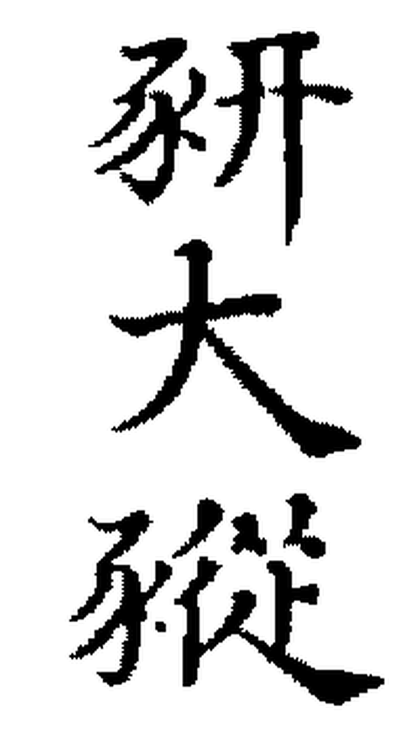
verse 35-54 · cols 10–12
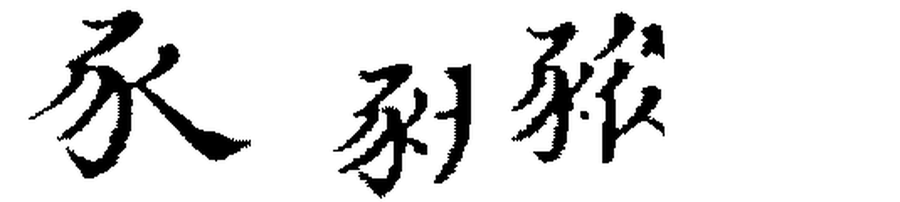
vol 3 / leaf 54It reads 豜 大 豵. Neither character appears anywhere else in all 4,096 verses.
Beside that line, the eighteenth-century editors left a note of their own: 大疑當作私 — “大 should probably be 私.” Apply it and the verse reads 獻豜私豵, which is a quotation from the Book of Odes: 言私其豵,獻豜于公 — the young boar we keep, the full-grown one goes to the duke.
The reader reached both characters from the ink alone, and cited the ode only afterwards — and only to choose between two Unicode codepoints that draw the same glyph. The order matters. The page decides, and the literature is allowed to agree with it later. Never the other way round.
A Phrase That Was Never There
Not every error is one character. One verse shipped as twenty characters, ending 坎同雌作. Those four are the tails of the two editorial notes printed beside it, pulled into the text at some point and never noticed. The verse is sixteen characters.
What makes that one worth reporting is that we predicted it before anyone looked, from the shape of the note strings alone, and wrote the prediction down first. The reader was asked to confirm or refute it by measuring the physical columns — which is what settled it. The last real character sits centred on the column axis; everything below it is written in the half-width paired script this manuscript reserves for notes.
How the Checking Runs
Sixteen leaves go out at a time, each to a reader who sees only that page. They transcribe every column, fetch controls for every claim, measure the page geometry, and save every crop they compared. Three habits do most of the work.
Predictions are committed before anyone reads. Written down and timestamped in version control, then the readers start. You cannot quietly revise what you expected to find.
Readers are kept blind to each other. Two readers agreeing is worth nothing if they leant on the same evidence. In the most recent round, four readers had judged characters on one leaf from small crops; the sweep later handed that entire leaf to a fresh reader, who was given the positions and none of the conclusions. Six for six.
The mistakes stay in the record. Including mine. In that round I told the readers there were “exactly two” instances of a character in the volume when there are thirteen, and I typed a column number that was off by one. Both are written into the round's log, next to the findings.
Why Bother
Because a text you can cite to a particular leaf of a particular manuscript is a different kind of object from a clean copy of unknown parentage. Every verse that has been read carries the page it was read from, the crops the reader compared, and the reasoning they wrote down.
And the errors are not exotic. Nine characters moved in the last round out of ninety-seven verses checked — including one line that had been marked confirmed years earlier and was wrong, and one that was four characters longer than the poem actually is.
Every image on this page is a photograph of the manuscript at the location cited beneath it. The verification work is open source, and its round-by-round log — findings, corrections and errors alike — is public. See also our editorial policy and references.