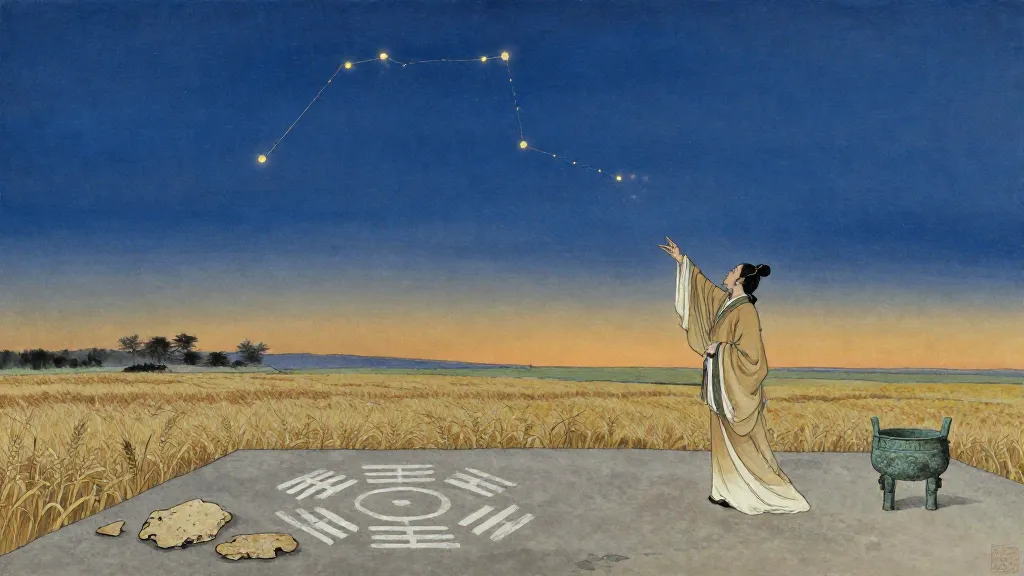
Part 1
The Taichu Reform: When China Rebuilt Its Calendar
In 104 BC, a historian and an astronomer from Sichuan won a competition to redesign how China measured time. The conventions they established still govern the Chinese calendar today.
6-Part Series
How astronomy, record-keeping, and divination became one tradition — and how Six Lines inherits it.
Part 1
In 104 BC, a historian and an astronomer from Sichuan won a competition to redesign how China measured time. The conventions they established still govern the Chinese calendar today.
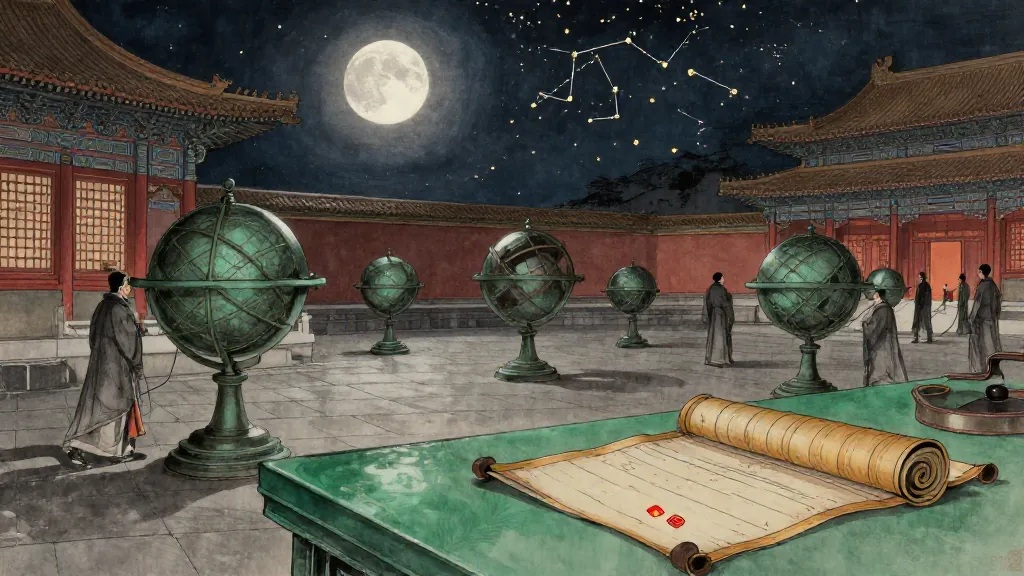
Part 2
The title 太史 didn't mean "historian" the way we use the word today. It meant astronomer, calendar-keeper, omen-reader, and archivist — all at once, all the same job.
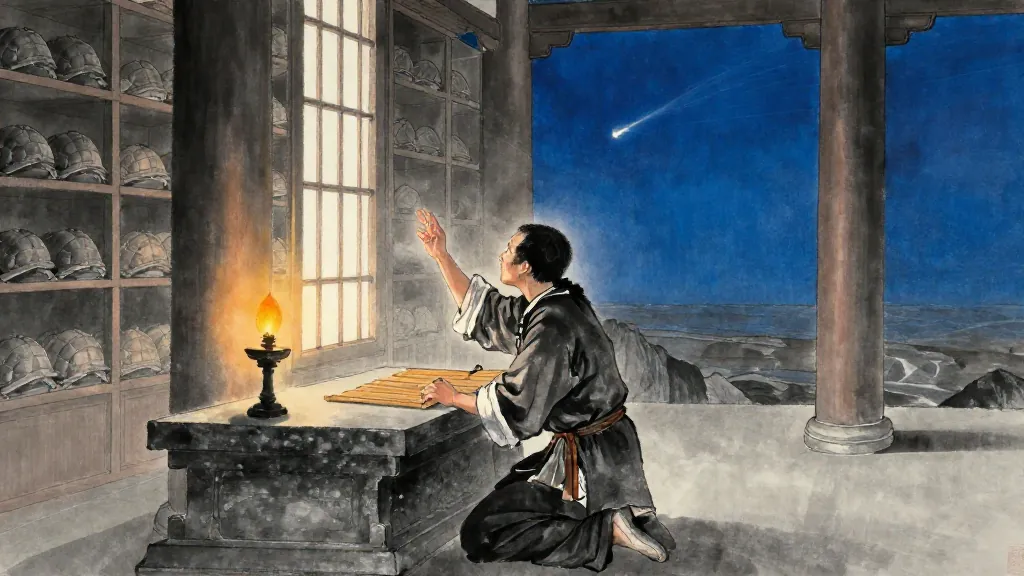
Part 3
Shortly after the Taichu reform, two I-Ching scholars mapped all 64 hexagrams onto the calendar year. The system they built is what Six Lines uses for its daily hexagram.

Part 4
By the 18th century, China's almanac traditions had splintered into contradictory regional systems. Emperor Qianlong ordered the most rigorous editorial project in the history of Chinese date selection.
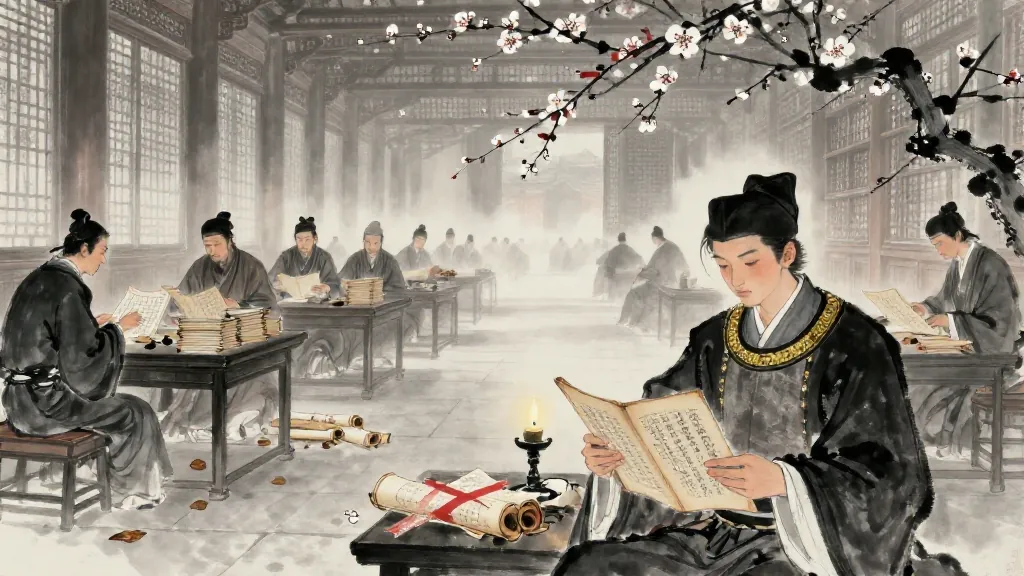
Part 5
A Song dynasty systems thinker mapped hexagrams not to days but to years, centuries, and epochs — then built a practical 60-year cycle that still tells you which hexagram governs 2026.

Part 6
Six Lines inherits a 2,100-year lineage where observing the heavens, organizing time, and interpreting patterns have always been one discipline.
Part 7
series.courtHistorian.articles.6.excerpt