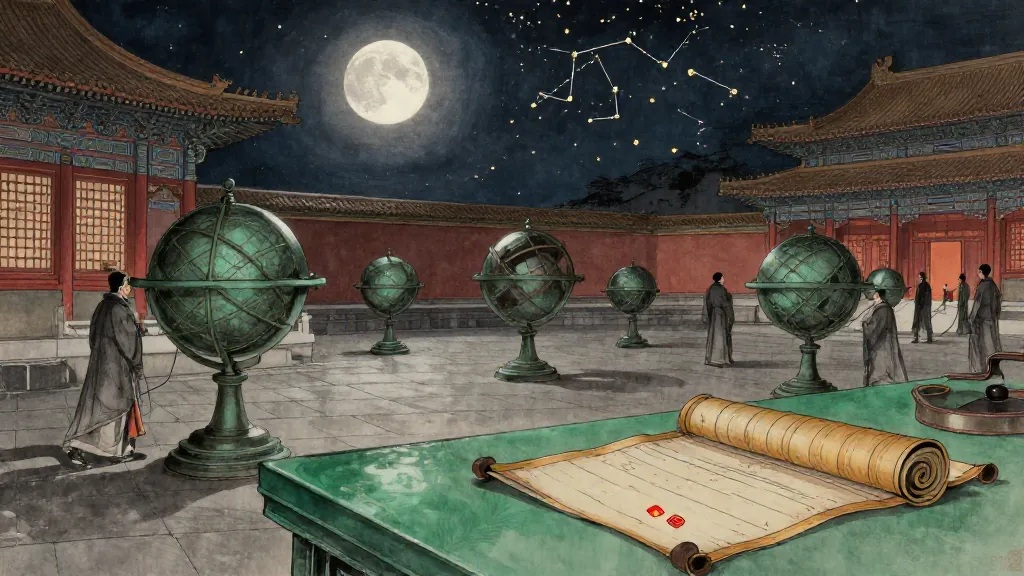
Part 1
The Taichu Reform: When China Rebuilt Its Calendar
In 104 BC, a historian and an astronomer from Sichuan won a competition to redesign how China measured time.
The Creative
Getting Started
What the I-Ching is and how to read it.
“Six lines trace the pattern —
broken and unbroken, ever-changing.”“Six lines reveal
the moment.”
Get a daily verse from Jiao's Forest of Changes — with glossary and classical references — delivered to your inbox.
One verse per day. Unsubscribe anytime. · See a sample
What's New
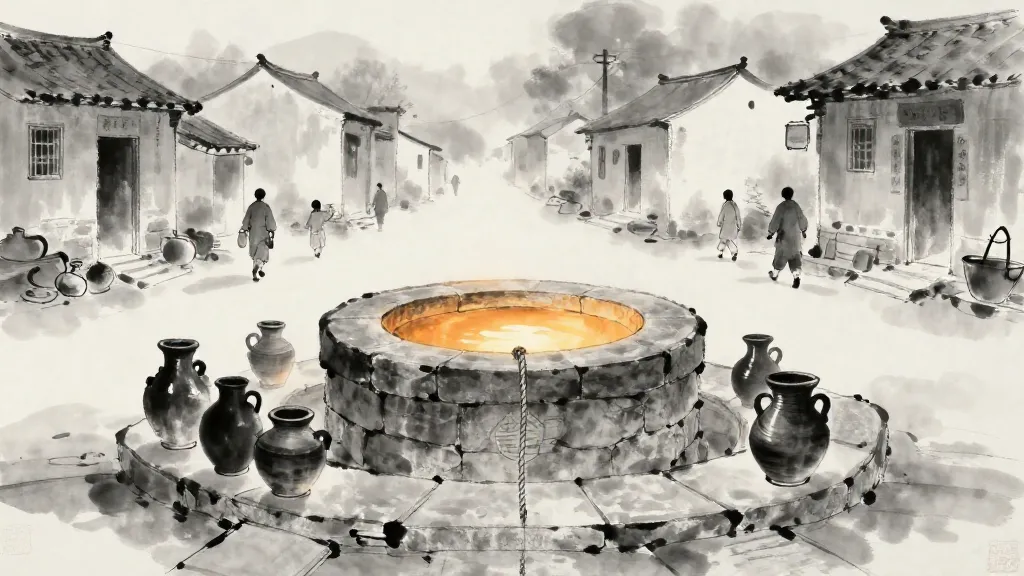
How we rejected every monetization best practice — the long onboarding funnels, the $80/year subscription, the locked content — and built a shared resource pool instead. The idea maps to Hexagram 48: The Well.
An old Chinese book, four thousand short poems, and three jobs that have to happen in a particular order: prove the text is our own reading of the manuscript, make the English describe it again, and write new verses where the book repeats itself. Written for someone who has never heard of any of it.
We re-read every English gloss in the Forest of Changes against the manuscript before paying to paint them. A first reading of a hexagram corrected about one gloss in four; a fifth corrects one in sixteen. The fall is the finding, and the reason the pass is now closed.
4,094 of the Yilin's 4,096 verses have now been read off the manuscript itself. The three that held out each fail differently — a distinction the hand does not make, a stroke that is not on the paper, and a verse whose leaf was unknown until we went and found it.
New in the app
Sixty-four illustrated files, each pairing an episode from China's Warring States era with its hexagram transformation, a classical Yilin verse, and the idiom it left behind. Three are open here as samples.

乾 The Creative → 大壯 Great Power
Authority borrowed through appearance — the proxy walks ahead, and the world reads the proxy as the source.
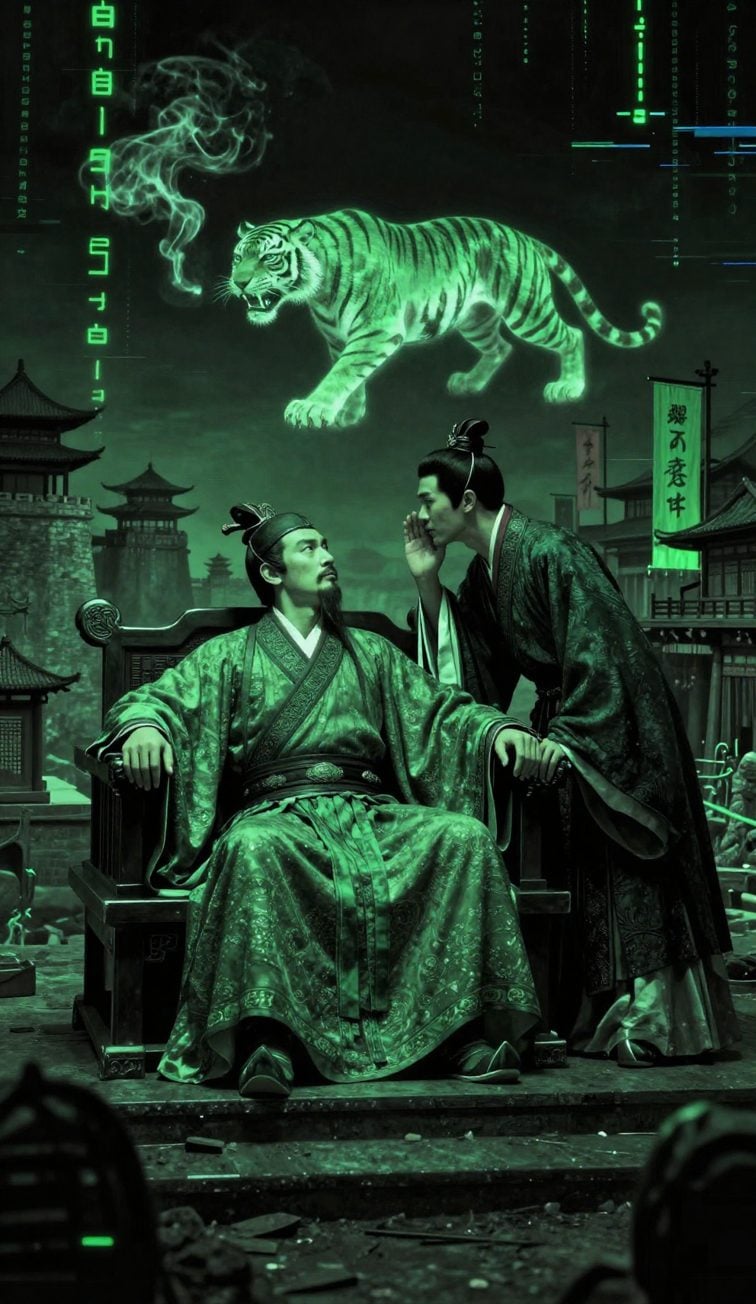
坤 The Receptive → 夬 Breakthrough
Belief by repetition — three reports place a tiger in an empty market.
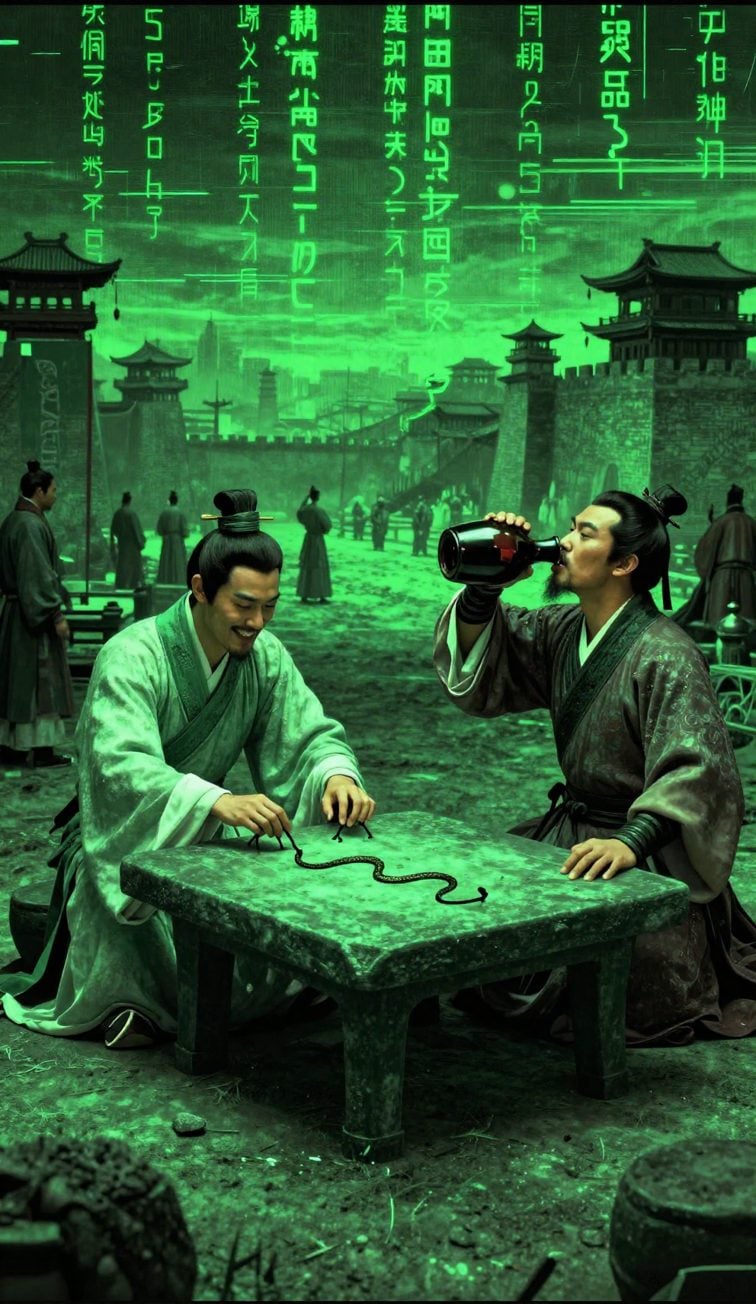
蠱 Work on the Decayed → 姤 Coming to Meet
The finished thing spoiled by a needless addition.
A 64-file study archive, arriving in the Six Lines app.
By Augustin Chan with AI ·
How astronomy, record-keeping, and divination became one tradition — and how Six Lines inherits it.
Part 1
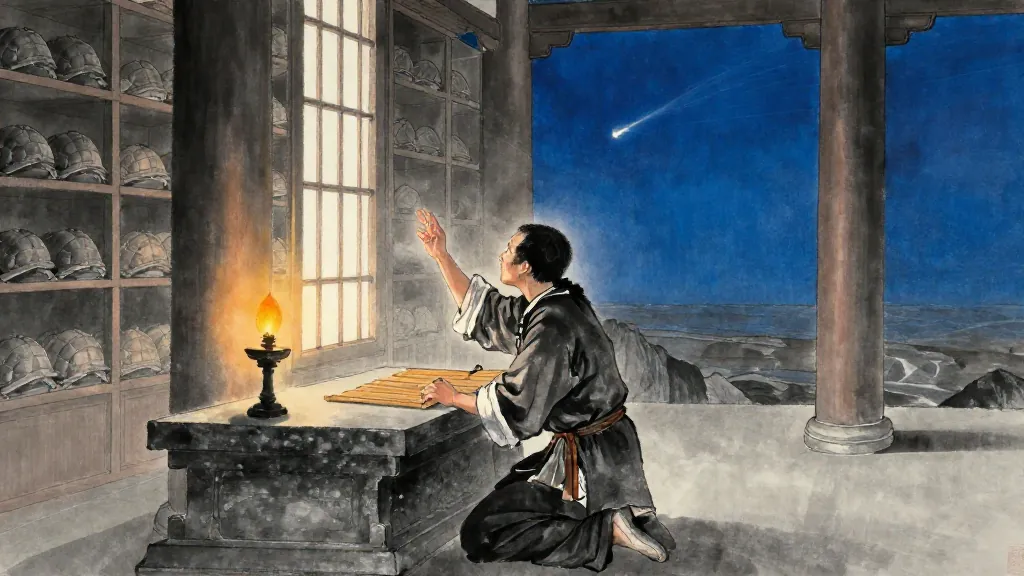
In 104 BC, a historian and an astronomer from Sichuan won a competition to redesign how China measured time.
Part 2
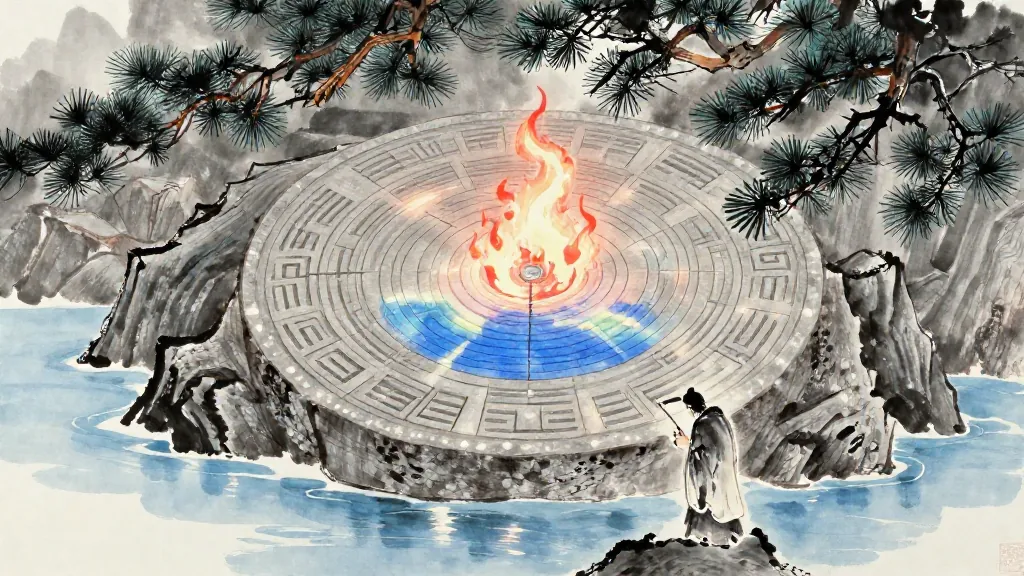
The 太史 wasn't just a record-keeper. He was astronomer, diviner, and calendar-master — all at once.
Part 3
Two I-Ching scholars mapped all 64 hexagrams onto the calendar year. The system is still in use.
Every hexagram transformation in the Forest of Changes — illustrated with original Chinese ink brush art.
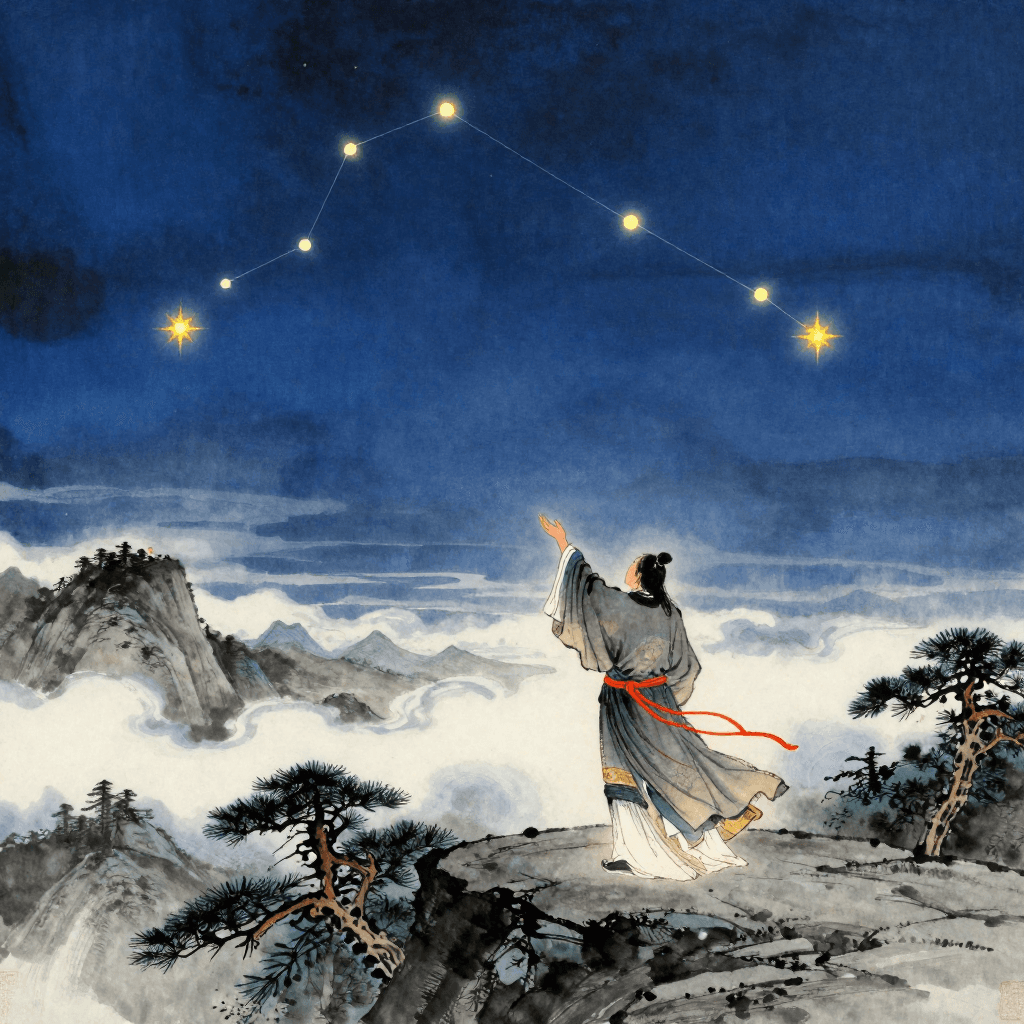
乾 → 小畜Creative → Small Taming
据斗運樞,順天無憂。與樂並居。
Grasping the Dipper's handle, the celestial pivot turns in accord with heaven — no worry, only shared joy.

坤 → 解Receptive → Deliverance
北辰紫宮,衣冠立中。 含和建德,常受天福。
The Purple Palace of the North Star — robed and crowned at the center. Embracing harmony and building virtue, forever blessed by heaven.
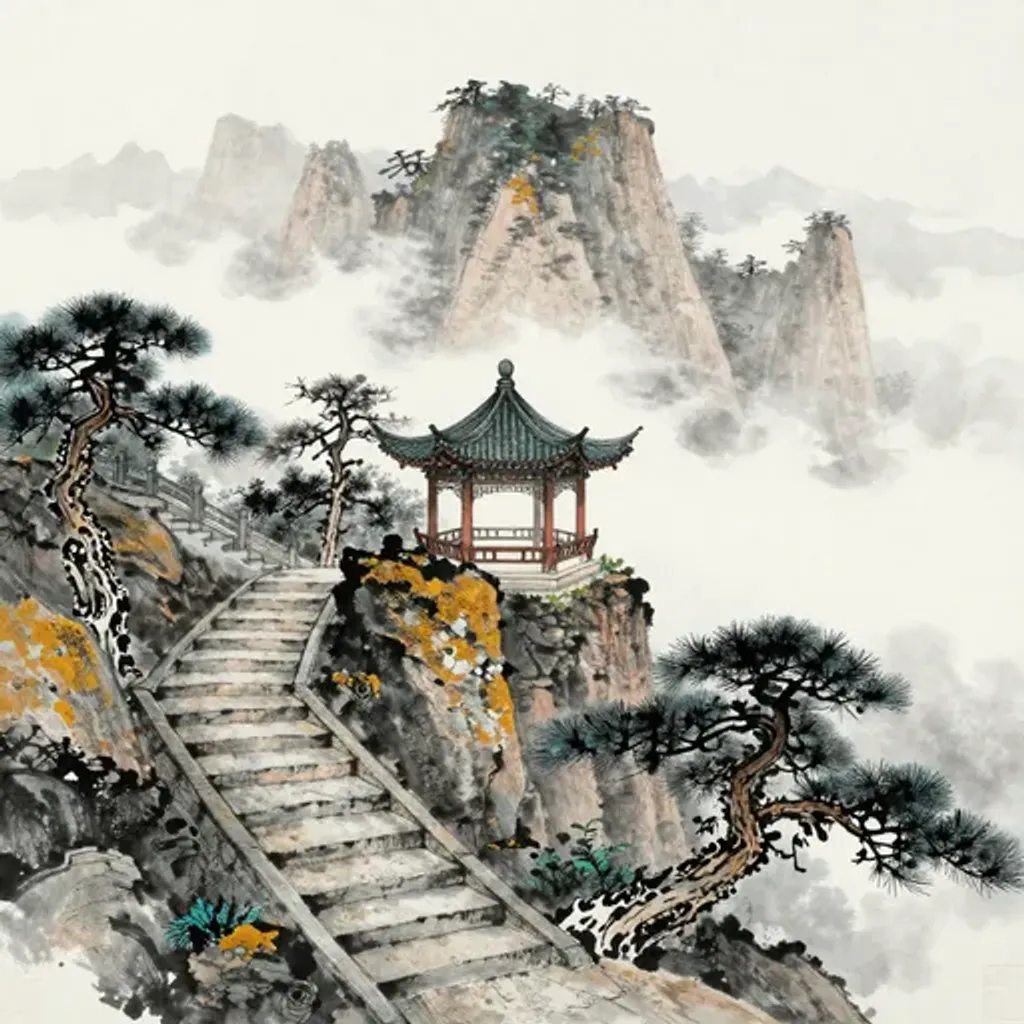
謙 → 井Modesty → The Well
華首山頭,仙道所遊; 利以居止,長無咎憂。
Atop Mount Huashou, where immortals roam — a good place to dwell, forever free of blame and worry.

蒙 → 復Youthful Folly → Return
獐鹿雉兔,群聚東囿。 盧黃白脊,俱往趨逐。 九齚十得,君子有喜。
Deer and pheasant and hare gather in the eastern park. Black, yellow, white-backed — all run and chase. Nine bitten, ten caught: the gentleman has cause for joy.
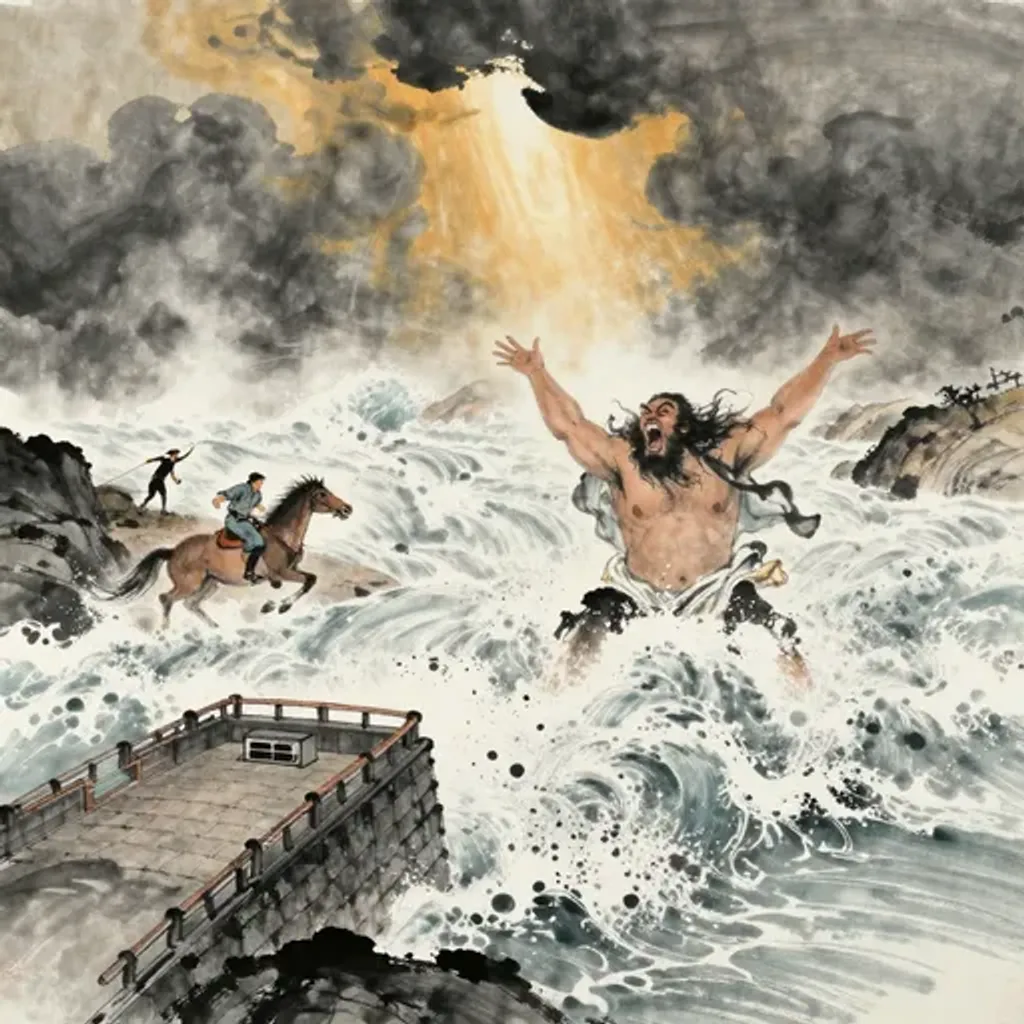
姤Coming to Meet
河伯大呼,津不可渡。 往復爾故,乃无大悔。
The River Lord cries out — the ford cannot be crossed. Go and return as before, and there will be no great regret.
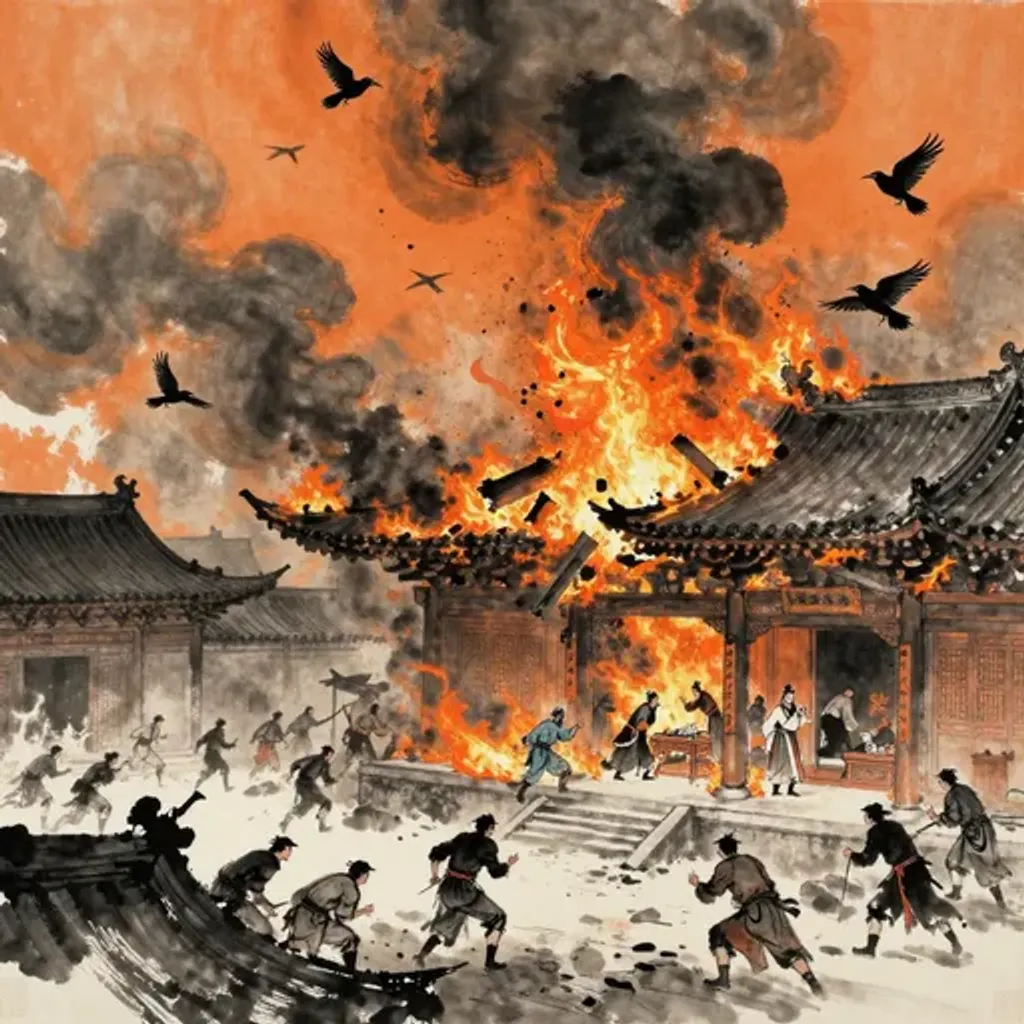
中孚Inner Truth
烏鳥譆譆,天火將下。 燔我屋室,災及妃后。
Crows cry in alarm — heavenly fire is about to fall. It will burn my house; the disaster reaches even the queen.
Six of 4,096 original artworks from the Yilin (焦氏易林)
The daily reference tool for people who take traditional timing seriously. Activity-specific almanac results, 64 hexagrams with original interpretive essays and Hatcher Matrix translations, and 4,096 Yilin verses — each with original ink brush artwork.
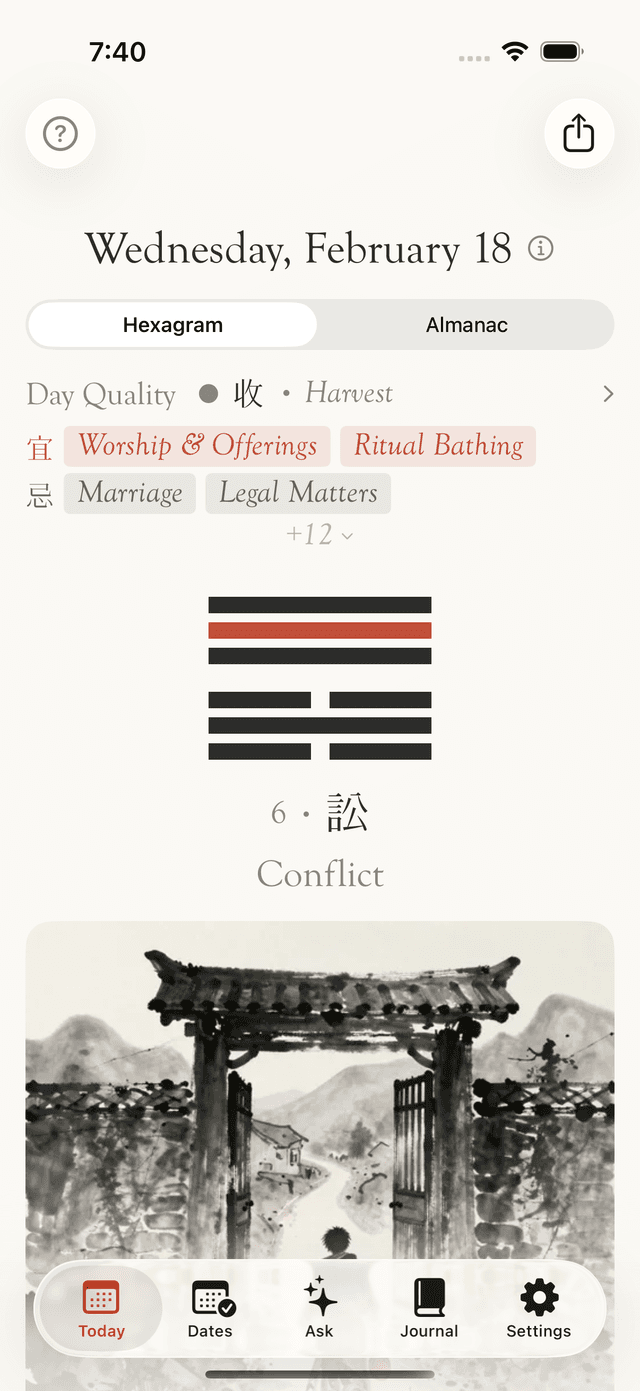
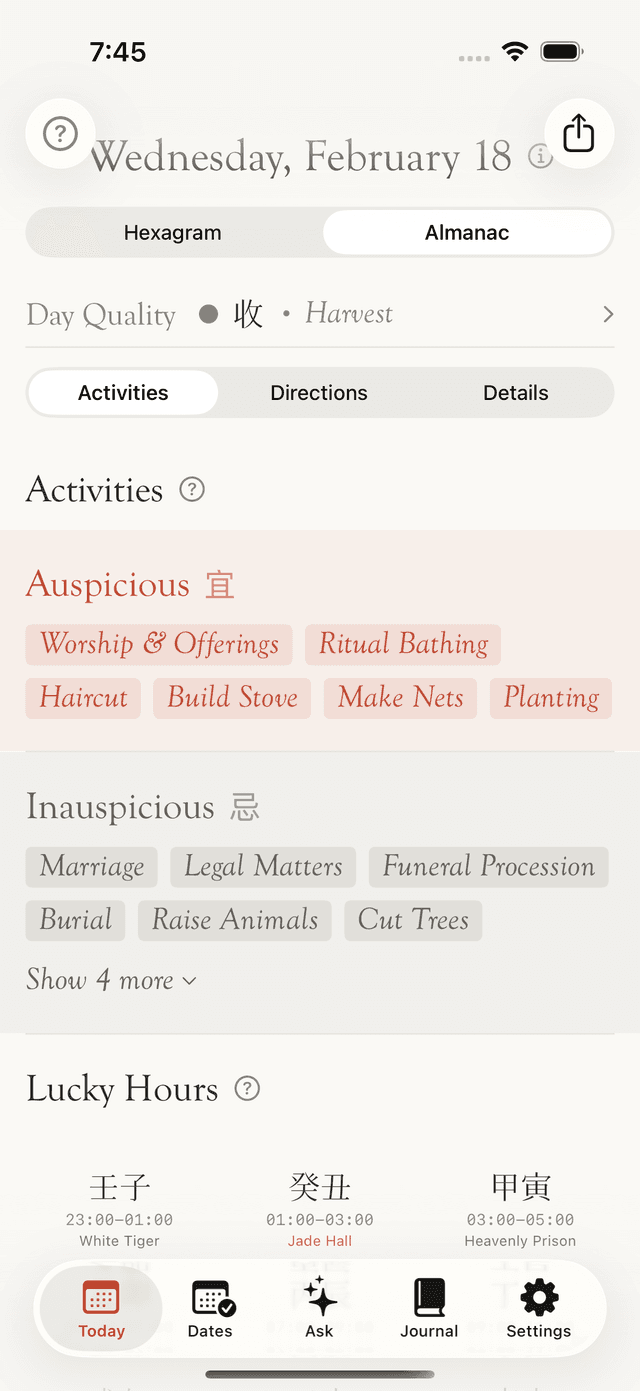
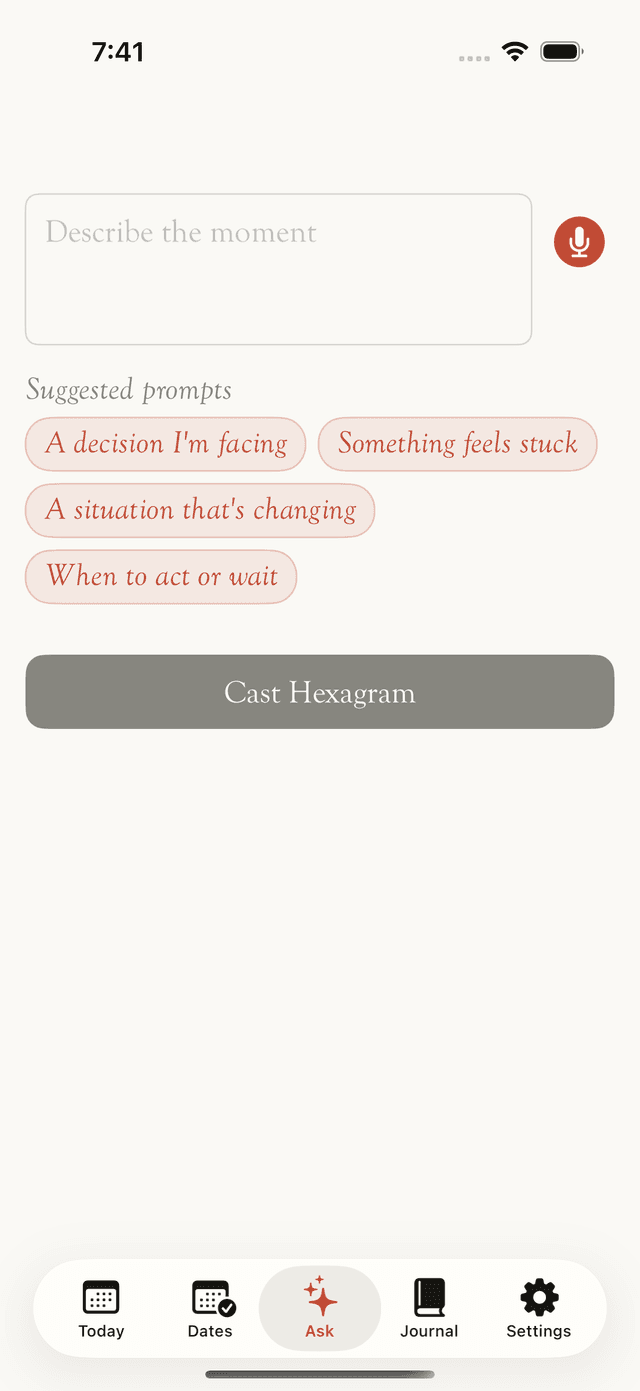
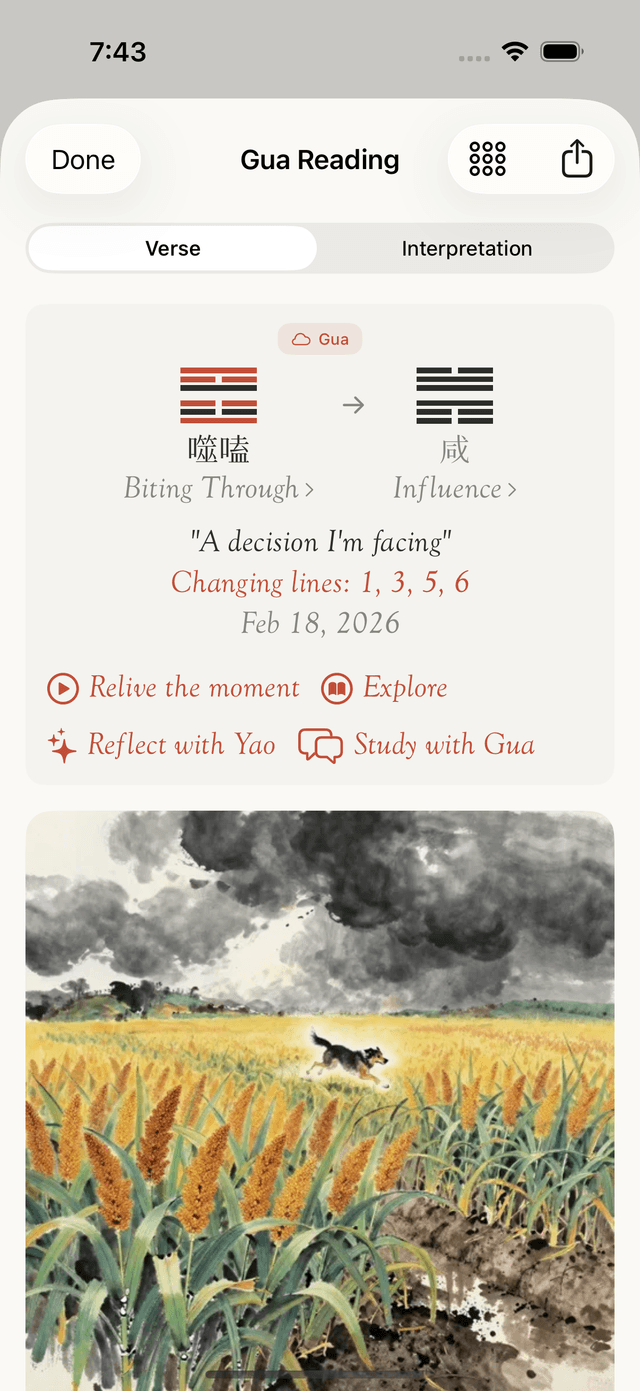
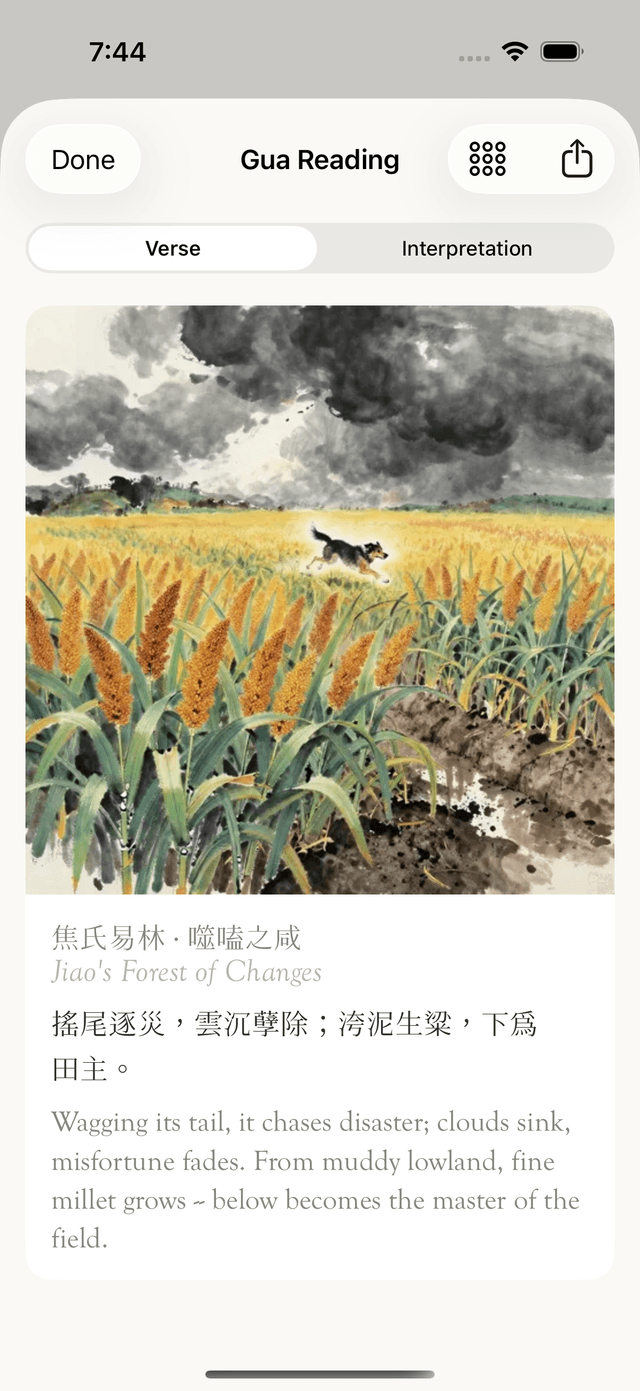
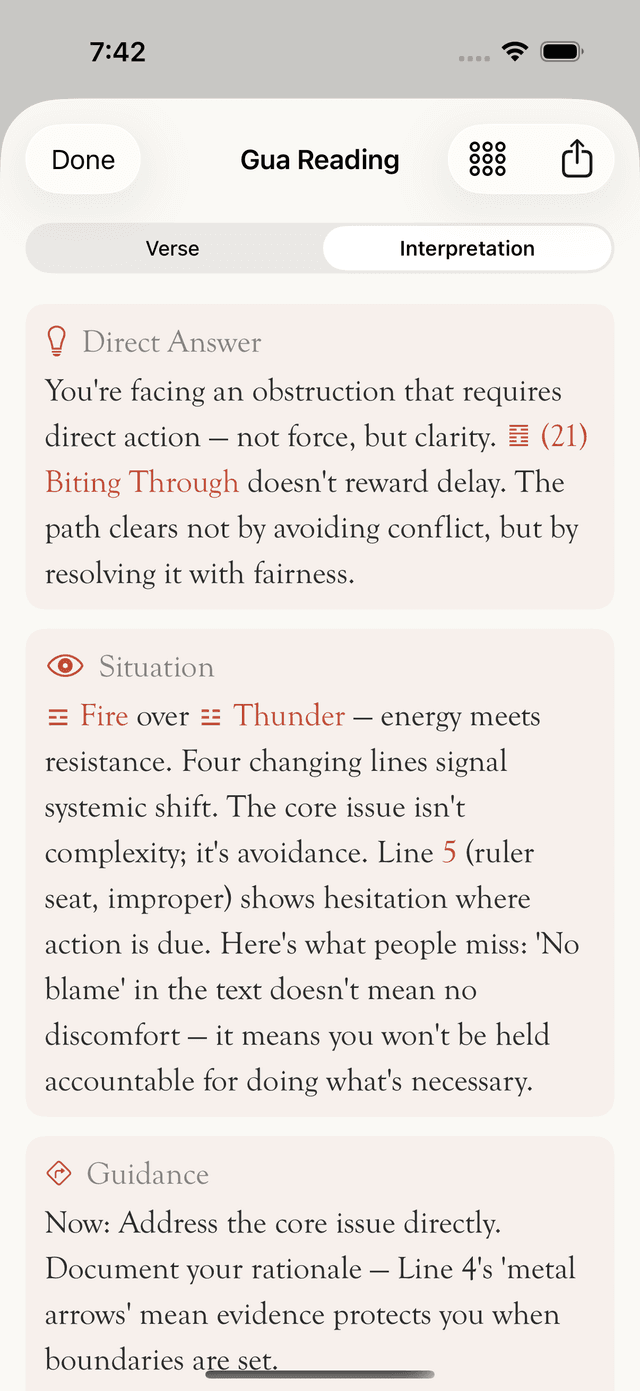
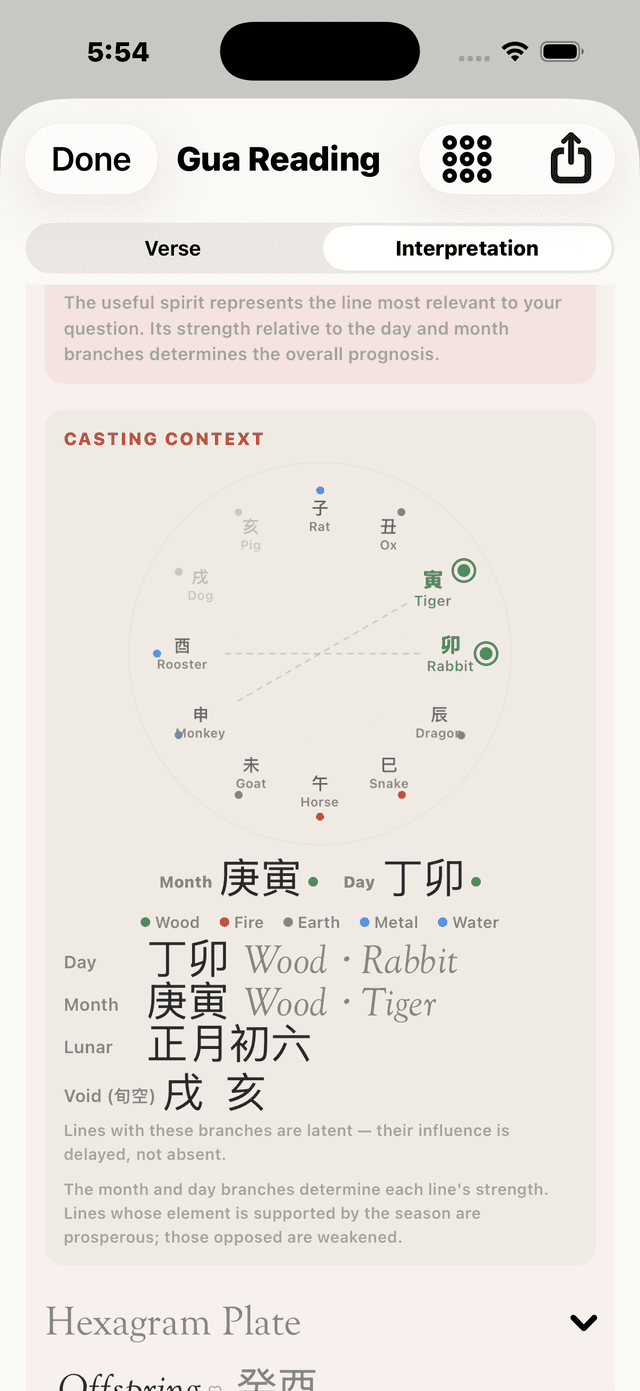
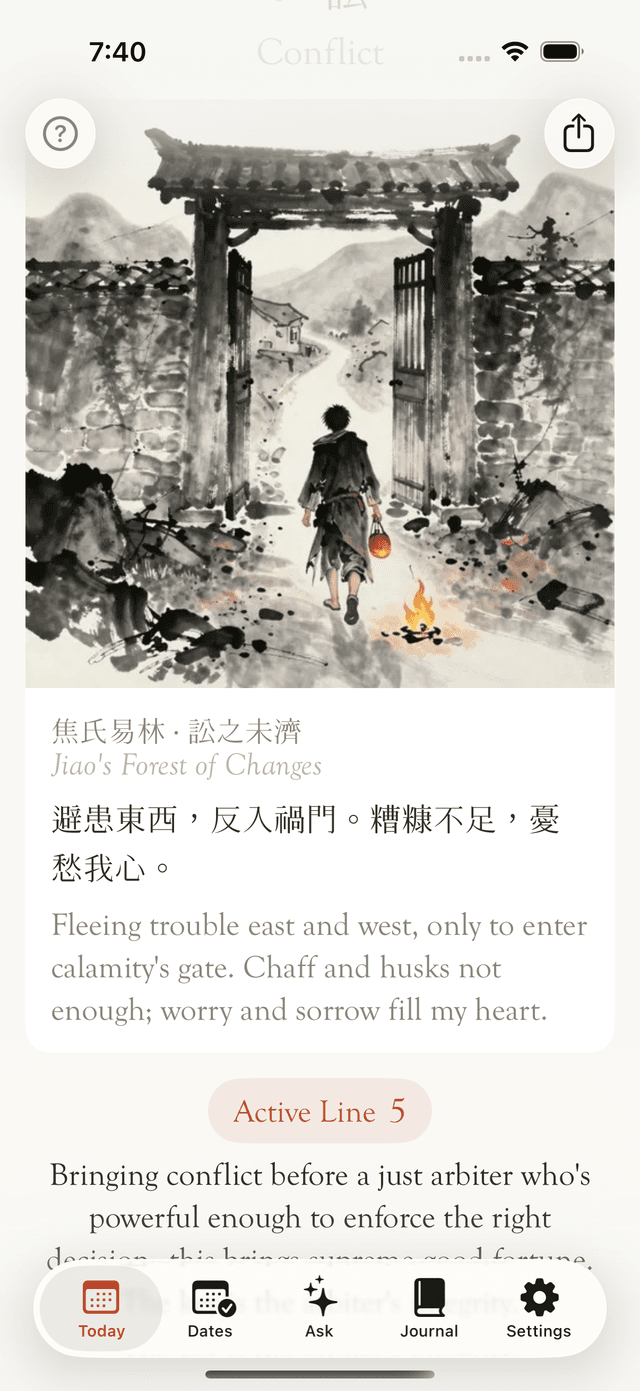
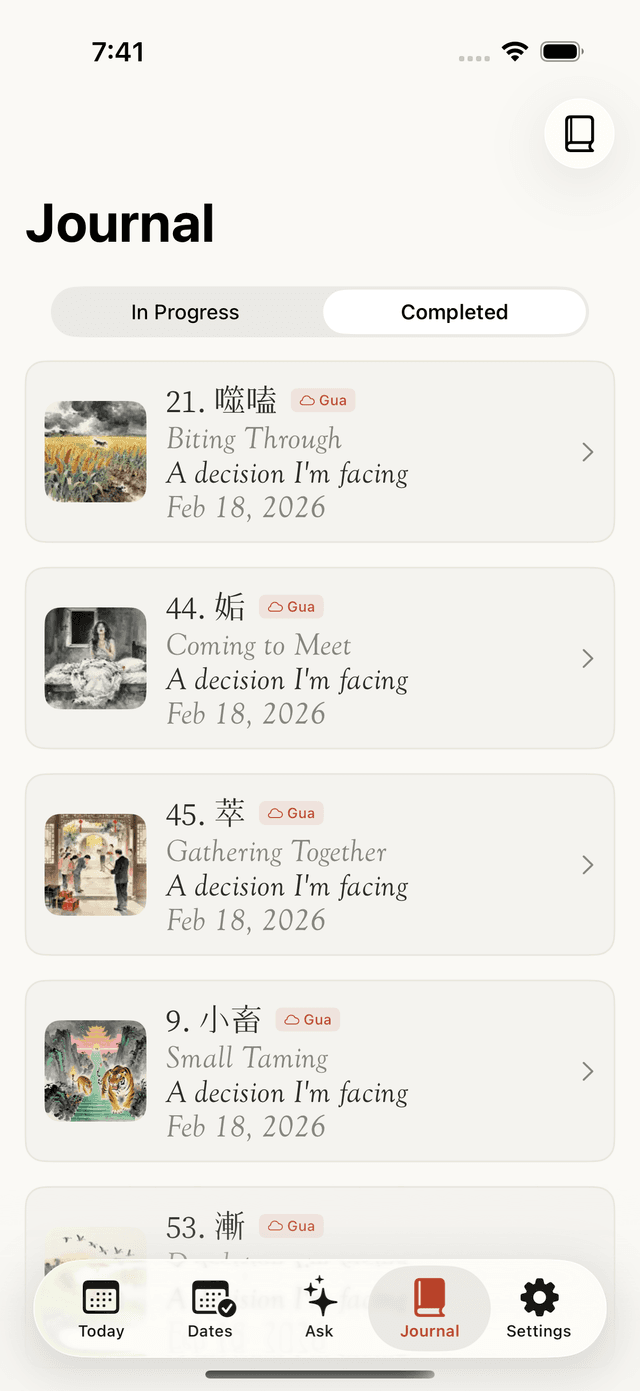
Six Lines evaluates each day per-activity using the 1739 imperial Xieji Bianfang Shu (協紀辨方書), a 36-volume compilation commissioned by Emperor Qianlong and preserved in the Siku Quanshu. The classical system evaluates activities individually — weddings, travel, construction — rather than assigning generic day ratings. The source text itself calls generic ratings unreliable. Six Lines shows which activities are auspicious and why, with transparent reasoning from the original text.
Six Lines supports two casting methods: the three-coin method (三錢法) used in modern Liu Yao practice, and the authentic 49-stalk yarrow method described in the Xi Ci Zhuan commentary. Both build a hexagram from bottom to top across six tosses, with changing lines that produce a transformed hexagram. Procedural generative artwork — unique each time — creates a contemplative interstitial between question and answer.
Liu Yao (六爻) is the six-line analytical framework that professional Chinese practitioners have used since Jing Fang formalized it during the Western Han dynasty (77-37 BC). Six Lines maps najia stem-branch pairs onto each line, calculates Five Element relationships against the casting date, and derives Six Relative roles — Brothers, Offspring, Wife's Wealth, Officer/Ghost, and Parents — to identify the useful spirit and assess line strength.
The Yilin (焦氏易林) is a collection of 4,096 poetic verses attributed to Jiao Yanshou, a Western Han scholar active around 50 BCE. Each verse corresponds to one of the 4,096 possible hexagram-to-hexagram transformations (64 × 64). Six Lines includes every verse in bilingual classical Chinese and English, each paired with original Chinese ink brush artwork — 4,096 individual pieces commissioned specifically for the app.
Six Lines has two AI-powered guides with different philosophies. Gua provides deep consultation for life decisions, grounded in classical scholarship and honest when hexagrams are severe — drawing on the judgment texts, image texts, and all six line texts. Yao runs entirely on your device using on-device AI for private line-by-line study and translation. Both follow the source texts; neither invents meanings.
Each of the 64 hexagrams includes the original classical Chinese text from the Zhouyi (周易), original interpretive essays connecting hexagrams to classical art and literature, and character-by-character Hatcher Matrix translations that map each Chinese character to its English equivalent. Three commentary layers — judgment, image, and line — let you study the tradition at the depth it deserves.
Six Lines uses Goudy Old Style serif typography, a warm ivory (#FAF9F5) palette, and generous whitespace to create a contemplative reading experience. The design philosophy prioritizes the classical text — no dark patterns, no gamification, no ads. Hexagram casting includes procedural generative artwork and haptic feedback. The aesthetic draws from the same minimalist principles found in traditional Chinese ink brush painting and scholarly book design.
One verse per day. Unsubscribe anytime. · See a sample