Upper Trigram
離 Lí
Fire — Clinging
Lower Trigram
坤 Kūn
Earth — Receptive
Classical Texts
The Goal
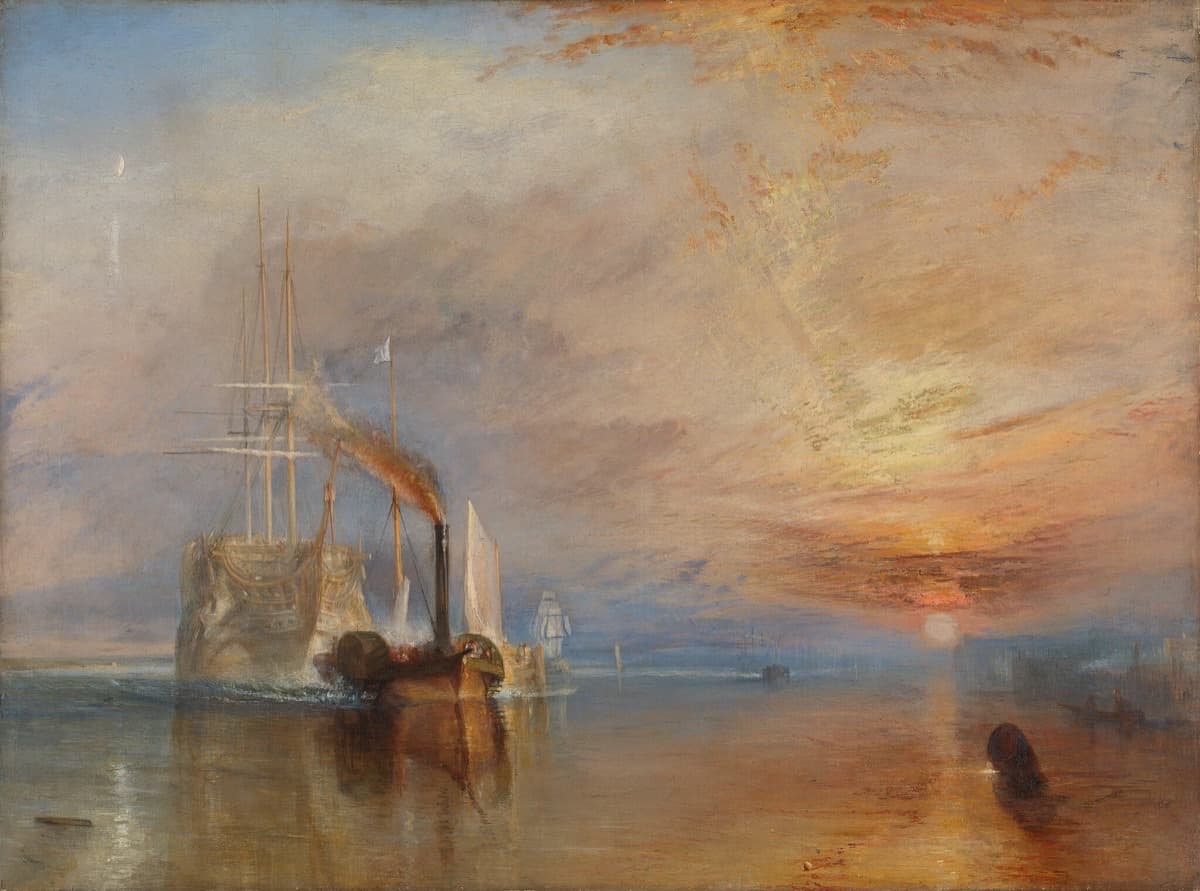
Jin is not ambition. It is the natural visibility of merit — light rising above the earth because that is what light does. Fire (Li) above Earth (Kun) depicts clarity emerging from receptive ground, the sun at dawn. The judgment bypasses abstract principle entirely and tells a story: 康侯用錫馬蕃庶,晝日三接 — "the 康侯 is presented with horses in great number; in a single day he is granted audience three times." Wang Bi takes 康 as praise rather than a name — 康,美之名也 — though the bronze inscriptions give 康侯 as a person, Kang Shu Feng, and that reading has the better evidence. Either way the line's force is in the contrast Wang Bi draws with hexagram 6: 以訟受服,則終朝三褫;柔進受寵,則一晝三接. What is won by litigation is stripped three times in a morning; what is received by yielding advance is granted audience three times in a day. Progress here is not self-promotion but recognition that arrives because conditions are right. The prince does not demand audience; he is granted it. The horses are not seized; they are bestowed. The Image gives the method: 明出地上,晉;君子以自昭明德 — "light emerges above the earth: Progress. The superior person brightens his own bright virtue." The operative character is 自. The work is not to shine upon others but to clarify what is already luminous within, and progress follows from that rather than from positioning. 九四 shows the counterfeit: 晉如鼫鼠,貞厲 — "advancing like the 鼫鼠; constancy brings danger." The 鼫鼠 is the creature of the proverb with five skills and no complete one — it can climb, swim, dig, run and fly, and none well enough to live by. Wang Bi lands in the same place from the line's position: 无業可安,志无所據…進如鼫鼠,无所守也, no occupation to settle in and nothing the will can rest on. Advancement built from many partial competences, none of them sufficient, is the specific corruption Jin names. The top line marks where advance stops being radiance: 晉其角,維用伐邑;厲吉无咎,貞吝 — "advancing with the horns; use this only to punish one's own city. Danger, good fortune, no blame; constancy brings regret." At the summit, progress has become force, and the text licenses it only inward, against one's own domain — and even then closes with 貞吝, a warning against persisting in it. The same bound appears in hexagram 15's 征邑國. The goal of Jin is to regulate the relation between inner clarity and outward recognition. Genuine progress runs one way: from cultivated merit outward to visible result. 六五 confirms it — 悔亡,失得勿恤, "remorse vanishes; do not take gain and loss to heart." When advance is real the question of personal advantage dissolves. What matters is not whether you are rising but whether your light is, and whether the virtue on display has substance beneath it.
The Judgment
The thriving lord is presented horses in abundance. In a single day, granted audience three times. Horses pouring in, three audiences in one day. This is progress at its most visible — the kind where the rewards show up faster than you can receive them. No conditions, no warnings. Just: here's everything. The catch with this hexagram is that it only works for the person who earned it by serving, not the person who grabbed it by climbing.
The Image
Brightness emerges above the earth: progress. The realized person accordingly brightens their own character. The sun coming up over the earth — progress isn't something you do, it's something that happens when the light rises. And the instruction is: brighten your own character. Not your strategy. Not your network. Your character. The text trusts that a sufficiently bright person doesn't need a plan. The plan needs them.
The Lines
Line 1
Progressing, yet obstructed. Sustained orientation resolves well. If met without trust, remain generous. No fault. Moving forward and getting pushed back. Resolves well anyway — if you stay generous when nobody trusts you. That's the price of admission at the bottom of the progress hexagram: advance into rejection and don't take it personally. The person who can be turned away without becoming bitter is the one who eventually can't be turned away.
Line 2
Progressing, yet anxious. Sustained orientation resolves well. Receiving this constrained blessing from the grandmother. Progress with grief in it. And the blessing comes from the grandmother — not the direct authority, but the indirect one. Constrained, limited, through a side channel. Resolves well. Because sometimes the real support doesn't come from where you're looking. It comes from the person nobody thinks to ask. The grandmother knows things the king forgot.
Line 3
The multitude approves. Deviation detected dissolves. Everyone agrees. Whatever was wrong disappears. The shortest line in the progress hexagram, and it describes the moment consensus arrives. Not because you convinced anyone. Because the group saw the same thing at the same time. Collective recognition. The deviation just evaporates.
Line 4
Progressing like a squirrel. Sustained orientation: strained. A squirrel. Hoarding, skulking, eyes darting. Progress that looks like progress but has the energy of a rodent. Sustained orientation here is strained because the behavior can't hold up under scrutiny. The squirrel advances in daylight and everyone can see what it is. There's no version of this that ends with dignity.
Line 5
Deviation detected dissolves. Do not take gain and loss to heart. Going forward resolves well. Nothing that is not supported. Let go of the scoreboard. Stop tracking wins and losses. Going forward resolves well — everything supported. The fifth line of progress and the instruction is to stop measuring the progress. Because the person who is watching the numbers isn't watching the road. And the road is where the actual progress happens.
Line 6
Advancing with horns. Confined to disciplining one's own territory. Strained, resolves well, no fault. Sustained persistence: friction. Horns out — and the only permitted target is your own people. Not the enemy. Your people. Strained, but resolves well. The top of the progress hexagram, and the force that was rising for six lines turns inward. Because the person who arrives at the peak of their power and uses it to fix their own house? No fault. The person who uses it on everyone else? Friction forever.
Yilin: Forest of Changes
From Jiao Yanshou's Forest of Changes (焦氏易林) — the verse for Hexagram 35 in its unchanging form. A Han dynasty collection of four-character verses interpreting every hexagram transformation.
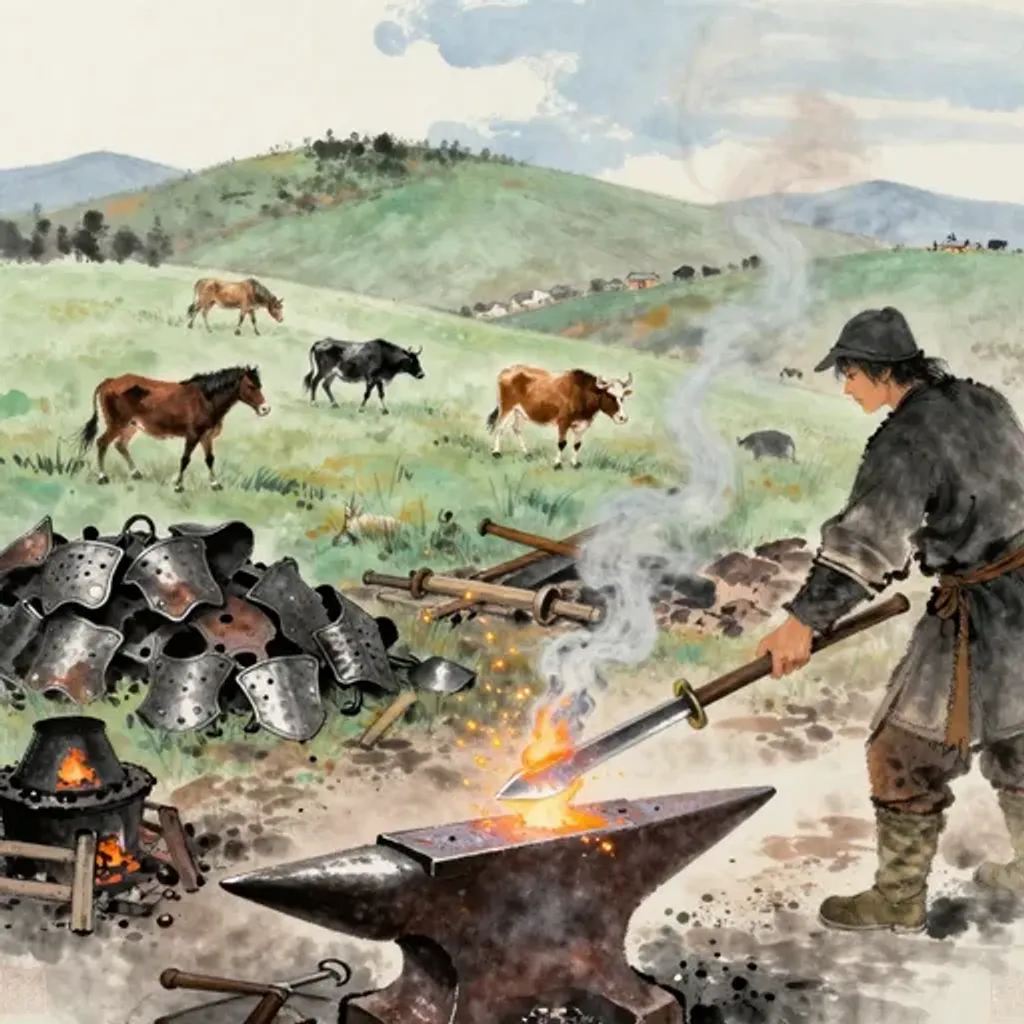
銷鋒鑄耜休牛放馬甲兵解散夫婦相保
Weapons melted, plowshares cast; oxen rested, horses set free. Armor and soldiers disbanded; husband and wife keep each other safe.
Read full commentary ↓
Fire rises above the earth, and the land returns to peace. Weapon points are melted down and recast as plowshares; oxen are rested and horses set free to pasture. Armor and troops are disbanded, and husbands and wives keep each other safe. This verse directly echoes the Shangshu chapter 'Wu Cheng,' describing King Wu of Zhou's demobilization after defeating the Shang: he released war-oxen in the Peach Forest and pastured war-horses on the southern slopes of Mount Hua. From Progress to Progress (the hexagram returning to itself), the transformation embodies fulfillment at rest. The brightest advance is the one that knows when to stop advancing — when the fire that rose above the earth settles into sustained warmth rather than consuming flame.
中文註釋
明出地上,晉之象。「銷鋒鑄耜」——銷熔兵鋒鑄為農具,出《尚書·武成》:武王伐紂勝後偃武修文。「休牛放馬」——散放戰牛戰馬,典出武王「歸馬於華山之陽,放牛於桃林之野」。「甲兵解散,夫婦相保」——軍隊解甲,夫婦團圓。從晉至晉,卦返自身,進而復進。然此處之進非征伐之進,乃和平之進——最明亮之前行,是知止而安。火出地上不再燒灼,化為持久之溫暖。
Jiao Shi Yi Lin 《焦氏易林》, manuscript from the Wenyuan Pavilion Siku Quanshu, Qianlong period, Qing dynasty.
National Palace Museum, accession nos. 故庫017987–017990
Fascicle 3, page 46
Read from the manuscript leaf
Shown unpunctuated, as in the manuscript.
About this reading
Read from the scanned leaf.
Related Hexagrams
Same upper trigram: Fire (離)
Same lower trigram: Earth (坤)