Upper Trigram
離 Lí
Fire — Clinging
Lower Trigram
巽 Xùn
Wind — Gentle
Classical Texts
The Goal
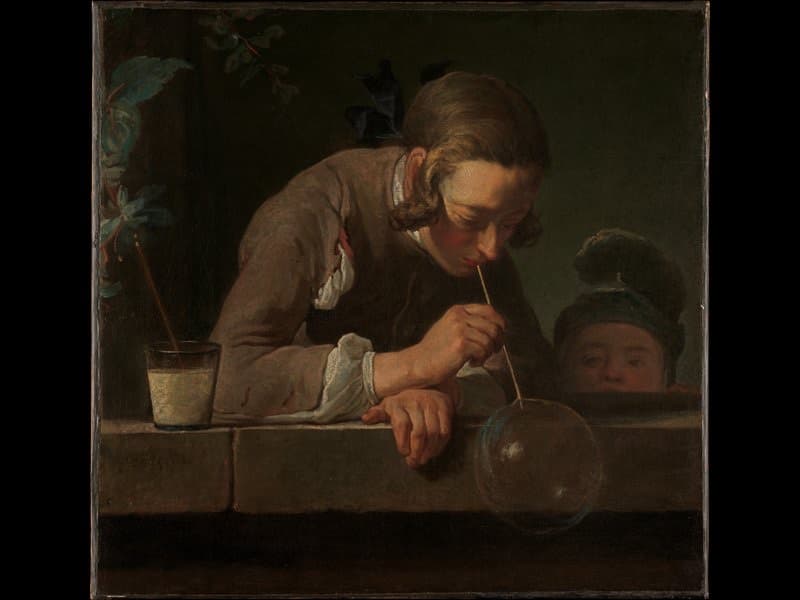
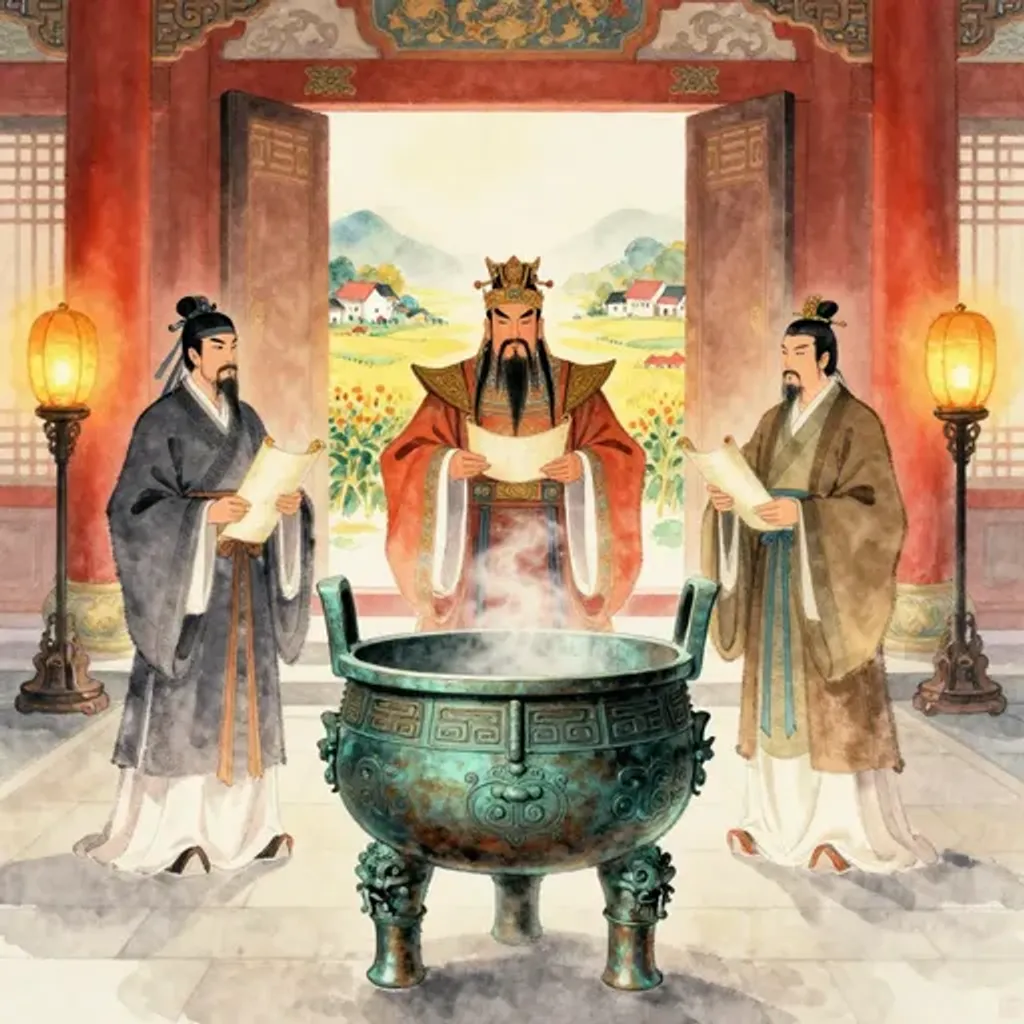
Ding is not mere cooking. It is the vessel through which raw material becomes nourishment, through which offerings reach heaven, through which a civilization transmits what it has refined. The character 鼎 depicts the three-legged bronze ritual cauldron: the object that embodied legitimate rule, so that possessing the Nine Cauldrons meant holding the mandate. Fire (Li) above Wood (Xun) shows flame fed by wood — sustained transformation through controlled combustion, refinement rather than burning. The judgment is three characters, 元吉,亨, and withholds nothing; the hexagram spends its six lines explaining what the vessel has to be for that to hold. The architecture maps onto the cauldron's anatomy. 初六 overturns it to empty the residue — 鼎顛趾,利出否, "the cauldron's feet upturned; it furthers to expel what is rotten" — clearing corruption before new use, and the indignity of being tipped over is the precondition for being filled. 九二 has it filled, 鼎有實. 九三 has the handles changed and the way blocked — 鼎耳革,其行塞,雉膏不食, the pheasant fat uneaten because the vessel cannot be carried to where it is needed. 九四 is the hexagram's warning: 鼎折足,覆公餗,其形渥,凶 — "the cauldron's leg breaks, the duke's meal is upset, its form is soaked; misfortune." A vessel entrusted to someone unequal to its weight does not merely underperform. It spills everything, publicly, and the ruin is on the vessel as much as on the meal. The last two lines are the repair. 六五's 鼎黃耳金鉉 — yellow ears and metal carrying-rings — puts the centre colour on the part by which the vessel is lifted: the capacity to be carried by others is the qualification. 上九's 鼎玉鉉,大吉,无不利 replaces metal with jade: hardness that has acquired warmth and translucence. The goal of Ding is institutional integrity — the capacity to hold, refine and pass on what matters. The Image states it: 木上有火,鼎;君子以正位凝命 — "the superior person makes his position correct and consolidates the mandate." The cauldron does not create what is placed in it and does not consume what it refines; it holds a transformation steady. Ding follows Ge for that reason: once the old forms are overthrown, new vessels have to be built to carry what the revolution was fought to preserve.
The Judgment
Supreme resolve well. Fulfillment. The caldron. Supreme resolve well. Fulfillment. Four characters for the vessel that transforms raw into cooked, profane into sacred. The caldron is the civilizing instrument — the thing that sits on the fire and turns ingredients into nourishment. The judgment is short because the caldron's purpose is self-evident. You put things in. They come out changed.
The Image
Wood above fire: the caldron. The realized person accordingly rectifies position and solidifies purpose. Wood feeding fire from above — the caldron mechanism. And the instruction is about alignment: correct your position, solidify your purpose. Because the caldron only works when it's placed right. Tilted, off-center, poorly positioned — the contents spill, the fire misses. The realized person who gets their positioning right before starting the work has understood the difference between cooking and burning.
The Lines
Line 1
The caldron overturned on its legs. It is supported to expel the stagnant. Taking a concubine for the sake of her son. No fault. Flip the caldron. Dump out the old stuff. The first line of the caldron, and the vessel is upside down — not because it's broken, but because it needs clearing. Taking the secondary person for the sake of the child: accepting the unconventional path that produces results. No fault. Sometimes the first step in creating something valuable is emptying the container of everything that was in it before.
Line 2
The caldron has substance. My rivals have afflictions but cannot approach me. Resolves well. The caldron is full. Your rivals are suffering but they can't touch you. Resolves well. The second line: when you have real content — actual substance in the vessel — the envious can circle but they can't reach. The protection isn't a wall. It's the fact that you're doing real work. Envy can't infiltrate a caldron that's actually cooking.
Line 3
The caldron's handles are changed. Its function is impeded. The pheasant fat is not consumed. A sudden rain would diminish the deviation detected. In the end, resolves well. The handles broke. You can't lift the caldron. The delicious pheasant fat sits there uneaten. But: rain would wash away the regret, and it resolves well in the end. The third line is about the person with real gifts that nobody can access — the handles are wrong. The talent is there, the food is ready, and the delivery mechanism failed. Rain — the natural resolution — fixes what effort couldn't. Wait for the rain.
Line 4
The caldron's legs break. The duke's meal is overturned. His person is soiled. Adverse. The legs snap. The duke's dinner hits the floor. He's covered in it. Adverse. The fourth line: structural failure at the worst possible moment, in the most public possible way. The caldron that breaks under the weight of an important meal has been asked to carry more than it was built for. The person in the wrong position with the wrong capacity for the wrong task doesn't just fail. They make a mess that stains everyone.
Line 5
The caldron with golden handles and bronze carrying bar. Sustained orientation is supported. Golden handles, bronze bar. The caldron can finally be lifted. Sustained orientation supported. The fifth line: the vessel is properly equipped, properly accessible, properly magnificent. After the broken handles of line three and the broken legs of line four, this is the caldron that works. The golden handles aren't decoration. They're the interface that lets the substance reach the people who need it.
Line 6
The caldron with jade carrying bar. Great resolve well. Nothing that is not supported. Jade. The hardest and most beautiful material, for the bar that carries the caldron. Great resolve well. Nothing that is not supported. The top of the caldron hexagram, and the vessel has reached its highest form. Jade is hard enough to hold the weight and beautiful enough to honor the contents. The caldron carried by jade serves the highest purpose. Everything is supported because nothing has been compromised.
Yilin: Forest of Changes
From Jiao Yanshou's Forest of Changes (焦氏易林) — the verse for Hexagram 50 in its unchanging form. A Han dynasty collection of four-character verses interpreting every hexagram transformation.
積德之君仁政且溫伊呂股肱國富民安
Virtue accumulated to its fullest; the lord's governance is gentle and warm. Yi Yin and Lu Shang serve as the sovereign's arms and legs; the state is rich and the people at peace.
Read full commentary ↓
Fire over wind fills the cauldron — and the cauldron transforms into itself, the purest expression of its own nature. Accumulated virtue reaches its zenith; the ruler governs with warmth and wisdom. Yi Yin and Lu Shang serve as the sovereign's right arms, and the nation grows rich while the people rest secure. Yi Yin, the cook who became Shang's founding minister, and Lu Shang (Taigong), the fisherman who became Zhou's founding strategist, represent the ideal of sage-ministers discovered in humble circumstances and elevated through merit. From The Cauldron to The Cauldron, the identity transformation signifies perfection: the vessel fulfills its own nature completely. The cauldron that cooks also governs — fire over wind, refining the offering until nothing remains but nourishment itself.
中文註釋
木上有火,鼎之象——鼎化為鼎,本性之純粹表達。積德之至——德行積累至極致。君政且溫——君主施政溫厚。伊呂股肱——伊尹、呂尚為君之肱股。國富民安——國家富強,百姓安居。伊尹自庖廚而為商之開國元勛,呂尚自渭濱垂釣而為周之創業功臣。賢相出於卑微而終佐明君,此鼎之本義——烹飪以養賢,養賢以治國。從鼎至鼎,同卦之變,純一不雜。鼎既烹又治,火風相濟,冶煉至無雜質,唯養民之本。
Jiao Shi Yi Lin 《焦氏易林》, manuscript from the Wenyuan Pavilion Siku Quanshu, Qianlong period, Qing dynasty.
National Palace Museum, accession nos. 故庫017987–017990
Fascicle 4, page 61
Read from the manuscript leaf
Shown unpunctuated, as in the manuscript.
About this reading
Read from the scanned leaf.
Related Hexagrams
Same upper trigram: Fire (離)
Same lower trigram: Wind (巽)