上卦
离 Lí
火 — 丽
下卦
巽 Xùn
风 — 入
经典文本
卦旨
鼎不只是烹煮。它是那件器物:让生的变成养人的,让献祭上达于神,让一个文明把已经提炼出来的东西传下去。「鼎」象三足的青铜礼器,是有国之信物,所以九鼎在谁那里,天命就在谁那里。上离下巽:火得木而不断,它的转化有节度,不是一味地烧。卦辞只有三个字:「元吉。亨。」没有留任何余地;而六爻所说的,都是这件器物要成为什么样子,那三个字才立得住。 它的次序就是鼎的构造。初六把它倒过来倒掉渣滓:「鼎颠趾,利出否」——被掀翻不是耻辱,而是能被装满的前提。九二已经装上:「鼎有实。」九三则是耳变而路塞:「鼎耳革,其行塞,雉膏不食」——不是没有可养的东西,而是这份养送不到需要它的地方。 九四是全卦的警告:「鼎折足,覆公𫗧,其形渥,凶。」把器物交给扛不动它的人,不只是办不成事而已,而是把里面装的全部倾覆掉;而且这份狼狈落在器上,和落在食物上一样重。 最后两爻是它的修复。六五「鼎黄耳金铉」:把居中之色放在用来抬举它的那个部位上——能被别人抬起来,正是它够格的地方。上九「鼎玉铉,大吉,无不利」:以玉换金,坚硬之中带上了温润。 所以鼎的要义,在于这件器物守得住:能容、能精、能传。《象》说得很直接:「木上有火,鼎;君子以正位凝命。」鼎并不生出它所盛的东西,也不吃掉它所提炼的东西,它只是把一场转化稳稳地端住。它承革而来正是为此:旧的形式既已除去,就必须另立新器,来承载那场变革所要保住的东西。
彖辞
元吉,亨。井是社会的根基,鼎是文化的高塔。木养火,火即精神。一切可见之物必须超越自身,伸入不可见的领域。人间至高的价值须奉献于神圣。然而神圣并不外在于人——它显现于先知与圣贤。敬他们,便是敬神。以谦卑接受他们所启示的意志,内在的光明由此而来。
象辞
木上有火,鼎。火的命运取决于木——木在下,火方能燃于上。人的生命中也有命运赋予的力量。若能把生命与命运各安其位、调和一致,命运便得以稳固。
爻辞
第初爻
鼎颠趾,利出否。得妾以其子,无咎。用鼎之前先倒置,清除渣滓。在高度文明中,凡怀善意者皆可成就。无论多卑微,只要愿意自我净化,便被接纳。你将得到一个可以证明自己的位置。
第二爻
鼎有实,我仇有疾,不我能即,吉。文明昌盛之际,成就真正的事业至关重要。专注于实事,虽遭嫉恨,却无大碍。越是限于实际作为,嫉妒者越难伤你。
第三爻
鼎耳革,其行塞,雉膏不食,方雨亏悔,终吉。鼎耳改了,鼎便举不起来,美食无人能享。处于无人注目的境地,才华空费。但若内有真正的精神,早晚雨过天晴,一切如意。
第四爻
鼎折足,覆公餗,其形渥,凶。重任加身却力有不逮,又不全力以赴,却与小人厮混。事情败坏,自己也蒙羞。孔子曰:德薄而位尊,知小而谋大,力小而任重,鲜不及矣。
第五爻
鼎黄耳金铉,利贞。居高位而平易谦和。因此得到刚强能干的辅佐。这种态度需要持续的自我克制,守住它,勿被引入歧途。
第上爻
鼎玉铉,大吉,无不利。玉兼具坚硬与柔光。忠言对听者大有裨益;而传授忠言者,亦当温润纯净如玉。如此则事业得神人欢心,无往不利。
焦氏易林
焦延寿《易林》——第50卦本卦之辞。西汉时期以四言诗阐释卦变,为最早的系统性易学占辞集。
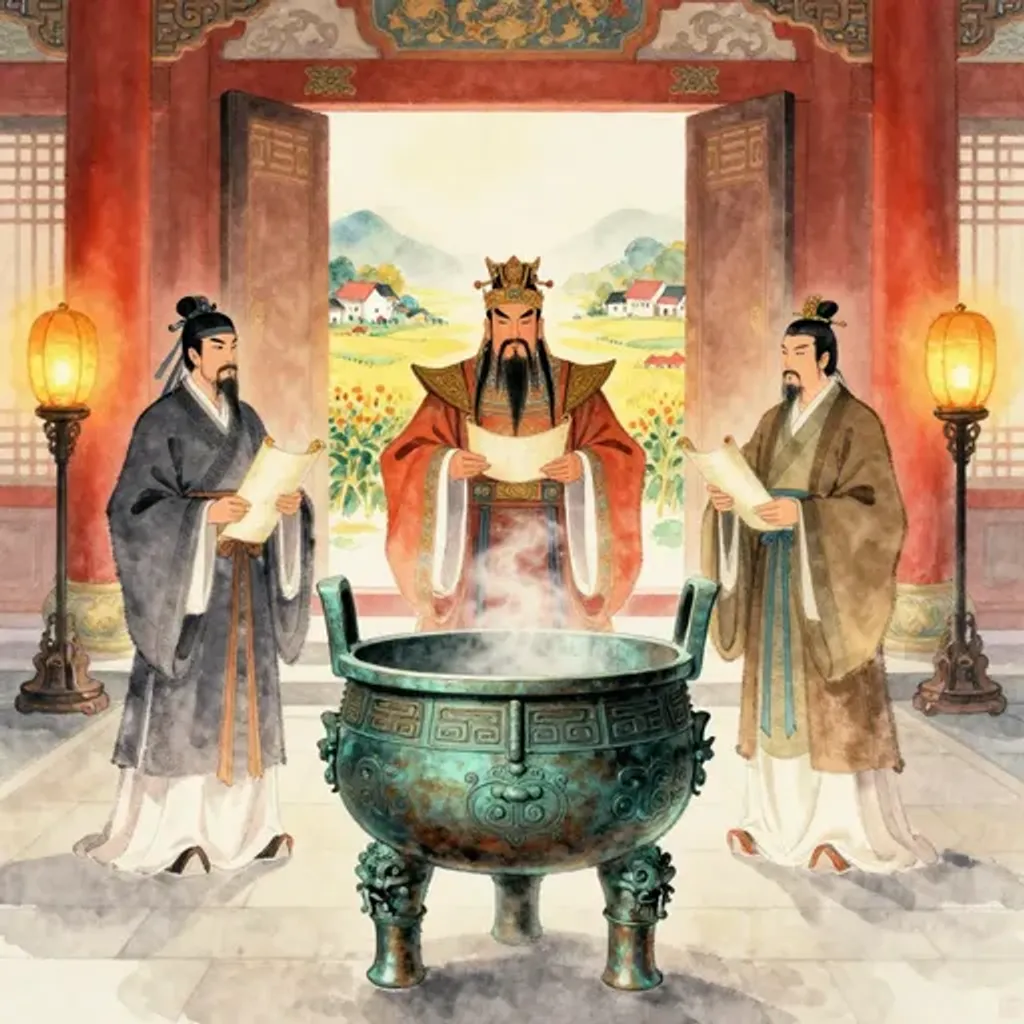
积德之君仁政且温伊吕股肱国富民安
木上有火,鼎之象——鼎化为鼎,本性之纯粹表达。
阅读完整注释 ↓
木上有火,鼎之象——鼎化为鼎,本性之纯粹表达。积德之至——德行积累至极致。君政且温——君主施政温厚。伊吕股肱——伊尹、吕尚为君之肱股。国富民安——国家富强,百姓安居。伊尹自庖厨而为商之开国元勋,吕尚自渭滨垂钓而为周之创业功臣。贤相出于卑微而终佐明君,此鼎之本义——烹饪以养贤,养贤以治国。从鼎至鼎,同卦之变,纯一不杂。鼎既烹又治,火风相济,冶炼至无杂质,唯养民之本。
English commentary
Fire over wind fills the cauldron — and the cauldron transforms into itself, the purest expression of its own nature. Accumulated virtue reaches its zenith; the ruler governs with warmth and wisdom. Yi Yin and Lu Shang serve as the sovereign's right arms, and the nation grows rich while the people rest secure. Yi Yin, the cook who became Shang's founding minister, and Lu Shang (Taigong), the fisherman who became Zhou's founding strategist, represent the ideal of sage-ministers discovered in humble circumstances and elevated through merit. From The Cauldron to The Cauldron, the identity transformation signifies perfection: the vessel fulfills its own nature completely. The cauldron that cooks also governs — fire over wind, refining the offering until nothing remains but nourishment itself.
《焦氏易林》,清乾隆间写文渊阁四库全书本。
国立故宫博物院 故库017987–017990
第4册,第61页
据写本原叶录出
标点依写本,不另加标点。
关于此读法
据扫描原叶录出。