上卦
离 Lí
火 — 丽
下卦
离 Lí
火 — 丽
经典文本
卦旨
离不是为了明亮而明亮。它讲的是:光之所以成其为光,全看它附着在什么上面——火没有自己的本体,附上柴薪才存在。离上离下,明而又明。但火之所以是火,不在于它亮,而在于它必须有所依附;无所依附就灭。《易》中最明亮的那一卦,同时也是最不能自立的一卦。 卦辞说「利贞,亨」,接着又说「畜牝牛,吉」。这是纠偏之语,而且故意说得不显赫:既然已经是重明了,就取一个最柔顺、最能滋养的形象来系住它。牛和火正好相反:慢、恒久、能养人而不耀眼。明亮而没有根基——聪明而不能等待,看得见而不能低下来——就会烧尽自己的柴,归于黑暗。牝牛就是火所应当依附的东西。 《象》补上的另一半答案,讲的是时间而不是材质:「明两作,离;大人以继明照于四方。」「继」是承接,是把光交下去。重离不是一把火烧得加倍旺,而是后一把火从前一把火那里接来。明之所以不至于自焚,是因为它有所交付;而且这里说的是「大人」而不是通常的「君子」,这是对真正执掌这份光的人提出的要求。 世人称离为明察之卦,那是它的质地,而它的要义在于节制这份质地。重叠在这里是警告,不只是加强:火与火相遇,成则为照明,不成则为焚烧。九四说的正是后者:「突如其来如,焚如,死如,弃如。」八个字四种状态,一把无所依附的火的始终都在里面。九三则是缓慢的那种败坏:「日昃之离」——夕阳的光:它所附着的东西正在耗尽,所以它也将尽,这正是本卦的道理落在时间上。王弼从交付这一端说同一爻:「明在将终,若不委之于人,养志无为,则至于耊老有嗟。」附于会耗尽的东西,与不肯把这份明交出去,是同一种失败的两个侧面。附于可久者则照亮,附于可尽者则烧掉自己。
彖辞
「畜牝牛,吉」——火无定形,附物而明。意识也是如此,依托于所附之物。承认这种依附,培养柔顺,便得明而不烈、亮而持久。牛是极柔顺之物,火以柔为燃料。
象辞
「明两作」——两个太阳,日复一日。大人以此继明,照彻四方。光要持续,不是爆发一次就完。穿透人心的工作,没有尽头。
爻辞
第初爻
「履错然」——清晨初醒,印象纷乱,活动杂沓。此时要守住从容。开头包含一切后果,开头乱则全盘乱。
第二爻
「黄离,元吉」——黄是中色。日中之光,不偏不倚。文化的极致是中庸,最高的和谐是不过。
第三爻
「日昃之离」——日落西斜。有人击缶高歌,有人哀叹老去。两种反应都错。无常是条件,不是悲喜的理由。修己以待时,此外无他。
第四爻
「突如其来如,焚如,死如,弃如」——流星,草火,腾起即灭。躁动的人可以迅速出名,但什么也留不下。消耗太快,便是自焚。
第五爻
「出涕沱若,戚嗟若,吉」——泪流满面,叹息连连。这不是坏事。到了巅峰,懂得虚妄,才有真正的转变。此非一时情绪,是心的脱胎换骨。
第上爻
王用出征。杀首恶,赦从众。惩罚的目的是纪律,不是报复。根除病源,容忍无害。过严则失其本意。
焦氏易林
焦延寿《易林》——第30卦本卦之辞。西汉时期以四言诗阐释卦变,为最早的系统性易学占辞集。
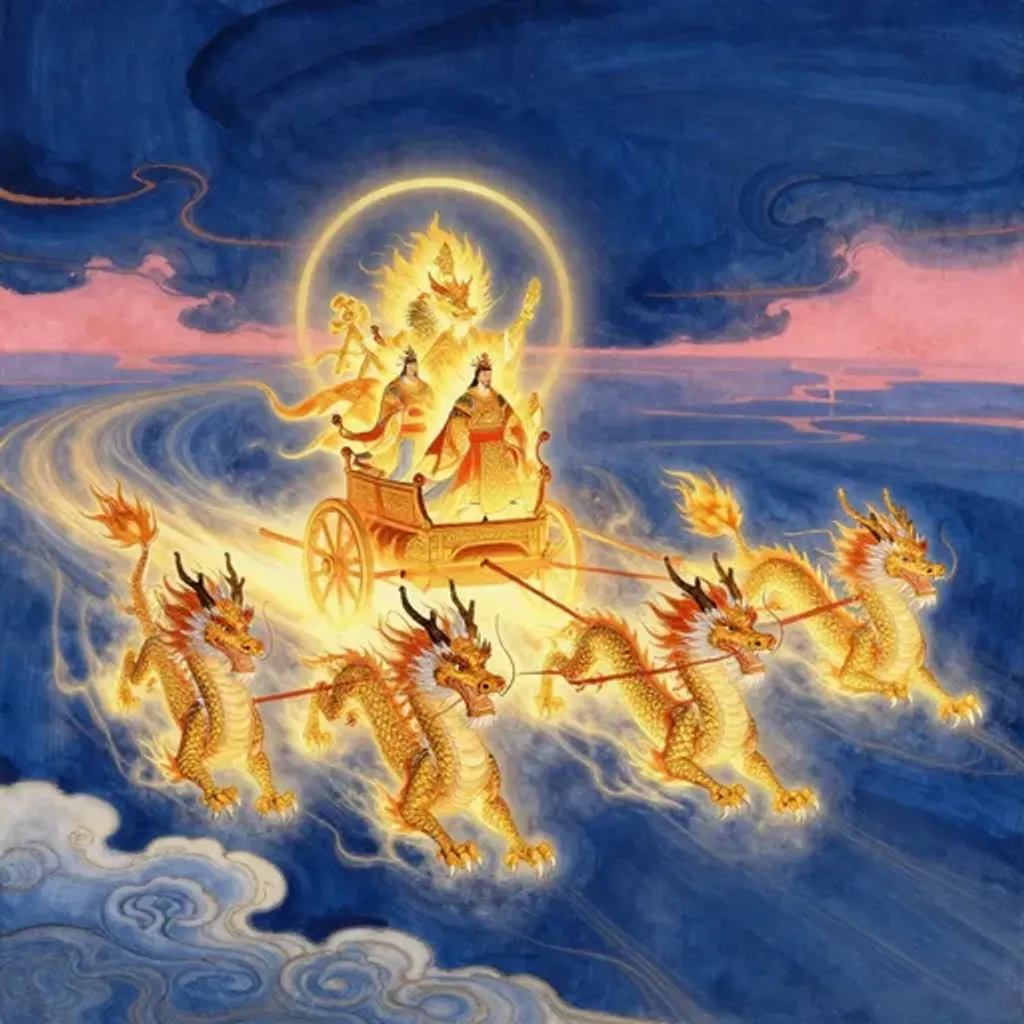
时乘六龙为帝使东达命宣旨无所不通
明两作离,离遇离,纯明相继。
阅读完整注释 ↓
明两作离,离遇离,纯明相继。时乘六龙——出《易经·乾卦·文言》「时乘六龙以御天」。为帝使东——奉天子之命出使东方。达命宣旨,无所不通——宣布诏令,畅达无阻。从离至离,明两作,大人以继明照于四方:离之自身映照。无卦变之张力,唯有光明延续之挑战。诗以御天之龙为喻,明非自照而是为帝传光,如使者奉命宣化四方。火之不灭,在于传递而非独燃。
English commentary
Doubled fire meets itself: pure brilliance sustained. Riding the six dragons in season, one serves as the emperor's envoy to the east, proclaiming mandates and conveying edicts with nothing beyond reach. 'Riding the six dragons in season' quotes directly from the I-Ching's Qian hexagram commentary (Wenyan): the sage rides the six dragons to traverse the heavens. Here the envoy carries imperial light in all directions. From The Clinging to The Clinging, fire renews fire in perpetual succession. The great person 'continues brightness to illuminate the four quarters' — this is the hexagram's own image text made flesh. There is no transformation to manage, only the challenge of sustaining radiance without burnout, which the verse resolves through service: light that travels outward on behalf of another never exhausts itself.
《焦氏易林》,清乾隆间写文渊阁四库全书本。
国立故宫博物院 故库017987–017990
第2册,第109页
据写本原叶录出
标点依写本,不另加标点。
关于此读法
据扫描原叶录出。