Saying Grace

第37卦

家人

Jiā Rén

The Family

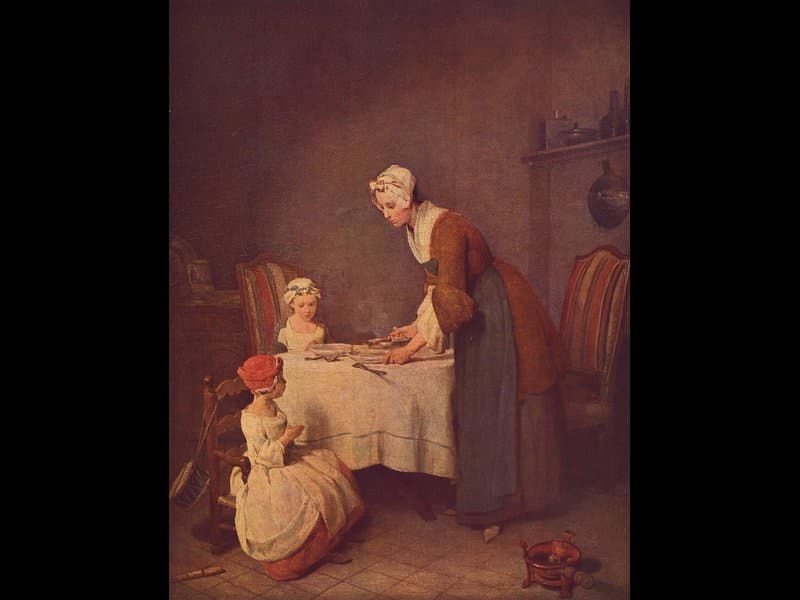
Saying GraceChardin, Unknown

A mother and two children gather in quiet lamplight in Jean-Baptiste-Siméon Chardin's 18th-century domestic scene. The woman teaches her young son to bow his head in prayer before the simple meal on the table, while a younger child watches from the shadows. Chardin painted multiple versions of this moment during the 1740s, rendering the mundane ritual of saying grace with the formal composition and careful lighting he typically reserved for still-life arrangements. The scene depicts instruction passing from generation to generation within the contained sphere of household order.

阅读完整论述 ↓

This is Jiā Rén (家人), The Family. The characters literally mean "family person" or "household people." Ancient diviners saw this configuration when Wind (Xùn) sits above Fire (Lí)—gentle persistence sustaining clarity and warmth, the inner structure that nourishes and forms character before it meets the outer world. Chardin's painting embodies this arrangement: the mother's gentle but consistent instruction (wind) shapes the child's understanding while the hearth fire provides both physical warmth and the illumination that makes the domestic scene visible. Jean-Baptiste-Siméon Chardin painted multiple versions of this domestic scene in the 1740s showing a mother teaching her children to pray before a meal. The quiet interior depicts traditional family instruction and ritual, connecting to the hexagram's theme of the family unit and household order. The Judgment text speaks with precise emphasis: "The Family. The perseverance of the woman furthers." Zhou Dynasty practitioners understood that family order depends not on dramatic authority but on consistent daily instruction and maintained ritual. Ancient commentators noted this hexagram appeared when consulting about household management, marriage arrangements, child-rearing practices. The text specifically honors feminine persistence—the continuous, gentle shaping that occurs through repetition rather than command. Chardin captures exactly this: the mother does not lecture but demonstrates, does not punish but guides the child's hands into prayer position. The Image Text reveals the mechanism: "Wind comes forth from fire: the image of the Family. Thus the superior man has substance in his words and duration in his way of life." Fire produces wind through its heat, just as the family's inner order produces the character that will later act in the world. In the I-Ching's sequence, Jiā Rén follows Míng Yí (Darkening of the Light): after surviving times when outer expression proves dangerous, one withdraws to the family sphere where proper formation can continue despite corrupted external conditions. The family becomes the vessel that preserves and transmits what must outlast dark periods, the contained order that survives to shape the next generation.

上卦

Xùn

WindGentle

五行Wood方位Southeast家庭Eldest Daughter性质gentle, penetrating, persistent

下卦

FireClinging

五行Fire方位East家庭Second Daughter性质illuminating, dependent, radiant

经典文本

彖辞

The perseverance of the woman furthers. The laws within the household, transferred to outside life, keep the state and world in order. Influence works from within outward, like wind created by fire. Each position has its proper function. Strong leadership from the head, faithful management of the center. The family is society in embryo.

爻辞

第初爻

Firm seclusion within the family. Remorse disappears. Each member knows their place from the start. Establish order before the child's will is directed elsewhere. Begin late when passions have grown strong and you'll face resistance. Breaking a child's will is easier avoided than accomplished.

第二爻

She should not follow whims but attend within to the food. Persistence brings good fortune. Great duties exist without having to look for them. The center of social and religious life of the family. In general: seek nothing by force; confine yourself to duties at hand.

第三爻

When tempers flare in the family, too great severity brings remorse. Good fortune nonetheless. Laxity leads to disgrace. Build strong dikes within which freedom of movement is allowed. In doubtful cases, err toward strictness. Discipline preserves; weakness destroys.

第四爻

She is the treasure of the house. Great good fortune. Well-being depends on sound balance between expenditure and income. The faithful steward whose measures further general welfare.

第五爻

As a king he approaches his family. Fear not. Good fortune. The fatherly person richly endowed in mind. Nothing to make himself feared—the family trusts him because love governs. Character exercises the right influence without force.

第上爻

His work commands respect. Good fortune in the end. Order depends ultimately on the master's character. Cultivate personality until it works through inner truth. In a ruling position, assume responsibility by your own accord.

焦氏易林

焦延寿《易林》——第37卦本卦之辞。西汉时期以四言诗阐释卦变,为最早的系统性易学占辞集。
Yilin artwork for Hexagram 37
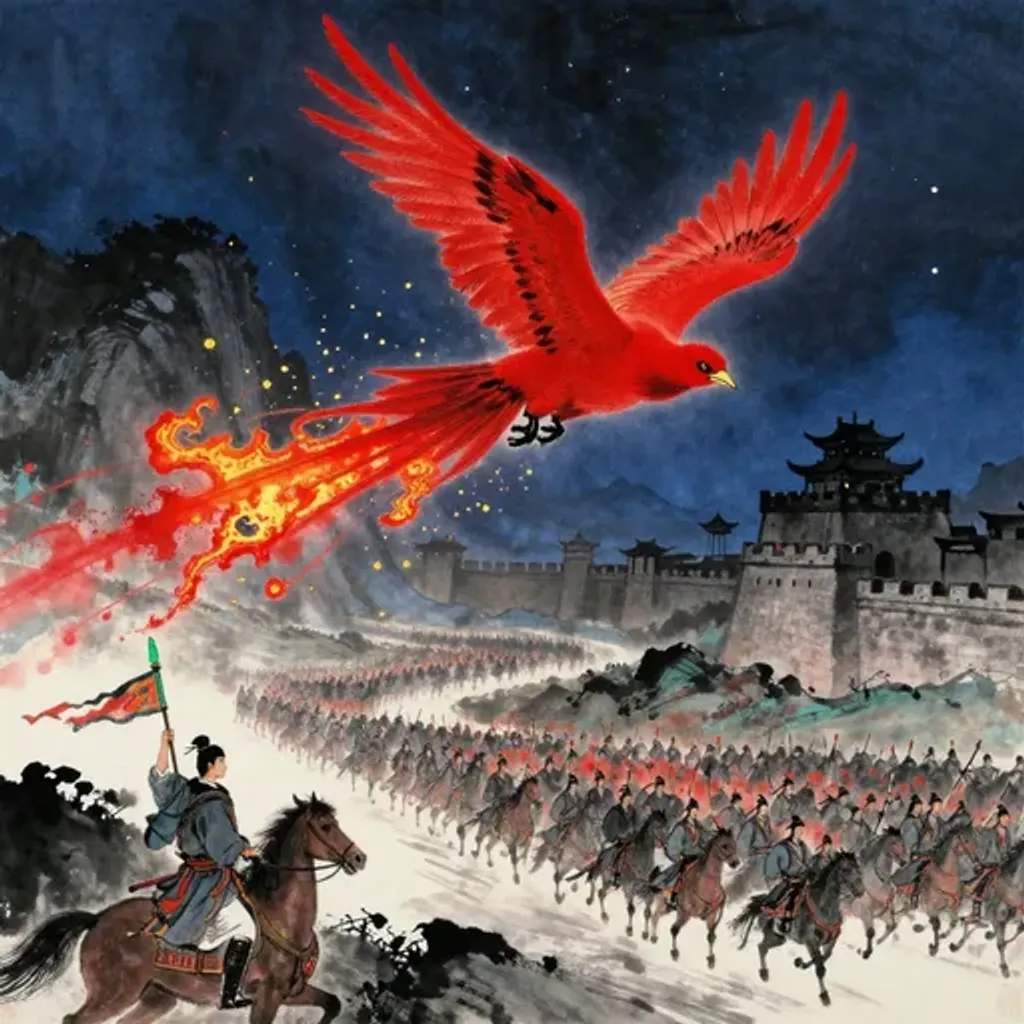
天命赤烏,與君徼期。征伐无道,誅其君傲,居止何憂?

風自火出,家人歸於本位。

阅读完整注释 ↓

風自火出,家人歸於本位。天命赤烏——天降赤色神鳥為兆,與君徼期——授予君主確定之天命。征伐無道——討伐不義之邦,誅其君傲——誅滅驕橫之暴君。居止何憂——安居而無所憂。赤烏為周武王伐紂時之著名祥瑞:據傳火鳥降於武王帳前,確證天命所歸。此詩重述正統治理之開國神話:天命、義征、居安。家人歸於自身,訓示真正之家國秩序立基於天命、行之以正義、歸結為安居之樸素平安。

English commentary

Wind from fire returns to its own hearth: The Family transforms into itself. Heaven sends the Red Crow as an omen, granting the ruler a fixed appointment. He marches to punish the lawless and executes the arrogant tyrant — then settles peacefully with nothing to fear. The Red Crow (赤烏) is a celebrated portent associated with King Wu of Zhou's conquest of Shang: according to tradition, a fiery bird descended upon the king's tent as confirmation of heaven's mandate. The verse recapitulates the founding myth of proper governance: divine sanction, righteous conquest, and domestic peace. When The Family returns to itself, the message is that true household order rests on mandate from above, executed with justice, and culminating in the simple security of home.