上卦
艮 Gèn
Mountain — Stillness
下卦
離 Lí
Fire — Clinging
经典文本
卦旨
Bi is not decoration. It is the question of what form reveals and what it conceals — the relationship between surface appearance and underlying substance. The hexagram places Mountain (Gen) above Fire (Li): a fire burning at the foot of the mountain, illuminating its contours but not altering its mass. Light plays across the surface of something solid and still. The beauty here depends entirely on there being something real underneath. The judgment grants 亨 but adds a crucial qualification: 小利有攸往 — "small advantage in having somewhere to go." The word 小, "small," is the hexagram's structural key. Grace furthers only in modest measure. When form becomes the primary concern — when the ornament displaces the substance — the hexagram's energy inverts. The Image text makes this explicit: fire under the mountain clarifies small matters but cannot illuminate great decisions. You can use grace to refine what already exists, but you cannot use it to create what does not exist. The top line resolves the hexagram's deepest teaching: 白賁 — "white grace," unadorned adornment, the beauty that strips away everything inessential. This is Bi's actual goal, reached only after passing through progressively more elaborate forms of decoration. The hexagram traces a complete arc from adding ornament to removing it, from colored silk to plain white. The common misreading stops at surface aesthetics — how things look. Bi's architecture moves through aesthetics to arrive at authenticity: the recognition that the highest form of grace is the one that lets the underlying truth show through without interference.
彖辞
Fulfillment. Small things are supported for going forward. Grace. And the only thing it supports is small moves. Not the grand gesture, not the major decision — the little thing, done beautifully. The text knows exactly what decoration can carry and what it can't. Ornament handles the minor. Substance handles the rest.
象辞
Fire at the foot of the mountain: grace. The realized person accordingly clarifies everyday affairs but does not dare decide disputes this way. Fire illuminating the mountain's base — beautiful, but the light only reaches so far. The realized person uses grace to sort out the small stuff and explicitly refuses to use it for the hard stuff. Imagine: a judge who says 'I can make it look nice but I can't tell you who's right.' That's the correct use of this hexagram.
爻辞
第初爻
Adorning the feet. Leaving the carriage to walk. Decorating the lowest part — and then getting out of the carriage to walk. Grace at the beginning leads to a strange move: you give up the comfortable ride. Because once you start paying attention to the beauty of small things, the vehicle that rushes past them becomes the problem.
第二爻
Adorning the beard. Decorating the beard. The beard follows the chin — it has no life of its own. The ornament depends completely on what it's attached to. Two characters and the entire philosophy of decoration: nothing added means anything without the thing it's added to. The beard is not the face.
第三爻
Graceful and glistening. Lasting sustained orientation resolves well. Beautiful and wet with light. The hinge line, and the grace here is alive — not dried out, not performed. Lasting commitment to this kind of beauty resolves well. The key word is 'lasting.' Flash is easy. Sustained freshness requires the kind of attention that doesn't get bored.
第四爻
Graceful or plain? A white horse, as if winged. This is not an assailant — it is a suitor. White horse, practically flying. And the question: is it an attack or a proposal? The answer: a suitor. In the grace hexagram, the thing that approaches with overwhelming beauty might look threatening. It isn't. Sometimes the arrival of something stunning is just an arrival. Stop reaching for the weapon.
第五爻
Grace among the hill gardens. The bundle of silk is meager, scanty. Friction. But in the end, resolves well. Beautiful gardens on the hillside, and your gift is a cheap scrap of silk. Embarrassing. But it resolves well. The person who shows up to the beautiful place with the shabby offering and stays anyway — that's the move. The friction is the gap between the setting and the gift. The resolution is that sincerity outranks silk.
第上爻
Plain white grace. No fault. White. Unadorned. Nothing added. The top of the grace hexagram and the final form of beauty is: no beauty. No color, no ornament, no decoration at all. Just plain white. No fault. The whole hexagram was about adorning things, and it ends by undressing. The purest grace turns out to be the one that was there before you started.
焦氏易林
焦延寿《易林》——第22卦本卦之辞。西汉时期以四言诗阐释卦变,为最早的系统性易学占辞集。
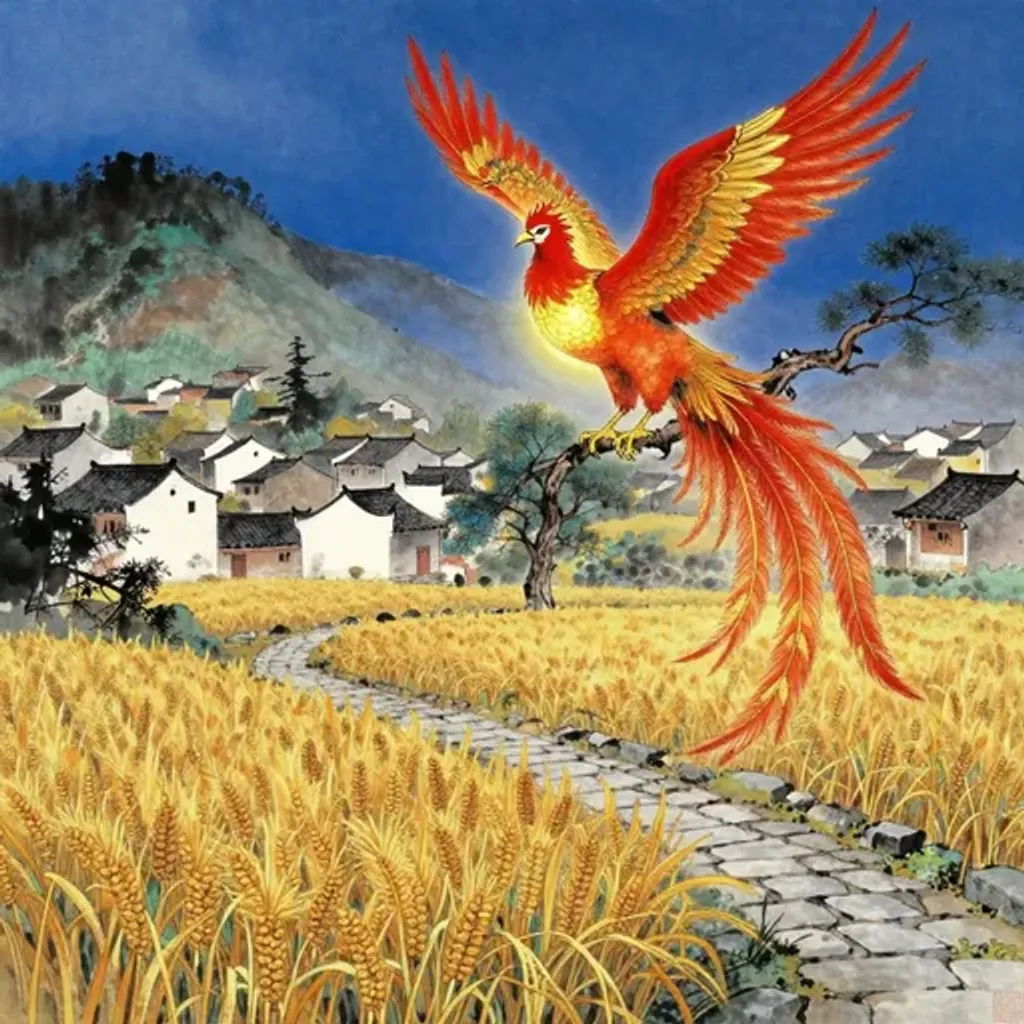
政不暴虐,鳳凰來舍;四時順節,民安其居。
山下有火,賁之自照。
阅读完整注释 ↓
山下有火,賁之自照。政不暴虐——政令不殘暴。鳳凰來舍——鳳凰來此棲居。四時順節——四季依序運行。民安其居——百姓安居樂業。鳳凰唯聖世而現,明君之德自然輻射,不假強制。源卦與變卦同為賁,此自指之詩道出賁之最高境界:文飾為善治之自然表達,非強加於亂世之人工。卦變為自身,寓意明確:此格局圓滿實現,無須變化。文明之美非裝飾,乃德之可見形態——鳳凰擇真正之文采而棲。
English commentary
Fire beneath the mountain mirrors itself — Grace transforms into Grace, the hexagram unchanged. When governance is not tyrannical, the phoenix comes to dwell. The four seasons follow their proper rhythm, and the people rest secure in their homes. The phoenix appears only under a sage ruler whose virtue radiates without coercion. This self-referential verse captures Grace's highest potential: adornment as the natural expression of good order, not artifice imposed upon chaos. When the source and target are identical, the message is: this pattern, fully realized, needs no transformation. Civilized beauty at its best is not decoration but the visible form of virtue — the phoenix choosing to settle where it senses authentic grace.
