Winter Landscape

第41卦

Sǔn

Decrease

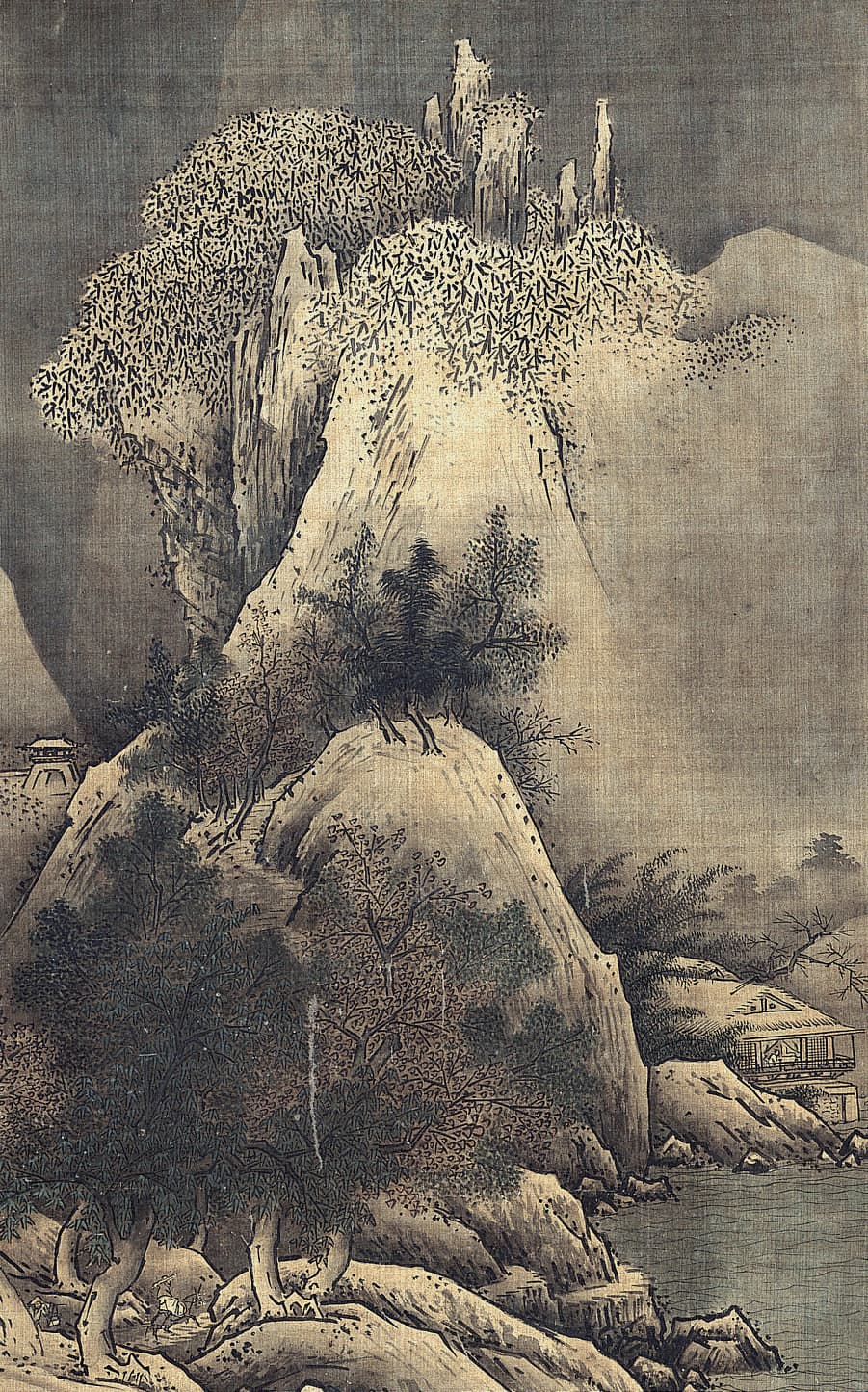
Winter LandscapeSesshū Tōyō (雪舟等楊), 15th century

A winter landscape stripped to bone. Sesshū Tōyō, the Zen monk who traveled to Ming China in the 1460s, renders the scene in monochrome ink on paper—a few bare trees, jagged rocks, a solitary temple structure nearly swallowed by mountain mass. The 15th-century painting uses minimal brushwork, each stroke deliberate. No decoration survives winter's reduction. Snow implies itself through absence of ink, white paper becoming the substance of cold.

阅读完整论述 ↓

Sesshū was a Zen monk who traveled to China in the 1460s and brought Song Dynasty ink painting techniques back to Japan. This winter scene uses minimal brushwork and monochrome ink to depict a bare landscape stripped of ornamentation. The reduction of visual elements to essential forms connects to hexagram 41's theme of decrease. This is Sǔn (損), the hexagram ancient diviners called Decrease. The character combines elements suggesting loss or reduction, but not as calamity—as deliberate subtraction. The trigram structure places Mountain (Gèn) above Lake (Duì): the mountain rising high while the lake drains below, water descending to nourish what lies beneath. In Sesshū's landscape, the visual vocabulary contracts to essentials. What remains after reduction carries greater weight than what accumulates through addition. Zhou Dynasty court records show this configuration appearing when rulers reduced palace expenses to relieve famine, when generals lightened supply trains for faster movement. The Judgment text addresses the principle directly: "Decrease combined with sincerity brings about supreme good fortune without blame. One may be persevering in this. It furthers one to undertake something. How is this to be carried out? Two small bowls may be used for the sacrifice." The text instructs that even ritual offerings can be reduced when done with genuine intent. Sesshū's painting embodies this counsel—the monk reduces landscape to its structural truth, eliminating the decorative detail that characterized Chinese academic painting. What the brush omits becomes as significant as what it records. Song Dynasty diviners understood decrease not as poverty but as concentration, the way winter reduces the tree to reveal its essential form. The Image Text observes: "At the foot of the mountain, the lake: the image of Decrease. Thus the superior person controls anger and restrains instincts." Water drains from the heights to gather in the depths, a natural movement downward. Sesshū's winter landscape shows this principle in visual form—the high peaks bare and austere, their substance having descended to nourish the valley below. In the I-Ching's sequence, Sǔn follows Xiè (deliverance from obstruction): after tension releases, one must decrease excess to establish sustainable balance. The winter scene does not depict loss but clarification, the way subtracting ornament reveals what endures beneath.

上卦

Gèn

MountainStillness

五行Earth方位Northeast家庭Youngest Son性质still, stopping, resting

下卦

Duì

LakeJoyous

五行Metal方位Southwest家庭Youngest Daughter性质joyful, reflective, collecting

经典文本

卦旨

Sun is not loss. It is the deliberate reduction of the lower to enrich the higher — the principle that subtraction, properly directed, creates more than addition. Mountain (Gen) above Lake (Dui) shows the lake's water evaporating to nourish the mountain, the lower diminished so the upper may be sustained. The judgment insists on sincerity as the precondition: 有孚,元吉,无咎可貞 — "with sincerity, supreme good fortune, no blame, perseverance possible." Then it asks the essential question: 曷之用?二簋可用享 — "how is this to be carried out? Two small bowls may be used for the sacrifice." The answer redefines adequacy. When reduction is genuine, even the simplest offering suffices. Elaborate ritual performed without inner substance achieves less than two plain bowls offered with complete sincerity. The Image text translates this into psychological terms: 山下有澤,損。君子以懲忿窒欲 — "the lake at the foot of the mountain, Decrease. The superior person restrains anger and curbs desires." The two specific reductions named — 忿 (anger) and 欲 (desire) — are not arbitrary. Anger is energy wasted on what has already happened; desire is energy wasted on what has not yet arrived. Both drain the reservoir of present capacity. The third line captures the social arithmetic of decrease with startling precision: 三人行,則損一人。一人行,則得其友 — "when three travel together, one is lost; when one travels alone, a companion is found." The excess third creates instability; the solitary one attracts completion. Decrease produces the conditions for genuine relationship. The goal of Sun is to teach that proper reduction is itself a form of increase — that stripping away what is excessive reveals what is essential. The fifth line shows this principle at its most concentrated: 或益之十朋之龜。弗克違。元吉 — "someone increases him with ten pairs of tortoises; it cannot be refused; supreme good fortune." When decrease is undertaken with integrity, increase arrives unsought, in a form that cannot be deflected. The hexagram regulates the human tendency to equate more with better, teaching instead that the right removal — of pretension, of surplus, of emotional excess — concentrates what remains into something of genuine power.

彖辞

There is sincerity. Supremely resolves well. No fault. Sustained orientation is invited. Going forward is supported. How shall this be carried out? Two small baskets may be used for the offering. Decrease with sincerity. And the text bends over backward to reassure you: supremely resolves well, no fault, everything supported. Then the question: how do you do this? Two small baskets. Not the grand sacrifice. The humble one. The text is saying: when you have less, bring less. The offering that matches your means is the one the configuration accepts.

象辞

A lake at the foot of the mountain: decrease. The realized person accordingly curbs resentment and restrains desire. The lake evaporates to feed the mountain — decrease below, increase above. And the instruction is: curb your anger, restrain your wants. Not because they're wrong. Because they're expensive. The person who eliminates resentment and desire has decreased the two things that cost the most and produce the least. That's the real economy.

爻辞

第初爻

Finishing one's affairs and going swiftly. No fault. But consider how much to decrease. Finish your own work, then go help. No fault — but weigh the cost first. The text wants you to serve, and it also wants you to count. Because the person who gives without measuring doesn't run out of generosity. They run out of everything else. Help swiftly. But know what you're spending.

第二爻

Sustained orientation is supported. Advancing: adverse. Without decreasing, increase it. Stay oriented: supported. Push forward: adverse. And then the koan: increase without decreasing. How? By being so consistently yourself that your presence adds value without costing anything. The second line of decrease discovers that the best way to give more is to lose nothing. No sacrifice required. Just: don't diminish yourself.

第三爻

Three people walking lose one person. One person walking finds a companion. Three becomes two. One becomes two. The math of decrease and increase in a single image. Three people create a crowd; remove one and you have a partnership. One person is alone; add one and you have a partnership. The same number — two — is the product of both subtraction and addition. The text is showing you that decrease and increase are the same operation.

第四爻

Decreasing one's affliction. Acting swiftly brings happiness. No fault. Decrease the sickness. Not the resources, not the comfort — the affliction itself. Act fast and happiness arrives. No fault. The fourth line of decrease and the instruction is: the most valuable thing to lose is the thing that's hurting you. The person who can identify their own illness and reduce it quickly has found the only decrease that's actually an increase.

第五爻

Someone increases this one by ten pairs of tortoise shells. One cannot refuse. Supremely resolves well. Ten pairs of tortoise shells — the most valuable oracle instruments available — and you can't say no. Supremely resolves well. The fifth line of decrease and the universe is handing you a gift so large it overrides your humility. Sometimes decrease creates a vacuum that the cosmos fills without asking permission. You decreased. The increase found you.

第上爻

Without decreasing, increasing. No fault. Sustained orientation resolves well. Going forward is supported. Gaining servants but not a separate household. No decrease at all — pure increase. No fault. Everything supported. But the servants come without a private house. The gain is public, not personal. The top of the decrease hexagram arrives at increase that belongs to everyone. The person who decreased all the way through the hexagram and came out the other side with more than they started? They discovered it doesn't belong to them. It belongs to the work.

焦氏易林

焦延寿《易林》——第41卦本卦之辞。西汉时期以四言诗阐释卦变,为最早的系统性易学占辞集。
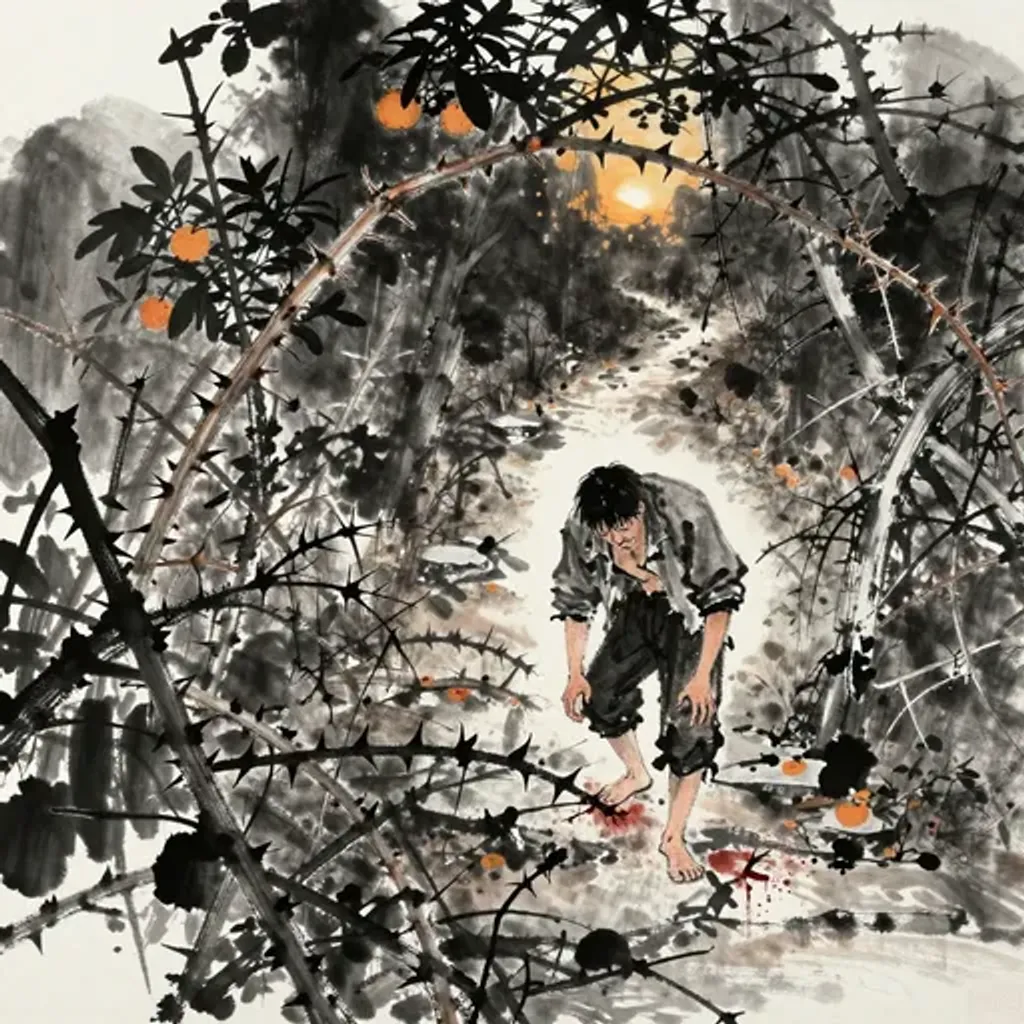
Yilin artwork for Hexagram 41
路多枳棘,步刺我足。不利孤客,為心作毒。

山下有澤,損之象。

阅读完整注释 ↓

山下有澤,損之象。「路多枳棘,步刺我足」——道路荊棘叢生,每步刺足。「不利孤客,為心作毒」——不利於獨行之客,令人心生苦毒。損之損,自身重疊,減損不止。從損至損,無所轉化,循環往復。荊棘之路愈行愈密,孤身行者無人分擔。損而不變,自願之捨棄變為被動之消耗。道路本身成為敵人,每一步都在損耗行者。無人相伴則損失加倍——非但物質減少,心靈亦被侵蝕。損而復損,苦中加苦。

English commentary

Mountain above lake returns to itself — Decrease unchanged, the pattern reinforced. The road bristles with thorns and brambles, each step piercing the foot. This path is no friend to the solitary traveler; it poisons the heart. When Decrease transforms into itself, there is no escape from the dynamic of diminishment. The thorns multiply underfoot, and the lone walker has no companion to share the burden or clear the way. From Decrease to Decrease, the recursion intensifies: what was voluntary sacrifice becomes compulsive self-harm, the road itself becoming hostile. The verse captures the existential weight of isolation within a system designed to take. Solitude makes every thorn sharper; without reciprocity, Decrease is just loss.