Upper Trigram
艮 Gèn
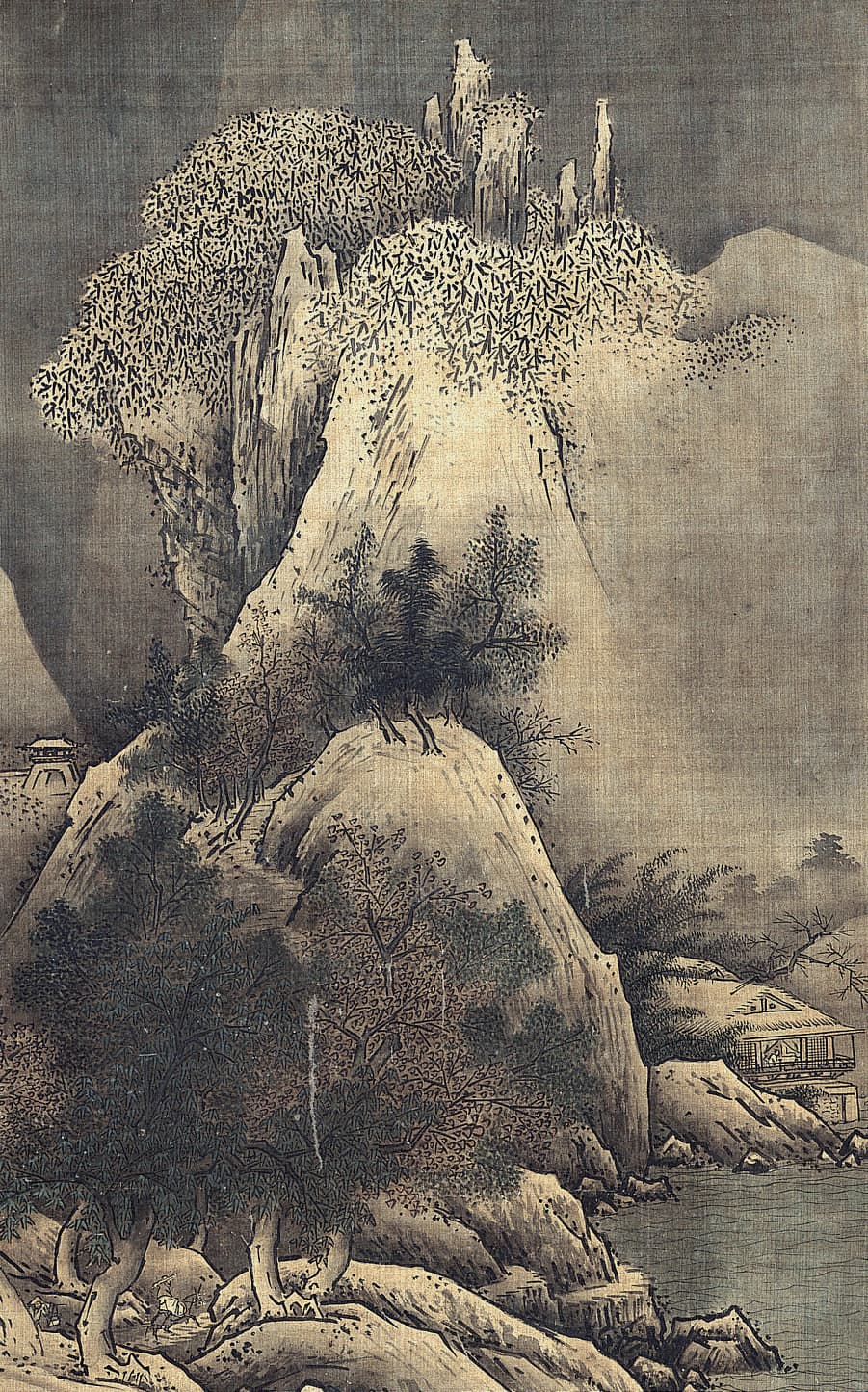
Mountain — Stillness
Lower Trigram
兌 Duì
Lake — Joyous
Classical Texts
The Goal
Sun is not loss. It is deliberate reduction below to enrich above — the principle that subtraction, properly directed, creates more than addition. Mountain (Gen) above Lake (Dui), and the Tuan states the mechanism without metaphor: 損下益上,其道上行 — "the lower is diminished, the upper augmented; its way moves upward." The lake at the mountain's foot is dug deeper and the mountain stands higher for it. Nothing is destroyed; the same material is redistributed toward where it does more. The judgment makes sincerity the precondition — 有孚,元吉,无咎可貞 — and then asks the essential question: 曷之用?二簋可用享 — "what is to be used? Two bowls may serve for the offering." The answer redefines adequacy. When the reduction is genuine, the plainest offering suffices — Wang Bi: 二簋,質薄之器也。行損以信,雖二簋而可用享 — and elaborate ritual without inner substance achieves less than two bowls offered whole. But the 彖 immediately fences it: 二簋應有時, and Wang Bi's gloss 至約之道,不可常也. Extreme frugality answers a moment; it is not a standing rule. The Image translates this into psychological terms: 山下有澤,損;君子以懲忿窒欲 — "below the mountain is the lake: Decrease. The superior person curbs anger and stops up desire." The two named reductions are not arbitrary. Anger spends energy on what has already happened; desire spends it on what has not yet arrived. Both drain the reservoir of present capacity, which is the lake the mountain is built from. 六三 gives the social arithmetic with startling economy: 三人行,則損一人;一人行,則得其友 — "when three travel, one is lost; when one travels, he gains a companion." The excess third destabilizes; the solitary one draws completion. Decrease is what makes real relationship possible. The goal of Sun is to show that proper reduction is itself a form of increase. 六五 concentrates it: 或益之十朋之龜,弗克違,元吉 — "someone augments him with a tortoise worth ten strings of cowries; it cannot be declined; supreme good fortune." Undertaken with integrity, decrease is met by an increase that arrives unsought and cannot be deflected. The hexagram regulates the human tendency to equate more with better, and teaches that the right removal — of pretension, of surplus, of emotional excess — concentrates what remains into something with actual force.
The Judgment
There is sincerity. Supremely resolves well. No fault. Sustained orientation is invited. Going forward is supported. How shall this be carried out? Two small baskets may be used for the offering. Decrease with sincerity. And the text bends over backward to reassure you: supremely resolves well, no fault, everything supported. Then the question: how do you do this? Two small baskets. Not the grand sacrifice. The humble one. The text is saying: when you have less, bring less. The offering that matches your means is the one the configuration accepts.
The Image
A lake at the foot of the mountain: decrease. The realized person accordingly curbs resentment and restrains desire. The lake evaporates to feed the mountain — decrease below, increase above. And the instruction is: curb your anger, restrain your wants. Not because they're wrong. Because they're expensive. The person who eliminates resentment and desire has decreased the two things that cost the most and produce the least. That's the real economy.
The Lines
Line 1
Finishing one's affairs and going swiftly. No fault. But consider how much to decrease. Finish your own work, then go help. No fault — but weigh the cost first. The text wants you to serve, and it also wants you to count. Because the person who gives without measuring doesn't run out of generosity. They run out of everything else. Help swiftly. But know what you're spending.
Line 2
Sustained orientation is supported. Advancing: adverse. Without decreasing, increase it. Stay oriented: supported. Push forward: adverse. And then the koan: increase without decreasing. How? By being so consistently yourself that your presence adds value without costing anything. The second line of decrease discovers that the best way to give more is to lose nothing. No sacrifice required. Just: don't diminish yourself.
Line 3
Three people walking lose one person. One person walking finds a companion. Three becomes two. One becomes two. The math of decrease and increase in a single image. Three people create a crowd; remove one and you have a partnership. One person is alone; add one and you have a partnership. The same number — two — is the product of both subtraction and addition. The text is showing you that decrease and increase are the same operation.
Line 4
Decreasing one's affliction. Acting swiftly brings happiness. No fault. Decrease the sickness. Not the resources, not the comfort — the affliction itself. Act fast and happiness arrives. No fault. The fourth line of decrease and the instruction is: the most valuable thing to lose is the thing that's hurting you. The person who can identify their own illness and reduce it quickly has found the only decrease that's actually an increase.
Line 5
Someone increases this one by ten pairs of tortoise shells. One cannot refuse. Supremely resolves well. Ten pairs of tortoise shells — the most valuable oracle instruments available — and you can't say no. Supremely resolves well. The fifth line of decrease and the universe is handing you a gift so large it overrides your humility. Sometimes decrease creates a vacuum that the cosmos fills without asking permission. You decreased. The increase found you.
Line 6
Without decreasing, increasing. No fault. Sustained orientation resolves well. Going forward is supported. Gaining servants but not a separate household. No decrease at all — pure increase. No fault. Everything supported. But the servants come without a private house. The gain is public, not personal. The top of the decrease hexagram arrives at increase that belongs to everyone. The person who decreased all the way through the hexagram and came out the other side with more than they started? They discovered it doesn't belong to them. It belongs to the work.
Yilin: Forest of Changes
From Jiao Yanshou's Forest of Changes (焦氏易林) — the verse for Hexagram 41 in its unchanging form. A Han dynasty collection of four-character verses interpreting every hexagram transformation.
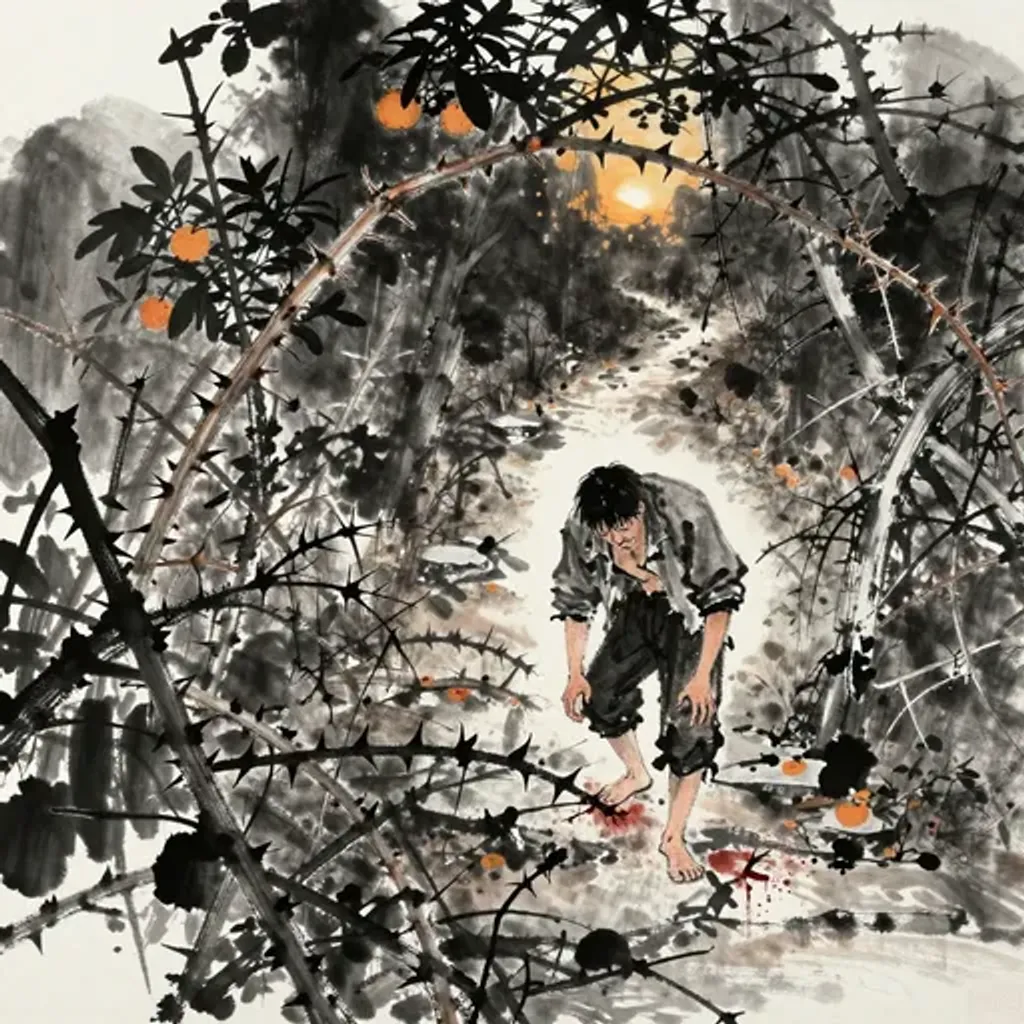
路多枳棘步刺我足不利旅客為心作毒
The road thick with thorns and brambles; each step pierces my feet. Unfavorable for the lone traveler; it becomes poison to the heart.
Read full commentary ↓
Mountain above lake returns to itself — Decrease unchanged, the pattern reinforced. The road bristles with thorns and brambles, each step piercing the foot. This path is no friend to the solitary traveler; it poisons the heart. When Decrease transforms into itself, there is no escape from the dynamic of diminishment. The thorns multiply underfoot, and the lone walker has no companion to share the burden or clear the way. From Decrease to Decrease, the recursion intensifies: what was voluntary sacrifice becomes compulsive self-harm, the road itself becoming hostile. The verse captures the existential weight of isolation within a system designed to take. Solitude makes every thorn sharper; without reciprocity, Decrease is just loss.
中文註釋
山下有澤,損之象。「路多枳棘,步刺我足」——道路荊棘叢生,每步刺足。「不利孤客,為心作毒」——不利於獨行之客,令人心生苦毒。損之損,自身重疊,減損不止。從損至損,無所轉化,循環往復。荊棘之路愈行愈密,孤身行者無人分擔。損而不變,自願之捨棄變為被動之消耗。道路本身成為敵人,每一步都在損耗行者。無人相伴則損失加倍——非但物質減少,心靈亦被侵蝕。損而復損,苦中加苦。
Jiao Shi Yi Lin 《焦氏易林》, manuscript from the Wenyuan Pavilion Siku Quanshu, Qianlong period, Qing dynasty.
National Palace Museum, accession nos. 故庫017987–017990
Fascicle 3, page 106
Read from the manuscript leaf
Shown unpunctuated, as in the manuscript.
About this reading
Read from the scanned leaf.
Related Hexagrams
Same upper trigram: Mountain (艮)
Same lower trigram: Lake (兌)