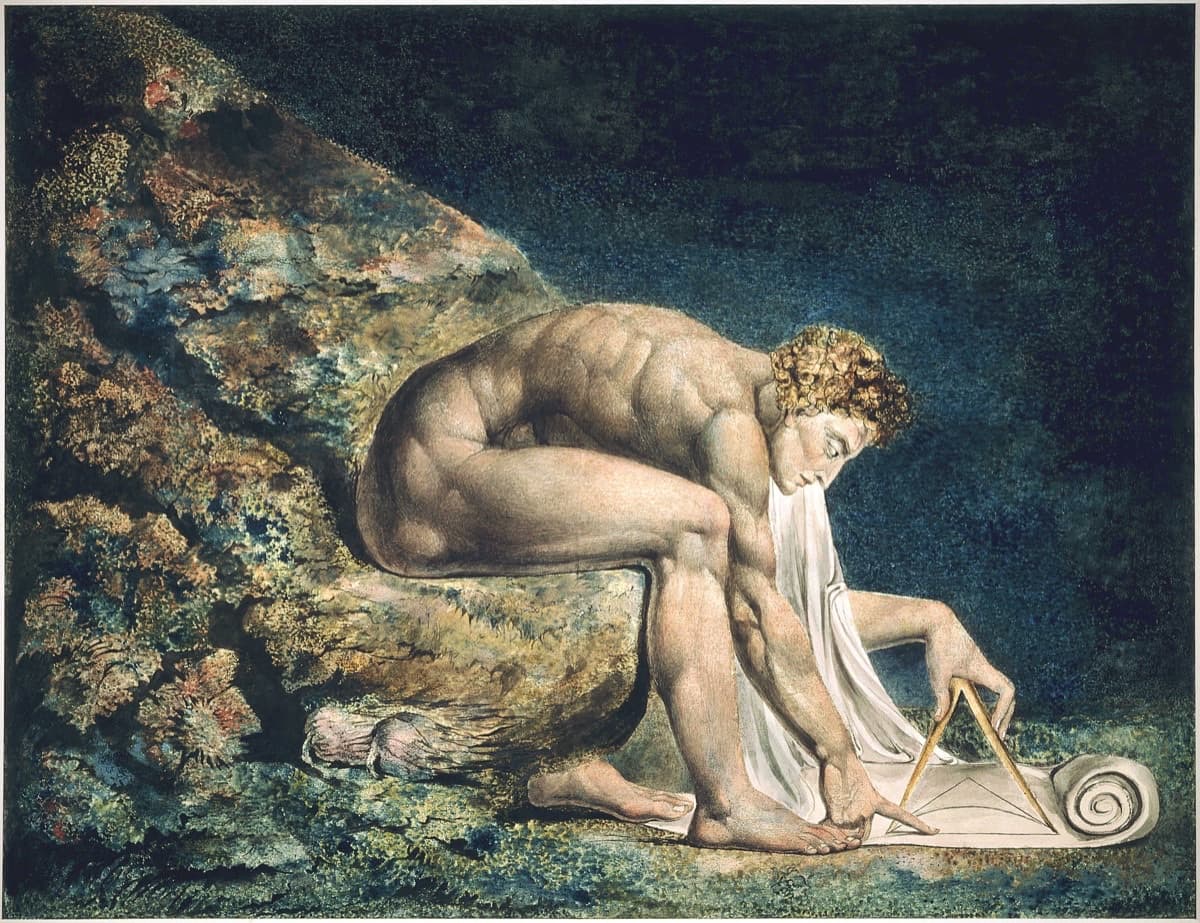
Upper Trigram
坎 Kǎn
Water — Abysmal
Lower Trigram
兌 Duì
Lake — Joyous
Classical Texts
The Goal
Jie is not restriction as punishment. It is the principle of articulation — the joints and nodes that give structure to what would otherwise be formless. Water (Kan) above Lake (Dui) shows water held by the lake's banks: unbounded it disperses uselessly, contained it becomes a reservoir. The character 節 means both limit and joint — the bamboo node that constrains the stalk's growth and is exactly what lets the stalk stand. The judgment endorses limitation and immediately marks its pathology: 亨。苦節不可貞 — "success; bitter limitation cannot be persevered in." That one clause separates Jie from asceticism. Limitation that produces suffering is limitation wrongly applied: too tight, too rigid, too detached from the life it claims to serve. The two lowest lines make the point that limitation is contextual rather than absolute. 初九 — 不出戶庭,无咎, "he does not leave the inner court; no blame." 九二 — 不出門庭,凶, "he does not leave the outer gate; misfortune." Almost the same words, one threshold apart, and opposite verdicts. Restraint that conserves at the outset becomes avoidance once the moment for action has arrived. Nothing in the words distinguishes them; only the timing does. The upper lines set the two poles. 九五 gives 甘節,吉,往有尚 — "sweet limitation; good fortune; to go forward is esteemed" — restraint one does not resent, which is the only kind that can be sustained and the only kind that permits movement. 上六 returns to the judgment's warning and splits it: 苦節,貞凶,悔亡 — "bitter limitation; constancy brings misfortune; remorse vanishes." Wang Bi resolves the apparent contradiction by asking who the severity is aimed at: 以斯施人,物所不堪,正之凶也;以斯脩身,行在无妄,故得悔亡 — imposed on others it is what they cannot bear, and that is the 凶; practised on oneself, where conduct carries no falsity, it earns the 悔亡. The same austerity is calamitous outward and blameless inward. The goal of Jie is the internal structure that makes freedom possible. The Image: 澤上有水,節;君子以制數度,議德行 — "the superior person devises number and measure, and examines the nature of virtue and conduct." Metre in poetry, rhythm in music, proportion in building: not constraints on expression but the conditions under which expression takes form. A river without banks is a swamp.
The Judgment
Fulfillment. Bitter limitation cannot be sustained. Limitation brings fulfillment — but bitter limitation breaks. The text draws the line with surgical precision: limits work, harsh limits don't. The person who sets boundaries that feel natural gets structure. The person who sets boundaries that feel punitive gets rebellion. The hexagram supports limitation and rejects excess limitation in the same breath.
The Image
Water above the lake: limitation. The realized person accordingly creates measures and standards, and examines the nature of character and conduct. The lake can only hold so much water — that's not a flaw, it's its definition. And the instruction is: create measures. Standards. Examine conduct. Because the lake that knows its capacity never floods. The realized person who knows their limits never breaks. The capacity IS the identity.
The Lines
Line 1
Not going out past the door and courtyard. No fault. Staying inside. Not even crossing the courtyard. No fault. The first line of limitation, and the instruction is: know when you haven't started yet. The door is right there and the answer is: don't open it. The person who can stay in the courtyard when the timing is wrong has the most valuable form of discipline — the kind that looks like doing nothing.
Line 2
Not going out past the gate and courtyard. Adverse. Same words, opposite verdict. Not going out: adverse. The second line flips the first line's instruction completely. The time to stay ended. The time to go began. And you're still inside. The person who mastered limitation in line one and kept applying it in line two has turned a virtue into a prison. Same behavior, different moment, different verdict. The I-Ching notices timing.
Line 3
Without limitation — lamenting. No fault. No limits at all. And: lamenting. But no fault. The third line says the person without boundaries suffers — the crying is real — but the fault isn't theirs in the way you'd expect. The lamentation IS the correction. The person who lets everything go and then weeps about it is undergoing the natural consequence, and the consequence is the teacher. No external punishment needed.
Line 4
Contented limitation. Fulfillment. Limits that feel right. Fulfillment. Two characters for the state, one for the result. The fourth line: limitation that produces contentment rather than resentment. This is the line where the whole hexagram clicks — the boundary that you don't fight because it fits. Water doesn't resent the lakeshore. The lakeshore is what makes it a lake.
Line 5
Sweet limitation. Resolves well. Going forward has merit. Sweet limits. Resolves well. Going forward has merit. The fifth line: limits so well-designed they taste good. The leader who limits themselves first and others second has discovered the only version of restriction that earns respect. Sweet doesn't mean easy. It means: the person who imposed the limit clearly lives by it too. That's what makes it sweet.
Line 6
Bitter limitation. Sustained orientation: adverse. Deviation detected dissolves. Bitter limits. Persisting in them: adverse. But the deviation dissolves. The top of the limitation hexagram, and the final teaching: harsh limits fail when sustained but sometimes they're necessary in the moment. The bitterness serves a purpose and then it must stop. The person who can be ruthless once and then immediately relent has used the bitter medicine correctly — as medicine, not as diet.
Yilin: Forest of Changes
From Jiao Yanshou's Forest of Changes (焦氏易林) — the verse for Hexagram 60 in its unchanging form. A Han dynasty collection of four-character verses interpreting every hexagram transformation.
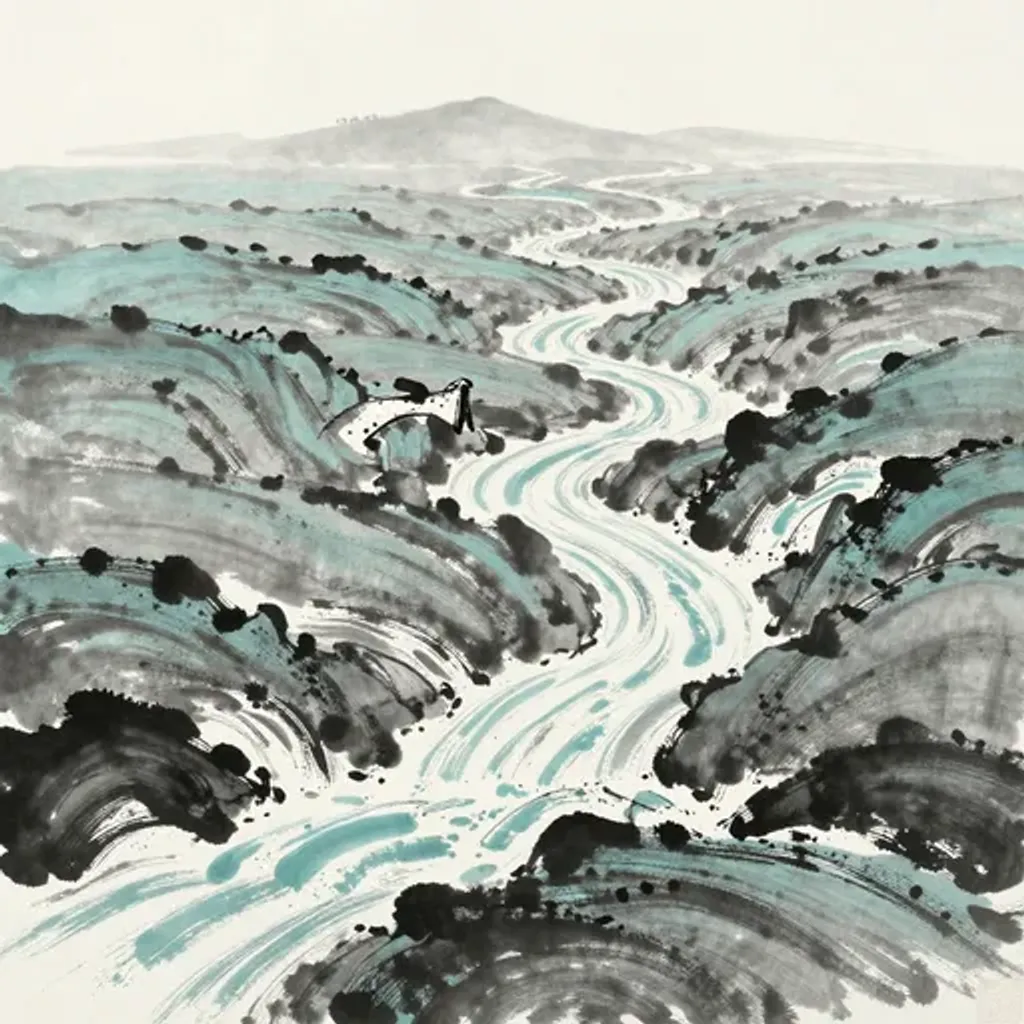
海為水王聰聖且明百流歸德無有叛逆常饒億足不利攻玉所求弗得
The sea is king of waters, perceptive, sagely, and wise. A hundred streams return in homage; none rebel or resist. Ever abundant, ever ample.
Read full commentary ↓
Water over lake doubled — Limitation reflecting itself. The sea is king of all waters, wise and perceptive in its rule. A hundred rivers return to its virtue, and none rebels or defects; abundance and sufficiency are constant. The verse celebrates the source hexagram's own principle in its purest form: the sea does not chase the rivers — it simply occupies the lowest point, and all waters flow toward it naturally. Its sovereignty is the sovereignty of position, not force. From Limitation to Limitation, the identity transformation affirms that true regulation needs no external enforcement. When the measure itself is just, compliance is spontaneous. The sea's '聰聖且明' — wise, sagacious, and clear — describes the ideal of governance as a gravitational field that orders the world simply by being what it is.
中文註釋
澤上有水,節之自映。海為水王——百川之宗,聰聖且明。百流歸德,無有叛逆,常饒優足。海不逐川而川自歸——居最低處而萬水朝宗,其主權在於位勢而非武力。節至節,同卦自返——真正的制度無須外在強制。度量本身公正,則順從自發。海之智慧、聖明、清澈,乃治理之理想:如引力場,以自身之存在即整合天下。制數度、議德行——節之本義在此達到圓滿之自我詮釋。
This commentary was written against an earlier reading of the verse. Where the reading has since changed, the interpretation itself may no longer apply.
Jiao Shi Yi Lin 《焦氏易林》, manuscript from the Wenyuan Pavilion Siku Quanshu, Qianlong period, Qing dynasty.
National Palace Museum, accession nos. 故庫017987–017990
Fascicle 4, page 164
Read from the manuscript leaf
Shown unpunctuated, as in the manuscript.
About this reading
Read from the scanned leaf.
Related Hexagrams
Same upper trigram: Water (坎)
Same lower trigram: Lake (兌)