Upper Trigram
坎 Kǎn
Water — Abysmal
Lower Trigram
坎 Kǎn
Water — Abysmal
Classical Texts
The Goal
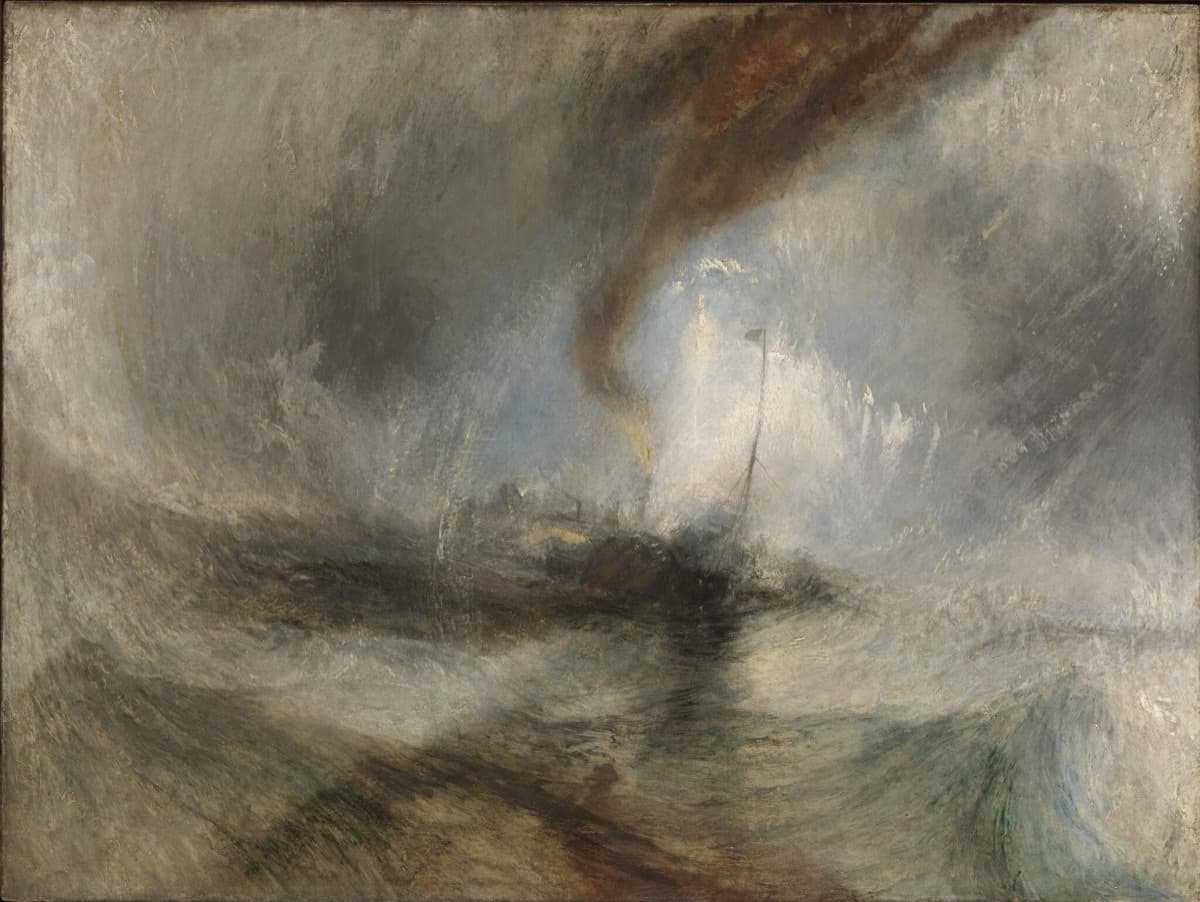
Kan is not danger to be avoided. It is the practice of moving through danger with an undivided heart. The hexagram doubles Water — Kan above Kan — and of the four doubled trigrams in the upper canon it is the one whose element is inherently perilous. Water flows into every crevice, fills every pit, and continues without choosing its path. The character 習 in the judgment (習坎) means repeated or practised: this is danger encountered again and again until one can move through it fluently. The judgment's centre is 有孚,維心亨 — "there is sincerity; it is the heart that brings success." Not strategy, not strength, not cleverness — the heart. The Tuan grounds this structurally rather than sentimentally: 乃以剛中也, because the firm line holds the centre. Inner coherence is not a mood here; it is a position maintained under load. The water's nature is instructive: it does not fight the pit, does not resent the gorge, does not try to flow uphill. It fills what must be filled and moves on. 行有尚 — "going forward is esteemed" — endorses continued movement rather than retreat into safety. The Image turns 習 from a description into an instruction: 水洊至,習坎;君子以常德行,習教事 — "water flows on unceasing: the Repeated Pit. The superior person makes virtuous conduct constant, and practises the work of teaching." The same word that names the danger names the response. What repetition does to peril, repetition also does to character — and the hexagram's answer to sustained danger is sustained practice, including the practice of teaching others, which is what keeps the conduct from becoming private endurance. The common misreading treats Kan as a warning — danger ahead, be careful. Its actual goal is the cultivation of a specific capacity: to maintain sincerity under conditions that reward deception, to keep moving when every surface is treacherous. The doubled structure means there is no respite between the first danger and the second. Kan does not promise the danger will end. It holds that whoever passes through sustained peril with an undivided heart develops something comfort cannot produce — a faithfulness tested by reality rather than assumed in theory.
The Judgment
Repeated abysses. There is sincerity. The heart alone finds fulfillment. Action has merit. Danger doubled. Not danger and then more danger — danger inside danger. And the only thing that works is sincerity in the heart. Not strength, not strategy, not speed. The heart. The text is saying: when you're in the abyss inside the abyss, the only compass that functions is the one you can't fake.
The Image
Water flows upon water: the repeated abyss. The realized person accordingly maintains consistent character and practices teaching. Water hits a hole and fills it completely before moving on. It doesn't skip the hard parts. It doesn't route around the depression. It fills it and then continues. The instruction is: be like that. Consistent character, repeated practice. The person who teaches the same lesson forty times is the one the water recognizes.
The Lines
Line 1
Repeated abyss. Entering the pit within the pit. Adverse. A pit inside the pit. You got used to the danger and went deeper. Adverse. This is the line for people who normalize their crisis — who set up furniture in the emergency. The abyss doesn't get safer because you've been in it a while. It gets worse.
Line 2
The abyss has danger. Seek small gains. Danger acknowledged. And the instruction is: small. Not the escape, not the breakthrough — small gains. The person in the abyss who tries to solve the whole thing at once drowns. The person who reaches for the next handhold survives. The text knows the difference between ambition and desperation.
Line 3
Coming and going, abyss upon abyss. Danger, and also a resting place. Entering the pit within the pit. Do not act. Forward is an abyss. Backward is an abyss. There's a narrow ledge to rest on and the instruction is: stay on it. Do not act. Every move leads to a deeper hole. The hardest discipline in the book isn't acting under pressure — it's not acting under pressure. This line knows you want to move. Don't.
Line 4
A jug of wine, a basket of rice, a second vessel. Offerings of clay, handed through the window. In the end, no fault. Wine, rice, clay vessels, passed through a window. Not a banquet — a care package. Handed sideways through an opening that barely qualifies as a door. And: no fault. In the middle of the abyss, the text describes the smallest possible act of sincerity. No ceremony. No presentation. Just: here, take this. I found a window.
Line 5
The abyss does not overflow. Reaching the level, already even. No fault. The water rises to the rim and stops. Not over. Just to the level. No fault. You don't escape the abyss in this line — you equalize. The water finds its level and that's enough. No fault isn't triumph. It's survival with your integrity intact. Sometimes that's the whole victory.
Line 6
Bound with triple-stranded rope, placed in a thicket of thorns. For three years unable to find the way. Adverse. Tied up with the strongest rope available, thrown in thorns, three years gone. Adverse. The last line of the abyss hexagram and the image is total imprisonment. Not because the danger was too great — because every warning was ignored on the way down. The rope has three strands. The book gave you six lines of warning. Same math.
Yilin: Forest of Changes
From Jiao Yanshou's Forest of Changes (焦氏易林) — the verse for Hexagram 29 in its unchanging form. A Han dynasty collection of four-character verses interpreting every hexagram transformation.
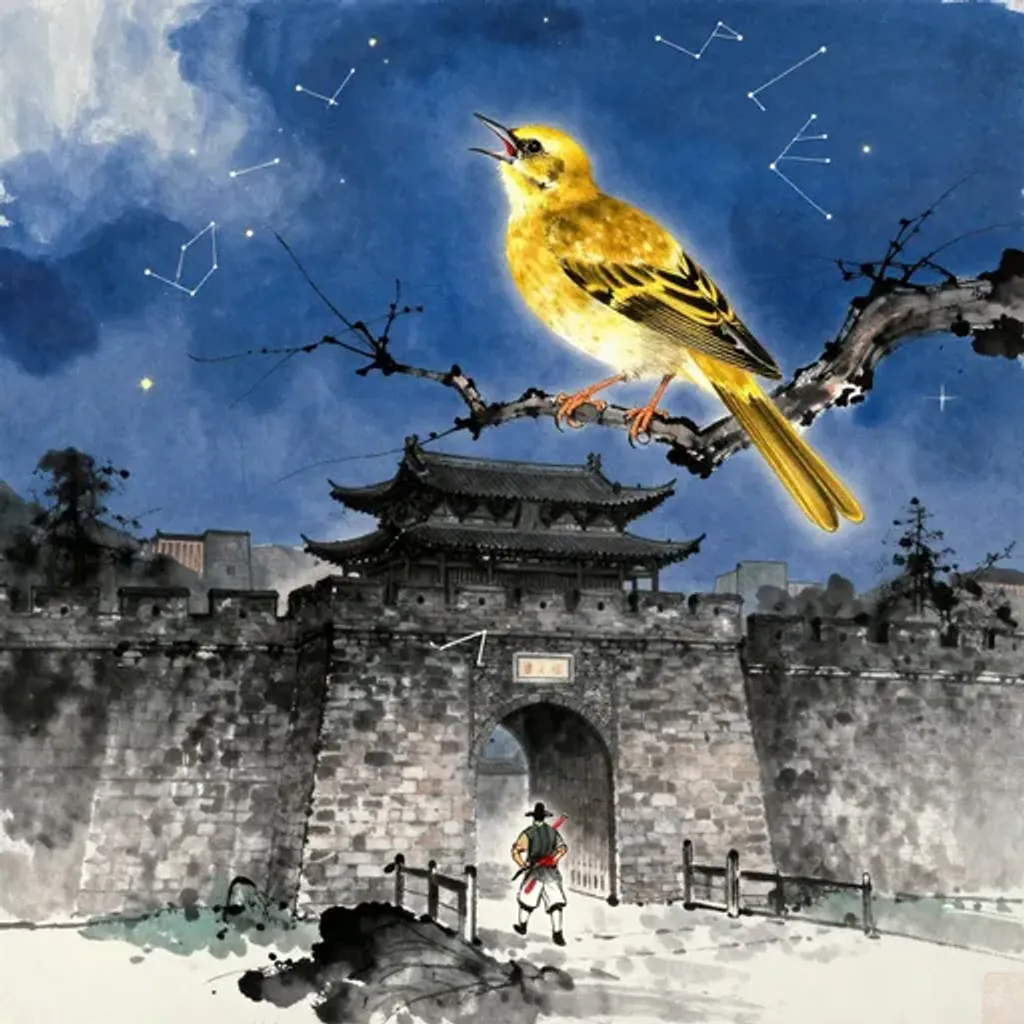
有鳥黃足歸呼季玉從我睢陽可避刀兵與福俱行有命久長
There is a yellow bird with legs; it calls, summoning Jiyu. Follow me to Suiyang; there one may avoid war and weapons. Walking together with blessings; life shall be long.
Read full commentary ↓
Water upon water, the doubled abyss turns inward upon itself. A golden-footed bird appears — evoking the Yellow Bird of the Shijing — and calls out for Jiyu, summoning a companion home. Follow me to Suiyang, the verse counsels, where one may avoid the blades of war. Walk alongside blessings, and life shall be long. Suiyang is the hometown of Jiao Gan, the Yilin's own author; this self-referential note grounds the oracle in the diviner's personal geography. From The Abysmal returning to itself, the message is that within repeated danger lies a fixed center — a home one can return to, a place where even the abyss yields safety to those who know where to stand.
中文註釋
水洊至,重坎自照,坎歸坎——險之中定而不移。有金足之鳥(或黃鳥),呼喚季玉歸來。從我至睢陽,可避刀兵之患;與福俱行,有命久長。睢陽為焦氏易林作者焦贛之故里,此自指之筆將占辭錨定於卜者個人之地理。從坎歸坎,重險之中自有定處——可歸之家、可立之地,即深淵之中亦可為知其所立者提供庇護。常德行、習教事,定於險中即是脫險之道。
Jiao Shi Yi Lin 《焦氏易林》, manuscript from the Wenyuan Pavilion Siku Quanshu, Qianlong period, Qing dynasty.
National Palace Museum, accession nos. 故庫017987–017990
Fascicle 2, page 98
Read from the manuscript leaf
Shown unpunctuated, as in the manuscript.
About this reading
Read from the scanned leaf.
Related Hexagrams
Same upper trigram: Water (坎)
Same lower trigram: Water (坎)