Snow Storm Steam Boat

第29卦

Kǎn

The Abysmal Water

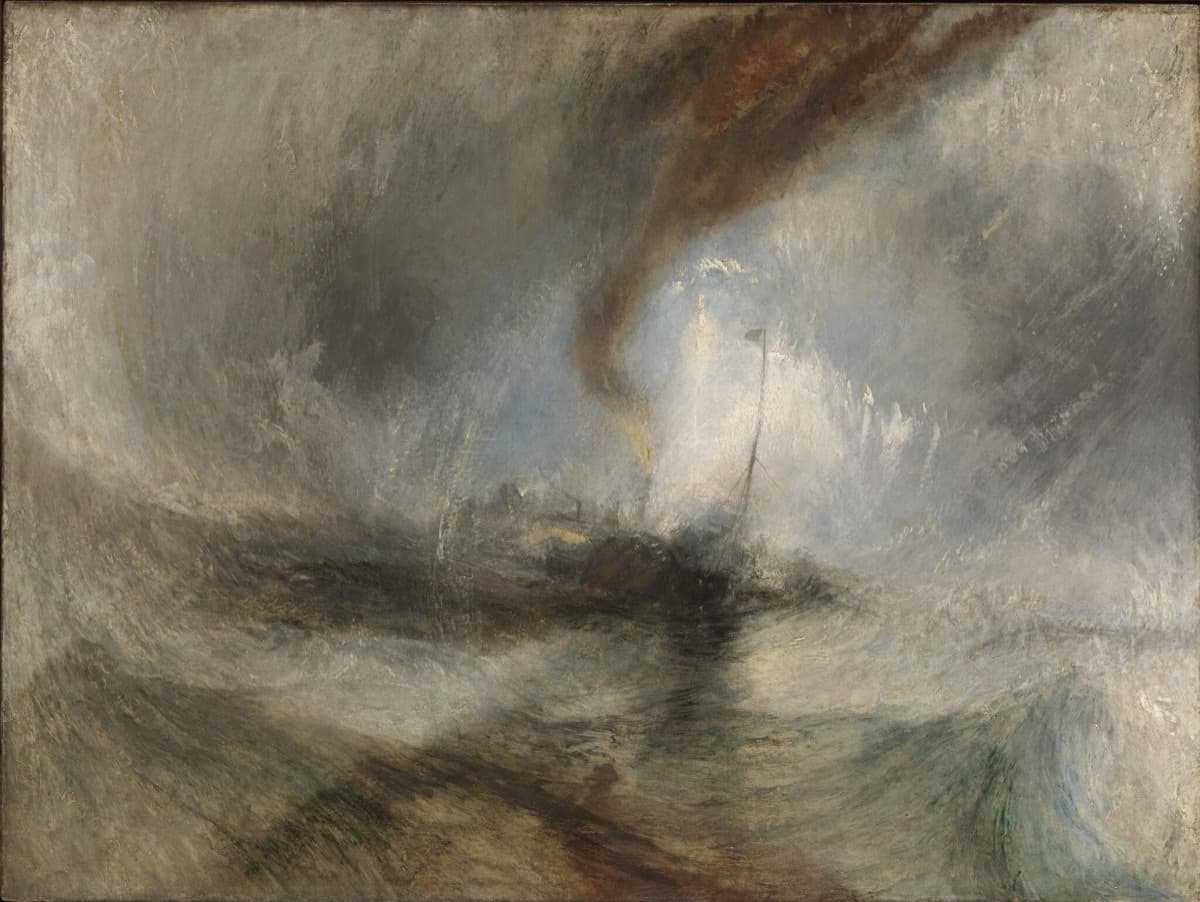
Snow Storm Steam BoatTurner, Unknown

Turner's brushwork dissolves a steamboat into swirling chaos—sea, snow, and storm merge until no boundary holds. The paddle-steamer barely registers at the composition's center, engulfed by water and wind that spiral in violent vortex. He painted this around 1842 after reportedly having himself lashed to a ship's mast during a storm to witness the experience directly. The painting offers no safe vantage point; viewers inhabit the maelstrom itself, surrounded by forces that obliterate orientation. Water and vapor erase the line between sea and sky.

阅读完整论述 ↓

Zhou Dynasty diviners called this configuration Kan (坎), the Abysmal—Water (Kan) doubled, danger upon danger. The character depicts a pit or chasm, a hole one falls into repeatedly. When this hexagram appeared in divination, it signaled not single crisis but serial peril, situations where escaping one danger leads directly into the next. Turner's storm captures this precisely: each wave conquered reveals another rising behind it, exhaustion compounding as the ordeal extends. Ancient texts describe Kan as "water flowing without filling," perpetual passage through what cannot be grasped or controlled. Turner's vortex of sea, snow, and steam depicts a paddle-steamer caught in a violent storm off Harwich. The swirling composition places the viewer within the chaos of water and wind, with the vessel barely visible at the center. This captures the hexagram's theme of the Abysmal—repeated danger, water upon water, the need to flow through peril rather than resist it. The Judgment text states: "The Abysmal repeated. If you are sincere, you have success in your heart, and whatever you do succeeds." Sincerity here means flowing like water rather than rigidly resisting—the steamboat survives by moving with the waves' force, not against it. Song Dynasty commentary notes that water always finds its way downward through obstacles; faced with repeated danger, one must adopt water's patient persistence. Turner's composition lacks solid ground or stable reference—everything flows and churns, yet the vessel at center maintains forward momentum. The painting teaches dangerous passage, not safe harbor. The Image Text offers unexpected counsel: "Water flows on uninterruptedly and reaches its goal. The superior person walks in lasting virtue and carries on the business of teaching." Constancy through repetition becomes the method—water wears stone through persistent movement, not force. Turner painted tempests throughout his career, returning obsessively to the theme of nature's overwhelming power. In the I-Ching's sequence, the Abysmal follows Preponderance of the Great: after critical mass strains structures (28), one enters sustained danger requiring fluid adaptation (29). The storm will not abate. The only way is through.

上卦

Kǎn

WaterAbysmal

五行Water方位West家庭Second Son性质dangerous, flowing, fluid

下卦

Kǎn

WaterAbysmal

五行Water方位West家庭Second Son性质dangerous, flowing, fluid

经典文本

卦旨

Kan is not danger to be avoided. It is the practice of moving through danger with an undivided heart. The hexagram doubles Water — Kan above Kan — creating the only trigram repetition in the first thirty hexagrams whose element is inherently perilous. Water flows into every crevice, fills every pit, and continues without choosing its path. The character 習 in the judgment (習坎) means "repeated" or "practiced": this is danger encountered again and again until one develops the capacity to navigate it fluently. The judgment's central statement is 有孚維心亨 — "there is sincerity; the heart alone succeeds." Not strategy, not strength, not cleverness — the heart. Kan insists that the only reliable instrument in genuine danger is internal coherence. The water's nature is instructive: it does not fight the pit, does not resent the gorge, does not try to flow uphill. It fills what must be filled and moves on. 行有尚 — "going forward is esteemed" — endorses continued movement, not retreat into safety. You cannot drain the abyss. You can only pass through it with your integrity intact. The common misreading treats Kan as a warning hexagram — "danger ahead, be careful." Its actual goal is the cultivation of a specific inner quality: the capacity to maintain sincerity under conditions that reward deception, to keep moving when every surface is treacherous. The doubled structure means there is no respite, no safe ground between the first danger and the second. Kan does not promise that the danger will end. It teaches that the person who maintains an undivided heart through sustained peril develops something that comfort and safety cannot produce — a faithfulness tested by reality rather than assumed in theory.

彖辞

Repeated abysses. There is sincerity. The heart alone finds fulfillment. Action has merit. Danger doubled. Not danger and then more danger — danger inside danger. And the only thing that works is sincerity in the heart. Not strength, not strategy, not speed. The heart. The text is saying: when you're in the abyss inside the abyss, the only compass that functions is the one you can't fake.

象辞

Water flows upon water: the repeated abyss. The realized person accordingly maintains consistent character and practices teaching. Water hits a hole and fills it completely before moving on. It doesn't skip the hard parts. It doesn't route around the depression. It fills it and then continues. The instruction is: be like that. Consistent character, repeated practice. The person who teaches the same lesson forty times is the one the water recognizes.

爻辞

第初爻

Repeated abyss. Entering the pit within the pit. Adverse. A pit inside the pit. You got used to the danger and went deeper. Adverse. This is the line for people who normalize their crisis — who set up furniture in the emergency. The abyss doesn't get safer because you've been in it a while. It gets worse.

第二爻

The abyss has danger. Seek small gains. Danger acknowledged. And the instruction is: small. Not the escape, not the breakthrough — small gains. The person in the abyss who tries to solve the whole thing at once drowns. The person who reaches for the next handhold survives. The text knows the difference between ambition and desperation.

第三爻

Coming and going, abyss upon abyss. Danger, and also a resting place. Entering the pit within the pit. Do not act. Forward is an abyss. Backward is an abyss. There's a narrow ledge to rest on and the instruction is: stay on it. Do not act. Every move leads to a deeper hole. The hardest discipline in the book isn't acting under pressure — it's not acting under pressure. This line knows you want to move. Don't.

第四爻

A jug of wine, a basket of rice, a second vessel. Offerings of clay, handed through the window. In the end, no fault. Wine, rice, clay vessels, passed through a window. Not a banquet — a care package. Handed sideways through an opening that barely qualifies as a door. And: no fault. In the middle of the abyss, the text describes the smallest possible act of sincerity. No ceremony. No presentation. Just: here, take this. I found a window.

第五爻

The abyss does not overflow. Reaching the level, already even. No fault. The water rises to the rim and stops. Not over. Just to the level. No fault. You don't escape the abyss in this line — you equalize. The water finds its level and that's enough. No fault isn't triumph. It's survival with your integrity intact. Sometimes that's the whole victory.

第上爻

Bound with triple-stranded rope, placed in a thicket of thorns. For three years unable to find the way. Adverse. Tied up with the strongest rope available, thrown in thorns, three years gone. Adverse. The last line of the abyss hexagram and the image is total imprisonment. Not because the danger was too great — because every warning was ignored on the way down. The rope has three strands. The book gave you six lines of warning. Same math.

焦氏易林

焦延寿《易林》——第29卦本卦之辞。西汉时期以四言诗阐释卦变,为最早的系统性易学占辞集。

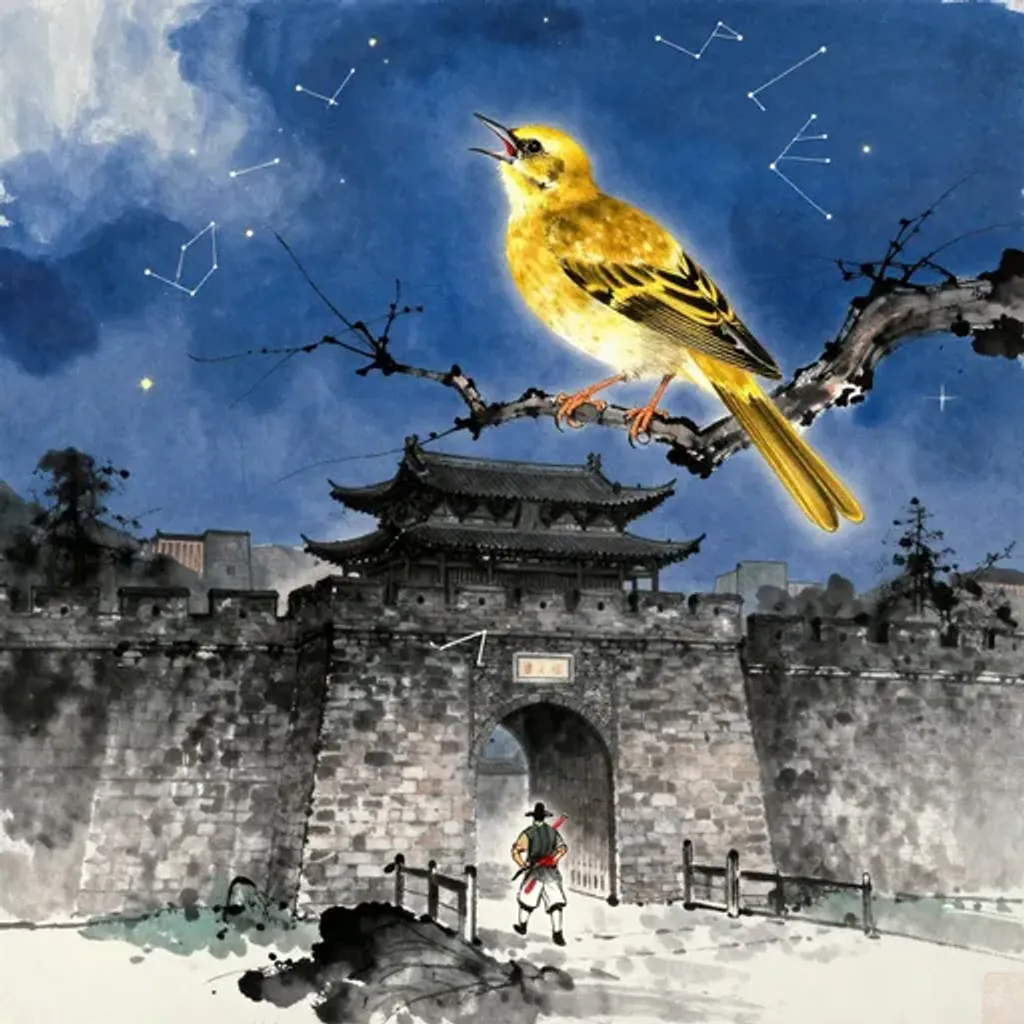
Yilin artwork for Hexagram 29
有黃鳥足,歸呼季玉。從我睢陽,可辟刀兵。與福俱行,有命久長。

水洊至,重坎自照,坎歸坎——險之中定而不移。

阅读完整注释 ↓

水洊至,重坎自照,坎歸坎——險之中定而不移。有金足之鳥(或黃鳥),呼喚季玉歸來。從我至睢陽,可避刀兵之患;與福俱行,有命久長。睢陽為焦氏易林作者焦贛之故里,此自指之筆將占辭錨定於卜者個人之地理。從坎歸坎,重險之中自有定處——可歸之家、可立之地,即深淵之中亦可為知其所立者提供庇護。常德行、習教事,定於險中即是脫險之道。

English commentary

Water upon water, the doubled abyss turns inward upon itself. A golden-footed bird appears — evoking the Yellow Bird of the Shijing — and calls out for Jiyu, summoning a companion home. Follow me to Suiyang, the verse counsels, where one may avoid the blades of war. Walk alongside blessings, and life shall be long. Suiyang is the hometown of Jiao Gan, the Yilin's own author; this self-referential note grounds the oracle in the diviner's personal geography. From The Abysmal returning to itself, the message is that within repeated danger lies a fixed center — a home one can return to, a place where even the abyss yields safety to those who know where to stand.