The Tower of Babel

第39卦

Jiǎn

Obstruction

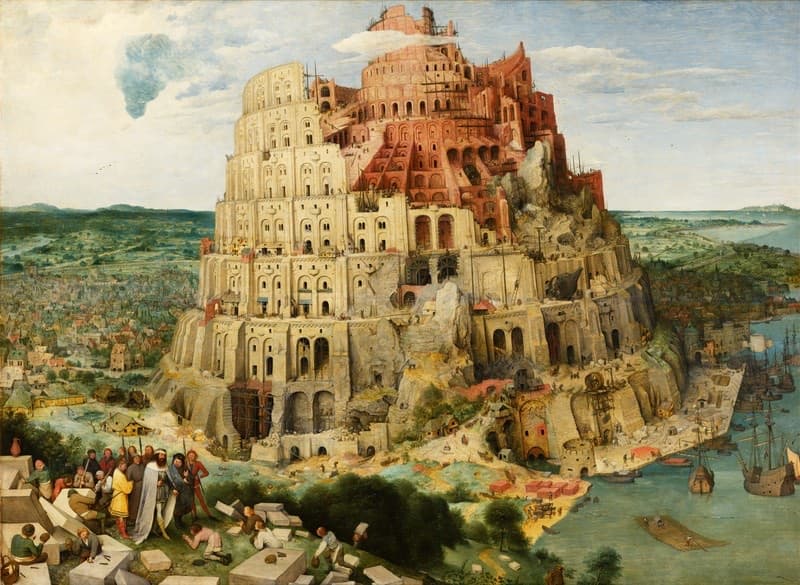
The Tower of BabelPieter Bruegel the Elder, 1563

Pieter Bruegel the Elder painted the Biblical Tower of Babel in 1563, depicting a massive spiral structure rising toward the heavens but visibly incomplete. The tower dominates the landscape, its thousands of arches and levels creating a cityscape turned vertical. Workers swarm across scaffolding, cranes lift materials, yet the upper levels remain unfinished, exposed to sky. Bruegel renders the architecture with precise detail drawn from Rome's Colosseum, but the structure cannot complete itself—the top remains open, the ambition literally interrupted. The painting captures monumental effort meeting immovable obstacle, human construction confronting limits it cannot overcome.

阅读完整论述 ↓

This is Jiǎn (蹇), Obstruction. The character depicts a lame person, someone whose progress is impeded. Ancient diviners saw this configuration when Water (Kǎn) sits above Mountain (Gèn)—danger and difficulty piling up ahead, stillness and immobility beneath. Bruegel's tower embodies this structure: the workers face the insurmountable task above (water's abyss) while the massive foundation locks them into commitment to a project that cannot be finished (mountain's immobility). The painting captures what practitioners described as "danger in front, inability to advance." Bruegel painted this in 1563 depicting the Biblical Tower of Babel, a massive structure spiraling toward the heavens but incomplete. The painting shows human ambition encountering obstruction, with the tower representing plans that cannot be completed due to divine intervention and human discord. The Judgment text speaks with careful emphasis: "Obstruction. The southwest furthers. The northeast does not further. It furthers one to see the great man. Perseverance brings good fortune." Zhou Dynasty practitioners understood that obstruction requires recognizing what cannot be overcome through direct advance. The text specifies direction—southwest represents the yielding and receptive approach, while northeast suggests pushing against resistance. Ancient commentators noted this hexagram appeared when military campaigns faced impassable terrain, when projects encountered fundamental barriers, when plans met obstacles that force revision rather than merely delay. The tower builders press forward when the text counsels turning back. The Image Text reveals the method for navigating obstruction: "Water on the mountain: the image of Obstruction. Thus the superior man turns his attention to himself and molds his character." When external advance proves impossible, the energy redirects inward. Bruegel painted this during the religious conflicts that would tear the Netherlands apart—his tower depicts collective ambition meeting divine refusal, human unity fragmenting through language confusion. In the I-Ching's sequence, Jiǎn follows Kuí (Opposition): after recognizing fundamental divergence, one encounters the obstacles that prevent forcing unity. The painting stands as permanent monument to incomplete ambition, to the moment when obstruction becomes absolute and the only question becomes what to do with energy that cannot move forward.

上卦

Kǎn

WaterAbysmal

五行Water方位West家庭Second Son性质dangerous, flowing, fluid

下卦

Gèn

MountainStillness

五行Earth方位Northeast家庭Youngest Son性质still, stopping, resting

经典文本

卦旨

Jian is not merely difficulty — it is the specific condition of facing an obstacle that cannot be overcome through direct advance. Water (Kan) above Mountain (Gen) shows danger piled upon stillness: the abyss ahead, immobility beneath. Every forward path leads into peril. The judgment maps the terrain with directional precision: 利西南。不利東北 — "the southwest furthers; the northeast does not further." Southwest represents the yielding, receptive approach — retreat to level ground, gather allies, regroup. Northeast represents pushing directly into the obstacle. The hexagram forbids heroic advance and prescribes something harder: turning back when every instinct says press forward. The Image text redirects the blocked energy entirely: 山上有水,蹇。君子以反身修德 — "water on the mountain, Obstruction. The superior person turns attention inward and cultivates character." The phrase 反身修德 is the hexagram's transformative instruction. When external progress is impossible, the energy that would have been spent advancing must be converted into self-development. This is not consolation — it is the recognition that obstruction has a purpose. The second line reveals the specific case where direct engagement remains correct: 王臣蹇蹇。匪躬之故 — "the king's servant faces obstruction upon obstruction; it is not for personal reasons." When duty, not ambition, drives the advance, even futile forward movement is blameless. But the line draws a sharp distinction: obstruction endured for personal gain is foolishness; obstruction endured in service to something larger is integrity. The goal of Jian is to convert the energy of blocked advance into the substance of developed character. The hexagram regulates the relationship between external limitation and internal growth. The judgment's final words — 利見大人。貞吉 — "it furthers to see the great person; perseverance brings good fortune" — indicate that obstruction is also the time to seek guidance, to recognize that the obstacle exceeds individual capacity. The fifth line confirms: 大蹇朋來 — "in great obstruction, friends come." The most severe blockage attracts the help needed to eventually overcome it, but only if the obstructed person has used the waiting time to develop the character worthy of such help.

彖辞

The southwest is supported. The northeast is not supported. Seeing the great person is supported. Sustained orientation resolves well. Two directions, two verdicts. Southwest works, northeast doesn't. And the solution isn't to push harder — it's to find the great person. The text is describing a situation where individual effort fails and collective wisdom succeeds. The obstruction isn't testing your strength. It's testing whether you'll ask for help.

象辞

Water upon the mountain: obstruction. The realized person accordingly turns inward to cultivate character. Water on top of a mountain — it can't flow, it just sits there. And the instruction is to turn inward. Not to find a way around the obstacle. To use the obstacle. The realized person who hits a wall and immediately improves themselves has understood something the rest of us take decades to learn: the wall is the curriculum.

爻辞

第初爻

Going forward: obstruction. Coming back: praise. Go forward, hit a wall. Come back, receive praise. The math is that simple. The person who recognizes an impassable obstacle and returns gets more credit than the person who keeps walking into it. Coming back isn't failure — it's the first intelligent move available.

第二爻

The sovereign's minister, obstruction upon obstruction. It is not a personal matter. Obstruction piled on obstruction, and it's not about you. The minister serves the ruler and walks into difficulty after difficulty — not from personal choice but from duty. The text makes the distinction explicit: this isn't your mess. But it is your job. The person who serves a cause larger than themselves doesn't get to choose which obstacles belong to them.

第三爻

Going forward: obstruction. Coming back: return. Forward is blocked. Come home. The people who depend on you are waiting. The hero's impulse is to keep pushing into the obstacle. The text says: turn around. Your people need you more than your ambition does. Coming back is the harder direction because it feels like giving up. It isn't.

第四爻

Going forward: obstruction. Coming back: connection. Forward is blocked again. But coming back this time brings allies. Connection. The obstruction hasn't changed but your approach has — instead of soloing it, you're gathering people. The text walked you through three lines of 'come back' and each one gave a different reward: praise, return, connection. The pattern is the teaching.

第五爻

Great obstruction. Companions come. The biggest obstacle yet. And companions arrive. Not because you called them — because the greatness of the obstruction called them. Some problems are so large they create their own gravity, pulling in the people who are needed. The fifth line of the obstruction hexagram and help shows up uninvited. That's how you know the problem is real.

第上爻

Going forward: obstruction. Coming back: ripeness. Resolves well. Seeing the great person is supported. One more time: forward is blocked. And this time, coming back brings ripeness. Not just survival, not just connection — maturity. Resolves well. The top of the obstruction hexagram, and the person who has been turned back six times arrives at the last line having gained everything the obstacles were designed to teach. The great person is supported because you've become one.

焦氏易林

焦延寿《易林》——第39卦本卦之辞。西汉时期以四言诗阐释卦变,为最早的系统性易学占辞集。

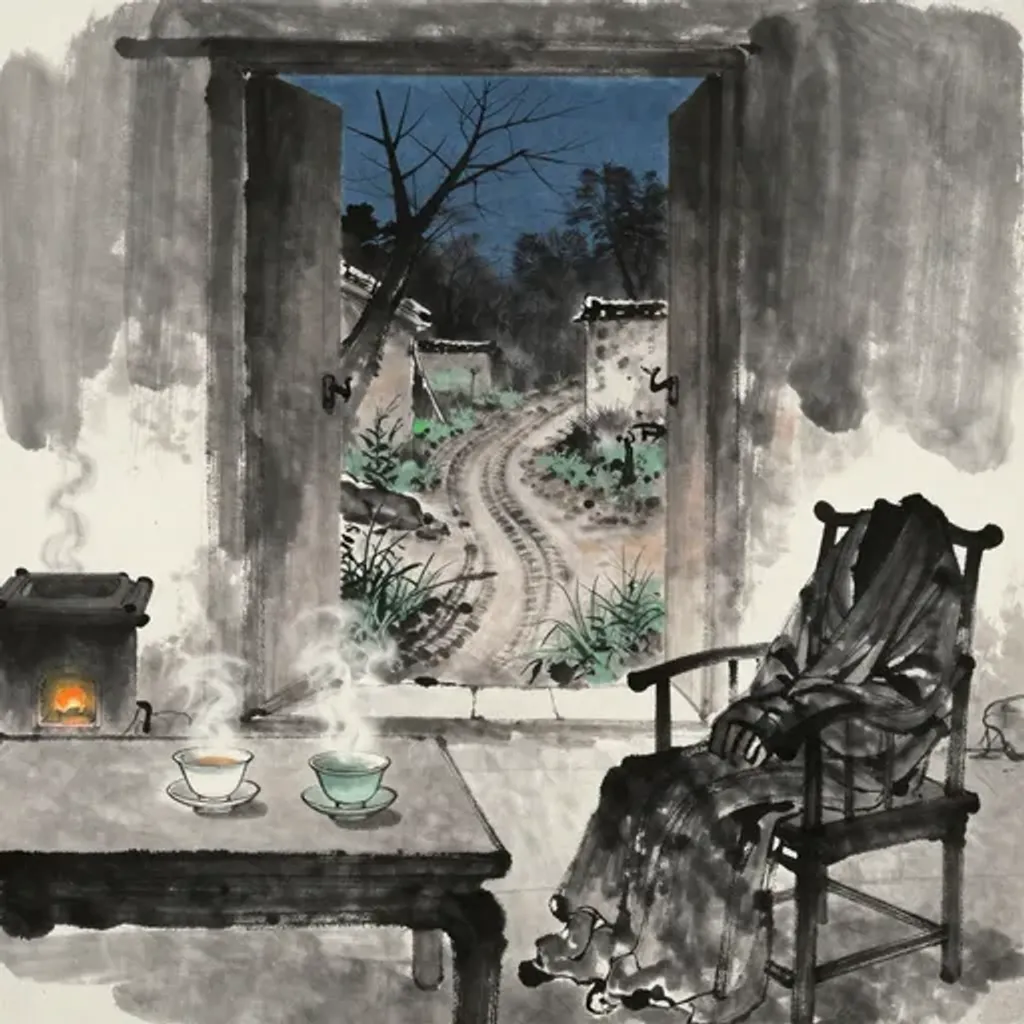
Yilin artwork for Hexagram 39
同載共輿,中道別去。喪我元夫,獨與孤居。

兩杯茶一冷一溫,椅上衣衫尚餘痕。門外車轍已長草,夜夜聽風不等人。

山上有水,蹇之蹇——阻之自身。

阅读完整注释 ↓

山上有水,蹇之蹇——阻之自身。此為改寫詩,須據原詩:「同載共輿,中道別去;喪我元夫,獨與孤居。」同車而行,中途離散。夫已亡故,獨守空屋。最親密之棄離:同乘一輿之人,中途竟別。從蹇至蹇,山不動、水不流。同卦相遇無變化,唯有純粹的、不可緩解的蹇之體驗。空椅、冷茶——阻滯無出口,哀慟無轉圜之慰藉。

English commentary

Water on the mountain returns to water on the mountain — Obstruction unchanged. This verse (a rewrite) must be read through the original: 'Sharing one carriage, we traveled together, but midway you departed. I have lost my husband, and dwell alone in solitude.' The original captures the most intimate form of abandonment: two who rode the same carriage, bound by marriage and shared direction, until one simply left. The survivor remains, companionless, in an empty house. From Obstruction to Obstruction, the pattern holds: the mountain does not move, the water does not flow. When the same hexagram meets itself, there is no transformation — only the pure, unrelieved experience of the condition. The empty chair and the cold tea are obstruction without exit, grief without the consolation of change.