第5卦
需
Xū
Waiting
上卦
坎 Kǎn
Water — Abysmal
下卦
乾 Qián
Heaven — Creative
经典文本
彖辞
有孚。光亨貞吉。利涉大川。
象辞
雲上於天,需。君子以飲食宴樂。
爻辞
第初爻
初九 需于郊。利用恆。无咎。
第二爻
九二 需于沙。小有言。終吉。
第三爻
九三 需于泥。致寇至。
第四爻
六四 需于血。出自穴。
第五爻
九五 需于酒食。貞吉。
第上爻
上六 入于穴。有不速之客三人來。敬之終吉。

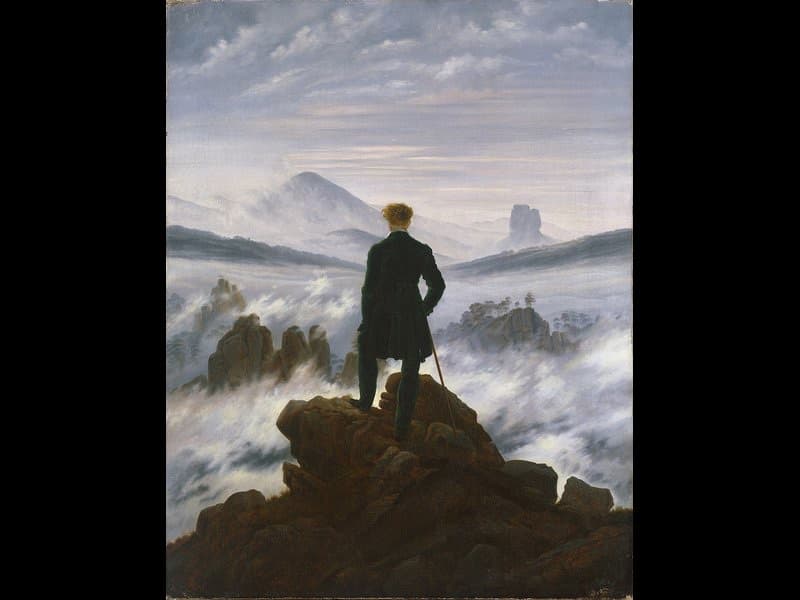
Wanderer above the Sea of Fog
Caspar David Friedrich, 1818
Waiting for Nourishment
A lone figure stands on a rocky summit, back turned to us, surrounded by an ocean of fog. Caspar David Friedrich painted Wanderer above the Sea of Fog in 1818, positioning his subject at the edge where solid ground meets absolute obscurity. Every valley below, every path forward, every landmark that might guide movement—erased by cloud. The wanderer's walking stick suggests he arrived here through effort, climbed to this vantage point deliberately. Yet now all forward progress stops. Not from exhaustion or defeat, but because the landscape itself refuses passage. The figure stands still, dark coat and hair silhouetted against pale mist, waiting for conditions to change.
阅读完整论述 ↓
This is Xū (需), which combines Water (☵) below and Heaven (☰) above. The character 需 suggests rain and need—something required that has not yet arrived. Clouds gather in heaven; moisture accumulates but rain holds back. Friedrich's wanderer inhabits this exact moment: strength and clarity exist above (he has reached the summit, the sky remains visible), while danger and the unknown pool below in the valley mist. The path exists beneath that fog, but forcing passage now means stumbling blind. Friedrich's Romantic painting shows a figure standing above fog-shrouded peaks, waiting and contemplating. The wanderer cannot proceed through the obscured landscape and must pause for clarity to emerge. The Judgment addresses the wanderer: "Waiting. If you are sincere, you have light and success. Perseverance brings good fortune." The text promises that crossing the fog-ocean becomes possible—but timing separates tragedy from triumph. In Zhou Dynasty court divinations, this hexagram appeared when generals planned river crossings, when envoys awaited diplomatic responses, when farmers watched clouds for rain. Ancient diviners understood that Xū describes not passive helplessness but active readiness, positioning oneself where conditions can be recognized when they shift. What does one do while clouds gather? The Image Text offers practical advice: "Clouds rise up to heaven: the image of waiting. Thus the superior man eats and drinks, is joyous and of good cheer." During enforced waiting, maintain strength. Friedrich's wanderer stands firm on his outcrop, not collapsed in anxious striving. He has positioned himself where he can see when the fog lifts. In the I-Ching's sequence, Xū follows Méng: after recognizing what you don't yet know, you must wait for the teacher, the conditions, the clarity that permits advance. Impatience here breeds the next hexagram—Conflict.
焦氏易林
焦延寿《易林》——第5卦本卦之辞。西汉时期以四言诗阐释卦变,为最早的系统性易学占辞集。

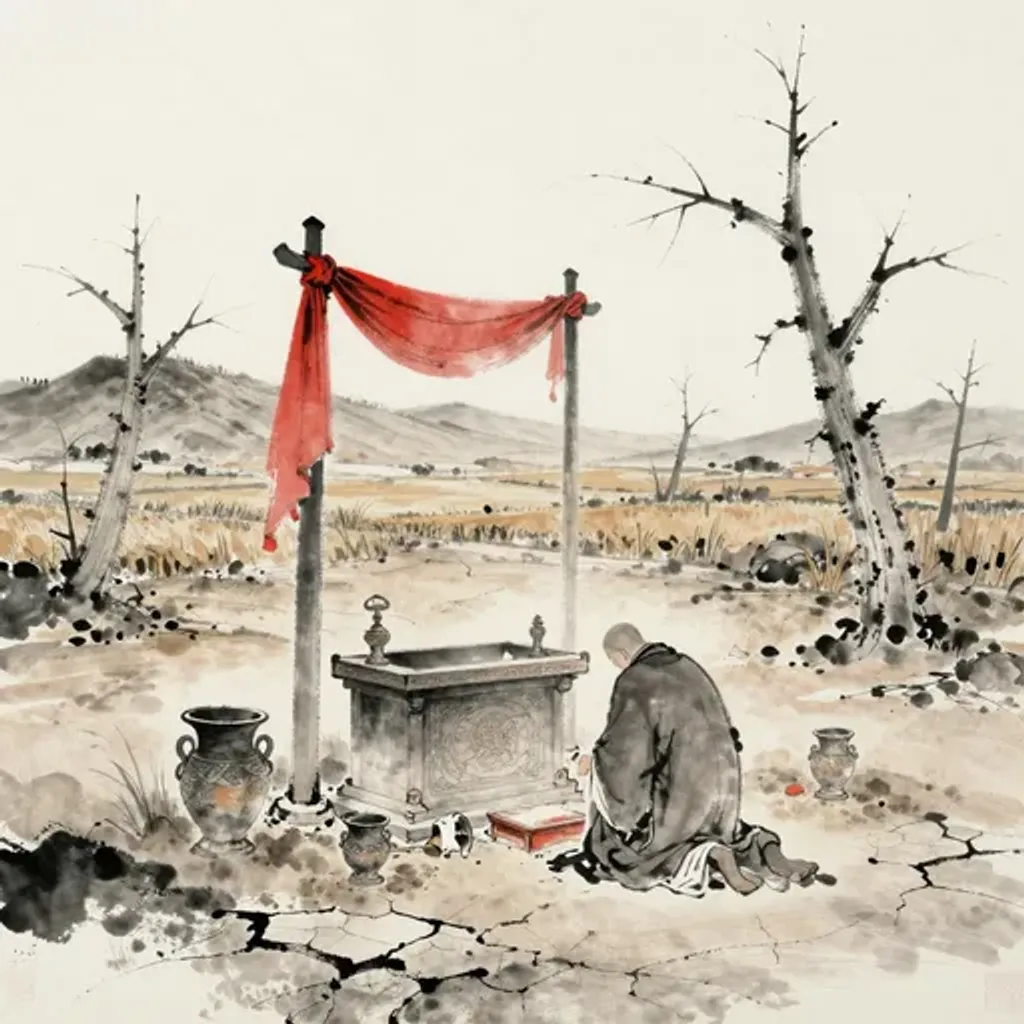
久旱三年,草木不生。粢盛空之,無以供靈。
雲上於天而雨不降——需之重卦,等待疊加為枯竭。
阅读完整注释 ↓
雲上於天而雨不降——需之重卦,等待疊加為枯竭。久旱三年,草木不生,粢盛空虛,無以供奉神靈。此為需卦本象之反面:需本以飲食宴樂為君子之養,然需之極端即久候不至,禮器空置,人神之交斷絕。無穀則無祭,無祭則無通天之路。同卦相疊非更新而為停滯,需之上需,警示耐心若失去行動之伴隨,終成癱瘓之困。
English commentary
Clouds above heaven, yet no rain falls — Waiting doubled upon itself. A drought of three years scorches the earth: grasses and grain refuse to grow, the ritual vessels stand empty, and there is nothing to offer the spirits. This is the nightmare inversion of the hexagram's own image, which promises that the gentleman may eat, drink, and feast in ease. When waiting yields nothing, even the sacred bond between human and heaven frays — without grain, no sacrifice; without sacrifice, no communion with the divine. The same pattern repeating produces stagnation, not renewal. Xu upon Xu warns that patience without agency becomes paralysis.