上卦
坎 Kǎn
水 — 陷
下卦
兌 Duì
澤 — 說
經典文本
卦旨
節非以拘為罰也,乃分節之理——有其節而後有其形。上坎下兌:水受於澤之岸;無所限則散而無用,有所受則為可養之瀦。「節」兼二義:限也,亦竹之節也——限其長,而正所以使其能立。 卦辭許節而即著其病:「亨。苦節不可貞。」一語而別節於苦行。使人苦者,其節之失其所也:太密,太堅,去其所當養之生太遠。 下二爻明節之在時而不在律。初九「不出戶庭,无咎」;九二「不出門庭,凶」。其辭幾同,其閾一間,而其斷相反。始而斂者所以蓄,時至而猶斂則為避。其別不在辭,惟在時。 上二爻立其兩端。九五曰「甘節,吉,往有尚」:其節不見怨,故可久,而亦許其行。上六復卦辭之戒而分其所施:「苦節,貞凶,悔亡。」王弼解其似相違者,在問所施之地:「以斯施人,物所不堪,正之凶也;以斯脩身,行在无妄,故得悔亡。」同一苦節,加於人則凶,反諸己則无悔。 故節之旨,在立其內之骨,而後有可行之自由。《象》曰:「澤上有水,節;君子以制數度,議德行。」詩之有律,樂之有節,室之有度:非拘其作,乃使其作得成其形。無岸之水,沮洳而已。
彖辭
「亨。苦節不可貞。」限制是麻煩的,但有效。平時節省,匱乏時就不會狼狽。但這裡有個警告:「苦節不可貞」——太痛苦的限制不能持久。自然界有夏冬、晝夜的界限,這讓一年有了意義。人也需要界限,但要適度。對自己太嚴苛會傷害自己,對別人太嚴苛他們會反抗。節制本身也需要節制。
象辭
「澤上有水,節。」湖能容納的水是有限的,這是它的特性。人生也是這樣——無限的可能性其實不適合我們,有了界限,生命才有形狀。君子用這個道理來「制數度,議德行」——建立標準,思考什麼是對的行為。自願接受的限制,反而讓人更自由。
爻辭
第初爻
「不出戶庭,无咎。」有時候你想做事,但遇到無法逾越的障礙。知道什麼時候該停下來。現在不動,是在積累能量,等適當的時機來了,才能用力。準備大事的時候,謹慎是第一要務。
第二爻
「不出門庭,凶。」該行動的時候到了,就要抓住。水先在湖裡積聚,滿了就會找到出口。人生也是這樣——時機未到時等待是好的,但時機到了還在猶豫,就會錯過,那是災難。
第三爻
「不節若,則嗟若。」只顧享樂,很容易失去分寸。放縱的後果是後悔。但不要怪別人——只有認清錯誤是自己造成的,這些不愉快的經驗才能讓你學到東西。
第四爻
「安節,亨。」自然的限制是最好的,就像水往低處流——不用掙扎,能量就省下來了,用在真正重要的事上。勉強自己去維持的限制,消耗太大,難以持久。
第五爻
「甘節,吉。」限制要從自己開始。如果只要求別人節制而自己不守,一定會招來怨恨和反抗。但如果領導者先對自己嚴格,對別人要求不多,用有限的資源做成事,這樣的榜樣會被效仿。
第上爻
「苦節,貞凶。」太嚴苛的限制,人受不了,遲早會反彈。身體被過度壓抑也會反抗。但有時候,對自己狠一點是唯一的辦法——不是持續地狠,而是在某些關鍵時刻,這是避免更大錯誤的唯一方式。
焦氏易林
焦延壽《易林》——第60卦本卦之辭。西漢時期以四言詩闡釋卦變,為最早的系統性易學占辭集。
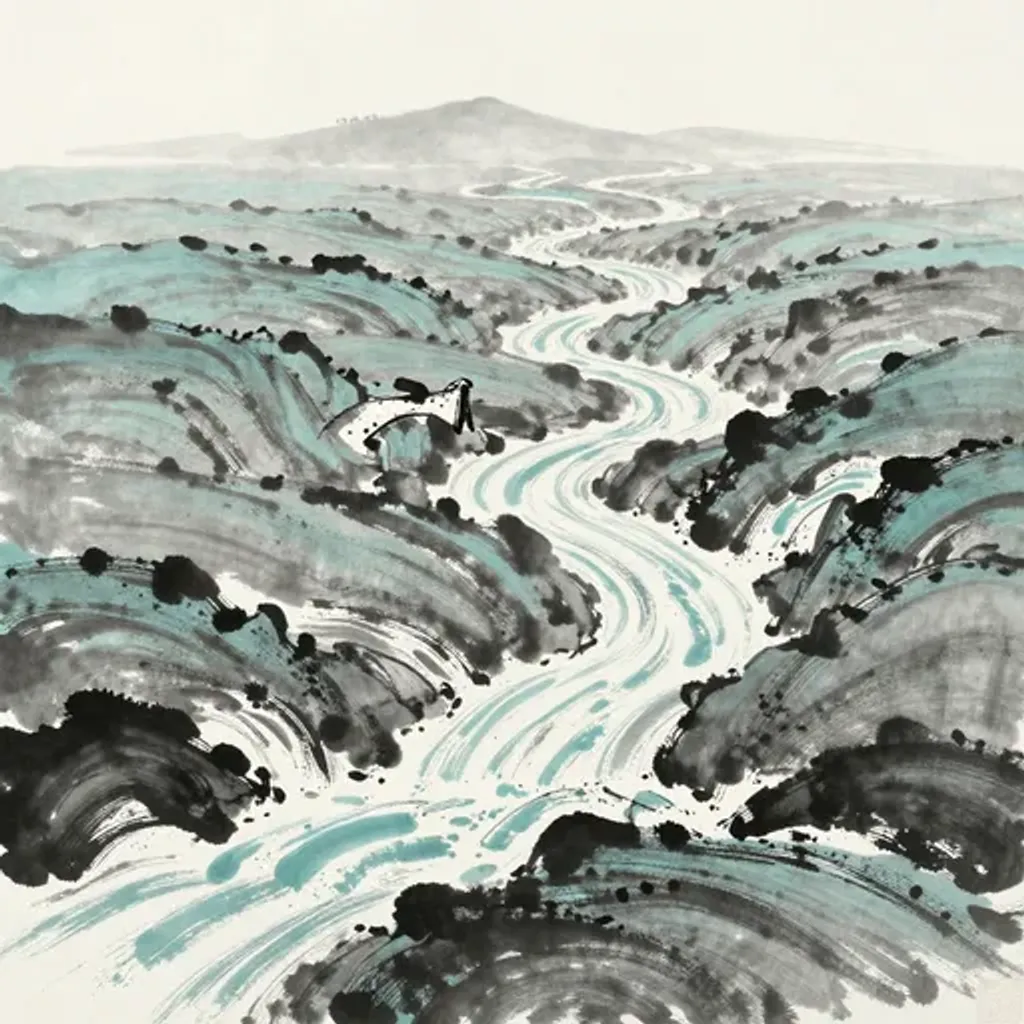
海為水王聰聖且明百流歸德無有叛逆常饒億足不利攻玉所求弗得
澤上有水,節之自映。
閱讀完整註釋 ↓
澤上有水,節之自映。海為水王——百川之宗,聰聖且明。百流歸德,無有叛逆,常饒優足。海不逐川而川自歸——居最低處而萬水朝宗,其主權在於位勢而非武力。節至節,同卦自返——真正的制度無須外在強制。度量本身公正,則順從自發。海之智慧、聖明、清澈,乃治理之理想:如引力場,以自身之存在即整合天下。制數度、議德行——節之本義在此達到圓滿之自我詮釋。
English commentary
Water over lake doubled — Limitation reflecting itself. The sea is king of all waters, wise and perceptive in its rule. A hundred rivers return to its virtue, and none rebels or defects; abundance and sufficiency are constant. The verse celebrates the source hexagram's own principle in its purest form: the sea does not chase the rivers — it simply occupies the lowest point, and all waters flow toward it naturally. Its sovereignty is the sovereignty of position, not force. From Limitation to Limitation, the identity transformation affirms that true regulation needs no external enforcement. When the measure itself is just, compliance is spontaneous. The sea's '聰聖且明' — wise, sagacious, and clear — describes the ideal of governance as a gravitational field that orders the world simply by being what it is.
此註釋依據較早的讀法撰寫。讀法既經更定,其詮釋未必仍適用於今所見之文。
《焦氏易林》,清乾隆間寫文淵閣四庫全書本。
國立故宮博物院 故庫017987–017990
第4冊,第164頁
據寫本原葉錄出
標點依寫本,不另加標點。
關於此讀法
據掃描原葉錄出。