上卦
巽 Xùn
風 — 入
下卦
兌 Duì
澤 — 說
經典文本
卦旨
中孚非以情著其誠也,乃中之無所窒之結構——鐘之虛,所以能鳴也。上巽下兌,而其象自明:上二剛,下二剛,中含二柔,其內乃虛。「中孚」者,中與信並言:非果敢之謂,乃中無所塞而後可信者也。 卦辭曰:「豚魚吉。利涉大川。利貞。」「豚魚」舊有二解,而皆有其用:或謂誠之及於至鈍之物,或謂薦之至薄者亦見受。其所同者,在所以致之者不在其大。 九二示其所以然:「鳴鶴在陰,其子和之。我有好爵,吾與爾靡之。」鶴不辯不示,鳴其所自有而得其應,且應之者非其所見。繼以好爵:真者不以分而減,故其辭自感通而至於共享,中無所隔。九五足之:「有孚攣如。」其相係不待外之力,以其相識而已。 上九乃其反象,無此則此卦流於情:「翰音登于天,貞凶。」聲升於其身所不能至之處。鶴鳴於陰而得和,雞音登天而止為聲:其具同,其實異——所別者,聲之下有物與否耳。王弼四字盡之:「音飛而實不從。」 故中孚之旨,在成其可感之內。《象》曰:「澤上有風,中孚;君子以議獄緩死。」誠之所行,其斷必緩。此卦所謂至大之化,非在有所主張,乃在無所遮:使其中之實可見而不失其形,則凡能應者自得其應。
彖辭
「豚魚吉」——豬和魚是最難影響的動物,代表那些很難打動的人。要影響這樣的人,你的內在真誠必須足夠強大。秘訣在於找到對的方式:先放下成見,讓對方的心理狀態自然地作用在你身上,然後你才能理解他、接觸他。但這不是拉幫結派那種親密——基於共同利益的關係只能維持到某個程度。只有建立在正直和堅定上的聯繫,才能經得起考驗。
象辭
「澤上有風,中孚。」風吹過湖面,激起漣漪——無形的東西產生了可見的效果。君子用這個道理來「議獄緩死」——審理案件時,試著深入理解犯錯者的處境。懂得寬恕的深刻理解,被認為是最高的正義。這不是軟弱,而是更清明的判斷。
爻辭
第初爻
「虞吉,有他不燕。」內在真誠的力量來自穩定和準備。如果你試圖經營特殊的秘密關係,就會失去內心的獨立。你越依賴別人的支持,就越會焦慮這些關係是否牢靠。這樣反而失去了內心的平靜。
第二爻
「鳴鶴在陰,其子和之。」鶴不用站在高處讓人看見,藏在暗處鳴叫,它的幼鳥也會聽到並回應。這說的是真誠的自然感染力——當一個感受被真實地表達,當一個行動是情感的清晰體現,就會產生神秘而深遠的影響。一切影響的根源在於你自己的內在。
第三爻
「得敵,或鼓或罷,或泣或歌。」你的力量來源不在自己,而在與別人的關係。這樣的話,無論你們多親近,你都會被悲喜拋來拋去——一會兒高興得上天,一會兒傷心得要死。這是依賴他人的宿命。好壞由你自己判斷。
第四爻
「月幾望,馬匹亡。」要增強內在真誠的力量,要向比你高的人學習,就像月亮從太陽那裡得到光。但這需要謙虛——像還沒完全圓的月亮那樣。同時,要像一匹直往前走、不看同伴的馬,才能保持內心的自由。
第五爻
「有孚攣如」——用人格的力量把所有人連結在一起。只有當你的品格足夠強大,能夠影響所有跟隨你的人,你才算是夠格的。這種影響力必須從中心散發出來。沒有這個核心力量,外在的團結都是假象,關鍵時刻就會崩潰。
第上爻
「翰音登于天,貞凶。」雞會報時,很可靠。但雞自己飛不上天,它只會叫。光靠言語想喚起信任,偶爾可以,但如果一直這樣做,結果會很糟。言語需要行動來支撐。
焦氏易林
焦延壽《易林》——第61卦本卦之辭。西漢時期以四言詩闡釋卦變,為最早的系統性易學占辭集。
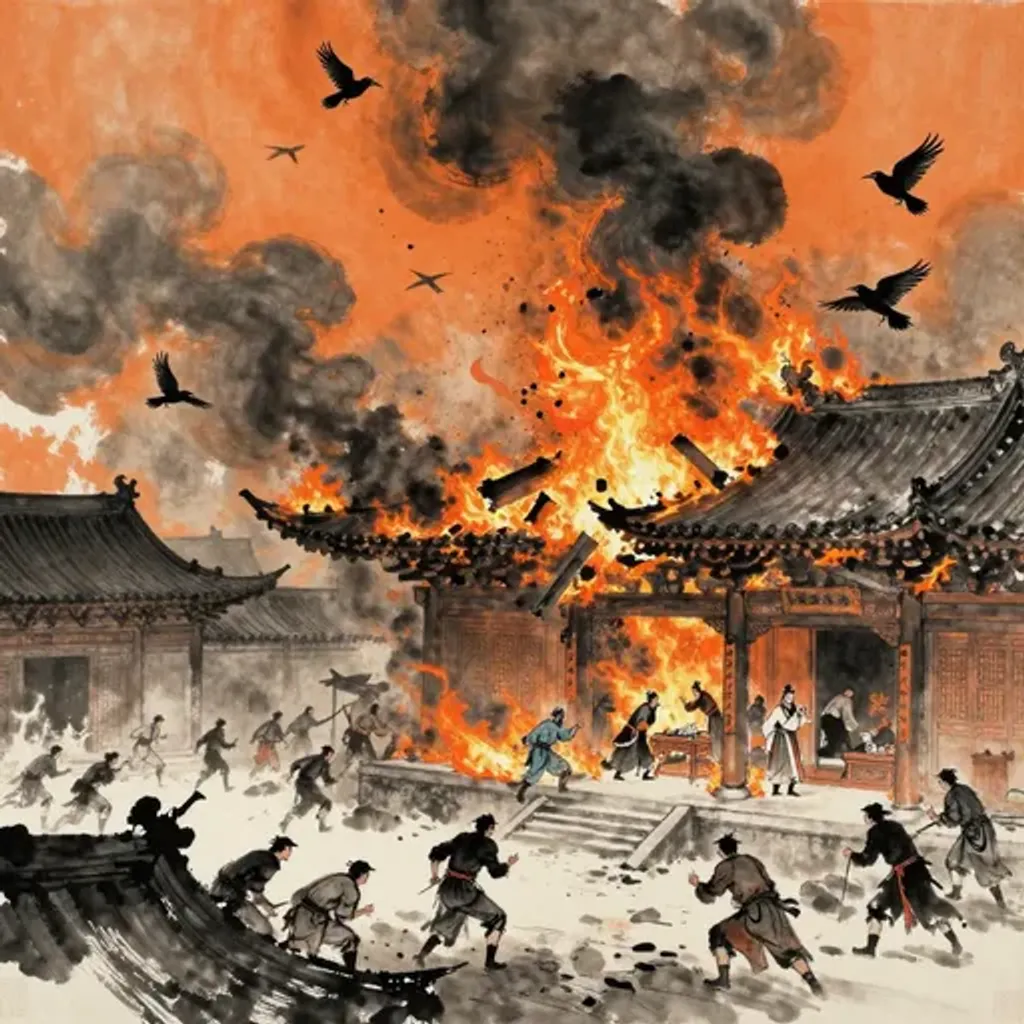
鳥鳴喈喈天火將下燔我屋室災及妃后
澤上有風,中孚歸於自身——源卦與之卦相同,無變化發生。
閱讀完整註釋 ↓
澤上有風,中孚歸於自身——源卦與之卦相同,無變化發生。烏鳥譆譆——鴉鳥驚鳴,為火災之凶兆。天火將下——天降大火。燔我屋室——焚毀居所。災及妃后——禍延至后妃。「天火」焚宮或即伯姬之事:前543年宋宮失火,伯姬以傅母不在而不肯出,守禮而死——中孚(誠信)之極端化為致命。中孚自疊而無變,信念凝固為毀滅。定義此卦之美德在無轉化時反成至危——此即中孚之暗面。
English commentary
Wind stirs above the lake — and returns to itself. Crows caw their alarm; heavenly fire is about to descend. The house burns; the disaster reaches the queen herself. This is Inner Truth confronting its own mirror: the source hexagram and target are identical, meaning no transformation occurs. The crows (烏鳥) are traditional fire omens, and their cries announce catastrophe for the very center of the household. The 'heavenly fire' consuming the palace may echo the story of Lady Boji, who perished in the Song palace fire of 543 BC because she refused to leave without her chaperone — sincerity carried to fatal extreme. When inner truth doubles upon itself without transformation, conviction calcifies into destruction. The very virtue that defines this hexagram becomes its consummate danger.
此註釋依據較早的讀法撰寫。讀法既經更定,其詮釋未必仍適用於今所見之文。
《焦氏易林》,清乾隆間寫文淵閣四庫全書本。
國立故宮博物院 故庫017987–017990
第4冊,第174頁
據寫本原葉錄出
標點依寫本,不另加標點。
關於此讀法
據掃描原葉錄出。