上卦
巽 Xùn
風 — 入
下卦
坤 Kūn
地 — 順
經典文本
卦旨
觀非旁觀之謂,乃見人而亦為人所見——上下相視之事。上巽下坤:風行於廣土之上,無所不至,無所可蔽。二陽居四陰之上,如臺觀之立於平野,其視兩通。 卦辭取祭禮之象:「盥而不薦,有孚顒若。」既盥其手,未進其薦,此正觀之時也。手已潔,志已聚,而祭猶未行。觀之力即在此一間。「顒若」者,非言觀者之容,乃言下之望上者肅然而仰;誠中形外,民不待令而化。 《象》復明觀非徒內視:「風行地上,觀;先王以省方觀民設教。」觀者,治事也。省其方,觀其民,然後設教——教因所見而立,非因所臆而立。不歷其地而言觀者,其教無所著。 世之誤者,以觀為先審而後行而已。其實所求者更嚴:此為儀型之卦,為政者所行之感人,不減於其所令。風行地上,不迫而周;臺觀既立,四面可見。故觀之旨,在內有所主而足為人法,兼有察物之勤,使所立之法不違實情。上觀下、下觀上,二者當各足以當之。
彖辭
「盥而不薦,有孚顒若。」祭祀的時候,手已經洗淨,但祭品還沒獻上。這是最神聖的片刻——準備完成,一切凝聚。如果虔誠是真的,旁觀的人會感受到那種莊嚴。這種內在的專注,往往比做什麼更有力量。
象辭
「風行地上,觀。先王以省方觀民設教。」風吹過大地,無處不到。古代的王會巡視各地,看看人民的生活,然後給予教導。觀察是為了理解,理解是為了指引。但這需要真的去看,不是走馬看花。
爻辭
第初爻
「童觀,小人无咎,君子吝。」像小孩那樣看——遠遠的,看不清楚。對普通人來說無所謂,反正他們也不需要懂太多。但如果你應該看得更深,這種膚淺就是羞恥了。
第二爻
「闚觀,利女貞。」從門縫往外看。視野很窄,一切都是從自己的角度出發。這對某些處境受限的人來說可以接受。但如果你要參與公共事務,這種狹隘的觀察方式是有害的。
第三爻
「觀我生,進退。」不再看外面了,開始看自己。這是轉折點。自我觀察不是胡思亂想,而是看自己產生的效果。你做的事帶來了什麼?這才是判斷進退的依據。
第四爻
「觀國之光,利用賓于王。」看見了國家運作的道理。這樣的人應該被賦予影響力,被當作賓客尊重,而不是被當作工具使用。觀察清楚了,才能真正貢獻。
第五爻
「觀我生,君子无咎。」在有影響力的位置上,要時常審視自己。不是沉溺於自省,而是看自己對別人的影響。只有當影響是好的,才能心安理得地說自己沒有過錯。
第上爻
「觀其生,君子无咎。」這裡已經超越了個人的層次。聖人站在世事之外,看的是生命本身的規律。放下了自我,才看得見什麼是真正的無過。這大概是觀的最高境界。
焦氏易林
焦延壽《易林》——第20卦本卦之辭。西漢時期以四言詩闡釋卦變,為最早的系統性易學占辭集。
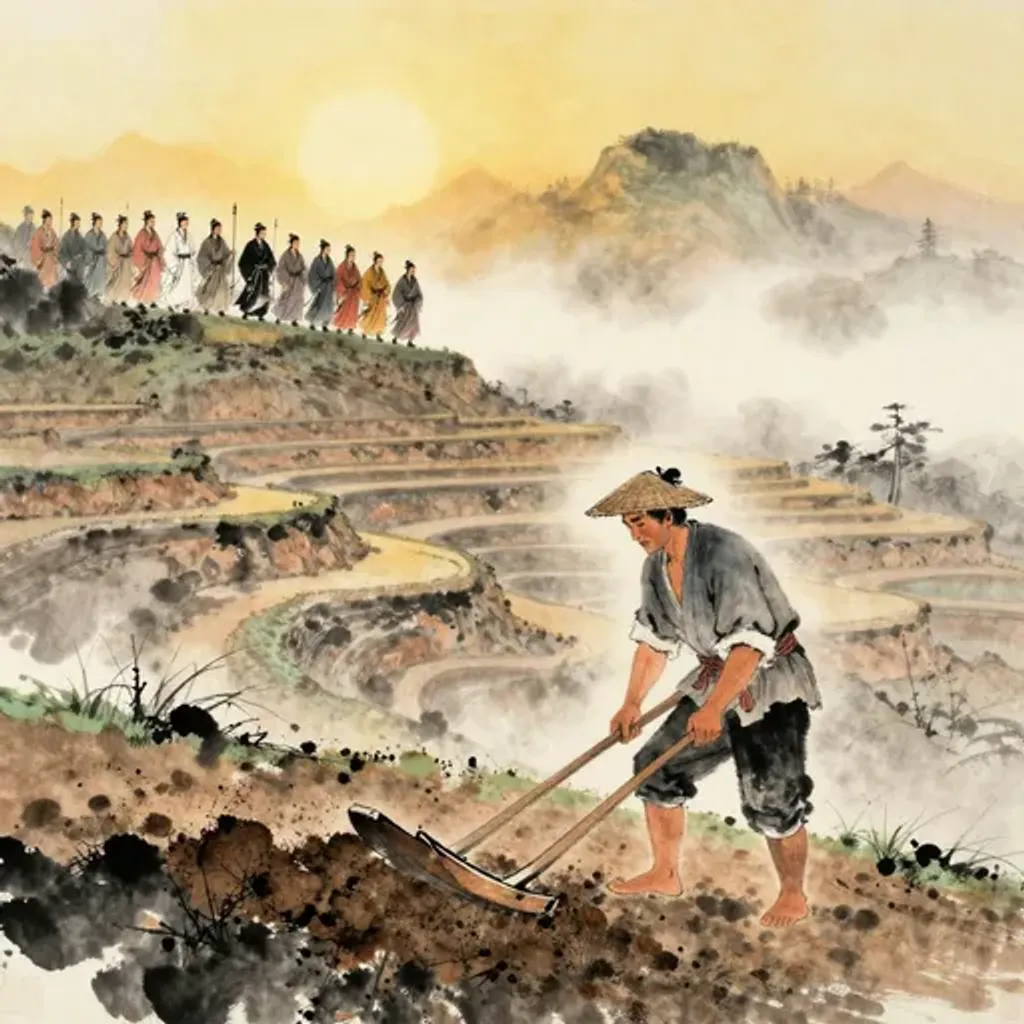
歷山之下虞唐所處躬耕致孝名聞四海為堯所薦禪位天子
風行地上,觀之重卦,觀觀自身。
閱讀完整註釋 ↓
風行地上,觀之重卦,觀觀自身。歷山之下,虞舜躬耕而致孝。父頑母嚚弟傲,然舜事之無怨,名聞四海。為堯所識薦,終纘天子之位。據《史記·五帝本紀》,舜耕於歷山,鄰人感其德而讓畔。從觀至觀,自我映照之卦象:觀者成為被觀者。舜之躬耕致孝本身即是一種觀照,其德行引天目下視,使農夫化為天子,使被省察者成為省察萬方之人。
English commentary
Wind over earth, doubled: Contemplation gazing upon itself. Beneath Mount Li, Shun the humble farmer tills the soil and practices supreme filial piety. His renown spreads across the four seas despite his lowly station. Emperor Yao hears of him, recommends him, and Shun ascends to the throne of the Son of Heaven. According to tradition, Shun's father Gu Sou was blind and cruel, his stepmother malicious, yet Shun served them without resentment until his virtue became impossible to conceal. From Contemplation to Contemplation, the pattern is self-referential: the observer becomes the observed. Shun's quiet cultivation at Li was itself a form of contemplation that drew heaven's gaze downward, transforming the watcher into the watched, the farmer into the sovereign.
《焦氏易林》,清乾隆間寫文淵閣四庫全書本。
國立故宮博物院 故庫017987–017990
第2冊,第3頁
據寫本原葉錄出
標點依寫本,不另加標點。
關於此讀法
據掃描原葉錄出。
原葉作 虞唐所處
旁註作 唐當作舜
校改所採,未改入本文。: 舜