第16卦

Enthusiasm

上卦

Zhèn

ThunderArousing

五行Wood方位Northwest家庭Eldest Son性质arousing, movement, shocking

下卦

Kūn

EarthReceptive

五行Earth方位North家庭Mother性质receptive, yielding, nurturing

经典文本

彖辞

利建侯行師。

象辞

雷出地奮,豫。先王以作樂崇德,殷薦之上帝,以配祖考。

爻辞

第初爻

初六 鳴豫。凶。

第二爻

六二 介于石。不終日。貞吉。

第三爻

六三 盱豫悔。遲有悔。

第四爻

九四 由豫。大有得。勿疑。朋盍簪。

第五爻

六五 貞疾。恆不死。

第上爻

上六 冥豫。成有渝。无咎。

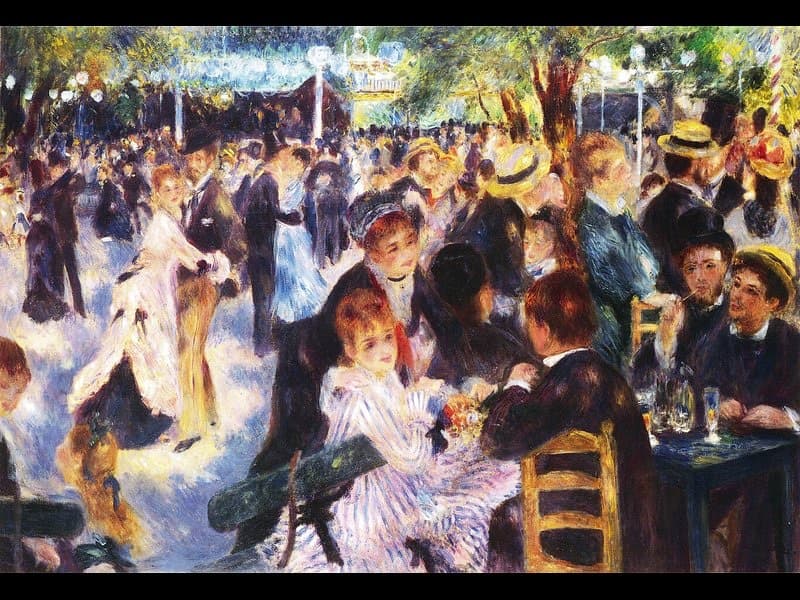
Dance at Moulin de la Galette

Dance at Moulin de la Galette

Renoir, 1876

Enthusiasm

Sunlight filters through chestnut leaves onto dancing couples crowding the Moulin de la Galette's outdoor garden. Renoir painted this Sunday afternoon in Montmartre in 1876, capturing Parisians gathered for music, wine, and movement. The accordion player sits at right, providing rhythm. The dancers spin through dappled light, their faces flushed, their bodies pressed close in the whirl of the waltz. No formal occasion demanded this assembly—just the weekend, just the weather, just the accordion's invitation to dance. People came because the music moved them, because enthusiasm spreads like sunlight through leaves, because joy calls and bodies answer.

阅读完整论述 ↓

This is Yù (豫), the Chinese hexagram meaning "enthusiasm" or "harmony." Ancient diviners saw this configuration when Thunder (Zhèn) sits above Earth (Kūn): arousing movement above, receptive stillness below, like music that moves people to dance, like rhythm that enters the body and becomes motion. The Moulin's crowd embodies this responsive harmony—individuals hearing the same beat, bodies finding the same tempo, separate people becoming one flowing pattern. In Zhou Dynasty court practice, this hexagram appeared when music accompanied ritual, when armies marched in coordinated formation, when collective action emerged not from command but from shared feeling that aligned individual impulses toward common purpose. Renoir's Impressionist painting captures a Sunday afternoon dance in Montmartre, with crowds enjoying music and movement in dappled sunlight. The spontaneous gathering for shared celebration connects to hexagram 16's theme of enthusiasm and harmonious response. The Judgment text describes enthusiasm's organizing power: "It furthers one to install helpers and to set armies marching." Not through coercion but through harmony that makes people want to move together. Renoir's dancers need no instruction—the music provides direction, their enthusiasm provides energy, and the pattern emerges organically. The painting shows working-class Parisians alongside artists and bohemians, class distinctions temporarily dissolved in shared movement. Tang Dynasty generals understood this hexagram as the moment when troops fought with unified spirit, when musicians played in perfect ensemble, when the group achieved flow state where individual and collective intention merged. The Image Text explains how enthusiasm manifests: "Thunder comes resounding out of the earth: the image of enthusiasm. Thus the ancient kings made music in order to honor merit, and offered it with splendor to the Supreme Deity, inviting their ancestors to be present." Movement and music create sacred space. Renoir treats this common dance hall with the same reverent attention Renaissance painters gave to religious scenes—the light becomes divine, the dancers become celebrants, the ordinary afternoon transforms into something worthy of preservation. In the I-Ching's sequence, Yù follows Modesty: when humility creates stable ground, enthusiasm can safely arise. The next hexagram is Following—what begins as spontaneous joy becomes structured movement, what starts as dance becomes direction. But first this Sunday afternoon, this accordion, this light through leaves.

焦氏易林

焦延寿《易林》——第16卦本卦之辞。西汉时期以四言诗阐释卦变,为最早的系统性易学占辞集。

Yilin artwork for Hexagram 16
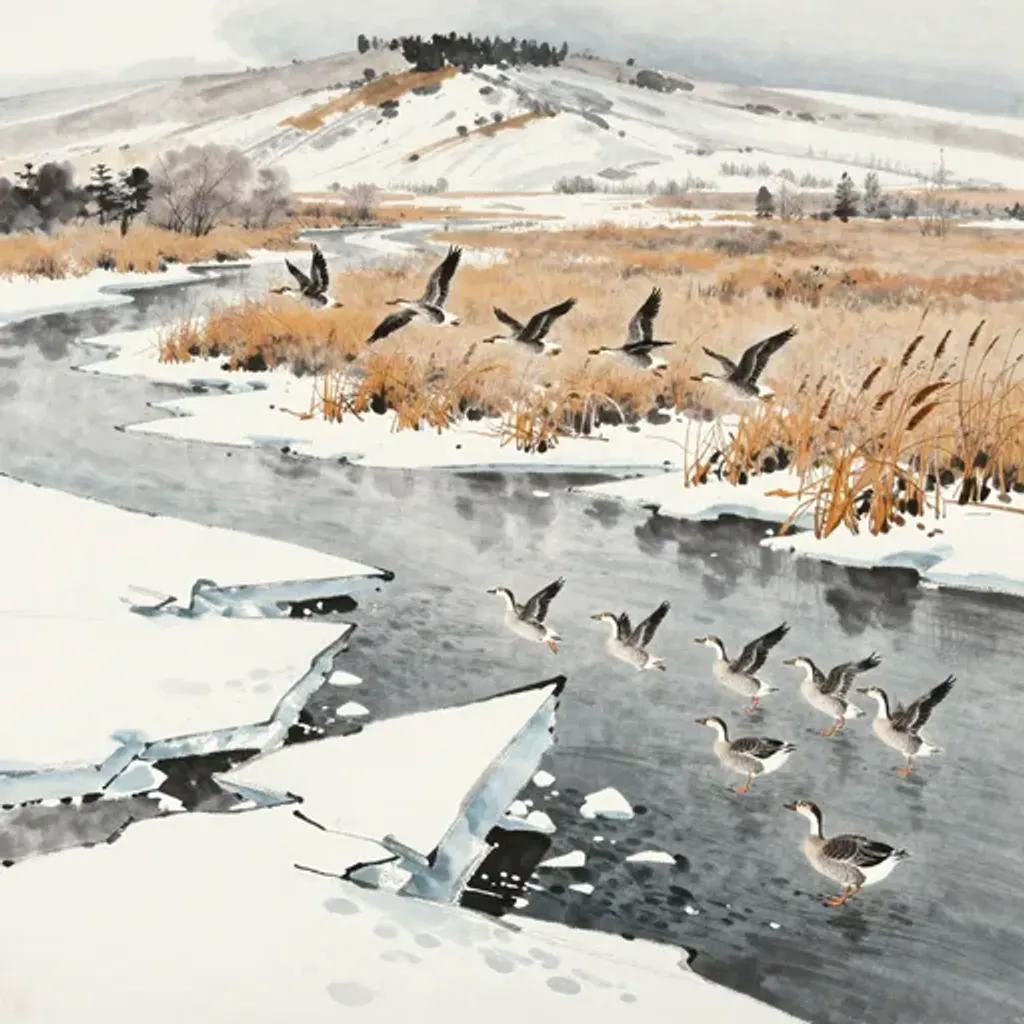
冰將泮散,鳴雁噰噰;丁男長女,可以會同。生育聖人。

雷出地奮,豫之本體。

阅读完整注释 ↓

雷出地奮,豫之本體。冰將泮散,春回大地;鳴雁噰噰,候鳥歸來。丁男長女可以會同——春社之禮,男女相遇。生育聖人——至善之兆。此為豫卦自變之辭,故表達其最純粹之本質:雷出地奮,先王作樂崇德。冰消雁鳴為春之序曲,人倫相會為禮之根本,聖人之生為天地之大慶。卦體不變,則能量自然呈現為其本來面目——大地震動,萬物新生。

English commentary

Thunder surges from the earth as ice begins to thaw and migrating geese cry out in chorus. Young men and women may now gather together freely, and a sage shall be born. The verse celebrates the return of spring: frozen stillness gives way to movement, birdsong fills the air, and the social and biological cycles resume. The honking geese signal the season of courtship and assembly. From Enthusiasm to Enthusiasm — the hexagram returns to itself, and appropriately the verse captures the purest expression of its nature: communal joy, fertile union, cosmic renewal. When the pattern holds steady, its inherent energy simply manifests as what it always was — the earth trembling with new life.