上卦
震 Zhèn
雷 — 動
下卦
離 Lí
火 — 麗
經典文本
卦旨
豐非久盛之謂,乃其極——明與力並至而至於其盛;而卦知其不可久。上震下離:動居明上。卦辭直名其境:「亨。王假之。勿憂。宜日中。」日中者,其最盛而即其所轉。日不停於其中,而辭亦不諱之。 諸爻多蔽日之象:「豐其蔀,日中見斗」;「豐其沛,日中見沬」。豐者自蔽其明。世多以此為外至之患,然其所蔽者,無一非豐者之所自設:蔀也,沛也,屋也。上六終其序:「豐其屋,蔀其家,闚其戶,闃其无人,三歲不覿,凶。」以豐為私積者,其室既大而無人在焉。 六五則見其所當為:「來章,有慶譽吉。」其所來者,正使豐不為蔽而為明者也。 卦辭之「勿憂」乃其樞。憂其將衰者,即衰之始事——蔀之所由設也。《象》移其力於所用:「雷電皆至,豐;君子以折獄致刑。」當其極,明與力俱足;此至難之斷所須,而他時所無。 此語當與其鄰參之。賁卦曰「無敢折獄」,以其明止於文而已;旅卦曰「明慎用刑,而不留獄」。《易》未嘗一其言於獄也,乃各授之於能任之之時。豐者其時也,而其時有盡。
彖辭
「亨。王假之。勿憂。宜日中。」順利。王達到豐盛。不要憂愁,要像正午的太陽。內在清明,外在行動——這產生偉大和豐盛。發展已經到達頂峰,但這種非常的狀態不能永久維持。不是每個人都能帶來這樣的時代。聖人看到必然的衰落,可能會感到悲傷。但這種悲傷不適合他。只有內心沒有憂慮的人,才能在豐盛的時代領導——像正午的太陽,照耀和喜悅天下萬物。
象辭
「雷電皆至,豐。」雷和電一起到來。象辭說君子「折獄致刑」——審理訴訟,執行刑罰。內在的清明讓我們能夠精確地調查事實。外在的震動確保嚴格而精確地執行。這兩者缺一不可。審判需要智慧,執行需要決斷。
爻辭
第初爻
「遇其配主。雖旬无咎。往有尚。」當一個人遇到命中注定的主人,他們可以共處十天,這不是錯誤。要帶來豐盛的時代,需要清明與積極行動的結合。兩個擁有這些品質的人彼此適合。即使在豐盛時期共度整個週期,也不會太長。出發去發揮影響力,會得到認可。這種相遇,很難求。
第二爻
「豐其蔀。日中見斗。往得疑疾。有孚發若。吉。」帷幕如此厚重,以至於正午可以看到北斗星。這是日蝕的效果。陰謀和黨派之爭像日蝕一樣遮蔽了光明。統治者被篡權的黨派遮蔽了。如果這時候採取積極措施,只會遇到不信任和嫉妒。關鍵是內心堅守真理的力量,它最終會發揮無形的影響。發出真誠,順利就會來。
第三爻
「豐其沛。日中見沬。折其右肱。无咎。」太陽被漸漸遮蓋。日蝕達到全蝕,正午可以看到最小的星星。在社會關係中,這意味著有德行的人被遮蔽,連最微不足道的人都能出風頭。有能力的人無法做任何事——好像右臂被折斷了。但這不是他的錯。被阻礙並不代表道德上的過錯。
第四爻
「豐其蔀。日中見斗。遇其夷主。吉。」黑暗已經在減少,相關的元素開始聚合。這裡也要找到互補——用智慧來補足行動的喜悅。遇到與自己性質相同的主人,順利。能量需要智慧的補充,智慧需要能量的支撐。這種互補一旦達成,一切都會好。
第五爻
「來章。有慶譽吉。」有能力的人到來。統治者謙虛,因此對有能力的人的建議開放。被那些提供行動方針的人包圍。這給他和所有人帶來祝福、名聲和順利。謙虛在高位上,往往是最難的功課。
第上爻
「豐其屋。蔀其家。闚其戶。闃其无人。三歲不覿。凶。」他的房子處於豐盛狀態。他把家人隔開。他從門縫窺視,再也看不到任何人。三年見不到人。一個人因為傲慢和固執,得到的正好與他追求的相反。追求住所的豐盛和華麗,一心要做家裡的主人,結果疏遠了家人,最終發現自己完全孤立。這種錯位,往往是自找的。
焦氏易林
焦延壽《易林》——第55卦本卦之辭。西漢時期以四言詩闡釋卦變,為最早的系統性易學占辭集。
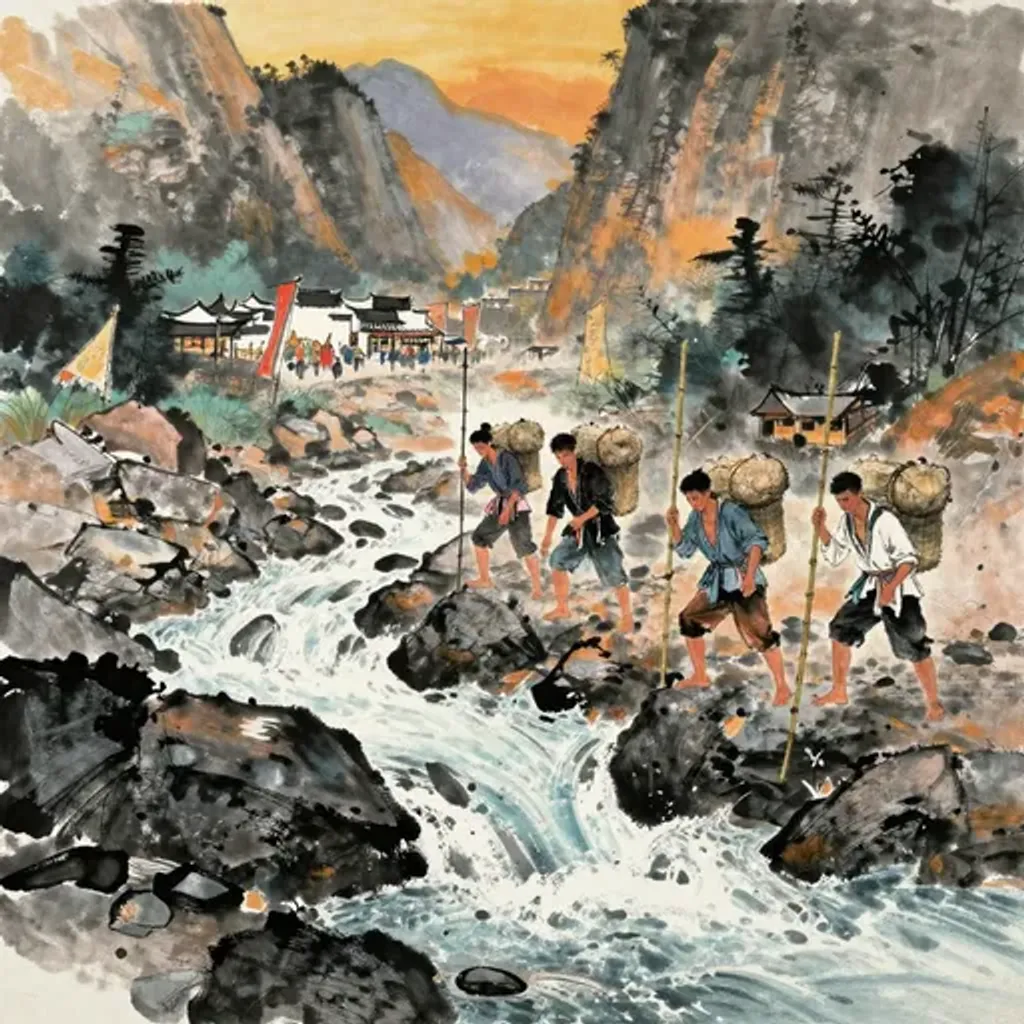
情懦行賈徑涉山阻與狄為市不憂危殆利得十倍
雷電皆至為豐,豐之豐——卦不變而自化自新,能量凝聚而不散逸。
閱讀完整註釋 ↓
雷電皆至為豐,豐之豐——卦不變而自化自新,能量凝聚而不散逸。諸孺行賈,經涉大阻重險。與杖為市,不憂危殆,利得十倍。少年商人持杖涉險闖蕩天下,以勇氣與商才獲利十倍而不懼。豐之自我轉化意味著盛之更盛——全然投入豐盛之勢,無懼無疑,繁榮自我再生。此即豐之本色:雷電皆至之時,當其盛而行,莫遲疑莫猶豫,乘勢而動。
English commentary
Thunder and fire converge in Abundance upon itself — the hexagram unchanged. Young merchants set out on a trading venture, crossing great obstacles. They rely on their walking staffs for trade and do not worry about danger. Profits multiply tenfold. When Abundance transforms into itself, the pattern intensifies rather than shifts. The young traders embody Abundance's own energy: vigorous, bold, traversing difficulties with nothing but a staff and commercial instinct. Their fearlessness in the face of hardship yields extraordinary returns. The self-referential transformation suggests that true abundance perpetuates itself — those who fully inhabit the moment of fullness, without hesitation or anxiety, find that prosperity regenerates from within.
此註釋依據較早的讀法撰寫。讀法既經更定,其詮釋未必仍適用於今所見之文。
《焦氏易林》,清乾隆間寫文淵閣四庫全書本。
國立故宮博物院 故庫017987–017990
第4冊,第109頁
據寫本原葉錄出
標點依寫本,不另加標點。
關於此讀法
據掃描原葉錄出。