上卦
震 Zhèn
雷 — 動
下卦
坎 Kǎn
水 — 陷
經典文本
卦旨
解非勝也,乃結之既釋——阻散而動復可行之際。上震下坎:奮者出於險,如雷雨作而前之鬱悶解。卦辭設二事:「无所往,其來復吉」「有攸往,夙吉」。二者必辨之於初:解有其時,留連於既釋之頃,玩其暇而不用之,則所開者虛矣。 《象》定其所解之質:「雷雨作,解;君子以赦過宥罪。」天之解與刑之解非取譬也,其理一也:雷雨所以泄其所積,解者亦必泄其所積之怨——事已解而其責未已,則未嘗解也。 然非一切皆赦。上六著其所不赦:「公用射隼于高墉之上,獲之无不利。」大勢既清,而一堅者猶據高位,則除之為宜。其居末非偶:此赦之所餘,非赦之所代。六五則示其驗:「有孚于小人。」所解者惟上之所覺,則未解也。 故解之旨,在節自束至釋之過,尤在使新釋者不復自結。六三正名其失:「負且乘,致寇至。」出於困而遽居其所未當得者,反招新難。解者復其初而已,非以益之。既釋之勢猶霽後之天,非可誇之功,乃當用之於其再變之前者也。
彖辭
「利西南。无所往,其來復吉。有攸往,夙吉。」西南是回歸的方向。如果沒有什麼地方要去,回來就對齊。如果還有事要做,趕快去做就對齊。張力開始緩解的時候,趕快回到正常狀態。不要過度慶祝勝利,不要走得比需要的更遠。像雨水解除大氣的緊張,解脫讓一切開花。但這只是開始。
象辭
「雷雨作,解。君子以赦過宥罪。」雷雨來了,空氣清新了。無心的過失,像雷聲消散那樣放過它。故意的錯誤,像雨水洗淨一切那樣寬恕它。不要糾纏於別人的過錯。清明帶來解脫。
爻辭
第初爻
「无咎。」沒有過錯。障礙過去了,解脫來了。安靜地休養,保持靜止。不需要多說什麼。困難克服之後,這樣做是對的。
第二爻
「田獲三狐,得黃矢。貞吉。」打獵抓到三隻狐狸,得到黃色的箭。狐狸代表那些用諂媚影響上位者的陰險小人。解脫之前必須除掉他們。但要用對的方法——黃色代表中道,箭代表直接。全心投入解脫的事業,正直就會成為對抗虛偽的武器。
第三爻
「負且乘,致寇至。」背著包袱卻坐馬車,這樣會招來盜賊。從窮困進入舒適,卻裝出不合自己身份的樣子。對上傲慢,對下刻薄,粗心大意——這些都會招來災禍。
第四爻
「解而拇,朋至斯孚。」解開你的大腳趾。然後可信任的朋友才會來。困頓時期依附上來的人,現在該放手了。你們沒有內在的連結。不然的話,那些真正跟你志同道合的人會不信任你,不肯靠近。
第五爻
「君子維有解,吉。有孚于小人。」只有有德行的人能解開自己,才會對齊。小人不能用禁令或外在手段趕走。想擺脫他們,必須先在心裡徹底斷絕。他們會看到你是認真的,自己就會退開。
第上爻
「公用射隼于高墉之上,獲之,无不利。」王子射高牆上的隼,射中了。一切順利。高牆上的鳥代表阻礙解脫的權貴小人,頑固不化。必須強力除掉。在自己心裡準備好手段,等待時機,然後行動。
焦氏易林
焦延壽《易林》——第40卦本卦之辭。西漢時期以四言詩闡釋卦變,為最早的系統性易學占辭集。
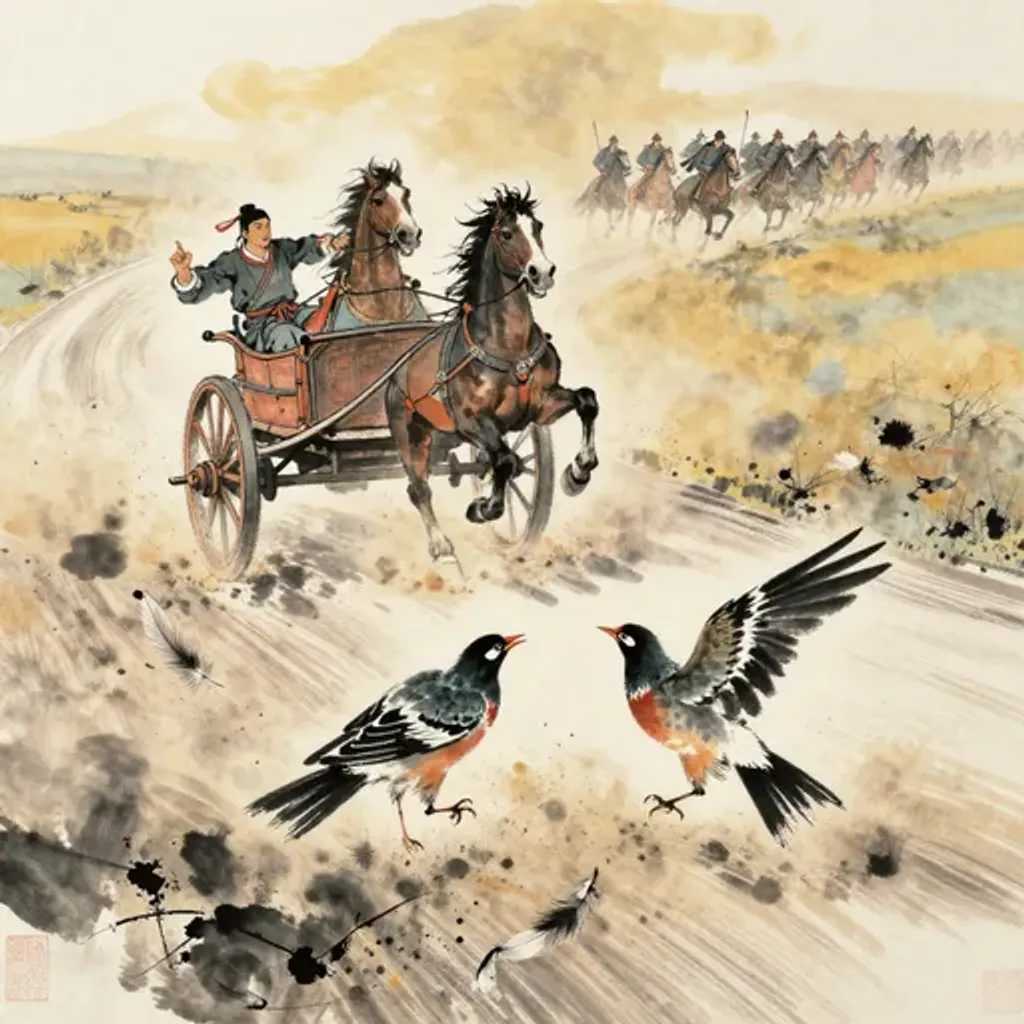
駕言出遊鳥鬬車前更相捽滅兵馬且來回車亟還可以無憂
雷雨作,解之自遇。
閱讀完整註釋 ↓
雷雨作,解之自遇。駕行出遊——驅車出行。鳥鬭車前,更相捽滅——飛鳥在車前搏鬥撕扯,凶兆已現。兵寇旦來——晨間傳來賊兵消息。回車亟還——急忙掉頭回返。可以无憂——因此免於禍患。解遇解,雙重之解脫:第一重是識兆而退,第二重是放棄行程。不執著於原定之路,方能全身而退。最果斷之解脫有時不過是及時回頭。
English commentary
Thunder over water encounters itself — Deliverance meeting Deliverance. Driving out on a journey, birds fight before the carriage, tearing at each other. Then word comes that soldiers and bandits approach at dawn; one turns the carriage and races home, and thereby avoids worry. The verse dramatizes the instinct for timely retreat: omens appear (fighting birds), danger confirms (approaching troops), and the wise traveler does not hesitate to reverse course. From Deliverance to Deliverance, the pattern doubles rather than transforms. Release from one predicament comes through the release of attachment to the journey itself. Sometimes the most decisive act of deliverance is simply turning around.
此註釋依據較早的讀法撰寫。讀法既經更定,其詮釋未必仍適用於今所見之文。
《焦氏易林》,清乾隆間寫文淵閣四庫全書本。
國立故宮博物院 故庫017987–017990
第3冊,第97頁
據寫本原葉錄出
標點依寫本,不另加標點。
關於此讀法
據掃描原葉錄出。