上卦
震 Zhèn
雷 — 動
下卦
乾 Qián
天 — 健
經典文本
卦旨
大壯非許人以行,乃教壯者以自節。上震下乾:動出於至健,力之極盛也;而卦辭止以二字應之:「利貞。」無所譽,無所衍,亦不設其成之之條件,惟曰守正而已。其辭之簡即其教:力至盛則其教不可繁,蓋巧為用力之辭者,正此卦之所戒。 《象》明其所制:「雷在天上,大壯;君子以非禮弗履。」所制者在足,不在力:於其力無所求,惟制其所可行之地。 羝羊者,不用此戒之效也。九三分其二應:「小人用壯,君子用罔。」「罔」有二讀而爻義皆通:作「無」,則君子不用;作「羅」,則王弼所謂「小人用之以為壯,君子用之以為羅己者也」。無論何讀,其別在一者不肯取之——而繼之以其果:「羝羊觸藩,羸其角。」上六復其象而其困已成:「不能退,不能遂。」然其辭不止於此,而曰「艱則吉」。雖自陷者猶有出焉,其出不由力而由艱:致其困者不能解其困,惟歷艱乃可以出。 故大壯之旨,在使至盛之力與至正相合。其卦承遯而來:既退以復其力,力乃全盛。所問者非有力與否,乃能不耀其力否。九四言其可:「藩決不羸,壯于大輿之輹。」真壯者行而不見其形,負重而無所張。輹也,非羊角也,乃用力之正象。
彖辭
力量升起,勢不可擋。但危險也在這裡:太相信自己的力量,就會忘記問什麼是對的。「利貞」——持守才有益。真正的大,不是蠻力,是跟道義連在一起的力量。分開了,就只是力。
象辭
「雷在天上,大壯。君子以非禮弗履。」雷聲往上衝,跟天的方向一致。力量大的時候,更要守規矩——這話聽起來保守,但想想那些不守規矩的強者,下場往往不好。
爻辭
第初爻
力量在腳趾——最低的位置,卻急著要往前衝。從下面硬闖,通常不會有好結果。這種衝動我也有過,事後都後悔。
第二爻
「貞吉」——持守帶來對齊。門開始打開,阻力消失。但這正是最容易得意忘形的時候。成功不是靠猛,是靠穩。
第三爻
「羝羊觸藩,羸其角。」公羊用角撞籬笆,結果角被卡住了。炫耀力量的人往往這樣收場。沒有德行的人才靠蠻力,有德行的人知道適可而止。
第四爻
安靜地、持續地拆除障礙,最後一定成功。這種力量不外露,卻能推動大車。就像車軸——你看不見它,但整輛車靠它支撐。
第五爻
「喪羊于易,无悔。」羊丟了,卻沒有遺憾。因為阻力已經消失,不需要再硬碰硬。那種好鬥的姿態,可以放下了。
第上爻
公羊撞籬笆,進不得,退不得。走得太遠就是這樣。唯一的辦法是認清困境,停下來。不再掙扎,事情反而會慢慢好轉。
焦氏易林
焦延壽《易林》——第34卦本卦之辭。西漢時期以四言詩闡釋卦變,為最早的系統性易學占辭集。
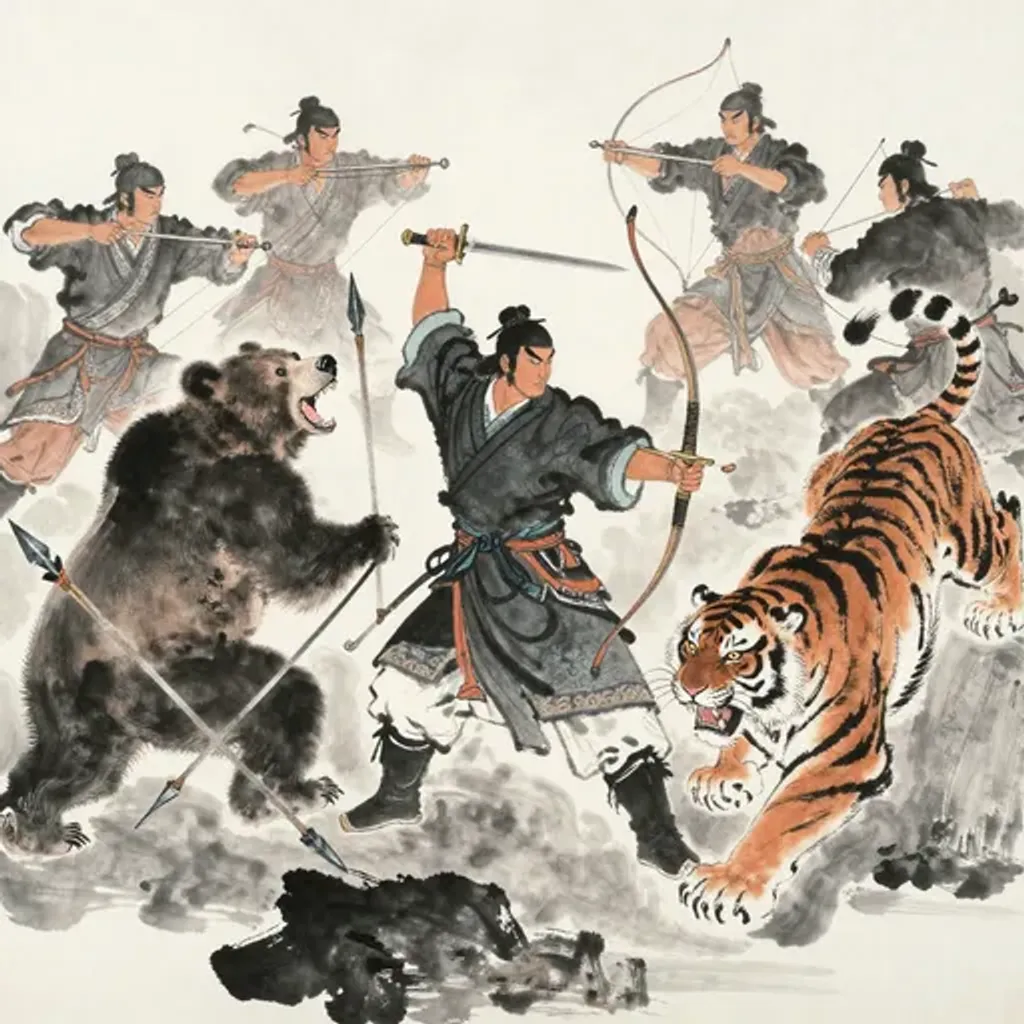
左有噬熊右有嚙虎前觸銕牙後躓強弩無可抵者
雷在天上,大壯不變——卦自變為己。
閱讀完整註釋 ↓
雷在天上,大壯不變——卦自變為己。左有噬熊,右有囓虎,前觸銕矛,後躓強弩,無可抵者。四面受敵,無處可退,壯力之極致反成極致之困。大壯之大壯,鏡像自映:當同等之力從四方壓來,最強者亦動彈不得。此詩非頌強盛,乃警壯極。力大無當,威猛無方,全力反成全困——壯之極即壯之窮。
English commentary
Thunder doubles upon thunder above heaven — Great Power remains Great Power, the hexagram transforming into itself. The verse paints a warrior surrounded on all sides: a biting bear to the left, a gnawing tiger to the right, iron spears ahead, strong crossbows behind. There is no safe direction, no angle of escape, no one who can resist such concentrated force. This is power at its absolute zenith, hemmed in by its own magnitude. From Dazhuang to Dazhuang, the image mirrors itself: when power faces equally matched power from every quarter, even the mightiest stands paralyzed. The verse reads not as triumph but as warning — total strength without maneuver room becomes total entrapment.
此註釋依據較早的讀法撰寫。讀法既經更定,其詮釋未必仍適用於今所見之文。
《焦氏易林》,清乾隆間寫文淵閣四庫全書本。
國立故宮博物院 故庫017987–017990
第3冊,第36頁
據寫本原葉錄出
標點依寫本,不另加標點。
關於此讀法
據掃描原葉錄出。