Pilgrimage to Cythera

第11卦

Tài

Peace

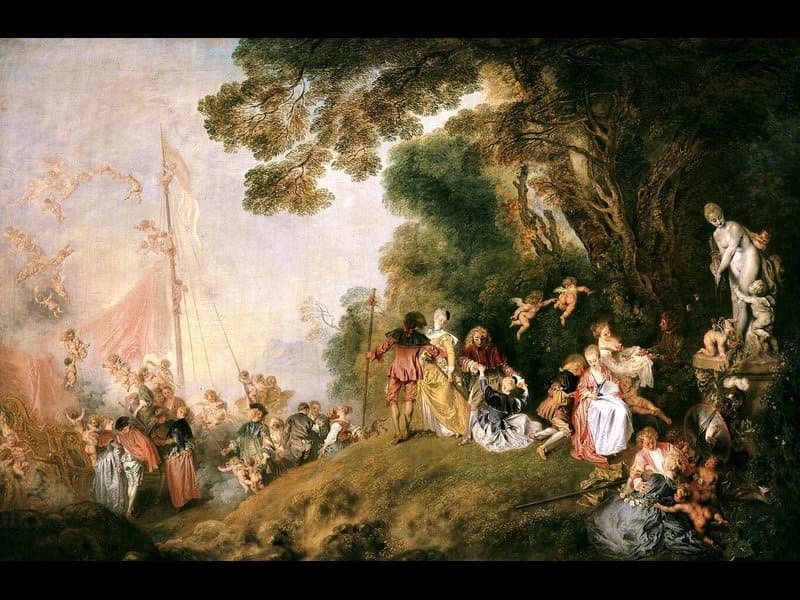
Pilgrimage to CytheraWatteau, 1717

Aristocratic couples move through a garden toward waiting boats, their silk garments catching afternoon light. Watteau painted this pilgrimage to Cythera in 1717, showing lovers departing for Venus's mythical island where desire meets divinity. The landscape slopes naturally from cultivated garden to distant sea, no boundary separating earth from transcendent destination. Cupids flutter overhead, already part of the scene rather than descending from elsewhere. Everything flows together—human movement toward divine realm, earthly ground rising to meet heavenly promise. The garden itself seems to lean toward the boats, the island to reach back toward shore.

阅读完整论述 ↓

This is Tài (泰), the Chinese hexagram of Peace, translated sometimes as "harmony" or "pervading." Ancient diviners saw this configuration when Earth (Kūn) sits above Heaven (Qián): the receptive above, the creative below, which seems inverted until you realize—heaven's nature rises, earth's nature settles, so this arrangement means they move toward each other. Heaven ascends into earth, earth descends to meet heaven, and in that mutual approach, all things communicate. Watteau's pilgrims inhabit this exact moment—no obstacle separates desire from fulfillment, the human from the divine, departure from arrival. In Zhou Dynasty court divinations, this hexagram appeared during reigns when ruler and people aligned, when harvests came without struggle, when natural and social orders reinforced rather than opposed each other. Watteau's painting depicts aristocratic couples departing for Cythera, the mythical island of Venus. The harmonious movement between earthly garden and divine destination reflects hexagram 11's theme of heaven and earth in communion, where all elements work together naturally. The Judgment text captures this flowing interchange: "The small departs, the great approaches. Good fortune. Success." What obstructs dissolves. What nourishes advances. The pilgrims don't battle their way to Cythera—the journey unfolds as naturally as walking through a garden toward water. Watteau gives them no drama, no conflict, only graceful passage through a landscape that cooperates with their intent. Tang Dynasty poets associated this hexagram with spring's third month, when earth warms and heaven sends rain without being asked, when planting and sprouting happen in natural sequence, each element supporting what follows. The Image Text offers guidance for sustaining harmony: "Heaven and earth unite: the image of peace. Thus the ruler divides and completes the course of heaven and earth, assists the application of the adaptations of heaven and earth, and in this way benefits the people." During peace, the work is distribution and completion—ensuring the natural flow reaches everywhere it should. Watteau distributes his lovers across the entire canvas, from foreground garden through middle boats to distant island, showing how peace spreads rather than concentrates. In the I-Ching's sequence, Tài follows Treading: after learning proper conduct through danger, alignment becomes possible. But peace contains its own warning—the next hexagram is Standstill, where heaven and earth separate again. Nothing lasts, not even harmony.

上卦

Kūn

EarthReceptive

五行Earth方位North家庭Mother性质receptive, yielding, nurturing

下卦

Qián

HeavenCreative

五行Metal方位South家庭Father性质creative, strong, dynamic

经典文本

彖辞

The small departs, the great arrives. Good fortune and success. Heaven and earth unite—their powers combine in deep harmony. This is the season of flourishing. The ruler completes heaven and earth's work and aids the people.

爻辞

第初爻

Pull up the grass—it comes with its roots intertwined. Move forward with your kind. In times of flourishing, pulling up one thing brings others along. Advance together.

第二爻

Embrace the uncultivated, cross the river boldly, don't neglect the distant, abandon partisan cliques. You gain honor by walking the middle path. Greatness requires breadth.

第三爻

No level plain without slopes, no going without return. Hardship, but perseverance brings no blame. Don't worry about your sincerity—the blessing in food remains. Even in peace, prepare for change.

第四爻

Light and quick, not wealthy but sharing with neighbors. Trust without warnings. The good descend to meet the lesser; connection happens naturally.

第五爻

The emperor gives his daughter in marriage. Blessing follows. Supreme good fortune. Power marries down gracefully—this brings happiness to all.

第上爻

The city wall falls into the moat. Don't use the army. Give orders from your own city. Perseverance brings humiliation. Peace ends. The structure collapses. Defense, not expansion.

焦氏易林

焦延寿《易林》——第11卦本卦之辞。西汉时期以四言诗阐释卦变,为最早的系统性易学占辞集。

Yilin artwork for Hexagram 11
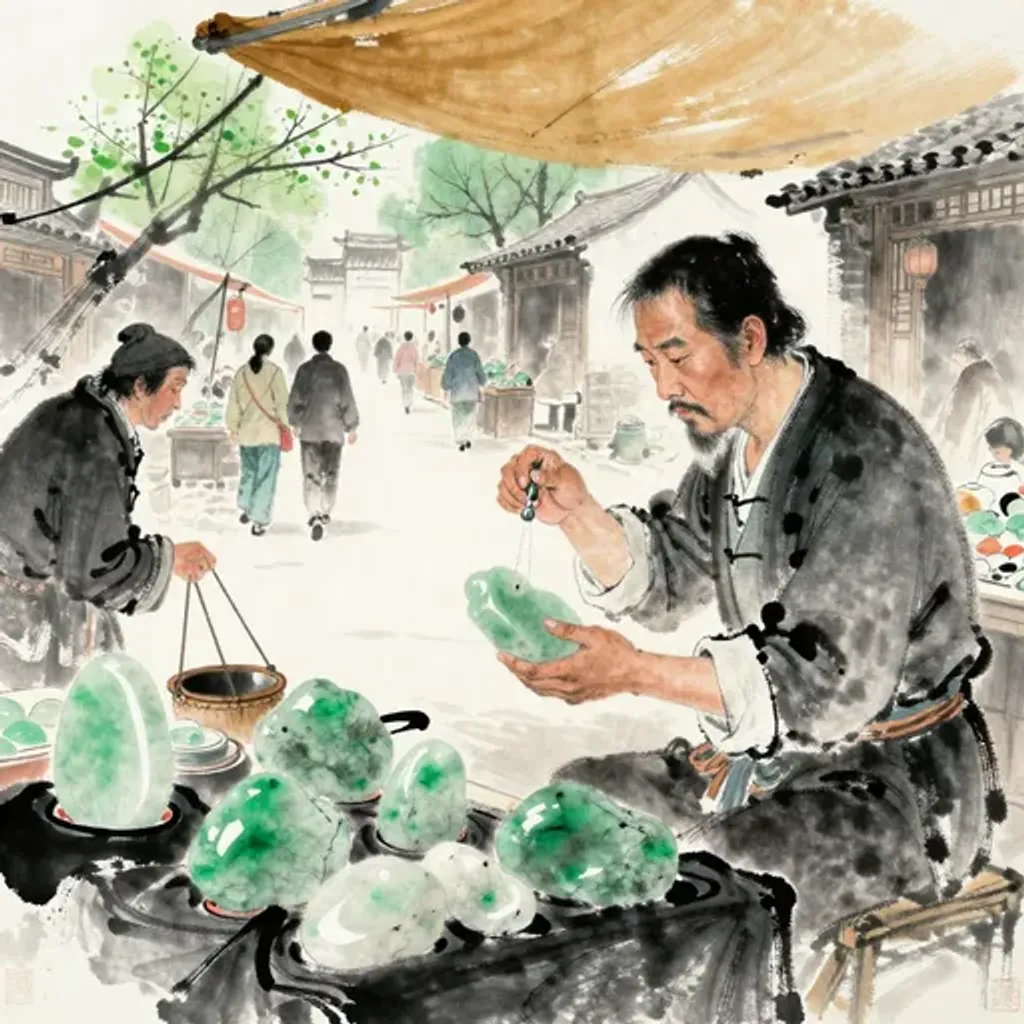
求玉陳國,留連東域;須我王孫,四月來復;主君有德,蒙恩受福。

泰之本卦,天地交通不息。

阅读完整注释 ↓

泰之本卦,天地交通不息。求玉於陳國,留連東域——陳國為舜後裔所封,以美玉聞名。「須我王孫,四月來復」——等待貴人歸來,四月正值陽氣充盛之時。主君有德,故蒙恩受福。泰至泰,自我循環:德行流轉不竭,如天地交通之道生生不已。出行求寶者因有德而得福,歸來施恩於眾。此詩為泰卦之最佳寫照——和平繁盛之機,周而復始,不假外求。

English commentary

Peace returning to itself, earth above heaven in doubled communion. One journeys to the state of Chen seeking jade, lingering in the eastern lands. The verse then calls out: 'Wait for our prince to return — in the fourth month he shall come back.' The lord possesses virtue, and through his merit all receive blessing. Chen was famed for its jade and its ancient lineage descended from Emperor Shun. The fourth month marks the height of spring's generative power. From Peace to Peace, the pattern is self-renewing: virtue circulates without depletion, and the prince who departs on a worthy errand returns enriched, distributing fortune to all.