The Ghost of a Flea

第36卦

明夷

Míng Yí

Darkening of the Light

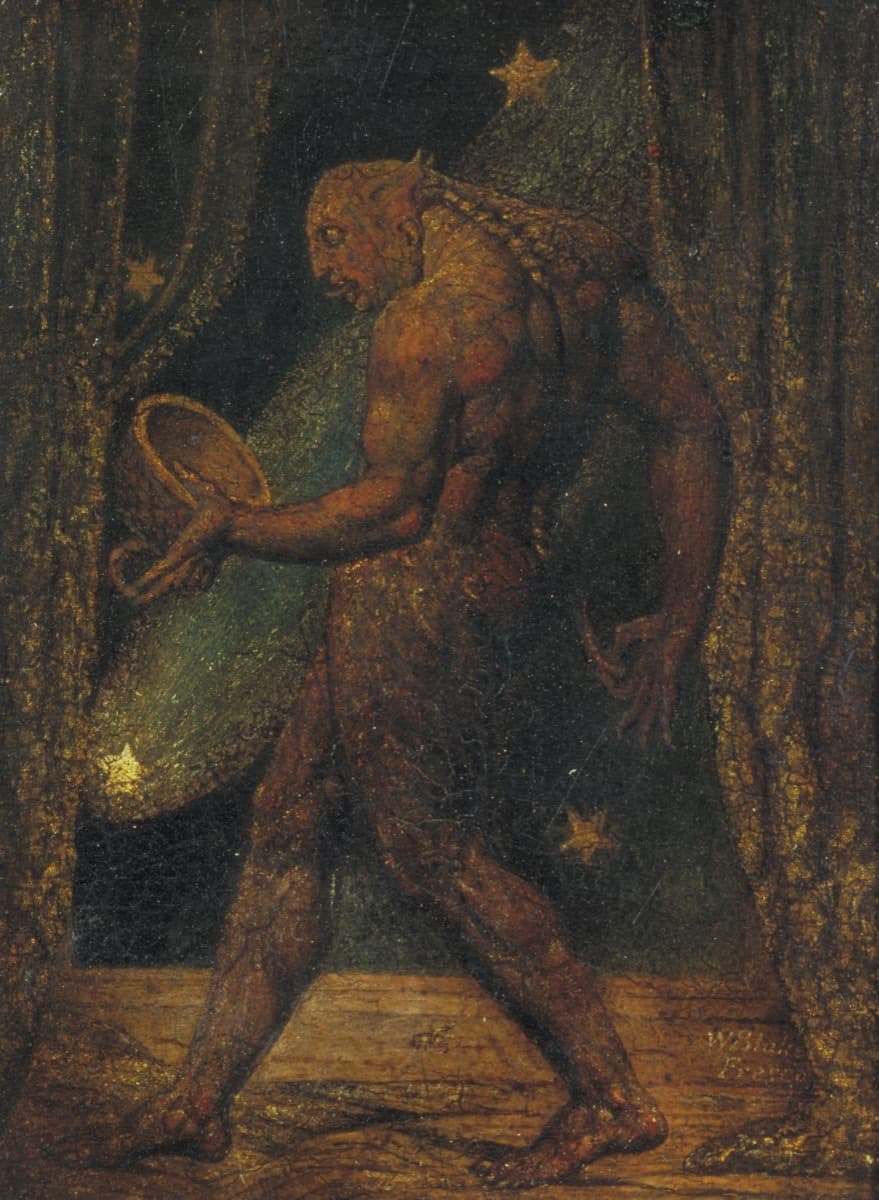
The Ghost of a FleaWilliam Blake, 1819

A grotesque humanoid creature emerges from shadow in William Blake's 1819 visionary painting. The figure possesses a muscular body but a beast-like head, its tongue extended toward a bowl that appears to contain blood. Blake claimed he painted what he saw during a seance—the ghost of a flea magnified to human scale, embodying the spiritual essence of a bloodsucking creature. The painting places the viewer inside the realm of concealed malevolence, where predatory forces exist beyond ordinary perception, where what feeds on life operates in darkness.

阅读完整论述 ↓

This is Míng Yí (明夷), Darkening of the Light. The character 明 depicts sun and moon—illumination itself—while 夷 suggests wounding or destruction. Ancient diviners saw this configuration when Earth (Kūn) sits above Fire (Lí)—receptive darkness covering clarity and light, the inversion of Progress. Blake's creature embodies this structure: it exists in shadow, emerges from concealment, represents intelligence twisted toward predation. The painting captures what ancient practitioners described as ming ru di zhong—light entering the earth, brilliance forced into hiding. Blake claimed he saw this vision during a seance, painting a grotesque humanoid creature with muscular body, beast-like head, and tongue extended toward a bowl of blood. The figure emerges from darkness with threatening posture, embodying malevolent forces concealed from ordinary sight. The Judgment text speaks with deliberate restraint: "Darkening of the Light. In adversity it furthers one to be persevering." Zhou Dynasty court diviners understood this hexagram as counsel for dangerous times when speaking truth brings punishment, when clarity must conceal itself to survive. The text does not promise triumph over darkness but persistence through it. Ancient commentators noted this configuration appeared during tyrannical reigns, when capable officials concealed their abilities to avoid jealous attack, when the worthy withdrew from corrupted systems while maintaining inner integrity. The Image Text offers survival strategy: "The light has sunk into the earth: the image of Darkening of the Light. Thus does the superior man live with the great mass: he veils his light, yet still shines." Blake's creature reveals what operates in concealment, but the hexagram addresses how one moves through such an environment. In the I-Ching's sequence, Míng Yí follows Jìn (Progress): after light has risen and become visible, it attracts predatory attention. The ancient text teaches that preservation of light sometimes requires its deliberate obscuring, that survival through dark times serves the eventual return of conditions where clarity can once again shine openly.

上卦

Kūn

EarthReceptive

五行Earth方位North家庭Mother性质receptive, yielding, nurturing

下卦

FireClinging

五行Fire方位East家庭Second Daughter性质illuminating, dependent, radiant

经典文本

卦旨

Ming Yi is not defeat. It is the discipline of preserving light in conditions that punish its display. Earth (Kun) above Fire (Li) — the exact inversion of Jin (Progress) — shows clarity buried beneath darkness, the sun driven below the horizon. The judgment is two words: 利艱貞 — "it furthers to be persevering in adversity." The character 艱 (arduous, difficult) modifies perseverance itself. This is not ordinary steadfastness; it is perseverance that knows it will be tested past endurance and commits to enduring anyway. The Image text encodes the hexagram's survival strategy: 明入地中,明夷。君子以蒞眾,用晦而明 — "light enters the earth, Darkening of the Light. The superior person governs the multitude by employing obscurity yet remaining inwardly bright." The two-character phrase 晦而明 is the hexagram's core teaching: dark outwardly, bright within. This is not deception — it is the tactical concealment of what would be destroyed if exposed. The fifth line invokes the historical precedent directly: 箕子之明夷 — "the darkening of the light as with Prince Ji." Ji lived at the court of the tyrant Zhou Xin, concealed his intelligence, feigned madness, and survived to transmit what mattered to the next era. He did not fight the tyrant. He outlasted him. The goal of Ming Yi is to ensure that darkness does not extinguish what it covers. The top line reveals what happens to the dark force itself: 初登于天,後入于地 — "first it climbed to heaven, then plunged into the depths of the earth." Tyranny destroys itself through its own excess. The hexagram's architecture teaches that light need not defeat darkness directly — it needs only to survive the period of darkness intact. The third line hints at eventual justice (明夷于南狩。得其大首 — "darkening of the light during the hunt in the south; the great leader is captured"), but appends the critical caution: 不可疾貞, "one must not expect perseverance too hastily." The correction will come. The light's task is to still be burning when it does.

彖辞

Difficult sustained orientation is supported. The light goes underground. And the only thing that's supported is difficult persistence. Not easy persistence — difficult. The text knows you're in a situation where clarity is being actively suppressed. The instruction isn't to fight it. It's to survive it. Quietly. With your light intact but invisible.

象辞

Brightness enters the earth: darkening of the light. The realized person accordingly governs the multitude — using dimness to remain bright. The light sinks into the earth. And the instruction for the realized person is the most counterintuitive in the book: use darkness to preserve your brightness. Dim the exterior to protect the interior. The person who shines in a dark time gets extinguished. The person who dims gets to keep their fire.

爻辞

第初爻

Darkening of the light in flight. Lowering the wings. The realized person on the road — three days without eating. Having somewhere to go, the host has things to say. Flying with drooping wings. Three days without food. People talk. The first line of the darkening hexagram and the image is: you're retreating, you're hungry, and you're being criticized for it. All three at once. The text doesn't say the criticism is wrong. It says you have somewhere to go. That's enough.

第二爻

Darkening of the light. Wounded in the left thigh. Using a rescue horse of strength: resolves well. Wounded in the leg — not fatally, but you're limping. And the rescue comes from a strong horse, not from your own strength. Resolves well. The second line of the darkening and the instruction is: accept the help. The injured person who insists on walking when there's a horse available isn't brave. They're just slower.

第三爻

Darkening of the light in the southern hunt. Capturing the great leader. One cannot be hasty in sustained orientation. You catch the leader. The big one. In the middle of the darkening, you find the source. And the instruction is: don't be hasty. Because removing the cause of the darkness too quickly creates a different kind of collapse. The person who captures the tyrant and demands instant reform hasn't studied what comes after.

第四爻

Entering the left side of the belly. Capturing the heart of the darkening. Going out through the gate and courtyard. You go in through the belly and find the heart of the darkness. The left side — the vulnerable side. And then you leave through the front door. No verdict. Just the action: in, discovery, out. The person who gets close enough to understand the darkness from the inside and then walks out the front gate has done something almost nobody can do.

第五爻

Prince Ji's darkening of the light. Sustained orientation is supported. Prince Ji — who hid his sanity at the tyrant's court. Feigned madness to survive. Sustained orientation supported. The text reaches for a specific historical person because this line needs a name. The person who conceals their light so completely that the darkness doesn't even notice them. That's not cowardice. That's the longest game anyone ever played.

第上爻

Not brightness but darkness. First ascending to heaven, then entering the earth. Climbed to heaven. Plunged into earth. The arc of the darkness itself — it rose as high as it could, and then it buried itself. No verdict. The text just draws the trajectory. Because the thing about darkness that positions itself above heaven is that it has nowhere left to go but down. The fall was always in the design.

焦氏易林

焦延寿《易林》——第36卦本卦之辞。西汉时期以四言诗阐释卦变,为最早的系统性易学占辞集。

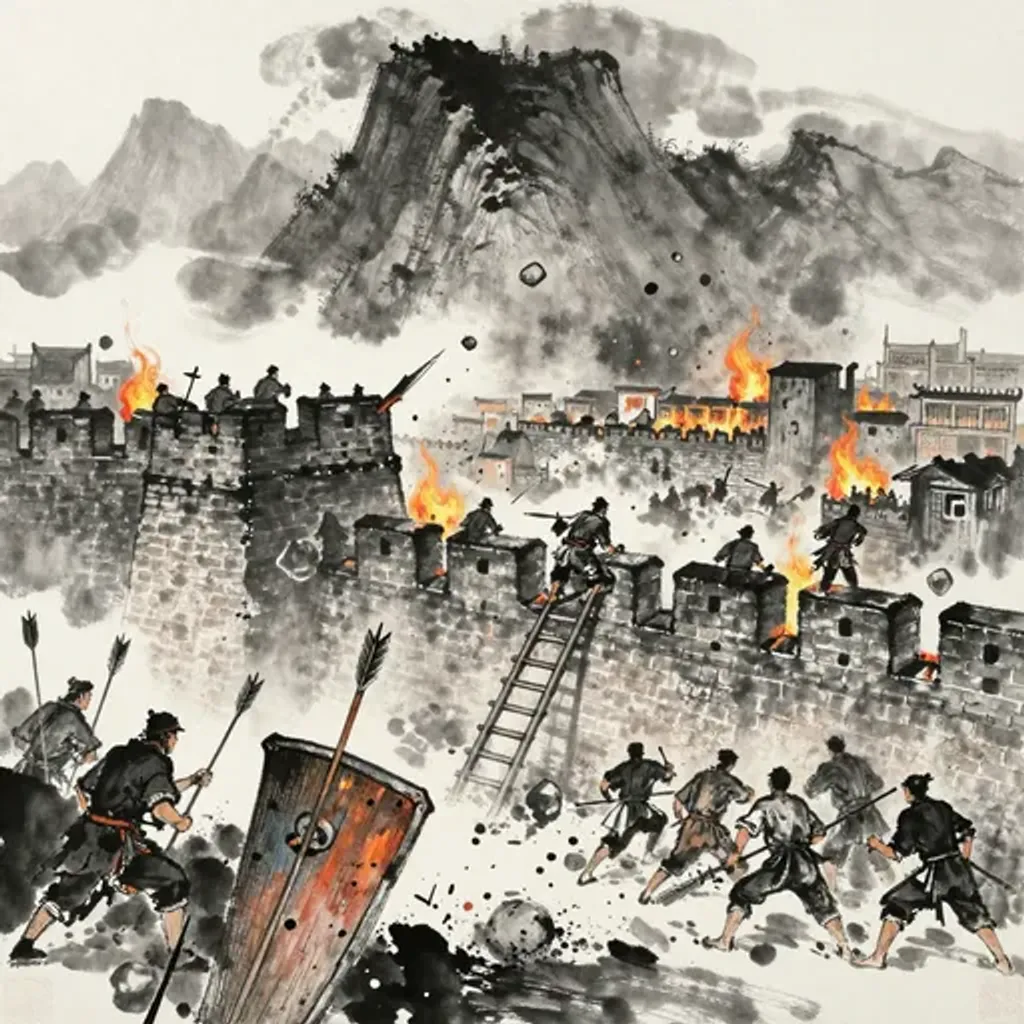
Yilin artwork for Hexagram 36
他山之儲,與璆為仇,來攻吾城,傷我肌膚,邦家騷憂。

明入地中,復歸明入地中——明夷不變,源卦與變卦同。

阅读完整注释 ↓

明入地中,復歸明入地中——明夷不變,源卦與變卦同。「他山之儲,與璆為仇」——外來之財反與美玉為敵。「來攻吾城,傷我肌膚,邦家騷憂」——攻城破國,傷及百姓,邦國騷動。變卦不變,困境加深。本應互補之資源化為仇讎,外物入侵而自身受創。此呼應明夷卦辭中箕子之經歷——暴政之下,内外交困。明夷之明夷,無出路可循。唯一之道即卦旨本身:「蒞眾用晦而明」——以晦藏守住真正之光。

English commentary

Fire beneath the earth remains beneath the earth — Darkening of the Light unchanged, the source and target identical. 'Treasure from other mountains becomes an enemy of fine jade; they come to attack our city, wound our flesh, and the state trembles with grief.' When the transformation leads nowhere new, the condition intensifies. External wealth or foreign resources that should complement domestic treasure instead turn hostile. The image of a besieged city with wounded citizens echoes the hexagram's own text about Prince Ji's experience of internal tyranny. From Darkening of the Light to itself, no escape route opens. The only counsel is the hexagram's own: govern the multitude by 'using darkness to preserve light' — survival through deliberate concealment of one's true brilliance.