Liberty Leading People

第43卦

Guài

Breakthrough

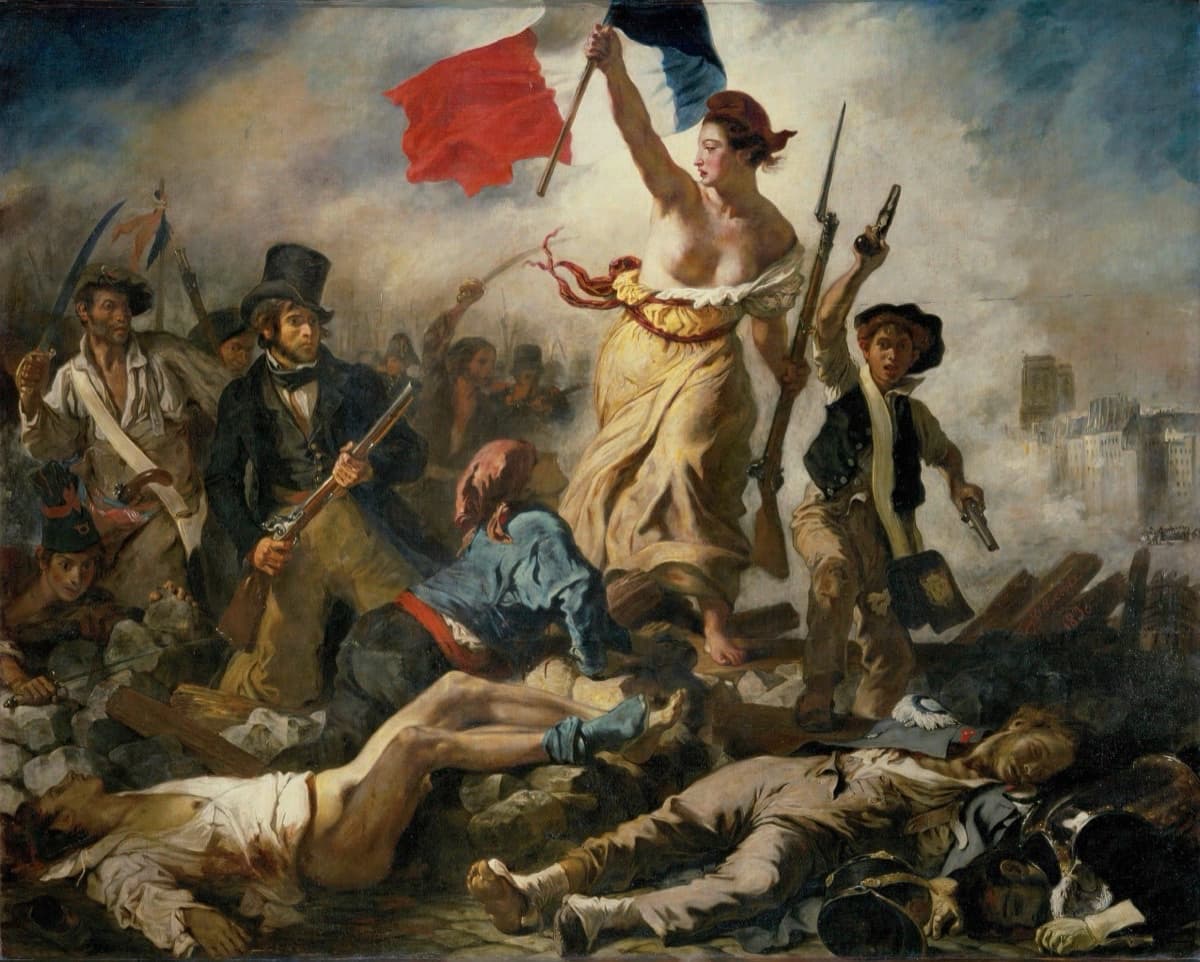
Liberty Leading PeopleDelacroix, 1830

Paris, July 1830. Eugène Delacroix paints Liberty as an allegorical woman striding over barricades and bodies, bare-breasted, holding the tricolor flag. She leads armed citizens through gunsmoke—a boy with pistols, a man in top hat with musket, a wounded insurgent at her feet. The July Revolution overthrows King Charles X in three days. Delacroix completes the canvas within months, capturing the moment when popular uprising breaks through royal authority.

阅读完整论述 ↓

Delacroix painted this in response to the July Revolution of 1830 in Paris, which overthrew King Charles X. The allegorical figure of Liberty leads armed citizens over barricades and bodies, holding the tricolor flag. The image depicts a decisive breakthrough moment when popular uprising breaks through royal authority, connecting to hexagram 43's theme of resolute action. This is Guài (夬), Breakthrough, called "Resoluteness" in some translations. The hexagram structure shows five yang lines pushing upward against a single yin line at the top—accumulated force achieving decisive rupture. Lake (Duì) sits above Heaven (Qián): joyous expression released by creative power, the dam breaking under pressure. Delacroix's composition surges upward and forward, the crowd's momentum carrying through the picture plane. In Zhou Dynasty court divinations, this configuration appeared when ministers confronted corrupt officials, when floodwaters breached levees, when long-accumulating tension found sudden release. The hexagram addresses not gradual change but the critical moment when restraint gives way. The Judgment text declares: "Breakthrough. One must resolutely make the matter known at the court of the king. It must be announced truthfully. Danger. It is necessary to notify one's own city. It does not further to resort to arms. It furthers one to undertake something." The text acknowledges both the necessity and peril of decisive confrontation. Delacroix shows exactly this—the dangerous moment when citizens take to the streets, when words transform into barricades and musket fire. Yet the painting also captures the Judgment's counsel: Liberty herself carries no weapon, only the flag. The breakthrough comes through will made visible, grievances announced, not through arms alone. The revolution succeeded because Charles X abdicated rather than order massacre; three days of street fighting replaced one monarchy with another. The Image Text states: "The lake has risen up to heaven: the image of Breakthrough. Thus the superior person dispenses riches downward and refrains from resting on virtue." Water accumulating until it must overflow, pressure finding release. Delacroix's Liberty embodies this principle—she rises from the people, leading them forward while distributing the revolution's promise. In the I-Ching sequence, Guài follows Yì (increase): accumulation reaches the point where it must break through existing forms or collapse under its own pressure. The barricade moment captures this threshold—buildup becoming breakthrough, the stored energy of grievance converting to kinetic force of change.

上卦

Duì

LakeJoyous

五行Metal方位Southwest家庭Youngest Daughter性质joyful, reflective, collecting

下卦

Qián

HeavenCreative

五行Metal方位South家庭Father性质creative, strong, dynamic

经典文本

卦旨

Guai is not aggression. It is the moment when accumulated righteous force must confront the last residue of what is corrupt — and the hexagram's primary concern is ensuring that this confrontation does not corrupt the confronter. Lake (Dui) above Heaven (Qian) shows five yang lines pressing upward against a single yin line at the top: overwhelming strength facing a small but entrenched opposition. The judgment lays out a precise protocol: 揚于王庭 — "make the matter known at the king's court"; 孚號有厲 — "a truthful declaration involves danger"; 告自邑,不利即戎 — "announce from your own city; it does not further to resort to arms." The sequence is critical: public declaration of the problem, acknowledgment of risk, local self-examination, and the explicit prohibition against military force. Breakthrough is achieved through moral clarity, not violence. The Image text reveals the deeper logic: 澤上於天,夬。君子以施祿及下,居德則忌 — "the lake has risen to heaven, Breakthrough. The superior person distributes blessings downward and refrains from resting on virtue." Water accumulated above heaven must overflow — this is inevitable. The hexagram addresses what happens at the moment of overflow. If the person breaking through hoards the resulting advantage, the breakthrough merely replaces one form of corruption with another. The top line shows the consequence of incomplete resolution: 无號。終有凶 — "no cry; in the end, misfortune." The last trace of evil, if left unaddressed because the situation appears resolved, regenerates. Evil that escapes notice at the moment of breakthrough becomes the seed of the next crisis. The goal of Guai is to regulate the application of overwhelming force so that it eliminates what is corrupt without becoming corrupt itself. The third line captures the essential dilemma: 壯于頄。有凶。君子夬夬。獨行遇雨。若濡有慍。无咎 — "power in the cheekbones brings misfortune; the superior person is resolutely resolute; walking alone, caught in rain, bespattered, people grumble; no blame." The person who maintains principled association with the inferior element while inwardly resolved against it will be misunderstood, will appear contaminated, will face criticism. But this discomfort is the price of a breakthrough that does not merely destroy opposition but transforms the conditions that produced it.

彖辞

Proclaimed in the king's court. A sincere appeal — there is danger. Notify your own city. Resorting to arms is not supported. Going forward is supported. Announce it publicly. Make the appeal with sincerity. But — danger. And tell your own people first, not the enemy. And don't use force. The breakthrough hexagram lays out the most precise rules in the book for confronting what's wrong: speak openly, expect resistance, warn your community, and put down the weapon. The person who fights the darkness with a sword becomes part of it.

象辞

The lake rises above heaven: breakthrough. The realized person accordingly distributes rewards downward, and resting in character avoids accumulation. The lake above heaven — water higher than the sky, which means it's about to break. And the instruction is: give downward. Distribute before the break. Because the person who accumulates at the moment of overflow gets the flood. The realized person who gives everything away before the breakthrough has nothing left to lose. That's the safest position in the hexagram.

爻辞

第初爻

Powerful in the advancing toes. Going forward and not prevailing constitutes fault. All the power is in the toes — ready to charge. And the text says: if you go and fail, that's on you. Not 'adverse.' Fault. Because the first line of breakthrough requires honest assessment: can you actually do this? The person who charges into a confrontation they can't win didn't commit an act of courage. They committed an error of math.

第二爻

An anxious cry. There are arms in the evening and night. Do not worry. Alarm in the dark. Weapons at night. And: don't worry. The second line of breakthrough is the person who stays vigilant when everyone else is asleep. The cry is the early warning. The weapons are the readiness. And the 'don't worry' is for the person who did the preparation — because readiness is the antidote to anxiety. You armed yourself before nightfall. That's why you can sleep.

第三爻

Powerful in the cheekbones. There is misfortune. The realized person, resolved in their resolution, walks alone and encounters rain. As if soaked, there is displeasure. No fault. It shows in your face — the determination is visible, and that brings misfortune. But the realized person walks alone through the rain anyway. Gets soaked. Gets criticized. No fault. The third line of breakthrough: you're going to look bad. You're going to be alone. You're going to be wet and uncomfortable. And you're going to be right. Those things are not mutually exclusive.

第四爻

No skin on the buttocks. Walking halts and stumbles. Led like a sheep, deviation detected dissolves. Hearing words but not believing. Raw and stumbling. Led like a sheep and the regret would dissolve — if you'd let it. But you hear the words and don't believe them. The fourth line of breakthrough: the good advice is available, the solution is simple, and you can't accept it because your stubbornness has become structural. The sheep that's being led to safety keeps pulling back toward the cliff.

第五爻

Wild plants on the height, resolved in resolution. Walking the middle: no fault. Weeds on the ridge — they keep coming back. And the instruction is: keep resolving. Stay in the middle. No fault. Because the inferior thing in a high position doesn't die from one confrontation. It grows back. The person who resolves once and declares victory hasn't met a real weed. Real weeds need sustained, centered, unglamorous removal. Every time.

第上爻

No cry. In the end, there is misfortune. Silence. No warning, no alarm, no call. And: misfortune in the end. The last line of the breakthrough hexagram, and the failure is not action — it's silence. The person who saw the last remnant of the problem and said nothing. Who assumed the breakthrough was complete. The seed you don't name is the one that grows back. Always call it out. Always.

焦氏易林

焦延寿《易林》——第43卦本卦之辞。西汉时期以四言诗阐释卦变,为最早的系统性易学占辞集。

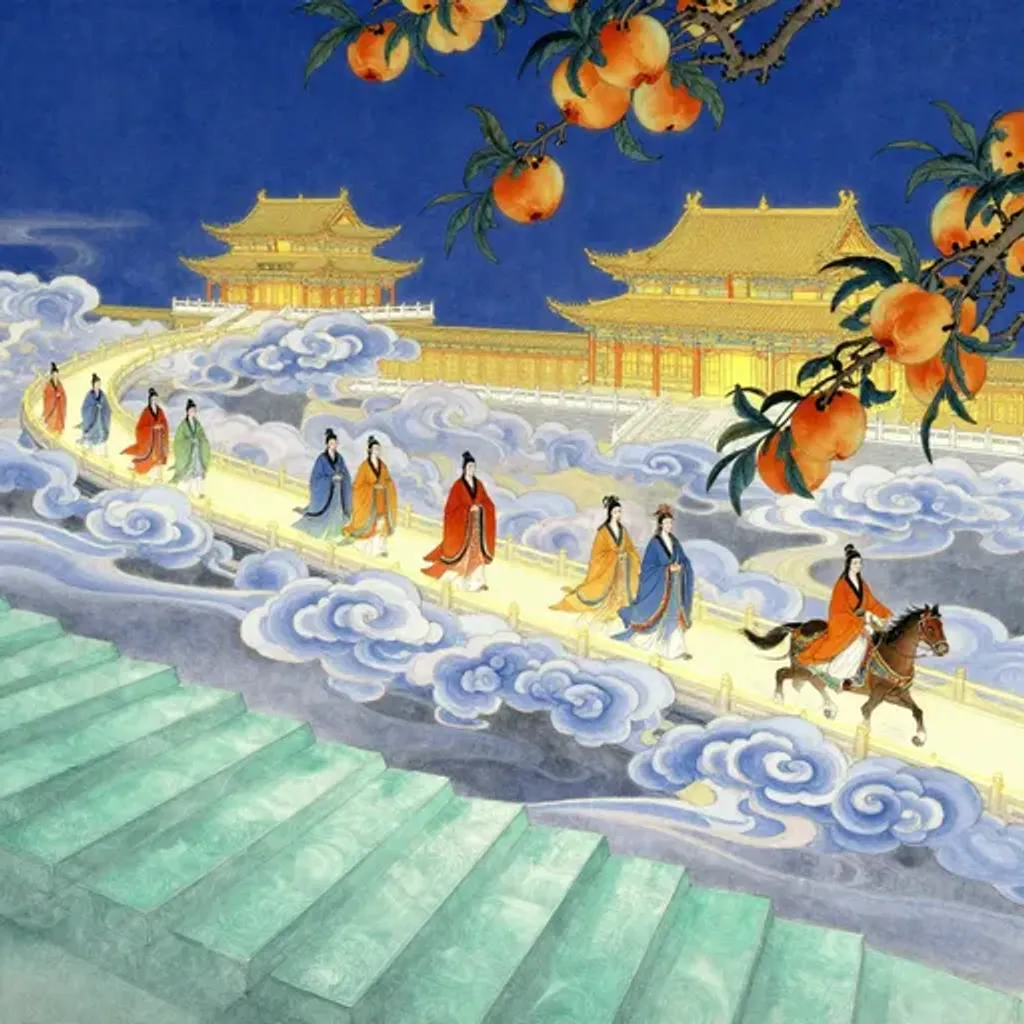
Yilin artwork for Hexagram 43
戴堯扶禹,松喬彭祖。西過王母,道里夷易,无敢難者。

澤上於天,夬遇自身。

阅读完整注释 ↓

澤上於天,夬遇自身。戴堯扶禹——擁戴堯帝,輔佐大禹。松喬彭祖——赤松子、王子喬、彭祖等仙人相伴。西過王母——西行拜訪西王母。道里夷易,無敢難者——道路平坦,無人敢阻。此乃至高之巡遊——聖王與仙人同行宇宙,從容自若而權威無上。從夬至夬,決斷遇決斷,純粹而自我強化。當果決之力不遇任何相反之力,便化為暢行天地之凱旋。兼具王者正統與天仙之誼者,所向無礙。

English commentary

Lake upon heaven meets itself — Breakthrough returning to Breakthrough. The verse invokes the supreme figures of Chinese mythology: supporting Emperor Yao, assisting Yu the Great, accompanied by the immortals Chisongzi and Wang Qiao, journeying westward past the Queen Mother of the West. The road is smooth and easy; no one dares obstruct the way. This is the ultimate pilgrimage — sage-kings and immortals traveling together across the cosmos with effortless authority. From Breakthrough to itself, the pattern is pure decisiveness, undiluted and self-reinforcing. When the decisive principle encounters no contrary force, it becomes a triumphant procession through all of heaven and earth. The one who carries both royal legitimacy and celestial friendship passes unchallenged.