上卦
兌 Duì
澤 — 說
下卦
艮 Gèn
山 — 止
經典文本
卦旨
咸非情愛之謂,乃相感之理——二物各自為體,而能相動不相迫。上兌下艮:柔居剛上,說居止上。山上有澤,自然相受之象:水就山之所成而止,山受澤之所予。無所勝,亦無所亡。所以能感者,以其皆真能受變也。 卦辭曰「亨,利貞」,而繼以「取女吉」。此下經之首卦,其序非偶:上經三十卦言天地與己,自咸而下,所言者交也。「取女」非以男女言,乃言能受之德,感之所由成。「咸」者,「感」而去其心:感之在心之先,未及於情而已相動者也。 《象》以三字盡其法:「山上有澤,咸;君子以虛受人。」「虛」者,山之所以能受澤也。人自滿其所執,則他人無可入之地。此所謂受,非苟同也,乃留其未佔之處而不使自實。 諸爻自下而上,歷於身:拇、腓、股,而後脢、輔頰舌。九四不言體,而王弼以心當之:「在股之上……心神始感者也。」其辭曰「憧憧往來,朋從爾思」。感至於心而其下無止,則轉為計較之勞,所聚者亦止於逐吾念者而已。止於下體者,其感猶出於形;止於輔頰舌者,言而已矣。必通乎其全——本之以止,發之以說——而後為咸之所謂感。故其旨不在感人,而在成其可感之實。
彖辭
「取女吉」——娶妻是好的。相互吸引是自然法則,天地相感,萬物生焉。強的放低姿態,在柔順的下面,表示尊重。這是追求,不是引誘。區別在於持久。
象辭
「山上有澤」——湖在山頂,山因此得到滋潤。君子因此「虛受人」——保持謙虛開放,才能接受好的建議。覺得自己什麼都懂的人,很快就沒有人願意給他意見了。
爻辭
第初爻
「咸其拇」——感應在腳趾。意念在行動之前就形成了。還沒有外顯,對外界沒有影響。開始在萌動。
第二爻
「咸其腓,凶,居吉」——感應在小腿。小腿跟著腳走,自己不能決定方向。不是自主的動,往往不好。等到真正的衝動來了再行動,才不會受傷。
第三爻
「咸其股」——感應在大腿。心想什麼,腿就跟著跑。見什麼追什麼,沒有節制,遲早出醜。學會收斂。這種克制是自由的基礎。
第四爻
「貞吉悔亡」——守正就好,後悔會消失。到了心的位置。品性的靜默力量在起作用,影響自然發生。刻意操控會讓你疲憊,效果也有限。
第五爻
「咸其脢」——感應在頸背,身體最僵硬的地方。意志堅定,不會混亂。深處發生的事,意識控制不了。如果你自己不能被影響,你也影響不了別人。
第上爻
「咸其輔頰舌」——感應在嘴巴、臉頰、舌頭。說得多,背後沒有實質。最表面的影響方式。結果當然不重要。連好壞都不值得提。
焦氏易林
焦延壽《易林》——第31卦本卦之辭。西漢時期以四言詩闡釋卦變,為最早的系統性易學占辭集。
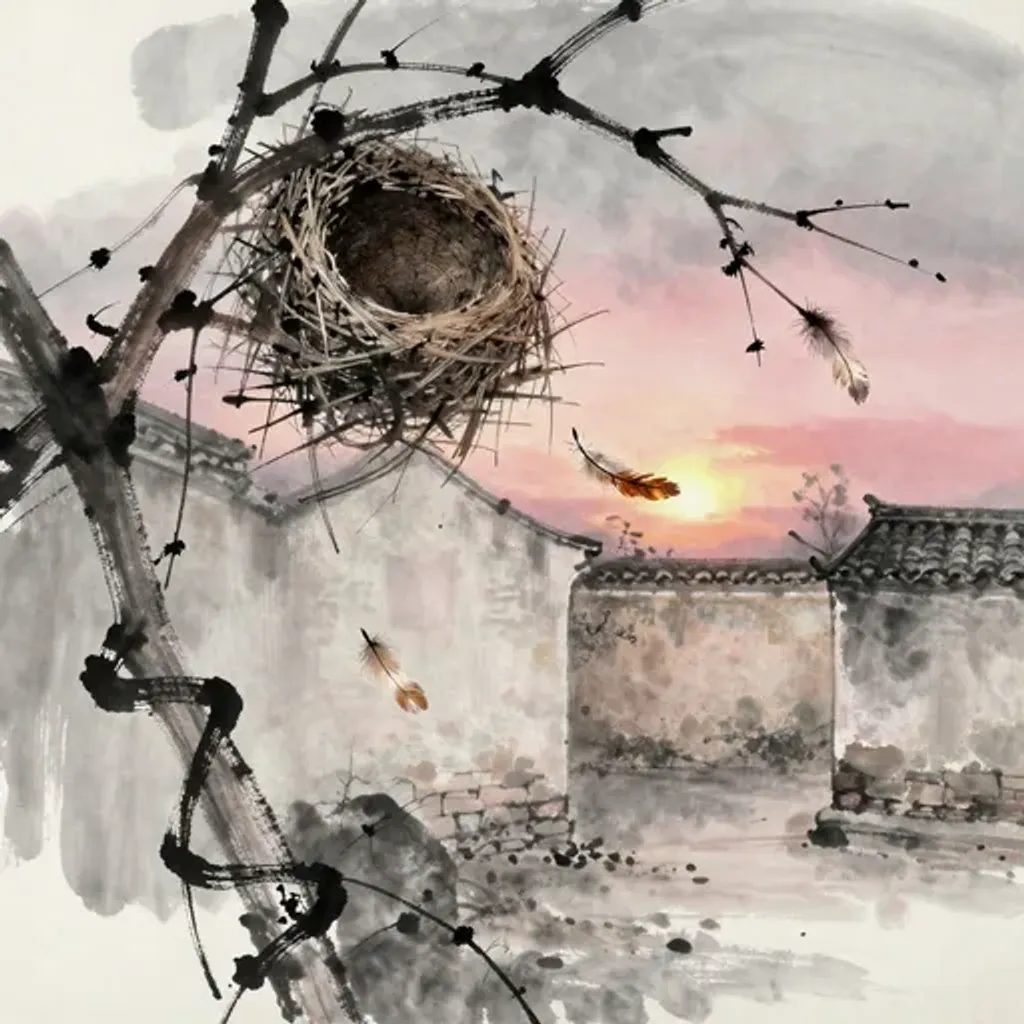
雌單獨居歸其本巢毛羽憔悴志如死灰
空巢殘羽風中搖,枯藤纏枝不堪撓。夕照餘暉照冷壁,影單形隻自蕭條。
山上有澤,咸之自返。
閱讀完整註釋 ↓
山上有澤,咸之自返。原詩:雌單獨居,歸其本巢——孤雌獨守空巢。毛羽憔悴——羽毛零落凋殘。志如死灰——心志冷如灰燼。此本《莊子·齊物論》「形固可使如槁木,而心固可使如死灰乎」之意象(今語作形如槁木、心如死灰),然無超脫之境,唯餘哀涼。非被逐而是自歸,非憤怒而是心死。咸之咸——卦不變,澤仍在山上,虛受之心迴響的只有自身之空。感應本為二者之間之事,一方退回自身、不再對外開放,則感通之道化為至深之孤寂。
English commentary
A lake upon a mountain returns to itself — Influence reflecting upon Influence. The original verse reads: a lone female bird dwells solitary, returning to her own nest, feathers withered and bedraggled, her spirit like dead ashes. This is desolation at its most intimate: not exile but voluntary retreat into an empty home, not anger but the extinction of desire itself. The 'dead ashes' (死灰) alludes to the Zhuangzi's image of the sage whose heart has become still as cold cinders. Yet here it carries no transcendence, only grief. From Influence to Influence, the hexagram does not transform — the lake remains upon the mountain, openness receives only its own echo. Mutual resonance, turned inward with no partner, becomes the loneliest of all conditions.
《焦氏易林》,清乾隆間寫文淵閣四庫全書本。
國立故宮博物院 故庫017987–017990
第3冊,第3頁
據寫本原葉錄出
標點依寫本,不另加標點。
關於此讀法
據掃描原葉錄出。