上卦
震 Zhèn
雷 — 動
下卦
震 Zhèn
雷 — 動
經典文本
卦旨
震非災也,乃驚而使人復其所重之力——雷之一擊,還其覺於未狎之先。震上震下,非一驚而已,乃屢驚:每一至,皆驗其所謂定者為實有,抑徒為之貌。此卦所問未嘗在震,惟在震之所發見。 卦辭自具其節:「震來虩虩,笑言啞啞。」懼而後釋,非弱也,乃其懼稱其事而不過其時。繼之以其所係:「震驚百里,不喪匕鬯。」非木然無所感也,乃其定深至於震不及其執事之手。初九復其序而繫之以「吉」。 《象》明其所用:「洊雷,震;君子以恐懼修省。」震者其器也,非其敵也。 而諸爻不肯一之,此其所以實。六二盡喪而戒其逐:「億喪貝,躋于九陵,勿逐,七日得。」其數即復卦之「七日來復」。九四則無所許:「震遂泥。」上六明禁其行——「征凶」——而曰「震不于其躬,于其鄰,无咎」:震及其鄰而不及己,所當為者,因人之所遭以自警而已。 故其教非一態而六施之。震各有其境,境各有其所當為:或復,或待,或忍,或止。震之旨,在養其可搖而不可碎者;而知此時所問為何,即其所養之一端也。
彖辭
「震來虩虩,笑言啞啞。」雷聲來了,嚇得發抖,然後是笑聲。「震驚百里,不喪匕鬯」——雷聲震撼百里,但主祭的人手沒有抖,祭祀的勺子和酒沒有掉落。當你在心裡真正學會了恐懼是什麼,外在的驚嚇就傷不了你。這種內在的嚴肅,是要練的。
象辭
「洊雷,震。」雷聲重複。象辭說君子「恐懼修省」——因為恐懼而整頓生活,檢查自己的心。看看裡面有沒有什麼在暗中違逆。敬畏,好像是文明的基礎。但這種敬畏不是對外界的害怕,而是對自己的誠實。
爻辭
第初爻
「震來虩虩,後笑言啞啞。」一開始被嚇到,覺得自己處於劣勢。但這只是暫時的。考驗過後,會鬆一口氣。最初承受的恐懼,長遠來看反而帶來好處。我們往往要經歷過,才知道自己能承受什麼。
第二爻
「震來厲。億喪貝。躋于九陵。勿逐。七日得。」震動帶來危險,損失很大。抵抗是沒用的,那不符合時勢。只能退到高處,那是威脅到達不了的地方。接受財物的損失,不要太擔心。等震動過去,不用追趕,東西會回來。這話說得輕鬆,做起來很難。
第三爻
「震蘇蘇。震行无眚。」被震動弄得心神恍惚。但如果震動能夠激發內心的行動,就能避開禍患。三種震動:天上的雷,命運的打擊,心裡的震撼。在震動的時刻,很容易失去冷靜,錯過機會,讓命運擺佈。但如果讓震動在心裡引發動作,外在的打擊就容易克服。
第四爻
「震遂泥。」震動陷入泥濘。既沒有可以對抗的阻力,也沒有可以勝利的順從——一切都像泥巴一樣黏稠遲鈍。這時候,內心的行動力是癱瘓的。這種狀況最令人沮喪,因為看不到敵人,也找不到出路。
第五爻
「震往來厲。意无喪有事。」震動來來往往,沒有喘息的空間。危險。但什麼都沒有失去,因為你保持在運動的中心。不被動盪甩來甩去,是因為有一個穩定的核心。這說起來簡單,風暴中做到很不容易。
第上爻
「震索索,視矍矍。征凶。」震動帶來毀滅,四處張望,驚恐萬分。這時候前進是危險的。內心震動到極點,會奪走思考和清晰的視野。應該靜止不動,等待鎮定和清明恢復。但這只有在你自己還沒有被感染的時候才做得到——雖然周圍的人已經受到影響。
焦氏易林
焦延壽《易林》——第51卦本卦之辭。西漢時期以四言詩闡釋卦變,為最早的系統性易學占辭集。
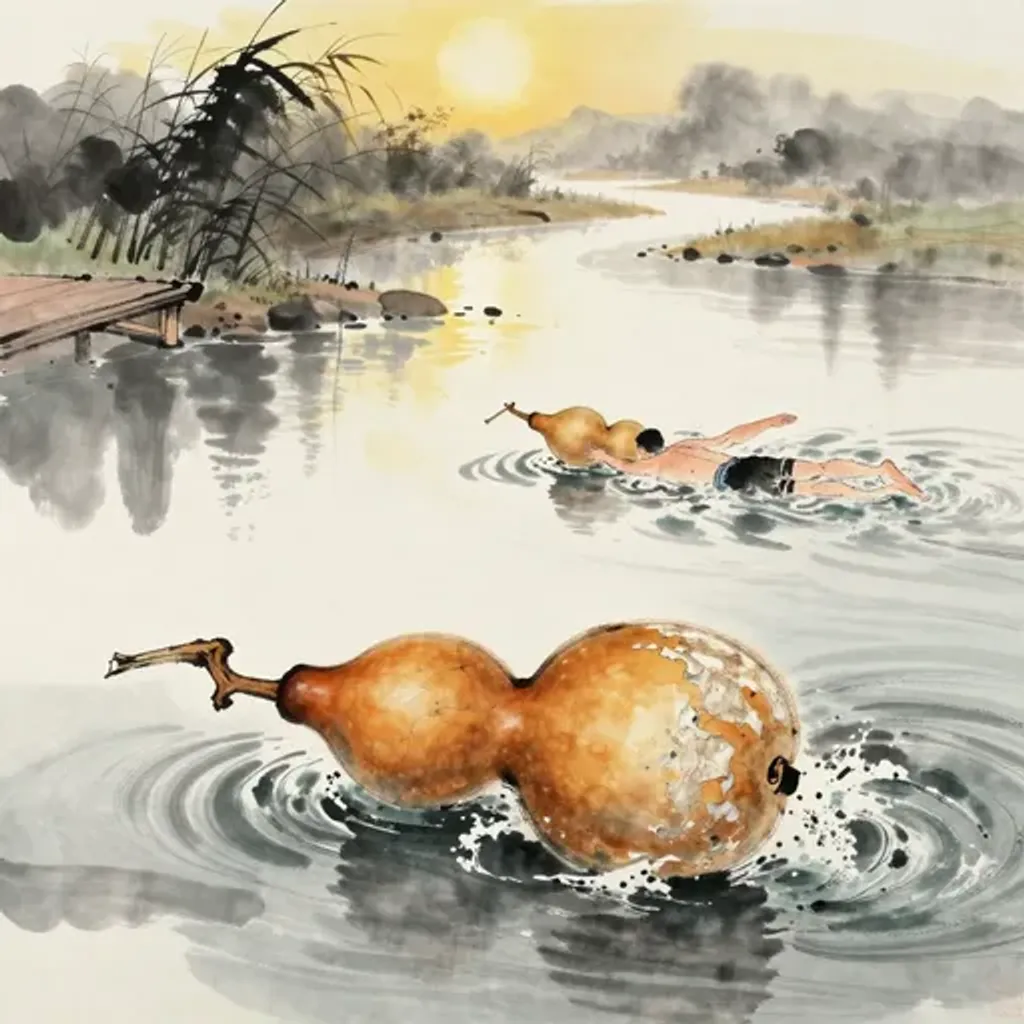
枯瓠不朽利以濟舟渡踰江海無有溺憂
洊雷震動,復歸震動——純粹之震,自我映照。
閱讀完整註釋 ↓
洊雷震動,復歸震動——純粹之震,自我映照。枯瓠不朽——乾瓠不腐。利以濟舟——可為渡舟之用。渡踰河海,無有溺憂——漂越河海而無溺水之虞。瓠者,中空而輕,天然浮於水。莊子曾論:無用之大瓠,不可為瓢,卻可為舟。此詩用於自歸之卦:震復歸震,衝擊回歸自身,方發現本有之浮力。看似枯空無用之質,恰是救渡之關鍵。從震至震——接受本性而不抗拒,方能安然渡過至深之水。恐懼修省,即是自渡之道。
English commentary
Thunder meets itself: pure shock reflected and redoubled. A dried gourd that does not rot — useful for crossing by boat. It ferries one across rivers and seas without fear of drowning. The gourd (瓠), hollow and light, floats naturally. Zhuangzi famously argued that even a useless thing, if understood correctly, becomes a vessel: the massive gourd that cannot be used as a ladle becomes a boat. The verse applies this insight to the self-referential hexagram: Thunder to Thunder, the shock that returns to itself discovers its own buoyancy. What seems empty and dried out proves to be the very quality that saves. From The Arousing to itself, the lesson is that thunder's nature, accepted without resistance, carries one safely through the deepest waters.
此註釋依據較早的讀法撰寫。讀法既經更定,其詮釋未必仍適用於今所見之文。
《焦氏易林》,清乾隆間寫文淵閣四庫全書本。
國立故宮博物院 故庫017987–017990
第4冊,第68頁
據寫本原葉錄出
標點依寫本,不另加標點。
關於此讀法
據掃描原葉錄出。