上卦
坎 Kǎn
水 — 陷
下卦
震 Zhèn
雷 — 動
經典文本
卦旨
屯非泛言艱難,乃初生所特有之難——凡真實的開端皆伴隨此種混亂。種子在地下迸裂,散居之部族聚而成邦,事業方立之數週。上坎下震,險在上而動在下:力已萌發,而未得其路。 卦辭曰「勿用有攸往」——勿有所往。方始之時,人每以為勢在必進,此語似逆常情。然屯之旨不在速進,而在建立可進之條件。《象》曰「君子以經綸」:經綸者,理絲之謂也,織之前先分其緒;行師之前先立其佐。故卦辭又曰「利建侯」——分職、立制、置其綱紀。初生之亂,解於徐立規模,不解於奮勇獨往。 常見之誤,在以開端為逞勇之時。屯所言正相反:開端正是最脆弱、最無定向之際。屯之旨,在全其身以度此初生之期——資具既理,黨與既成,及路徑既明,乃可行而不躓。
彖辭
你在開始的位置,混沌還沒散開。什麼都在同時成形,什麼都還沒定。古人說「勿用有攸往」——不是叫你什麼都不做,是叫你不要急著衝。這種時候需要幫手,一個人理不清的。
象辭
「雲雷,屯。君子以經綸。」雷在水下,能量困在裡面,雨快來但還沒來。現在的工作是整理:哪些線可以放在一起,哪些要分開。亂中大概已經藏著秩序,只是還看不清。
爻辭
第初爻
卡在門口。這不是往前衝的時候,是紮根的時候。找志同道合的人。傲慢會把對的人推開,謙虛才能吸引到幫手。
第二爻
幫助從意想不到的方向來了。看起來像是解救,但時機不對——這不是你的盟友。等。對的連結要等條件成熟,不是急了就隨便接受。
第三爻
你在陌生的林中追鹿,沒有嚮導。會迷路的。古人說「君子幾不如舍」——有些東西追下去只會更丟臉,不如放棄。
第四爻
這時候反而要伸手。你力量不夠,但機會出現了。假裝清高會讓你錯過。主動踏出那一步,不是軟弱,是清醒。
第五爻
你的好意還沒辦法成形——別人會扭曲你做的一切。小步前進可以,大動作會適得其反。靜靜做事,等信任慢慢累積。
第上爻
有些人永遠走不出開始的混亂。他們放棄了,雙手一攤,不再嘗試。這是最可惜的結局——不是做了失敗,是根本不做了。
焦氏易林
焦延壽《易林》——第3卦本卦之辭。西漢時期以四言詩闡釋卦變,為最早的系統性易學占辭集。
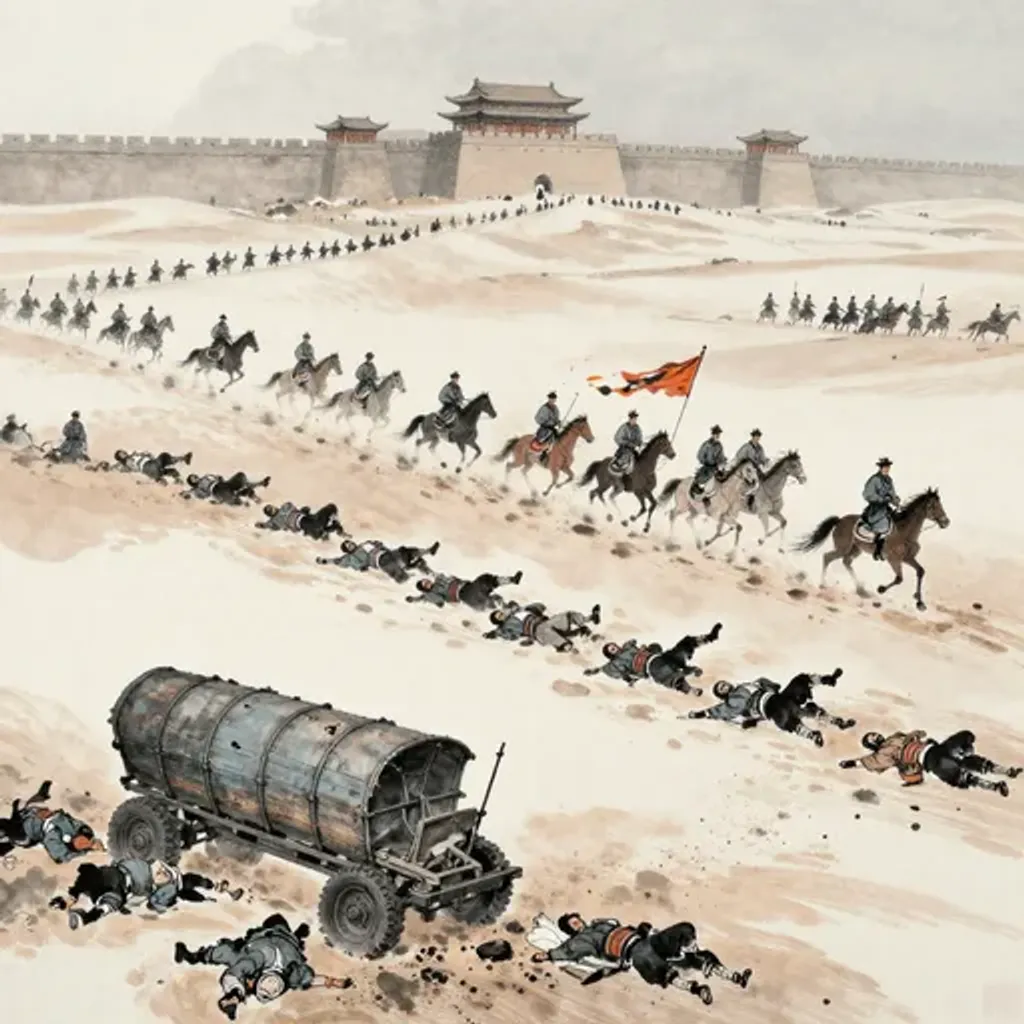
兵征大宛北出玉關與胡寇戰平城道西七日絕糧身幾不全
屯之屯,困上加困,初始之難自我疊加。
閱讀完整註釋 ↓
屯之屯,困上加困,初始之難自我疊加。兵征大宛,北出玉關,與胡寇戰於平城之西,七日絕糧,身幾不全。此即漢高祖白登之圍(前200年):劉邦輕騎冒進,為冒頓單于四十萬精騎圍困於白登山,內無糧草,外無援軍。賴陳平獻計,以重寶賂閼氏,方得脫圍。屯變屯,不變即困愈深——冒進入險境,初難之勢自我倍增,所有弱點盡被放大。
English commentary
Difficulty doubles upon itself when the hexagram transforms into its own image. Troops march against Dayuan and venture north through the Jade Gate, only to clash with nomad raiders west of Pingcheng, cut off from supplies for seven days, their lives hanging by a thread. This references the Siege of Baideng in 200 BC, when Emperor Gaozu of Han rashly pursued the Xiongnu and was encircled by Modu Chanyu's forty thousand cavalry on Baideng Mountain for seven full days without provisions. Only Chen Ping's secret stratagem, bribing the Chanyu's consort, secured the emperor's escape. Zhun unchanging intensifies its own nature: the initial difficulty is not merely encountered but compounded, and reckless advance into hostile terrain magnifies every vulnerability.
《焦氏易林》,清乾隆間寫文淵閣四庫全書本。
國立故宮博物院 故庫017987–017990
第1冊,第35頁
據寫本原葉錄出
標點依寫本,不另加標點。
關於此讀法
據掃描原葉錄出。