Judith Beheading Holofernes

第21卦

噬嗑

Shì Kè

Biting Through

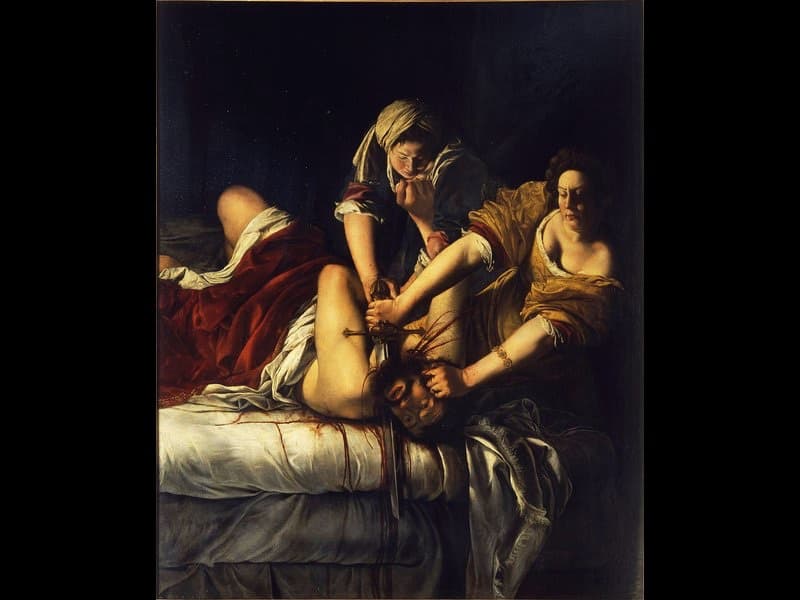
Judith Beheading HolofernesArtemisia Gentileschi, 1620

Judith grips Holofernes by the hair, sword halfway through his neck. Artemisia Gentileschi painted this biblical execution in 1620, showing the widow and her maidservant in the act of decapitating the Assyrian general who besieged their city. The Baroque painter rendered the violence with surgical precision—blood spurts, muscles strain, the general's face contorts in the moment between life and death. An obstacle to survival meets decisive removal.

阅读完整论述 ↓

This is Shì Hé (噬嗑), Biting Through—the character literally depicting teeth meeting through something lodged between them. The hexagram shows Fire (Lí) above Thunder (Zhèn): clarity and illumination over arousing force. In Zhou Dynasty legal proceedings, this configuration appeared when something blocked justice, when compromise had failed, when only forceful intervention could restore order. The image is forensic: to join upper and lower jaw, the obstruction must be bitten through. Gentileschi painted this biblical scene showing the widow Judith decapitating the Assyrian general Holofernes, who had besieged her city. The Baroque painter rendered the violent act with dramatic realism, depicting Judith and her maidservant in the midst of the execution. The subject addresses the removal of an obstacle through decisive action. The Judgment text addresses Gentileschi's scene directly: "Biting Through has success. It is favorable to let justice be administered." When normal channels are blocked, forceful clarity becomes necessary. Ancient diviners understood this hexagram as legal intervention—the moment when a judge passes sentence, when punishment removes what prevents social cohesion. Judith acts as judge and executioner, removing Holofernes not from personal grievance but to save her besieged people. The text promises success, but only when the obstruction genuinely prevents necessary union. The Image Text observes: "Thunder and lightning: the image of Biting Through. Thus the kings of old made firm the laws through clearly defined penalties." Lightning illuminates, thunder follows—understanding must precede force. Gentileschi painted Judith's face focused and determined, not enraged. The execution proceeds with the clarity of necessity, not the heat of revenge. In the I-Ching sequence, Biting Through follows Contemplation: after observing the situation from a distance, one identifies what must be removed and acts decisively. The next hexagram is Grace, when the obstacle is gone and proper adornment can proceed.

上卦

FireClinging

五行Fire方位East家庭Second Daughter性质illuminating, dependent, radiant

下卦

Zhèn

ThunderArousing

五行Wood方位Northwest家庭Eldest Son性质arousing, movement, shocking

经典文本

卦旨

Shi Ke is not punishment for its own sake. It is the restoration of unity by removing what obstructs connection. The hexagram's image is a mouth with something hard between the teeth — an obstacle that prevents the jaws from closing. Fire (Li) above Thunder (Zhen): clarity illuminating decisive action. The mouth must bite through to function. The obstruction must be identified precisely and removed completely. The judgment says 亨, "success," and then immediately specifies the domain: 利用獄 — "favorable to use legal proceedings." This is the only hexagram in the Yi that explicitly endorses judicial action, which reveals its architecture. Shi Ke is not about personal anger or revenge. It is about the structural necessity of consequences when something blocks the natural functioning of a system. The fire above provides the discernment to see what is actually obstructing; the thunder below provides the force to act on that discernment. Without both — clarity and decisiveness — intervention either misidentifies the problem or lacks the will to resolve it. The common misreading treats this as a hexagram about being tough or enforcing rules. Its actual goal is far more precise: restoring the capacity for connection. The mouth that cannot close cannot nourish. The community that cannot address its obstructions cannot cohere. Each line describes a different degree of obstruction and a proportionate response — from the light punishment of line one's foot-stocks to the severe metal gnawing of line four. The hexagram insists that both excessive leniency and excessive severity defeat the purpose. The goal is not to punish but to remove exactly what prevents wholeness from functioning.

彖辞

Fulfillment. Administering justice is supported. Something is stuck between the teeth and the instruction is: bite through it. The obstruction doesn't remove itself. Justice — real enforcement — is what the configuration supports. Not negotiation, not patience. The bite.

象辞

Lightning and thunder: biting through. The ancient kings accordingly made penalties clear and established the law. Lightning and thunder together — you see it and then you feel it. That's justice: first the clarity, then the force. The ancient kings didn't make the laws gentle. They made them visible. Because a penalty that nobody understands is just violence. A penalty that everybody sees is structure.

爻辞

第初爻

Feet locked in stocks, toes hidden. No fault. Stocks on the feet. Toes gone. And: no fault. The first penalty is the lightest — you can't walk, but you still have your legs. Early punishment for a small transgression. The text doesn't flinch at this. Losing your toes at the beginning is how you keep your head at the end.

第二爻

Biting through tender meat, nose buried in it. No fault. Soft meat, easy to bite, and your nose disappears into it. No fault. The case is straightforward — there's no gristle, no hidden metal. But you're in deep. Even the easy enforcement costs something. Your face is buried in the work. No fault doesn't mean no mess.

第三爻

Biting through dried preserved meat. Encountering poison. Small friction. No fault. Old dried meat, and there's something toxic in it. Small embarrassment, but no fault. The hinge line — the case is harder now, and you're finding things you didn't expect. The friction is real but minor. The person who bites into the old stuff and hits poison but keeps chewing is doing the work that matters. Nobody said it would taste good.

第四爻

Biting through dried meat on the bone. Finding metal arrows. Difficult sustained orientation is supported. Resolves well. Bone-dry meat, and there are arrowheads in it. Metal inside the problem. This is the hard case — the one that breaks your teeth if you're not careful. Difficult persistence is what's supported. Not easy persistence. The kind where you know it's going to hurt and you bite down anyway. That's the one that resolves well.

第五爻

Biting through dried meat. Finding yellow gold. Sustained orientation: strained. No fault. Dried meat again, and this time there's gold in it. Treasure inside the hard case. But the orientation is strained — because the gold complicates things. When enforcement reveals something valuable, the temptation shifts. The person who finds the prize inside the problem and doesn't lose their focus is the one who walks away without fault.

第上爻

Wearing the cangue, ears covered. Adverse. The wooden collar on the neck, ears buried. Can't hear anymore. Adverse. The last line of the justice hexagram and the final image is: someone who was warned at every stage and didn't listen until they literally couldn't listen. The toes in line one, the ears in line six. The text walked you through the escalation, and here's what it looks like when every warning was ignored.

焦氏易林

焦延寿《易林》——第21卦本卦之辞。西汉时期以四言诗阐释卦变,为最早的系统性易学占辞集。

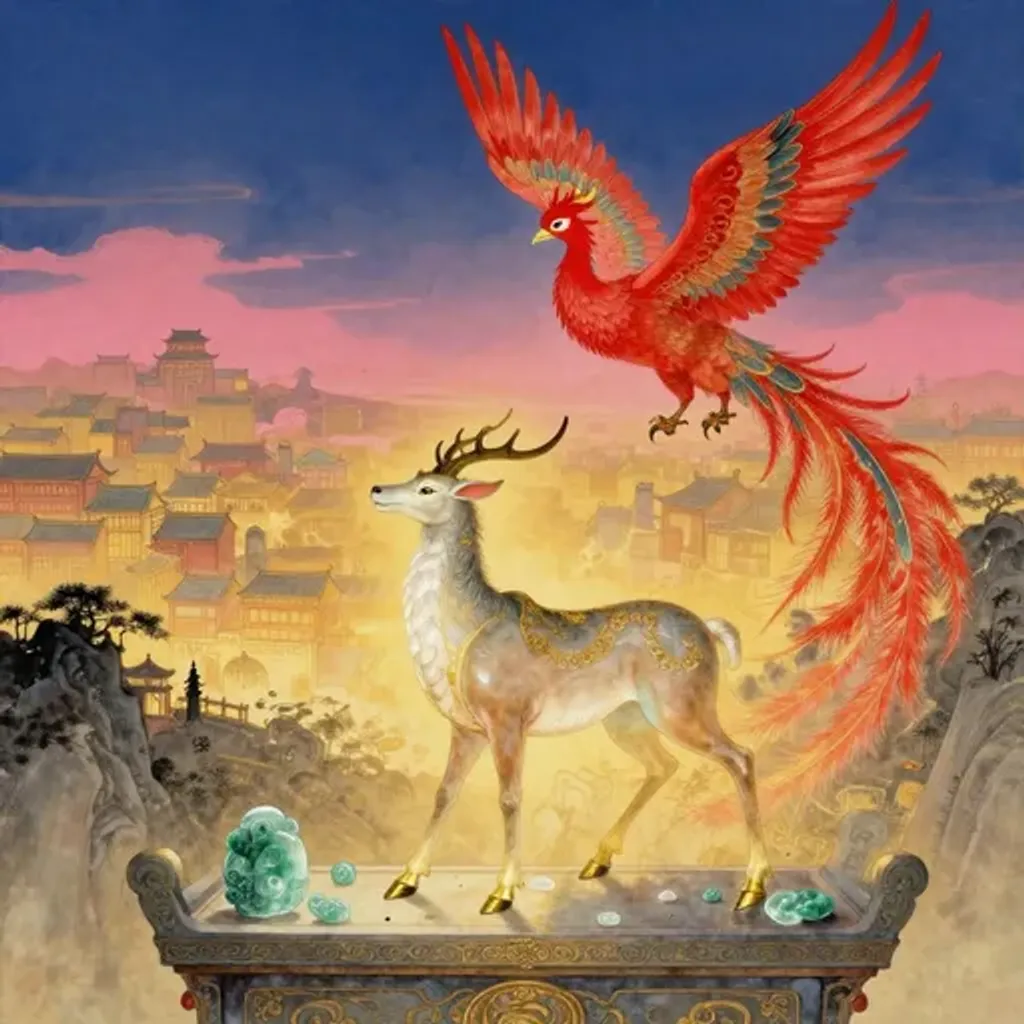
Yilin artwork for Hexagram 21
麒麟鳳凰,善政德祥;陰陽和調,國無災殃。

電雷噬嗑,自化之象。

阅读完整注释 ↓

電雷噬嗑,自化之象。麒麟鳳凰現世,善政德祥之瑞。陰陽和調,國無災殃。麒麟不踐生草,不害生物;鳳凰棲梧桐,飲醴泉——唯聖世方現。此二瑞獸之出,示噬嗑之法已達其極致:非永恆之刑罰,而是創造正義之境,使刑罰歸於無用。噬嗑自化,法度圓成即法度消隱。最完美之法治,是讓法治不再被需要。

English commentary

Fire and thunder return to themselves — Biting Through reflecting upon its own nature. The qilin and the phoenix appear, signs of sage governance and virtuous omens. Yin and yang are harmoniously balanced, and the state knows no calamity. These auspicious creatures emerge only under a sage's rule: the qilin treads on no living grass, the phoenix nests in paulownia. Their arrival signals that the legal order of hexagram 21 has achieved its ultimate purpose — not perpetual punishment but the creation of conditions so just that punishment becomes unnecessary. The doubled hexagram completes the circle: law perfectly administered makes itself obsolete.