Upper Trigram
坎 Kǎn
Water — Abysmal
Lower Trigram
乾 Qián
Heaven — Creative
Classical Texts
The Goal
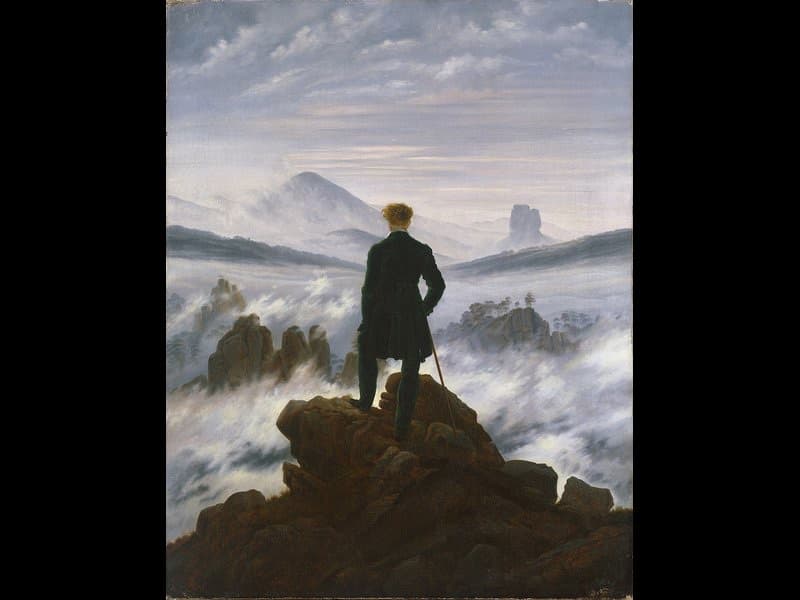
Xu is not passive waiting. It is the disciplined readiness that sustains itself in the face of approaching danger — nourishing strength precisely when action is not yet possible. The hexagram shows Water (Kan) above Heaven (Qian): clouds gathering over creative force, rain that has not yet fallen. The danger is real and visible, but the moment for crossing has not arrived. Xu regulates the interval between recognizing what must be done and being able to do it. The judgment's opening — 有孚,光亨,貞吉 — links sincerity directly to illumination and success. This is not resignation dressed as patience. The person who waits in Xu has inner certainty (孚) that the goal will be reached, and this certainty produces the light (光) by which the path becomes visible. The six lines track approach toward danger with extraordinary spatial precision: waiting in the meadow, on the sand, in the mud, in blood, at meat and drink, and finally falling into the pit. Each stage brings the danger closer, yet the counsel remains the same — do not force the crossing. The Image text offers the most counterintuitive advice in the early hexagrams: 君子以飲食宴樂 — "the superior person eats, drinks, and makes merry." During the waiting, nourish yourself. The mistake Xu corrects is the confusion of readiness with action. Qian's creative force, present in the lower trigram, strains to move forward. But Kan above means the river is in flood. To cross now is to drown. The hexagram's goal is not patience as an end but patience as strategic nourishment — maintaining full strength and clarity so that when conditions shift, the crossing happens without hesitation. 利涉大川 appears in the judgment because the great water will be crossed. The question is only when.
The Judgment
Sincerity present. Bright fulfillment. Sustained orientation resolves well. The situation affords crossing the great river. You're waiting and it's not stuck — you're carrying something real. The river crossing is available specifically because you haven't rushed the bank. You know what opens water? Not speed. Content. The person who actually has something to bring across eventually gets the crossing.
The Image
Clouds rise to heaven: waiting. The realized person accordingly eats, drinks, and takes ease. The clouds are up there. Rain hasn't come. And the instruction is — have lunch. Seriously. Eat something. This isn't denial. This is the structural observation that waiting well takes energy and anxious people forget to eat. The person with a sandwich when the rain finally arrives is the one who can move.
The Lines
Line 1
Waiting on the outskirts. Constancy is supported. No fault. You're nowhere near the action. Way out on the frontier, nothing happening. And the supported move is: keep doing the boring thing you've been doing. Not a pivot. Not a bold stroke. Just consistency. It's not exciting. It's not supposed to be. No fault in being undramatic.
Line 2
Waiting on the sand. Some talk. In the end, resolves well. Closer now — on the riverbank. People are talking. Probably about you. Here's the thing: the gossip is not the verdict. The gossip is the middle of the story. The verdict comes at the end, and at the end it resolves well. Sand shifts. You're still standing. Those are two different facts and only one of them matters.
Line 3
Waiting in the mud. Inviting the predator to approach. This is where waiting gets you killed. Not the outskirts, not the sand — the mud. You're exposed, you're stuck, and the things that eat people have noticed. No qualifying verdict. No 'but if you're careful.' The text just tells you where the wolves are and leaves it at that.
Line 4
Waiting in blood. Emerging from the pit. Blood and a pit. That's about as bad as the imagery gets. And then — you come out. No 'resolves well.' No 'no fault.' Just the bare fact: it was terrible and you survived it. Sometimes that's the whole report. The text doesn't decorate this because there's nothing to decorate.
Line 5
Waiting amid wine and food. Sustained orientation resolves well. Back to the judgment's advice — eat, drink, be at ease. But this isn't a break. This is the fifth line. Maximum influence. The person who knows the exact moment when waiting is done and nourishment begins — who can feel that transition — that's the one the configuration favors.
Line 6
Entering the pit. Three uninvited guests arrive. Receive them with respect: in the end, resolves well. You're in the cave. Three strangers show up uninvited. Every instinct says suspicion. The instruction says respect. Because at the limit of waiting, whatever walks through the door is the thing. Even if — especially if — it looks nothing like what you expected. The ending turns on whether you can receive what you didn't order.
Yilin: Forest of Changes
From Jiao Yanshou's Forest of Changes (焦氏易林) — the verse for Hexagram 5 in its unchanging form. A Han dynasty collection of four-character verses interpreting every hexagram transformation.
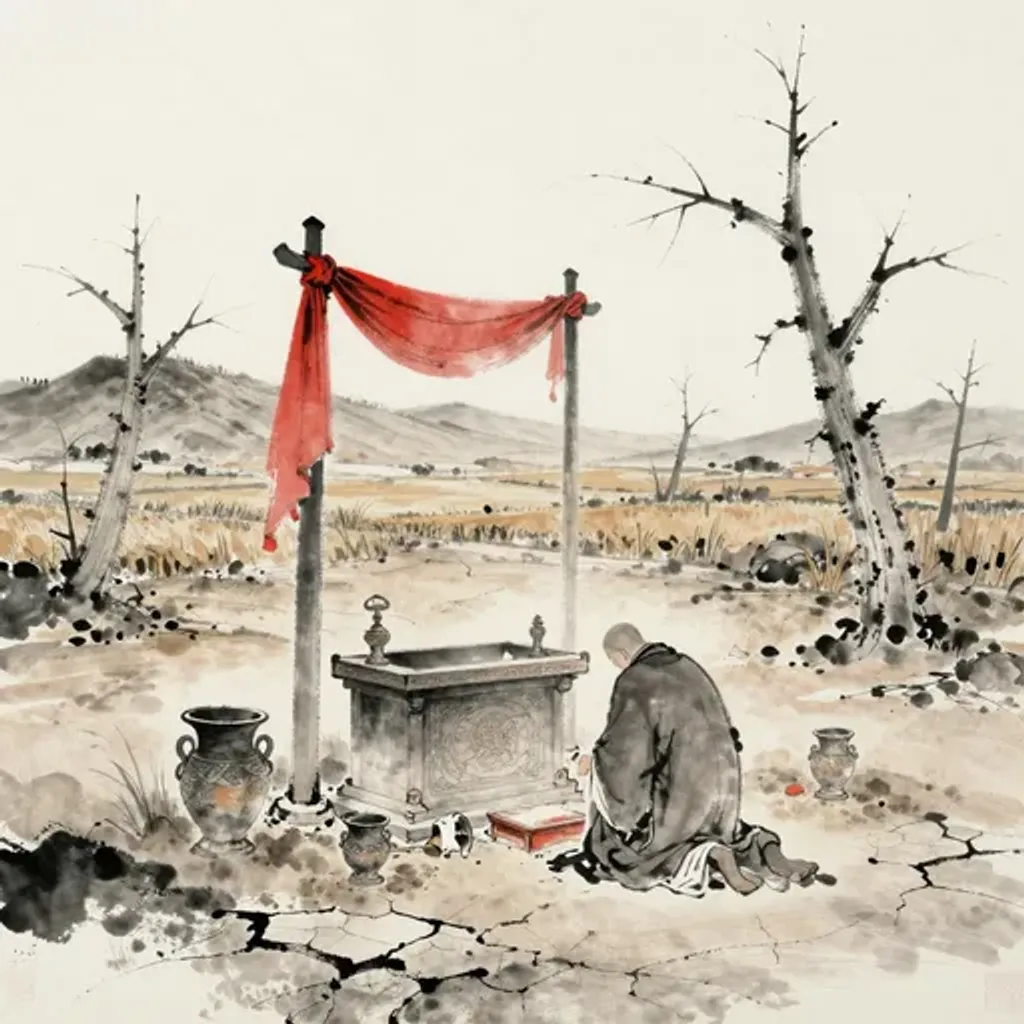
久旱三年草木不生粢盛空乏無以供靈
Drought for three long years; grass and trees do not grow. The grain vessels stand empty; there is nothing to offer the spirits.
Read full commentary ↓
Clouds above heaven, yet no rain falls — Waiting doubled upon itself. A drought of three years scorches the earth: grasses and grain refuse to grow, the ritual vessels stand empty, and there is nothing to offer the spirits. This is the nightmare inversion of the hexagram's own image, which promises that the gentleman may eat, drink, and feast in ease. When waiting yields nothing, even the sacred bond between human and heaven frays — without grain, no sacrifice; without sacrifice, no communion with the divine. The same pattern repeating produces stagnation, not renewal. Xu upon Xu warns that patience without agency becomes paralysis.
中文註釋
雲上於天而雨不降——需之重卦,等待疊加為枯竭。久旱三年,草木不生,粢盛空虛,無以供奉神靈。此為需卦本象之反面:需本以飲食宴樂為君子之養,然需之極端即久候不至,禮器空置,人神之交斷絕。無穀則無祭,無祭則無通天之路。同卦相疊非更新而為停滯,需之上需,警示耐心若失去行動之伴隨,終成癱瘓之困。
Jiao Shi Yi Lin 《焦氏易林》, manuscript from the Wenyuan Pavilion Siku Quanshu, Qianlong period, Qing dynasty.
National Palace Museum, accession nos. 故庫017987–017990
Fascicle 1, page 54
Read from the manuscript leaf
Shown unpunctuated, as in the manuscript.
About this reading
Read from the scanned leaf.
Related Hexagrams
Same upper trigram: Water (坎)
Same lower trigram: Heaven (乾)