Upper Trigram
乾 Qián
Heaven — Creative
Lower Trigram
乾 Qián
Heaven — Creative
Classical Texts
The Goal
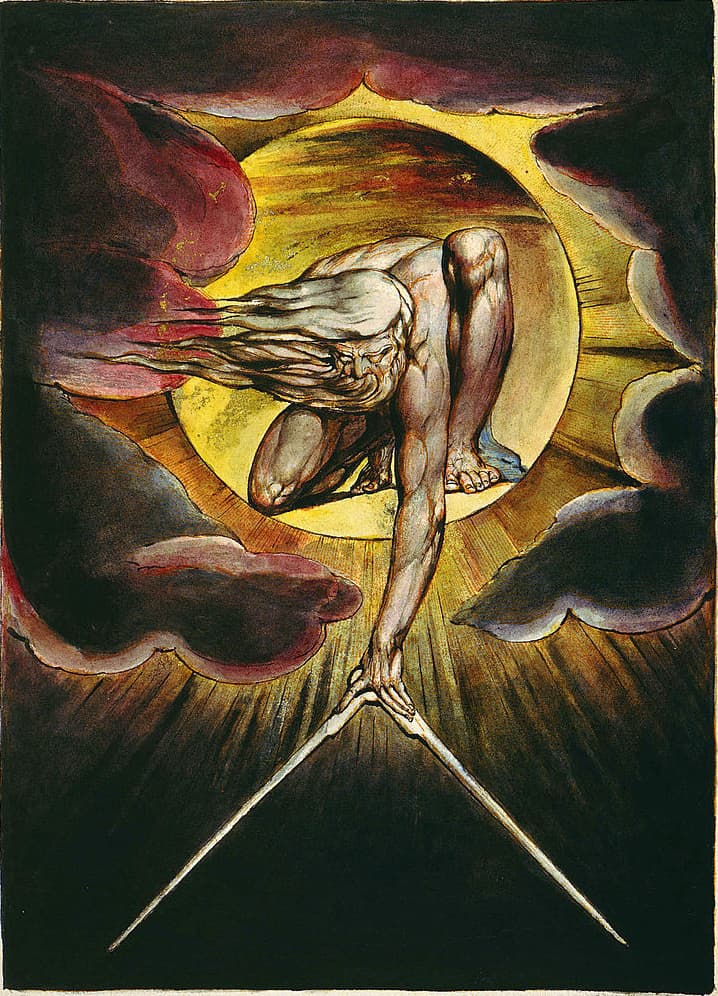
Qian 乾 (The Creative) is not aggression. It is the originating force that brings things into being — pure creative initiative before anything exists to push against. The hexagram shows six unbroken yang lines, the only configuration with no yin at all, which means there is nothing here to receive, nothing to shape, nothing to resist. This is potential prior to manifestation. The dragon metaphor tracks the lifecycle of creative power through six stages: hidden, emerging, vigilant, testing, flying, overreaching. The sequence matters — Qian does not begin with the flying dragon. It begins underground, invisible, waiting. The goal is not maximum force but right timing: knowing which stage you occupy and acting accordingly. The hidden dragon who acts too early and the overreaching dragon who acts too late both fail the same test. The four-word judgment — 元亨利貞 — is the most compressed statement in the entire book. Supreme, fulfillment, furthering, perseverance. No conditions, no warnings, no caveats. This unconditional endorsement appears because pure creative force, properly timed, encounters no structural obstacles. The goal of Qian is to initiate without distortion — to bring forth what needs to exist, at the moment it needs to exist, and then yield to Kun for realization.
The Judgment
Supreme fulfillment. Sustained orientation is supported. Four words for the first hexagram. No conditions, no fine print. You know how rare that is? Most configurations come with a whole list of caveats. This one just says: go. The catch is you have to actually mean it.
The Image
Heaven moves with inexhaustible vigor. The realized person accordingly strengthens without ceasing. Heaven doesn't have a motivation problem. It doesn't need a morning routine. It just keeps going — not because it's disciplined, but because stopping would be the weird thing. That's the standard. Good luck with that.
The Lines
Line 1
The hidden dragon. Do not act. You have this enormous thing inside you and nobody can see it. It's killing you. But you know what's worse than having a dragon nobody can see? Showing people a dragon before it's ready. Trust me. They don't come back for the second showing.
Line 2
The dragon appears in the field. The situation affords meeting the realized person. You've surfaced. You're in the field — not the sky, the field. Ground level. This is exactly when you need to find the person who's already where you're going. Not for a pep talk. For the look on their face that tells you whether you're the real thing or not.
Line 3
The noble one creates ceaselessly throughout the day. At nightfall, vigilant as though strained. No fault. All day you build. All night you worry. And somehow that's the correct answer. The hinge position — everyone can see you now but you're not established yet. No fault, but only because you never once stopped paying attention. Take one evening off and find out.
Line 4
Perhaps leaping over the depths. No fault. Jump, don't jump — honestly? It's fine either way. You know how rare that is? The configuration almost always has a strong opinion. Right now it doesn't. No fault in either direction. Enjoy this. It almost never happens.
Line 5
The flying dragon in heaven. The situation affords meeting the realized person. You're airborne. Full visibility, full influence, full everything. And the text says — even now, especially now — go find someone who knows what they're doing. Because power without a second opinion isn't confidence. It's the last clear moment before the next line.
Line 6
The overreaching dragon. Deviation detected. You've gone past the point where height is useful. That small voice saying 'this is too far' — that's not doubt. That's the only signal still working. The system can still correct. But you have to hear it before gravity does the correcting for you.
Yilin: Forest of Changes
From Jiao Yanshou's Forest of Changes (焦氏易林) — the verse for Hexagram 1 in its unchanging form. A Han dynasty collection of four-character verses interpreting every hexagram transformation.
道陟多阪胡言連蹇譯瘠且聾莫使道通請謁不行求事無功
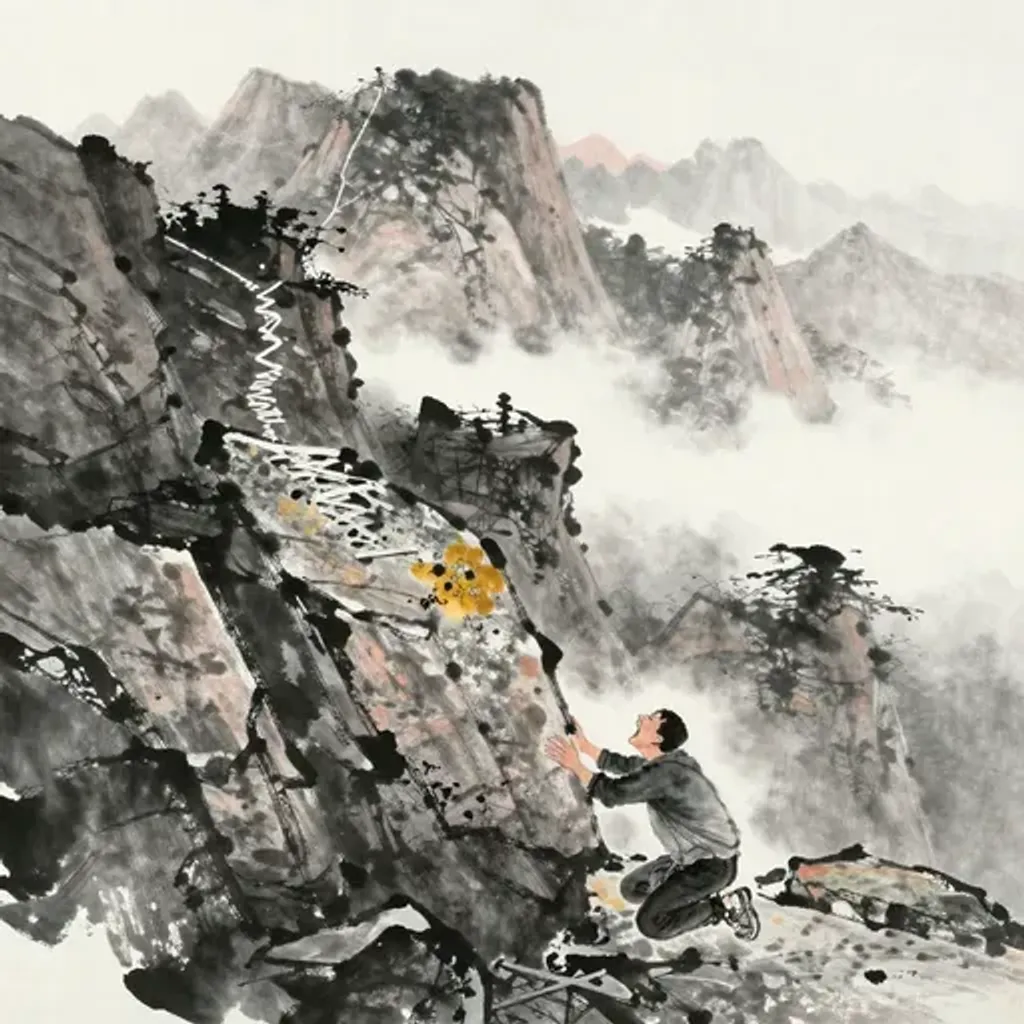
The road climbs a stone slope; words falter and stumble. The interpreter is mute and deaf; none can make the way clear. Petitions go unheard; endeavors bear no fruit.
Read full commentary ↓
Doubled heaven drives ceaselessly forward, yet here the road climbs a stone slope and every step falters. The interpreter is mute and deaf; no message passes through. Petitions go unanswered, undertakings yield nothing. When Qian meets itself, pure yang has no receptive counterpart — all force, no channel. The image is not weakness but blockage: a powerful signal broadcast into a void where no receiver exists. From Creative to Creative, the transformation warns that initiative without communication is merely noise. Even heaven's tireless motion accomplishes nothing when the path itself refuses to conduct it.
中文註釋
天行健,乾之重卦,陽剛至極。然道陟石阪,步步蹇滯。譯者既瘖且聾,訊息無從傳遞,請謁不行,求事無功。純陽無陰以應,力量雖盛卻無承接之道。此非力弱,乃通路斷絕。乾遇乾,自強不息之勢反成空轉——天之健行若無所傳導,再強之動能亦歸於徒然。剛而無柔,動而無應,為此爻之戒。
Jiao Shi Yi Lin 《焦氏易林》, manuscript from the Wenyuan Pavilion Siku Quanshu, Qianlong period, Qing dynasty.
National Palace Museum, accession nos. 故庫017987–017990
Fascicle 1, page 15
Read from the manuscript leaf
Shown unpunctuated, as in the manuscript.
About this reading
Read from the scanned leaf.
Related Hexagrams
Same upper trigram: Heaven (乾)
Same lower trigram: Heaven (乾)