Upper Trigram
乾 Qián
Heaven — Creative
Lower Trigram
艮 Gèn
Mountain — Stillness
Classical Texts
The Goal
Dun is not cowardice. It is the strategic preservation of what matters by withdrawing before inferior forces consume it. The hexagram shows Heaven (Qian) above Mountain (Gen) — the creative power ascending beyond the reach of what advances from below. Two yin lines press upward from the base, representing an encroachment that cannot be fought directly. The judgment reads 亨,小利貞 — "success; in small matters constancy furthers." The success is real, and the Tuan is careful about where it lies: 遯而亨也, it is the retreating that succeeds. What the 小 restricts is not the retreat but everything else — constancy can still be exercised, in a reduced compass. This is a time for modest, contained action, not because action is forbidden but because the yin below is 浸而長, soaking upward and growing, and nothing large will hold against it. The Image delivers the operational logic: 天下有山,遯;君子以遠小人,不惡而嚴 — "below heaven is the mountain: Retreat. The superior person keeps the small-minded at a distance, not with hostility but with gravity." This is the distinction between retreat and flight. Flight is reactive and governed by the thing fled from. Retreat is deliberate and governed by what must be preserved — and 不惡 rules out the satisfaction of contempt, which would make the withdrawal reactive again. The six lines track the timing with precision. 初六's 遯尾厲 — "at the tail of the retreat: danger" — warns against leaving last. 上九's 肥遯无不利 — "ample retreat; nothing unfavorable" — is withdrawal with room to spare. Between them, 九三's 係遯 shows the half-retreat, where attachment to what should be left behind compromises the whole movement. Dun's goal is not to win but to ensure that what deserves to survive does. Power that engages inferior forces on their terms becomes inferior itself. The mountain stands still while heaven rises beyond it — not because heaven lacks strength, but because contact would contaminate rather than correct. Retreat creates the distance that preserves the possibility of return.
The Judgment
Fulfillment. Small sustained orientation is supported. Retreat. And it comes with fulfillment — not failure, fulfillment. The only caveat: keep it small. Small persistence, small actions, small corrections on the way out. The text is describing a withdrawal that succeeds precisely because it doesn't try to be anything else. You're leaving. Do it well.
The Image
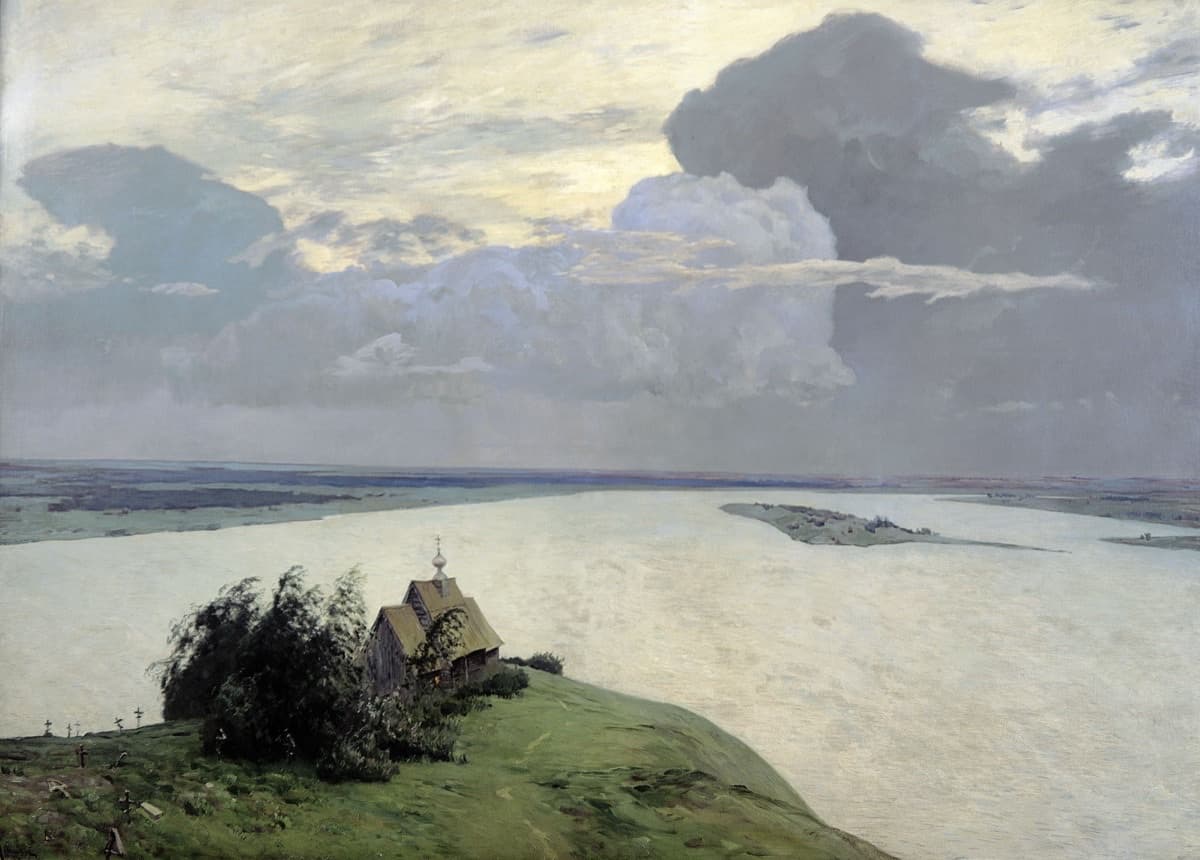
Beneath heaven there is a mountain: retreat. The realized person accordingly distances from the petty — not with hostility but with dignity. A mountain under heaven — it rises, but heaven is still higher. The distance is built in. And the instruction is: distance from small people, but without hatred. Because hatred is a leash. The person who retreats in anger is still attached. The person who retreats in dignity is actually gone.
The Lines
Line 1
Retreat at the tail. Strained. Do not act — going forward is of no use. You're at the back of the retreat. The tail. Everyone else already left and you're still standing there. Strained. And the instruction is: don't move now. Going forward is useless — but so is retreating when you're already the last one. The tail of a retreat is the most dangerous position. Your only job is to not make it worse.
Line 2
Bound with yellow oxhide. None can manage to loosen it. Tied to the right thing with the strongest material available. Nobody can break this grip. Yellow — the color of the center, of loyalty. Oxhide — you aren't getting free from this. And there's no verdict because there doesn't need to be one. When you're bound to the right thing by the right principle, the question of whether to retreat answers itself.
Line 3
Entangled retreat. There is anxiety, strain. Keeping servants and concubines resolves well. You're retreating but you're tangled up — people clinging, obligations pulling. Anxiety, strain. The instruction is oddly specific: keep the dependents. Because the person who tries to make a clean break from everyone they're responsible for doesn't retreat cleanly. They just add guilt to the distance. Bring them along. The retreat is messier but the conscience is intact.
Line 4
Voluntary retreat. For the realized person: resolves well. For the petty: denied. Choosing to leave. The capable person walks away with good fortune. The dependent person cannot. Same door, two verdicts. Because voluntary retreat requires something most people don't have: the ability to leave a situation that's still working for you. The petty person can't retreat because they can't imagine life without the thing they're holding.
Line 5
Admirable retreat. Sustained orientation resolves well. The graceful exit. Admirable — not just tolerated, admired. Sustained orientation resolves well. This is the retreat that people talk about afterward with respect. The person who left at exactly the right time, in exactly the right way, with absolute firmness and zero drama. That's what resolves well. The decision is made. The manner is impeccable.
Line 6
Sleek, well-resourced retreat. Nothing that is not supported. Fat, healthy, resourceful retreat. Everything supported. The top of the retreat hexagram and the verdict is: complete success in leaving. No hesitation, no attachment, no regret, plenty of resources. This is what retreat looks like when you started planning it before everyone else noticed the situation was turning. The cheerful exit. The one where you're already gone by the time people realize you left.
Yilin: Forest of Changes
From Jiao Yanshou's Forest of Changes (焦氏易林) — the verse for Hexagram 33 in its unchanging form. A Han dynasty collection of four-character verses interpreting every hexagram transformation.
三塗五岳陽城太室神明所住獨無兵革
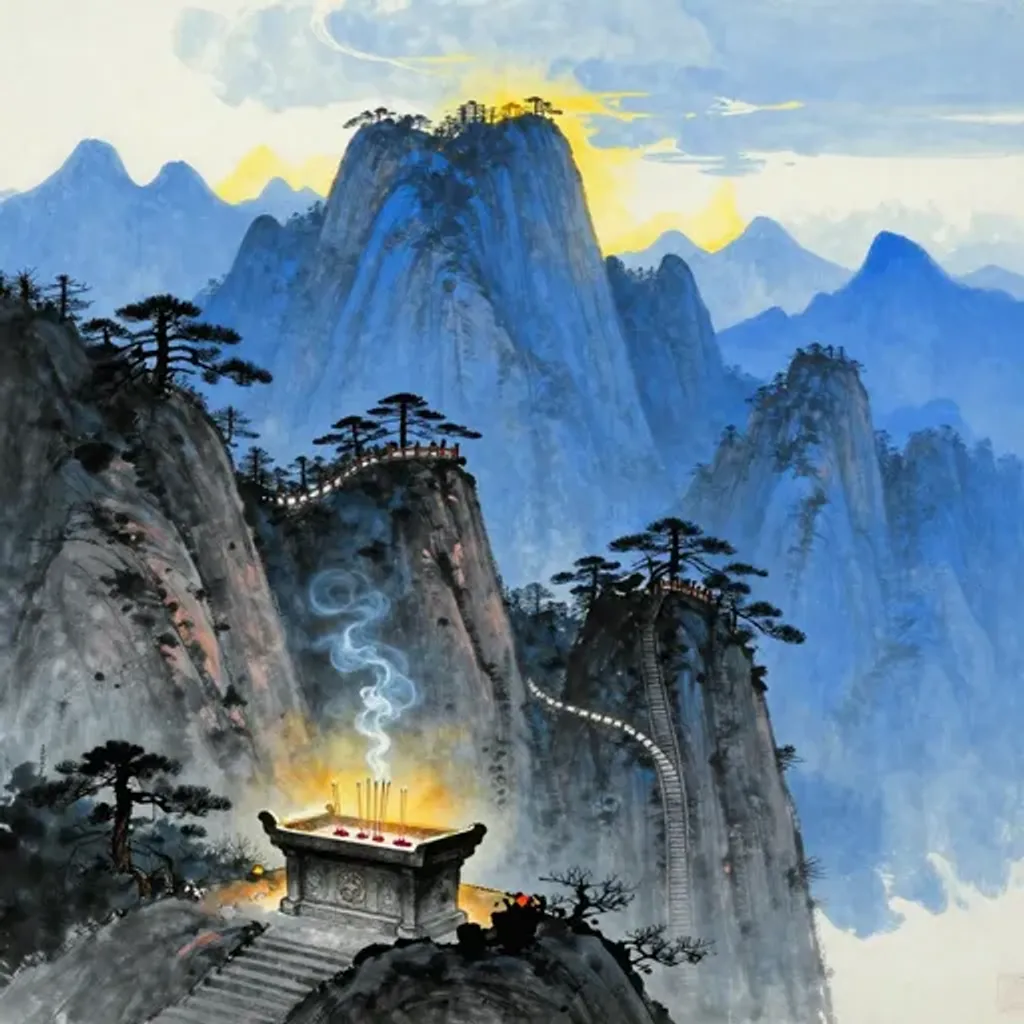
The three passes and Five Sacred Peaks; Yangcheng and Taishi Mountain. What the spirits protect and preserve; alone, free from weapons and war.
Read full commentary ↓
Heaven above the mountain remains as heaven above the mountain — Retreat doubled, the hexagram reflecting upon itself. The Three Tu passes and the Five Sacred Mountains, Yangcheng and Taishi Peak — these are the sacred precincts that the gods themselves protect, and alone they are spared the ravages of war. The Three Tu refers to the strategic mountain passes near Luoyang; Taishi is the main peak of Mount Song, the Central Sacred Mountain, near the ancient site of Yangcheng. These are the heartland of Chinese sacred geography. From Retreat to Retreat, the verse affirms that the most complete withdrawal is the mountain itself — the divine sanctuary where even armies dare not trespass. When retreat is total and principled, it becomes inviolable, a sacred space that needs no defense because its very nature forbids desecration.
中文註釋
天下有山,遯之象。三塗五岳——三塗險關與五嶽聖山。陽城太室——陽城與太室山(嵩山主峰)。神明所保——神明護佑之地。獨無兵革——唯此不見兵戈。三塗為洛陽附近要隘,太室為中嶽嵩山主峰,陽城為其所在古邑——皆天下中心、神聖地理之核心。從遯至遯,卦自映自身。退避之極致即聖山本身——神靈庇護,兵革不至。退避若徹底純粹便成不可侵犯之聖域,不須防衛自然免禍。
Jiao Shi Yi Lin 《焦氏易林》, manuscript from the Wenyuan Pavilion Siku Quanshu, Qianlong period, Qing dynasty.
National Palace Museum, accession nos. 故庫017987–017990
Fascicle 3, page 24
Read from the manuscript leaf
Shown unpunctuated, as in the manuscript.
About this reading
Read from the scanned leaf.
Related Hexagrams
Same upper trigram: Heaven (乾)
Same lower trigram: Mountain (艮)