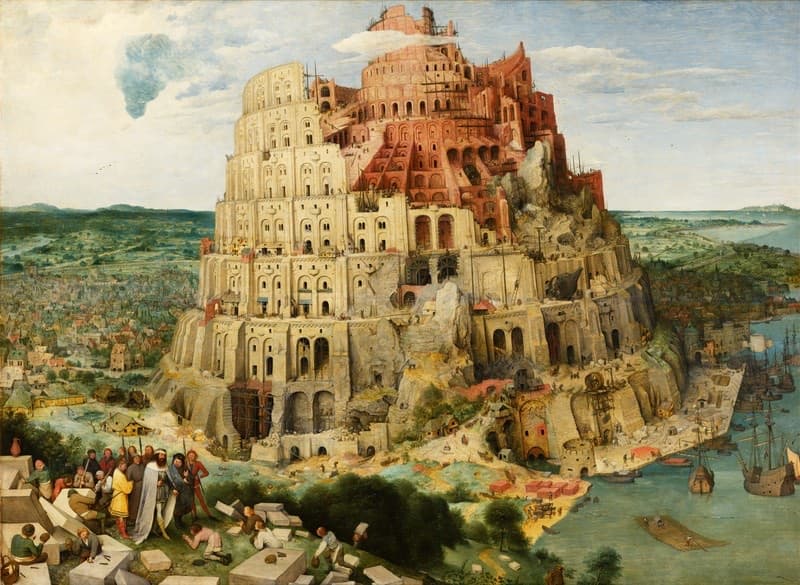
上卦
坎 Kǎn
水 — 陷
下卦
艮 Gèn
山 — 止
经典文本
卦旨
蹇不是泛泛地说困难。它是前面有险、而且不能直接冲过去的那种处境。上坎下艮:险堆在止的上面,前方是深渊,脚下是挪不动的山。卦辞用方位来标定地形:「利西南,不利东北。」西南是平地,柔顺可行,是众人聚集的地方;东北是山,是正面撞上去的那一边。这一卦所禁止的是勇往直前那一条路;所要求的更难:在所有本能都催你向前时掉头。 六爻把这个结构说得最清楚,它也是全卦最明显的规律。每一爻都拿「往」对「来」——「往蹇来誉」「往蹇来反」「往蹇来连」「往蹇来硕」:往前走就遇阻,回过来则得誉、得反、得连、得硕。这不是一个什么都做不了的卦,而是一个所有可做之事都在反方向的卦。 《象》把被堵住的力转向:「山上有水,蹇;君子以反身修德。」「反身」的反,正是各爻的「来」:之所以向内,是因为向内还有路可走。这不是安慰之辞,而是说:不能用在前进上的力气,另有可用之处。 六二是唯一一处向险而进仍然是对的:「王臣蹇蹇,匪躬之故」——王的臣子一重又一重地遇阻,不是为了自己。这一爻并不说吉,它的《小象》只说「终无尤也」,最终没有过失。为自己而蹇是愚,为所任之事而蹇是正;而经文很小心,没有多许诺什么。 所以蹇的要义,是把不能前进的力量转化成所养成的德。卦辞最后说「利见大人,贞吉」:受阻之时也是求教之时,是承认这道坎超出了自己的能力。九五应之:「大蹇朋来。」最重的阻碍反而招来助力,但只有在等待的时间里真的有所长进的人,才接得住它。
彖辞
利西南,不利东北。利见大人,贞吉。前有深渊,后有险山,四面皆阻。进不得,不如退。退不是放弃,是迂回。联合同道,寻找能担当的领袖。看似背离目标,实则最终通达。逆境是修身的材料。
象辞
山上有水。君子以反身修德。困境把人抛回自身。庸人怨天尤人,高人内省求过。外在的阻碍成为内在充实的契机。
爻辞
第初爻
往蹇来誉。遇阻不可硬闯,硬闯只会更乱。暂时后退,不是认输,是等待时机。
第二爻
王臣蹇蹇,匪躬之故。险阻重重,但非自己的过错。职责所在,必须迎难而上。为更高的目标冒险,无可非议。
第三爻
往蹇来反。冲进险境毫无意义,因为依赖你的人无法独立生存。折返回去,他们欢欣相迎。
第四爻
往蹇来连。独力难以应对。直路不是捷径。停下来,召集可靠的同伴,方能突破。
第五爻
大蹇朋来。险阻正烈,朋友前来。真正被召唤的人,不回避险阻。精神的力量吸引帮手,协作克服障碍。
第上爻
往蹇来硕,吉。利见大人。隐退之人被召回尘世。经验和内在自由使他能成就大事。与大人联手,完成救援的事业。
焦氏易林
焦延寿《易林》——第39卦本卦之辞。西汉时期以四言诗阐释卦变,为最早的系统性易学占辞集。
同济共舆中道别去丧我元夫独与孤苦
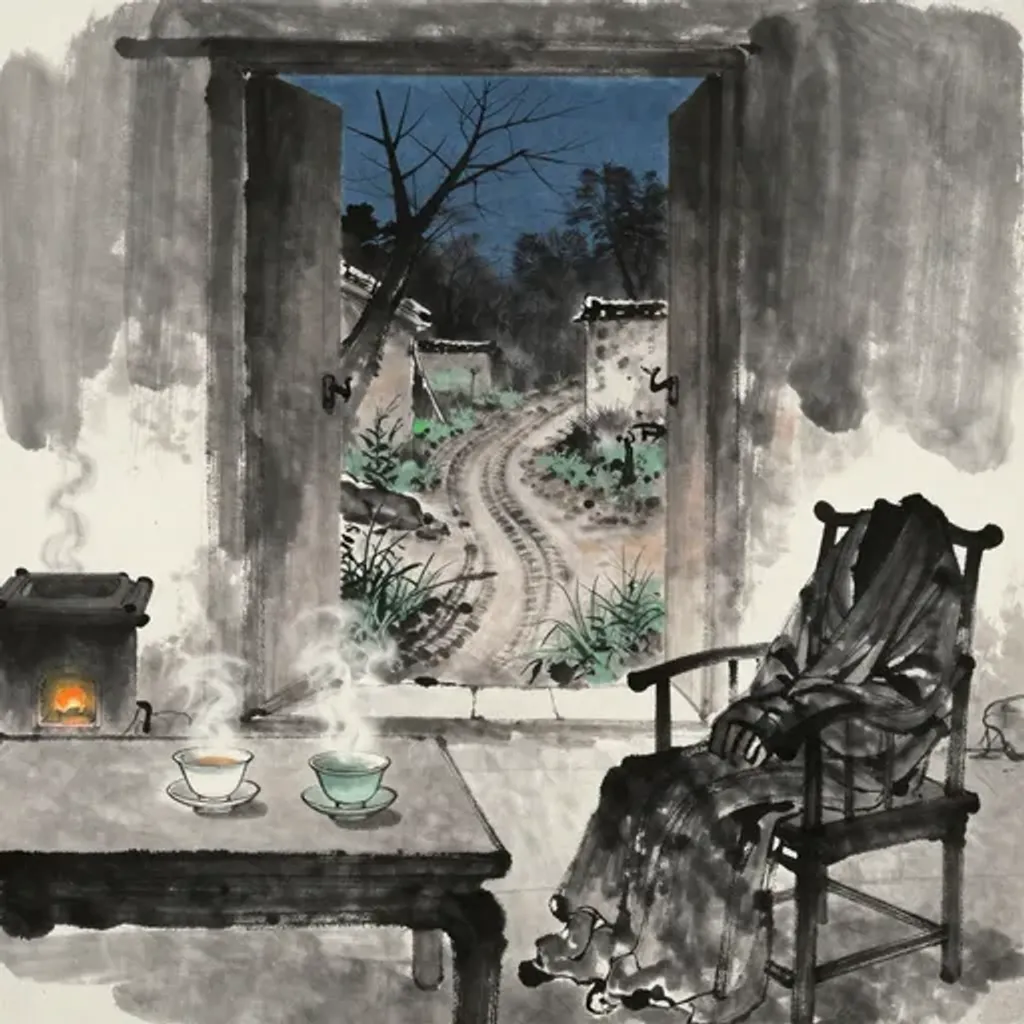
兩杯茶一冷一溫,椅上衣衫尚餘痕。門外車轍已長草,夜夜聽風不等人。
山上有水,蹇之蹇——阻之自身。
阅读完整注释 ↓
山上有水,蹇之蹇——阻之自身。此为改写诗,须据原诗:「同载共舆,中道别去;丧我元夫,独与孤居。」同车而行,中途离散。夫已亡故,独守空屋。最亲密之弃离:同乘一舆之人,中途竟别。从蹇至蹇,山不动、水不流。同卦相遇无变化,唯有纯粹的、不可缓解的蹇之体验。空椅、冷茶——阻滞无出口,哀恸无转圜之慰藉。
English commentary
Water on the mountain returns to water on the mountain — Obstruction unchanged. This verse (a rewrite) must be read through the original: 'Sharing one carriage, we traveled together, but midway you departed. I have lost my husband, and dwell alone in solitude.' The original captures the most intimate form of abandonment: two who rode the same carriage, bound by marriage and shared direction, until one simply left. The survivor remains, companionless, in an empty house. From Obstruction to Obstruction, the pattern holds: the mountain does not move, the water does not flow. When the same hexagram meets itself, there is no transformation — only the pure, unrelieved experience of the condition. The empty chair and the cold tea are obstruction without exit, grief without the consolation of change.
此注释依据较早的读法撰写。读法既经更定,其诠释未必仍适用于今所见之文。
《焦氏易林》,清乾隆间写文渊阁四库全书本。
国立故宫博物院 故库017987–017990
第3册,第87页
据写本原叶录出
标点依写本,不另加标点。
关于此读法
据扫描原叶录出。