Upper Trigram
兌 Duì
Lake — Joyous
Lower Trigram
坎 Kǎn
Water — Abysmal
Classical Texts
The Goal
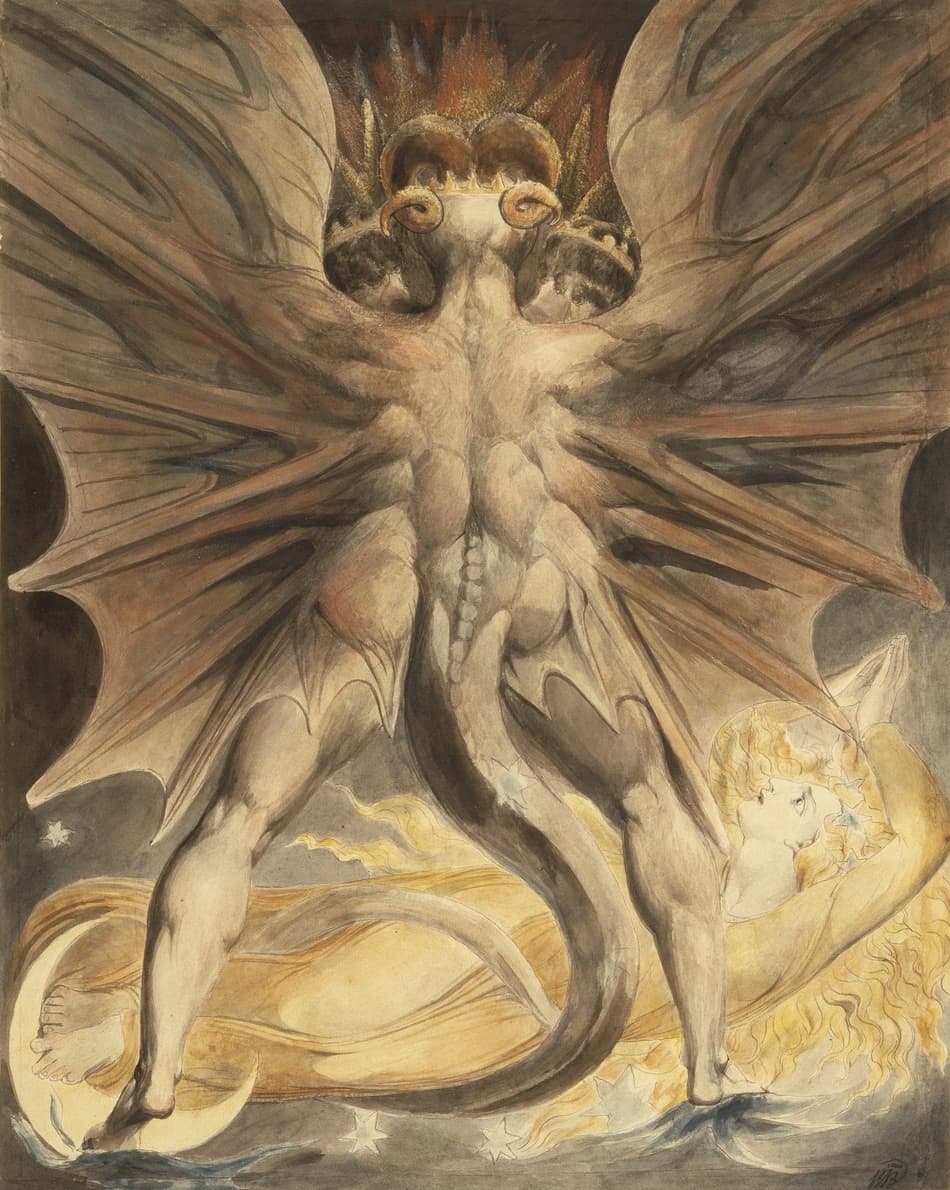
Kun 困 (Oppression) is not failure. It is the condition of being constrained by circumstances that words cannot alter — and the hexagram's central teaching is that exhaustion tests character in ways prosperity never can. Lake (Dui) above Water (Kan) shows the lake drained, its water sunk below: the surface empty while what sustains life has gone into the depths. The judgment holds a paradox — 亨。貞大人吉,无咎, "success; the constancy of the great person brings good fortune, no blame" — success inside oppression. Then the last clause removes the tool that seems most necessary: 有言不信, "when one has something to say, it is not believed." Explanation is useless here. Justification finds no audience. The hexagram strips away every external resource and asks what is left. The Image answers with one of the severest instructions in the book: 澤無水,困;君子以致命遂志 — "the lake without water: Oppression. The superior person surrenders his life to fulfil his purpose." 致命遂志 is not hyperbole. It describes the state in which external conditions have contracted until the only remaining freedom is what one stays committed to. 初六 shows the depth of it: 臀困于株木,入于幽谷,三歲不覿 — "hemmed in on a bare stump, entering a dark valley, for three years seeing no one." Sustained deprivation of both comfort and sight. 九五 shows that relief, when it comes, does not come cleanly: 劓刖,困于赤紱,乃徐有說 — "nose and feet cut off, hemmed in by the crimson sash, but slowly there is release." Every other line of this hexagram describes something borne, and read with them the mutilation is suffered: it is not undone, and the release is 徐, gradual. Whatever survives oppression does not survive intact. Wang Bi turns the line around and has 九五 inflicting the mutilation rather than receiving it — 不能以謙致物…忿物不附而用其壯猛,行其威刑,異方愈乖,遐邇愈叛, unable to draw people by humility, he resents their not coming, applies force, and far and near rebel the harder — which produces his verdict on the whole hexagram: 二以謙得之,五以剛失之. Either way the release is slow and conditional. What differs is whether the thing that has to give way is the world's grip or the sufferer's own method. The goal of Kun is not to escape oppression but to find what outlasts it. 上六 marks the turn: 困于葛藟,于臲卼,曰動悔有悔,征吉 — "hemmed in by creeping vines, on shaky ground; one says that to move brings remorse, and there is remorse; advancing brings good fortune." The bonds are vines, not chains. Part of what held was the hesitation of the one held. When the mind moves from endurance to action the vines give — but the line is placed last, and only whoever has actually been through the exhaustion arrives at it.
The Judgment
Fulfillment. Sustained orientation for the great person resolves well. No fault. Having words — they are not believed. Oppression. And it comes with fulfillment — but only for the great person. Everyone else just gets the oppression. No fault, but here's the kicker: you speak and nobody believes you. The oppression hexagram includes silencing. You know the truth, you say the truth, and the room doesn't hear it. That's not communication failure. That's the hexagram working as designed.
The Image
The lake without water: oppression. The realized person accordingly stakes their life on following their purpose. A lake with no water. The container exists but the content is gone. And the instruction is the most extreme in the book: stake your life on your purpose. Not 'try harder.' Stake your life. Because when the lake is empty, ordinary commitment isn't enough. The person who can look at the empty container and invest everything anyway has found something the oppression can't reach.
The Lines
Line 1
Buttocks oppressed by wooden stocks. Entering a gloomy valley. For three years, seeing no one. Stocks on the rear. A dark valley. Three years of isolation. No verdict — because what verdict would matter? The first line of oppression is the one where you can't sit down, can't see, and nobody's coming. The text doesn't tell you what to do because there's nothing to do. It just describes what it looks like when you're at the bottom of the bottom.
Line 2
Oppressed amid wine and food. The scarlet-sashed one approaches. It is supported to make offerings. Advancing: adverse. No fault. Surrounded by plenty and still oppressed. The feast is laid out and you can't enjoy it. But the dignitary is coming, and the instruction is: make the offering. Not advance — that's adverse. Just: prepare the sacrifice. The person oppressed in the middle of abundance has a specific kind of suffering that nobody sympathizes with. The text does.
Line 3
Oppressed by stone. Leaning on thorns and thistles. Entering the house, not seeing the wife. Adverse. Rock in front, thorns behind, you go home and your wife isn't there. Adverse. The third line piles every form of oppression into one image: the immovable obstacle, the painful support, and the empty house. The person who can't find comfort in any direction — forward, backward, or home — has hit the structural center of what oppression actually is.
Line 4
Approaching very slowly. Oppressed in a gilded carriage. Friction. There is an end. Moving slowly, trapped in a golden cage. Embarrassing. But — there is an end. Those last three characters change everything. The gilded carriage is the oppression of privilege: constrained by the very thing that's supposed to elevate you. Friction, embarrassment, slowness. But it ends. The text promises. It ends.
Line 5
Nose cut off, feet cut off. Oppressed by the crimson-sashed ones. Slowly finding release. It is supported to make offerings and sacrifices. Mutilated. Nose gone, feet gone, oppressed by the very people who should be helping. And then: slowly, release comes. The fifth line of oppression — the worst physical imagery in the hexagram, and the first mention of relief. It comes slowly. It comes through sacrifice. But it comes. The person who can still make an offering after losing their nose has found something the oppressors can't cut off.
Line 6
Oppressed by creeping vines, in unstable footing. Saying 'movement brings regret' — and having the regret. Advancing: resolves well. Tangled in vines, wobbling, telling yourself that moving will make it worse. And you know what? You're right — there is regret. But advancing resolves well anyway. The top of the oppression hexagram and the final teaching: the regret you feared is real, and you should move anyway. The vines only hold you because you're standing still. Walk. The regret is cheaper than the paralysis.
Yilin: Forest of Changes
From Jiao Yanshou's Forest of Changes (焦氏易林) — the verse for Hexagram 47 in its unchanging form. A Han dynasty collection of four-character verses interpreting every hexagram transformation.
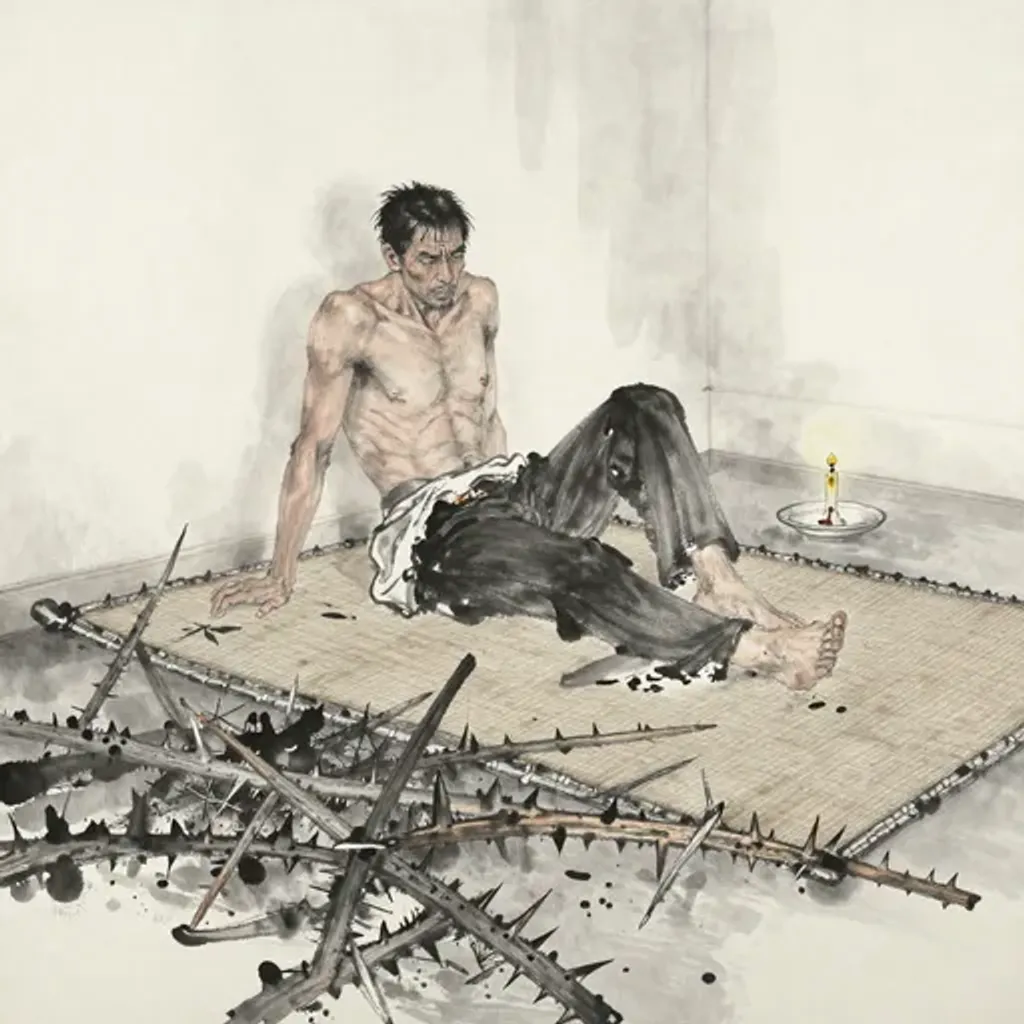
席多針刺不可以卧為身作累動而有悔言行俱過
The mat is full of needle pricks; one cannot lie down upon it. To move is to invite regret; word and deed alike transgress.
Read full commentary ↓
A lake without water transforming into itself: Oppression doubled. The mat is full of needles, impossible to lie down upon. Every movement brings regret; words and deeds both go wrong. This is the I-Ching's own warning for hexagram 47 taken to its extreme: the image of the lake drained again into a drained lake, oppression reinforcing itself. There is no escape because there is no change. The needle-studded mat captures the peculiar cruelty of a trap that punishes both action and inaction: one cannot rest, yet cannot move without making things worse. The only counsel is the hexagram's own judgment: the great man fulfills his fate and pursues his purpose. Even in double oppression, the sage does not abandon his will.
中文註釋
澤無水,困之象也,困之困——困上加困,自我疊加之絕境。席多針刺,不可以臥——席上遍佈針刺,無法安臥。動而有悔——一動則悔;言行俱過——一言一行皆是過錯。此為困卦自變之極端:枯澤又化枯澤,壓迫自我強化。動不得、靜不得,針氈之苦在於行止皆遭懲罰。《易經》困卦之辭曰:「君子以致命遂志」——即便困上加困,大人亦不棄其志。雙重之困中唯一出路,在於不放棄意志本身。
The commentary reflects an earlier reading and may refer to wording the manuscript does not carry.
Jiao Shi Yi Lin 《焦氏易林》, manuscript from the Wenyuan Pavilion Siku Quanshu, Qianlong period, Qing dynasty.
National Palace Museum, accession nos. 故庫017987–017990
Fascicle 4, page 31
Read from the manuscript leaf
Shown unpunctuated, as in the manuscript.
About this reading
Read from the scanned leaf.
Related Hexagrams
Same upper trigram: Lake (兌)
Same lower trigram: Water (坎)