Upper Trigram
坤 Kūn
Earth — Receptive
Lower Trigram
坎 Kǎn
Water — Abysmal
Classical Texts
The Goal
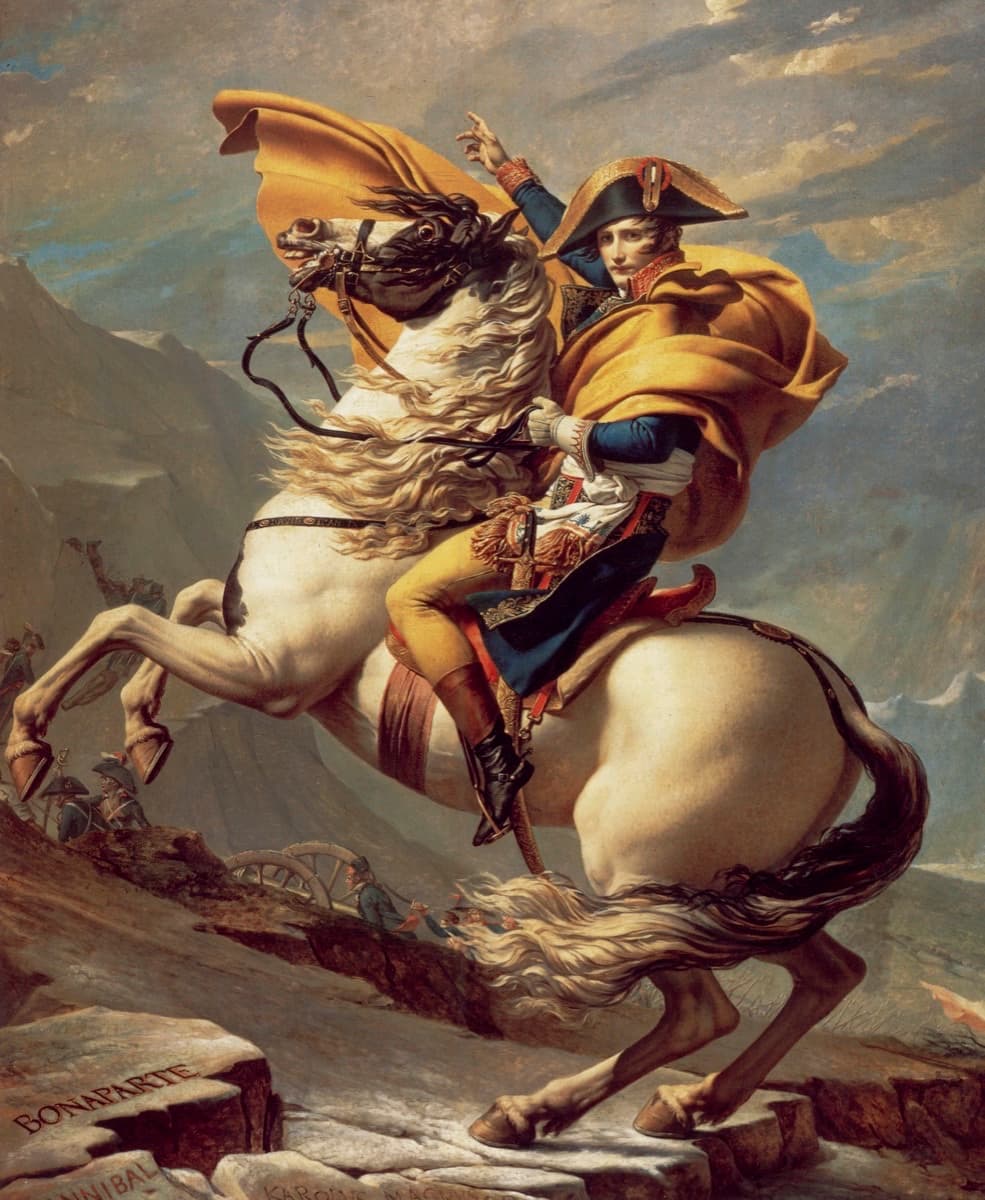
Shi is not about war. It is about the legitimate organization of collective force — the conditions under which a multitude becomes an army rather than a mob. The hexagram shows Earth (Kun) above Water (Kan): water hidden within the earth, invisible reserves stored beneath a calm surface. This is the image of latent power — the population that becomes an army when called, the discipline that exists before the first order is given. Shi addresses not combat but command, not violence but the moral authority that makes organized action possible. The judgment is strikingly compressed: 貞,丈人吉,无咎 — "constancy; the 丈人 brings good fortune; no blame." Wang Bi glosses 丈人 as 嚴莊之稱也, a term for stern gravity, and Kong Yingda spells out why it is required: 丈人監臨之,眾不畏懼,不能齊眾,必有咎害 — without such a person overseeing them the multitude feels no awe, cannot be brought into order, and harm follows. The qualification is not age or experience but the weight that makes a body of people hold formation. Shi insists that collective force without qualified leadership is catastrophe. The third line makes this explicit — 師或輿尸,凶 — "the army perhaps carries corpses in the wagon; misfortune." When command fractures, when authority is divided or usurped, the army becomes an instrument of death rather than order. The fifth line reinforces the principle: 長子帥師,弟子輿尸 — "the eldest son leads the army; the younger son carries corpses." Unified command under the qualified leader succeeds; divided command under the unqualified destroys. The Image — 地中有水,師;君子以容民畜眾 — reveals the hexagram's deeper architecture. Water within earth is the image of the army, and the superior person responds by sheltering the people and nurturing the multitude. Military power derives from the welfare of the population, not from coercion. The goal of Shi is not victory but the responsible stewardship of collective force — ensuring that when the multitude must act as one body, it does so under legitimate authority, for a justified cause, with discipline that prevents the organized power from becoming organized destruction.
The Judgment
Sustained orientation. The elder one: resolves well. No fault. The army needs a grown-up. Not a hero, not a genius — a grown-up. Someone who's been around long enough to know what commitment actually costs. That's the entire judgment. The configuration doesn't care about your strategy. It cares about who's in charge.
The Image
Water within the earth: the army. The realized person accordingly embraces the people and cares for the multitude. Water underground — can't see it, but it's everywhere. That's the army: ordinary people who become a force when called. The realized person's job isn't to drill them. It's to take care of them. The army you don't see is the one that was already fed.
The Lines
Line 1
The army sets out by the code. If not in good order: adverse. The army leaves camp and the first thing the text checks is: are you organized? Not brave. Not inspired. Organized. If the answer is no, the verdict is adverse. Full stop. Nobody in the history of warfare has ever said 'we lost, but at least we were enthusiastic.'
Line 2
In the center of the army: resolves well. No fault. The sovereign confers command three times. Right in the middle of it. Resolves well, no fault, and the sovereign keeps giving you more responsibility. Three times. This is what trust looks like — not a dramatic moment, just repeated confidence from someone who can see what you're doing from the center of the action.
Line 3
The army perhaps carts the dead. Adverse. Perhaps hauling corpses. Adverse. The 'perhaps' isn't softening anything — it's the text acknowledging that at this position, the only question is how bad. The third line of the army hexagram and somebody is loading bodies onto carts. No qualifiers. No escape clause.
Line 4
The army retreats to a secondary position. No fault. Fall back. That's the move. And the verdict: no fault. Retreat in the army hexagram and the text says: correct. The person who knows when to pull back to a secondary position is not the one who loses the war. That's the one who's still in the war tomorrow.
Line 5
Game in the fields. Restraining talk is supported. No fault. The elder son commands the army. The younger son carts the dead. Sustained orientation: adverse. Same army, two possible futures. The experienced one leads: fine. The inexperienced one leads: corpses. The configuration isn't judging their character. It's measuring their readiness. Put the wrong person in charge and commitment itself becomes adverse. Same resources, completely different body count.
Line 6
The great leader assumes the mandate. Establishing domains, recognizing houses. Lesser persons are not employed. Victory. War's over. The mandate is claimed. And the very last instruction: don't give jobs to small people. Not 'be careful' — don't. The person who wins a war and then hands out positions to the unqualified has just planted the next war.
Yilin: Forest of Changes
From Jiao Yanshou's Forest of Changes (焦氏易林) — the verse for Hexagram 7 in its unchanging form. A Han dynasty collection of four-character verses interpreting every hexagram transformation.
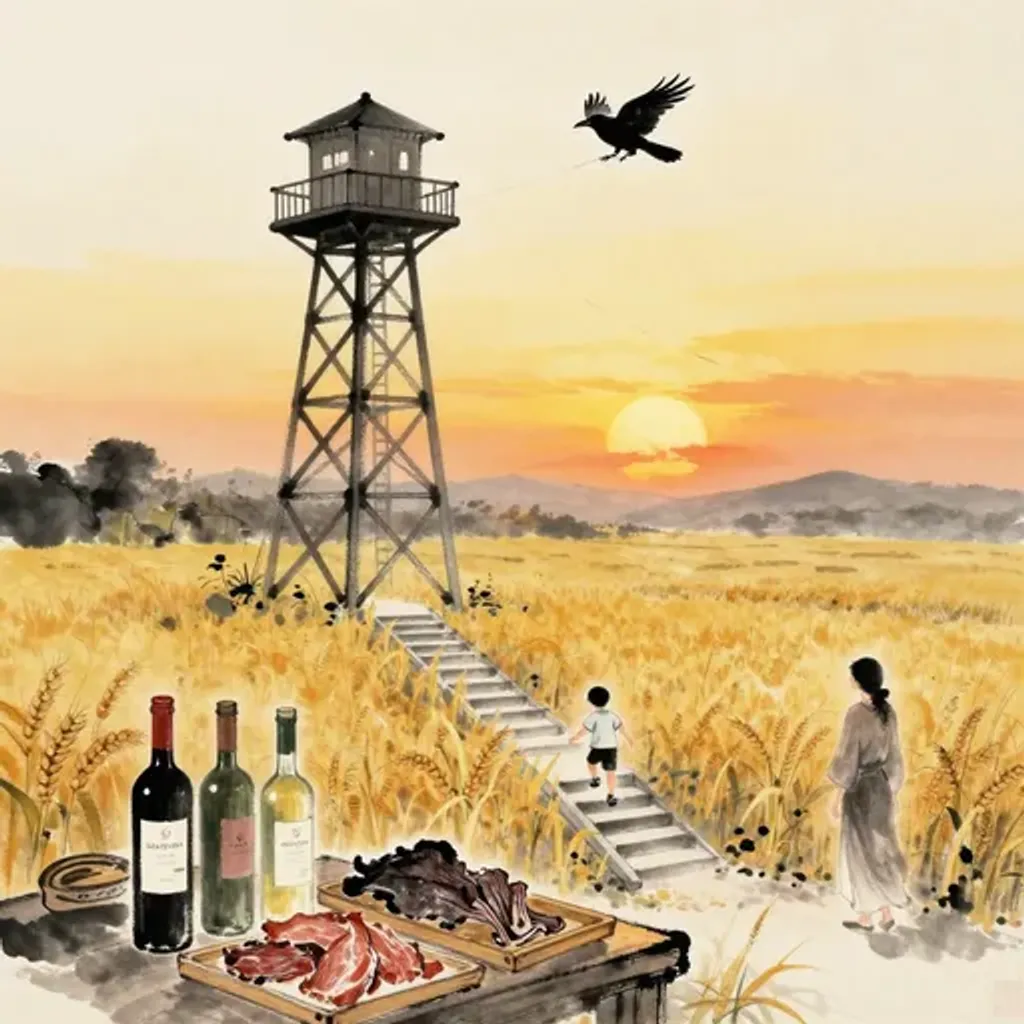
鳥鳴呼子哺以酒脯高樓之處子來歸母嗇人成功年歲大有妬婦無子
The crow calls its young, feeding them wine and dried meat. In a high tower's dwelling, the child returns to its mother. The farmer succeeds; the year's harvest is great -- but the jealous wife has no child.
Read full commentary ↓
Water hidden within the earth returns to itself — the army unchanged, source and destination the same. A crow calls to its young and feeds them with wine and dried meat from a high tower, and the fledglings come home to their mother. The farmer's work succeeds, the year's harvest is abundant, yet a jealous wife remains childless. The verse layers domestic warmth against private sorrow: communal success cannot console personal barrenness. From The Army to The Army, there is no transformation — only the cycle repeating. Plenty flows for those aligned with the collective rhythm, while those consumed by envy find themselves excluded from the very abundance they covet.
中文註釋
地中有水,師之不變卦,源與歸同。烏鳴呼子,哺以酒脯,高樓之處,子來歸母——母鳥喚雛,溫情可掬。穡人成功,年歲大有:農事豐登,眾皆受惠。然妬婦無子——群體之盛不能撫慰個人之空。師之自返,無所變化,唯循環往復。順應集體節律者豐收滿盈,妒忌自噬者反被排拒於豐盈之外。
Jiao Shi Yi Lin 《焦氏易林》, manuscript from the Wenyuan Pavilion Siku Quanshu, Qianlong period, Qing dynasty.
National Palace Museum, accession nos. 故庫017987–017990
Fascicle 1, page 75
Read from the manuscript leaf
Shown unpunctuated, as in the manuscript.
About this reading
Read from the scanned leaf.
Related Hexagrams
Same upper trigram: Earth (坤)
Same lower trigram: Water (坎)