Upper Trigram
坤 Kūn
Earth — Receptive
Lower Trigram
震 Zhèn
Thunder — Arousing
Classical Texts
The Goal
Fu is not mere comeback. It is the natural re-emergence of what was stripped away — the single yang line returning at the bottom of the hexagram after Bo dissolved everything above it. Earth (Kun) over Thunder (Zhen): the arousing force stirs again beneath the receptive surface. The seed that survived the stripping has germinated. This is not a triumph of will but a structural inevitability — what is essential cannot be permanently suppressed. The judgment is rich with reassurance: 亨,出入无疾,朋來无咎 — "success; going out and coming in without illness; friends come without blame." But the phrase that carries the structure is 反復其道,七日來復 — "the way turns and returns; in seven days comes the return." The count is a cycle, not a calendar: from the first yin entering at 姤 (44), yang recedes through 遯, 否, 觀, 剝, 坤 — six stages — and returns at the seventh. The Tuan says only 天行也, this is the movement of heaven. Return is not accidental. It is encoded in the structure of change, and the 道 that was lost was never destroyed; it was passing through its necessary withdrawal. The Image says what to do at that moment, and it is nothing: 雷在地中,復;先王以至日閉關,商旅不行,后不省方 — "thunder within the earth: Return. At the solstice the ancient kings closed the passes; merchants did not travel, and the sovereign did not tour the regions." Even the ruler's ordinary duty of inspection is suspended. When the returning yang is one line deep, the correct response is to protect the quiet in which it can take hold, not to go out and meet it. The common mistake with Fu is treating the return as permission for aggressive re-expansion. The single yang line at the bottom is a beginning, not an arrival; the five yin lines above it are a world still shaped by the conditions that caused the stripping. Fu's goal is to let the return establish itself without forcing the pace. The judgment's 利有攸往 comes last, after the reassurances — forward movement is favorable because the foundation has been genuinely renewed, not because the obstacles have been cleared.
The Judgment
Fulfillment. Going out and coming in without affliction. Companions arrive without fault. The way returns upon itself. On the seventh day, return comes. Going forward is supported. The turning point. After the splitting apart, the return. Seven days — that's the cycle. And now going forward is supported again. The door that was closed in hexagram 23 has reopened. The companions show up without fault. The text is almost relieved: things come back. They always come back.
The Image
Thunder within the earth: return. The ancient kings accordingly closed the passes at the solstice. Merchants did not travel. The ruler did not tour the regions. Thunder underground — the energy is coming back but it hasn't surfaced yet. The ancient kings' response: close everything. Don't travel, don't trade, don't inspect. The turning point requires absolute stillness. The return is trying to happen and the only thing that can prevent it is impatience.
The Lines
Line 1
Returning from not far away. No need for great regret. Supremely favorable. You didn't go far. The return is easy. Supremely favorable — the best verdict available. You know what earns the top rating in the return hexagram? Catching it early. Not the dramatic comeback after years in the wilderness. The small correction that happens before anyone notices you left.
Line 2
Quiet return. Resolves well. Coming back quietly. Resolves well. No announcement, no explanation, no story about where you were. Just: you're back. The second line of the return hexagram and the instruction is to do the most dignified thing a person can do with a mistake: close the gap silently.
Line 3
Returning repeatedly. Strained. No fault. You keep leaving and returning. Over and over. Strained — because the constant back-and-forth wears on the structure. But no fault. The person who keeps returning, even clumsily, even repetitively, is still returning. The text doesn't judge the wobble. It judges the direction.
Line 4
Walking in the middle of the group, returning alone. Everyone's going one direction. You turn back alone. No verdict — just the image. Walking with the crowd and then, in the middle of it, reversing course by yourself. The loneliest line in the return hexagram. But every return worth making looks like this from the inside.
Line 5
Honest, authentic return. No deviation detected. Genuine return. No deviation. The system checked and the signal is clean — this one is real. Fifth line, maximum visibility, and the quality is authenticity. The return that draws no correction signal is the one that came from actual understanding, not from getting caught.
Line 6
Lost, confused return. Adverse. Disaster and calamity. Deploying the army leads to great defeat in the end. Extending to the ruler: adverse. For ten years unable to advance. The return that fails. Lost, confused, adverse — and then it gets worse. Army deployed, crushed. Ruler implicated. Ten years of paralysis. The longest and harshest line in the hexagram, because a confused return does more damage than no return at all. The person who tries to come back without understanding why they left creates a decade of wreckage.
Yilin: Forest of Changes
From Jiao Yanshou's Forest of Changes (焦氏易林) — the verse for Hexagram 24 in its unchanging form. A Han dynasty collection of four-character verses interpreting every hexagram transformation.
周師伐紂尅於牧野甲子平旦天下悅喜
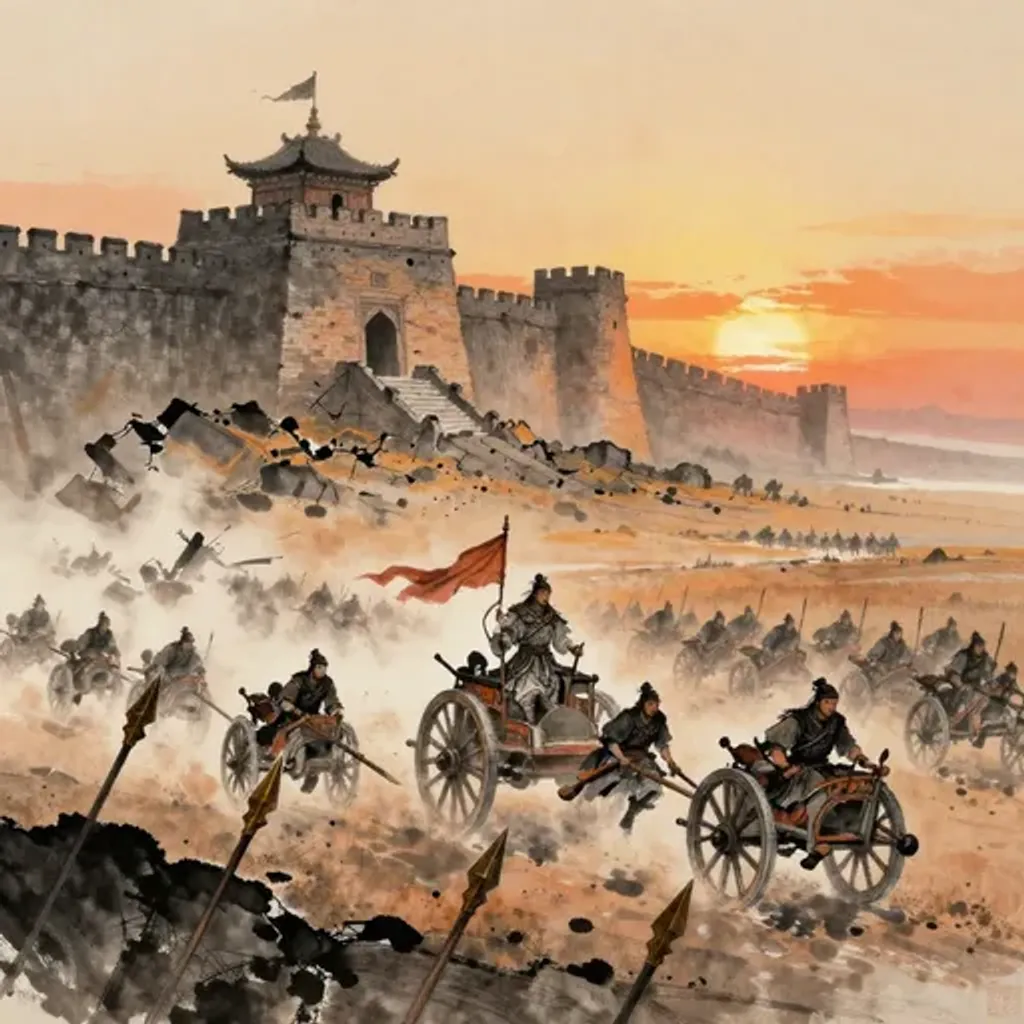
The armies of Zhou campaign against Zhou; vanquishing him at Muye. At dawn on the jiazi day; all under heaven rejoice.
Read full commentary ↓
Thunder returns beneath the earth and returns again — Return doubled upon itself. King Wu of Zhou leads his armies against the tyrant Zhou of Shang and triumphs at the Battle of Muye. On the jiazi dawn, under the first light, the world rejoices. This is the definitive return in Chinese history: the restoration of moral order after tyranny, the mandate of heaven transferring to the virtuous. The doubled hexagram intensifies the image — what returns is not merely a single yang line but an entire civilizational renewal. The Muye victory is return incarnate: righteous force restoring what cruelty had destroyed, timed to the cosmic daybreak.
中文註釋
雷在地中,復之又復——本卦重疊於自身。周師伐紂,剋於牧野——周武王率師伐商紂,大勝於牧野。甲子平旦——甲子日拂曉。天下悅喜——四海歡騰。此為中國史上最典型之「復」:暴政終結,天命轉移,道德秩序重建。本卦自變,復歸加倍——所復者非一陽初動,乃整個文明之更新。牧野之勝即復卦之化身:義師歸正,暴虐所毀者一朝復原,恰合天道之黎明。
Jiao Shi Yi Lin 《焦氏易林》, manuscript from the Wenyuan Pavilion Siku Quanshu, Qianlong period, Qing dynasty.
National Palace Museum, accession nos. 故庫017987–017990
Fascicle 2, page 43
Read from the manuscript leaf
Shown unpunctuated, as in the manuscript.
About this reading
Read from the scanned leaf.
Related Hexagrams
Same upper trigram: Earth (坤)
Same lower trigram: Thunder (震)