Upper Trigram
坤 Kūn
Earth — Receptive
Lower Trigram
巽 Xùn
Wind — Gentle
Classical Texts
The Goal
Sheng is not ambition. It is organic upward development — growth that proceeds by adaptation rather than force, the way a tree rises through soil by yielding around obstacles instead of breaking them. Earth (Kun) above Wood (Xun) puts receptive ground over the penetrating quality of wood: the seed does not shatter the earth above it but finds the path upward that the earth allows. The judgment says 元亨。用見大人,勿恤。南征吉 — "supreme success; use this to see the great person, do not be anxious; advancing southward brings good fortune." 勿恤 is there because the conditions genuinely are favourable. The anxiety that usually attends advancement is, in this case, unfounded. The Image identifies the mechanism: 地中生木,升;君子以順德,積小以高大 — "within the earth wood grows: Pushing Upward. The superior person follows virtue, and accumulates the small to reach the high and great." Two instructions, and the second is the operative one: elevation is reached by increments too small to be dramatic. Nothing here is achieved in a leap. 九三 is 升虛邑 — "pushing upward into an empty city," and the line attaches no judgment at all, neither 吉 nor 凶. Wang Bi fills the silence positively: 莫之違距,故若升虛邑也, with the 小象's 无所疑也 glossed 往必得也 — going, one certainly gains; the empty city is the open road that 積小以高大 earns. The silence will also carry the opposite weight, and it is worth sitting with: everywhere else in this hexagram advance is qualified by what it meets, and here it meets nothing. An ascent that encounters no resistance has been tested by nothing and has formed no one. The line does not decide between these, which may be why it declines to judge. 六四 supplies the contrast — 王用亨于岐山,吉,无咎, "the king makes offering on Mount Qi" — an ascent that arrives somewhere and is marked by an act of ritual acknowledgement rather than by mere altitude. The goal of Sheng is to regulate elevation so that what rises deserves its height. It follows Cui in the sequence: once people have gathered, the gathered energy can be directed upward. 上六 warns about the far end: 冥升,利于不息之貞 — "pushing upward in darkness; it furthers to be unceasingly constant." Ascent past the point where vision operates is not forbidden, but it requires a different resource — not the enthusiasm of rising, which needs a visible destination, but the discipline of continuing without one.
The Judgment
Supreme fulfillment. Use this time to see the great person. Do not worry. Advancing southward resolves well. Supreme fulfillment. Go see the person who matters, don't hesitate, advance south. The pushing-upward hexagram opens every door at once and tells you to walk through without worry. Not 'with confidence' — without worry. The distinction matters. Confidence is something you generate. Not-worrying is something you allow. The upward movement is already happening. Stop braking.
The Image
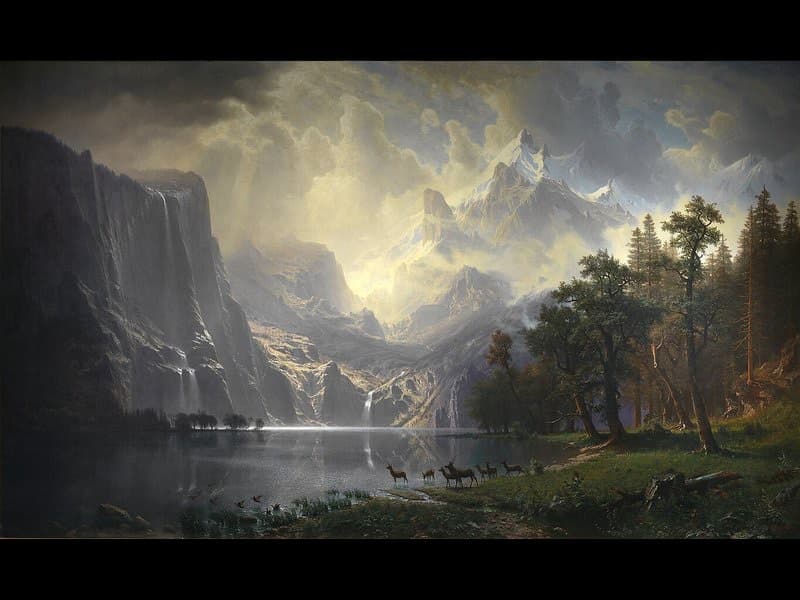
Within the earth, wood grows: pushing upward. The realized person accordingly cultivates a yielding character, accumulating small things to reach the high and great. A tree growing inside the earth — pushing up through soil, not air. And the method is: yield and accumulate. Small things, piled up, becoming tall. The tree doesn't jump out of the ground. It pushes, yields to the rock, pushes around it, and keeps growing. The realized person who can be that patient with their own ascent reaches heights that ambition alone never could.
The Lines
Line 1
Welcomed upward. Great resolve well. The ascent begins and you're welcomed. Great resolve well. The easiest start in the book. No resistance, no warnings, no conditions. Just: come up, you're wanted. The first line of pushing upward, and the door is open. The confidence comes from the welcome, not from yourself. Someone above saw you and said yes.
Line 2
If sincere, then even the modest spring offering is supported. No fault. Same instruction as the gathering hexagram: sincerity makes the small offering sufficient. No fault. The person who is pushing upward and worries about not having enough to bring has missed the point. You're not being evaluated on the gift. You're being evaluated on the sincerity behind it. Bring the small thing with a real heart.
Line 3
Pushing upward into an empty town. An empty city. No resistance. You walk in and there's nothing stopping you. No verdict — just the image. The third line of pushing upward, and the absence of opposition is the entire message. Sometimes the path clears so completely that the experience of ascending feels like walking through a ghost town. Don't question it. Walk.
Line 4
The king makes an offering at Mount Qi. Resolves well. No fault. The king sacrifices at the sacred mountain. Resolves well. The fourth line and the ascent has reached the point of consecration — the moment where personal advancement becomes something larger. Mount Qi is where the dynasty began. The person who climbs high enough to reach the sacred place doesn't celebrate. They make an offering. The height demands it.
Line 5
Sustained orientation resolves well. Ascending by steps. Step by step. Resolves well. The fifth line of pushing upward, and the instruction at the height of the ascent is: slow down. Not stop — slow down. Steps, not leaps. The person who has been rising and rising and arrives at the fifth position needs exactly one skill: the ability to keep climbing without acceleration. The summit is not the place to sprint.
Line 6
Blind ascent. Unceasing sustained orientation is supported. Pushing upward in the dark. Blind, unable to see where you're going, and the instruction is: don't stop. Unceasing persistence. The top of the ascent hexagram, and you've climbed past visibility. There are no more landmarks. The only thing that works here is the internal compass — the orientation that doesn't need light. If you've been sincere the whole way up, this is where it pays.
Yilin: Forest of Changes
From Jiao Yanshou's Forest of Changes (焦氏易林) — the verse for Hexagram 46 in its unchanging form. A Han dynasty collection of four-character verses interpreting every hexagram transformation.
禹鑿龍門通利水源東注滄海人民得安
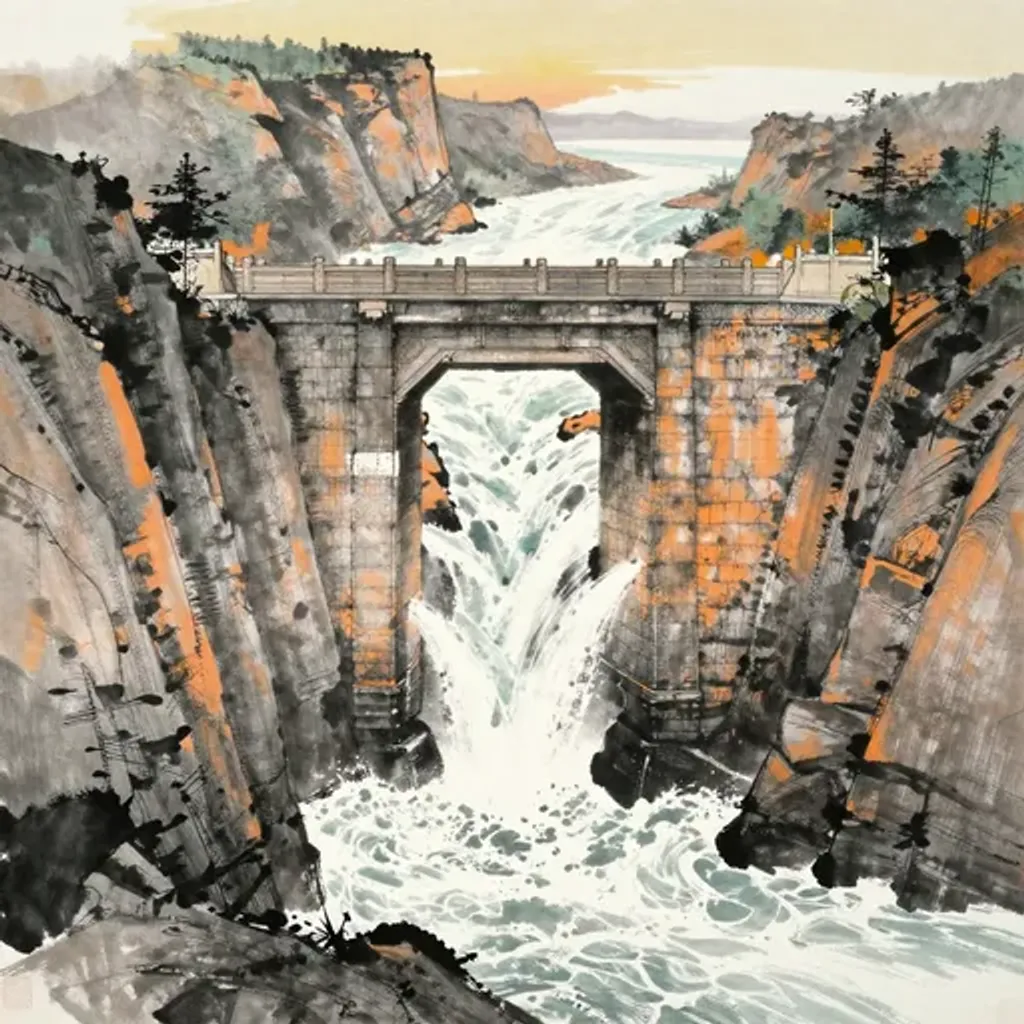
Yu carved the Dragon Gate, opening a passage for the flowing springs. Eastward they pour into the vast sea; the people find safety and peace.
Read full commentary ↓
Wood grows within the earth, and Yu the Great carves open the Dragon Gate, freeing the waters of springs and rivers to flow as nature intended. The floods rush eastward into the vast sea, and the people find safety and security at last. When source and target hexagram are identical, the verse distills the hexagram's essential nature. Pushing Upward doubled is ascent perfected: Yu's legendary engineering did not fight the water but channeled its natural downward course, removing obstacles so that what must flow could flow freely. The people are saved not by force but by alignment with nature's grain. To push upward is to clear the path for organic movement — the wood grows because the earth permits it.
中文註釋
地中生木,升之象。禹鑿龍門,通利水泉——大禹鑿開龍門峽谷,疏通泉脈河源,使水流暢行無阻。東注滄海,民得安全——洪水順勢東入大海,百姓終得安居樂業。升之升——源卦與變卦同為升,詩提煉升卦之純粹本質。大禹治水之偉業在於順勢疏導而非以力抗拒——去其障礙,使當流者得流,使當升者得升。民之得救非因蠻力而因順應天道自然。積小以高大之道正在於此:清除障礙,使有機之生長暢行無阻,木之升因地之容而成。
The commentary reflects an earlier reading and may refer to wording the manuscript does not carry.
Jiao Shi Yi Lin 《焦氏易林》, manuscript from the Wenyuan Pavilion Siku Quanshu, Qianlong period, Qing dynasty.
National Palace Museum, accession nos. 故庫017987–017990
Fascicle 4, page 21
Read from the manuscript leaf
Shown unpunctuated, as in the manuscript.
About this reading
Read from the scanned leaf.
Related Hexagrams
Same upper trigram: Earth (坤)
Same lower trigram: Wind (巽)