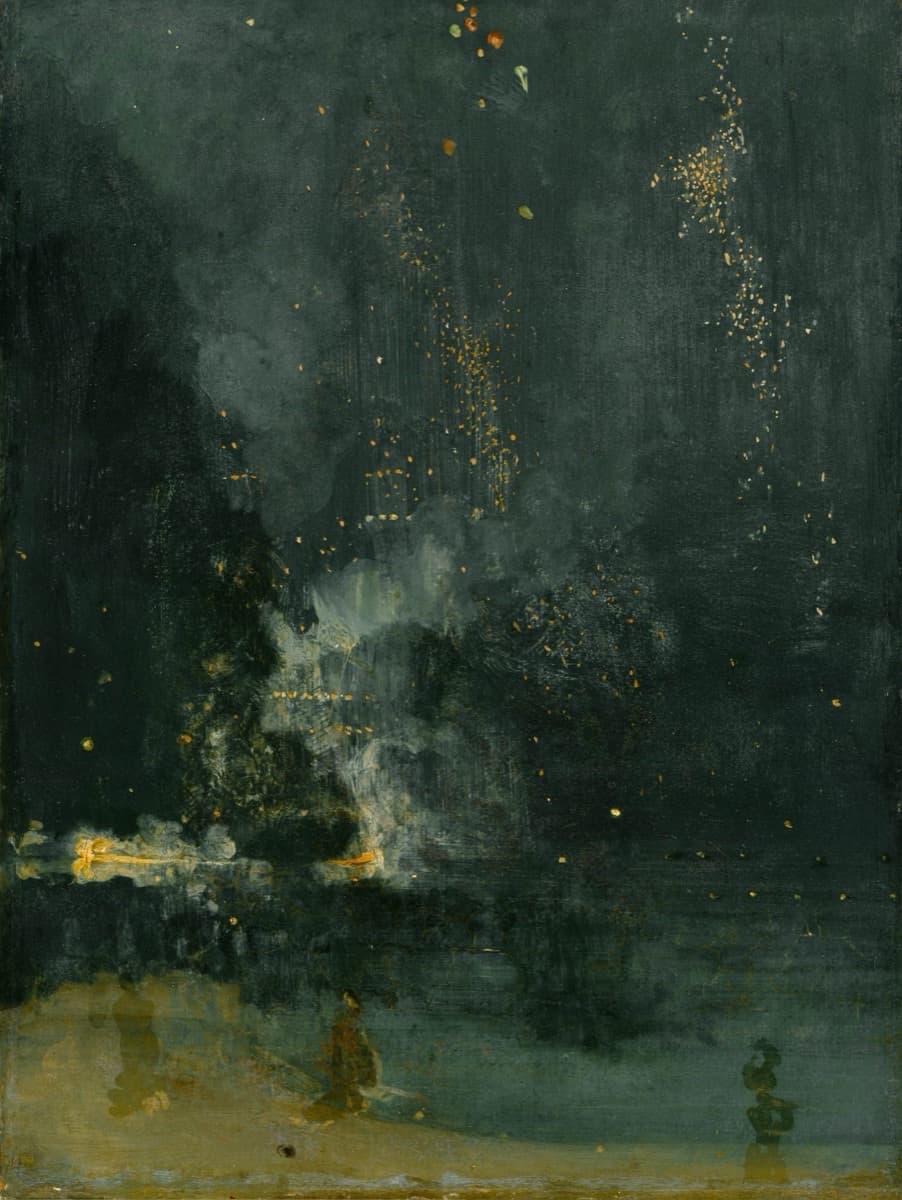
Nocturne in Black and Gold

第59卦

Huàn

Dispersion

Nocturne in Black and GoldWhistler, Unknown

Fireworks dissolve into darkness above the Thames. James McNeill Whistler painted this nocturne in the 1870s, abstracting Cremorne Gardens' pyrotechnic displays into scattered golden sparks against indigo night. Forms blur and boundaries vanish—the distinction between water, sky, and burning debris collapsing into atmospheric haze. What was solid disperses into mist, what was gathered scatters across the canvas.

阅读完整论述 ↓

Whistler captures Huan (渙), the hexagram of Dispersion—Wind above Water, the trigram Xun over Kan. Wind moving across water's surface breaks up what has congealed, scatters what has accumulated. The character 渙 contains the water radical and suggests melting ice, dissolving barriers, the breaking apart of rigid structures. Where fire burns away, wind disperses through gentle, persistent movement. Ancient diviners saw this configuration when accumulated tensions required release, when hardened positions needed softening, when isolation gave way to flow. Spring thaw dispersing winter ice, ceremonies where individual ego dissolves into collective ritual. Whistler's nocturne abstracts fireworks at Cremorne Gardens into dissolving atmospheric effects. Forms scatter and blur into darkness, boundaries dispersing. Dispersion (Huan) describes dissolution of rigid structures—here paint itself disperses into mist, solid forms giving way to atmospheric diffusion. The Judgment speaks to Whistler's dissolving forms: "Dispersion. Success. The king approaches his temple. It furthers one to cross the great water. Perseverance furthers." Zhou Dynasty texts describe religious gatherings where rigid social boundaries temporarily dispersed, allowing unity across divisions. The fireworks scatter upward, water spreads horizontally—both movements dissolving fixed arrangements. In divination, Huan appeared when questions concerned breaking up stagnation, releasing accumulated pressure, allowing movement where rigidity had taken hold. The Image Text clarifies the paradox Whistler paints: "The wind drives over the water: the image of Dispersion. Thus the kings of old sacrificed to the Lord and built temples." Dispersion is not destruction—like wind dispersing clouds to reveal sky, proper dissolution clears space for new patterns. In the I-Ching sequence, Huan follows hexagram 58's joy: after connection comes the necessary release, the scattering that prevents stagnation. What disperses can gather again in new configurations, but only after old forms dissolve.

上卦

Xùn

WindGentle

五行Wood方位Southeast家庭Eldest Daughter性质gentle, penetrating, persistent

下卦

Kǎn

WaterAbysmal

五行Water方位West家庭Second Son性质dangerous, flowing, fluid

经典文本

彖辞

Success. The king approaches his temple. It furthers one to cross the great water. Persistence furthers. When vital energy is dammed up within, gentleness serves to break up and dissolve the blockage. Religious forces are needed to overcome the egotism that divides people. Sacred rites and music arouse a strong tide of emotion shared by all hearts in unison, awakening consciousness of the common origin of all creatures. In this way disunity is overcome and rigidity dissolved. Cooperation in great undertakings sets a high goal for the will of the people; in the common concentration on this goal, all barriers dissolve.

爻辞

第初爻

He brings help with the strength of a horse. Good fortune. It is important that disunion should be overcome at the outset, before it has become complete—that the clouds be dispersed before they have brought storm and rain. At such times, take quick and vigorous action to dissolve misunderstandings and mutual distrust.

第二爻

At the dissolution he hurries to that which supports him. Remorse disappears. When you discover within yourself the beginnings of alienation from others, of misanthropy and ill humor, set about dissolving these obstructions. Rouse yourself inwardly, hasten to that which supports you. Such support is never found in hatred, but always in moderate and just judgment of others, linked with good will.

第三爻

He dissolves his self. No remorse. Under certain circumstances, your work may become so difficult that you can no longer think of yourself. Set aside all personal desires and disperse whatever the self gathers about it to serve as a barrier against others. Only on the basis of great renunciation can you obtain the strength for great achievements.

第四爻

He dissolves his bond with his group. Supreme good fortune. Dispersion leads in turn to accumulation—something ordinary people do not think of. When working at a task that affects the general welfare, leave all private friendships out of account. Only by rising above party interests can you achieve something decisive. He who has the courage to forego what is near wins what is afar.

第五爻

His loud cries are as dissolving as sweat. Dissolution! A king abides without blame. In times of general dispersion and separation, a great idea provides a focal point for the organization of recovery. Just as an illness reaches its crisis in a dissolving sweat, so a great stimulating idea is true salvation in times of general deadlock. It gives the people a rallying point.

第上爻

He dissolves his blood. Departing, keeping at a distance, going out, is without blame. The dissolving of that which might lead to bloodshed and wounds—avoidance of danger. But here the thought is not that you avoid difficulties for yourself alone, but rather that you rescue your kin, helping them to get away before danger comes, or to keep at a distance from an existing danger, or to find a way out. In this way you do what is right.

焦氏易林

焦延寿《易林》——第59卦本卦之辞。西汉时期以四言诗阐释卦变,为最早的系统性易学占辞集。
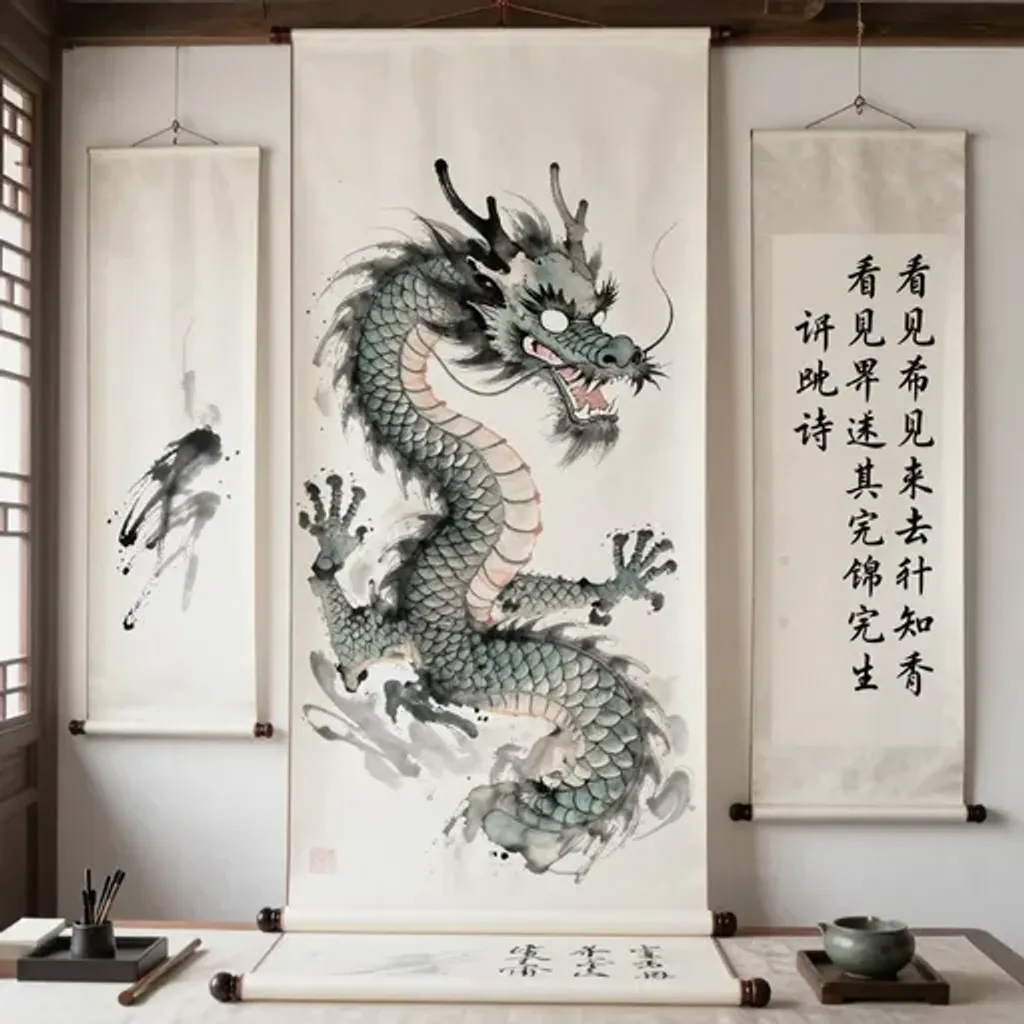
Yilin artwork for Hexagram 59
望幸不到,文章未就。王子逐兔,犬踦不得。

畫龍未點睛,詩成缺末句。風吹墨跡散,紙上空留痕。

風行水上,渙歸渙。

阅读完整注释 ↓

風行水上,渙歸渙。此詩有改寫,當據原文:「望幸不到,文章未就。王子逐兔,犬踦不得。」所望之人不至,文章未成——事事差一步。王子追兔,獵犬跛足,獵物逃逸。每一意象皆為功虧一簣:最後一筆永遠落不下。渙之渙,散者再散,遞歸無盡。從渙至渙,無轉化、無解答:龍未點睛,詩缺末句,墨跡被風吹散——而那風正是應該使其乾透的風。此為卦觀照自身:永遠差一步聚攏的常態。

English commentary

Wind over water, returning to itself — Dispersion into Dispersion. The original verse captures incompletion at every level: the hoped-for audience never arrives, the literary work remains unfinished. A prince chases a rabbit, but his dog stumbles and the prey escapes. Each image is of effort that falls just short, the final stroke never delivered. Wind over water, dispersing what was already dispersed — the condition is recursive, an endless loop of dissolution. From Dispersion to Dispersion, there is no transformation, no resolution: the dragon painted without its pupils, the poem missing its last line, the ink blown across the page by the very wind that should have dried it. This is the hexagram contemplating its own nature: the permanent condition of things never quite coming together.