上卦
震 Zhèn
雷 — 动
下卦
巽 Xùn
风 — 入
经典文本
卦旨
恒不是固执。它是历经变化而不失去连贯——能持久是因为能回应,而不是因为最后僵住了。上震下巽:动在入之上。长男居于长女之上,与咸卦少女居少男之上正好相对。咸是关系的开始,恒是关系的持续形态。雷与风互相成全:风把雷所发动的传布开去,雷又把风所带走的重新激起。 卦辞给了「亨,无咎,利贞」,还加上「利有攸往」。这一点很关键:恒不是静止。恒许可行动、许可方向、许可继续发展。常见的错误是把持久读成重复——一直做同一件事。但两个卦体的性情不是这样:雷是突发而剧烈的,风是渐进而弥漫的,能够长久的,正是同时含有这两者的那种格局。 《象》把不许改变的东西说得很清楚:「雷风,恒;君子以立不易方。」「方」是所朝的方向,不是行事的方法。全卦要分辨的就在这里:方法随时势而改,所朝的方向不改。把恒理解成形式不变,就与「利有攸往」相冲突;理解成方向不变,两句就互相成全。 九三直接说出一种失败:「不恒其德,或承之羞」——德行不能持久的人,终究要蒙受羞辱。九四说的是另一种:「田无禽」——田里没有猎物。一套做法可以长久地做下去,而它的效用早已用尽;久而不应,就成了空洞的仪式。猎人出于习惯又回到空田,是把忠于方法当成了忠于目的。所以恒的要义,是所守的东西长久,而守它的方式可以改变。能长久的夫妇,不是从未变过,而是所有的变化都没有离开当初的那份信实。
彖辞
恒不是不动。不动是退步。恒是自我更新的运动,依循不变的规律,终而复始。天体运行不息,四季循环往复——持久的秘密是持续在动。
象辞
「雷风,恒」——雷与风,极动之物,却有恒常之法。君子立不易方——持久的不是外在姿态,是内在的方向。随时而变,守中不移。
爻辞
第初爻
「浚恒,贞凶」——一开始就求深求久。持久的东西只能慢慢建成。一下子要太多,最后什么也得不到。
第二爻
「悔亡」——力量超过处境所需。恒的时刻,可以克制这股力量,不至于过。悔因此消失。
第三爻
「不恒其德,或承之羞」——性情为外界的希望或恐惧所左右,失去内在的恒定。羞辱不是意外,是性格不稳的必然结果。
第四爻
「田无禽」——猎物不在这里。方向错了,再坚持也没用。持久地找错地方,等于持久地浪费。
第五爻
「恒其德贞,妇人吉,夫子凶」——保守地守住传统,某些角色适合,某些不适合。有时候要灵活,做当下该做的事,而不是一直做过去做的事。
第上爻
「振恒,凶」——永久的躁动。没有内在安定,做事不能彻底。这种状态若在高位,危害尤甚。
焦氏易林
焦延寿《易林》——第32卦本卦之辞。西汉时期以四言诗阐释卦变,为最早的系统性易学占辞集。
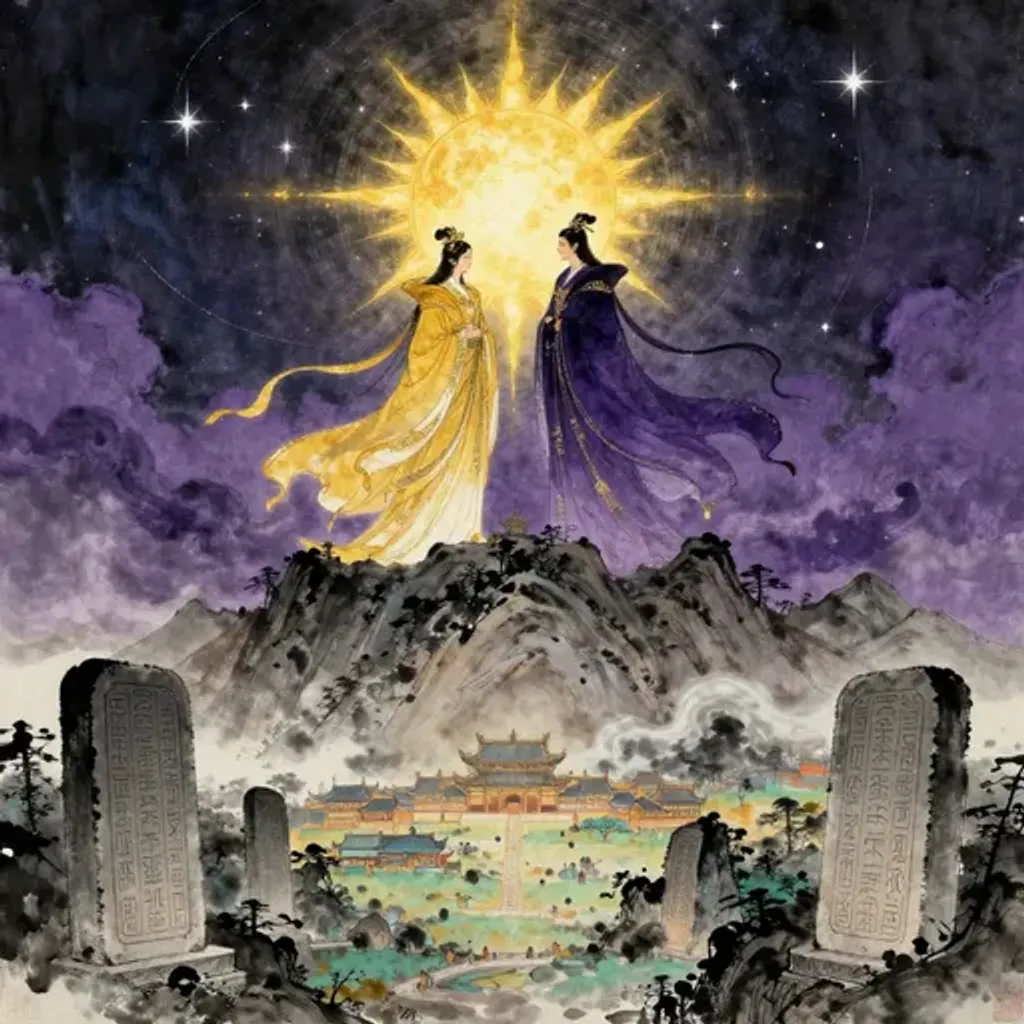
黄帝所生伏羲之宇兵刃不至利以居止
雷风恒,恒之本体。
阅读完整注释 ↓
雷风恒,恒之本体。黄帝所生,伏羲之宗——华夏文明之源头,至圣先祖之根基。兵刀不至——刀兵不能侵犯。利以居止——宜于安居。恒之恒,自身回归自身,是最根本的持久。黄帝创制度、伏羲画八卦,二者为文明之始祖。此诗以文明之根源喻恒之至义:真正恒久者非人为之坚持,而是天地之本然。从恒至恒,雷风不易,立不易方。兵刀不至非因防御坚固,而因此处即万物之根,根不可拔则枝叶永茂。
English commentary
Thunder above wind doubled upon itself — Duration transformed back into Duration. The Yellow Emperor's birthplace, Fuxi's ancestral lineage: this is the origin point of civilization itself. No weapons or blades reach here; it is favorable to dwell and rest. The verse names the two primordial culture-heroes whose legacies define the Chinese cosmological tradition. The Yellow Emperor brought order through invention and warfare; Fuxi devised the trigrams from observing nature. Together they represent the deepest foundation of enduring civilization. When Duration returns to Duration, the pattern is self-reinforcing: what endures is the very ground of culture. The dwelling place of these origins needs no defense because its constancy is ontological — it is the source from which all other patterns flow.
此注释依据较早的读法撰写。读法既经更定,其诠释未必仍适用于今所见之文。
《焦氏易林》,清乾隆间写文渊阁四库全书本。
国立故宫博物院 故库017987–017990
第3册,第14页
据写本原叶录出
标点依写本,不另加标点。
关于此读法
据扫描原叶录出。