Transformations of Hexagram 60
Every line of change out of Hexagram 60 節 Limitation, with the Yilin verse for each of the 64 resulting hexagrams, its translation, and the original ink brush artwork.
節 → 乾
Hexagram 60 → Hexagram 1: The Creative
Changing lines: 3, 4, 6
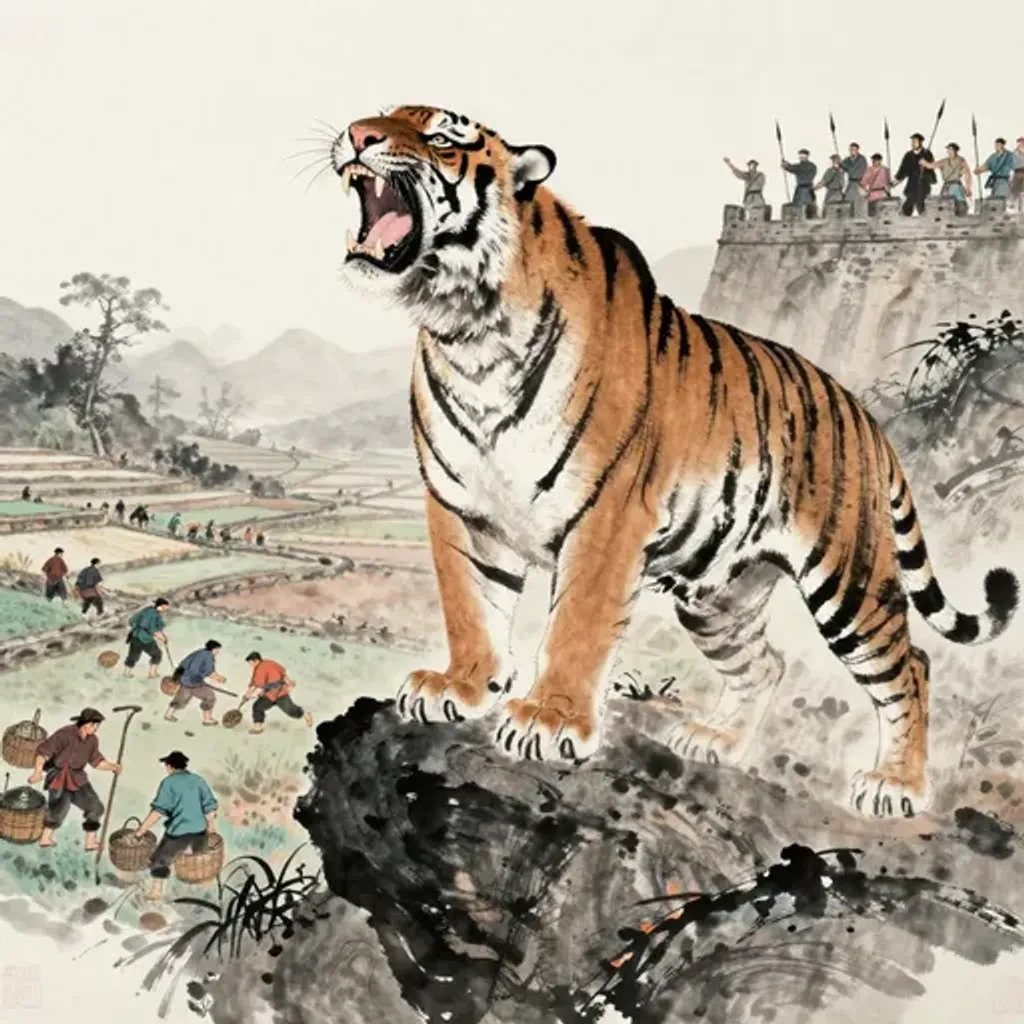
虎呴怒咆,慎戒外憂。上下俱搔,士民无聊。
The tiger roars and rages; be vigilant against threats from beyond. High and low alike are agitated; the people find no peace.
— Jiao Yanshou, Yilin (Forest of Changes), 1st century BC
Commentary
Water over lake sets a boundary, but the tiger strains against it. A great beast roars and paces, radiating fury that unsettles all above and below. Officials scramble and commoners find no peace — the entire realm scratches at its own anxiety. The verse paints a scene of authority stretched past its proper limits, where the tension between restraint and raw force generates universal distress. From Limitation to the Creative, the transformation reveals what happens when contained energy refuses containment: heaven's self-renewing drive, once unleashed, overwhelms every structure meant to hold it. The tiger's rage is initiative misapplied — power without proportion, vigor without direction, turning what should be strength into a source of collective anguish.
節 → 坤
Hexagram 60 → Hexagram 2: The Receptive
Changing lines: 1, 2, 5
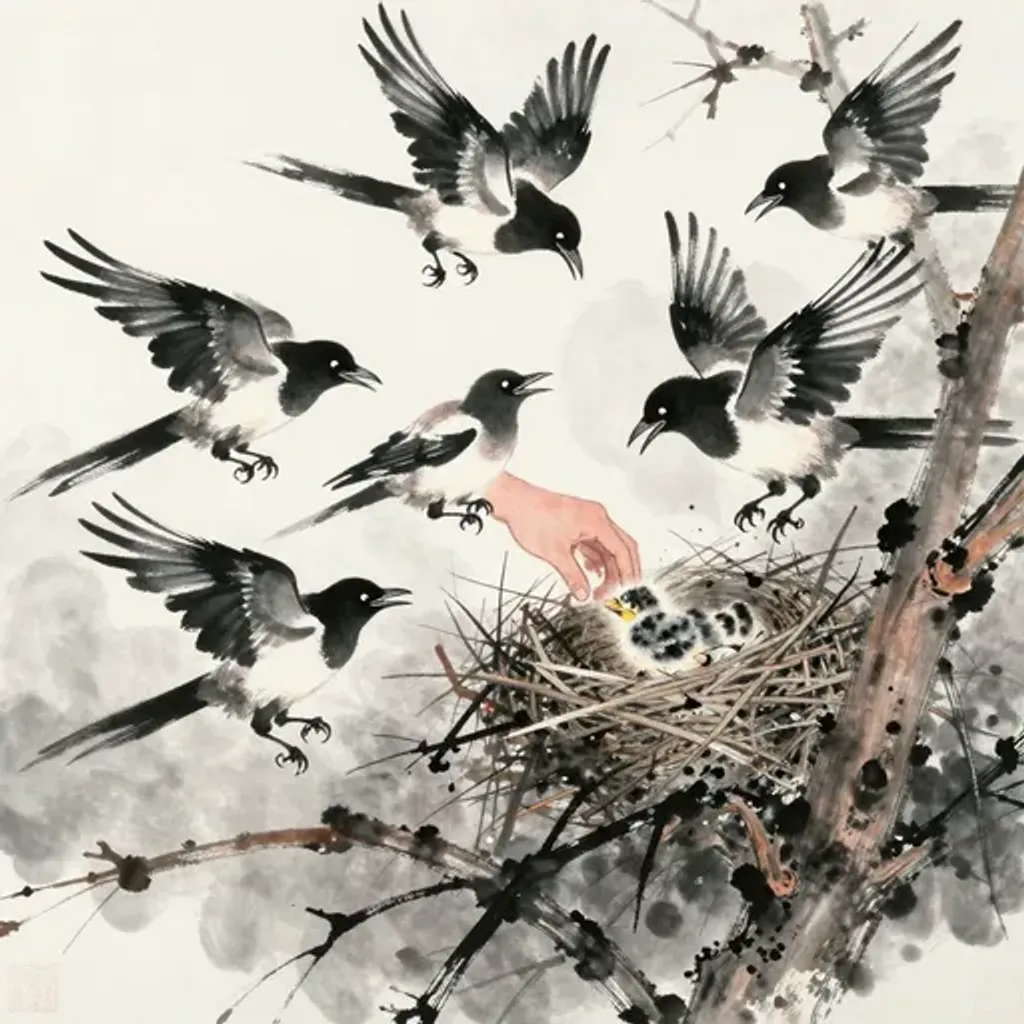
探巢得雛,仇鵲俱來,使我心憂。
Reaching into the nest to seize a chick; vengeful magpies gather from all sides, filling my heart with dread.
— Jiao Yanshou, Yilin (Forest of Changes), 1st century BC
Commentary
Water over lake governs through measure, yet someone reaches into the nest and seizes a chick. The parent magpies swarm in fury, turning the raider into prey. Anxiety floods the heart. The imagery echoes a proverb: disturbing another's nest invites collective retaliation. From Limitation to the Receptive, the transformation shifts from structured restraint to boundless earth — yet the boundlessness here is not gentle reception but overwhelming vulnerability. One who violates boundaries discovers that the earth, once provoked, offers no shelter. The stolen chick yields only enemies, and the thief's gain becomes the source of unending worry. Receptive openness, misread as passive weakness, turns hostile when its territory is breached.
節 → 屯
Hexagram 60 → Hexagram 3: Difficulty at the Beginning
Changing lines: 2
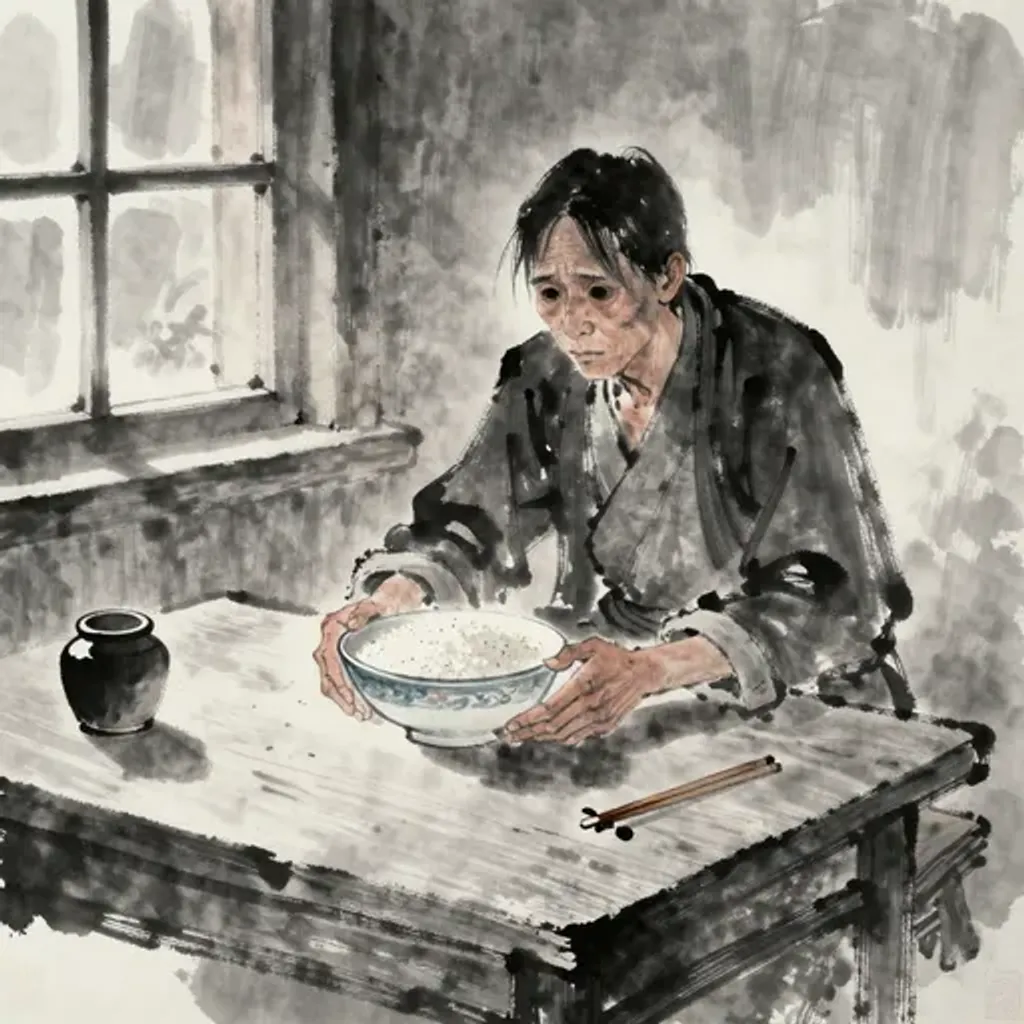
日望一食,常恐不足,祿命寡薄。
Each day hoping for a single meal, ever fearing it will not suffice; fate and fortune are thin indeed.
— Jiao Yanshou, Yilin (Forest of Changes), 1st century BC
Commentary
Water over lake rations what flows through, and this verse embodies that scarcity. Each day yields barely a single meal; hunger is constant, fortune thin. The image is of a life pared to the bone — not catastrophe but chronic insufficiency, where every sunrise brings the same anxious arithmetic of survival. From Limitation to Difficulty at the Beginning, the transformation deepens the constriction: clouds and thunder churn but cannot yet release rain. What was measured restraint in the source hexagram becomes the painful stalling of new life in the target. Scant provisions meet blocked beginnings. Yet Difficulty at the Beginning implies that germination, however painful, is underway — the sprout strains against frozen ground, and even meager rations sustain the struggle to emerge.
節 → 蒙
Hexagram 60 → Hexagram 4: Youthful Folly
Changing lines: 1, 5, 6
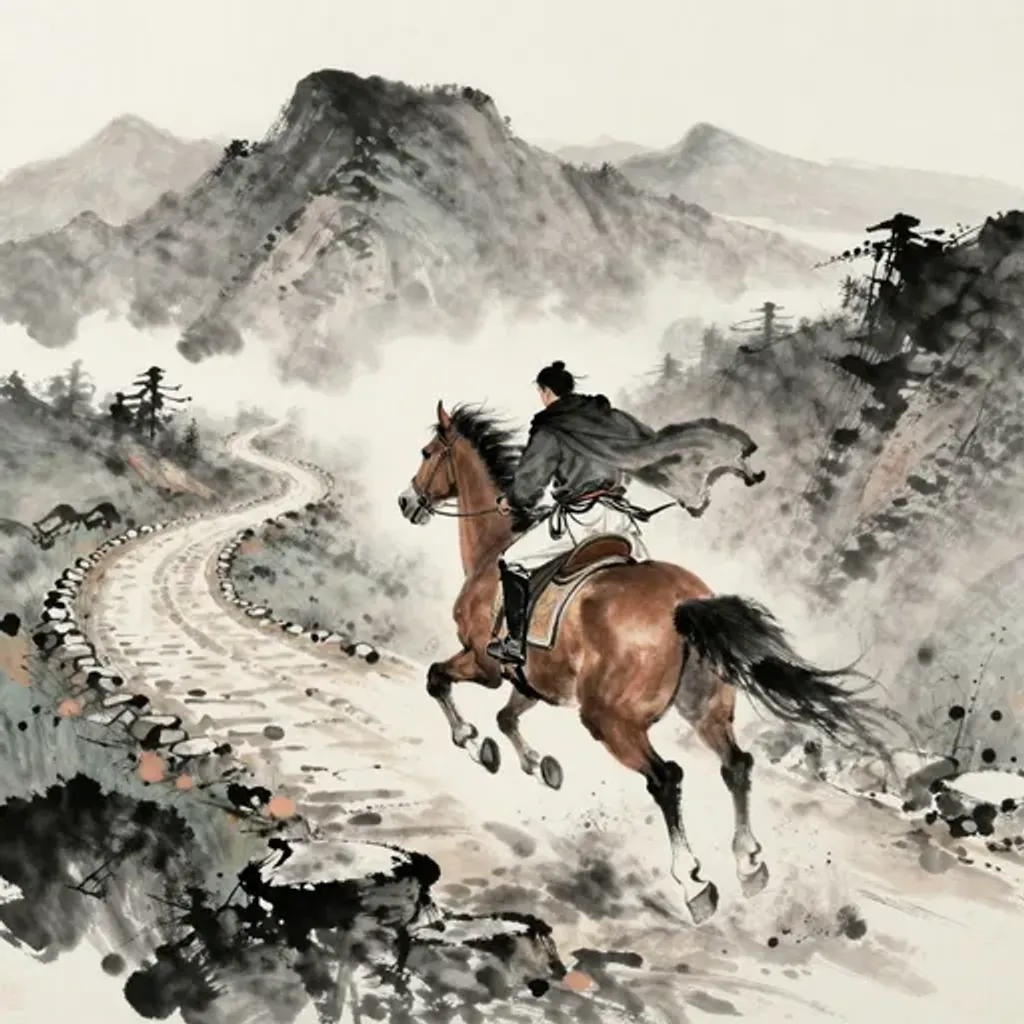
良馬疾走,千里一宿。逃難它鄉,誰能追復?
A fine horse races swift; a thousand li in a single night's rest. Fleeing disaster to foreign lands, who could ever catch or bring one back?
— Jiao Yanshou, Yilin (Forest of Changes), 1st century BC
Commentary
Water over lake marks the boundary one must respect — or flee beyond. A fine horse gallops without pause, covering a thousand li in a single night's lodging. Someone escapes disaster by fleeing to a distant land, and no pursuer can recover them. The verse reads as pure flight: speed, distance, and the irrevocability of departure. From Limitation to Youthful Folly, the transformation is striking — the mountain spring at the base of the peak suggests obscurity, the young fool who has not yet learned. The fugitive trades the known world's constraints for the darkness beyond the frontier, where ignorance may paradoxically become shelter. What cannot be found cannot be harmed. The swift horse carries its rider past every limit into a realm where no old rules apply.
節 → 需
Hexagram 60 → Hexagram 5: Waiting
Changing lines: 3
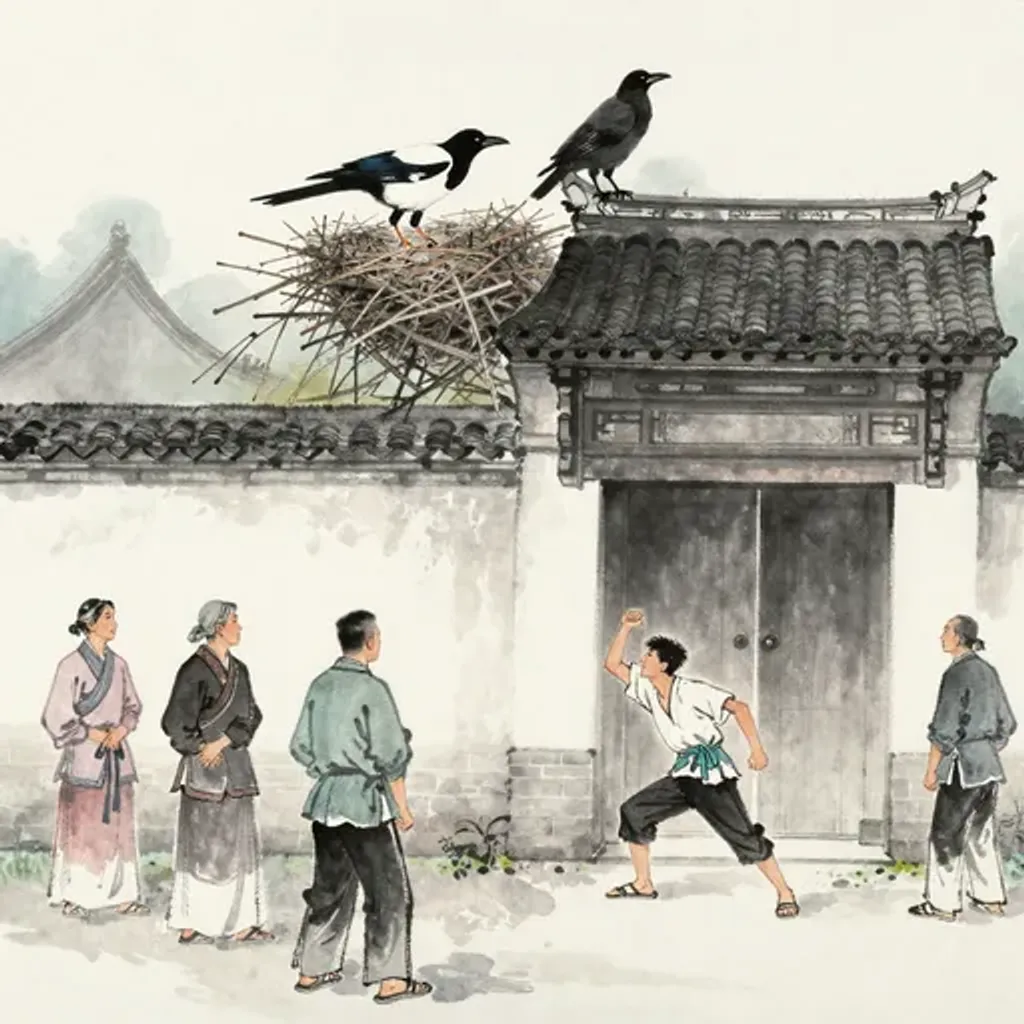
鵲巢烏城,上下不親。內外乖畔,子走矢頑。
Magpie nest and crow's perch; above and below share no affection. Inside and outside at odds; the son flees, the heir rebels.
— Jiao Yanshou, Yilin (Forest of Changes), 1st century BC
Commentary
Water over lake sets boundaries, but here the boundaries have been transgressed from within. Magpies nest in a crow's city — usurpers occupy what was built by others. Above and below no longer trust one another; inside and outside turn mutinous. Children flee and the stubborn dig in. The image is of a household or state where every relationship has curdled: the wrong creatures roost in the right places, and loyalty dissolves at every level. From Limitation to Waiting, the transformation reveals that when internal order collapses, all one can do is wait under threatening skies. Water hangs above heaven, the danger not yet fallen. The broken household must endure suspense, unable to act until the storm clarifies who remains and who has fled.
節 → 訟
Hexagram 60 → Hexagram 6: Conflict
Changing lines: 1, 4, 6
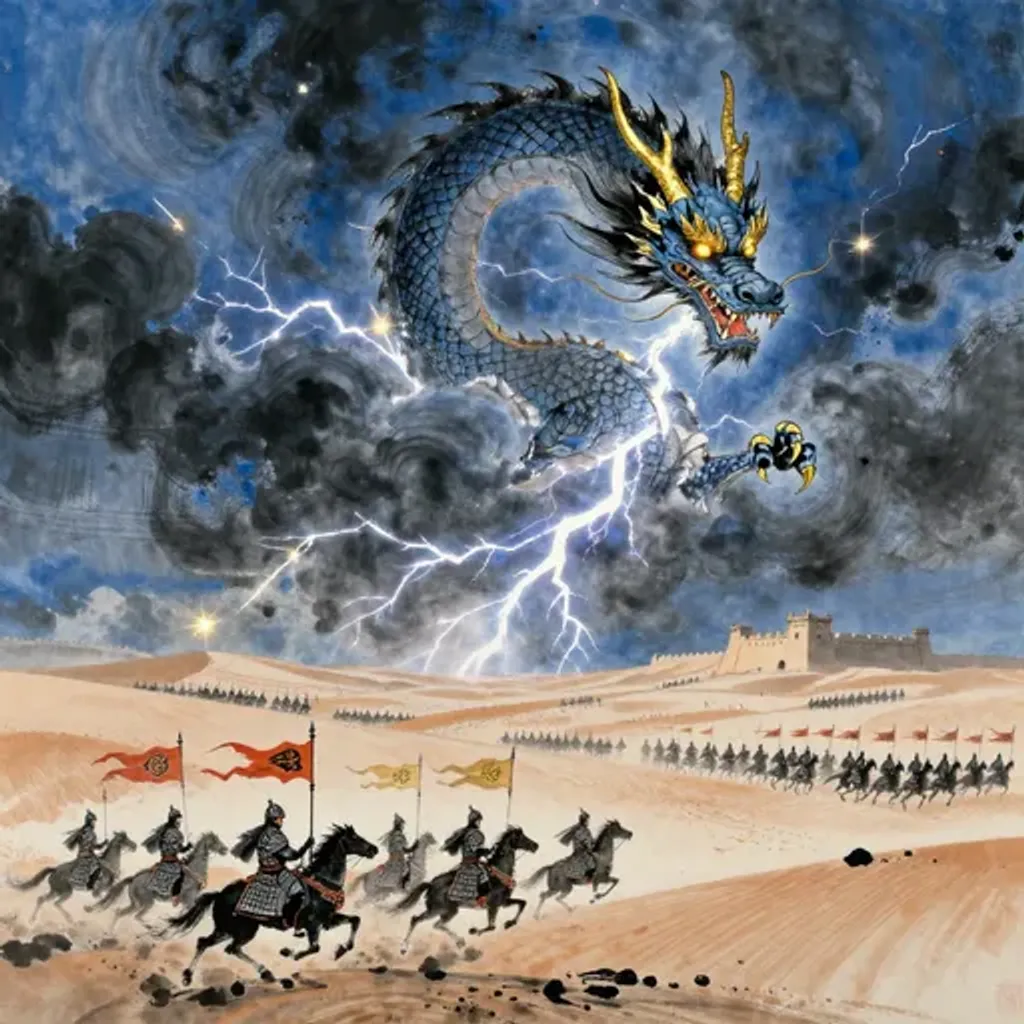
雲龍集會,征討西戎。招邊定眾,誰敢當鋒。
Cloud and dragon converge; marching west to subdue the barbarians. Summoning border forces, settling the multitudes; who dares stand against their advance?
— Jiao Yanshou, Yilin (Forest of Changes), 1st century BC
Commentary
Water over lake holds power in check, but when the time comes, that power surges forth with irresistible purpose. Cloud and dragon converge — the ancient metaphor for a sovereign meeting his destined general. The armies march west to subdue the Rong barbarians, pacifying the frontier and rallying the multitudes. Who dares face such a blade? The verse celebrates a decisive military expedition conducted with both legitimacy and overwhelming force. From Limitation to Conflict, the transformation channels stored restraint into strategic confrontation. Heaven and water move in opposing directions, yet this very tension generates the clarity needed to plan before acting. The measured discipline of Limitation becomes the calculated first move of Conflict — restraint transmuted into purposeful engagement.
節 → 師
Hexagram 60 → Hexagram 7: The Army
Changing lines: 1, 5
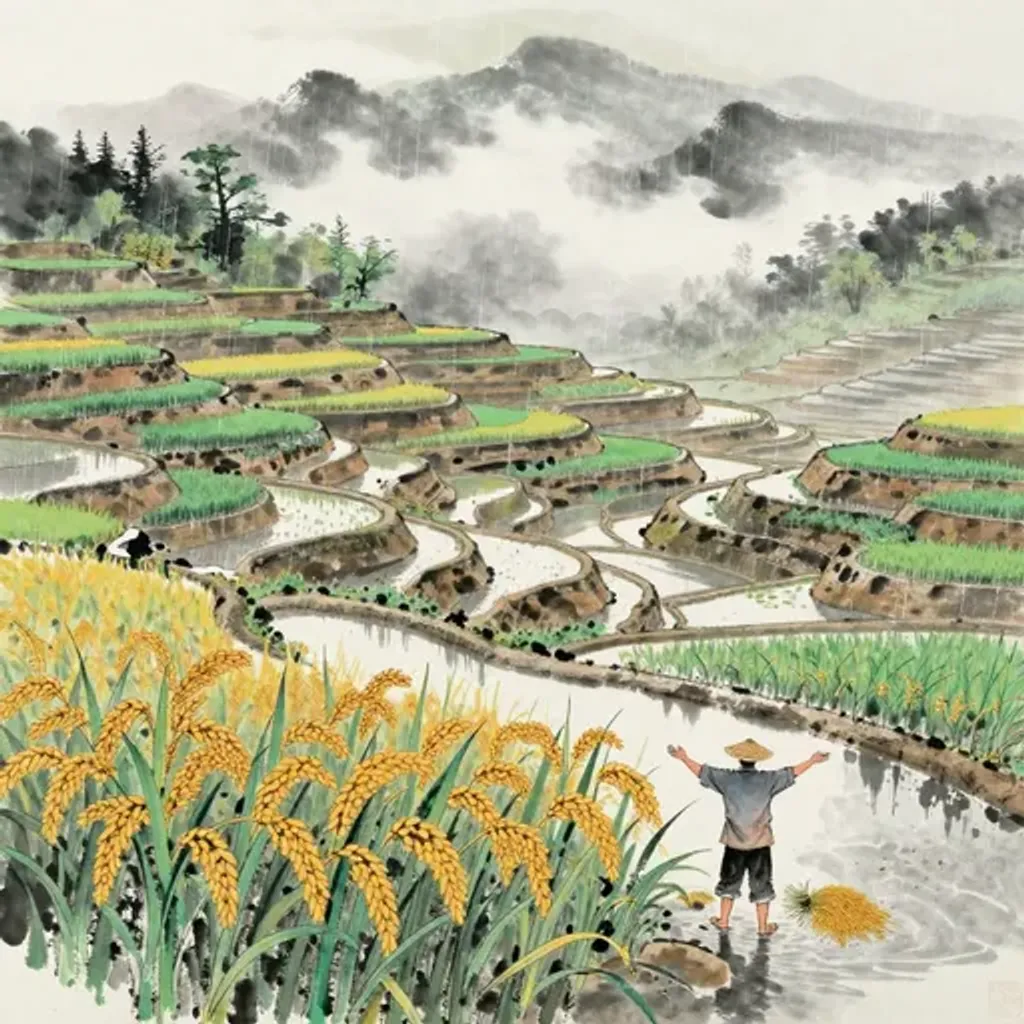
春多膏澤,夏潤優渥。稼穡成熟,畝獲百斛。
Spring brings rich moisture; summer's rains are ample and gentle. The crops ripen fully; each acre yields a hundred bushels.
— Jiao Yanshou, Yilin (Forest of Changes), 1st century BC
Commentary
Water over lake regulates flow, and here that regulation yields abundance. Spring brings rich rains and summer deepens the moisture — crops mature under ideal conditions, each mu yielding a hundred hu of grain. The verse is pure agricultural blessing: proper timing, proper measure, and the earth responds with bounty. From Limitation to the Army, the transformation reveals how measured governance feeds the state's capacity for collective action. Earth contains water within it — resources pooled underground, ready to sustain a multitude. The well-watered field is the army's granary. Limitation's discipline, applied to the calendar and the soil, becomes the logistical foundation upon which a disciplined populace can be mobilized. Abundance administered wisely is strength held in reserve.
節 → 比
Hexagram 60 → Hexagram 8: Holding Together
Changing lines: 1, 2
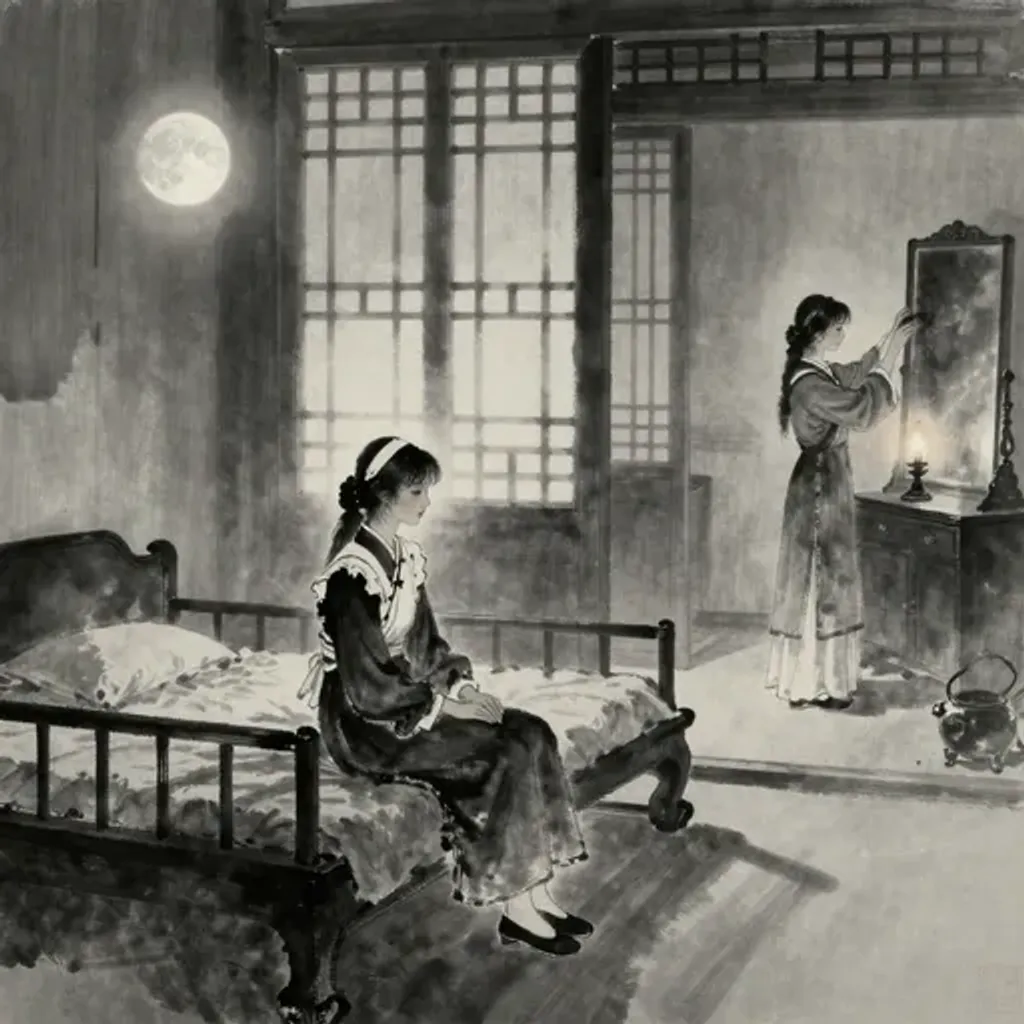
童妾獨宿,長女未室,利无所得。
The young concubine sleeps alone; the eldest daughter remains unmarried. Profit and gain are nowhere to be found.
— Jiao Yanshou, Yilin (Forest of Changes), 1st century BC
Commentary
Water over lake measures what each vessel receives, and in this verse every vessel stands empty. A young concubine sleeps alone; the eldest daughter remains unmarried; no profit materializes from any quarter. The image is of frustrated union — relationships that should form remain suspended, potential that should ripen stays barren. From Limitation to Holding Together, the transformation underscores the irony: water upon earth should unite disparate elements into community, yet the very people who need connection find themselves isolated. Limitation's austerity has become deprivation rather than discipline. The concubine's solitary bed and the unmarried daughter's waiting room are images of a system where measure has tightened into exclusion, and the bonds that would create belonging simply never form.
節 → 小畜
Hexagram 60 → Hexagram 9: Small Taming
Changing lines: 3, 6
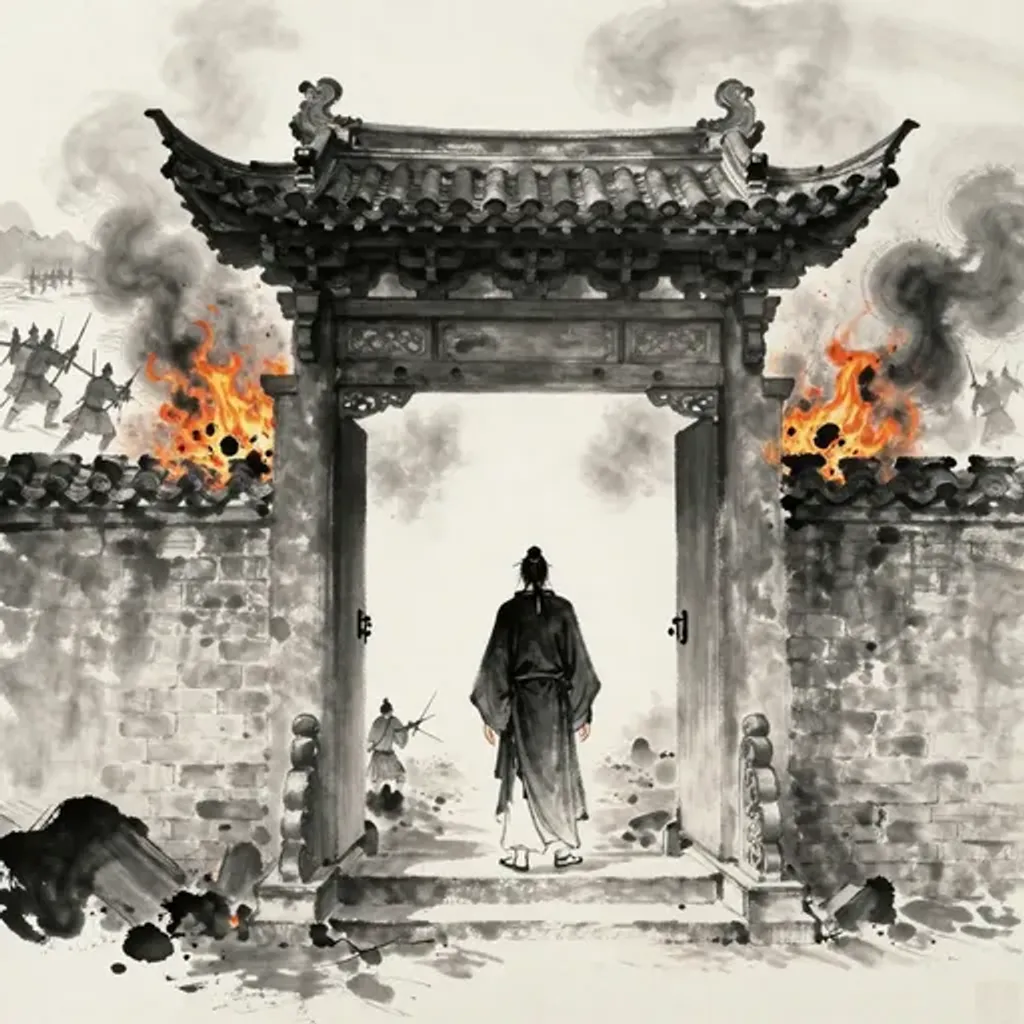
四亂不安,東西為患。退止我足,无出邦域。乃得全完,賴其生福。
Disorder on all sides, no peace; troubles from east and west. I halt my feet, staying within my domain. Thus I remain whole and intact, blessed by preservation.
— Jiao Yanshou, Yilin (Forest of Changes), 1st century BC
Commentary
Water over lake holds the line, and here holding the line saves everything. Turmoil erupts on all four sides — east and west alike breed calamity. The response is to stop one's feet, refuse to leave the domain, and thereby preserve wholeness and earn the blessing of survival. The verse is an ode to strategic restraint: when the world convulses, the wisest move is not to move at all. From Limitation to Small Taming, the transformation refines this insight. Wind over heaven gently restrains what is vast — the smallest force holding back the greatest. The one who stays within borders while chaos rages outside practices exactly this art. Not every limit is a cage; sometimes the boundary is the only structure still standing.
節 → 履
Hexagram 60 → Hexagram 10: Treading
Changing lines: 4, 6
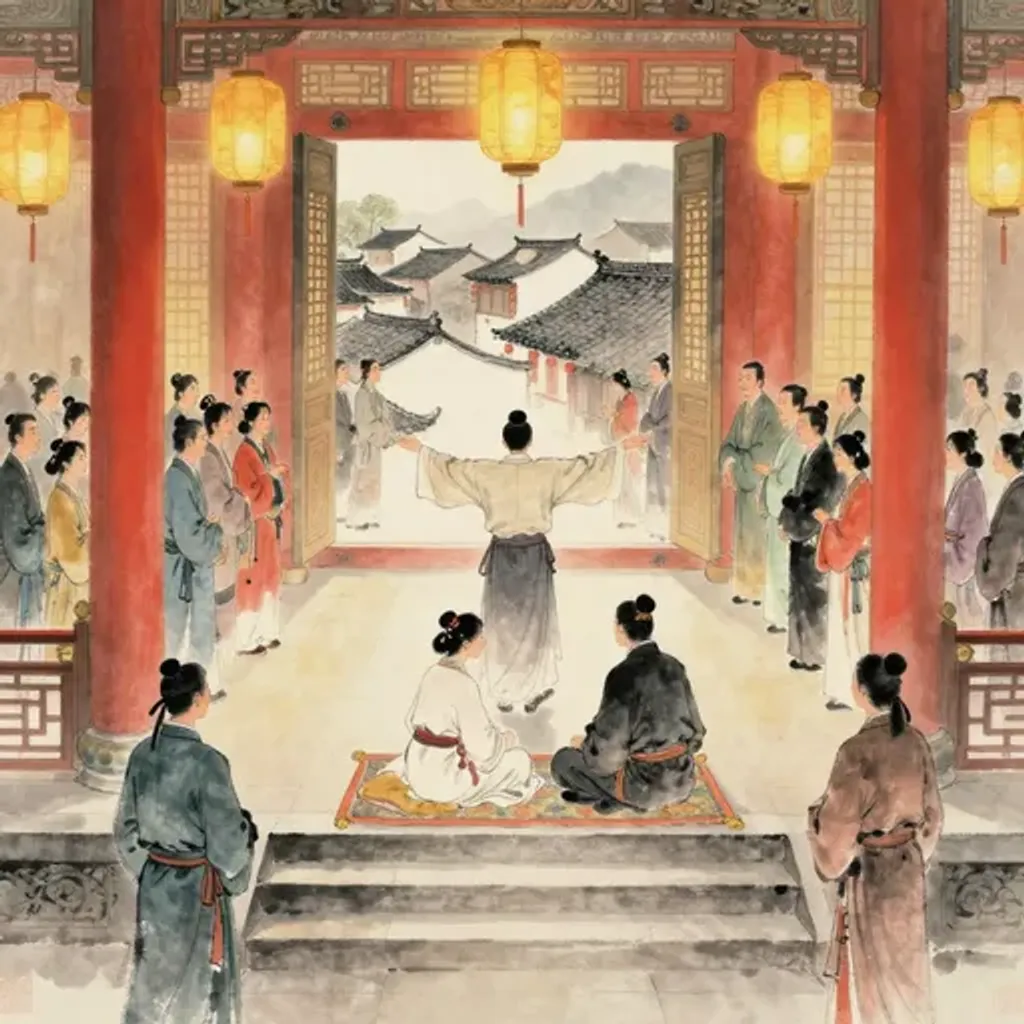
長寧履福,安我百國。嘉賓上堂,與季同床。
Long peace treads upon blessing; my hundred states are at ease. Honored guests ascend the hall; sharing a seat with my youngest kinsman.
— Jiao Yanshou, Yilin (Forest of Changes), 1st century BC
Commentary
Water over lake creates the stability from which blessing flows. Long peace treads in fortune's steps, and a hundred states rest secure. Distinguished guests ascend the hall and share the host's own couch — an image of supreme intimacy between ruler and counselor drawn from the Shijing tradition of royal feasting. The verse radiates the warmth of a well-governed realm where propriety and generosity coexist. From Limitation to Treading, the transformation reveals how measured governance produces confident conduct. Heaven above, lake below — one treads upon the tiger's tail without being bitten, because one's step is true. Limitation's discipline becomes Treading's graceful navigation of power, where the right boundaries make fearless intimacy possible.
節 → 泰
Hexagram 60 → Hexagram 11: Peace
Changing lines: 3, 5
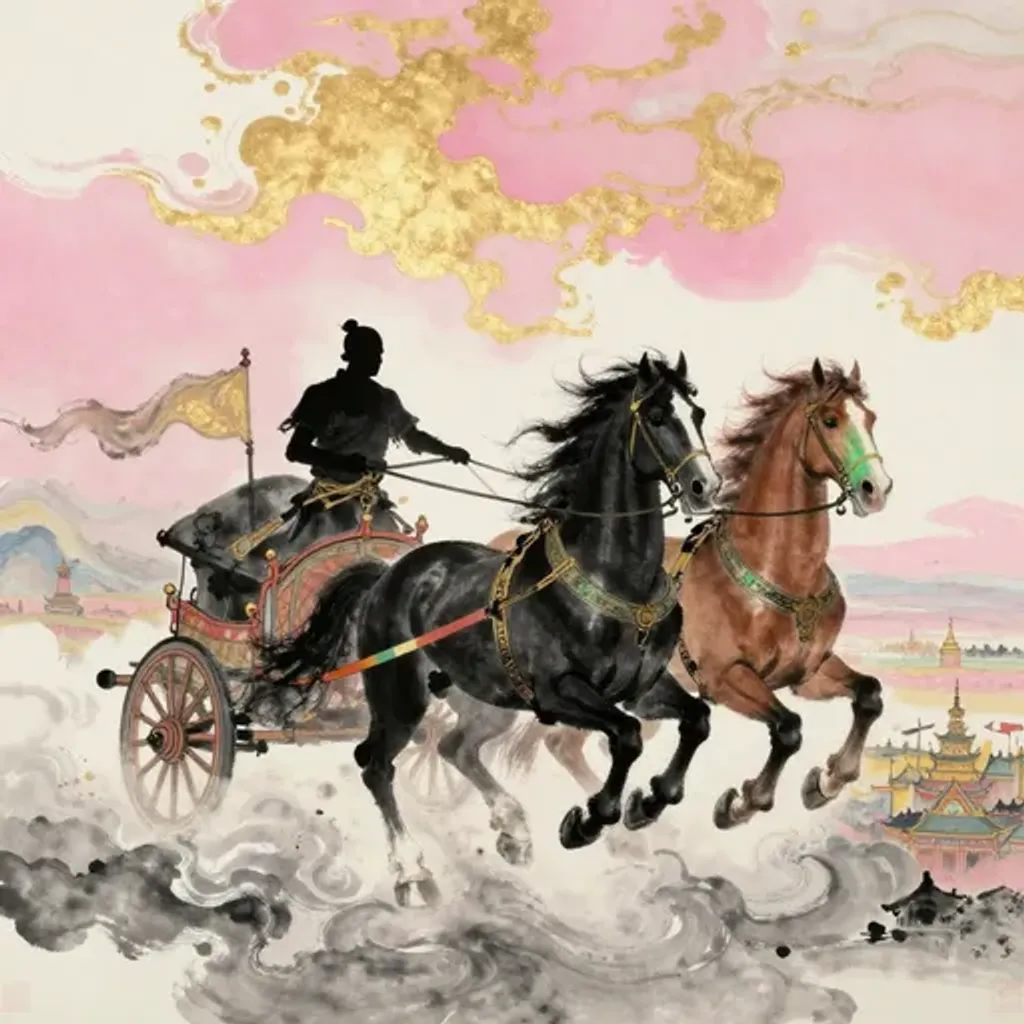
騏驎綠耳,章明造父。伯夙成季,共成霸功,為晉元輔。
Qilin and Green Ear, famed steeds illustrating Zaofu's skill. Bo and Cheng of the Ji clan together achieved hegemony, becoming Jin's founding pillars.
— Jiao Yanshou, Yilin (Forest of Changes), 1st century BC
Commentary
Water over lake disciplines potential, and this verse celebrates that discipline bearing fruit through partnership. The fabled steeds Qilin and Lu'er, the renowned charioteer Zaofu — all legendary for their discipline and speed. Then the verse pivots to the Jin state: Bo Su and Cheng Ji, two of Duke Wen of Jin's loyal companions during his nineteen years of exile, who together forged the hegemony that made Jin the greatest power of the Spring and Autumn era. From Limitation to Peace, the transformation is illuminating: heaven and earth exchange freely, above descending and below rising. The measured restraint of exile — those years of wandering under strict self-discipline — culminated in the harmonious statecraft of a hegemon. Limitation refined into Peace.
節 → 否
Hexagram 60 → Hexagram 12: Standstill
Changing lines: 1, 2, 4, 6
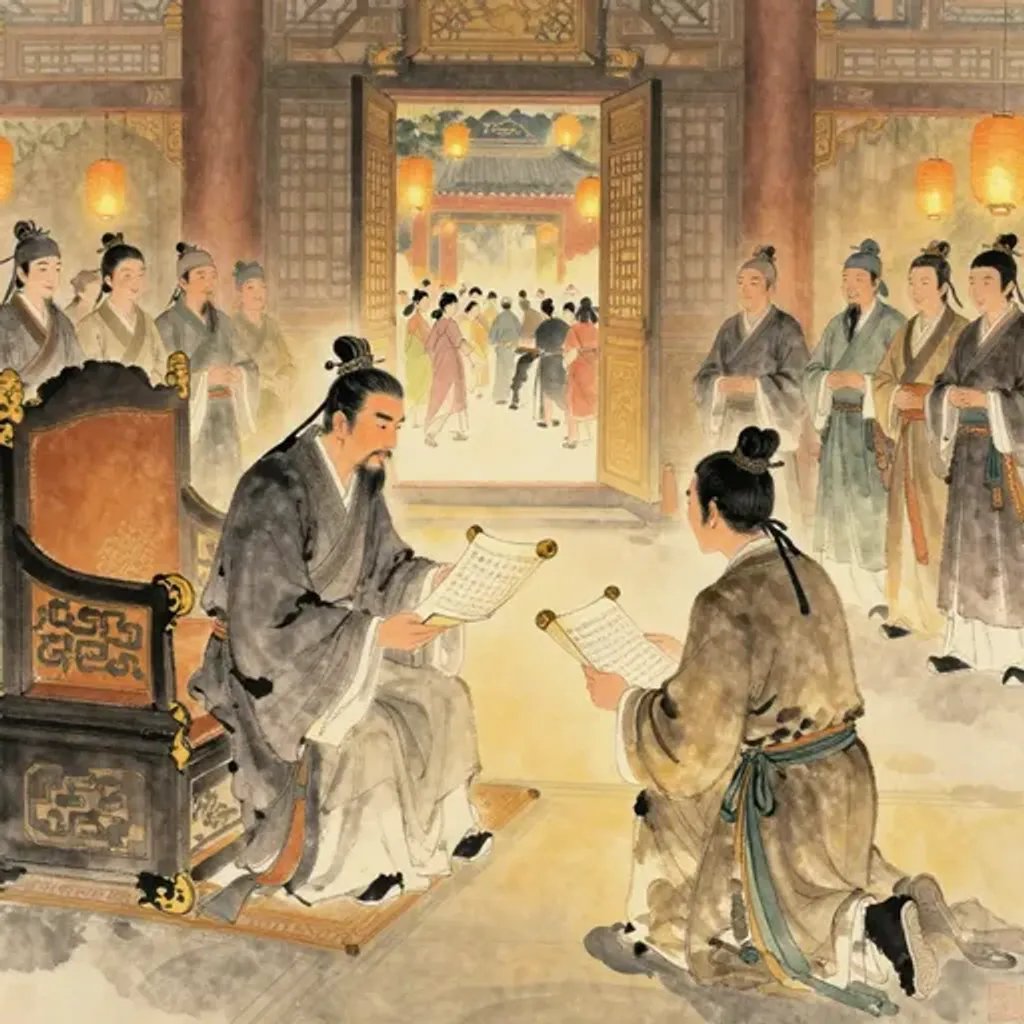
張陳嘉謀,贊成漢都。主歡民喜,其樂休休。
Zhang Liang and Chen Ping offered wise counsel, helping establish the Han capital. The lord rejoices, the people celebrate; their happiness is boundless.
— Jiao Yanshou, Yilin (Forest of Changes), 1st century BC
Commentary
Water over lake sets the frame, and this verse celebrates the counselors who designed a dynasty within that frame. Zhang and Chen devise brilliant strategy, establishing the capital of the Han. The ruler rejoices; the people celebrate; delight pervades the land. The pairing almost certainly refers to Zhang Liang and Chen Ping, the two supreme strategists of Liu Bang's founding of the Han dynasty. Zhang Liang provided grand strategy; Chen Ping supplied cunning tactical maneuvers. Together they guided a peasant rebel to the imperial throne. From Limitation to Standstill, the transformation is paradoxical: heaven and earth cease to communicate, yet the verse is jubilant. The resolution lies in reading Standstill as the necessary withdrawal after creation — the architects step back once the structure stands.
節 → 同人
Hexagram 60 → Hexagram 13: Fellowship
Changing lines: 2, 3, 4, 6
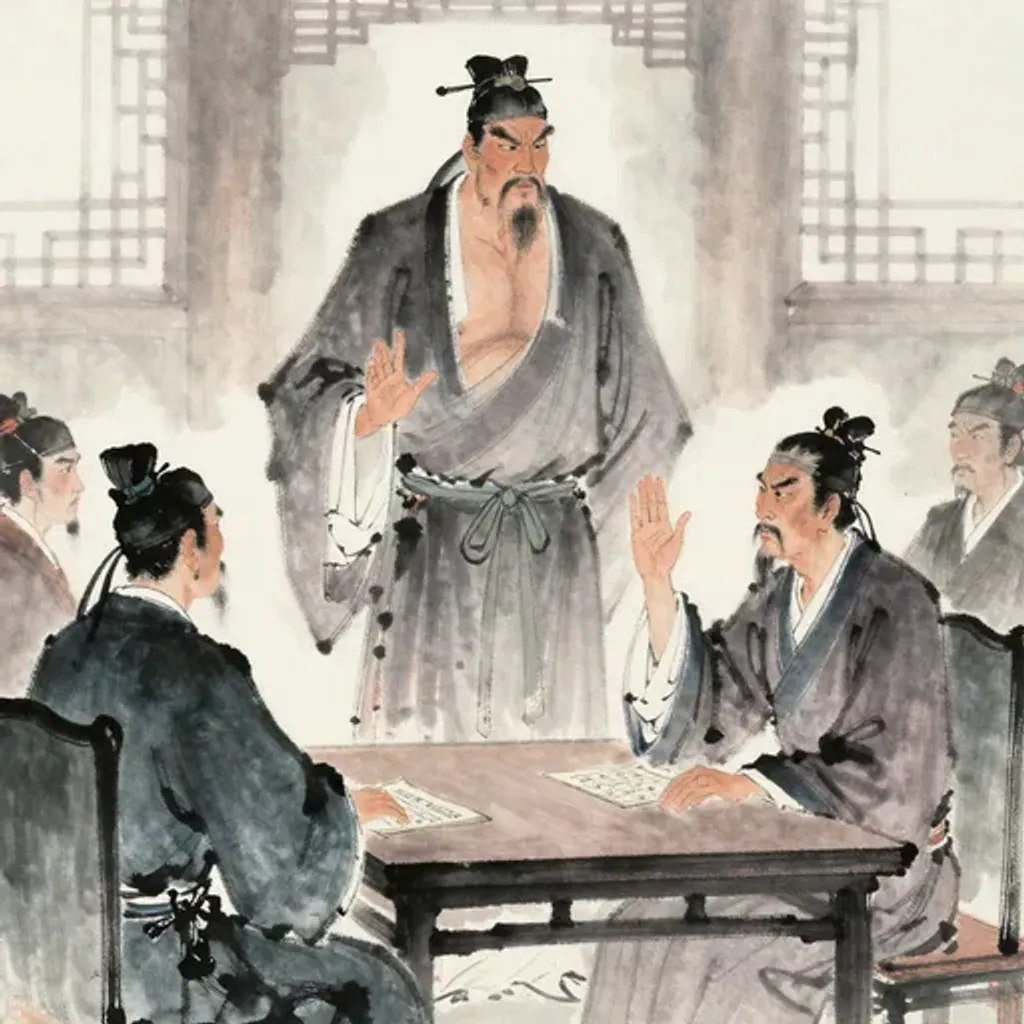
大面長頸,未解君憂。
Broad of face and long of neck, yet unable to resolve the lord's concerns.
— Jiao Yanshou, Yilin (Forest of Changes), 1st century BC
Commentary
Water over lake measures and deliberates, yet here the measure falls short. Someone with a large face and long neck — imposing in appearance — cannot resolve the ruler's anxieties. The verse is terse, almost dismissive: stature without substance, presence without insight. From Limitation to Fellowship, the transformation highlights the gap between surface compatibility and genuine communion. Heaven and fire share their light, calling for those who truly belong together to recognize each other across the crowd. But the large-faced figure fails this test — he looks the part but cannot deliver. Fellowship demands inner resonance, not merely an impressive silhouette. Limitation's careful scrutiny exposes the impostor whom a less discerning eye might welcome.
節 → 大有
Hexagram 60 → Hexagram 14: Great Possession
Changing lines: 3, 4, 5, 6
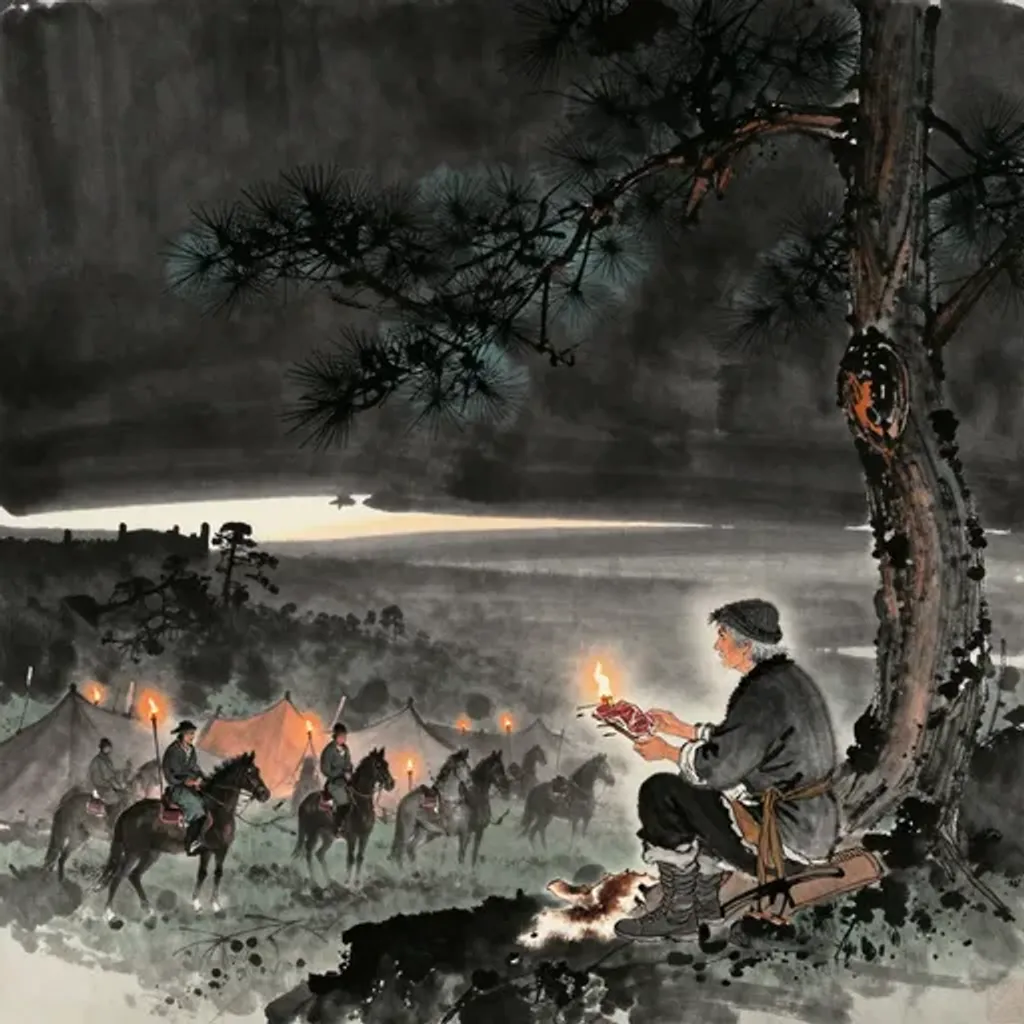
畏昏不行,待旦昭明。燎獵受福,老賴其慶。
Fearing the darkness, one does not travel; waiting for dawn's bright clarity. Through the torchlit hunt, blessings are received; in old age, one enjoys this fortune.
— Jiao Yanshou, Yilin (Forest of Changes), 1st century BC
Commentary
Water over lake counsels patience, and this verse heeds that counsel. Fearing the darkness, one does not travel at night but waits for the brightness of dawn. Then comes a grand hunt with torchlight — the liao hunt, an ancient royal rite — and blessings are received. Even the aged share in the celebration. The sequence is deliberate: restraint in darkness, action in light, reward in season. From Limitation to Great Possession, the transformation traces how disciplined waiting yields magnificent abundance. Fire blazes in heaven, illuminating all below. The one who refused to stumble through darkness now stands in full daylight, possessing everything the premature traveler would have lost. Limitation's patience becomes Great Possession's radiant harvest.
節 → 謙
Hexagram 60 → Hexagram 15: Modesty
Changing lines: 1, 2, 3, 5
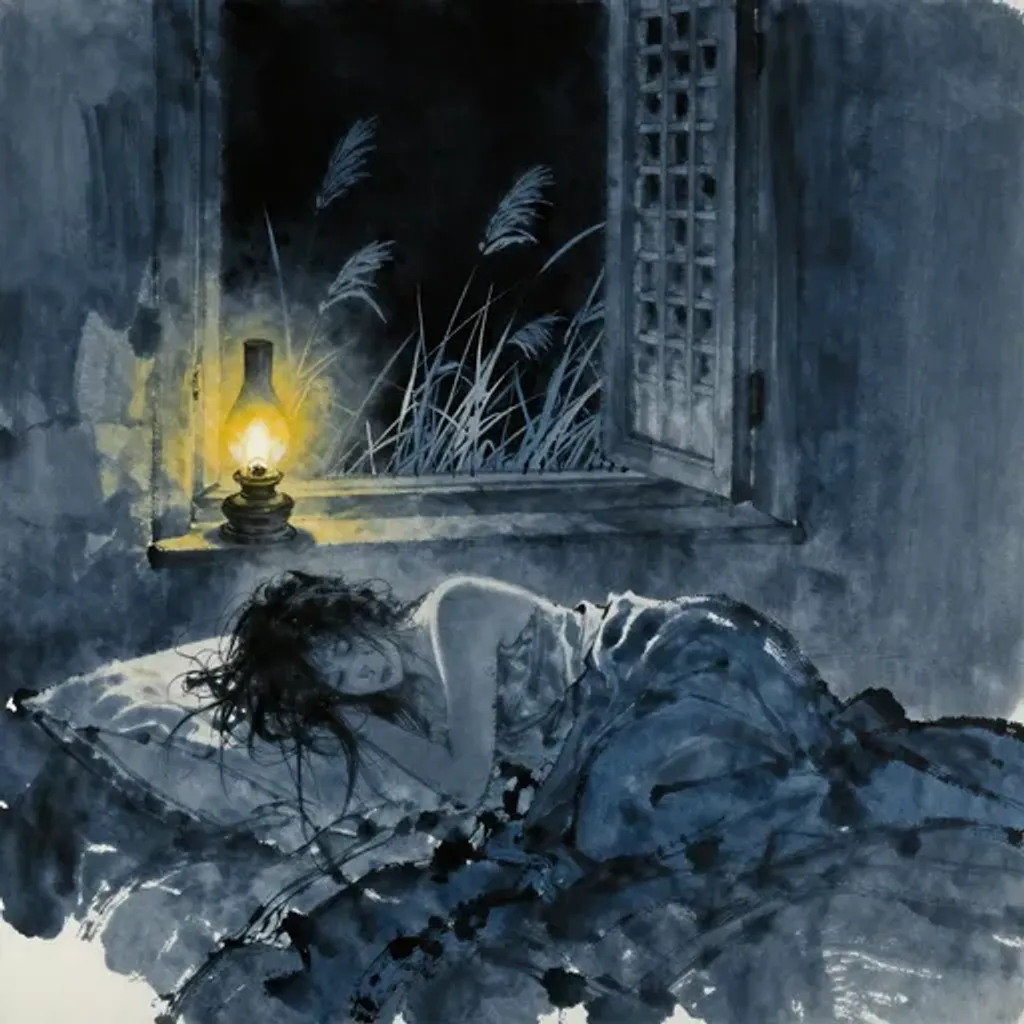
伯去我東,首髮如蓬。長夜不寐,憂繫心胸。
My lord has gone east; my hair is disheveled like wild grass. Through the long night I cannot sleep; sorrow binds my heart.
— Jiao Yanshou, Yilin (Forest of Changes), 1st century BC
Commentary
Water over lake marks a boundary, and here that boundary is the vast distance of separation. The beloved has gone east, hair disheveled like tangled mugwort — a classical image of one in grief or exile who has abandoned all concern for appearance. Through long nights without sleep, worry binds the chest. The verse reads as a wife lamenting an absent husband, or a loyal subject mourning a departed lord. From Limitation to Modesty, the transformation deepens the anguish: the mountain hidden within the earth diminishes itself, leveling what was once prominent. The separated one does not merely wait but is actively reduced by waiting — ground down, humbled, worn to a whisper. Yet Modesty also implies that this diminishment holds its own quiet dignity.
節 → 豫
Hexagram 60 → Hexagram 16: Enthusiasm
Changing lines: 1, 2, 4, 5
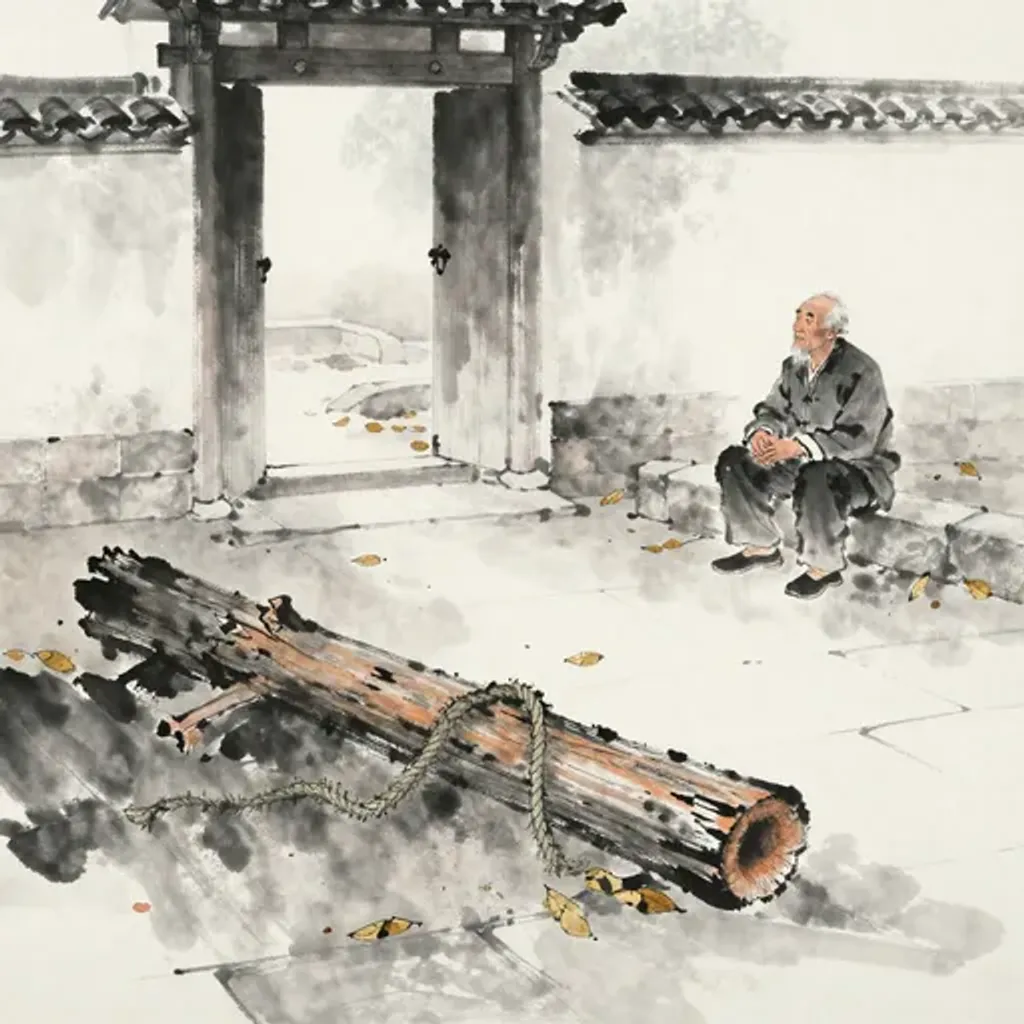
朽條腐索,不堪施用。安靜候時,以待親知。
Rotten branches and decayed rope, unfit for any use. Rest quietly and wait for the proper time, until friends and kin arrive.
— Jiao Yanshou, Yilin (Forest of Changes), 1st century BC
Commentary
Water over lake imposes structure, but here the materials themselves have rotted beyond use. Decayed branches and crumbling ropes — nothing can bear weight or serve its purpose. The only recourse is to sit quietly, await the right season, and hope for a trusted friend to arrive. The verse depicts exhaustion of means, not of will: the spirit is willing but every instrument has failed. From Limitation to Enthusiasm, the transformation carries a paradox — thunder bursts from the earth in joyous arousal, yet the current state is one of paralysis. The resolution lies in timing: what is rotten cannot be forced back into service, but thunder's stirring signals that renewal will come from below, unbidden. One waits not in despair but in anticipation of the earth's own rhythm reasserting itself.
節 → 隨
Hexagram 60 → Hexagram 17: Following
Changing lines: 2, 4
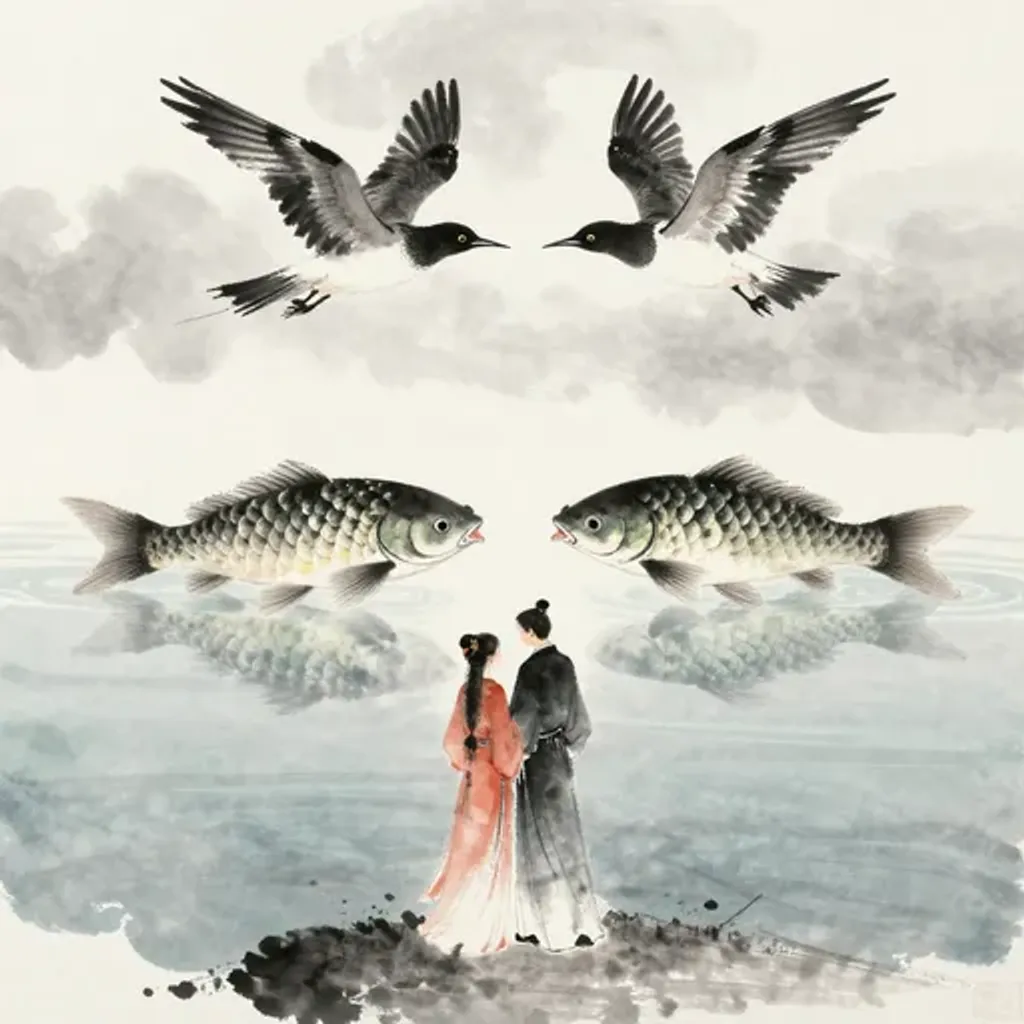
比目四翼,相倚為福。姜氏季氏,與君合德。
Paired eyes, shared wings; leaning on each other for blessing. The Jiang and Ji clans unite their virtue with the lord.
— Jiao Yanshou, Yilin (Forest of Changes), 1st century BC
Commentary
Water over lake pairs what belongs together, and this verse celebrates such pairing in its most intimate form. Paired-eye fish and shared-wing birds — mythological creatures that can only survive as couples — become the image of perfect interdependence. The Jiang and Ji clans unite with the ruler in shared virtue, an allusion to noble houses whose marriages cemented political alliances in the Zhou feudal order. From Limitation to Following, the transformation reveals how proper boundaries enable genuine devotion. Thunder rests within the lake, yielding to the season's rhythm. Limitation's careful matching of partners becomes Following's willing surrender to a harmonious bond. When two halves find their proper fit, constraint dissolves into natural allegiance.
節 → 蠱
Hexagram 60 → Hexagram 18: Work on the Decayed
Changing lines: 1, 3, 5, 6
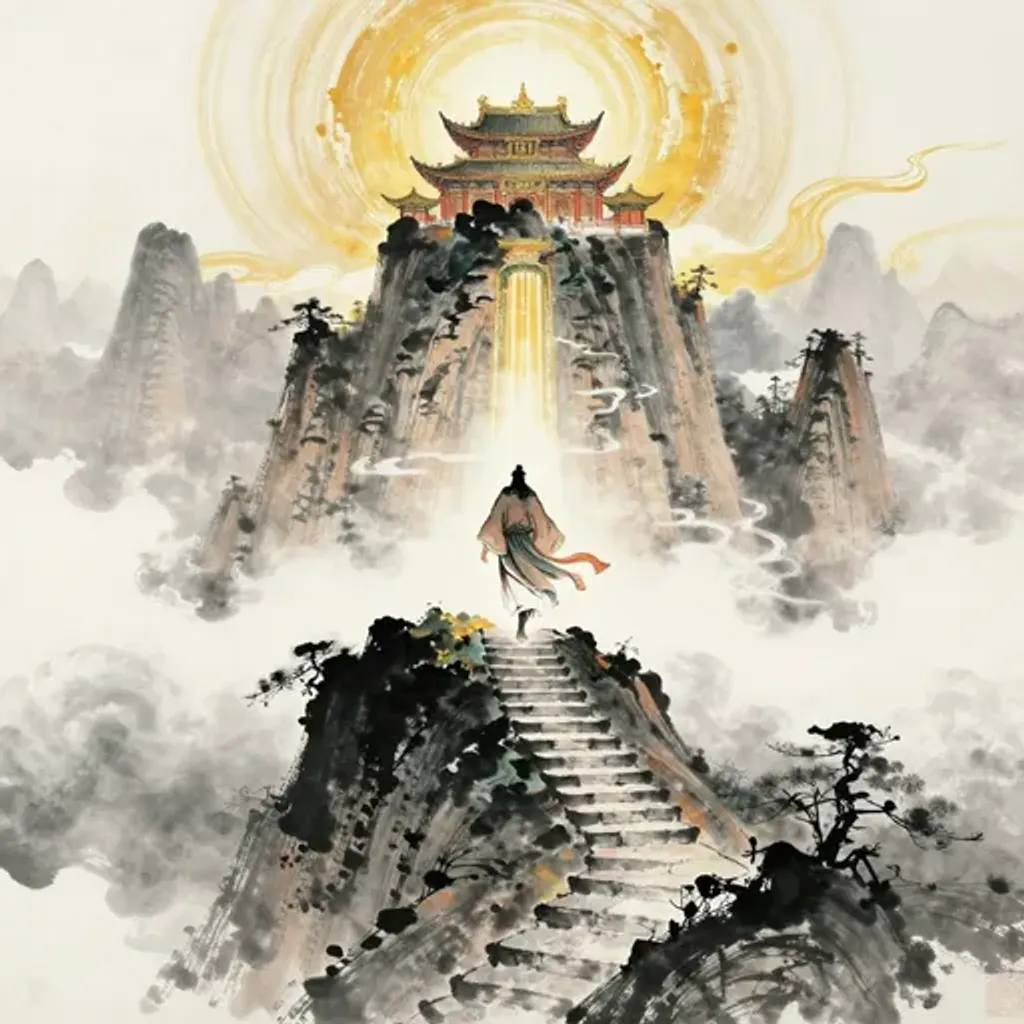
履階升墀,高登崔嵬。福祿洋溢,依天之威。
Treading stairs, ascending terraces, climbing high to lofty peaks. Blessings and prosperity overflow, resting upon heaven's might.
— Jiao Yanshou, Yilin (Forest of Changes), 1st century BC
Commentary
Water over lake builds one step at a time, and this verse traces an ascent from threshold to summit. Climbing stairs, crossing the terrace, mounting the lofty peak — blessings and emoluments overflow, all sustained by heaven's authority. The imagery is of gradual, legitimate advancement through a court hierarchy: each step earned, each level sanctioned from above. From Limitation to Work on the Decayed, the transformation adds a corrective dimension. Wind stirs beneath the mountain, rousing what has grown stagnant. The one who climbs so high does so not merely to enjoy elevation but to repair what has deteriorated — to shake the dust from inherited institutions. Limitation's orderly ascent becomes the renovation that only someone who has earned their position can undertake.
節 → 臨
Hexagram 60 → Hexagram 19: Approach
Changing lines: 5
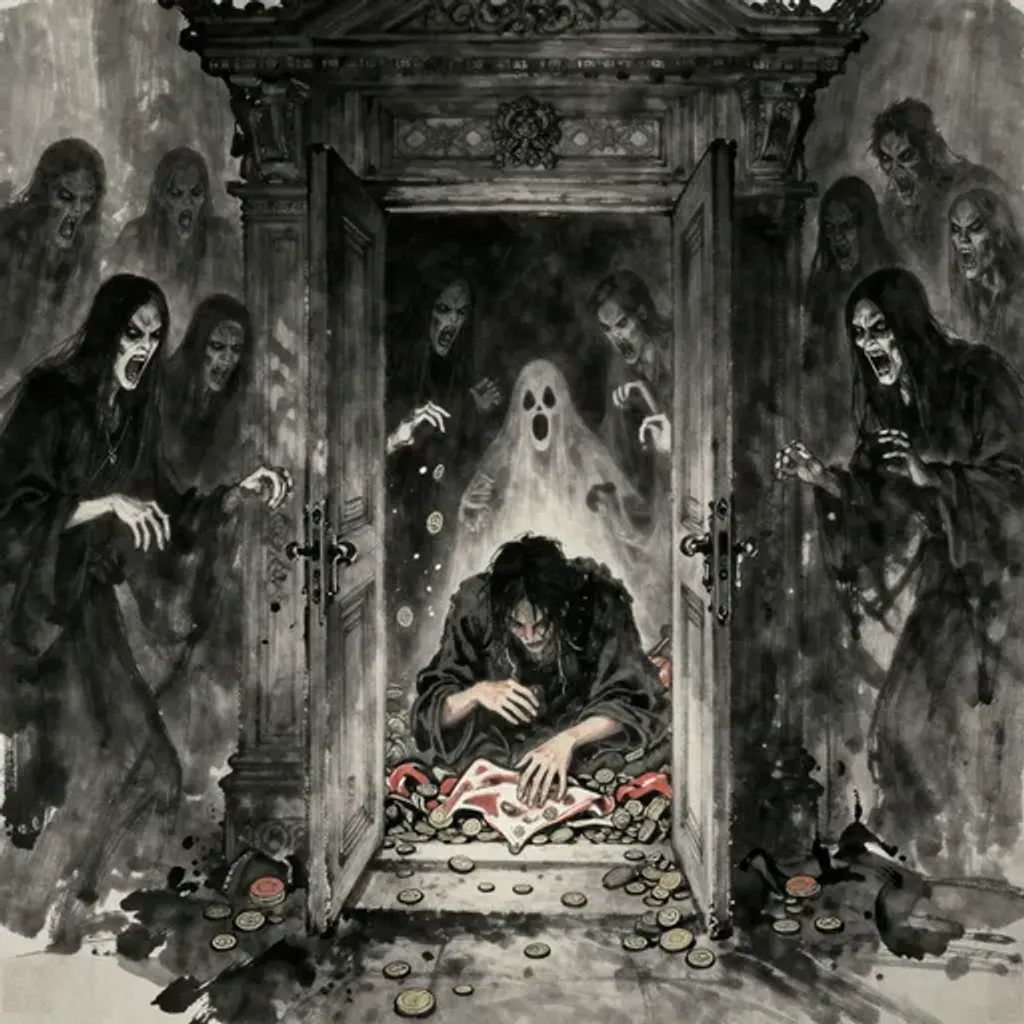
奢淫愛嗇,神所不福。靈祗憑怒,鬼障其室。
Extravagance, excess, and miserly greed; the spirits grant no blessing. The gods rage in fury; ghosts haunt and obstruct the house.
— Jiao Yanshou, Yilin (Forest of Changes), 1st century BC
Commentary
Water over lake insists on proper measure, and this verse shows what happens when measure is perverted. Extravagance and miserliness coexist — the worst of both vices — and the spirits refuse their blessing. Angered deities lean in with menace, and ghosts barricade the household. The verse depicts a spiritual economy in disorder: resources squandered on indulgence while obligations to the divine go unmet. From Limitation to Approach, the transformation intensifies the confrontation. Earth over lake — the great power looming above — draws near to inspect and judge. Where Limitation merely sets standards, Approach actively enforces them. The spirits' fury is the cosmos approaching to correct what has gone wrong. Misapplied resources invite not distant disapproval but intimate, pressing divine wrath.
節 → 觀
Hexagram 60 → Hexagram 20: Contemplation
Changing lines: 1, 2, 6
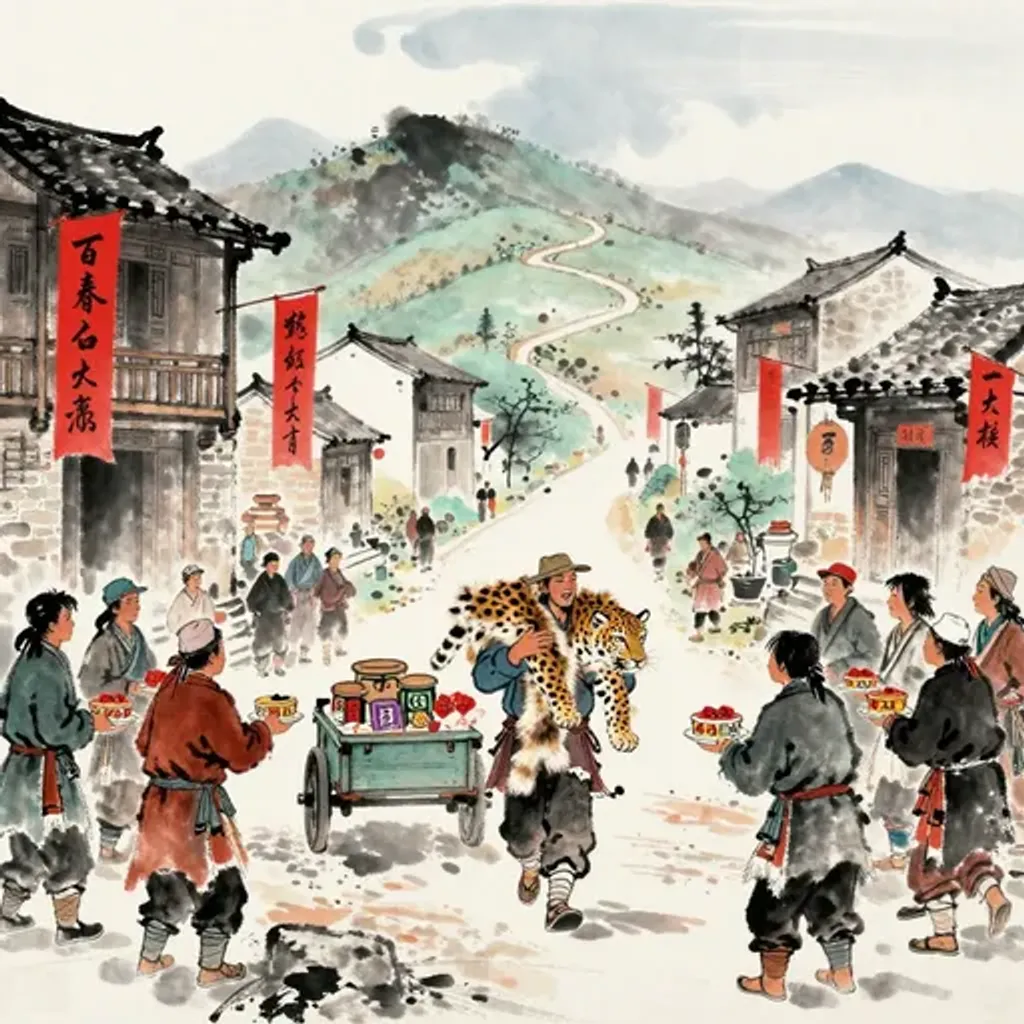
大步小車,南到喜家。送我豹裘,與福載來。
With great strides and small cart, I arrive south at a joyful home. They present me a leopard-fur robe; blessings accompany my return.
— Jiao Yanshou, Yilin (Forest of Changes), 1st century BC
Commentary
Water over lake measures and distributes, and here the distribution is generous. Striding boldly with a small cart, one travels south to a house of joy. Gifts arrive — a fine leopard-skin robe — and blessings come along with them. The verse is a tableau of auspicious visitation: movement toward warmth, reception of valuable gifts, the convergence of good fortune and good company. From Limitation to Contemplation, the transformation elevates the scene. Wind moves over the earth as the sage-king surveys his realm, observing customs and setting teachings. The visitor arriving with leopard fur is not merely a guest but a figure whose journey broadens perspective. Limitation's careful allotment becomes Contemplation's wide view — what was measured in the source now opens into panoramic understanding in the target.
節 → 噬嗑
Hexagram 60 → Hexagram 21: Biting Through
Changing lines: 2, 4, 5, 6
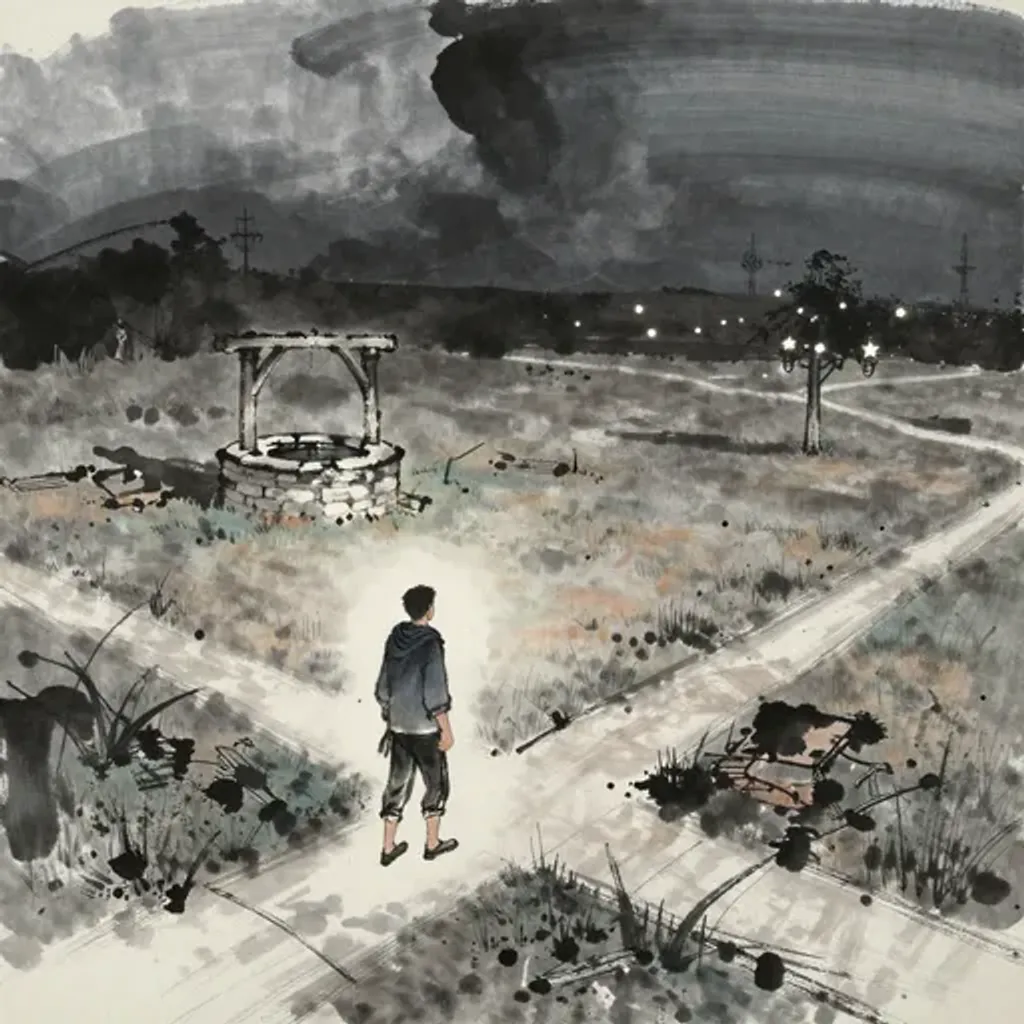
東行西步,失次後舍。與彼作期,不覺至夜。乾侯野井,昭君失居。
Walking east then west, losing sequence and lodging. Making an appointment with another, not realizing night has fallen. The lord at Qianhou's wild well; Zhao's ruler has lost his home.
— Jiao Yanshou, Yilin (Forest of Changes), 1st century BC
Commentary
Water over lake should impose order, but here everything has lost its sequence. Walking east then stepping west, missing lodgings, breaking appointments — time slips away unnoticed into nightfall. The verse then invokes a specific historical resonance: Duke Zhao of Lu, exiled at Qianhou, drinking from wild wells, a legitimate ruler who lost his seat. In 517 BC, Duke Zhao fled Lu after a failed attempt to curb the Three Huan families, and spent his remaining years wandering between Jin and the small town of Qianhou, where he died in exile. From Limitation to Biting Through, the transformation suggests that only decisive justice — lightning and thunder clamping down — can restore what aimless wandering cannot. The displaced ruler needed not more wandering but a sharp, corrective bite through the obstruction.
節 → 賁
Hexagram 60 → Hexagram 22: Grace
Changing lines: 2, 3, 5, 6
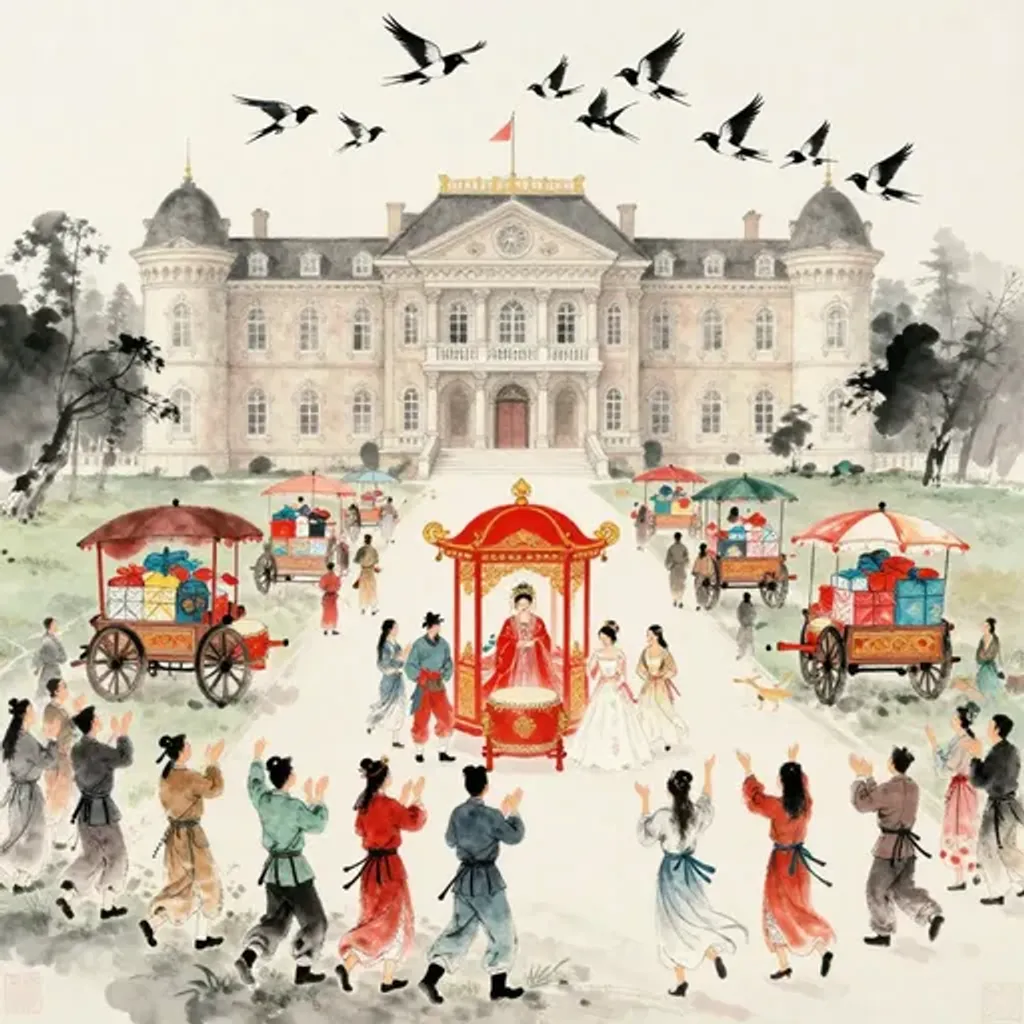
喜樂抃躍,來迎名家。鵲巢百兩,獲利養福。
Joyful, exuberant, clapping and leaping; coming to welcome the renowned family. Magpies nest as a hundred carts arrive; gaining profit, nurturing blessings.
— Jiao Yanshou, Yilin (Forest of Changes), 1st century BC
Commentary
Water over lake sets decorum, and here decorum blossoms into celebration. Clapping and leaping for joy, guests arrive to welcome a distinguished family. Magpies nest and a hundred wedding carriages roll — the double image of domestic happiness and prosperous alliance. The 'hundred liang' echoes the Shijing wedding ode where a bride departs with a grand retinue of carriages. Profit is gained and blessings nourished. From Limitation to Grace, the transformation adorns the structure with beauty. Fire glows beneath the mountain, illuminating without consuming — elegance that enhances rather than overwhelms. Limitation's measured framework becomes Grace's ornamental refinement, proving that true beauty emerges not from excess but from form perfectly observed.
節 → 剝
Hexagram 60 → Hexagram 23: Splitting Apart
Changing lines: 1, 2, 5, 6
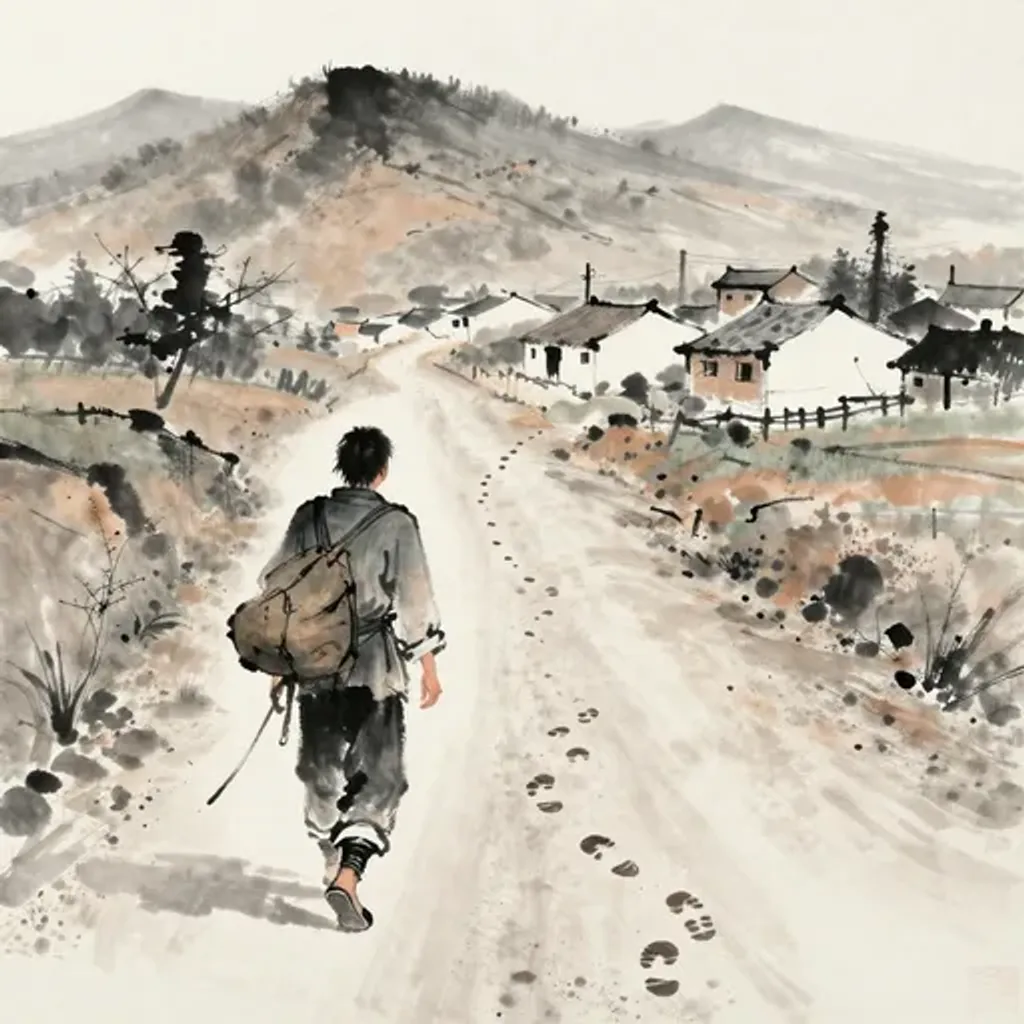
非理後來,誰肯相與?往而不獲,徒勞道路。
Coming without reason or propriety, who would willingly associate? Going forth and gaining nothing; effort wasted on the road.
— Jiao Yanshou, Yilin (Forest of Changes), 1st century BC
Commentary
Water over lake sets reasonable terms, and this verse shows someone who violates them. Arriving without proper cause or legitimate claim, who would willingly associate with such a person? Going forth yields nothing; the road is traveled in vain. The verse is a blunt warning against unreasonable demands: when one approaches others without justification, rejection is inevitable, and effort becomes pure waste. From Limitation to Splitting Apart, the transformation strips away every pretense. The mountain crumbles upon the earth, layer by layer, until only the bare foundation remains. The unjustified visitor is progressively exposed — each step forward peels away another layer of credibility until nothing is left but futility. Limitation violated leads not to punishment but to erosion: the slow, humiliating dissolution of a position that was never tenable.
節 → 復
Hexagram 60 → Hexagram 24: Return
Changing lines: 2, 5
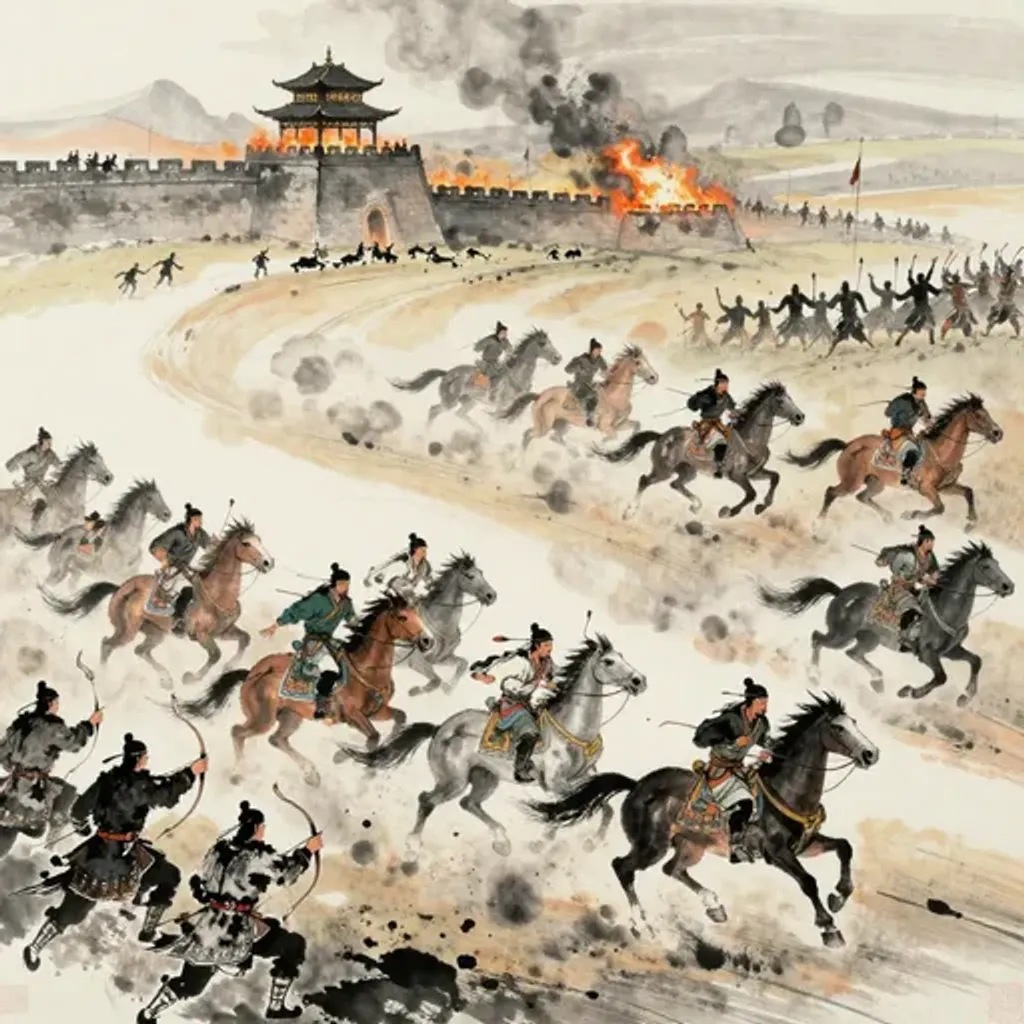
北虜匈奴,數侵邊境。
Northern captives, the Xiongnu, repeatedly invade the borderlands.
— Jiao Yanshou, Yilin (Forest of Changes), 1st century BC
Commentary
Water over lake draws a border, and this verse names the most persistent violation of the Han dynasty's northern frontier. The Xiongnu — the nomadic confederacy that plagued China's borders for centuries — raid and plunder repeatedly. The verse is terse, almost a dispatch from the frontier: the northern barbarians intrude upon the border, again and again. From Limitation to Return, the transformation reveals the cyclical nature of this threat. Thunder stirs within the earth — the first yang line returns at the winter solstice. The Xiongnu raids follow a similar rhythm: they recede and return, withdraw and reappear, driven by the seasonal logic of steppe warfare. Return's cosmic cycle mirrors the endless repetition of border incursions that no single defensive measure can permanently halt.
節 → 无妄
Hexagram 60 → Hexagram 25: Innocence
Changing lines: 2, 4, 6
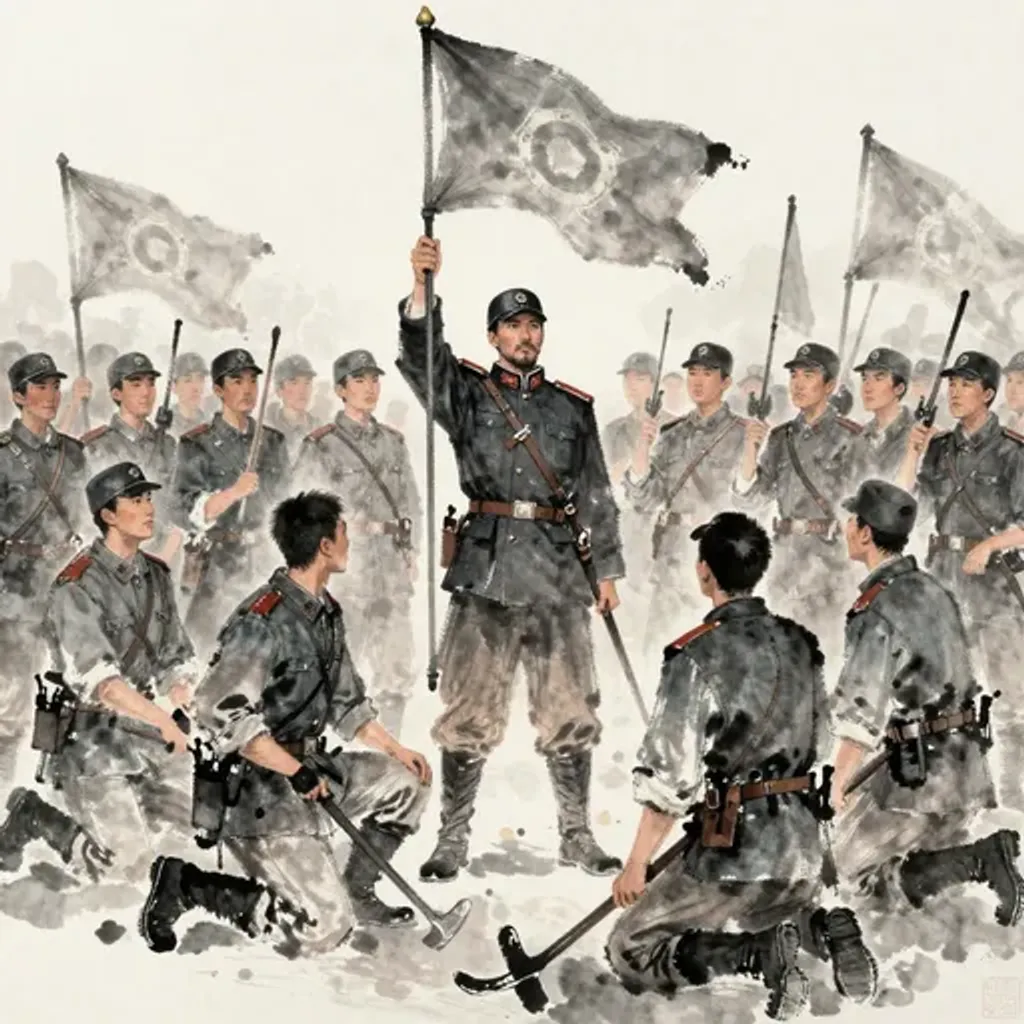
征不以禮,辭乃无名。縱獲臣子,伯功不成。
Campaigning without proper rites, the cause has no just name. Though vassals and sons are captured, the hegemon's work remains incomplete.
— Jiao Yanshou, Yilin (Forest of Changes), 1st century BC
Commentary
Water over lake demands propriety in every undertaking, and this verse warns of campaigns launched without it. To wage war without ritual legitimacy, to issue commands without a proper cause — even if one captures ministers and their retainers, the hegemon's work remains unfinished. The verse alludes to the Spring and Autumn principle that military action must be grounded in moral authority: the rites of declaration, the just cause articulated before the ancestral temple. Without these, victory is hollow and leadership incomplete. From Limitation to Innocence, the transformation sharpens the rebuke. Heaven's thunder rolls through all creation in its natural course — the unexpected truth that cannot be manufactured. Limitation's procedural rigor, when bypassed, exposes the hollowness of forced outcomes. True authority, like Innocence, must be genuine from the root.
節 → 大畜
Hexagram 60 → Hexagram 26: Great Taming
Changing lines: 3, 5, 6
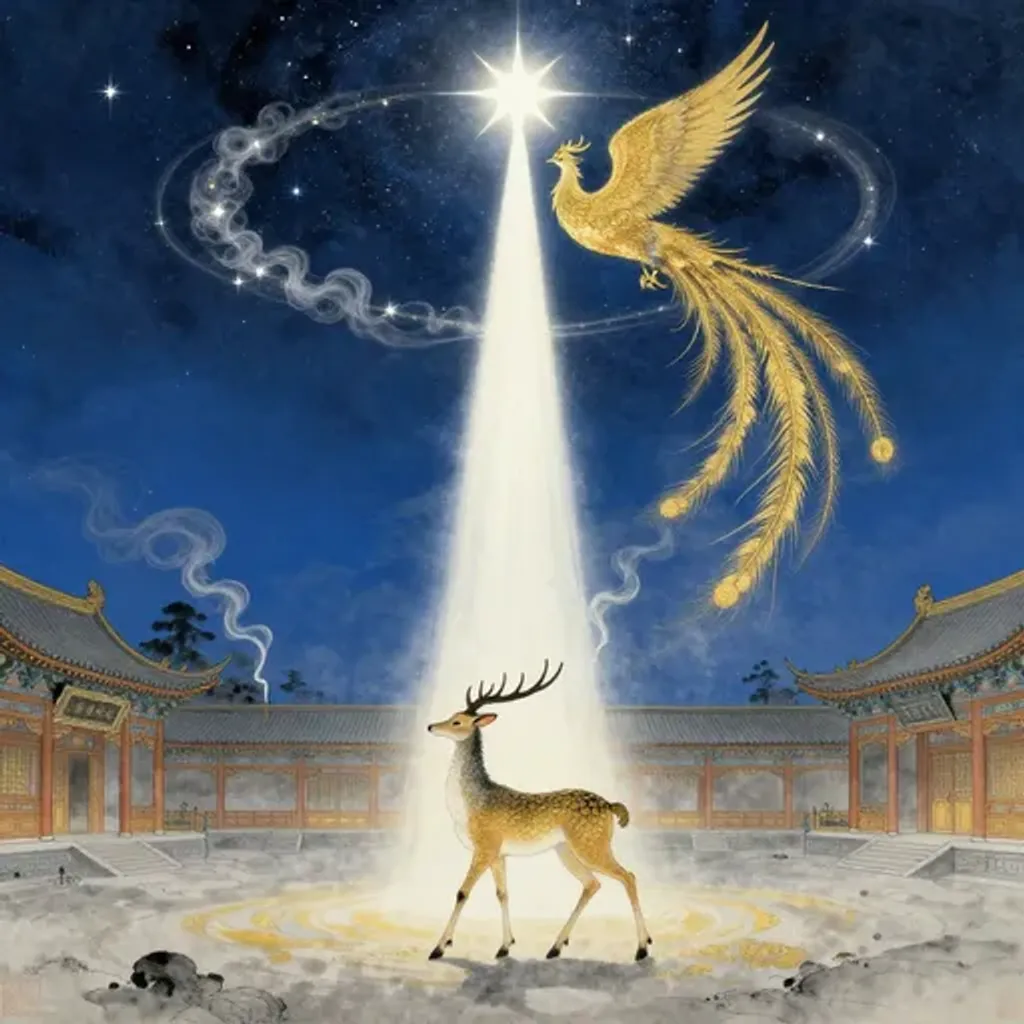
景星照堂,麟遊鳳翔。仁施大行,頌聲作興。
The auspicious star shines upon the hall; qilin roam and phoenixes soar. Benevolence spreads far and wide; hymns of praise arise and flourish.
— Jiao Yanshou, Yilin (Forest of Changes), 1st century BC
Commentary
Water over lake regulates and refines, and here that refinement produces an era of extraordinary grace. The Luminous Star shines upon the hall — an auspicious stellar omen heralding virtuous rule. The qilin roams and the phoenix soars, appearing only under a sage's governance. Benevolence spreads far and wide; hymns of praise rise on every side. The verse paints the golden-age tableau beloved of Han court poetry: cosmic harmony responding to moral excellence. From Limitation to Great Taming, the transformation stores this radiance within the mountain. Heaven held within the mountain preserves ancient wisdom. Limitation's disciplined governance generates the accumulated virtue that Great Taming hoards and transmits across generations.
節 → 頤
Hexagram 60 → Hexagram 27: Nourishment
Changing lines: 2, 5, 6
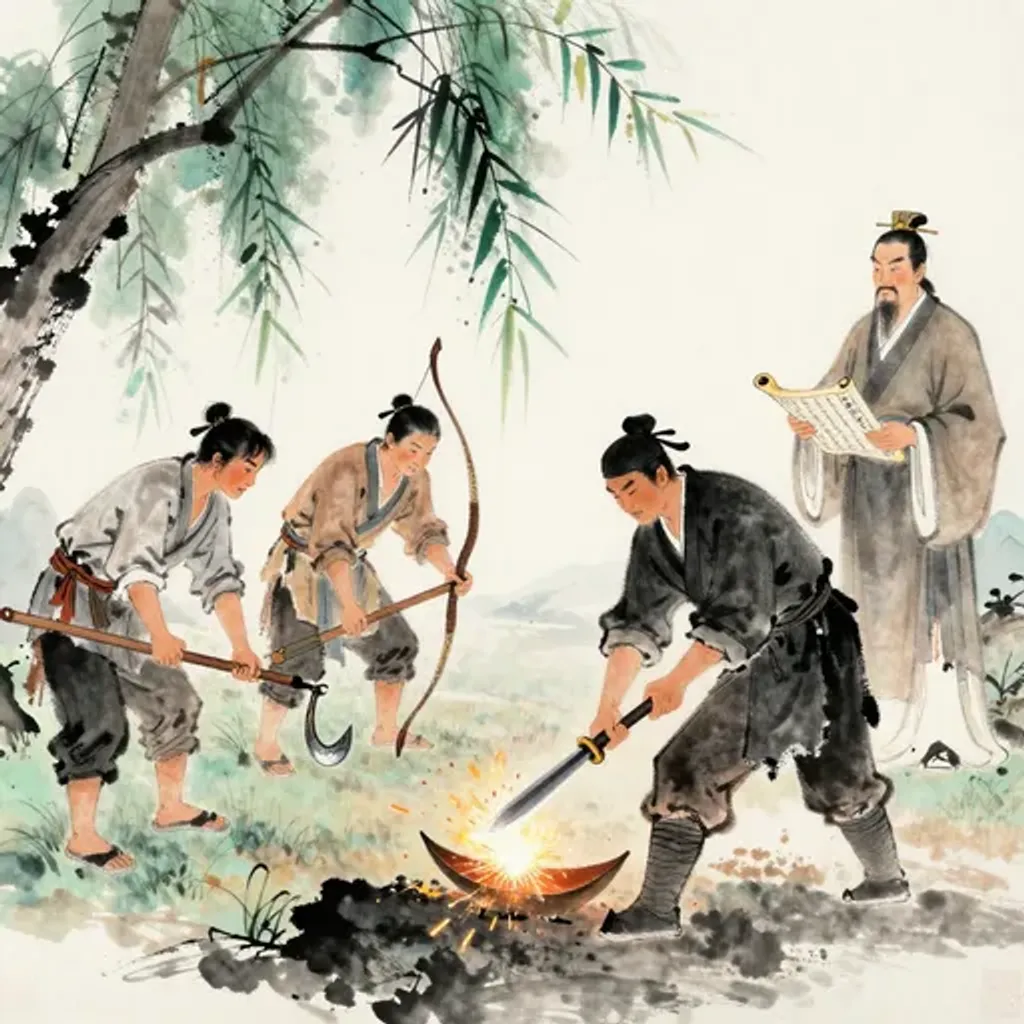
文明之世,銷鋒鑄耜。以道順民,百王不易。
In an age of culture and enlightenment, spear tips are melted into plowshares. Governing the people through the Way; a hundred kings would not alter this.
— Jiao Yanshou, Yilin (Forest of Changes), 1st century BC
Commentary
Water over lake tempers and regulates, and this verse extends that tempering into a vision of civilized peace. In an age of cultural refinement, weapons are melted down and recast as plowshares — the classical image of swords into agricultural tools. The people are guided through the Way, and this principle remains unchanged through a hundred kings. The verse invokes the Confucian ideal of governance through moral transformation rather than coercion. From Limitation to Nourishment, the transformation deepens this vision. Mountain above thunder — the jaws that take in food, the careful regulation of what nourishes. Limitation's regulation of excess becomes Nourishment's discipline of intake: cautious words, measured sustenance. The realm that melts its weapons feeds its people, converting instruments of death into instruments of life.
節 → 大過
Hexagram 60 → Hexagram 28: Great Exceeding
Changing lines: 1, 3, 4
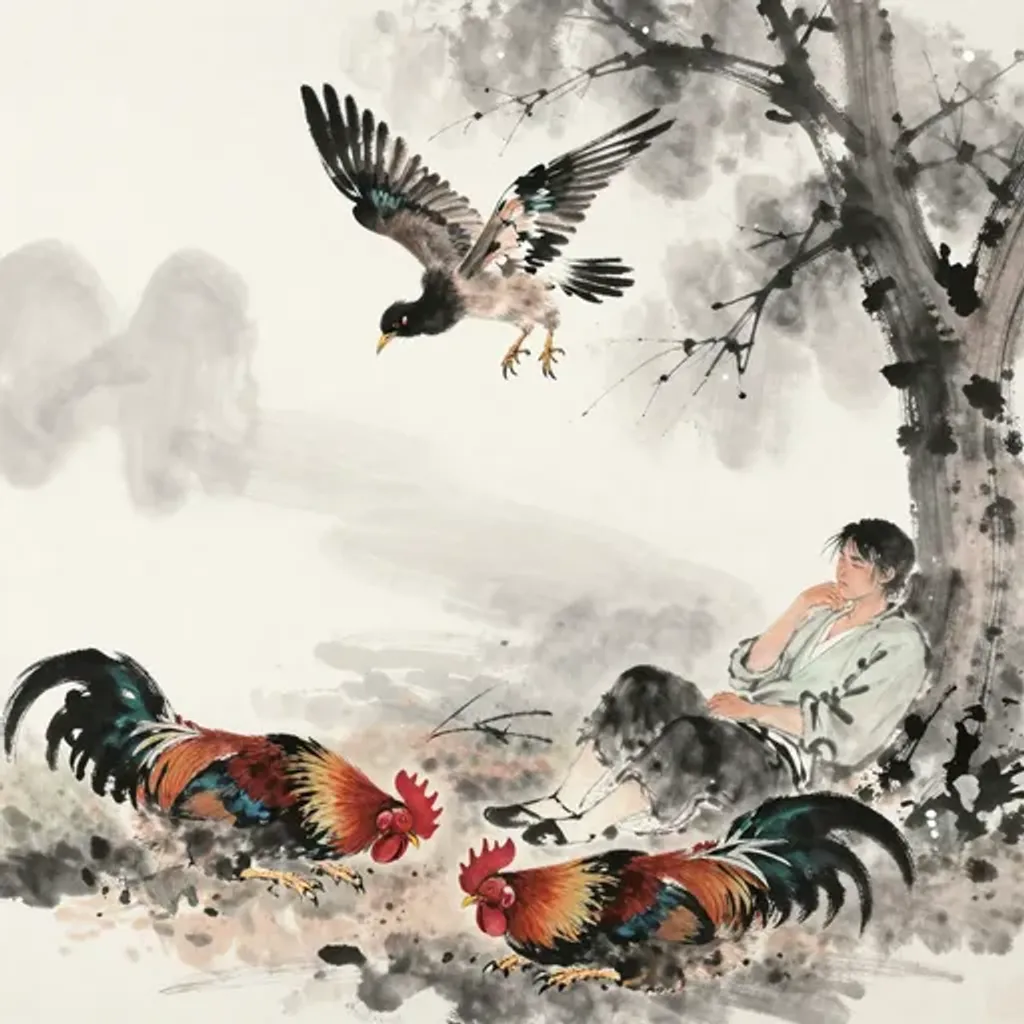
鳥飛无羽,雞鬭折距。徒自長嗟,誰肯為侶?
A bird tries to fly without feathers; fighting cocks break their spurs. One can only sigh in vain; who would be willing to keep company?
— Jiao Yanshou, Yilin (Forest of Changes), 1st century BC
Commentary
Water over lake supports what floats within it, but this verse depicts creatures stripped of their essential capacities. A bird tries to fly without feathers; a rooster fights and snaps its spur. Long sighs accomplish nothing — who would keep company with such a diminished creature? The imagery is of fundamental unfitness: the instruments of survival have been broken or removed, leaving only futile lamentation. From Limitation to Great Exceeding, the transformation amplifies the structural failure. The lake overwhelms the trees, the ridgepole sags beyond recovery. What began as mere limitation — a bird that cannot fly — escalates into catastrophic overload. Great Exceeding's sagging beam mirrors the broken spur: too much weight on too fragile a structure. The verse warns that ignoring one's limitations leads not to gradual decline but to sudden, irreversible collapse.
節 → 坎
Hexagram 60 → Hexagram 29: The Abysmal Water
Changing lines: 1
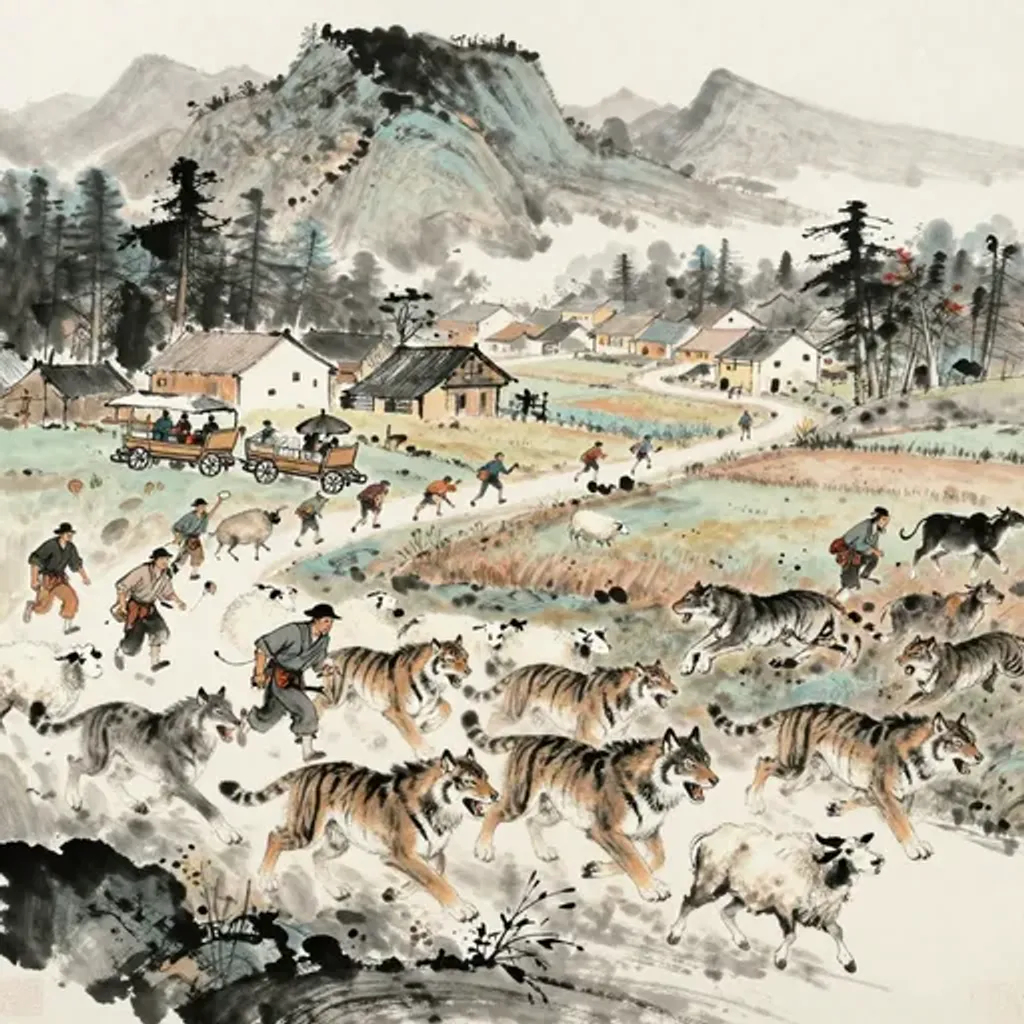
群隊虎狼,齧彼牛羊。道路不通,妨農害商。
Packs of tigers and wolves devour the cattle and sheep. Roads are impassable; farming is hindered, commerce harmed.
— Jiao Yanshou, Yilin (Forest of Changes), 1st century BC
Commentary
Water over lake should regulate passage, but here the waterways have been overrun. Packs of tigers and wolves prey upon cattle and sheep; roads are blocked; farmers and merchants alike suffer. The verse paints a frontier or hinterland fallen to brigandage — organized predators controlling the routes that sustain civilian life. From Limitation to the Abysmal, the transformation plunges from regulated flow into doubled peril. Water upon water, danger compounded — the regulated channel becomes a flood of hazard. Where Limitation once kept predators at bay through measured governance, the Abysmal reveals what happens when those barriers dissolve: danger repeats itself without end, and the traveler finds no safe passage. The disciplined merchant's road becomes the bandit's hunting ground.
節 → 離
Hexagram 60 → Hexagram 30: The Clinging Fire
Changing lines: 2, 3, 4, 5, 6
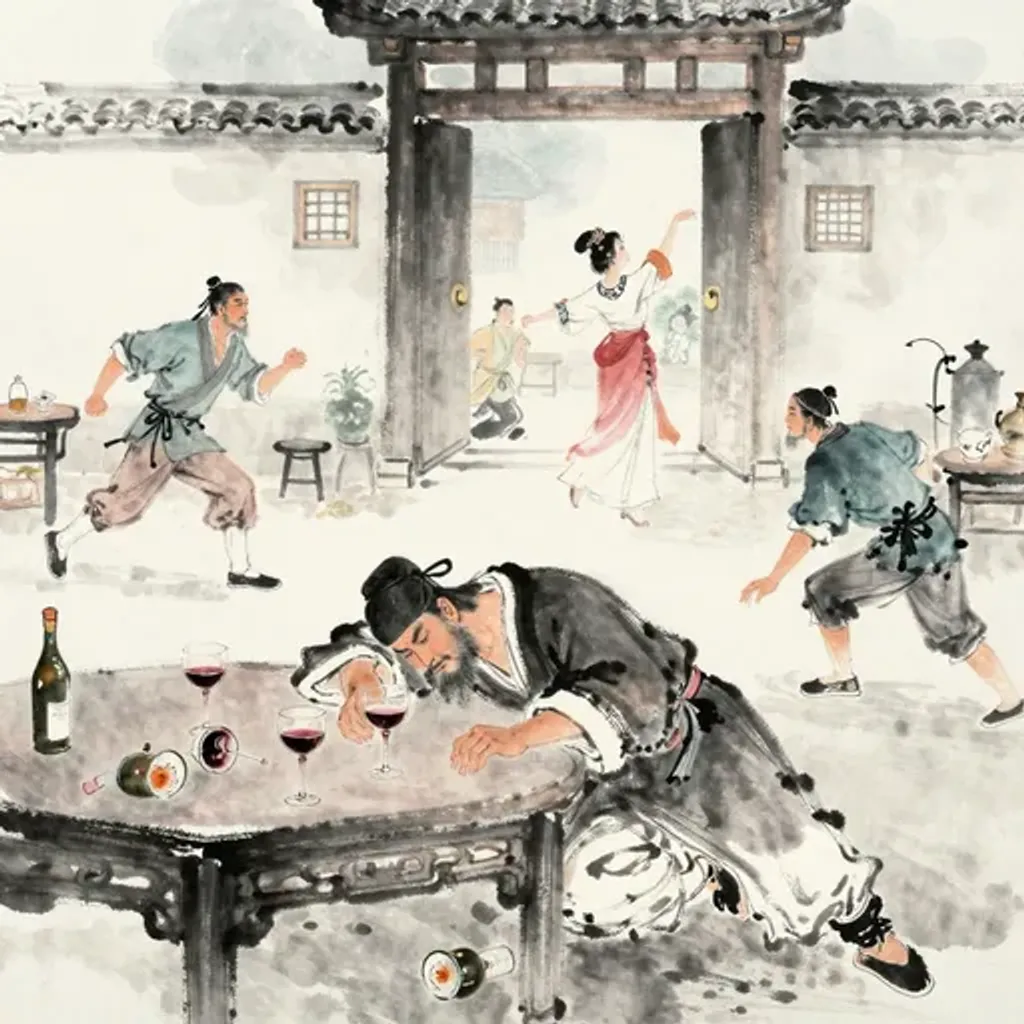
商伯沉醉,庶兄奔走。淫女蕩夫,仁德並孤。
The merchant lord drowns in wine; his elder brother flees. A wanton woman, a dissolute man; benevolence and virtue both stand alone.
— Jiao Yanshou, Yilin (Forest of Changes), 1st century BC
Commentary
Water over lake maintains order through restraint, but this verse chronicles the collapse of restraint at every level. The chief of Shang drowns in drink while his half-brother flees — an allusion to the last days of the Shang dynasty, when King Zhou debauched himself while the Viscount of Wei, his elder half-brother, took the sacrificial vessels and departed. Dissolute women and profligate men overrun the court; benevolence and virtue stand alone, abandoned. From Limitation to the Clinging, the transformation exposes what indulgence reveals. Doubled fire illuminates everything, casting harsh light on moral ruin. The Clinging demands something to cling to, but here every anchor has rotted. Limitation abandoned produces not freedom but the pitiless clarity of fire showing a world with nothing left to preserve.
節 → 咸
Hexagram 60 → Hexagram 31: Influence
Changing lines: 1, 2, 3, 4
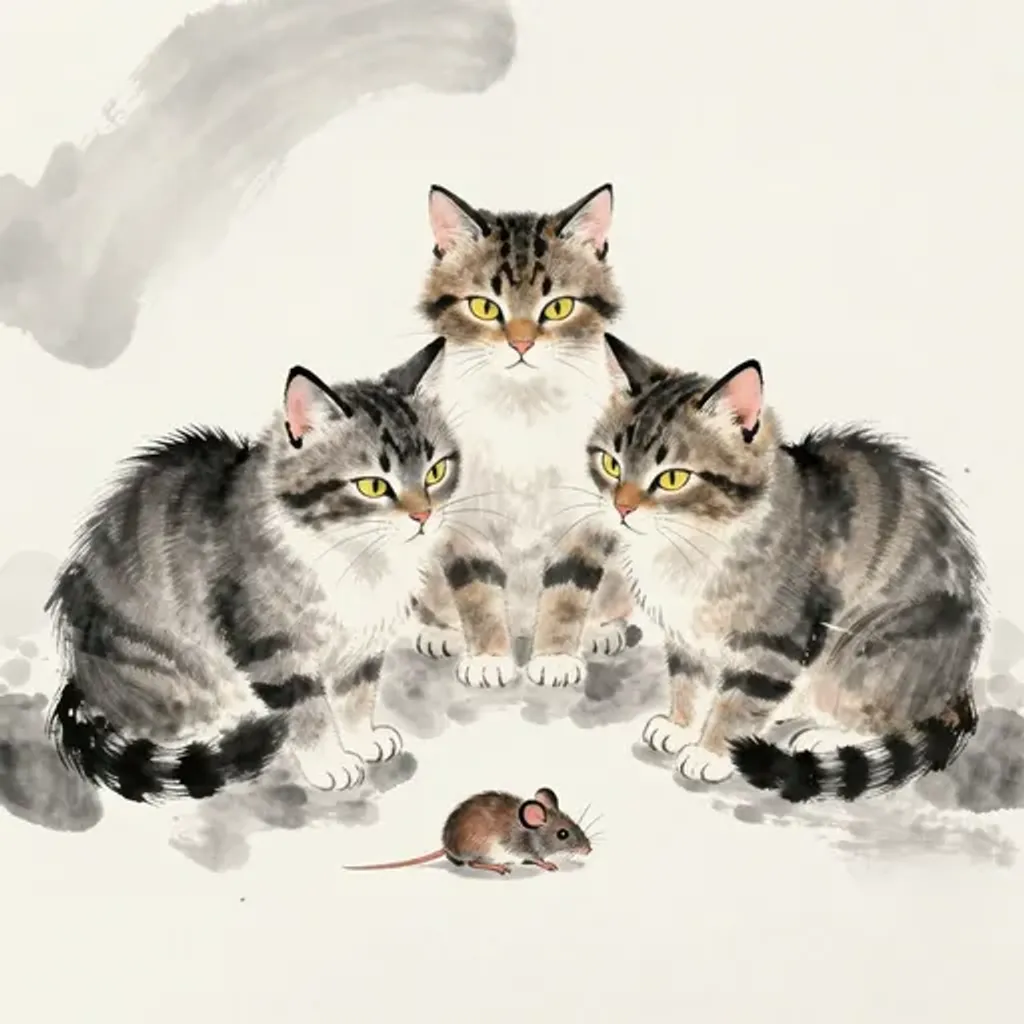
三狸搏鼠,遮遏前後。當此之時,不能脫走。
Three cats hunting a mouse, blocking front and rear. At this moment, there is no chance to escape or flee.
— Jiao Yanshou, Yilin (Forest of Changes), 1st century BC
Commentary
Water over lake confines, and this verse tightens the confinement to a lethal degree. Three wildcats hunt a single mouse, blocking its path from front and rear. At this moment, escape is impossible. The imagery is of coordinated pursuit leaving no gap — a tactical net drawn tight around a prey that has no options left. From Limitation to Influence, the transformation reveals the hidden mechanism: the lake rests upon the mountain, receptive and sensitive to every tremor. Influence operates through attraction and responsiveness, but here that sensitivity has been weaponized. The mouse is not merely trapped; it is felt, sensed, anticipated at every turn. Limitation's boundaries become Influence's net of awareness — the predators do not merely block but perceive, transforming sensitivity into a cage.
節 → 恆
Hexagram 60 → Hexagram 32: Duration
Changing lines: 1, 3, 4, 5
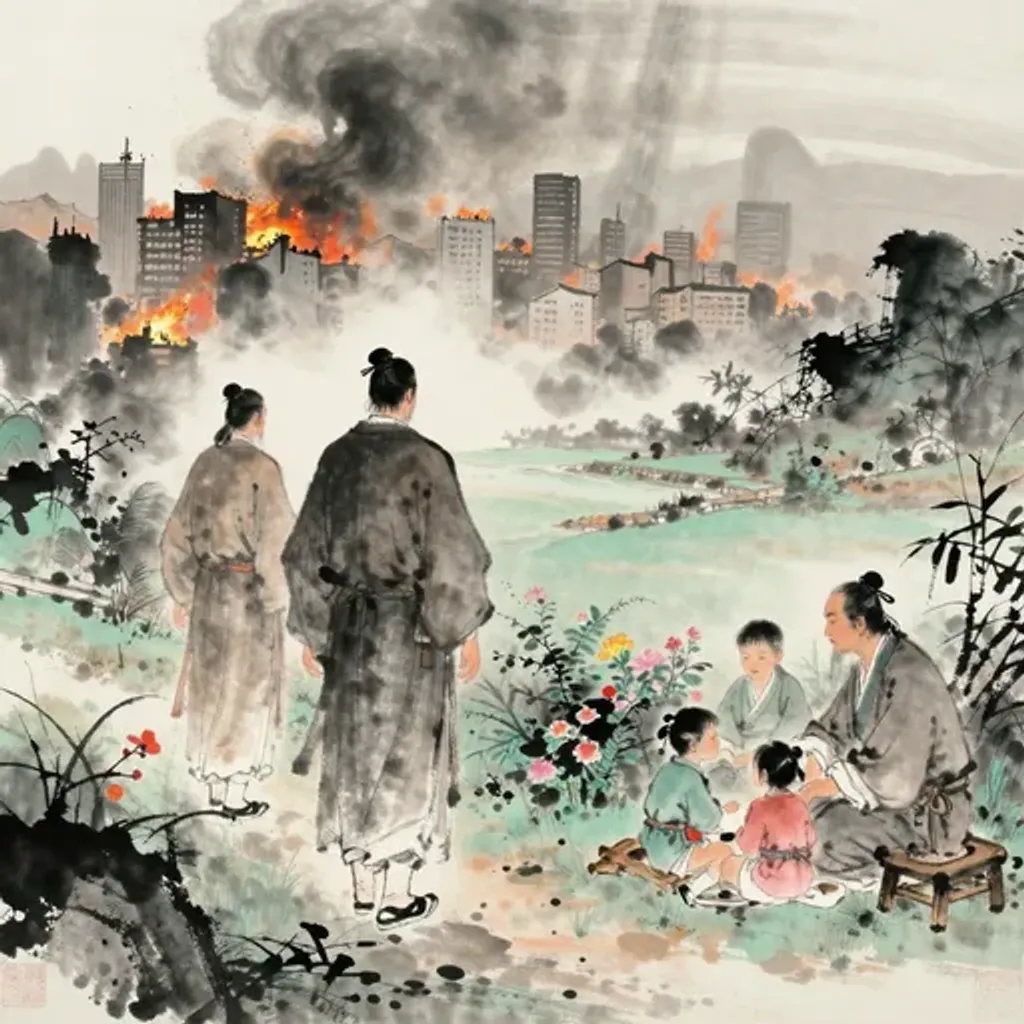
陶叔孔圉,不處亂國。初雖未萌,後受福慶。
Tao Shu and Kong Yu did not remain in a troubled state. Though unseen at first, later they received blessings and good fortune.
— Jiao Yanshou, Yilin (Forest of Changes), 1st century BC
Commentary
Water over lake counsels measured withdrawal, and this verse names two men who practiced it. Tao Shu and Kong Yu refused to remain in a disordered state. According to tradition, Kong Yu was a minister of Wei known for his wisdom and willingness to learn from subordinates — Confucius praised his posthumous title 'Wen' (cultured). The verse's logic is clear: though the signs of trouble were not yet visible at first, those who withdrew early received blessings later. From Limitation to Duration, the transformation validates their choice. Thunder and wind reinforce each other endlessly — the one who establishes a position and does not waver stands firm across all seasons. Timely departure from chaos is not cowardice but the foundation of enduring stability. They limited their exposure and thereby gained permanence.
節 → 遯
Hexagram 60 → Hexagram 33: Retreat
Changing lines: 1, 2, 3, 4, 6
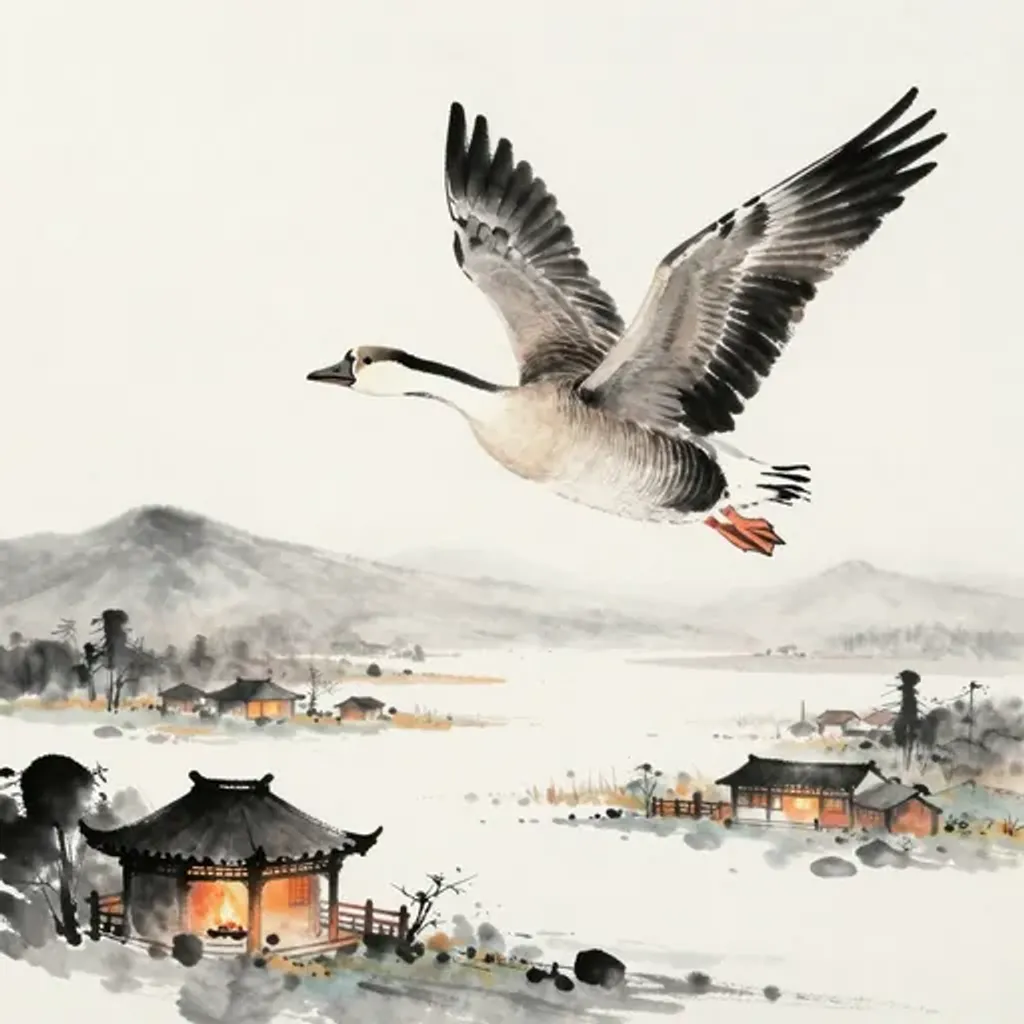
奮翅鼓翼,翱翔外國。逍遙北域,不入溫室。
Spreading wings, beating pinions, soaring to foreign lands. Wandering freely in northern regions, never entering the warm chamber.
— Jiao Yanshou, Yilin (Forest of Changes), 1st century BC
Commentary
Water over lake draws a line, and this verse crosses it decisively — outward, into freedom. Wings spread and beating, one soars beyond the homeland to roam the northern wilds, refusing to return to the heated chamber. The 'warm room' carries overtones of the Han court's literal heated apartments, symbols of political comfort and its attendant compromises. The bird that chooses cold northern air over cushioned captivity enacts a deliberate rejection of corrupt ease. From Limitation to Retreat, the transformation perfects this gesture. Heaven above the mountain — the great withdraws from the small, maintaining dignity through distance. Limitation's boundary becomes Retreat's intentional departure. Not every flight is exile; sometimes the boundary crossed is the one that liberates.
節 → 大壯
Hexagram 60 → Hexagram 34: Great Power
Changing lines: 3, 4, 5
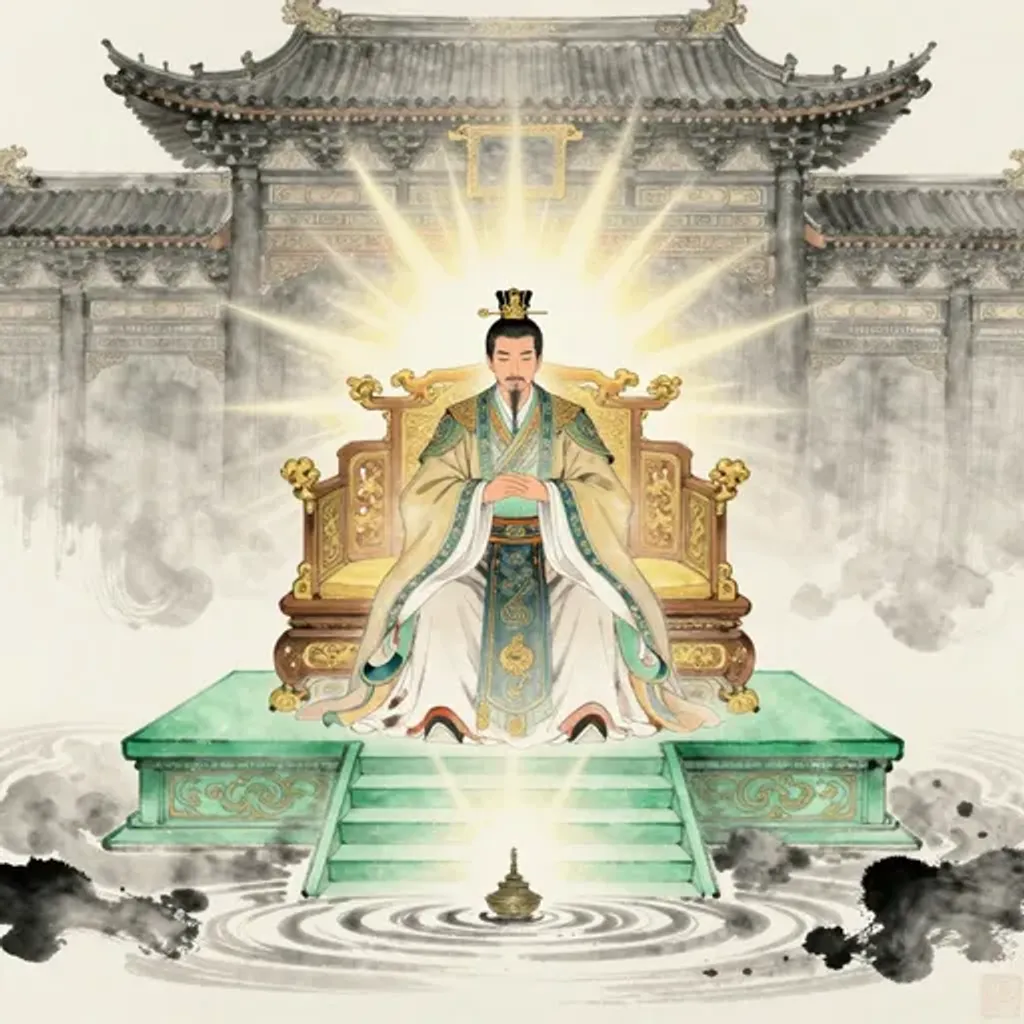
德音孔博,升在王室。八極蒙祐,受其福祿。
Virtuous reputation spreads far; one rises to the royal court. The eight directions receive protection; blessings and prosperity are bestowed.
— Jiao Yanshou, Yilin (Forest of Changes), 1st century BC
Commentary
Water over lake regulates through moderation, and this verse shows moderation bearing fruit at the highest level. A reputation for virtue spreads far and wide, ascending to the royal court itself. The eight directions receive heaven's shelter; blessings and emoluments are bestowed upon all. 'De yin kong bo' — a virtuous name vast in its reach — echoes the Shijing's praise of moral influence that resonates across the realm without force. From Limitation to Great Power, the transformation channels accumulated virtue into irresistible momentum. Thunder over heaven — energy that will not be contained, yet here it is energy earned through long discipline. Limitation's years of measured conduct become Great Power's thunderous emergence. The gentleman who treads only the path of propriety commands a force no wall can hold.
節 → 晉
Hexagram 60 → Hexagram 35: Progress
Changing lines: 1, 2, 4, 5, 6
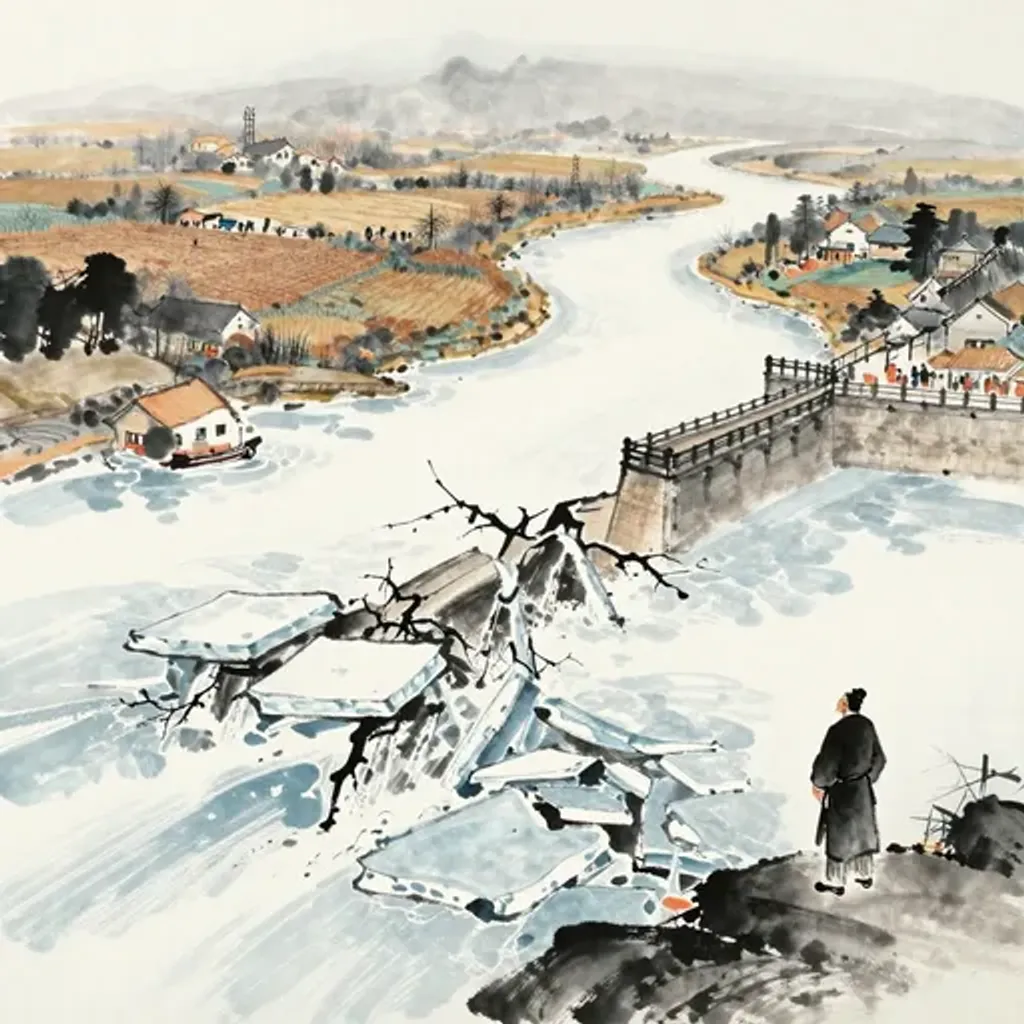
當變立權,擿解患難。霍然冰釋,大國以安。
Responding to change, establishing authority, dispelling difficulties and dangers. Suddenly, like ice melting; the great state is thus made secure.
— Jiao Yanshou, Yilin (Forest of Changes), 1st century BC
Commentary
Water over lake waits for the moment to act, and this verse captures the decisive pivot. Confronting the crisis, one establishes emergency authority — exercising judgment to untangle the knot of disaster. Suddenly, like ice melting, the obstruction dissolves, and the great state is restored to peace. The phrase 'huo ran bing shi' (melting like ice) is a classical idiom for sudden, complete resolution of a previously intractable problem. From Limitation to Progress, the transformation traces how patient restraint enables the breakthrough. Fire emerges above the earth — light rising, clarity advancing, the sun at midmorning. Limitation's long restraint compressed the problem until the right moment allowed a single decisive intervention. The ice did not melt gradually; it melted because the accumulated pressure found its release point. Restraint transmuted into radiant advance.
節 → 明夷
Hexagram 60 → Hexagram 36: Darkening of the Light
Changing lines: 2, 3, 5
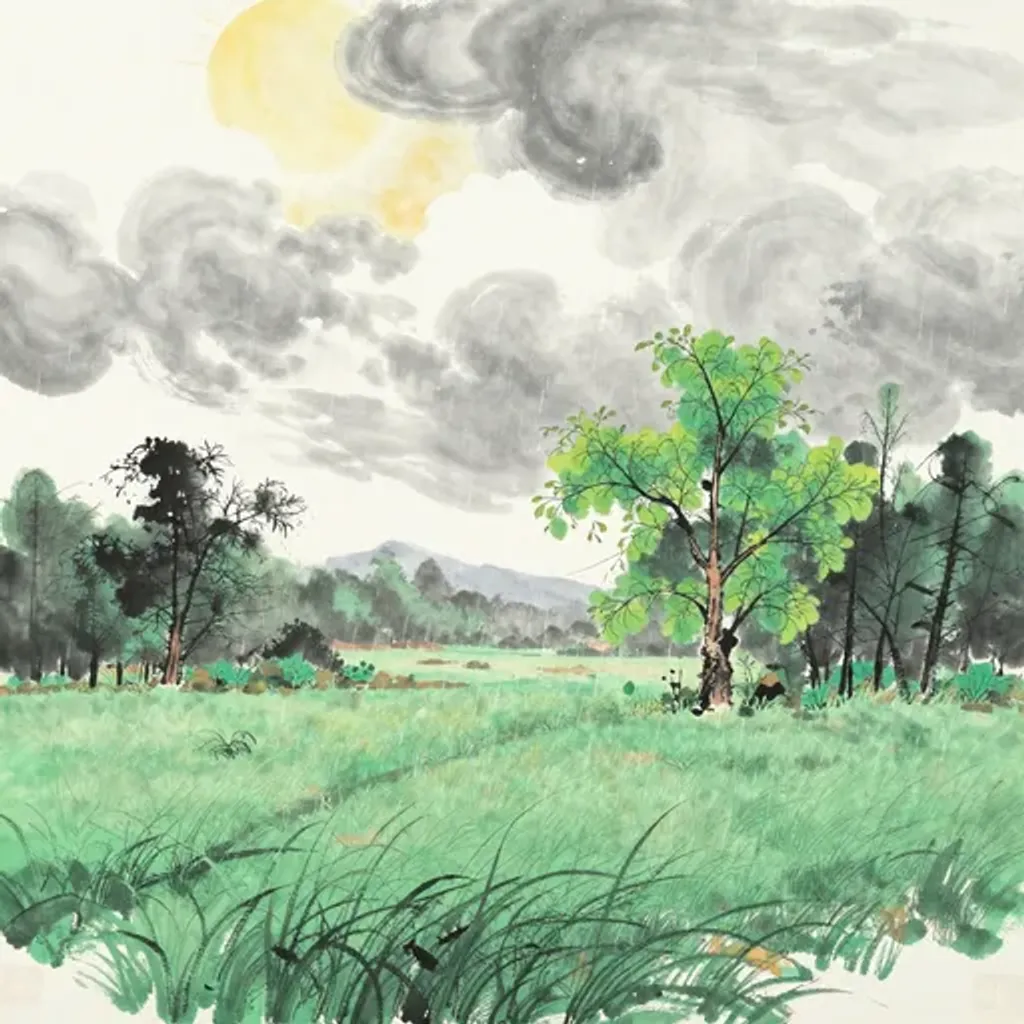
羽動角甘,雨續草木,茂年歲熟。
Feathered clouds stir, bringing sweet rain; moisture continues for grass and trees. Flourishing through the year, the harvest ripens.
— Jiao Yanshou, Yilin (Forest of Changes), 1st century BC
Commentary
Water over lake regulates the season's flow, and this verse celebrates that regulation producing natural abundance. The 'yu' tone stirs and the 'jiao' note sweetens — an allusion to the pentatonic musical scale governing cosmic harmony, where each note corresponds to a season and an element. Rain continues and nourishes grass and trees; the year grows lush and the harvest ripens. The verse connects musical order to agricultural plenty: when the cosmic tones sound in proper sequence, the earth responds with fertility. From Limitation to Darkening of the Light, the transformation hides this abundance beneath the surface. Light enters the earth and operates in concealment. The fertility generated by Limitation's proper ordering continues working even when the light dims — nourishment sustained through obscured but still-active natural rhythms.
節 → 家人
Hexagram 60 → Hexagram 37: The Family
Changing lines: 2, 3, 6
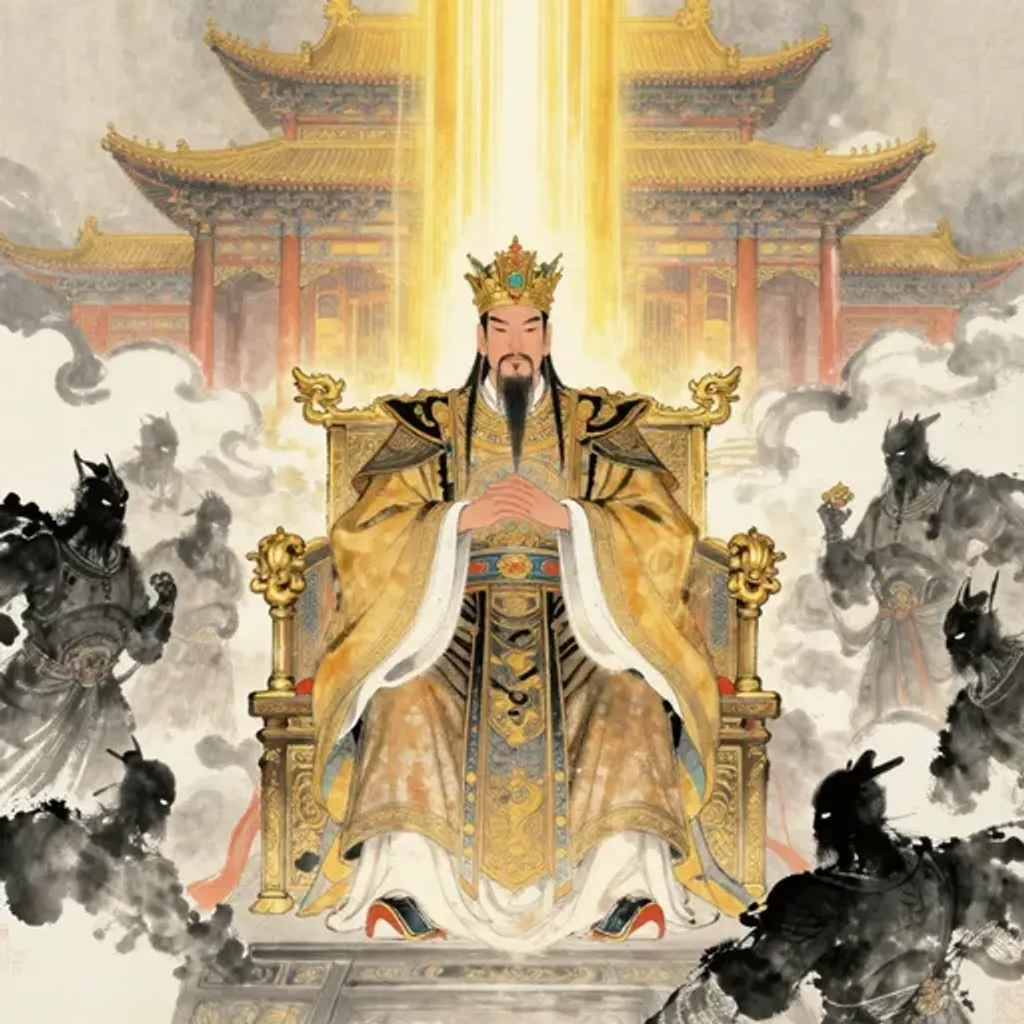
天所佑助,福來禍去,君王何憂?
What heaven aids and protects, blessings arrive, calamities depart. What worry has the king?
— Jiao Yanshou, Yilin (Forest of Changes), 1st century BC
Commentary
Water over lake holds everything in measure, and this verse declares that heaven itself assists those who govern with measure. Heaven protects and helps; blessings arrive while calamities depart. What has the ruler to worry about? The verse radiates an almost liturgical confidence — the assurance that cosmic support flows toward the righteous sovereign without need for anxious intervention. From Limitation to the Family, the transformation brings this divine favor home. Wind emerges from fire — warmth within the household radiating outward as gentle influence. The ruler protected by heaven governs as a patriarch whose words carry substance and whose actions maintain constancy. Limitation's regulatory framework, when blessed from above, becomes the Family's organic harmony: order not imposed but naturally sustained through mutual care.
節 → 睽
Hexagram 60 → Hexagram 38: Opposition
Changing lines: 4, 5, 6
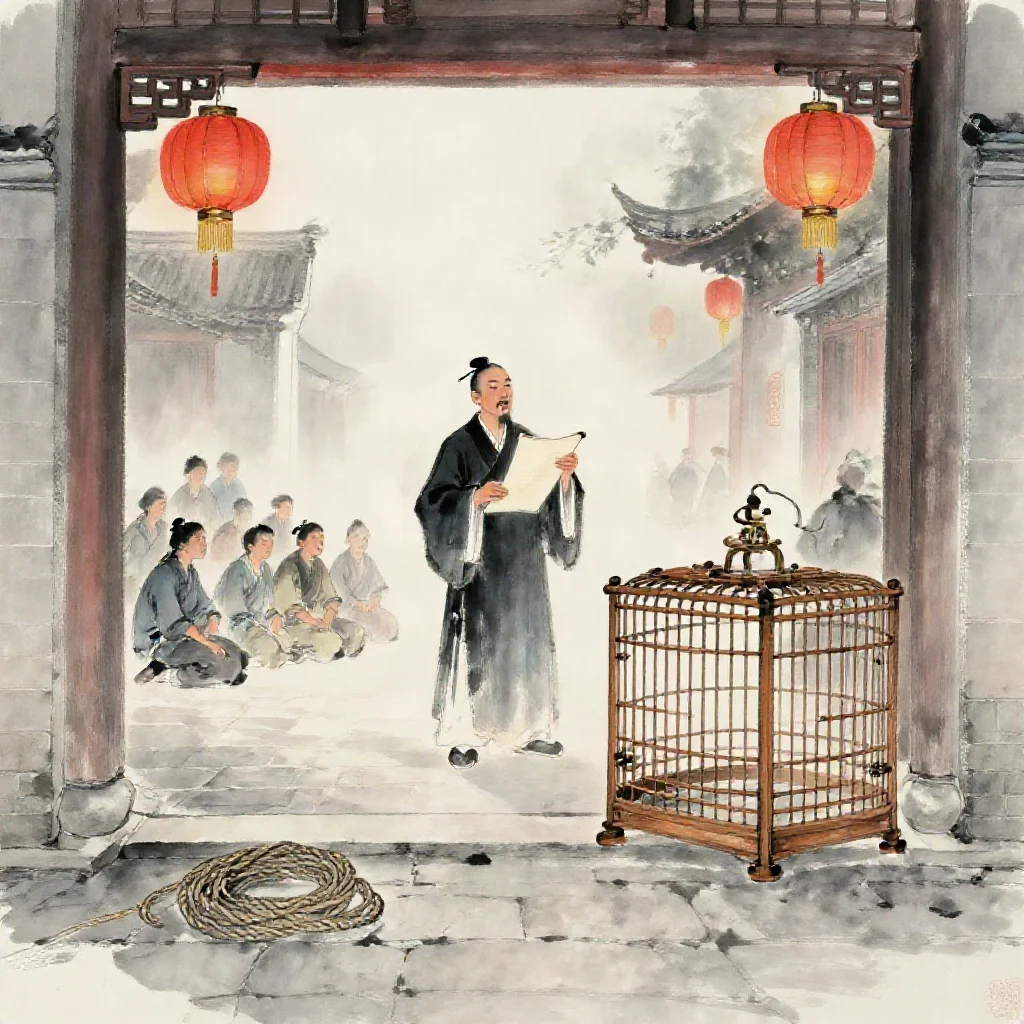
方啄宣口,聖智仁厚。釋解倒懸,唐國大安。
Opening the beak to proclaim truth; sagely, wise, and deeply humane. Releasing and resolving the inverted and bound; the state of Tang attains great peace.
— Jiao Yanshou, Yilin (Forest of Changes), 1st century BC
Commentary
Water over lake regulates with discernment, and this verse celebrates discernment applied to crisis. The square-mouthed opening speaks with sage wisdom — intelligence and benevolence combined in depth. The knotted ropes of suffering are untied; those hanging upside down are released. The Tang state is restored to great peace. 'Releasing those hung upside down' is a classical metaphor for rescuing people from extreme oppression, frequently used to describe virtuous rulers who liberate suffering populations. From Limitation to Opposition, the transformation navigates estrangement through insight. Fire above the lake — two elements that naturally diverge — yet the gentleman finds unity within difference. The sage's wise intervention reconciles what had been torn apart. Limitation's measured judgment becomes Opposition's capacity to harmonize contradictions through penetrating understanding.
節 → 蹇
Hexagram 60 → Hexagram 39: Obstruction
Changing lines: 1, 2, 3
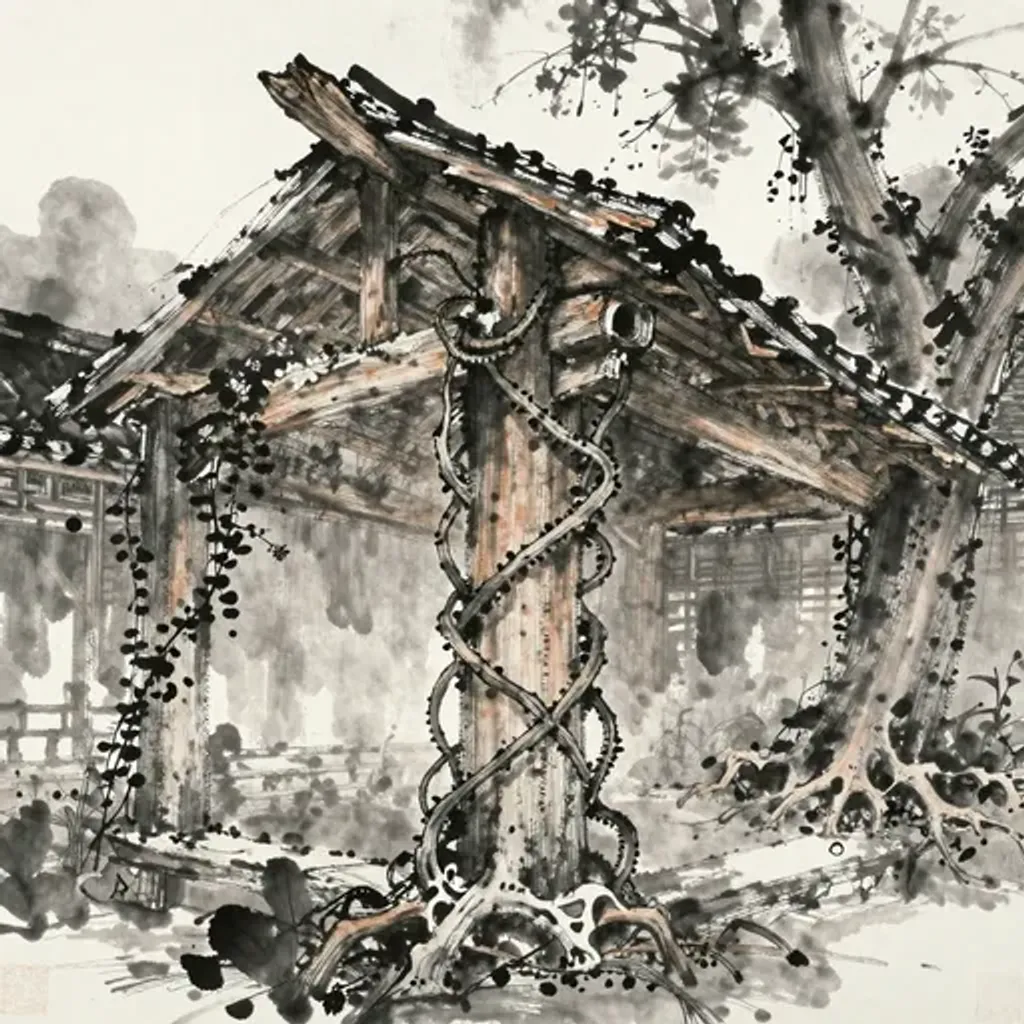
葛藟蒙棘,華不得實。讒佞亂政,使恩壅塞。
Creeper vines strangle the pillar — the tree cannot grow. Worms bore into the beam's heart — the ridgepole leans. Loyal counsel cannot enter blinded ears — the upright tree in the courtyard is smothered by dark vines.
— Jiao Yanshou, Yilin (Forest of Changes), 1st century BC
Commentary
Water over lake should regulate growth, but here parasitic growth overwhelms the structure. This is a rewritten verse; the original reads: 'Kudzu vines smother the thorns; flowers cannot bear fruit. Slanderers and flatterers disorder the government, blocking the flow of grace.' Creeping vines strangle the host plant, preventing it from fruiting — a direct metaphor for sycophants choking off good governance. Slander clogs the channels through which benevolence should flow. From Limitation to Obstruction, the transformation compounds the blockage. Water pools atop the mountain, unable to flow downward — the gentleman turns inward to cultivate virtue because outward action is impossible. Limitation's regulatory channels, clogged by flattery and lies, produce Obstruction's frozen impasse where honest counsel cannot reach the ruler.
節 → 解
Hexagram 60 → Hexagram 40: Deliverance
Changing lines: 1, 4, 5
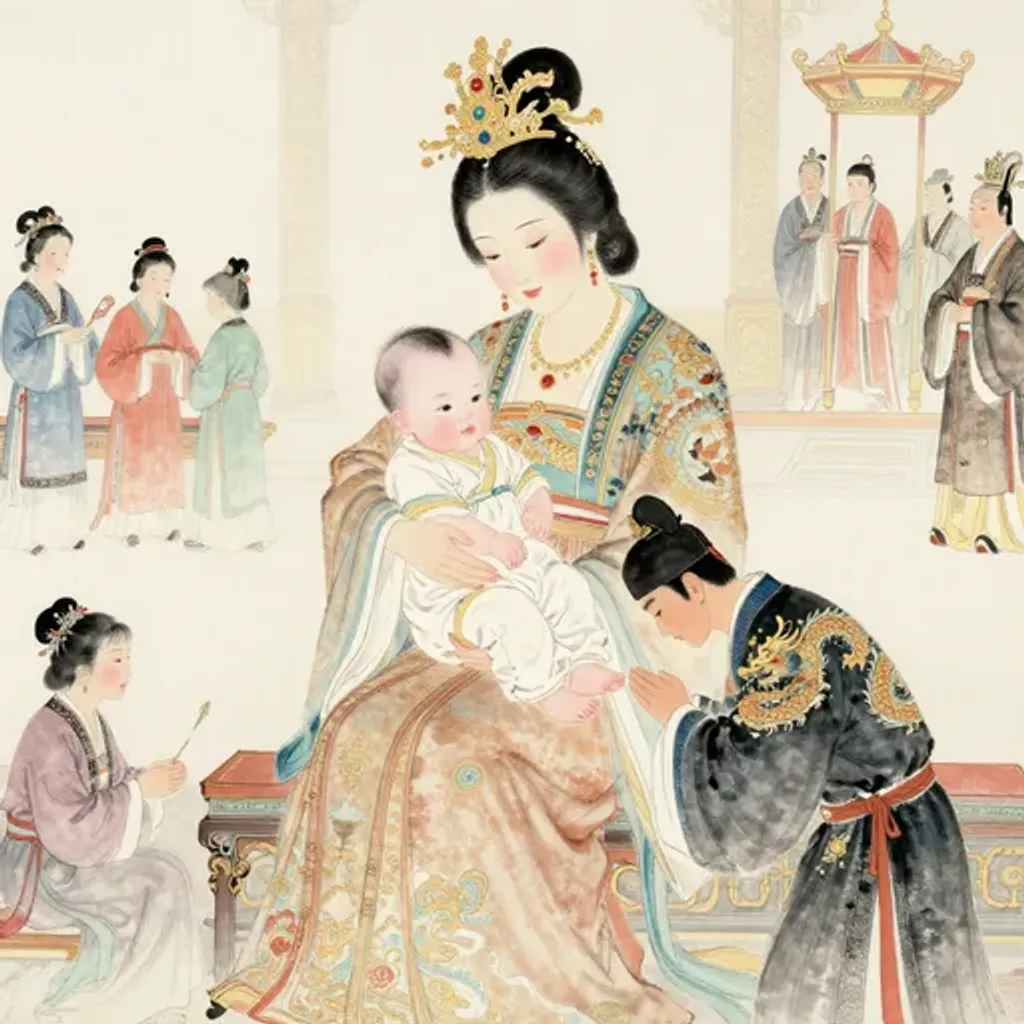
皇母多恩,字養孝孫。脫於襁褓,成就為君。
The imperial grandmother's grace is abundant; she nurtures her filial grandson. From swaddling clothes he emerges, accomplished and made ruler.
— Jiao Yanshou, Yilin (Forest of Changes), 1st century BC
Commentary
Water over lake nurtures within its bounds, and this verse celebrates the most intimate form of such nurture. The imperial grandmother lavishes her grace, raising her filial grandson from swaddling clothes to the throne. The verse traces a complete arc: from helpless infant to accomplished ruler, guided by a matriarch's devoted care. The 'huang mu' (imperial mother/grandmother) likely alludes to powerful Han dynasty dowagers who served as regents, shaping emperors from infancy. From Limitation to Deliverance, the transformation reveals how protective constraint gives way to liberation. Thunder and rain burst forth — the storm that clears the air. The swaddling bands that once protected now fall away as the grown ruler assumes command. Limitation's sheltering discipline becomes Deliverance's moment of release.
節 → 損
Hexagram 60 → Hexagram 41: Decrease
Changing lines: 5, 6
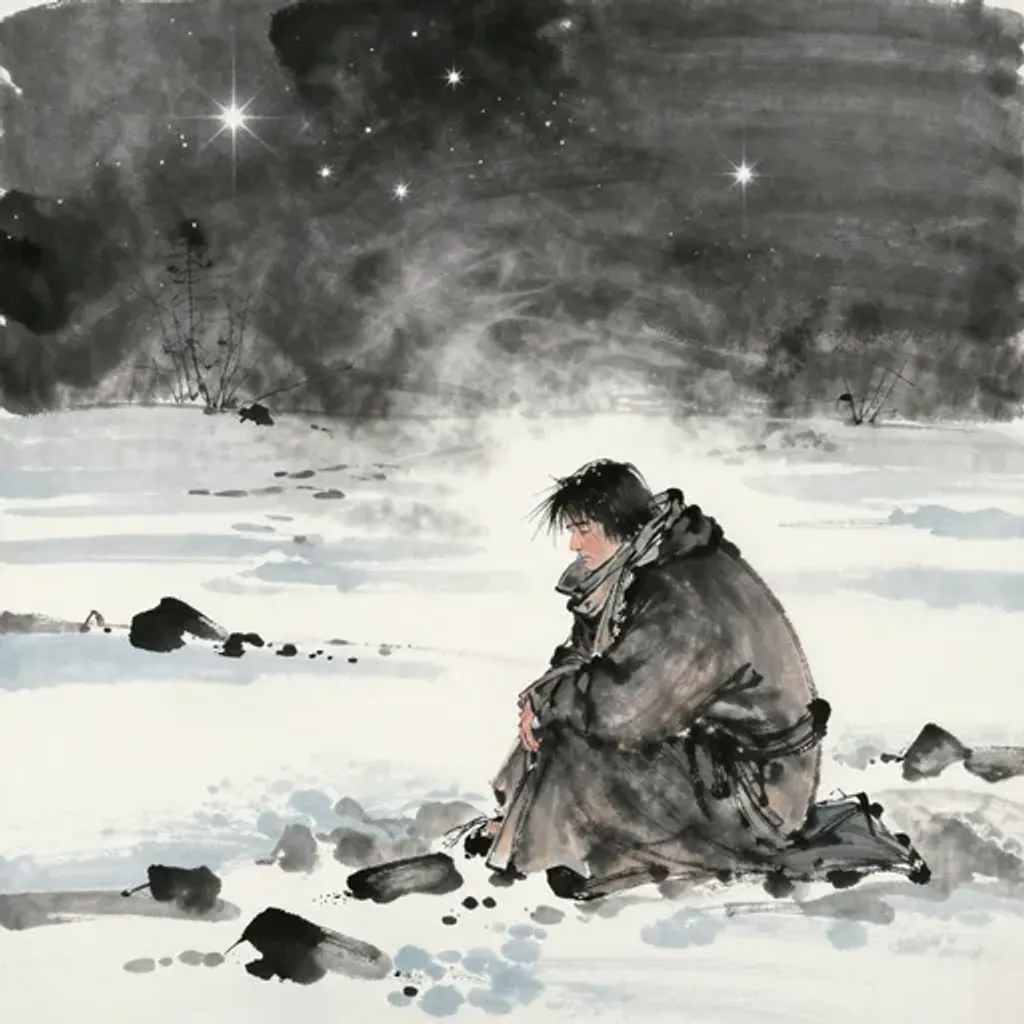
積冰不溫,北陸苦寒。露宿多風,君子傷心。
Accumulated ice never warms; the northern road suffers bitter cold. Sleeping exposed to much wind; the gentleman's heart is wounded.
— Jiao Yanshou, Yilin (Forest of Changes), 1st century BC
Commentary
Water over lake measures what can be endured, and this verse measures the limits of cold. Ice accumulates without warmth; the northern frontier is bitterly frigid. Sleeping exposed to wind and frost, the gentleman's heart aches. The verse conjures the experience of military exile or forced garrison duty on the empire's frozen northern edge — a place where limitation is not philosophical but physical, imposed by nature itself. From Limitation to Decrease, the transformation strips away what little remained. The mountain drains the lake below — diminishment from above, loss compounding loss. What was already frozen now suffers further reduction. Yet Decrease also counsels restraining anger and suppressing desire; the gentleman in the frozen wasteland practices this involuntarily, his very hardship becoming a form of spiritual discipline.
節 → 益
Hexagram 60 → Hexagram 42: Increase
Changing lines: 2, 6
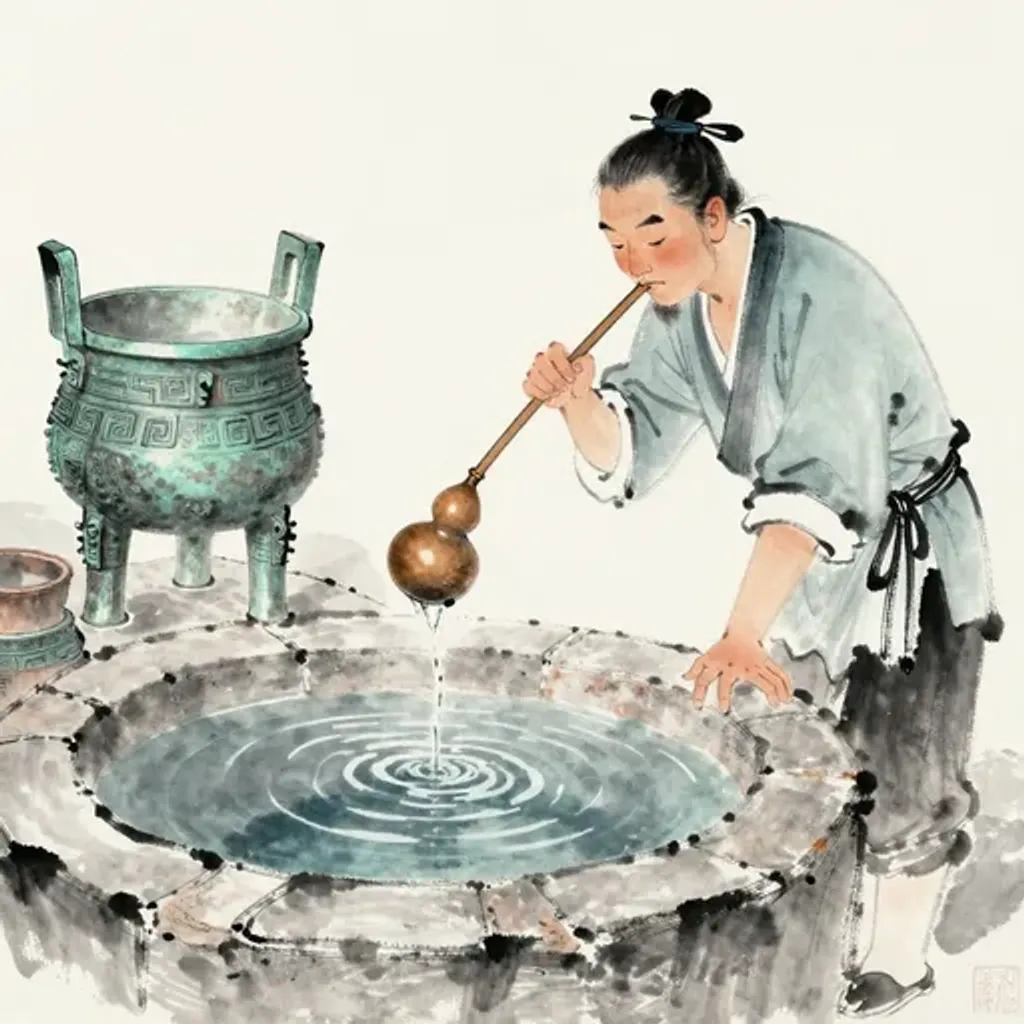
伯夷叔齊,貞廉之師。以德防患,憂禍不存。
The well has its own clear rules; those who draw water govern themselves. One ladle to drink surpasses a thousand goblets.
— Jiao Yanshou, Yilin (Forest of Changes), 1st century BC
Commentary
Water over lake governs through self-restraint, and this verse distills that principle to its essence. This is a rewritten verse; the original reads: 'Boyi and Shuqi, teachers of integrity and incorruptibility. With virtue they guarded against disaster; worry and calamity did not exist.' The brothers of Guzhu who refused Zhou grain and starved on Mount Shouyang exemplify the ultimate voluntary limitation — choosing death over moral compromise. Their virtue was not passive but actively preventive: by maintaining integrity, they preempted the very possibility of catastrophe. From Limitation to Increase, the transformation reveals the paradox that radical self-denial generates abundance. Wind and thunder invigorate each other; seeing good, one follows it. The brothers' sacrifice produces an inexhaustible moral legacy that enriches all subsequent generations.
節 → 夬
Hexagram 60 → Hexagram 43: Breakthrough
Changing lines: 3, 4
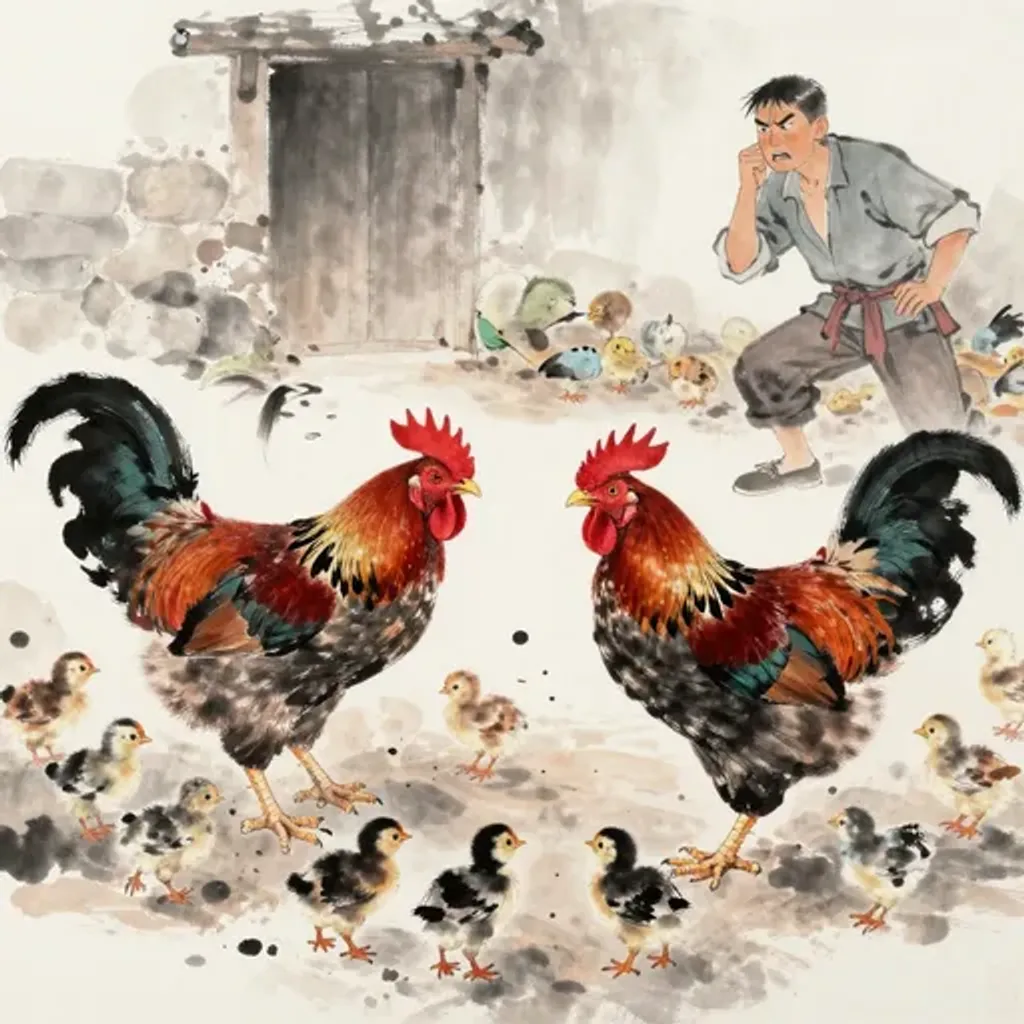
一雌二雄,子不知公。亂我族類,使吾心憤。
One hen, two roosters; the chicks do not know their father. Disrupting my lineage, filling my heart with fury.
— Jiao Yanshou, Yilin (Forest of Changes), 1st century BC
Commentary
Water over lake defines lineage and order, but this verse shows that order violated at the most intimate level. One female, two males — the offspring cannot identify their father. The clan is thrown into confusion; the heart burns with indignation. The imagery is of sexual disorder destroying the certainty of paternity, which in Zhou feudal society meant the collapse of succession, inheritance, and ritual propriety. From Limitation to Breakthrough, the transformation demands a decisive response. The lake rises to heaven — accumulated grievance bursting through the final barrier. Breakthrough requires public declaration: the transgression must be announced at the king's court. Limitation's violated boundaries generate the fury that drives Breakthrough's sharp, irrevocable cut. The confusion of lineage can only be resolved by decisive severance.
節 → 姤
Hexagram 60 → Hexagram 44: Coming to Meet
Changing lines: 1, 3, 4, 6
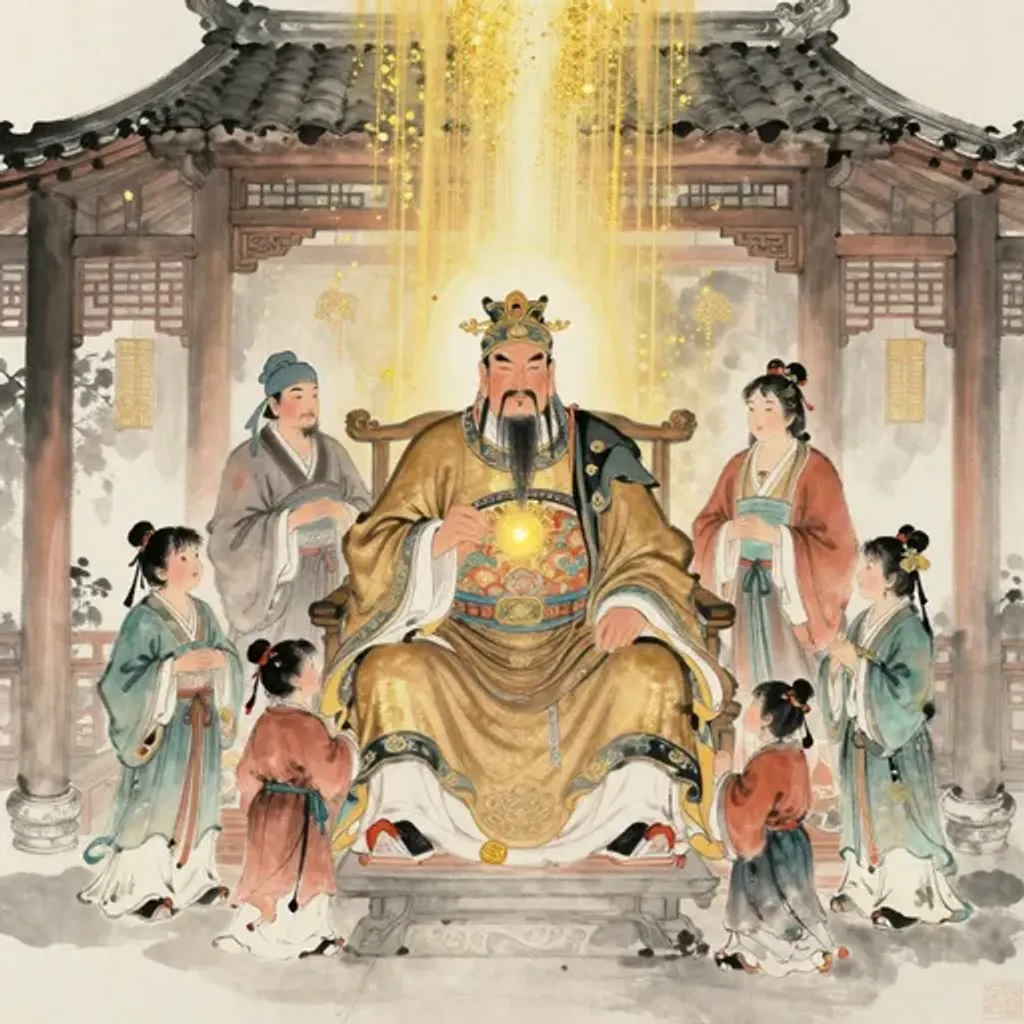
主安多福,天祿所伏。居之寵昌,君子有光。
The master dwells in peace and much blessing; heaven's bounty rests here. Living in favor and flourishing; the gentleman possesses radiance.
— Jiao Yanshou, Yilin (Forest of Changes), 1st century BC
Commentary
Water over lake bestows stability through proper measure, and this verse celebrates the blessings of a well-regulated existence. The ruler dwells in security and abundant fortune; heaven's emoluments gather where virtue resides. Prosperity and honor fill the household; the gentleman radiates light. The verse is an affirmation of cosmic reciprocity — correct governance attracts heavenly favor, which in turn sustains further virtue. From Limitation to Coming to Meet, the transformation introduces an element of fateful encounter. Wind stirs beneath heaven, and the sovereign issues his decree to the four directions. Limitation's earned stability creates the conditions under which the unexpected can arrive as blessing rather than disruption. The well-ordered household is prepared to receive what heaven sends, turning encounter into opportunity.
節 → 萃
Hexagram 60 → Hexagram 45: Gathering Together
Changing lines: 1, 2, 4
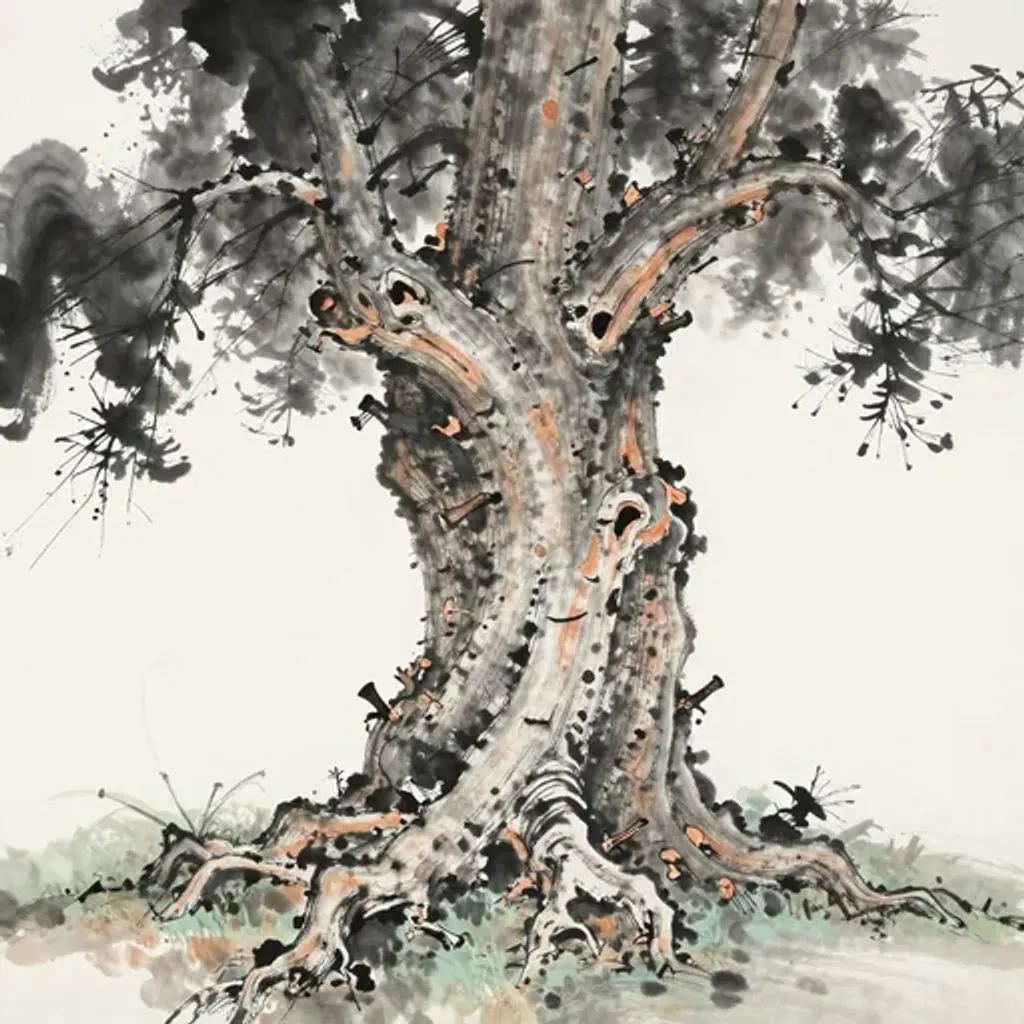
千歲槐根,利多斧瘢。樹維枯屈,枝葉不出。
The thousand-year locust root bears many axe scars. The tree remains bent and withered; neither branch nor leaf emerges.
— Jiao Yanshou, Yilin (Forest of Changes), 1st century BC
Commentary
Water over lake sustains living things within their proper time, but this verse confronts what lies beyond all sustaining. A thousand-year-old locust root, scarred with axe marks from those who sought its useful timber. The tree is bent and withered; no branches or leaves emerge. The image is of a thing exploited past exhaustion — its longevity counted not in years of growth but in accumulating wounds. From Limitation to Gathering, the transformation intensifies the pathos. The lake pools upon the earth, drawing all things together, yet what gathers here is emptiness: a community assembling around a depleted resource. Gathering's call to prepare weapons against the unforeseen arrives too late for the ancient tree. Limitation taken to extremes — a thousand years of extraction — leaves nothing for the gathering to draw upon.
節 → 升
Hexagram 60 → Hexagram 46: Pushing Upward
Changing lines: 1, 3, 5
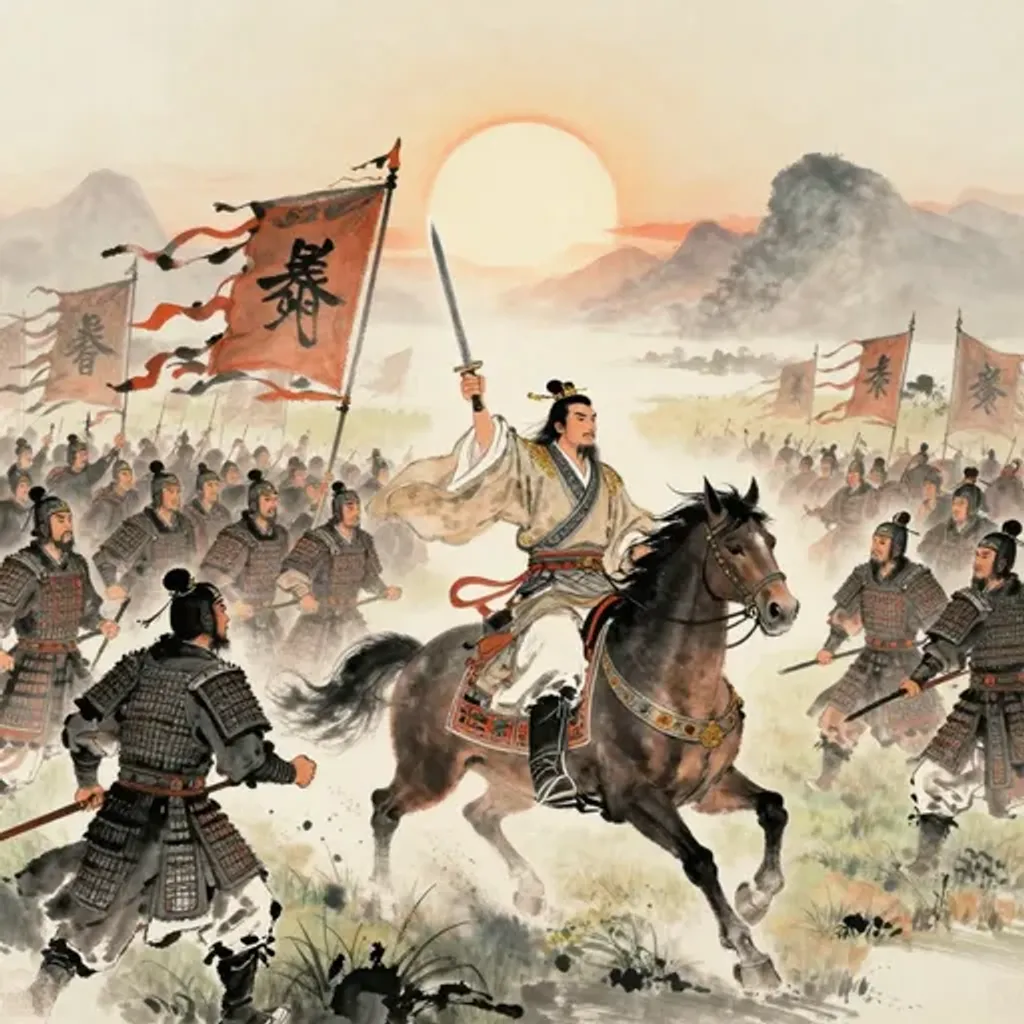
周師伐紂,勝殷牧野。甲子平旦,天下大喜。
Zhou's army attacked Zhou of Shang, victorious at the Wilds of Mu. At dawn on the jiazi day, all under heaven rejoiced.
— Jiao Yanshou, Yilin (Forest of Changes), 1st century BC
Commentary
Water over lake waits for the moment to act, and this verse names the most famous such moment in Chinese history. The Zhou army marches against King Zhou of Shang and triumphs at the Battle of Muye. On the morning of the jiazi day, at the break of dawn, the world erupts in joy. The battle traditionally marks the founding of the Zhou dynasty, the paradigmatic righteous revolution. From Limitation to Pushing Upward, the transformation captures the organic inevitability of this rise. Trees grow within the earth, ascending with quiet persistence. The Zhou's long preparation under Kings Wen and Wu — decades of measured accumulation — culminated in a single day's decisive action. Limitation's patient discipline became the irresistible upward thrust of a new order. Small steps, steadily accumulated, produced the greatest transformation in antiquity.
節 → 困
Hexagram 60 → Hexagram 47: Oppression
Changing lines: 1, 4
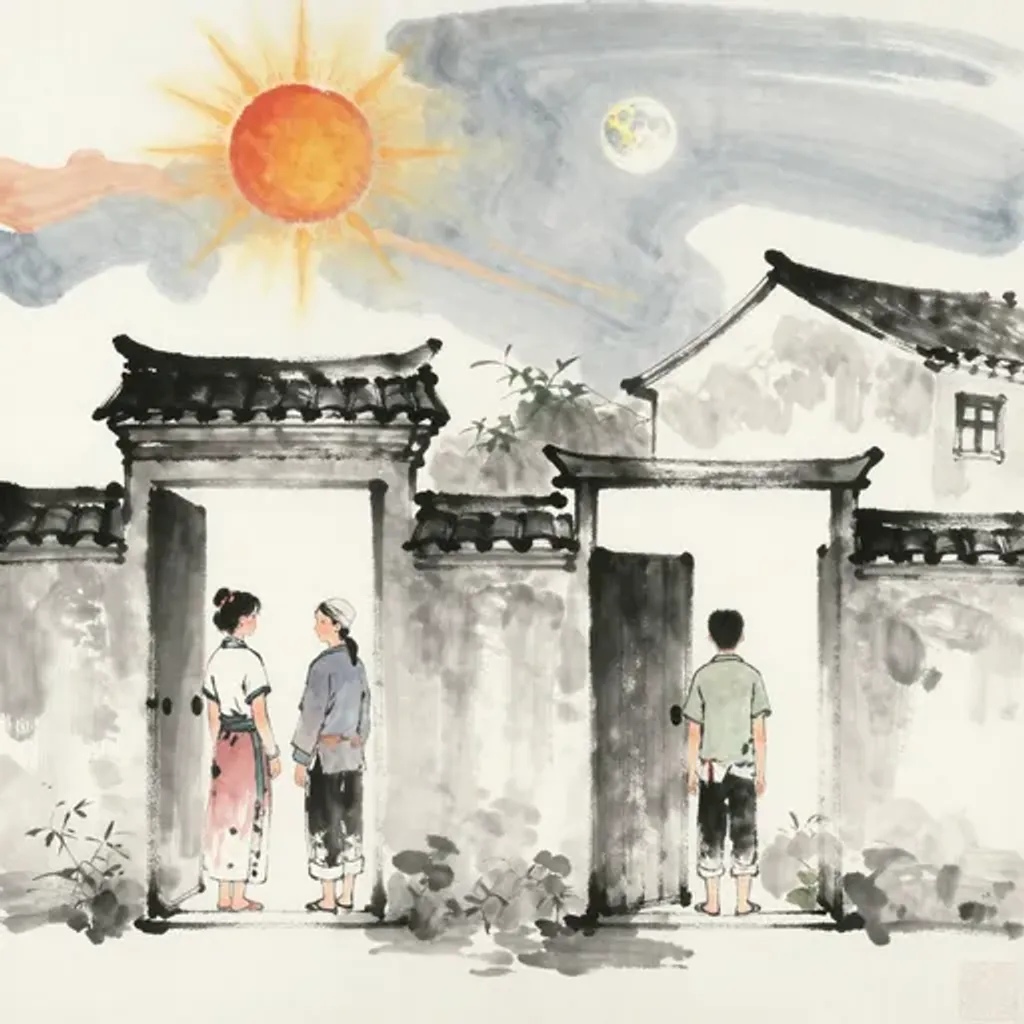
日走月步,趍不同舍。夫妻反目,主君失居。
Sun runs while moon walks; they do not share the same lodging. Husband and wife turn against each other; the master loses his dwelling.
— Jiao Yanshou, Yilin (Forest of Changes), 1st century BC
Commentary
Water over lake regulates cycles, but here the cycles have diverged beyond reconciliation. Sun and moon travel at different paces, lodging in separate quarters — the celestial pair that should harmonize instead pulls apart. Husband and wife turn against each other; the ruler loses his dwelling. The verse layers cosmic disharmony onto domestic collapse: when the fundamental rhythms of a household fall out of sync, the structure cannot hold. From Limitation to Oppression, the transformation strips the lake dry. Water drains from beneath the lake — the vital resource that once filled the container disappears. Limitation's measured rhythm, once broken, produces not merely disorder but the exhaustion of Oppression, where one must stake one's life to pursue one's purpose. The empty lake mirrors the empty household.
節 → 井
Hexagram 60 → Hexagram 48: The Well
Changing lines: 1, 3
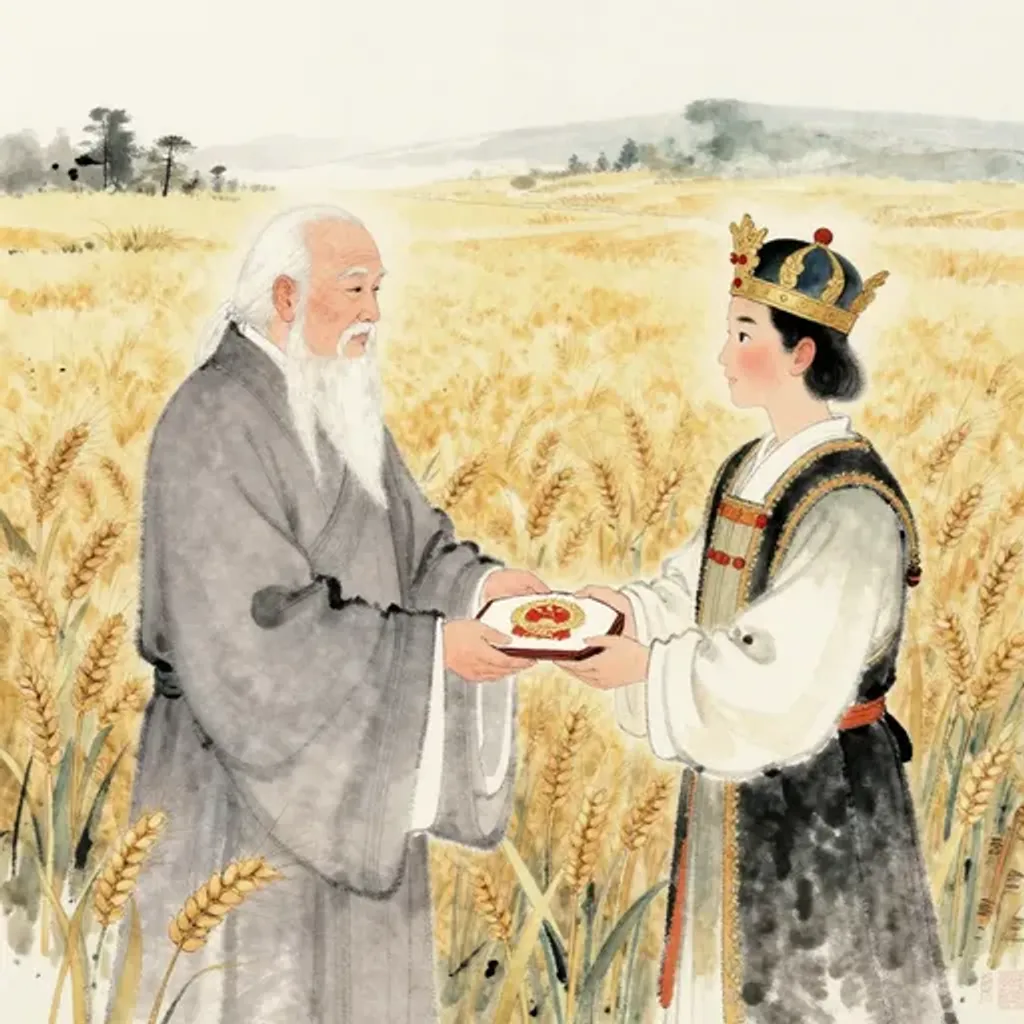
宣髮龍叔,為王主國。安土成稷,天下蒙福。
White-haired Dragon Shu governs the kingdom for the king. Securing the land, establishing the grain; all under heaven receives blessing.
— Jiao Yanshou, Yilin (Forest of Changes), 1st century BC
Commentary
Water over lake channels resources wisely, and this verse celebrates those who channeled a nation's destiny. Xuan and Long Shu — likely referring to legendary or early Zhou ministers who stabilized the realm and established its foundations — govern for the king, securing the land, building the altars of soil and grain, and blessing all under heaven. The verse is a paean to capable stewardship: ministers who serve as conduits between heaven's mandate and the people's welfare. From Limitation to the Well, the transformation perfects this imagery. Water rises through wood — the well that nourishes the community without moving, inexhaustible if properly maintained. Limitation's regulatory wisdom becomes the Well's constant provision: governance as an enduring source that feeds all who draw from it.
節 → 革
Hexagram 60 → Hexagram 49: Revolution
Changing lines: 2, 3, 4
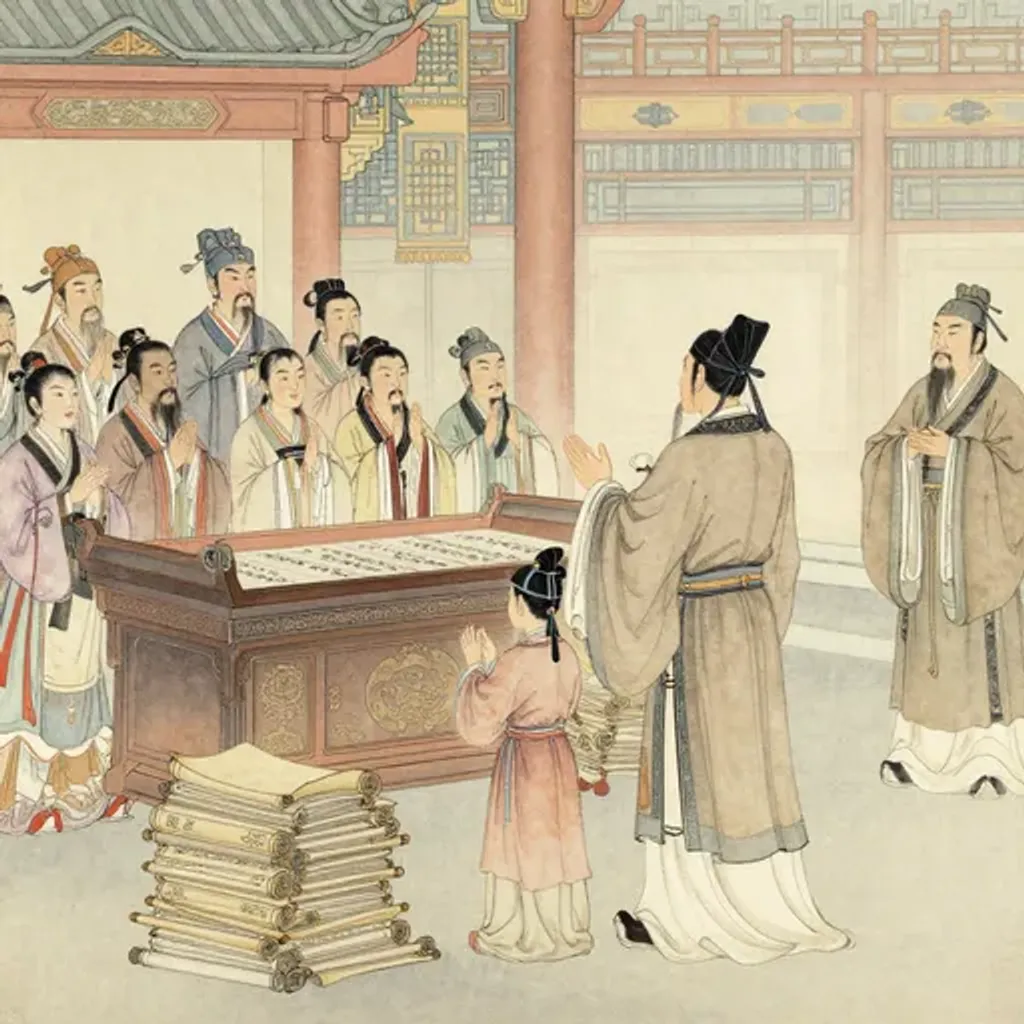
諷德誦功,周美盛隆。惠旦輔成,光濟沖人。
Reciting virtue, chanting achievements; Zhou's glory is abundant and grand. The Duke of Zhou assisted completion; brilliance extends to the young ruler.
— Jiao Yanshou, Yilin (Forest of Changes), 1st century BC
Commentary
Water over lake preserves the measure of an age, and this verse hymns the greatest such measure in Zhou history. Praising virtue and chanting merit, extolling the Zhou's magnificent prosperity — these are the songs that celebrate the dynasty at its height. 'Hui Dan' is the Duke of Zhou (Ji Dan), who assisted King Cheng as regent, guiding the young heir to fulfill his role as 'the immature one' (chong ren). The Duke of Zhou's regency represents the supreme model of limitation in service of continuity: restraining his own power to nurture the legitimate heir's growth. From Limitation to Revolution, the transformation adds a paradox — the lake's fire transforms what it touches. The very restraint that preserved the Zhou order also contained within it the seed of necessary change: institutions must periodically be renewed to remain vital.
節 → 鼎
Hexagram 60 → Hexagram 50: The Cauldron
Changing lines: 1, 3, 4, 5, 6
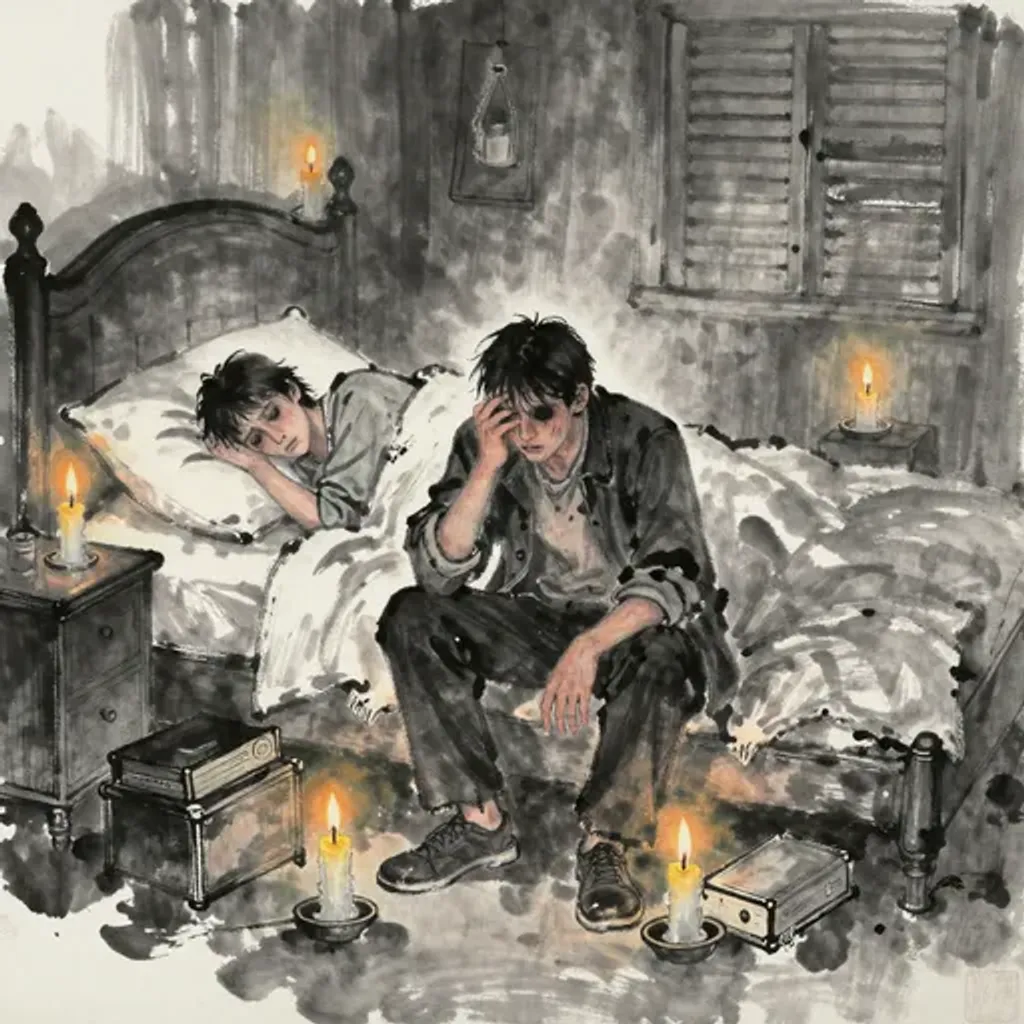
三夜不寢,憂來益甚。戒以危懼,棄其安居。
Three nights without sleep; worry grows ever deeper. Warned by danger and fear, one abandons the peaceful dwelling.
— Jiao Yanshou, Yilin (Forest of Changes), 1st century BC
Commentary
Water over lake demands vigilance in maintaining its structure, and this verse embodies that vigilance taken to its extreme. Three nights without sleep; worry grows ever heavier. One braces with fear and caution, abandoning the comfort of settled dwelling. The image is of a ruler or minister so consumed by the responsibility of maintaining order that rest becomes impossible — anxiety as the price of governance. From Limitation to the Cauldron, the transformation reframes this anguish as sacrificial duty. Fire over wind feeds the vessel that nourishes the state — the cauldron that cooks the sacrificial offering requires constant tending. Limitation's sleepless worry becomes the Cauldron's sacred obligation: the one who feeds the realm cannot rest, for the fire must never go out. Vigilance is not neurosis but consecration.
節 → 震
Hexagram 60 → Hexagram 51: The Arousing Thunder
Changing lines: 2, 4, 5
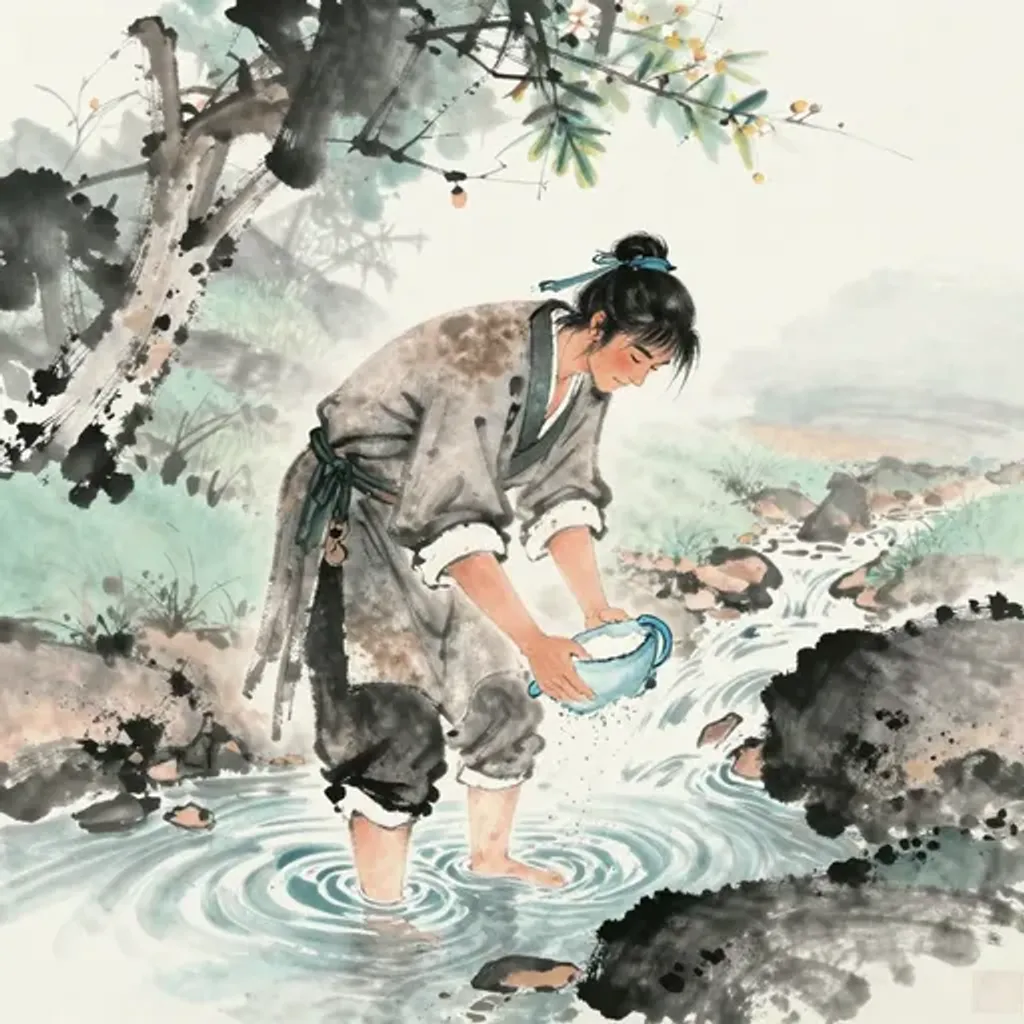
恩願所之,乃今逢時。洗濯故憂,拜其懽來。
Where heart's wish tends, now the time has come. Washing away old worries; bowing to welcome arriving joy.
— Jiao Yanshou, Yilin (Forest of Changes), 1st century BC
Commentary
Water over lake patiently accumulates, and this verse marks the release of that patience into joy. What the heart longed for now meets its appointed moment. Old sorrows are washed clean, and new delight arrives to replace them — one bows to welcome the happiness that comes. The verse captures the transition from endurance to fulfillment: years of measured waiting culminate in a season of grace. From Limitation to the Arousing, the transformation electrifies the release. Doubled thunder — shock upon shock — rouses the world from its measured stillness. Limitation's long restraint becomes the Arousing's sudden, exhilarating awakening. The old grief is not merely set aside but actively purged, as thunder shakes loose everything stagnant. To bow before arriving joy is to acknowledge that both the waiting and the release were part of the same rhythm.
節 → 艮
Hexagram 60 → Hexagram 52: Keeping Still Mountain
Changing lines: 1, 2, 3, 5, 6
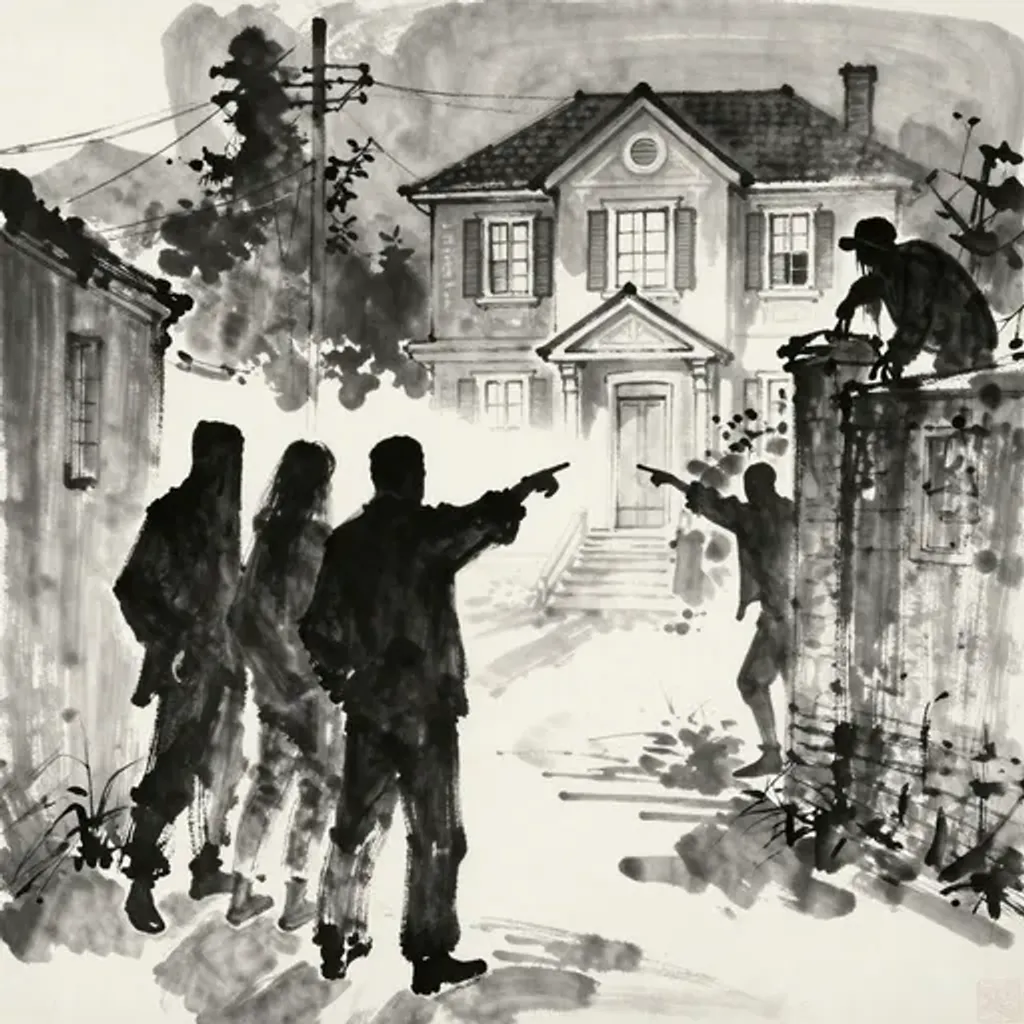
噂噂囁囁,夜行晝伏。謀議我資,來竊吾室。
Murmuring and whispering; traveling by night, hiding by day. Plotting to seize my wealth; coming to rob my home.
— Jiao Yanshou, Yilin (Forest of Changes), 1st century BC
Commentary
Water over lake guards its boundaries, yet this verse shows those boundaries breached by stealth. Whispered conspiracies and secret conferences — moving by night, hiding by day. They plot to seize one's wealth and come to plunder the household. The verse is a portrait of betrayal from within: enemies who operate not through frontal assault but through nocturnal infiltration and insider knowledge. From Limitation to Keeping Still, the transformation is deeply ironic. The doubled mountain stands firm, thinking not beyond its position — yet the thieves exploit this very stillness. While the mountain meditates, rats gnaw through the walls. Keeping Still's virtue of not straying from one's place becomes a vulnerability when the threats come from those who are already inside the perimeter that Limitation drew.
節 → 漸
Hexagram 60 → Hexagram 53: Development
Changing lines: 1, 2, 3, 6
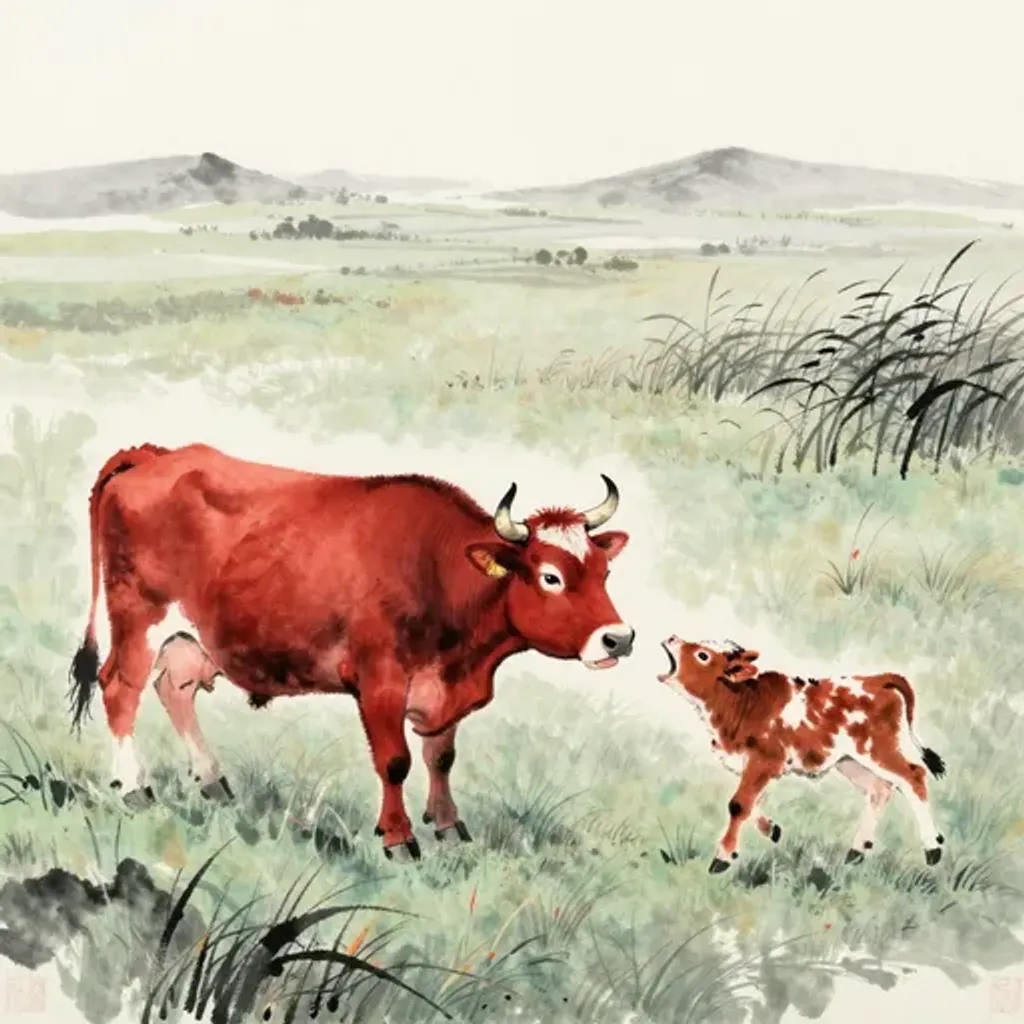
騂牛亡子,鳴於大野。申復陰徵,還歸其母,說以除悔。
The red cow has lost her calf; she lows across the great plain. Calling again with hidden summons; she returns to her mother, sorrow dispelled.
— Jiao Yanshou, Yilin (Forest of Changes), 1st century BC
Commentary
Water over lake measures the rhythm of separation and return, and this verse enacts that rhythm through the story of a red cow that has lost its calf. The mother lows across the vast open plain, calling and searching. Eventually the search is renewed through subtle signs — 'yin zheng,' traces barely visible — and the calf is restored to its mother. Sorrow dissolves into relief. The imagery may allude to divination by cattle-bone: the calf sought through reading the cracks. From Limitation to Development, the transformation extends this gradual reunion. Trees grow slowly on the mountain — the wild goose alights one branch higher with each stage. Limitation's temporary loss becomes Development's patient, step-by-step recovery. What was severed is rejoined not through haste but through attentive, incremental return.
節 → 歸妹
Hexagram 60 → Hexagram 54: The Marrying Maiden
Changing lines: 4, 5
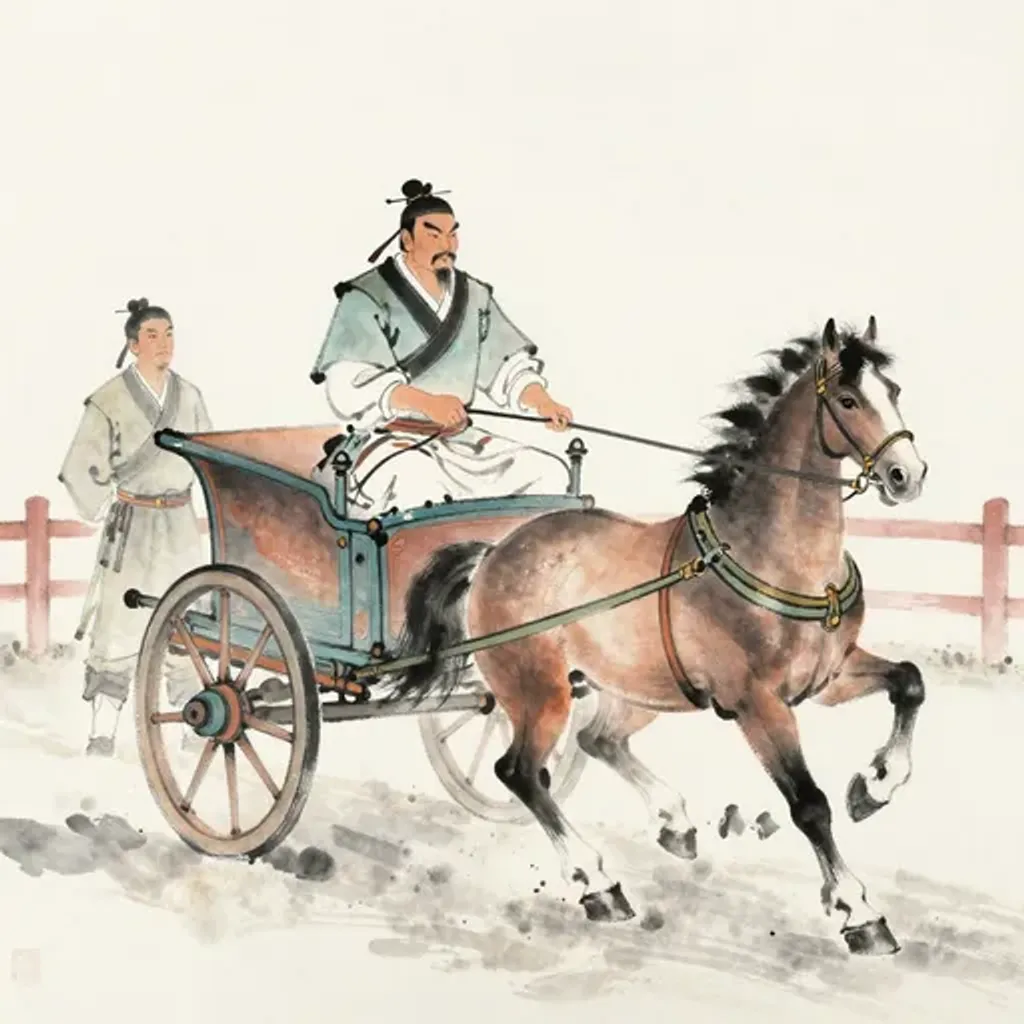
王良善御,伯樂知馬。周旋步趨,行中規矩。止息有節,延命壽考。
Wang Liang excels at driving; Bole understands horses. Circling and stepping in measured pace, movement follows compass and square. Rest and pause have proper rhythm; life and years are extended long.
— Jiao Yanshou, Yilin (Forest of Changes), 1st century BC
Commentary
Water over lake calibrates every movement, and this verse celebrates the masters of calibration. Wang Liang excels at chariotry; Bole knows horses at a glance. Their movements circle and advance in perfect accord with the rules — every turn measured, every step within the marks. Stopping and resting are themselves rhythmic, conducted with limitation's own art. The result: long life and extended years. The verse links physical mastery to longevity — those who move in perfect measure waste nothing and endure. From Limitation to the Marrying Maiden, the transformation introduces the one relationship where measure matters most. Thunder over lake — impetuous energy meeting joyful yielding — yet the gentleman knows that even unions must end wisely. The charioteer's disciplined restraint extends into the wisdom of knowing how relationships begin, persist, and conclude.
節 → 豐
Hexagram 60 → Hexagram 55: Abundance
Changing lines: 2, 3, 4, 5
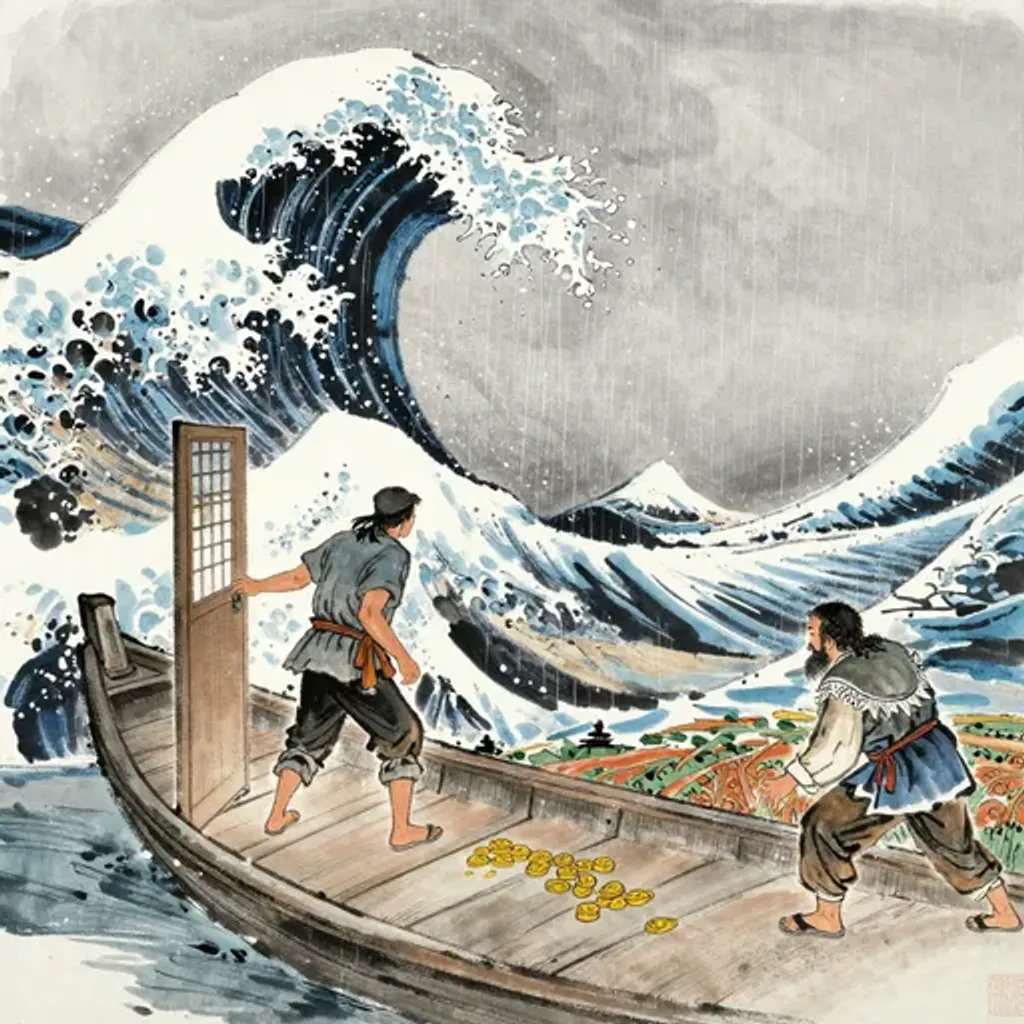
釋然遠咎,避患害早。田獲三狐,以貝為寶。
Leaving the boat and stepping ashore just as the waves arrive; folding the umbrella and entering the door just as the rain pours. Finding lost gold on the road and returning it to its owner — the owner rewards with fine farmland.
— Jiao Yanshou, Yilin (Forest of Changes), 1st century BC
Commentary
Water over lake times every action precisely, and this verse illustrates perfect timing through its original text. The rewritten verse is modern; the original reads: 'Released from blame and distanced from error, one avoids disaster early. Hunting in the fields, three foxes are caught, with cowrie shells as treasure.' The imagery combines timely withdrawal with fortunate gain: leaving before the wave strikes, folding the umbrella before entering the door. Every action anticipates the turning point. From Limitation to Abundance, the transformation floods the scene with fullness. Thunder and lightning arrive simultaneously — the peak moment when clarity and power coincide. Limitation's careful timing becomes Abundance's decisive instant. The verse celebrates those who, by knowing exactly when to act, transform modest foresight into magnificent reward.
節 → 旅
Hexagram 60 → Hexagram 56: The Wanderer
Changing lines: 1, 2, 3, 4, 5, 6
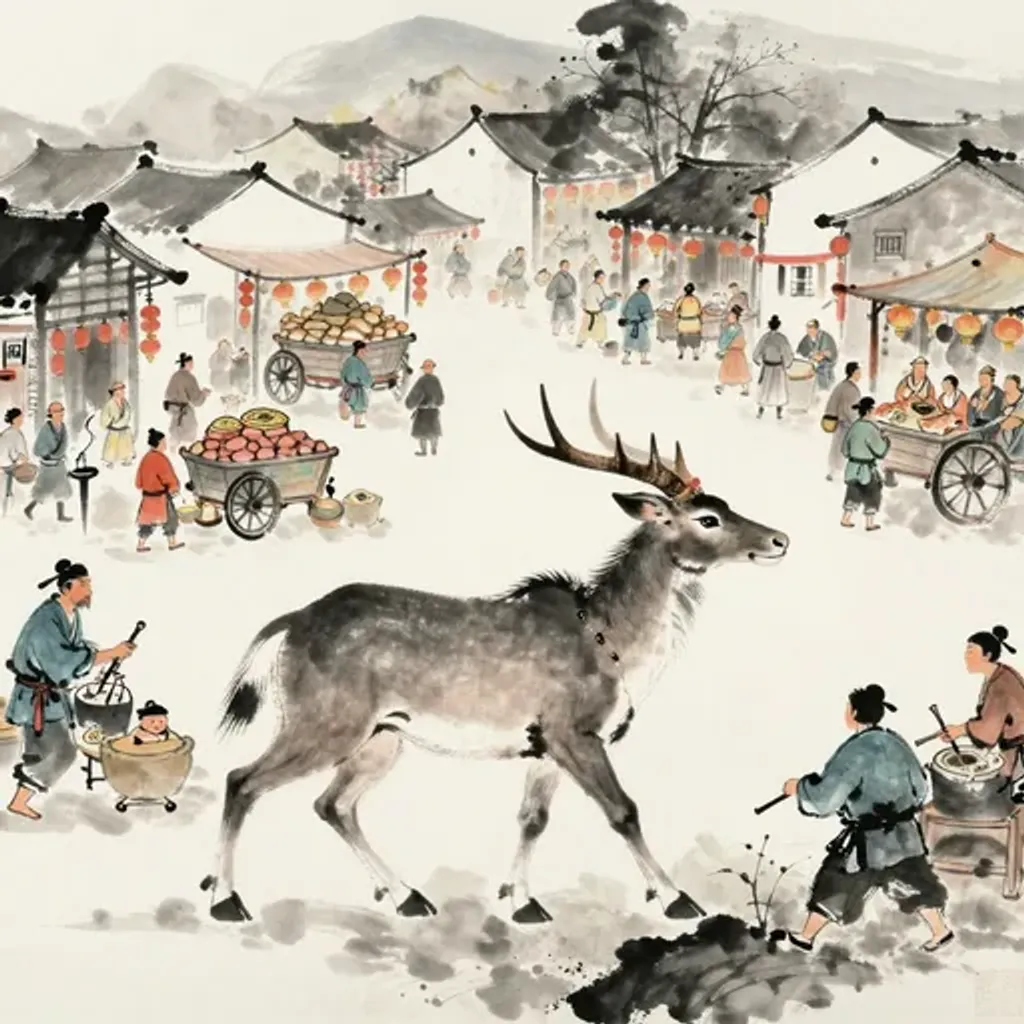
仁獸所處,國无凶咎。市賈十倍,復歸惠里。
Where the benevolent beast dwells, the state knows no misfortune. Market goods return tenfold; prosperity returns to the blessed village.
— Jiao Yanshou, Yilin (Forest of Changes), 1st century BC
Commentary
Water over lake establishes the environment within which all creatures thrive according to their nature. Where the benevolent beast dwells, the state knows no misfortune — the 'ren shou' (humane beast, i.e., the qilin) appears only under virtuous governance. Market prices increase tenfold, signaling prosperity, and trade returns to the quarter of kindness. The verse links auspicious omens to economic flourishing: moral governance attracts cosmic signs that in turn generate commercial confidence. From Limitation to the Wanderer, the transformation sends this prosperity onto the road. Fire upon the mountain illuminates the traveler's path; the gentleman uses clarity cautiously in his judgments. Limitation's stable prosperity becomes the Wanderer's careful navigation of foreign terrain — the merchant who knows his home market well enough to trade successfully abroad.
節 → 巽
Hexagram 60 → Hexagram 57: The Gentle Wind
Changing lines: 1, 3, 6
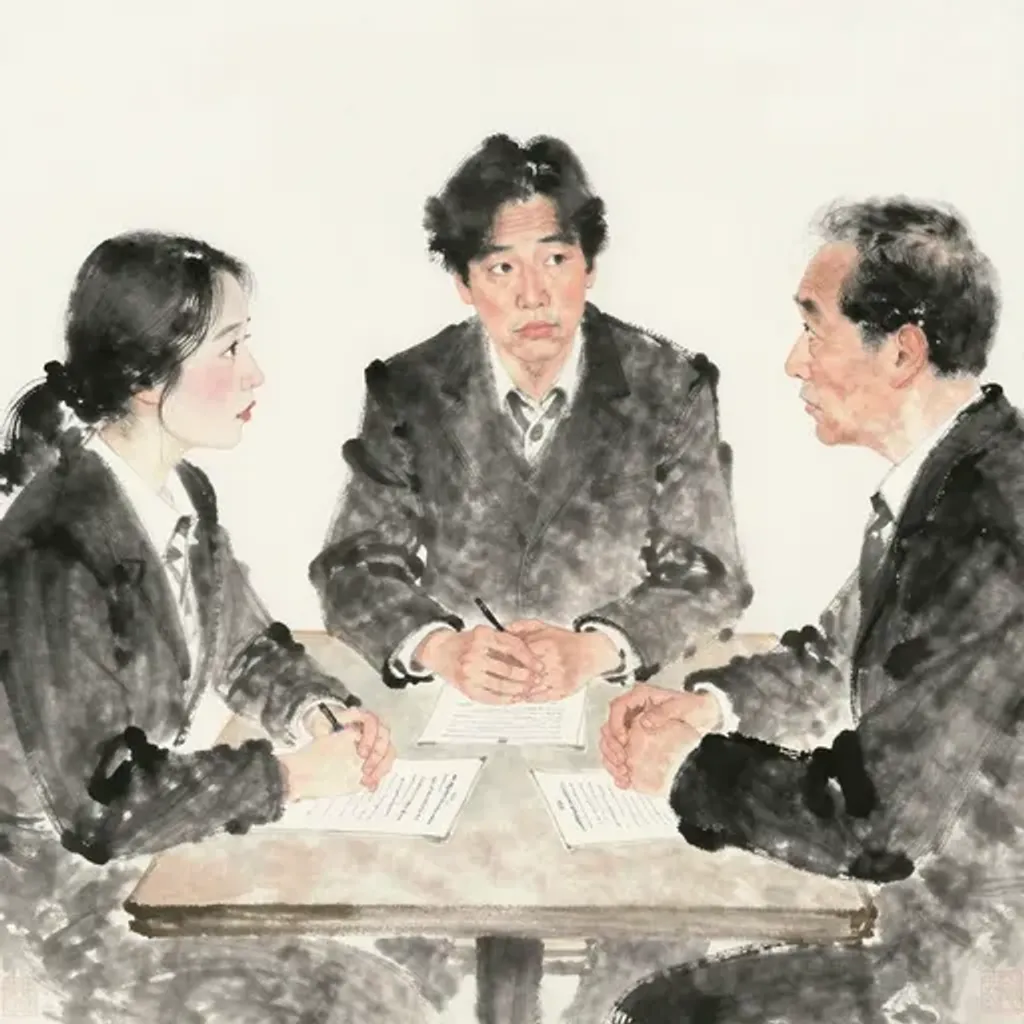
六目俱視,各欲有志。心意不同,乖戾生訟。
Six eyes all watching, each harboring their own designs. Hearts and intentions differ; discord leads to dispute.
— Jiao Yanshou, Yilin (Forest of Changes), 1st century BC
Commentary
Water over lake should align diverse perspectives toward a shared measure, but this verse shows alignment shattered. Six eyes stare in different directions, each pursuing its own agenda. Hearts and minds diverge, and the dissonance breeds litigation. The 'six eyes' likely represents three people or three factions — each seeing differently, each wanting differently, unable to form consensus. From Limitation to the Gentle, the transformation doubles the wind: penetrating influence applied and reapplied. The gentleman issues his commands and carries them out — but when six eyes refuse to align, even the gentlest repeated instruction generates only more friction. The Gentle's power of gradual permeation fails against a group that has already fractured at the level of fundamental intention. Limitation without shared purpose produces not order but quarrels.
節 → 兌
Hexagram 60 → Hexagram 58: The Joyous Lake
Changing lines: 4
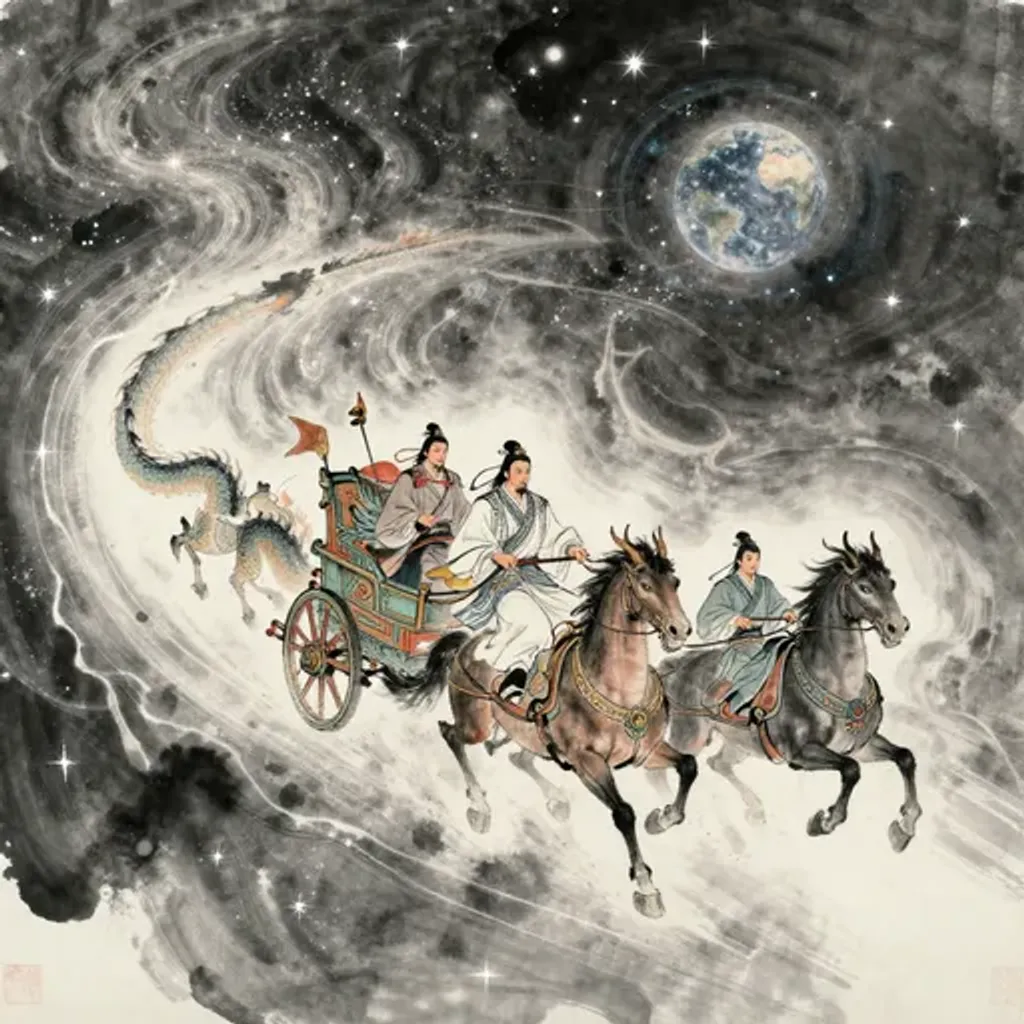
傅說王良,驂御四龍。周徑萬里,无有危凶。
Fu Yue and Wang Liang together harness and drive four dragons. Circling a perimeter of ten thousand li; encountering no peril or misfortune.
— Jiao Yanshou, Yilin (Forest of Changes), 1st century BC
Commentary
Water over lake calibrates capacity to purpose, and this verse celebrates the supreme calibration of talent to task. Fu Yue, the former slave laborer whom King Wu Ding discovered through a prophetic dream and raised to chief minister, and Wang Liang, the legendary charioteer — together they harness and drive four dragons. They circle a diameter of ten thousand li without encountering danger. The verse pairs the greatest administrator with the greatest driver, placing them in command of cosmic steeds. From Limitation to the Joyous, the transformation reveals the delight that mastery brings. Doubled lakes — friends learning together, sharing insight across open water. Limitation's precise matching of talent to role becomes Joy's celebration of collaborative excellence. When the right people occupy the right positions, ten thousand li feel like a garden stroll.
節 → 渙
Hexagram 60 → Hexagram 59: Dispersion
Changing lines: 1, 6
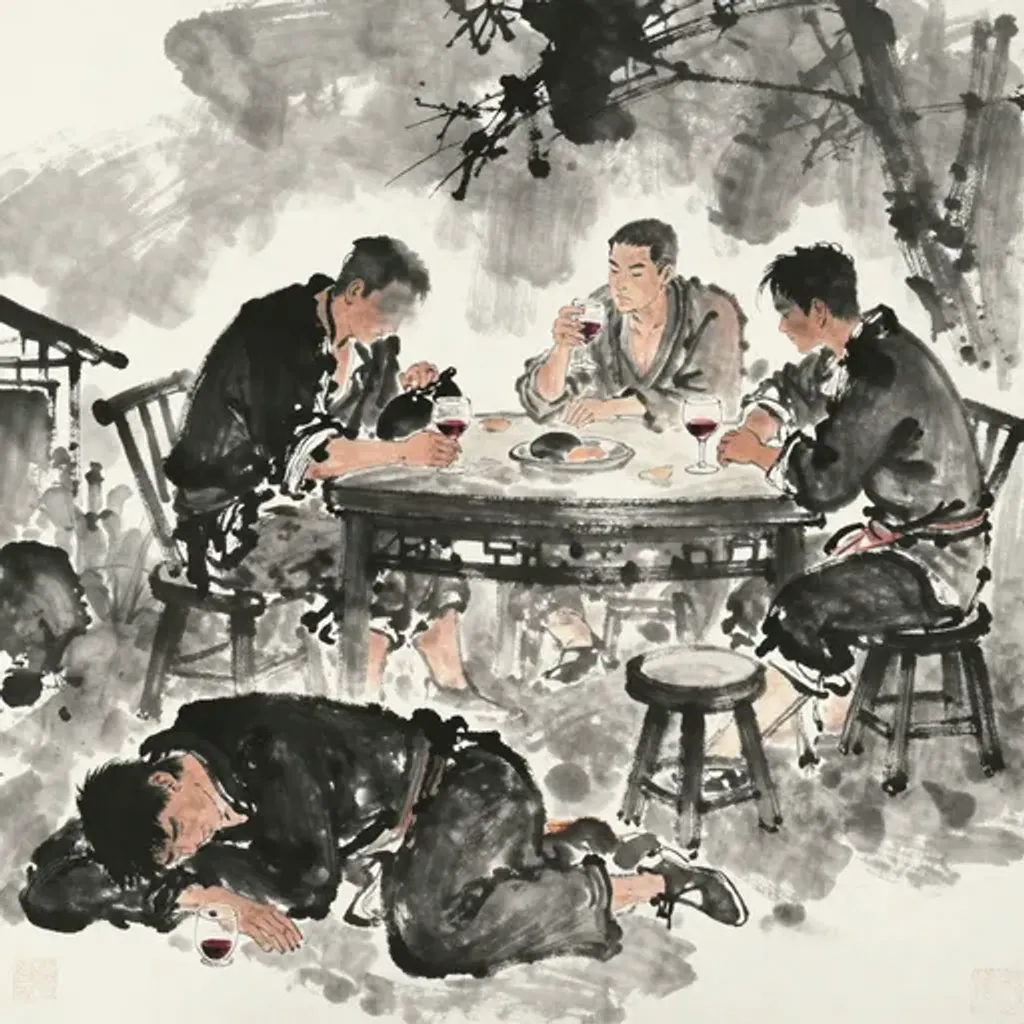
仲伯季叔,日暮寢寐。醉醒失明,喪其貝囊,臥拜道旁。
The four brothers, as evening falls, sink into drunken sleep. Sobering blind in darkness, their money-purse lost; they lie bowing by the roadside.
— Jiao Yanshou, Yilin (Forest of Changes), 1st century BC
Commentary
Water over lake regulates the household's order, but this verse shows that order dissolving into drunken chaos. The brothers — 'zhong, bo, ji, shu,' the four ranks of sibling seniority — as evening falls, sink into sleep. Drunk past awareness, they lose their sight along with their purse of cowrie shells, and end up prostrate by the roadside, bowing to no one. The verse is a tableau of collective degeneration: an entire generation of brothers squandering their patrimony in a single night of excess. From Limitation to Dispersion, the transformation scatters what remains. Wind over water — everything that was consolidated now disperses. Limitation's safeguards, drowned in wine, produce Dispersion's formless dissolution. The brothers' treasures scatter like wind across water, and the household that should have been their shelter becomes an empty word.
節 → 節
Hexagram 60 → Hexagram 60: Limitation
No changing lines — the hexagram is unchanged
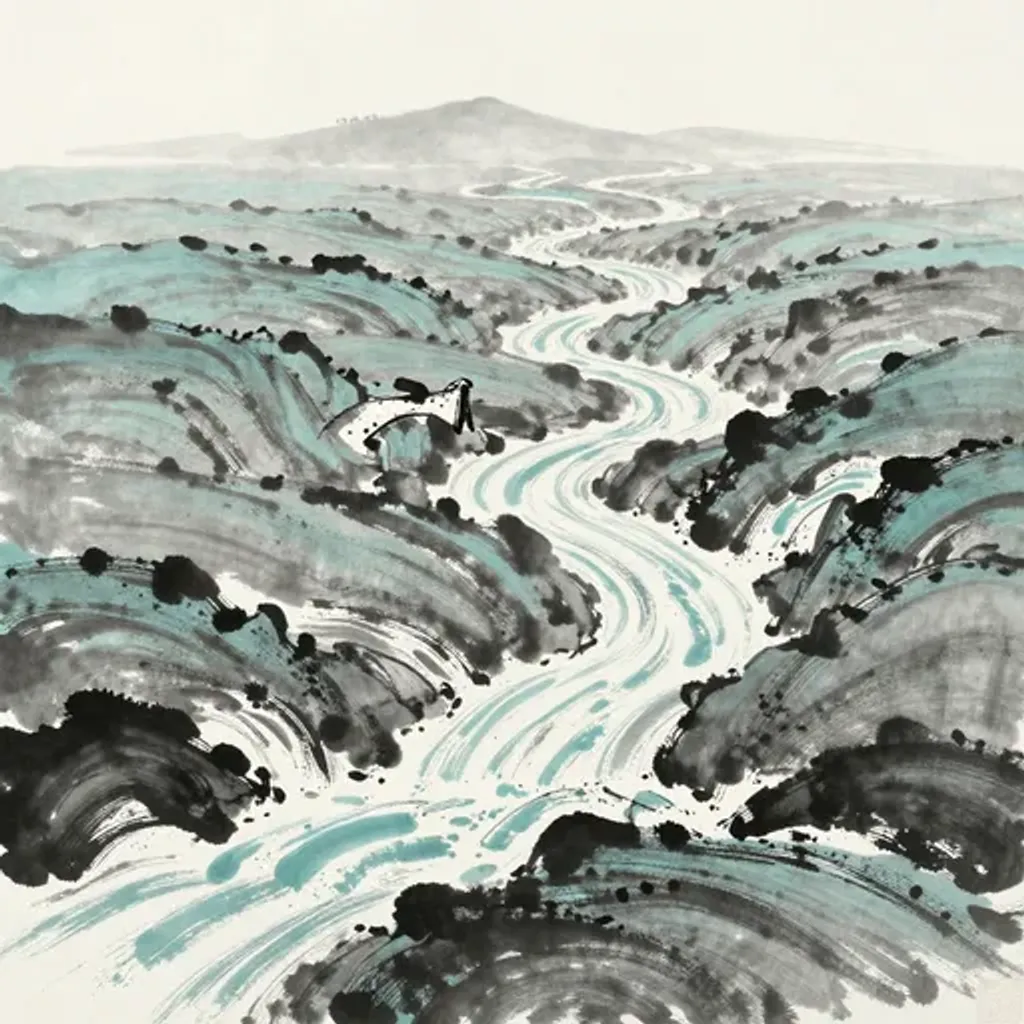
海為水王,聰聖且明。百流歸德,无有叛逆,常饒優足。
The sea is king of waters, perceptive, sagely, and wise. A hundred streams return in homage; none rebel or resist. Ever abundant, ever ample.
— Jiao Yanshou, Yilin (Forest of Changes), 1st century BC
Commentary
Water over lake doubled — Limitation reflecting itself. The sea is king of all waters, wise and perceptive in its rule. A hundred rivers return to its virtue, and none rebels or defects; abundance and sufficiency are constant. The verse celebrates the source hexagram's own principle in its purest form: the sea does not chase the rivers — it simply occupies the lowest point, and all waters flow toward it naturally. Its sovereignty is the sovereignty of position, not force. From Limitation to Limitation, the identity transformation affirms that true regulation needs no external enforcement. When the measure itself is just, compliance is spontaneous. The sea's '聰聖且明' — wise, sagacious, and clear — describes the ideal of governance as a gravitational field that orders the world simply by being what it is.
節 → 中孚
Hexagram 60 → Hexagram 61: Inner Truth
Changing lines: 6
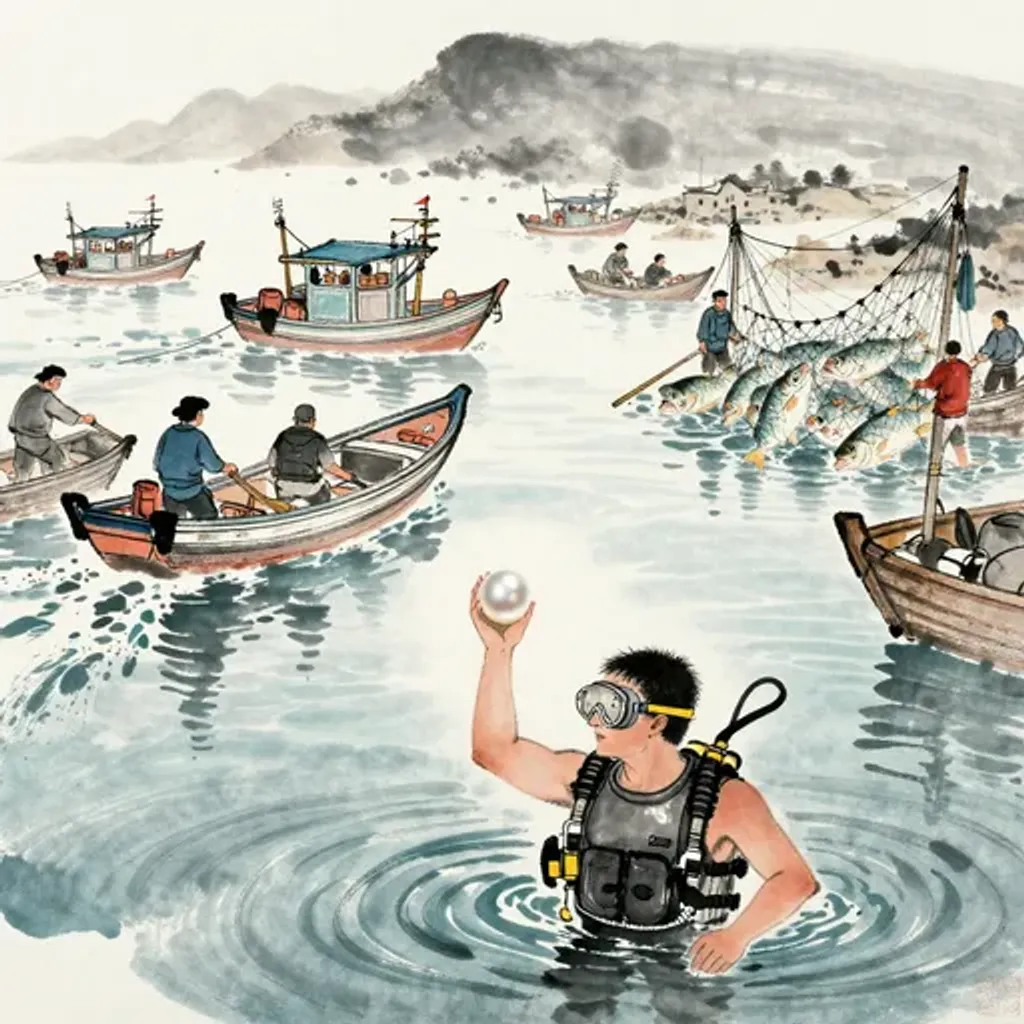
江有寶珠,海多大魚。亟行疾至,所以得財。
The river holds precious pearls; the sea teems with great fish. Travel swiftly, arrive quickly; thus one obtains wealth.
— Jiao Yanshou, Yilin (Forest of Changes), 1st century BC
Commentary
Water over lake guards its resources, and this verse reveals those resources in their most concentrated form. Rivers hold pearls; seas teem with great fish. Move swiftly, arrive quickly, and wealth is yours for the taking. The verse combines natural abundance with the urgency of seizing the moment — treasures exist, but only the swift and decisive can claim them. From Limitation to Inner Truth, the transformation deepens the meaning of these treasures. Wind over lake — the crane cries from the marsh and its young respond. Inner Truth operates through sincerity that penetrates without force, like wind stirring the lake's surface. Limitation's careful husbanding of resources becomes Inner Truth's genuine connection: the pearl is not seized by force but recognized through authentic perception. Speed here is not greed but the quickness of one who sees truly and acts without hesitation.
節 → 小過
Hexagram 60 → Hexagram 62: Small Exceeding
Changing lines: 1, 2, 3, 4, 5
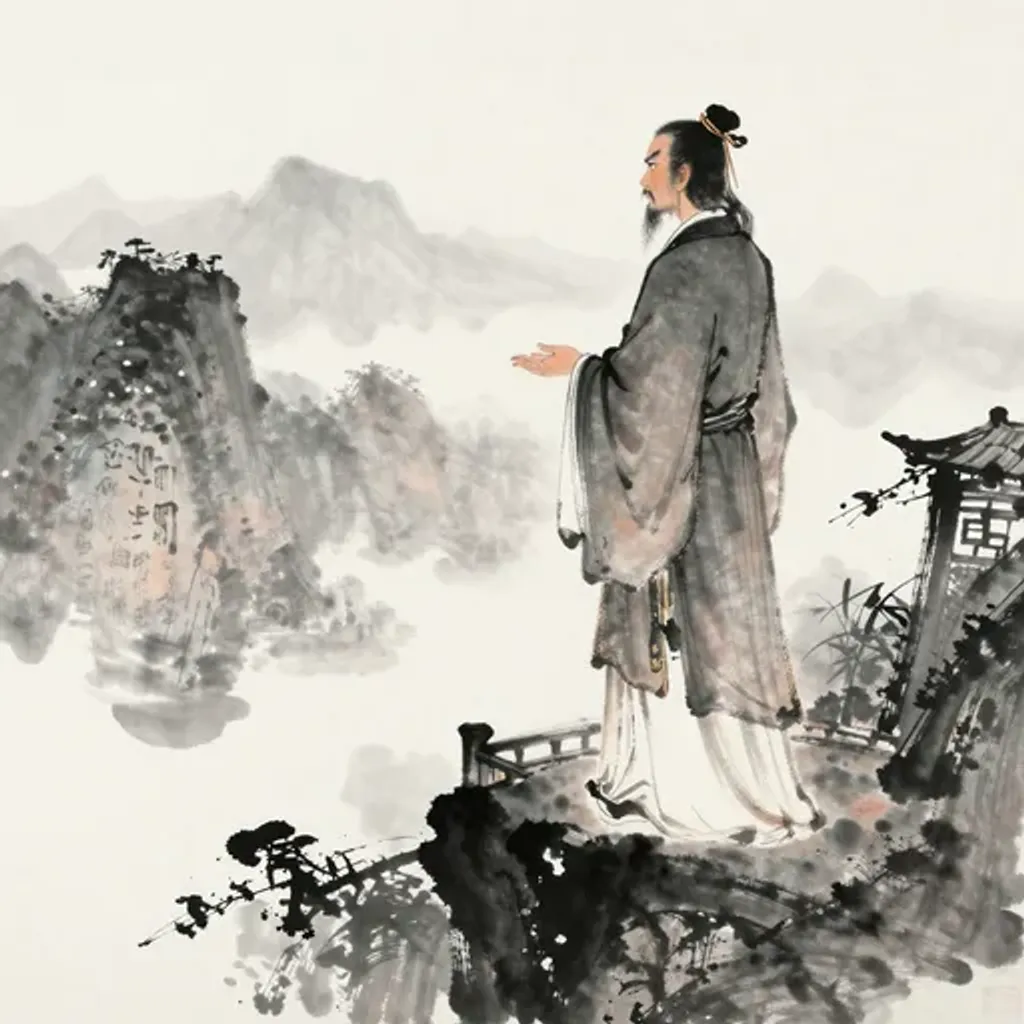
遠視千里,不見所持。離婁之明,无益於耳。
Seeing far, a thousand li, yet not grasping what is held. Li Lou's legendary vision brings no benefit to the ears.
— Jiao Yanshou, Yilin (Forest of Changes), 1st century BC
Commentary
Water over lake measures capacity accurately, and this verse demonstrates the folly of mismatched capacities. One can see a thousand li into the distance but cannot perceive what is held in one's own hand. Li Lou's legendary eyesight — famed in the Mencius for discerning the tip of an autumn hair — is of no benefit to the ear. The verse names a specific failure of category: applying the wrong faculty to the wrong task. Acute vision cannot compensate for deafness, just as strength cannot replace wisdom. From Limitation to Small Exceeding, the transformation amplifies this mismatch. Thunder over mountain — the small exceeds, flying too high, straining beyond its capacity. Small Exceeding counsels that going slightly too far is acceptable in mourning, but overreach in ordinary matters is dangerous. Li Lou's eyes, stretched beyond their domain, embody exactly this: a capacity pushed past its proper limit into irrelevance.
節 → 既濟
Hexagram 60 → Hexagram 63: After Completion
Changing lines: 2, 3
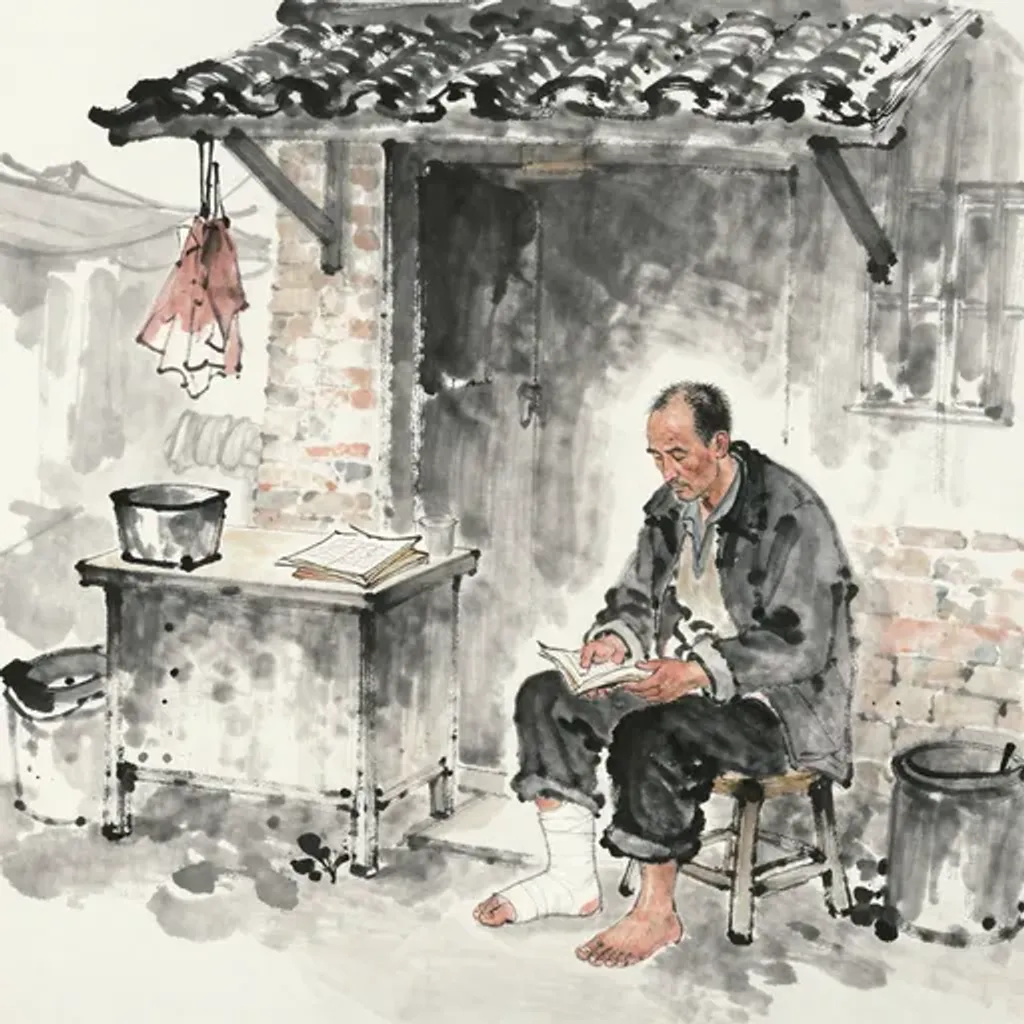
弱足刖跟,不利出門。市賈无嬴,折亡為患。
With weak feet and severed heels, going out brings no advantage. Market trade yields no gain; loss and ruin become the affliction.
— Jiao Yanshou, Yilin (Forest of Changes), 1st century BC
Commentary
Water over lake regulates movement, and this verse depicts movement crippled at its source. Weak-footed with severed heels — the punishment of foot-cutting (yue) that left a person permanently hobbled — one cannot profit from going out. The market yields no gain; losses multiply as the only harvest. The verse combines physical mutilation with economic failure: the one whose mobility has been destroyed cannot participate in the commerce that sustains life. From Limitation to After Completion, the transformation presents a world where everything is in its proper place — water above fire, perfectly ordered — yet the verse's subject cannot benefit from this completion. The order exists, the market functions, but the maimed person stands outside it. After Completion's perfection becomes a closed system that excludes the damaged. Limitation taken to the flesh becomes permanent exile from prosperity.
節 → 未濟
Hexagram 60 → Hexagram 64: Before Completion
Changing lines: 1, 4, 5, 6
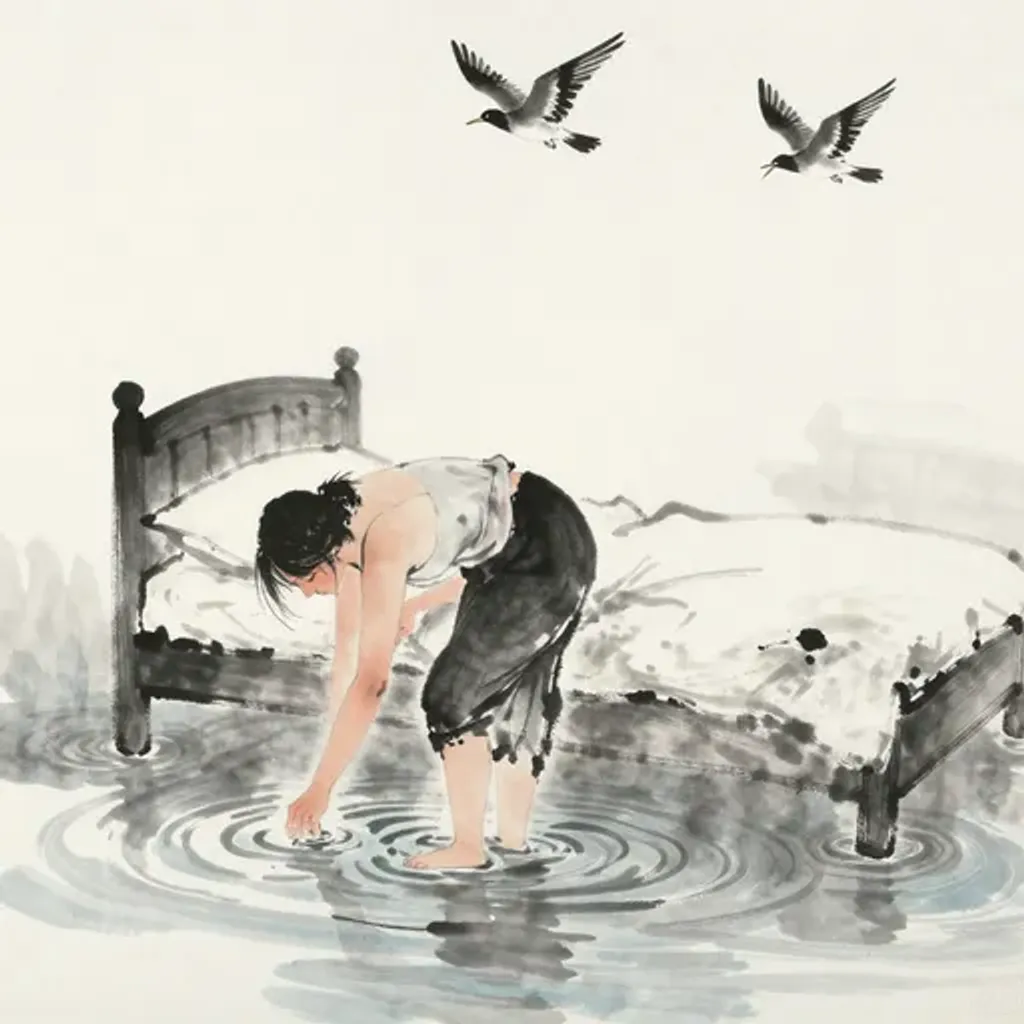
利盡得媒,時不我來。鳴雌深涉,寡宿獨居。
Profit exhausted, the matchmaker obtained; yet the time does not come to me. The calling hen wades deep waters; she nests and dwells alone.
— Jiao Yanshou, Yilin (Forest of Changes), 1st century BC
Commentary
Water over lake measures the terms of union, and this verse finds those terms unfulfilled. Resources are exhausted in seeking a matchmaker, yet the right moment refuses to arrive. A lone female bird wades deep water, calling — a widow nesting in solitude. The verse layers three images of failed connection: the matchmaker who cannot be secured, the season that will not turn, and the bird whose mate never comes. From Limitation to Before Completion, the transformation suspends resolution indefinitely. Fire over water — the two elements that should complete each other remain unable to interact. Everything is almost in place but nothing is consummated. Limitation's careful preparation meets Before Completion's permanent threshold: the bride price is gathered, the matchmaker sought, the call sent forth across deep water — yet the far shore remains unreached, and the solitary bird nests alone.