Transformations of Hexagram 1
Every line of change out of Hexagram 1 乾 The Creative, with the Yilin verse for each of the 64 resulting hexagrams, its translation, and the original ink brush artwork.
乾 → 乾
Hexagram 1 → Hexagram 1: The Creative
No changing lines — the hexagram is unchanged
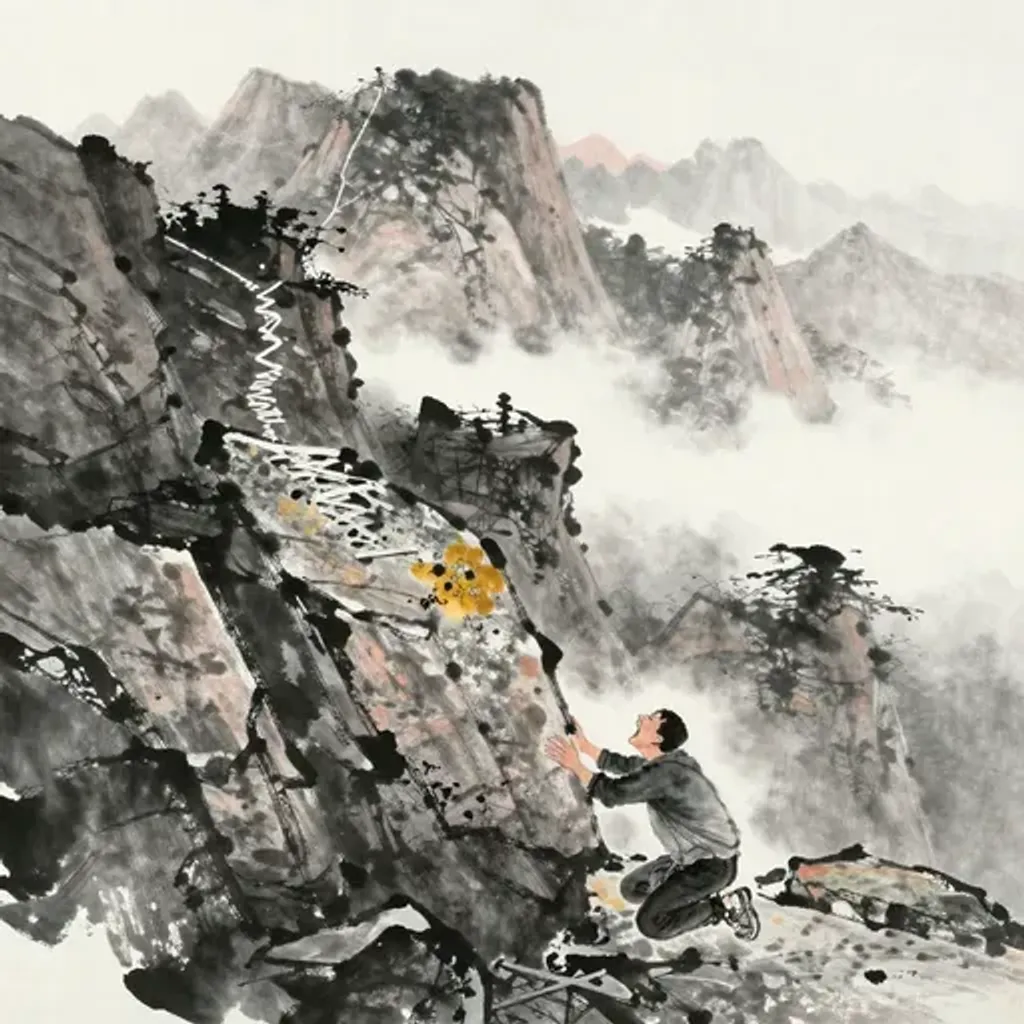
道陟石阪,胡言連蹇。譯瘖且聾,莫使道通。請謁不行,求事無功。
The road climbs a stone slope; words falter and stumble. The interpreter is mute and deaf; none can make the way clear. Petitions go unheard; endeavors bear no fruit.
— Jiao Yanshou, Yilin (Forest of Changes), 1st century BC
Commentary
Doubled heaven drives ceaselessly forward, yet here the road climbs a stone slope and every step falters. The interpreter is mute and deaf; no message passes through. Petitions go unanswered, undertakings yield nothing. When Qian meets itself, pure yang has no receptive counterpart — all force, no channel. The image is not weakness but blockage: a powerful signal broadcast into a void where no receiver exists. From Creative to Creative, the transformation warns that initiative without communication is merely noise. Even heaven's tireless motion accomplishes nothing when the path itself refuses to conduct it.
乾 → 坤
Hexagram 1 → Hexagram 2: The Receptive
Changing lines: 1, 2, 3, 4, 5, 6
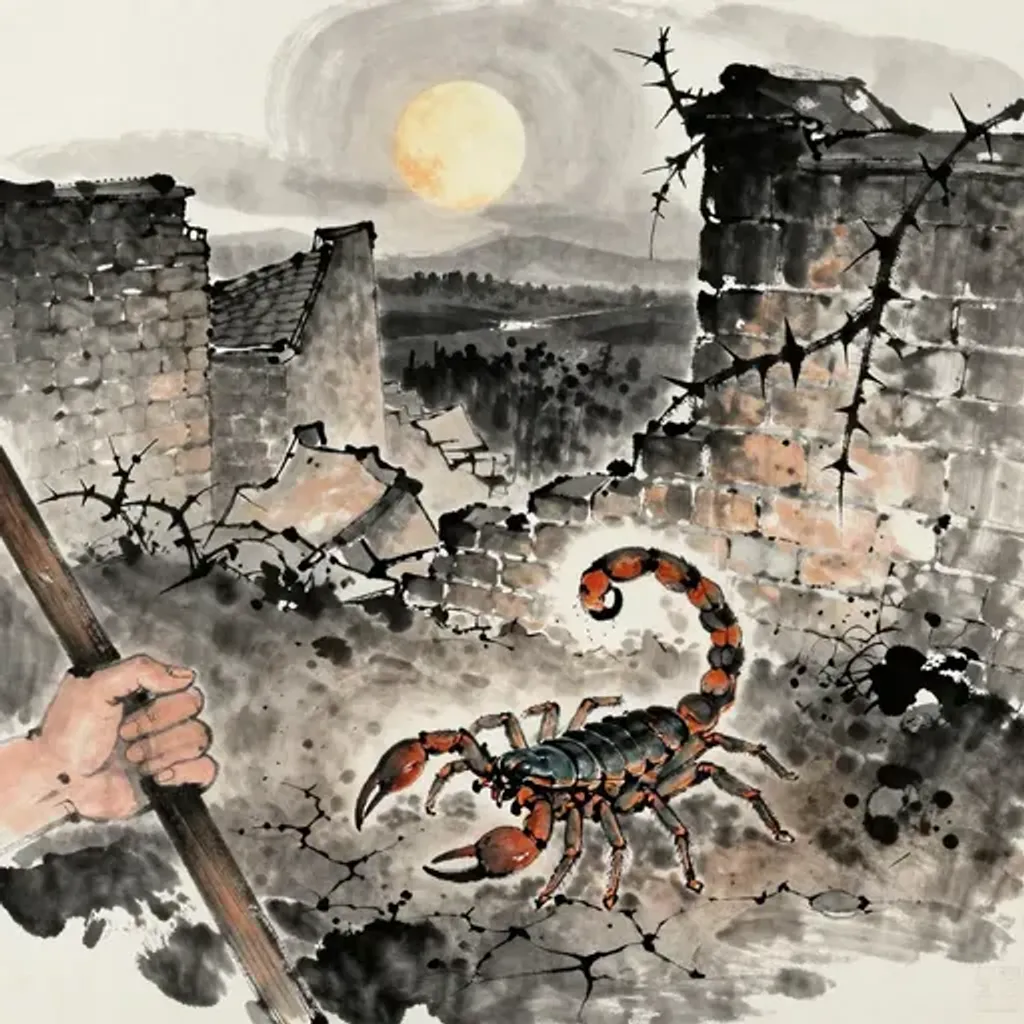
招殃來螫,害我邦國;病在手足,不得安息。
Inviting calamity, drawing stings; harming our domain. The affliction is in the limbs; one finds no rest.
— Jiao Yanshou, Yilin (Forest of Changes), 1st century BC
Commentary
Heaven descends into earth, and with it calamity arrives like a venomous sting. The harm penetrates the state itself; the affliction strikes hands and feet — the instruments of action — leaving no rest. From the Creative to the Receptive, supreme yang collapses into supreme yin, the most radical transformation possible. The verse captures this as invasion from without and paralysis within: what stings the body politic lodges in its very limbs. The earth's vast tolerance, turned passive, becomes vulnerability rather than strength. Where Creative would drive forward, the Receptive here absorbs disaster without resistance, and the state that invited calamity finds itself unable to shake it off.
乾 → 屯
Hexagram 1 → Hexagram 3: Difficulty at the Beginning
Changing lines: 2, 3, 4, 6
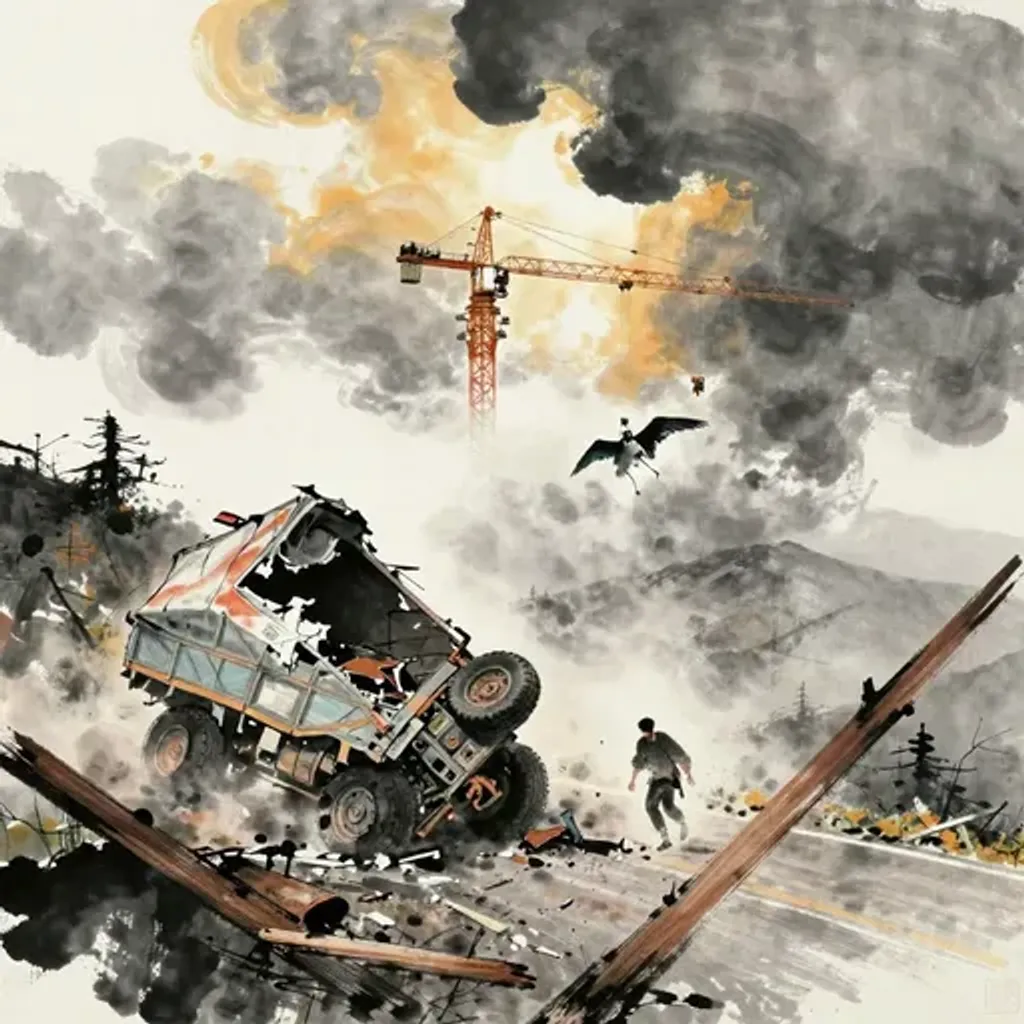
陽孤亢極,多所恨惑,車傾蓋亡,身常憂惶;乃得其願,雌雄相從。
Yang, solitary and at its extreme, meets much resentment and bewilderment. The cart overturns, the canopy lost; the body is ever anxious and afraid. Yet at last the wish is gained; female and male follow together.
— Jiao Yanshou, Yilin (Forest of Changes), 1st century BC
Commentary
Pure yang reaches its solitary extreme — isolated, regretful, confused. The carriage overturns and its canopy is lost: status collapses when ambition outstrips support. Yet the verse pivots sharply: desire is fulfilled, male and female come together at last. From Creative to Difficulty at the Beginning, heaven's lonely drive encounters the birth-struggle of cloud and thunder. Zhun's image — rain and thunder at the threshold of creation — requires precisely this: yang's overextension must break down before new life can emerge. The overturned carriage is not final defeat but the necessary humbling that allows union. What was isolated becomes paired; what was rigid becomes generative.
乾 → 蒙
Hexagram 1 → Hexagram 4: Youthful Folly
Changing lines: 1, 3, 4, 5
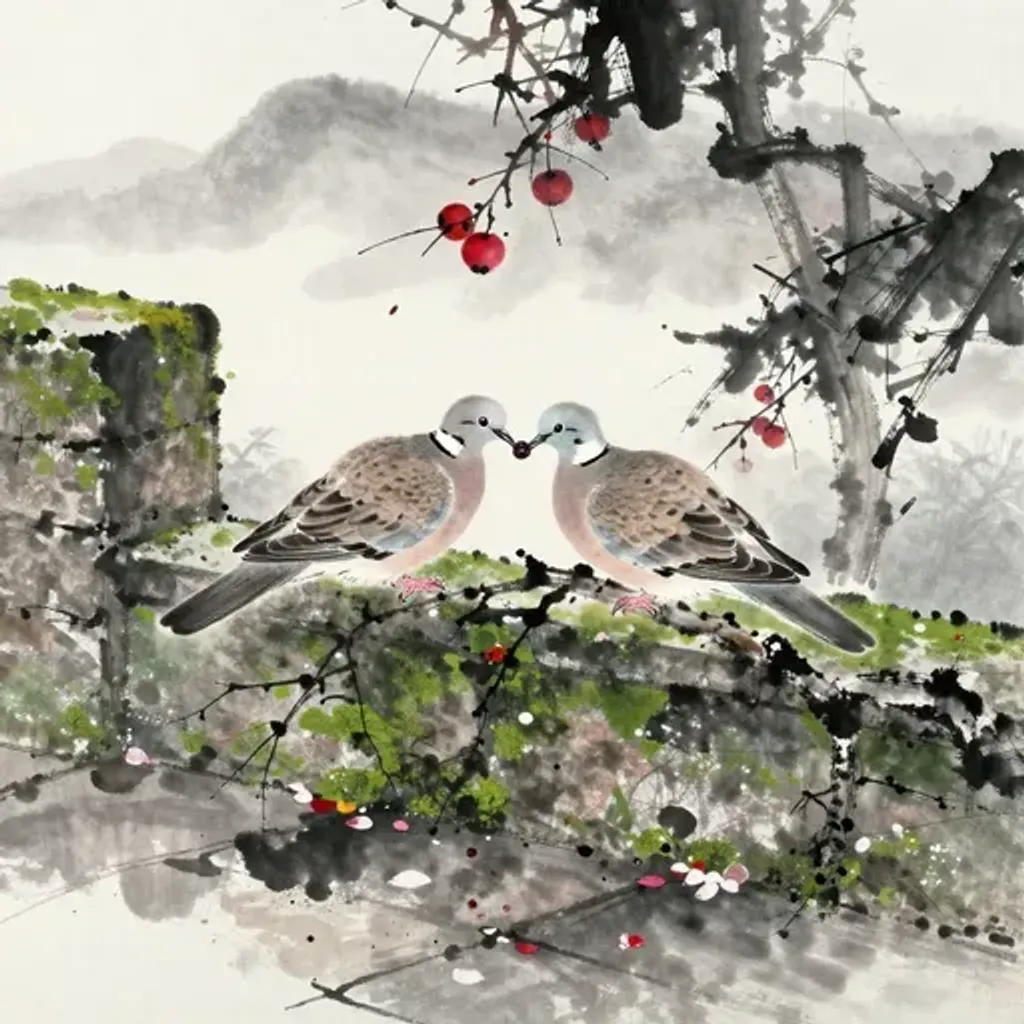
鴶鵴鳲鳩,專一無尤。君子是則,長受嘉福。
The cuckoo and the turtledove, devoted and without fault. The noble man takes this as his model and long receives fine blessings.
— Jiao Yanshou, Yilin (Forest of Changes), 1st century BC
Commentary
The cuckoo and the turtledove — birds renowned in the Shijing for devotion and constancy. The turtledove feeds its young equally, never favoring one over another, an image the Book of Songs uses for impartial nurture. The verse declares: take these birds as your model, remain single-minded and blameless, and lasting good fortune follows. From Creative to Youthful Folly, heaven's driving force meets the spring emerging beneath the mountain. Gen's stillness over Kan's flowing water suggests the mentor who channels raw energy patiently. The constancy of the cuckoo embodies this: not forceful instruction but steady, even-handed guidance that shapes youthful potential without breaking it.
乾 → 需
Hexagram 1 → Hexagram 5: Waiting
Changing lines: 4, 6
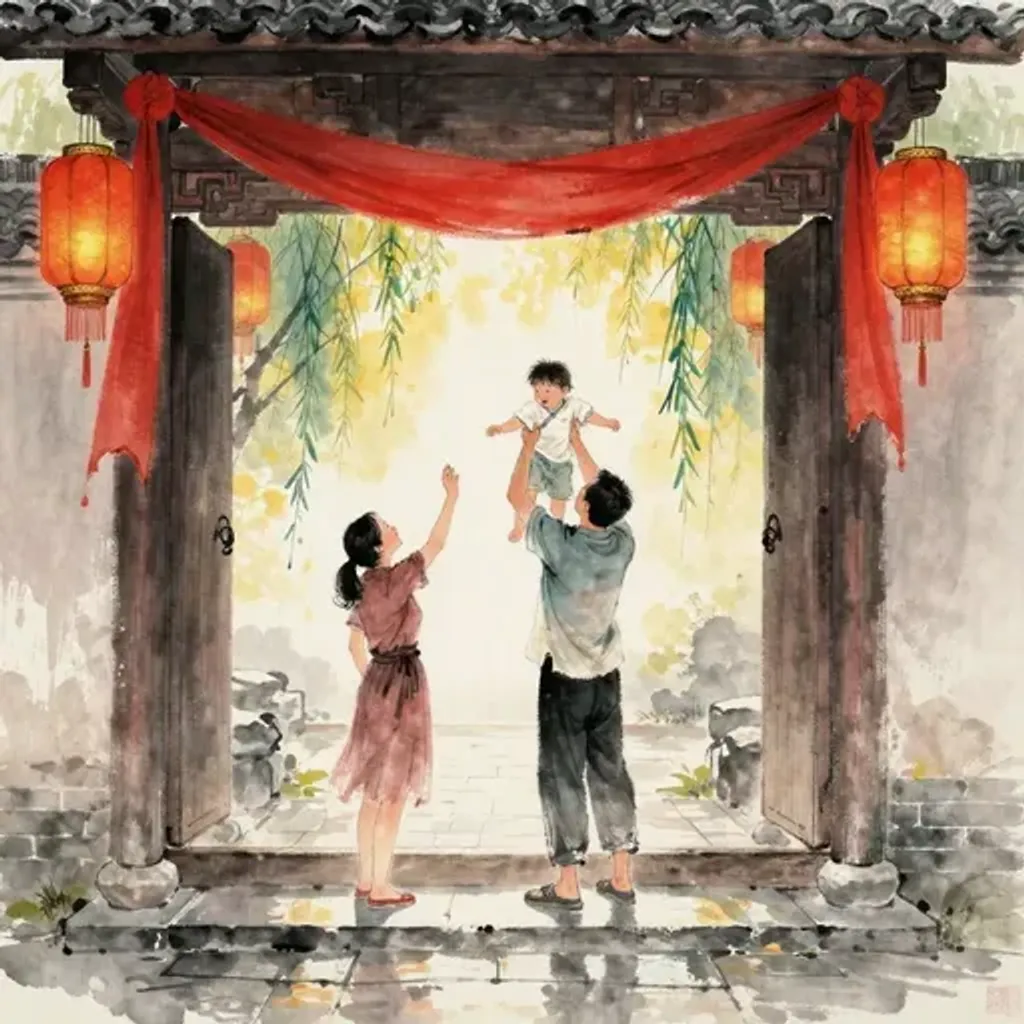
目瞤足動,喜如其願,舉家蒙寵。
The eye twitches, the foot stirs; joy comes as wished. The whole household receives favor.
— Jiao Yanshou, Yilin (Forest of Changes), 1st century BC
Commentary
The eye twitches and the foot stirs — in Han-dynasty folk omen lore, involuntary bodily signs that herald good news. Joy arrives as wished; the entire household receives favor. From Creative to Waiting, heaven's impetus encounters clouds gathering above — Water over Heaven, the image of patience before nourishment arrives. The verse captures the moment just before fulfillment: the body already senses what the mind has not yet confirmed. Need's counsel is to wait with confidence, enjoying food and drink, trusting that what is due will come. The twitching eye and stirring foot are the body's intuition that heaven's timing is about to deliver.
乾 → 訟
Hexagram 1 → Hexagram 6: Conflict
Changing lines: 1, 3
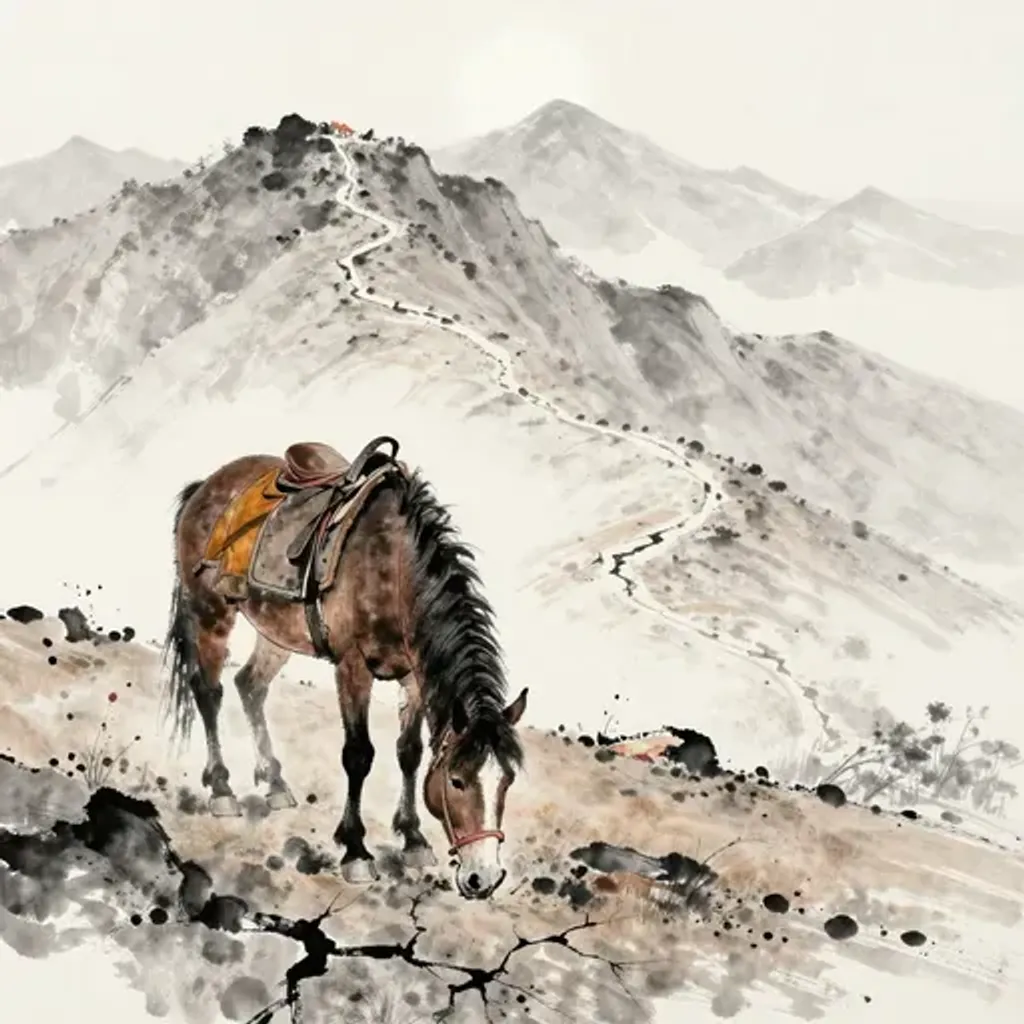
罷馬上山,絕無水泉。喉焦唇乾,舌不能言。
A weary horse climbs the mountain; there is utterly no water or spring. Throat parched, lips dry; the tongue cannot speak.
— Jiao Yanshou, Yilin (Forest of Changes), 1st century BC
Commentary
An exhausted horse climbs a mountain where no spring exists. Throat parched, lips cracked, the tongue cannot speak. From Creative to Conflict, heaven and water move in opposite directions — the very image of things at cross-purposes. The verse strips this cosmic opposition down to visceral suffering: energy expended uphill with no water to sustain it. Conflict's counsel is to plan carefully from the start, yet here the journey was undertaken without securing the most basic resource. The horse labors, the rider is mute with thirst. When heaven's drive opposes the water it needs, even the strongest initiative desiccates into silence.
乾 → 師
Hexagram 1 → Hexagram 7: The Army
Changing lines: 1, 3, 4, 5, 6
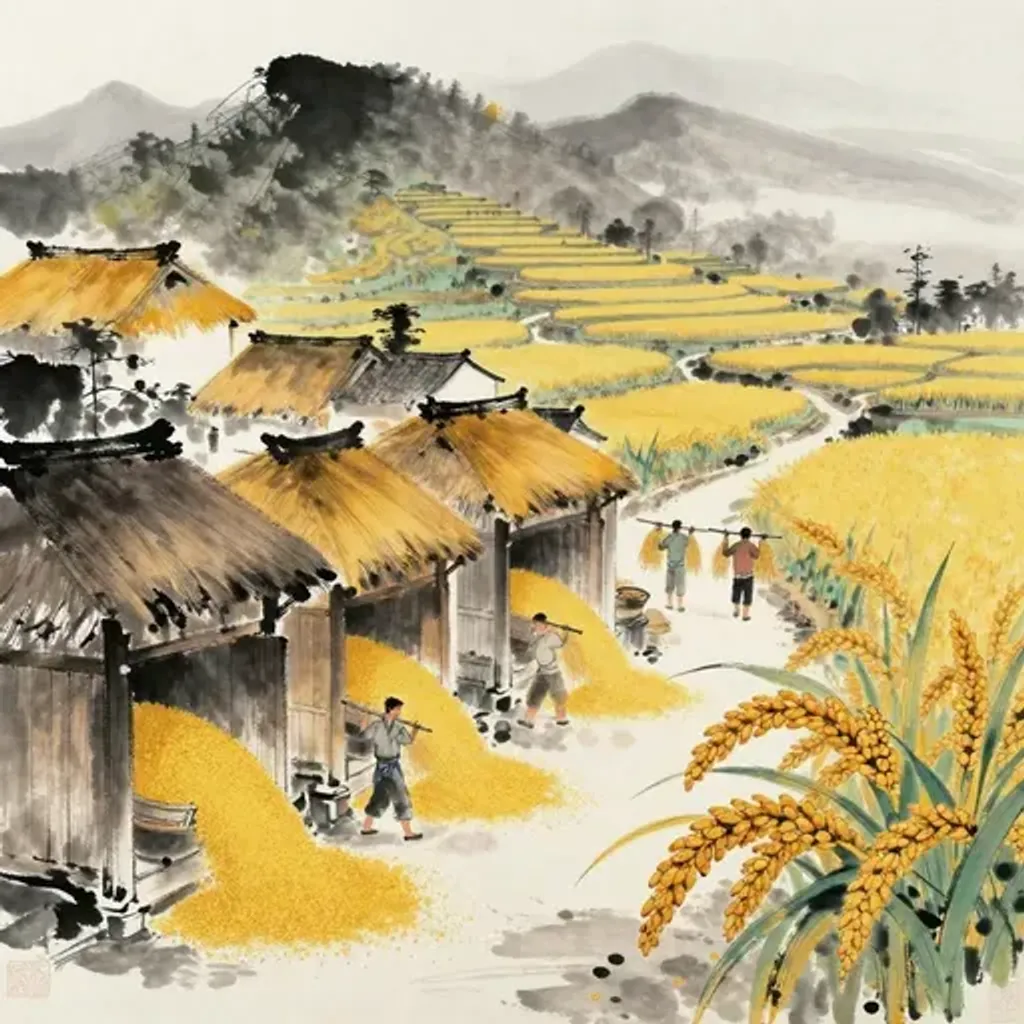
倉盈庾憶,宜稼黍稷。國家富有,人民蕃息。
Granaries brim, storehouses overflow; fit for planting millet and grain. The state is wealthy and abundant; the people multiply and flourish.
— Jiao Yanshou, Yilin (Forest of Changes), 1st century BC
Commentary
Granaries overflow with grain; millet and sorghum thrive in the fields. The state grows rich and the people multiply. From Creative to The Army, heaven's strength sinks into the earth and becomes water hidden within the ground — the image of disciplined reserves. The Army hexagram counsels accommodating the people and nurturing the multitude, and this verse embodies its ideal outcome: not conquest but abundance so great that the nation's storehouses cannot contain it. Heaven's creative power, administered through earth's receptive order, produces not war but agricultural prosperity. The army that truly sustains a state is its harvest.
乾 → 比
Hexagram 1 → Hexagram 8: Holding Together
Changing lines: 1, 2, 3, 4, 6
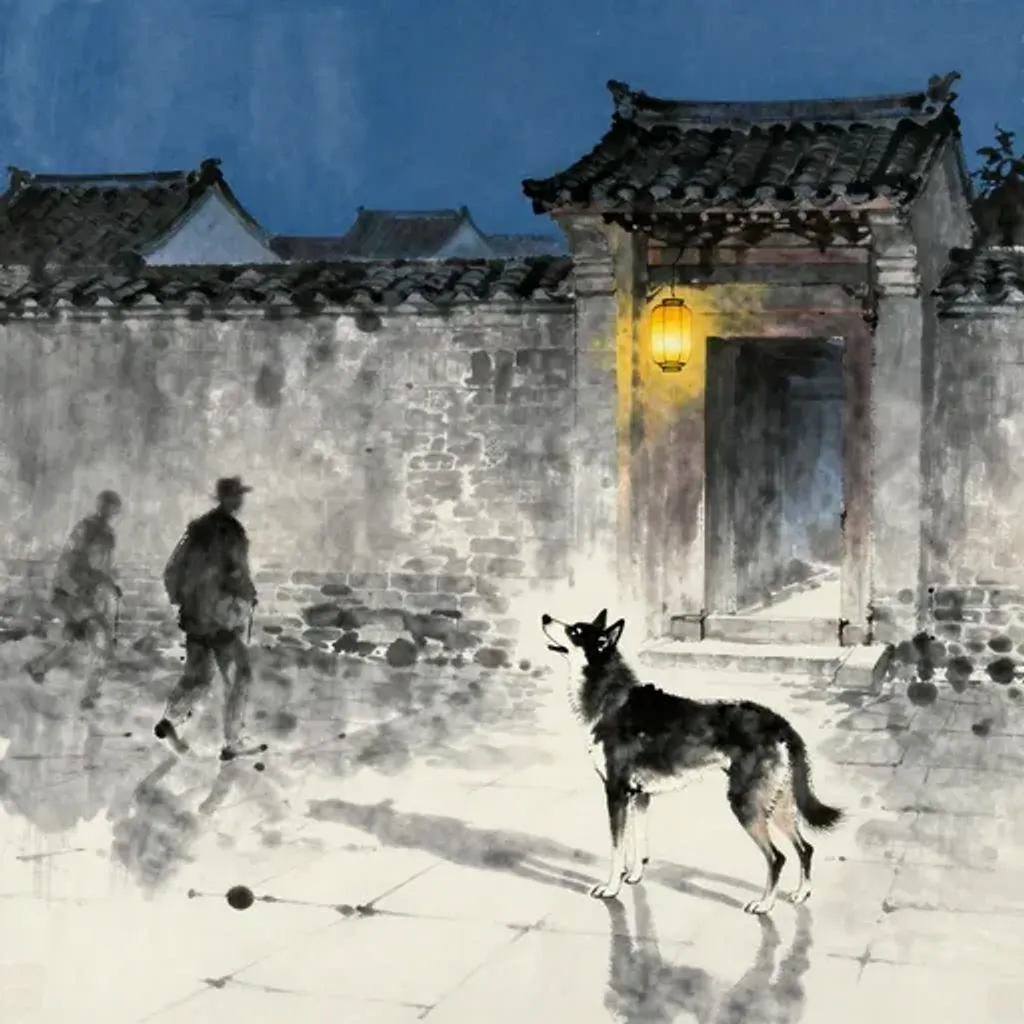
中夜狗吠,盜在墻外。神明祐助,銷散皆去。
In the middle of the night the dog barks; thieves lurk beyond the wall. By the spirits’ aid and protection, all scatter and depart.
— Jiao Yanshou, Yilin (Forest of Changes), 1st century BC
Commentary
Deep in the night a dog barks — thieves lurk beyond the wall. Yet divine protection intervenes, scattering and dispersing them all. From Creative to Holding Together, heaven's power finds expression as water resting upon the earth, the image of the ancient kings establishing their feudal network. The verse embodies Bi's mechanism: solidarity and mutual protection. The dog is the faithful sentinel; the divine aid represents the communal trust that makes walls effective. Thieves flee not because one household is strong, but because the bond between neighbors — the very meaning of 'holding together' — transforms individual vulnerability into collective security.
乾 → 小畜
Hexagram 1 → Hexagram 9: Small Taming
Changing lines: 4
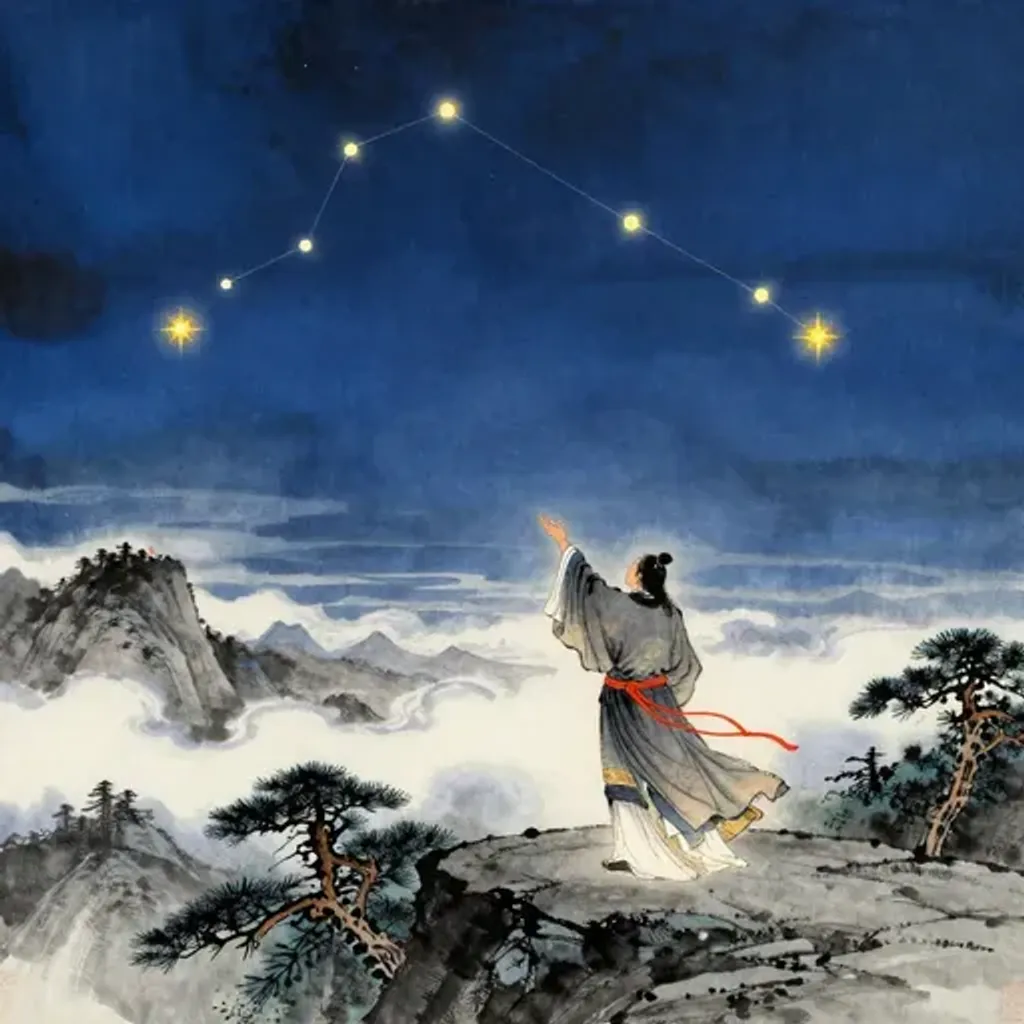
据斗運,樞順天無憂。與樂並居。
Grasping the Dipper and turning the pivot; following heaven without worry. Dwelling together with joy.
— Jiao Yanshou, Yilin (Forest of Changes), 1st century BC
Commentary
Grasping the Dipper's handle, the celestial pivot turns in accord with heaven's order — no worry, only shared joy. The Big Dipper's rotation through the seasons was the Han-dynasty astronomer's clock: its handle pointing east meant spring, south meant summer. From Creative to Small Taming, wind courses above heaven, gently restraining its force. The verse captures this as cosmic harmony: one who aligns with heaven's rotation rather than fighting it finds peace. Small Taming's wind cannot stop heaven but can refine it — like the pivot of the Dipper channeling limitless celestial motion into readable, seasonal order.
乾 → 履
Hexagram 1 → Hexagram 10: Treading
Changing lines: 3
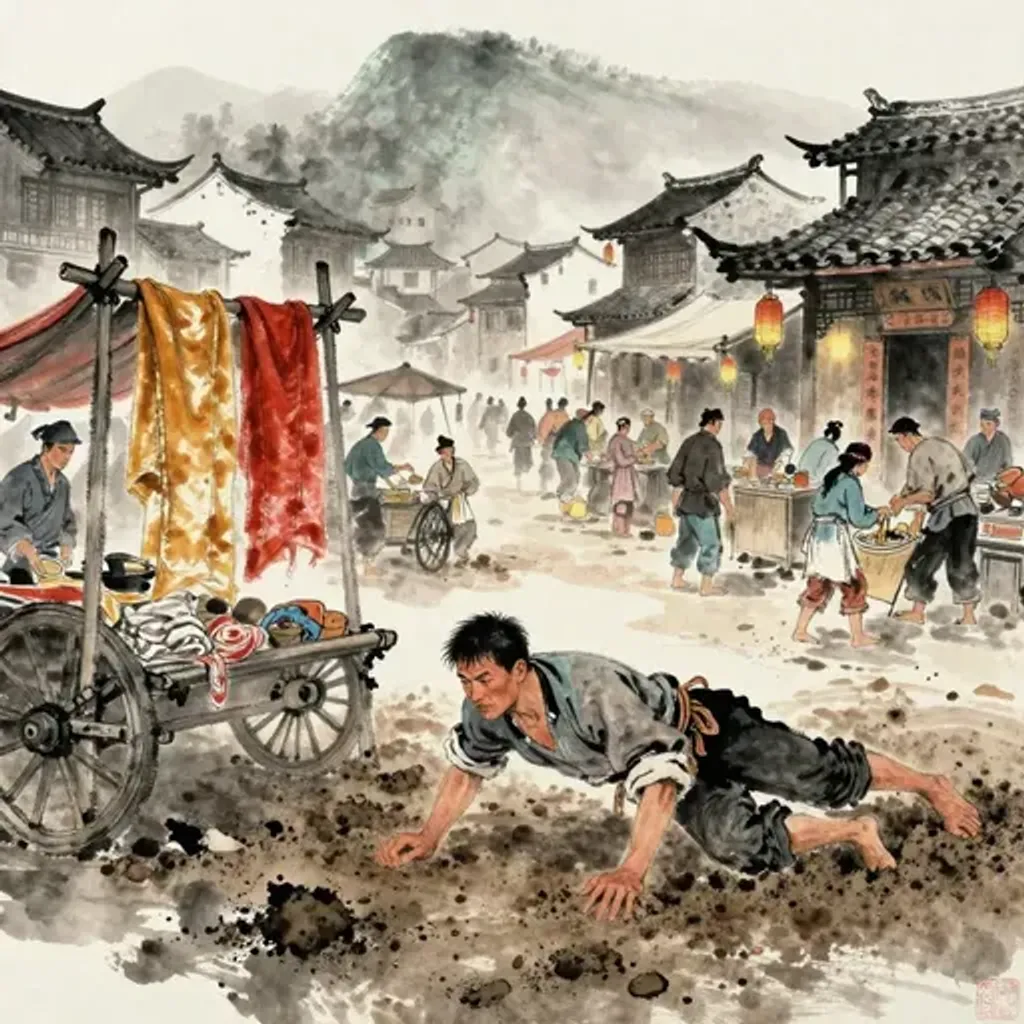
空拳握手,倒地更起。富饒豐衍,快樂無已。
Empty fists grip the hands; falling down, rising again. Rich and plentiful abundance; joy without end.
— Jiao Yanshou, Yilin (Forest of Changes), 1st century BC
Commentary
Empty fists grasp at nothing, yet one falls and rises again. Riches overflow, abundance spreads, joy knows no end. From Creative to Treading, heaven stands above the lake — the strong above, the yielding below, each in its proper place. Treading means stepping carefully, even treading on the tiger's tail without being bitten. The verse enacts this: the empty-handed fall is not ruin but the test that proves resilience. Having passed through humiliation with nothing in hand, one discovers that the path itself confers wealth. The joy is boundless because it was earned through the discipline of walking properly, not through grasping.
乾 → 泰
Hexagram 1 → Hexagram 11: Peace
Changing lines: 4, 5, 6
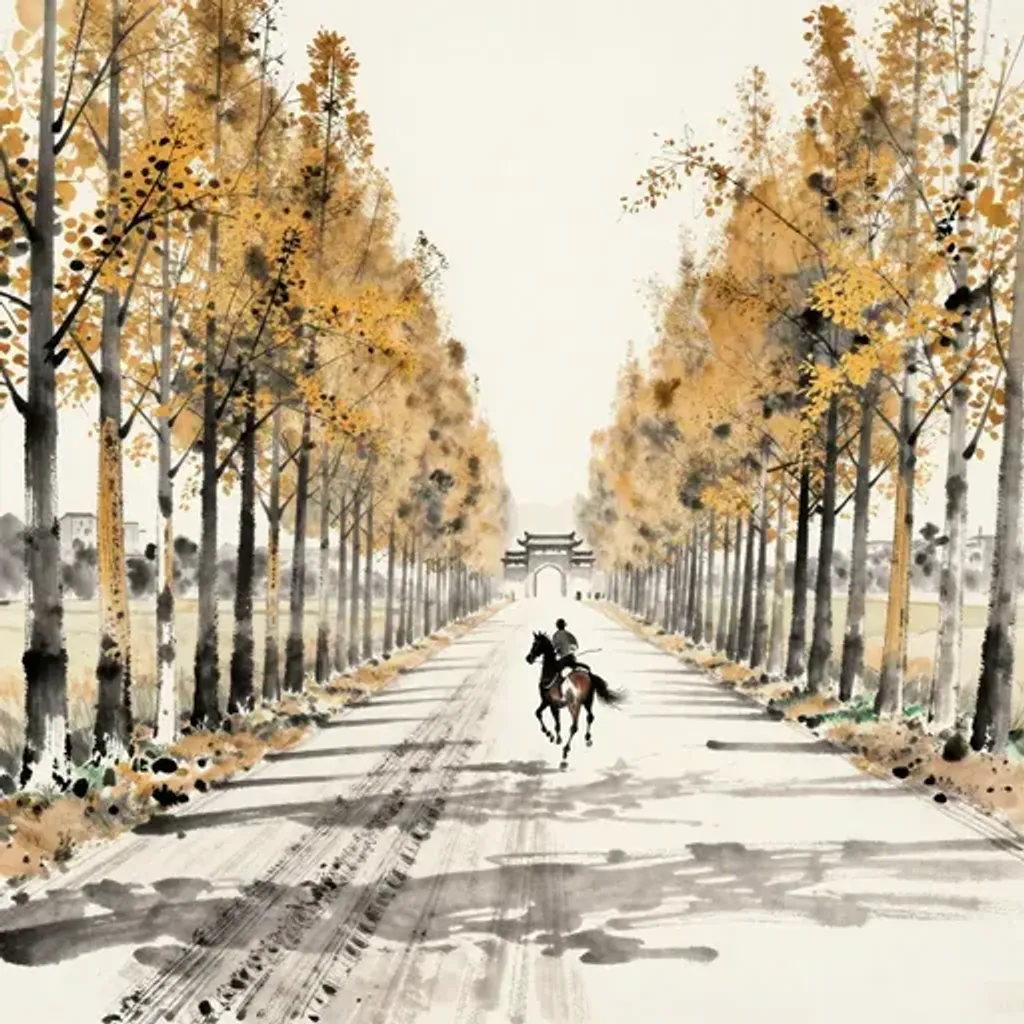
不風不雨,白日皎皎。宜出驅馳,通理大道。
No wind, no rain; the white sun shines bright. Fit to ride forth and gallop; the great road runs clear.
— Jiao Yanshou, Yilin (Forest of Changes), 1st century BC
Commentary
Neither wind nor rain — the white sun shines brilliantly. Go forth, drive your chariot, and take the great road unimpeded. From Creative to Peace, heaven and earth exchange places: heaven descends, earth ascends, and their energies mingle freely. Tai is the hexagram of open passage, of spring when all gates stand wide. The verse distills this into pure clarity: no storm, no obstruction, just radiant daylight and an open highway. When heaven's creative force flows downward to meet earth's receptive support rising upward, the result is a world without blockage. The chariot races forward because the road and the sky conspire to let it through.
乾 → 否
Hexagram 1 → Hexagram 12: Standstill
Changing lines: 1, 2, 3
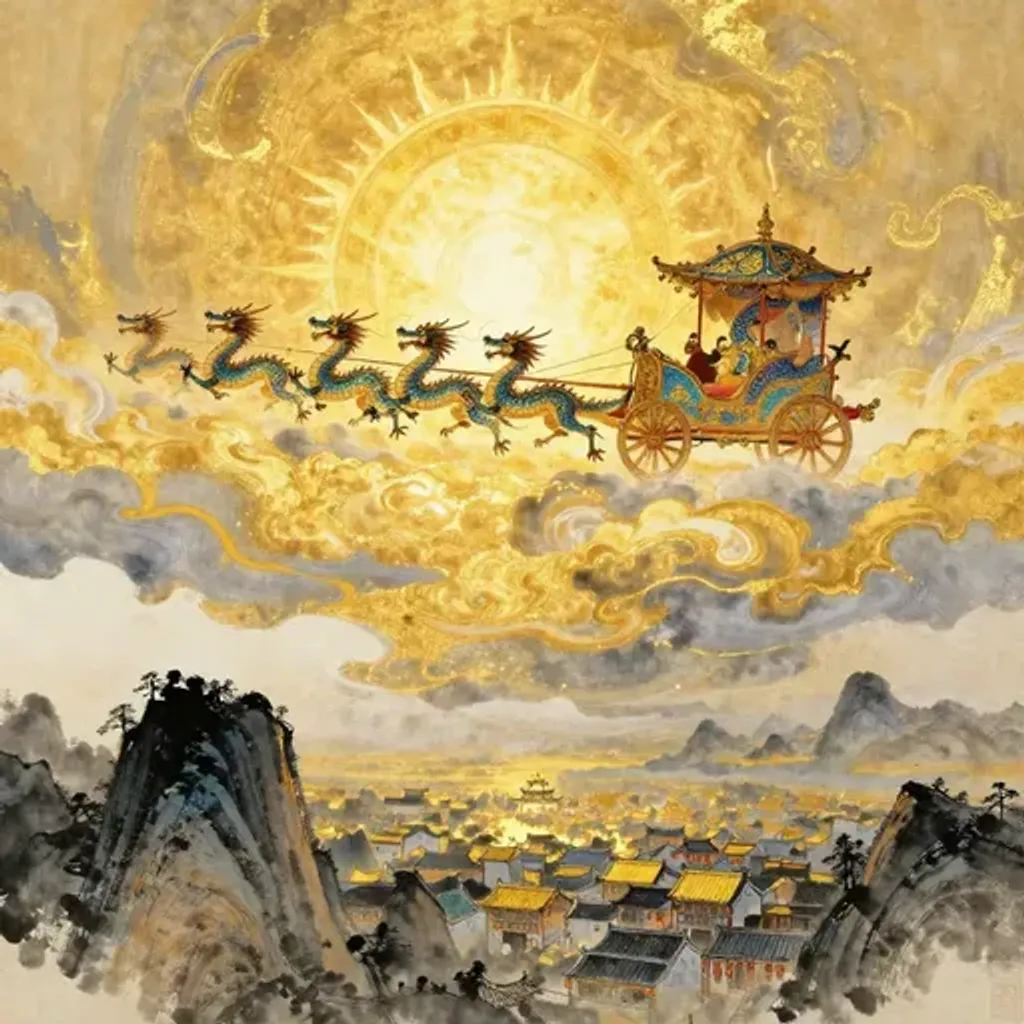
載日晶光,驂駕六龍。祿命徹天,封為燕王。
Bearing the sun’s crystal radiance, riding a chariot drawn by six dragons. Fortune and destiny reach to heaven; enfeoffed as King of Yan.
— Jiao Yanshou, Yilin (Forest of Changes), 1st century BC
Commentary
Bearing the sun's crystal radiance, riding a chariot drawn by six dragons — the image of the sovereign ascending to supreme authority. Fortune and mandate reach to heaven; the title conferred is King of Yan. From Creative to Standstill, this seems paradoxical: investiture at the moment of blockage. Yet Pi's image — heaven and earth refusing to mingle — describes the lonely eminence of the ruler who has risen so high that communication with below has ceased. The six dragons recall the Qian hexagram's own line text: 'the flying dragon in heaven.' Enfeoffment as Yan King evokes Han-dynasty investiture, a title that carries glory but also isolation atop a frozen hierarchy.
乾 → 同人
Hexagram 1 → Hexagram 13: Fellowship
Changing lines: 2
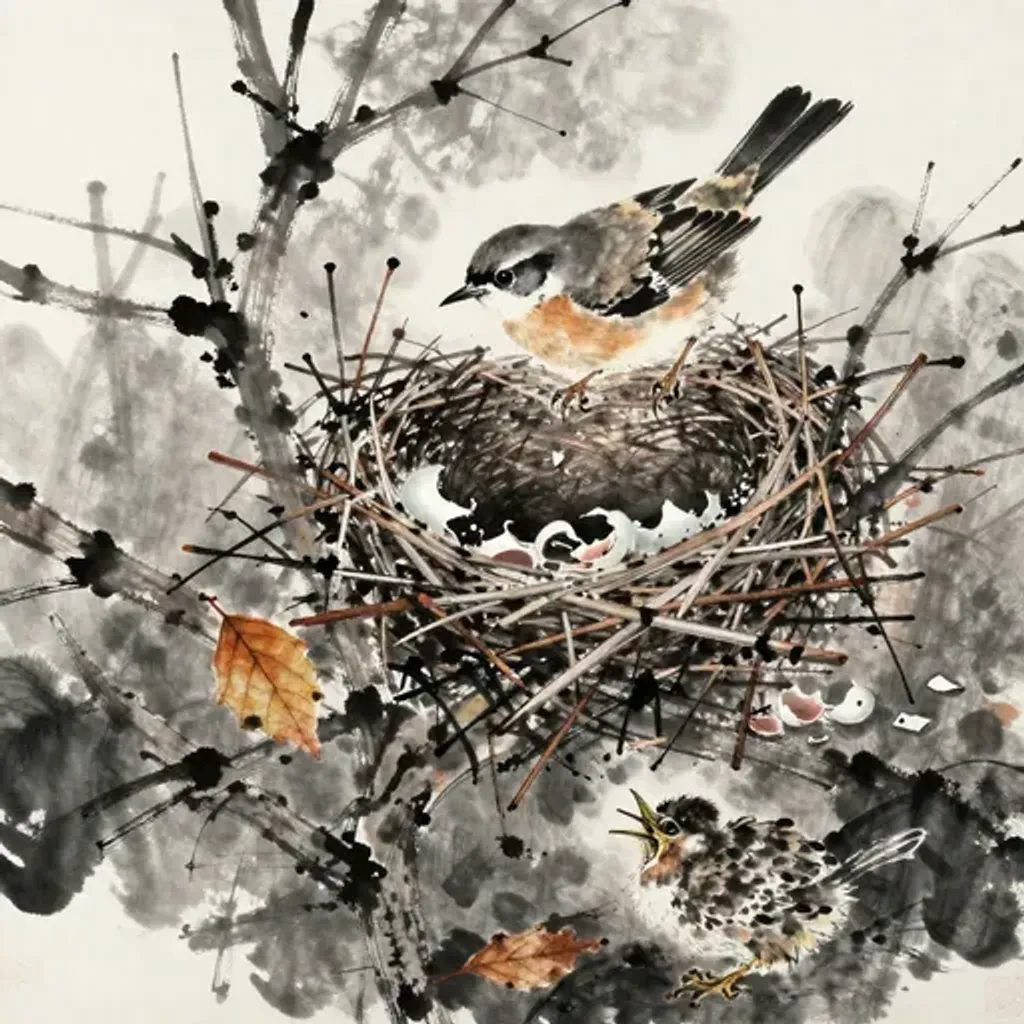
子號索哺,母行求食。反見空巢,訾我長息。
The chick cries out seeking food; the mother goes forth to find it. She returns to find an empty nest; sighing, she mourns at length.
— Jiao Yanshou, Yilin (Forest of Changes), 1st century BC
Commentary
A nestling cries for food; the mother bird flies out to forage. She returns to find an empty nest and sighs in endless grief. From Creative to Fellowship, heaven above fire should unite all under its brilliance — yet this verse shows the cost of fellowship attempted across absence. The mother's departure was an act of devotion, but her return reveals loss. The empty nest is the hollow center of a bond stretched too far. Fellowship's counsel is to classify and distinguish; here, the failure lies in not distinguishing between the urgency of feeding and the fragility of the nest. Love that ventures out may return to find its object gone.
乾 → 大有
Hexagram 1 → Hexagram 14: Great Possession
Changing lines: 5
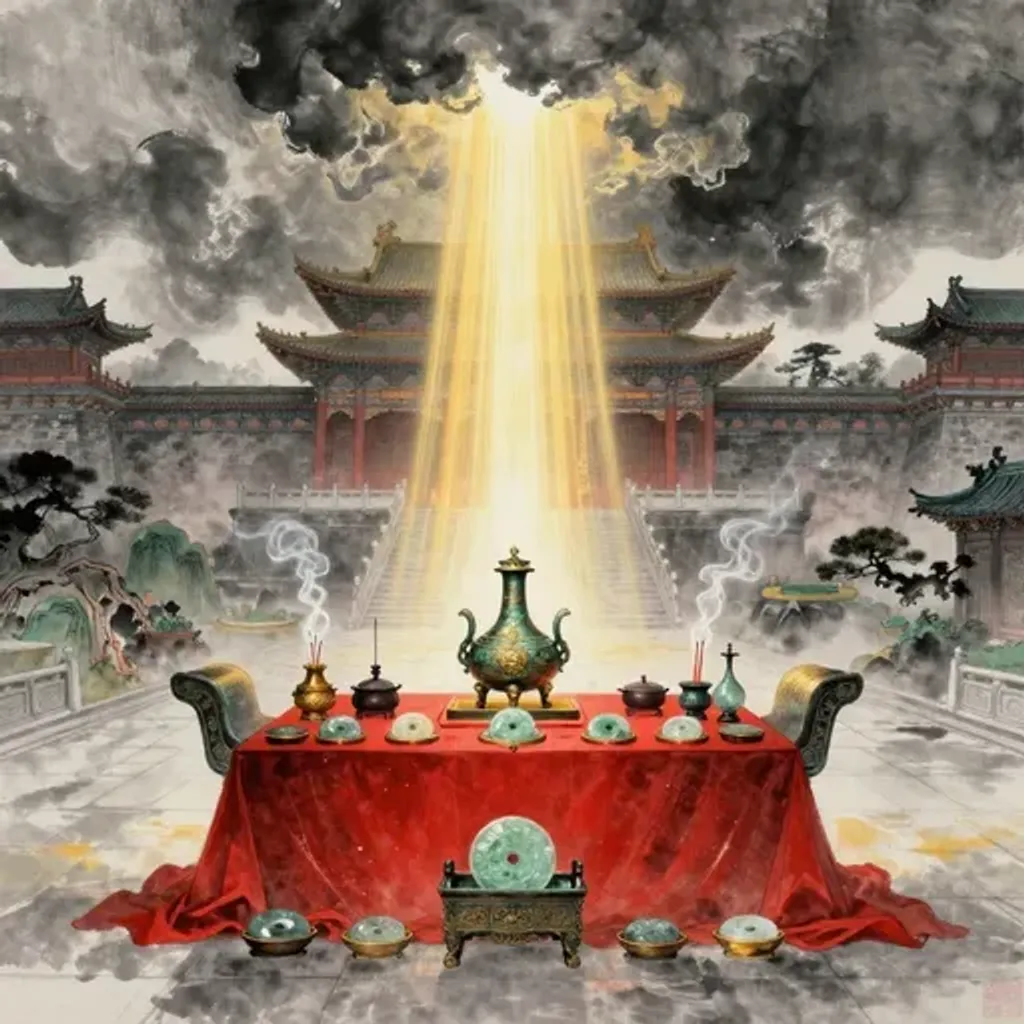
上帝之生,福祐日成。脩德行惠,樂安且寧。
Born of the Supreme Lord, blessings and protection ripen daily. Cultivating virtue, bestowing grace; peaceful, at ease, and tranquil.
— Jiao Yanshou, Yilin (Forest of Changes), 1st century BC
Commentary
Heaven's supreme spirit gives birth to blessings that mature day by day. Cultivate virtue, extend kindness, and dwell in tranquil joy. From Creative to Great Possession, fire blazes above heaven — the most luminous of all hexagram images. The verse reads almost as a hymn: divine generosity begets cumulative fortune for those who practice moral cultivation. Da You's counsel is to suppress evil and promote good, following heaven's glorious mandate. Here the transformation is seamless: heaven's creative energy, expressed as celestial fire, illuminates and enriches. No conflict, no obstacle — simply the natural consequence of virtue aligned with cosmic favor.
乾 → 謙
Hexagram 1 → Hexagram 15: Modesty
Changing lines: 1, 2, 4, 5, 6
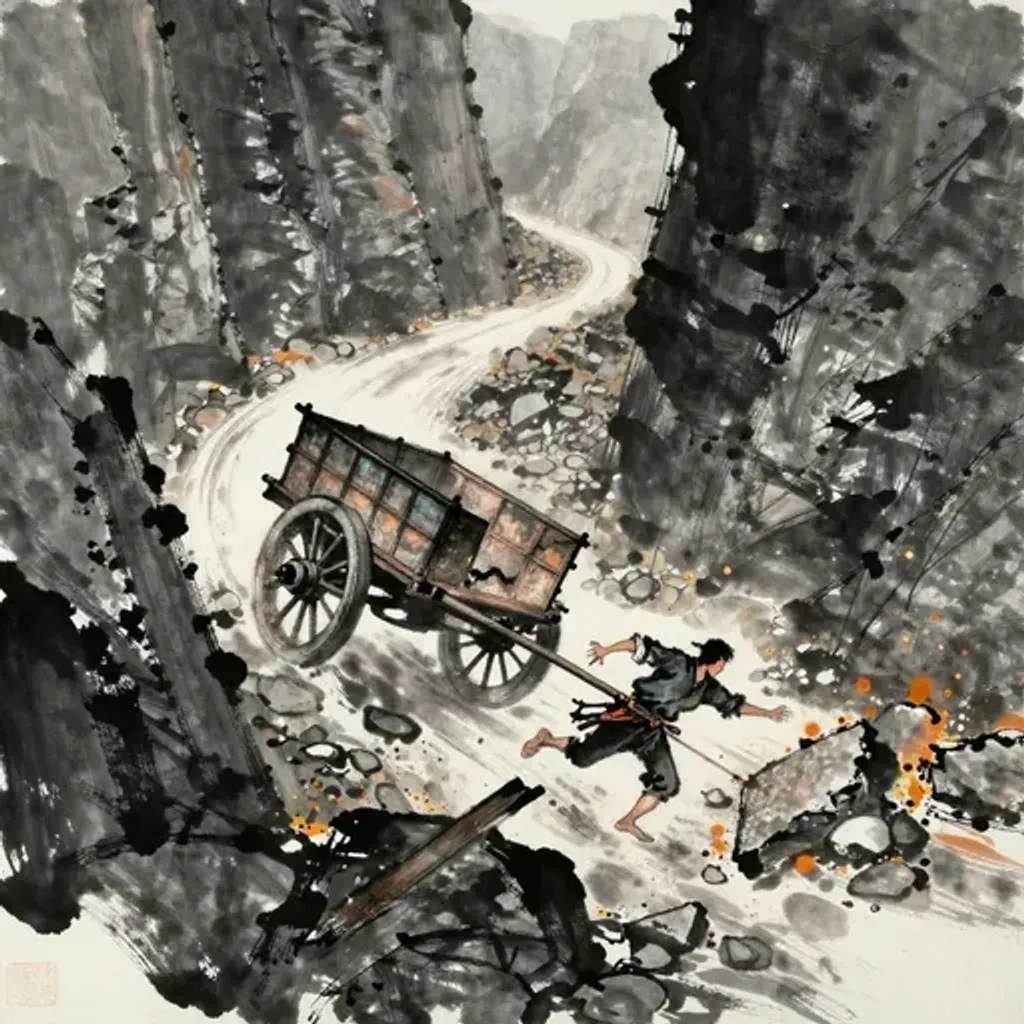
山險難登,澗中多石,車馳轊擊,載重傷軸。儋負善躓,跌踒右足。
The mountain is steep, hard to climb; the ravine is full of stones. The cart races, hub strikes; bearing heavy loads, the axle breaks. Carrying burdens, one is apt to stumble; the right foot twists and falls.
— Jiao Yanshou, Yilin (Forest of Changes), 1st century BC
Commentary
Mountain passes too steep to climb, ravines strewn with stones. A speeding cart strikes its axle-cap; the heavy load breaks the axle. The porter stumbles repeatedly, spraining his right foot. From Creative to Modesty, heaven's power is buried deep within the earth beneath the mountain — the image of the great voluntarily lowering itself. Yet the verse shows what happens before modesty is internalized: brute force charged at difficult terrain without accommodation. The mountain inside the earth teaches that true strength lies in leveling — reducing the high and filling the low. This stumbling, broken journey is the price of approaching Qian's mountain without Qian's willingness to bow.
乾 → 豫
Hexagram 1 → Hexagram 16: Enthusiasm
Changing lines: 1, 2, 3, 5, 6
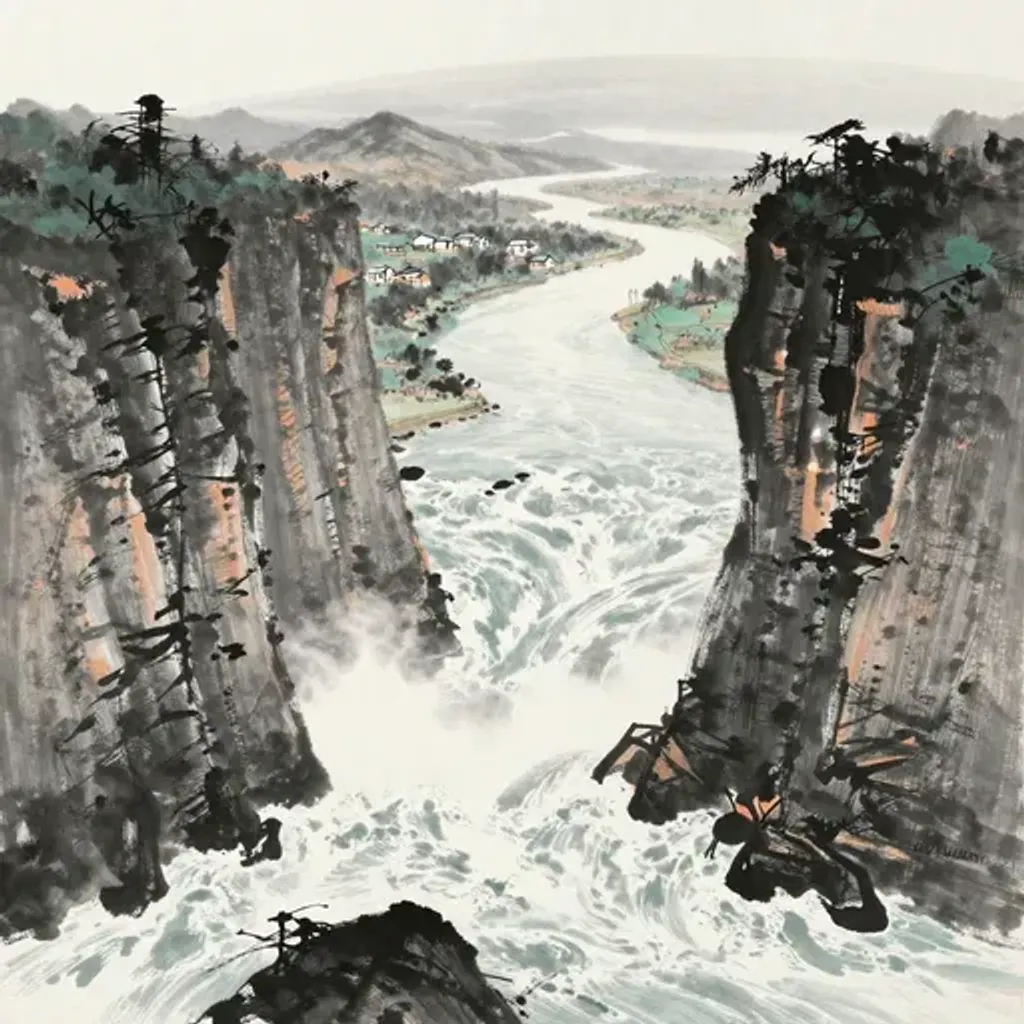
禹鑿龍門,通利水源。東注滄海,民得安存。
Yu carved Dragon Gate and opened the water’s source. Flowing east to the vast sea, the people found safe dwelling.
— Jiao Yanshou, Yilin (Forest of Changes), 1st century BC
Commentary
Yu the Great carved open Dragon Gate, freeing the floodwaters to flow east into the vast sea, and the people at last found peace. From Creative to Enthusiasm, thunder erupts from the earth — the explosive joy that follows liberation. Yu's engineering of the Dragon Gate gorge on the Yellow River is the quintessential act of sagely initiative: not damming the waters but channeling them. The verse captures this as heaven's creative power expressed through deliberate, earth-shaking action. Enthusiasm's ancient kings used this energy for music and worship; Yu transmuted it into hydraulic salvation. The people's survival is the ground that shakes with gratitude.
乾 → 隨
Hexagram 1 → Hexagram 17: Following
Changing lines: 2, 3, 6
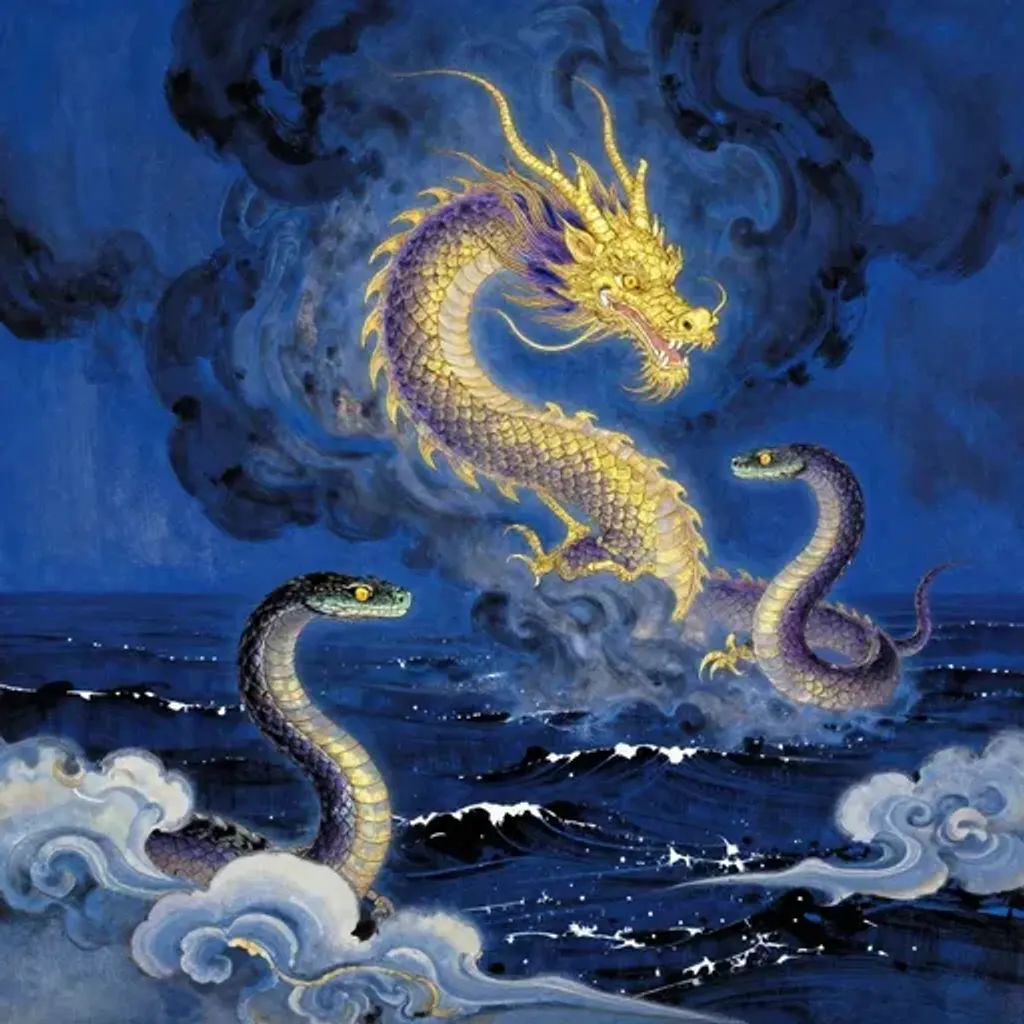
乘龍上天,兩蛇為輔,湧躍雲中,遊觀滄海,安樂長處。
Riding the dragon skyward, two serpents as escort. Surging and leaping among the clouds, roaming and gazing over the vast sea; dwelling long in peace and joy.
— Jiao Yanshou, Yilin (Forest of Changes), 1st century BC
Commentary
Riding a dragon skyward, flanked by two serpents, soaring through the clouds to gaze upon the vast sea — dwelling in eternal ease. The dragon-riding image recalls the Yellow Emperor's legendary ascent, but here it serves a different pattern. From Creative to Following, thunder lies dormant within the lake — the image of resting at nightfall. The celestial journey is not conquest but surrender to a greater current: the dragon does not obey the rider but carries him. To follow is to mount the moving force and let it choose the destination. The clouds, the sea, the long peace — all arrive because the rider relinquishes command and lets the dragon lead.
乾 → 蠱
Hexagram 1 → Hexagram 18: Work on the Decayed
Changing lines: 1, 4, 5
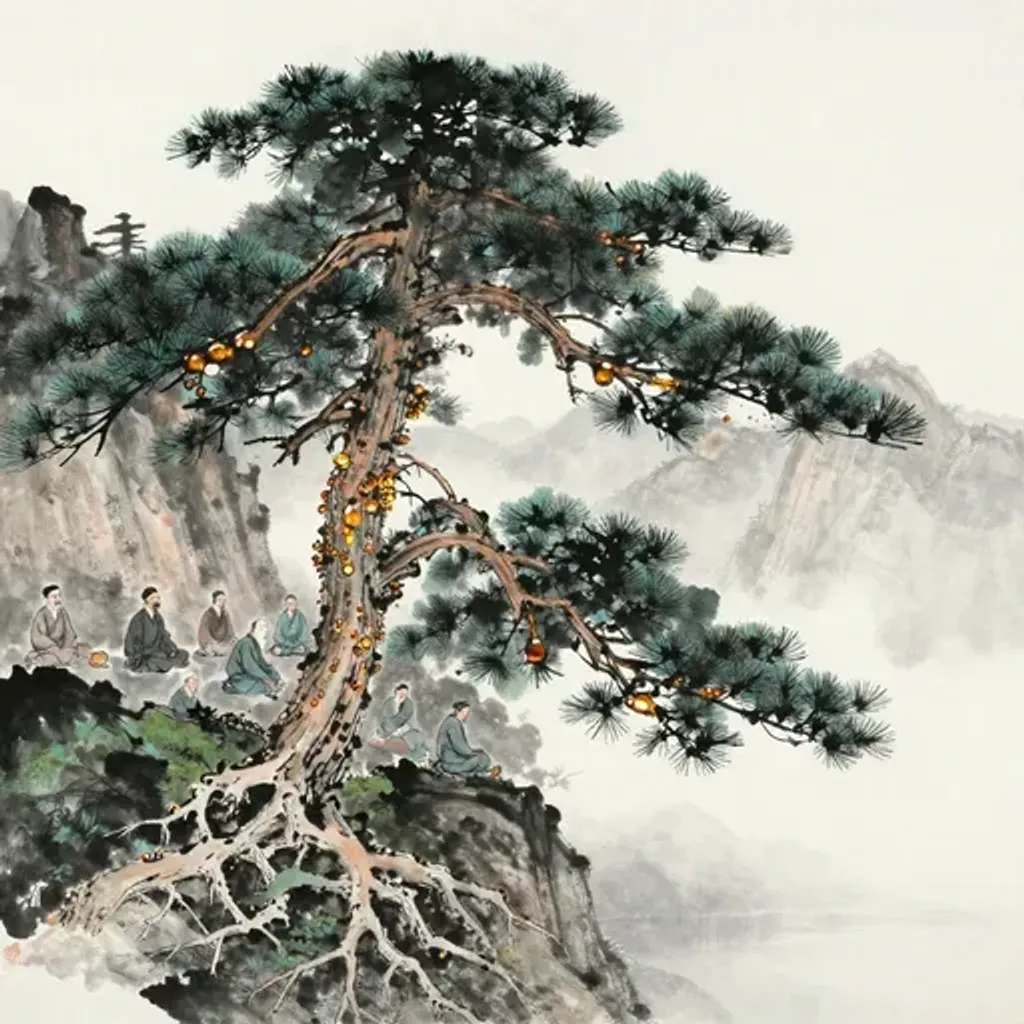
彭祖九子,據德不殆。南山松柏,長受嘉福。
Pengzu’s nine sons, grounded in virtue, face no peril. Pine and cypress of the southern mountains long receive fine blessings.
— Jiao Yanshou, Yilin (Forest of Changes), 1st century BC
Commentary
Pengzu with his nine sons stands firm in virtue, never faltering. Like the pines and cypresses of the southern mountains, they receive lasting blessing. Pengzu, the legendary figure who lived eight hundred years, here appears not as a hermit but as a patriarch whose longevity extends through his descendants. From Creative to Work on the Decayed, wind blows beneath the mountain — the image of corruption that must be repaired. Yet the verse inverts the expected gloom: where Gu signals decay, Pengzu's enduring virtue prevents it. The evergreen pines and cypresses refuse to rot. When heaven's creative power roots itself in cultivated virtue, even the hexagram of decay yields perpetual freshness.
乾 → 臨
Hexagram 1 → Hexagram 19: Approach
Changing lines: 3, 4, 5, 6
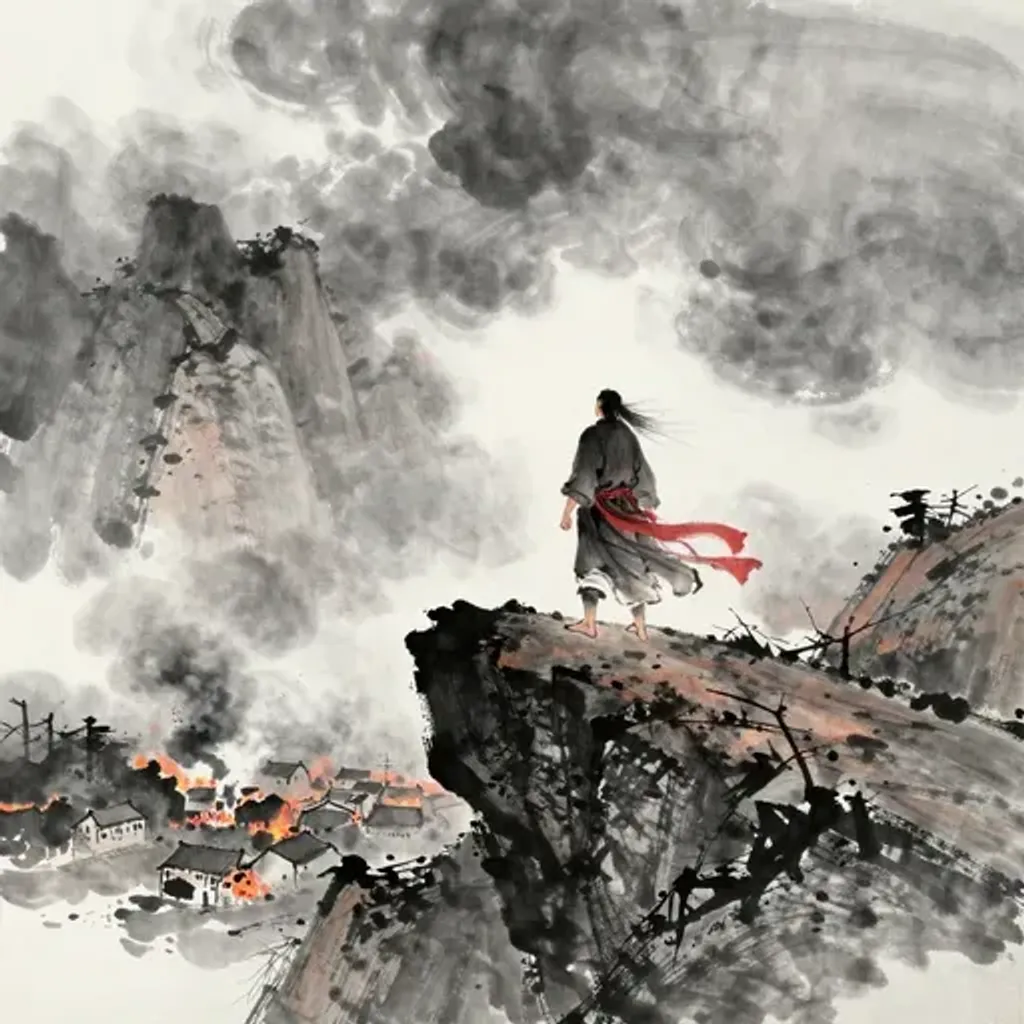
南山昊天,刺政關身。疾悲無辜,背憎為仇。
The southern mountain, the vast sky; government censured, the body imperiled. Grief for the guiltless; those one trusted turn to enemies.
— Jiao Yanshou, Yilin (Forest of Changes), 1st century BC
Commentary
The southern mountains and the vast sky above — this echoes the Shijing ode 'Jie Nan Shan,' which denounces corrupt ministers who bring suffering upon the innocent. Harsh governance wounds the people personally; the blameless grieve, and former friends turn into enemies. From Creative to Approach, earth spreads above the lake — authority descending to inspect what lies below. Lin's image is the ruler who approaches with benevolent teaching, yet this verse shows its shadow: when those in power approach with cruelty rather than compassion, the people below suffer the full weight of heaven's force untempered. Approach without kindness becomes oppression.
乾 → 觀
Hexagram 1 → Hexagram 20: Contemplation
Changing lines: 1, 2, 3, 4
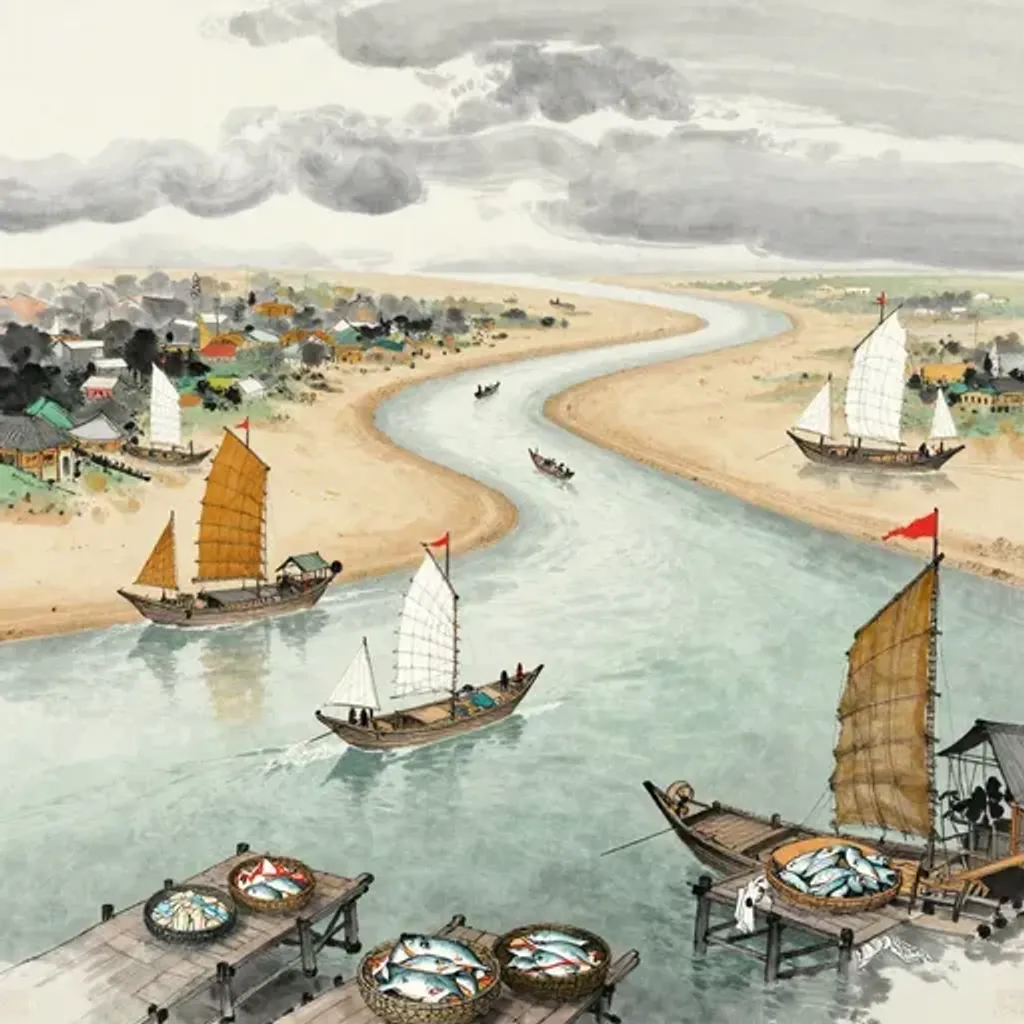
江河淮海,天之奧府。眾利所聚,可以饒有。樂我君子,百福是受。
The Yangtze, the Yellow River, the Huai, the sea: heaven’s hidden treasury. Where all profits gather, one may have abundance. Rejoice, O noble man; receive a hundred blessings.
— Jiao Yanshou, Yilin (Forest of Changes), 1st century BC
Commentary
Rivers, streams, the Huai, and the sea — heaven's grand storehouses where all profitable things gather, enough to enrich anyone. The noble one rejoices, receiving a hundred blessings. From Creative to Contemplation, wind moves over the earth and the sage-king surveys his realm, observing the people to guide them. The verse transforms the act of looking outward into discovery of abundance: the great rivers are heaven's treasury, visible to anyone who truly contemplates the landscape. Guan's counsel is to look broadly and deeply. Here, contemplation itself reveals that the world already overflows with resources — one need only recognize them. The hundred blessings flow like rivers to the attentive observer.
乾 → 噬嗑
Hexagram 1 → Hexagram 21: Biting Through
Changing lines: 2, 3, 5
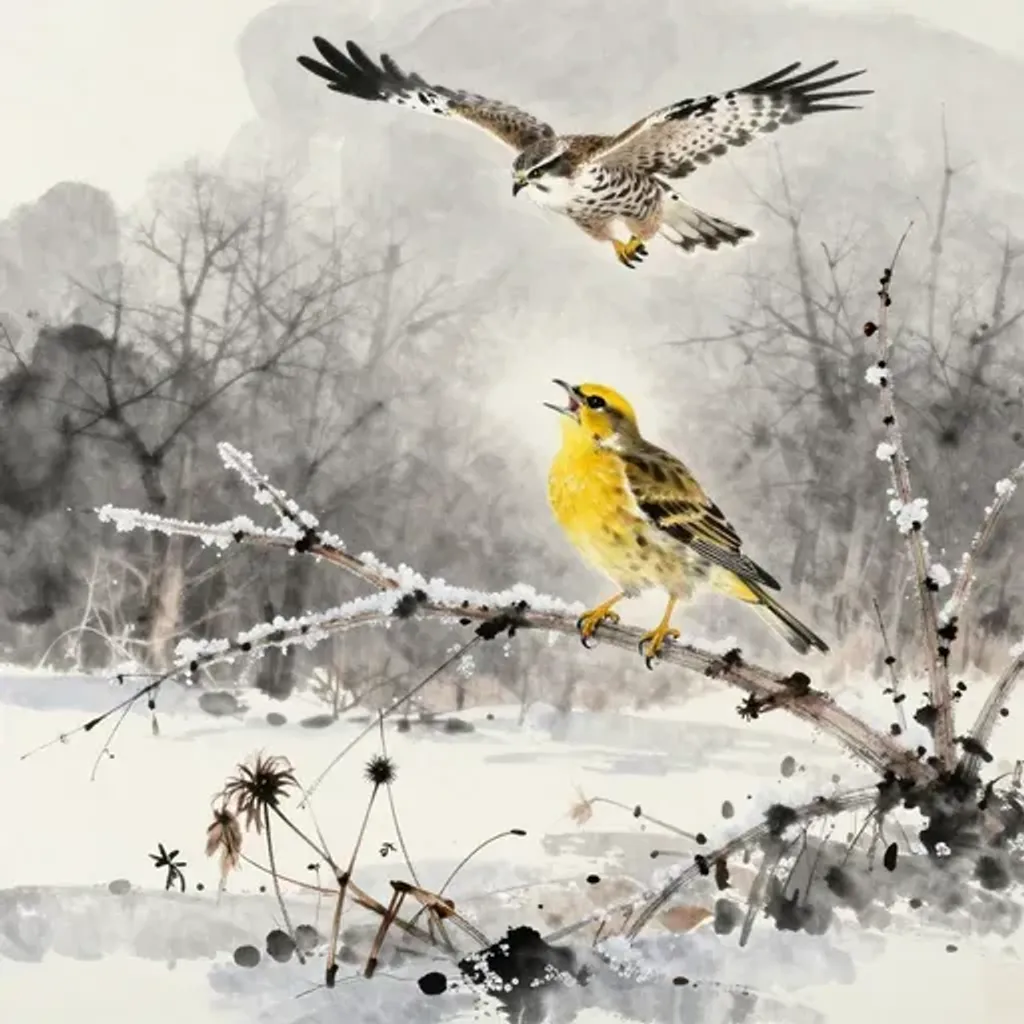
堅冰黃鳥,啼哀悲愁,不見甘粒,但觀藜蒿,數驚鷙鳥,為我心憂。
Hard ice, a yellow bird, crying in sorrow and grief. Seeing no sweet grain, only goosefoot and wormwood. Startled time and again by raptors; this makes my heart heavy.
— Jiao Yanshou, Yilin (Forest of Changes), 1st century BC
Commentary
Hard ice, a yellow bird crying in sorrow — no sweet grain to be found, only bitter weeds. Predatory hawks appear repeatedly, filling the heart with dread. The yellow bird echoes the Shijing ode of exile from the Xiao Ya, where a displaced person laments being unwelcome in a foreign land. From Creative to Biting Through, lightning and thunder enforce the law — the ancient kings used this energy to clarify punishments. The verse shows the exile's perspective: one who has run afoul of the system finds no nourishment, only frozen ground and circling raptors. Biting Through bites through obstruction, but for the one being bitten, the experience is terror and starvation.
乾 → 賁
Hexagram 1 → Hexagram 22: Grace
Changing lines: 2, 4, 5
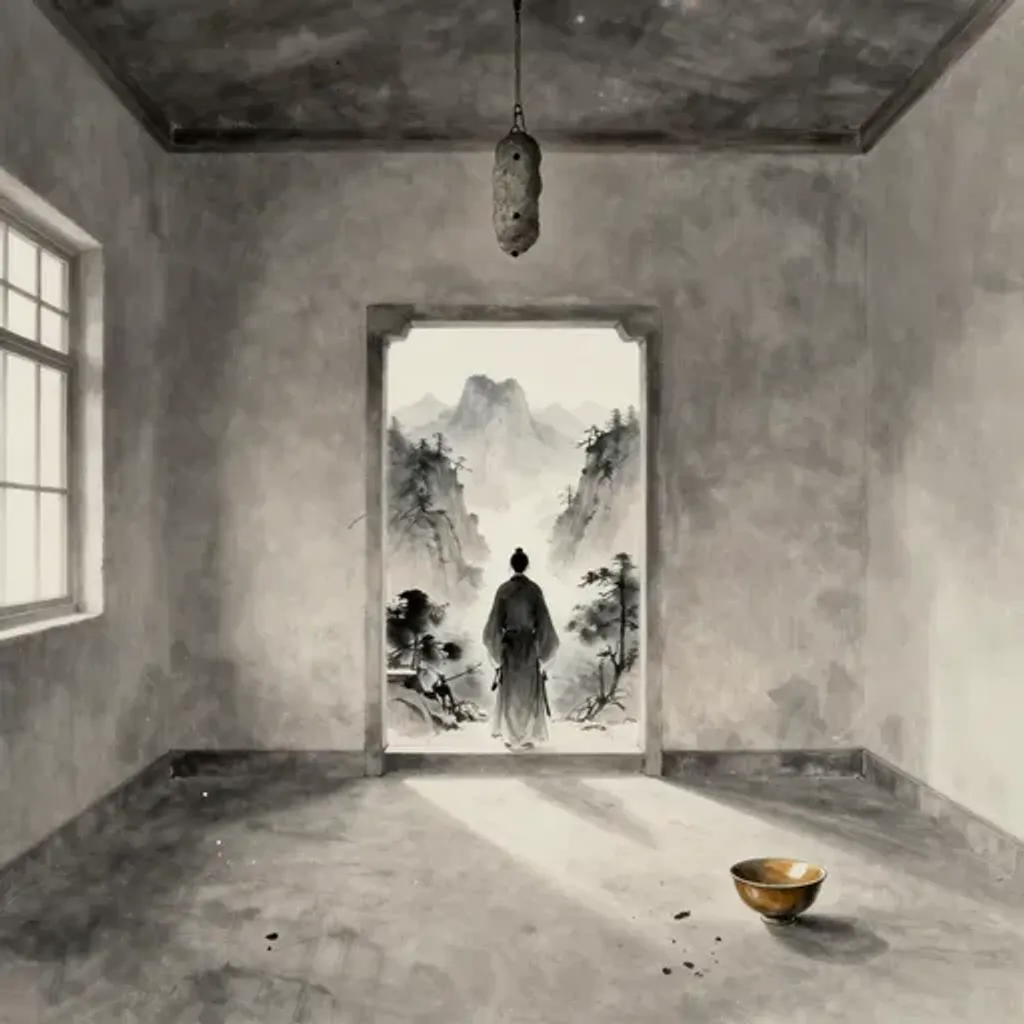
室如懸磬,既危且殆;早見之士,依山谷處。
The room is empty as a hanging chime, perilous and precarious. The farsighted man takes refuge in mountain valleys.
— Jiao Yanshou, Yilin (Forest of Changes), 1st century BC
Commentary
The house is empty as a hanging chime — a proverbial expression from the Zuo Zhuan for a household stripped of everything, so bare that a stone chime could hang inside without obstruction. Perilous and precarious. Yet the far-sighted scholar withdraws to dwell in mountain valleys. From Creative to Grace, fire glows beneath the mountain, adorning it with subtle beauty. The verse captures Bi's paradox: when outward decoration conceals inner emptiness, the wise retreat from artifice to find substance in nature. The mountain valley offers no ornament but solid ground. Grace without substance is a hollow room; true adornment is knowing when to abandon the gilded house for the honest shelter of rock and stream.
乾 → 剝
Hexagram 1 → Hexagram 23: Splitting Apart
Changing lines: 1, 2, 3, 4, 5
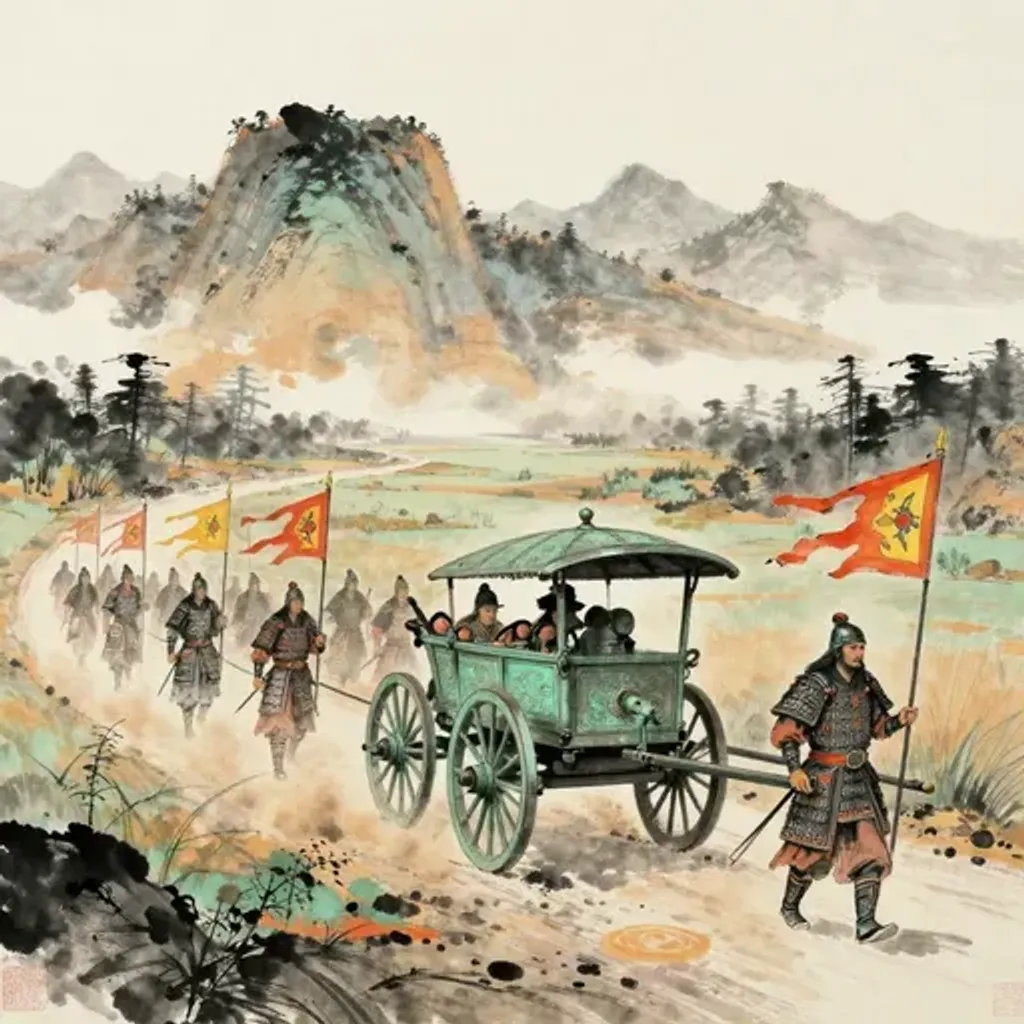
大禹式路,蚩尤除道。周匝萬里,不危不殆,見其所使,無所不在。
Great Yu inspected the roads; Chiyou cleared the way. Circling ten thousand li, neither perilous nor imperiled. Seeing those he commanded, he was present everywhere.
— Jiao Yanshou, Yilin (Forest of Changes), 1st century BC
Commentary
Yu the Great commands the royal chariot while Chi You clears the road ahead. Together they circuit ten thousand li, encountering no danger. Their envoys appear everywhere, reaching all corners. According to tradition, Chi You — the defeated war god — sometimes served as a path-clearing martial spirit, paired with Yu's civilizing authority. From Creative to Splitting Apart, the mountain crumbles upon the earth. Yet the verse inverts Bo's destructive image: with Yu's virtue and Chi You's force combined, even a world in decay holds no peril. When sovereign authority deploys both civic engineering and martial energy in coordination, the disintegration that Bo threatens is reversed into universal reach.
乾 → 復
Hexagram 1 → Hexagram 24: Return
Changing lines: 2, 3, 4, 5, 6
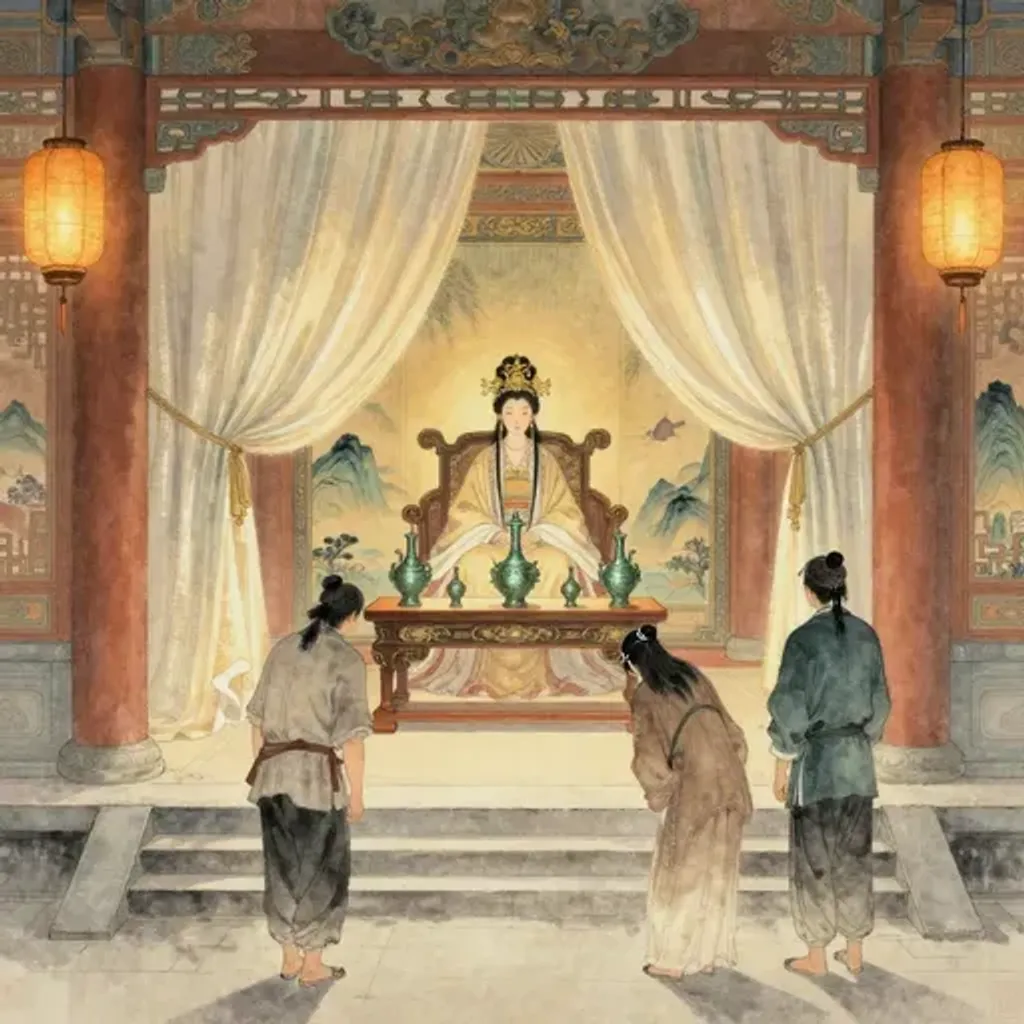
三人為旅,俱歸北海,入門上堂,拜謁王母,勞賜我酒。
Three men travel together, all journeying to the northern sea. Entering the gate, ascending the hall, they pay respects to the Queen Mother. She rewards them with wine.
— Jiao Yanshou, Yilin (Forest of Changes), 1st century BC
Commentary
Three travelers journey together to the northern sea, where they enter the gates, ascend the hall, and pay their respects to the Queen Mother, who rewards them with wine. The Queen Mother of the West dwells above the Weak Water on Mount Kunlun, guardian of immortality. From Creative to Return, thunder stirs within the earth — the solstice moment when one yang line re-enters at the bottom. The three travelers' pilgrimage northward and their reception by the cosmic matriarch mirrors the return of vital energy after the darkest point. What has been journeying through desolation finds its way home to be welcomed and restored.
乾 → 无妄
Hexagram 1 → Hexagram 25: Innocence
Changing lines: 2, 3
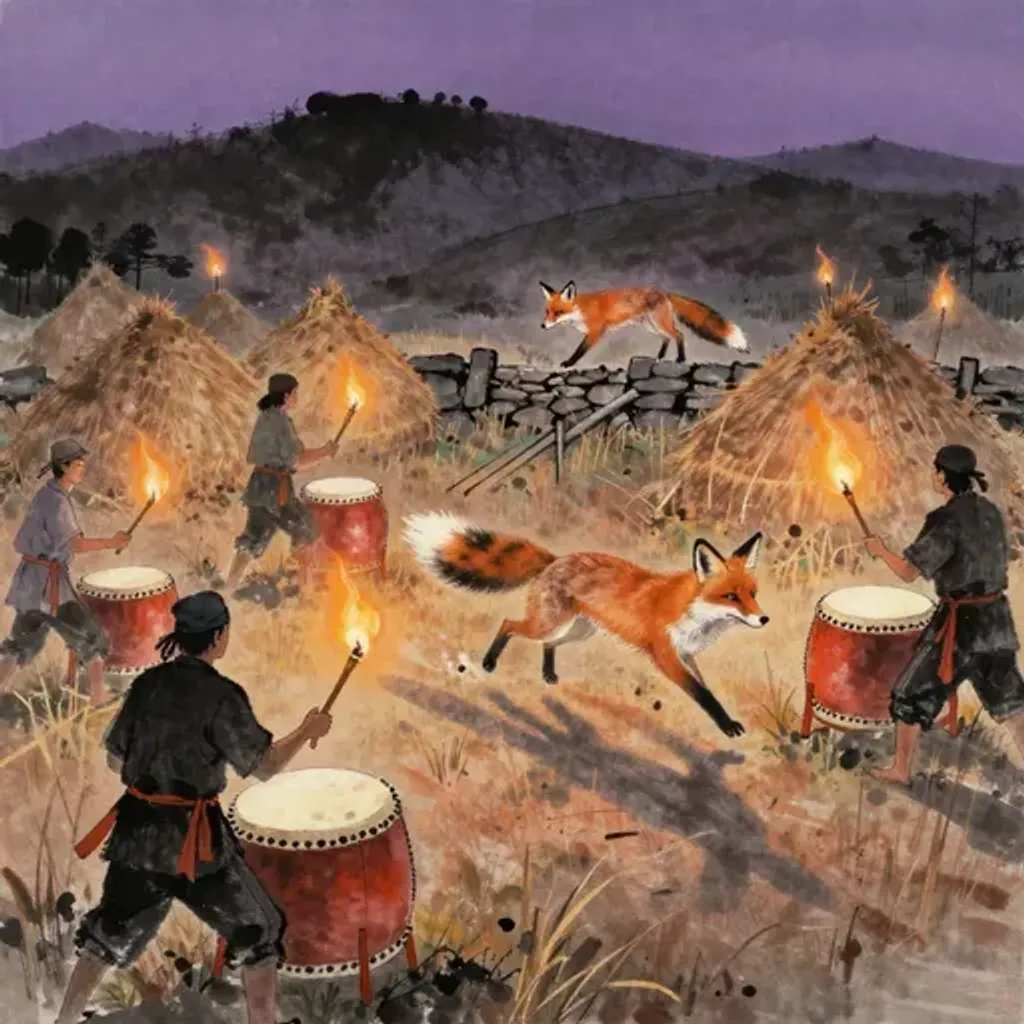
傳言相誤,非干徑路。鳴鼓逐狐,不知迹處。
Rumor misleads; it strays from the straight path. Beating drums to chase the fox, its tracks cannot be found.
— Jiao Yanshou, Yilin (Forest of Changes), 1st century BC
Commentary
Rumors are passed along and garbled in transmission — they never traveled the direct path. Drums beat to chase a fox, but no one knows where its tracks lead. From Creative to Innocence, thunder moves beneath heaven, all things partake of the unexpected. Wu Wang's very name means 'without falsehood' — yet this verse shows a world drowning in it. False reports corrupt the message; the fox-hunt based on distorted intelligence chases shadows. The drums are loud but misdirected. When heaven's thunder strikes without warning, it demands sincerity as the only adequate response. Those who act on rumor rather than truth embody the opposite of Innocence, and their pursuits find nothing.
乾 → 大畜
Hexagram 1 → Hexagram 26: Great Taming
Changing lines: 4, 5
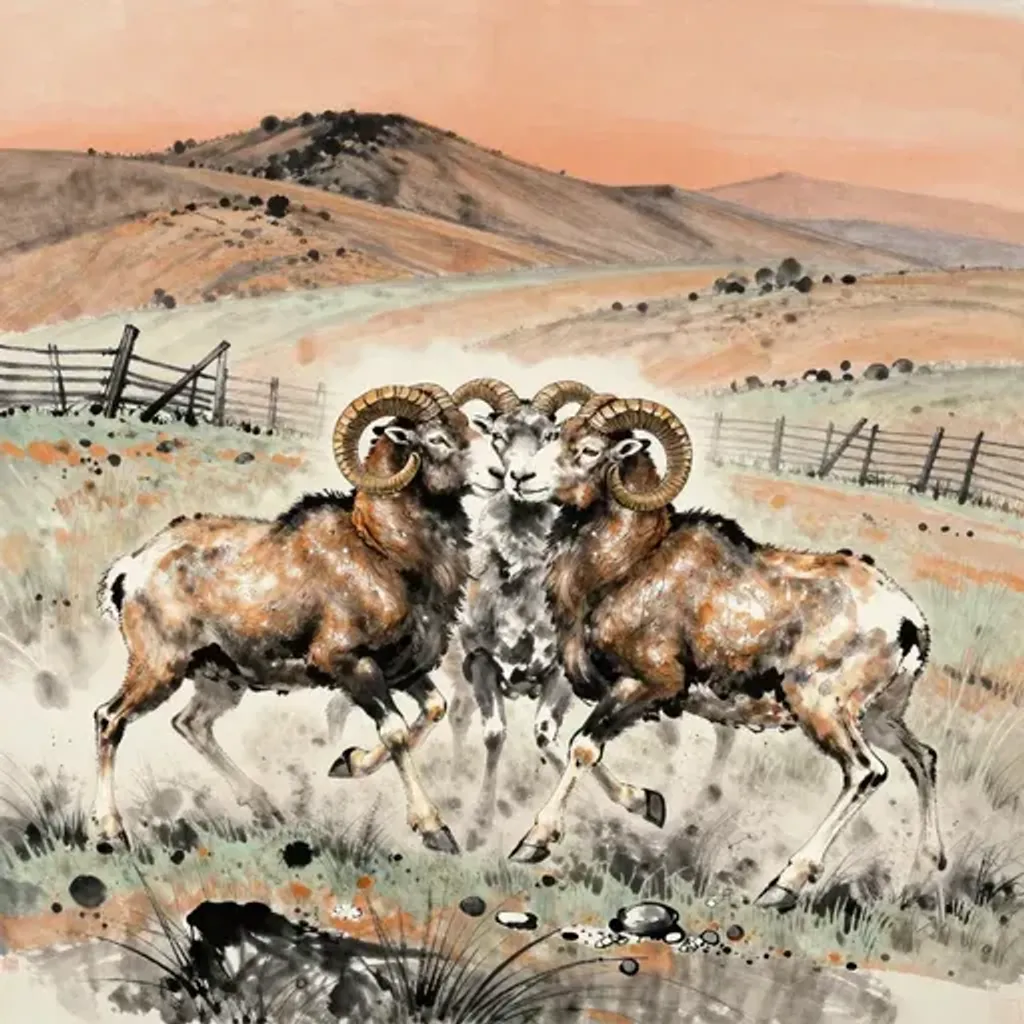
三羊爭雌,相逐奔馳,終日不食,精氣勞疲。
Three rams vie for the ewe, chasing one another in a gallop. All day without eating, their vitality is spent in exhaustion.
— Jiao Yanshou, Yilin (Forest of Changes), 1st century BC
Commentary
Three rams compete for a female, chasing each other in frantic circles, forgetting to eat all day until their vitality is exhausted. From Creative to Great Taming, heaven is stored within the mountain — the image of accumulated power held in check. Yet these rams squander their energy in rivalry rather than storing it. Da Chu counsels learning from the words and deeds of antiquity to nourish virtue, but the rams have abandoned nourishment entirely for pointless contest. The mountain that should contain heaven's strength instead witnesses its dissipation. When competitive drive overwhelms the discipline of accumulation, even the strongest constitution grinds itself down to nothing.
乾 → 頤
Hexagram 1 → Hexagram 27: Nourishment
Changing lines: 2, 3, 4, 5
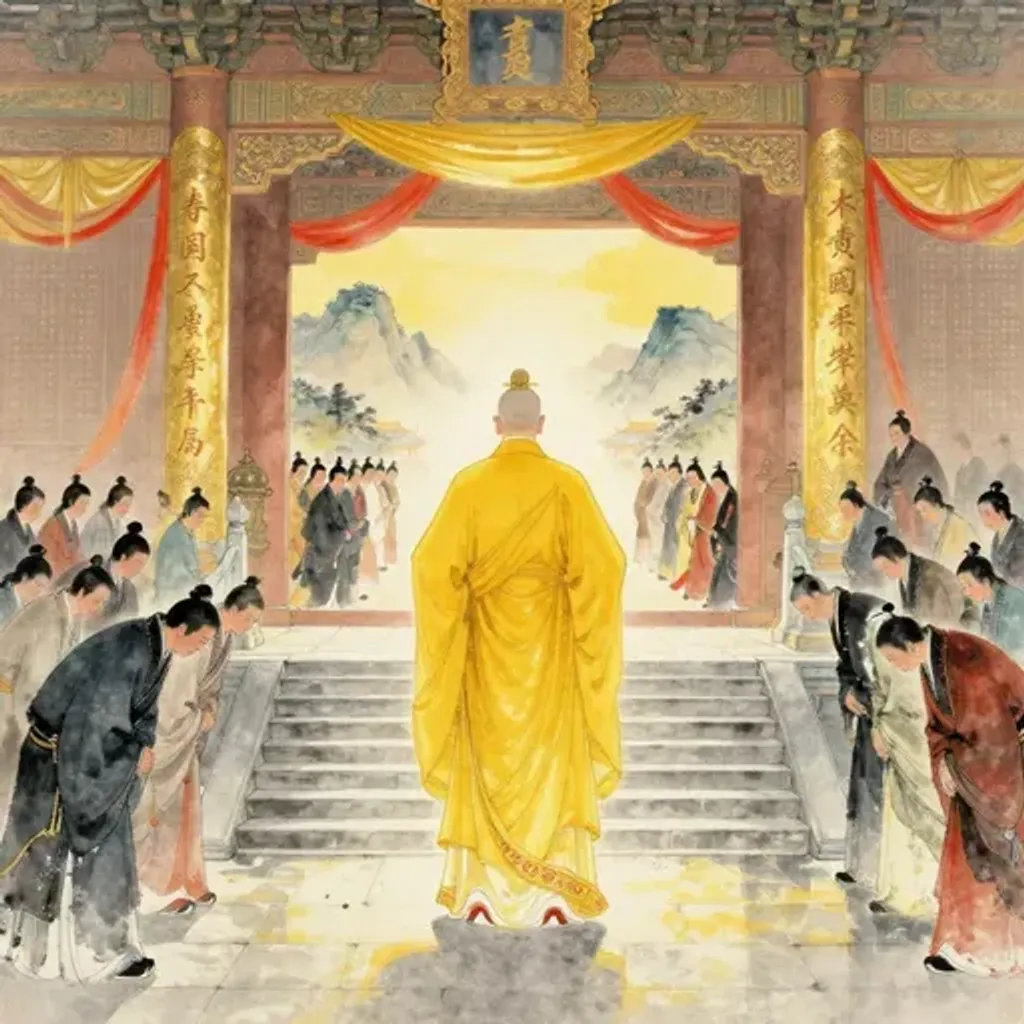
純服黃裳,戴上與興。德義既生,天下歸仁。
Wearing pure garments and a yellow skirt, rising to serve and to flourish. With virtue and righteousness established, all under heaven returns to benevolence.
— Jiao Yanshou, Yilin (Forest of Changes), 1st century BC
Commentary
Dressed in plain robes with a yellow lower garment, one rises to serve alongside the sovereign. Virtue and righteousness flourish; all under heaven returns to benevolence. The yellow skirt is a direct echo of Kun hexagram's six-five line: 'Yellow lower garment, supremely auspicious' — yellow being the color of earth and the center, signifying measured, modest virtue. From Creative to Nourishment, mountain rests above thunder — the jaw in motion, the image of careful speech and moderate consumption. The verse shows how heaven's creative force, clothed in earth's humility, nourishes the entire realm. Not through display of power but through the quiet donning of proper garments does the world turn toward goodness.
乾 → 大過
Hexagram 1 → Hexagram 28: Great Exceeding
Changing lines: 1, 6
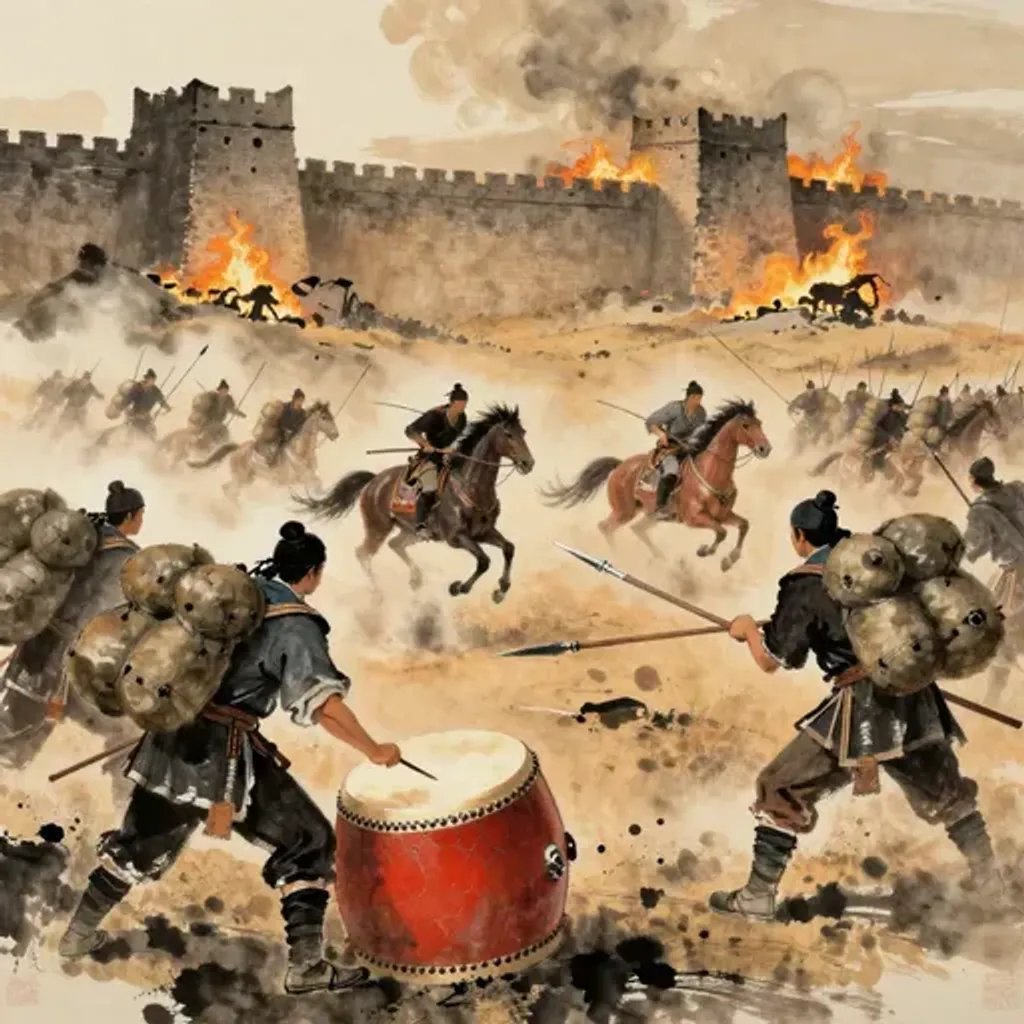
桀跖並處,人民愁苦。擁兵荷糧,戰於齊魯。
Jie and Zhi together dwell; the people grieve and suffer. Mustering troops, bearing provisions; war rages in Qi and Lu.
— Jiao Yanshou, Yilin (Forest of Changes), 1st century BC
Commentary
Jie and Zhi dwell together — the tyrant and the bandit sharing the same space — and the people suffer in misery. Armies are raised, grain requisitioned, and war rages between Qi and Lu. King Jie of Xia and Robber Zhi, paired as archetypes of tyranny and brigandage, represent governance and lawlessness collapsing into the same destructive force. From Creative to Great Exceeding, the lake submerges the trees — the ridgepole sags under unbearable weight. When rulers behave like bandits, the structural beam of civilization bends past its limit. Da Guo demands the courage to stand alone; here, no one stands at all — only the oppressed multitude caught between sovereign cruelty and martial chaos.
乾 → 坎
Hexagram 1 → Hexagram 29: The Abysmal Water
Changing lines: 1, 3, 4, 6
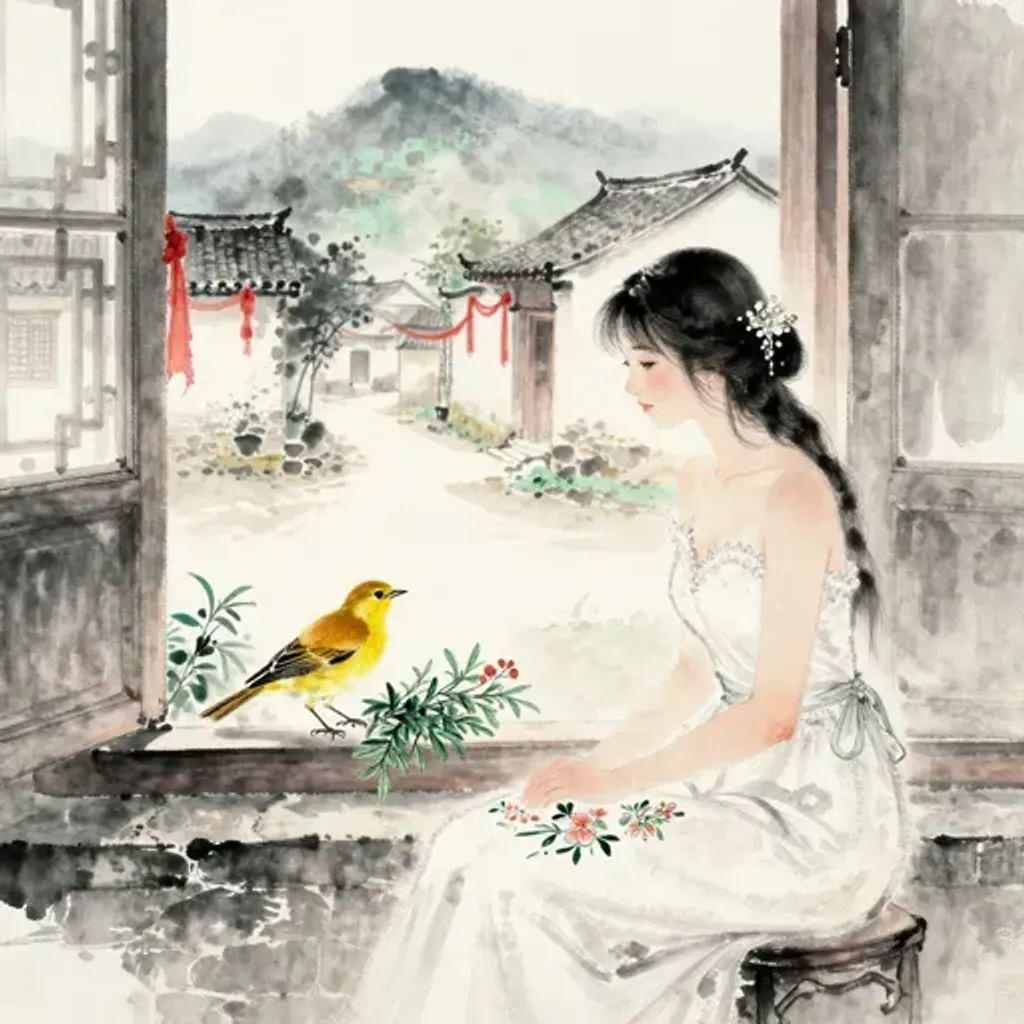
黃鳥采菉,既嫁不荅。念我父兄,思復邦國。
The yellow bird gathers green herbs; once married, she receives no answer. Thinking of her father and brothers, she longs to return to her homeland.
— Jiao Yanshou, Yilin (Forest of Changes), 1st century BC
Commentary
The yellow bird gathers greens — a bride married off to a distant land who receives no response from her husband. She thinks of her father and brothers and longs to return to her home state. This draws on the Shijing 'Xiao Ya: Huang Niao,' the exile's lament: a stranger unwelcome in a foreign land. From Creative to The Abysmal, water upon water — doubled peril with no solid ground. The bride's isolation mirrors the abyss: surrounded by danger on all sides, cut off from family, with no reciprocity in her new household. Heaven's creative energy has plunged into the deepest water, and the longing for home is the single thread of constancy practiced amid repeated peril.
乾 → 離
Hexagram 1 → Hexagram 30: The Clinging Fire
Changing lines: 2, 5
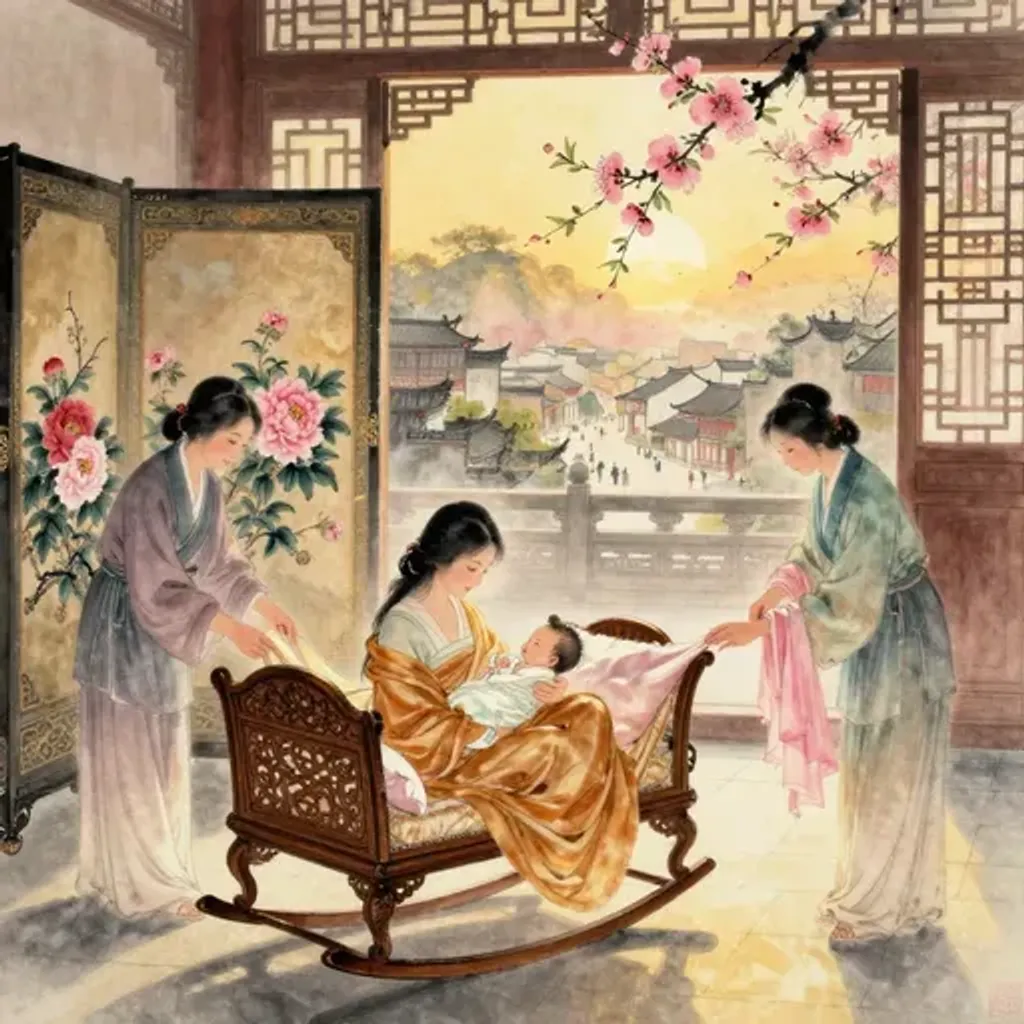
胎生孚乳,長息成就。充滿帝室,家國昌富。
Conceived in the womb, nursed and nurtured; growing to completion. Filling the imperial household; the family and state prosper and abound.
— Jiao Yanshou, Yilin (Forest of Changes), 1st century BC
Commentary
From conception to birth and nursing, offspring grow to maturity. They fill the imperial chambers; family and state flourish together. From Creative to The Clinging, doubled fire — the great person sustains this brightness to illuminate all four directions. The verse traces a complete arc of generative power: conception, gestation, nursing, and maturation, culminating in a household so abundant it fills the royal halls. Li's fire is the fire of continuity — one flame lighting the next. Heaven's creative impulse, channeled through the biological chain of birth and nourishment, becomes the dynasty itself: each generation a new flame lit from the last, brightness propagated endlessly forward.
乾 → 咸
Hexagram 1 → Hexagram 31: Influence
Changing lines: 1, 2, 6
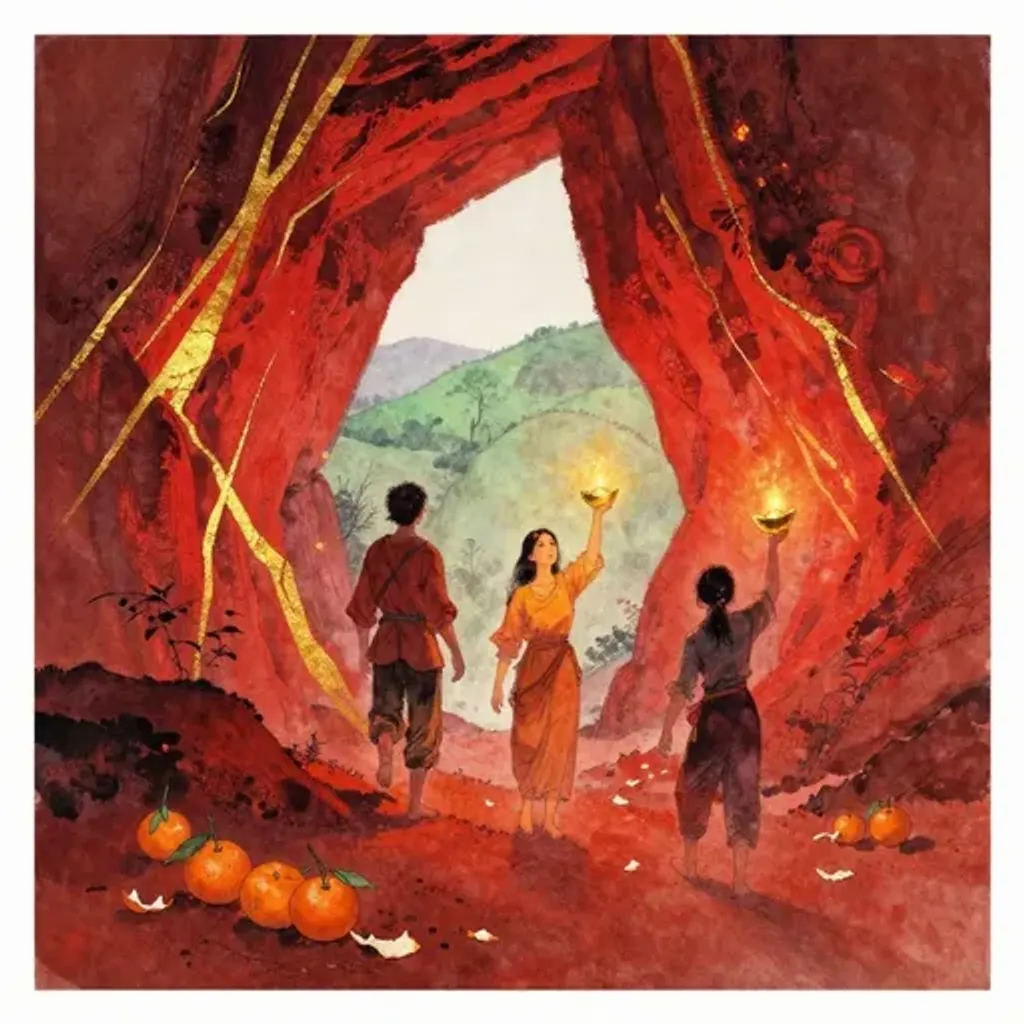
三人求橘,反得丹穴。女貴以富,黃金百鎰。
Three men seek oranges but find instead a cinnabar cavern. A woman becomes noble and rich; a hundred measures of gold.
— Jiao Yanshou, Yilin (Forest of Changes), 1st century BC
Commentary
Three people set out seeking oranges but discover instead a cinnabar cave — a source of alchemical treasure far more valuable than fruit. A woman becomes noble and wealthy, gaining a hundred measures of gold. From Creative to Influence, the lake sits atop the mountain, the image of mutual attraction and openness. Xian means to influence without force — the empty heart that receives. The verse enacts this: seeking one thing, the travelers find another of far greater worth because they remained open to what the journey offered. The cinnabar cave, associated with immortality and transformation, appears to those who approach without rigid expectation. Influence works through receptivity, not pursuit.
乾 → 恆
Hexagram 1 → Hexagram 32: Duration
Changing lines: 1, 5, 6
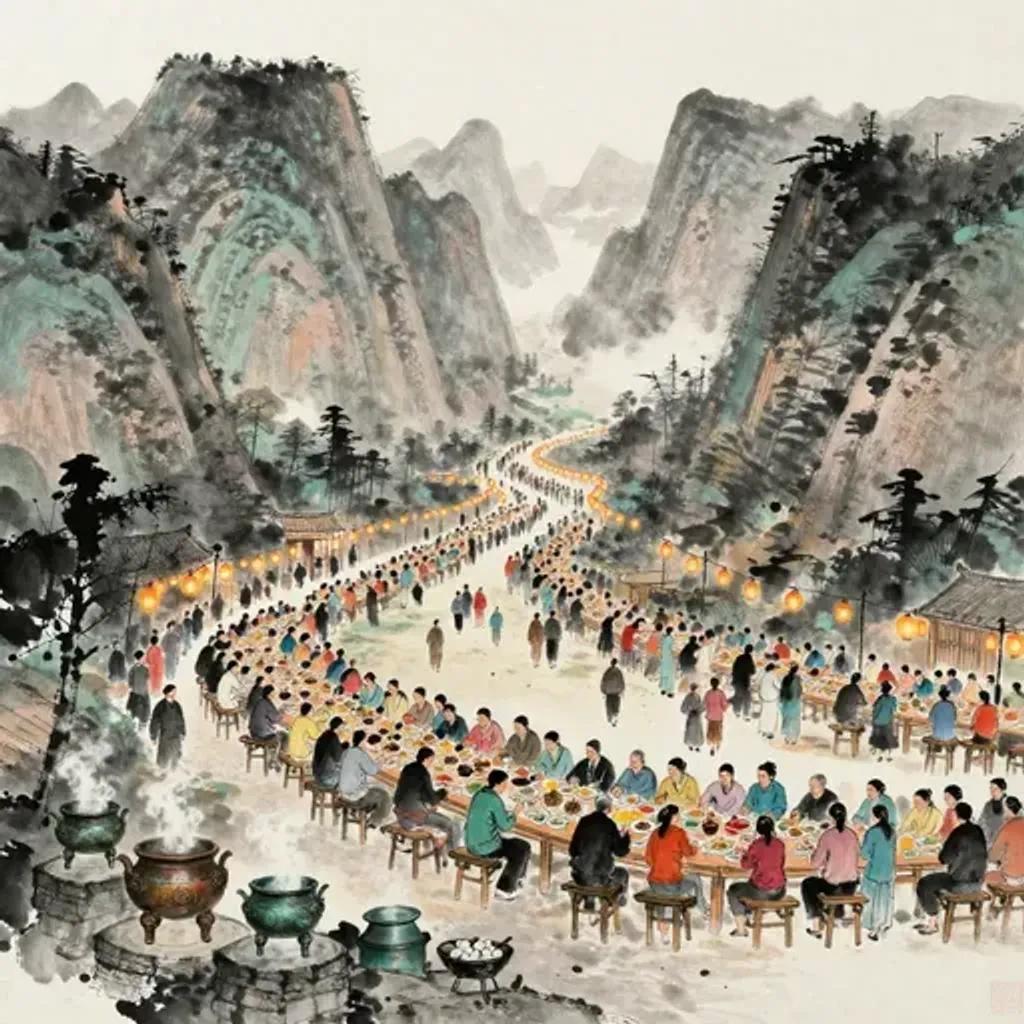
東山西岳,會合俱食,百家送從,以成恩福。
East mountain, west peak; meeting together to feast. A hundred families attend and follow, and so grace and blessing are fulfilled.
— Jiao Yanshou, Yilin (Forest of Changes), 1st century BC
Commentary
Eastern mountains and western peaks converge to feast together. A hundred households escort them with ceremony, perfecting bonds of mutual grace and blessing. From Creative to Duration, thunder above wind — the image of enduring commitment. Heng's counsel is to stand firm and not change direction. The verse renders this as a grand assembly where east meets west, mountains from opposite ends of the realm joining in communion. The hundred households represent a community sustained not by momentary enthusiasm but by the durable customs of escorting, feasting, and reciprocal blessing. What endures is not stone but the practiced ritual of gathering, season after season, generation after generation.
乾 → 遯
Hexagram 1 → Hexagram 33: Retreat
Changing lines: 1, 2
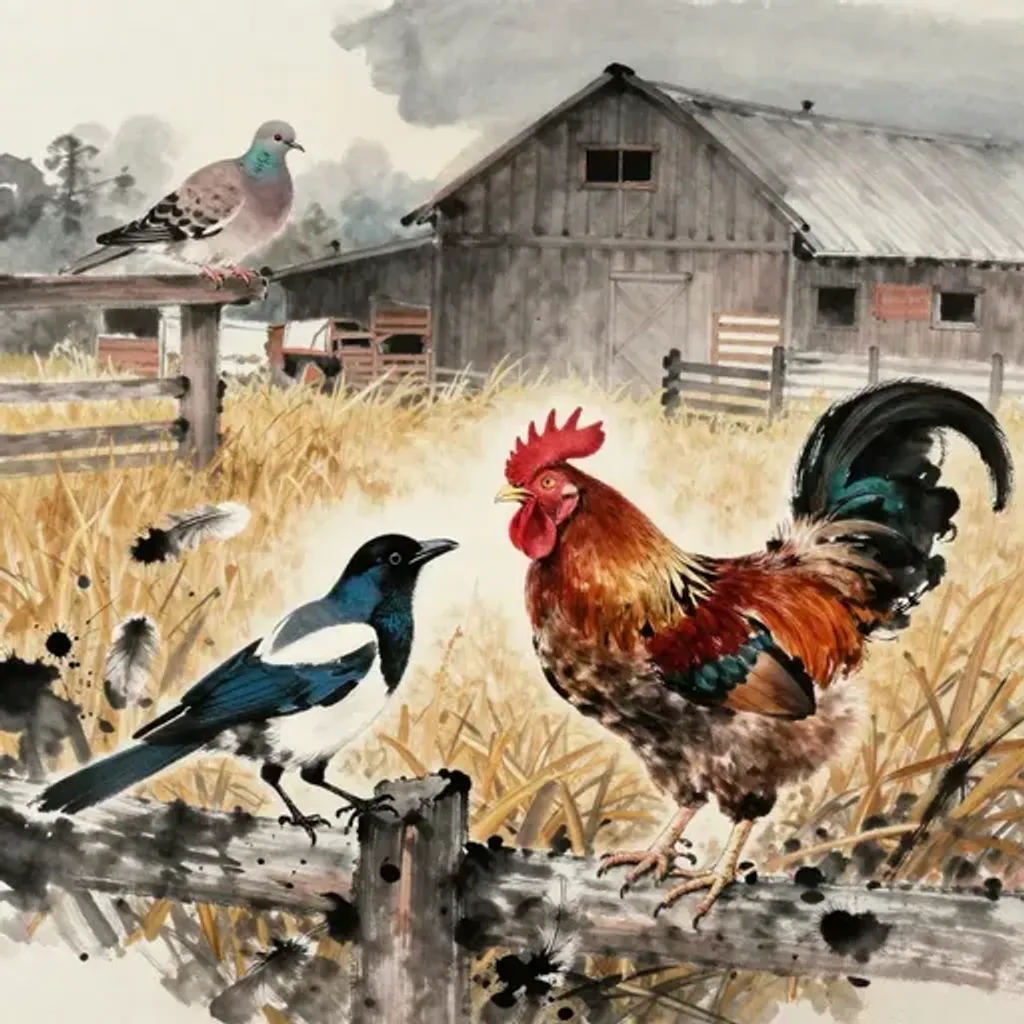
弱雞無距,與鵲交鬭,翅折目盲,為鳩所傷。
A weak rooster without spurs tangles with a magpie in battle. Wings broken, eye blinded; wounded by the dove.
— Jiao Yanshou, Yilin (Forest of Changes), 1st century BC
Commentary
A weak rooster without spurs fights a magpie, its wings broken and eyes blinded — wounded by a turtledove. From Creative to Retreat, heaven stands above the mountain, and the wise withdraw from what they cannot overcome. The verse is a fable of mismatched combat: a spurless cock challenges a bird of another kind entirely and is destroyed. The lesson aligns precisely with Dun's counsel: retreat is not cowardice but recognition. The gentleman distances himself from petty adversaries not through hatred but through dignified withdrawal. This rooster, refusing to retreat, loses everything. Heaven above the mountain knows when to remain beyond reach; the rooster did not.
乾 → 大壯
Hexagram 1 → Hexagram 34: Great Power
Changing lines: 5, 6
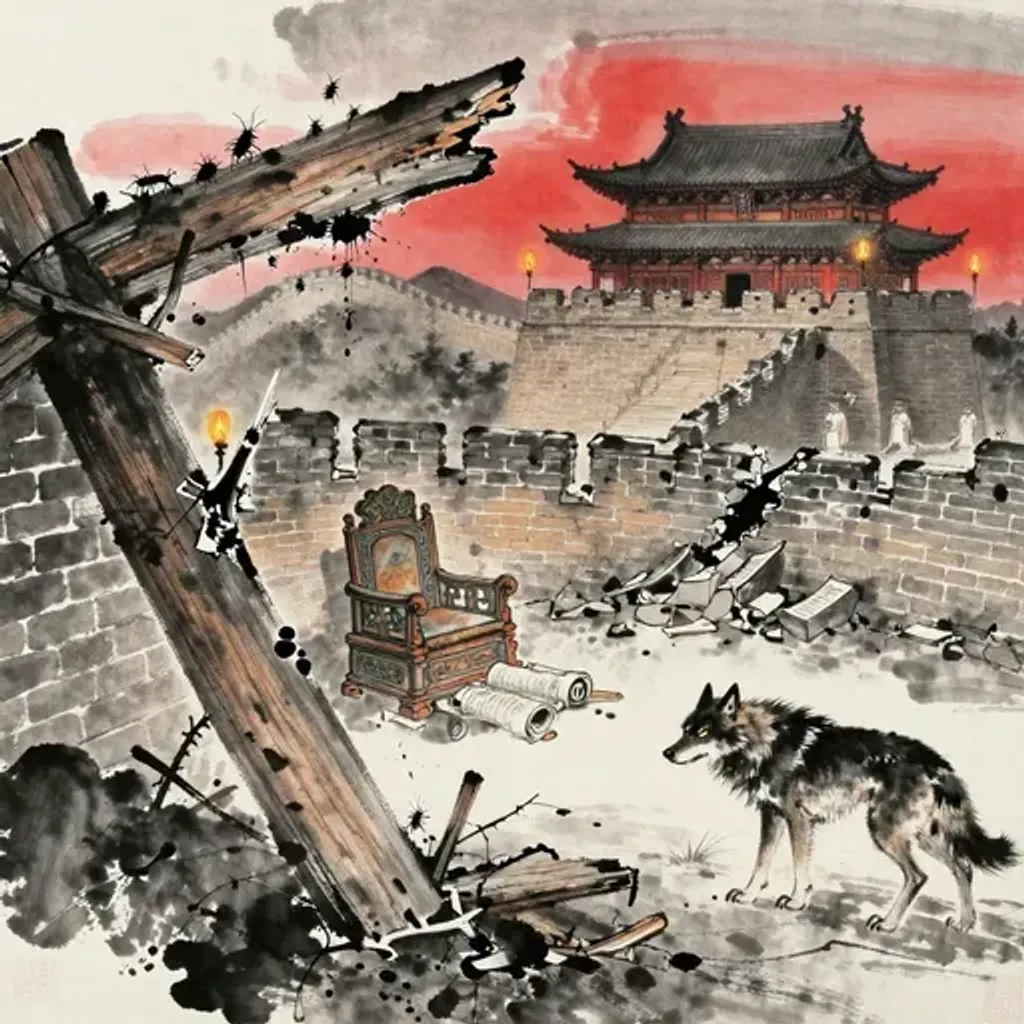
隙大墻壞,蠹眾木折。狼虎為政,天降罪罰。高弒望夷,胡亥以斃。
When the crack is wide the wall crumbles; when the worm-bores are many the wood snaps. Wolves and tigers govern; heaven sends down punishment. Gao murdered at Wangyi; Huhai perished.
— Jiao Yanshou, Yilin (Forest of Changes), 1st century BC
Commentary
When gaps grow wide the wall collapses; when wood-borers multiply the beam snaps. Wolves and tigers govern the state, and heaven sends its punishment. Zhao Gao murders the emperor at Wangyi Palace; the Second Emperor Huhai perishes. From Creative to Great Power, thunder roars above heaven — overwhelming force. Yet the verse shows Da Zhuang's peril: power unchecked by propriety destroys itself. Zhao Gao's regime was raw coercion wearing the mask of governance, its wall already riddled with cracks. The timber-beetle metaphor makes the mechanism explicit: corruption eats from within until the structure cannot bear even its own weight, and the powerful are crushed by the very force they wielded.
乾 → 晉
Hexagram 1 → Hexagram 35: Progress
Changing lines: 1, 2, 3, 5
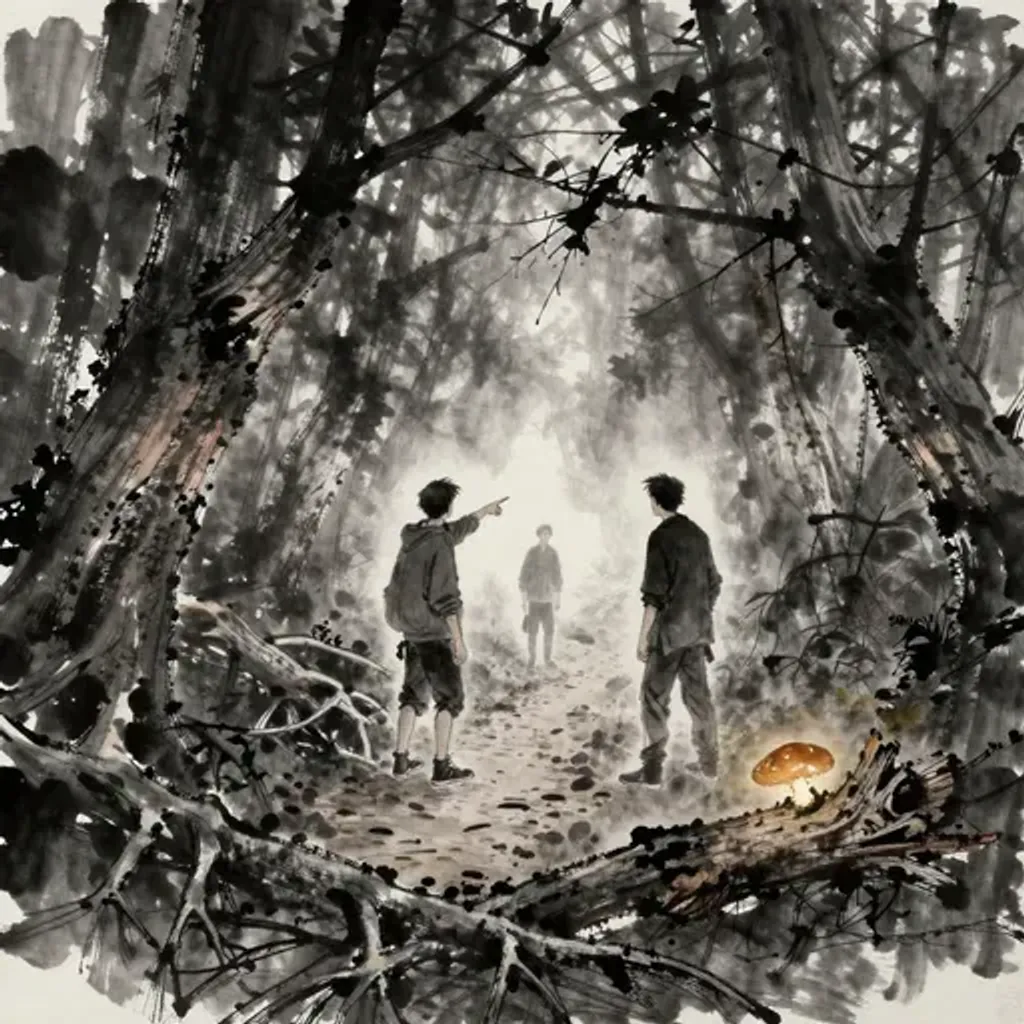
三癡俱走,迷路失道,惑不知歸,反入患口。
Three fools run together, lost and straying from the road. Confused, not knowing the way home, they blunder back into the mouth of danger.
— Jiao Yanshou, Yilin (Forest of Changes), 1st century BC
Commentary
Three fools set out together, lose the road, wander in confusion, unable to find their way home, and stumble straight into the mouth of disaster. From Creative to Progress, fire rises above the earth — brightness ascending, the image of the great person illuminating virtue. Yet the verse shows progress without illumination: the three travelers advance but in the wrong direction, their movement achieving only deeper entanglement. Jin's promise is that light rises naturally, as the sun emerges from the earth at dawn. These fools carry no light; their 'progress' is blind locomotion. The transformation warns that forward motion without clarity is not advancement but wandering into harm.
乾 → 明夷
Hexagram 1 → Hexagram 36: Darkening of the Light
Changing lines: 2, 4, 5, 6
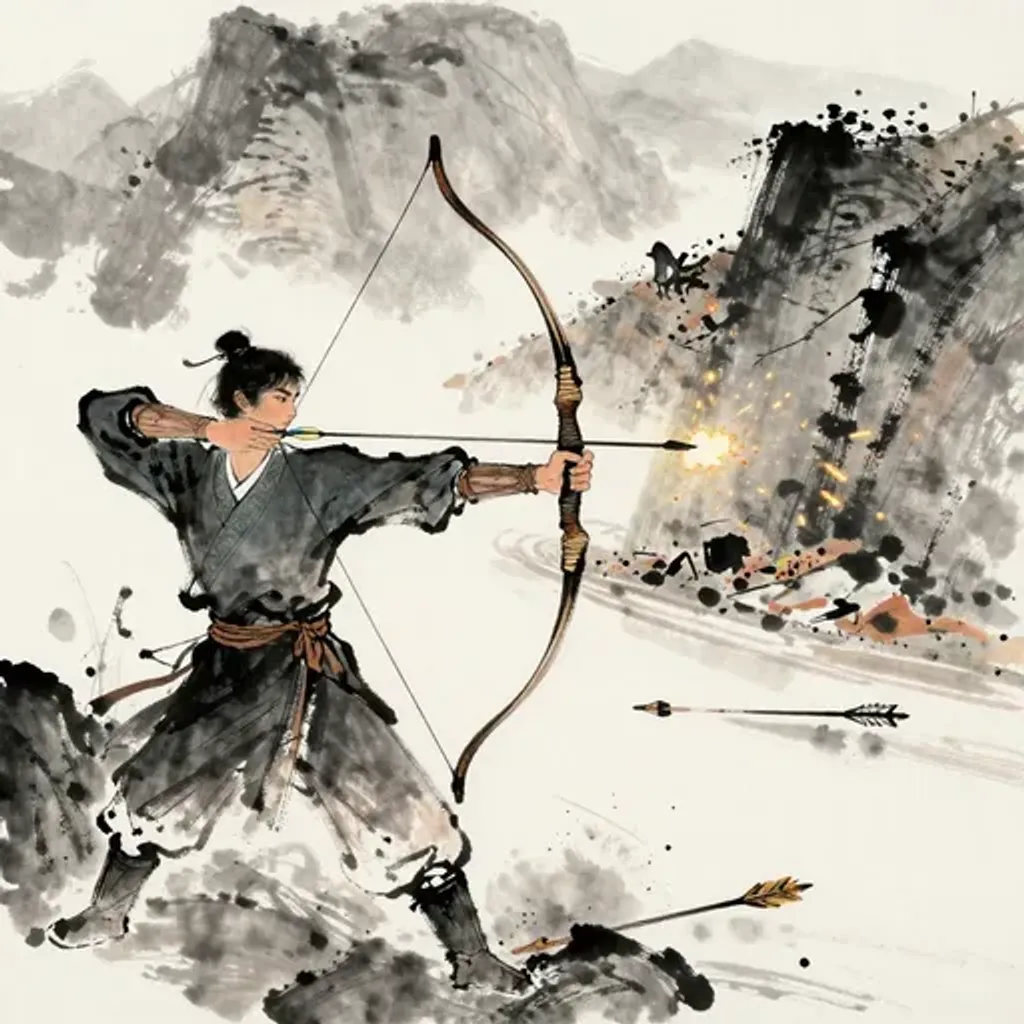
弓矢俱張,把彈折絃,丸發不至,道遇害患。
Bow and arrow both drawn, but the pellet snaps the string. The shot does not reach its mark; on the road one meets harm and danger.
— Jiao Yanshou, Yilin (Forest of Changes), 1st century BC
Commentary
Bow and crossbow both drawn taut, yet the slingshot snaps its string and the pellet never reaches its target. On the road one encounters harm. From Creative to Darkening of the Light, fire sinks beneath the earth — brilliance deliberately concealed. The verse enacts the failure that Ming Yi warns against: weapons prepared but malfunctioning at the critical moment, leaving the traveler defenseless in hostile territory. The broken string is the snapping of capacity under pressure. In a time of darkened light, even prepared force misfires. The counsel is to veil one's brightness and use obscurity as protection, but here the traveler carries conspicuous weaponry that fails, drawing danger while providing none.
乾 → 家人
Hexagram 1 → Hexagram 37: The Family
Changing lines: 2, 4
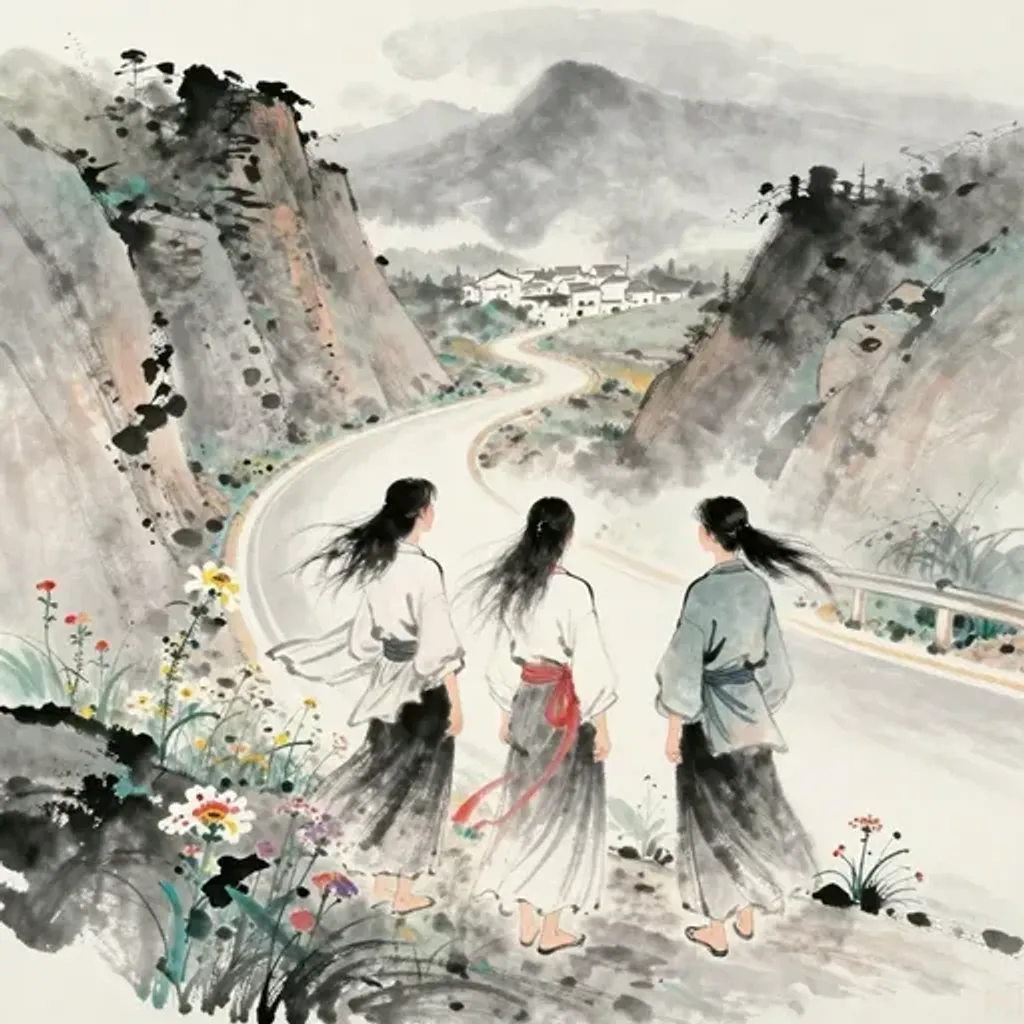
三女求夫,伺候山隅,不見復關,長思歎憂。
Three women seek husbands, waiting and watching at the mountain’s bend. They do not see the returning carriage; they sigh in long sorrow.
— Jiao Yanshou, Yilin (Forest of Changes), 1st century BC
Commentary
Three women seek husbands, waiting at the mountain's edge, but they never see the watchtower gate — an echo of the Shijing ode 'Mang,' where the abandoned woman watches for her lover: 'Not seeing Fuguan, my tears stream down.' Longing and sighing fill the days. From Creative to The Family, wind emerges from fire — words carry substance and actions hold constancy. Yet the verse shows the family that has not yet formed: the women wait, the men never arrive, and the household remains an unrealized aspiration. Jia Ren's ideal of enduring domestic bonds is presented here in negative: desire for family without fulfillment, the wind that should issue from hearth-fire blowing instead through an empty doorway.
乾 → 睽
Hexagram 1 → Hexagram 38: Opposition
Changing lines: 3, 5
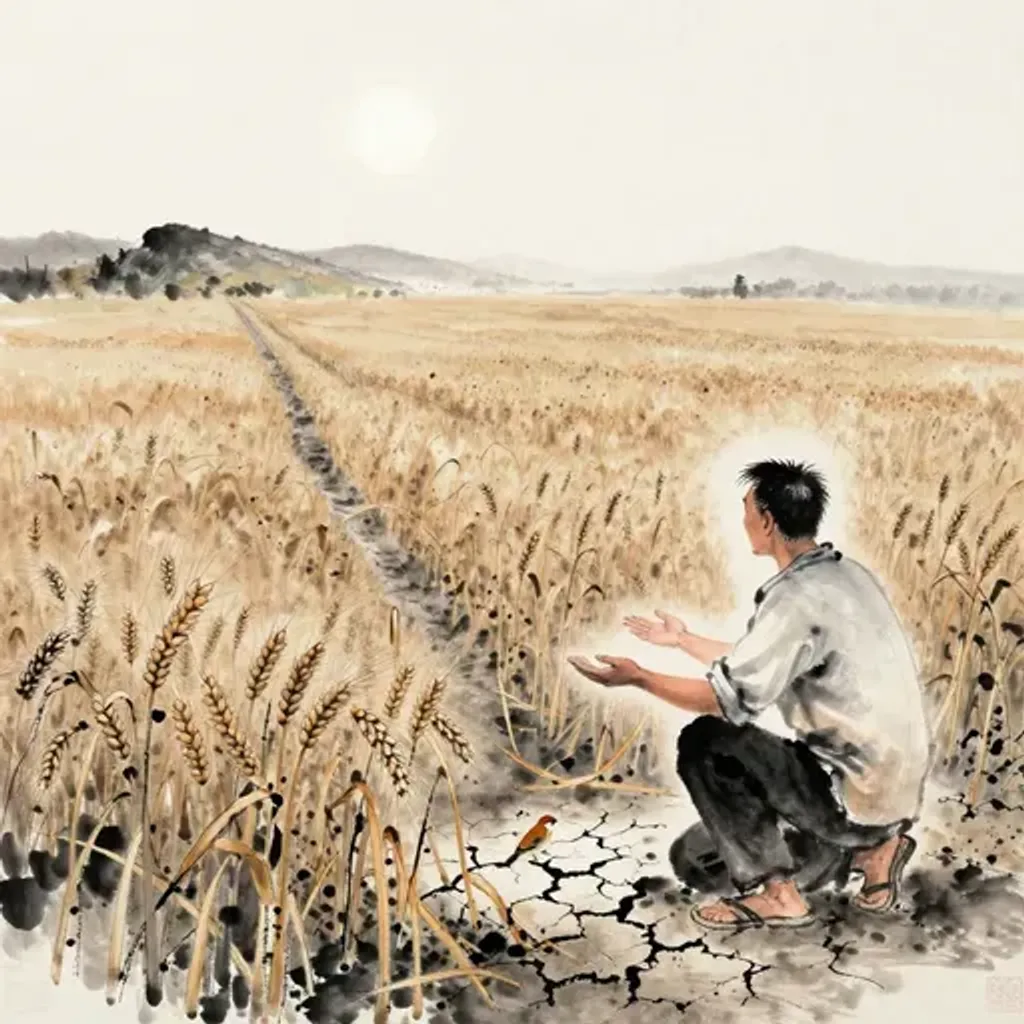
陽旱炎炎,傷害禾穀,穡人無食,耕夫嘆息。
Scorching drought burns fierce, harming the grain and crops. The farmer has no food; the plowman sighs in sorrow.
— Jiao Yanshou, Yilin (Forest of Changes), 1st century BC
Commentary
Scorching yang drought burns relentlessly, damaging grain and millet. The farmers have nothing to eat; the plowmen sigh in despair. From Creative to Opposition, fire above and lake below — two forces that naturally diverge. Kui's image captures mutual estrangement: fire rises, water sinks, and they refuse to cooperate. The verse translates this cosmic discord into agricultural catastrophe: the sun's yang fire, instead of nurturing crops, desiccates them. When heaven and earth fall out of accord, the harvest fails and the people starve. The plowman's sigh is the human sound of Opposition — effort and result moving in contrary directions, the more one labors the less one reaps.
乾 → 蹇
Hexagram 1 → Hexagram 39: Obstruction
Changing lines: 1, 2, 4, 6
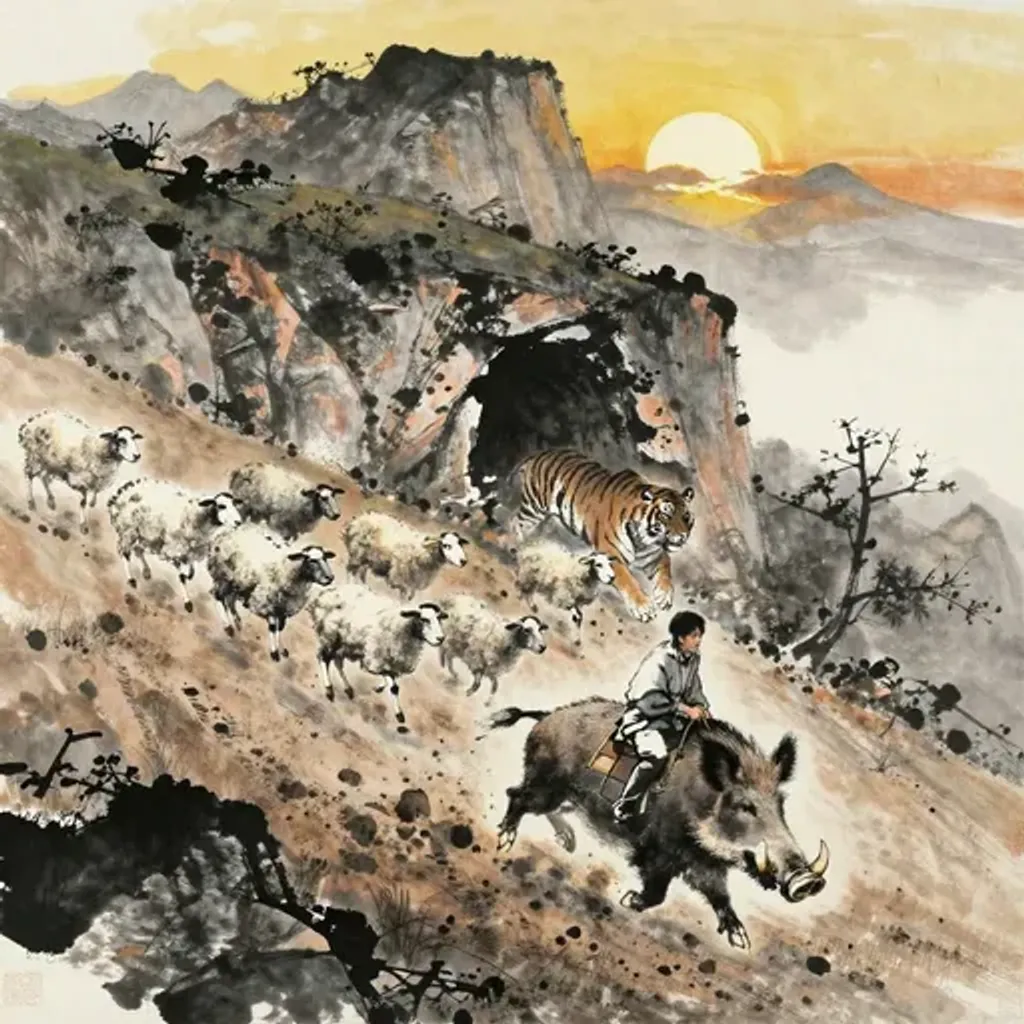
騎㹠逐羊,不見所望,徑涉虎穴,亡羊失羔。
Riding a boar to chase sheep, not seeing what was hoped for. Cutting straight through the tiger’s den; the sheep are lost, the lambs gone.
— Jiao Yanshou, Yilin (Forest of Changes), 1st century BC
Commentary
Riding a young boar to chase sheep, one finds nothing where one looks. Recklessly entering a tiger's lair, both the ewe and lamb are lost. From Creative to Obstruction, water collects dangerously atop the mountain — the image of peril that demands self-reflection. The verse is a parable of compounded misjudgment: the wrong mount for the wrong quarry leads into the worst possible terrain. Each decision worsens the situation until even what one originally possessed is gone. Jian's counsel is to turn inward and cultivate virtue when the road ahead is blocked. This rider charges forward on his boar, ignoring every signal to stop, and the tiger's den swallows everything.
乾 → 解
Hexagram 1 → Hexagram 40: Deliverance
Changing lines: 1, 3, 5, 6
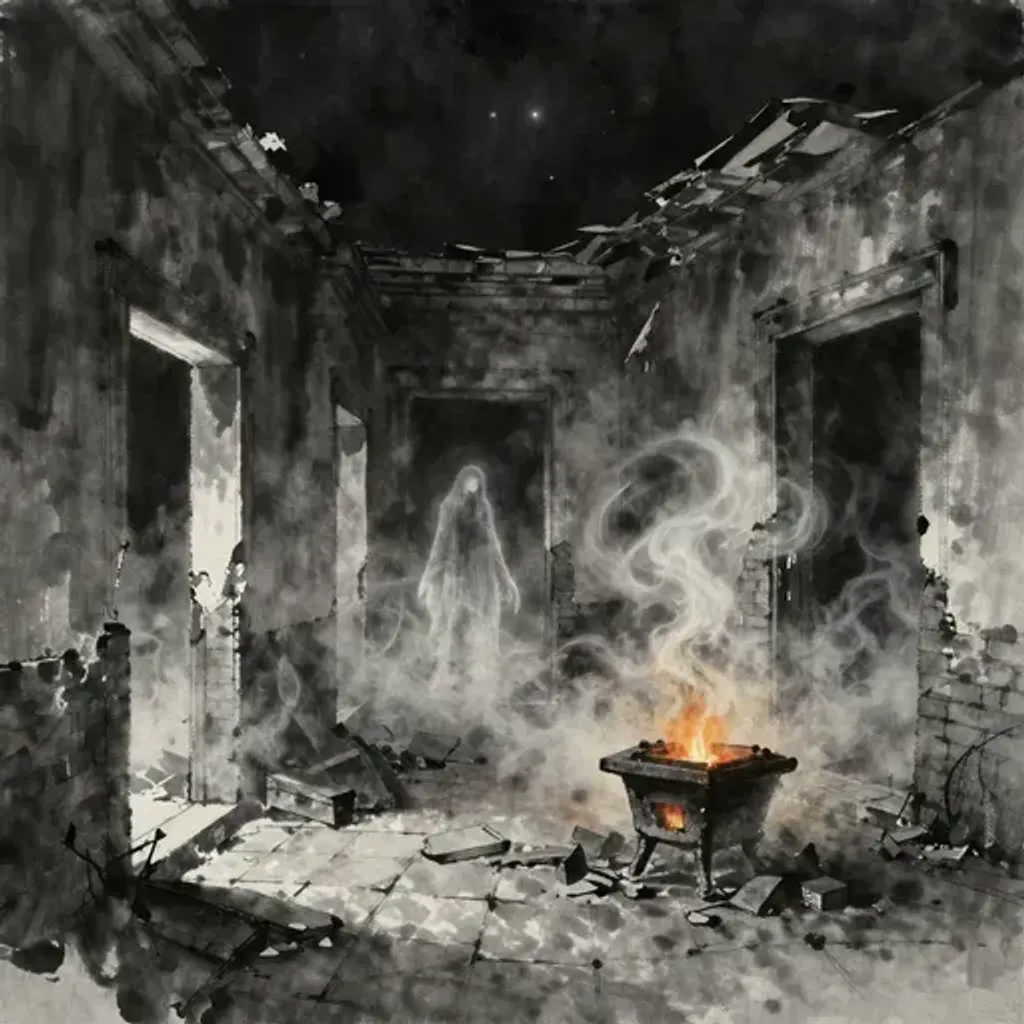
暗昧冥語,相傳詿誤。鬼魅所舍,誰知臥處。
Dark, obscure murmurings; rumors passed along in error. A dwelling of ghosts and spirits; who knows where to rest?
— Jiao Yanshou, Yilin (Forest of Changes), 1st century BC
Commentary
Murmured words in darkness, messages garbled as they pass from mouth to mouth. This is a dwelling place of ghosts and phantoms — who knows where they rest? From Creative to Deliverance, thunder and rain burst forth together, releasing tension and pardoning faults. Yet the verse captures the confusion that precedes deliverance: before the storm breaks, everything is murky, unreliable, haunted. The whispered falsehoods are the accumulated pressure that Xie's thunderstorm will eventually clear. Ghosts occupy spaces where clarity has been abandoned. Deliverance comes not through understanding the darkness but through the explosive release that scatters it — but first one must endure the disorientation of not knowing where anything stands.
乾 → 損
Hexagram 1 → Hexagram 41: Decrease
Changing lines: 3, 4, 5
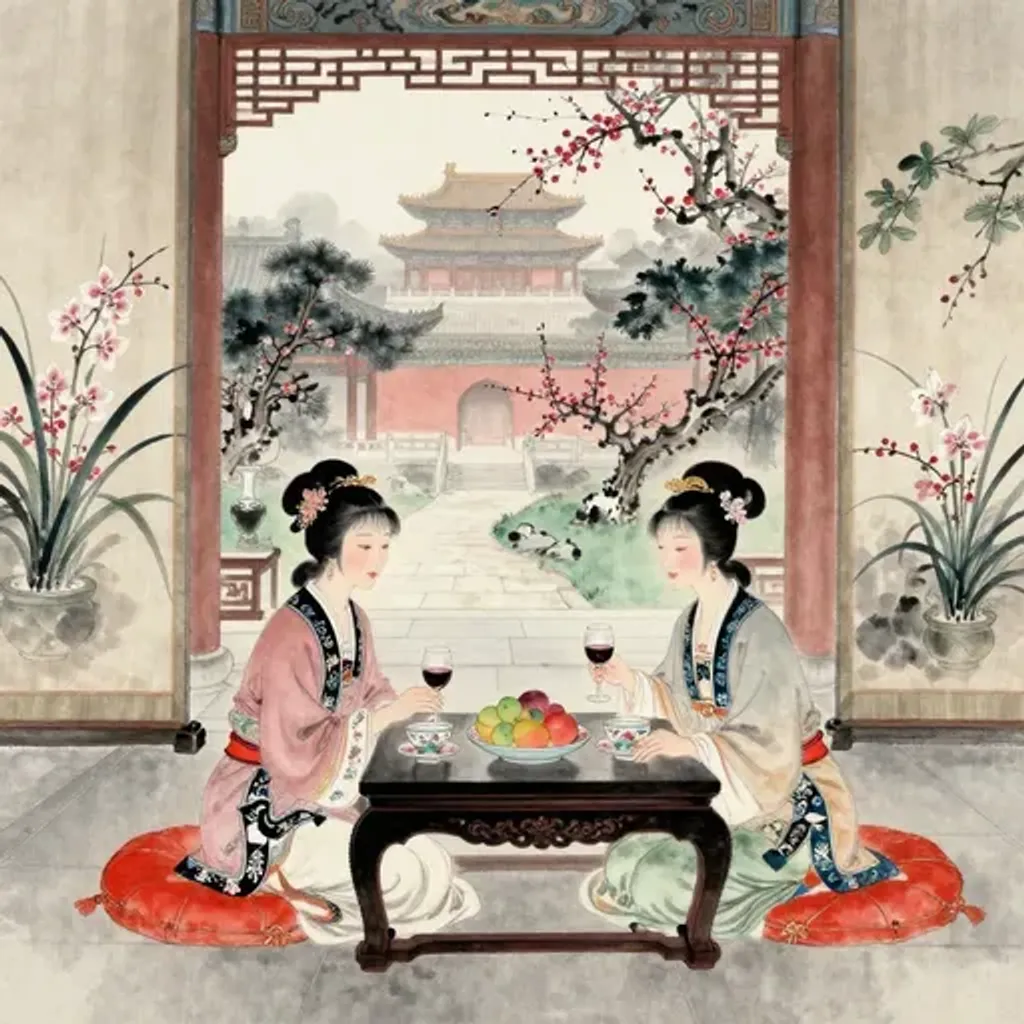
姬姜祥淑,二人偶食,論仁議福,以安王室。
Ladies Ji and Jiang, auspicious and virtuous; two companions dine together. Discussing benevolence, deliberating on blessings, to bring peace to the royal house.
— Jiao Yanshou, Yilin (Forest of Changes), 1st century BC
Commentary
The Ji and Jiang clans — representing the royal houses of Zhou and Qi — sit down together in auspicious harmony. Two figures share a meal, discussing benevolence and deliberating on blessings to secure the royal house. From Creative to Decrease, the mountain stands above the lake, the image of restraining anger and curbing desire. The verse shows Decrease at its most constructive: two great lineages voluntarily diminish personal ambition to strengthen the collective. Their shared meal is not indulgence but deliberate moderation — enough to sustain, not enough to corrupt. The Ji-Jiang alliance represents the Zhou political order at its best: mutual sacrifice in service of stability.
乾 → 益
Hexagram 1 → Hexagram 42: Increase
Changing lines: 2, 3, 4
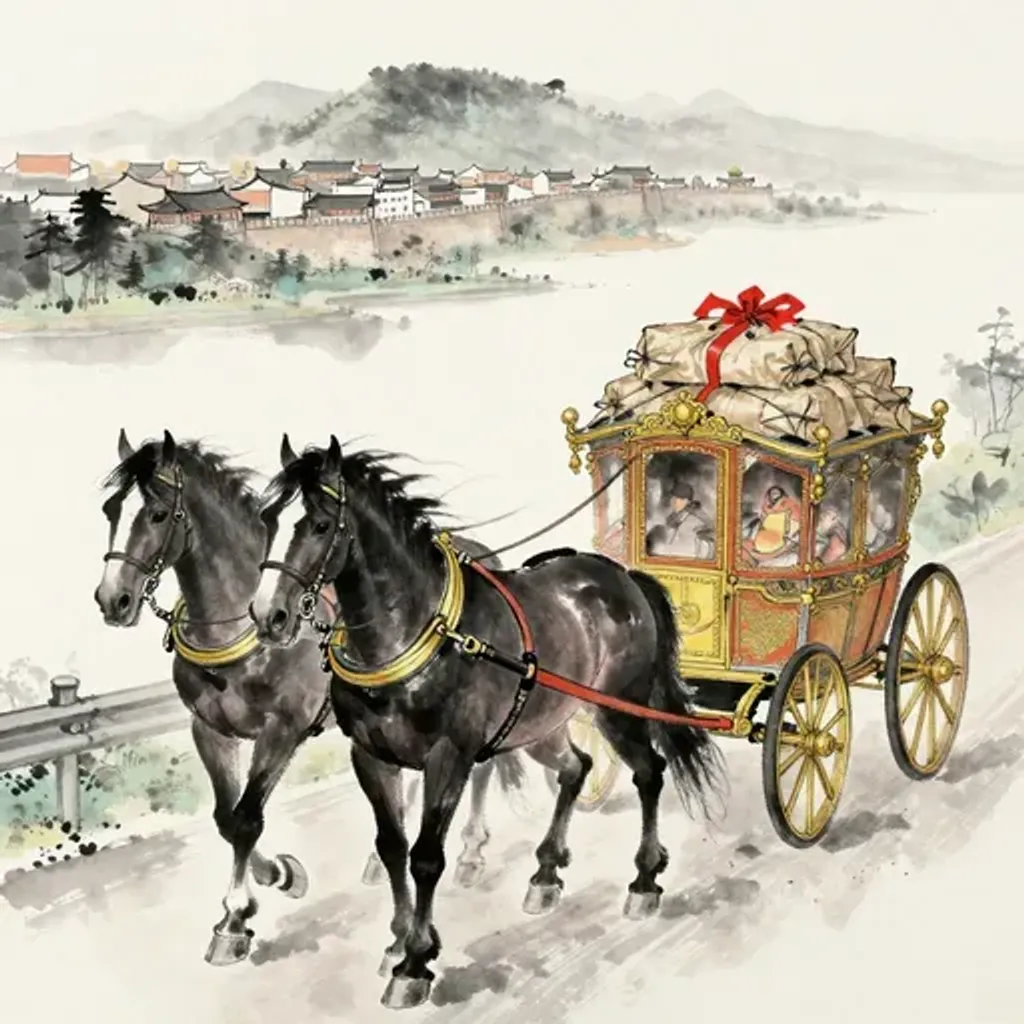
公孫駕驪,載聘東齊。延陵說產,遺季紵衣。
Lord Gongsun drives black horses, bearing betrothal gifts east to Qi. Yanling speaks of his estate and leaves Jizi a ramie robe.
— Jiao Yanshou, Yilin (Forest of Changes), 1st century BC
Commentary
A lord harnesses dark horses to carry betrothal gifts east to Qi, while Yanling's Ji Zha, visiting Zheng, admires Zichan's character and presents him with a fine ramie robe. According to the Zuo Zhuan, Ji Zha of Wu toured the states evaluating their governance and music; in Zheng, he and Zichan exchanged gifts as tokens of mutual respect between worthy statesmen. From Creative to Increase, wind and thunder reinforce each other — seeing virtue, one follows; recognizing faults, one corrects. The verse embodies Yi's spirit: diplomatic exchange that enriches both parties. The betrothal gifts and the gifted robe are not transactions but investments in relationship, each act of generosity amplifying the other's capacity.
乾 → 夬
Hexagram 1 → Hexagram 43: Breakthrough
Changing lines: 6
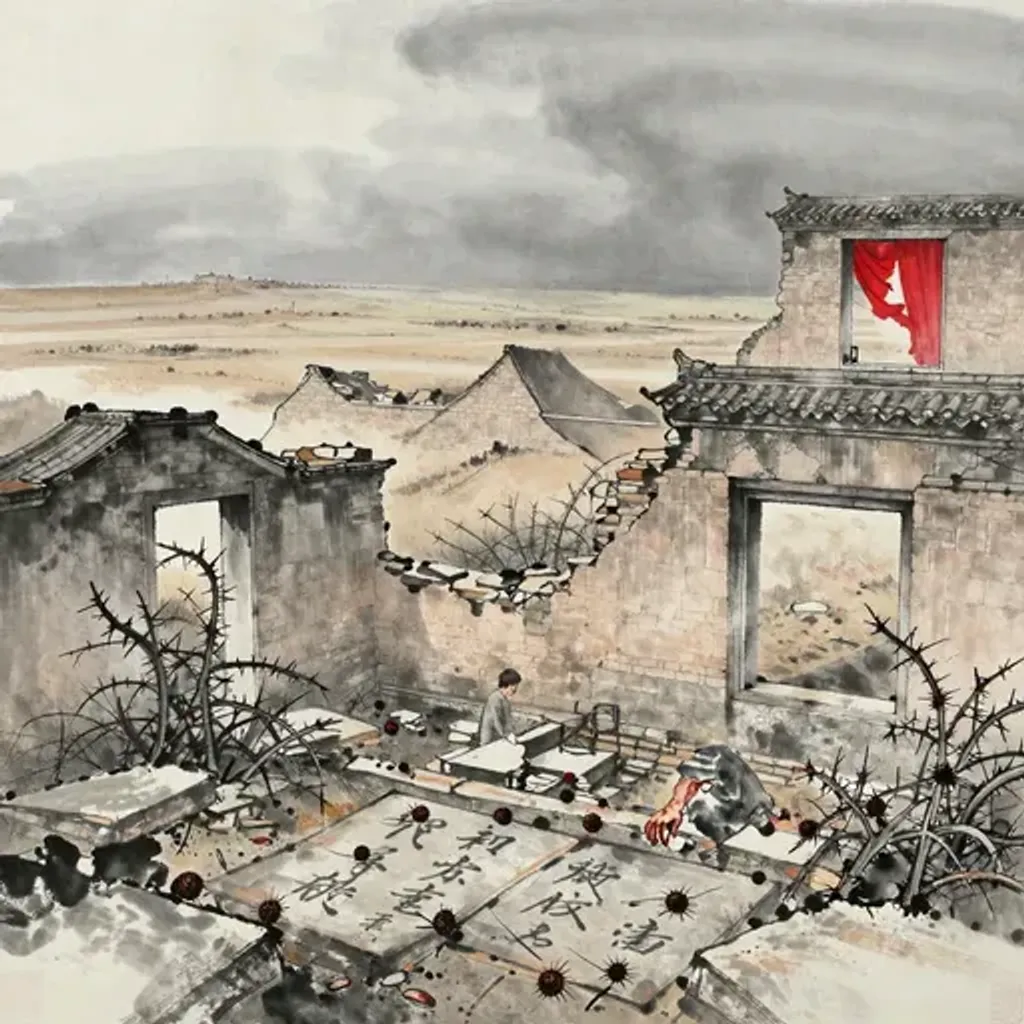
孤竹之墟,失婦亡夫。傷於蒺藜,不見少妻。東郭棠姜,武氏以亡。
The ruins of Guzhu; husband lost, wife gone. Wounded by caltrops; the young wife unseen. Dongguo Tang Jiang; the Wu clan thereby perished.
— Jiao Yanshou, Yilin (Forest of Changes), 1st century BC
Commentary
The ruins of Guzhu — the ancient state of Boyi and Shuqi — a place where husbands and wives are lost to each other, where thorns of tribulus pierce the traveler, and the young wife vanishes. Then the verse names a concrete case: Dongguo and Tang Jiang, for whose sake the house of Wu was destroyed. According to the Zuo Zhuan, Cui Zhu of Qi married Tang Jiang, the beautiful widow of Tang Gong, despite receiving an inauspicious divination. Duke Zhuang of Qi had an affair with her; Cui Zhu killed the duke but his own clan was subsequently annihilated. From Creative to Breakthrough, the lake surges above heaven — accumulated pressure erupts. The verse warns that desire unchecked leads to the decisive rupture that Guai represents.
乾 → 姤
Hexagram 1 → Hexagram 44: Coming to Meet
Changing lines: 1
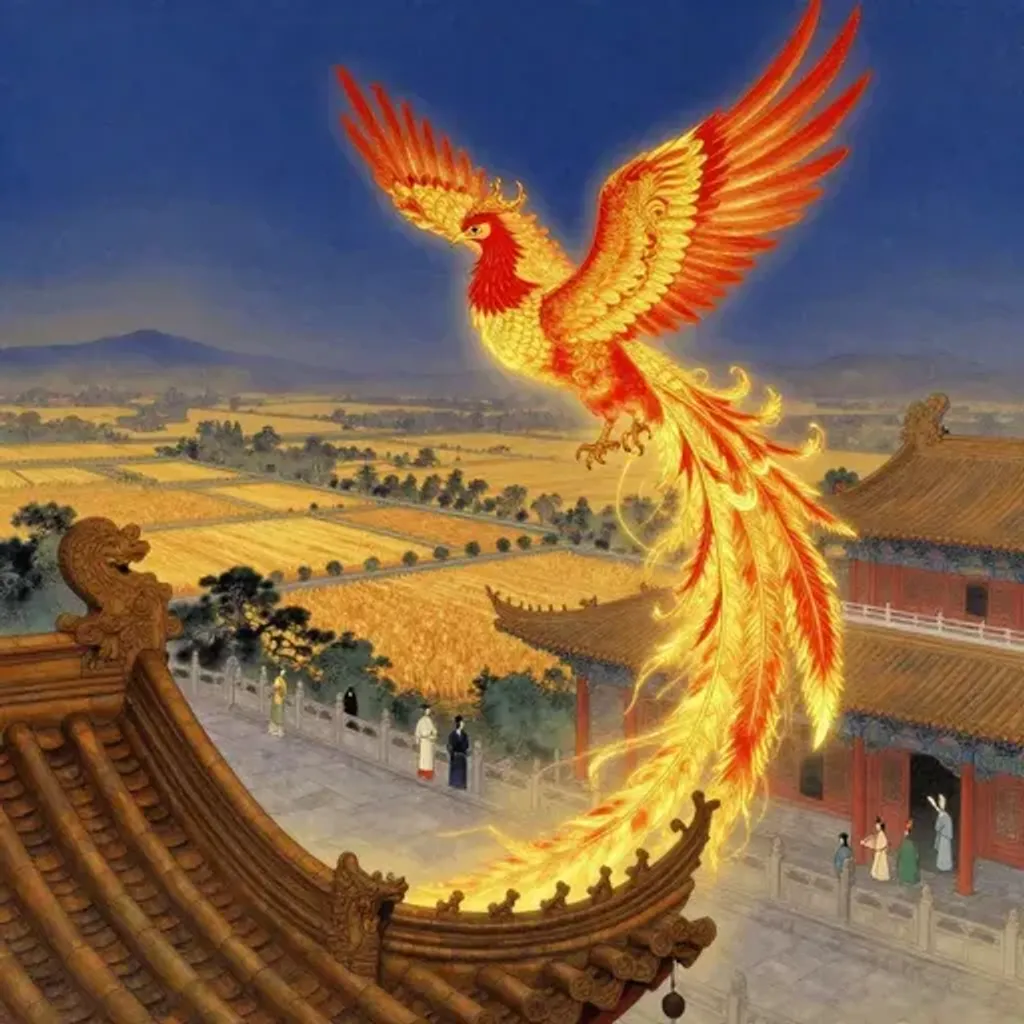
仁政不暴,鳳凰來舍。四時順節,民安其處。
Benevolent government, not cruel; the phoenix comes to dwell. The four seasons follow their order; the people are at peace in their places.
— Jiao Yanshou, Yilin (Forest of Changes), 1st century BC
Commentary
Benevolent governance free of cruelty — the phoenix comes to roost. The four seasons follow their proper rhythm; the people dwell in peace. The phoenix appears only under a sage ruler's reign, its arrival the ultimate cosmic endorsement. From Creative to Coming to Meet, heaven above wind — the sovereign's proclamation spreading to the four quarters. Gou describes the unexpected encounter between strong and yielding, the moment when something unbidden arrives. The phoenix is precisely this: one cannot summon it; one can only create conditions worthy of its presence. When governance is humane and time runs in order, the sacred bird arrives uninvited — the meeting of heaven and wind made manifest in feathered form.
乾 → 萃
Hexagram 1 → Hexagram 45: Gathering Together
Changing lines: 1, 2, 3, 6
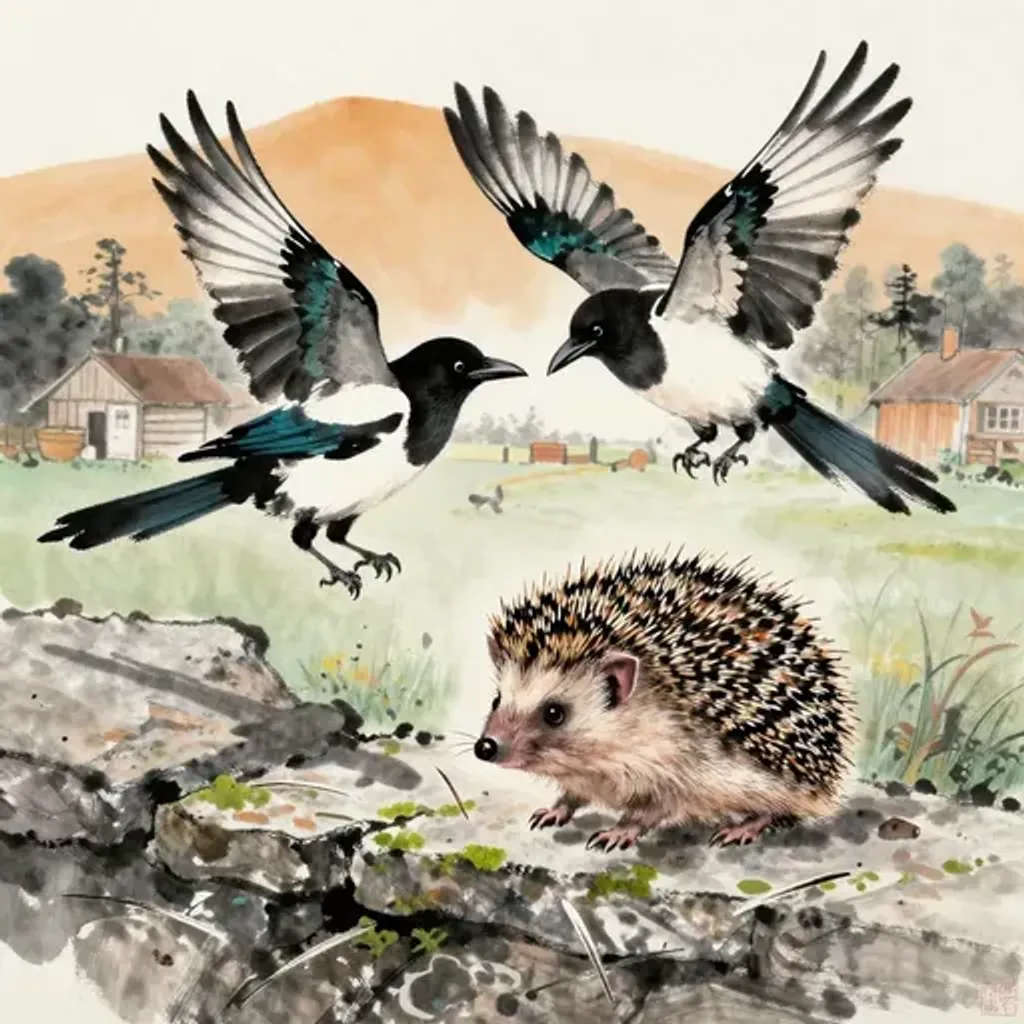
任劣力薄,孱駑恐怯,如蝟見鵲,不敢拒格。
Appointed but feeble, strength thin; timid and afraid. Like a hedgehog facing a magpie, not daring to resist or stand.
— Jiao Yanshou, Yilin (Forest of Changes), 1st century BC
Commentary
Talent is meager and strength is thin, timid as a worn-out nag. Like a hedgehog confronting a magpie, one dares not resist or fight back. From Creative to Gathering, the lake collects upon the earth and the ruler prepares weapons against the unexpected. Yet this verse shows the opposite of Cui's martial readiness: utter helplessness. The hedgehog — normally formidable in its defensive posture — here cowers before a mere magpie, unable even to bristle. When the gathering demands collective strength, the individual who brings only weakness to the assembly becomes a liability. The verse warns that heaven's creative force, if not cultivated, dwindles into cringing inadequacy when the moment of assembly arrives.
乾 → 升
Hexagram 1 → Hexagram 46: Pushing Upward
Changing lines: 1, 4, 5, 6
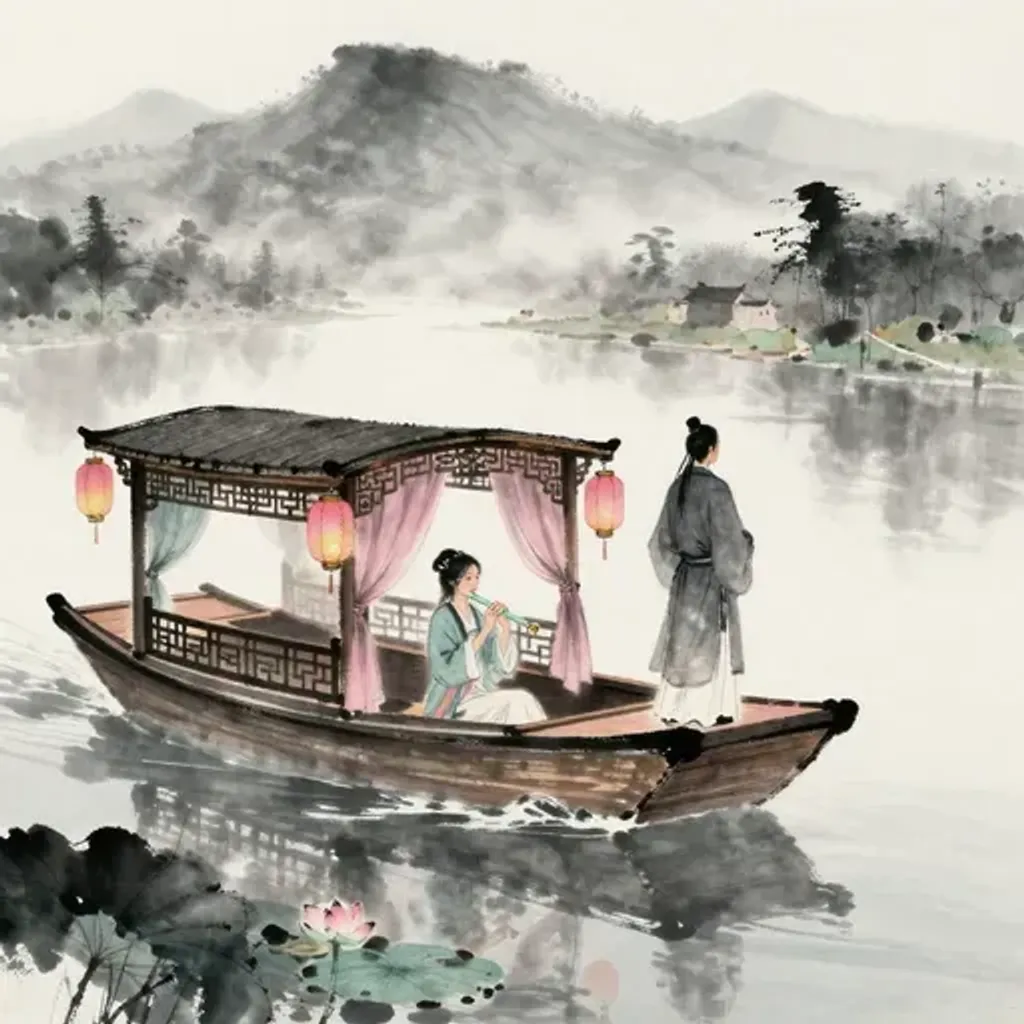
衛侯東遊,惑於少姬。亡我考妣,久迷不來。
The Marquis of Wei travels east, bewitched by a young lady. Losing my father and mother, long astray, he does not return.
— Jiao Yanshou, Yilin (Forest of Changes), 1st century BC
Commentary
The Marquis of Wei travels east, bewitched by a young beauty. Parents have died; he wanders astray and never returns. This echoes the scandal of Duke Xuan of Wei, who built a New Terrace to intercept his own son's bride — an episode condemned in the Shijing ode 'Xin Tai.' From Creative to Pushing Upward, wood grows within the earth, rising gradually and steadily. Yet the verse shows upward movement perverted: instead of virtuous ascent, the lord's eastward journey is a descent into infatuation. Sheng counsels building step by step through accumulated small efforts; here, each step leads further from duty and deeper into delusion. The upward path is abandoned for lateral drift.
乾 → 困
Hexagram 1 → Hexagram 47: Oppression
Changing lines: 1, 3, 6
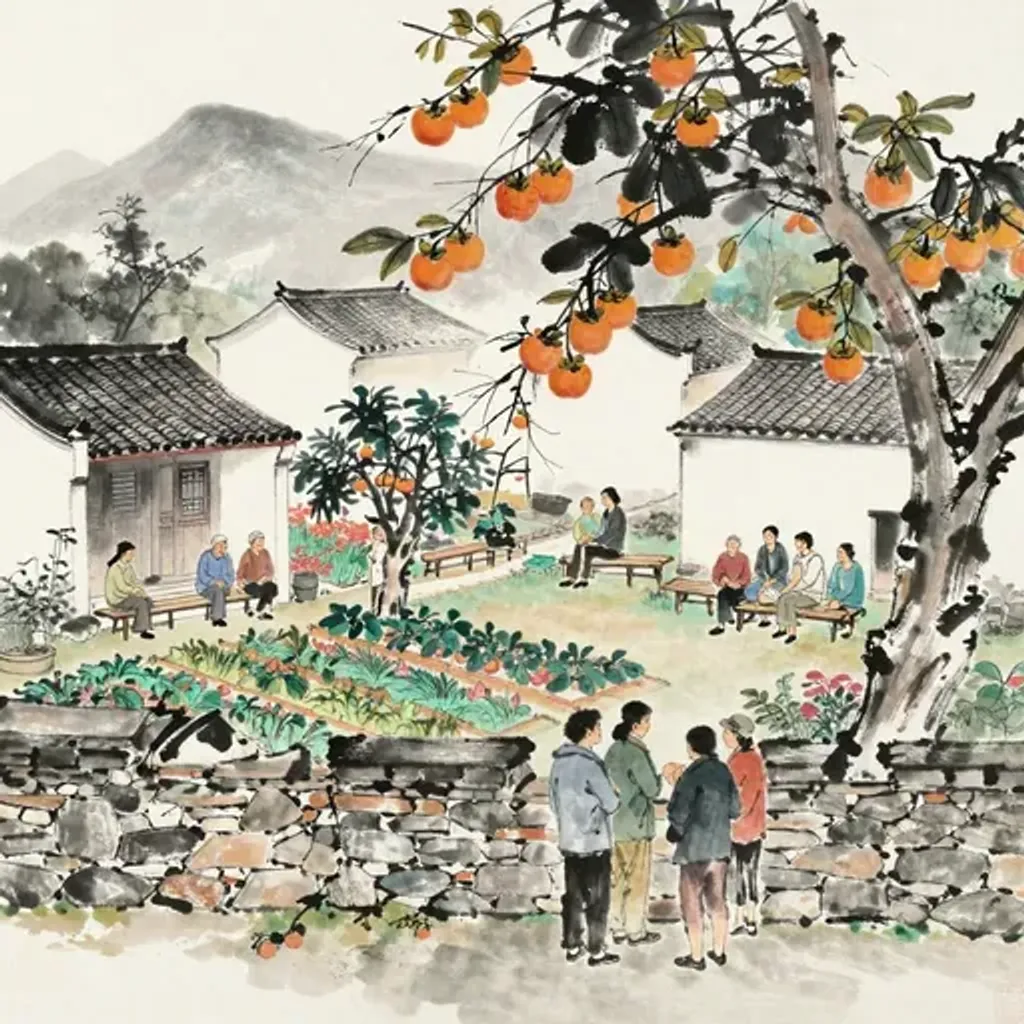
噂噂所言,莫如我垣。歡喜堅固,可以長安。
The murmurs that are spoken are nothing like my wall. Rejoicing, steadfast and strong; one may dwell long in peace.
— Jiao Yanshou, Yilin (Forest of Changes), 1st century BC
Commentary
People whisper and gossip, but none is as reliable as my own wall. When the foundation is joyful and solid, it provides lasting security. The Shijing ode 'Jie Nan Shan' warns against trusting the murmurs of flatterers; here the verse counsels trusting only the tangible protection of one's own structure. From Creative to Oppression, the lake sits above water but the water has drained away — emptiness beneath apparent fullness. Yet the verse inverts Kun's despair: amid a world of unreliable speech, the person who builds a solid wall rather than chasing rumors finds genuine comfort. Oppression is endured through the resolve to maintain one's own security rather than seeking rescue from fickle voices outside.
乾 → 井
Hexagram 1 → Hexagram 48: The Well
Changing lines: 1, 4, 6
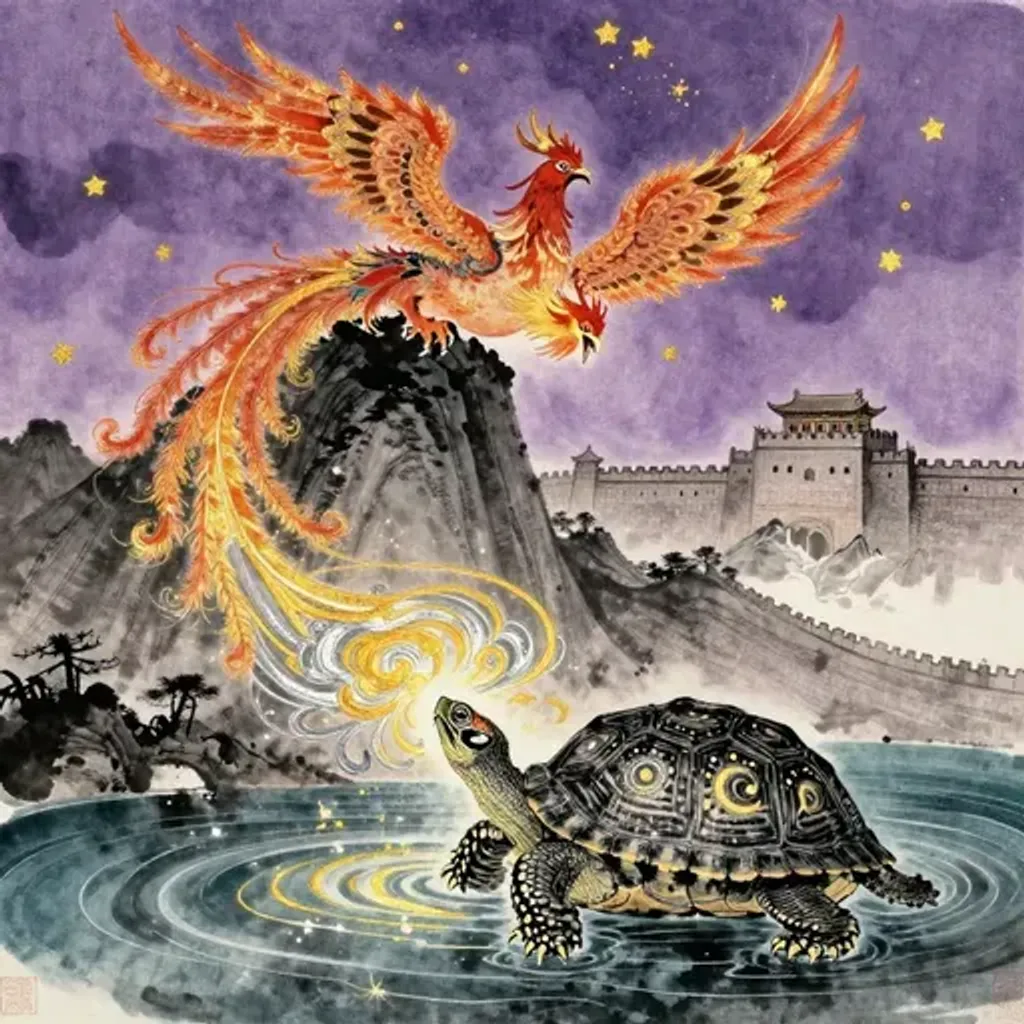
鸑鳴岐山,龜應幽淵。男女媾精,萬物化生。文王以成,為周開庭。
The luan sings on Mount Qi; the tortoise answers from the hidden deep. Male and female join essence; the ten thousand things come into being. King Wen accomplished this, founding the court of Zhou.
— Jiao Yanshou, Yilin (Forest of Changes), 1st century BC
Commentary
The sacred yueyue bird sings on Mount Qi; the turtle responds from the deep. Male and female essences unite, and the ten thousand things come into being. Through this King Wen established the foundations of the Zhou dynasty. The yueyue is a variant of the phoenix whose cry on Mount Qi, according to the Guoyu, heralded the Zhou's rise. The turtle's response from the depths mirrors the Well hexagram's own image: water drawn up through wood from the aquifer below. From Creative to The Well, this verse traces cosmic creation through the pairing of heaven and earth — bird above, turtle below — culminating in dynastic foundation. The well never moves yet serves all who draw from it, just as Wen's virtue became an inexhaustible source.
乾 → 革
Hexagram 1 → Hexagram 49: Revolution
Changing lines: 2, 6
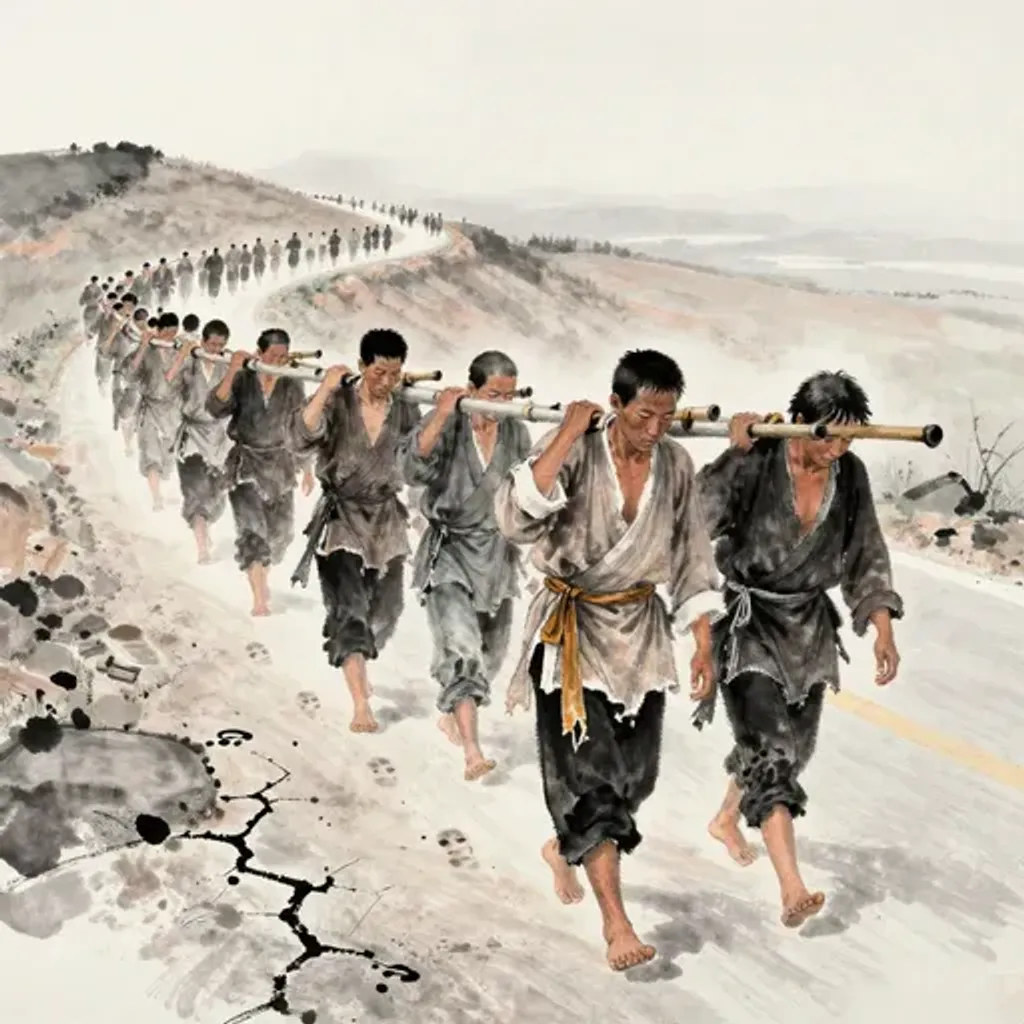
玄黃虺隤,行者勞疲。役夫憔悴,踰時不歸。
Sickly and staggering, weary; the traveler toils in exhaustion. The conscript is haggard and worn; he does not return for ages.
— Jiao Yanshou, Yilin (Forest of Changes), 1st century BC
Commentary
Dark and yellow, stumbling and sick — the traveler labors in exhaustion. Conscripted workers grow gaunt and haggard; months pass and they do not return home. 'Dark and yellow' echoes the Kun hexagram's top-six line: 'Dragons fight in the wild, their blood is dark and yellow,' signifying extreme conflict. From Creative to Revolution, fire burns within the lake — the image of radical transformation. Yet this verse shows revolution's human cost: the laborers who bear the burden of upheaval on their bodies. Ge demands change but does not promise it will be painless. The conscripts' wasting frames are the price that revolution extracts from those who carry it out, even when the change is righteous.
乾 → 鼎
Hexagram 1 → Hexagram 50: The Cauldron
Changing lines: 1, 5
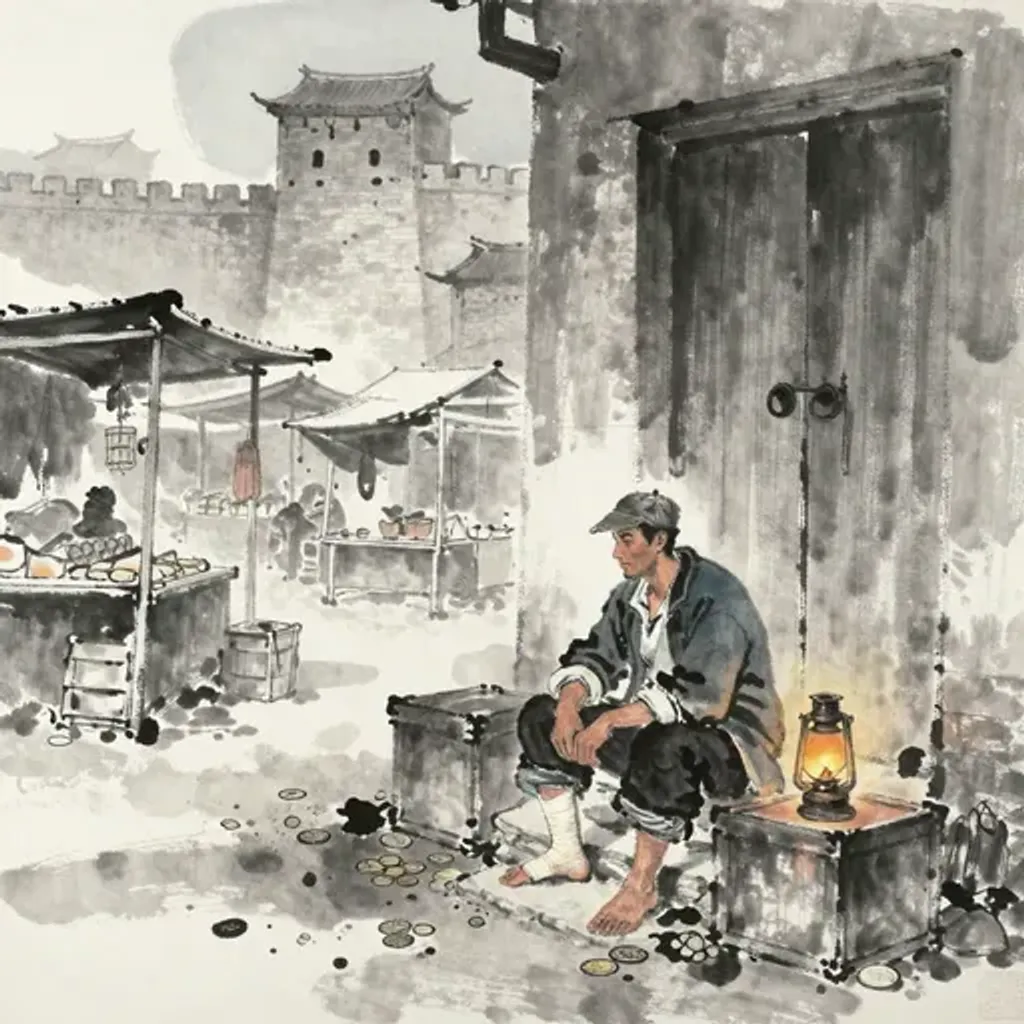
弱足刖跟,不利出門。市賈不利,折亡為患。
Weak feet, heels maimed; not fit to go out the gate. Market trade brings no profit; loss and ruin become the affliction.
— Jiao Yanshou, Yilin (Forest of Changes), 1st century BC
Commentary
Weak legs, mutilated heels — it is unwise to leave the house. The marketplace brings no profit; losses and ruin become the norm. From Creative to The Cauldron, fire above wind should refine and transform raw material into nourishment. Yet this verse shows a vessel that cannot stand: the legs that should support the cauldron are crippled. The image echoes the Ding hexagram's own nine-four warning: 'The cauldron breaks its foot, overturning the duke's food.' When the supporting structure fails, nothing can be cooked, no transformation accomplished. The merchant's losses mirror the spilled contents — investment without the capacity to sustain it simply pours away.
乾 → 震
Hexagram 1 → Hexagram 51: The Arousing Thunder
Changing lines: 2, 3, 5, 6
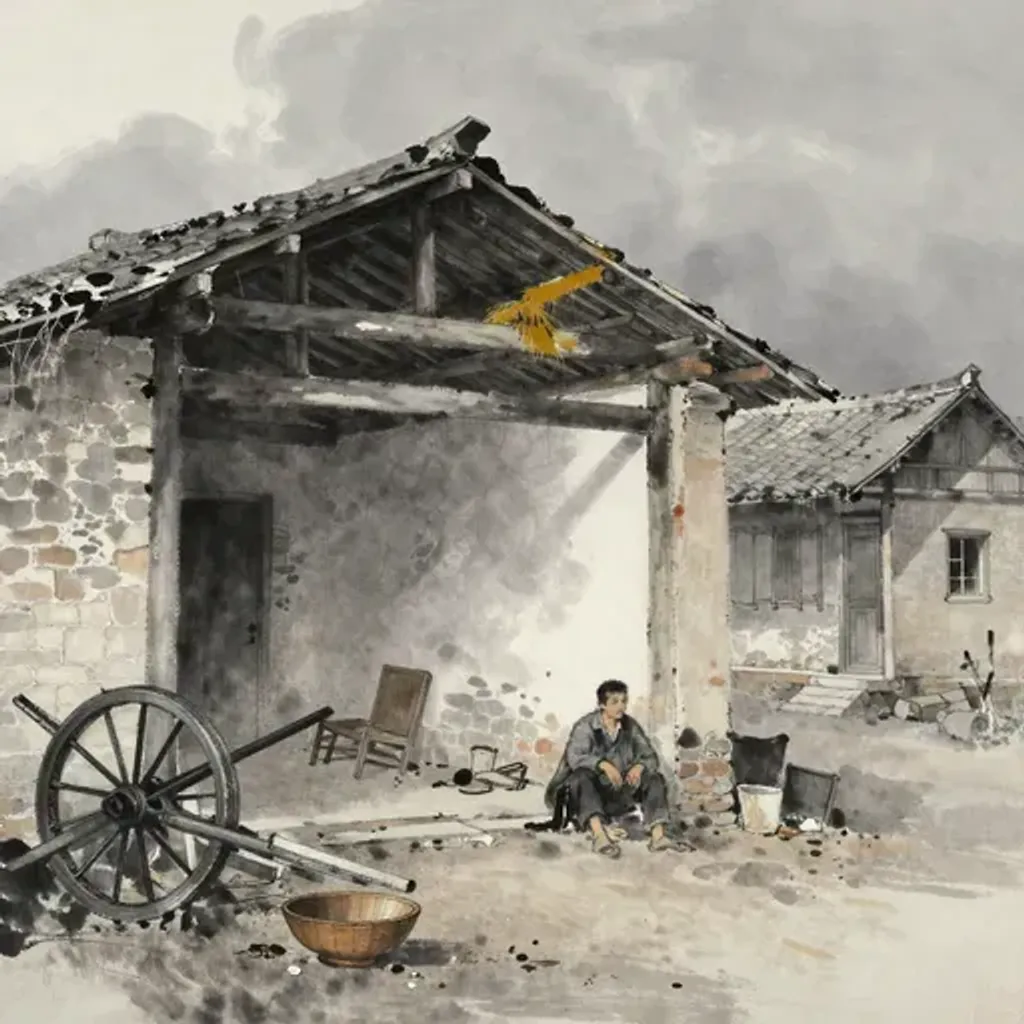
懸貆素餐,居非其安。失輿剝廬,休坐徒居。
The badger receives an unearned meal, dwelling in a place that is not safe. Losing the carriage, the hut stripped bare; sitting idle, dwelling without purpose.
— Jiao Yanshou, Yilin (Forest of Changes), 1st century BC
Commentary
A creature hangs idle, consuming a salary without earning it. Dwelling in the wrong place, never at ease. The carriage is lost, the hut stripped bare; one sits idle, occupying space without purpose. From Creative to The Arousing, doubled thunder — shock that forces self-examination. The verse captures the moment before the thunder strikes: someone in a position they do not deserve, eating without working, dwelling in comfort without warrant. Zhen's lightning bolt is the reckoning that strips away false security. The lost carriage and stripped dwelling are not accidents but corrections — the universe redistributing what was wrongly held. The Arousing awakens, and the idle sleeper finds their shelter suddenly gone.
乾 → 艮
Hexagram 1 → Hexagram 52: Keeping Still Mountain
Changing lines: 1, 2, 4, 5
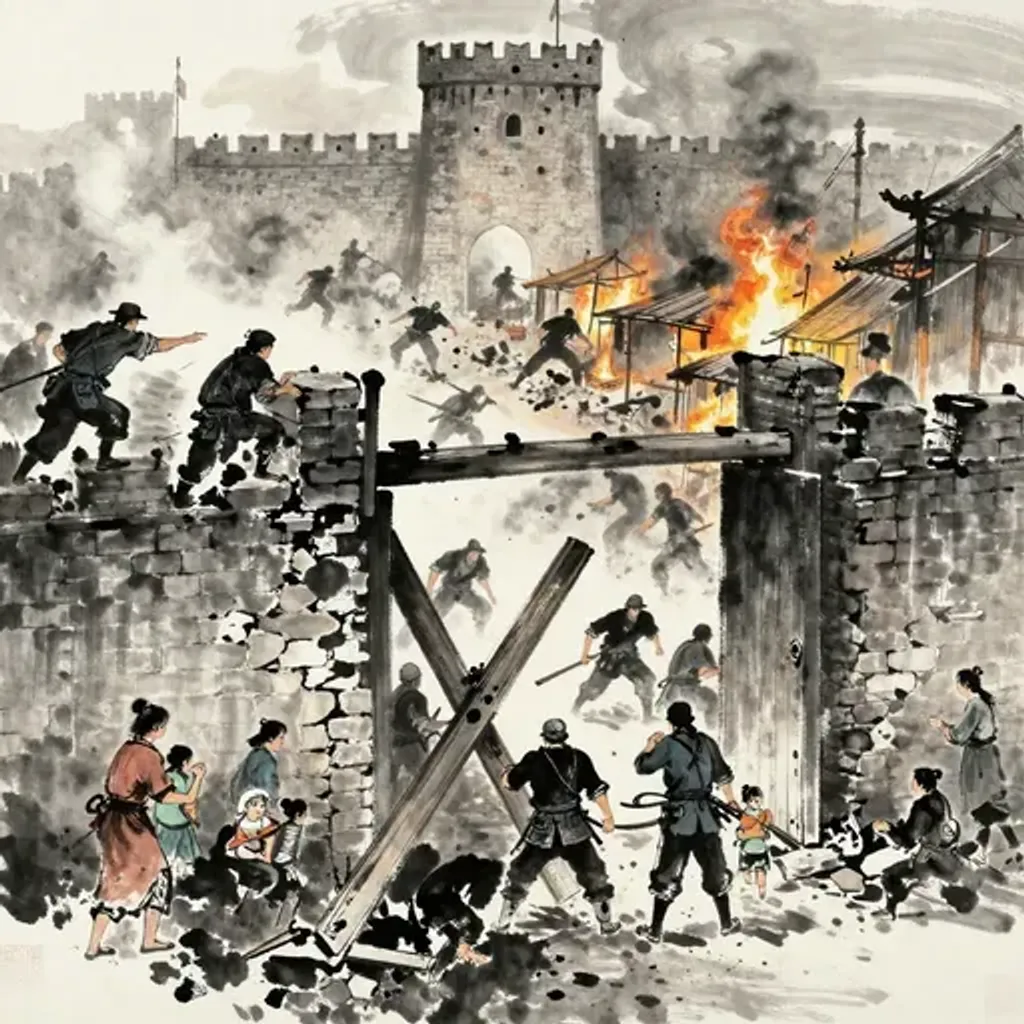
民怯城惡,姦人所伏。寇賊大至,入我郛郭,妻子俘獲。
The people are timid, the walls decayed; a hiding place for villains. Bandits arrive in force, entering our outer walls; wives and children are taken captive.
— Jiao Yanshou, Yilin (Forest of Changes), 1st century BC
Commentary
The people are timid and the city walls crumbling; treacherous men lurk within. Bandits arrive in force, pouring into the outer walls, and wives and children are taken captive. From Creative to Keeping Still, doubled mountains should represent impenetrable stillness — thinking without overstepping one's position. Yet the verse reveals the catastrophic failure of stillness without strength: walls too weak to hold, defenders too frightened to fight. Gen's stillness becomes paralysis. The mountain that should have stopped invasion instead collapses under assault. When keeping still means only passive immobility rather than disciplined containment, the enemy rushes through the gaps. Stillness without substance is simply stagnation awaiting the blow.
乾 → 漸
Hexagram 1 → Hexagram 53: Development
Changing lines: 1, 2, 4
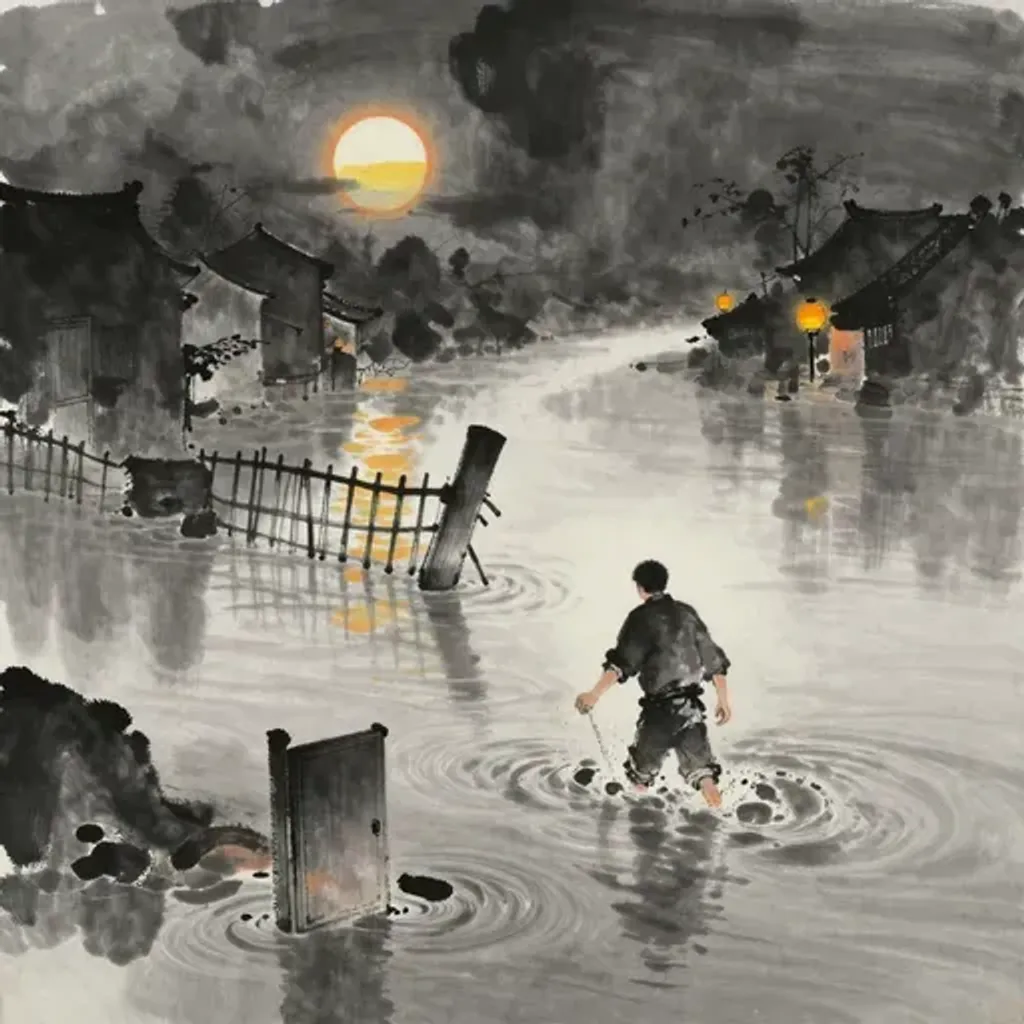
陽低頭,陰仰首。水為災,傷我足。進不利,難生子。
Yang bows its head, yin raises its face. Water brings disaster, injuring my feet. Advancing is not favorable; it is hard to bear children.
— Jiao Yanshou, Yilin (Forest of Changes), 1st century BC
Commentary
Yang bows its head while yin lifts hers — the natural order inverted. Water becomes disaster, injuring the foot. Advance is unfavorable; bearing children is difficult. From Creative to Development, wind grows above the mountain like trees that take decades to mature. Jian counsels gradual, patient progress, the wild goose advancing step by step to higher perches. Yet the verse shows the inversion that blocks development: when yang submits and yin dominates, the slow upward growth that Jian requires is disrupted at its root. Water, which should nourish the mountain's trees, instead floods and destroys. Even the most fundamental act of creation — bearing offspring — becomes obstructed when the natural sequence is reversed.
乾 → 歸妹
Hexagram 1 → Hexagram 54: The Marrying Maiden
Changing lines: 3, 5, 6
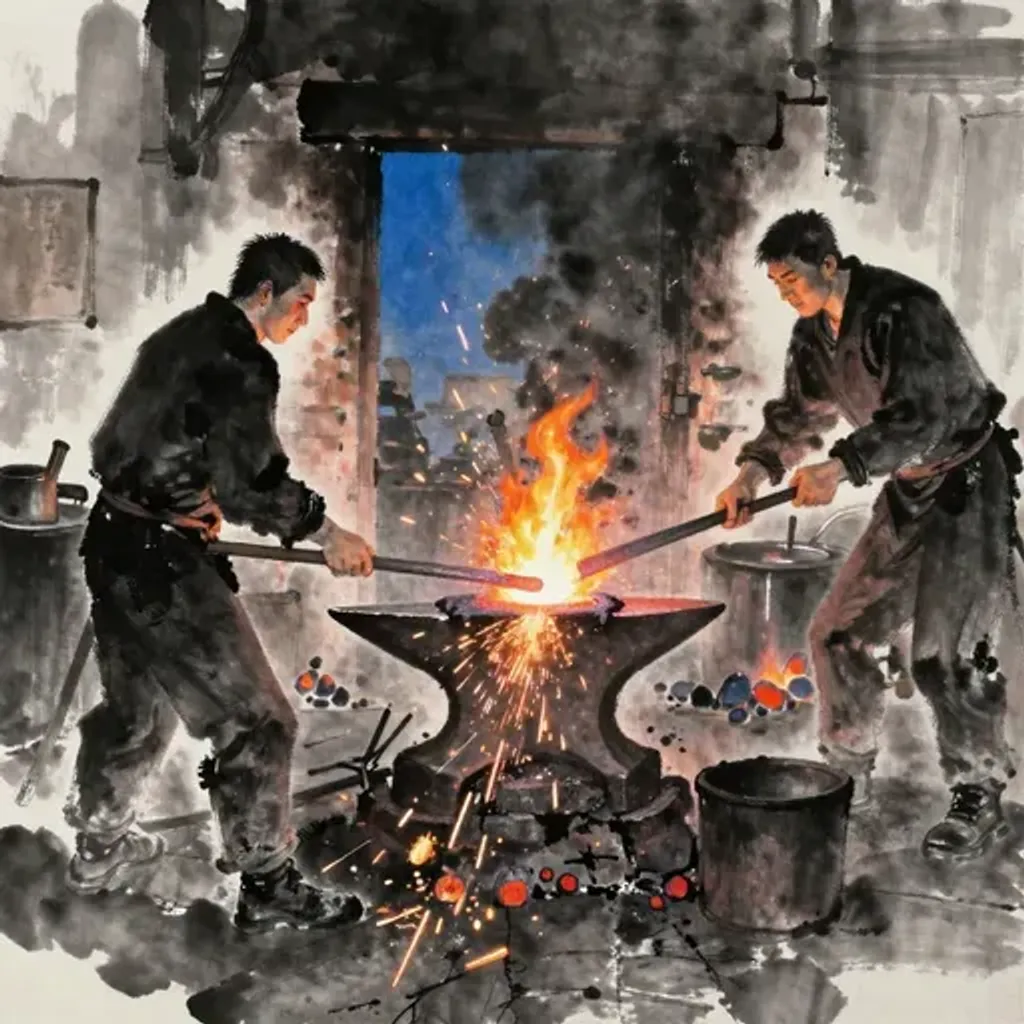
背北相憎,心意不同,如火與金。
Turning their backs in mutual loathing, hearts and minds at odds; like fire and metal.
— Jiao Yanshou, Yilin (Forest of Changes), 1st century BC
Commentary
Backs turned, facing opposite directions — hearts and minds at odds, like fire meeting metal. From Creative to the Marrying Maiden, thunder stirs above the lake in an arrangement fraught with tension. Gui Mei is the hexagram of the younger sister given in marriage — a union driven by circumstance rather than genuine affinity. The verse distills this dissonance to its essence: fundamental incompatibility, like fire that melts metal rather than complementing it. The brevity of the verse mirrors the brevity of the relationship's viability. When two natures truly oppose — one consuming what the other is made of — no ceremony can forge a lasting bond. The five-phase antagonism between fire and metal makes this permanent.
乾 → 豐
Hexagram 1 → Hexagram 55: Abundance
Changing lines: 2, 5, 6
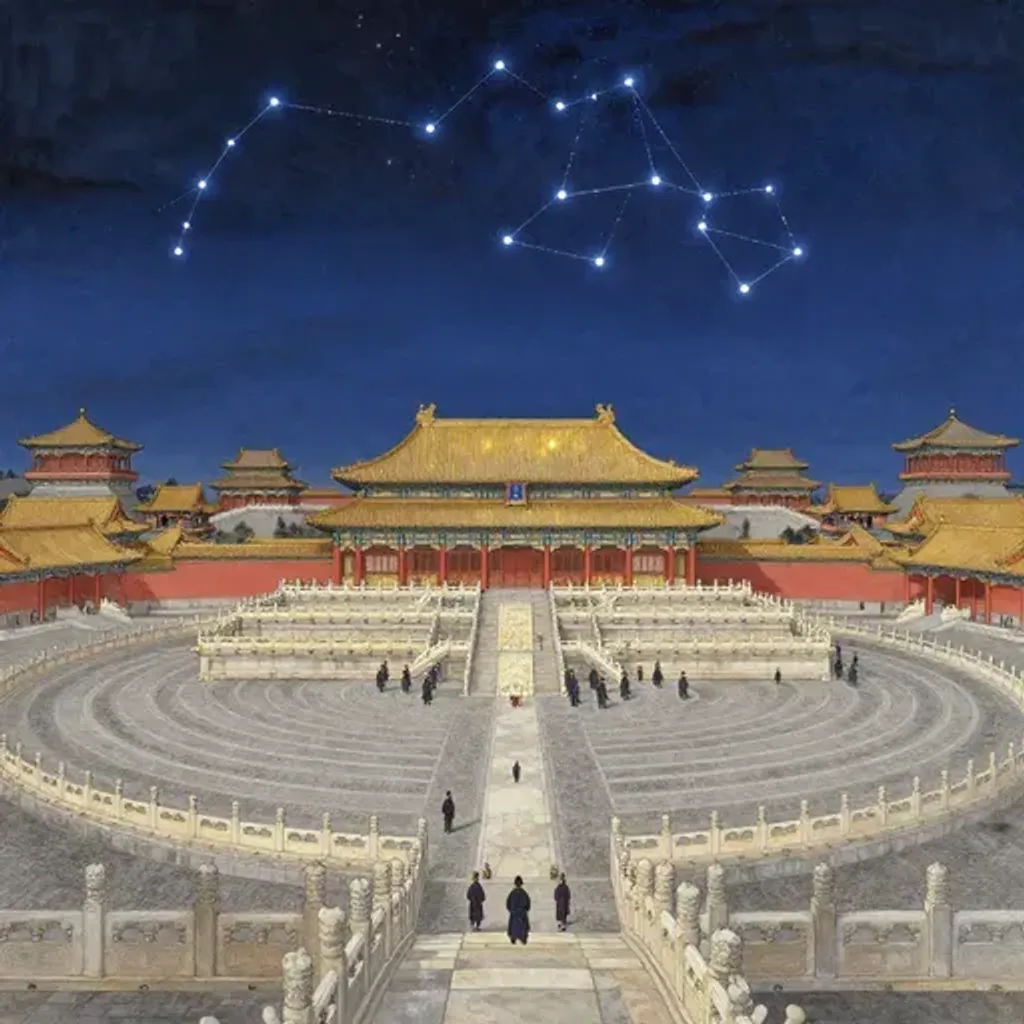
太微帝室,黃帝所宜。藩屏周衛,不可得入,常安無患。
Taiwei, the imperial chamber, where the Yellow Emperor rightfully dwells. Screens and guards surround and protect; none can intrude. Always safe, without peril.
— Jiao Yanshou, Yilin (Forest of Changes), 1st century BC
Commentary
The Taiwei celestial enclosure, the Emperor's chamber among the stars, the proper seat of the Yellow Emperor. Screens and guards surround it on every side; none may enter unbidden. Eternal security, no threat. In Han-dynasty astronomy, the Taiwei enclosure contained the Five Emperor Thrones, with the Yellow Emperor at the center — the celestial model of imperial governance. From Creative to Abundance, thunder and lightning arrive together, illuminating all. Feng's image is the zenith of power: the king who reaches Abundance need not worry, for he is like the sun at midday. The celestial palace, ringed by its wall of stars, embodies this perfectly — supreme authority so well-guarded that danger simply cannot approach.
乾 → 旅
Hexagram 1 → Hexagram 56: The Wanderer
Changing lines: 1, 2, 5
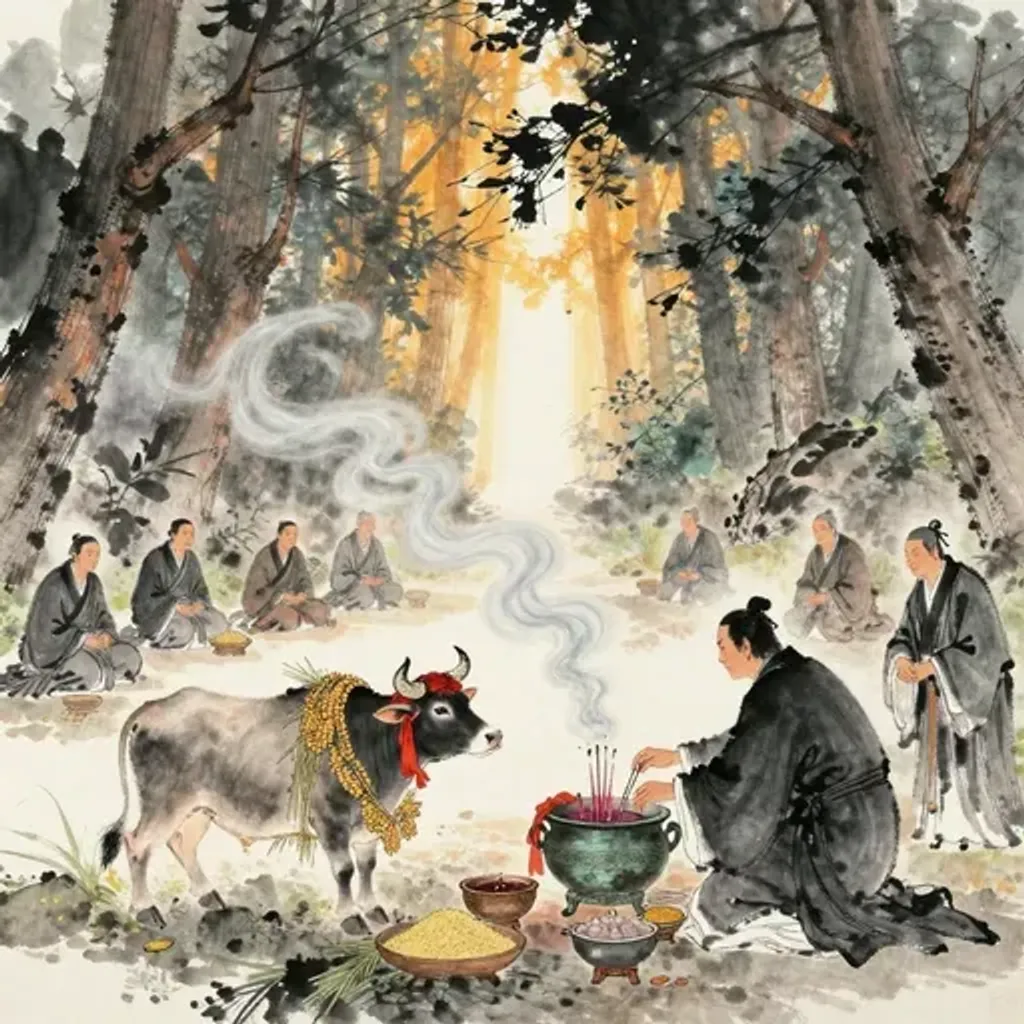
繭栗犧牲,敬享鬼神。神嗜飲食,受福多孫。
Silken calves as offerings, reverently presented to the spirits. The spirits delight in the food and drink; blessings are received, and many descendants.
— Jiao Yanshou, Yilin (Forest of Changes), 1st century BC
Commentary
Sacrificial animals with horns as small as cocoons and chestnuts are offered reverently to the spirits. The gods savor the feast and bestow blessings of many descendants. In ancient ritual, 'jianli' described the youngest calves whose horns had barely sprouted — the purest offerings, unsullied by age. From Creative to The Wanderer, fire burns atop the mountain, illuminating the traveler's path but also consuming what is transient. The verse captures Lu's paradox: the wanderer has no permanent home, but by making proper offerings wherever one rests, one secures divine favor. The sacrifice of the tiniest, most unblemished victim transforms the temporary hearth into a sacred site. Even impermanence can be sanctified through correct ritual.
乾 → 巽
Hexagram 1 → Hexagram 57: The Gentle Wind
Changing lines: 1, 4
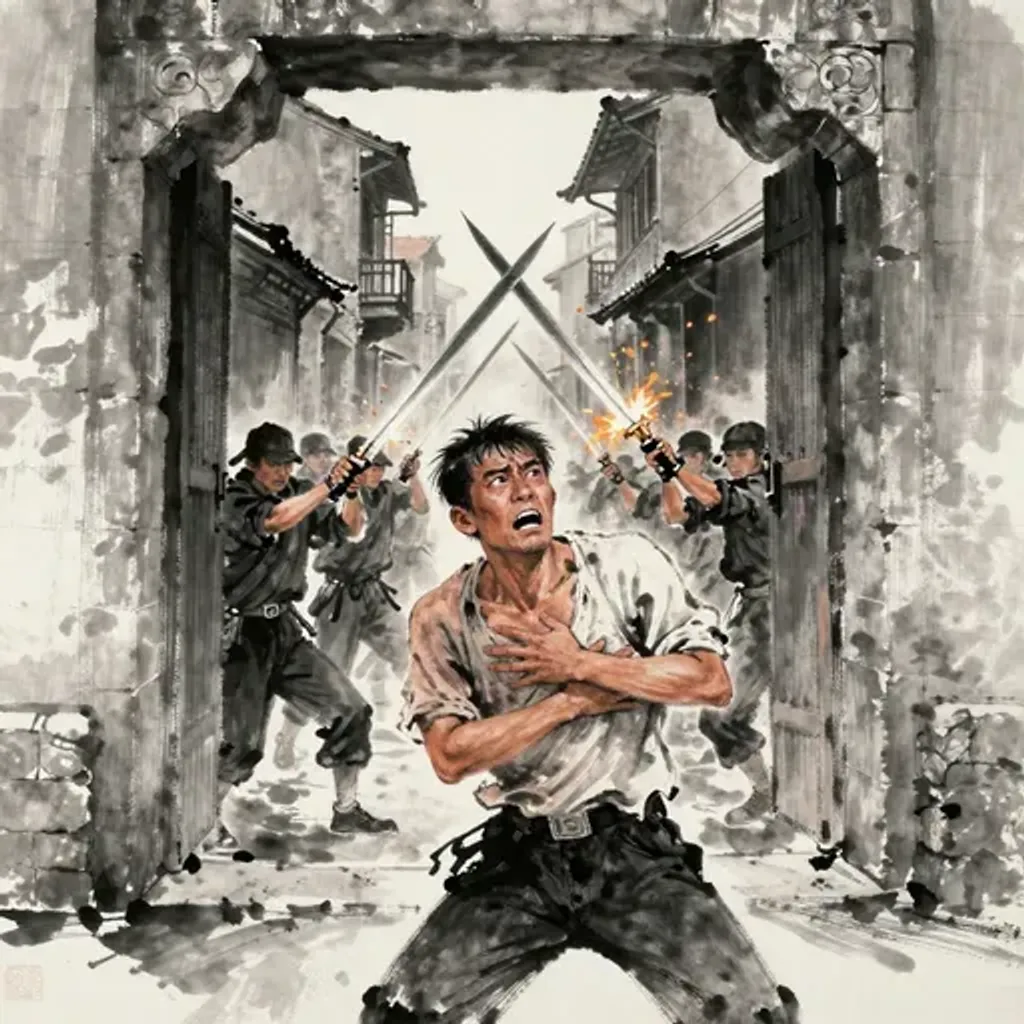
出門逢惡,與禍為怨。更相擊刺,傷我手端。
Going out the gate, meeting evil; making enemies with misfortune. Exchanging blows and stabs; my hand is wounded.
— Jiao Yanshou, Yilin (Forest of Changes), 1st century BC
Commentary
Stepping out the door one meets hostility; trouble becomes an enemy. Mutual thrusting and striking ensue, wounding the tips of the hands. From Creative to The Gentle, doubled wind should be the subtlest of forces — the ruler issuing commands that penetrate gradually. Yet the verse shows what happens when heaven's directness meets Xun's world of indirection: blunt force in a context that demands finesse leads to mutual harm. The hand injuries suggest a fight at close quarters, clumsy and self-defeating. Xun counsels issuing orders and following through with gentle persistence; this person instead swings fists. When the Creative refuses to adapt to the Gentle's method, even the exit from one's own door becomes a battlefield.
乾 → 兌
Hexagram 1 → Hexagram 58: The Joyous Lake
Changing lines: 3, 6
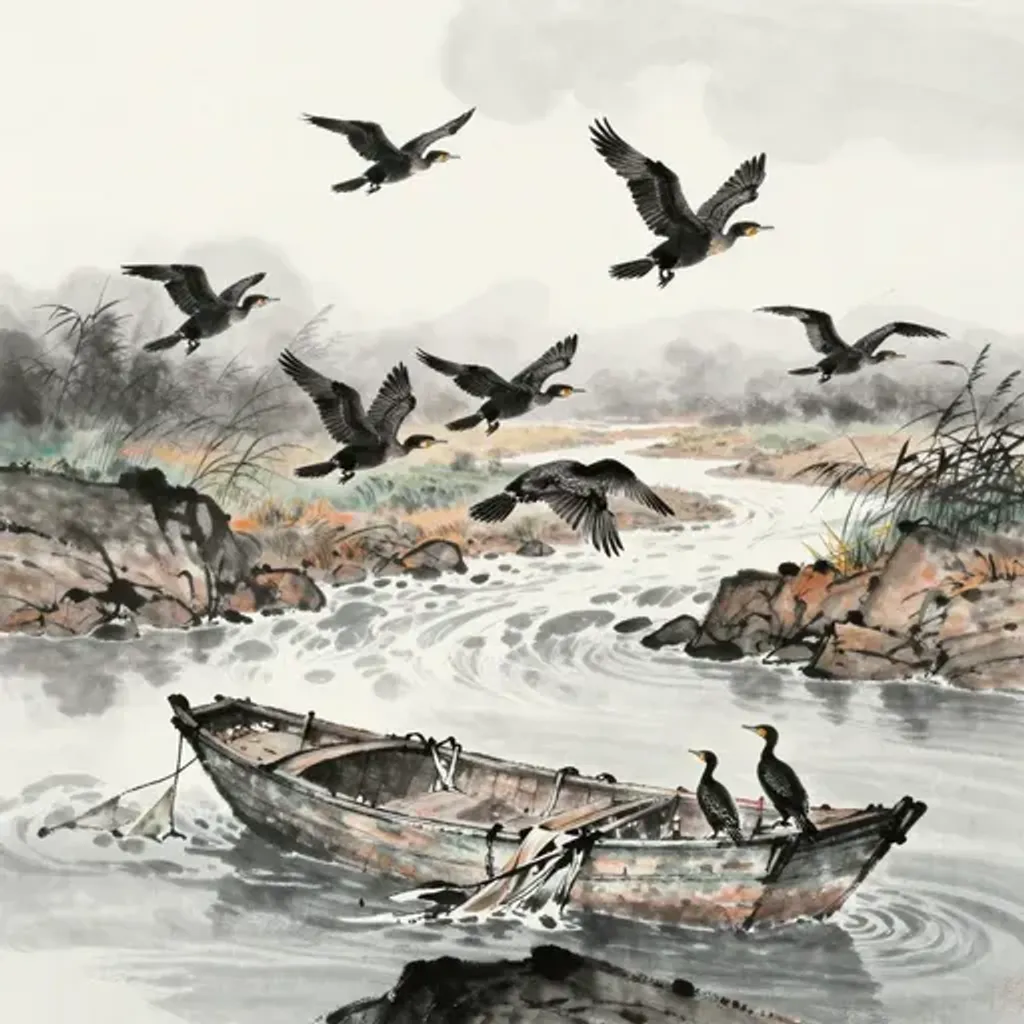
鷁飛中退,舉事不進,眾人亂潰。
The yi-birds fly and retreat mid-course; undertakings do not advance. The multitude scatters in disarray.
— Jiao Yanshou, Yilin (Forest of Changes), 1st century BC
Commentary
The yi-bird takes flight but retreats mid-course. Undertakings stall before completion; the assembled crowd scatters in disarray. The 'yi retreating in flight' is a famous omen from the Spring and Autumn Annals, Duke Xi year sixteen: six yi-birds flew backward over the capital of Song, interpreted as a portent of regression and disorder. From Creative to The Joyous, paired lakes should represent shared delight and mutual learning. Yet the verse shows the dissolution of joy: the collective that should be studying and celebrating together collapses into chaos. When the bird of initiative reverses course, all communal momentum is lost. Dui's joy requires sustained forward motion; without it, the gathering disintegrates.
乾 → 渙
Hexagram 1 → Hexagram 59: Dispersion
Changing lines: 1, 3, 4
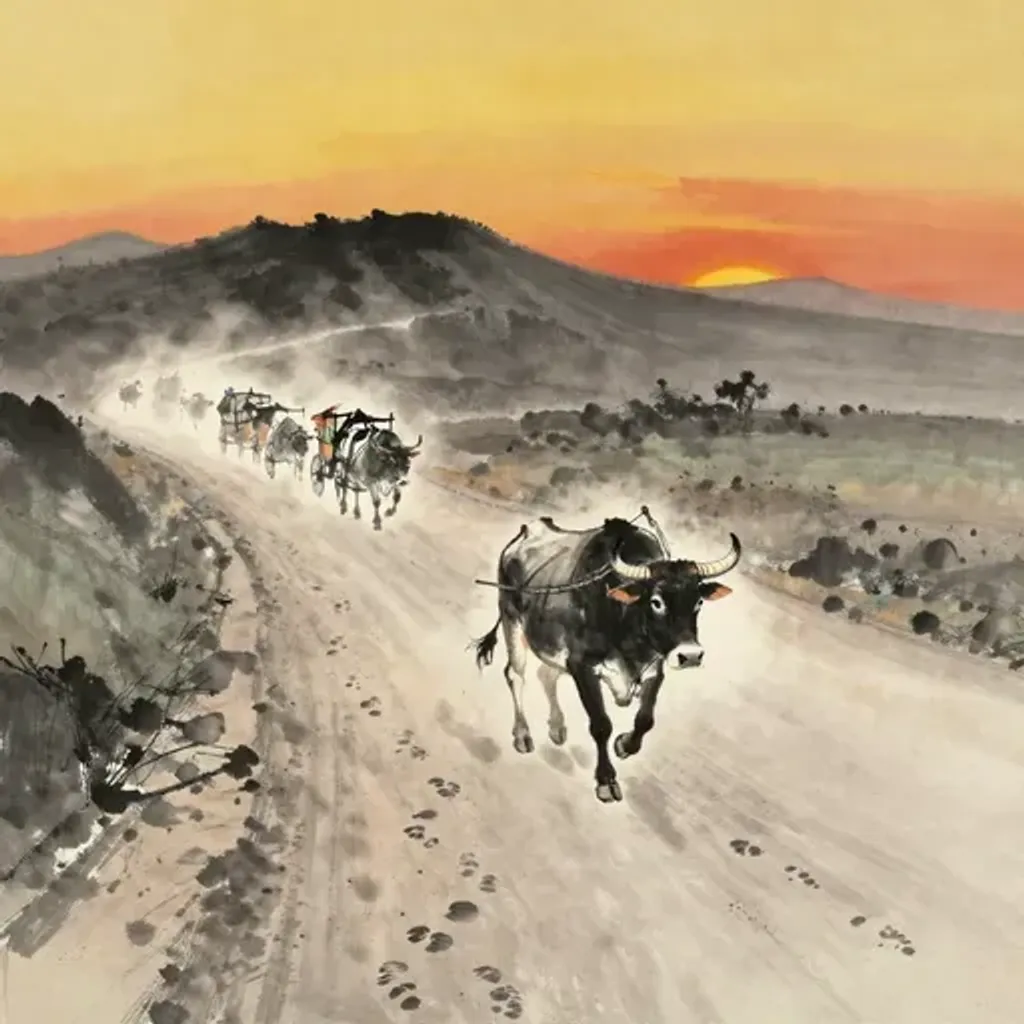
跛踦相隨,日暮牛罷。陵遲後旅,失利亡雌。
Lame and limping, following each other; as day fades, the ox is spent. Falling behind the company; losing profit, losing the mate.
— Jiao Yanshou, Yilin (Forest of Changes), 1st century BC
Commentary
The lame limp along together; by evening the ox is spent. Stragglers at the rear of the column fall behind, losing their gains and their mate. From Creative to Dispersion, wind blows across water — scattering what was gathered. The verse embodies Huan's dissolving energy through a caravan breaking apart: the weakest members, unable to keep pace, lose everything as the group fragments. Each element drifts away from the others. The lame ox, the exhausted traveler, the abandoned mate — all are images of cohesion undone by accumulated fatigue. Dispersion is not always violent rupture; sometimes it is simply the slow, grinding separation of those who can no longer hold together.
乾 → 節
Hexagram 1 → Hexagram 60: Limitation
Changing lines: 3, 4, 6
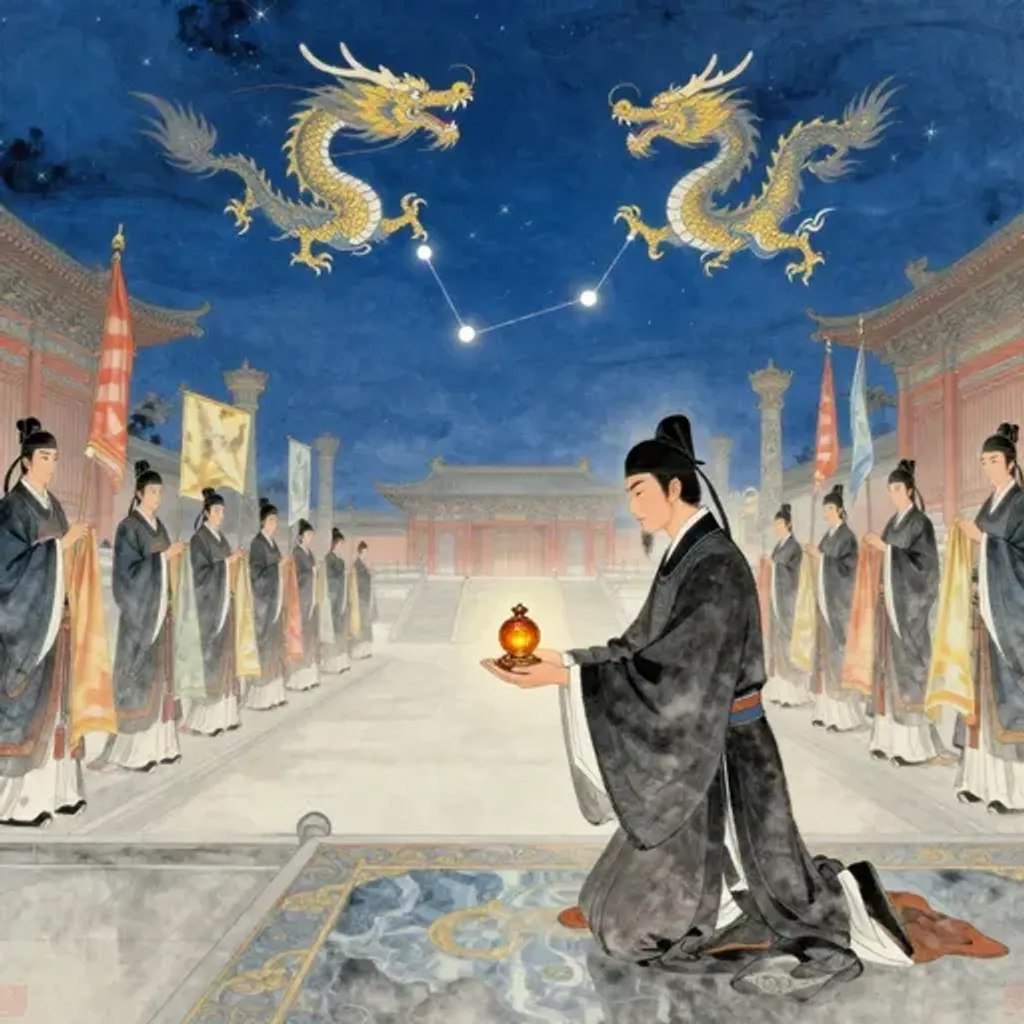
龍角博預,位至公卿。世祿久長,起動安寧。
Dragon Horn, esteemed and favored; position reaches Duke and Minister. Hereditary emolument, long-lasting; rising and acting in peace.
— Jiao Yanshou, Yilin (Forest of Changes), 1st century BC
Commentary
The Dragon Horn star foretells advancement — one's position reaches the rank of duke or minister. Hereditary emoluments endure long, and in all ventures one finds peace. In Han-dynasty astrology, the Dragon Horn (Jiao, the first lunar mansion) governed spring and new beginnings; its favorable aspect predicted career ascent. From Creative to Limitation, water above the lake — measured boundaries that enable rather than constrain. Jie's counsel is to establish regulations and evaluate conduct, the very framework that makes stable office-holding possible. The verse shows Limitation at its most benevolent: structured boundaries create the conditions for lasting rank and prosperity. Without the lake's banks, the water overflows; with them, it sustains generation after generation.
乾 → 中孚
Hexagram 1 → Hexagram 61: Inner Truth
Changing lines: 3, 4
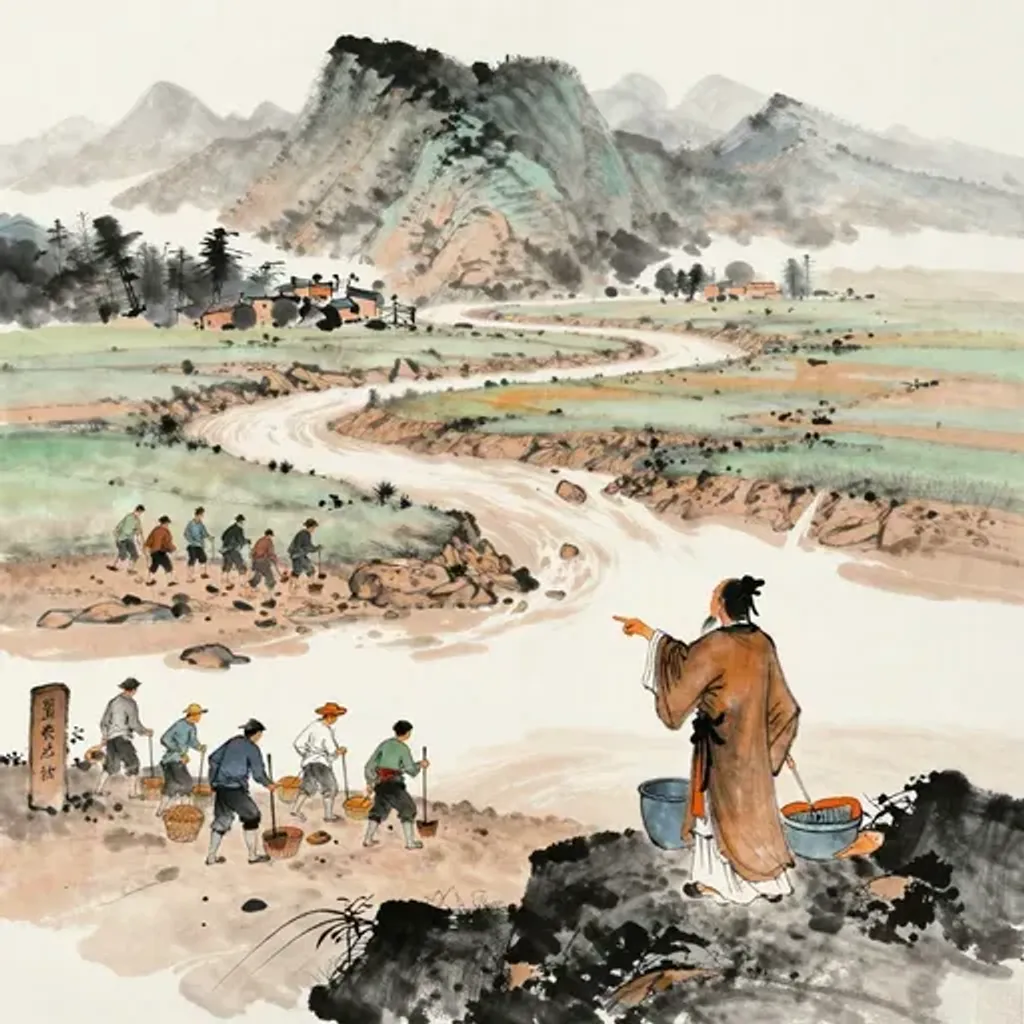
舜升大禹,石夷之野。徵詣王庭,并治水土。
Shun elevated Great Yu in the wilderness of Shiyi. Summoning him to the royal court, together they tamed the waters and the earth.
— Jiao Yanshou, Yilin (Forest of Changes), 1st century BC
Commentary
Emperor Shun elevates Yu the Great, sending him to the stony wilderness. Summoned to the royal court, he is charged with governing the waters and the land together. This is the paradigmatic act of Inner Truth: Shun's trust in Yu was vindicated by Yu's thirteen years of tireless flood control, during which he passed his own door three times without entering. From Creative to Inner Truth, wind blows above the lake — sincerity that moves even pigs and fishes. The verse captures Zhong Fu's essence: the sovereign's faith in an untested minister, and the minister's faithful response that saved the world. Trust offered and trust honored — the wind stirring the lake's surface without coercion.
乾 → 小過
Hexagram 1 → Hexagram 62: Small Exceeding
Changing lines: 1, 2, 5, 6
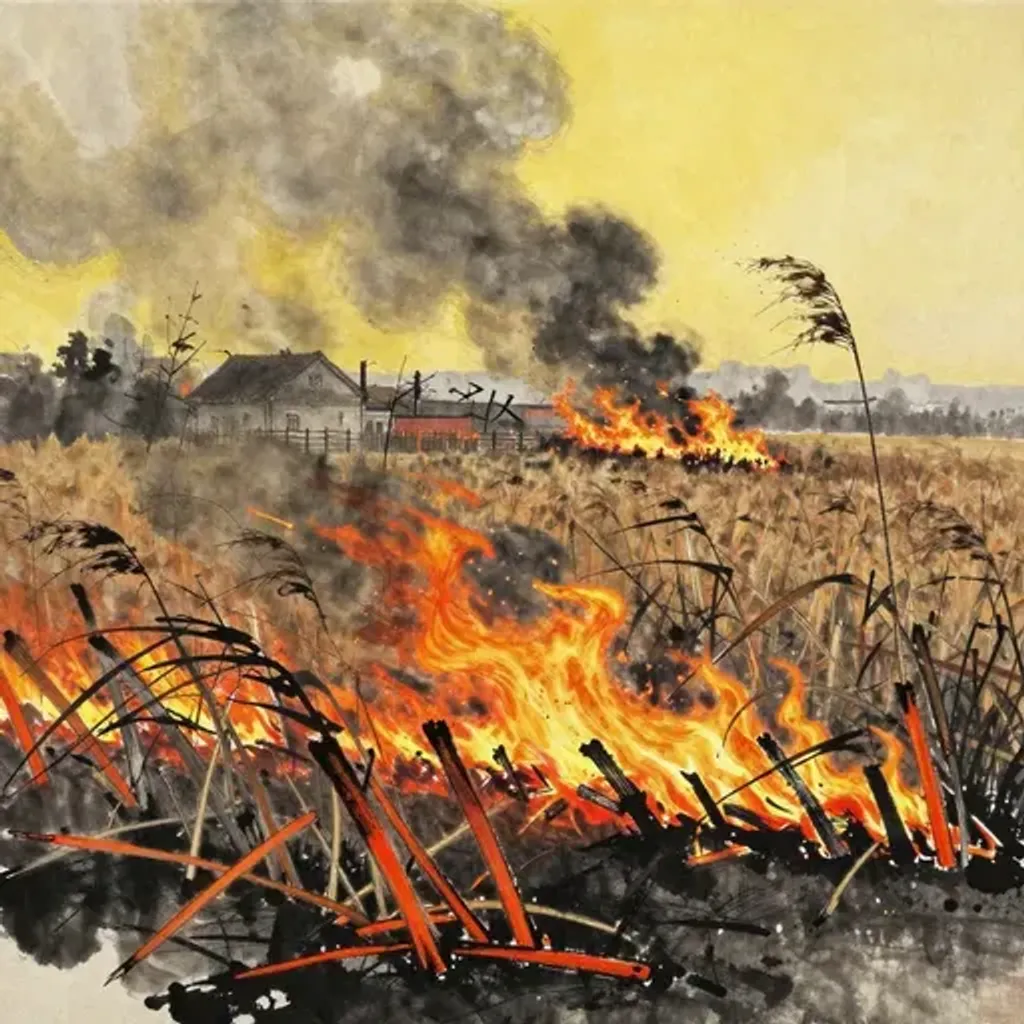
從風放火,荻芝俱死。三害集房,叔子中傷。
Setting fire with the wind; rushes and angelica all die. Three harms gather in the house; the young uncle is wounded.
— Jiao Yanshou, Yilin (Forest of Changes), 1st century BC
Commentary
Fire is set downwind and spreads rapidly — reeds and lingzhi mushrooms alike perish in the blaze. Three calamities converge upon the household; the youngest son is struck and wounded. From Creative to Small Exceeding, thunder rumbles atop the mountain — the small bird that should not climb too high nor descend too low. The verse shows what happens when a small fire exceeds its proper scope: driven by wind, it consumes indiscriminately, destroying the precious lingzhi along with common reeds. Xiao Guo warns against overstepping in small matters; here, a modest flame, carelessly directed, escalates into compound disaster. The youngest son's injury suggests that it is the most vulnerable who suffer most when small transgressions are left unchecked.
乾 → 既濟
Hexagram 1 → Hexagram 63: After Completion
Changing lines: 2, 4, 6
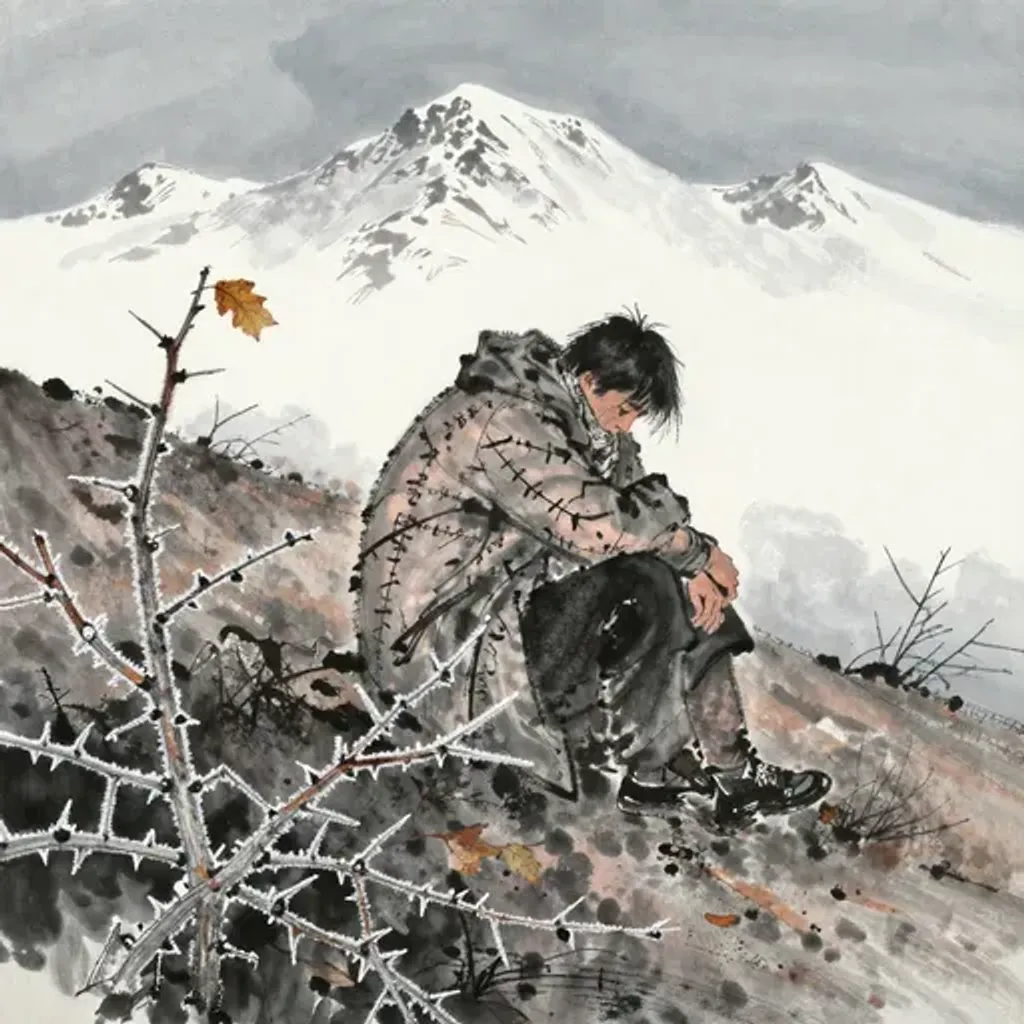
梗生荊山,命制輸班。袍衣剝脫,夏熱冬寒。飢餓枯槁,莫人莫憐。
Thorny shrubs grow on Jing Mountain; destined to labor under Shuban. Robes and garments stripped away; summer heat, winter cold. Starving and withered; none show pity.
— Jiao Yanshou, Yilin (Forest of Changes), 1st century BC
Commentary
A thorn tree grows on Mount Jing, where craftsmanship is measured against Lu Ban's skill. Yet the robes are stripped away; summer brings no relief from heat, winter no protection from cold. Hungry and withered, no one shows pity. Mount Jing is where Bian He discovered his jade — a place associated with unrecognized value. Lu Ban is the supreme craftsman. From Creative to After Completion, water sits above fire in perfect but precarious balance. The verse shows the paradox of completion: surrounded by references to supreme value and skill, the person nevertheless starves. Ji Ji warns that completion invites complacency — the very perfection of the arrangement makes its fragility invisible. All elements are in place, yet no warmth, no sustenance, no compassion reaches the one in need.
乾 → 未濟
Hexagram 1 → Hexagram 64: Before Completion
Changing lines: 1, 3, 5
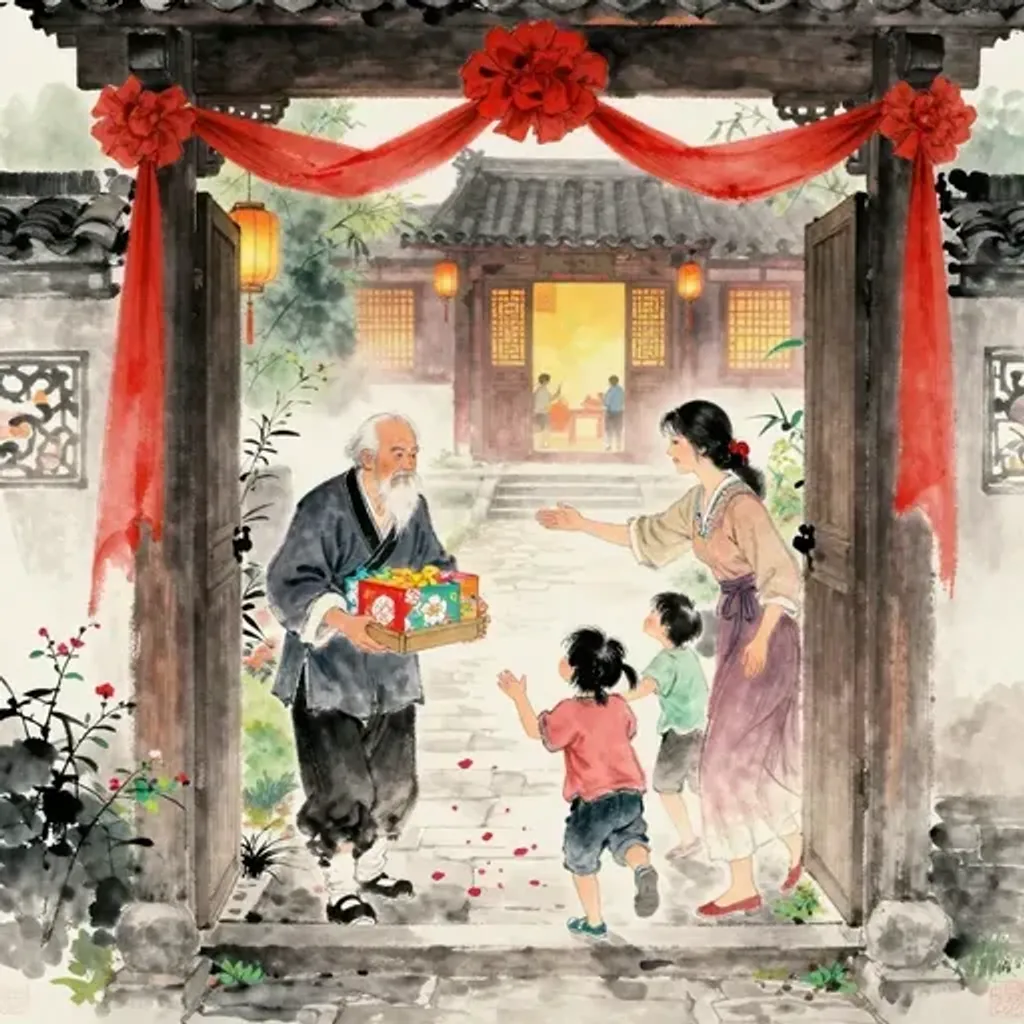
長面大鼻,來解己憂。遺吾福子,與我惠妻,惠吾嘉喜。
A long-faced, large-nosed one comes to dispel my worries. He leaves me a blessed son; gives me a gracious wife; grants me fine happiness.
— Jiao Yanshou, Yilin (Forest of Changes), 1st century BC
Commentary
A figure with a long face and large nose arrives to dispel one's worries. He bestows a blessed son and grants a virtuous wife — leaving only joy and good fortune. The long face and prominent nose suggest an unusual, perhaps divinely sent visitor whose appearance, though striking, brings nothing but benevolence. From Creative to Before Completion, fire burns above water — two elements still seeking their proper positions. Wei Ji means the crossing is not yet complete; everything remains in flux. Yet the verse offers comfort precisely at this juncture: even before completion, a benefactor appears with gifts that address the deepest human desires — family, companionship, peace of mind. The transformation suggests that blessings can arrive before the journey ends, sustaining the traveler through the final, unfinished stretch.