Transformations of Hexagram 12
Every line of change out of Hexagram 12 否 Standstill, with the Yilin verse for each of the 64 resulting hexagrams, its translation, and the original ink brush artwork.
否 → 乾
Hexagram 12 → Hexagram 1: The Creative
Changing lines: 1, 2, 3
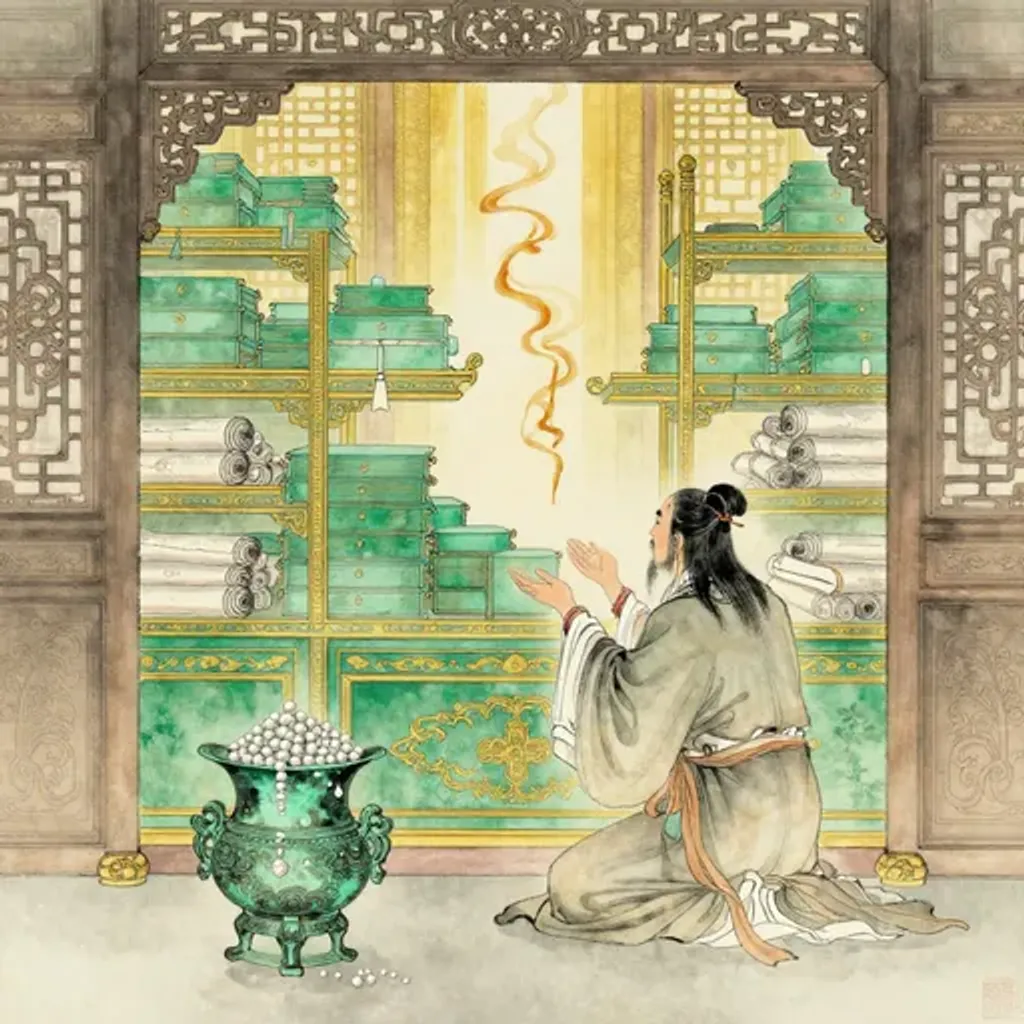
天之奧府,眾利所聚;可以饒有,樂我君子。
Heaven's hidden treasury, where manifold profits gather. One may thereby grow rich and full; it delights our noble lord.
— Jiao Yanshou, Yilin (Forest of Changes), 1st century BC
Commentary
Heaven and earth refuse to mingle, yet within this stagnation lies heaven's secret treasury where all profit gathers. The verse paints an unexpected reversal: amid Standstill's closed gates, abundance waits for the one who can claim it. The gentleman finds wealth and joy precisely where others see only blockage. From Standstill to the Creative, the transformation is total — sealed earth gives way to doubled heaven, pure initiative unleashed. What was hoarded behind the wall of non-communication becomes available through the Creative's self-generating power. The stagnation was never absence of value, only absence of motion; once pure yang reasserts itself, the treasury opens and all its riches flow to the one prepared to act.
否 → 坤
Hexagram 12 → Hexagram 2: The Receptive
Changing lines: 4, 5, 6
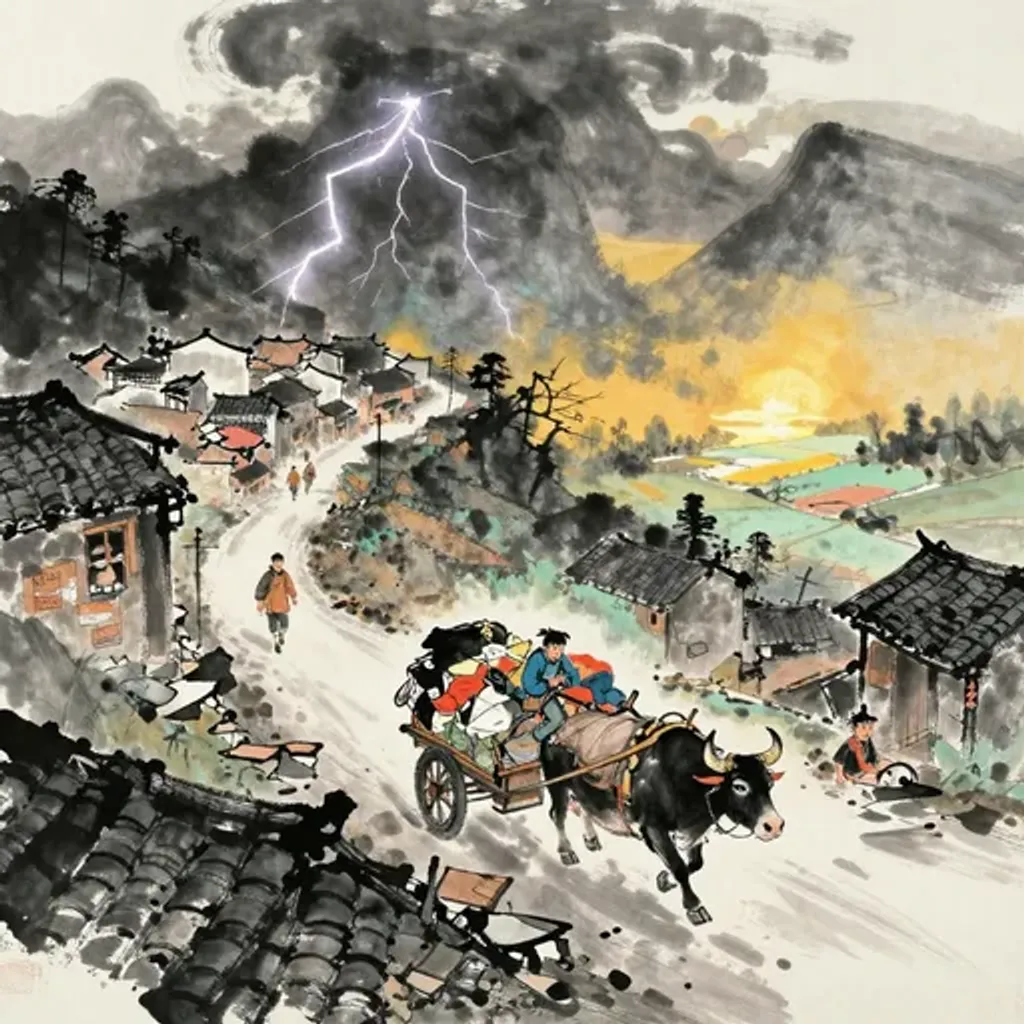
天之所災,凶不可居;轉徙獲福,留止危憂。
What heaven has cursed, a place too dire to dwell. Relocating brings good fortune; staying invites peril and sorrow.
— Jiao Yanshou, Yilin (Forest of Changes), 1st century BC
Commentary
Heaven and earth stand apart, and the sky itself sends calamity — the place is no longer fit to dwell. The verse counsels decisive departure: those who move and relocate find fortune, while those who linger invite danger and grief. From Standstill to the Receptive, the transformation is from sealed separation to pure yielding earth. The Creative component of Pi dissolves entirely, leaving only Kun's open field. Paradoxically, this is liberation: the Receptive does not resist or cling. Its wisdom is to follow, to yield, to relocate when the ground shifts. The verse's logic is Kun's own — do not fight a collapsing structure, but flow outward like earth finding its level, and blessing will come to those who move with the terrain.
否 → 屯
Hexagram 12 → Hexagram 3: Difficulty at the Beginning
Changing lines: 1, 4, 6
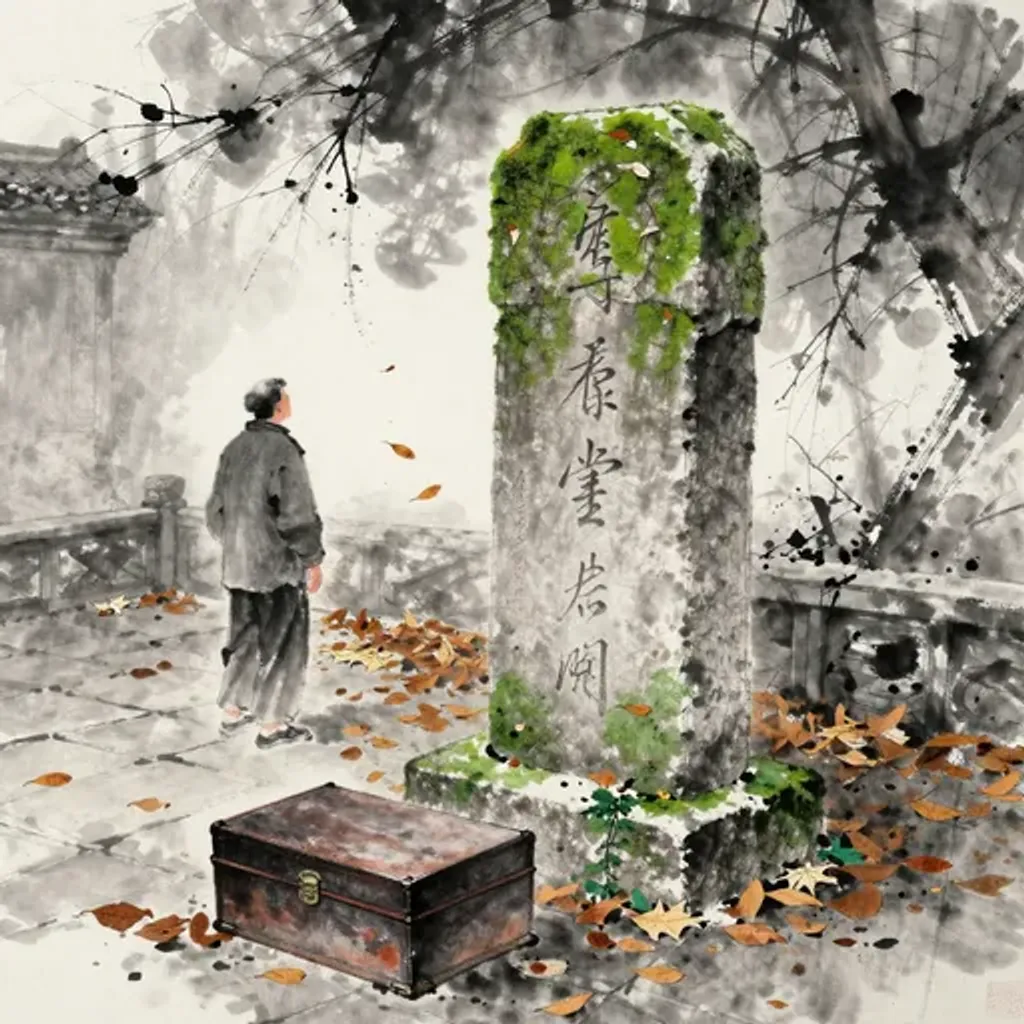
名成德就,項領不試;景公耋老,尼父逝去。
The merit stele's characters are overgrown with moss; the gold seal is dust-sealed in its box. The hero in old age watches autumn leaves — one by one, they drift with the wind.
— Jiao Yanshou, Yilin (Forest of Changes), 1st century BC
Commentary
Heaven and earth stand apart as fame fades and old age arrives. The original verse names Duke Jing of Qi, who grew old upon the throne, and Confucius, 'Father Ni,' who passed away — achievements complete, virtue established, yet their collars never bore the signs of real trial. Duke Jing wept on Mount Niu, lamenting his mortality; Confucius died in Lu after failing to see his Way implemented. From Standstill to Difficulty at the Beginning, the sealed world of Pi opens into the turbulent birth-struggle of Zhun, clouds and thunder churning. The verse laments the tragic irony: great men whose work is done face not renewal but the raw chaos of a world that no longer needs them — accomplishment fading into the storm of what comes next.
否 → 蒙
Hexagram 12 → Hexagram 4: Youthful Folly
Changing lines: 2, 4, 5
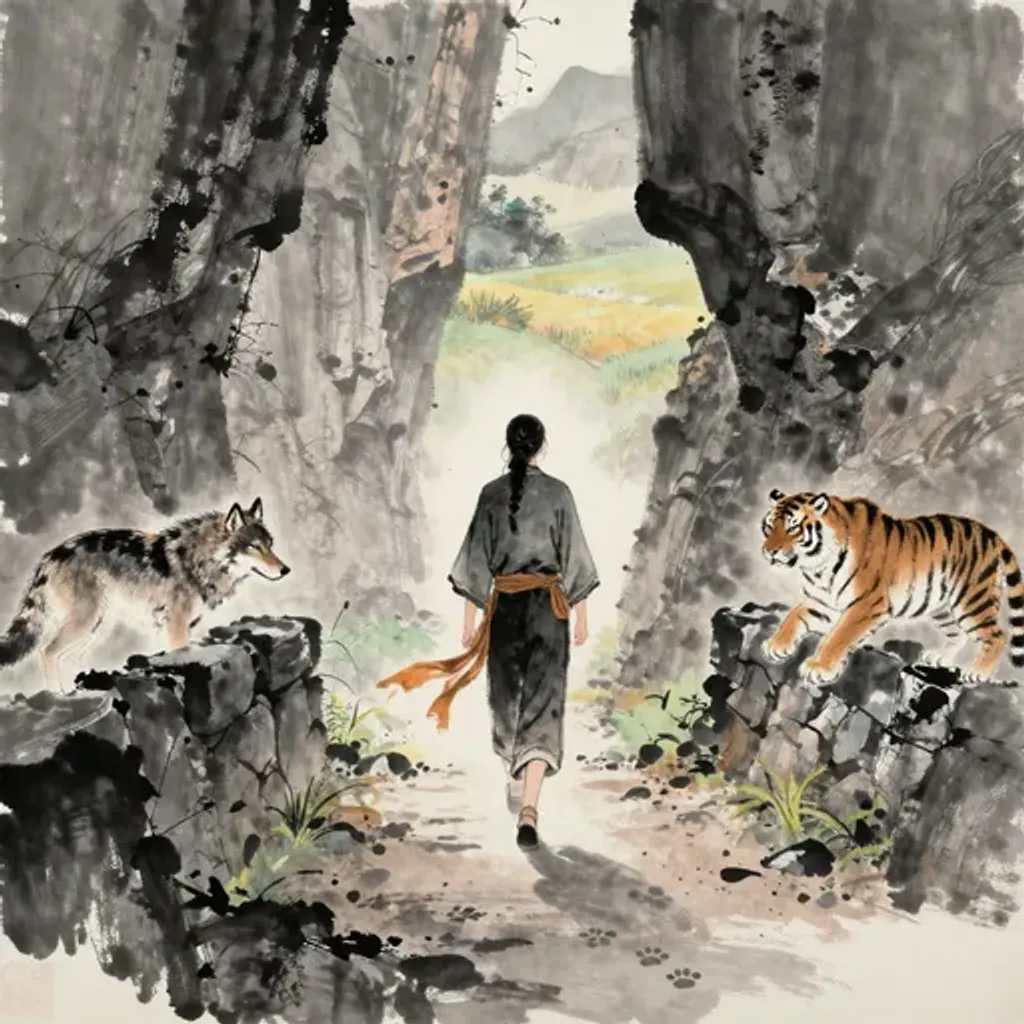
特善避患,福祿常存;雖有豺虎,不能危患。
Skilled at avoiding calamity; blessing and bounty ever abide. Though wolves and tigers lurk, they cannot bring harm.
— Jiao Yanshou, Yilin (Forest of Changes), 1st century BC
Commentary
Heaven and earth refuse to communicate, yet amid the stagnation one figure proves uniquely skilled at avoiding disaster. Fortune and rank endure, and though jackals and tigers prowl, they pose no threat. From Standstill to Youthful Folly, the sealed world of Pi gives way to the spring emerging below the mountain — naive but protected. Meng's image suggests the sheltering mountain above the hidden spring: what is not yet wise is nevertheless guarded by the terrain itself. The verse embodies Meng's paradox: innocence as defense. The one who survives the predators does so not through cunning but through an instinctive alignment with the mountain's shelter, remaining beneath notice where tigers cannot reach.
否 → 需
Hexagram 12 → Hexagram 5: Waiting
Changing lines: 1, 2, 3, 4, 6
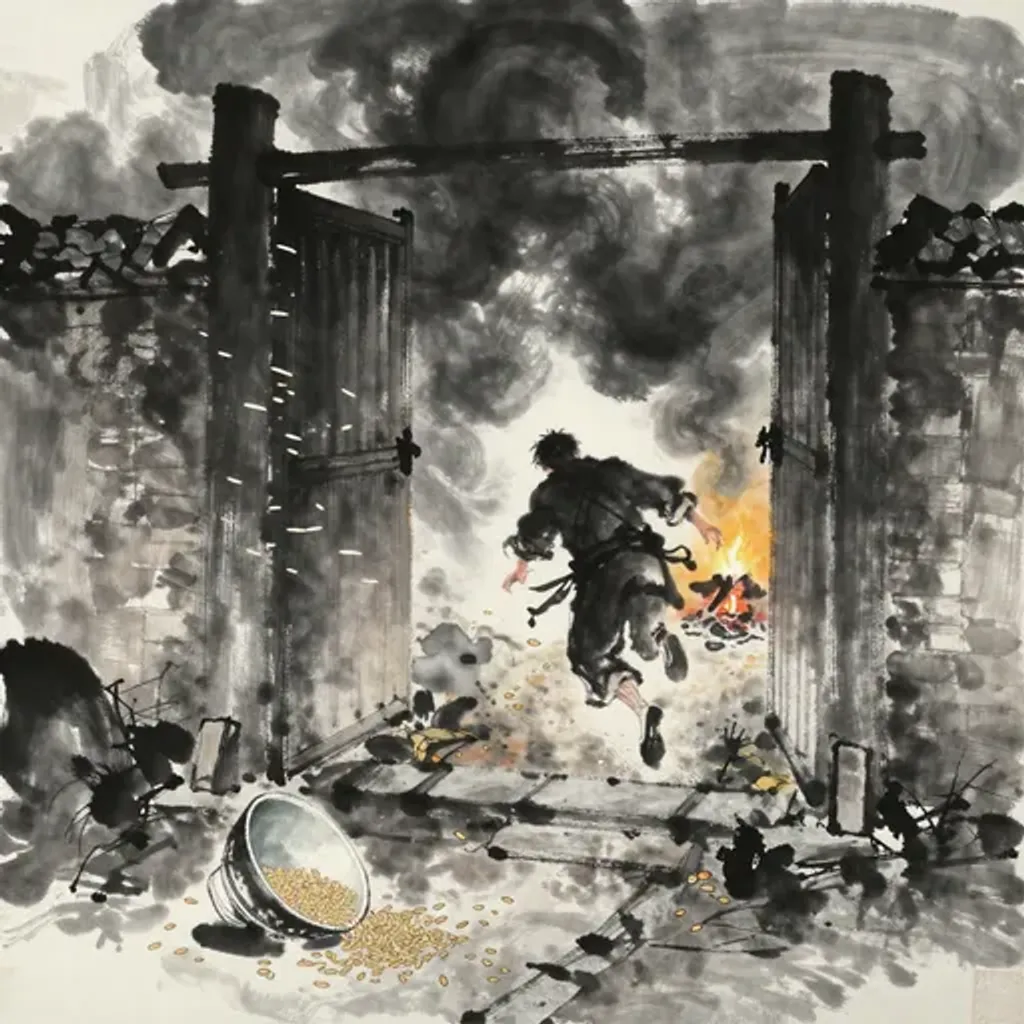
避患東西,反入禍門;糠糟不屬,憂動我心。
Fleeing trouble east and west, one stumbles into disaster's gate. Chaff and dregs cannot hold together; worry stirs my heart.
— Jiao Yanshou, Yilin (Forest of Changes), 1st century BC
Commentary
Heaven and earth stand sealed, and one who flees east and west to avoid disaster stumbles instead into the very gate of misfortune. Husband and wife drift apart like chaff and dregs that no longer hold together, and the heart is stirred with grief. From Standstill to Waiting, Pi's closure meets Xu's patient clouds gathering above heaven — rain that has not yet fallen. The verse captures the worst of both: the stagnation of Pi drives panicked flight, but Xu demands stillness. One who runs when the moment calls for waiting only accelerates the disaster. The severed bond between spouses mirrors heaven and earth's refusal to communicate, and restless motion deepens rather than resolves the separation.
否 → 訟
Hexagram 12 → Hexagram 6: Conflict
Changing lines: 2
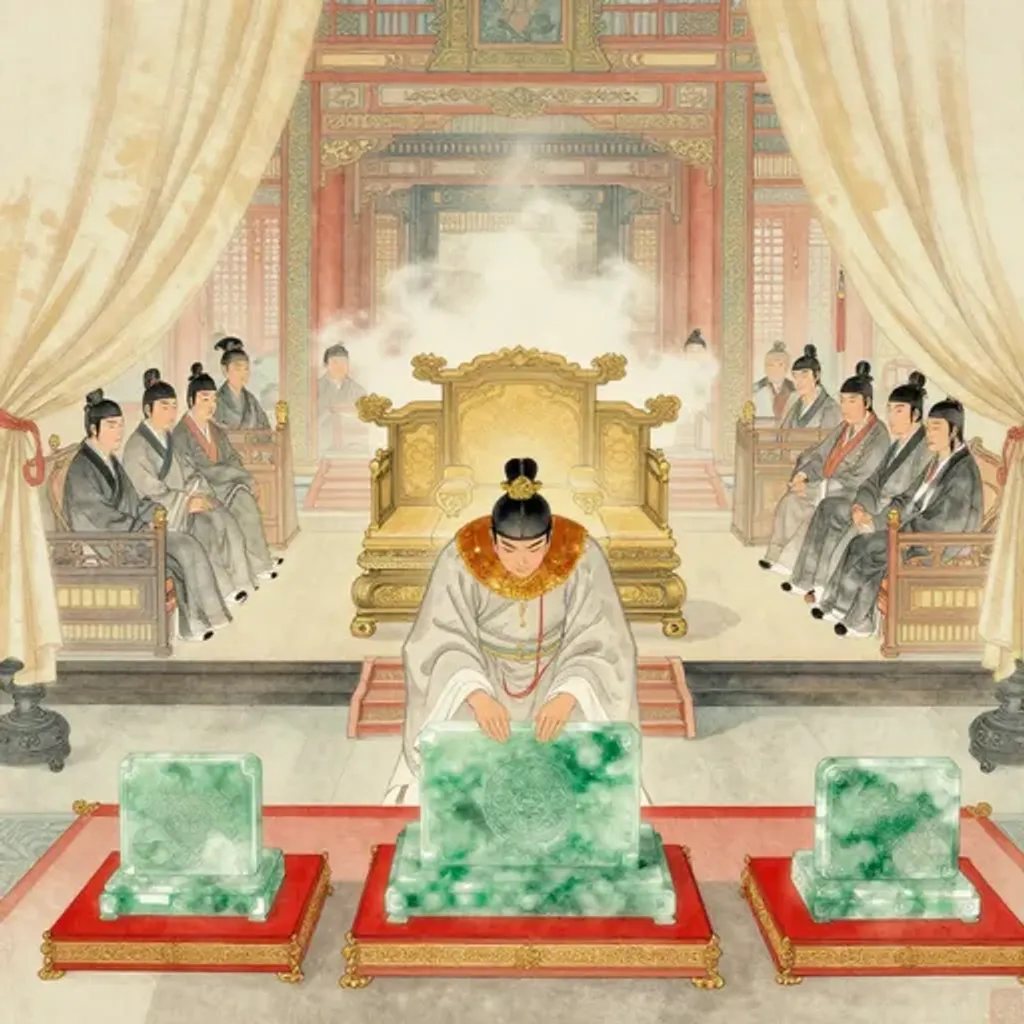
珪璧琮璋,執贄見王;百里甯越,應聘齊秦。
Jade tablets and ritual jades; one bears offerings to see the king. Baili Xi and Ning Yue answer summons from Qi and Qin.
— Jiao Yanshou, Yilin (Forest of Changes), 1st century BC
Commentary
Heaven and earth stand apart, yet jade tokens — gui, bi, cong, zhang — are presented as credentials before the king. Baili Xi and Ning Qi, two men who rose from obscurity through talent, answer the summons of Qi and Qin. Baili Xi was ransomed from slavery for five ram skins to become chief minister of Qin; Ning Qi sang while feeding cattle until Duke Huan recognized his worth. From Standstill to Conflict, the stagnation of Pi gives way to heaven and water moving in contrary directions. Conflict's counsel is to plan carefully from the outset, and these two figures exemplify precisely that: they transformed lowly origins into state-level appointments by presenting their credentials at the right moment to the right sovereign.
否 → 師
Hexagram 12 → Hexagram 7: The Army
Changing lines: 2, 4, 5, 6
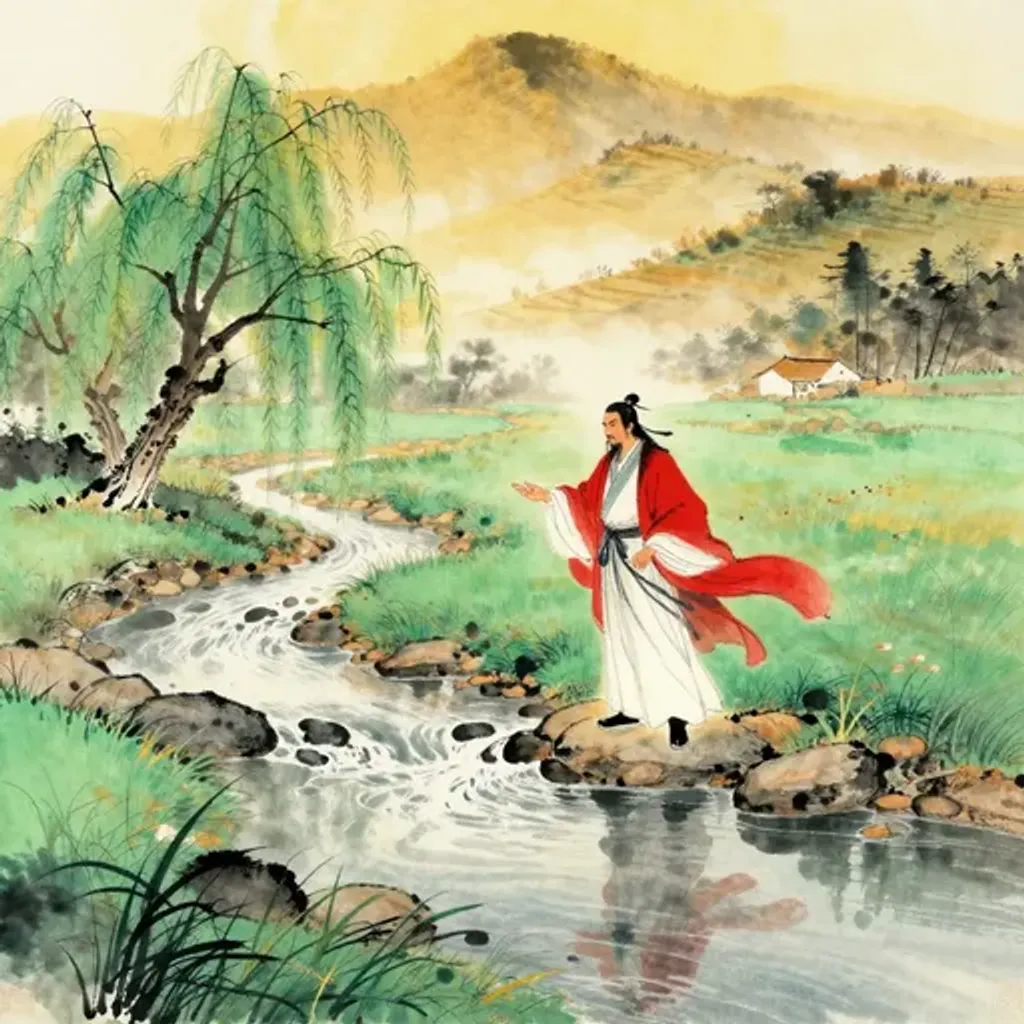
揚水潛鑿,使君潔白;衣素朱表,遊戲皋沃;得君所願,心志娛樂。
Drawing water and secretly channeling springs, to keep the lord pure and white. Wearing white silk beneath vermillion overcoat, one roams and plays in the rich meadow. Gaining the lord's desire; heart and spirit are delighted.
— Jiao Yanshou, Yilin (Forest of Changes), 1st century BC
Commentary
Heaven and earth refuse to mingle, yet clear water is drawn up from deep channels, washing the lord clean and bright. Clad in white silk with vermilion lining, one wanders at leisure through the fertile lowlands of Gao and Wo, gaining every heart's desire in joy and contentment. From Standstill to The Army, Pi's sealed gates open into earth concealing water — disciplined reserves hidden beneath the surface. The Army's power is not in display but in the water stored within the earth, quietly nourishing. The verse captures this hidden abundance: beneath the stagnant surface, springs run clear. The white-and-vermilion garments suggest ritual purity wedded to authority, and the leisure at Gao and Wo evokes a commander's calm amid organized plenty.
否 → 比
Hexagram 12 → Hexagram 8: Holding Together
Changing lines: 4, 6
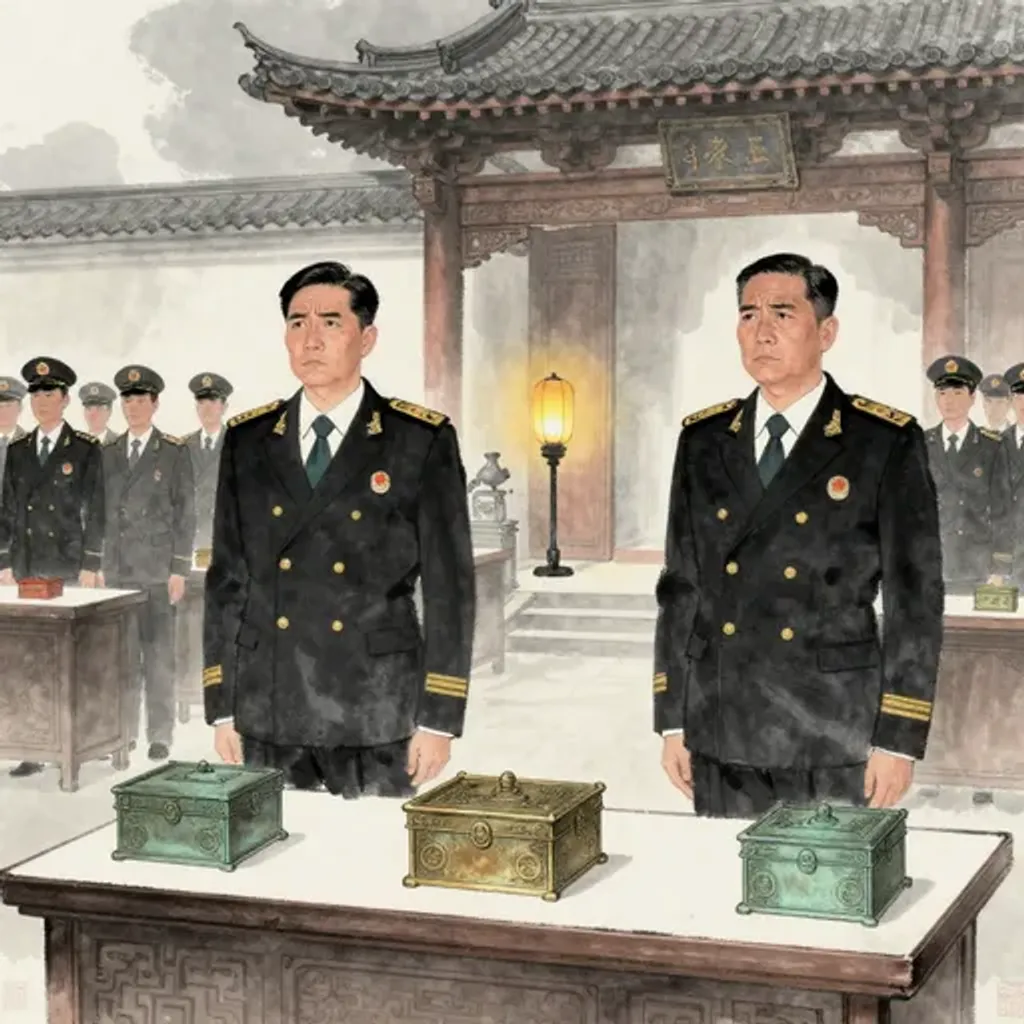
官爵相保,居之無咎;求免不得,怕使恨悔。
Office and rank are mutually secured; dwelling there brings no blame. Seeking dismissal without success, one fears and harbors regret.
— Jiao Yanshou, Yilin (Forest of Changes), 1st century BC
Commentary
Heaven and earth stand apart as officials cling to their ranks and titles, holding together in mutual preservation — dwelling thus incurs no blame. Yet when one seeks release from office and cannot obtain it, fear breeds regret and resentment. From Standstill to Holding Together, Pi's blocked communication gives way to water resting upon earth, the image of natural allegiance. Bi demands timely commitment: the ancient kings built their network of states through decisive bonding. The verse reveals Bi's shadow side — bonds forged not from genuine trust but from shared vulnerability become cages. Officials protect one another's positions because none can afford to stand alone, and the one who tries to leave discovers that the solidarity is a trap.
否 → 小畜
Hexagram 12 → Hexagram 9: Small Taming
Changing lines: 1, 2, 3, 4
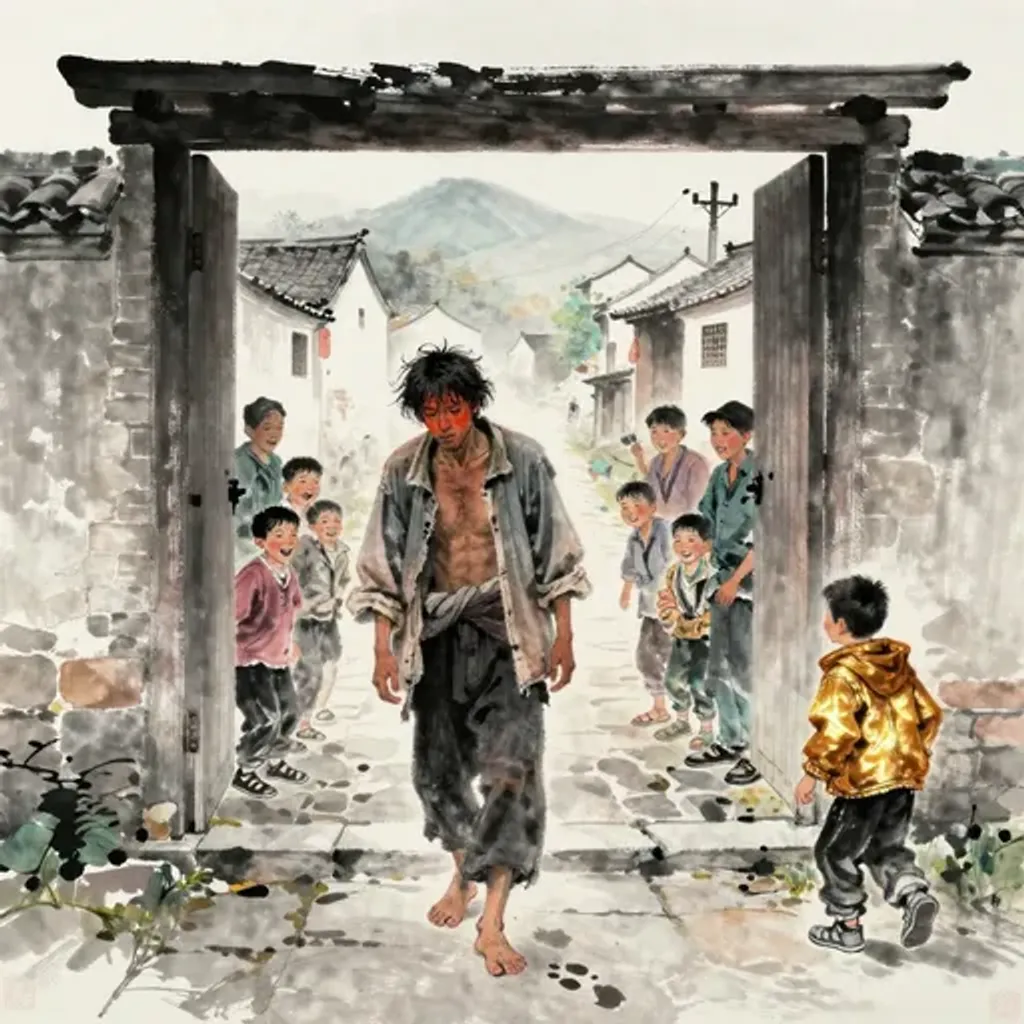
載元無褌,臝裎出門;小兒作笑,君為憂患。
Wearing a hat but no trousers, stepping out the gate half-naked. Children laugh aloud; the gentleman is cause for worry.
— Jiao Yanshou, Yilin (Forest of Changes), 1st century BC
Commentary
Heaven and earth refuse to communicate, and a man goes out without trousers, naked and exposed at the gate. Children laugh at him, while the gentleman is filled with dread. From Standstill to Small Taming, the complete blockage of Pi meets the gentle wind of Xiao Xu coursing above heaven — a breeze that restrains but cannot fully clothe. The verse is a parable of insufficient covering: the wind of cultural refinement (Xiao Xu's 'beautifying civil virtue') cannot remedy a deficit this fundamental. One who lacks the minimum is beyond the reach of gentle cultivation. The children's laughter and the gentleman's worry capture two responses to exposure — the naive find it amusing, while the wise see catastrophe.
否 → 履
Hexagram 12 → Hexagram 10: Treading
Changing lines: 1, 2
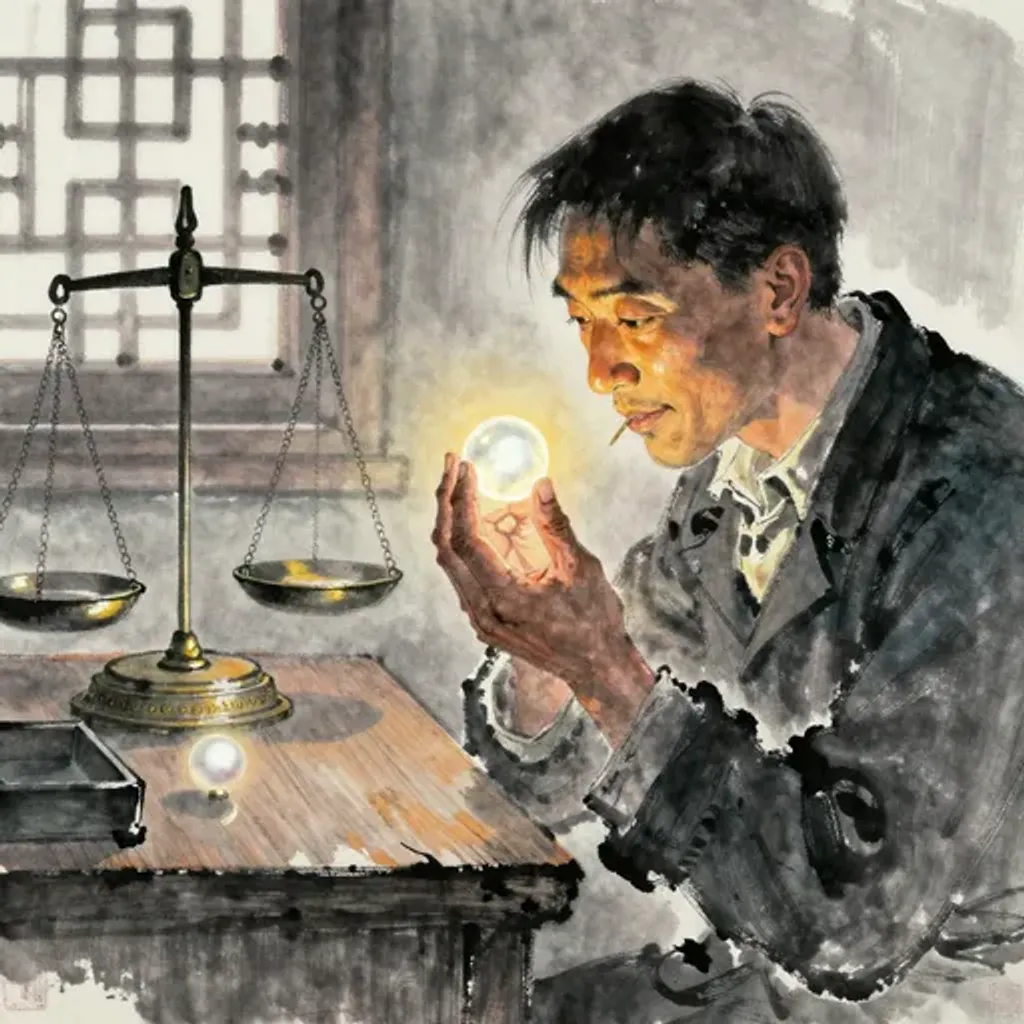
把珠入口,為我利寶;得吾所有,欣然嘉喜。
Placing a pearl in the mouth, it becomes my profit and treasure. Gaining what I possess, I am glad and greatly pleased.
— Jiao Yanshou, Yilin (Forest of Changes), 1st century BC
Commentary
Heaven and earth stand sealed, yet a pearl is placed into the mouth and becomes a precious treasure. One gains what was already one's own, and joy overflows. From Standstill to Treading, Pi's blocked world opens into the image of heaven above and lake below — propriety and careful distinction. Lu's counsel is to tread on the tiger's tail without being bitten, which demands knowing exactly what belongs to you and claiming it with precision. The pearl in the mouth is wealth internalized — not seized from outside but recognized as inherent. The verse transforms Standstill's deprivation into Treading's confident step: amid stagnation, the wise person discovers that the treasure was always within reach, requiring only the discernment to claim it.
否 → 泰
Hexagram 12 → Hexagram 11: Peace
Changing lines: 1, 2, 3, 4, 5, 6
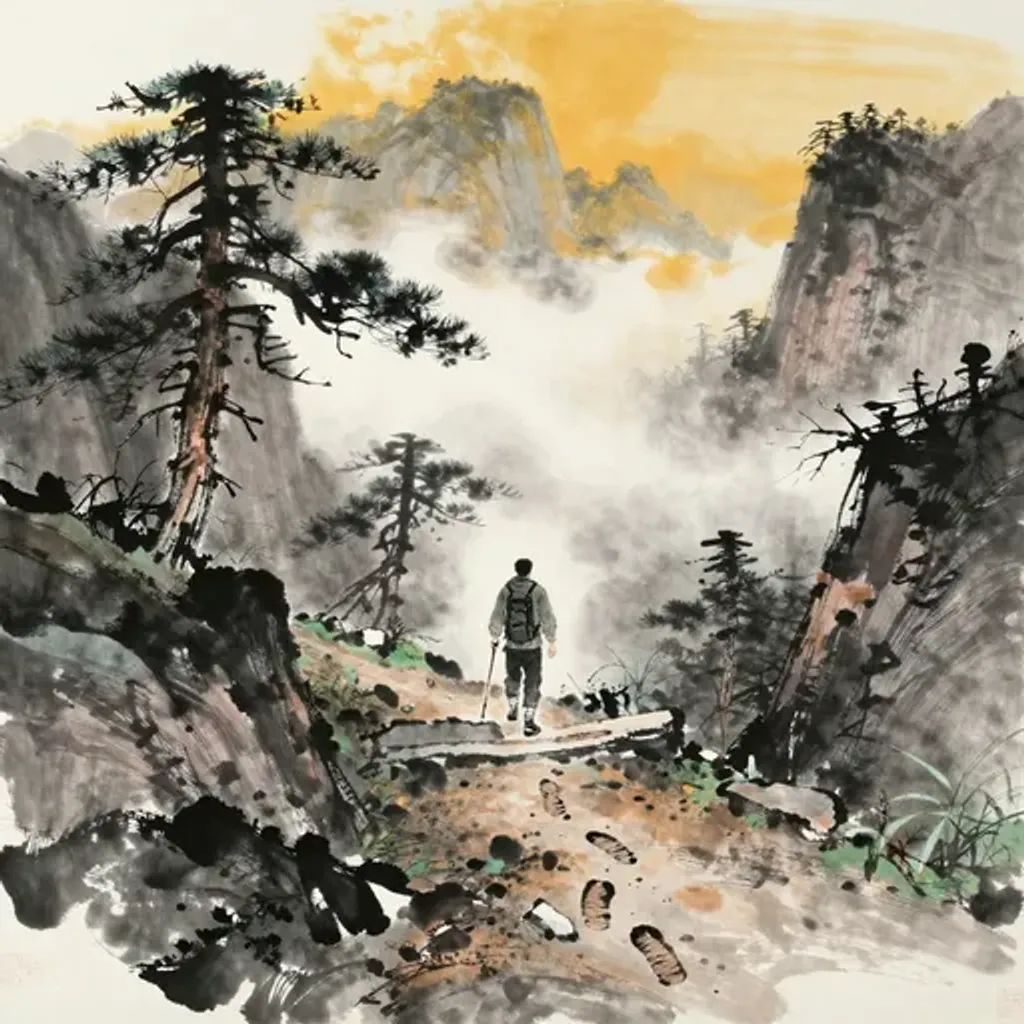
行不如還,直不如屈;進不若退,可以安吉。
Going is not as good as returning; straight is not as good as bent. Advancing is not as good as retreating; thereby one may rest in peace.
— Jiao Yanshou, Yilin (Forest of Changes), 1st century BC
Commentary
Heaven and earth refuse to mingle, and the verse offers Standstill's own remedy: going forward is not as good as turning back; straightness is not as good as yielding; advancing is not as good as retreating — thus one may find safety and good fortune. From Standstill to Peace, the hexagram literally inverts: heaven above earth (Pi) becomes earth above heaven (Tai), the only configuration in which the two forces meet and communicate. The verse's paradox is the paradox of Tai itself — retreat produces advance, yielding produces strength, bending produces wholeness. This is the structural logic of the I-Ching's most famous pair: Standstill is overcome not by pushing harder but by reversing direction entirely.
否 → 否
Hexagram 12 → Hexagram 12: Standstill
No changing lines — the hexagram is unchanged
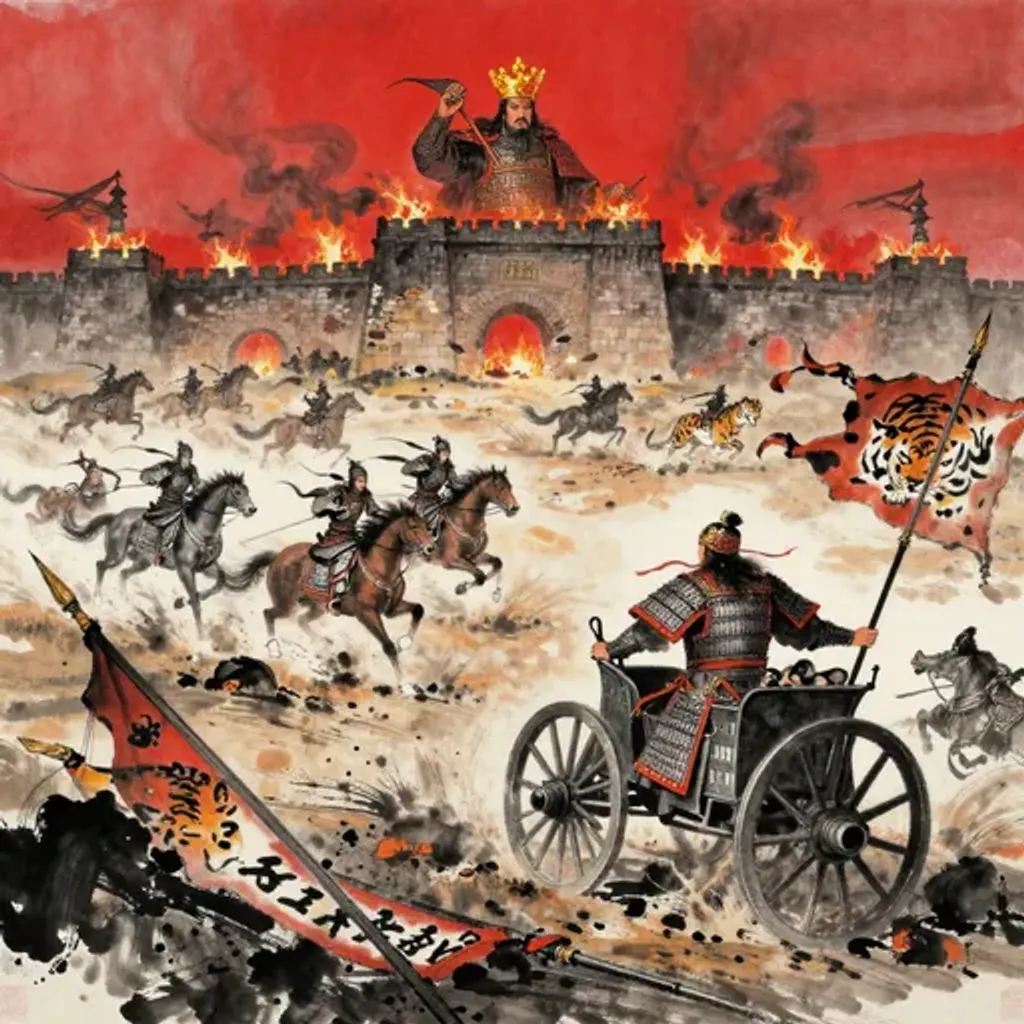
秦為虎狼,與晉爭強;併吞其國,號曰始皇。
Qin was as wolf and tiger, contending with Jin for supremacy. Swallowing and annexing its states, it proclaimed itself First Emperor.
— Jiao Yanshou, Yilin (Forest of Changes), 1st century BC
Commentary
Heaven and earth stand apart, and Standstill meets its own image — Pi doubled. Qin acts as tiger and wolf, contending with the six states for supremacy, swallowing them all and proclaiming its lord the First Emperor. When Standstill encounters itself, the blockage intensifies rather than resolves. Qin's unification was achieved through total non-communication — the destruction of rival voices, the burning of books, the silencing of dissent. The First Emperor's empire is Pi's ultimate expression: heaven and earth sealed so tightly that nothing circulates. The verse captures the terrifying efficiency of doubled stagnation: order imposed by extinguishing all exchange, a peace that is merely the silence of the conquered.
否 → 同人
Hexagram 12 → Hexagram 13: Fellowship
Changing lines: 1, 3
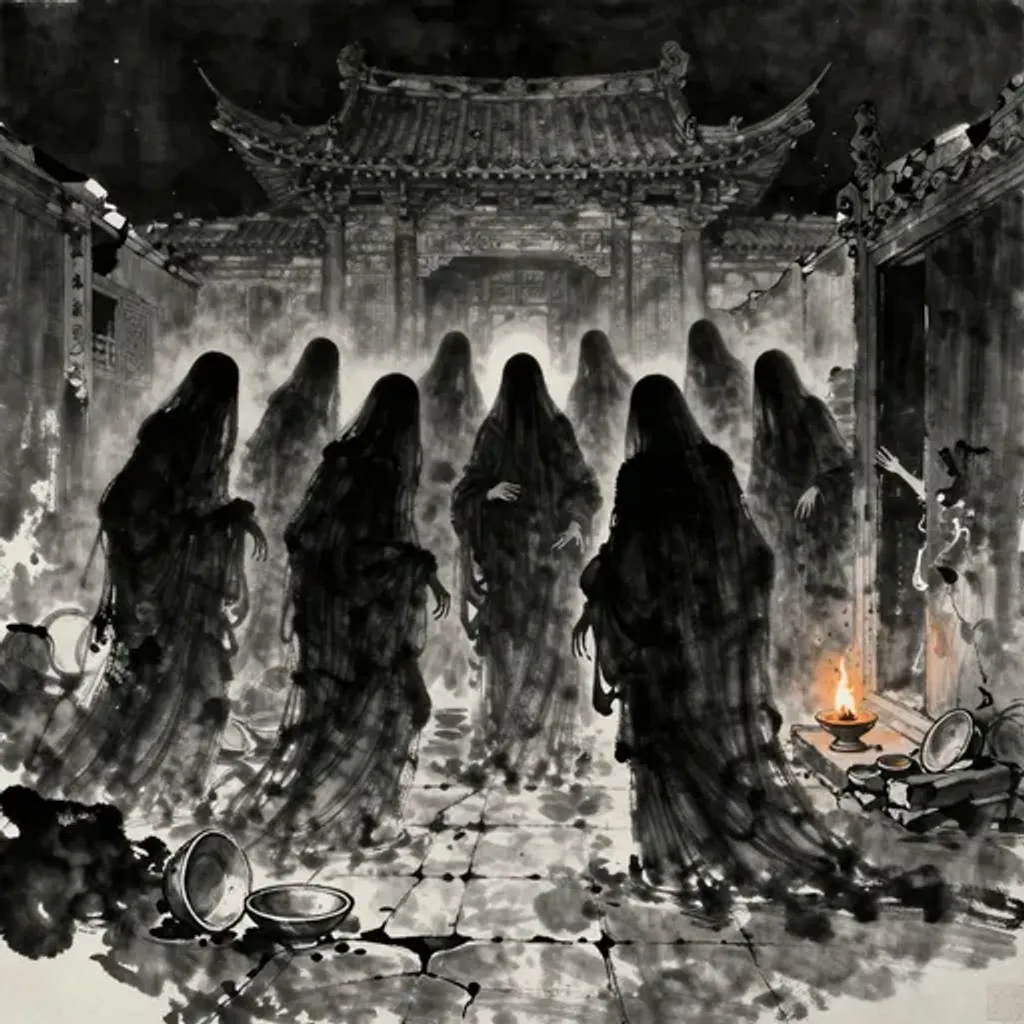
眾鬼凡聚,還生大怪,九身無頭;魂驚魄去,不可以居。
A crowd of ghosts gathers; strange apparitions arise. Nine bodies without heads; souls startled, spirits fled. The place is unfit to dwell.
— Jiao Yanshou, Yilin (Forest of Changes), 1st century BC
Commentary
Heaven and earth stand apart as ghosts swarm and gather, spawning monstrosities — nine bodies without heads. Souls scatter in terror; the place is unfit for habitation. From Standstill to Fellowship, Pi's blockage meets the promise of heaven and fire aligned. Yet the verse inverts Fellowship's meaning entirely: instead of kindred spirits gathering in harmony, malign spirits convene to breed horror. Tong Ren's image demands that like recognizes like and sorts itself properly, but here the sorting has gone grotesquely wrong — what congregates is not fellowship but nightmare. The headless bodies suggest community without direction, assembly without leadership. Fellowship perverted becomes a haunted gathering where no one can remain.
否 → 大有
Hexagram 12 → Hexagram 14: Great Possession
Changing lines: 1, 2, 3, 5
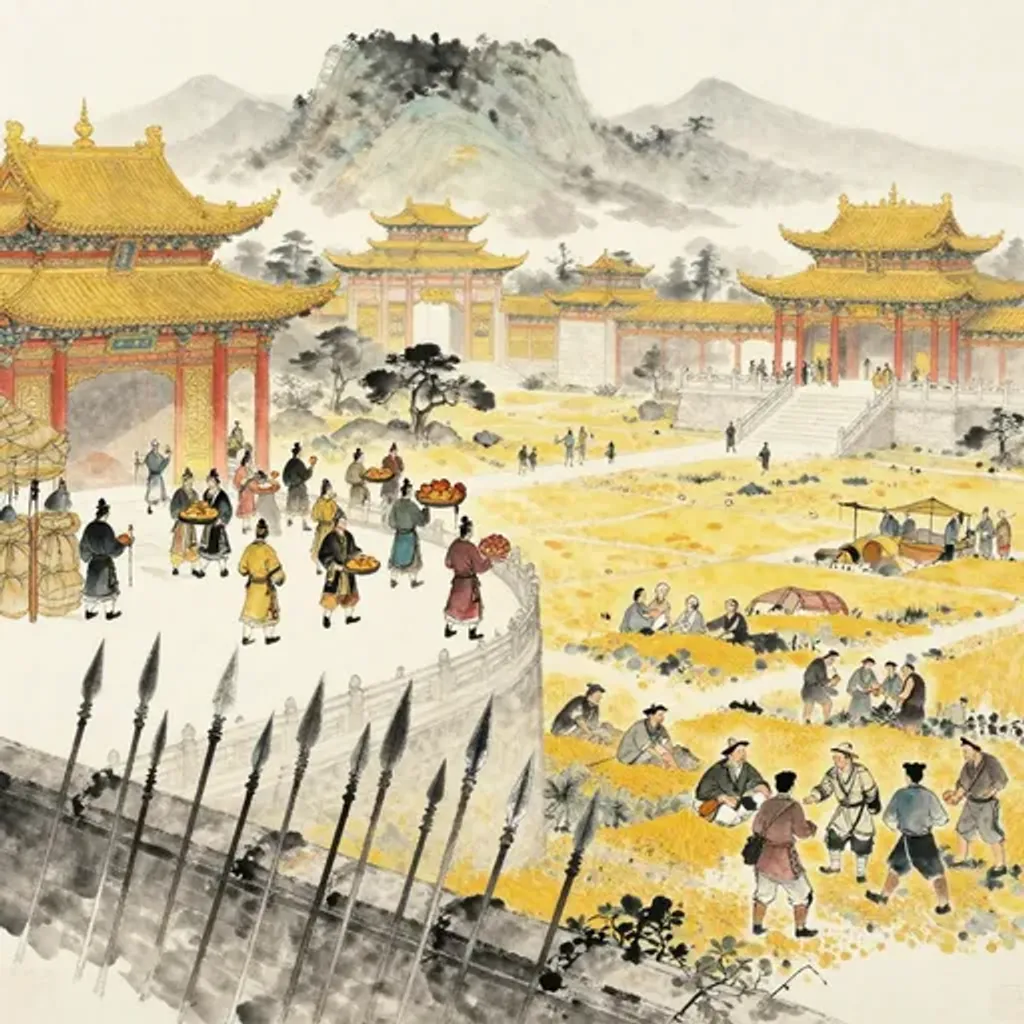
家給人足,頌聲並作;四夷賓服,干戈囊閣。
Every household provided, every person content; songs of praise rise together. The four barbarian lands submit; spears and halberds are sheathed and stored.
— Jiao Yanshou, Yilin (Forest of Changes), 1st century BC
Commentary
Heaven and earth refuse to communicate, yet the verse unfolds a vision of perfect prosperity: every household has enough, every person is supplied, and songs of praise rise together. The four barbarian peoples submit, and weapons are sheathed and shelved. From Standstill to Great Possession, the sealed world of Pi transforms into fire blazing high in heaven — brilliance visible to all. Da You is abundance openly displayed, governance so luminous that even distant peoples yield willingly. The verse's portrait — sufficiency without aggression, submission without conquest — captures Great Possession's specific dynamic: not power seized but merit recognized. The weapons put away signal that true wealth needs no force to sustain it.
否 → 謙
Hexagram 12 → Hexagram 15: Modesty
Changing lines: 3, 4, 5, 6
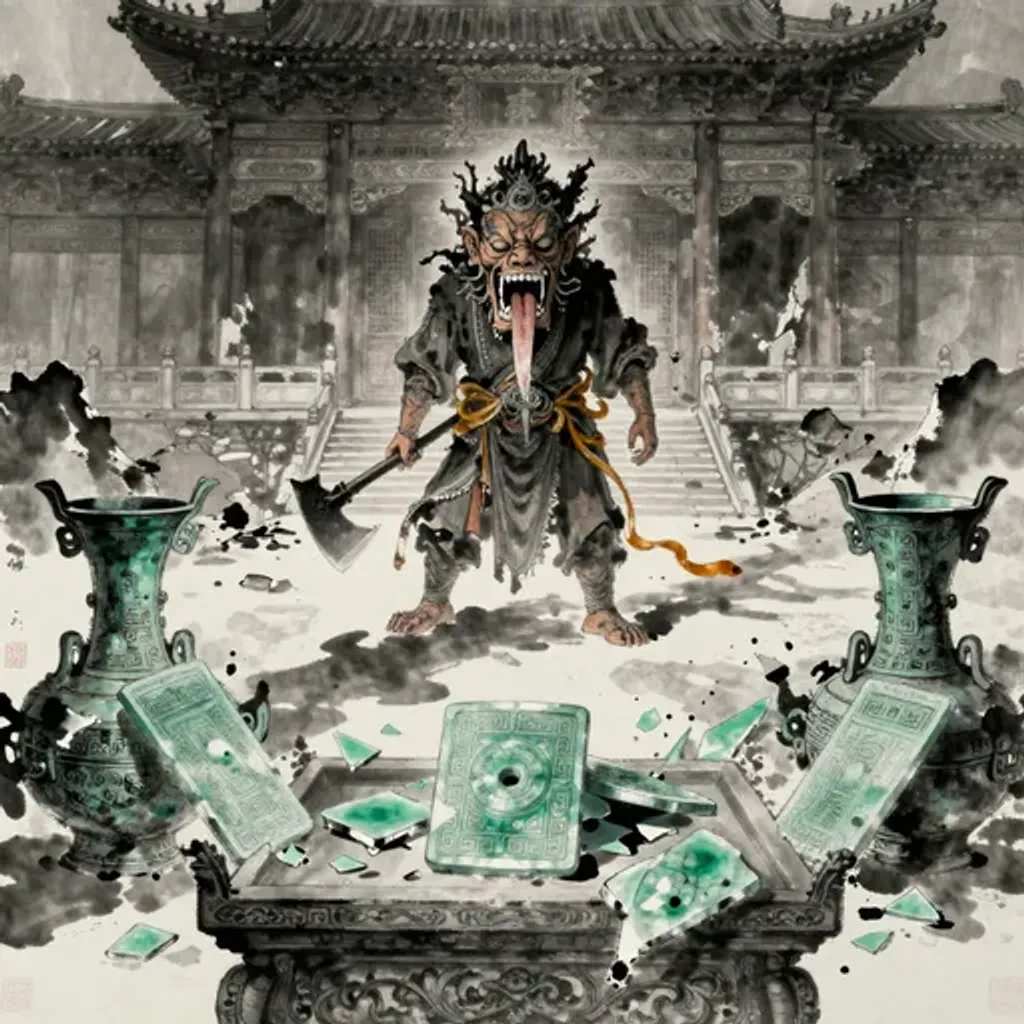
人面鬼口,長舌為斧;斲破瑚璉,殷商絕祀。
A human face, a demon's mouth; the long tongue serves as axe. It hacks apart the sacrificial vessels; the Yin-Shang line is cut off.
— Jiao Yanshou, Yilin (Forest of Changes), 1st century BC
Commentary
Heaven and earth stand apart as a creature with a human face and a demon's mouth wields its long tongue like an axe. It hacks apart the precious ritual vessel — the hulian — and the Shang dynasty's sacrificial line is severed forever. The hulian was a jade-adorned ancestral vessel, its destruction symbolizing the end of a lineage's connection to heaven. The 'long tongue as axe' evokes slander so powerful it can fell a dynasty. From Standstill to Modesty, Pi's sealed stagnation yields to earth containing a mountain within — hidden greatness. Yet the verse shows what happens before modesty can operate: a slanderer destroys what generations built. Modesty's hidden mountain survives only if the axe-tongue is recognized and stopped in time.
否 → 豫
Hexagram 12 → Hexagram 16: Enthusiasm
Changing lines: 5, 6
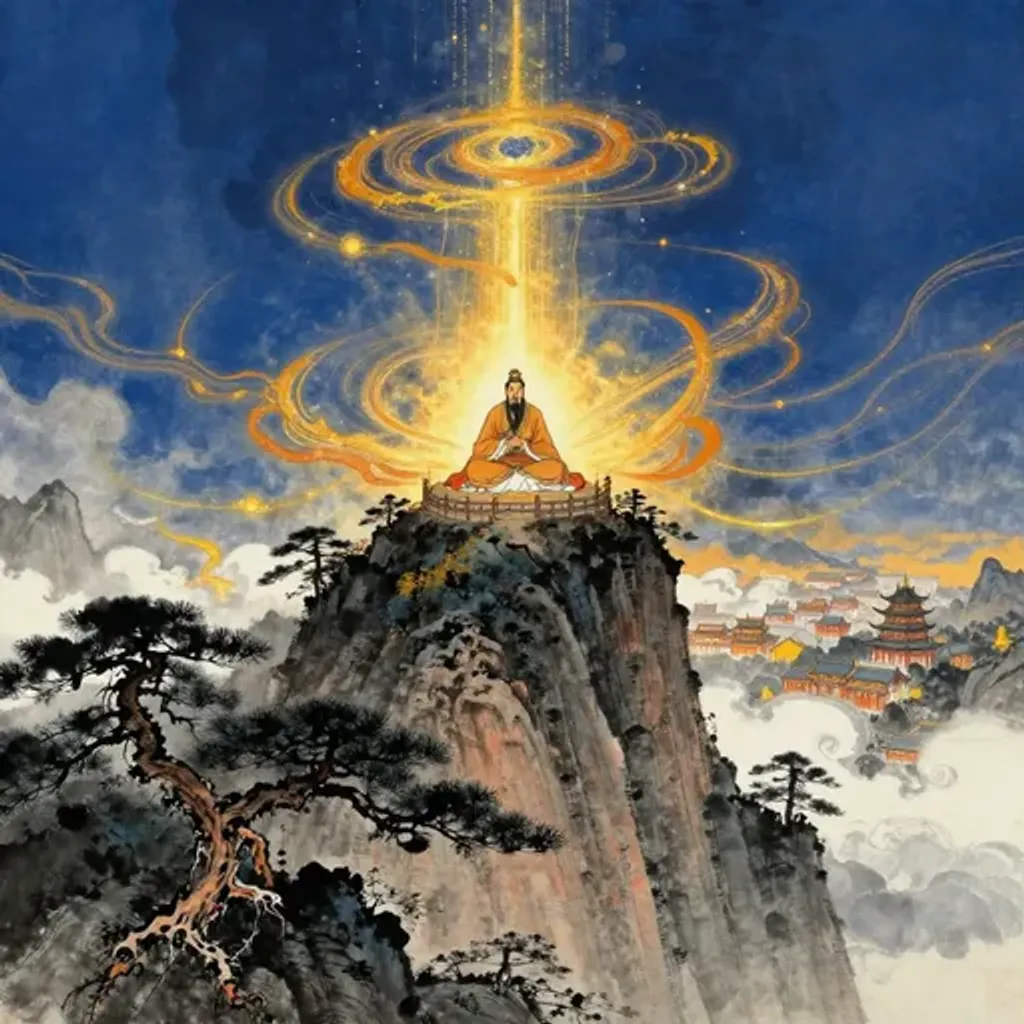
南山之峻,真人所在;德配唐虞;天命為子;保佑飲享,身受大慶。
On the steep southern mountain, the True Man dwells. His virtue matches Yao and Shun; heaven ordains him as the heir. Protected and blessed with offerings; he personally receives great celebration.
— Jiao Yanshou, Yilin (Forest of Changes), 1st century BC
Commentary
Heaven and earth stand apart, yet on the steep southern mountain a True Man dwells, his virtue matching that of Yao and Shun. Heaven designates him as Son, and under divine protection he drinks and feasts, receiving the greatest of blessings. From Standstill to Enthusiasm, Pi's sealed world explodes into thunder rising from the earth — the arousing joy of Yu. The True Man on the southern mountain suggests a sage-ruler whose cultivation has earned heaven's mandate: his virtue resonates with the legendary emperors. Yu's image is thunder that shakes the earth awake with music and ceremony. The verse moves from stagnation to celebration: the worthy one receives heaven's appointment, and the entire world rejoices in renewed cosmic harmony.
否 → 隨
Hexagram 12 → Hexagram 17: Following
Changing lines: 1, 6
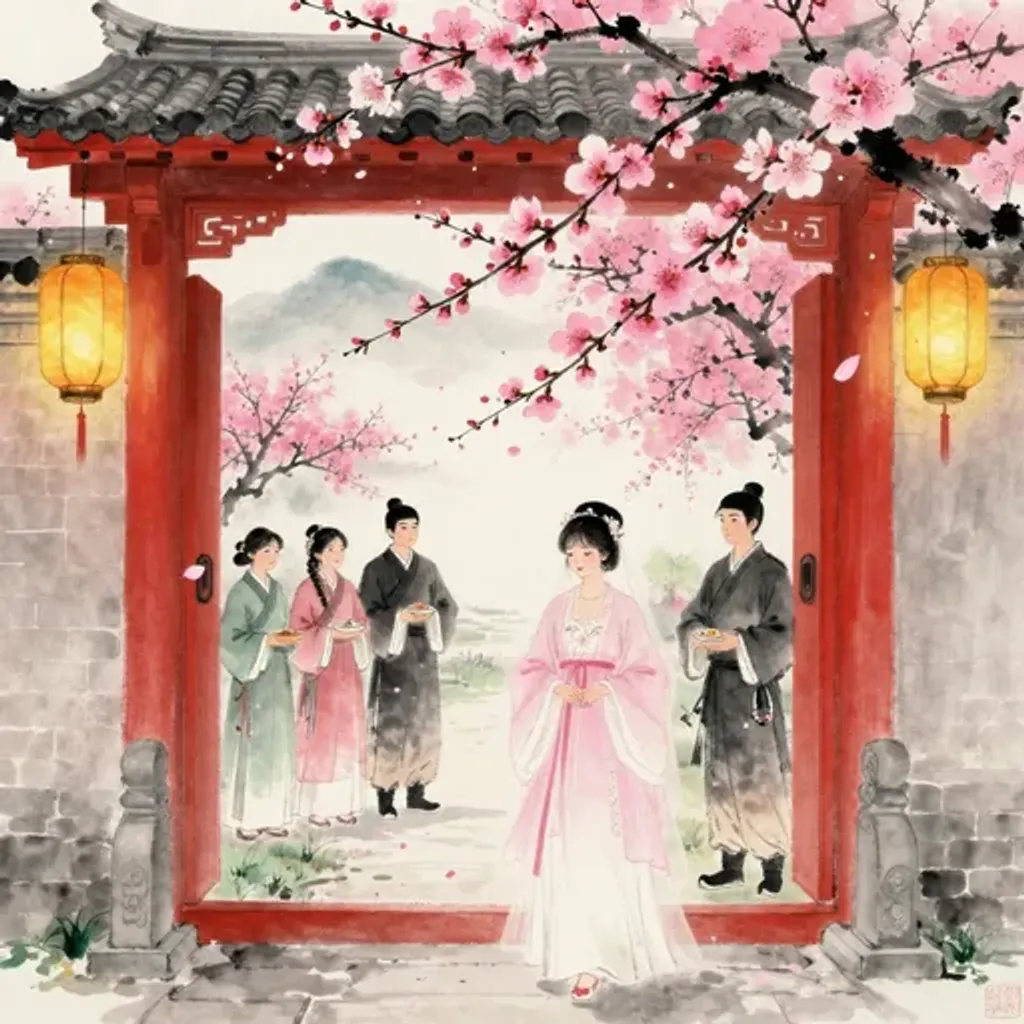
春桃生花,季女宜家;受福多年,男為邦君。
Spring peach blossoms bloom; the youngest daughter graces her new home. Receiving blessing for many years; her son becomes lord of the realm.
— Jiao Yanshou, Yilin (Forest of Changes), 1st century BC
Commentary
Heaven and earth refuse to communicate, but spring arrives and peach trees burst into blossom. The youngest daughter finds a harmonious home, receives blessings for many years, and her son becomes lord of a state. From Standstill to Following, Pi's sealed world opens into the lake with thunder resting within — the image of evening rest after the day's exertion. Sui's principle is adaptive responsiveness: following the natural rhythm of seasons and circumstance. The verse traces this perfectly — spring peach blossoms lead to marriage, marriage to years of blessing, blessing to a son's eminence. Each step follows naturally from the last, with no forcing. Standstill dissolves not through confrontation but through the organic unfolding of life's own seasons.
否 → 蠱
Hexagram 12 → Hexagram 18: Work on the Decayed
Changing lines: 2, 3, 4, 5
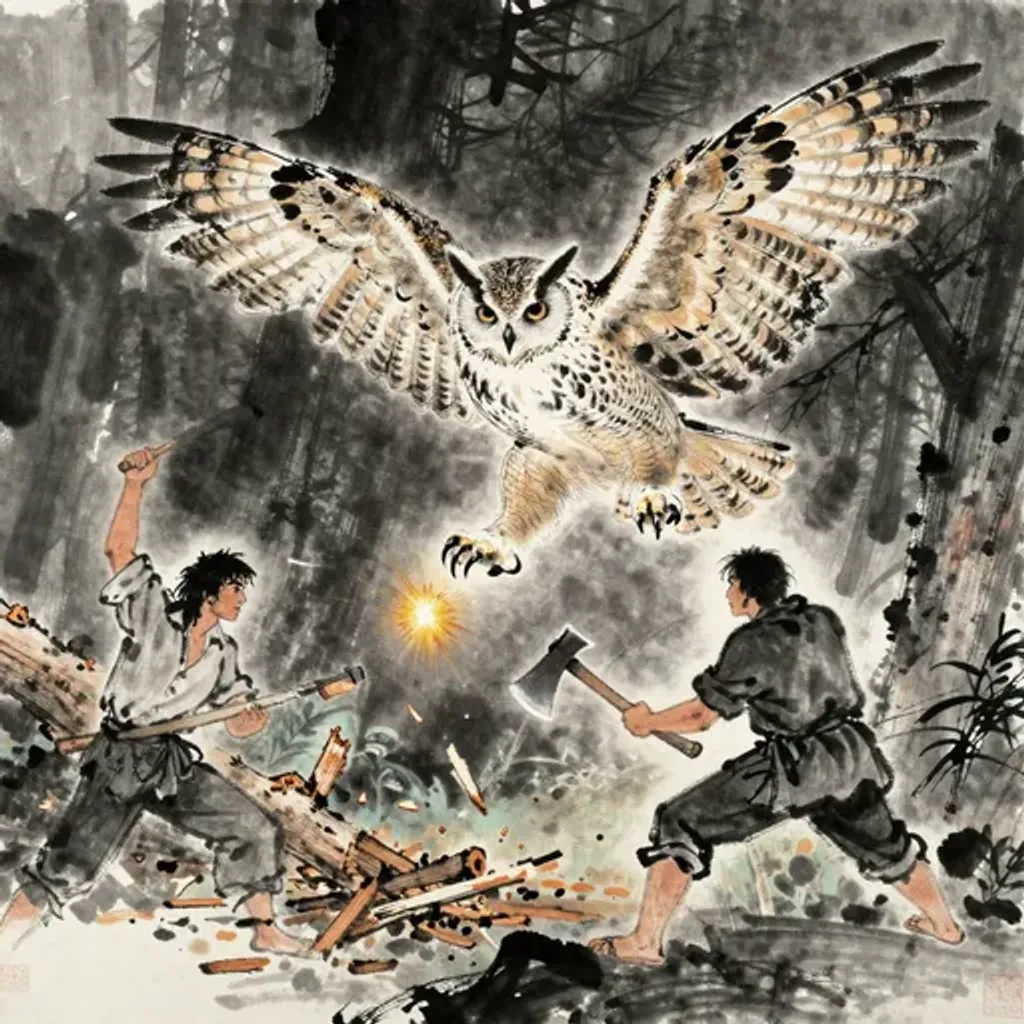
鴟鴞破斧,沖人危殆;賴其忠德,轉禍為福,傾危復立。
The owl breaks the axe, imperiling the loyal man. Relying on his faithful virtue, disaster transforms into fortune; the tottering one stands upright again.
— Jiao Yanshou, Yilin (Forest of Changes), 1st century BC
Commentary
Heaven and earth stand apart as the owl threatens and the axe is broken — two Shijing poems layered into a single crisis. 'Chi Xiao' is the Duke of Zhou's ode: an owl menaces the nest, representing enemies threatening the young Zhou state. 'Po Fu' celebrates the eastern campaign that crushed the rebellion of the Three Monitors. The verse combines destruction and salvation: the owl attacks and the axe shatters, placing the loyal man in mortal danger, yet through his steadfast virtue the disaster becomes a blessing and the tottering state stands firm again. From Standstill to Work on the Decayed, stagnation transforms into the wind trapped beneath the mountain — corruption that must be confronted and repaired through moral renewal.
否 → 臨
Hexagram 12 → Hexagram 19: Approach
Changing lines: 1, 2, 4, 5, 6
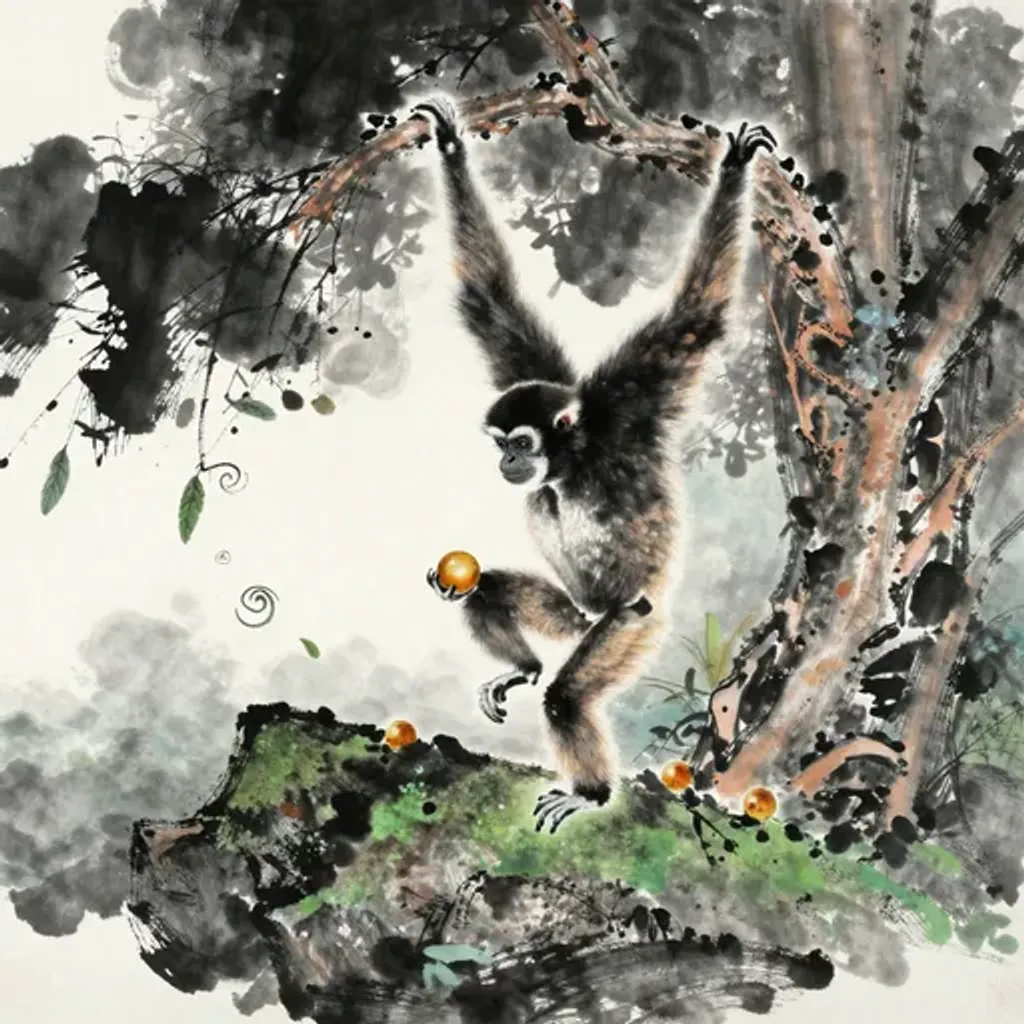
猿墮高木,不踒手足;保我金玉,還歸其室。
The gibbon falls from a high tree yet does not injure hand or foot. Guarding my gold and jade, it returns to its chamber.
— Jiao Yanshou, Yilin (Forest of Changes), 1st century BC
Commentary
Heaven and earth refuse to mingle, yet an ape falls from a tall tree without injuring its hands or feet. It preserves its gold and jade intact and returns safely to its dwelling. From Standstill to Approach, Pi's sealed world opens into earth resting above the lake — the generous downward gaze of authority extending its reach. Lin's image is the shore overlooking the water, drawing near with benevolence. The ape's remarkable fall captures Lin's essence: even when one tumbles from a great height, natural agility and the preservation of what matters most — one's treasures and one's home — allow a safe landing. Standstill's crisis is navigated not by climbing higher but by knowing how to fall gracefully into the approaching embrace of better fortune.
否 → 觀
Hexagram 12 → Hexagram 20: Contemplation
Changing lines: 4
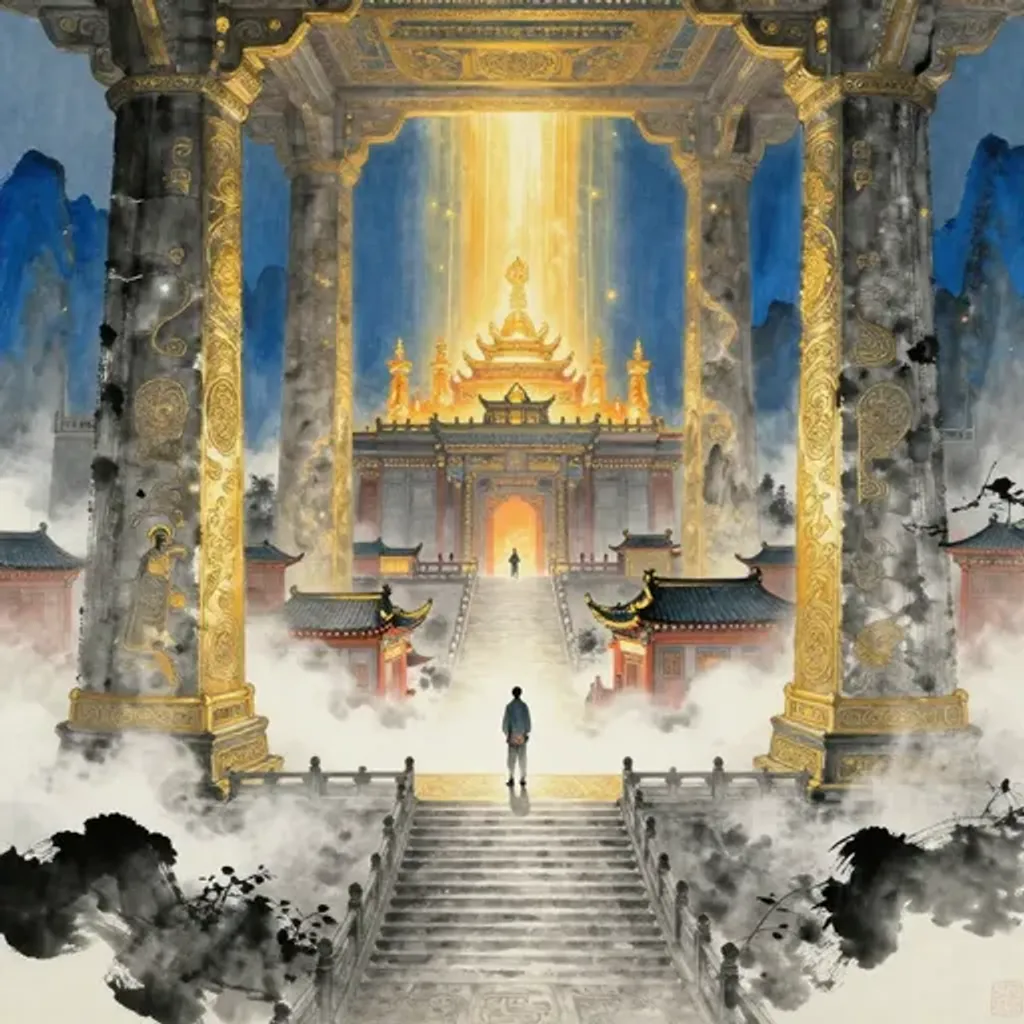
天之奧隅,堯舜所居;可以存身,保我邦家。
Heaven's hidden corner, where Yao and Shun once dwelt. One may preserve the body there, and protect our domain and home.
— Jiao Yanshou, Yilin (Forest of Changes), 1st century BC
Commentary
Heaven and earth stand apart, yet there exists a hidden corner of heaven where Yao and Shun once dwelt — a place that preserves life and protects the state. From Standstill to Contemplation, Pi's blockage transforms into wind moving over the earth, the ancient kings' inspection tours that observed the people and established teachings. Guan's essence is the elevated vantage point from which patterns become visible. The verse locates this vantage in the 'hidden recess of heaven' — not the open sky but a secluded refuge associated with the sage-kings. In times of stagnation, preservation comes not from action but from finding the right position for observation, the still point from which Yao and Shun once governed by watching and understanding.
否 → 噬嗑
Hexagram 12 → Hexagram 21: Biting Through
Changing lines: 1, 5
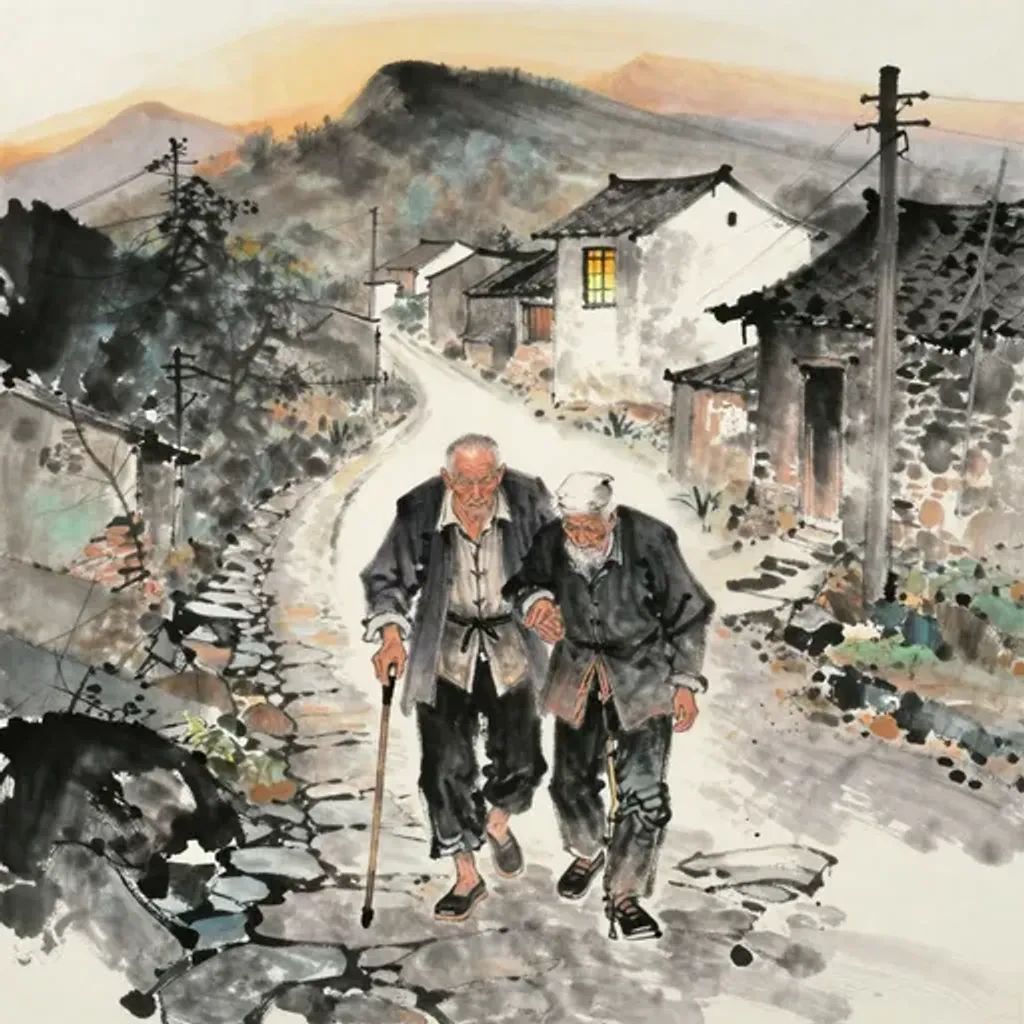
伯蹇叔盲,足病難行;終日至暮,不離其鄉。
The elder brother is lame, the younger blind; feet ailing, travel is hard. From dawn to dusk they go; they cannot leave their village.
— Jiao Yanshou, Yilin (Forest of Changes), 1st century BC
Commentary
Heaven and earth refuse to communicate, and the elder brother limps while the younger brother is blind — legs diseased, movement impossible. From dawn to dusk they cannot leave their village. From Standstill to Biting Through, Pi's sealed stagnation meets the decisive bite of thunder and lightning that should break through obstruction. Yet the verse denies the breakthrough entirely: the lame and the blind are trapped, unable to move even one step beyond their home. Shi He demands sharp, judicial action — lightning clarity that bites through obstacles — but when the body itself is broken, no amount of decisiveness can compensate. The verse is Standstill's cruelest face: not just blocked roads but broken legs, not just darkness but blinded eyes.
否 → 賁
Hexagram 12 → Hexagram 22: Grace
Changing lines: 1, 3, 4, 5
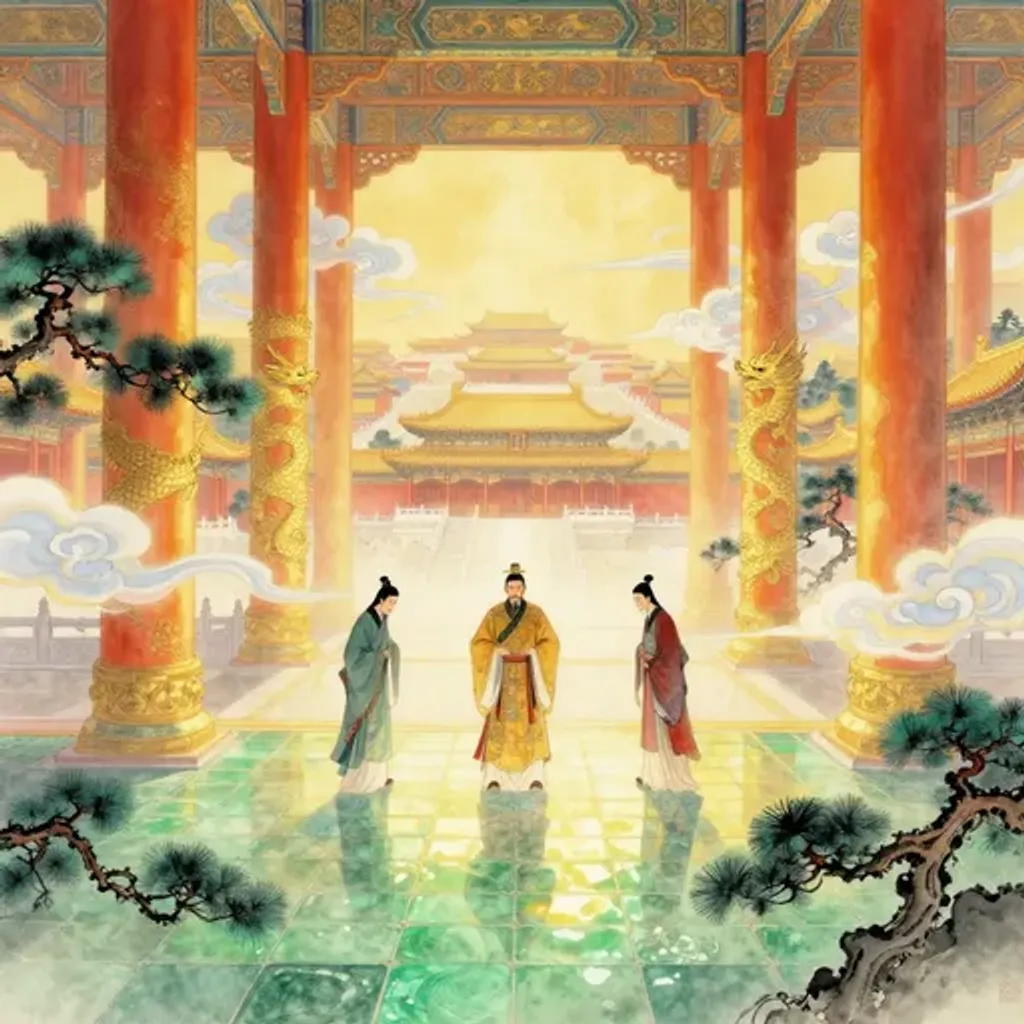
日月相望,光明盛昌;三聖茂功,仁德大隆。
Morning light fills the golden palace hall; auspicious qi swirls around dragon pillars on jade steps. Three ministers stand tall as pines and cypresses — virtuous governance flows and nourishes a thousand households.
— Jiao Yanshou, Yilin (Forest of Changes), 1st century BC
Commentary
Heaven and earth stand apart, yet the original verse sings of splendor: sun and moon gaze upon each other in brilliant radiance, and three sages bring forth flourishing achievements with great benevolent virtue. The 'three sages' likely refers to the founding luminaries of Zhou — the Duke of Zhou, the Duke of Shao, and Taigong — whose combined brilliance established the dynasty's moral foundation. From Standstill to Grace, Pi's sealed world transforms into fire glowing beneath the mountain — beauty illuminating the substance of things. Bi adorns without obscuring, adding form to content. The three sages' light is Bi's ideal: genuine virtue made radiant through cultural expression, where sun and moon in mutual gaze create the pattern of heaven itself.
否 → 剝
Hexagram 12 → Hexagram 23: Splitting Apart
Changing lines: 4, 5
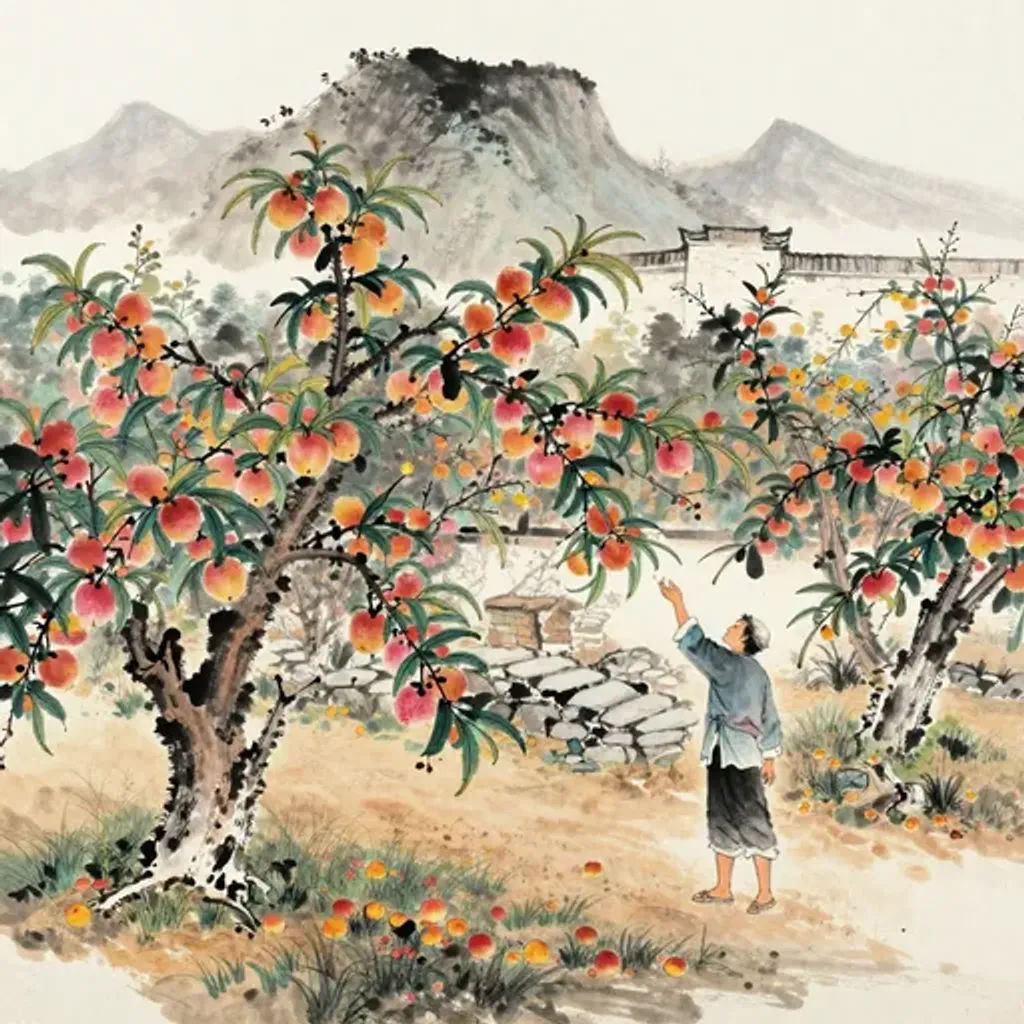
桃李花實,累累日息;長大成就,甘美可食。
Peach and plum bear flower and fruit, swelling day by day. Growing large and ripening; sweet and delicious, fit to eat.
— Jiao Yanshou, Yilin (Forest of Changes), 1st century BC
Commentary
Heaven and earth refuse to communicate, yet peach and plum trees flower and fruit, growing abundantly day after day. They mature and ripen until the fruits hang sweet and ready to eat. From Standstill to Splitting Apart, Pi's stagnation meets the mountain crumbling upon the earth — the progressive stripping away of structure. Yet the verse speaks only of ripening and sweetness. The paradox resolves through Bo's hidden logic: what is stripped away is the husk, not the fruit. The tree that loses its leaves in Bo's autumn has already set its harvest. Splitting Apart removes what is no longer needed so the essential sweetness can be consumed. Even in decay, the fruit persists.
否 → 復
Hexagram 12 → Hexagram 24: Return
Changing lines: 1, 4, 5, 6
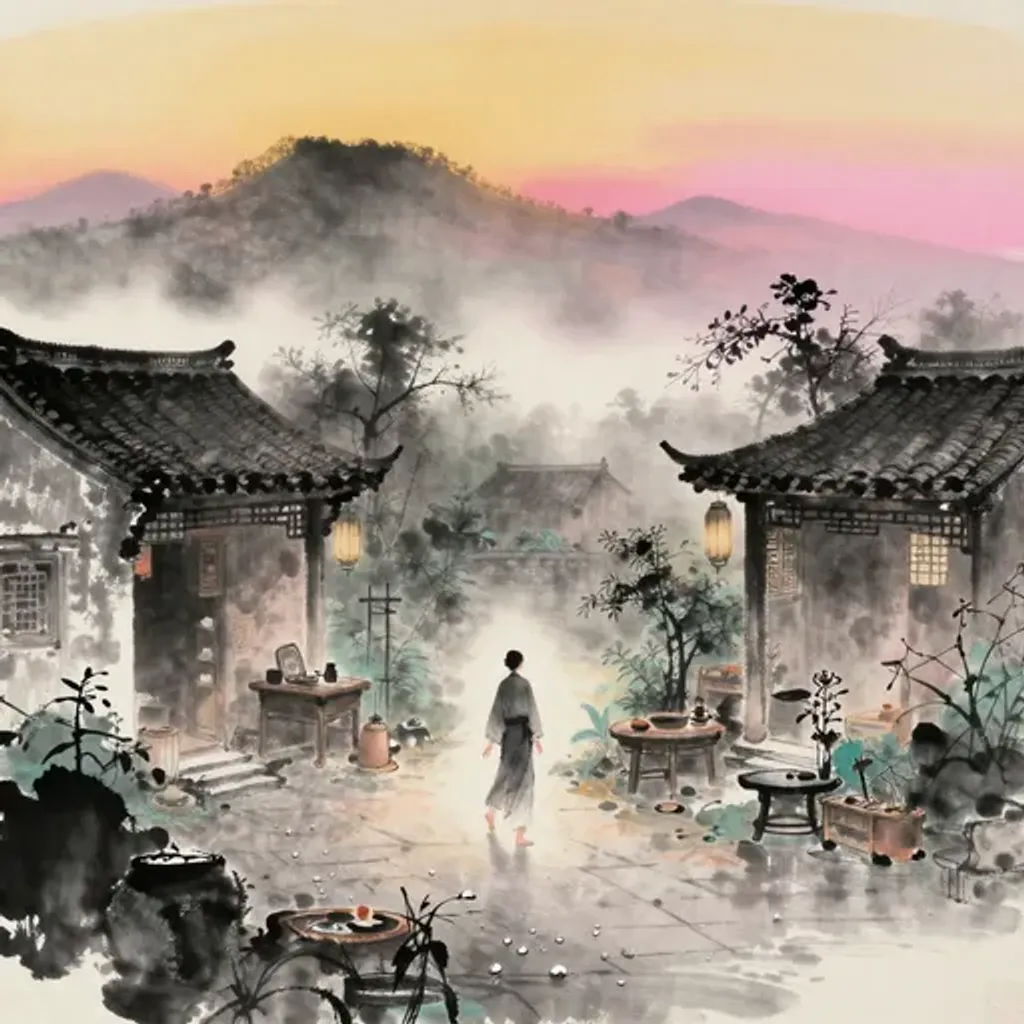
入和出明,動作有光;運轉休息,動作尤康。
Entering in harmony, departing in clarity; every action shines with light. Turning and resting in due rhythm; every movement brings greater health.
— Jiao Yanshou, Yilin (Forest of Changes), 1st century BC
Commentary
Heaven and earth stand sealed, yet within that stillness a rhythm emerges: entering finds harmony, emerging finds brightness, and every movement carries radiance. Through cycles of motion and rest, all activity grows ever more robust and well. From Standstill to Return, Pi's frozen separation yields to thunder stirring deep within the earth — the solstice moment when yang's first pulse returns. Fu is the hexagram of cyclical renewal, the ancient kings closing the passes at winter solstice to allow the new energy to gather undisturbed. The verse captures this precisely: the alternation of action and rest, entry and emergence, generates its own light. Stagnation breaks not through force but through rhythm — the steady pulse of return.
否 → 无妄
Hexagram 12 → Hexagram 25: Innocence
Changing lines: 1
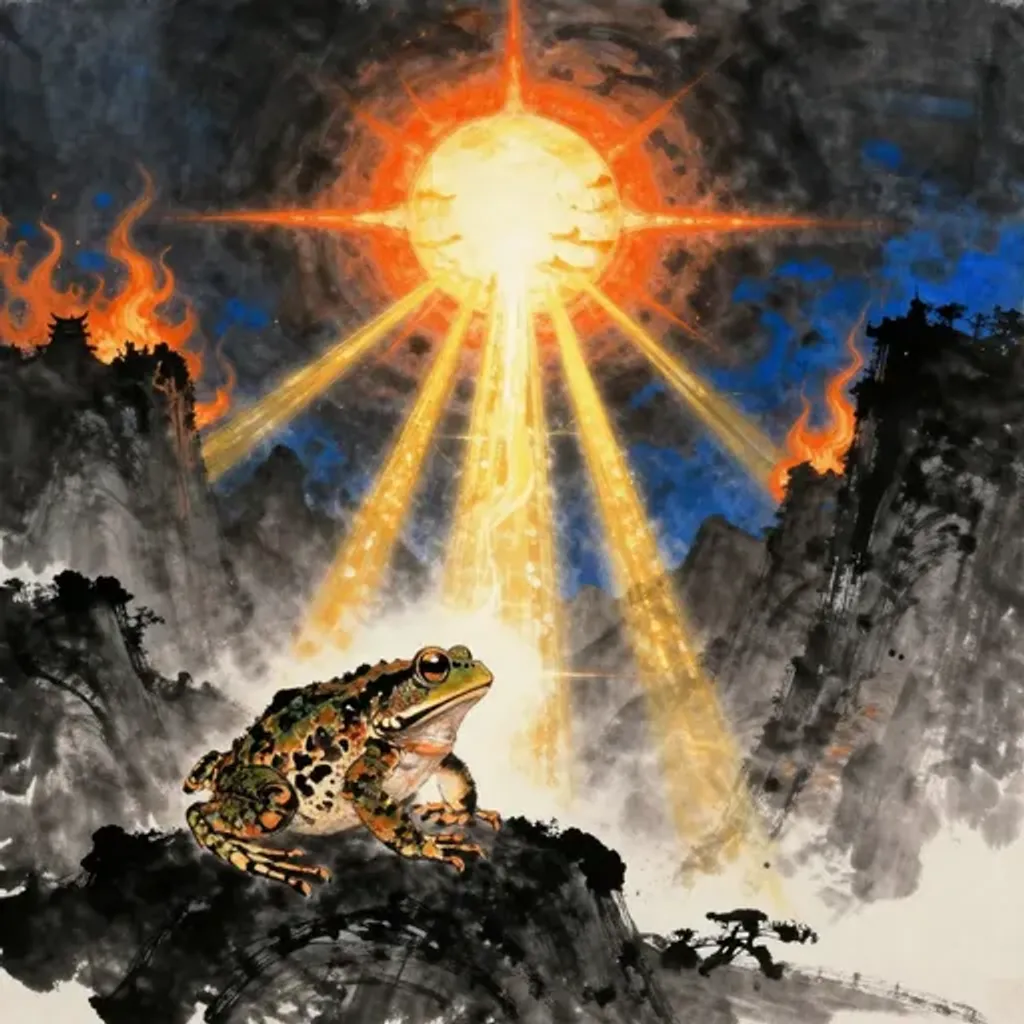
陰冥老極,陽建其德;履離載光,天下昭明;功業不長,蝦蟆代王。
Yin, dark and aged, reaches its extreme; yang establishes its virtue. Treading the bright, bearing radiance; all under heaven is illumined. Yet glory does not last; the toad usurps the throne.
— Jiao Yanshou, Yilin (Forest of Changes), 1st century BC
Commentary
Heaven and earth stand apart as darkness reaches its extreme and yang reasserts its virtue. Treading upon fire brings radiance, and the world grows bright once more. Yet the achievement does not last: a toad usurps the throne. The 'toad becoming king' may allude to Han-era apocryphal lore where the toad in the moon represents yin's reassertion — a grotesque pretender displacing legitimate authority. From Standstill to Innocence, Pi's stagnation transforms into heaven with thunder moving beneath — the shock of genuineness, action aligned with cosmic truth. The verse traces a full cycle: yin exhausted, yang restored, brilliance achieved, then corrupted by a grotesque usurper. Innocence demands purity of motive; the toad on the throne is its antithesis.
否 → 大畜
Hexagram 12 → Hexagram 26: Great Taming
Changing lines: 1, 2, 3, 4, 5
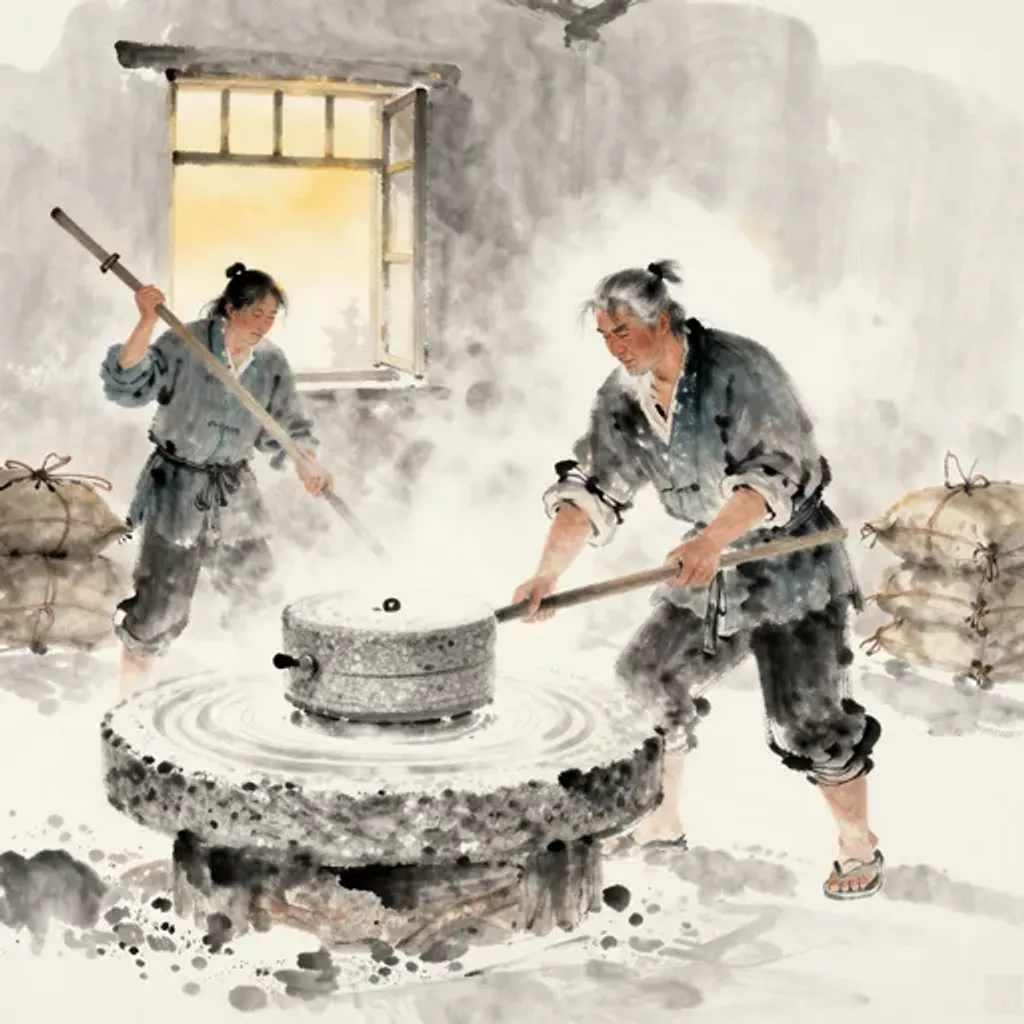
行役未已,新事復起;姬姜勞苦,不得休息。
The millstone has turned ten thousand times; flour covers the floor but no one has slept. One load is not yet set down before another is shouldered — a few white hairs appear by the pillow.
— Jiao Yanshou, Yilin (Forest of Changes), 1st century BC
Commentary
Heaven and earth refuse to mingle as labor continues without end. The original verse reads: service and corvee are never done, and new tasks arise before old ones finish. The women of the Ji and Jiang clans toil ceaselessly, never finding rest. Ji and Jiang are the two great surname groups of the Zhou aristocracy — when even noble wives labor without pause, the entire social order is strained. From Standstill to Great Taming, Pi's stagnation transforms into heaven stored within the mountain — immense potential accumulated but held in place. Yet the verse shows the cost of that accumulation: the mountain that tames heaven does so by bearing crushing weight. Great Taming's 'storing virtue through learning the words and deeds of the past' here becomes a burden that grinds its bearers down.
否 → 頤
Hexagram 12 → Hexagram 27: Nourishment
Changing lines: 1, 4, 5
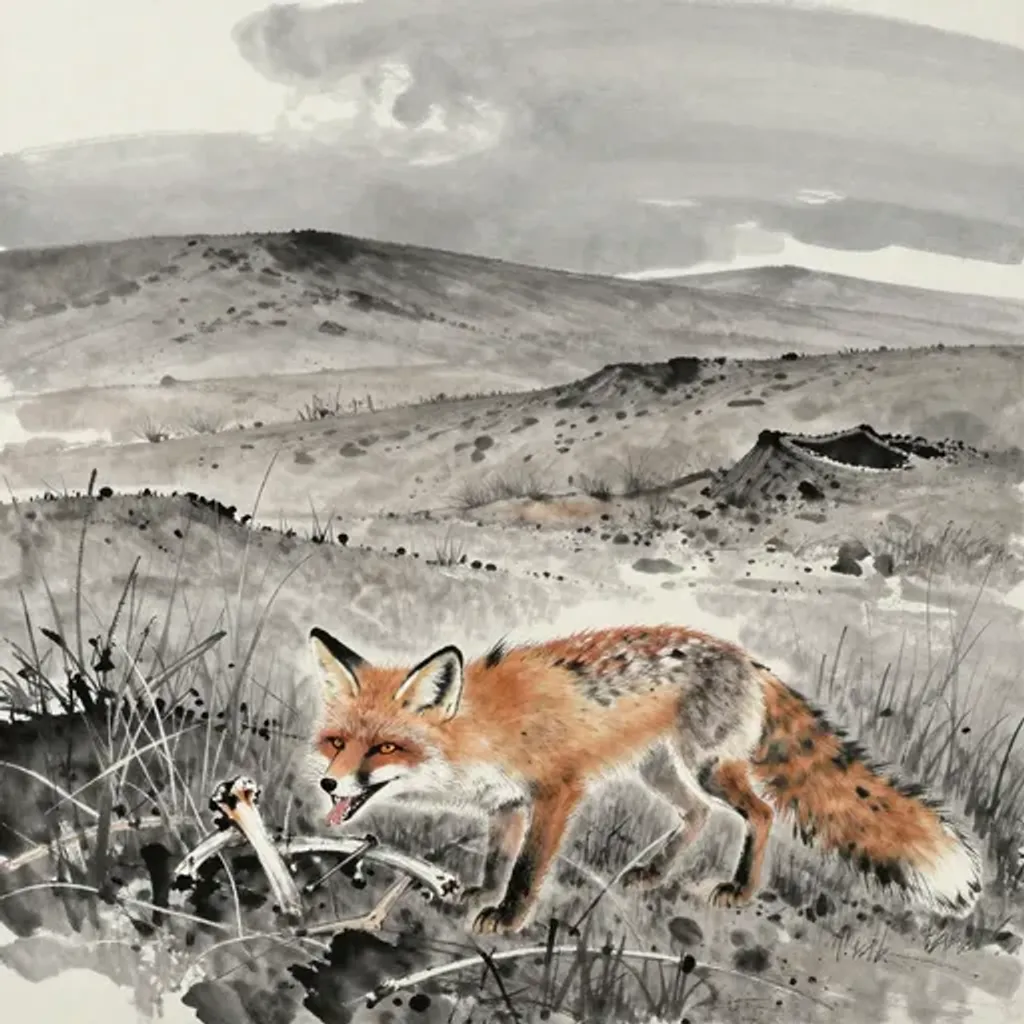
狐鳴苑北,飢無所食;困於空丘,莫與同力。
A fox cries north of the park, starving with nothing to eat. Stranded on an empty mound, none will lend their strength.
— Jiao Yanshou, Yilin (Forest of Changes), 1st century BC
Commentary
Heaven and earth refuse to communicate as a fox cries north of the royal park, hungry with nothing to eat. It wanders the empty hills, finding no one to share its strength. From Standstill to Nourishment, Pi's blocked world meets the mountain above thunder — Yi's image of the open mouth, nourishment sought and given. Yet the verse inverts Yi's promise entirely: the fox finds no food, the hills are barren, and no companion appears. Yi demands careful discrimination about what nourishes and what corrupts, but here the question is moot — there is simply nothing. The fox's cry in the northern waste captures starvation at its starkest: not choosing wrongly but having no choice at all, isolation so complete that even hunger finds no answer.
否 → 大過
Hexagram 12 → Hexagram 28: Great Exceeding
Changing lines: 2, 3, 6
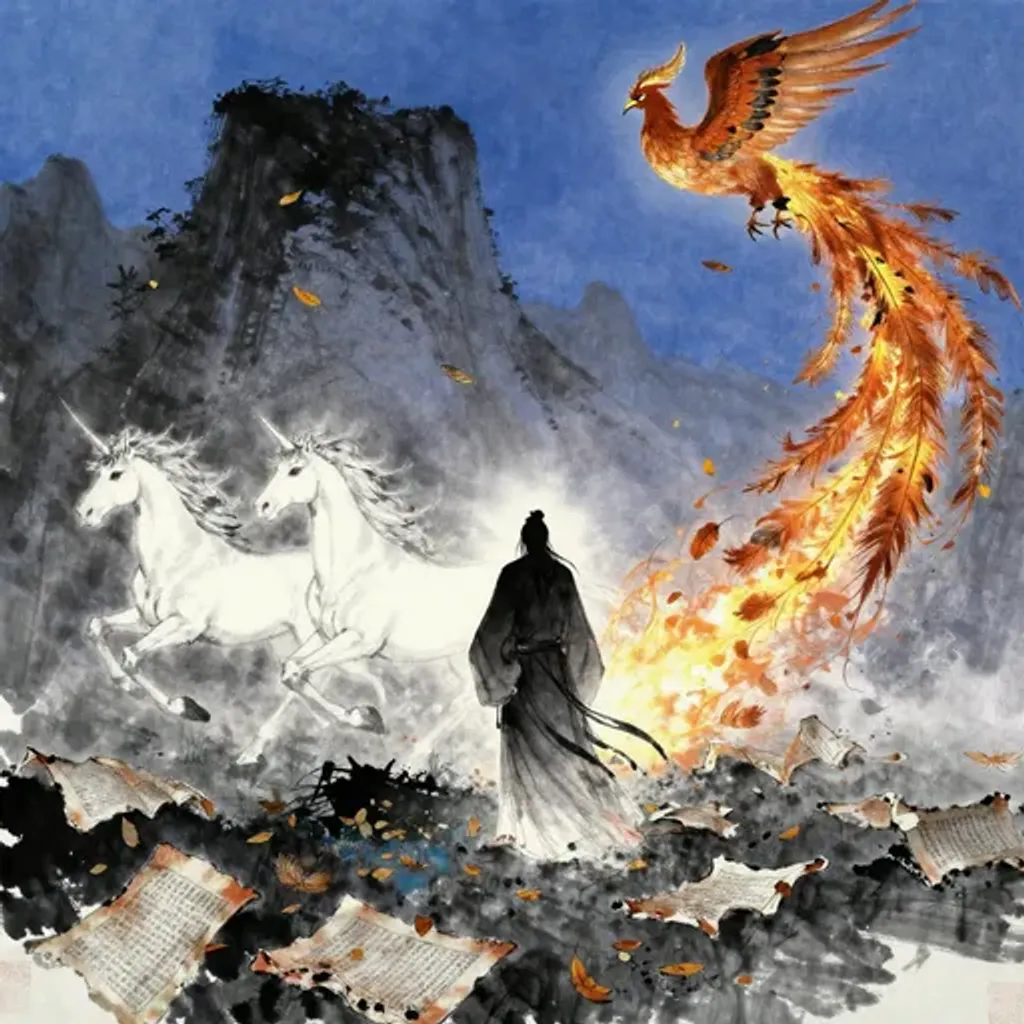
雄聖伏名,人匿麟遠;走鳳飛北,擾亂未息。
The heroic sage hides his name; the qilin flees from men. The fleeing phoenix flies north; turmoil has not yet ceased.
— Jiao Yanshou, Yilin (Forest of Changes), 1st century BC
Commentary
Heaven and earth stand apart as the heroic sage conceals his name and the people hide the qilin away. The phoenix flees north in disarray, and the turmoil has not ceased. When sages withdraw their presence and auspicious beasts are hidden, the cosmic order itself is in retreat. The qilin captured and the phoenix in flight echo the tradition of the western hunt — when such creatures appear out of season, they signal the exhaustion of the Way. From Standstill to Great Exceeding, Pi's stagnation transforms into the lake submerging the trees — an extraordinary crisis where the ridgepole sags under unbearable weight. The verse captures this moment of structural failure: when both sage and phoenix have fled, the beam cannot hold.
否 → 坎
Hexagram 12 → Hexagram 29: The Abysmal Water
Changing lines: 2, 4, 6
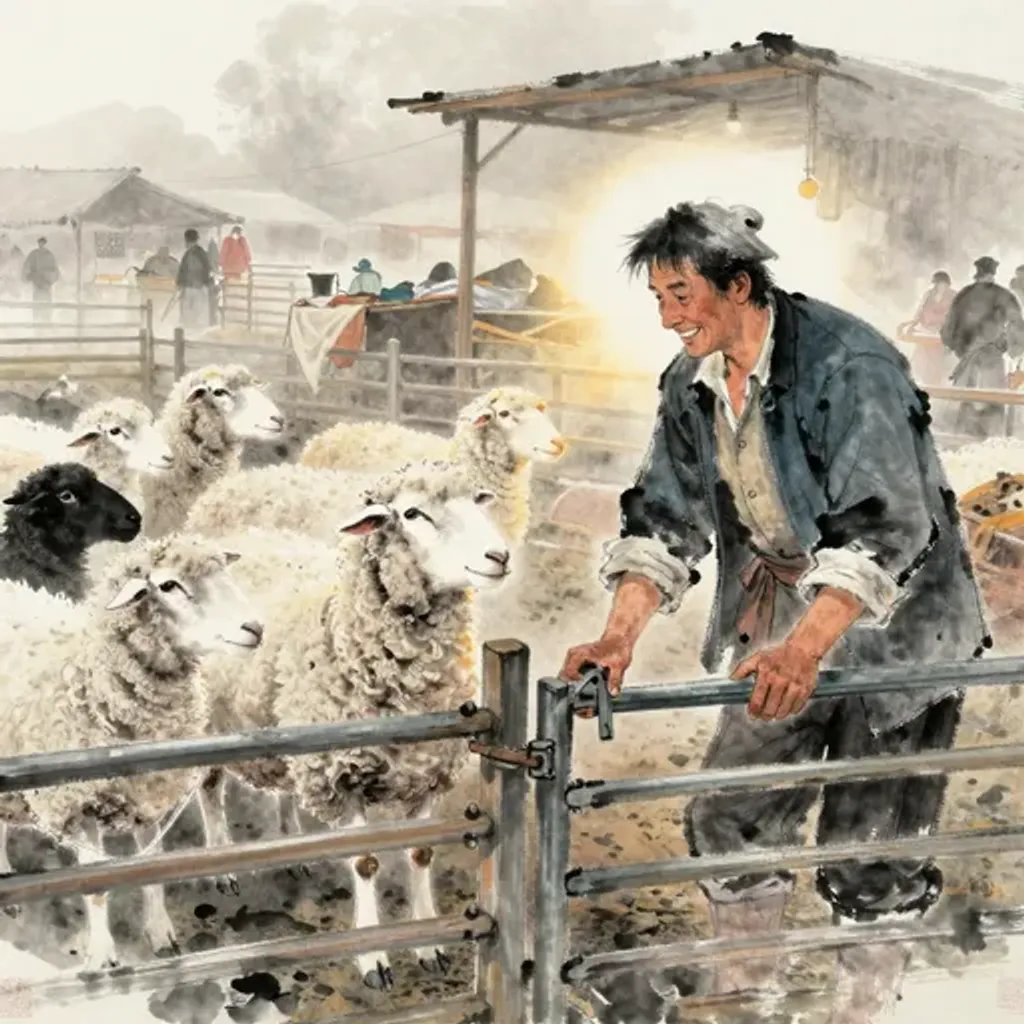
病貧望幸,使伯行販;開牢擇羊,多得大牂。
Sick and poor, hoping for luck; one sends the elder to trade. Opening the pen to choose a sheep, he gains many fine ewes.
— Jiao Yanshou, Yilin (Forest of Changes), 1st century BC
Commentary
Heaven and earth stand sealed as poverty and illness drive one to hope for fortune. The elder brother is sent out to trade, and when the pen is opened to select sheep, many fine ewes are found. From Standstill to The Abysmal, Pi's stagnation meets doubled water — danger upon danger. Yet the verse tells a surprisingly practical story of recovery: desperation leads to commerce, and commerce yields abundance. The pen full of ewes transforms scarcity into wealth. Kan's wisdom is that one must maintain sincerity through danger, acting with heart and purpose even when surrounded by peril. Here, the act of sending the elder brother to trade is precisely that — purposeful action amid hardship, and the reward is tangible and plentiful.
否 → 離
Hexagram 12 → Hexagram 30: The Clinging Fire
Changing lines: 1, 3, 5
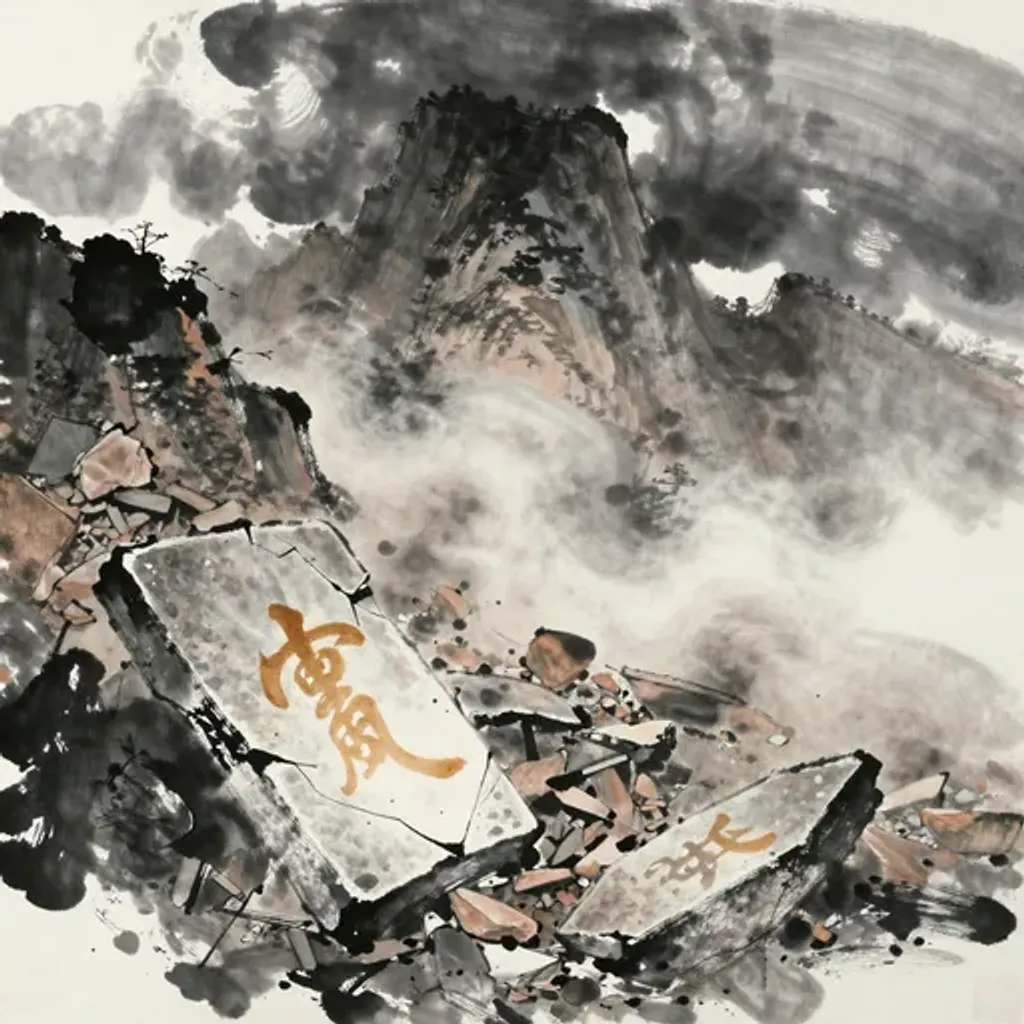
翕翕𨋮𨋮,稍稍崩顛;滅其令名,長沒不存。
Rattling and crumbling, gradually collapsing from the peak. The fine name is extinguished; it sinks away, never to endure.
— Jiao Yanshou, Yilin (Forest of Changes), 1st century BC
Commentary
Heaven and earth refuse to communicate as things crowd and jostle together, gradually crumbling and collapsing. A fine reputation is extinguished, submerged and gone without trace. From Standstill to The Clinging, Pi's stagnation meets doubled fire — brilliance that should illuminate. Yet the verse shows fire's destructive aspect: what once shone is consumed. The Clinging's image is continuity of illumination, 'the great person perpetuates the light to illuminate the four directions.' But here the light fails: crowding leads to collapse, and the good name sinks forever. Li demands something to cling to — fuel for the flame — and when the structure crumbles, the fire has nothing to sustain it. Brilliance without foundation simply burns out.
否 → 咸
Hexagram 12 → Hexagram 31: Influence
Changing lines: 3, 6
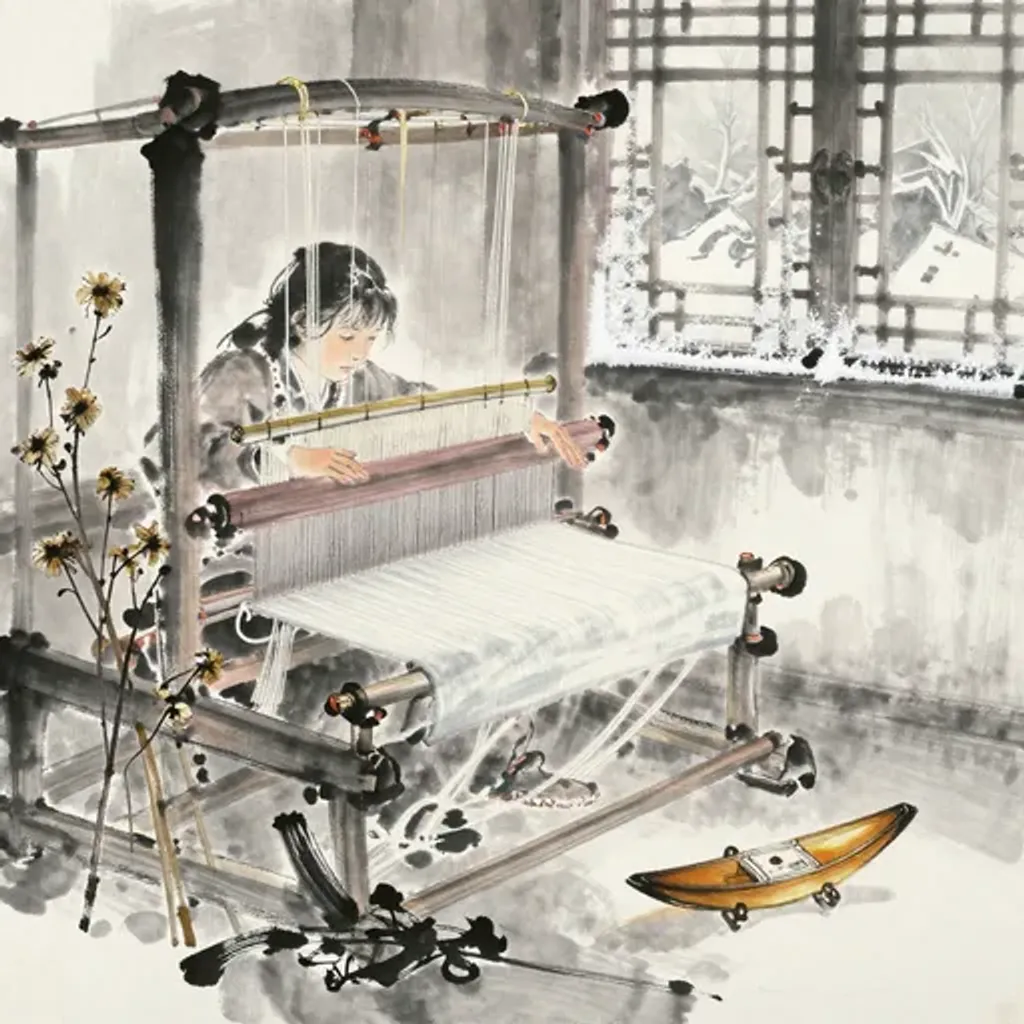
花薄實槁,衣弊如絡。女功不成,絲布如玉。
Flowers are thin, fruit is withered; clothes are worn to netting. The woman's work is not finished; silk cloth is precious as jade.
— Jiao Yanshou, Yilin (Forest of Changes), 1st century BC
Commentary
Heaven and earth stand apart as blossoms thin and fruit withers, garments wear to rags like open netting. The woman's weaving goes unfinished, yet the silk and cloth remain precious as jade. From Standstill to Influence, Pi's stagnation meets the lake resting upon the mountain — mutual responsiveness, the open receptivity of Xian. The verse presents a paradox of scarcity and value: the flowers fade, the clothes decay, the weaving fails, yet what little fabric exists is treasured like jade. Influence operates through emptiness — the hollow heart that receives. Here, the impoverishment itself creates the condition for valuing what remains. When everything is worn thin, even a scrap of silk commands the reverence due to jade.
否 → 恆
Hexagram 12 → Hexagram 32: Duration
Changing lines: 2, 3, 5, 6
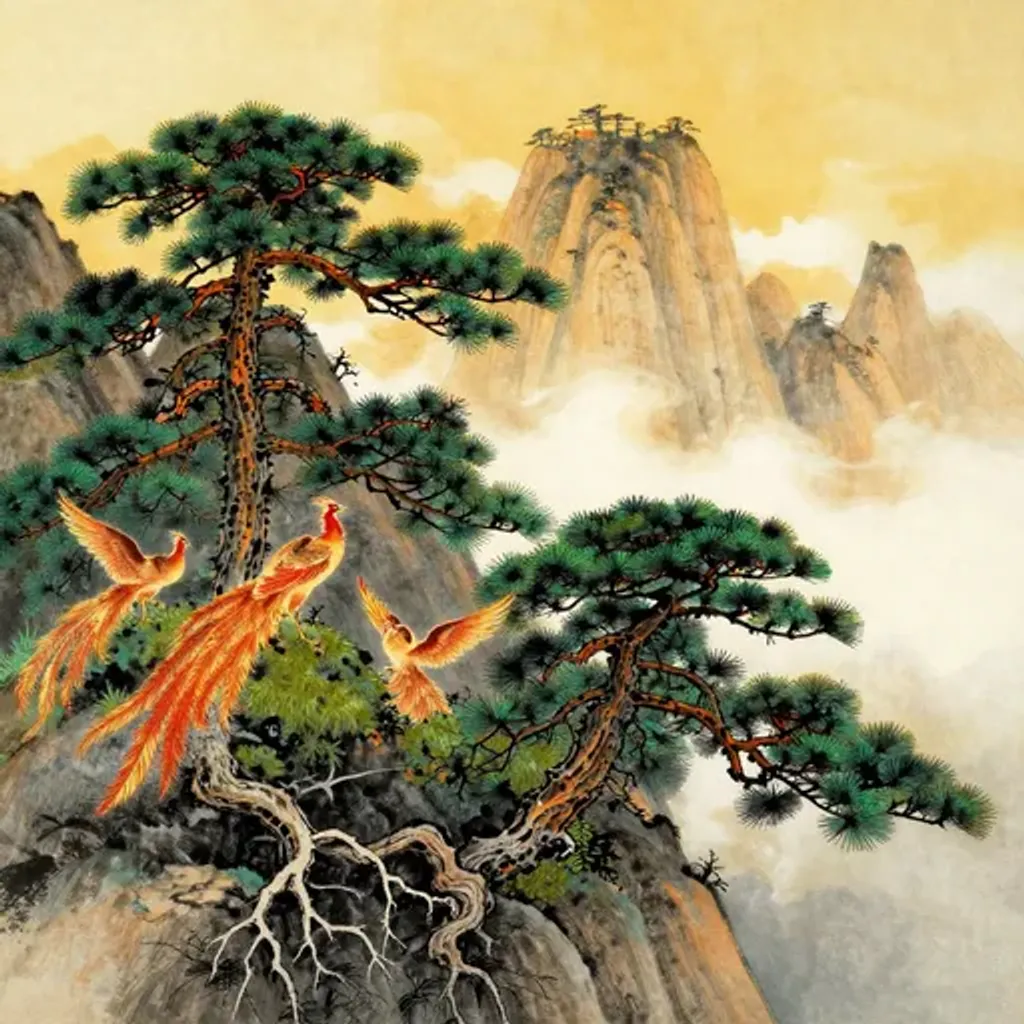
溫山松柏,常茂不落;鸞鳳所止,得以歡樂。
On the warm mountain, pine and cypress, ever lush and never falling. Where phoenix and luan alight; there they find joy and delight.
— Jiao Yanshou, Yilin (Forest of Changes), 1st century BC
Commentary
Heaven and earth refuse to communicate, yet on a warm mountain pines and cypresses stand perpetually green, never shedding their needles. The luan bird and phoenix alight there, finding lasting joy. From Standstill to Duration, Pi's sealed world meets thunder above wind — the enduring rhythm that never deviates. Heng's image is perseverance in character, 'the gentleman stands firm and does not change direction.' The evergreen pines on the warm mountain embody this perfectly: unchanging through all seasons, they create a sanctuary worthy of the most auspicious birds. When the luan and phoenix choose to perch, they confirm the mountain's virtue. Stagnation is overcome not by dramatic reversal but by steady, verdant constancy that outlasts the ice.
否 → 遯
Hexagram 12 → Hexagram 33: Retreat
Changing lines: 3
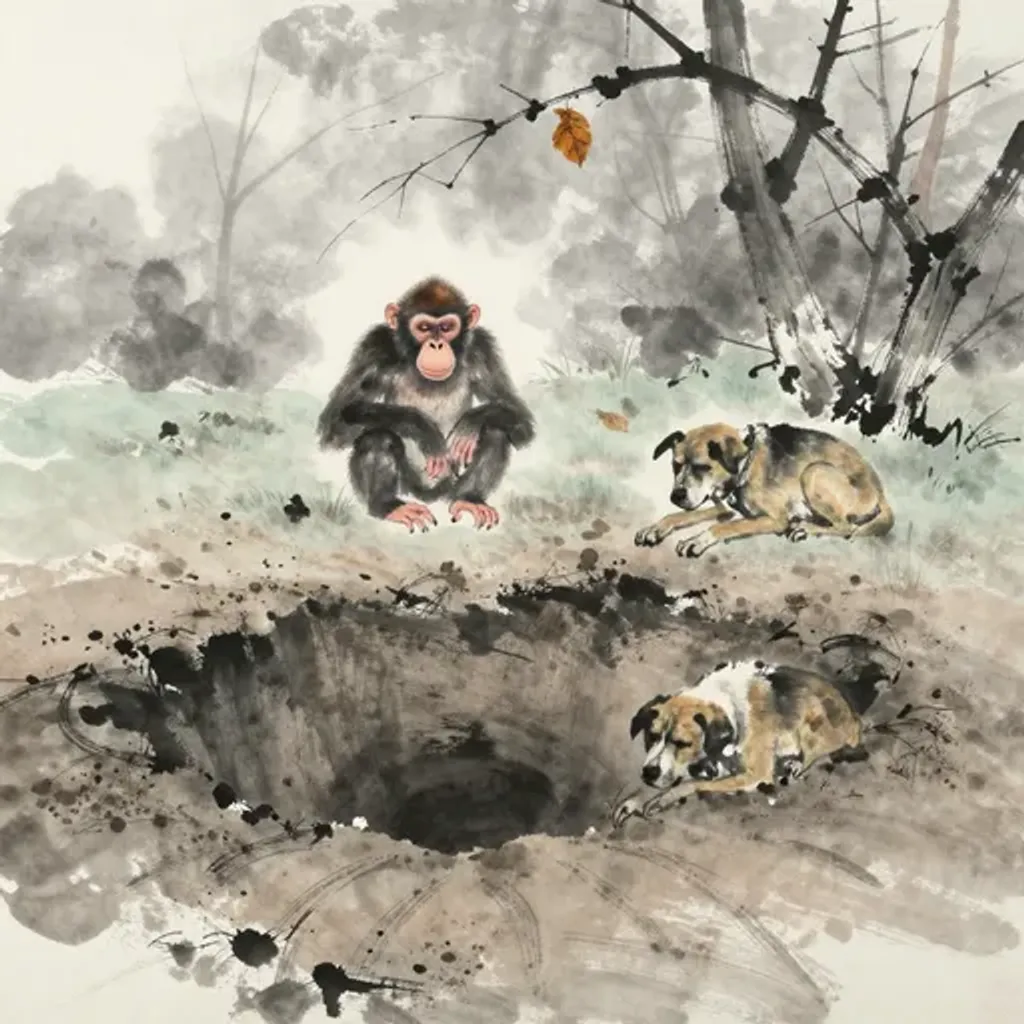
失恃母友,嘉偶出走;玃如失兔,傫如虐狗。
Losing the support of mother and friend; the good companion departs. Like an ape that lost its hare; downcast as a beaten dog.
— Jiao Yanshou, Yilin (Forest of Changes), 1st century BC
Commentary
Heaven and earth stand apart as one loses the support of mother and friend, and the beloved companion departs. Like a monkey that has lost its rabbit, one crouches beaten like an abused dog. From Standstill to Retreat, Pi's stagnation intensifies into the deliberate withdrawal of heaven rising above the mountain. Dun counsels strategic distancing from inferior forces, but the verse captures retreat's human cost: it is not elegant but wretched. The monkey losing its prey, the dog cowering under blows — these are not dignified withdrawals but desperate abandonments. Retreat as survival tactic can strip away every comfort and companion, leaving only the raw fact of escape. The gentleman retreats 'without hatred but with severity' — yet severity exacts its toll.
否 → 大壯
Hexagram 12 → Hexagram 34: Great Power
Changing lines: 1, 2, 3, 5, 6
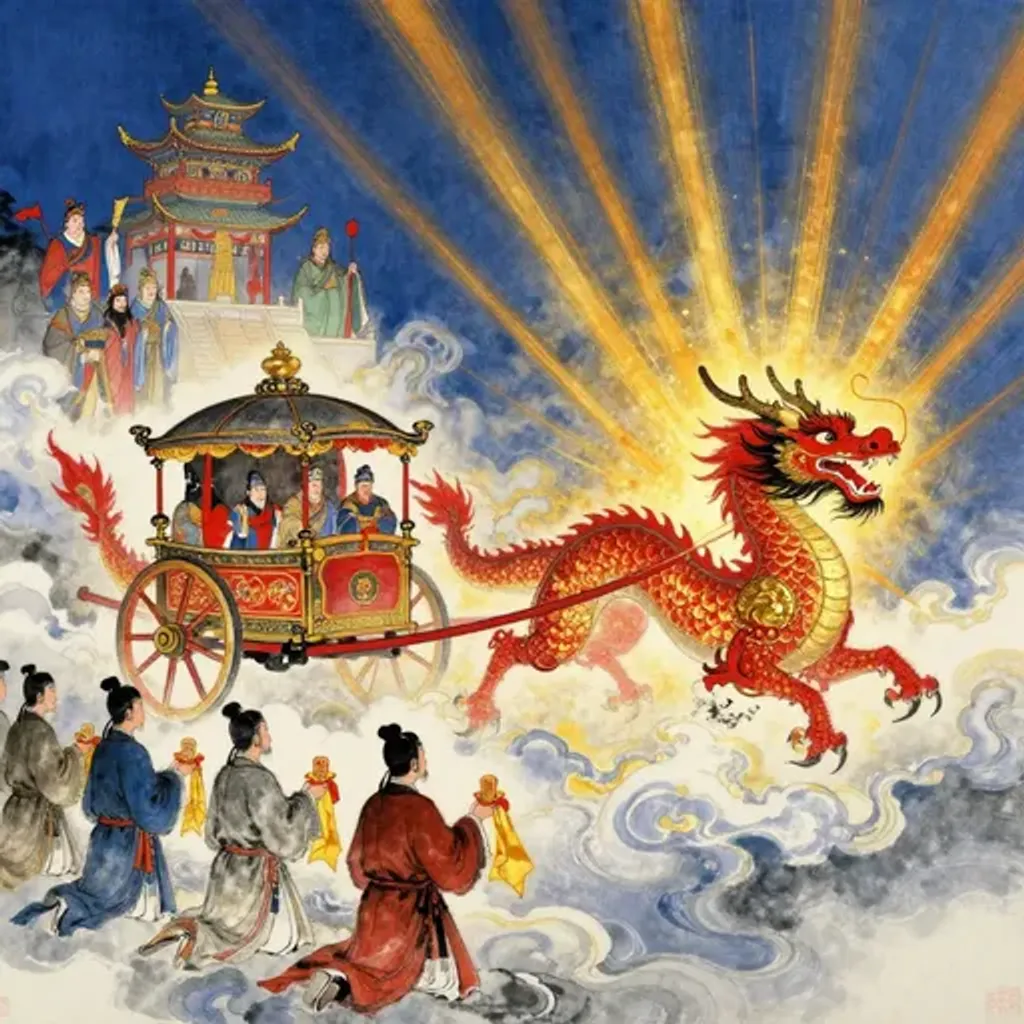
太乙駕騮,從天上求;徵我叔季,封為魯侯。
The Great Unity rides a red steed, seeking from heaven above. He summons our youngest sons and enfeoffs them as Marquis of Lu.
— Jiao Yanshou, Yilin (Forest of Changes), 1st century BC
Commentary
Heaven and earth stand sealed, yet Taiyi rides a dark bay horse, descending from heaven above. He summons the youngest uncle and enfeoffs him as Lord of Lu. Taiyi, the Supreme One, was the highest celestial deity in Han cosmology; his descent by horse evokes the dragon-horse omens of sage-kings receiving heaven's mandate. The enfeoffment of Lu recalls the Duke of Zhou, whose son Boqin received the fief because the Duke himself remained at court to serve as regent. From Standstill to Great Power, Pi's blocked heaven breaks open with thunder roaring above — irresistible force unleashed. The celestial ride and the conferral of lordship embody Da Zhuang's surging yang: heaven's authority crashes through stagnation to establish legitimate power.
否 → 晉
Hexagram 12 → Hexagram 35: Progress
Changing lines: 5
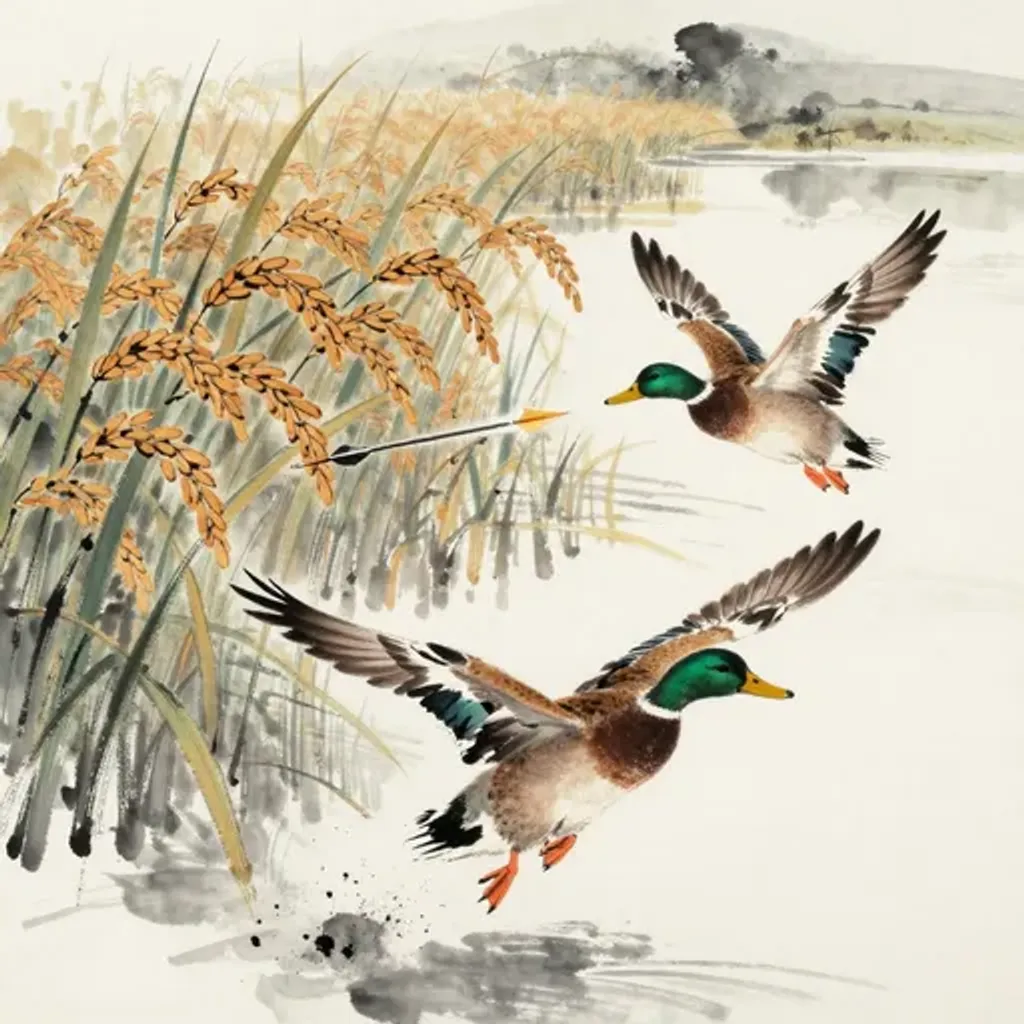
雙鳧俱飛,欲歸稻池;徑涉雚澤,為矢所射,傷我胸臆。
Two ducks fly together, longing for the rice pond. Passing through the reed marsh, they are struck by arrows. My breast is wounded.
— Jiao Yanshou, Yilin (Forest of Changes), 1st century BC
Commentary
Heaven and earth refuse to communicate as a pair of wild ducks fly together, hoping to return to the rice paddies. But they pass through a reed marsh and are struck by arrows, the wound piercing the chest. From Standstill to Progress, Pi's sealed world should give way to fire rising above the earth — brilliance ascending, the marquis receiving horses in a single day. Yet the verse denies the progress: the ducks that fly toward their goal are shot down in the marshes. Jin's image is the sun emerging from the earth at dawn, but here the flight toward light is intercepted. The reed marsh becomes a killing ground, and aspiration is punished with arrows. Progress attempted through dangerous terrain without adequate preparation invites destruction.
否 → 明夷
Hexagram 12 → Hexagram 36: Darkening of the Light
Changing lines: 1, 3, 4, 5, 6
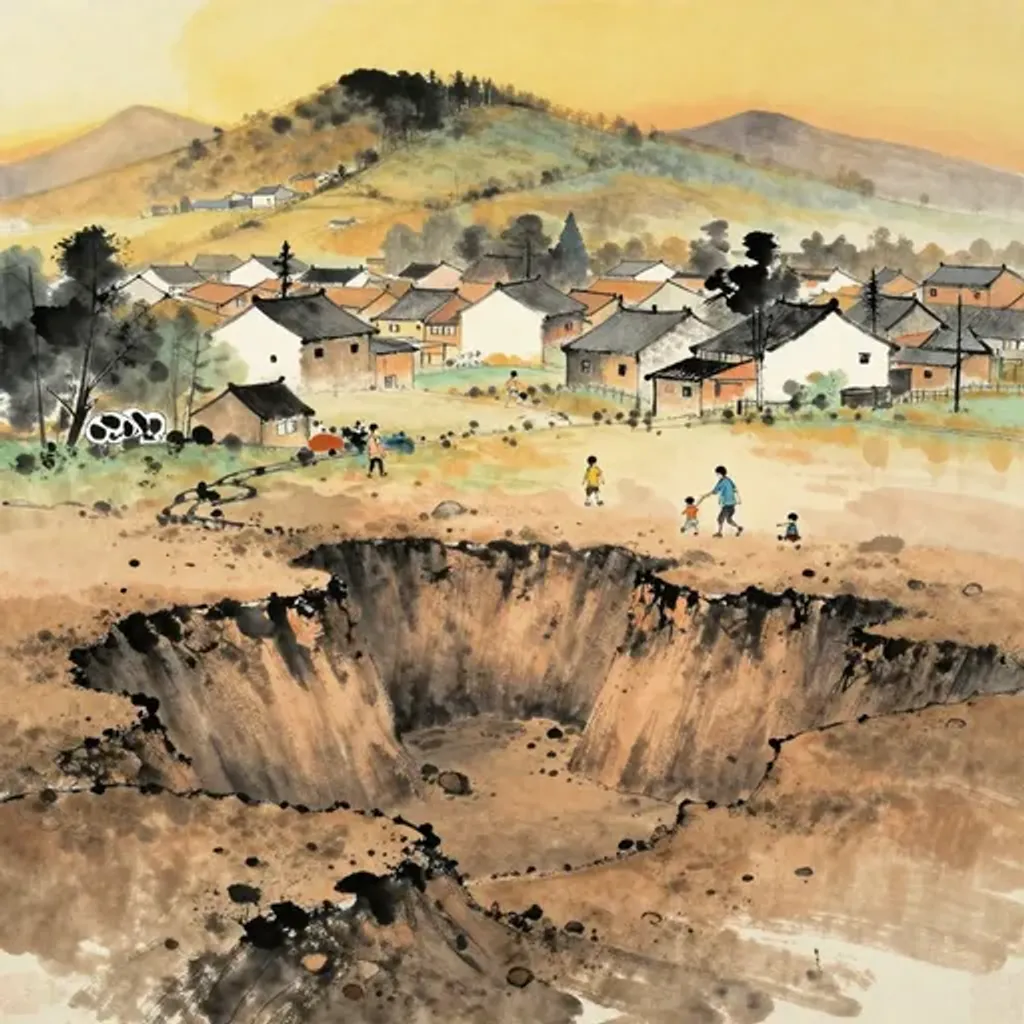
深坑復平,天下安寧;意娛心樂,賴福長生。
The deep pit is filled and leveled; all under heaven is at peace. The mind is delighted, the heart is glad; relying on blessing, one lives long.
— Jiao Yanshou, Yilin (Forest of Changes), 1st century BC
Commentary
Heaven and earth stand apart, yet deep pits are filled level and the world finds peace. The heart takes pleasure, the spirit finds joy, and through good fortune one enjoys long life. From Standstill to Darkening of the Light, Pi's sealed world meets fire sinking into the earth — brilliance hidden, the sage who conceals his light and governs through apparent obscurity. The verse captures Ming Yi's deepest paradox: the pit filled level is not a triumph visible to all but a quiet restoration that happens below the surface. The darkened light is not extinguished but buried, and in that burial the world finds peace. Long life and contentment come not from radiance displayed but from light wisely stored beneath the ground.
否 → 家人
Hexagram 12 → Hexagram 37: The Family
Changing lines: 1, 3, 4
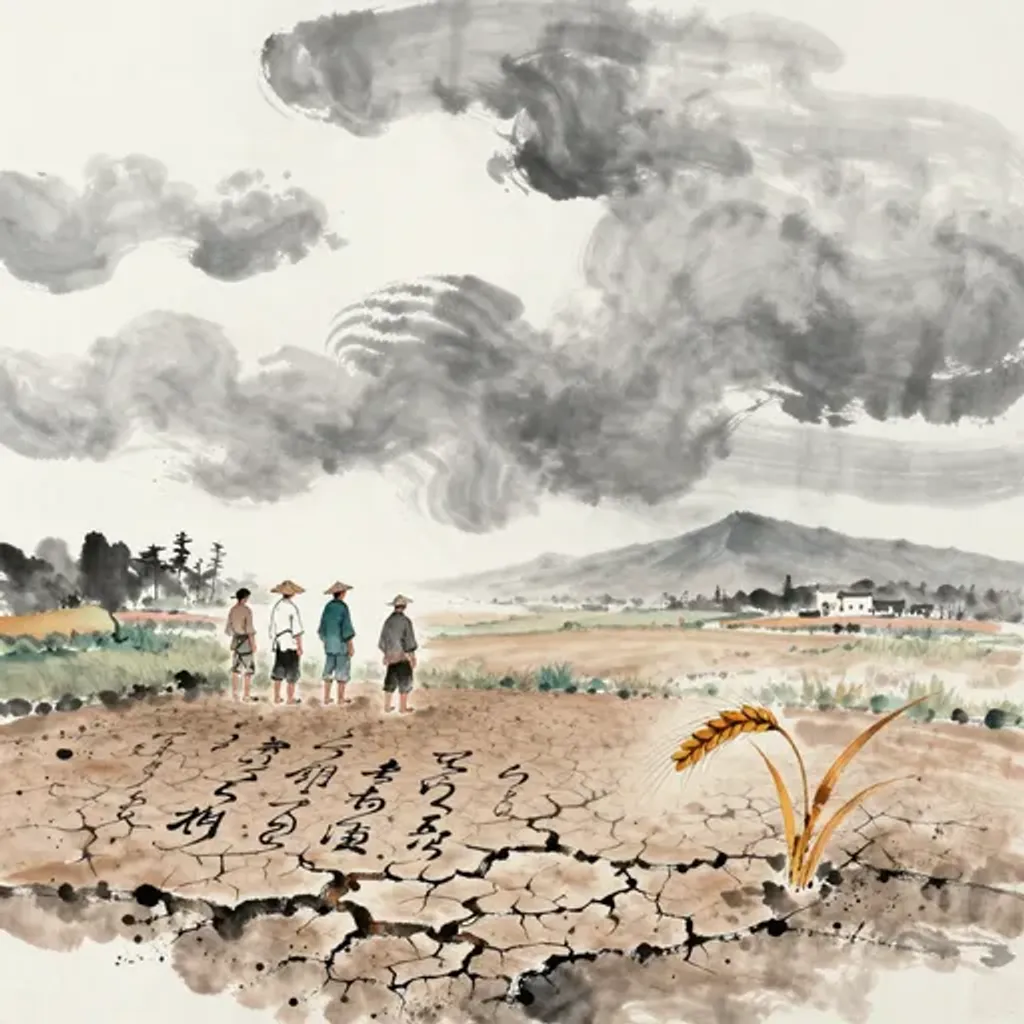
俱為天民,雲過吾西;風伯雨師,與我無恩。
All are common folk beneath heaven; clouds pass to our west. The Wind Earl and the Rain Master show us no kindness.
— Jiao Yanshou, Yilin (Forest of Changes), 1st century BC
Commentary
Heaven and earth refuse to communicate: all are equally the people of heaven, yet the clouds pass west of us. The Wind Earl and Rain Master offer us no grace. From Standstill to The Family, Pi's stagnation should transform into wind emerging from fire — warmth radiating outward as domestic order. Yet the verse laments exclusion: though everyone is heaven's subject, the rain and wind deities ignore this particular household. The celestial weather-gods, who should distribute blessings impartially, simply pass by. The Family hexagram demands that 'words have substance and actions have constancy,' but here the divine family of wind and rain has abandoned its own. Stagnation persists not from internal failure but from cosmic neglect — the rain simply falls elsewhere.
否 → 睽
Hexagram 12 → Hexagram 38: Opposition
Changing lines: 1, 2, 5
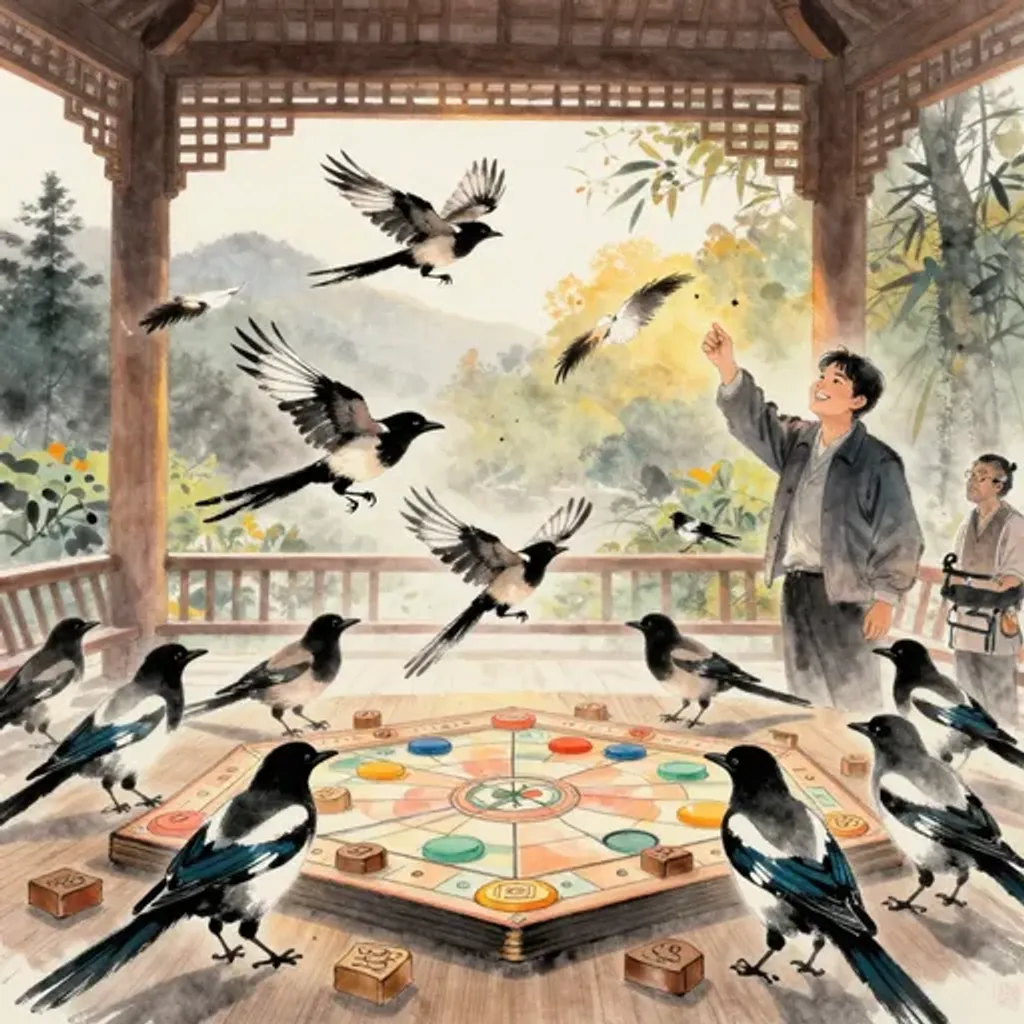
野鳥山鵲,來集六博;三鳥四散,主人勝客。
Wild birds and magpies come to gather at the gaming board. Three birds scatter in every direction; the host defeats the guest.
— Jiao Yanshou, Yilin (Forest of Changes), 1st century BC
Commentary
Heaven and earth refuse to mingle as wild birds and mountain magpies gather around a liubo game board. Three birds scatter in all directions, and the host defeats the guest. Liubo was a popular Han-dynasty board game of strategy and chance; the birds playing it suggest a contest of wits among unlikely participants. From Standstill to Opposition, Pi's stagnation meets fire above and lake below — energies moving apart. Kui's image is differentiation: things that diverge can still cooperate. The scattering of three birds while the host wins suggests that opposition resolves through strategic clarity: the home player reads the board better than the visitors. In Pi's blocked world, Opposition offers the insight that divergence is not defeat — the wise player turns separation to advantage.
否 → 蹇
Hexagram 12 → Hexagram 39: Obstruction
Changing lines: 3, 4, 6
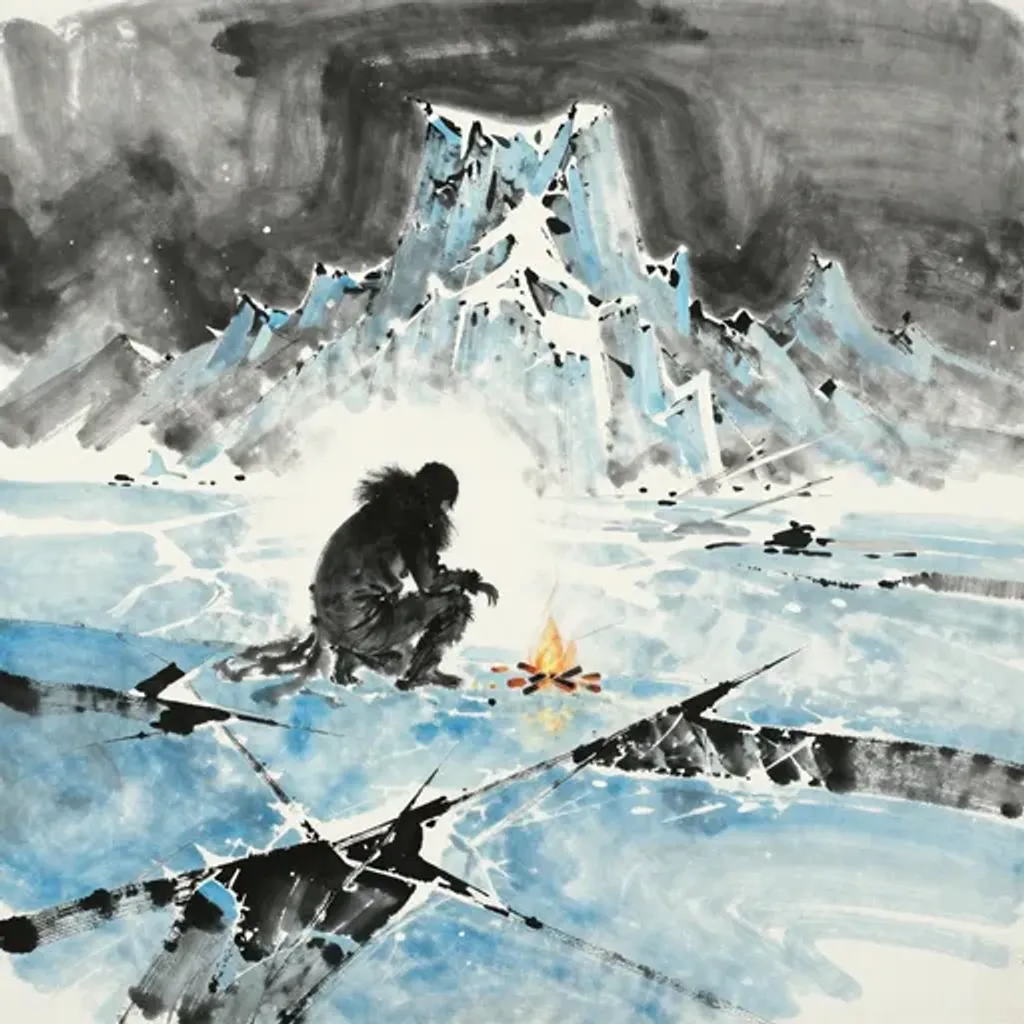
北陰司寒,堅冰不溫;凌人情怠,大雹為災。
The northern yin governs cold; hard ice that never warms. The ice keeper's spirit grows idle; great hail brings disaster.
— Jiao Yanshou, Yilin (Forest of Changes), 1st century BC
Commentary
Heaven and earth stand sealed as the northern darkness governs the cold. Hard ice refuses to warm, the ice-keepers grow negligent, and massive hailstones bring disaster. From Standstill to Obstruction, Pi's frozen communication deepens into Jian's mountain with water above — the path blocked by perilous terrain in every direction. The verse intensifies Pi's winter imagery: not just separation but active freezing, not just stillness but destructive ice. The 'ling ren' (ice-keepers) were officials charged with managing stored ice; when they become negligent, the cold they were supposed to control runs wild. Jian counsels turning inward — 'reflecting on oneself and cultivating virtue' — because when external conditions are this hostile, only inner preparation preserves.
否 → 解
Hexagram 12 → Hexagram 40: Deliverance
Changing lines: 2, 5, 6
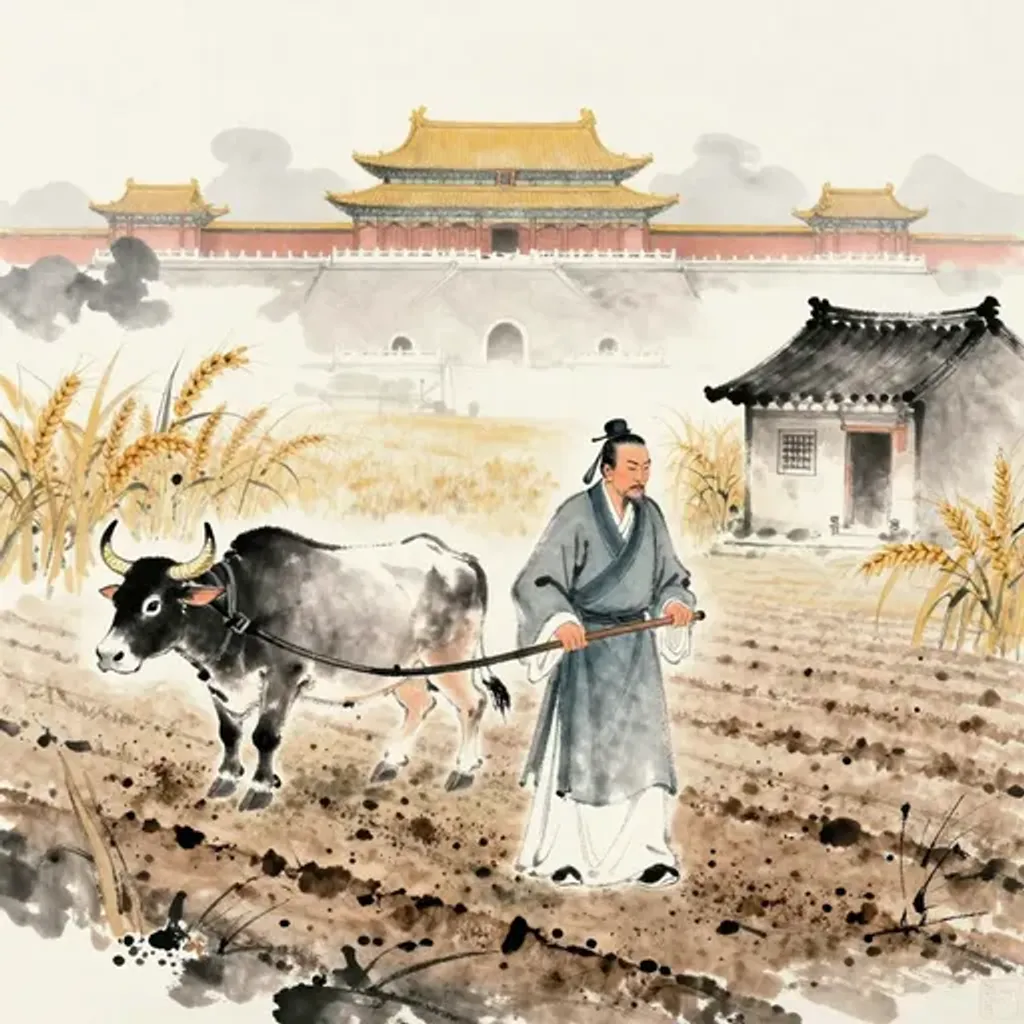
伊尹致仕,去桀耕野;執順以傳,反和無咎。
Yi Yin took office then retired, leaving Jie to plow the wilds. Following the obedient to transmit the way; returning to harmony, free of blame.
— Jiao Yanshou, Yilin (Forest of Changes), 1st century BC
Commentary
Heaven and earth stand apart as Yi Yin resigns from office, leaves the tyrant Jie, and goes to plow the wilderness. He follows what is right and passes on his teachings, returning to harmony without blame. Yi Yin, the sage minister who helped King Tang found the Shang dynasty, first served the tyrannical Jie of Xia before recognizing the mandate had shifted. His departure to the fields was not abandonment but realignment — positioning himself where virtue could take root. From Standstill to Deliverance, Pi's frozen blockage dissolves into thunder and rain, the liberating storm of Jie. Deliverance pardons faults and releases the bound. Yi Yin's withdrawal from tyranny to agriculture embodies this release: the knot unties itself when the righteous man steps away from corruption.
否 → 損
Hexagram 12 → Hexagram 41: Decrease
Changing lines: 1, 2, 4, 5
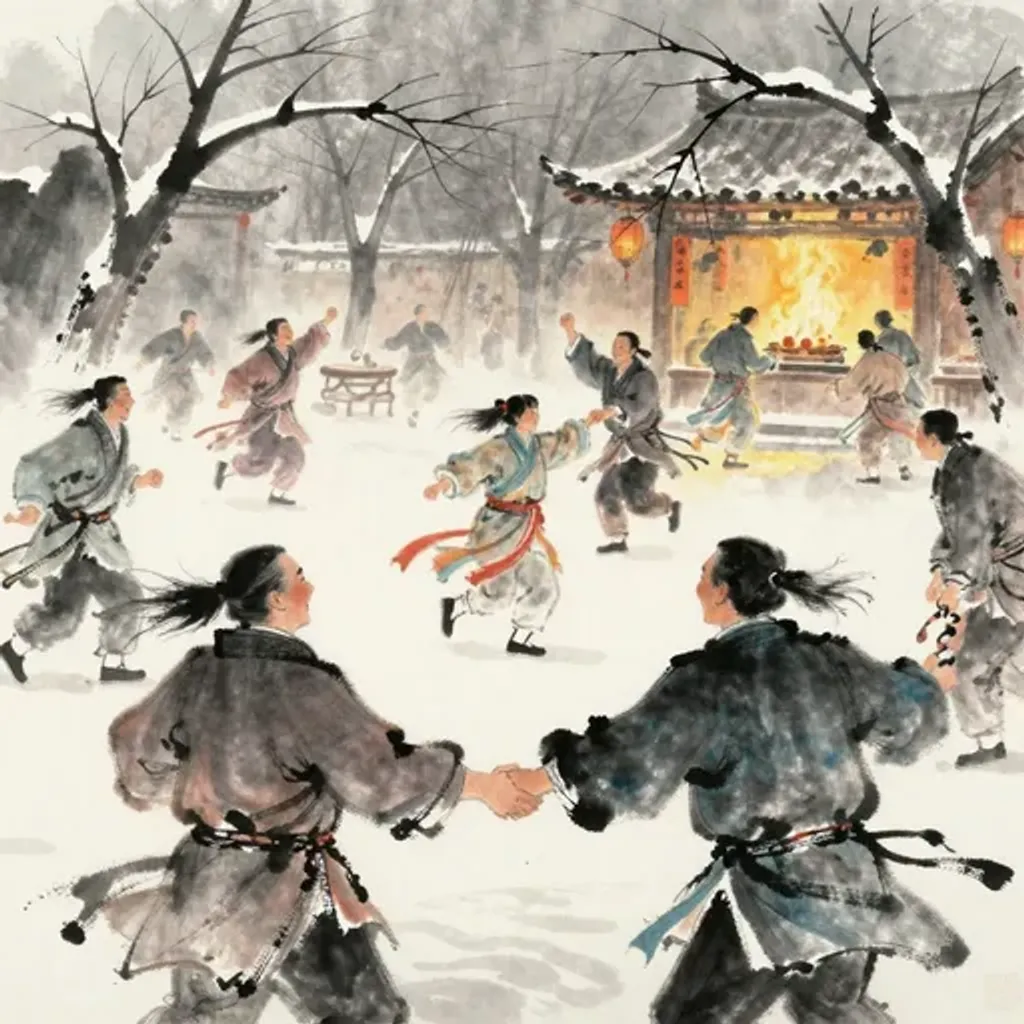
北風牽手,相從笑語;伯歌季舞,讌樂以喜。
In the north wind, hands clasped, following along with laughter and talk. The eldest sings, the youngest dances; they feast and make merry.
— Jiao Yanshou, Yilin (Forest of Changes), 1st century BC
Commentary
Heaven and earth refuse to communicate, yet the north wind brings people hand in hand, following one another in laughter and conversation. The elder sings, the younger dances, and all feast together in joy. The north wind evokes the Shijing ode 'Bei Feng,' where friends urge each other to flee hardship together: 'The north wind blows, the snow falls thick — if you love me, take my hand and let us go.' From Standstill to Decrease, Pi's sealed world meets the mountain above the lake — what is above is diminished to enrich what is below. Sun counsels restraining anger and curbing desire, but the verse shows Decrease's hidden gift: when excess is stripped away, what remains is the simple warmth of human fellowship — singing, dancing, feasting in the cold wind together.
否 → 益
Hexagram 12 → Hexagram 42: Increase
Changing lines: 1, 4
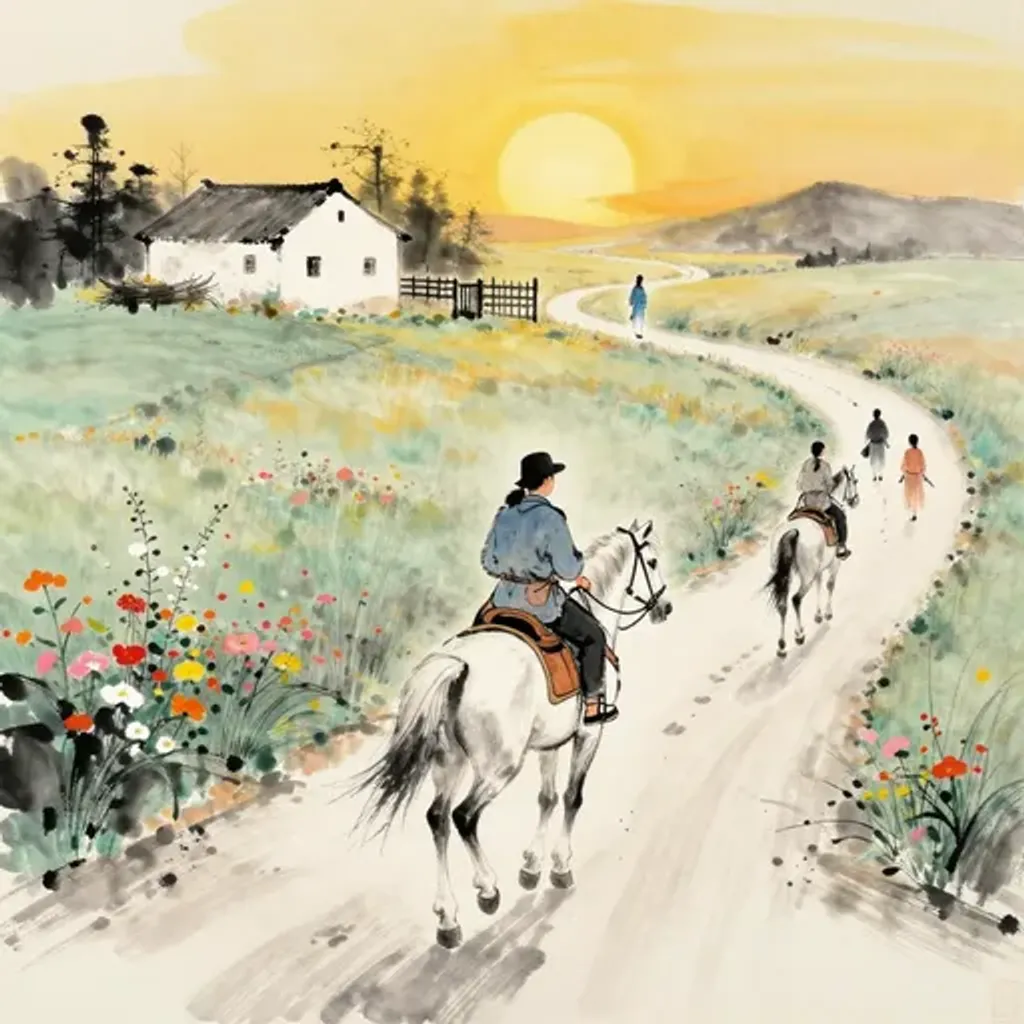
從巢去家,南過白馬;東西受福,與母相得。
Leaving the nest, departing home, passing south by Baima. East and west receive blessing; reunited with mother once more.
— Jiao Yanshou, Yilin (Forest of Changes), 1st century BC
Commentary
Heaven and earth refuse to communicate as one leaves the nest and departs from home, heading south past Baima. East and west one receives blessings, and mother and child find each other again. Baima (White Horse) was a Han-dynasty ford and county on the Yellow River, a major crossing point for travelers heading south. From Standstill to Increase, Pi's stagnation opens into wind and thunder working together — the generous dynamic where what is above enriches what is below. Yi's image is the ruler diminishing the self to benefit the people. The verse traces this arc of increase through separation: leaving home, crossing the river, and finding blessing in multiple directions until reunion with the mother. Increase here is the gift that travel and risk bestow — distance crossed becomes connection restored.
否 → 夬
Hexagram 12 → Hexagram 43: Breakthrough
Changing lines: 1, 2, 3, 6
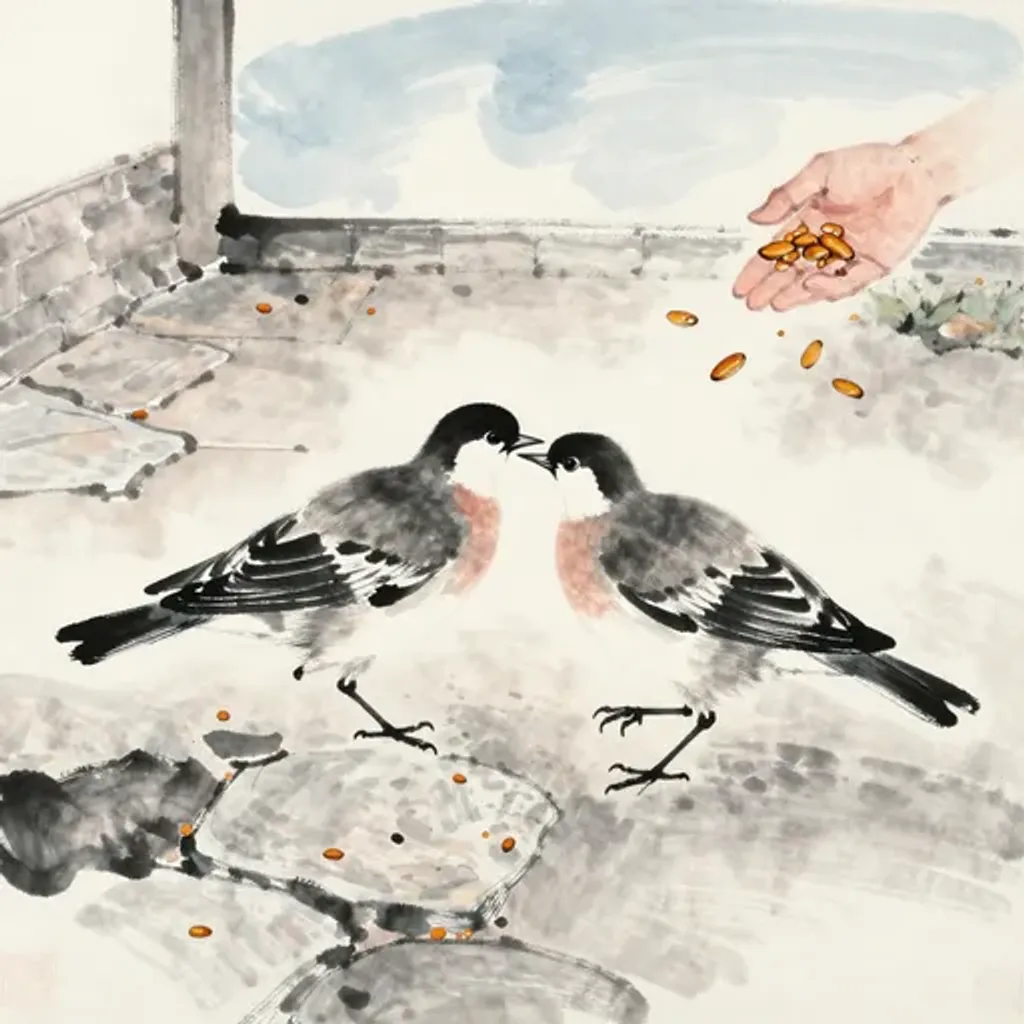
鳥飛跌跛,兩兩相和;不病四支,但去莫疑。
Birds fly, stumble, and limp; in pairs they help each other. Not sickened in four limbs; simply go and do not doubt.
— Jiao Yanshou, Yilin (Forest of Changes), 1st century BC
Commentary
Heaven and earth stand sealed as birds stumble and limp in flight, yet two by two they harmonize with each other. Their four limbs are uninjured — simply go forward without hesitation. From Standstill to Breakthrough, Pi's blockage meets the lake rising above heaven — the decisive moment when accumulated waters burst through. Guai demands resolute action: the one remaining yin line must be removed for the five yang lines to prevail. The stumbling birds that nonetheless fly in pairs capture Guai's lesson: imperfection is no excuse for inaction. The limbs are sound; the stumble is momentary. Breakthrough requires not flawless grace but the willingness to launch despite awkwardness, trusting that the pair will steady each other in flight.
否 → 姤
Hexagram 12 → Hexagram 44: Coming to Meet
Changing lines: 2, 3
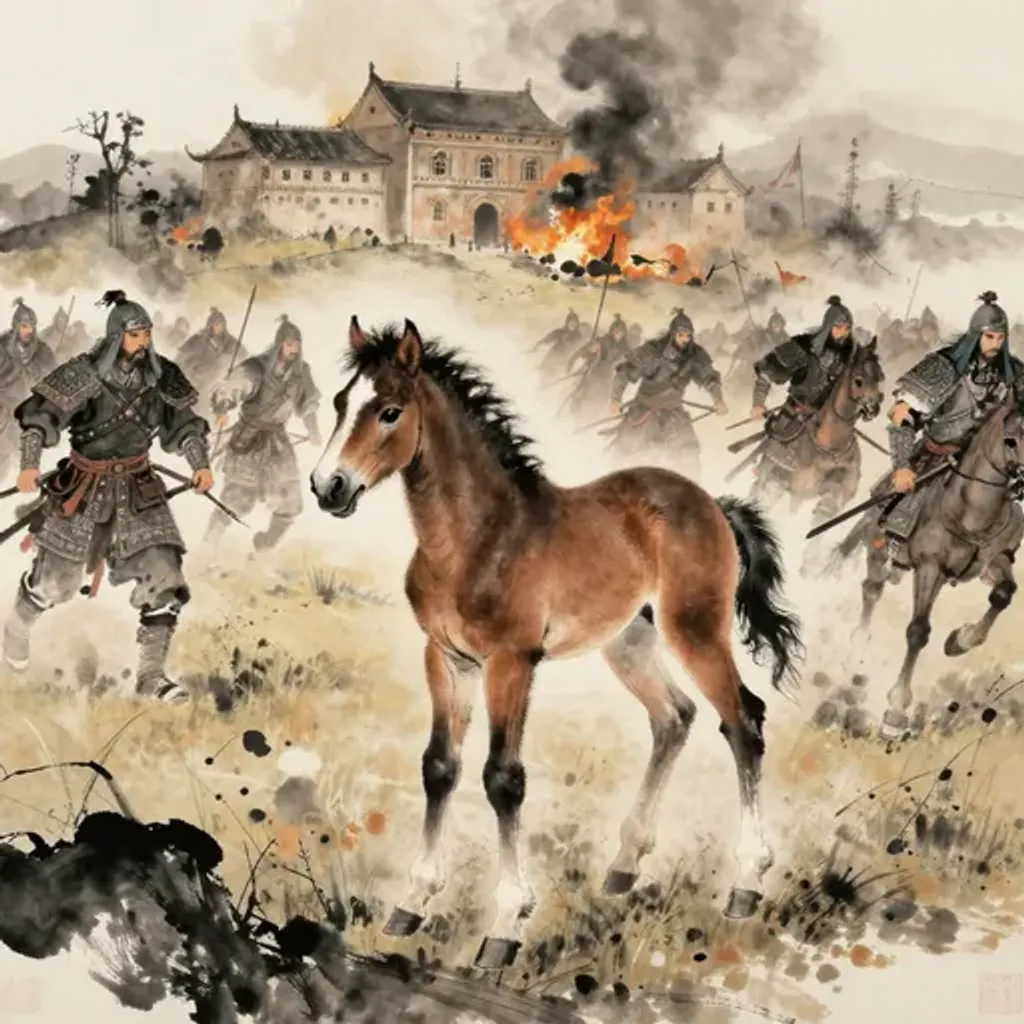
三年生駒,以戌為母;荊夷上侵,姬伯出走。
Three years to rear a colt; the dog is taken as its mother. The barbarians of Jing invade from above; the Ji lord flees.
— Jiao Yanshou, Yilin (Forest of Changes), 1st century BC
Commentary
Heaven and earth stand apart as a three-year colt is raised by a dog as its mother — an unnatural pairing. Then the Jing-Yi barbarians press northward, and the lord of the Ji clan flees. The colt nursed by a dog suggests a creature raised under false guidance, growing strong but wrongly formed. From Standstill to Coming to Meet, Pi's stagnation opens into heaven above wind — the unexpected encounter, the dark force rising from below. Gou warns of a strong yin element meeting five yang lines: an encounter with something dangerous disguised as innocuous. The barbarian invasion and the flight of the Ji lord give political flesh to this warning: what was nurtured incorrectly produces chaos, and the legitimate ruler is displaced by forces that approach from the margins.
否 → 萃
Hexagram 12 → Hexagram 45: Gathering Together
Changing lines: 6
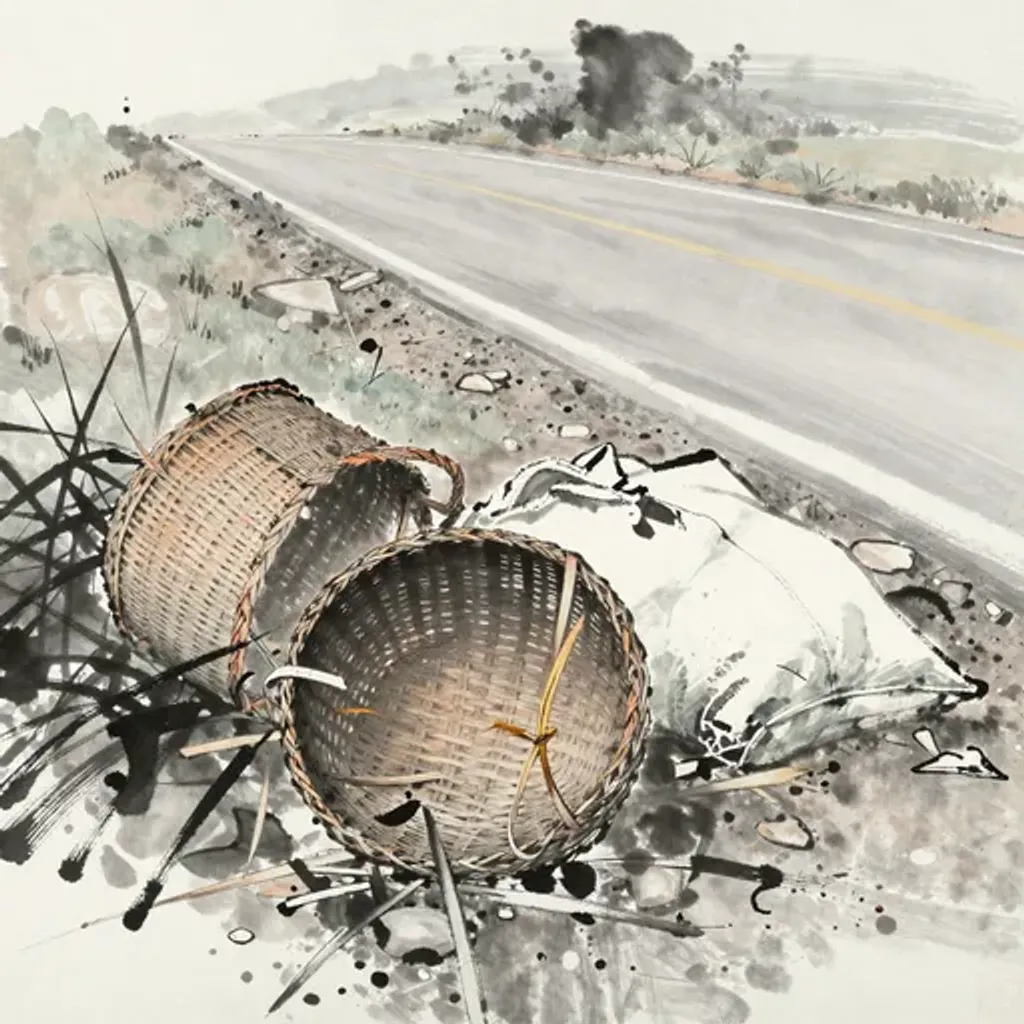
破筐敝筥,棄捐於道;壞落穿敗,不復為寶。
Broken baskets, tattered hampers, cast aside on the road. Worn through, fallen apart; no longer held as treasure.
— Jiao Yanshou, Yilin (Forest of Changes), 1st century BC
Commentary
Heaven and earth refuse to communicate as broken baskets and worn-out hampers are cast aside upon the road. Crumbling, pierced, and ruined, they are no longer considered treasures. From Standstill to Gathering, Pi's sealed world meets the lake resting upon the earth — Cui's image of people naturally congregating. Yet the verse presents the antithesis of gathering: not assembly but abandonment, not collection but discarding. What was once a container for valuable things is itself discarded when it can no longer hold. Gathering demands readiness — 'preparing arms against the unexpected' — and these broken vessels have failed that test. The verse warns that stagnation does not merely halt progress; it degrades the very instruments of preservation until they are fit only for the roadside.
否 → 升
Hexagram 12 → Hexagram 46: Pushing Upward
Changing lines: 2, 3, 4, 5, 6
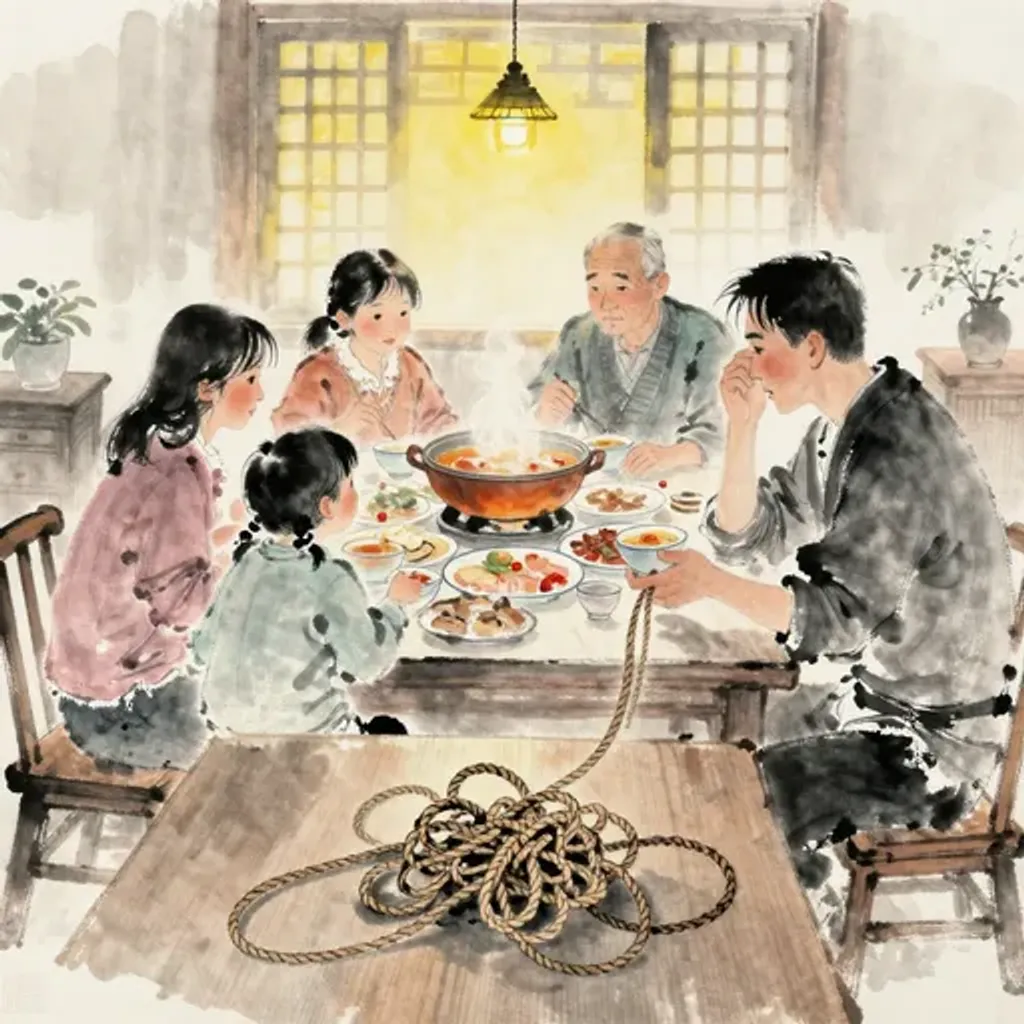
結紐得解,憂不為禍;食利供家,受福安坐。
The tangled knot comes undone; worry does not become disaster. Gaining profit to supply the household; one receives blessing and sits at ease.
— Jiao Yanshou, Yilin (Forest of Changes), 1st century BC
Commentary
Heaven and earth stand apart, but the knot finds its loosening and worry does not become disaster. One feeds the family from one's earnings and sits in peace receiving blessings. From Standstill to Pushing Upward, Pi's blockage dissolves into earth above wind — wood growing gradually within the soil, the image of steady, patient ascent. Sheng's counsel is to 'accumulate the small to achieve the great,' and the verse illustrates this domestic arithmetic: untying the knot of anxiety, earning enough to supply the household, sitting secure. No drama, no heroics — only the quiet upward growth of a life managed well. Standstill resolves here not through breakthrough but through the unspectacular daily accretion that Pushing Upward prizes above all.
否 → 困
Hexagram 12 → Hexagram 47: Oppression
Changing lines: 2, 6
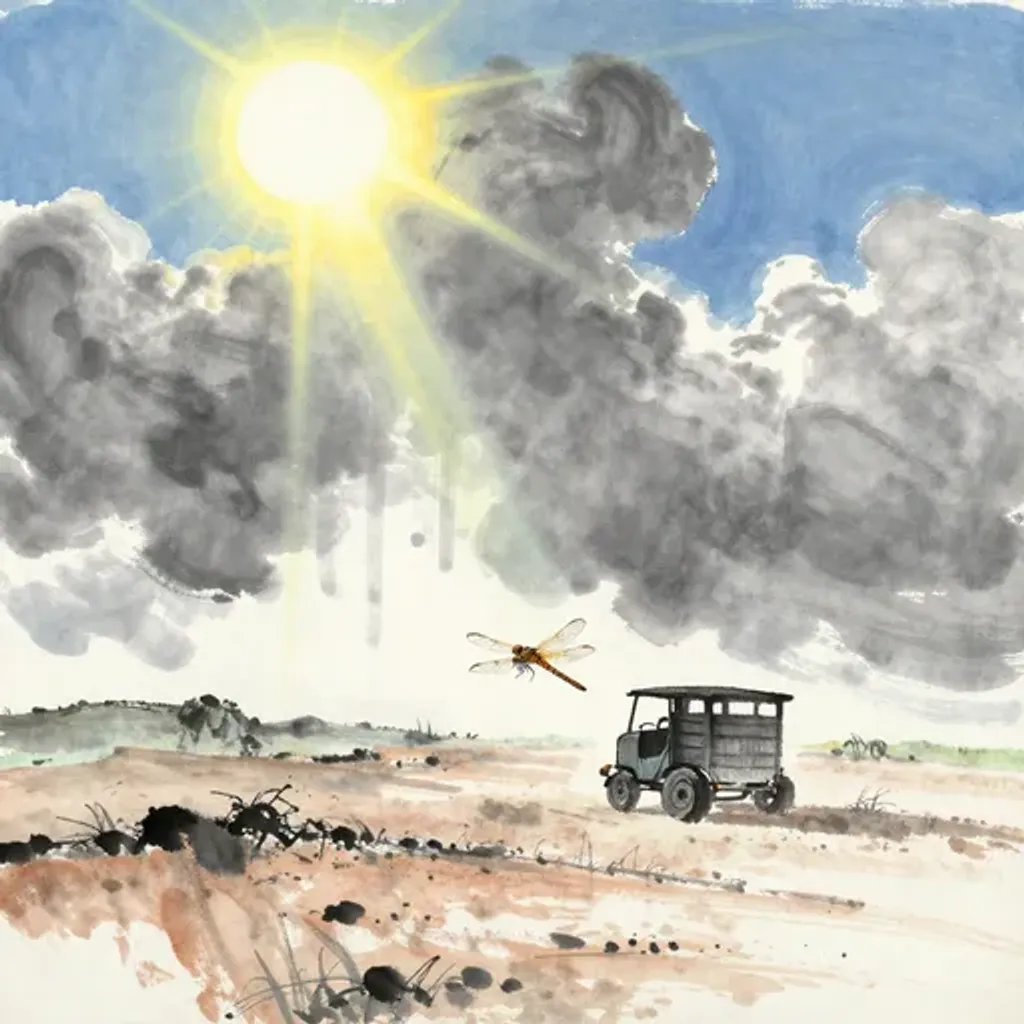
白日陽光,雷車避藏;雲雨不行,各自止鄉。
White sun, bright yang light; the thunder cart hides away. Cloud and rain do not proceed; each halts in its own domain.
— Jiao Yanshou, Yilin (Forest of Changes), 1st century BC
Commentary
Heaven and earth refuse to communicate: bright daylight and sunshine force the thunder-chariot into hiding. Clouds and rain cannot move; each stays in its own place. From Standstill to Oppression, Pi's sealed world deepens into the lake drained of water — Kun's image of exhaustion, the well gone dry. The verse doubles Pi's stagnation with Kun's paralysis: even the thunder-chariot, symbol of heaven's arousing power, is suppressed by the very sunlight that should vivify. When yang is too dominant it scorches rather than nourishes, and the rain that would relieve the drought cannot fall. Each element is locked in place, unable to reach where it is needed. Oppression here is not darkness but blinding, immobilizing light.
否 → 井
Hexagram 12 → Hexagram 48: The Well
Changing lines: 2, 3, 4, 6
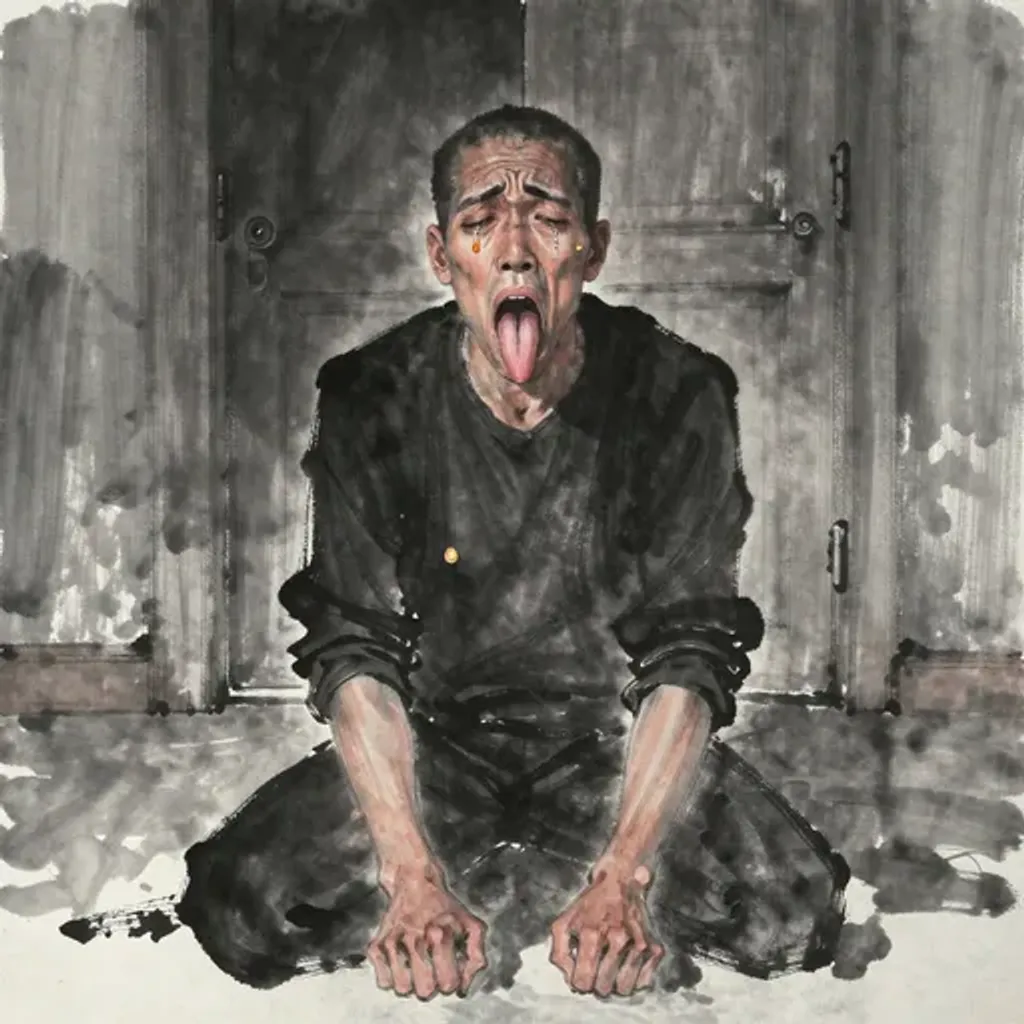
杜口結舌,心中怫鬱;凶災生患,無所告冤。
Mouth shut, tongue tied; the heart seethes within. Fierce disaster breeds calamity; there is no one to tell the wrong.
— Jiao Yanshou, Yilin (Forest of Changes), 1st century BC
Commentary
Heaven and earth stand sealed as one shuts the mouth and ties the tongue, heart churning with suppressed anguish. Calamity breeds disaster, and there is nowhere to plead one's grievance. From Standstill to The Well, Pi's blocked world meets water drawn up by wood — Jing's image of the community well that serves all who come. Yet the verse is The Well's negation: the well that should give voice and sustenance is sealed. The tongue is tied, the mouth is shut, and the wronged person has no court of appeal. Jing counsels that 'the gentleman encourages the people and urges mutual aid,' but when speech itself is forbidden, the well's rope is cut. The water exists below; the bucket simply cannot reach it.
否 → 革
Hexagram 12 → Hexagram 49: Revolution
Changing lines: 1, 3, 6
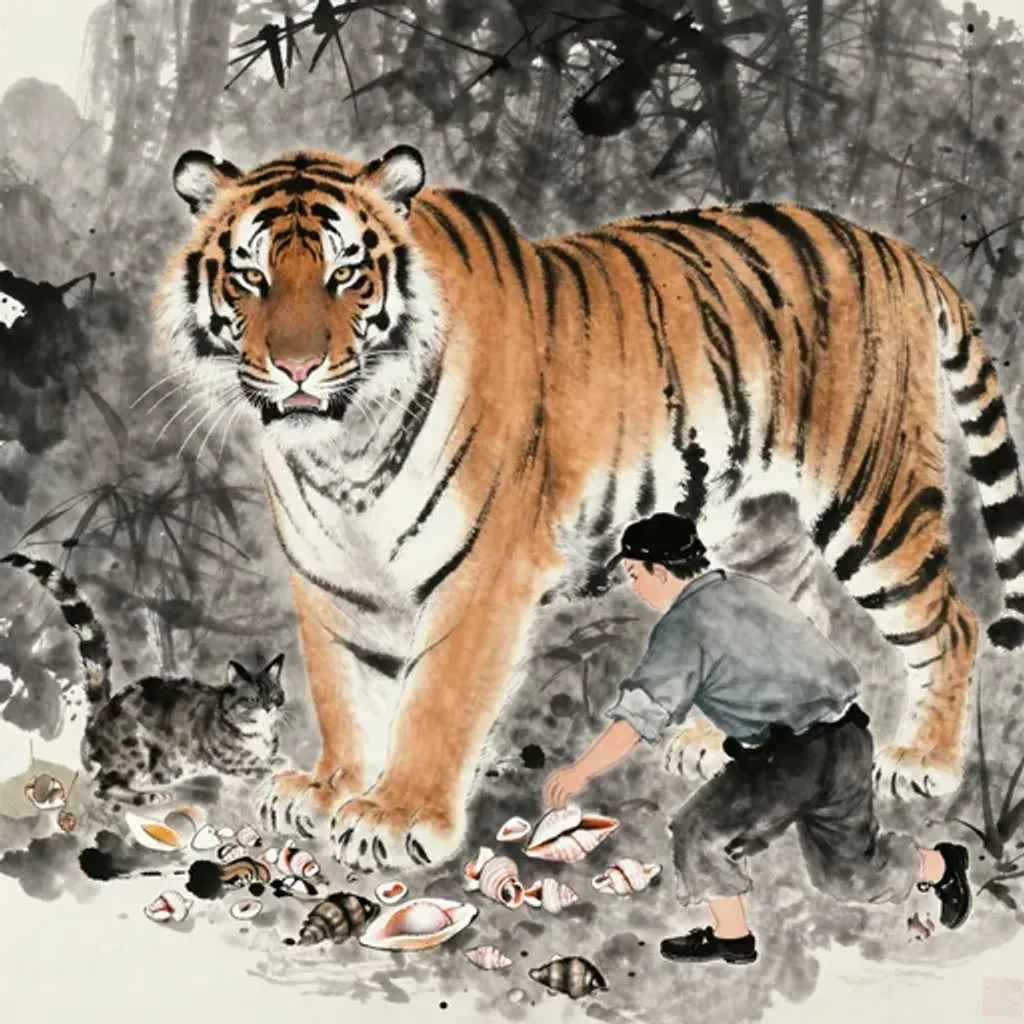
齎貝贖狸,不聽我辭;繫於虎髯,牽不得來。
Offering cowries to ransom the wildcat; it will not heed my words. Tied to the tiger's whiskers; pull as one might, it will not come.
— Jiao Yanshou, Yilin (Forest of Changes), 1st century BC
Commentary
Heaven and earth refuse to communicate as one offers cowrie shells to ransom a wildcat, but no one heeds the plea. The cat is tied to a tiger's whiskers — pull as one might, it will not come free. From Standstill to Revolution, Pi's stagnation meets fire within the lake — Ge's image of irreconcilable elements demanding transformation. Yet the verse captures revolution's prerequisite failure: the old currency no longer works. Cowries offered for a cat are absurdly mismatched in value, and the cat attached to the tiger cannot be retrieved by any ordinary force. Revolution becomes necessary precisely when conventional exchange breaks down so completely that pulling harder only tightens the knot. The tiger's whiskers will not yield to shells.
否 → 鼎
Hexagram 12 → Hexagram 50: The Cauldron
Changing lines: 2, 3, 5
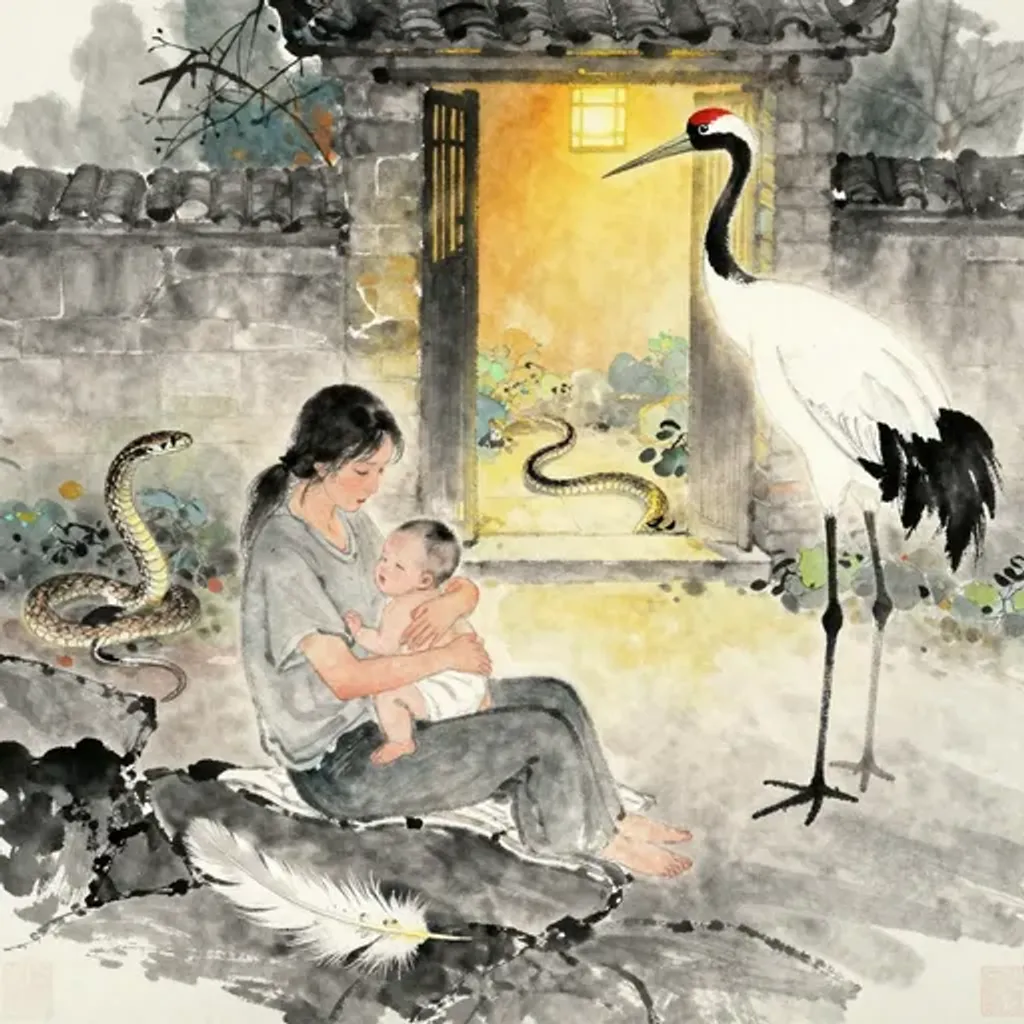
持鶴抱子,見蛇何咎;室家俱在,不失其所。
Holding the crane, cradling her chick; seeing the snake, what harm? The household is all intact; nothing loses its place.
— Jiao Yanshou, Yilin (Forest of Changes), 1st century BC
Commentary
Heaven and earth stand apart, yet one holds a crane and embraces a child — upon seeing a snake, what harm can come? The household remains whole, nothing lost from its proper place. From Standstill to The Cauldron, Pi's sealed world transforms into fire above wind — Ding's image of the ritual vessel that refines raw materials into sacred nourishment. The crane is an emblem of longevity, the child represents continuity, and the snake that appears poses no threat because the household's foundations are secure. Ding's power is transformation through proper ordering: 'the gentleman rectifies his position and solidifies his mandate.' When the domestic vessel is well-tended, even ominous apparitions lose their sting. Stagnation dissolves through the cauldron's steady, warming fire.
否 → 震
Hexagram 12 → Hexagram 51: The Arousing Thunder
Changing lines: 1, 5, 6
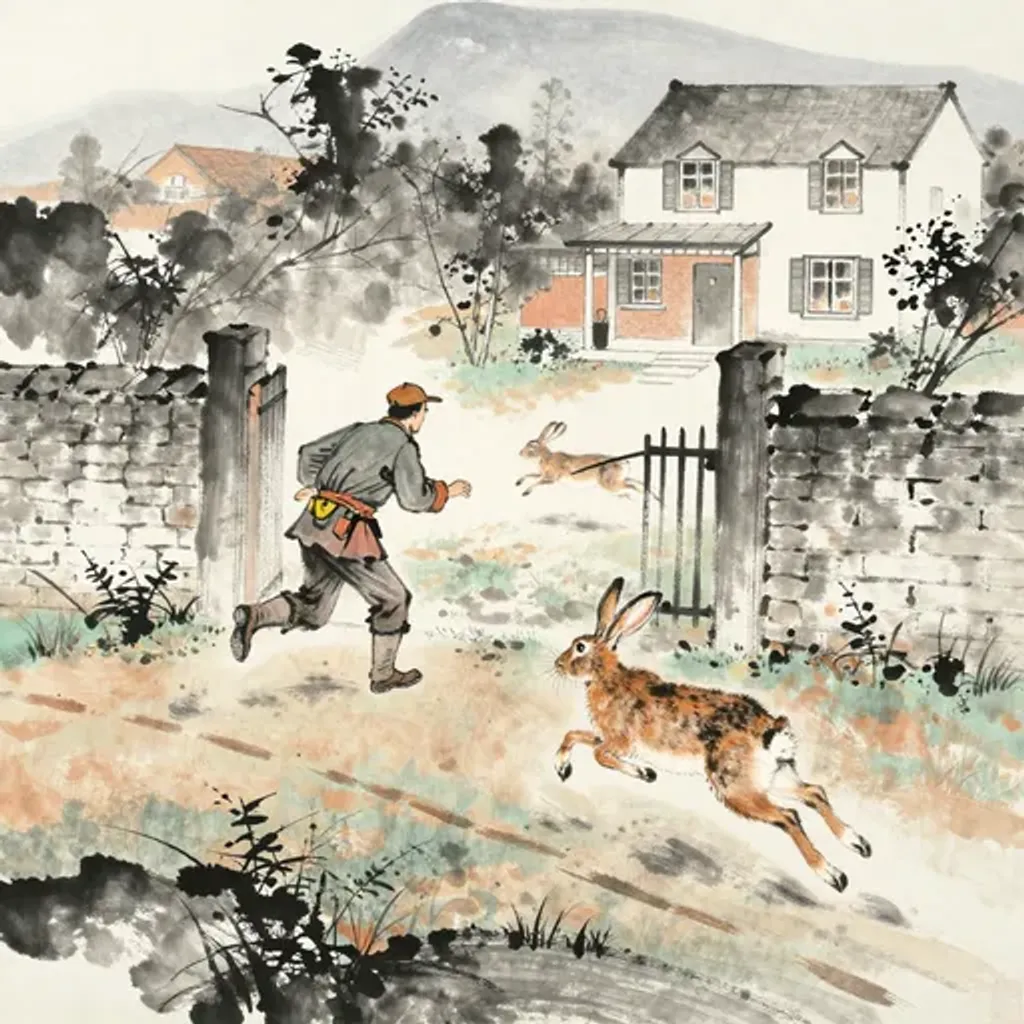
逐兔山西,利走入門;賴我仁德,獲為我福。
Chasing the hare up the western hill; profit runs in through the gate. Relying on our benevolent virtue; the catch becomes our fortune.
— Jiao Yanshou, Yilin (Forest of Changes), 1st century BC
Commentary
Heaven and earth refuse to communicate, yet one chases a rabbit west of the mountain, and the quarry runs right through one's own gate. Thanks to one's benevolent virtue, the catch becomes a blessing. From Standstill to The Arousing, Pi's frozen world shatters into doubled thunder — Zhen's jolting, galvanizing shock. The rabbit chase captures Zhen's essential dynamic: sudden, startling movement that resolves in unexpected gain. The prey does not need to be cornered; it comes to the hunter's own door. Zhen's thunder terrifies but also electrifies, and here the shock of the chase produces exactly the opposite of Pi's stagnation — a prize delivered by the very act of pursuit, rewarding virtue with fortune that arrives on its own legs.
否 → 艮
Hexagram 12 → Hexagram 52: Keeping Still Mountain
Changing lines: 3, 4, 5
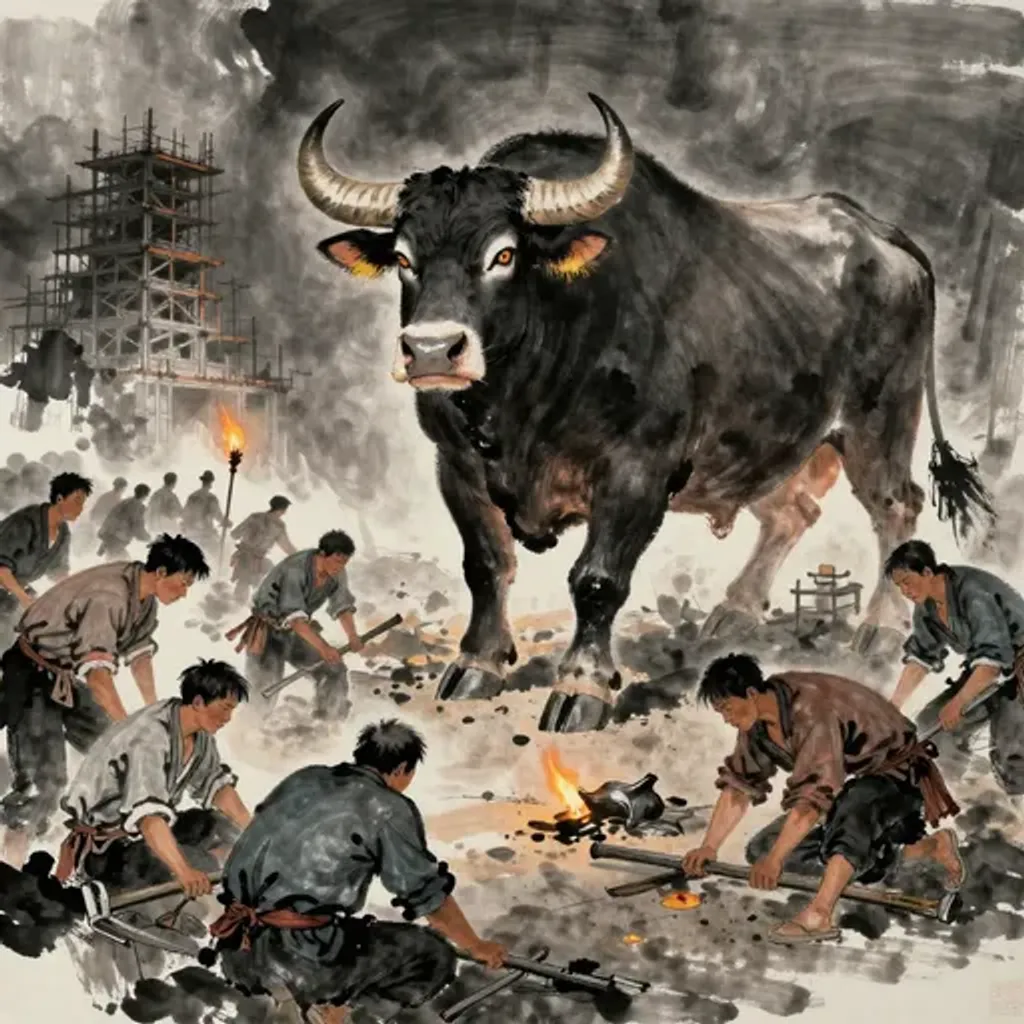
興役不休,與民爭時;牛生五趾,行危為憂。
Raising levies without cease, contesting the seasons with the people. The ox is born with five toes; the path is perilous, cause for worry.
— Jiao Yanshou, Yilin (Forest of Changes), 1st century BC
Commentary
Heaven and earth stand apart as corvee labor proceeds without rest, and the ruler contends with the people for their seasonal labor. An ox is born with five toes — a portent of disorder — and the path ahead grows perilous. From Standstill to Keeping Still, Pi's stagnation transforms into the doubled mountain — Gen's absolute stillness. Yet the verse shows what happens when stillness is violated: endless labor steals the people's planting season, a five-toed ox signals nature deformed by misgovernment, and anxiety pervades. Gen's counsel is to 'think without going beyond one's position,' but the ruler here has transgressed every boundary. True stillness would mean stopping the corvee and letting the land recover. The mountain that should protect instead oppresses.
否 → 漸
Hexagram 12 → Hexagram 53: Development
Changing lines: 3, 4
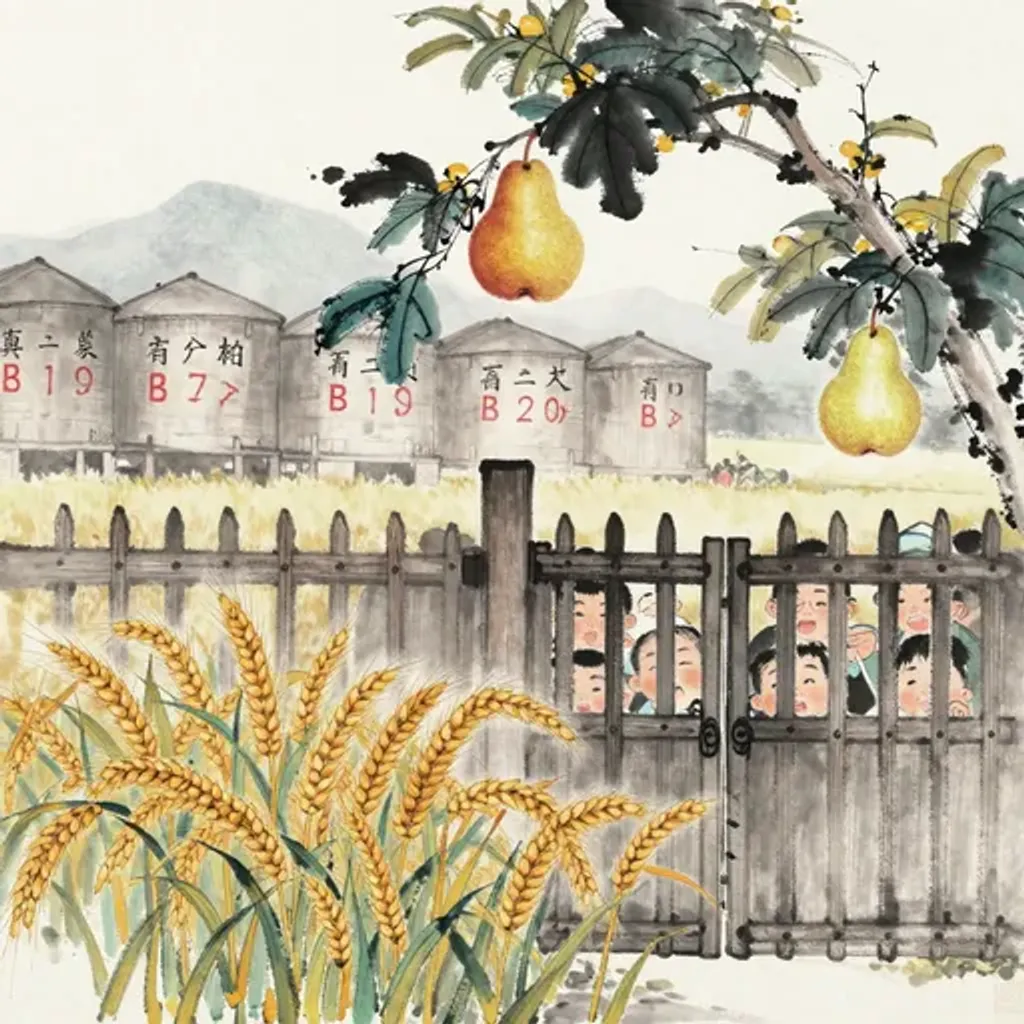
春粟夏梨,少鮮希有;斗千石萬,貴不可販。
Spring grain, summer pears, scarce and rare. A bushel costs a thousand, a stone ten thousand; too dear to sell.
— Jiao Yanshou, Yilin (Forest of Changes), 1st century BC
Commentary
Heaven and earth refuse to communicate: spring millet and summer pears are scarce and few. A bushel costs a thousand coins, a stone ten thousand — prices so high that no one can afford to trade. From Standstill to Development, Pi's scarcity should open into the gradual growth of trees on the mountain — Jian's patient, step-by-step progress. Yet the verse captures the cruellest form of stagnation: goods exist but are unattainable. The grain and fruit are simply too expensive. Jian's developmental patience is mocked by a market where even the wealthy cannot buy basic provisions. Development requires accessible beginnings — 'the gentleman dwells in worthy virtue and improves customs' — but when the starting cost is prohibitive, gradual progress cannot even begin.
否 → 歸妹
Hexagram 12 → Hexagram 54: The Marrying Maiden
Changing lines: 1, 2, 5, 6
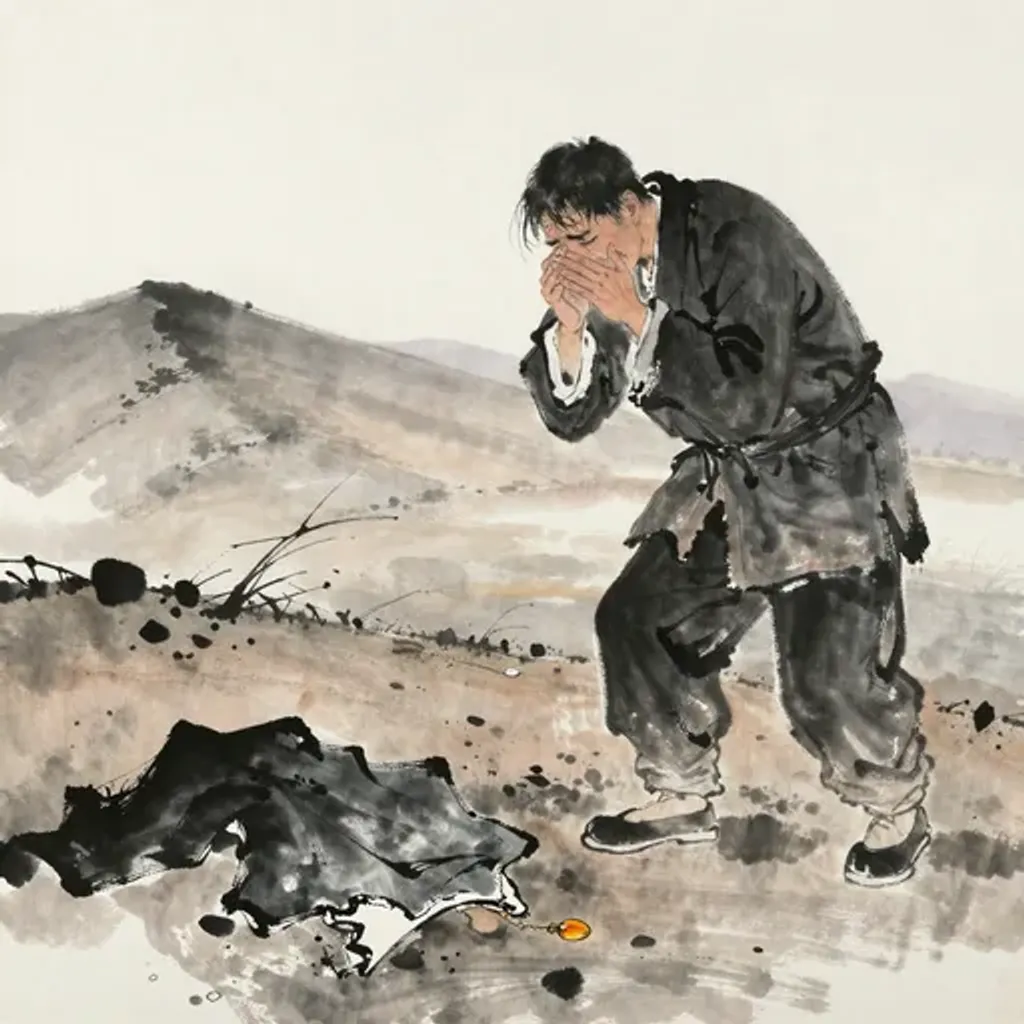
悲號北行,失其長兄;伯仲不幸,骸骨散亡。
Wailing and traveling northward, having lost an elder brother. The eldest and second meet misfortune; their bones are scattered and gone.
— Jiao Yanshou, Yilin (Forest of Changes), 1st century BC
Commentary
Heaven and earth stand sealed as one weeps and wails heading north, having lost the eldest brother. Eldest and second-born alike meet misfortune, and their bones are scattered and lost. From Standstill to the Marrying Maiden, Pi's stagnation enters the thunder above the lake — Gui Mei's image of a younger sister given in marriage, a subordinate following along. Yet the verse speaks not of marriage but of death and dispersal: brothers lost, bones unburied, a family destroyed beyond recovery. Gui Mei warns about 'knowing the end and recognizing what is worn out,' and here the worn-out state is the family itself. The maiden is married into grief. Northward wailing marks the direction of death and winter, and Pi's cold intensifies into permanent loss.
否 → 豐
Hexagram 12 → Hexagram 55: Abundance
Changing lines: 1, 3, 5, 6
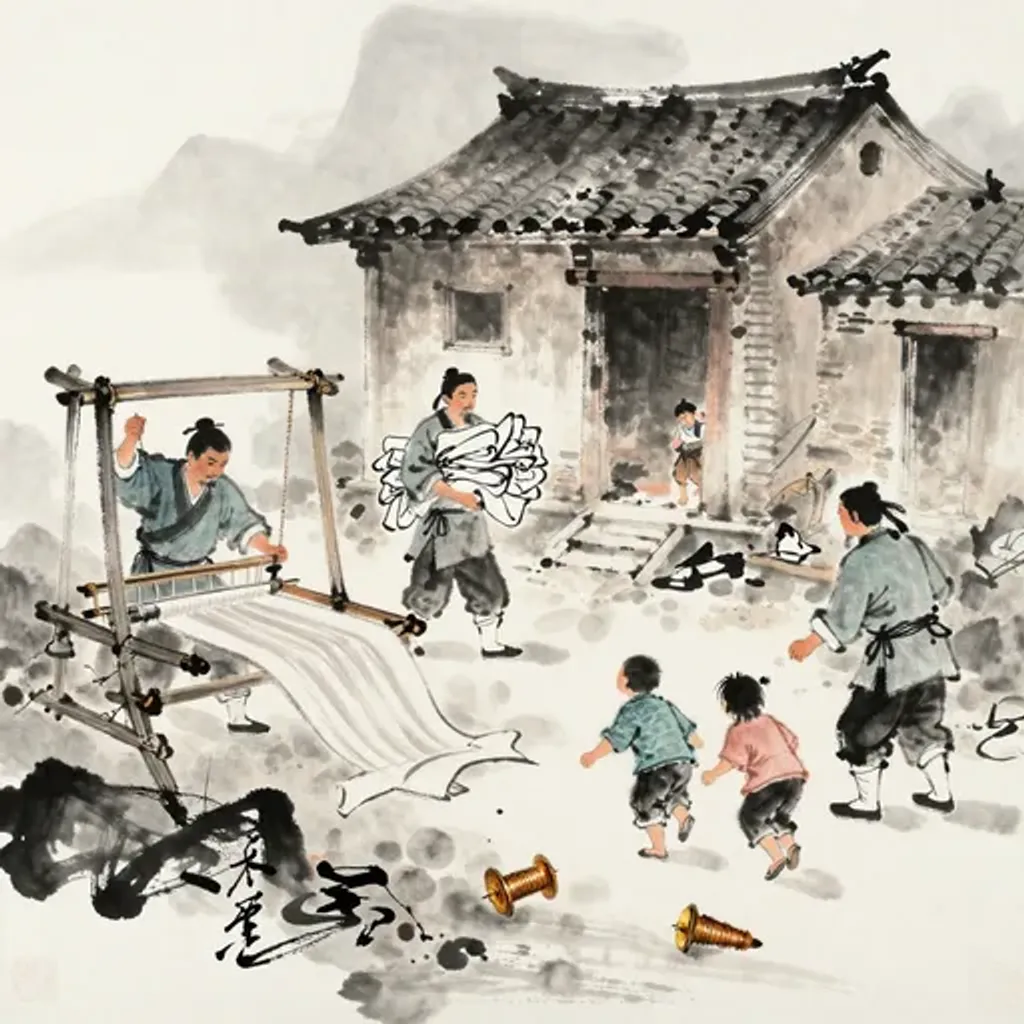
賦斂重數,政為民賊;杼軸空盡,家去其室。
Taxes and levies heaped and redoubled; governance becomes the people's thief. Loom shuttles and axles emptied out; households abandon their homes.
— Jiao Yanshou, Yilin (Forest of Changes), 1st century BC
Commentary
Heaven and earth refuse to communicate as taxes are levied again and again, governance becoming the people's enemy. Looms are emptied to their last thread, and families abandon their homes. From Standstill to Abundance, Pi's sealed world meets thunder and lightning together — Feng's image of fullness so complete it must be carefully administered. Yet the verse shows Feng's dark mirror: abundance for the state means exhaustion for the people. The repeated levies drain the looms dry, and when the weaving is gone, the household dissolves. Feng warns that abundance cannot be maintained at noon forever — 'the sun at midday begins to set.' Here the ruler has tried to hold noon by force, stripping the people bare to sustain an illusion of plenty, until the homes themselves stand empty.
否 → 旅
Hexagram 12 → Hexagram 56: The Wanderer
Changing lines: 3, 5
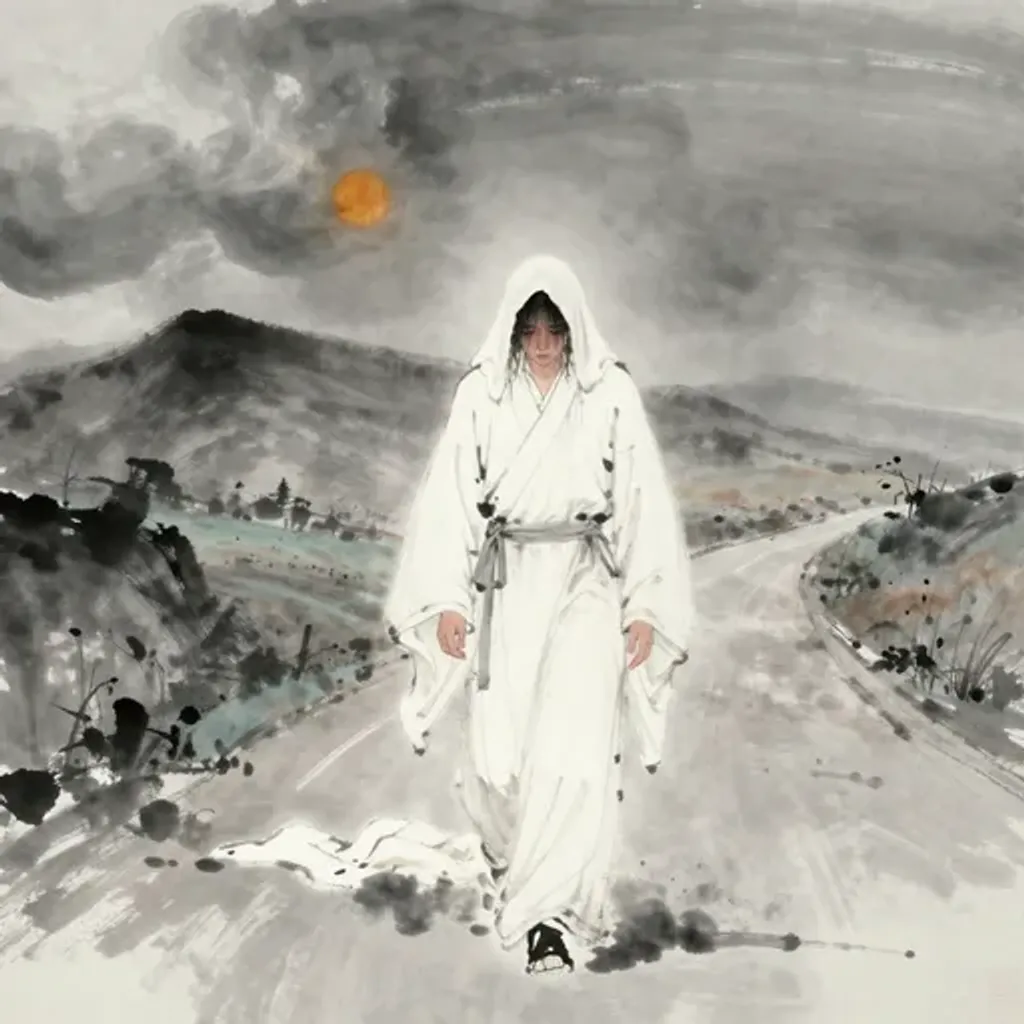
履服白縞,殃咎並到,憂不敢笑。
Dressed in white mourning cloth; calamity and blame arrive together. In sorrow one dares not smile.
— Jiao Yanshou, Yilin (Forest of Changes), 1st century BC
Commentary
Heaven and earth stand apart as one dons white mourning garments. Calamity and blame arrive together, and grief is so heavy that one dares not even smile. From Standstill to The Wanderer, Pi's stagnation transforms into fire on the mountain — Lu's image of the traveler who moves through the world lightly, without permanent shelter. The white mourning cloth is the traveler's heaviest burden: carrying grief through unfamiliar terrain. Lu counsels using punishments with clarity and caution, 'not prolonging imprisonment.' But the verse shows the wanderer who cannot move forward because mourning itself is the prison. The body travels; the spirit is locked in white silk. Pi's immobility has migrated inward — the road is open but the heart cannot walk it.
否 → 巽
Hexagram 12 → Hexagram 57: The Gentle Wind
Changing lines: 2, 3, 4
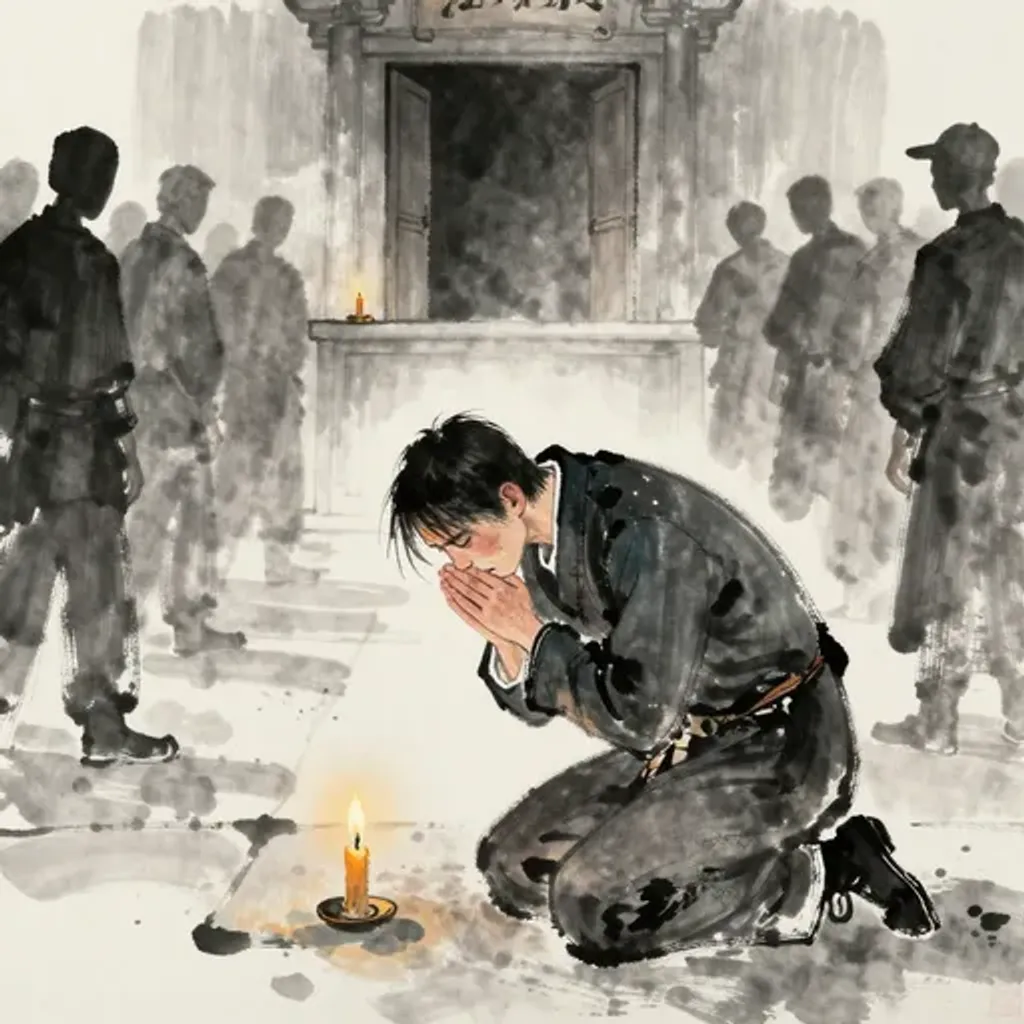
杜口結舌,言為禍母;代伯受患,無所禱冤。
Mouth shut, tongue tied; words are the mother of disaster. Bearing another's punishment; there is no one to whom to plead.
— Jiao Yanshou, Yilin (Forest of Changes), 1st century BC
Commentary
Heaven and earth refuse to communicate as one shuts the mouth and ties the tongue — speech itself becomes the mother of disaster. Taking blame on behalf of the elder brother, one has nowhere to present a grievance. From Standstill to The Gentle, Pi's blockage meets doubled wind — Xun's image of penetrating influence, commands issued and carried out. Yet the verse shows penetration's dark side: when words are dangerous, silence becomes survival, but silence under injustice is its own form of suffering. Xun's wind should carry the ruler's commands to all four corners, but here the wind carries only the warning that speech kills. The sealed mouth is both prison and shield, and the one who bears another's punishment has no wind to carry their plea.
否 → 兌
Hexagram 12 → Hexagram 58: The Joyous Lake
Changing lines: 1, 2, 6
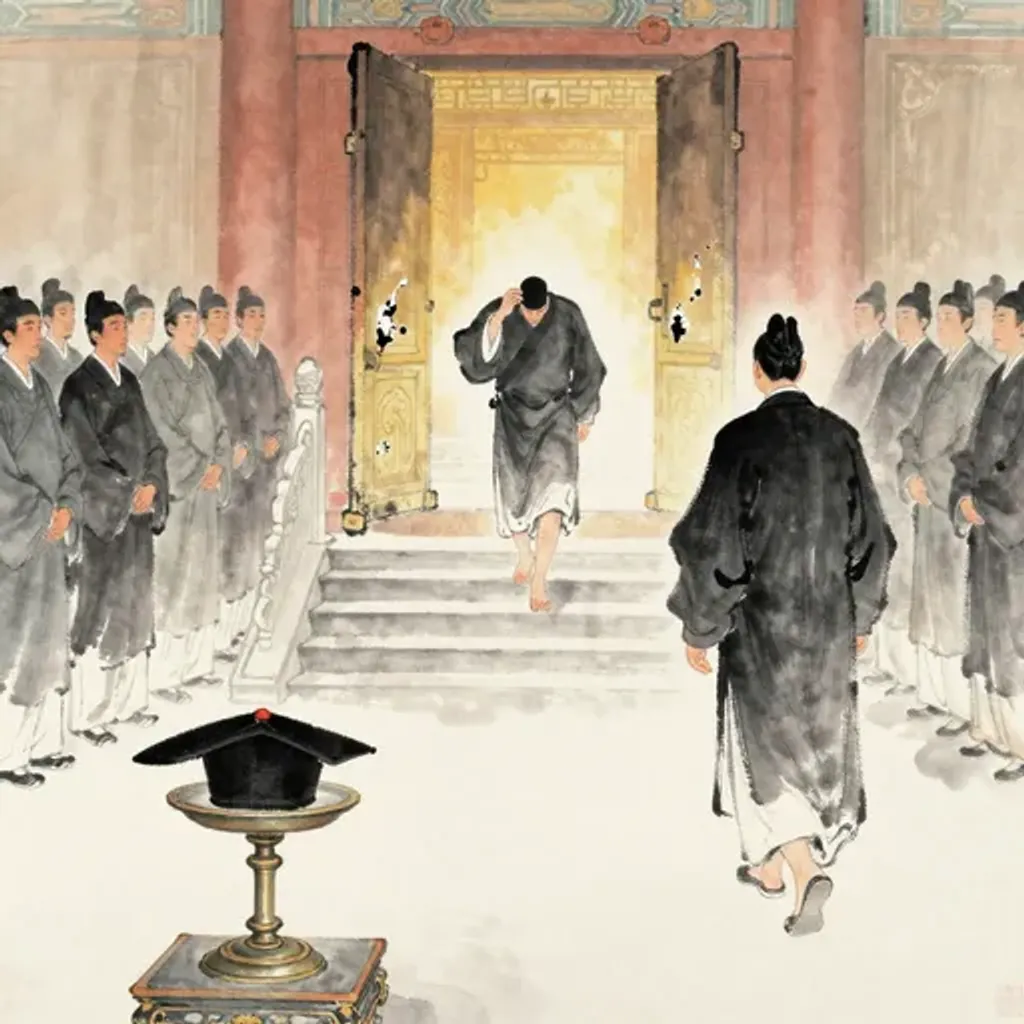
免冠進賢,步行出朝;門體不正,賊孽為患。
Removing the cap to recommend the worthy; one walks from court on foot. The gate and body are not aligned; treacherous evils bring harm.
— Jiao Yanshou, Yilin (Forest of Changes), 1st century BC
Commentary
Heaven and earth refuse to communicate as an official removes his cap and recommends a worthy successor, then walks out of court on foot. Yet the gate's structure is unsound, and treacherous elements breed trouble within. Removing one's cap to recommend talent was a gesture of utmost sincerity in the Han court — staking one's own position to elevate another. From Standstill to The Joyous, Pi's sealed world should open into the doubled lake of mutual delight and learning. Yet the verse subverts Dui's promise: the noble gesture of recommendation is undermined by corruption at the gate. The Joyous demands openness — 'friends discussing and practicing together' — but when the institution's foundation is crooked, even sincere generosity cannot prevent the thieves from entering.
否 → 渙
Hexagram 12 → Hexagram 59: Dispersion
Changing lines: 2, 4
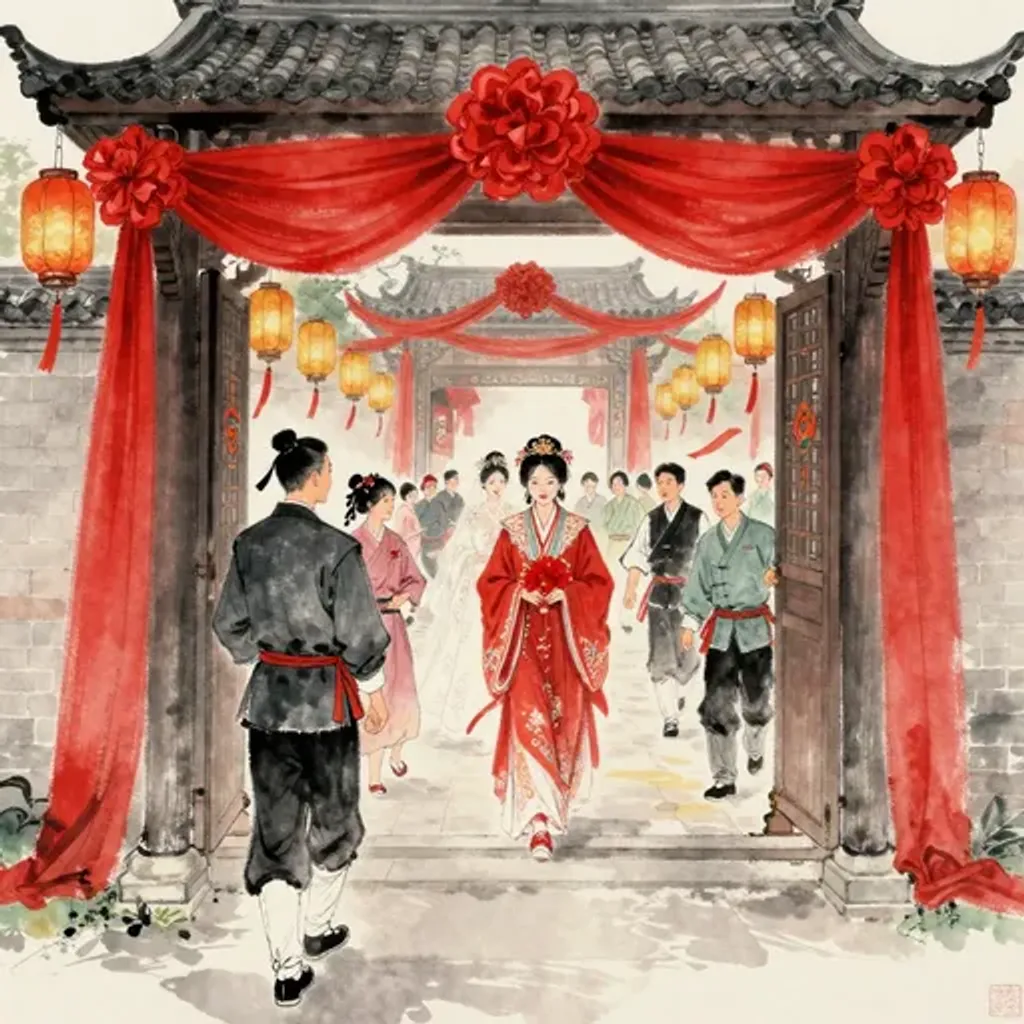
娶於姜女,駕迎新婦;少齊在門,夫子悅喜。
Marrying a lady of the Jiang house; the carriage drives to welcome the bride. The young lady of Qi stands at the gate; the husband is pleased and joyful.
— Jiao Yanshou, Yilin (Forest of Changes), 1st century BC
Commentary
Heaven and earth refuse to communicate, yet a marriage is arranged with a woman of the Jiang clan. The carriage is driven forth to welcome the new bride; the young woman of Qi arrives at the gate, and the husband rejoices. Marriages between the Ji (Zhou royal surname) and Jiang clans were the foundational political alliances of the Western Zhou and Spring and Autumn periods. From Standstill to Dispersion, Pi's blockage dissolves into wind moving over water — Huan's image of ice breaking apart as warmth returns. The wedding carriage crossing the threshold is the perfect emblem of dispersion's positive power: what was frozen and sealed opens through the arrival of new connection. The bride at the gate is the wind that scatters Pi's ice.
否 → 節
Hexagram 12 → Hexagram 60: Limitation
Changing lines: 1, 2, 4, 6
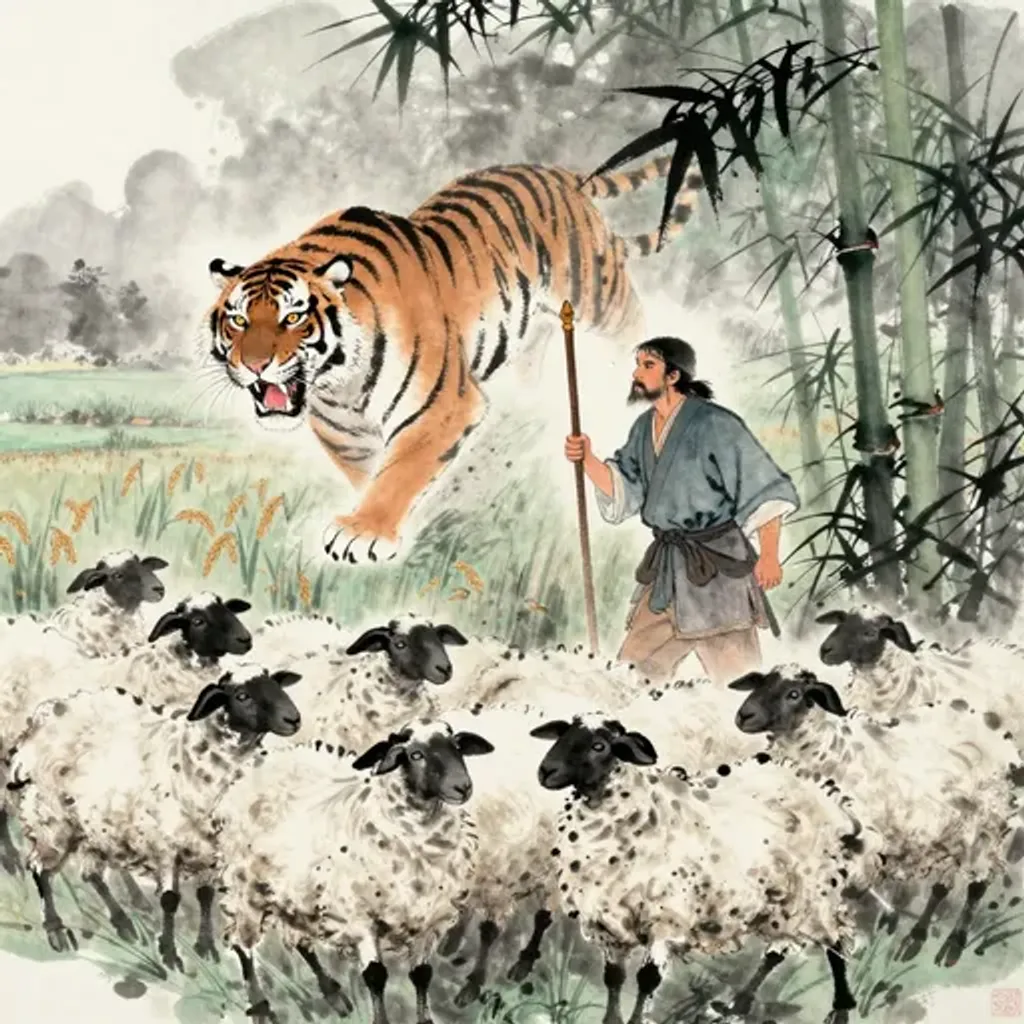
牧羊稻園,聞虎喧嚾;思恐悚息,終無禍患。
Herding sheep in the rice garden; one hears the tiger's roar. Trembling with fear and held breath; yet in the end, no disaster comes.
— Jiao Yanshou, Yilin (Forest of Changes), 1st century BC
Commentary
Heaven and earth stand sealed as one tends sheep in the rice garden and hears a tiger roaring. Fear and trembling seize the heart, yet in the end no disaster comes. From Standstill to Limitation, Pi's stagnation meets water above the lake — Jie's image of measured boundaries that prevent overflow. The verse captures Limitation's wisdom perfectly: the tiger's roar is terrifying, but the boundaries hold. The shepherd in the rice paddy occupies a carefully defined space; the tiger is heard but does not cross the threshold. Jie counsels 'establishing measures and standards, deliberating on virtue and conduct.' Here, the proper boundary between the cultivated and the wild keeps the threat acoustic rather than actual. Fear is real; harm is not.
否 → 中孚
Hexagram 12 → Hexagram 61: Inner Truth
Changing lines: 1, 2, 4
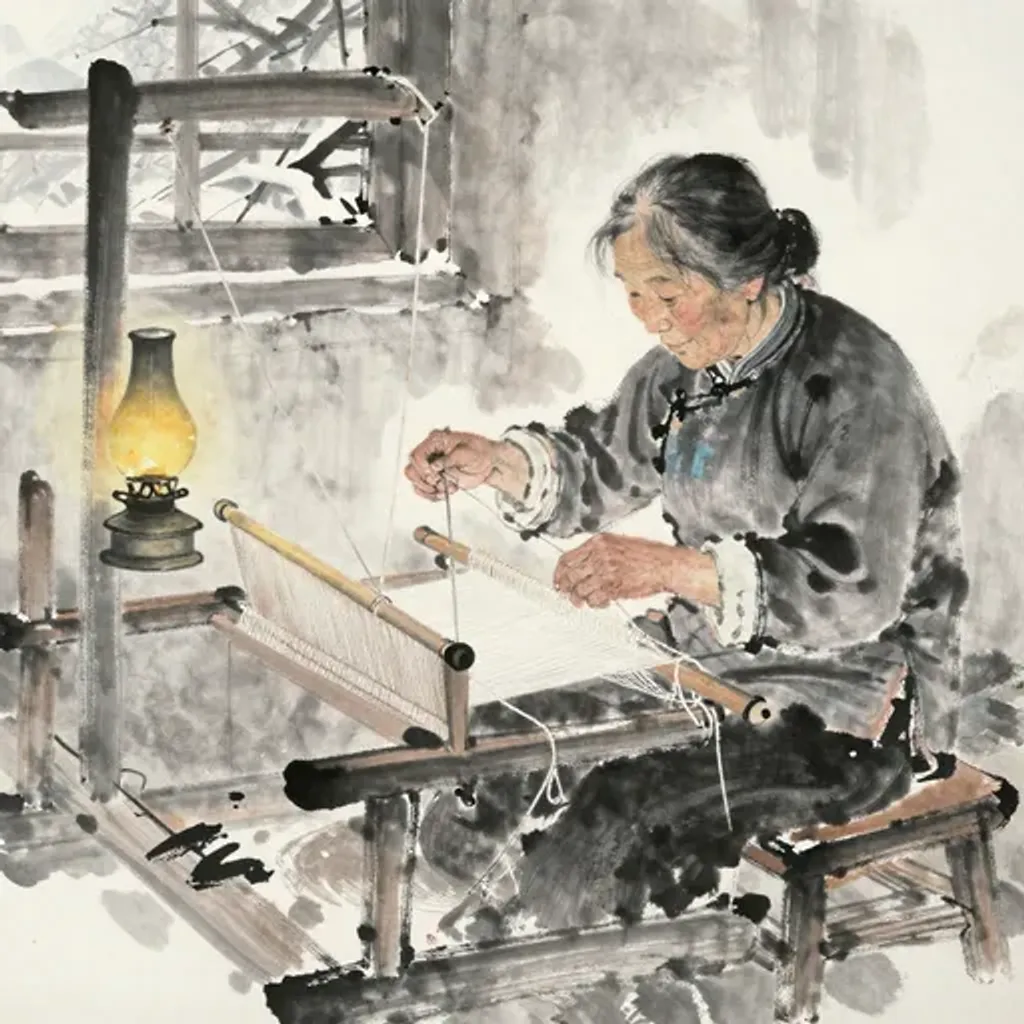
老妾据機,緯絕不知;女功不成,冬寒無衣。
The old maidservant sits at the loom, unaware the weft has broken. The woman's work is not completed; in winter cold there are no clothes.
— Jiao Yanshou, Yilin (Forest of Changes), 1st century BC
Commentary
Heaven and earth refuse to communicate as an old concubine sits at her loom, not noticing that the weft thread has broken. The weaving goes unfinished, and when winter comes there are no warm clothes. From Standstill to Inner Truth, Pi's stagnation meets wind above the lake — Zhong Fu's image of sincerity that moves even pigs and fish. Yet the verse inverts Inner Truth's promise: the old weaver's inattention is a failure of inner awareness. She does not perceive the broken thread — the most intimate signal from her own work. Zhong Fu demands the hollow center that registers every vibration; the old woman's dullness is its antithesis. Without inner attunement, the thread snaps unnoticed and the winter arrives with no defense prepared.
否 → 小過
Hexagram 12 → Hexagram 62: Small Exceeding
Changing lines: 3, 5, 6
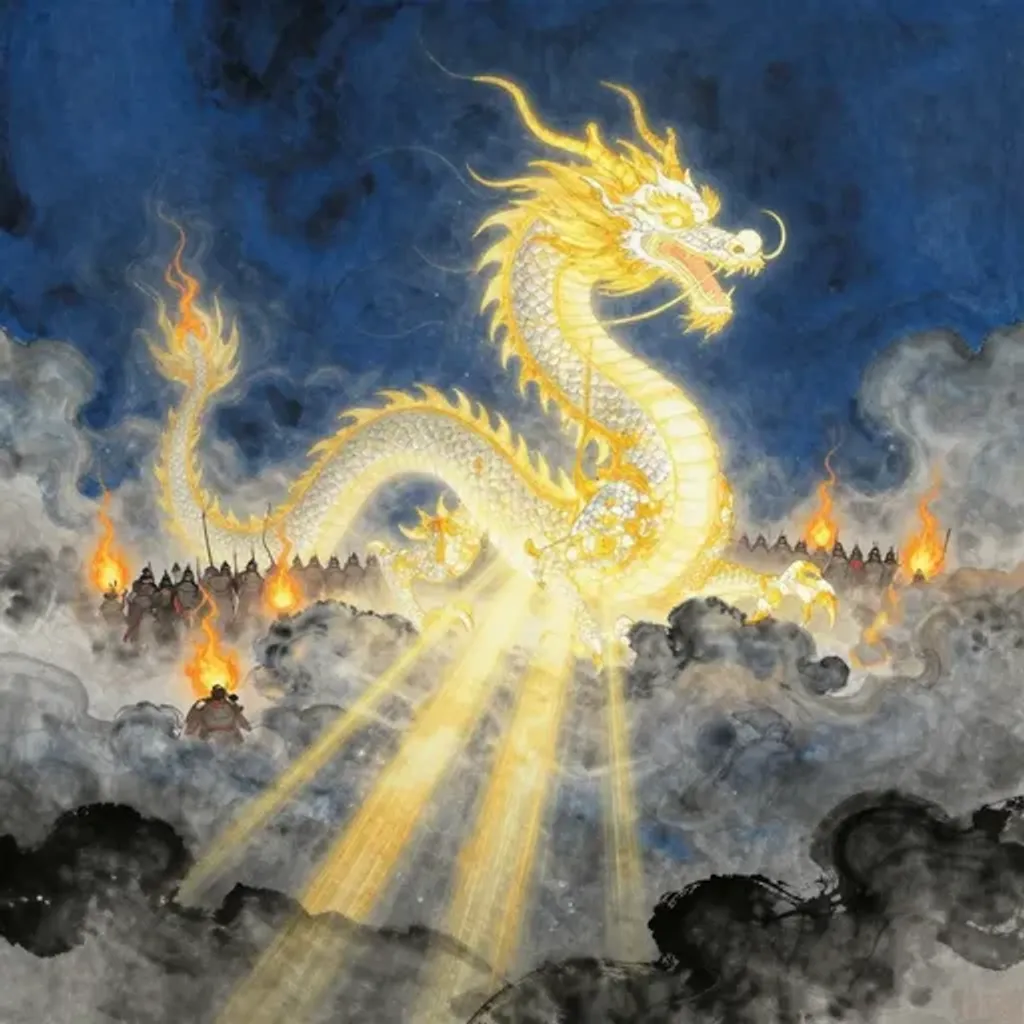
乘龍吐光,使陰復明,燎獵載聖,六師以昌。
Riding the dragon, it emits radiance, making the dark bright once more. A blazing hunt carries the sage; the six armies thereby prosper.
— Jiao Yanshou, Yilin (Forest of Changes), 1st century BC
Commentary
Heaven and earth stand sealed, yet one rides a dragon that breathes radiance, causing darkness to turn bright once more. A great hunt blazes forth bearing a sage, and the six armies flourish. From Standstill to Small Exceeding, Pi's total blockage is overwhelmed by an eruption of luminous power — a dragon-rider who restores light to the world. The dragon breathing light evokes the omens of dynastic founding: the dragon-horse, the sage-king, the legitimating hunt that demonstrates heaven's favor. Xiao Guo is thunder above the mountain — small things exceeding their usual bounds. Here the 'small exceeding' is inverted: the sage's radiance exceeds all expectations, and what should be modest bursts into cosmic restoration. Excess in service of the Way is no transgression.
否 → 既濟
Hexagram 12 → Hexagram 63: After Completion
Changing lines: 1, 3, 4, 6
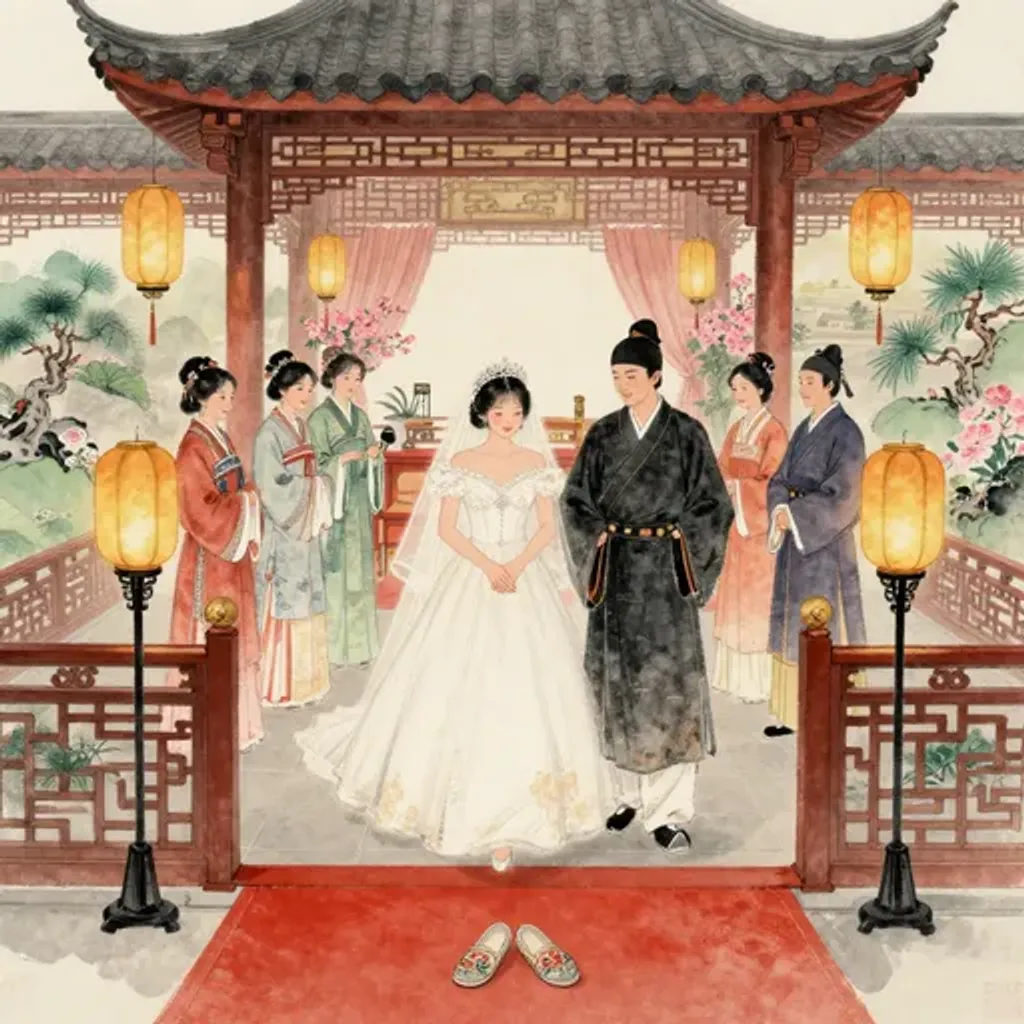
東鄰嫁女,為王妃后;莊公築館,以尊主母;歸於京師,季姜悅喜。
The eastern neighbor marries off a daughter, who becomes royal consort. Duke Zhuang builds a lodge to honor the lord's mother. Returning to the capital, Ji Jiang is pleased and joyful.
— Jiao Yanshou, Yilin (Forest of Changes), 1st century BC
Commentary
Heaven and earth refuse to communicate, yet the eastern neighbor's daughter is married to become queen consort. Duke Zhuang builds a hall to honor the bride's mother, and she is escorted to the capital, where Lady Ji Jiang rejoices. The verse draws on the Spring and Autumn tradition of political marriages between the eastern state of Qi (Jiang clan) and the western Zhou-lineage states. Duke Zhuang's construction of a guesthouse to honor the mother-in-law reflects the Zhou ritual propriety that sealed such alliances. From Standstill to After Completion, Pi's sealed world transforms into water above fire — Jiji's image of all elements perfectly positioned. The wedding achieves Jiji's harmony: fire and water cooperate, the political alliance is sealed, and the bride's joy confirms cosmic order restored.
否 → 未濟
Hexagram 12 → Hexagram 64: Before Completion
Changing lines: 2, 5
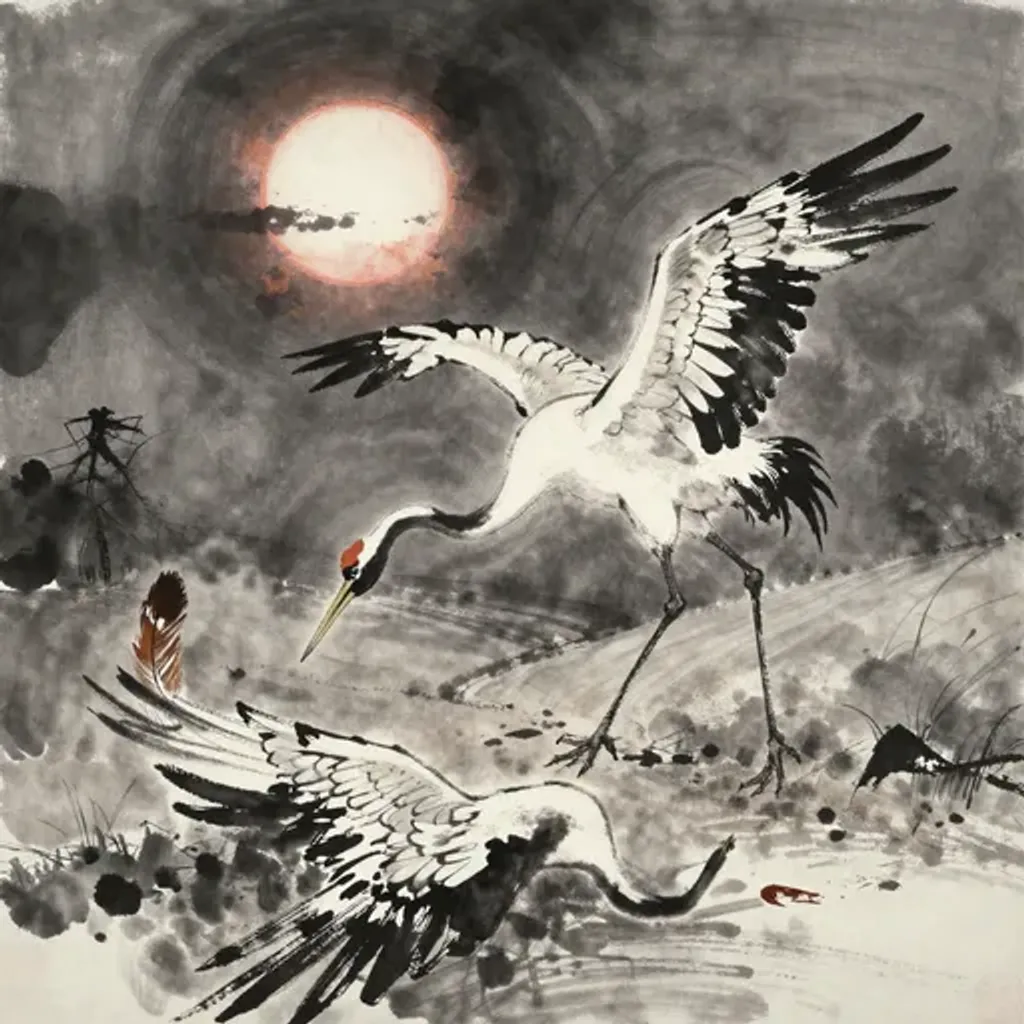
灌鴶東從,道頓跌跱;日食不退,病為身禍。
The stumbling crane follows eastward; the road is blocked and halting. The sun is eclipsed and will not retreat; illness becomes a bodily curse.
— Jiao Yanshou, Yilin (Forest of Changes), 1st century BC
Commentary
Heaven and earth stand sealed to the very end. A bird stumbles eastward, its path blocked and halting. A solar eclipse refuses to recede, and illness becomes the body's undoing. From Standstill to Before Completion, Pi's terminal stagnation meets fire above water — Wei Ji's image of elements out of place, the fox that nearly crosses the river but wets its tail at the last step. The verse confirms this incompletion with relentless imagery: the bird cannot maintain its course, the eclipse will not clear, the sickness will not heal. Every element is stuck just short of resolution. Wei Ji is the I-Ching's final hexagram — the perpetual almost — and paired with Pi it becomes the bleakest possible reading: stagnation that does not even achieve the dignity of a definitive end.