Transformations of Hexagram 14
Every line of change out of Hexagram 14 大有 Great Possession, with the Yilin verse for each of the 64 resulting hexagrams, its translation, and the original ink brush artwork.
大有 → 乾
Hexagram 14 → Hexagram 1: The Creative
Changing lines: 5
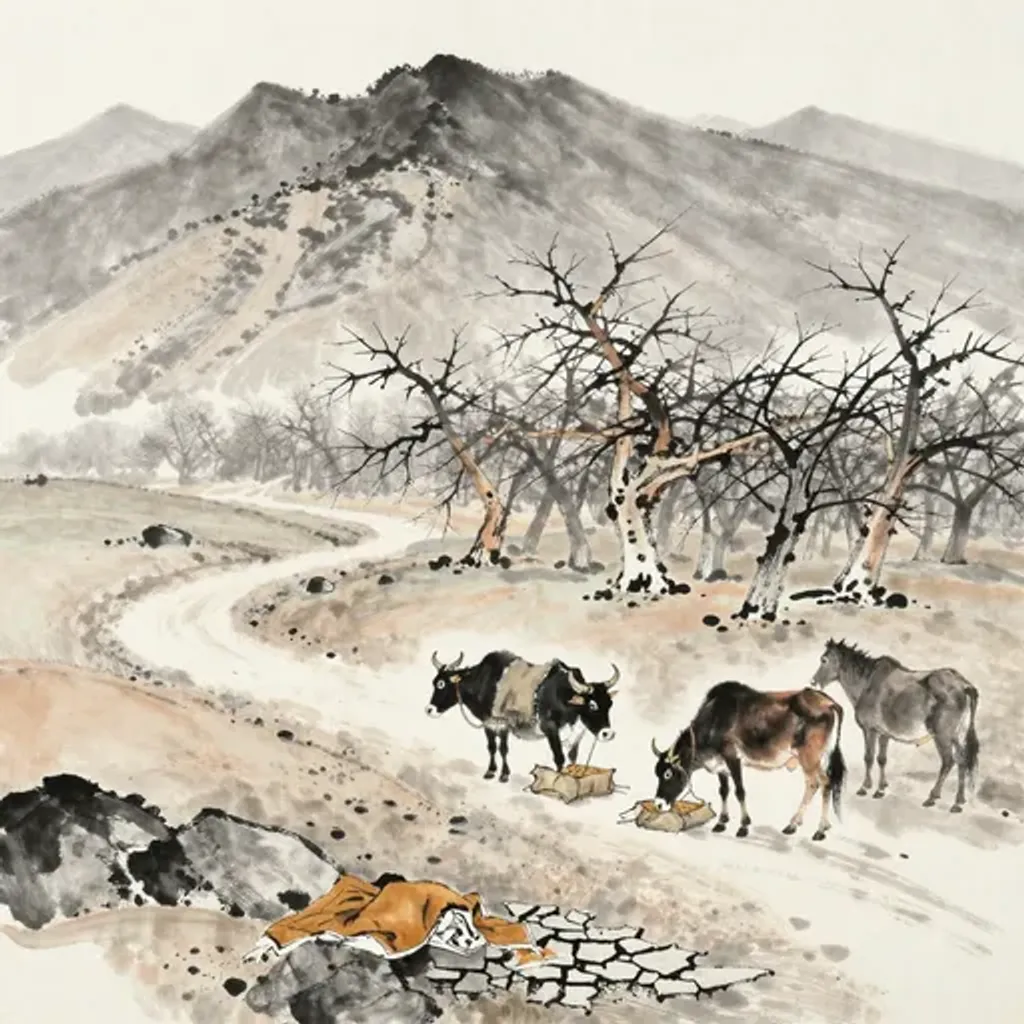
南山大行,困於空桑;老沙為石,牛馬無糧。
Southern mountains, the Great Taihang range; stranded at an empty mulberry grove. Old sand turns to stone; cattle and horses have no fodder.
— Jiao Yanshou, Yilin (Forest of Changes), 1st century BC
Commentary
Fire blazes in heaven, the image of Great Possession, yet this verse opens onto barren desolation. The Southern Mountain and the Taihang range loom vast, but the traveler finds himself stranded at Kongsang — 'Empty Mulberry,' a place-name evoking mythic desolation. Sand has aged into stone, and the oxen and horses have no fodder. What was once abundant has calcified: resources have dried up, roads have closed, and what should sustain life has turned to sterile rock. From Great Possession to the Creative, the doubled heaven suggests self-generating initiative, yet without earthly sustenance even heaven's creative force starves. The verse warns that raw creative power, ungrounded by practical provision, produces only magnificent emptiness.
大有 → 坤
Hexagram 14 → Hexagram 2: The Receptive
Changing lines: 1, 2, 3, 4, 6
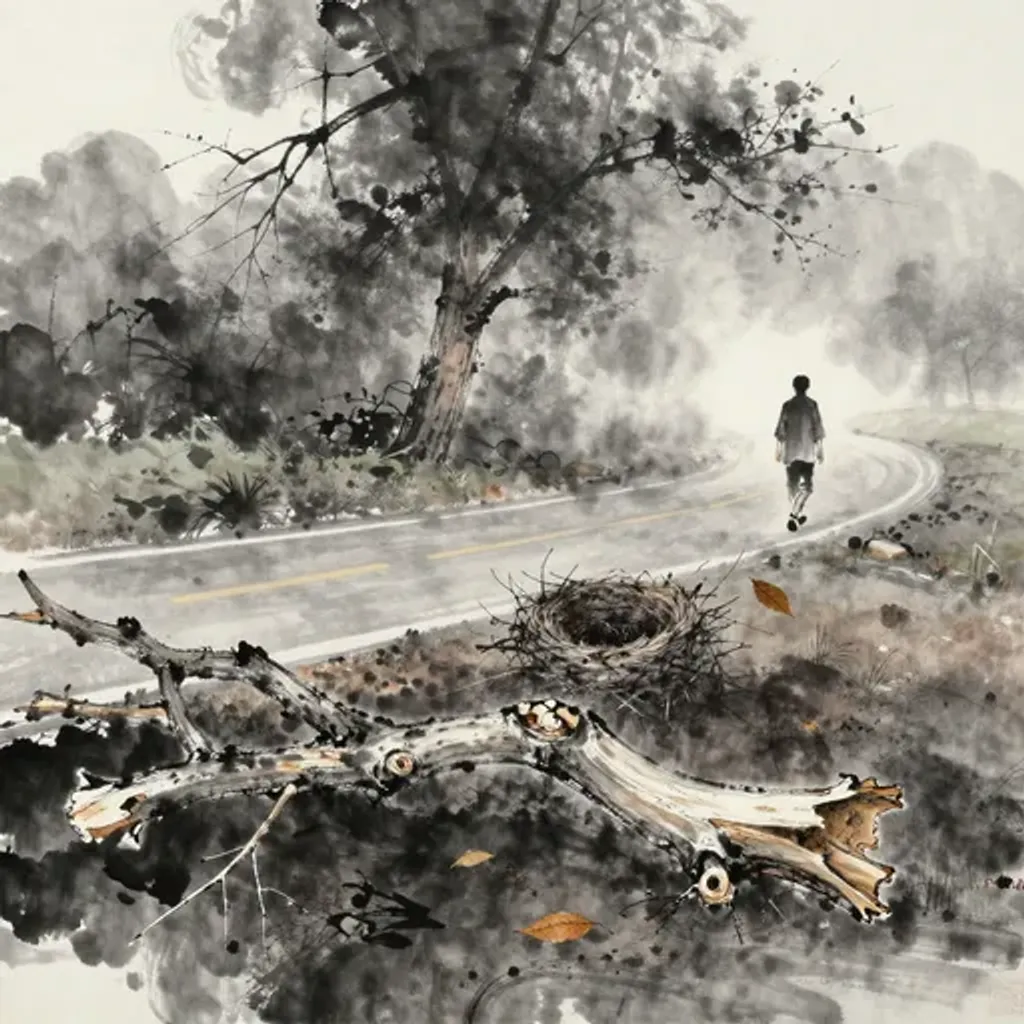
蟠枝失岐,與母別離,絕不相知。
A coiling branch loses its fork; separated from the mother. Cut off and knowing nothing of each other.
— Jiao Yanshou, Yilin (Forest of Changes), 1st century BC
Commentary
Fire in heaven gives way to pure earth, and with that shift the verse traces an image of severance. A tree's spreading branches lose their fork — the limb splits from the trunk and falls. Mother and child are separated, cut off so completely they no longer know each other's fate. The Chinese text uses 蟠枝 (coiling branches), suggesting something that once intertwined is now torn apart. From Great Possession to the Receptive, the transformation moves from blazing clarity to silent, yielding earth. What heaven's fire illuminated, earth's darkness swallows. The verse reads as the cost of that passage: abundance does not prevent loss, and the vast receptive field of Kun, though it receives all things, offers no guarantee of reunion.
大有 → 屯
Hexagram 14 → Hexagram 3: Difficulty at the Beginning
Changing lines: 2, 3, 4, 5, 6
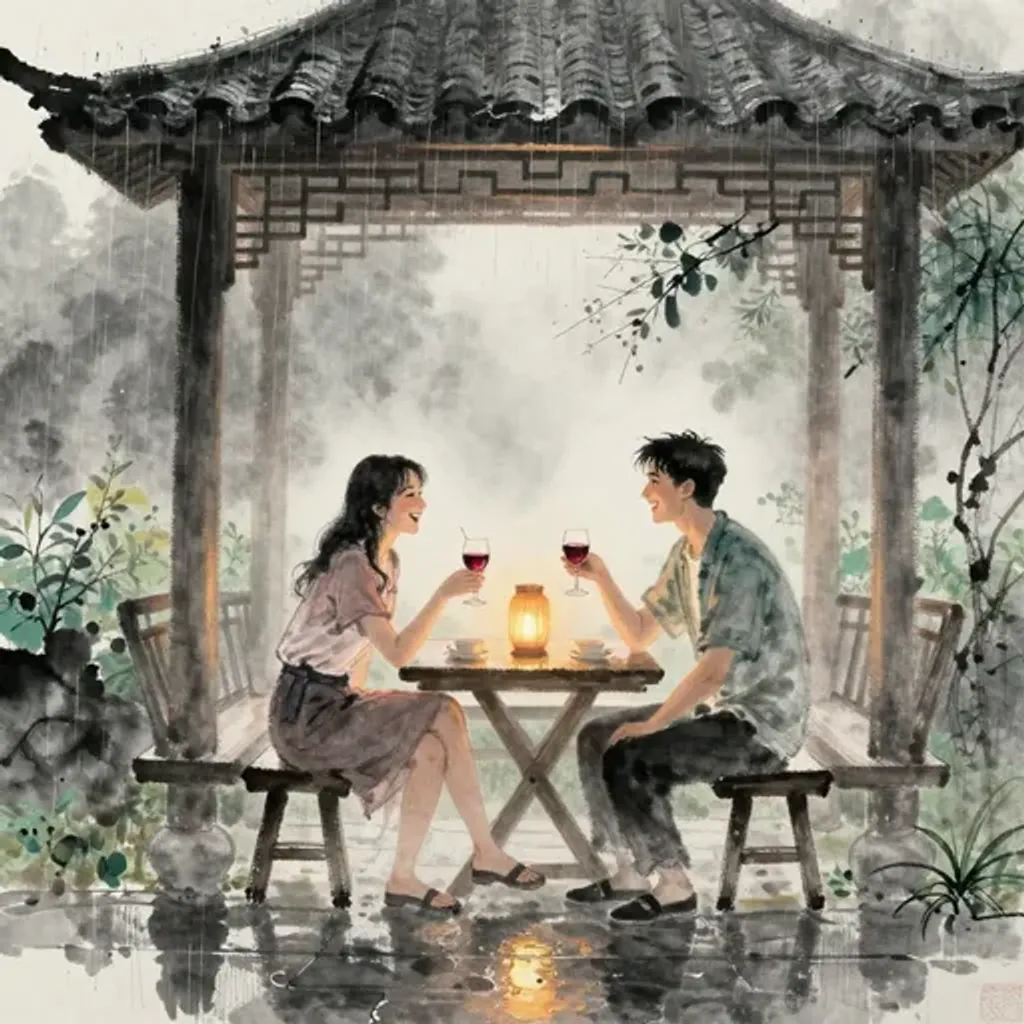
譐譐所言,莫知我恆;懽樂堅固,可以長安。
Cautious in every word; none understand my constancy. Joy and delight are solid and firm; one may thereby find lasting peace.
— Jiao Yanshou, Yilin (Forest of Changes), 1st century BC
Commentary
Fire above heaven yields to cloud and thunder, the tumult of Difficulty at the Beginning. The verse opens with earnest, cautious speech — 譐譐 suggests words repeated carefully, conscientiously — yet no one understands the speaker's constancy. Then the tone pivots: joy and steadfastness together make for lasting peace. From Great Possession to Difficulty at the Beginning, the message is that abundance must navigate the chaos of new starts. Those who speak with integrity amid confusion, holding fast to joy and constancy even when misunderstood, will find their footing. Thunder stirs beneath gathered clouds, and the one who persists through the birth-pangs finds security.
大有 → 蒙
Hexagram 14 → Hexagram 4: Youthful Folly
Changing lines: 1, 3, 4
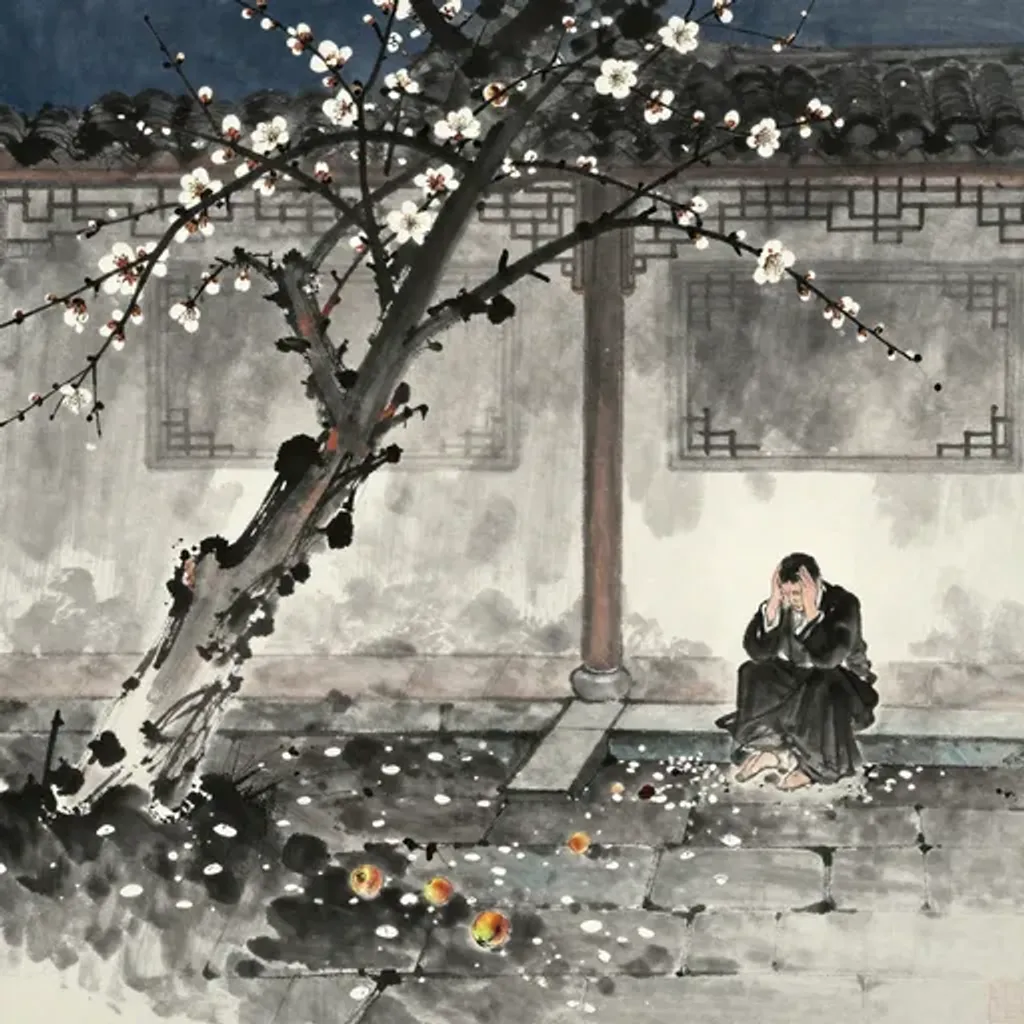
李梅零墜,心思憒憒;懷憂少愧,亂我魂氣。
Plum and apricot tumble and fall; the heart is muddled and confused. Harboring sorrow with little shame; it disorders my soul and spirit.
— Jiao Yanshou, Yilin (Forest of Changes), 1st century BC
Commentary
Fire blazes high in heaven, but here the fruits are falling. Plums and apricots drop from the branch — 零墜 evokes the Shijing's imagery of fruit dropping as youth passes. The heart is confused and muddled, carrying worry and a creeping shame that disorders the very soul-breath. From Great Possession to Youthful Folly, the mountain rises above a spring whose water runs clear but unseen. What was brightly possessed has slipped into bewilderment. The falling fruit suggests opportunities or loved ones lost in a season of confusion, and the troubled spirit cannot find its way back. The transformation captures how abundance, when it meets inexperience or naivety, can curdle into anxious disorientation rather than wisdom.
大有 → 需
Hexagram 14 → Hexagram 5: Waiting
Changing lines: 4, 5, 6
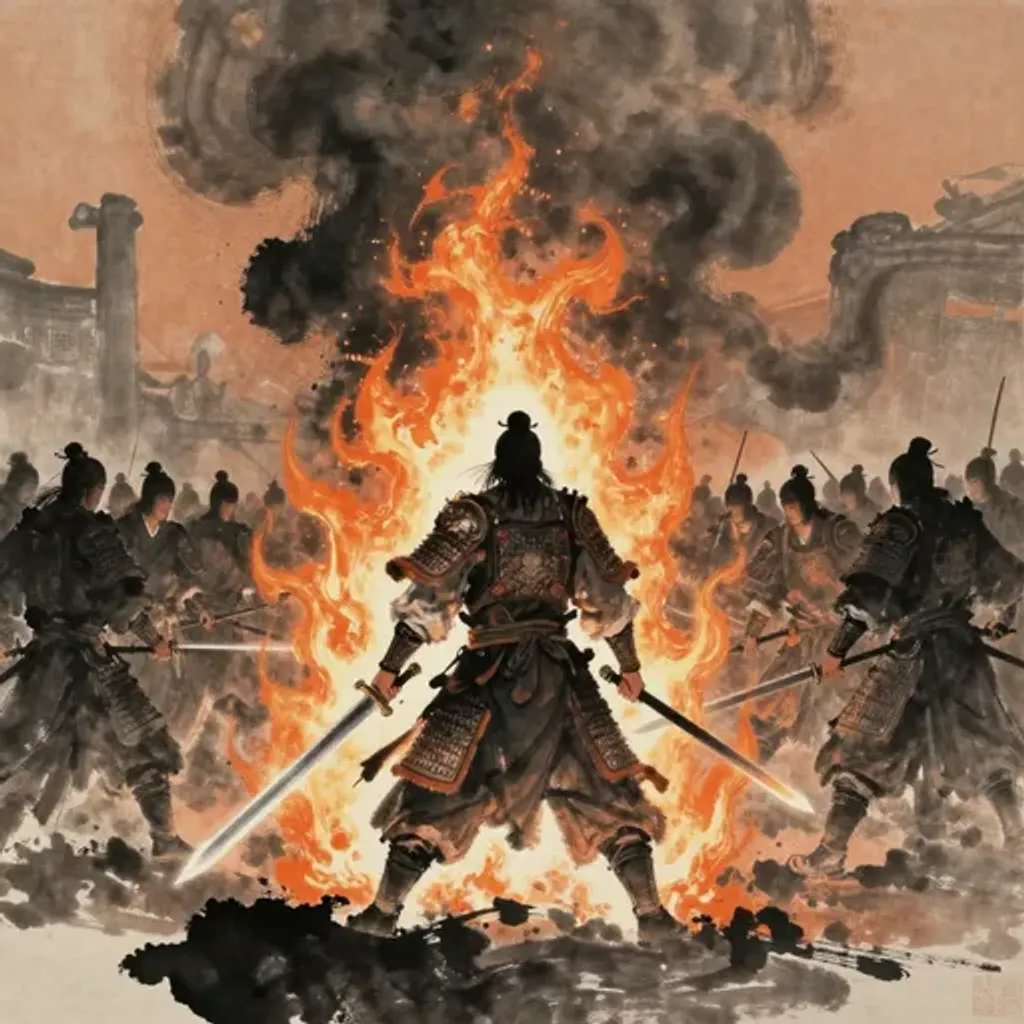
火雖熾,在吾後;寇雖多,在吾右;身安吉,不危殆。
Though fire rages, it is behind me. Though bandits are many, they are at my right. The body is safe and sound, meeting no peril.
— Jiao Yanshou, Yilin (Forest of Changes), 1st century BC
Commentary
Fire in heaven — Great Possession's blaze — here becomes a shield rather than a threat. The fire rages, but it burns behind me. The raiders are many, but they flank my right, not my front. Body safe, fortune auspicious, no danger approaches. The verse reads like a battlefield divination where every peril is positioned just outside harm's reach. From Great Possession to Waiting, clouds gather over heaven: danger is real but not yet upon you. Waiting's wisdom is precisely this — knowing that the threat exists yet trusting in one's position. The fire that defines Great Possession is here repurposed as a rear guard, and the enemies are kept at a manageable distance. Composure, not combat, is the counsel.
大有 → 訟
Hexagram 14 → Hexagram 6: Conflict
Changing lines: 1, 3, 5
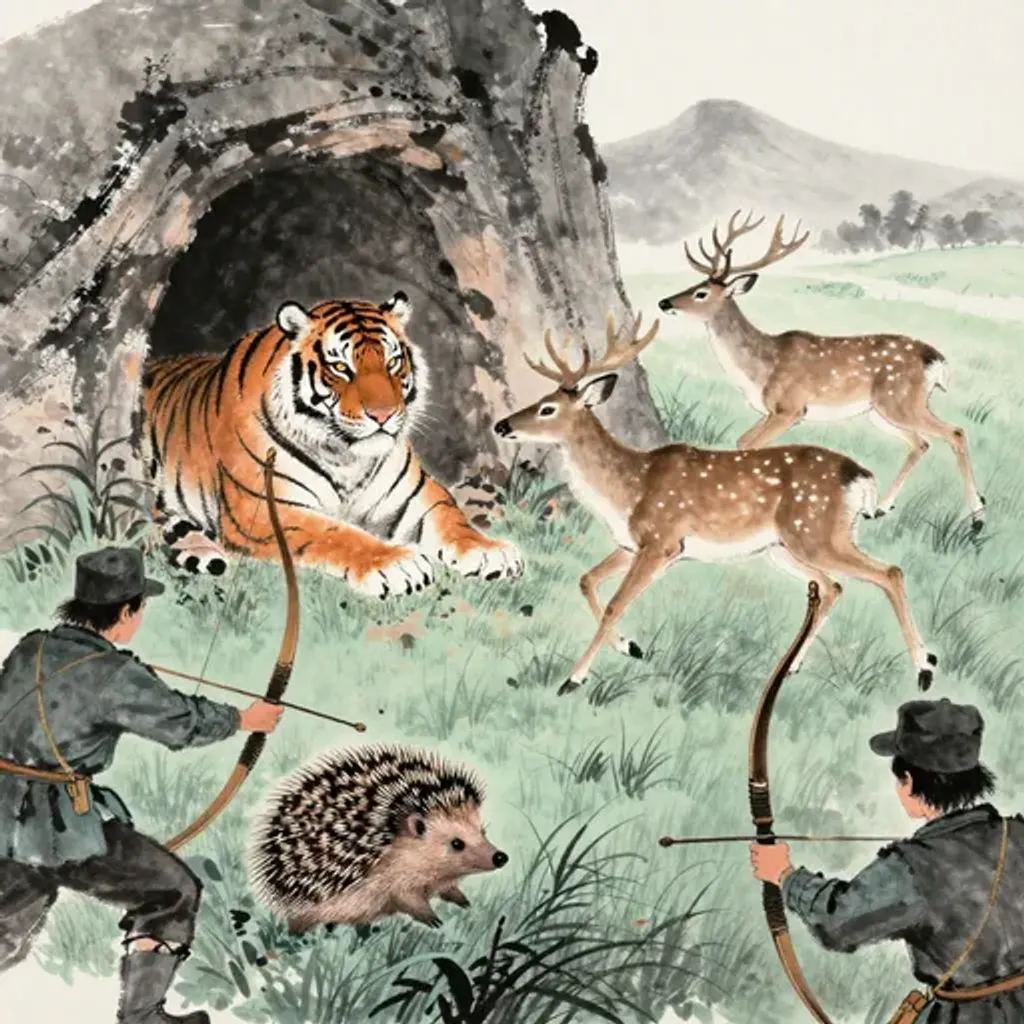
虎臥山隅,鹿過後朐。弓矢設張,猬為功曹,伏不敢起;逐至平野,得我美草。
The tiger crouches at the mountain's edge; a deer passes behind it. Bows and arrows are set and drawn; the hedgehog serves as marshal. Crouching, it dares not rise. Chased onto the open plain; it finds sweet grass.
— Jiao Yanshou, Yilin (Forest of Changes), 1st century BC
Commentary
Fire blazes high in heaven as a tiger crouches in a mountain corner while a deer passes behind it. Bows are drawn and arrows nocked, but it is the hedgehog who serves as Chief Clerk, keeping the tiger pinned to the ground, too intimidated to rise. The prey is then driven onto the open plain to graze in peace. The 'hedgehog as Gongcao' draws on natural lore from the Shiji's Treatise on Divination: the spiny hedgehog can subdue even the tiger. The Gongcao was the most powerful subordinate official in a Han commandery, controlling personnel through bureaucratic authority rather than brute force. From Great Possession to Conflict, abundance must be defended through institutional restraint. Raw power is checked not by greater power but by the small, well-armored functionary who controls the system.
大有 → 師
Hexagram 14 → Hexagram 7: The Army
Changing lines: 1, 3, 4, 6
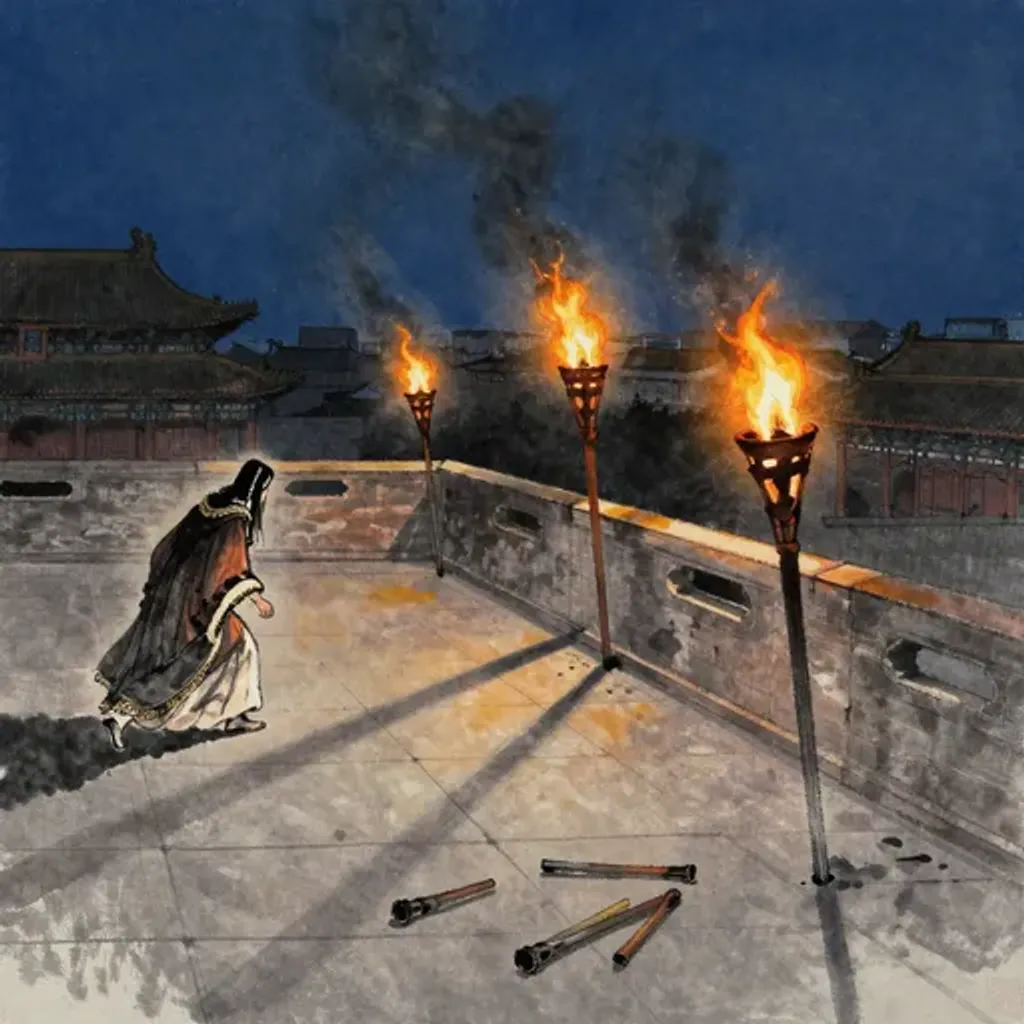
三火起明,兩滅其光;高位疾巔,驕恣誅傷。
Three fires blaze bright; two are extinguished. At the summit, illness strikes; arrogance and excess bring punishment and harm.
— Jiao Yanshou, Yilin (Forest of Changes), 1st century BC
Commentary
Three fires kindle bright, but two are extinguished — only one light remains. Those in high positions stumble at the summit, and arrogance brings punishment and ruin. The imagery of three fires with two quenched suggests a court or household where most of its luminaries have fallen, leaving a single diminished flame. From Great Possession to The Army, fire over heaven transforms into water hidden within earth — disciplined force concealed beneath the surface. The verse warns that unchecked pride at the height of power invites its own destruction. The Army's mechanism is not brute conquest but organized, disciplined response: the survivors must rally what remains, contain the arrogant, and rebuild order from the ashes of overreach.
大有 → 比
Hexagram 14 → Hexagram 8: Holding Together
Changing lines: 1, 2, 3, 4, 5, 6
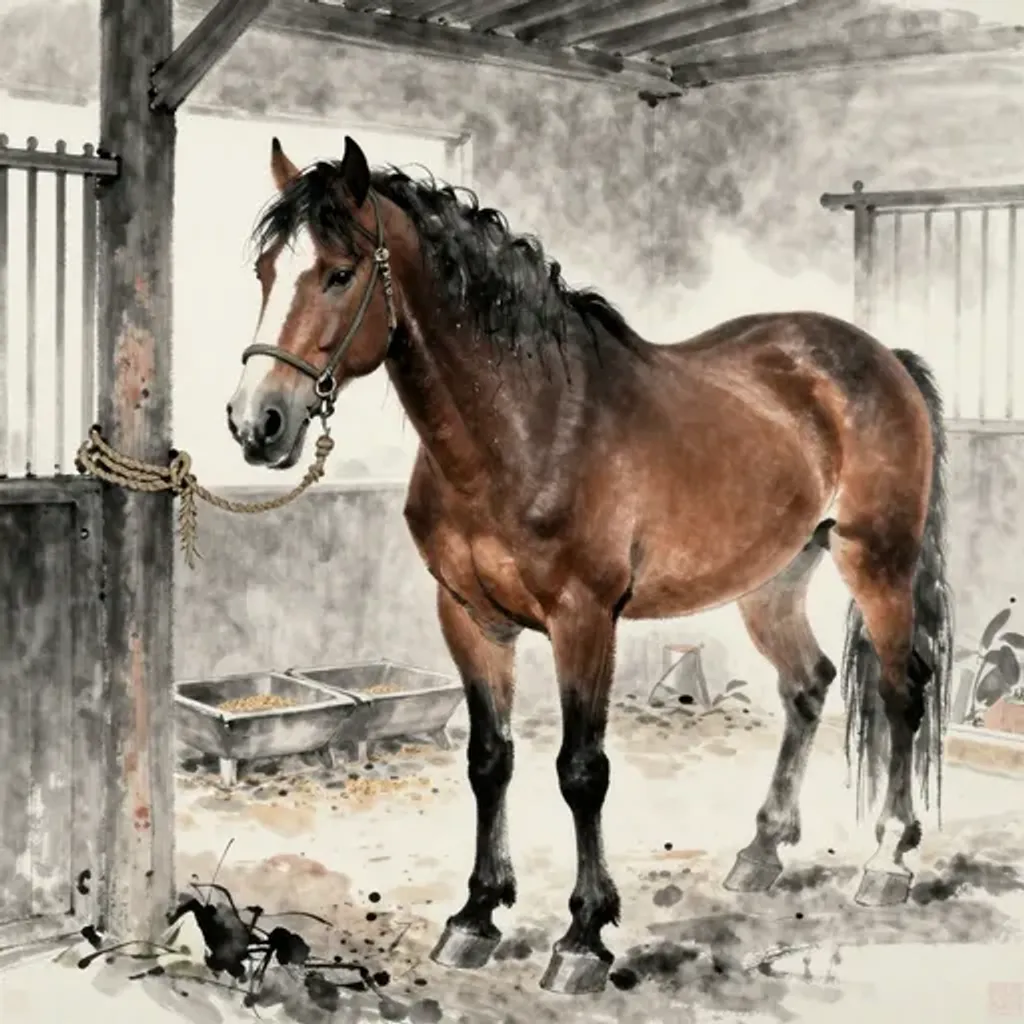
匹君楚馬,遇讒無辜,久旅離憂。
Matching the lord with a horse of Chu; falsely accused, innocent. Long exile brings separation and sorrow.
— Jiao Yanshou, Yilin (Forest of Changes), 1st century BC
Commentary
A bird of Chu — the ya or jackdaw — roosts far from home, slandered without cause, wandering in sorrow through a long exile. The original text reads 疋居楚烏 (a ya-bird dwelling in Chu), evoking the Shijing's imagery of birds displaced to hostile territory. Commentators note the Kan trigram's association with slander through opposing mouths, and Gen's association with the bird. From Great Possession to Holding Together, fire over heaven transforms into water over earth — the bonds of alliance. Yet the verse shows the dark side of seeking belonging: the exile desires fellowship but finds only calumny. The transformation suggests that even amid unjust accusation, the imperative remains to seek genuine alliance, though the road there passes through long grief.
大有 → 小畜
Hexagram 14 → Hexagram 9: Small Taming
Changing lines: 4, 5
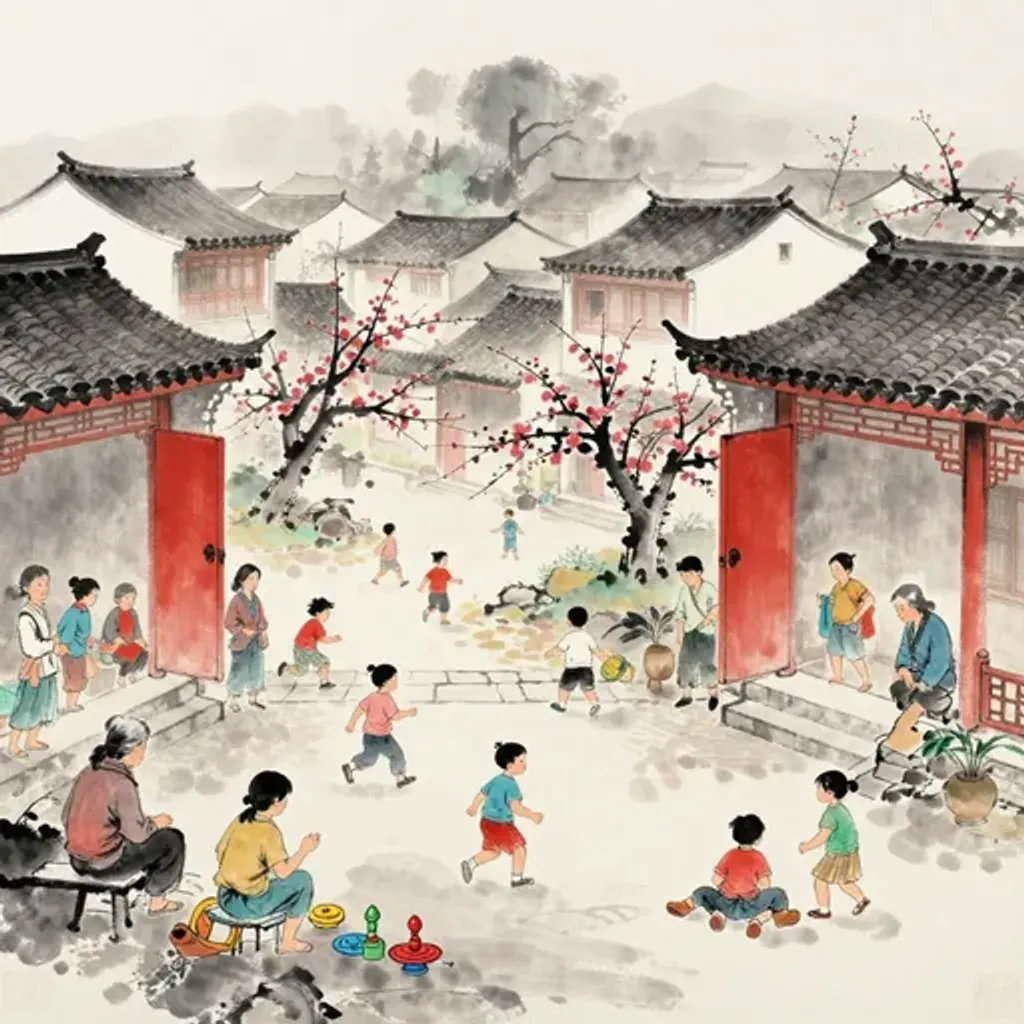
一室百子,同公異母;以義防患,禍災不起。
One house, a hundred sons, sharing one father, born of different mothers. With righteousness one guards against calamity; disaster and trouble do not arise.
— Jiao Yanshou, Yilin (Forest of Changes), 1st century BC
Commentary
One household, a hundred sons, sharing a single lord but born of different mothers. Through righteous principles they guard against calamity, and disaster never arises. The image evokes a great aristocratic household — perhaps a feudal lord's clan with many concubines — where harmony depends not on blood ties but on shared moral discipline. From Great Possession to Small Taming, fire over heaven gives way to wind coursing above heaven. The gentle wind of Xun restrains heaven's vast power through cultural refinement. The verse embodies this precisely: a large, potentially fractious family holds together not through force but through the binding power of righteousness and propriety, preventing the conflicts that difference might breed.
大有 → 履
Hexagram 14 → Hexagram 10: Treading
Changing lines: 3, 5
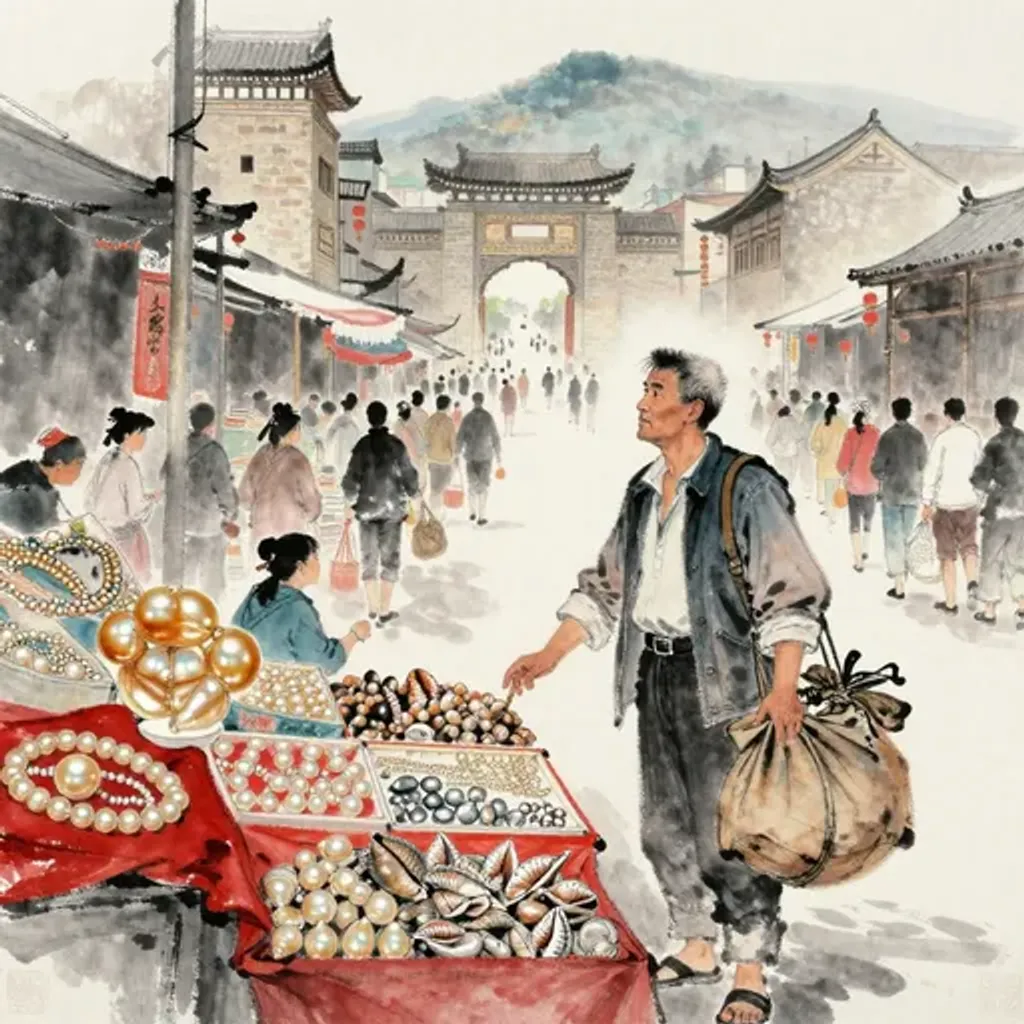
商人行旅,資所無有;貪貝利珠,留連王市;還旋內顧,公子何咎?
The merchant goes traveling, trading in what he does not have. Coveting cowries, desiring pearls, he lingers at the royal market. Turning homeward in reflection; what blame attaches to the young lord?
— Jiao Yanshou, Yilin (Forest of Changes), 1st century BC
Commentary
Merchants set out on their journey, trading in what others lack. Greedy for cowries and pearls, they linger in the royal marketplace, reluctant to leave its dazzle. But when they finally turn homeward and look within, the young lord faces no blame. From Great Possession to Treading, fire in heaven gives way to heaven above the lake — the image of walking carefully, distinguishing high from low. The merchant parable captures Treading's essence: desire pulls one into dangerous territory (the royal market, the tiger's tail), but knowing when to turn back and reflecting inward restores propriety. The 'young lord' escapes harm precisely because he recognizes the moment to retreat from temptation and tread carefully home.
大有 → 泰
Hexagram 14 → Hexagram 11: Peace
Changing lines: 4, 6
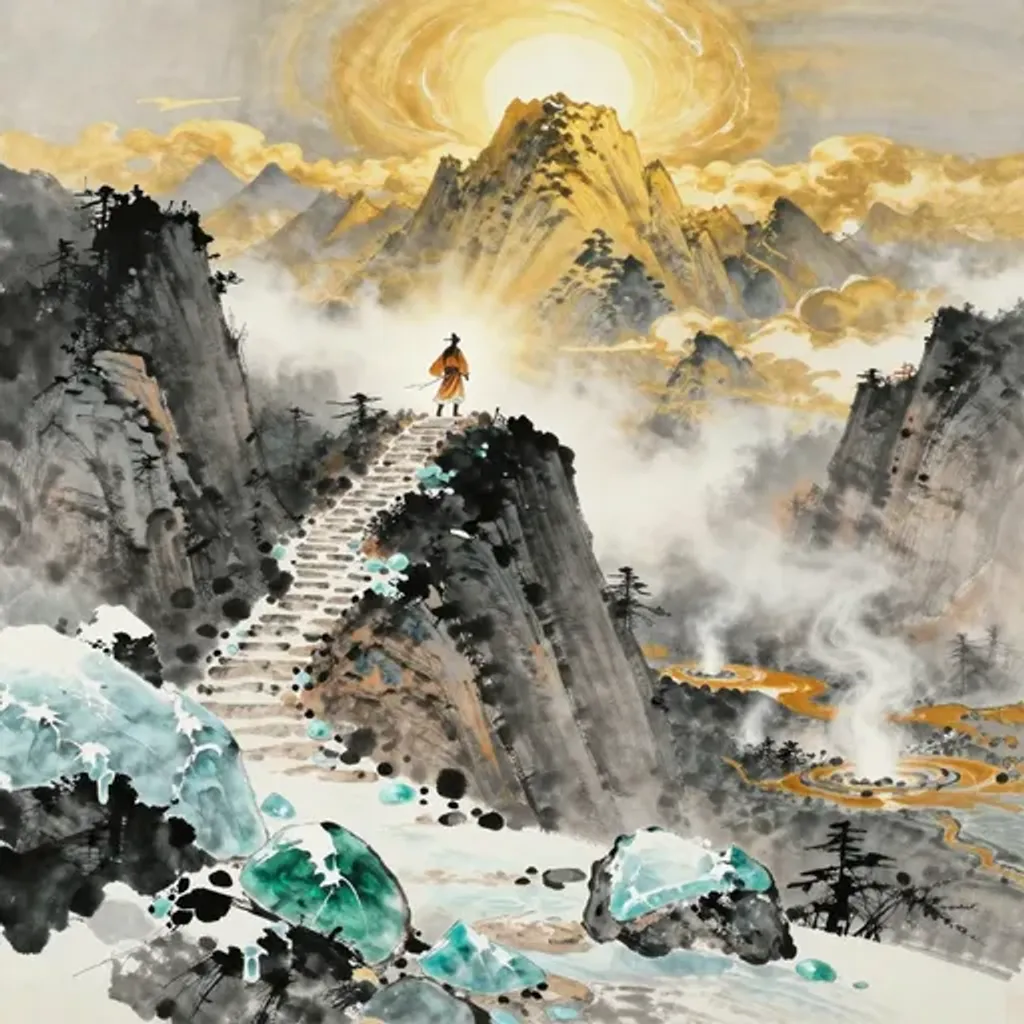
禹將為君,北入崑崙;稍進揚光,登入溫湯,代舜為治,功德昭明。
Yu shall become the sovereign; northward he enters Kunlun. Advancing gradually, radiating glory; ascending to the hot springs. He succeeds Shun as ruler; his merit and virtue are brilliant and clear.
— Jiao Yanshou, Yilin (Forest of Changes), 1st century BC
Commentary
Yu is about to become sovereign. He journeys north to Kunlun, gradually advancing, his radiance spreading as he ascends into the warm springs before succeeding Shun as ruler — his merit and virtue shining clear. The verse traces Yu the Great's mythic journey from flood-tamer to sage-king, passing through Kunlun's sacred geography before receiving the mandate. From Great Possession to Peace, fire over heaven transforms into earth above heaven — the cosmic intercourse of heaven and earth that defines Tai. Yu's gradual, luminous ascent embodies this perfectly: the ruler who has earned heaven's trust through tireless labor now channels that mandate downward to nourish the world below. Merit radiates like fire, governance flows like earth receiving heaven.
大有 → 否
Hexagram 14 → Hexagram 12: Standstill
Changing lines: 1, 2, 3, 5
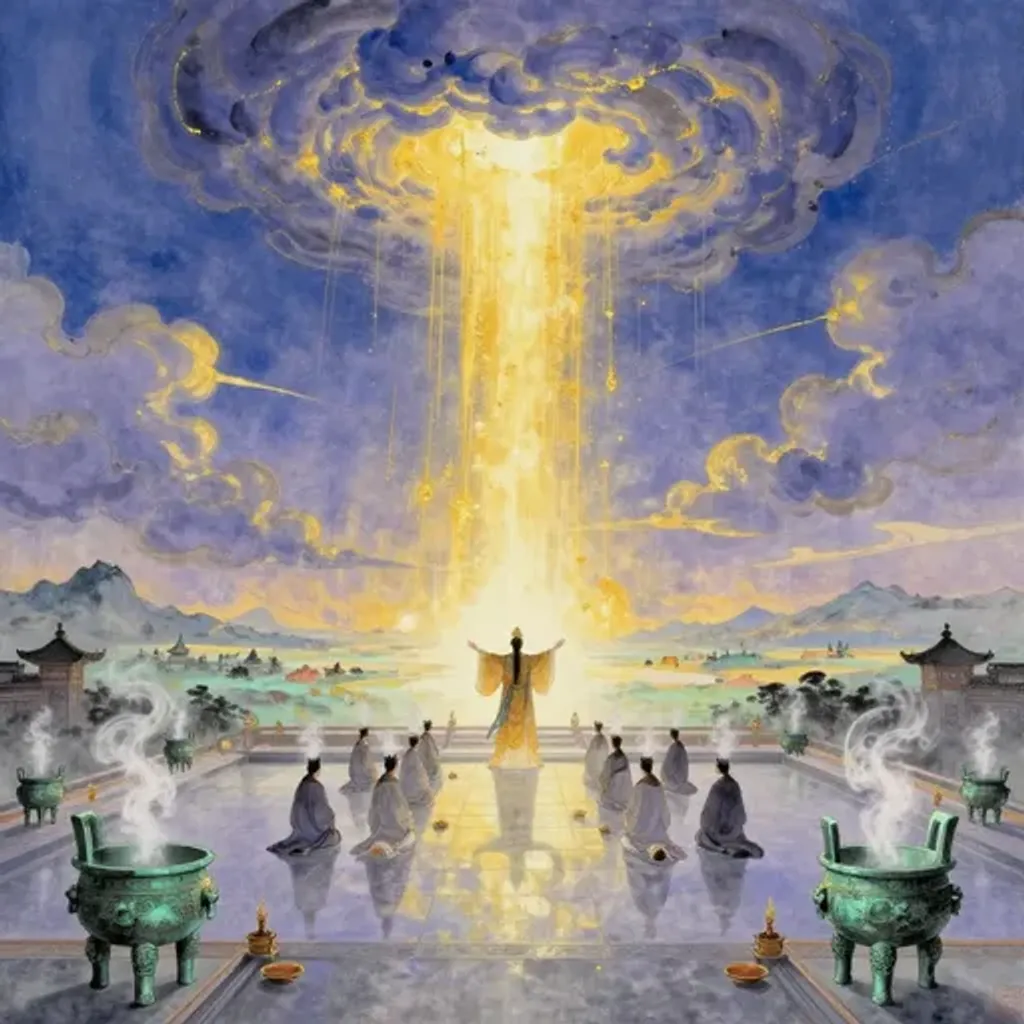
乾行天德,覆幬無極;嘔呼烹熟,使各自得。
Qian moves with heaven's virtue; its canopy covers without limit. Nurturing and ripening all things; each finds its proper place.
— Jiao Yanshou, Yilin (Forest of Changes), 1st century BC
Commentary
Heaven moves with supreme virtue, its canopy sheltering all things without limit. With patient care it tends and ripens each creature, letting everything find its proper place. The verse evokes a cosmic kitchen: the sounds of cooking and calling — the universe as nourishing cauldron, each being brought to its natural fulfillment. From Great Possession to Standstill, fire over heaven transforms into heaven and earth failing to communicate. Yet the verse itself describes perfect governance, suggesting that the ideal state described here is precisely what Standstill threatens. The counsel reads as: remember this vision of universal nourishment, for when heaven and earth cease to interact, the sage must hold to frugal virtue and refuse the lure of emolument.
大有 → 同人
Hexagram 14 → Hexagram 13: Fellowship
Changing lines: 2, 5
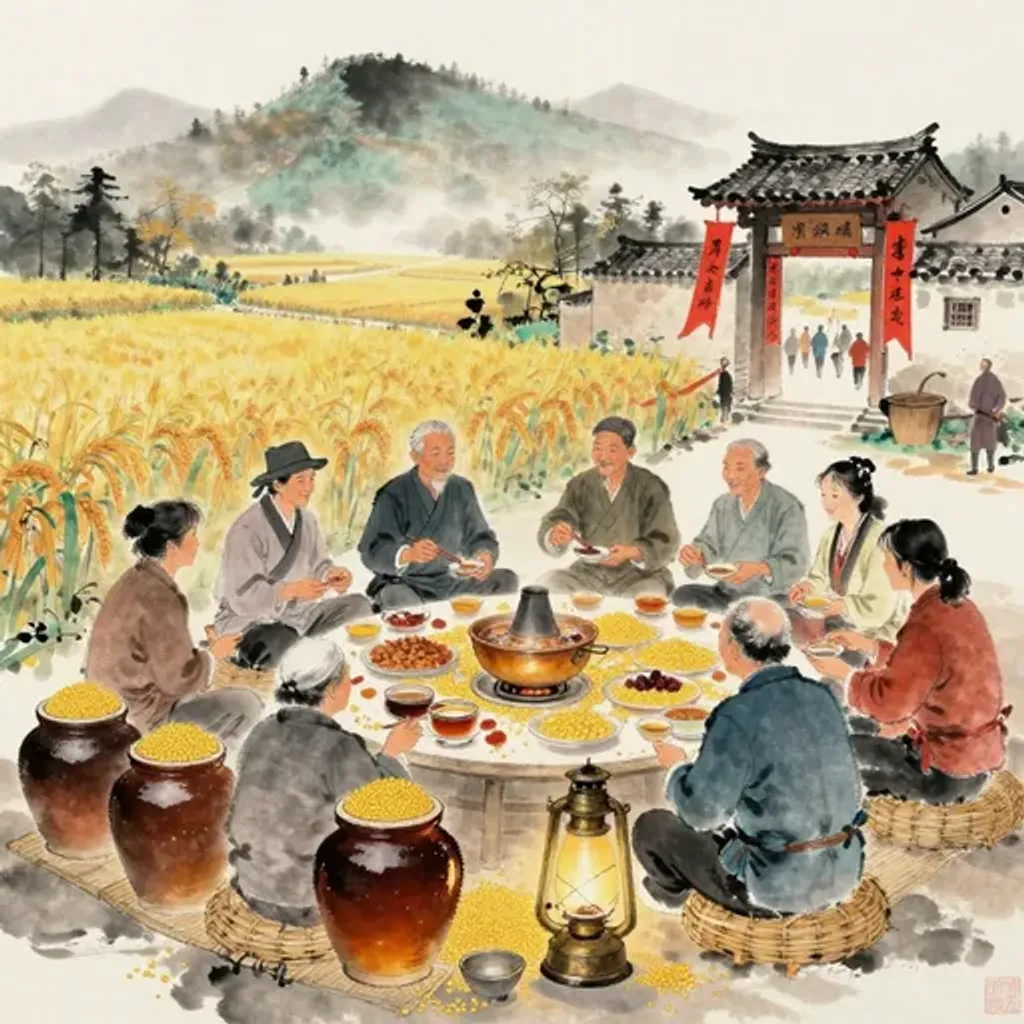
南國盛茂,黍稷醴酒;可以享老,樂以嘉友。
The southern realm thrives in lush abundance; millet wine and rice spirits. Fit to nourish the elders; joyful in the company of fine friends.
— Jiao Yanshou, Yilin (Forest of Changes), 1st century BC
Commentary
The southern lands flourish in abundance: grain and millet ripen, sweet wine flows freely. Enough to feast the elders, enough to gladden dear friends. The verse paints an agrarian paradise — the harvest so generous it sustains both ritual obligation to honor elders and communal joy in celebrating with companions. From Great Possession to Fellowship, fire over heaven becomes heaven with fire — the same elements now oriented toward human communion. Fellowship's image is heaven and fire sharing one direction, and the verse embodies this: shared abundance creates shared identity. The feast is the mechanism of fellowship, turning private wealth into collective belonging.
大有 → 大有
Hexagram 14 → Hexagram 14: Great Possession
No changing lines — the hexagram is unchanged
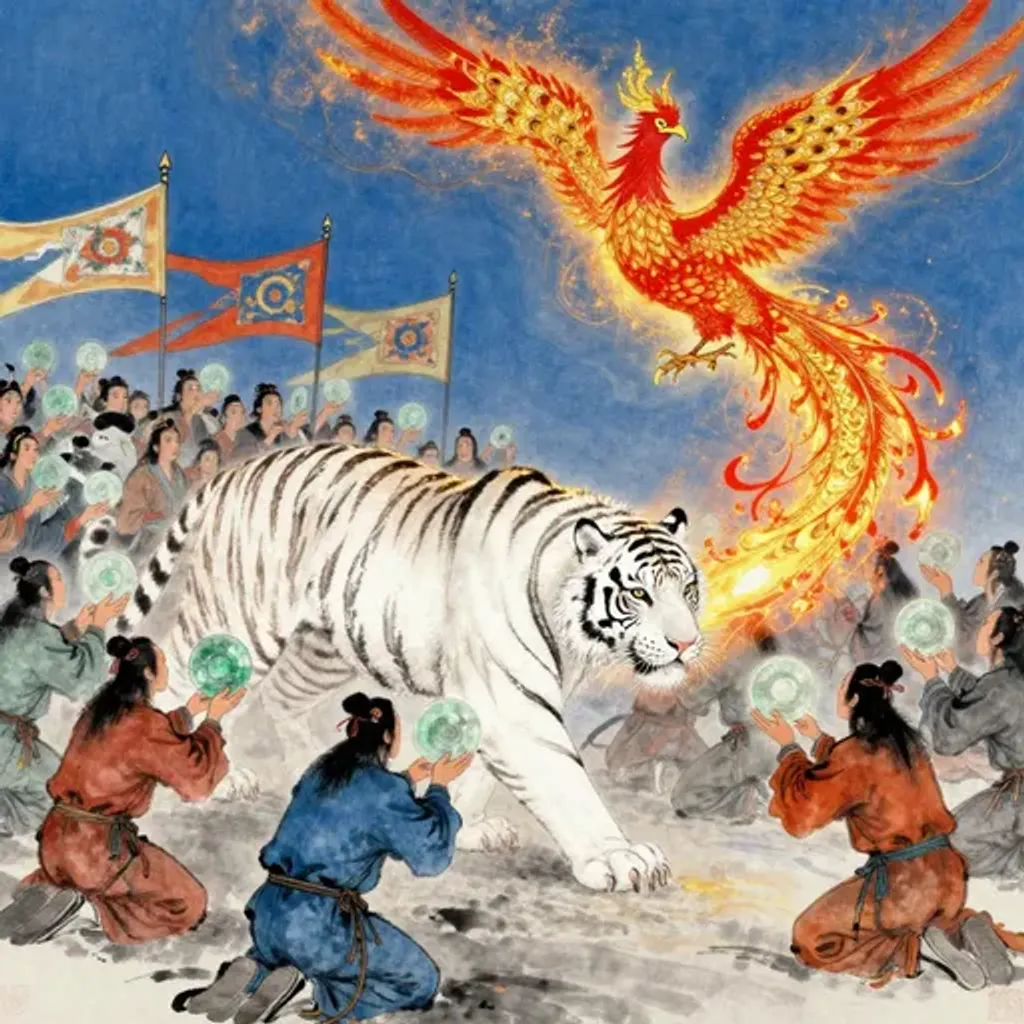
白虎張牙,征伐東來;朱雀前驅,讚道說辭;敵人請服,衘璧前趨。
The white tiger bares its fangs; it marches east to punish. The vermillion bird leads the vanguard, praising and proclaiming. The enemy sues for peace, bearing jade and rushing forward.
— Jiao Yanshou, Yilin (Forest of Changes), 1st century BC
Commentary
The White Tiger bares its fangs, leading a campaign from the east. The Vermilion Bird rides ahead as herald, chanting proclamations and delivering ultimatums. The enemy submits, bearing jade bi-discs as tokens of surrender. The verse deploys the celestial guardians of west and south as military vanguard and diplomatic envoy: White Tiger as the martial spearhead, Vermilion Bird as the voice of authority. From Great Possession to Great Possession — the hexagram unchanged — suggests a situation so fully realized it needs no transformation. The fire in heaven is at its zenith, and all opposing forces recognize its supremacy. This is possession confirmed by universal acknowledgment, power so complete that enemies come forward willingly.
大有 → 謙
Hexagram 14 → Hexagram 15: Modesty
Changing lines: 1, 2, 4, 6
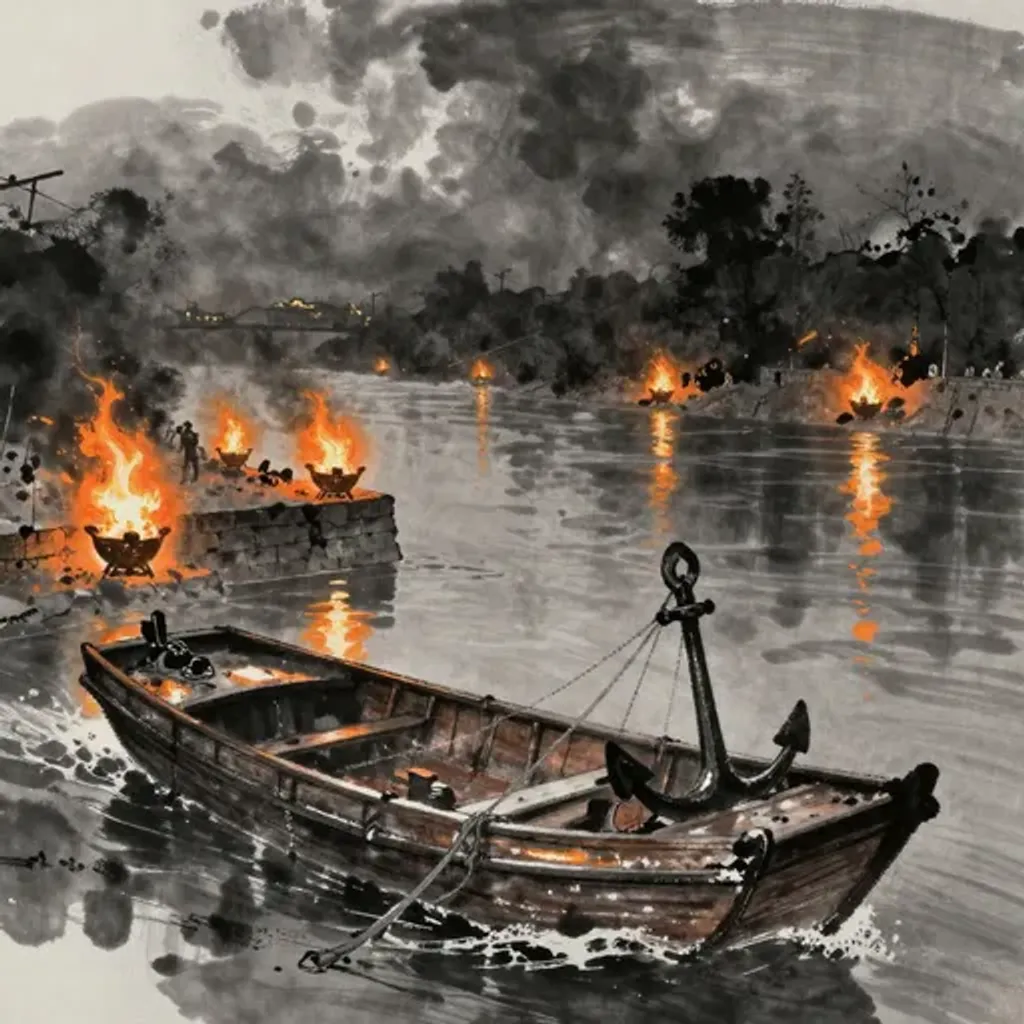
方船備水,旁河然火;終身無禍。
Boats lashed together guard against flood; fire kept along the riverbank. To the end of life, no calamity.
— Jiao Yanshou, Yilin (Forest of Changes), 1st century BC
Commentary
Square boats are readied against floods, fires are lit along the riverbank as beacons. A lifetime passes without calamity. The verse is a parable of preparedness: the paired boats address water's threat, the fires address darkness and cold, and together they form a complete defense. From Great Possession to Modesty, fire over heaven descends to become a mountain hidden within the earth. The transformation is striking — from maximum visibility to voluntary concealment. The prepared person described here embodies Modesty's logic: by planning quietly and thoroughly, one avoids the disasters that strike the conspicuous and the careless. Abundance channeled into humble preparation yields lifelong safety.
大有 → 豫
Hexagram 14 → Hexagram 16: Enthusiasm
Changing lines: 1, 2, 3, 6
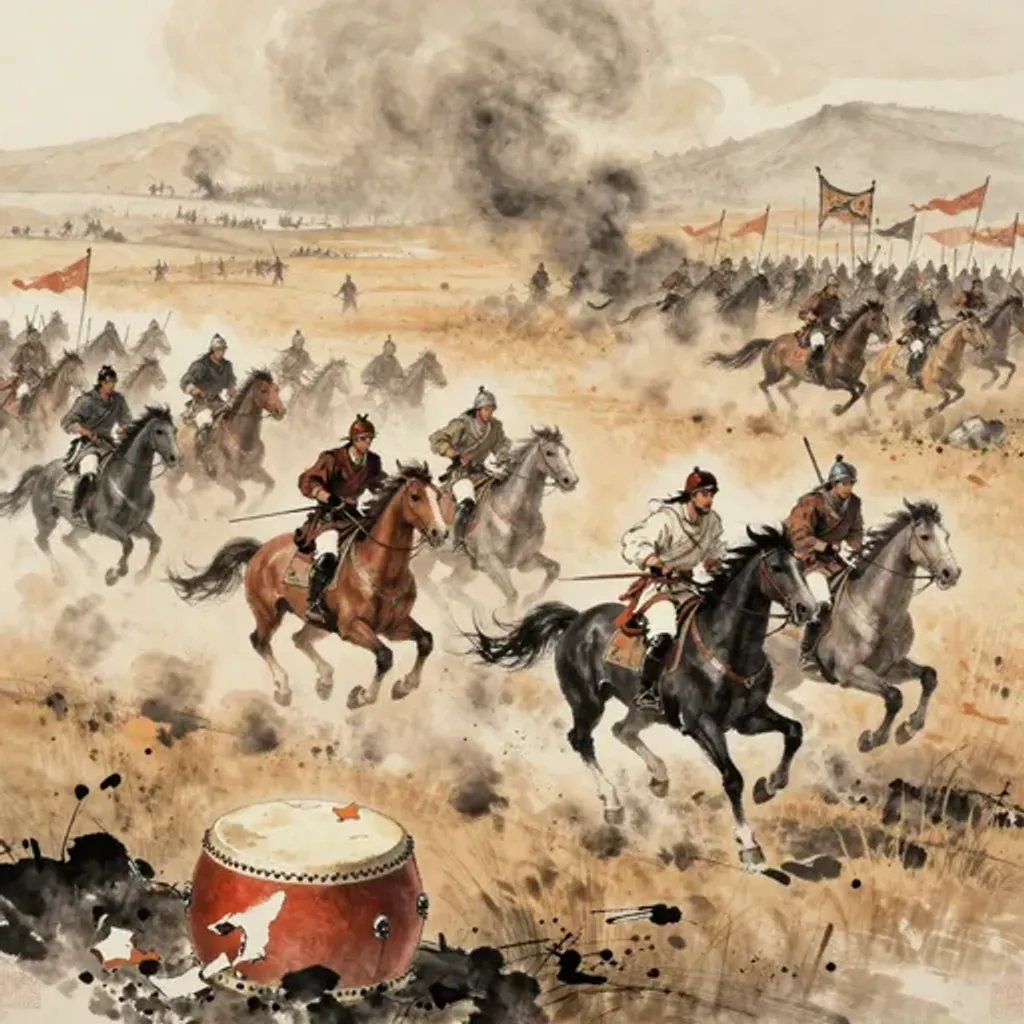
雷行相逐,無有休息;戰於平陸,為夷所覆。
Thunder chases thunder without cease. They battle on the open plain; overwhelmed by the foreign host.
— Jiao Yanshou, Yilin (Forest of Changes), 1st century BC
Commentary
Thunder chases thunder without rest — relentless pursuit with no respite. An army fights on the plain of Pinglu and is overrun by the Yi barbarians. The doubled thunder of the verse mirrors Enthusiasm's trigram composition, but here the energy is misdirected: instead of joyous mobilization, it becomes exhausting pursuit that ends in defeat. Pinglu offers no defensive advantage, and the overconfident army is overwhelmed. From Great Possession to Enthusiasm, fire over heaven gives way to thunder erupting from the earth. The verse warns that enthusiasm without strategic ground collapses into rout. The same explosive energy that inspires can destroy when it meets a better-prepared adversary on open terrain.
大有 → 隨
Hexagram 14 → Hexagram 17: Following
Changing lines: 2, 3, 5, 6
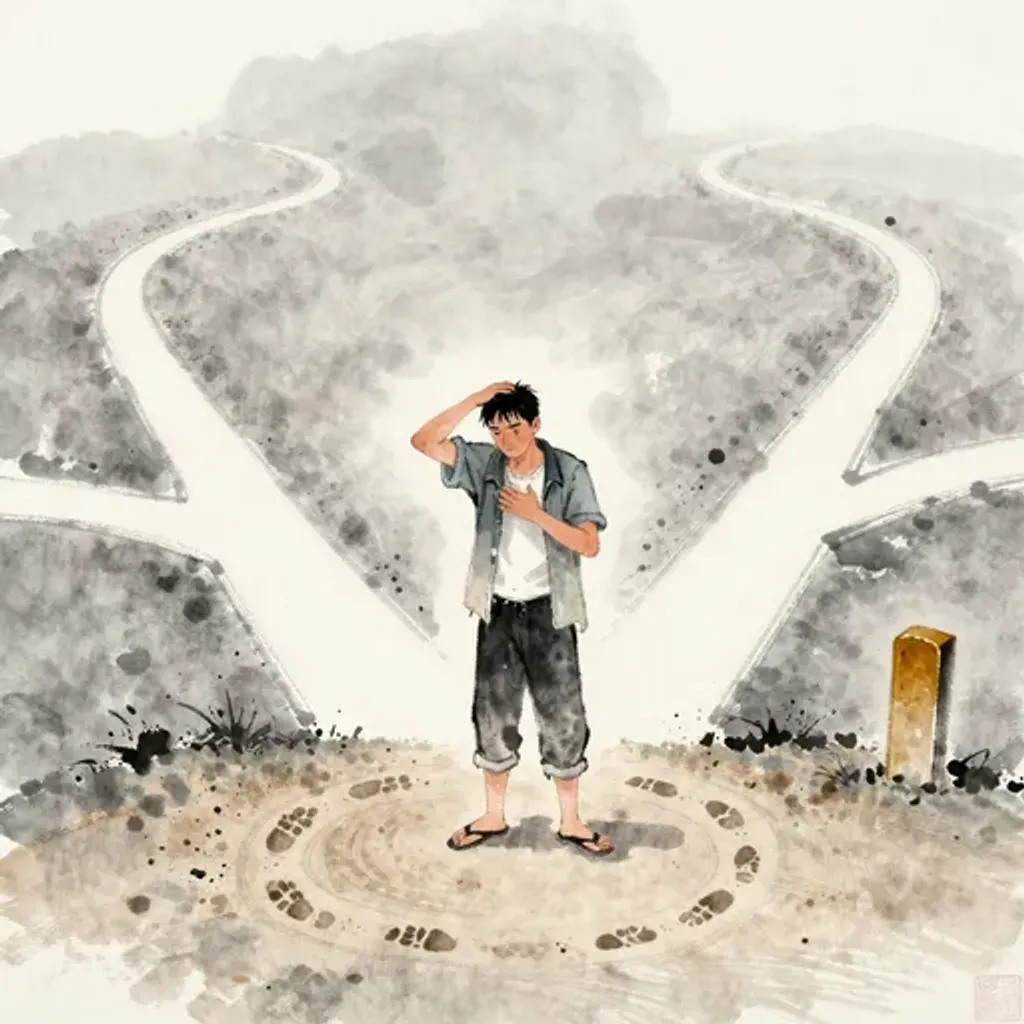
躑躅踟躕,拊心搔頭;五晝四夜,賭我齊侯。
Hesitating and pacing; beating the breast, scratching the head. Five days and four nights, watching for our Lord of Qi.
— Jiao Yanshou, Yilin (Forest of Changes), 1st century BC
Commentary
Pacing back and forth, beating the breast and scratching the head in anguish. Five days and four nights pass before one finally catches sight of the Lord of Qi. The verse captures agonized anticipation — someone waiting desperately for an audience with a powerful figure, every hour stretching into torment. The restless body language and self-soothing gestures paint raw anxiety. From Great Possession to Following, fire above heaven transforms into thunder resting within the lake — the image of yielding to natural rhythms at nightfall. Following requires surrendering control, and this verse dramatizes the painful cost of that surrender: you cannot force the audience, only wait until the moment arrives. The one who endures the vigil ultimately sees the lord.
大有 → 蠱
Hexagram 14 → Hexagram 18: Work on the Decayed
Changing lines: 1, 4
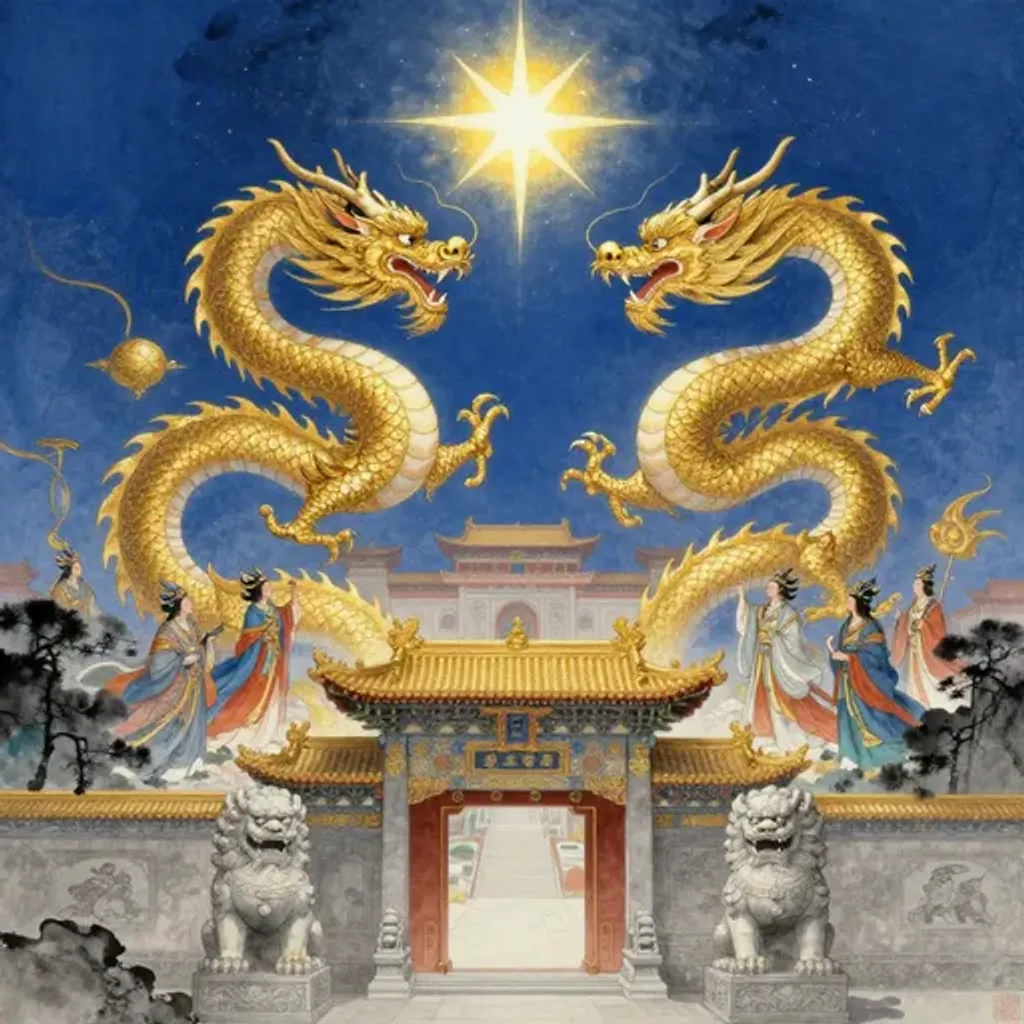
大口宣唇,神使伸言;黃龍景星,出應侯門,與福上天,天下安昌。
A great mouth with broad lips; a spirit commands him to speak forth. Golden dragon, auspicious star, appearing at the lord's gate. Rising with blessings toward heaven; all under heaven is peaceful and thriving.
— Jiao Yanshou, Yilin (Forest of Changes), 1st century BC
Commentary
A great mouth with broad lips — a divine emissary delivers an oracle. The Yellow Dragon and the Auspicious Star appear at the lord's gate, blessing ascends to heaven, and the realm enjoys peace and prosperity. The Yellow Dragon and Auspicious Star are among the most potent portents of sagely governance in Han cosmology: their simultaneous appearance signals that heaven endorses the ruler's virtue. From Great Possession to Work on the Decayed, fire over heaven transforms into wind beneath the mountain — the image of corruption stirred and renewed. The verse suggests that even when decay threatens, a genuine divine mandate expressed through unmistakable omens can galvanize renewal. The oracle-giver's broad lips represent the amplification of heaven's message through human channels.
大有 → 臨
Hexagram 14 → Hexagram 19: Approach
Changing lines: 3, 4, 6
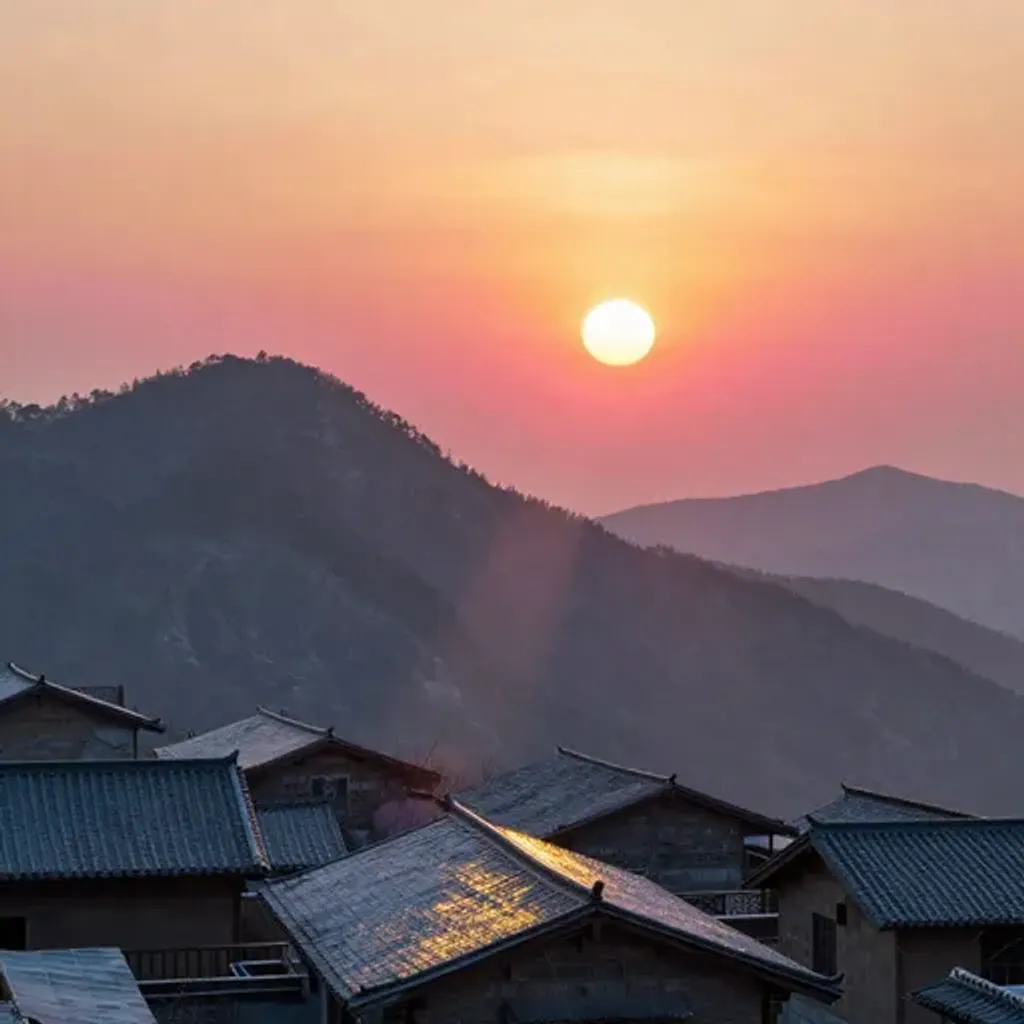
陰衰老極,陽建其德;離陽載光,天下昭明。
Yin fades, aged to its extreme; yang establishes its virtue. The bright sun carries its radiance; all under heaven is illumined.
— Jiao Yanshou, Yilin (Forest of Changes), 1st century BC
Commentary
Yin has declined to its extreme, old and exhausted. Yang now establishes its virtue, and the fire-bright Li trigram carries radiance aloft — the world is illuminated. The verse reads as a cosmological turning point: the spent yin force yields to resurgent yang, and light returns. From Great Possession to Approach, fire over heaven transforms into earth above the lake — the image of a sovereign approaching to teach and nurture without limit. The connection is precise: when yin's exhaustion reaches its nadir, yang's approach is not a conquest but a natural succession, like a teacher arriving when the student is ready. Li's light carried forward from Great Possession becomes the instrument of Approach's benevolent oversight.
大有 → 觀
Hexagram 14 → Hexagram 20: Contemplation
Changing lines: 1, 2, 3, 4, 5
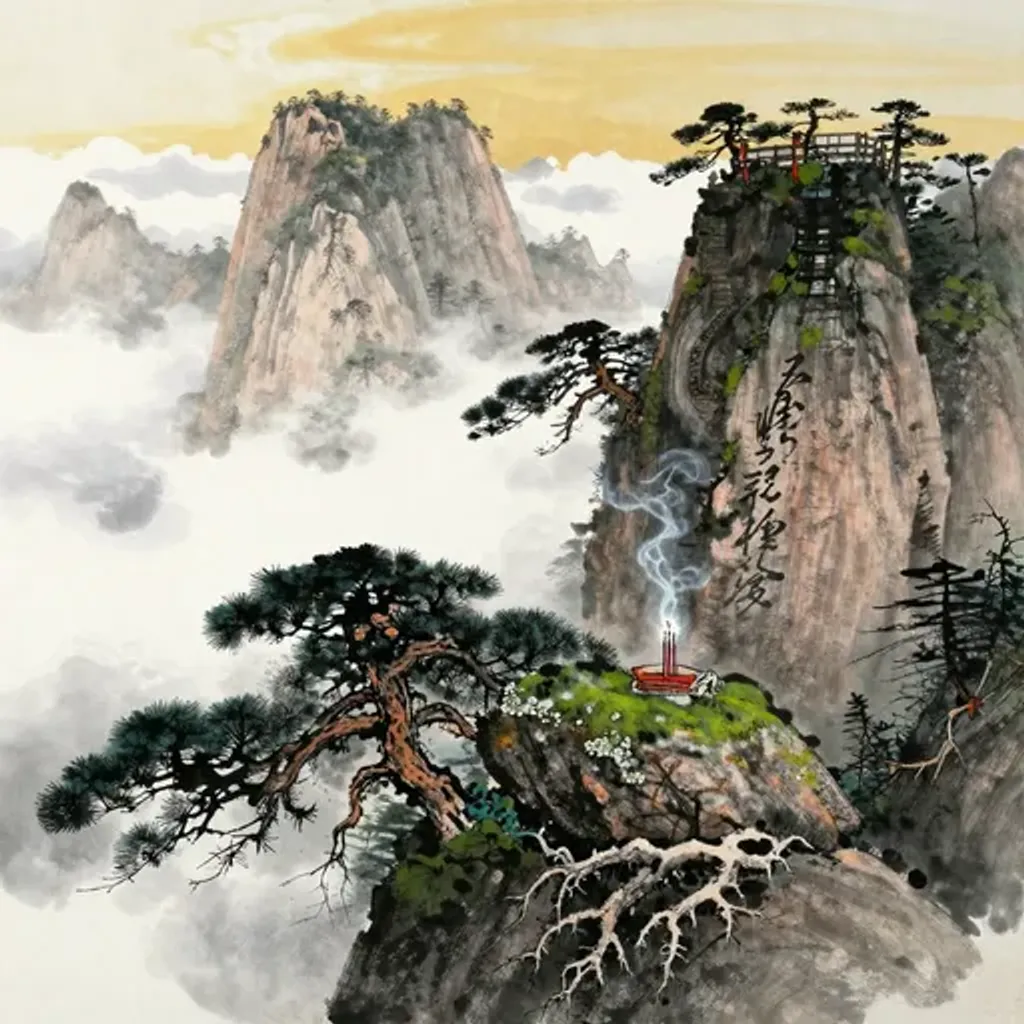
三塗五岳,陽城太室;神明所伏,獨無兵革。
White clouds circle the mountain, ageless; ancient pines clasp rocks where moss grows on its own. Sword-qi dissolves into a passing breeze — incense smoke curls upward toward the Heavenly Terrace.
— Jiao Yanshou, Yilin (Forest of Changes), 1st century BC
Commentary
The Three Passes, the Five Sacred Mountains, Yangcheng and Taishi Peak — these are the sacred strategic landmarks of the Central Plains, recorded in the Zuo Zhuan as among the 'nine dangers of the Nine Provinces.' Divine spirits dwell here in repose, and this land alone is spared the ravages of war. The original verse names the most formidable natural defenses of ancient China: Santu refers to the three strategic passes near Luoyang (Taihang, Huanyuan, and Xiaomian), while Taishi is the greater peak of Mount Song. From Great Possession to Contemplation, fire over heaven becomes wind moving over the earth — the sage-king's inspection of his realm. The verse suggests that true contemplation begins from places of natural sanctity, where geography itself enforces peace.
大有 → 噬嗑
Hexagram 14 → Hexagram 21: Biting Through
Changing lines: 2, 3
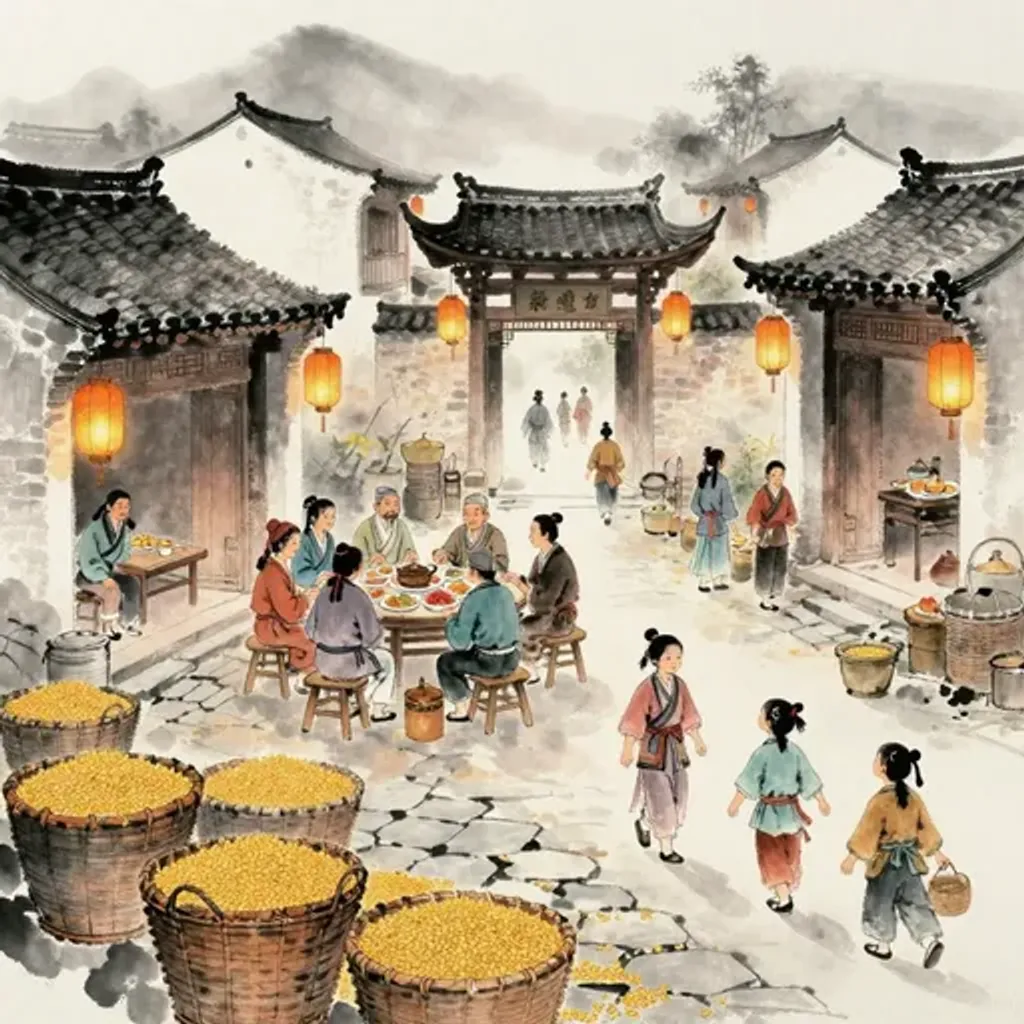
年豐歲熟,政仁民樂;利以居止,旅人獲福。
A bountiful year, a rich harvest; governance is benevolent, the people content. Favorable for settling and staying; the traveler gains good fortune.
— Jiao Yanshou, Yilin (Forest of Changes), 1st century BC
Commentary
A year of plenty, the harvest ripe, governance benevolent and the people joyful. A good place to settle; even travelers receive blessings. The verse paints the simplest and most complete image of prosperity: good crops, good governance, contented residence, and hospitality to strangers. From Great Possession to Biting Through, fire over heaven becomes fire and thunder — the lightning that clears obstruction and enforces law. The connection may seem paradoxical, but Biting Through's purpose is precisely to create the conditions described here: by removing obstacles and enforcing just governance, the sage-king produces the harvest of peace. The verse is the result; the hexagram is the method.
大有 → 賁
Hexagram 14 → Hexagram 22: Grace
Changing lines: 2, 4
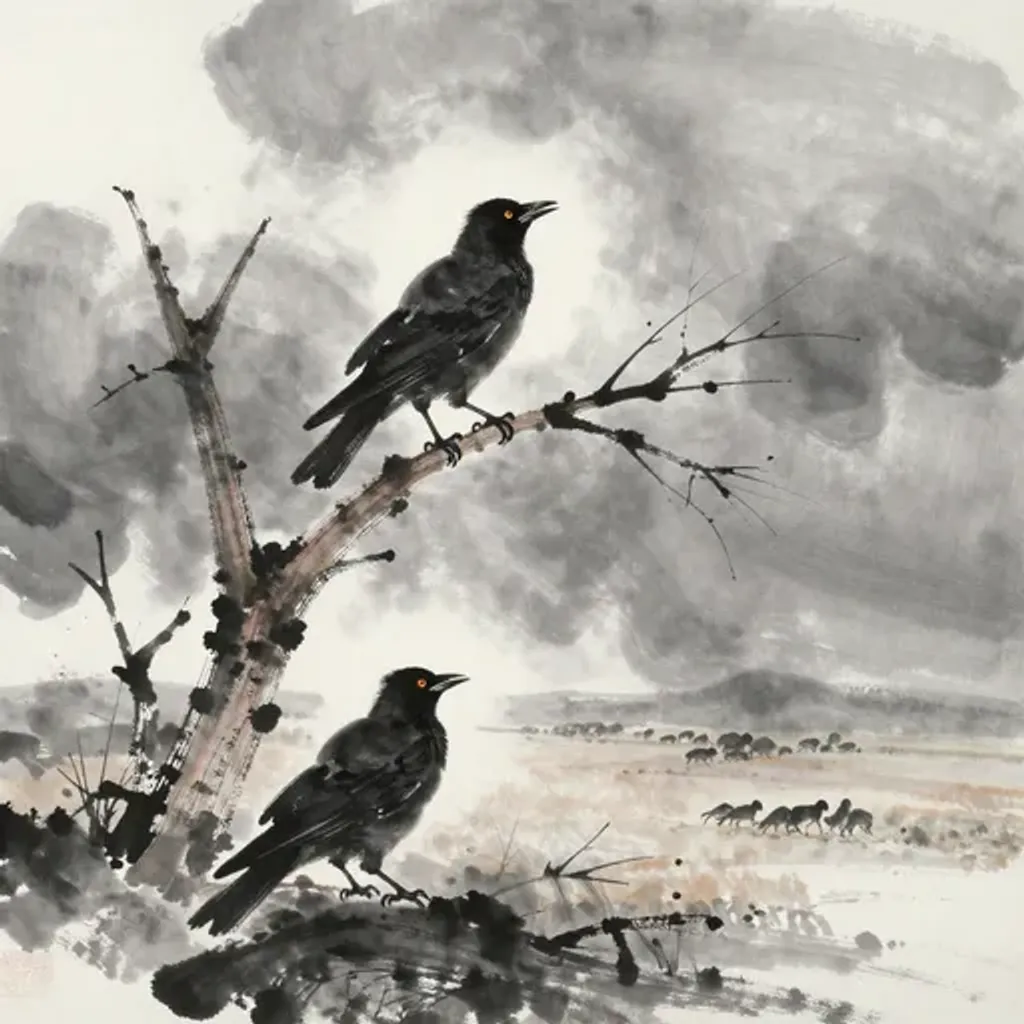
楚烏逢天,不時久放;離居無群,意昧精喪。作此哀詩,以告孔憂。
A bird of Chu encounters unkind heaven; exiled untimely and long. Living apart, without a flock; its spirit dims, its essence fades. It composes this lament; to express its utmost sorrow.
— Jiao Yanshou, Yilin (Forest of Changes), 1st century BC
Commentary
A bird of Chu encounters ill fortune — released into the wild at the wrong season, it wanders without a flock, its spirit dimmed and essence drained. It composes a mournful poem to express its deep sorrow. The image of a displaced Chu bird resonates with the Chuci tradition of the exiled courtier who identifies with a lonely, misplaced creature. The phrase 'composing this lament' points to the literary act itself as consolation. From Great Possession to Grace, fire above heaven descends to become fire beneath the mountain — outward splendor turned inward as inner refinement. Grace is adornment, but here the adornment is grief made beautiful through poetry. The exile's pain, transmuted into art, becomes the verse's own justification.
大有 → 剝
Hexagram 14 → Hexagram 23: Splitting Apart
Changing lines: 1, 2, 3, 4
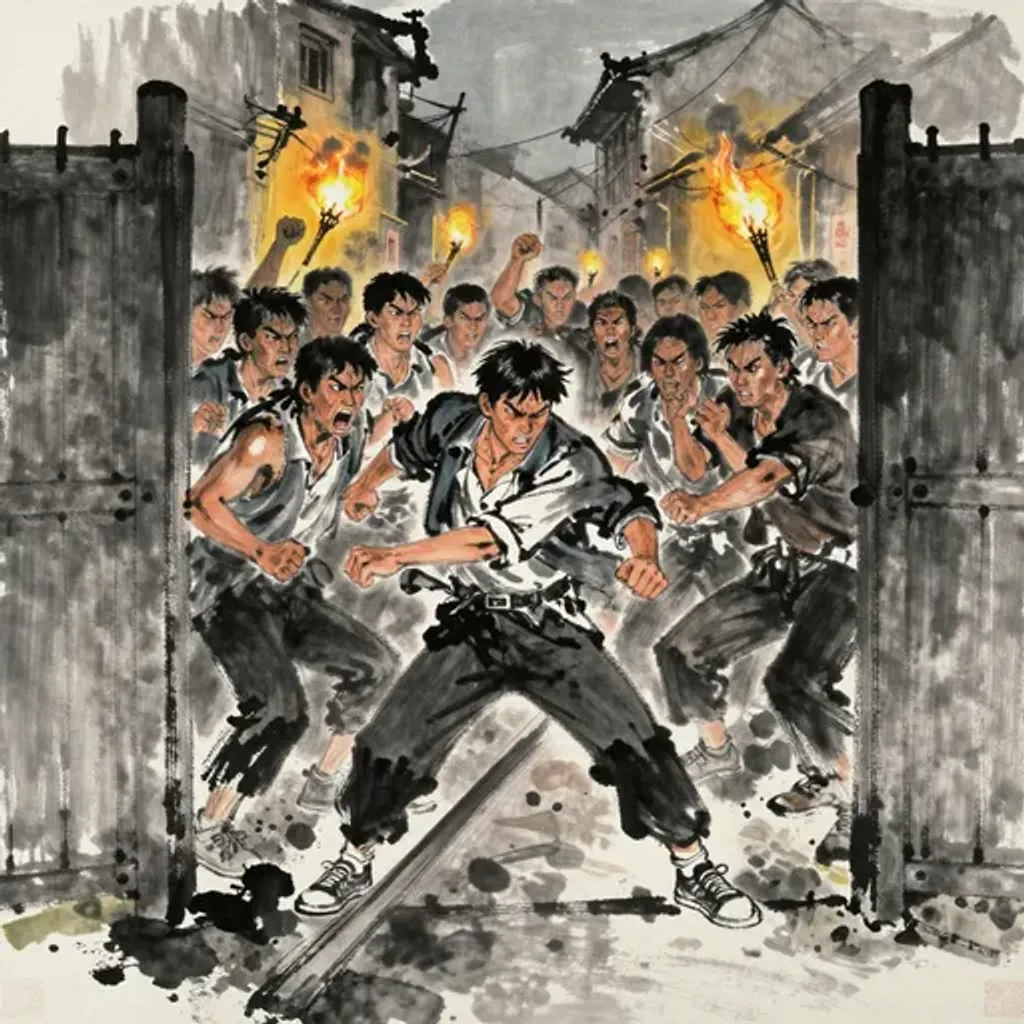
出門大步,與凶惡忤;罵公詈母,為我憂恥。
Stepping out with great strides; one collides with fierceness and evil. Cursing lord and reviling mother; it becomes our shame and worry.
— Jiao Yanshou, Yilin (Forest of Changes), 1st century BC
Commentary
Striding boldly out the door, one collides with malevolence. Curses rain down on father and mother alike, bringing shame and worry upon the household. The verse depicts a brash departure that immediately encounters hostility — the term suggests not mere misfortune but active malice. The cursing of one's parents represents the ultimate social degradation, an assault on filial bonds. From Great Possession to Splitting Apart, fire over heaven collapses into mountain resting on earth — the image of erosion from below. Splitting Apart's mechanism is exactly this: the base crumbles and the structure topples. The bold first step carries the walker straight into a world where propriety has already disintegrated, and the abuse of elders signals a society in terminal decay.
大有 → 復
Hexagram 14 → Hexagram 24: Return
Changing lines: 2, 3, 4, 6
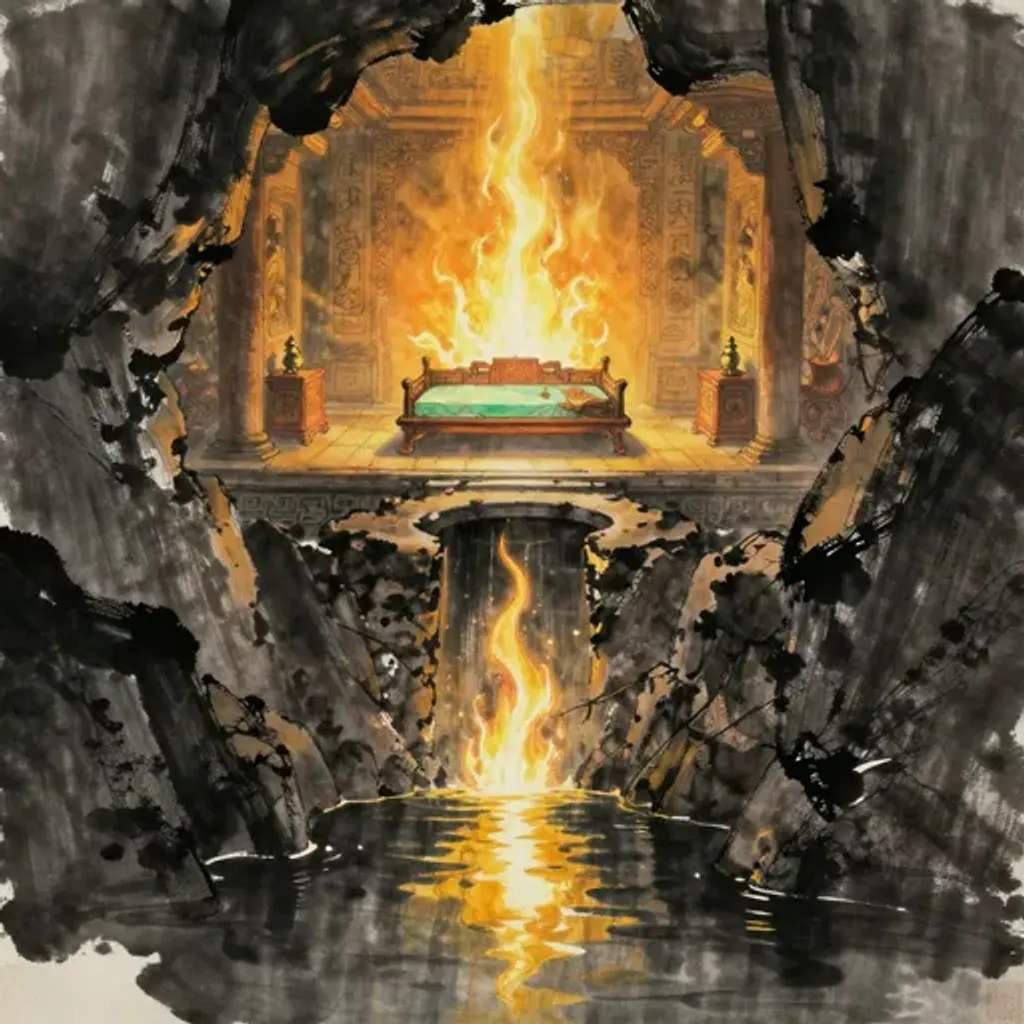
火至井谷,陽芒生角;登上玉床,家易六公。
Fire reaches the well's valley; the sun's brilliance sprouts horns. Ascending the jade bed; the household changes its six lords.
— Jiao Yanshou, Yilin (Forest of Changes), 1st century BC
Commentary
Fire reaches the well-valley and a horn of yang-brilliance sprouts. One ascends the jade bed as the household undergoes a change of six lords. The imagery is alchemical and dynastic: fire penetrating into the earth's depths ignites a new shoot of vital energy, and this rebirth elevates someone to the seat of power. The jade bed suggests enthronement, and the change of 'six lords' may refer to a succession or rotation of authority within the household. From Great Possession to Return, fire over heaven becomes thunder stirring within the earth — the first yang returning after a period of complete yin. The verse captures this precisely: light plunges into the abyss and from that nadir, new life sprouts.
大有 → 无妄
Hexagram 14 → Hexagram 25: Innocence
Changing lines: 2, 3, 5
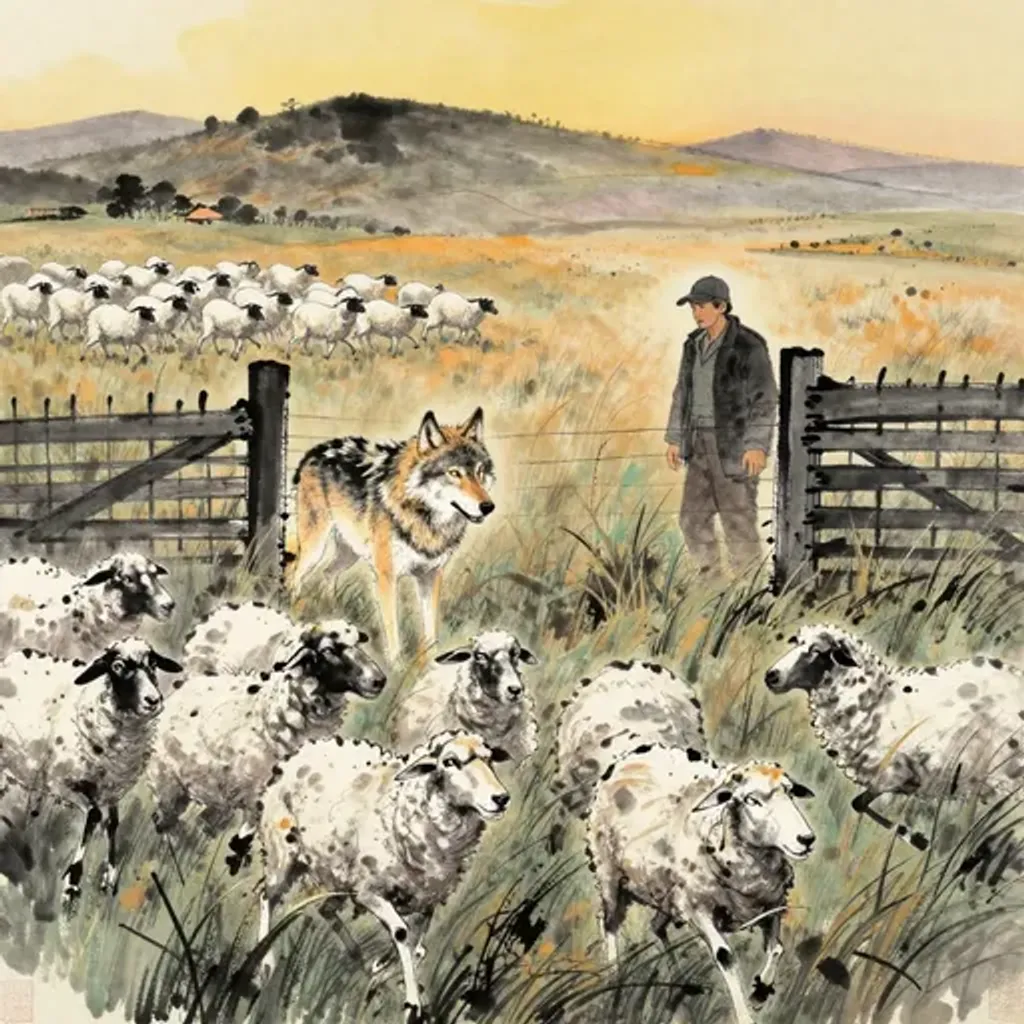
牧羊逢狼,雖憂不傷;畏怖既息,終無禍殃。
Herding sheep, one encounters a wolf; though alarmed, no harm comes. Fear and dread subside; in the end there is no misfortune.
— Jiao Yanshou, Yilin (Forest of Changes), 1st century BC
Commentary
A shepherd herding his flock encounters a wolf — alarming, but no harm comes. The fear subsides, and in the end no calamity befalls. The verse is a miniature fable of innocence preserved: the shepherd does not provoke the wolf, the wolf does not attack, and the crisis passes as naturally as it arose. From Great Possession to Innocence, fire over heaven gives way to thunder moving beneath heaven — action aligned with heaven's will, free from ulterior motive. The shepherd embodies Innocence's principle: by not calculating or scheming, by simply being present with his flock, he passes through danger unscathed. The wolf is real, the fear is real, but the absence of false expectation transforms the encounter from disaster to deliverance.
大有 → 大畜
Hexagram 14 → Hexagram 26: Great Taming
Changing lines: 4
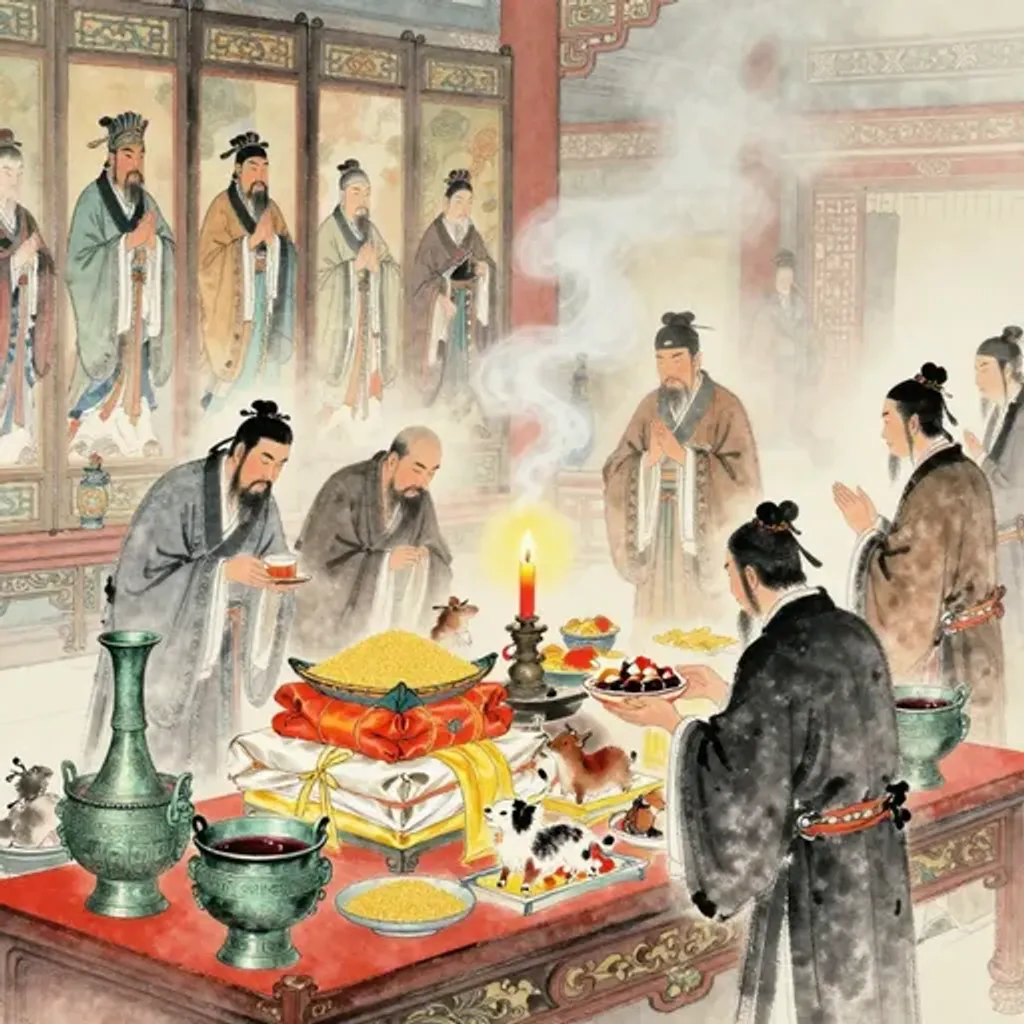
繭栗犧牲,敬奉貴神;享者飲食,受福多孫;望季不來,孔聖厄陳。
Young livestock as sacrificial offerings, reverently presented to the noble spirits. Those who partake of the feast receive blessings and many descendants. Hoping for Ji's arrival, he does not come; Confucius is stranded in Chen.
— Jiao Yanshou, Yilin (Forest of Changes), 1st century BC
Commentary
Young sacrificial animals wrapped in silken cocoon-cloths are offered with reverence to honored spirits. Those who partake of the feast receive blessings and numerous descendants. Yet the verse darkens: the awaited one does not arrive, and the sage Confucius finds himself stranded at Chen. The term 繭栗 refers to the horns of young sacrificial animals still small as silkworm cocoons and chestnuts — the most tender and pure offerings. The shift to Confucius's hardship at Chen alludes to the famous episode where the sage ran out of food between Chen and Cai. From Great Possession to Great Taming, fire over heaven becomes heaven stored within the mountain. Even the most sincere offerings and accumulated virtue cannot prevent the sage from suffering unjust privation — yet it is precisely such taming through adversity that refines character.
大有 → 頤
Hexagram 14 → Hexagram 27: Nourishment
Changing lines: 2, 3, 4
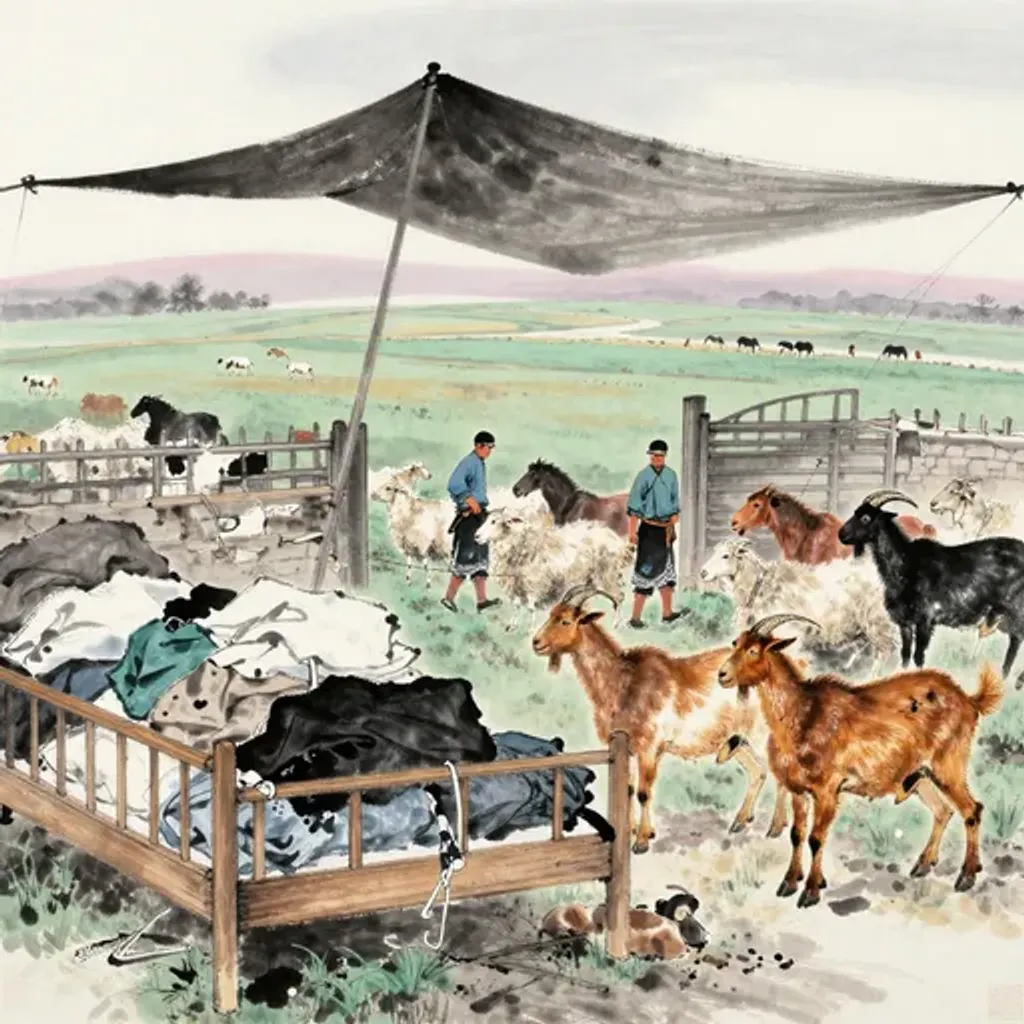
大蓋治床,南歸羖羊;長伯為我,多得牛馬。利於徙居。
A great canopy set above the bed; goats return from the south. The eldest serves us well; we gain many cattle and horses. It is favorable for relocation.
— Jiao Yanshou, Yilin (Forest of Changes), 1st century BC
Commentary
A great canopy shelters the bed, and a black ram returns from the south. An elder brother manages affairs on my behalf, and we gain many cattle and horses — a favorable time to relocate. The verse presents a scene of domestic prosperity and wise stewardship: fine furnishings, livestock wealth, and a capable family member managing the household. From Great Possession to Nourishment, fire over heaven transforms into mountain above thunder — the open mouth of the Yi hexagram. The connection lies in stewardship of resources: Nourishment teaches careful attention to what sustains us. The elder brother's management, the southward trade in rams, the accumulation of cattle — all represent the careful feeding of household and lineage that defines proper nourishment.
大有 → 大過
Hexagram 14 → Hexagram 28: Great Exceeding
Changing lines: 1, 5, 6
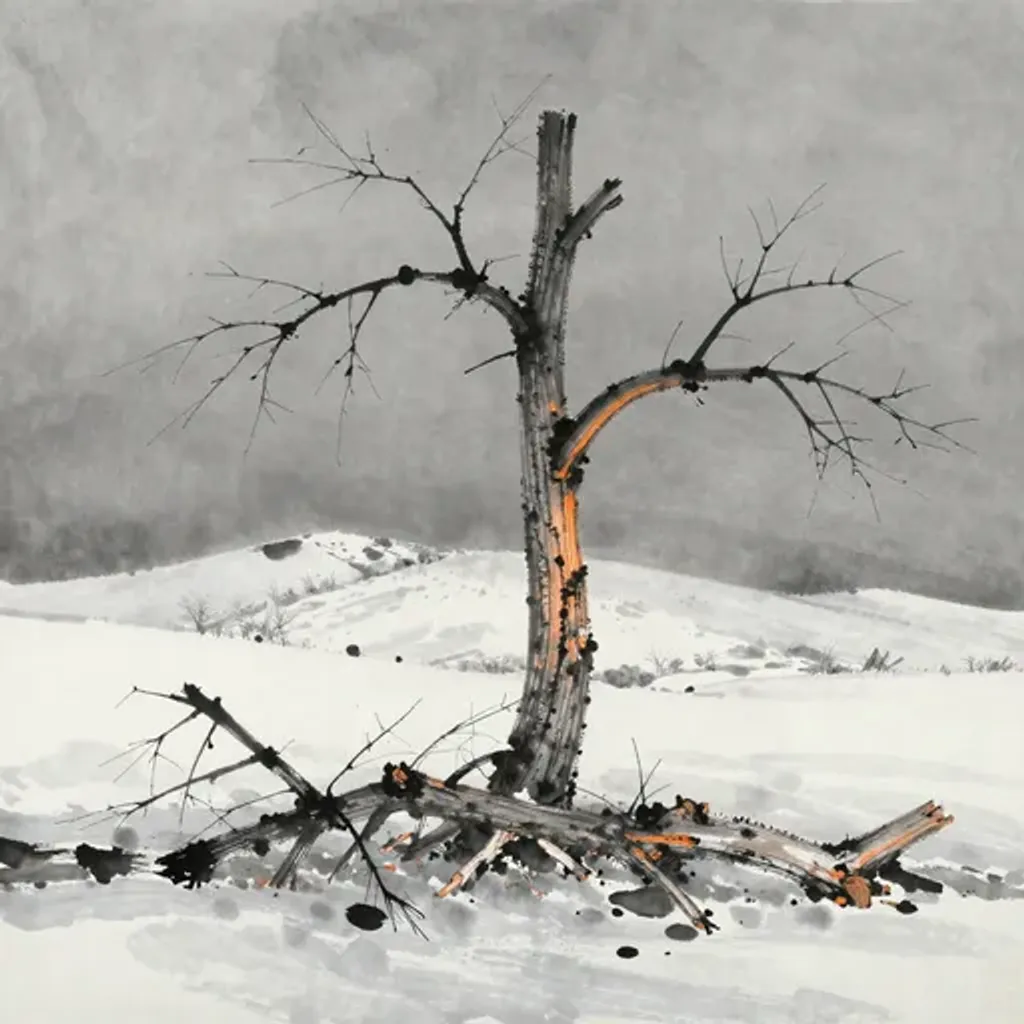
枯樹無枝,與子分離。飢寒莫養;獨立哀悲。
A withered tree without branches; separated from one's child. Hunger and cold without nurture; standing alone in grieving sorrow.
— Jiao Yanshou, Yilin (Forest of Changes), 1st century BC
Commentary
A withered tree stands stripped of branches, separated from its offspring. Unable to feed or shelter them against hunger and cold, it stands alone in wretched grief. The image is devastating in its simplicity: a dead tree cannot nourish its seedlings, just as a depleted parent cannot sustain a child. From Great Possession to Great Exceeding, fire over heaven becomes the lake submerging the wood — the ridgepole sagging under impossible weight. The transformation captures the verse precisely: what once possessed abundantly is now overburdened to the breaking point. The withered tree echoes Great Exceeding's own imagery of a rotting beam-end. Excess has exhausted the organism, and what remains is the isolated, skeletal frame of what was.
大有 → 坎
Hexagram 14 → Hexagram 29: The Abysmal Water
Changing lines: 1, 3, 4, 5, 6
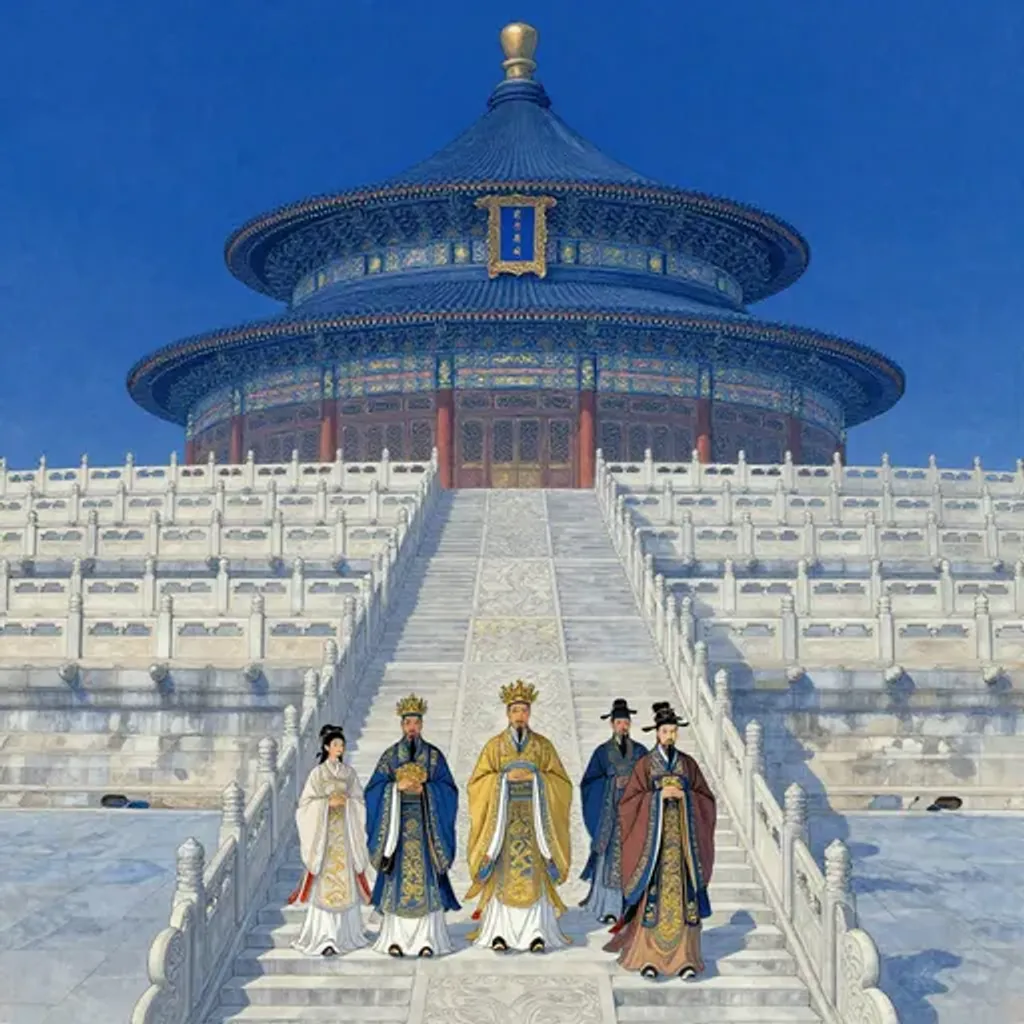
天地九重,堯舜履中;正冠垂裳,宇宙平康。
Heaven and earth in nine tiers; Yao and Shun walk the middle way. Straightening the crown, letting robes hang; the cosmos is level and at peace.
— Jiao Yanshou, Yilin (Forest of Changes), 1st century BC
Commentary
Heaven and earth extend through nine layers, and Yao and Shun tread the middle path. They straighten their caps and let their robes hang long, and the cosmos rests in peace and health. The verse celebrates the most idealized vision of sage governance: Yao and Shun, the legendary paragons, need only dress properly and stand in the center for the world to order itself. The image echoes the Confucian ideal of ruling by moral example alone. From Great Possession to The Abysmal, fire over heaven enters doubled water, the deepest peril. Yet the verse describes perfect serenity. The connection lies in constancy: only the sage who has mastered inner virtue can navigate the abyss with the composure of Yao and Shun. Constant practice and repeated teaching — the Abysmal's counsel — is what makes such serenity possible.
大有 → 離
Hexagram 14 → Hexagram 30: The Clinging Fire
Changing lines: 2
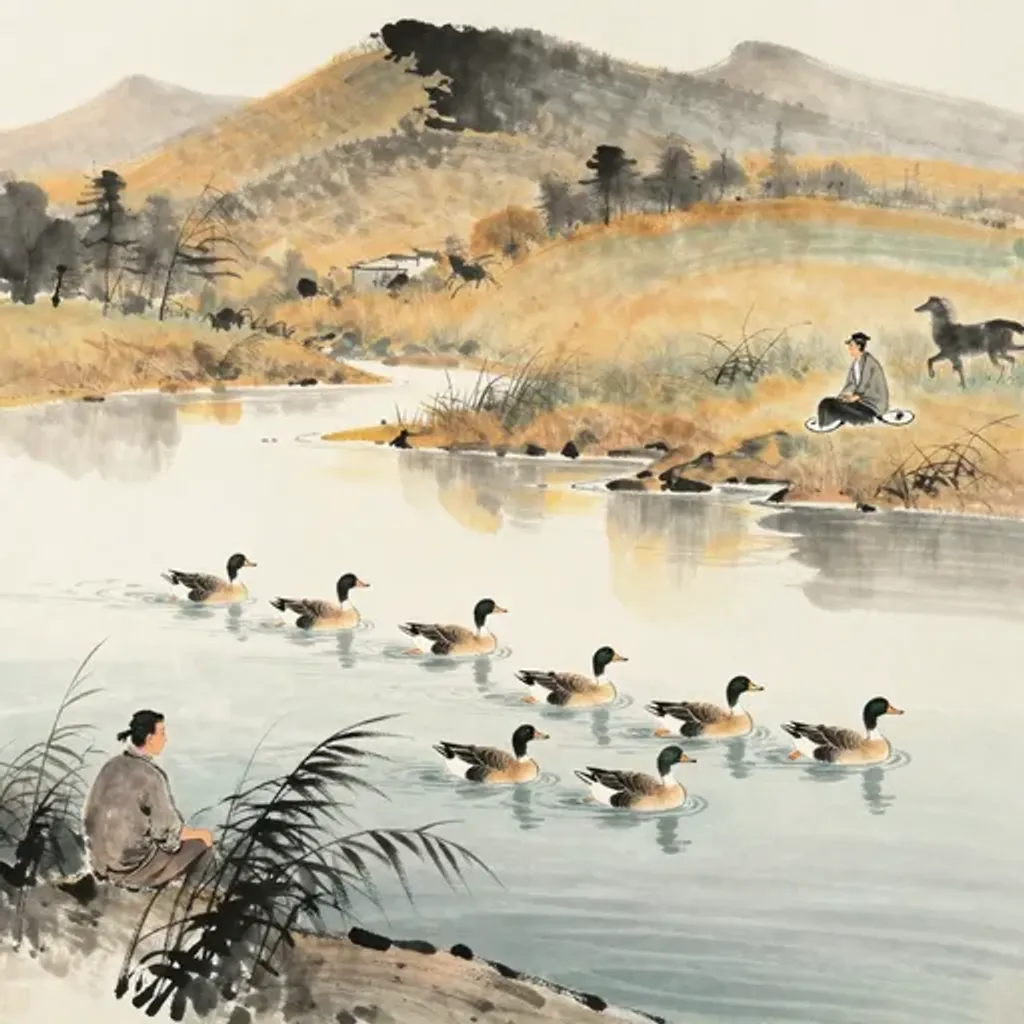
鳧鷖遊涇,君子以寧;履德不愆,福祿來成。
Wild ducks and geese swim the Jing River; the gentleman thereby finds repose. Walking in virtue without transgression; blessing and bounty come to fruition.
— Jiao Yanshou, Yilin (Forest of Changes), 1st century BC
Commentary
Ducks and cormorants swim the Jing River, and the gentleman finds peace. He treads the path of virtue without transgression, and blessings and fortune come to fulfillment. The Jing River scene evokes the Shijing's pastoral imagery of waterfowl at ease — creatures in their proper element, undisturbed and naturally harmonious. From Great Possession to The Clinging, fire above heaven doubles into fire upon fire — continuous illumination. The verse embodies this: steady virtue produces steady blessing, just as one flame lights the next in unbroken succession. The gentleman's peace is not passive but sustained through consistent moral practice, and the doubled fire of Li illuminates his path forward without interruption.
大有 → 咸
Hexagram 14 → Hexagram 31: Influence
Changing lines: 1, 2, 5, 6
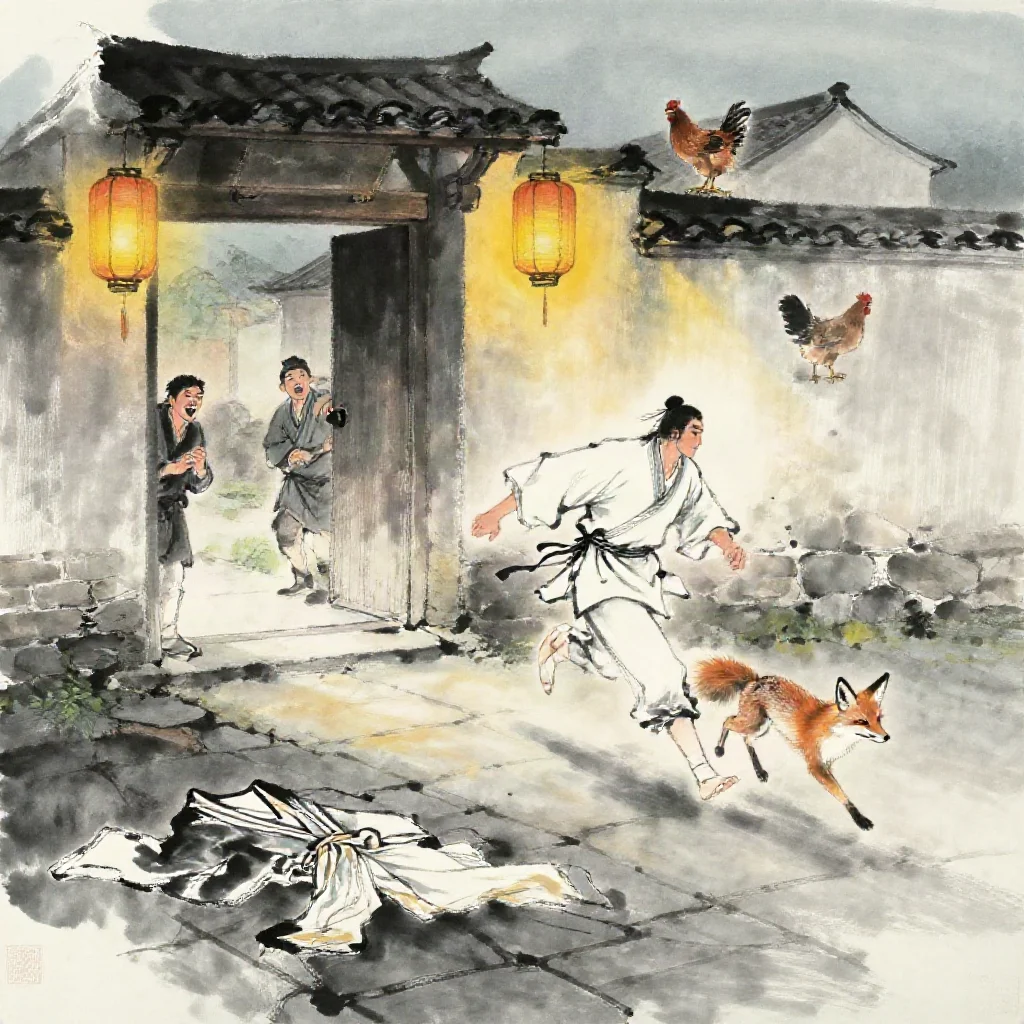
臝襢逐狐,為人觀笑;牝雞司晨,主作亂根。
Naked, chasing a fox; the spectacle draws laughter. The hen crows at dawn; she becomes the root of disorder.
— Jiao Yanshou, Yilin (Forest of Changes), 1st century BC
Commentary
A figure strips naked to chase a fox, becoming a laughingstock. Then the hen crows at dawn — usurping the rooster's role — and becomes the root of chaos. The first image mocks undignified pursuit: someone so desperate they shed all propriety. The second invokes the famous warning from the Book of Documents: 'When the hen crows at dawn, it signals the household's ruin.' From Great Possession to Influence, fire over heaven becomes lake atop the mountain — mutual attraction, the stirring of feeling. The verse warns that Influence's receptive openness, when misapplied, invites disorder. The naked fox-chaser and the crowing hen both represent improper responsiveness: one drawn to the wrong object, the other seizing the wrong role.
大有 → 恆
Hexagram 14 → Hexagram 32: Duration
Changing lines: 1, 6
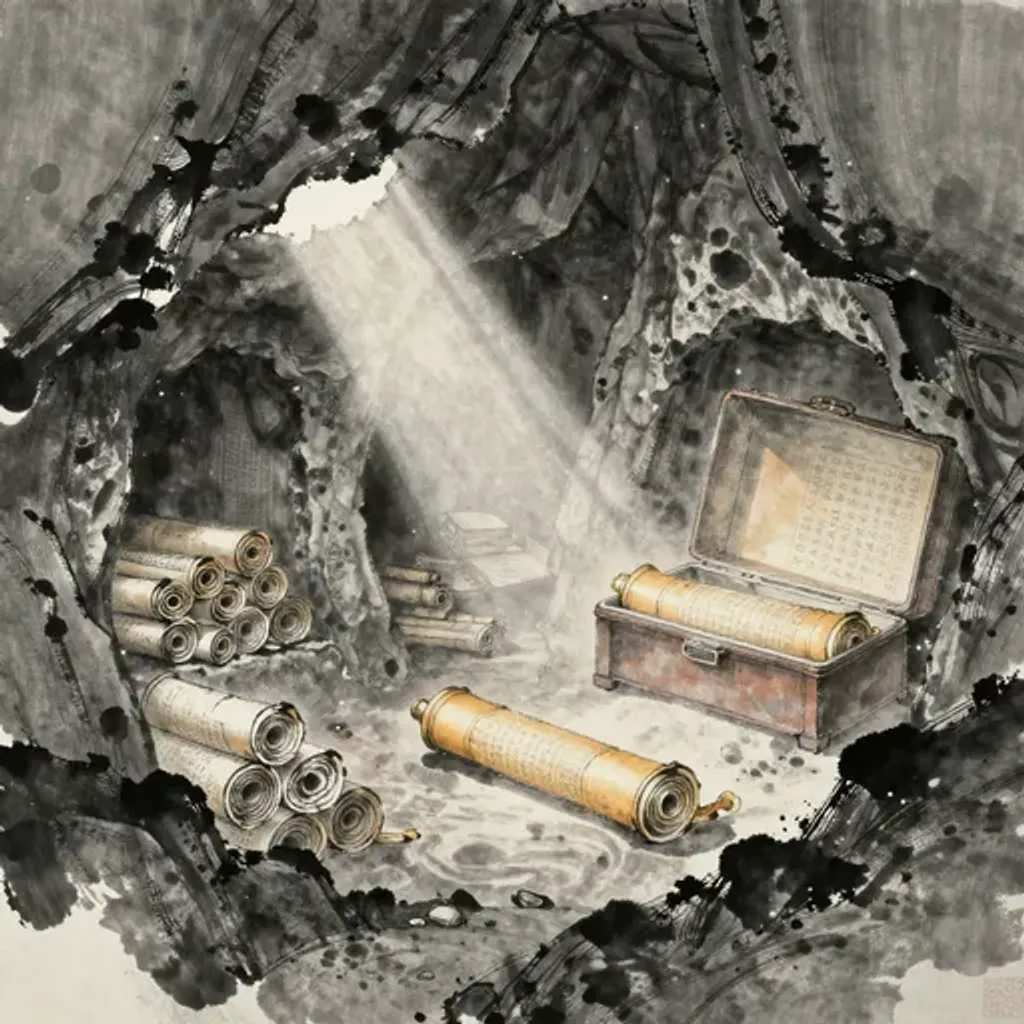
典冊法書,藏在蘭臺;雖遭亂潰,獨不遇災。
Sutras stored in a stone cave where fire cannot reach. Opened a thousand years later, the writing is fresh as new.
— Jiao Yanshou, Yilin (Forest of Changes), 1st century BC
Commentary
Official records and legal documents are stored in the Orchid Terrace — the Han dynasty's imperial archive. Though surrounded by chaos and upheaval, these writings alone escape disaster. The Lantai was the imperial library in the Southern Palace at Luoyang, where Ban Gu and other scholars compiled state histories. The verse marvels at how written tradition survives turmoil that destroys everything else. From Great Possession to Duration, fire above heaven becomes thunder and wind — enduring, directional forces. Duration's image text declares that the superior man stands firm and does not change his course. The archived documents embody exactly this: institutional memory that persists through upheaval, the written word as the ultimate vehicle of constancy.
大有 → 遯
Hexagram 14 → Hexagram 33: Retreat
Changing lines: 1, 2, 5
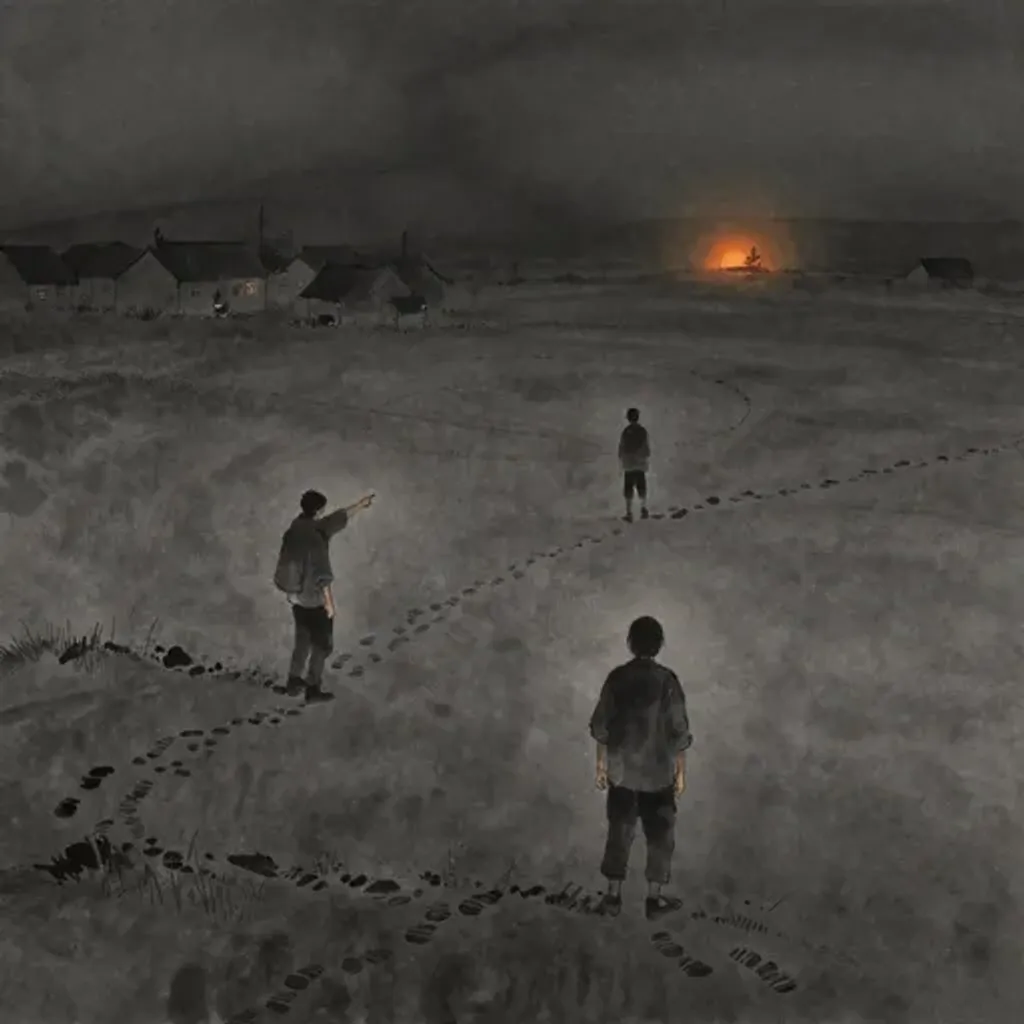
三癡俱狂,欲之平鄉;迷惑失道,不知昏明。
Three fools, all mad; they seek the level village. Bewildered and losing the way; they cannot tell dusk from dawn.
— Jiao Yanshou, Yilin (Forest of Changes), 1st century BC
Commentary
Three fools together in madness, craving the peaceful village. But they have lost their way in confusion and cannot tell dusk from dawn. The verse presents a collective delusion: three people share the same folly, each reinforcing the others' disorientation. They desire safety but cannot navigate toward it because they have lost the most basic capacity for judgment — distinguishing light from dark. From Great Possession to Retreat, fire above heaven becomes heaven towering above the mountain. Retreat's counsel is to distance oneself from petty persons with dignity, not hostility. The three fools embody what the retreating sage must leave behind: the madness of the crowd that mistakes night for day. Wisdom begins with the decision to withdraw.
大有 → 大壯
Hexagram 14 → Hexagram 34: Great Power
Changing lines: 6
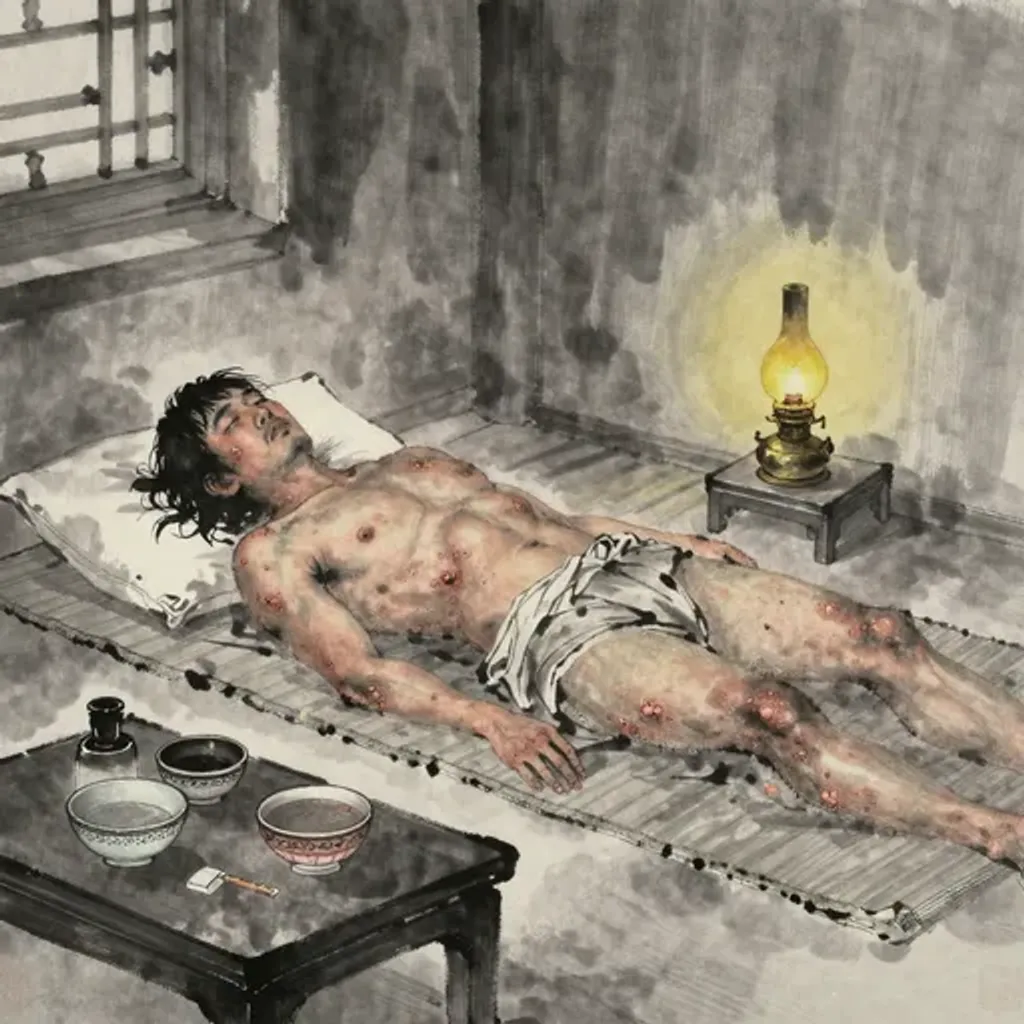
癭瘤瘍疥,為身瘡害;疾病癃痢,常不屬逮。
Goiters, tumors, sores, and scabs, all are bodily afflictions. Disease and chronic ailment; one never keeps pace.
— Jiao Yanshou, Yilin (Forest of Changes), 1st century BC
Commentary
Tumors, boils, sores, and scabies afflict the body, becoming chronic wounds. Diseases accumulate — dysentery and wasting — until one can barely keep pace with daily life. The verse is a catalogue of physical decay: every ailment named represents a different kind of bodily corruption, and together they overwhelm the constitution. From Great Possession to Great Power, fire above heaven becomes thunder above heaven — explosive force. The irony is bitter: Great Power should be the hexagram of peak vitality, yet the verse describes a body in ruins. The implication is that Great Power misapplied — thunder in heaven without grounding in propriety — manifests as destructive excess turned inward, the body consuming itself through inflammation and disease.
大有 → 晉
Hexagram 14 → Hexagram 35: Progress
Changing lines: 1, 2, 3
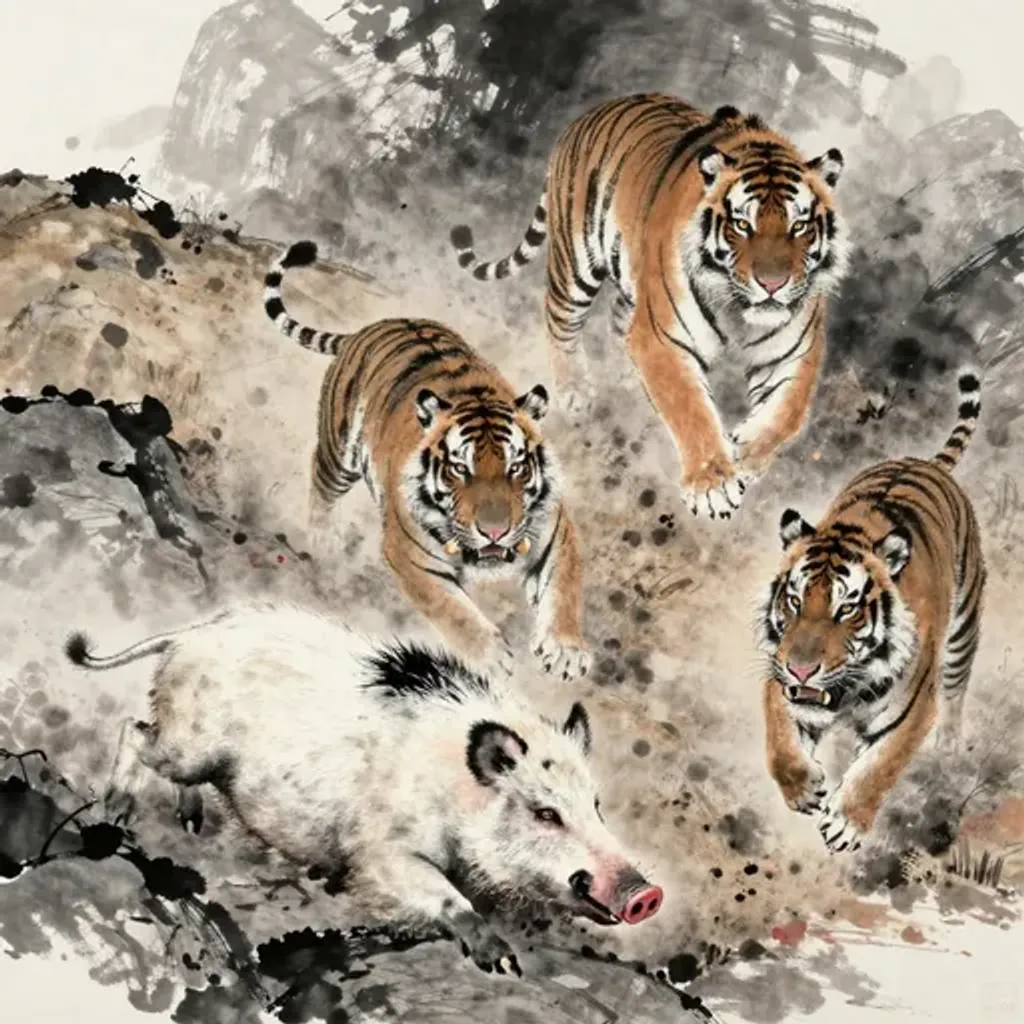
三豕俱走,鬭於虎口;白豕不勝,死於坂下。
Three boars charge together, fighting at the tiger's jaws. The white boar does not prevail; it dies at the foot of the slope.
— Jiao Yanshou, Yilin (Forest of Changes), 1st century BC
Commentary
Three boars charge together, clashing at the tiger's jaws. The white boar cannot prevail and dies at the foot of the slope. The scene is visceral: three pigs rush headlong into the most dangerous place imaginable — the tiger's mouth — and the white one, distinguished by color but not by strength, falls first. From Great Possession to Progress, fire above heaven becomes fire above earth — the sun rising over the land, illuminating all. Progress should be a hexagram of advancement and recognition, but the white boar's failed charge suggests that advancing heedlessly into danger, even with distinguishing marks, ends in destruction. The tiger's mouth is the obstacle that progress must navigate, not assault directly.
大有 → 明夷
Hexagram 14 → Hexagram 36: Darkening of the Light
Changing lines: 2, 4, 6
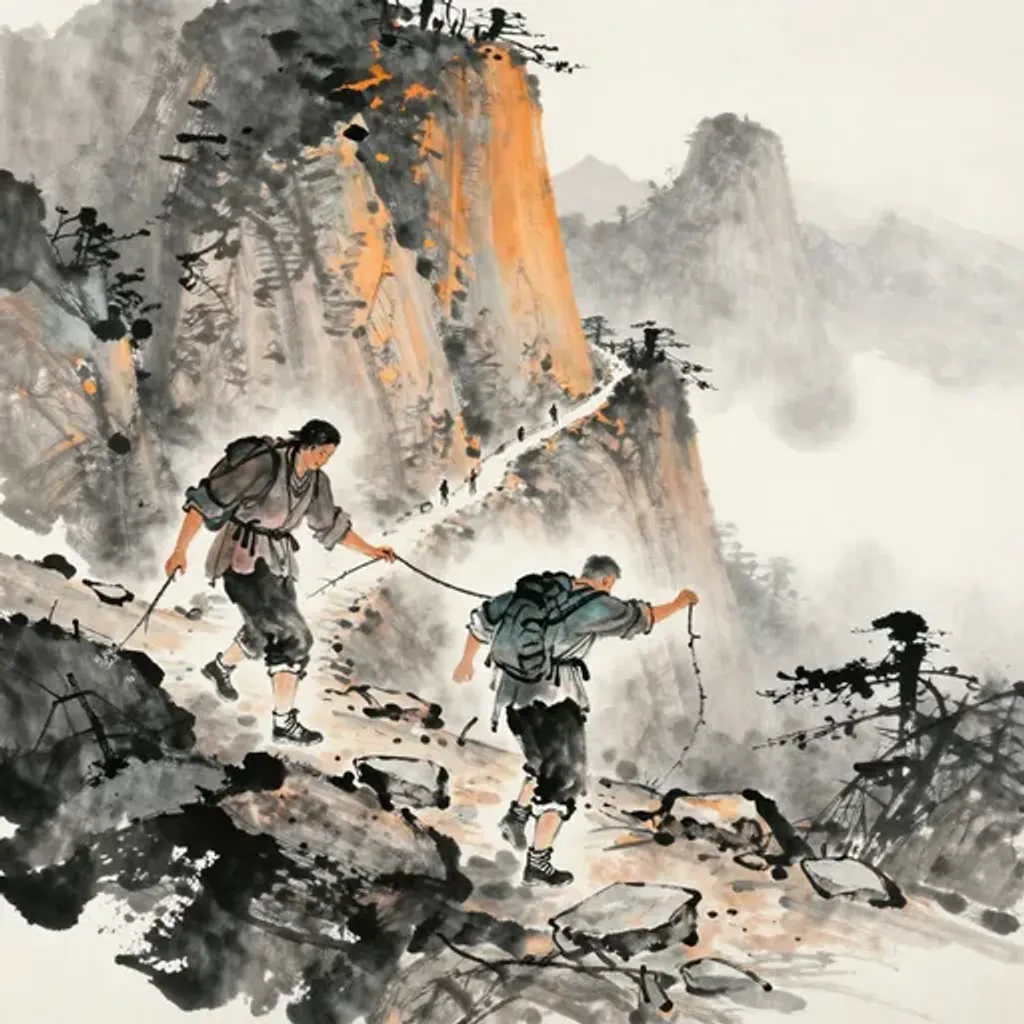
賴先之光,受德之佑;雖遭顛沛,獨不凶咎。
Relying on the ancestor's light, receiving virtue's protection. Though one meets upheaval and reversal; alone one escapes blame.
— Jiao Yanshou, Yilin (Forest of Changes), 1st century BC
Commentary
Relying on ancestral radiance, sheltered by accumulated virtue — though the road is fraught with stumbling and hardship, one alone escapes blame and misfortune. The verse describes someone who survives adversity not through personal prowess but through the spiritual capital of prior generations. Ancestral light and the protection of virtue function as an inherited shield. From Great Possession to Darkening of the Light, fire above heaven plunges into the earth — brightness enters darkness. The hexagram counsels using obscurity wisely, and the verse shows how: ancestral virtue, accumulated in brighter times, becomes the hidden resource that sustains one through the darkened age. The light is not gone; it is stored underground.
大有 → 家人
Hexagram 14 → Hexagram 37: The Family
Changing lines: 2, 4, 5
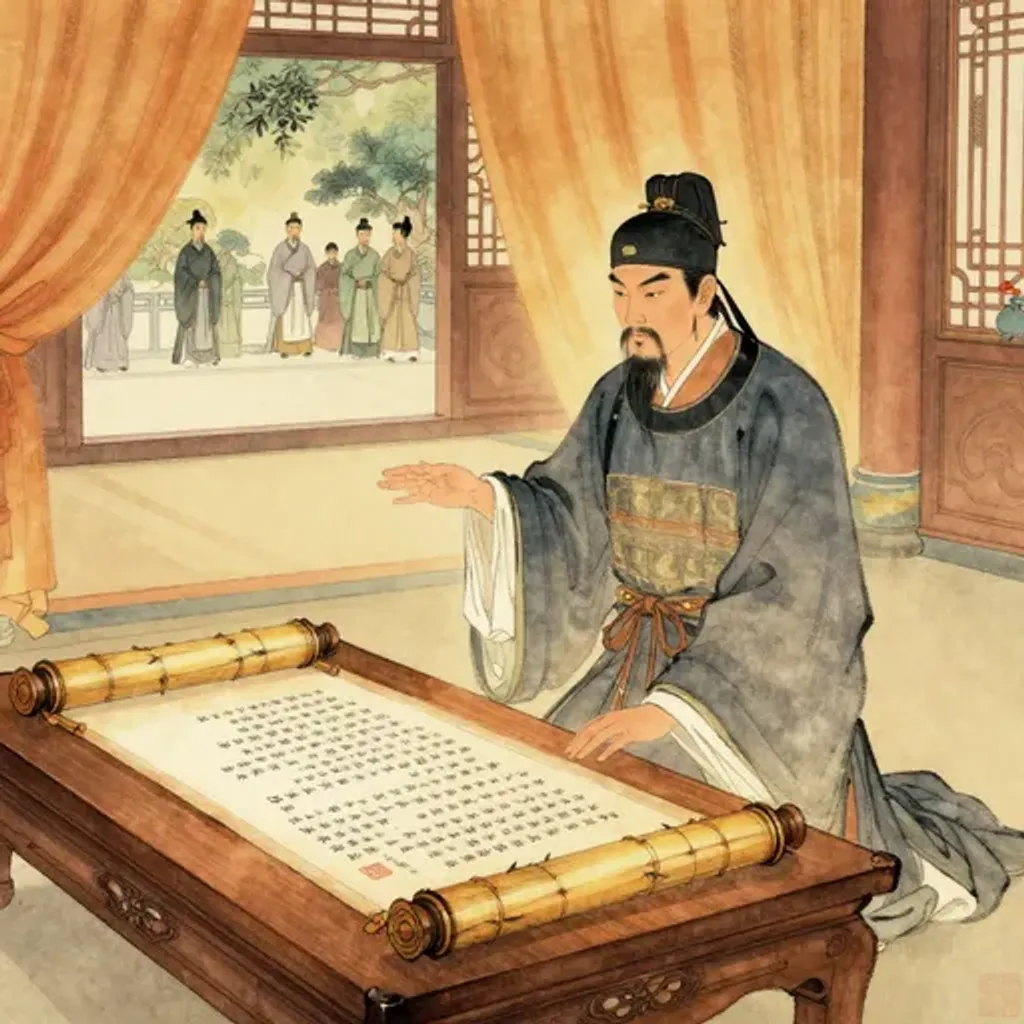
上義崇德,以建大福;明哲且聰,周武立功。
Upholding righteousness, exalting virtue; thereby great blessings are built. Wise, perceptive, and discerning; King Wu of Zhou accomplished his work.
— Jiao Yanshou, Yilin (Forest of Changes), 1st century BC
Commentary
Upholding righteousness and honoring virtue, one establishes great blessings. Wise, discerning, and perceptive — these are the qualities of Kings Wen and Wu who founded the Zhou dynasty's achievement. The verse names the paradigmatic rulers directly: King Wu who completed the military conquest, paired with the implicit King Wen whose moral foundation made it possible. From Great Possession to The Family, fire above heaven becomes wind emerging from fire — warmth radiating outward as gentle influence. The Family hexagram teaches that words must have substance and actions must have constancy. Wen and Wu exemplify this: civil virtue and martial resolve combined within one household, one ruling family whose inner order projected outward to transform the realm.
大有 → 睽
Hexagram 14 → Hexagram 38: Opposition
Changing lines: 3
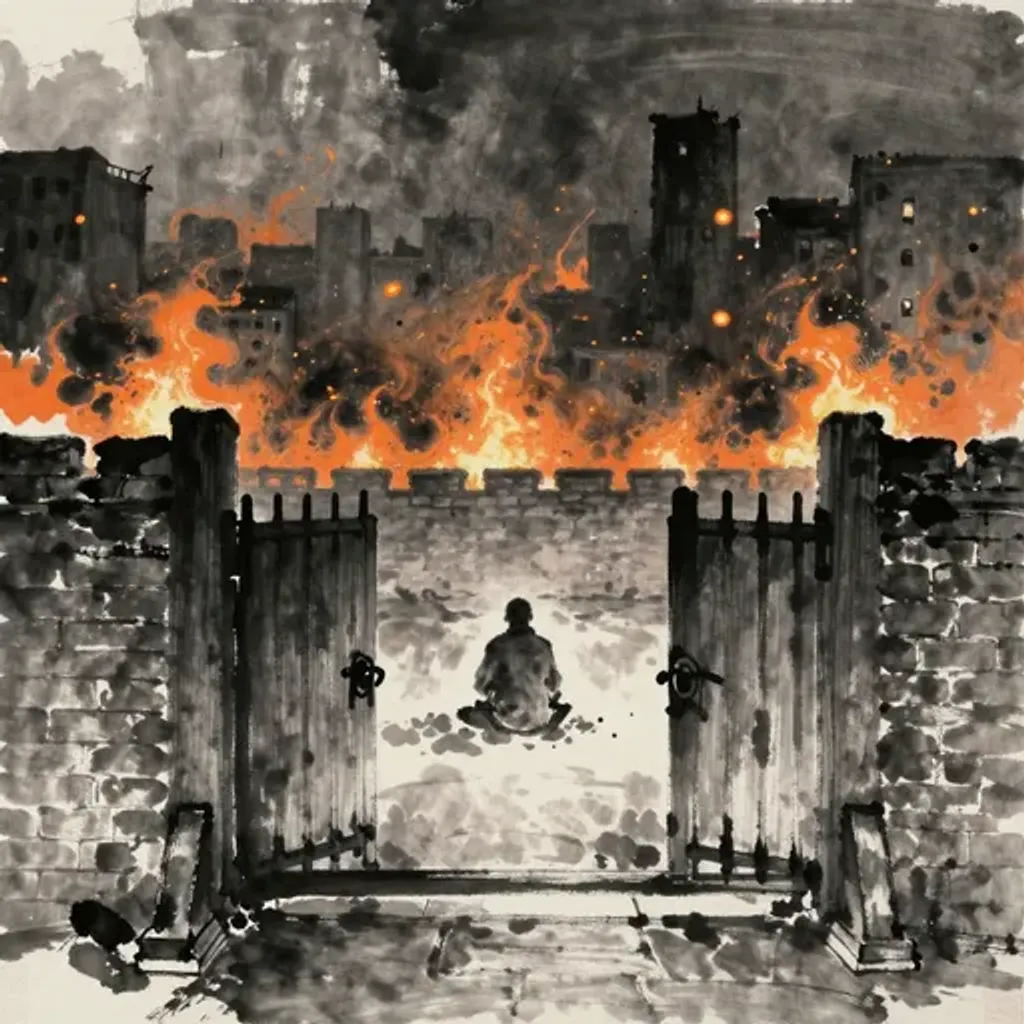
四亂不安,東西為患,身止無功。不出國城,乃得全完,賴其生福。
Chaos in four directions, no peace; east and west bring trouble. The body halts, achieving nothing. Not venturing beyond the city walls; thus one stays whole and intact, relying on one's living blessing.
— Jiao Yanshou, Yilin (Forest of Changes), 1st century BC
Commentary
Disorder on four sides, threats from east and west. One halts in place, achieving nothing through action. But by not venturing beyond the city walls, one preserves one's wholeness and draws on the blessings of life itself. The verse describes a siege mentality that proves wise: with chaos on all sides, the impulse to act would be fatal, so the protagonist stays put and survives. From Great Possession to Opposition, fire above heaven becomes fire above lake — two forces that by nature move apart. Opposition's counsel is finding unity in divergence. The verse enacts this by reframing inaction as salvation: when opposing forces pull in every direction, the wisest course is to hold one's ground and let the opposition exhaust itself.
大有 → 蹇
Hexagram 14 → Hexagram 39: Obstruction
Changing lines: 1, 2, 4, 5, 6
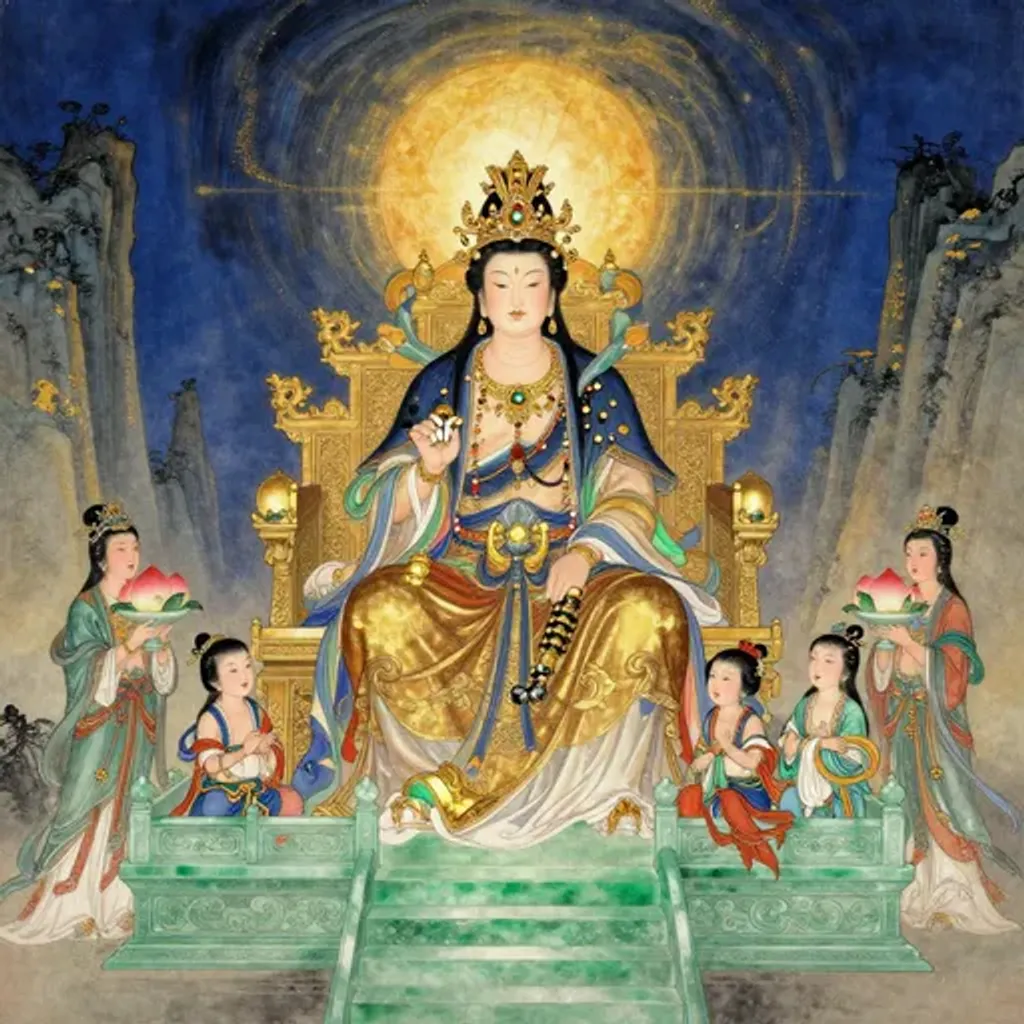
金牙鐵齒,西王母子;無有患殆,減害道利。
Teeth of gold, fangs of iron; children of the Queen Mother of the West. Without peril or harm; diminishing hurt, profiting the way.
— Jiao Yanshou, Yilin (Forest of Changes), 1st century BC
Commentary
Iron teeth and golden fangs — these belong to the children of the Queen Mother of the West. No peril or danger can touch them; harm is diminished and the way is cleared. The Queen Mother of the West dwells on Mount Kunlun above the Weak Water, guardian of the peaches of immortality, knowing neither aging nor death. Her 'children' with metallic fangs suggest divine protectors armed with supernatural power. From Great Possession to Obstruction, fire above heaven becomes water upon the mountain — the classic image of an impassable path. Yet the verse promises safety precisely within obstruction: the divine protection of Xiwangmu's lineage neutralizes the danger that defines the hexagram. Even the mountain's treacherous water cannot threaten those shielded by immortal heritage.
大有 → 解
Hexagram 14 → Hexagram 40: Deliverance
Changing lines: 1, 3, 6
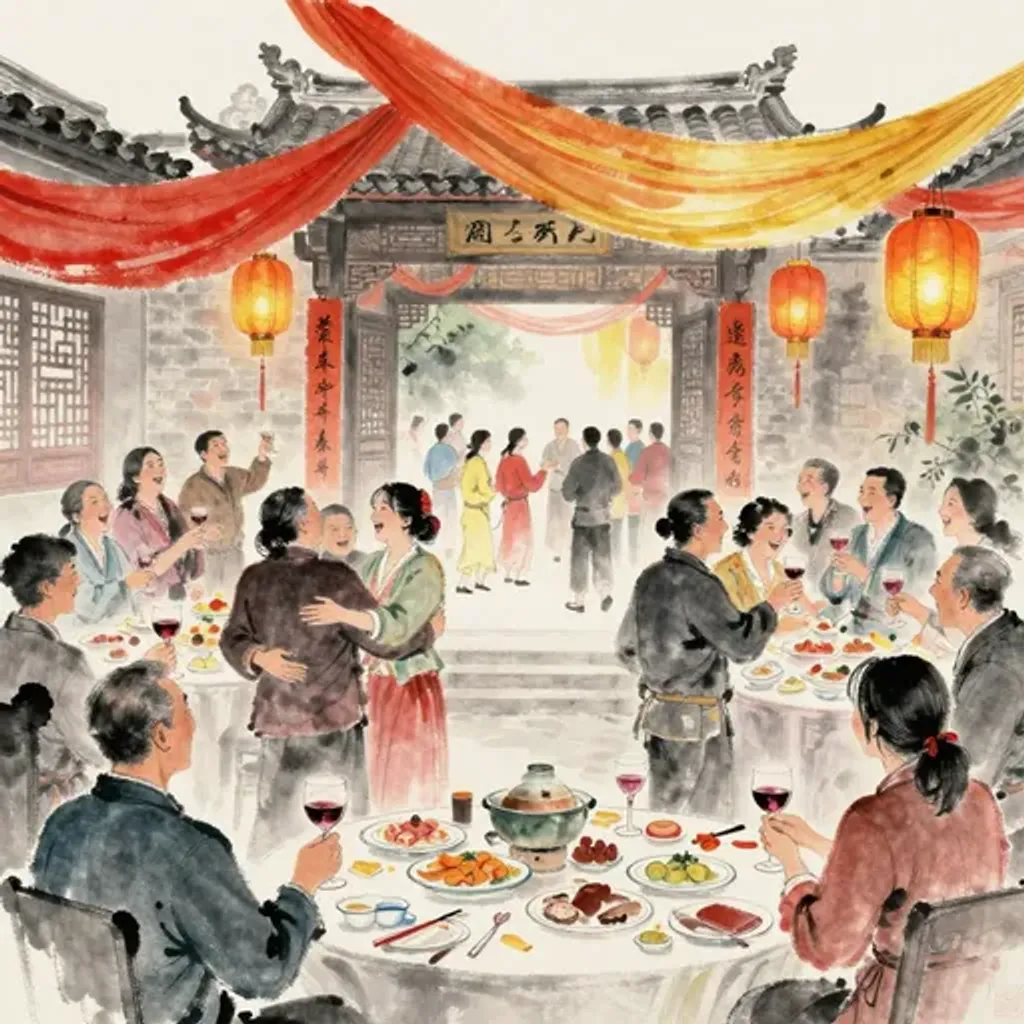
賀喜從福,曰利蕃息,歡樂有得。
Congratulations follow blessings; it is said to be profitable and multiplying. Joy and delight bring gain.
— Jiao Yanshou, Yilin (Forest of Changes), 1st century BC
Commentary
Congratulations and blessings arrive together. Prosperity is declared, with growth and increase on every side, joy and gain in abundance. The verse is brief and entirely auspicious — a burst of good fortune without complication. From Great Possession to Deliverance, fire above heaven transforms into thunder and rain — the sudden release of built-up tension. Deliverance's image is the thunderstorm that breaks the oppressive heat, and the superior man pardons errors and forgives transgressions. The joy described here is specifically the joy of release — knots untied, burdens lifted, the relief that comes after crisis has passed. Great Possession's accumulated wealth finds its outlet in Deliverance's liberating storm, and what follows is pure, uncomplicated happiness.
大有 → 損
Hexagram 14 → Hexagram 41: Decrease
Changing lines: 3, 4
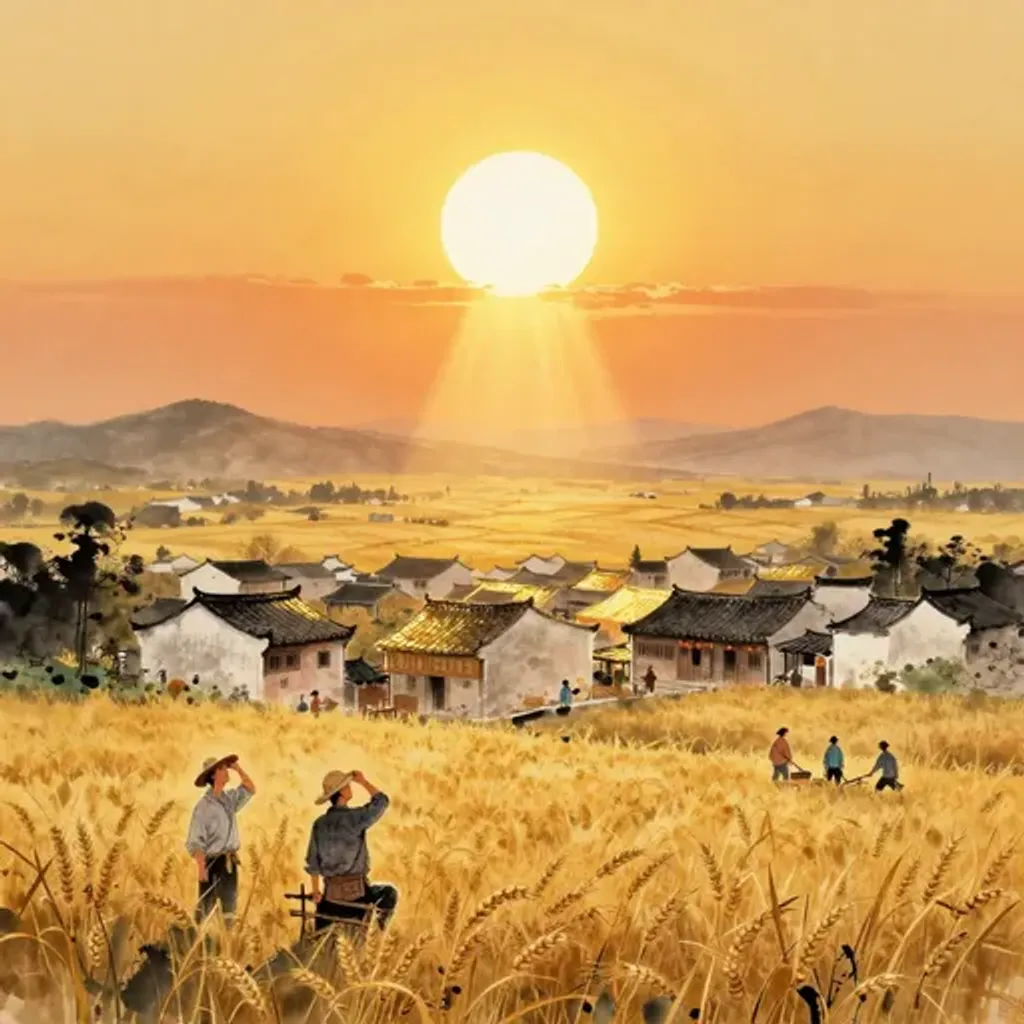
昊天白日,照臨我國;萬民康寧,咸賴嘉福。
Vast heaven, white sun; it shines upon our realm. All people are healthy and peaceful; all rely on this fine blessing.
— Jiao Yanshou, Yilin (Forest of Changes), 1st century BC
Commentary
The vast heaven and bright sun shine down upon our realm. The myriad people rest in peace and health, all sustained by excellent blessings. The image is of cosmic beneficence: the great sky and white sun irradiate the land with impartial brightness. From Great Possession to Decrease, fire above heaven becomes mountain above lake — the image of restraining anger and limiting desire. The pairing seems paradoxical: universal blessing meets voluntary diminishment. But Decrease's deeper teaching is that the upper gives to enrich the lower. The sunlight that blesses the people is itself a form of Decrease from heaven's perspective — radiance poured out, not hoarded. True abundance is realized through generous distribution, and the nation thrives because heaven withholds nothing.
大有 → 益
Hexagram 14 → Hexagram 42: Increase
Changing lines: 2, 3, 4, 5
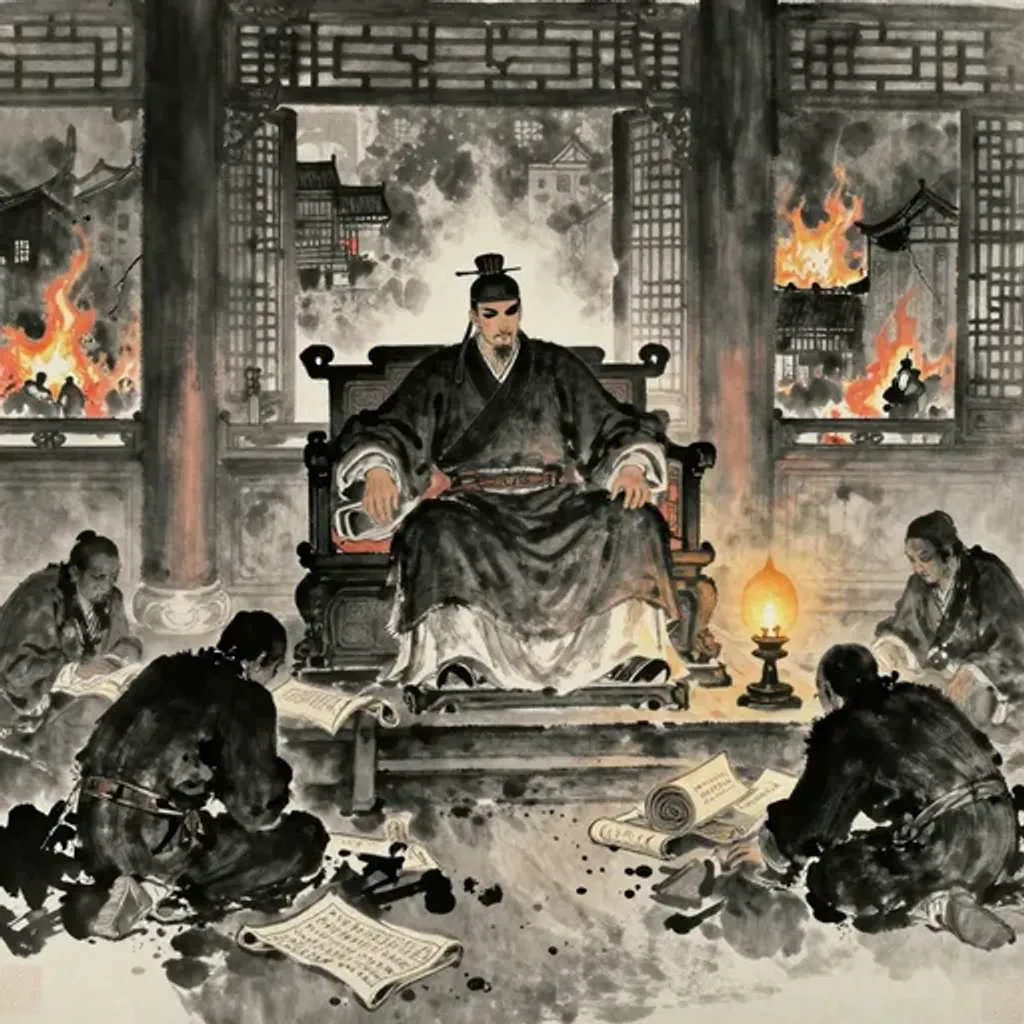
左眇右盲,視闇不明;下民多孽,君失其常。
Left eye dim, right eye blind; vision clouded, sight unclear. Below, the common people breed trouble; the lord has lost his constant way.
— Jiao Yanshou, Yilin (Forest of Changes), 1st century BC
Commentary
The left eye is dim, the right is blind — vision fails and darkness cannot be distinguished from light. The common people multiply their transgressions, and the ruler loses his constancy. The verse diagnoses political blindness from the top: a sovereign who cannot see clearly presides over a people who run wild. The paired impairments suggest not total darkness but distorted, unreliable perception. From Great Possession to Increase, fire above heaven becomes wind and thunder — the image of moral improvement, where the superior man corrects his faults upon seeing good. The verse is Increase's dark mirror: when the ruler's sight is impaired, the improvement mechanism fails. Instead of moving toward the good, the whole system drifts into transgression. The remedy Increase offers — seeing good and moving toward it — requires eyes that work.
大有 → 夬
Hexagram 14 → Hexagram 43: Breakthrough
Changing lines: 5, 6
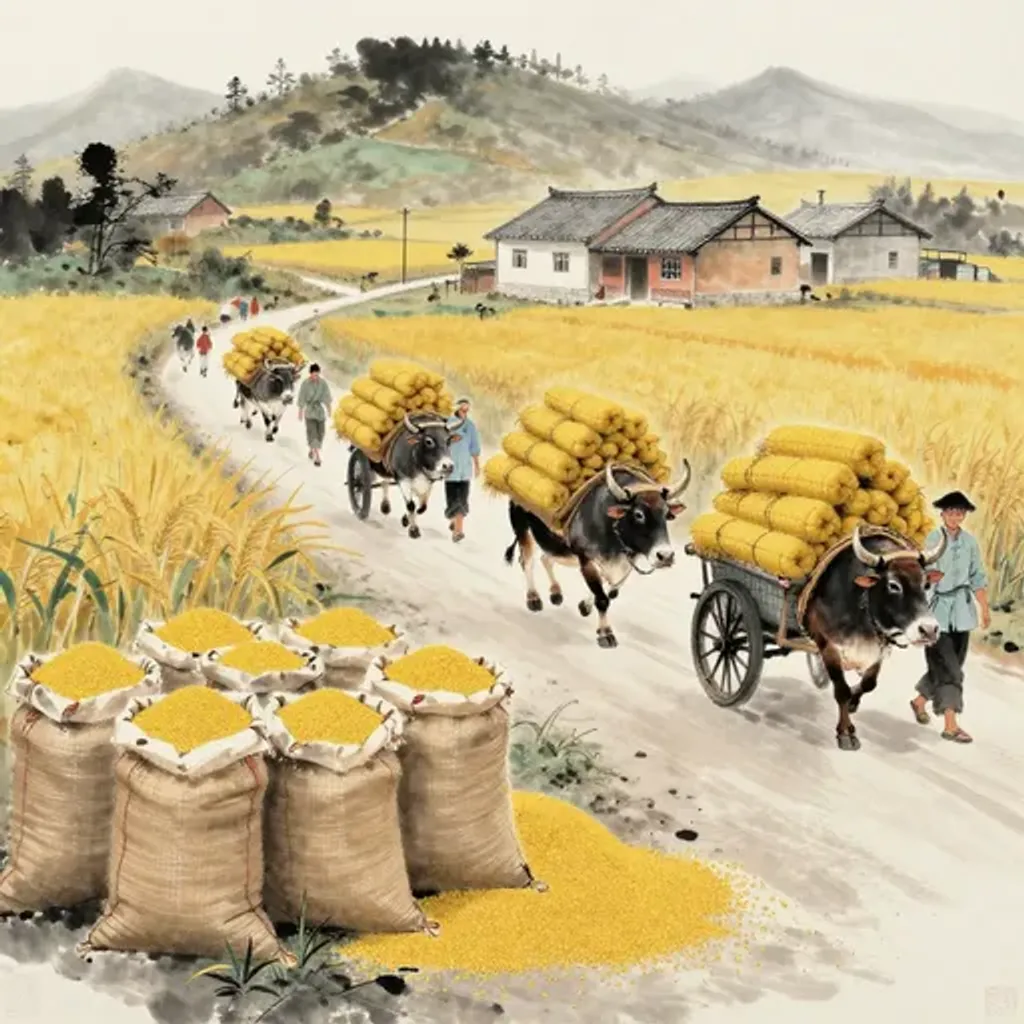
吾家黍梁,積委道傍;有囊服箱,運到我鄉,藏於嘉倉。
Our household's millet and fine grain, heaped along the roadside. With bags and traveling trunks; we transport them to our village and store them in the granary.
— Jiao Yanshou, Yilin (Forest of Changes), 1st century BC
Commentary
My household's millet and sorghum lie heaped along the roadside. With sacks and carts they are loaded and transported to my village, stored away in the fine granary. The verse is a harvest triumph: grain so plentiful it overflows the threshing floor onto the road, then is systematically gathered, carted home, and properly stored. The word 服箱 (yoked cart) evokes the Shijing ode 'Da Dong' where the Cowherd star cannot be yoked to a cart — here, unlike that ode's image of futility, the cart is fully laden and productive. From Great Possession to Breakthrough, fire over heaven becomes lake over heaven — water surging upward in decisive action. The grain's journey from roadside heap to secure granary mirrors Breakthrough's dynamic: decisive distribution of accumulated wealth.
大有 → 姤
Hexagram 14 → Hexagram 44: Coming to Meet
Changing lines: 1, 5
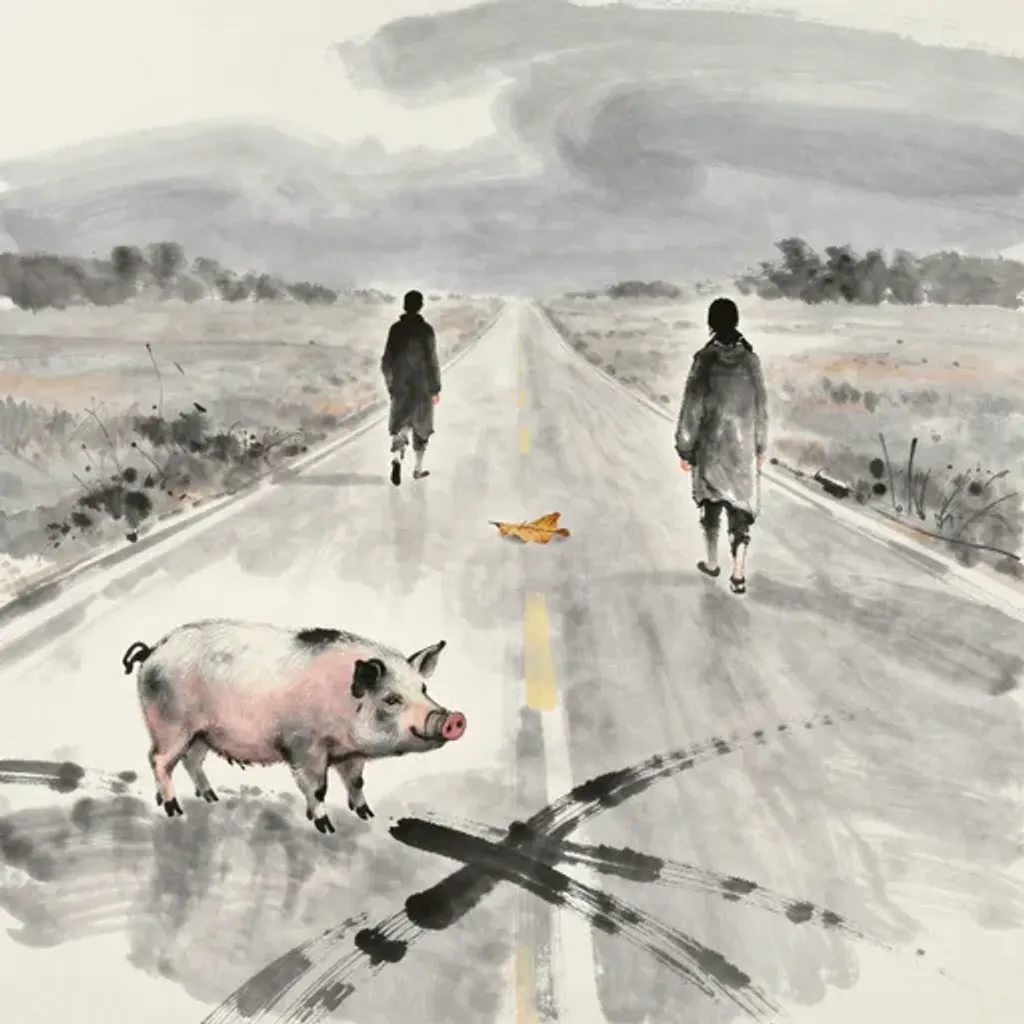
殊類異路,心不相慕;牝猭無猳,鰥無室家。
Different kinds, separate paths; hearts harbor no longing for each other. A sow without a boar; a widower without wife or home.
— Jiao Yanshou, Yilin (Forest of Changes), 1st century BC
Commentary
Different species, different paths — their hearts do not long for each other. The sow has no boar; the widower has no household. The verse presents a stark image of incompatibility and solitude: creatures of unlike kind cannot mate, and the absence of a proper partner leaves each one isolated. The language uses precise animal terminology to make the point visceral. From Great Possession to Coming to Meet, fire above heaven becomes heaven above wind — the unexpected encounter. Coming to Meet's hexagram shows a single yin line rising to meet five yang lines, and the verse inverts this promise: what should be the moment of meeting instead reveals that no match exists. The encounter fails because the natures are fundamentally incompatible, and loneliness persists.
大有 → 萃
Hexagram 14 → Hexagram 45: Gathering Together
Changing lines: 1, 2, 3, 5, 6
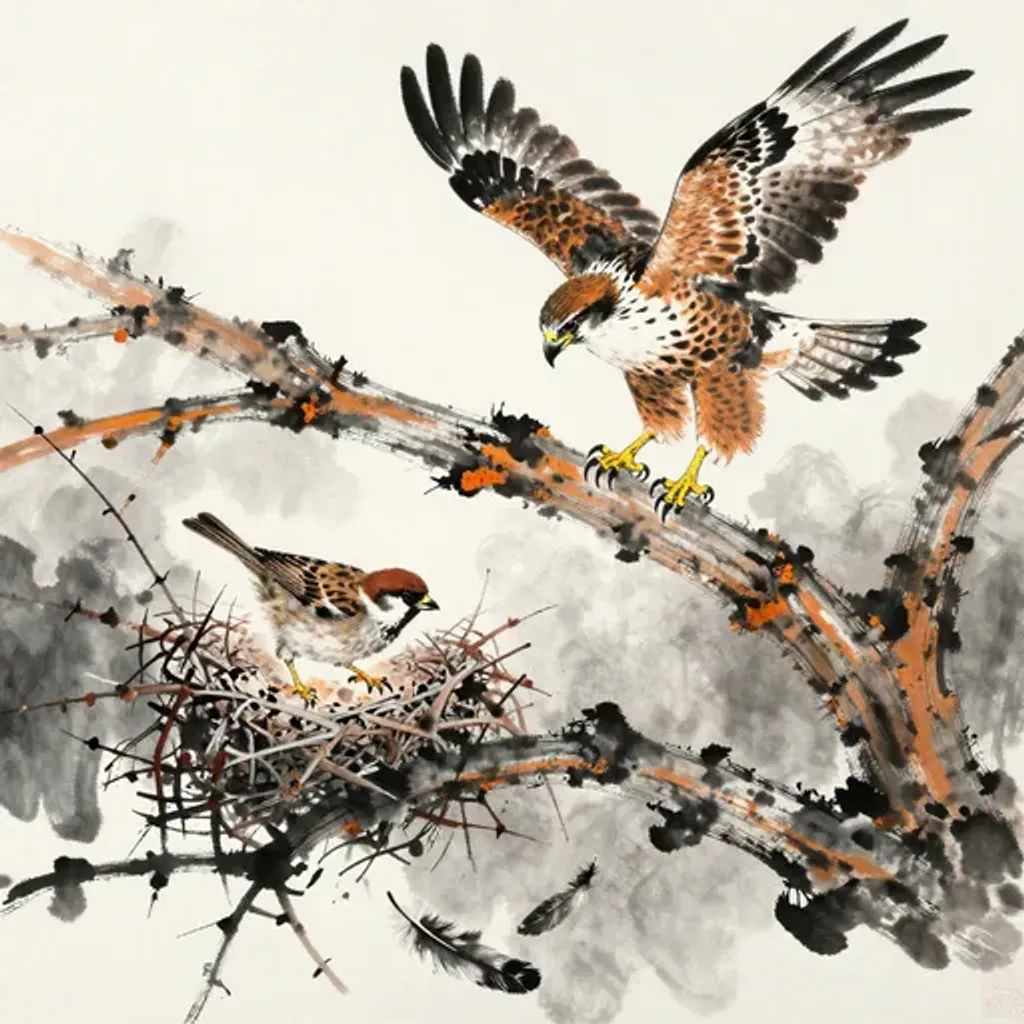
雀行求食,出門見鷂;顛蹶上下,幾無所處。
A sparrow ventures out seeking food and meets a sparrowhawk at the gate. Tumbling up and down; it almost has nowhere to go.
— Jiao Yanshou, Yilin (Forest of Changes), 1st century BC
Commentary
A sparrow ventures out to find food but meets a sparrowhawk at the door. It tumbles up and down in panic, barely finding a place to rest. The scene captures the terror of the small creature confronting its natural predator in the most exposed moment — the instant of stepping outside for sustenance. From Great Possession to Gathering, fire above heaven becomes lake above earth — the image of people congregating, but also of preparing weapons against the unexpected. The sparrow's plight embodies exactly what Gathering warns against: the vulnerability of those who gather without adequate defense. Abundance means nothing if the gatherer is hunted the moment it steps out to claim its share.
大有 → 升
Hexagram 14 → Hexagram 46: Pushing Upward
Changing lines: 1, 4, 6
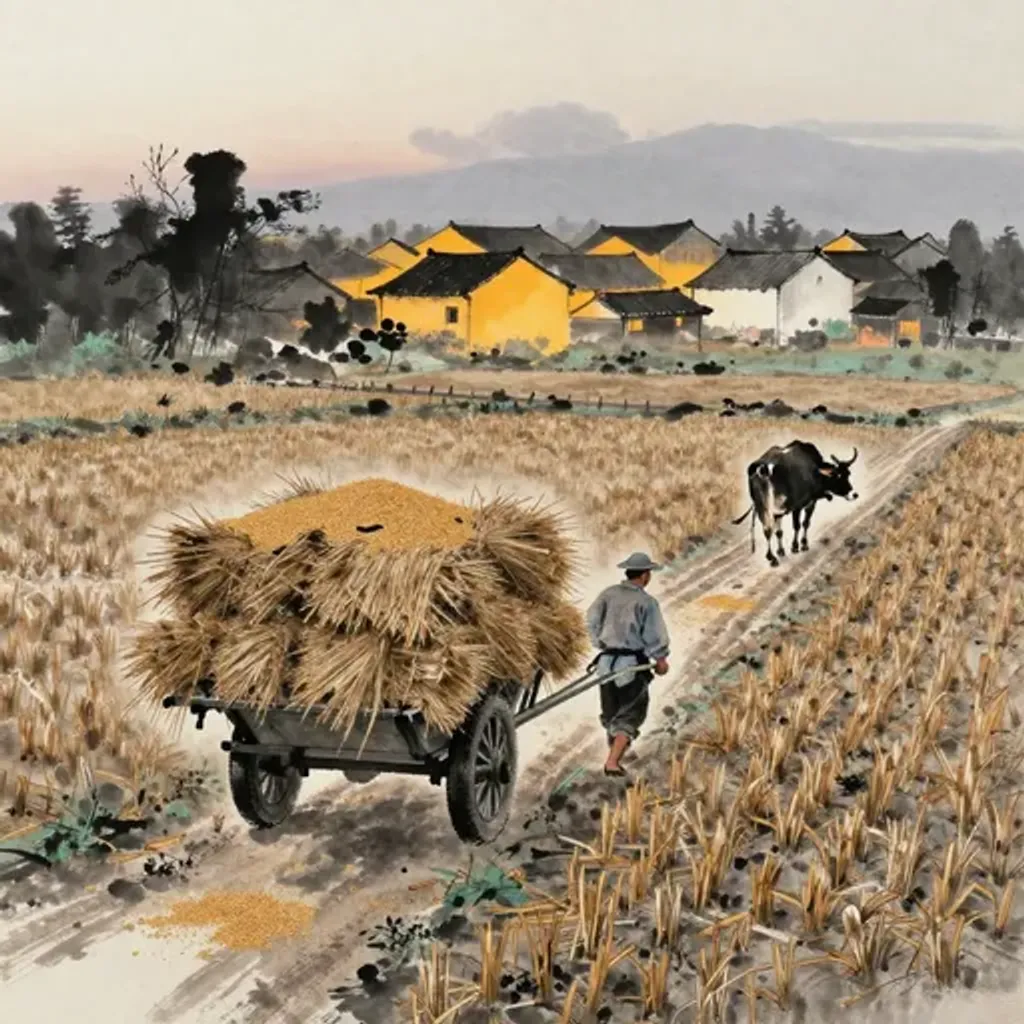
野有積庚,穡人駕取。不逢虎狼,暮歸其宇。
Wild grain stands heaped in the fields; the harvester drives his cart to gather it. Not encountering tiger or wolf; at dusk he returns to his homestead.
— Jiao Yanshou, Yilin (Forest of Changes), 1st century BC
Commentary
Harvested grain lies stored in the open fields. The farmer yokes his cart and goes to fetch it, encountering neither tiger nor wolf on the road. By evening he returns safely home. The verse tells a story of ordinary rural prosperity: the crop is in, the road is safe, and the farmer completes his work before nightfall. The absence of predators signals a world where the natural order cooperates with human labor. From Great Possession to Pushing Upward, fire above heaven becomes earth above wind — trees growing slowly within the soil. The farmer's steady, uneventful journey from field to home mirrors Pushing Upward's mechanism perfectly: small, consistent effort that builds gradually without dramatic interruption.
大有 → 困
Hexagram 14 → Hexagram 47: Oppression
Changing lines: 1, 3, 5, 6
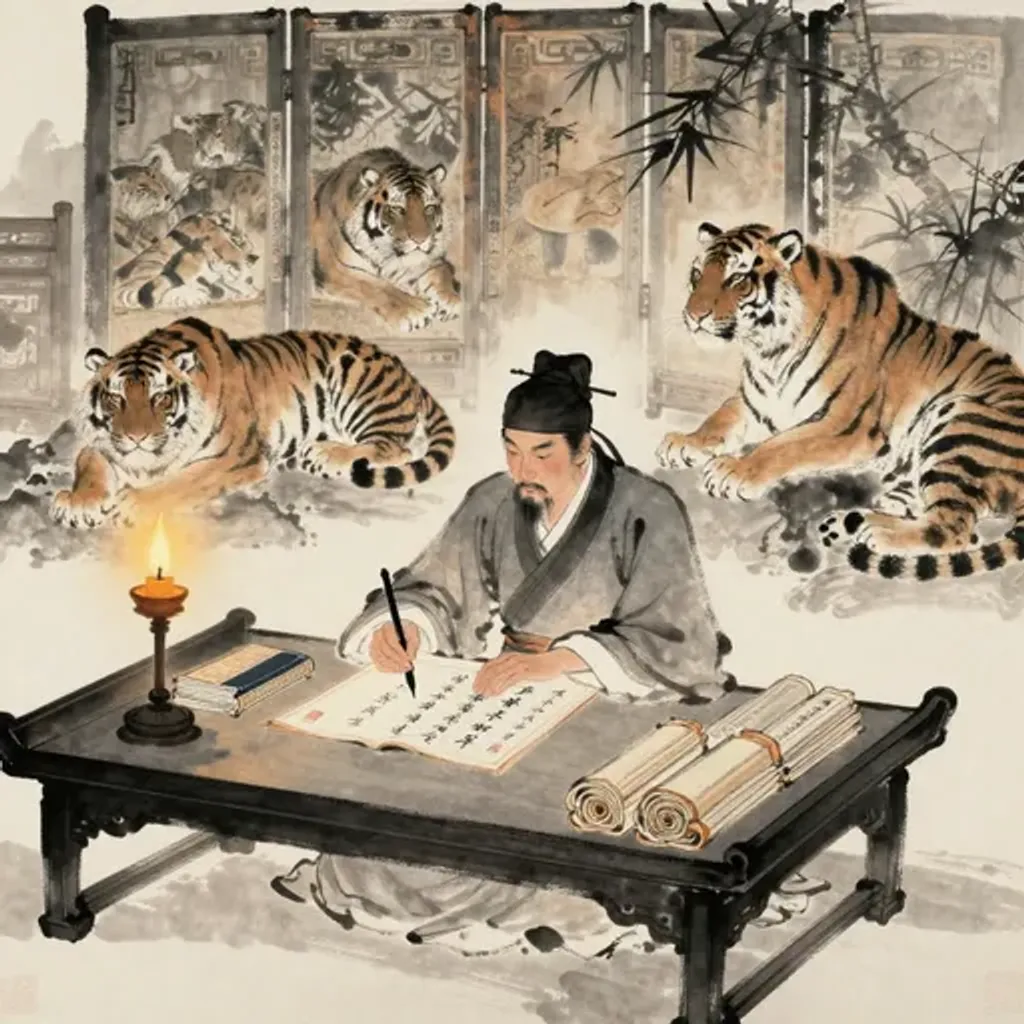
膚敏之德,發憤忘食;虎豹禽說,為王求福。
A keen and diligent virtue; so engrossed he forgets to eat. Tigers and leopards are captured and persuaded; he seeks blessings for the king.
— Jiao Yanshou, Yilin (Forest of Changes), 1st century BC
Commentary
A person of keen intelligence and swift virtue throws himself into learning so intensely he forgets to eat. Tigers and leopards are captured and tamed, enlisted to seek blessings for the king. The phrase 'forgetting to eat in passionate pursuit' directly echoes Confucius's self-description in the Analects. The taming of fierce beasts adds a political dimension: wild forces brought under disciplined control to serve the sovereign. From Great Possession to Oppression, fire above heaven becomes lake above water — the drained marsh, exhaustion. Yet the verse shows how one navigates oppression: through devotion so total it transcends physical privation. The ardent scholar forgets hunger; the tamed beasts serve willingly. Oppression is endured through unswerving commitment to purpose.
大有 → 井
Hexagram 14 → Hexagram 48: The Well
Changing lines: 1, 4, 5, 6
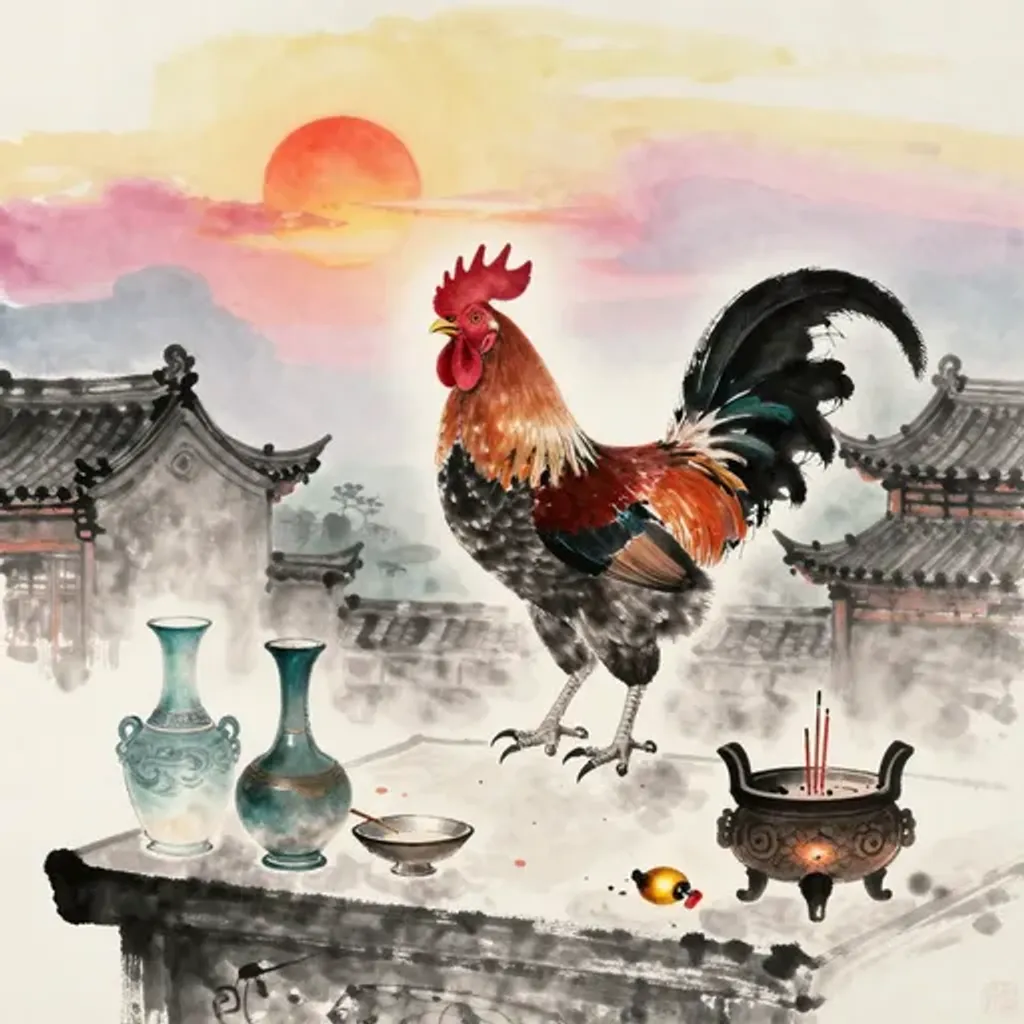
光祀春成,陳項雞鳴;陽明失道,不能自守。
The spring sacrifice completed at dawn; in Chen the rooster crows. The bright yang loses its way; it cannot hold its ground.
— Jiao Yanshou, Yilin (Forest of Changes), 1st century BC
Commentary
A bright spring sacrifice is completed, and the divine rooster of Chenbao crows at Chen. The Chenbao was Qin's most sacred deity, worshipped at Chencang. According to the Shiji, around 747 BC two spirit children appeared declaring 'He who obtains the female shall become hegemon.' They transformed into pheasants; the female settled as a stone idol that glowed at night like a meteor while wild roosters crowed in response. Yet the verse turns ominous: the solar bird loses its way and cannot maintain its course. From Great Possession to The Well, fire above heaven becomes water above wind — the well that nourishes but requires constant maintenance. The Chenbao's light falters like a well whose rope has broken: divine favor, without constant tending, fails to draw up its blessings.
大有 → 革
Hexagram 14 → Hexagram 49: Revolution
Changing lines: 2, 5, 6
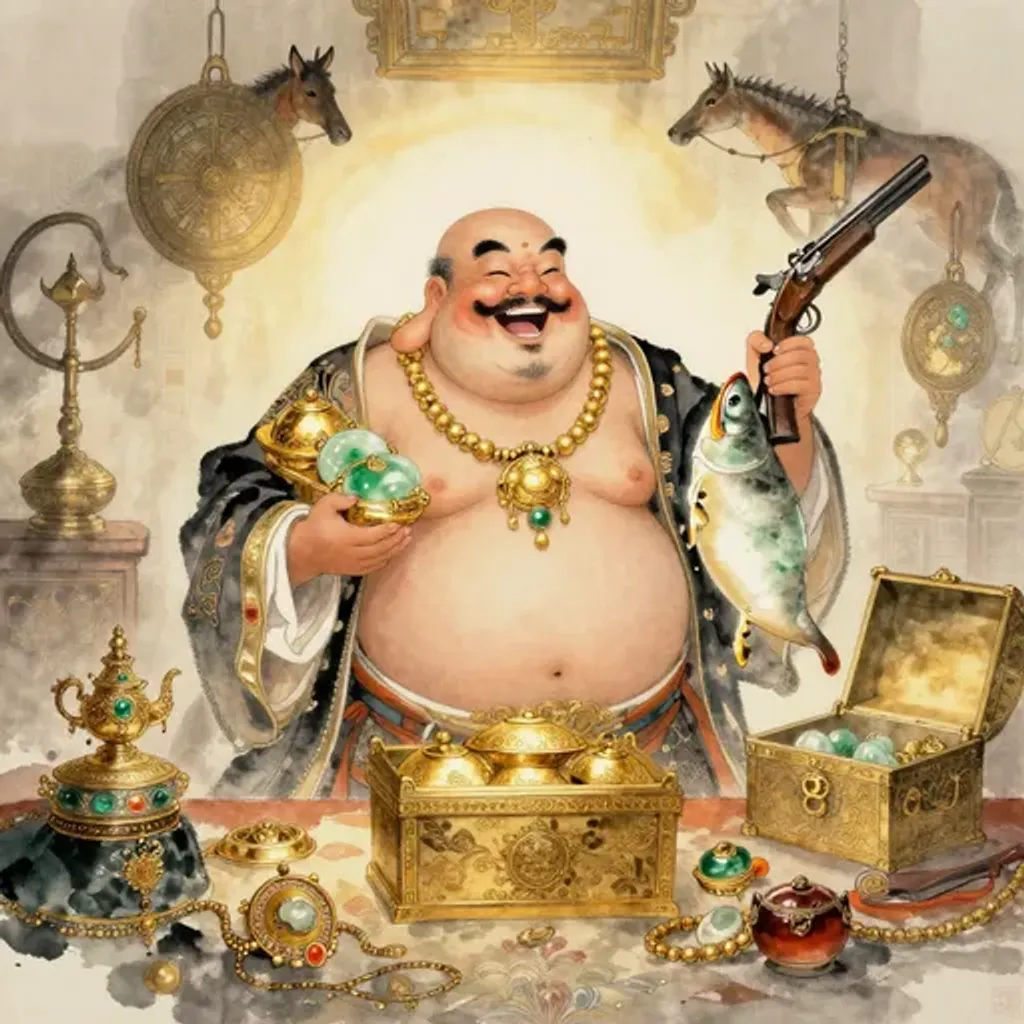
左抱金玉,右得熊足;常盈不亡,獲心所欲。
Left arm embraces gold and jade; right hand grasps the bear's paw. Ever full, never wanting; one obtains the heart's desire.
— Jiao Yanshou, Yilin (Forest of Changes), 1st century BC
Commentary
The left arm cradles gold and jade; the right hand seizes a bear's paw. Wealth remains perpetually full, never diminishing — one obtains the heart's every desire. The verse pairs two forms of abundance: precious metals and gems with the bear's foot, a famous delicacy and symbol of raw, vital power. Together they represent complete fulfillment — both cultivated elegance and primal strength. From Great Possession to Revolution, fire above heaven becomes fire within the lake — the transforming tension of opposing elements. Revolution's mechanism is decisive change at the proper moment. Here, the ability to hold both gold and bear-meat suggests someone who commands both civil and martial resources — precisely the dual mastery needed to execute successful revolution. Abundance funds transformation.
大有 → 鼎
Hexagram 14 → Hexagram 50: The Cauldron
Changing lines: 1
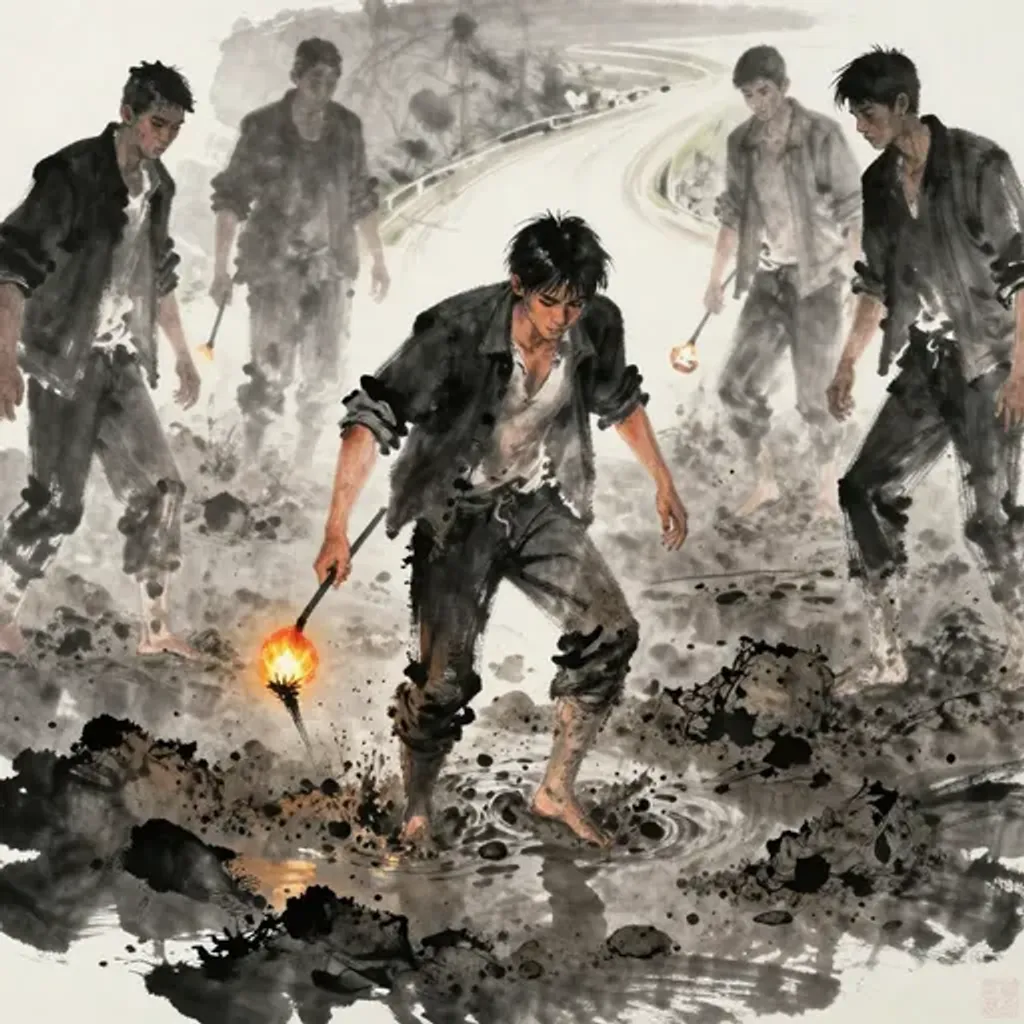
履泥汙足,名困身辱;兩仇相得,身為痛瘧。
Treading through mud, feet fouled; reputation ruined, body disgraced. Two enemies meet; the body suffers fever and chills.
— Jiao Yanshou, Yilin (Forest of Changes), 1st century BC
Commentary
Stepping in mud soils the feet; reputation is ruined and the body disgraced. Two enemies find each other, and the body suffers fever and ague. The verse traces a descent from minor indignity to serious affliction: muddied feet represent the first compromise, the stained reputation the social cost, and the encounter with enemies the physical consequence. The cyclical fever suggests recurring agony. From Great Possession to The Cauldron, fire above heaven becomes fire above wind — the transformative vessel. The Cauldron should refine and elevate, but this verse shows the cauldron's failure mode: when the wrong ingredients meet, the vessel produces poison instead of nourishment. The mud on the feet was the first wrong step into the wrong vessel.
大有 → 震
Hexagram 14 → Hexagram 51: The Arousing Thunder
Changing lines: 2, 3, 6
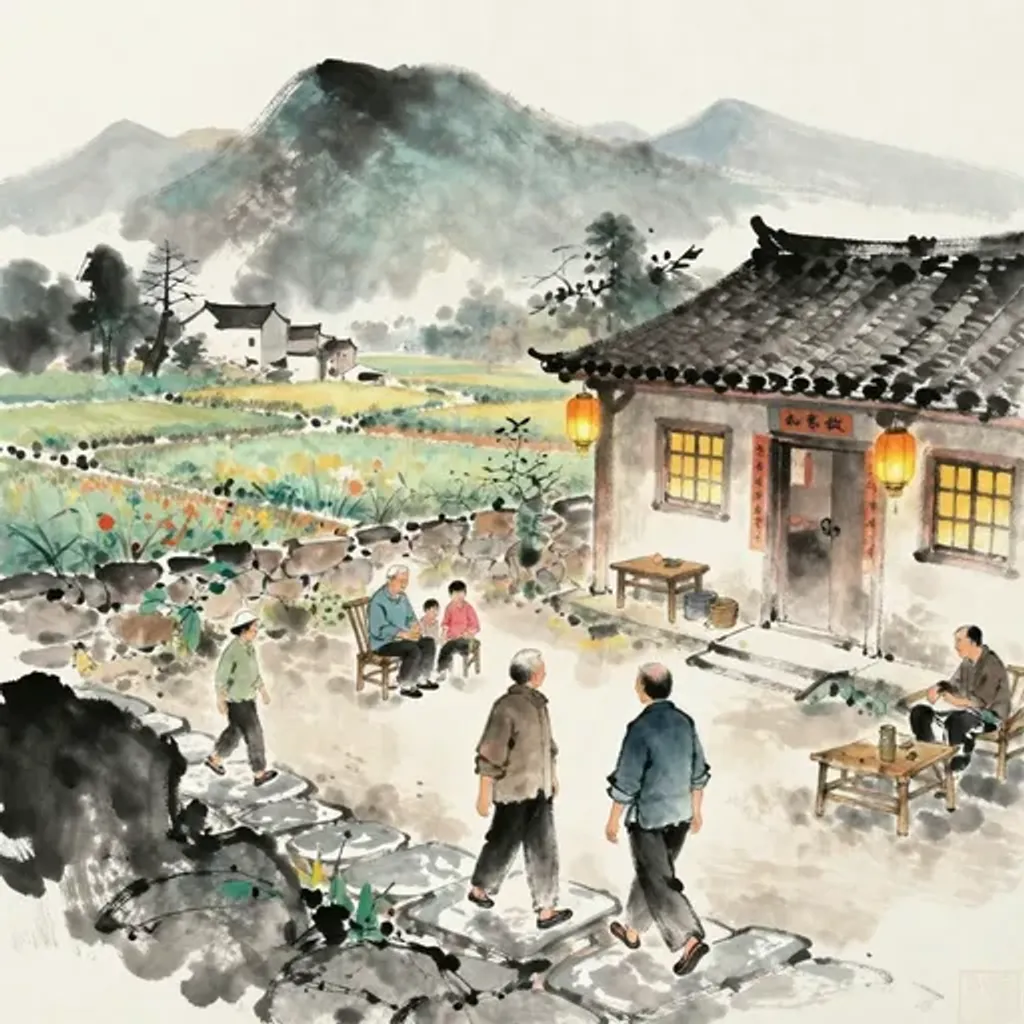
安居重遷,不去其亶;未來相聞,樂得常產。
Settled in home, reluctant to move; one does not leave one's domain. Tidings have not yet come; joyful to possess a lasting livelihood.
— Jiao Yanshou, Yilin (Forest of Changes), 1st century BC
Commentary
Dwelling securely, reluctant to relocate, unwilling to leave one's ancestral land. Neighbors hear of one another but do not intrude, delighting in established property and constant livelihood. The verse celebrates rootedness: the settled person who resists the lure of migration because home already provides sufficiency. Reluctance to move is a positive quality here, signaling deep attachment to place and community. From Great Possession to The Arousing, fire above heaven becomes doubled thunder — sudden, startling force. Yet the verse describes the opposite of arousal: stillness, contentment, staying put. The connection lies in what stabilizes against the shock: when thunder strikes, the one with constant livelihood and deep roots rides out the tremor. Arousal tests; rootedness endures.
大有 → 艮
Hexagram 14 → Hexagram 52: Keeping Still Mountain
Changing lines: 1, 2, 4
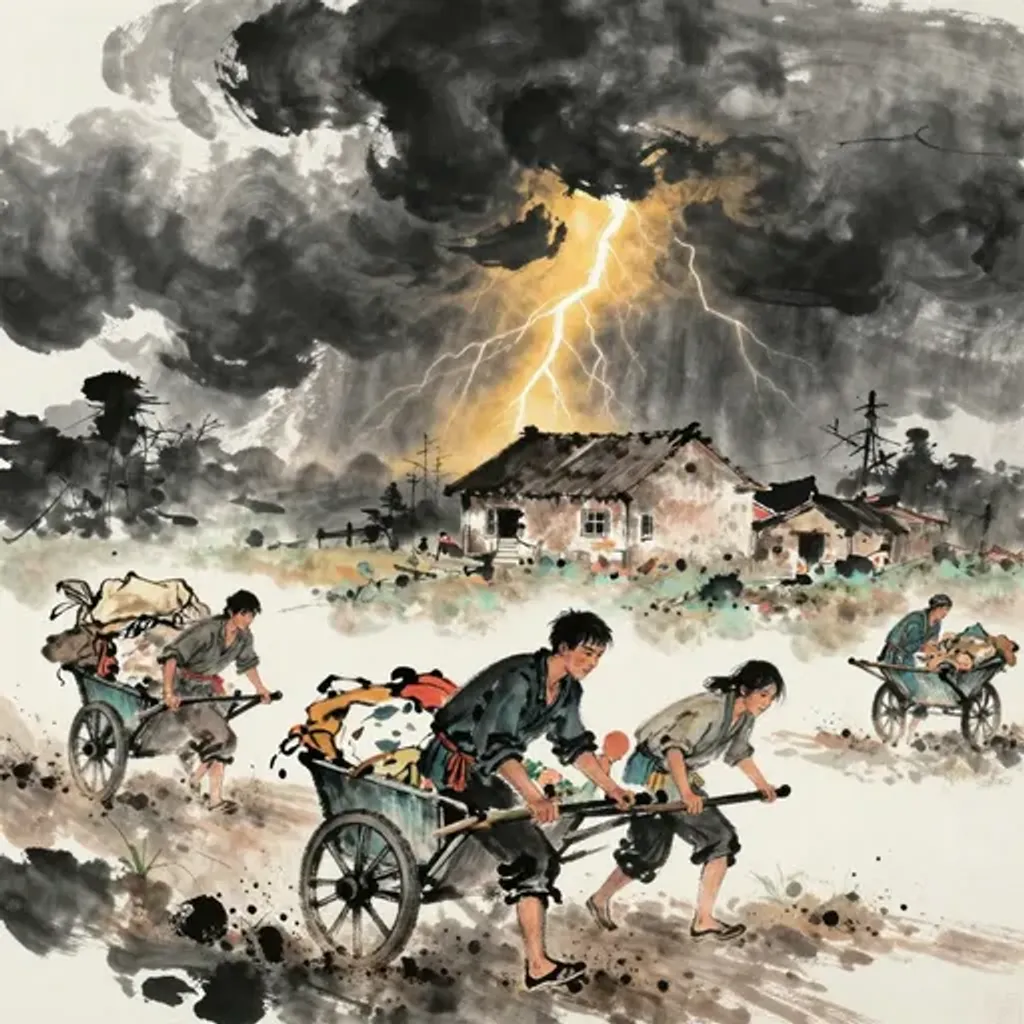
天災所遊,凶不可居;轉徙獲福,留止危憂。
What heaven's disasters roam; too dire a place to dwell. Relocating brings good fortune; staying invites danger and worry.
— Jiao Yanshou, Yilin (Forest of Changes), 1st century BC
Commentary
Disaster roams this place — it is too dangerous to stay. Those who relocate find blessings; those who remain face peril and anxiety. The verse delivers a clear oracular verdict: move or suffer. The current location is marked as cursed ground. From Great Possession to Keeping Still, fire above heaven becomes doubled mountain — the image of stillness and staying in one's place. The tension is deliberate: the hexagram counsels stillness, but the verse counsels flight. The resolution lies in knowing which place to be still in. Keeping Still does not mean clinging to a doomed position; it means finding the right position and then holding it. The blessing comes from choosing wisely where to stop.
大有 → 漸
Hexagram 14 → Hexagram 53: Development
Changing lines: 1, 2, 4, 5
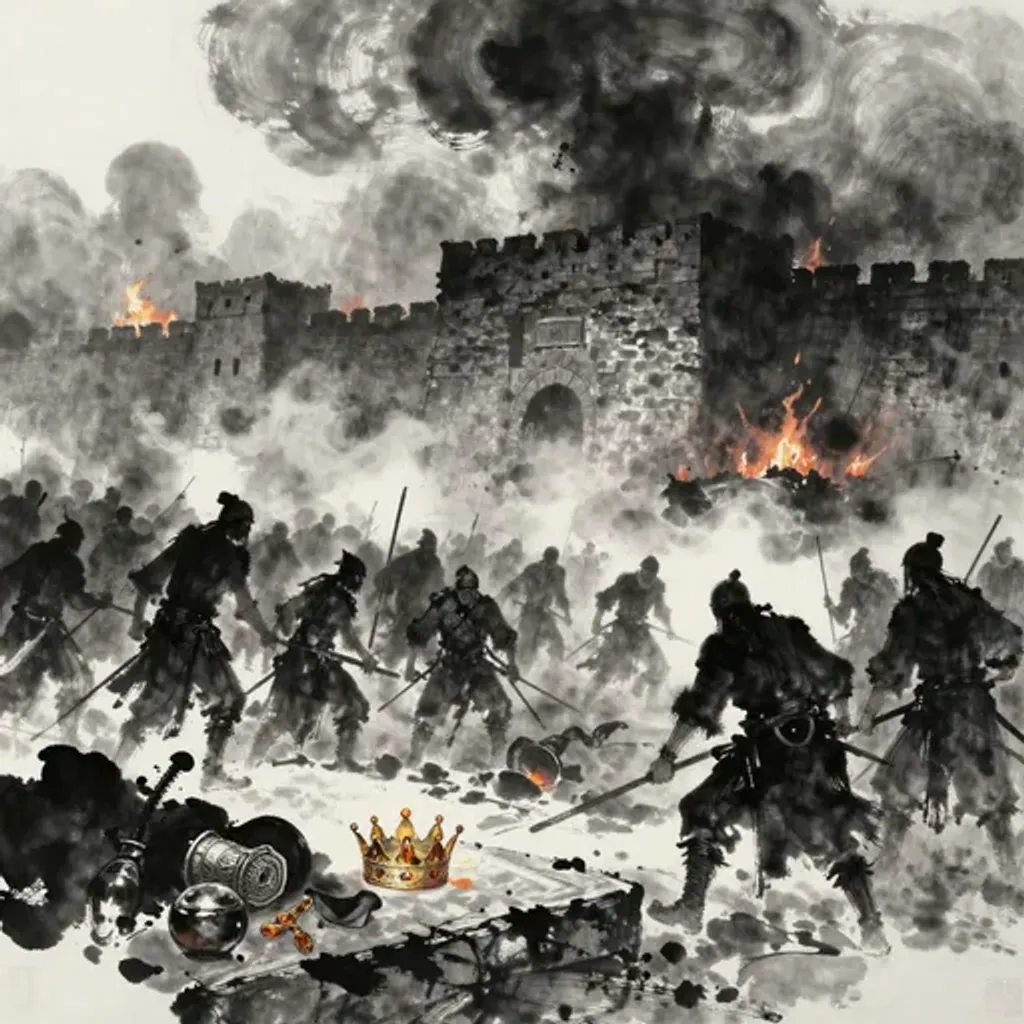
昧昧墨墨,不知白黑;景雲亂擾,光明隱伏;犬戎來攻,幽主失國。
Dim and murky, pitch-black; unable to tell white from black. Auspicious clouds are thrown into turmoil; radiance is hidden and obscured. The Quanrong barbarians attack; King You loses his kingdom.
— Jiao Yanshou, Yilin (Forest of Changes), 1st century BC
Commentary
Darkness upon darkness, murk upon murk — one cannot distinguish white from black. Auspicious clouds churn in confusion, and radiance hides itself away. The Quanrong attack, and King You loses his kingdom. The verse narrates the fall of the Western Zhou: King You, infatuated with his consort Bao Si, lit false beacon fires to amuse her, draining the trust of his feudal lords. When the Quanrong barbarians actually attacked, no one came to his aid, and the Western Zhou collapsed. Auspicious clouds in disorder suggests that even heaven's portents are scrambled — an entire cosmological order in collapse. From Great Possession to Development, fire above heaven becomes wind above mountain — gradual, orderly progress. The verse is Development's negative image: where gradual cultivation should prevail, sudden catastrophe erupts because moral development was neglected entirely.
大有 → 歸妹
Hexagram 14 → Hexagram 54: The Marrying Maiden
Changing lines: 3, 6
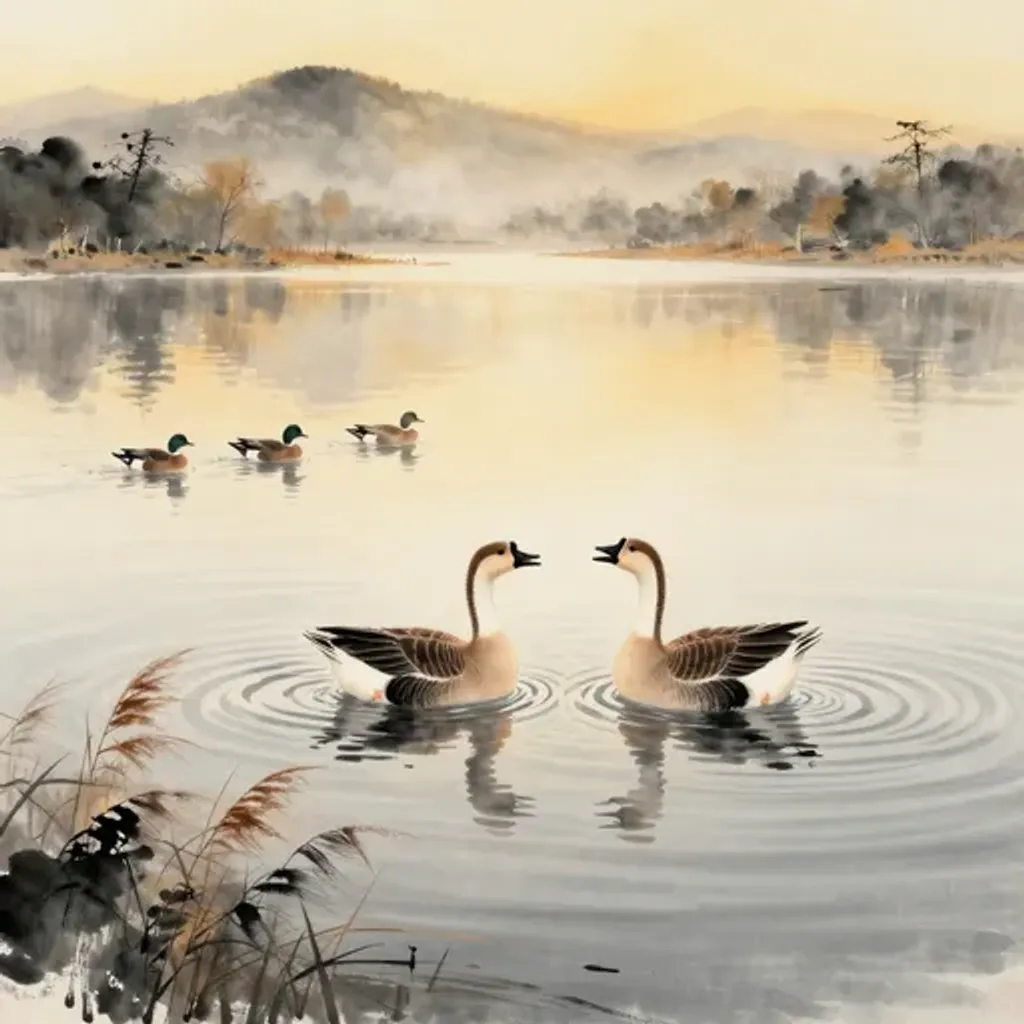
鳧雁啞啞,以水為宅;雌雄相和,心志娛樂。得其所欲。
Wild geese calling; the water is their home. Male and female in harmony; heart and spirit find delight. They obtain what they desire.
— Jiao Yanshou, Yilin (Forest of Changes), 1st century BC
Commentary
Ducks and wild geese cry out in their chattering calls, making the water their home. Male and female pair in harmony, their hearts content and spirits delighted — they obtain all they desire. The verse is a simple, joyous image of natural pairing: waterfowl at ease in their element, perfectly matched. The sounds are not mournful but lively, the bustle of contented creatures. From Great Possession to the Marrying Maiden, fire above heaven becomes thunder over lake — the eldest son leading the youngest daughter. The Marrying Maiden hexagram concerns union, specifically the younger woman entering a household, and the verse presents the ideal: willing, natural partnership where both parties find what they seek. The waterfowl's habitat is their marriage-home.
大有 → 豐
Hexagram 14 → Hexagram 55: Abundance
Changing lines: 2, 6
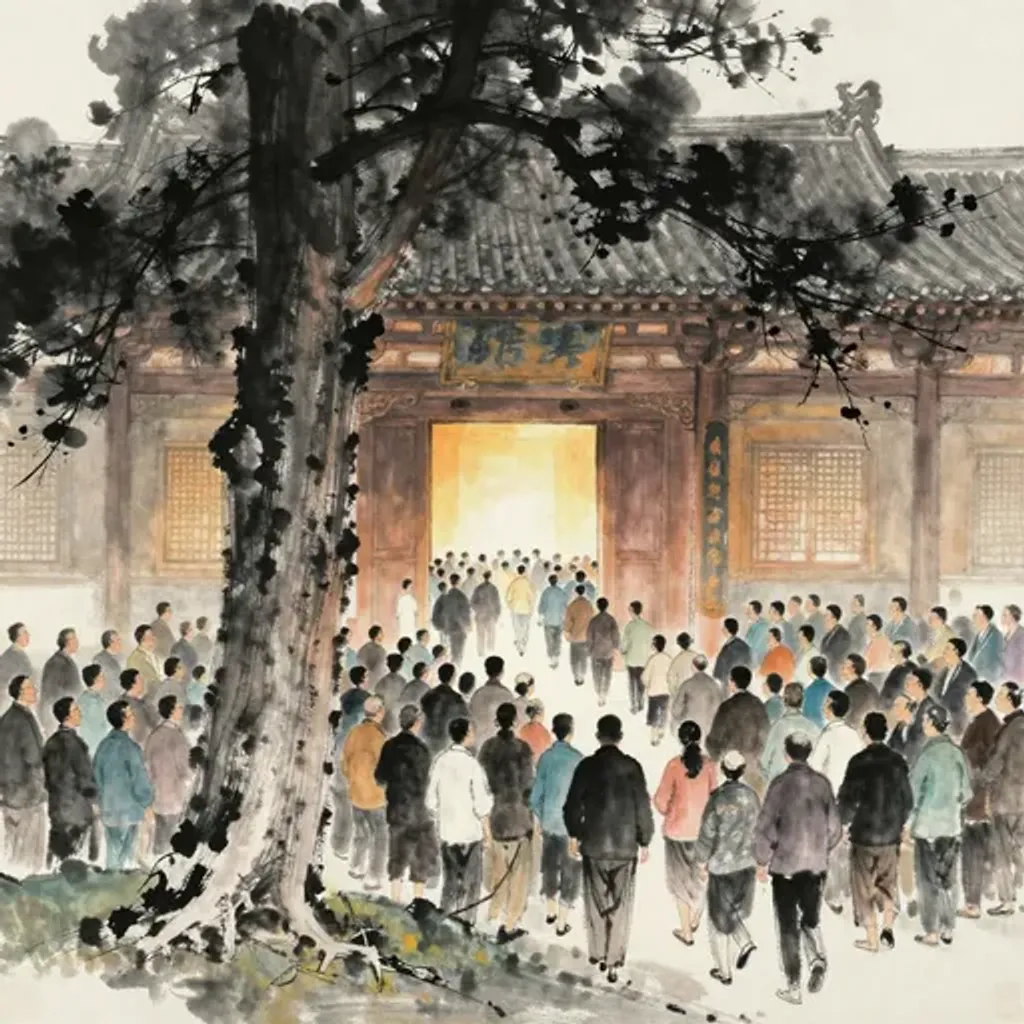
長生無極,子孫千億;柏柱載器,堅固不傾。
Endless life without limit; descendants in billions. Cypress pillars bear the vessels; solid and unyielding, never toppling.
— Jiao Yanshou, Yilin (Forest of Changes), 1st century BC
Commentary
Eternal life without limit, descendants numbering a thousand times ten thousand. Cypress pillars bear the vessel of state, solid and unyielding, never tilting. The verse pairs two forms of permanence: biological continuity through countless descendants, and structural endurance through cypress-wood architecture. The cypress pillar — symbol of incorruptibility — supporting the ritual vessel creates a powerful image of institutional capacity upheld by natural integrity. From Great Possession to Abundance, fire above heaven becomes thunder and lightning striking together — the peak moment of fullness. The verse captures Abundance's promise at its most expansive: everything flourishes, the structure holds, the lineage extends. Abundance maintained through sturdy foundations endures across generations.
大有 → 旅
Hexagram 14 → Hexagram 56: The Wanderer
Changing lines: 1, 2
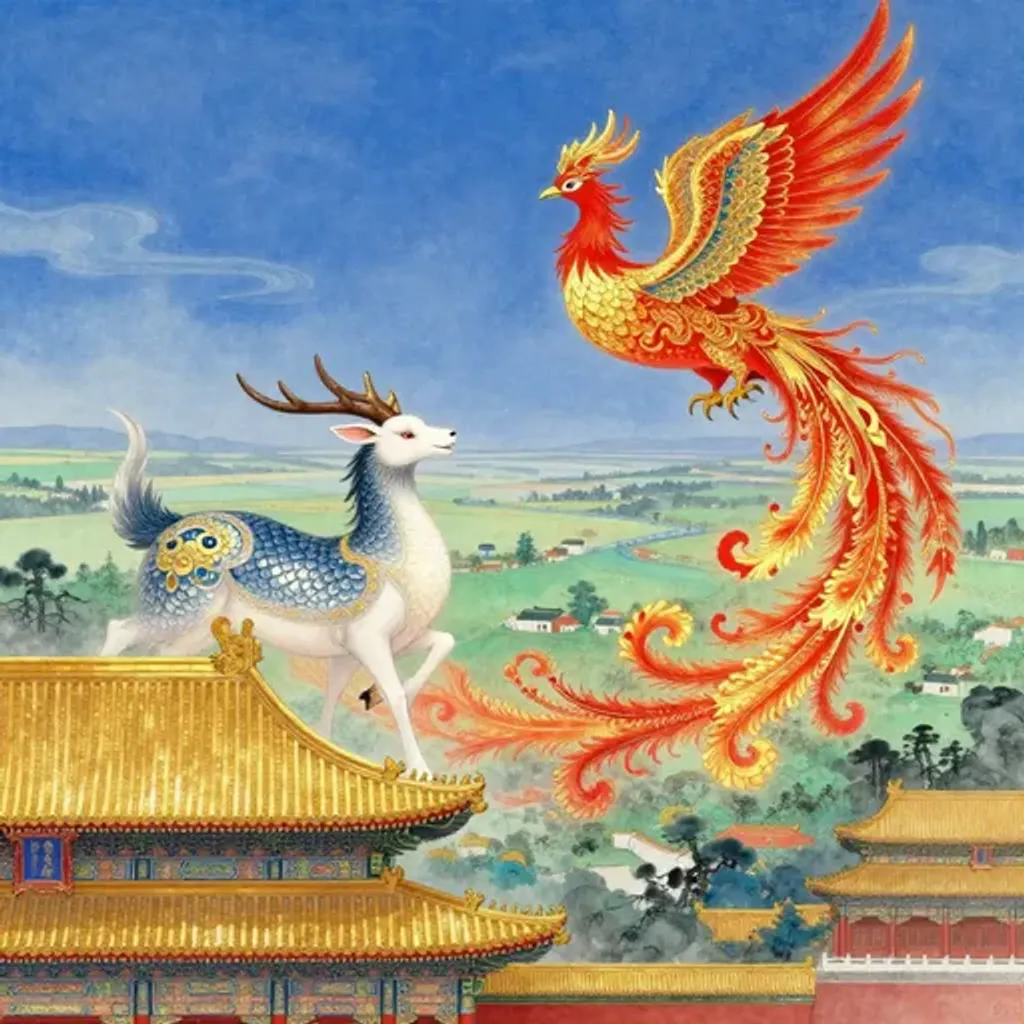
麒麟鳳凰,善政得祥;陰陽和調,國無災殃。
Qilin and phoenix appear; good governance is rewarded with auspicious signs. Yin and yang in perfect balance; the state knows no calamity.
— Jiao Yanshou, Yilin (Forest of Changes), 1st century BC
Commentary
The qilin and the phoenix appear — signs of virtuous governance rewarded with auspicious omens. Yin and yang are harmoniously balanced, and the kingdom suffers no calamity. In Chinese cosmology, the simultaneous appearance of the qilin and the phoenix represents the highest possible endorsement of a ruler's virtue. From Great Possession to The Wanderer, fire above heaven becomes fire above mountain — the traveler's distant flame on a peak. The connection is subtle: the auspicious creatures appear because governance has achieved such perfect balance that even transient, wandering phenomena reflect cosmic approval. The Wanderer's brief passage through a land can still glimpse perfection, if that land is rightly governed.
大有 → 巽
Hexagram 14 → Hexagram 57: The Gentle Wind
Changing lines: 1, 4, 5
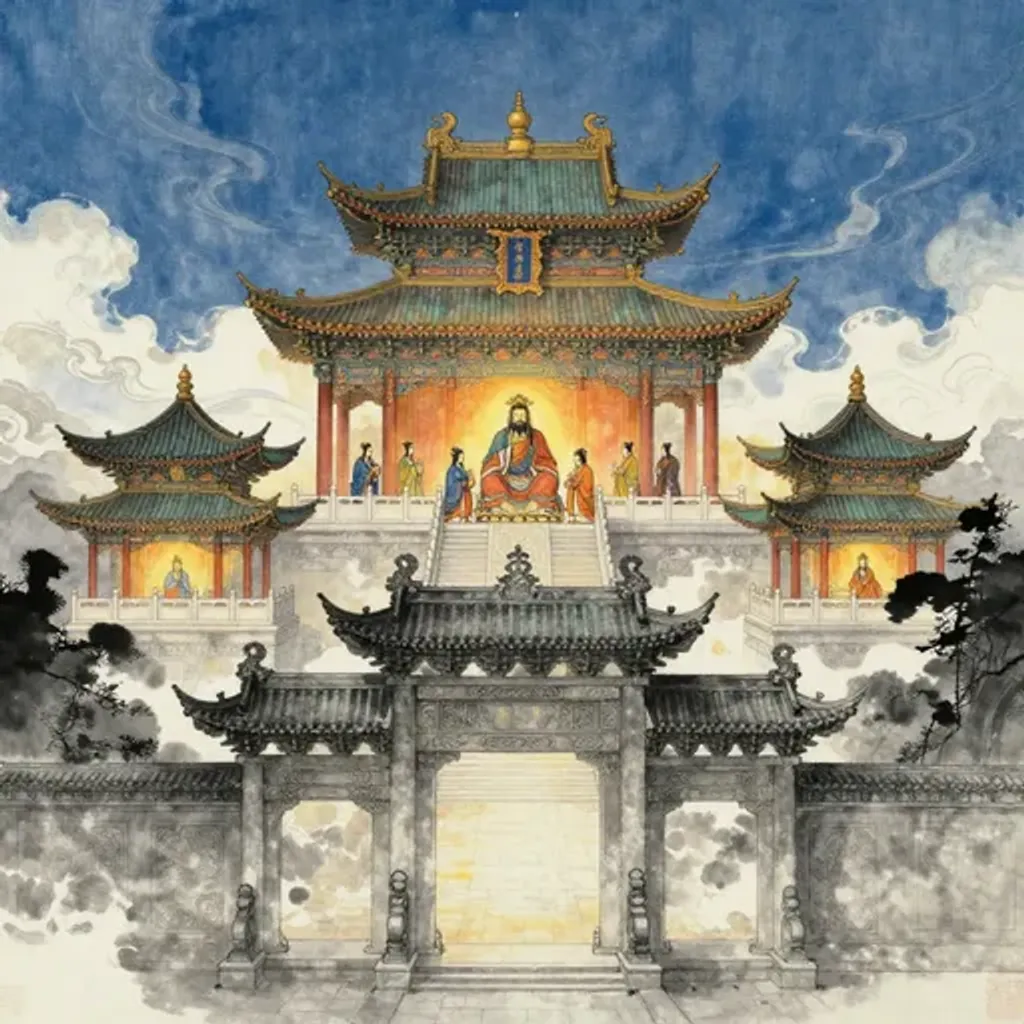
天之奧隅,堯舜所居;可以存身,保我室家。
Heaven's hidden corner; where Yao and Shun once dwelt. One may preserve the body there; and protect our home and family.
— Jiao Yanshou, Yilin (Forest of Changes), 1st century BC
Commentary
In the deep recess of heaven, where Yao and Shun dwell — there one may preserve one's life and protect one's household. The verse locates safety in a place both cosmic and intimate: the innermost corner of heaven, which is also where the sages reside. This is not a physical location but a moral-cosmological one — to dwell where Yao and Shun dwell is to align oneself with sage-virtue, and that alignment is the ultimate protection. From Great Possession to The Gentle, fire above heaven becomes doubled wind — penetrating, pervasive, repeated. The Gentle Wind enters everywhere, and the sage who has internalized its quality can take shelter within the cosmic order itself. Safety is not a fortress but a resonance with heaven's deepest pattern.
大有 → 兌
Hexagram 14 → Hexagram 58: The Joyous Lake
Changing lines: 3, 5, 6
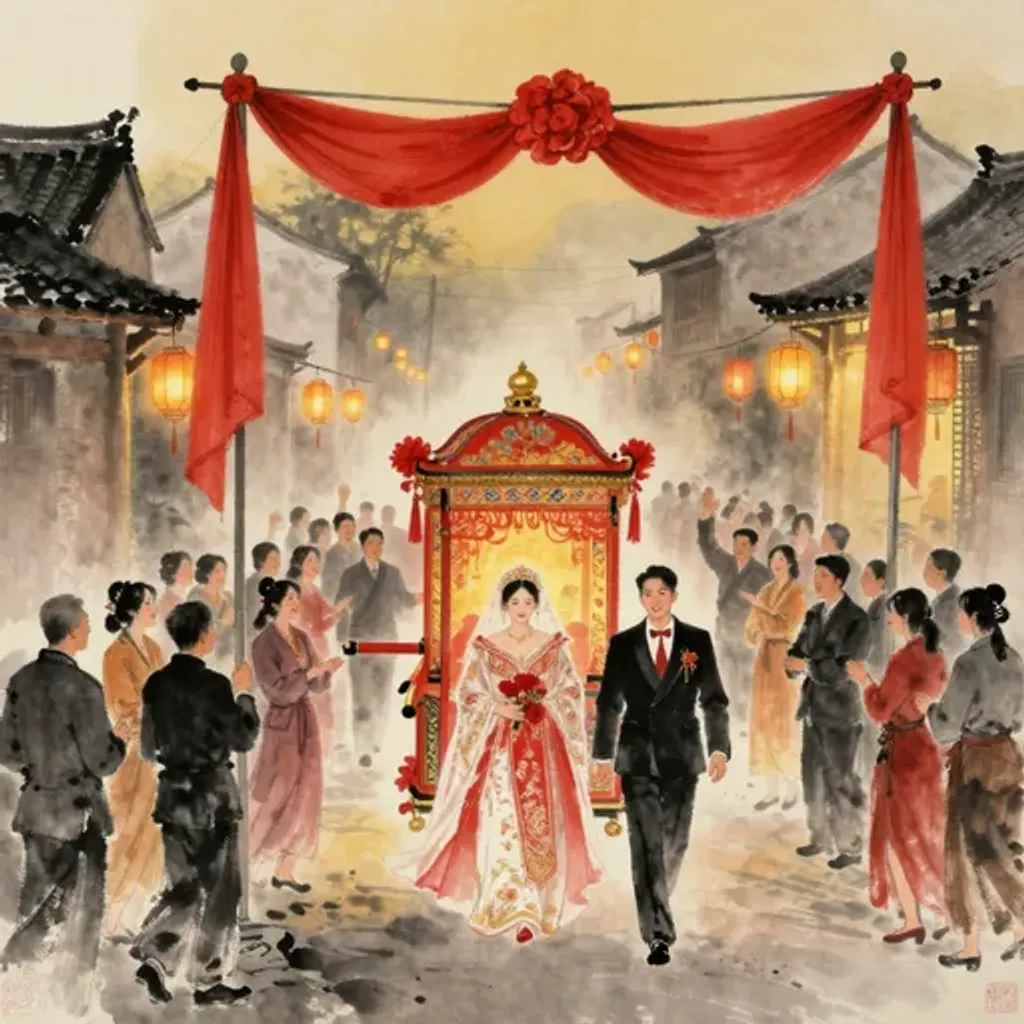
配合相迎,利之四鄰;昏以為期,與福笑喜。
Well-matched, they welcome each other; profit extends to the four neighbors. Dusk is set as the appointed hour; with blessings they share laughter and joy.
— Jiao Yanshou, Yilin (Forest of Changes), 1st century BC
Commentary
Mates are matched and welcomed, bringing benefit to all four neighbors. The wedding date is set at dusk, and blessings arrive amid laughter and joy. The verse celebrates marriage as a communal event: the union does not merely benefit the couple but radiates outward to enrich the entire neighborhood. The evening wedding follows ancient Chinese custom, where the bride arrived at dusk. From Great Possession to The Joyous, fire above heaven becomes doubled lake — friends gathering for shared learning and mutual delight. The Joyous is the hexagram of open, reciprocal pleasure, and the wedding feast is its natural expression. Abundance finds its most human fulfillment not in private accumulation but in the shared joy of proper union.
大有 → 渙
Hexagram 14 → Hexagram 59: Dispersion
Changing lines: 1, 3, 4, 5
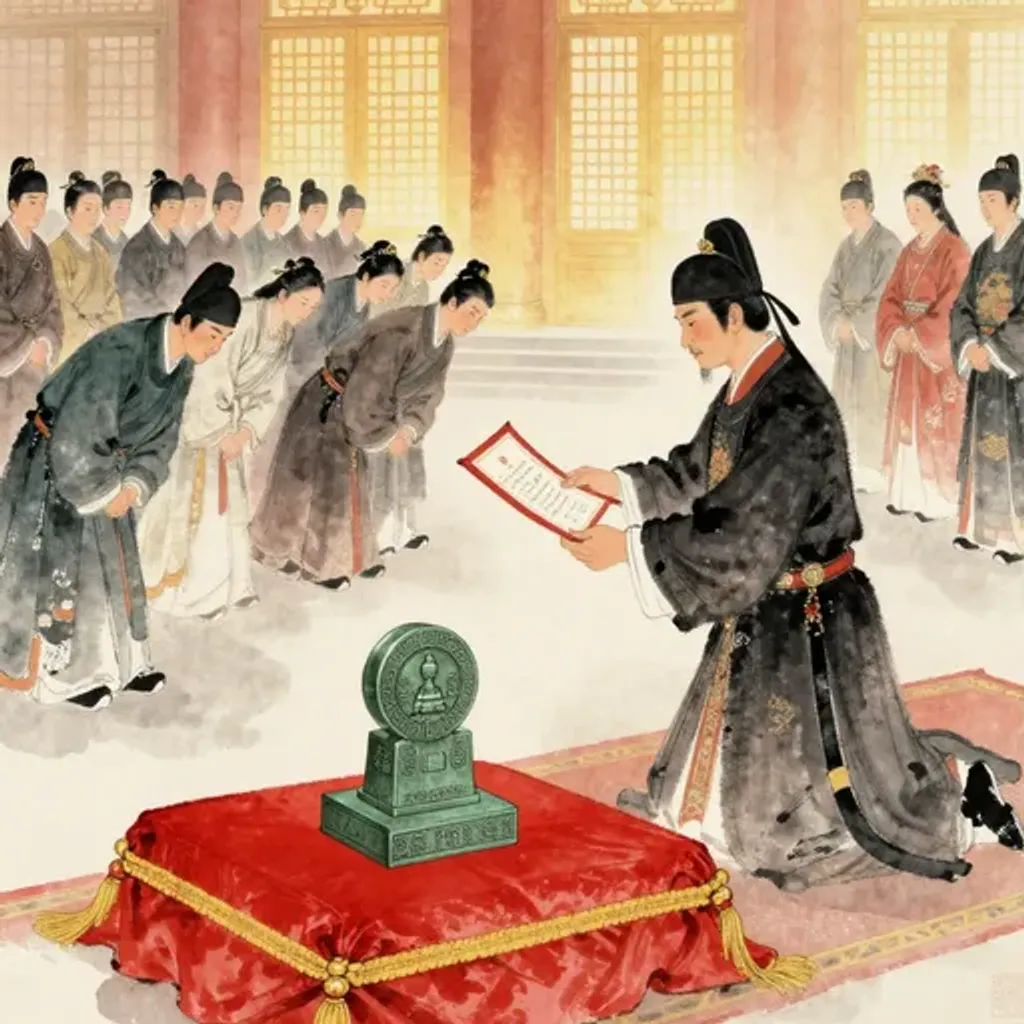
砥德礪材,果當成周;拜受大命,封為齊侯。
Honing virtue, sharpening talent; the fruit fulfills the Zhou destiny. Bowing to receive heaven's great mandate; enfeoffed as Marquis of Qi.
— Jiao Yanshou, Yilin (Forest of Changes), 1st century BC
Commentary
Honing virtue and sharpening talent, one proves worthy at the founding of the Zhou dynasty. Bowing to receive the great mandate, one is enfeoffed as Marquis of Qi. The verse describes Taigong Wang (Jiang Ziya), the legendary strategist who assisted Kings Wen and Wu in overthrowing the Shang and was rewarded with the fief of Qi. The phrase 'polishing virtue, whetting talent' captures his years of obscure preparation before being discovered fishing at the Wei River. From Great Possession to Dispersion, fire above heaven becomes wind over water — scattering what was concentrated. The paradox is precise: the founding of Qi required dispersing Zhou's concentrated power outward through the feudal system. Taigong's enfeoffment is an act of deliberate dispersion, sending proven talent to distant frontiers to extend the dynasty's reach.
大有 → 節
Hexagram 14 → Hexagram 60: Limitation
Changing lines: 3, 4, 5, 6
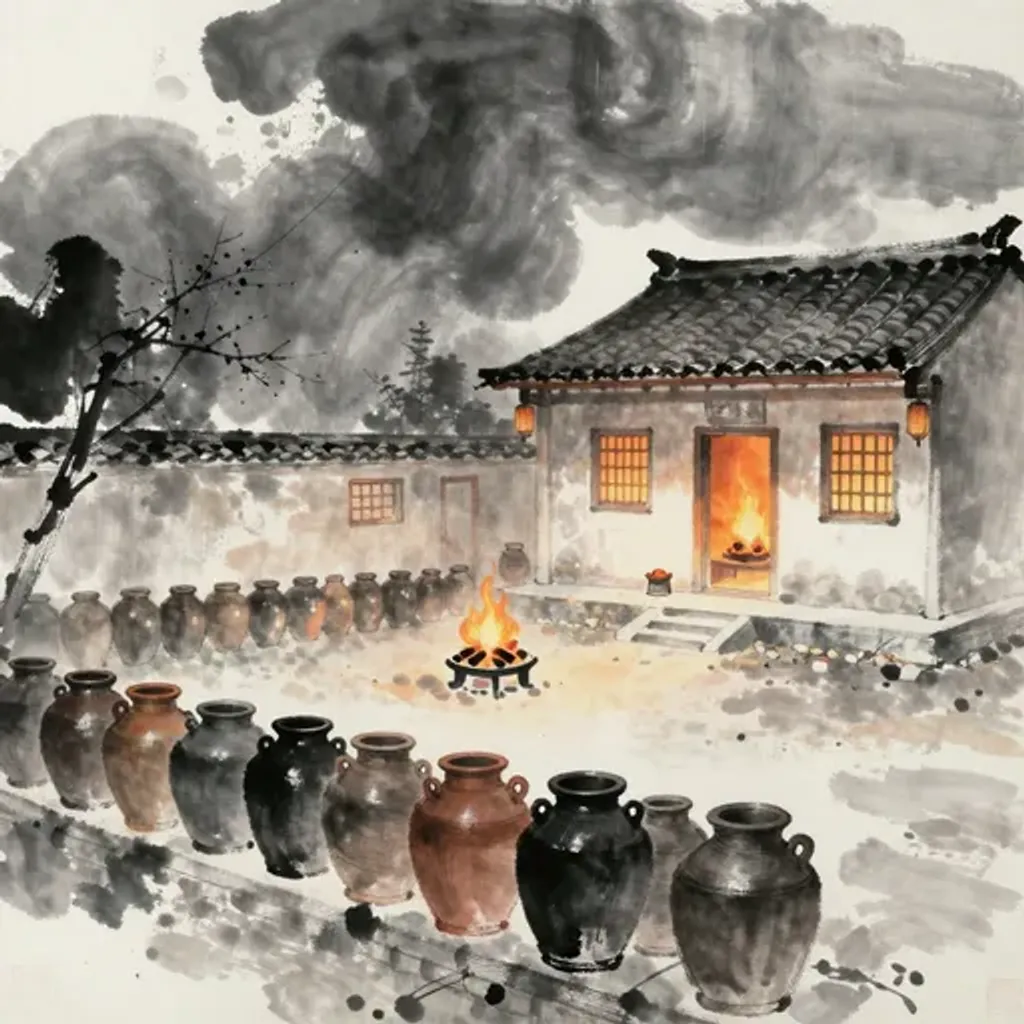
與福俱坐,畜水備火;思患豫防,終無殃禍。
Sitting with blessing; storing water, guarding against fire. Thinking of danger and preparing in advance; to the end, no disaster or calamity.
— Jiao Yanshou, Yilin (Forest of Changes), 1st century BC
Commentary
Sitting together with blessings, one stores water and prepares against fire. Anticipating trouble and guarding against it in advance, one passes through life without calamity. The verse echoes the I-Ching's own Ji Ji hexagram text almost verbatim, applying it here as practical wisdom: the prepared person coexists with good fortune precisely because they never take it for granted. Water stored against fire is the most fundamental form of foresight. From Great Possession to Limitation, fire above heaven becomes water above lake — measured containment. Limitation's teaching is about establishing proper boundaries, and the verse shows what this looks like in practice: one sits with abundance but keeps water at hand, never trusting the fire not to turn.
大有 → 中孚
Hexagram 14 → Hexagram 61: Inner Truth
Changing lines: 3, 4, 5
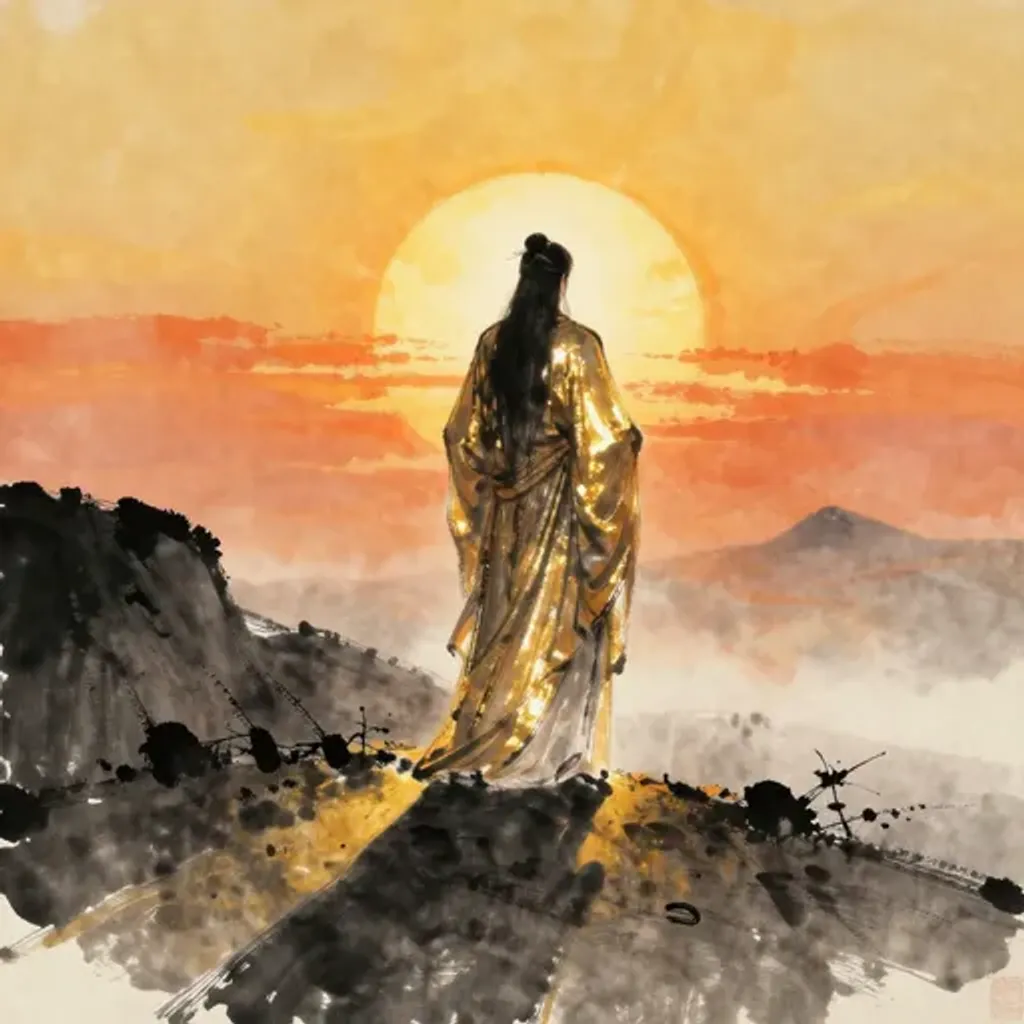
晨昏潛處,候明昭昭;卒連白日,為世榮主。
Concealed in dusk and dawn; watchful for the bright and clear. In time, one joins the white sun; becoming the world's glorious lord.
— Jiao Yanshou, Yilin (Forest of Changes), 1st century BC
Commentary
Dawn and dusk one hides in obscurity, waiting for the brightness that will surely come. At last one is joined to the white sun, becoming a radiant lord of the age. The verse traces an arc from concealment to glory: hiding at dawn and dusk describes someone biding their time in darkness, patiently watching for the moment of illumination, and finally being crowned with solar brilliance. From Great Possession to Inner Truth, fire above heaven becomes wind above lake — the open center that allows truth to resonate outward. The verse embodies Inner Truth's mechanism: sincerity held in obscurity eventually radiates with undeniable force. The one who waits with genuine inner conviction does not seize the light — the light comes to find them.
大有 → 小過
Hexagram 14 → Hexagram 62: Small Exceeding
Changing lines: 1, 2, 6
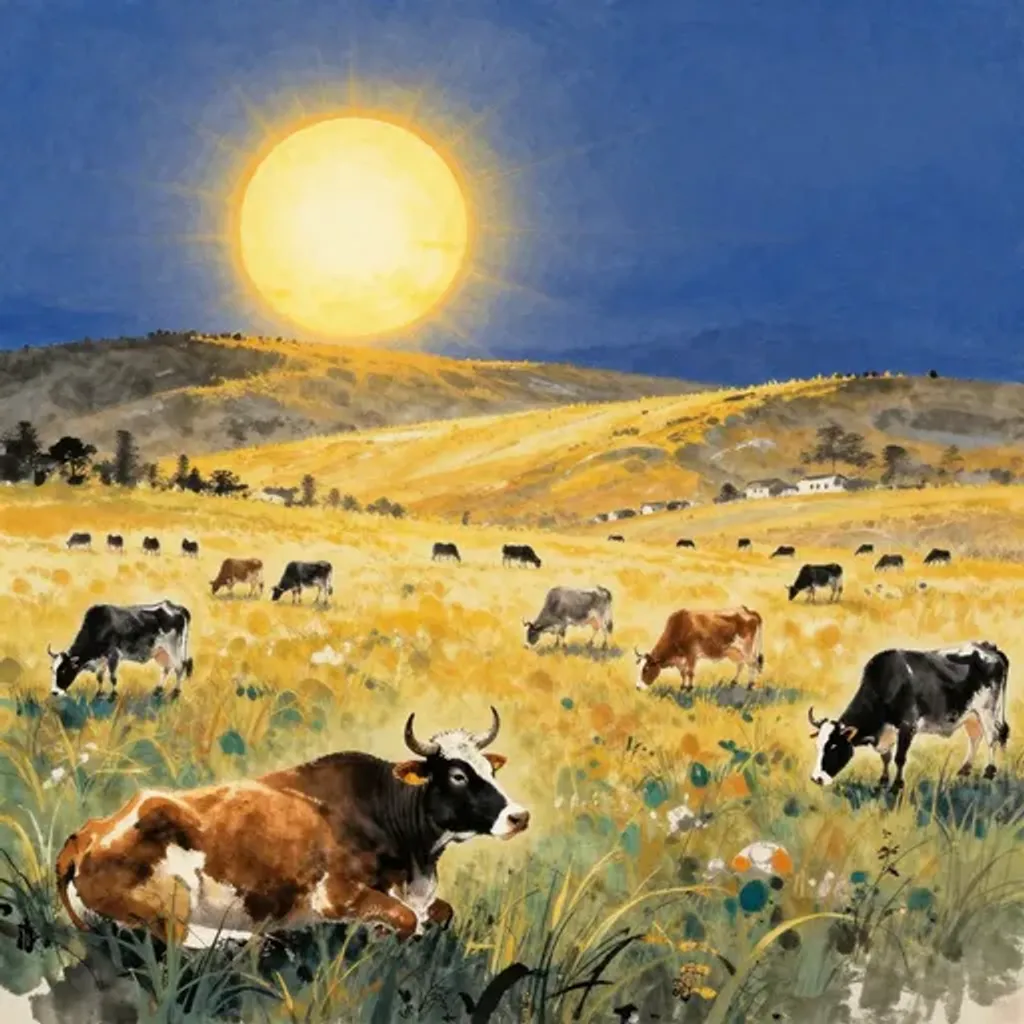
視曰再光,與天相望;長牛懽悅,以福為多。
Gazing, the sun shines twice as bright; exchanging looks with heaven. The great ox is joyful and pleased; blessings are deemed plentiful.
— Jiao Yanshou, Yilin (Forest of Changes), 1st century BC
Commentary
The gaze is doubly bright, surveying as far as heaven's expanse. The great ox lows in contentment, counting its blessings as many. The verse pairs cosmic vision with pastoral satisfaction, creating an image of abundance viewed and enjoyed from the widest possible perspective. From Great Possession to Small Exceeding, fire above heaven becomes thunder above mountain — the small bird that should not fly too high. Small Exceeding counsels restraint and downward attention, and the verse fits this subtly: the doubled brightness does not reach for more but simply surveys what is, and the contented ox does not strain upward but rests in its plenty. Abundance properly experienced through modesty and presence — this is Small Exceeding's gift to Great Possession.
大有 → 既濟
Hexagram 14 → Hexagram 63: After Completion
Changing lines: 2, 4, 5, 6
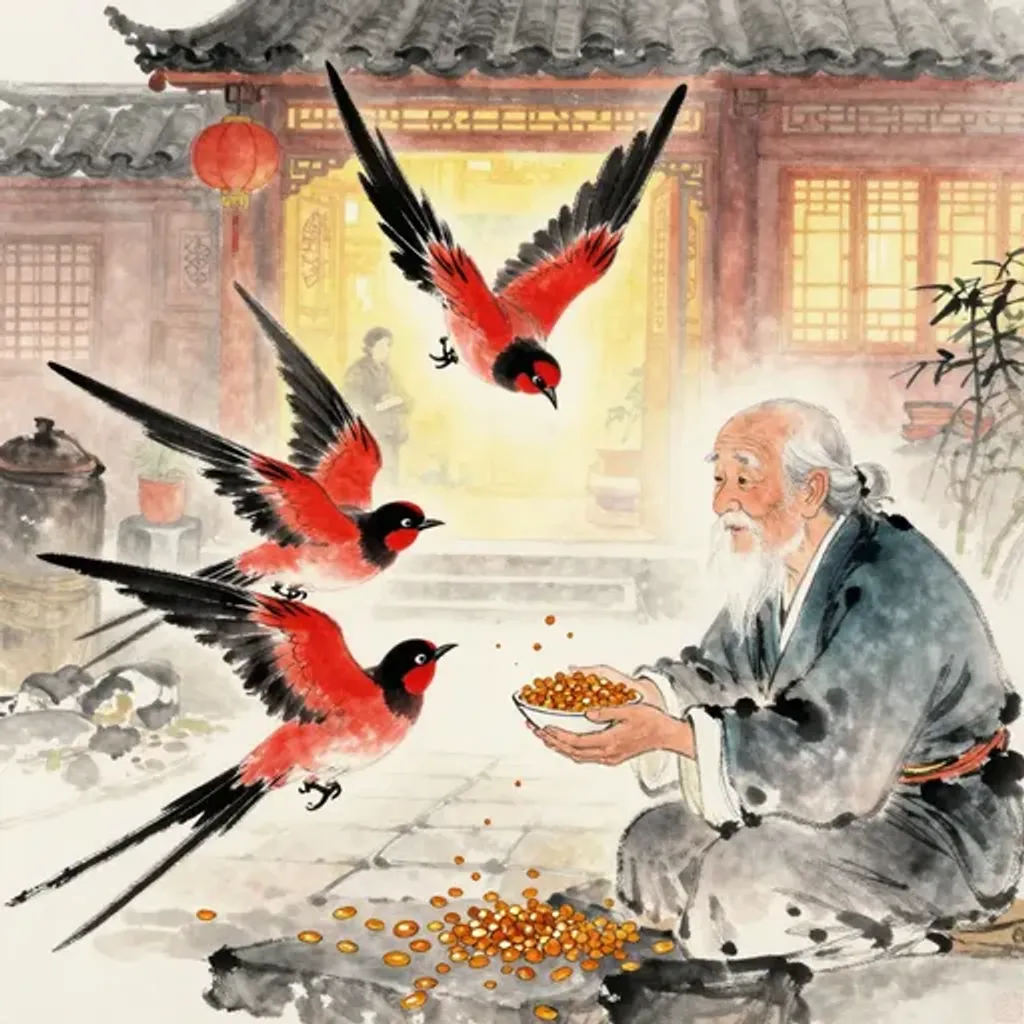
大頭明目,載受嘉福;三雀飛來,與祿相單。
A great head, bright eyes; one receives fine blessings. Three sparrows fly to us; paired with bounty they alight.
— Jiao Yanshou, Yilin (Forest of Changes), 1st century BC
Commentary
A large head with bright eyes receives excellent blessings. Three sparrows fly in, bringing fortune to match. The image is auspicious and vivid: the prominent-featured figure may represent a deity or auspicious being whose features signify perceptiveness and spiritual potency. The three arriving sparrows function as messengers of fortune, their number suggesting completeness. From Great Possession to After Completion, fire above heaven becomes water above fire — everything in its proper place. After Completion represents the moment when all elements align perfectly, and the verse celebrates exactly this: blessings arriving as if summoned, fortune and recipient meeting in harmonious conjunction. Yet After Completion also warns of complacency — this perfect moment is to be savored, not assumed to last.
大有 → 未濟
Hexagram 14 → Hexagram 64: Before Completion
Changing lines: 1, 3
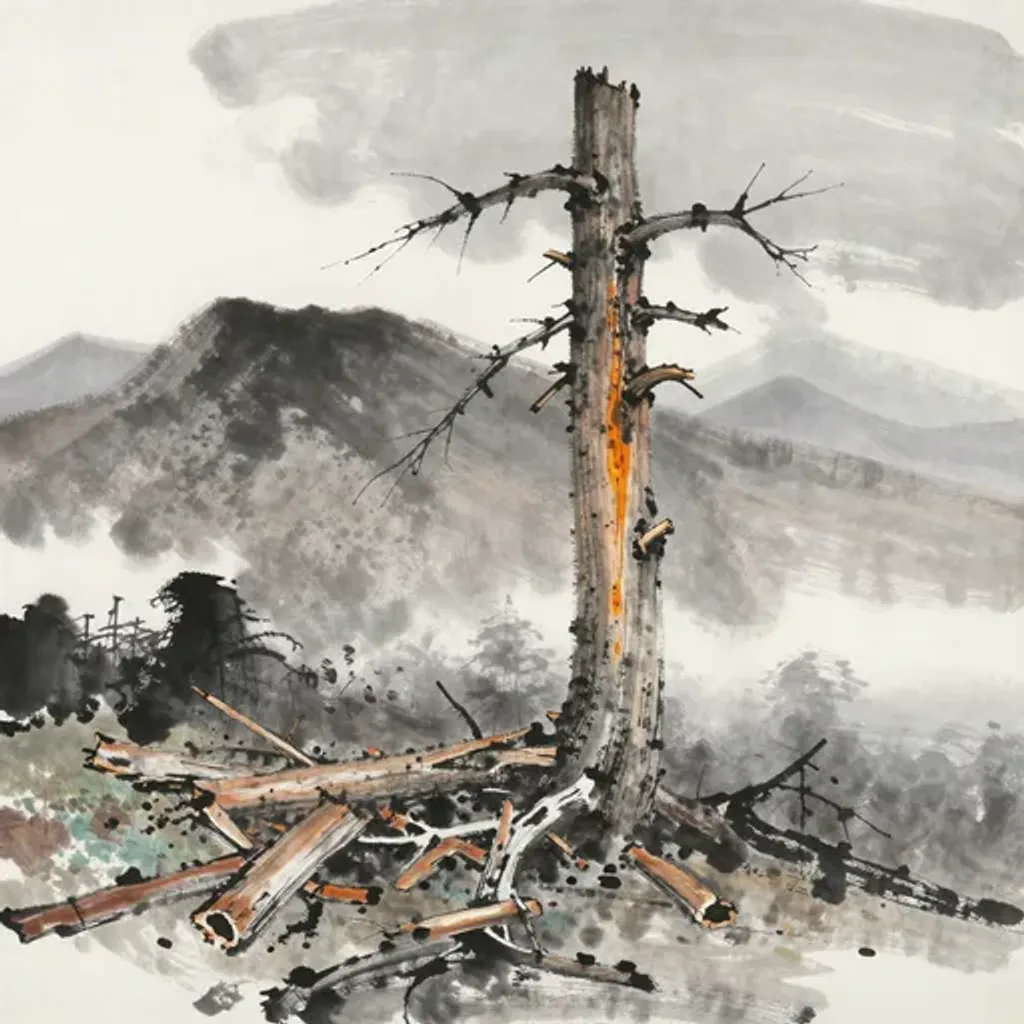
楩生荊山,命載輸班;袍衣剝脫,夏熱冬寒;立餓枯槁,眾人莫憐。
A catalpa tree grows on Mount Jing; its fate bids it be sawn and shipped. Bark and robes stripped away; summer's heat, winter's cold. Standing starved and desiccated; none among the people show pity.
— Jiao Yanshou, Yilin (Forest of Changes), 1st century BC
Commentary
A pian-tree — the precious nanmu timber — grows on Jing Mountain, destined by fate for the workshop of the master carpenter Lu Ban. Yet its robes are stripped away, exposed to summer heat and winter cold. It stands starving, withered to a husk, and no one takes pity. Jing Mountain is famous as the source of Bian He's jade, and the name refers to the legendary craftsman Gongshu Ban (Lu Ban). The precious timber's fate is a parable of talent misused: born of the finest stock and earmarked for the greatest artisan, it nevertheless rots in neglect. From Great Possession to Before Completion, fire above heaven becomes fire above water — perpetually unable to achieve synthesis. The timber never reaches the carpenter's bench. Potential unrealized is the cruelest form of loss.