Transformations of Hexagram 15
Every line of change out of Hexagram 15 謙 Modesty, with the Yilin verse for each of the 64 resulting hexagrams, its translation, and the original ink brush artwork.
謙 → 乾
Hexagram 15 → Hexagram 1: The Creative
Changing lines: 1, 2, 4, 5, 6
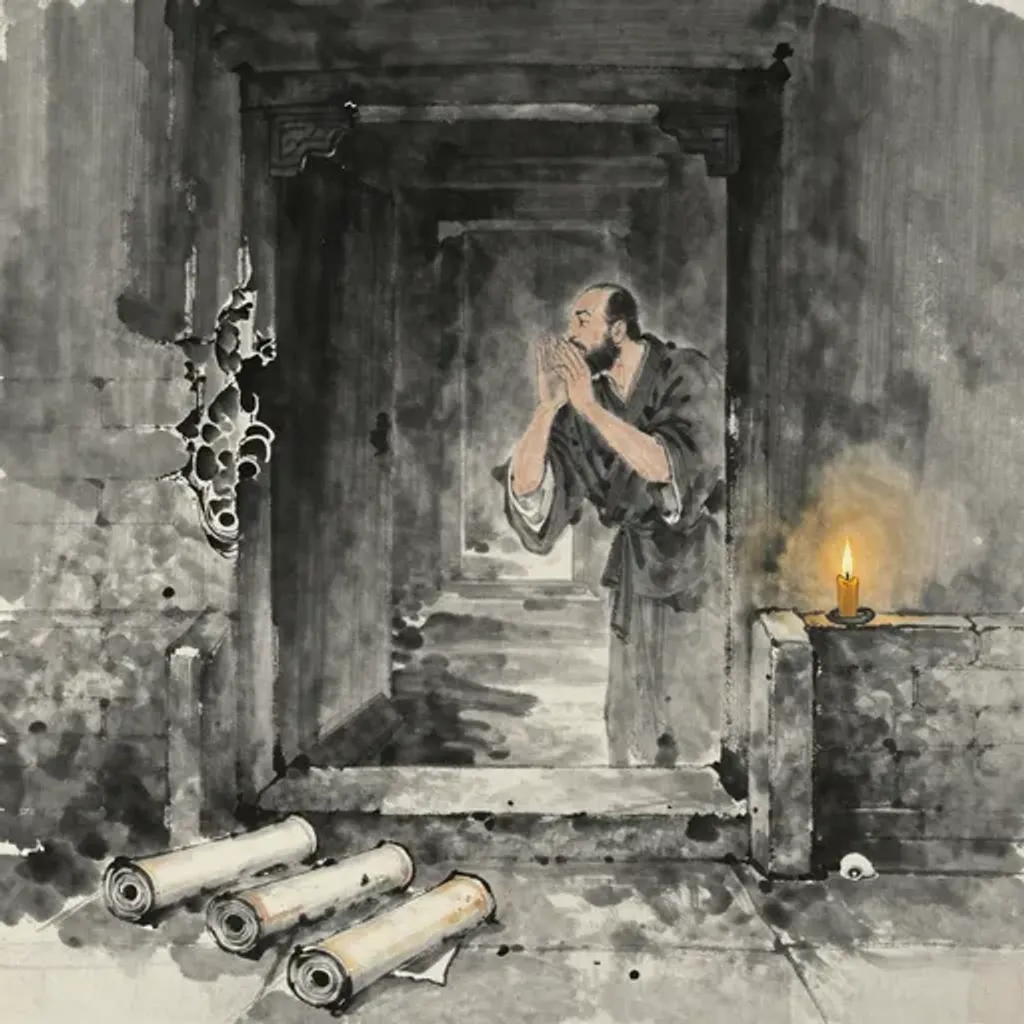
喋囁處曜,昧冥相待;多言少實,終無成事。
Chattering and flickering in the glare; dim darkness waits upon itself. Many words, little substance; in the end, nothing is accomplished.
— Jiao Yanshou, Yilin (Forest of Changes), 1st century BC
Commentary
Earth holds a mountain within, the image of Modesty, yet here that hidden strength dissipates into chatter. Mouths move ceaselessly — 喋囁 evokes the sound of lips flapping without substance — while dimness waits upon dimness. Many words, little substance: nothing is accomplished. The verse diagnoses a failure of speech divorced from action. From Modesty to the Creative, the mountain buried in earth should transform into heaven's self-generating power, yet the talker who mistakes noise for initiative never reaches that threshold. The Creative demands tireless self-strengthening; hollow rhetoric produces only stagnation. Modesty's quiet virtue, when diluted into empty verbosity, cannot fuel the creative force that requires disciplined will.
謙 → 坤
Hexagram 15 → Hexagram 2: The Receptive
Changing lines: 3
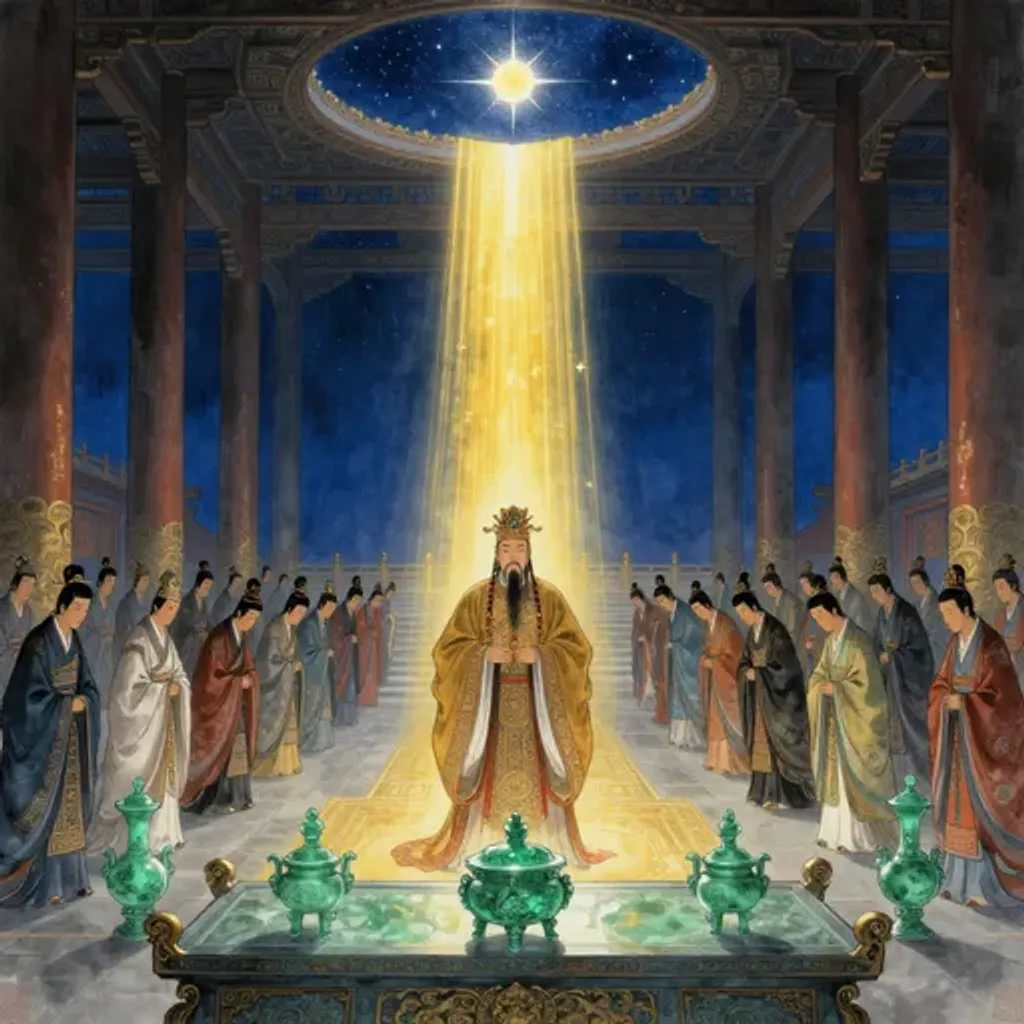
北辰紫宮,衣冠立中;含和建德,常受大福。鈆刀攻玉,堅不可得。
The North Star in the Purple Palace; robed and capped, standing at the center. Embracing harmony, building virtue; one ever receives great blessing. A lead knife attacking jade; the hard cannot be won.
— Jiao Yanshou, Yilin (Forest of Changes), 1st century BC
Commentary
Earth holds the mountain low, and now the verse lifts its gaze to the Pole Star at the Purple Palace — the celestial pivot around which all heaven revolves. Robed and capped, the ruler stands at the center, embracing harmony and building virtue, receiving great blessings perpetually. Then the image pivots sharply: a lead knife attacking jade — the blade too soft, the stone too hard, the task impossible. From Modesty to the Receptive, the doubled earth suggests yielding devotion, yet even perfect receptivity has limits. One who embodies cosmic centrality and accrued virtue receives heaven's favor effortlessly, but attempting to force results with inadequate tools — lead against jade — yields nothing. The Receptive succeeds through alignment, never through brute insistence.
謙 → 屯
Hexagram 15 → Hexagram 3: Difficulty at the Beginning
Changing lines: 1, 3, 5
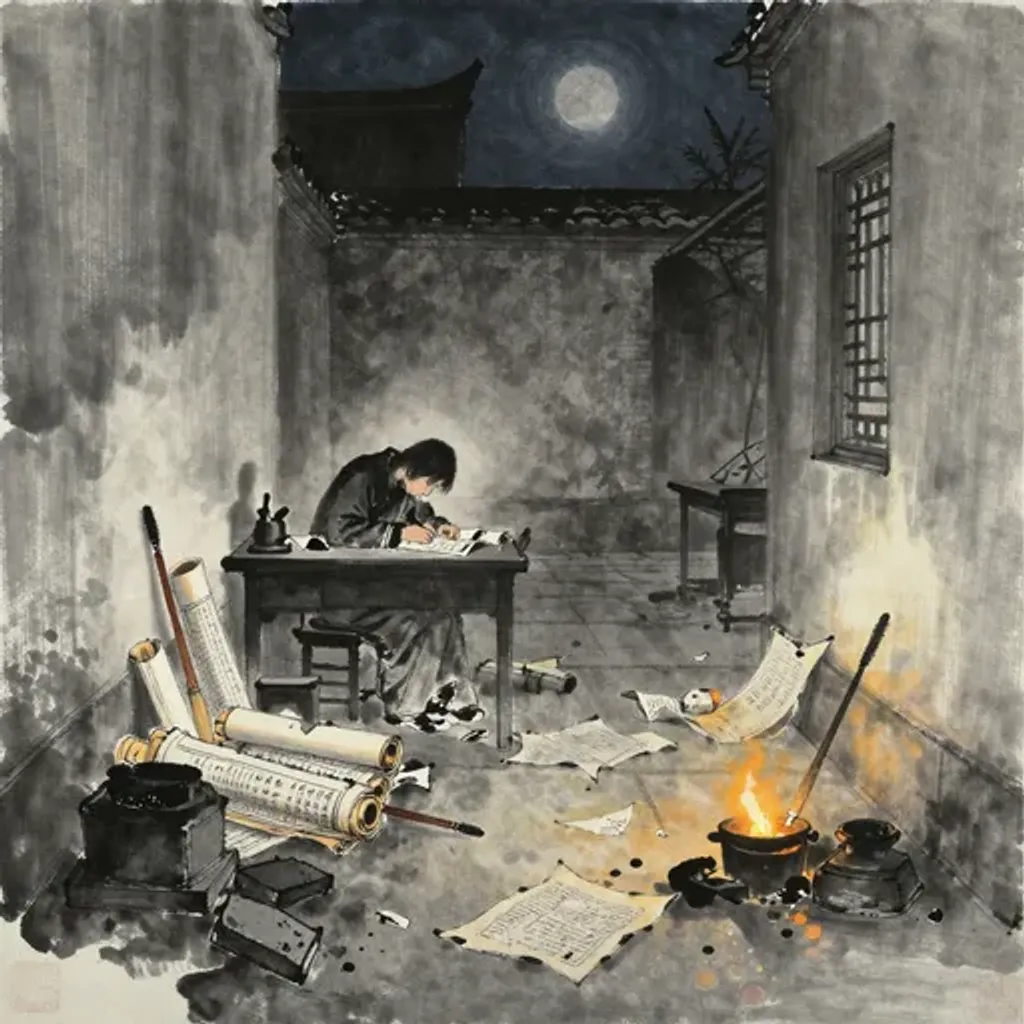
東璧餘光,數暗不明;主母嫉妬,亂我事業。
The eastern wall's fading light; the count grows dark and dim. The principal wife is jealous and envious; she disorders my affairs.
— Jiao Yanshou, Yilin (Forest of Changes), 1st century BC
Commentary
Earth holds a mountain within, but now the Eastern Wall star's fading light leaves the field dim and unclear. A jealous mistress disrupts all endeavors, her envy darkening the household like residual starlight too faint to illuminate. The Eastern Wall (東璧) is one of the lunar mansions associated with scholarship and the treasury, yet here its brightness has waned to a flicker. From Modesty to Difficulty at the Beginning, clouds gather over thunder — the chaos of a new venture beset by internal sabotage. The jealous figure embodies the obstruction that makes all beginnings treacherous. Modesty's hidden mountain, rather than anchoring stability, is undermined from within by spite that turns potential resources into instruments of disorder.
謙 → 蒙
Hexagram 15 → Hexagram 4: Youthful Folly
Changing lines: 2, 3, 6
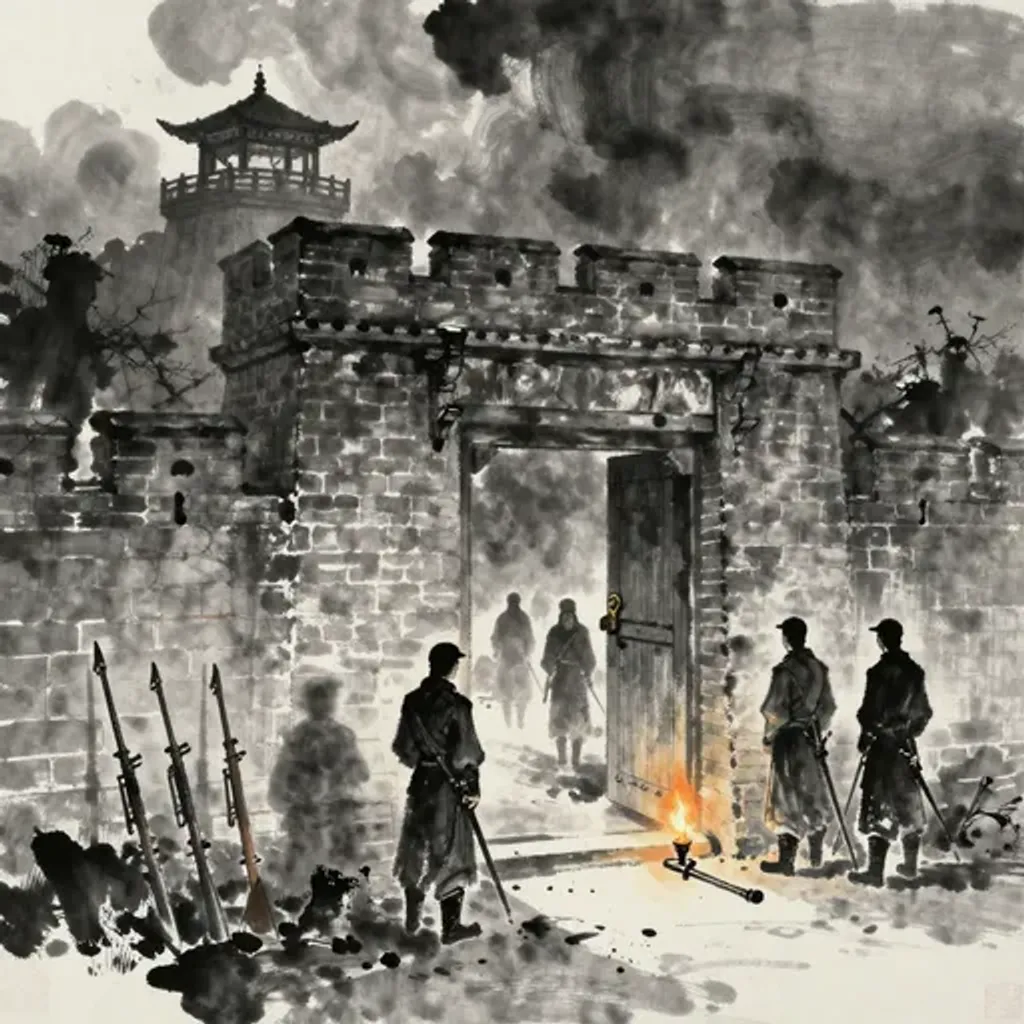
下背其上,盜明相讓;嬰子兩頭,陳破其虛。
The lower betrays the upper; thieves in the bright yield to each other. An infant with two heads; Chen breaks through its defenses.
— Jiao Yanshou, Yilin (Forest of Changes), 1st century BC
Commentary
Earth conceals the mountain, yet here below rebels against above, and thieves conspire in mock deference. A two-headed infant — a prodigious omen of divided loyalty — appears, and Chen's emptiness is exposed and shattered. The image of subordinates betraying superiors while feigning courtesy captures a world inverted: the bright clarity that should flow downward is stolen by those below. From Modesty to Youthful Folly, the mountain rises above a hidden spring — water runs beneath but cannot be seen. The verse warns that when hierarchy inverts and clever deceit masquerades as humility, what appears solid proves hollow. Youthful Folly's challenge is precisely discerning genuine from false, and here the false has already won its round.
謙 → 需
Hexagram 15 → Hexagram 5: Waiting
Changing lines: 1, 2, 5
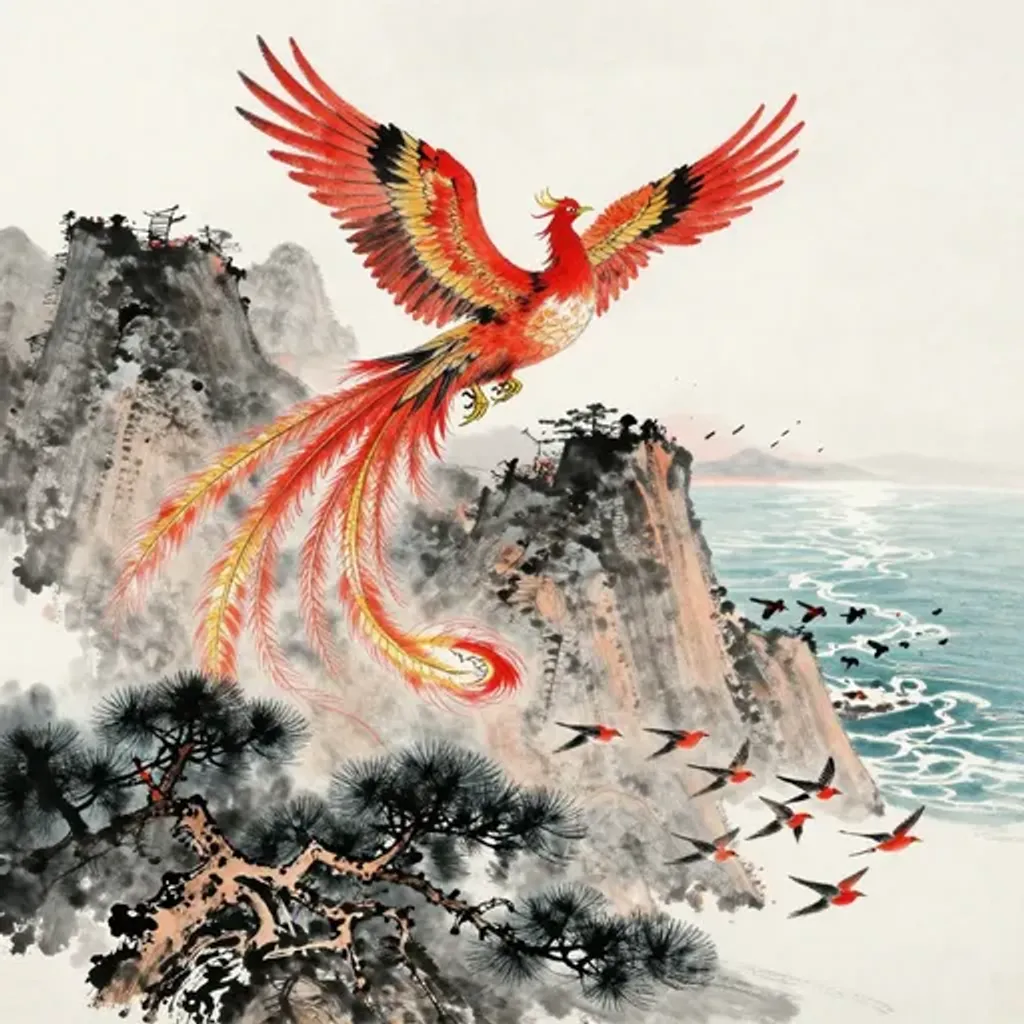
鳳生會稽,稍巨能飛;翱翔往來,為眾鳥雄。
The phoenix is born in Kuaiji; gradually it grows and learns to fly. Soaring back and forth; it becomes chief among all birds.
— Jiao Yanshou, Yilin (Forest of Changes), 1st century BC
Commentary
Earth holds a mountain in stillness, yet from Kuaiji — the sacred mountain where Yu assembled the lords — a phoenix is born. Gradually it grows, learns to fly, soaring back and forth until it becomes chief among all birds. Kuaiji carries deep associations: it is where Yu the Great convened the feudal lords and where Goujian later rose from humiliation to conquest. The phoenix hatched there partakes of that geography of patient revival. From Modesty to Waiting, clouds gather above heaven — the moment before rain, requiring trust in timing. The phoenix does not rush its growth but waits until its wings are strong. Modesty's buried mountain nourishes the phoenix in secret until the right season arrives for its ascent.
謙 → 訟
Hexagram 15 → Hexagram 6: Conflict
Changing lines: 2, 3, 4, 5, 6
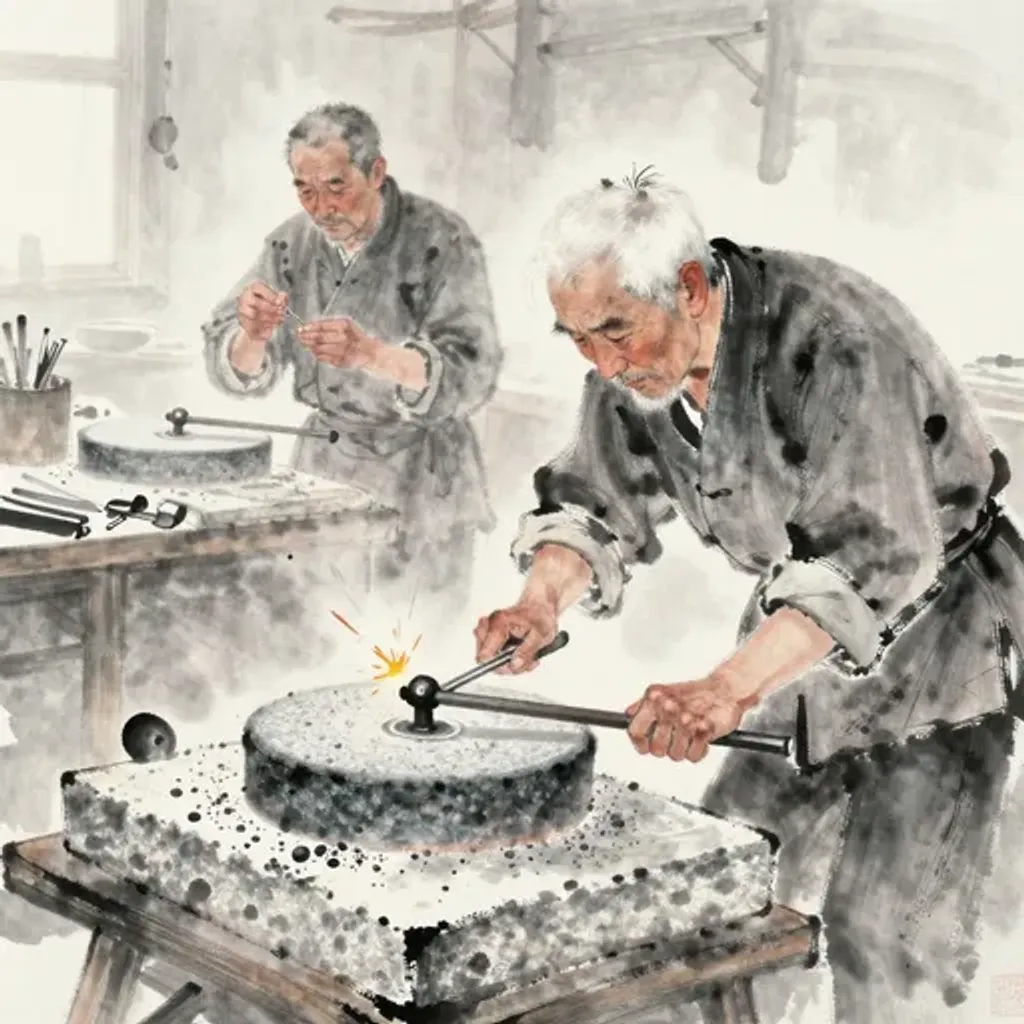
鑿井求玉,非卞氏寶;名困身辱,勞無所得。
Grinding iron into a needle, days are short and progress slight. Before even a small tool is made, the hair turns white — and still one toils.
— Jiao Yanshou, Yilin (Forest of Changes), 1st century BC
Commentary
Earth holds a mountain in modesty, but here effort meets unyielding stone. The original verse reads: 'Boring a well to find jade — it is not Bian He's treasure. Fame confounded, body disgraced, labor yields nothing.' The well-digger seeks jade underground but finds only common rock; the allusion to Bian He's jade reminds us that even genuine treasure was rejected twice before recognition. Yet this seeker lacks that treasure entirely — the effort is misdirected from the start. From Modesty to Conflict, heaven and water move in opposite directions, the very image of purposes at cross-purposes. When one's tools do not match one's aim, when the well is sunk in the wrong ground, persistence merely deepens the hole. Conflict's lesson is to plan before acting, not to dig blindly and call it virtue.
謙 → 師
Hexagram 15 → Hexagram 7: The Army
Changing lines: 2, 3
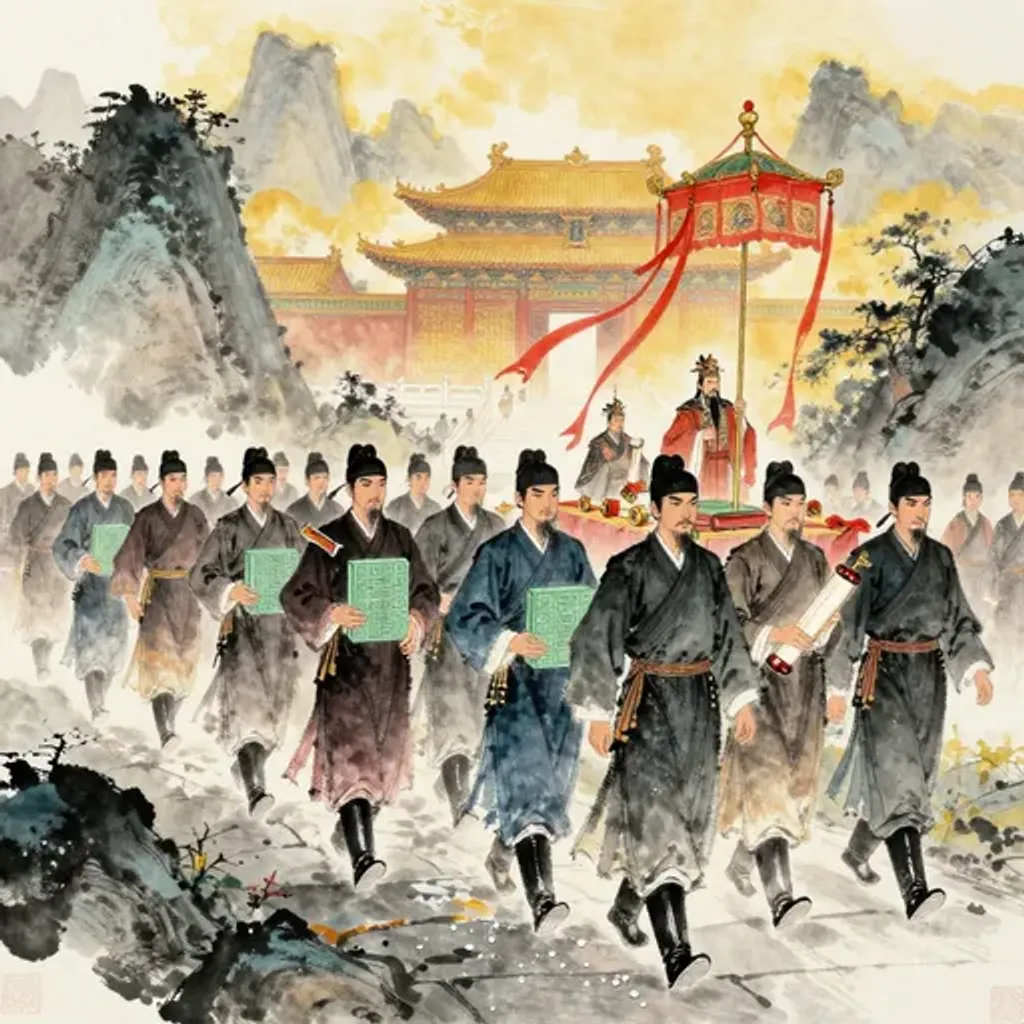
邦桀載役,道至東萊;百僚具舉,君王嘉喜。
The eminent heroes are dispatched on service; the road leads east to Donglai. All the officials are assembled; the king is pleased and joyful.
— Jiao Yanshou, Yilin (Forest of Changes), 1st century BC
Commentary
Earth holds the mountain modestly, and now the state's strongest are mustered for service, their campaign reaching as far as Donglai in the east — the remote coastal region of Qi. All officials are assembled and performing well; the king is pleased and bestows favor. The verse evokes a successful military mobilization where even distant regions contribute their forces. From Modesty to The Army, earth above water conceals disciplined force within the land. The Army's mechanism is precisely this: the people's strength, normally hidden beneath peaceful fields, is organized and deployed when the ruler calls. Modesty's buried mountain becomes the hidden reservoir of military capability, and when the campaign succeeds to the sovereign's satisfaction, the humble foundation proves its worth.
謙 → 比
Hexagram 15 → Hexagram 8: Holding Together
Changing lines: 3, 5
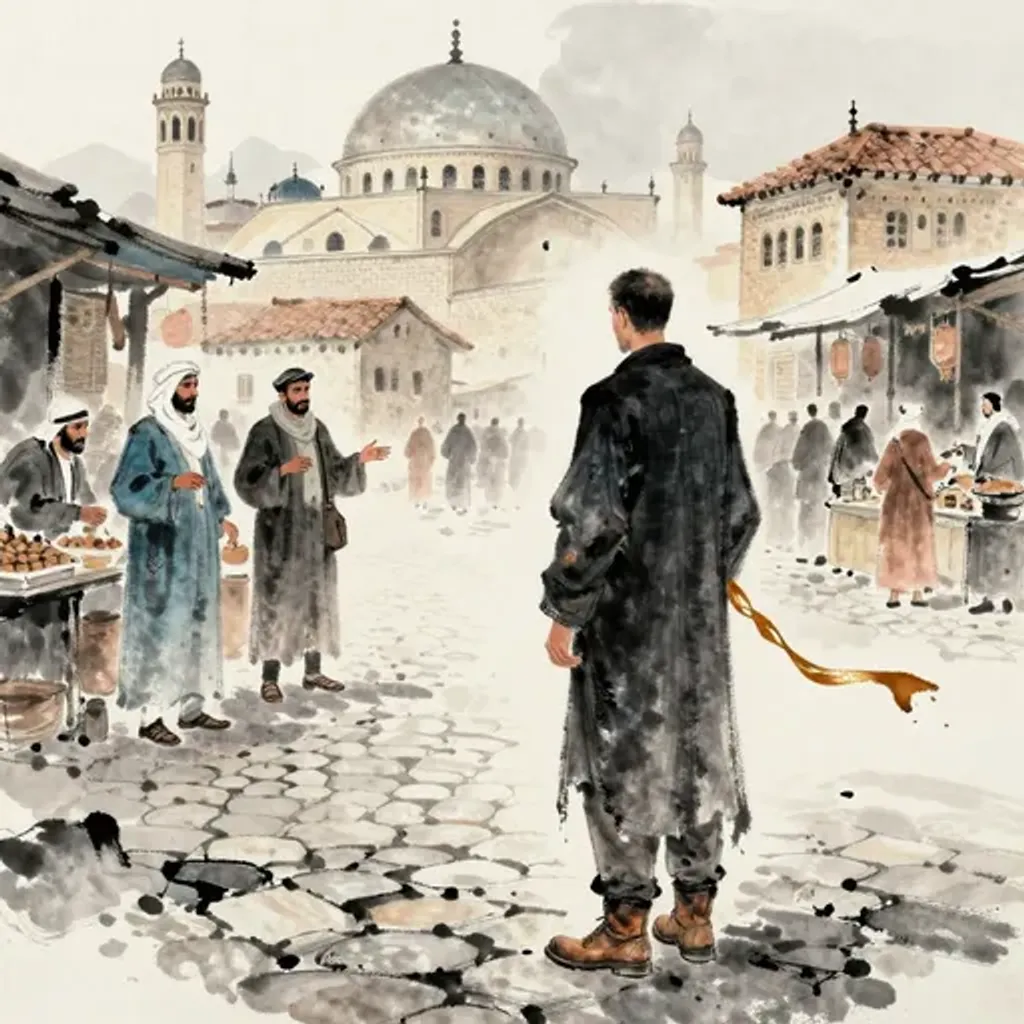
安息康居,異國同廬。非吾邦域,使伯憂惑。
Parthia and Kangju, foreign nations sharing one lodge. Not our native domain; it makes the elder anxious and troubled.
— Jiao Yanshou, Yilin (Forest of Changes), 1st century BC
Commentary
Earth holds a mountain within, and the verse opens onto the distant kingdoms of Anxi and Kangju — Parthia and the Sogdian realm, foreign lands sharing a single dwelling. These are not our territories, and the envoy or elder grows troubled and uncertain. Anxi and Kangju were Central Asian states known to Han dynasty diplomats along the Silk Road, exotic and remote. From Modesty to Holding Together, water rests upon earth, the image of alliance and union. Yet the verse reveals the anxiety of forced togetherness among strangers: sharing quarters in alien lands breeds worry rather than fellowship. Holding Together demands a center of trust; without it, proximity produces only discomfort. The modest one abroad finds that humility alone cannot bridge the gulf between foreign worlds.
謙 → 小畜
Hexagram 15 → Hexagram 9: Small Taming
Changing lines: 1, 2, 5, 6
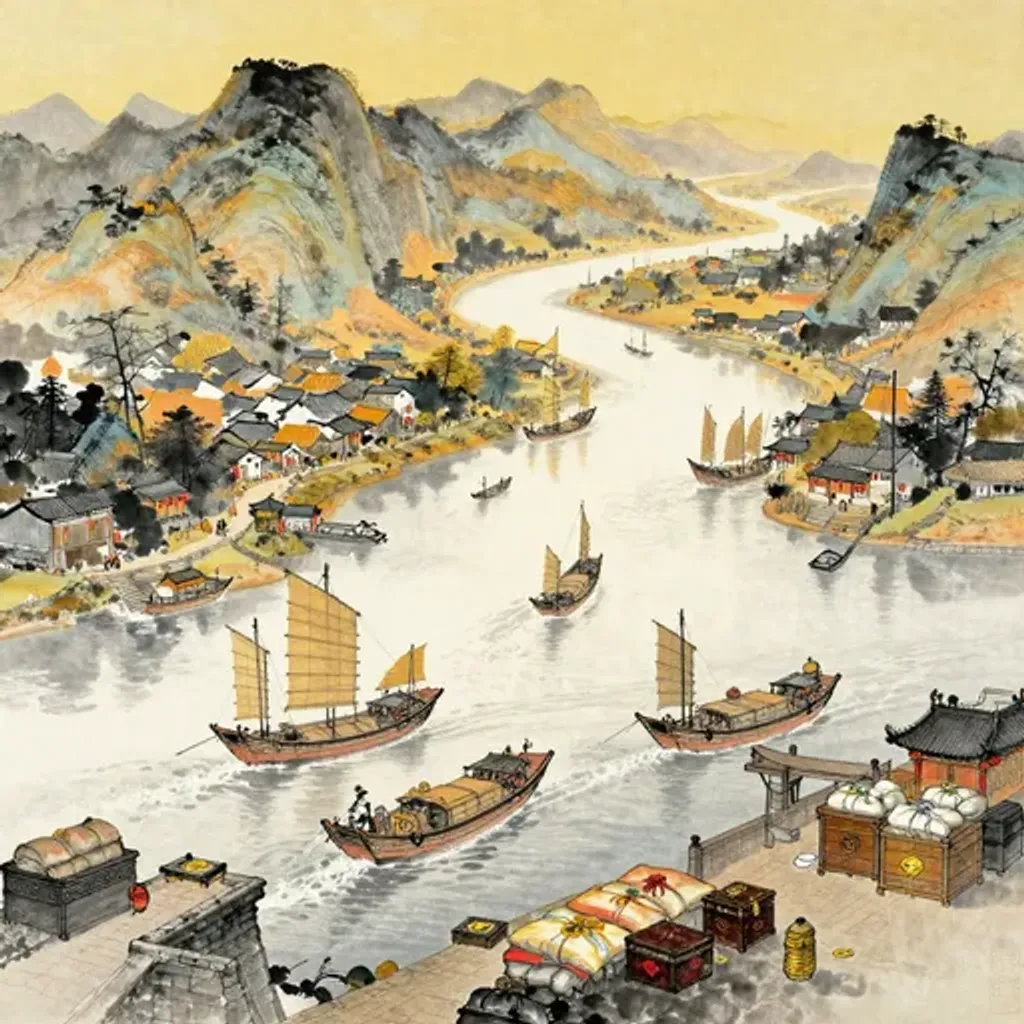
江河淮海,天之都市;商人受福,國家富有。
The Yangtze, the Yellow, the Huai, the sea: heaven's great marketplace. Merchants receive blessings; the state grows rich and full.
— Jiao Yanshou, Yilin (Forest of Changes), 1st century BC
Commentary
Earth holds the mountain in quiet abundance. Rivers, the Huai, and the sea — heaven's great thoroughfares — gather all the world's commerce at their confluences. Merchants receive blessings; the nation grows rich. The Four Great Rivers (江河淮海) represent the arterial network of ancient China's sacred geography, and here they serve as conduits of prosperity rather than barriers. From Modesty to Small Taming, wind courses above heaven, gently restraining its vast power through cultural refinement. The verse embodies this precisely: wealth flows naturally along the rivers when modesty and good governance channel it. Small Taming's gentle wind does not dam the rivers but guides them; likewise, the modest ruler does not seize wealth but lets it accumulate through trade and trust.
謙 → 履
Hexagram 15 → Hexagram 10: Treading
Changing lines: 1, 2, 3, 4, 5, 6
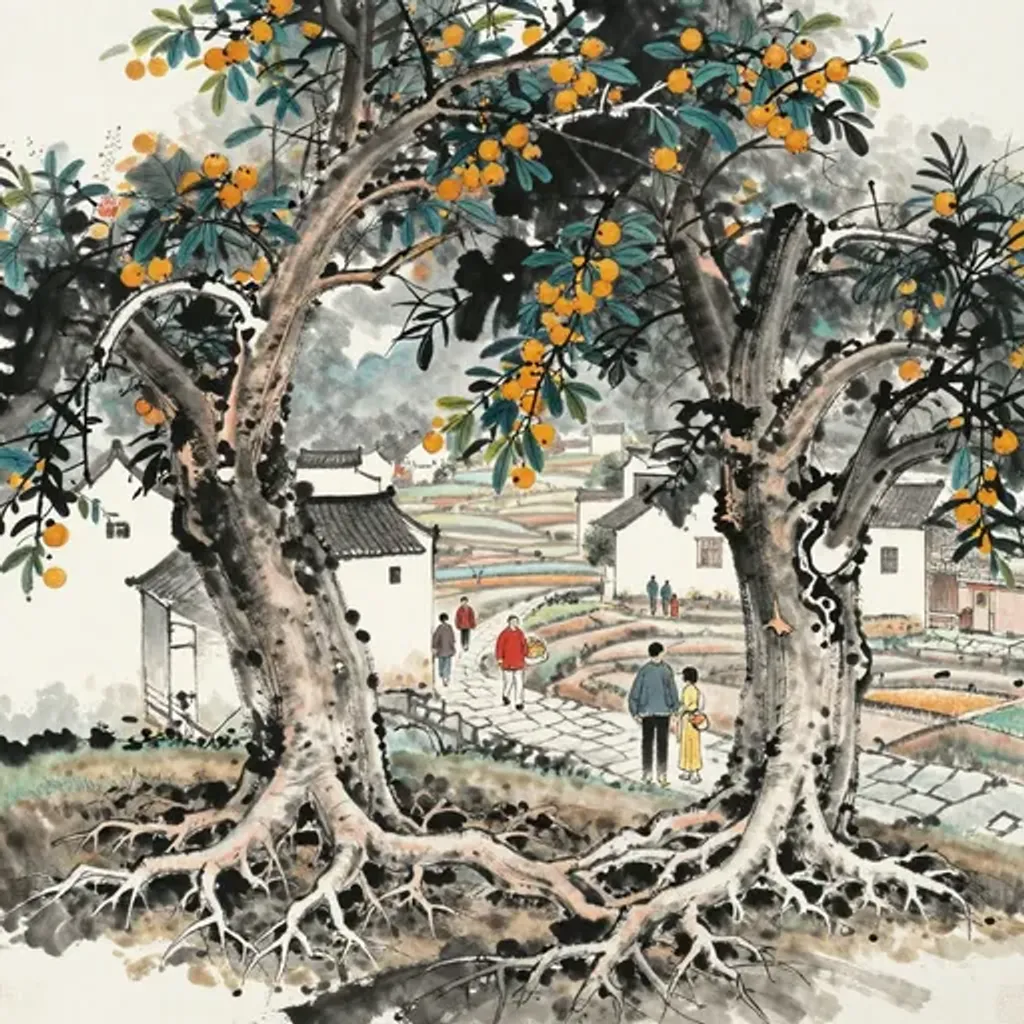
同本異葉,樂仁上德;東鄰慕義,來興吾國。
Same root, different leaves; delighting in benevolence and highest virtue. The eastern neighbor admires righteousness and comes to prosper our realm.
— Jiao Yanshou, Yilin (Forest of Changes), 1st century BC
Commentary
Earth embraces the mountain modestly. Trees from the same root spread different leaves, yet all delight in benevolence and esteem virtue. The eastern neighbor, admiring this righteousness, comes to invigorate the state. The image of shared roots with diverse foliage captures unity in difference — a single moral foundation supporting varied expressions. From Modesty to Treading, heaven stands above the lake, establishing proper hierarchy without suppressing joy. Treading teaches how to walk among powerful forces with grace. The verse shows that genuine virtue radiates outward: when a state embodies righteousness, even foreign neighbors are drawn to participate. Modesty does not remain buried but attracts alliance through the quiet power of moral example.
謙 → 泰
Hexagram 15 → Hexagram 11: Peace
Changing lines: 1, 2
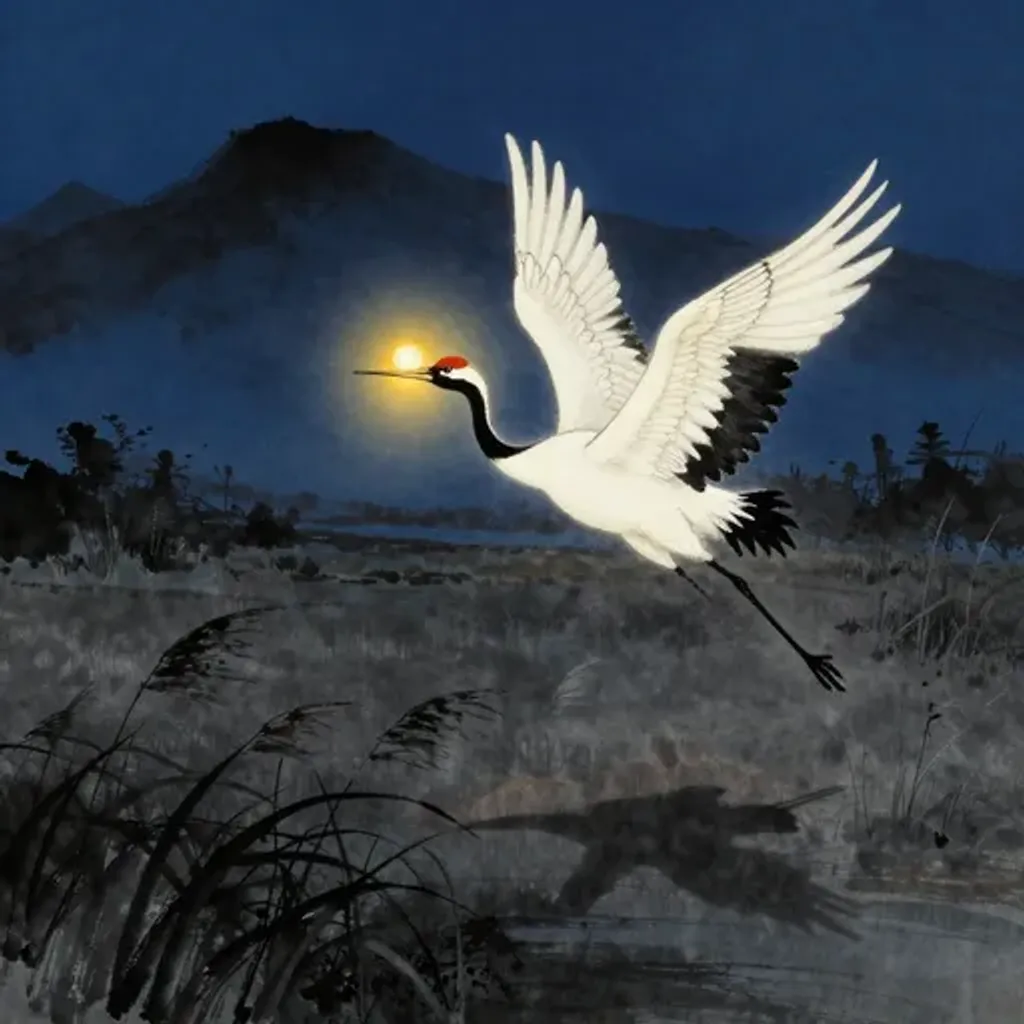
白鶴衘珠,夜食為明;懷我德音,身受光榮。
A white crane carries a pearl; feeding in the night, it makes its own light. Cherishing our virtuous renown; one personally receives glory.
— Jiao Yanshou, Yilin (Forest of Changes), 1st century BC
Commentary
Earth holds the mountain low, yet a white crane carries a pearl in its beak, feeding on it at night to create light. The crane — symbol of longevity and hidden virtue, whose cry in the marshes is heard across the wild — here produces its own illumination in darkness. Those who cherish the sound of virtue receive glory upon their person. From Modesty to Peace, earth above heaven allows cosmic forces to mingle freely. The white crane's self-generating luminescence embodies this: inner virtue does not wait for external light but produces its own radiance. Modesty, far from dimming one's brilliance, transforms it into the steady glow that draws heaven and earth into harmonious exchange, the very definition of Tai's cosmic peace.
謙 → 否
Hexagram 15 → Hexagram 12: Standstill
Changing lines: 3, 4, 5, 6
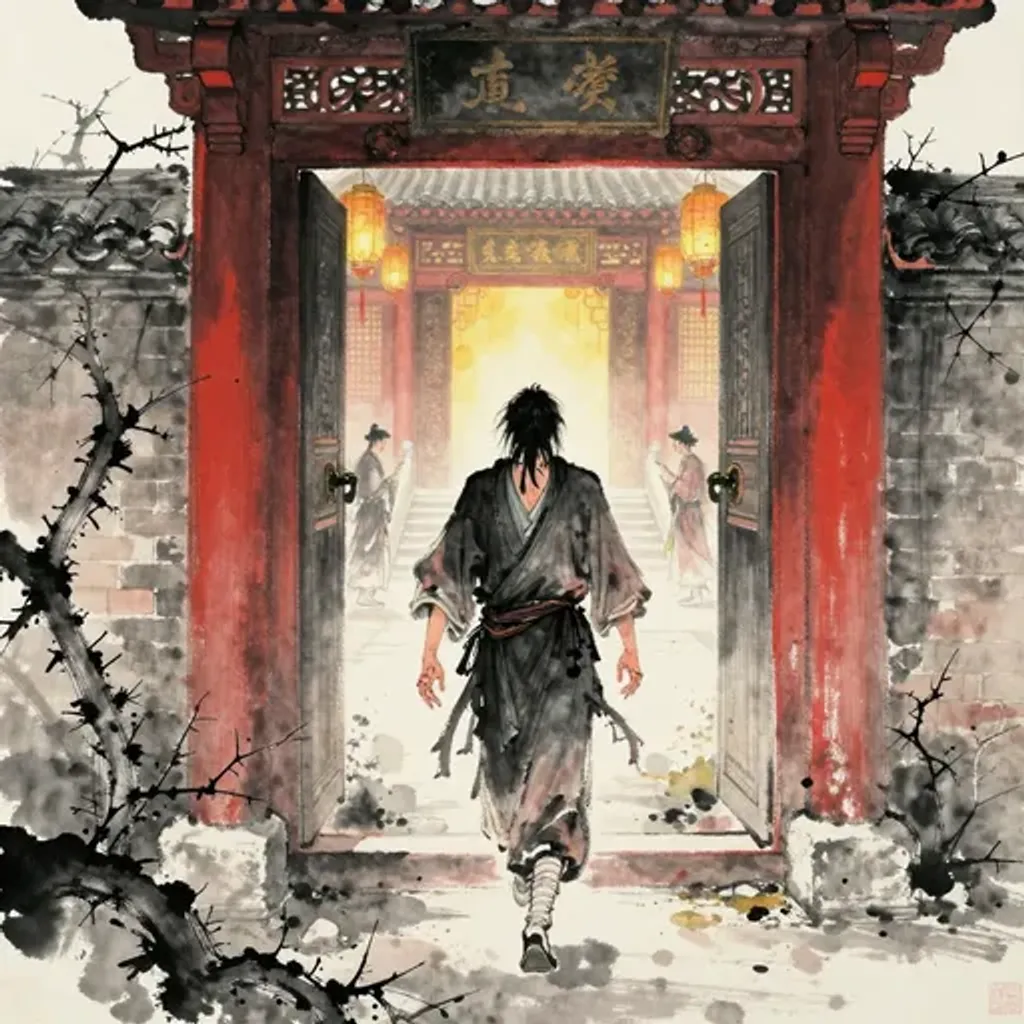
踐履危難,脫厄去患;入福喜門,見吾邦君。
Treading through peril and hardship; one escapes and sheds calamity. Entering the gate of blessing and joy; one beholds our lord.
— Jiao Yanshou, Yilin (Forest of Changes), 1st century BC
Commentary
Earth holds the mountain in modesty, and here one treads through genuine danger — 踐履危難 — yet emerges safely, shedding misfortune and entering the gate of blessing to see one's lord. The verse moves from peril to audience with the sovereign, from crisis to recognition. From Modesty to Standstill, heaven and earth cease their intercourse, a time when the worthy withdraw. Yet the verse paradoxically shows passage through danger into joy. The resolution lies in Pi's counsel: 'the noble man practices frugal virtue to avoid calamity.' The modest one who endures danger with restraint does not merely survive but reaches the ruler's presence — proof that navigating Standstill's blockage requires not force but principled perseverance, the very core of Modesty's discipline.
謙 → 同人
Hexagram 15 → Hexagram 13: Fellowship
Changing lines: 1, 4, 5, 6
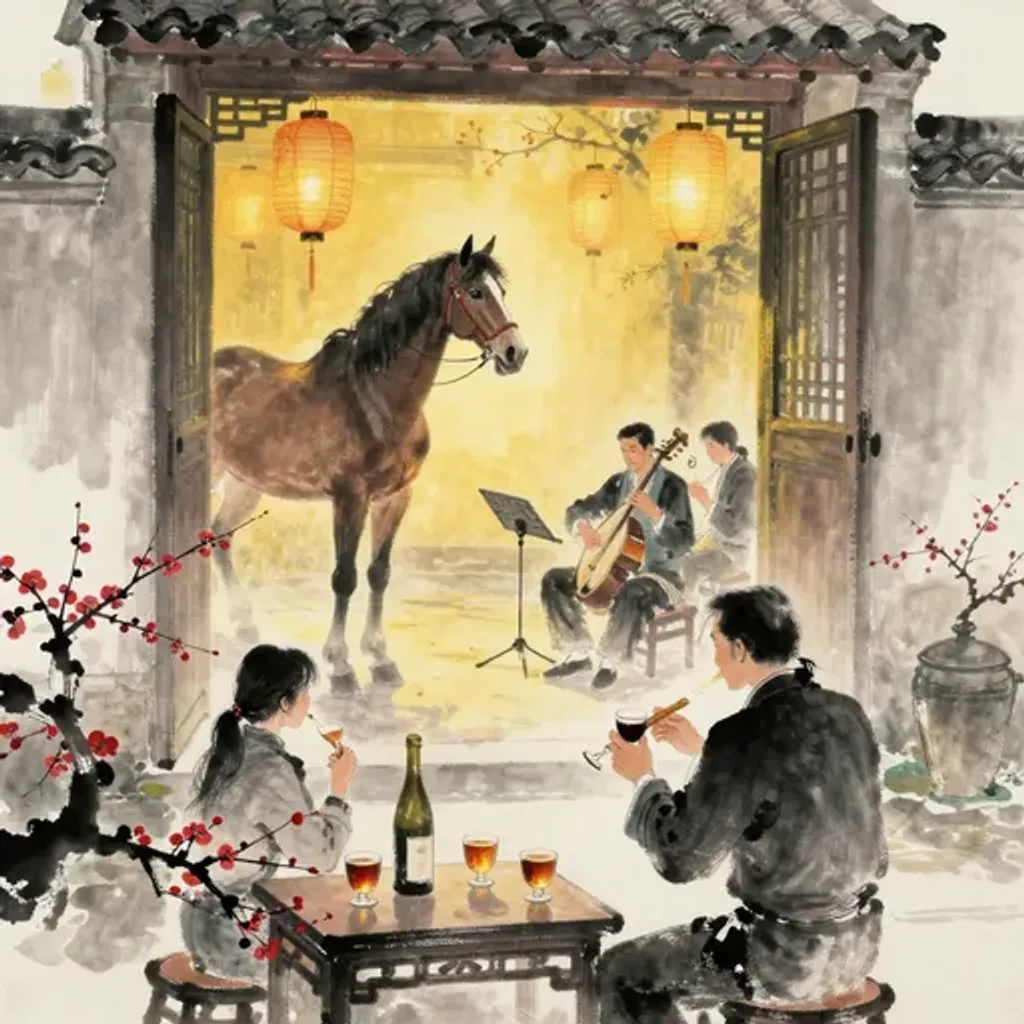
宮商既和,聲音相隨;驪駒在門,主君以歡。
Gong and shang notes are in harmony; the tones follow each other. A fine colt stands at the gate; the master is well pleased.
— Jiao Yanshou, Yilin (Forest of Changes), 1st century BC
Commentary
Earth holds the mountain in harmony. The gong and shang notes blend perfectly, their tones following one another in accord. A fine colt stands at the gate — the farewell song 'Liju' echoing the Shijing tradition of parting — and the host is filled with delight. Musical harmony here symbolizes social concord: when different tones find their proper place, even departures become celebrations. From Modesty to Fellowship, heaven joins with fire, illuminating the world through shared purpose. The verse captures Fellowship's essence: diverse elements (different musical notes, host and guest) united by a common aesthetic and moral order. Modesty provides the ground tone — the willingness to accommodate — that makes true fellowship possible.
謙 → 大有
Hexagram 15 → Hexagram 14: Great Possession
Changing lines: 1, 2, 4, 6
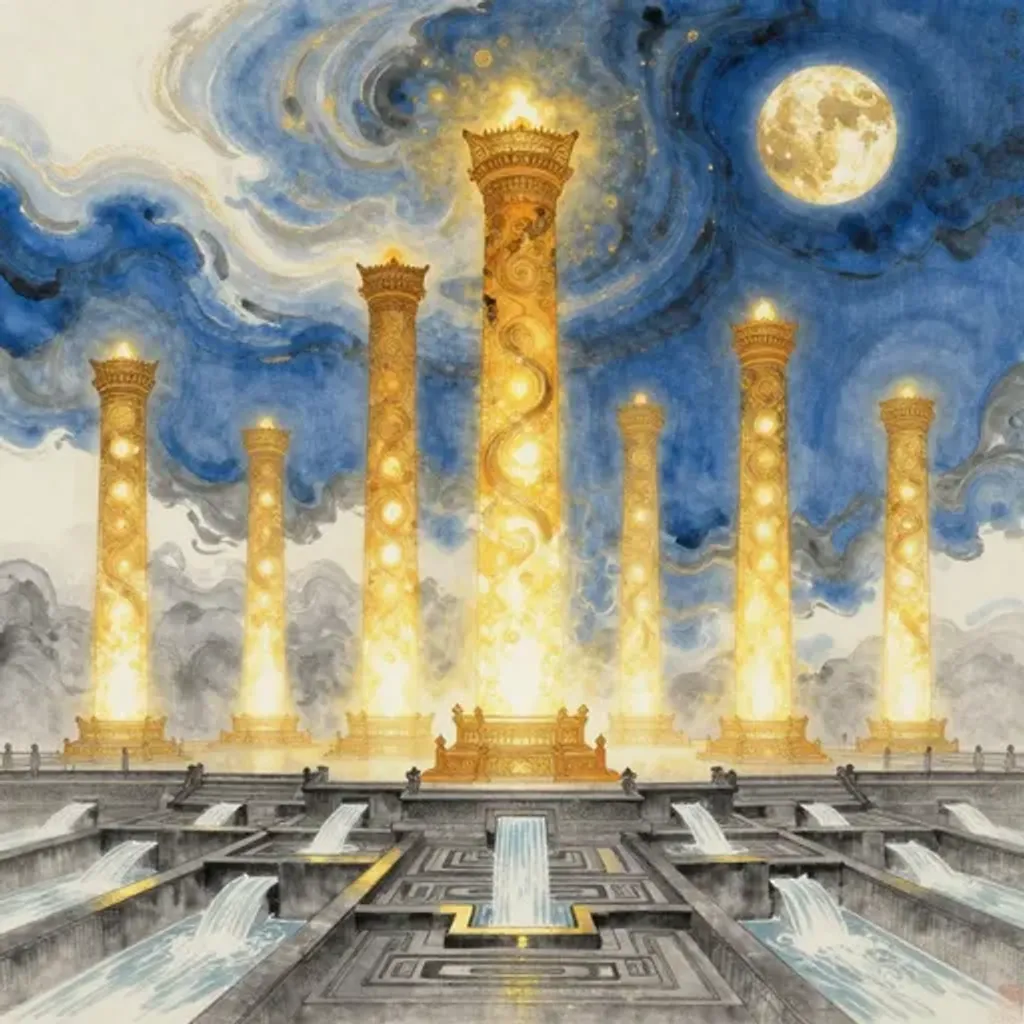
天地配享,六位光明;陰陽順序,以成厥功。
Heaven and earth share the offering; the six positions blaze with light. Yin and yang in proper order; thereby the great work is accomplished.
— Jiao Yanshou, Yilin (Forest of Changes), 1st century BC
Commentary
Earth holds the mountain in modesty, and now heaven and earth are joined in sacrificial harmony. The six positions shine bright, yin and yang follow their proper sequence, and through this alignment all achievements are accomplished. The six positions refer to the six lines of a hexagram — each in its correct place, strong and yielding in balance. From Modesty to Great Possession, fire blazes above heaven: brilliance displayed for all to see. The verse describes the ideal cosmic order where modesty below enables radiance above. When yin and yang observe their proper stations, the result is not merely order but luminous abundance. Modesty's buried mountain provides the stable foundation upon which Great Possession's fire can blaze without burning out of control.
謙 → 謙
Hexagram 15 → Hexagram 15: Modesty
No changing lines — the hexagram is unchanged
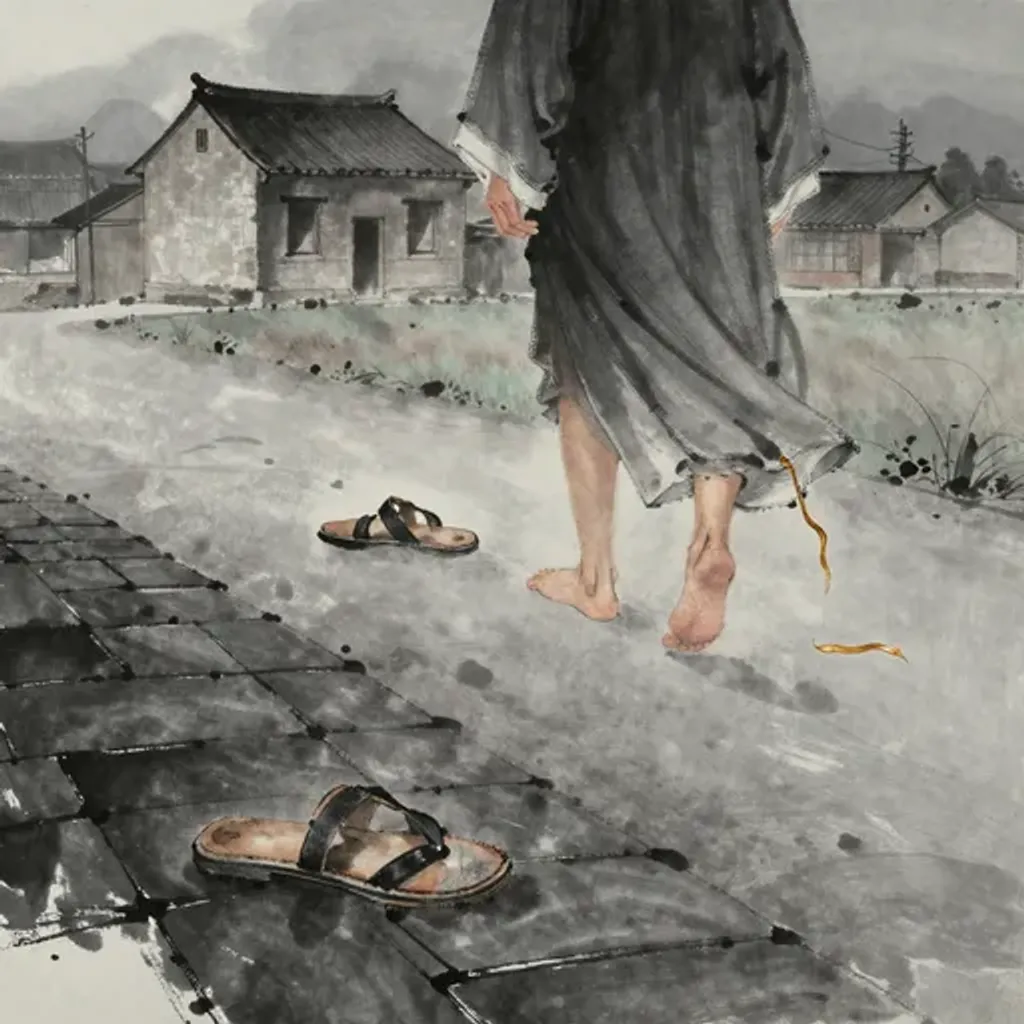
王喬無病,苟頭不痛。亡破失履,乏我送從。
Master Wang Qiao has no ailment; Gou's head does not ache. One has lost and shattered one's shoes; I lack attendants and followers.
— Jiao Yanshou, Yilin (Forest of Changes), 1st century BC
Commentary
Modesty returns to itself. Wang Qiao — the immortal prince of Zhou who transcended mortality — knows no illness, and even trivial head-pains are absent. Yet the verse pivots: shoes are lost and broken, and there is no one to accompany or send off the traveler. The immortal has no bodily suffering but also no human companionship. From Modesty to Modesty, the hexagram does not transform; it echoes in place. The doubled stillness reveals both the blessing and the cost of perfect self-containment: the transcendent one is beyond pain but also beyond fellowship. When modesty meets modesty, nothing advances or connects. The mountain remains buried, complete and solitary.
謙 → 豫
Hexagram 15 → Hexagram 16: Enthusiasm
Changing lines: 3, 4
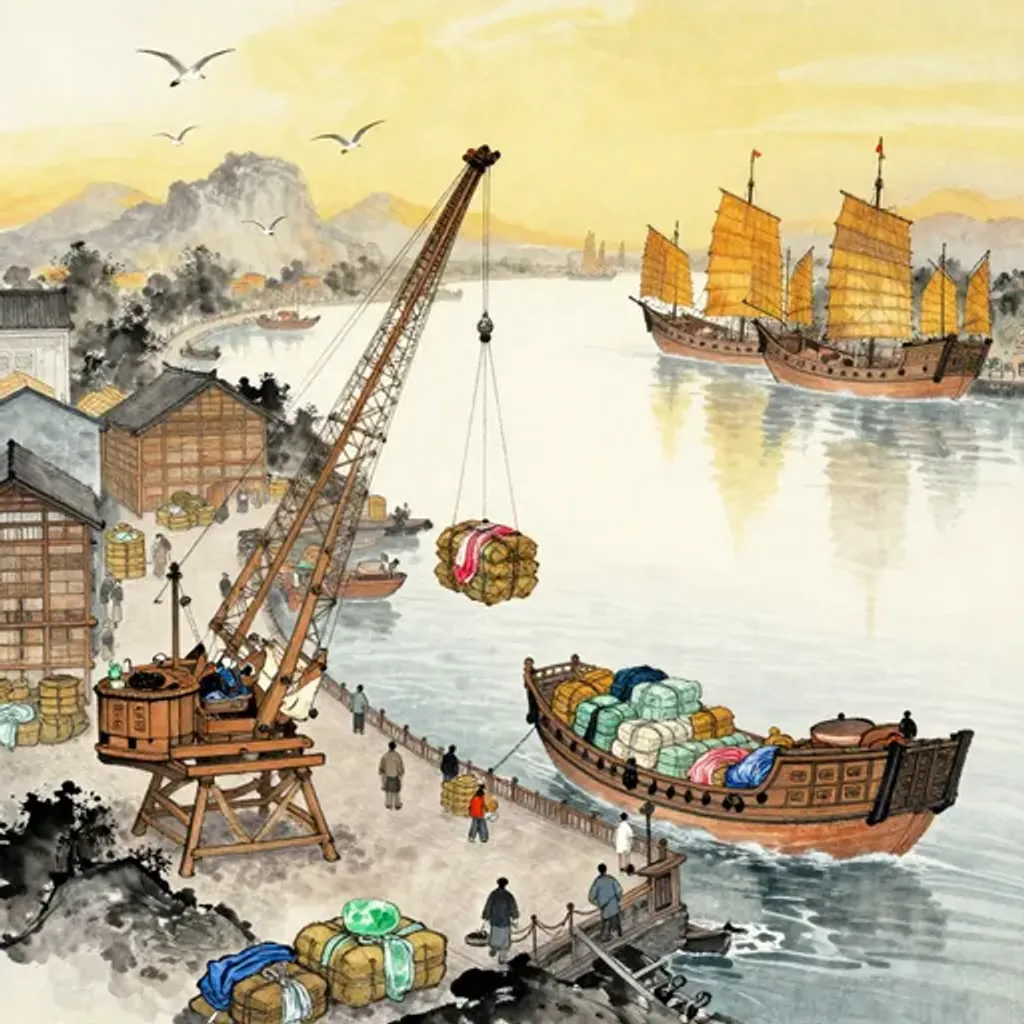
江河淮海,天之奧府;眾利所聚,可以饒有。樂我君子。
The Yangtze, the Yellow, the Huai, the sea: heaven's hidden treasury. Where manifold profits gather; one may thereby grow rich. Delighting our noble lord.
— Jiao Yanshou, Yilin (Forest of Changes), 1st century BC
Commentary
Earth holds the mountain low, and the rivers, Huai, and sea — heaven's hidden treasury — gather all profits together, yielding abundance enough to enrich and delight the noble one. This verse closely parallels 15-9 but adds a note of joy: 'making my gentleman glad.' The Four Great Rivers serve as nature's vaults where wealth pools naturally. From Modesty to Enthusiasm, thunder erupts from the earth, the ancestral music that stirs heaven and humanity together. What was quietly gathered in modesty now breaks forth in celebration. The transformation is from silent accumulation to exuberant expression: the stored wealth of rivers becomes the thunder of communal joy, and the modest one who gathered in patience now distributes with gladness.
謙 → 隨
Hexagram 15 → Hexagram 17: Following
Changing lines: 1, 3, 4, 5
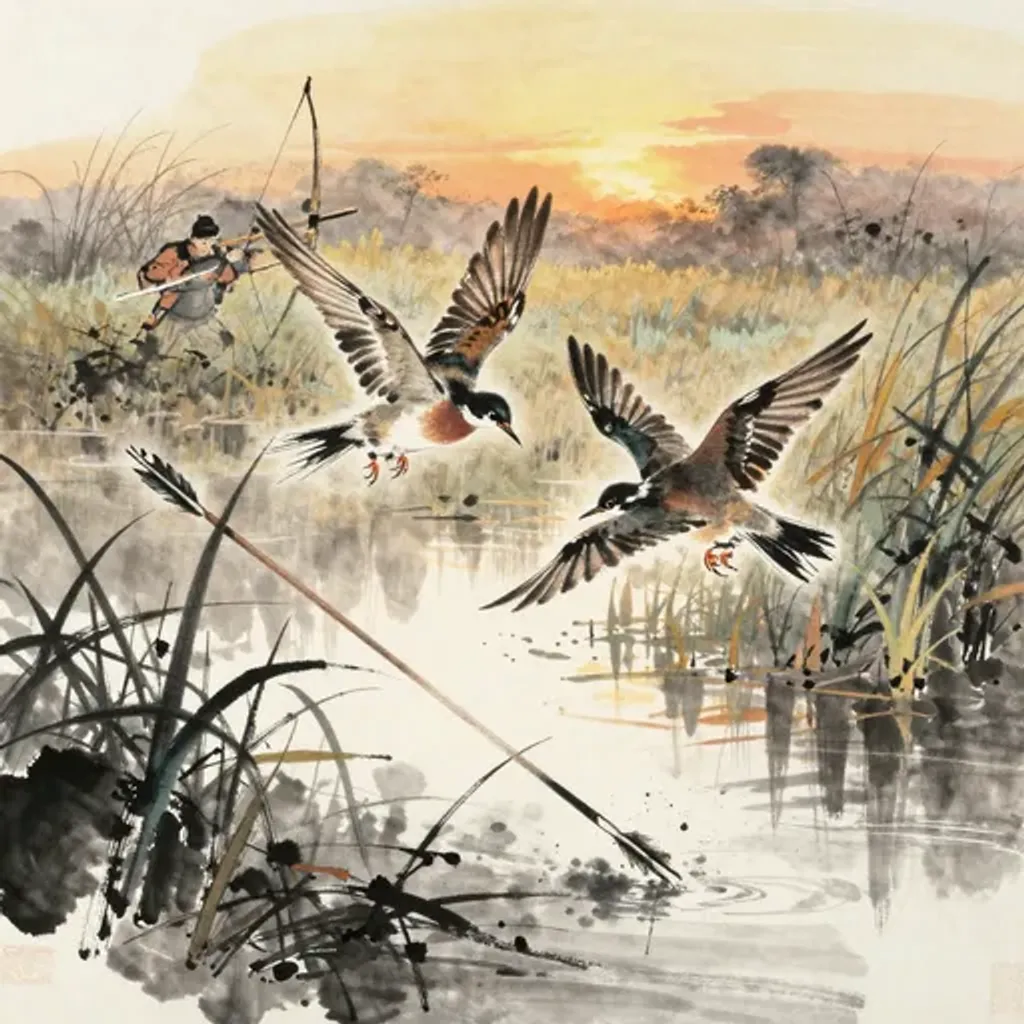
雙鳥俱飛,欲歸稻池;經涉雚澤,為矢所射。傷我胸臆。
Two birds fly together, longing for the rice pond. Passing through the reed marsh; they are struck by arrows. My breast is wounded.
— Jiao Yanshou, Yilin (Forest of Changes), 1st century BC
Commentary
Earth holds the mountain still, but two birds take flight together, heading toward a rice pond to feed. Crossing a reed-thick marsh, they are struck by arrows — the archer wounds them through the breast. The paired birds seeking nourishment evoke innocence undone by hidden peril; the reed marsh conceals the bowman's ambush. From Modesty to Following, thunder rests beneath the lake, suggesting a time when one should follow rather than lead, retreating into dusk and rest. Yet the birds did not follow this counsel — they flew boldly into danger. The verse warns that modest intention does not guarantee safe passage. Following's wisdom is knowing when to pause; the birds that pressed forward through treacherous marshland paid with their lives.
謙 → 蠱
Hexagram 15 → Hexagram 18: Work on the Decayed
Changing lines: 2, 6
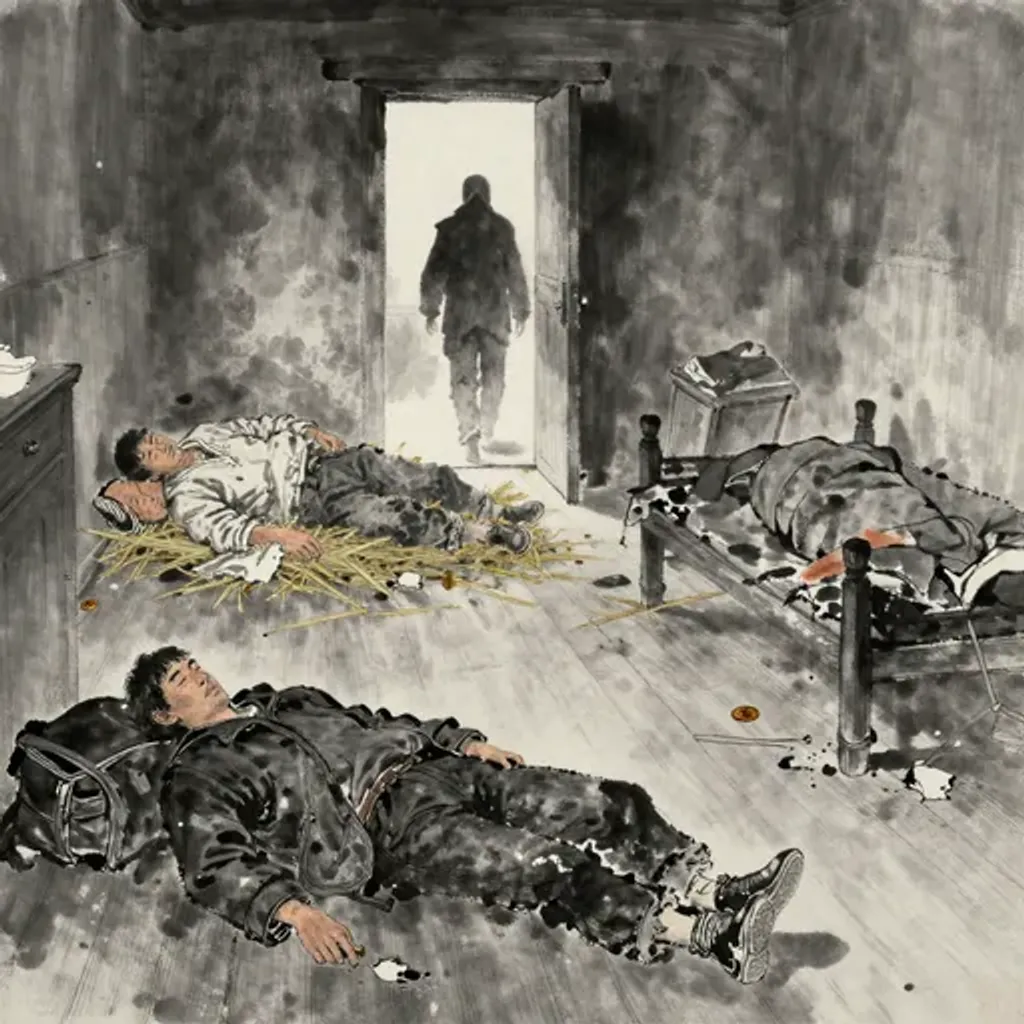
留仲叔季,日暮寢寐;羸臥失限,虐我具囊。衘卻道傍。
Liu, Zhong, and Shuji; at dusk they lie down to sleep. Weary and bedridden past the appointed hour; they ransack my bags. Abandoned by the roadside.
— Jiao Yanshou, Yilin (Forest of Changes), 1st century BC
Commentary
Earth holds the mountain in stillness, but the household is dissolving. The brothers — eldest, second, third, youngest — linger until nightfall and take to their beds. Weakened and bedridden, they lose their boundaries; their stores are plundered, and they collapse by the roadside with goods clenched in their teeth. The descent is physical and social: a family of brothers reduced to exhaustion, robbery, and displacement. From Modesty to Work on the Decayed, wind blows beneath the mountain, stirring up corruption that has accumulated in stagnant places. The transformation diagnoses what happens when a family's internal discipline collapses: modest circumstances become decayed ones. Work on the Decayed demands that someone stir the rot and rebuild, but this verse captures the moment before renewal — the nadir of disorder.
謙 → 臨
Hexagram 15 → Hexagram 19: Approach
Changing lines: 1, 2, 3
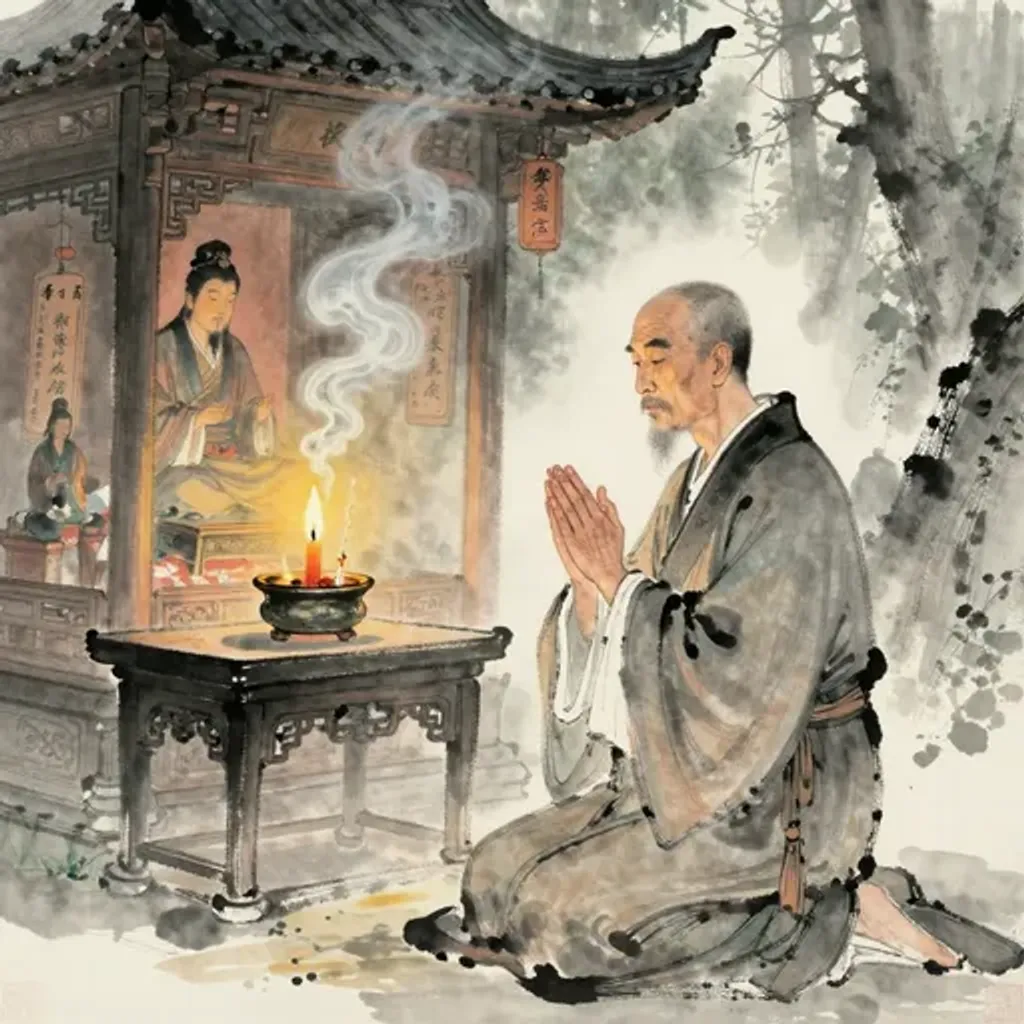
受終文祖,承衰復起;以義自閉,雖苦無咎。
Receiving the mandate at the ancestral temple; from decline one rises again. With righteousness one shuts oneself in; though bitter, no blame.
— Jiao Yanshou, Yilin (Forest of Changes), 1st century BC
Commentary
Earth holds the mountain in modesty, and the verse invokes the ritual of receiving the mandate in the ancestral temple — 受終文祖 — echoing the language of Shun's accession in the Book of Documents. From decline, one rises again; by righteousness one withdraws into principled seclusion. Though the path is bitter, there is no blame. The phrase 承衰復起 captures the arc of dynastic or personal renewal: inheriting a weakened legacy and restoring it through moral effort. From Modesty to Approach, earth rises above the lake — the ruler drawing near to the people with teaching and protection. The verse affirms that legitimate authority renews itself through ritual propriety and moral self-restraint, not through force. Bitter endurance, rightly borne, leads to blameless governance.
謙 → 觀
Hexagram 15 → Hexagram 20: Contemplation
Changing lines: 3, 5, 6
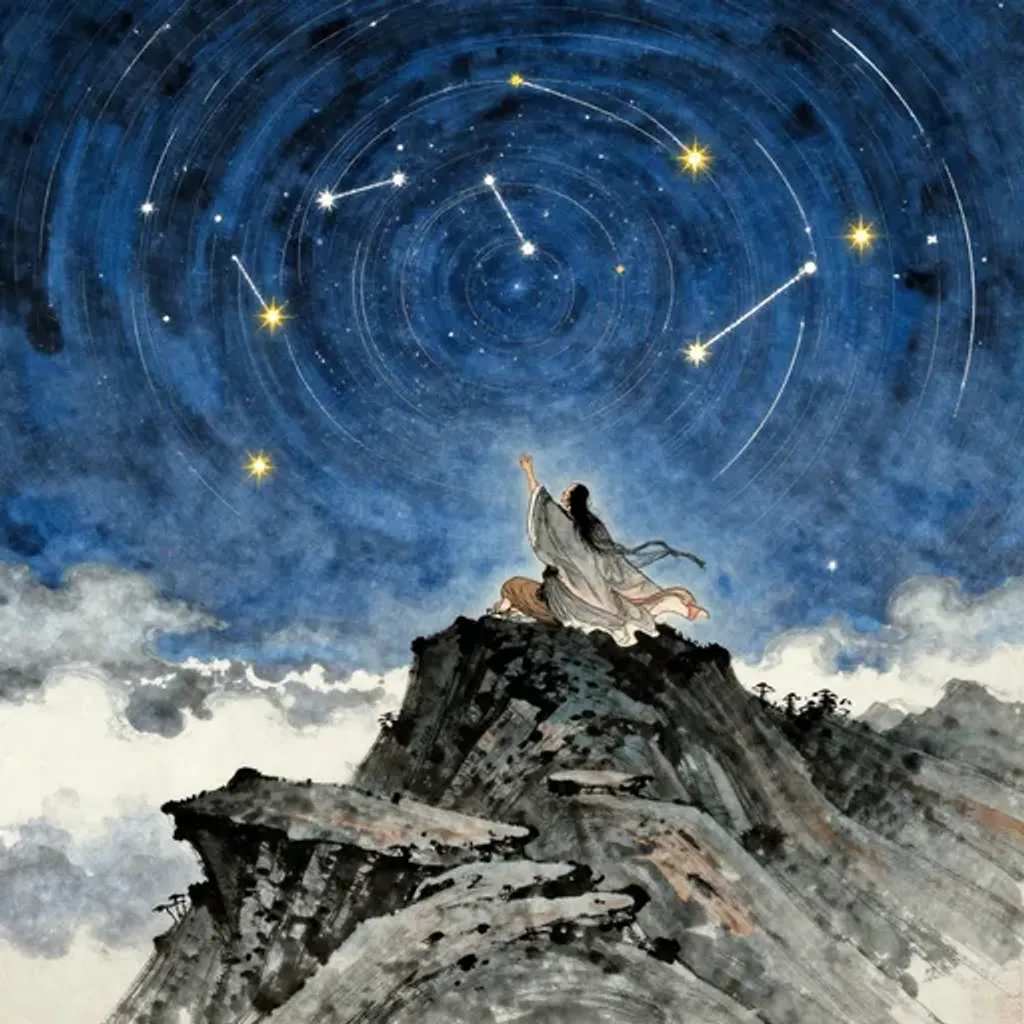
据斗運樞,順天無憂,與天並居。
Grasping the Dipper, turning the Pole; following heaven, free of worry. Dwelling alongside heaven itself.
— Jiao Yanshou, Yilin (Forest of Changes), 1st century BC
Commentary
Earth holds the mountain below, and now the gaze rises to the cosmic pivot. Grasping the Dipper and rotating the celestial axis, one follows heaven and knows no sorrow, dwelling alongside heaven itself. The Big Dipper's handle was understood in Han cosmology as the cosmic clock, its rotation marking the seasons and establishing order. From Modesty to Contemplation, wind blows across the earth — the sage-king's survey of his realm. The verse captures Contemplation's highest register: the ruler who has aligned with the celestial mechanism no longer acts from personal will but from cosmic attunement. Modesty's buried mountain becomes the stable axis around which heaven turns, and the contemplative one who grasps it shares heaven's peace.
謙 → 噬嗑
Hexagram 15 → Hexagram 21: Biting Through
Changing lines: 1, 3, 4, 6
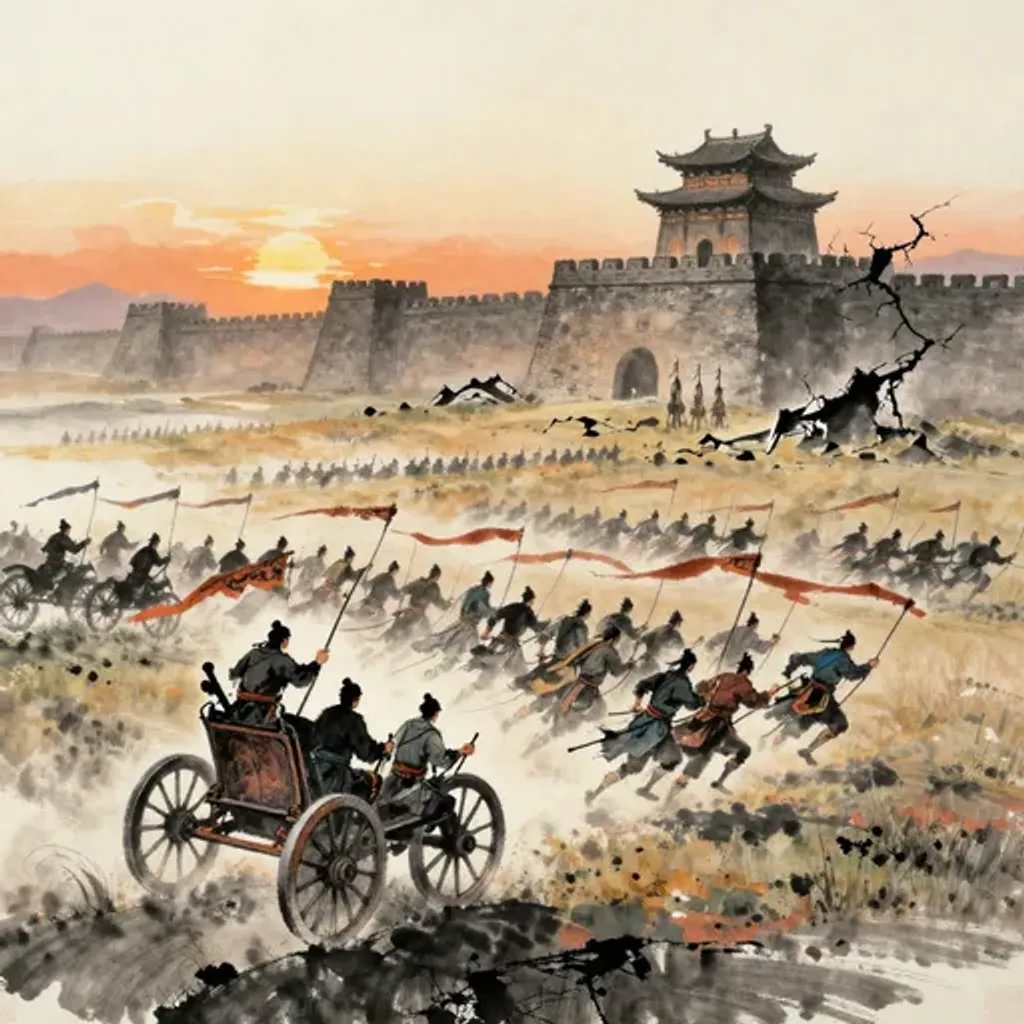
周師伐紂,戰於牧野;甲子平旦,天下悅喜。
The Zhou army attacks the tyrant Zhou; they battle at the Wilds of Mu. On the jiazi morning at dawn; all under heaven is pleased and joyful.
— Jiao Yanshou, Yilin (Forest of Changes), 1st century BC
Commentary
Earth holds the mountain in modesty, and now King Wu's forces march against the tyrant Zhou of Shang, fighting at the Shepherds' Wild. On the jiazi dawn — the auspicious cyclical day recorded in the Book of Documents — battle is joined and the world rejoices. The Battle of Muye was the decisive engagement that ended the Shang dynasty and founded the Zhou. From Modesty to Biting Through, fire and thunder combine in judicial force — the image of punishing what obstructs, clearing the obstacle between the jaws. The tyrant is the obstruction; Wu's army bites through it. Modesty's patient accumulation of virtue over generations — from King Wen's imprisonment through to the final campaign — culminates in a single decisive stroke of righteous force.
謙 → 賁
Hexagram 15 → Hexagram 22: Grace
Changing lines: 1, 6
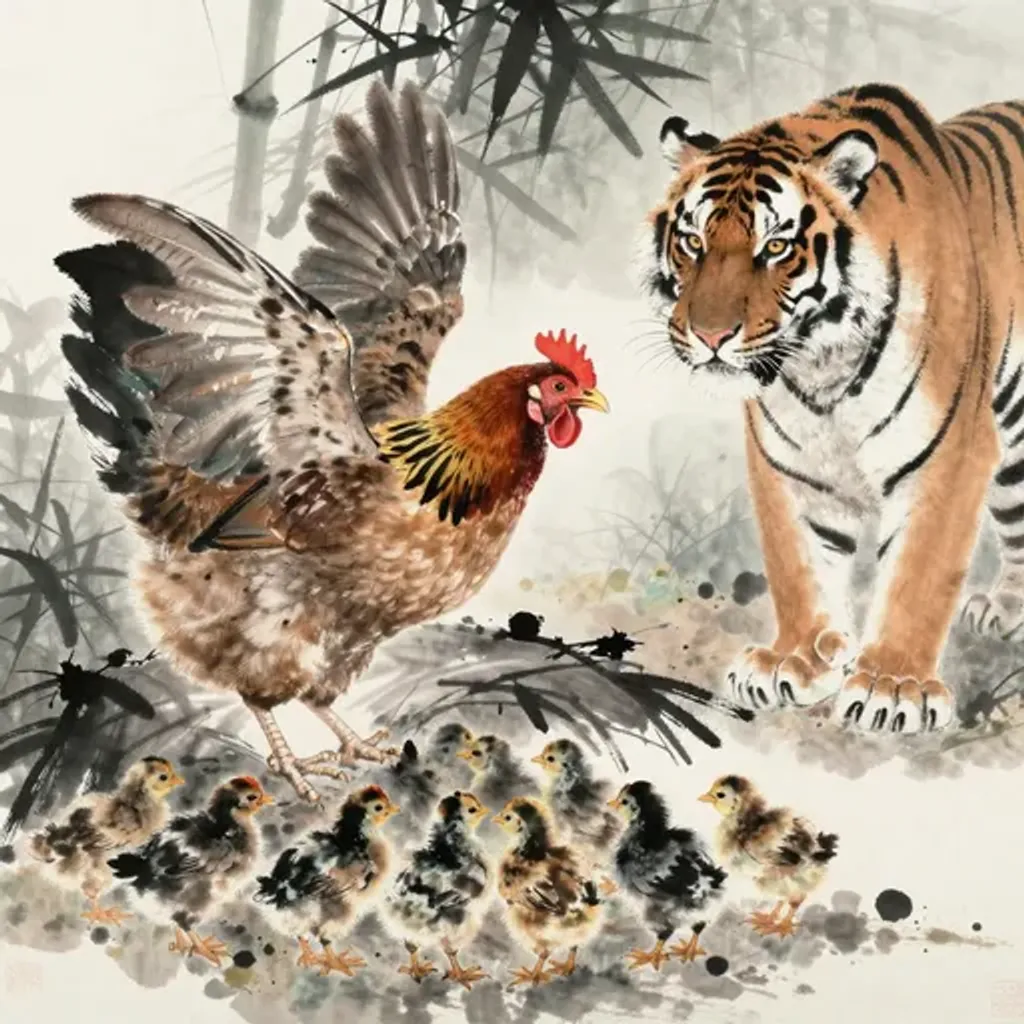
十雌百雛,常與母俱;抱雞搏虎,誰敢害諸?
Ten hens, a hundred chicks, always together with the mother. Carrying a chicken to fight a tiger; who would dare to harm them?
— Jiao Yanshou, Yilin (Forest of Changes), 1st century BC
Commentary
Earth holds the mountain in protection. Ten hens with a hundred chicks stay always with their mother — clutching her chicken, she would fight a tiger, and who would dare harm them? The image is domestic and fierce at once: the mother hen's devotion transforms weakness into inviolable strength. No predator dares approach. From Modesty to Grace, fire glows beneath the mountain, illuminating without blazing. Grace adorns the natural order rather than overpowering it. The mother hen's protection is not brute force but the adorning power of devotion — a beautiful fierceness that makes even the tiger hesitate. Modesty's hidden mountain here shelters the vulnerable, and what shines forth is not ambition but the radiant pattern of protective love.
謙 → 剝
Hexagram 15 → Hexagram 23: Splitting Apart
Changing lines: 3, 6
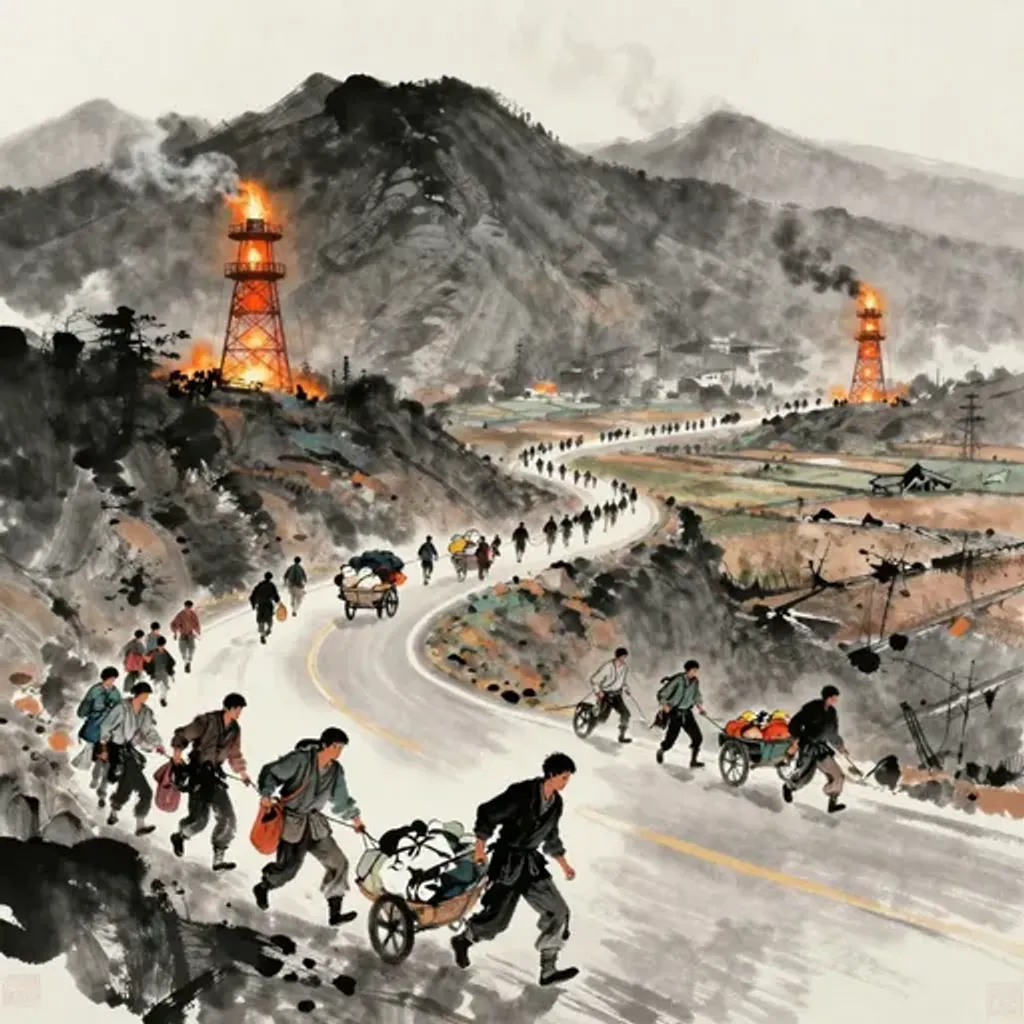
桀跖並處,人民愁苦;擁兵荷糧,戰於齊魯。
Beacon fires blaze from watchtower to watchtower; the mountain passes are cut off. Farmers abandon their fields — refugees scatter southward.
— Jiao Yanshou, Yilin (Forest of Changes), 1st century BC
Commentary
Earth holds the mountain in modesty, yet the original verse names Jie and Zhi — the archetypal tyrant and bandit — dwelling together, the people suffering, soldiers bearing grain and weapons, fighting between Qi and Lu. These are not distant legends but the immediate trauma of war among the central states. From Modesty to Splitting Apart, the mountain rests upon bare earth, its base eroding line by line — the image of institutional collapse from below. When tyrants and bandits jointly rule, the people are stripped of everything, just as the hexagram is stripped of its yang lines. Modesty's inner mountain, which should protect the people, instead becomes the crumbling structure that oppresses them. The verse warns that moral decay in leadership turns the state's own strength against its subjects.
謙 → 復
Hexagram 15 → Hexagram 24: Return
Changing lines: 1, 3
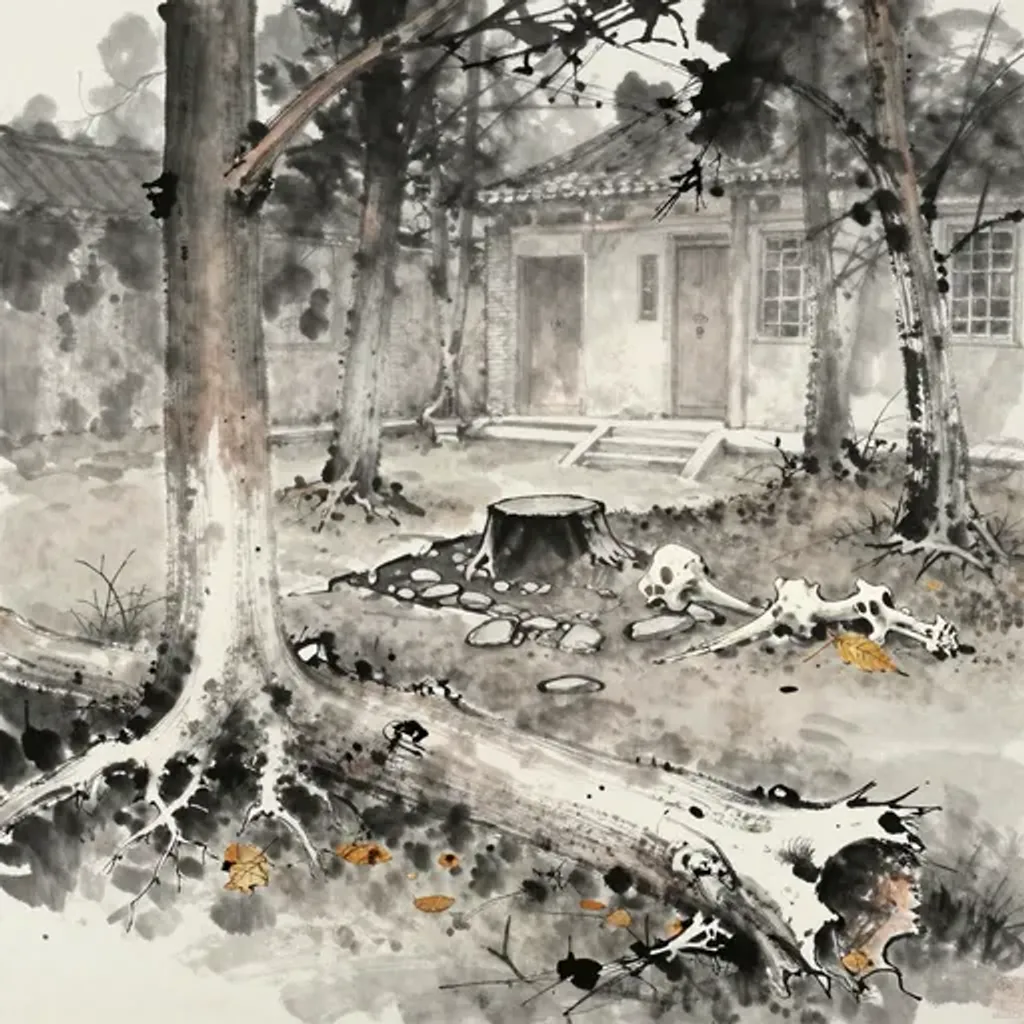
南山昊天,刺政閔身;疾悲無辜,背憎為仇。
The straight tree is felled first, toppling outside the forest; the clear spring is drawn first until its bottom shows dry. The loyal minister dies remonstrating at court — white bones uncollected in the evening cold.
— Jiao Yanshou, Yilin (Forest of Changes), 1st century BC
Commentary
Earth holds the mountain modestly, and the original verse cries out to the Southern Mountain and vast heaven — echoing the Shijing's 'Nan Shan' ode that criticizes misgovernment and grieves for the body politic. The verse laments innocent suffering: 'grieving for the guiltless, trust turned to enmity.' Those who were close become enemies; the blameless are punished. From Modesty to Return, thunder stirs within the earth — the first yang line re-emerging after complete darkness, the winter solstice of the soul. The verse captures the moment just before Return: when the upright are persecuted and trust has collapsed, only the buried seed of conscience remains. Return's mechanism is precisely this single stirring of light beneath total darkness, the promise that even betrayal cannot extinguish the moral impulse forever.
謙 → 无妄
Hexagram 15 → Hexagram 25: Innocence
Changing lines: 1, 3, 4, 5, 6
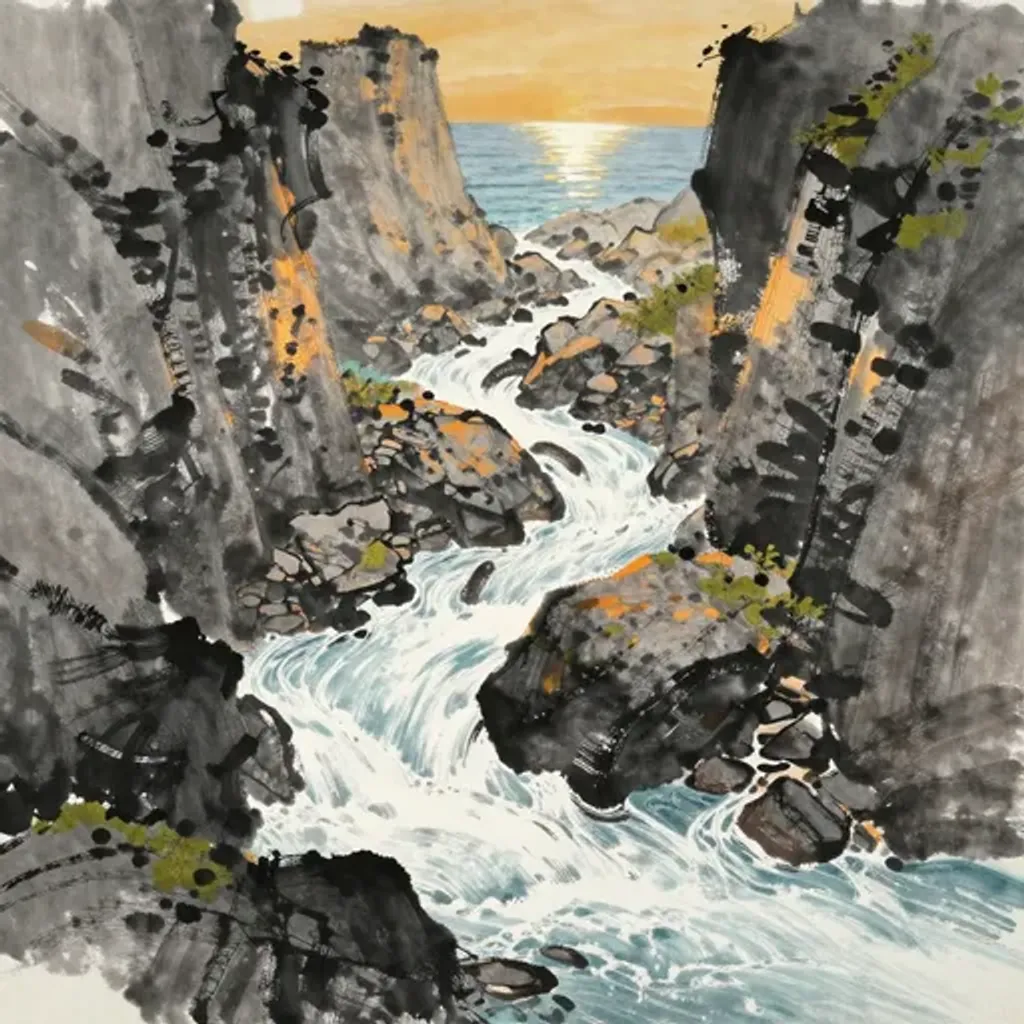
百川朝海,流行不止;道雖遼遠,無不到者。
A hundred streams flow to the sea; their journey never ceases. Though the way is long and distant; there is none that does not arrive.
— Jiao Yanshou, Yilin (Forest of Changes), 1st century BC
Commentary
Earth holds the mountain low, and a hundred rivers flow toward the sea, their current never ceasing. The road may be distant and long, yet there is nothing that does not arrive. The image is elemental and reassuring: water always finds its way to the ocean, no matter how winding the path. From Modesty to Innocence, thunder moves beneath heaven, and all things participate in the spontaneous truthfulness of nature. The verse embodies Innocence's cosmic principle: when action accords with natural law, even the most remote goal is reached. The hundred rivers do not plan or strategize — they simply follow gravity's honest pull. Modesty provides the low ground that draws all streams together; Innocence ensures the journey is completed without contrivance.
謙 → 大畜
Hexagram 15 → Hexagram 26: Great Taming
Changing lines: 1, 2, 6
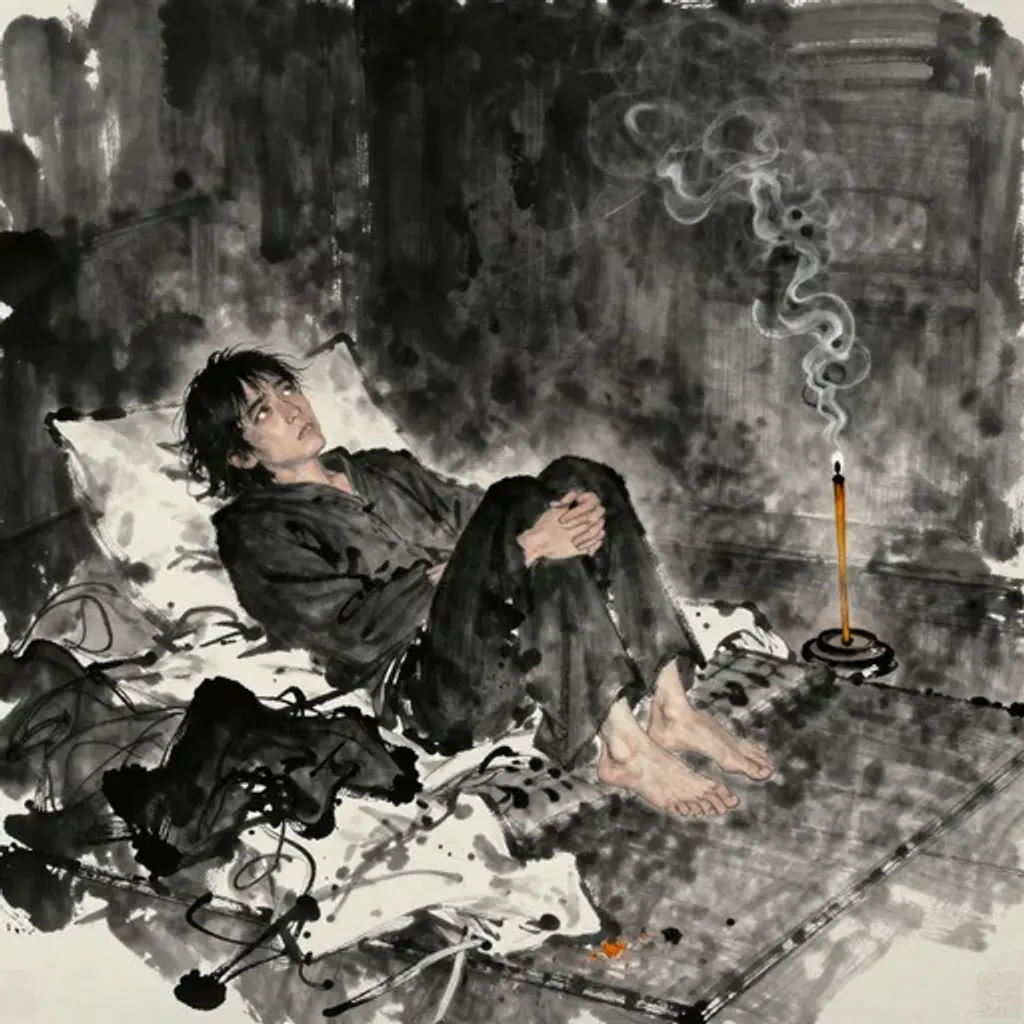
目不可合,憂來搖足;悚惕為懼,去我邦域。
Eyes cannot close; worry comes and the feet fidget. Trembling with fear and dread; one departs from the homeland.
— Jiao Yanshou, Yilin (Forest of Changes), 1st century BC
Commentary
Earth holds the mountain, yet eyes cannot close, and worry makes the feet twitch restlessly. Fear and trembling seize the heart, driving one to flee the homeland. The verse portrays sleepless anxiety escalating into exile — a visceral image of someone whose body betrays their terror before the mind decides to run. From Modesty to Great Taming, heaven is stored within the mountain, and the noble one studies the words and deeds of the ancients. Yet here the mountain that should contain and discipline becomes a prison of accumulated dread. The transformation suggests that what is tamed inwardly can become unbearable: heaven pressed into the mountain generates pressure that erupts as panic. Great Taming demands the capacity to hold enormous force; when that capacity fails, flight is the only relief.
謙 → 頤
Hexagram 15 → Hexagram 27: Nourishment
Changing lines: 1, 3, 6
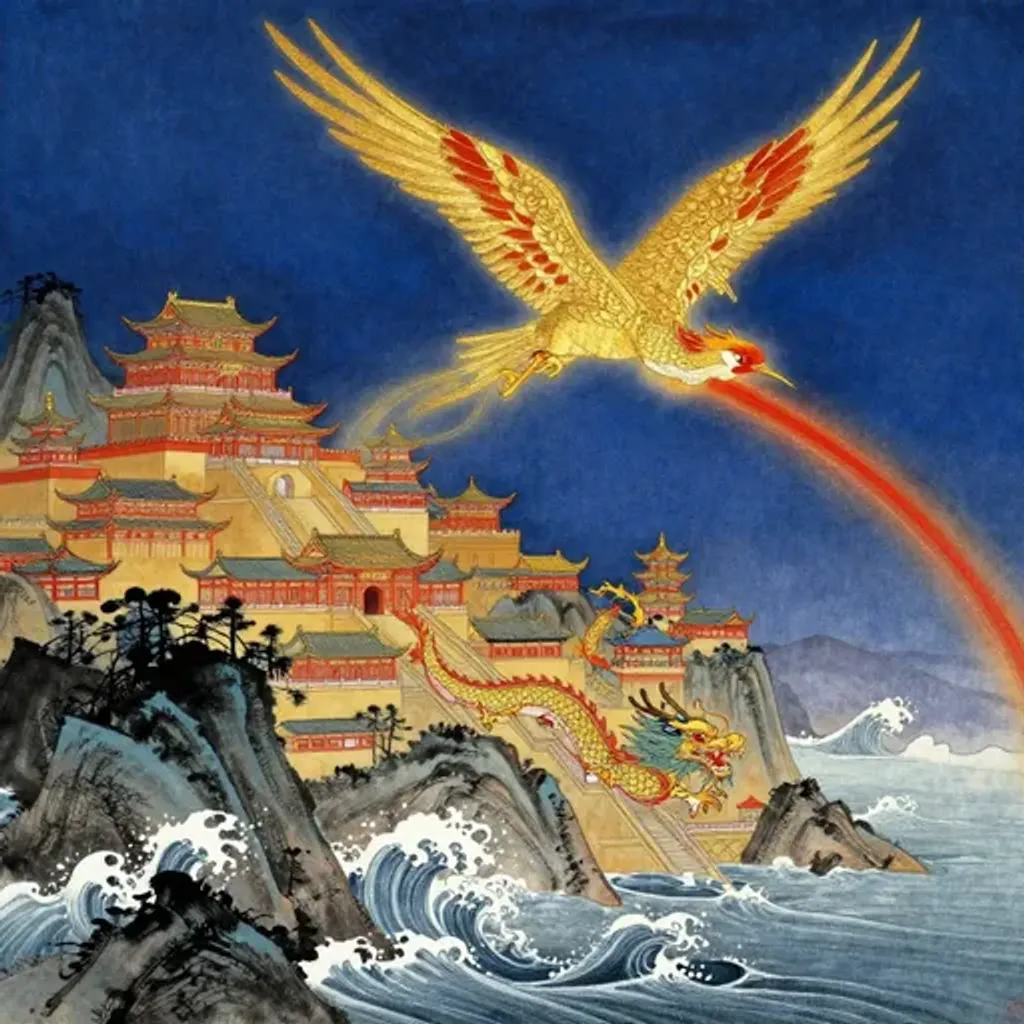
鳥升鵠舉,照臨東海;龍降庭堅,為陶叔後;封於英六,履祿綏厚。
Birds ascending, swans soaring; gazing out over the eastern sea. A dragon descends to Tingjian; becoming the heir of Lord Tao. Enfeoffed at Ying and Liu; his stipend and bounty are rich and generous.
— Jiao Yanshou, Yilin (Forest of Changes), 1st century BC
Commentary
Earth holds the mountain, and a great bird rises like a swan ascending, its light illuminating the Eastern Sea. Then the verse invokes Gao Yao's lineage: his descendant Tingjian, ancestor of the Tao Shu clan, was enfeoffed at Ying and Liu — territories in modern Anhui. The verse traces a genealogy of merit: Gao Yao served as minister of justice under Shun and Yu, and his descendants inherited fiefdoms through accumulated virtue. From Modesty to Nourishment, the mountain stands above thunder — careful words, measured sustenance. The bird's soaring illumination and the ancestral fiefdom alike represent the fruit of generations of nourishing virtue. What the mountain holds is finally fed forward to future generations, a legacy of righteousness rewarded with enduring prosperity.
謙 → 大過
Hexagram 15 → Hexagram 28: Great Exceeding
Changing lines: 2, 4, 5
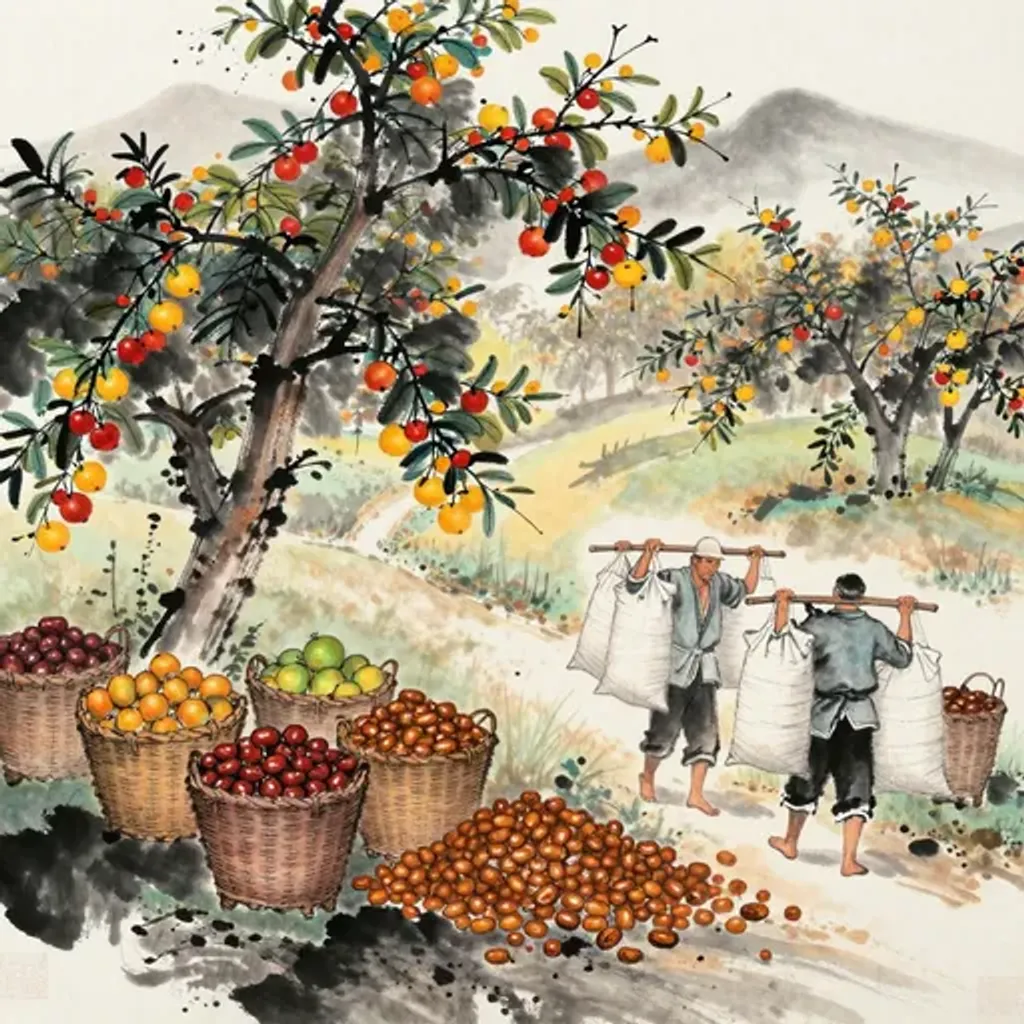
北方多棗,橘柚所聚;荷囊載黍,盈我筐筥。
Abundant dates in the north; citrus and pomelo gathered there. Carrying grain sacks filled with millet; they fill our baskets and hampers.
— Jiao Yanshou, Yilin (Forest of Changes), 1st century BC
Commentary
Earth holds the mountain, and the north country is rich with jujubes while citrus fruits gather in abundance. Carrying sacks of millet, the harvest fills baskets and containers to overflowing. The imagery is purely agricultural — the bounty of different regions combined, northern dates and southern oranges meeting in one storehouse. From Modesty to Great Exceeding, the lake submerges the trees, pressing beyond normal limits. Yet the verse shows the benign face of excess: not structural failure but overflowing abundance. The baskets are too full, the harvest exceeds expectation. Modesty's low-lying earth gathers produce from all directions, and when that gathering surpasses the ordinary, it becomes Great Exceeding — not as catastrophe but as the blessed burden of too much harvest.
謙 → 坎
Hexagram 15 → Hexagram 29: The Abysmal Water
Changing lines: 2, 3, 5
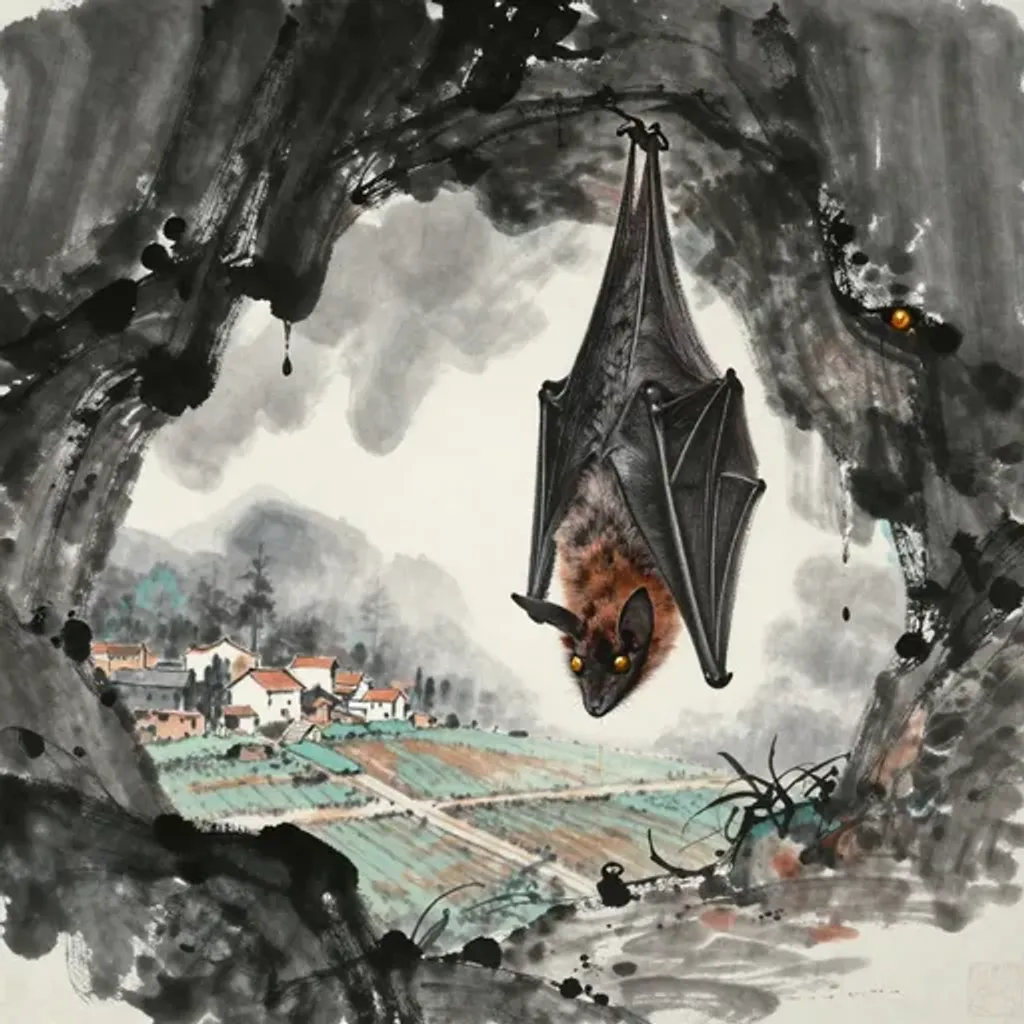
懸狟素餐,食非其任;失望遠民,實勞我心。
The hanging bat feeds without working; eating what is not its due. Disappointing the distant folk; it truly wearies my heart.
— Jiao Yanshou, Yilin (Forest of Changes), 1st century BC
Commentary
Earth holds the mountain in modesty, but here a creature hangs idle, eating without earning its keep — 懸狟素餐, a badger suspended and fed for nothing. This echoes the Shijing phrase 'eating without working,' a criticism of the parasitic official. The people in distant regions lose hope, and the ruler's heart is truly burdened. From Modesty to The Abysmal, water plunges into water — doubled danger, the pit that leads only to another pit. The verse diagnoses the peril of a state where undeserving officials drain resources while the frontier populace despairs. Modesty's virtue of 'leveling the excess to fill the deficit' is precisely what has failed here: the excess feeds parasites while the distant people starve. The Abysmal's danger is the consequence of this inversion.
謙 → 離
Hexagram 15 → Hexagram 30: The Clinging Fire
Changing lines: 1, 4, 6
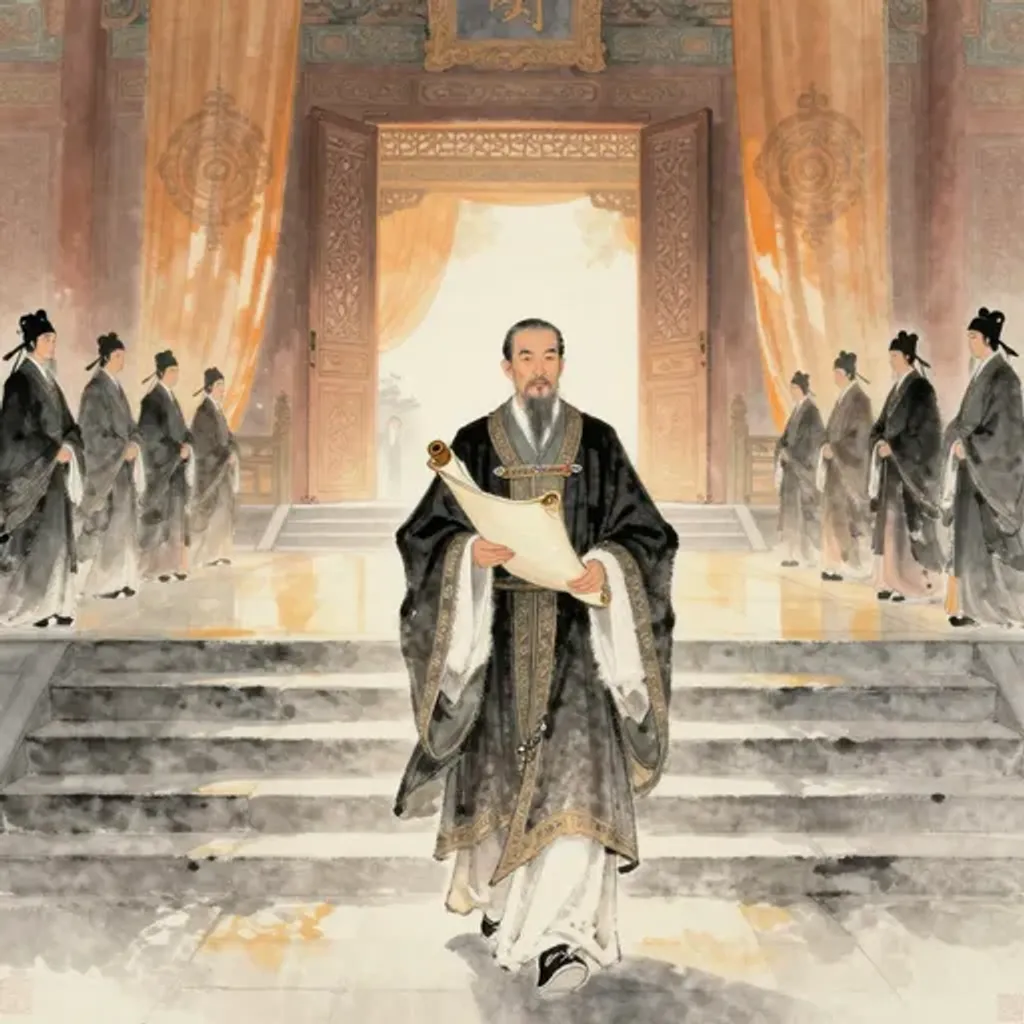
羔羊皮革,君子朝服;輔政扶德,以合萬國。
Lambskin is the leather for court robes; the gentleman's morning dress. Assisting governance, supporting virtue; to unite all the realm.
— Jiao Yanshou, Yilin (Forest of Changes), 1st century BC
Commentary
Earth holds the mountain, and the noble one dons his lambskin court robe — the elegant 羔羊 garment praised in the Shijing as symbol of upright officials. He assists the government, upholds virtue, and unites the ten thousand states. The lambskin coat is both literal court dress and moral emblem: its purity and warmth represent the minister who clothes governance in propriety. From Modesty to The Clinging, doubled fire blazes steadily — the great one illuminates the four directions. The verse traces how modest virtue, once robed in proper form, radiates outward as governance that binds diverse states together. The Clinging's fire needs something to adhere to; here it clings to the lambskin's virtue, and that steady flame becomes the light that unifies the realm.
謙 → 咸
Hexagram 15 → Hexagram 31: Influence
Changing lines: 4, 5
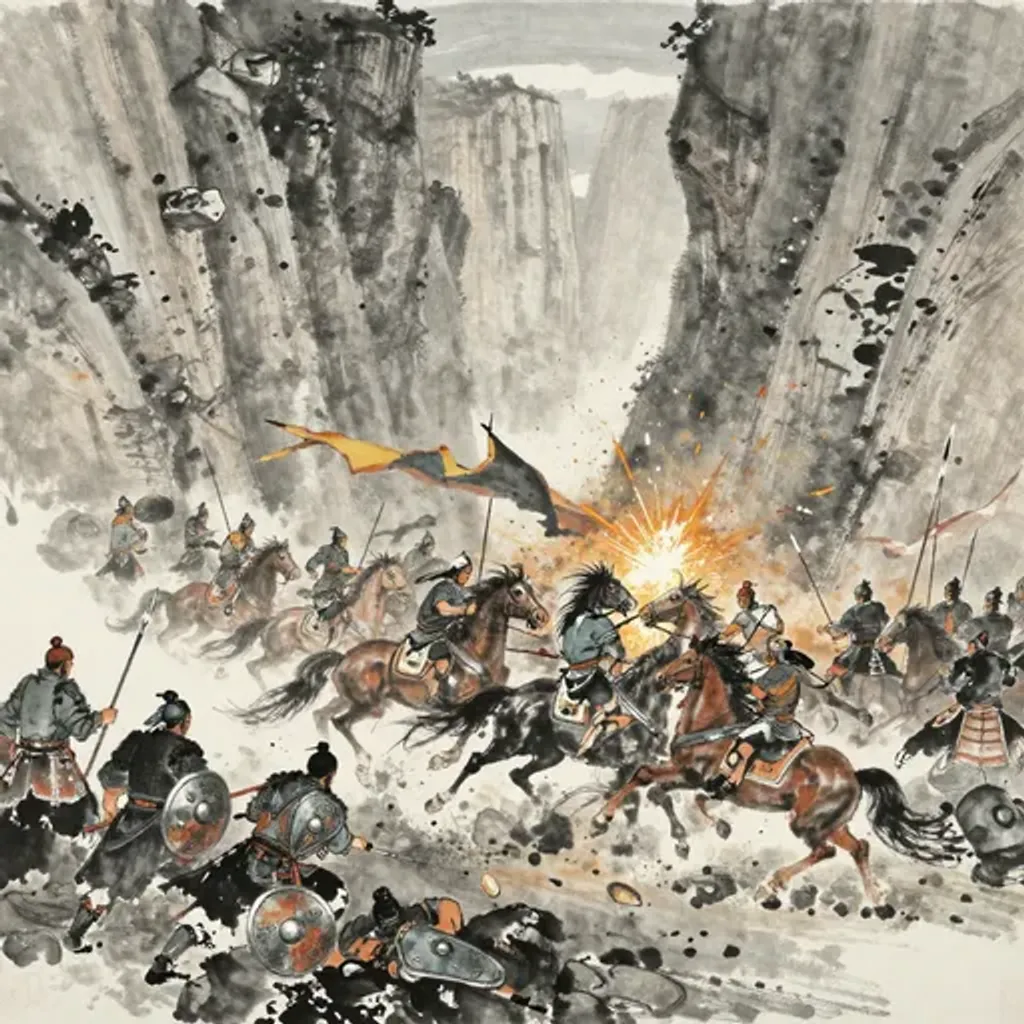
齊魯爭言,戰於龍門;搆怨致禍,三歲不安。
Qi and Lu trade harsh words; they battle at Longmen. Nursing grudges, inviting disaster; three years know no peace.
— Jiao Yanshou, Yilin (Forest of Changes), 1st century BC
Commentary
Earth holds the mountain still, but Qi and Lu are locked in bitter dispute, battling at Dragon Gate. Grudges breed catastrophe, and for three years there is no peace. Dragon Gate — the gorge carved by Yu — here serves as a contested battleground rather than a site of transformation. The verse inverts its usual symbolism: instead of fish leaping to become dragons, armies clash at the pass. From Modesty to Influence, the lake rests upon the mountain, the image of receptive sensitivity. Yet the verse shows Influence's shadow: when mutual sensitivity becomes mutual grievance, every provocation resonates and amplifies into prolonged conflict. Modesty's restraint, when abandoned by both parties, yields to the echo chamber of escalating resentment.
謙 → 恆
Hexagram 15 → Hexagram 32: Duration
Changing lines: 2, 4
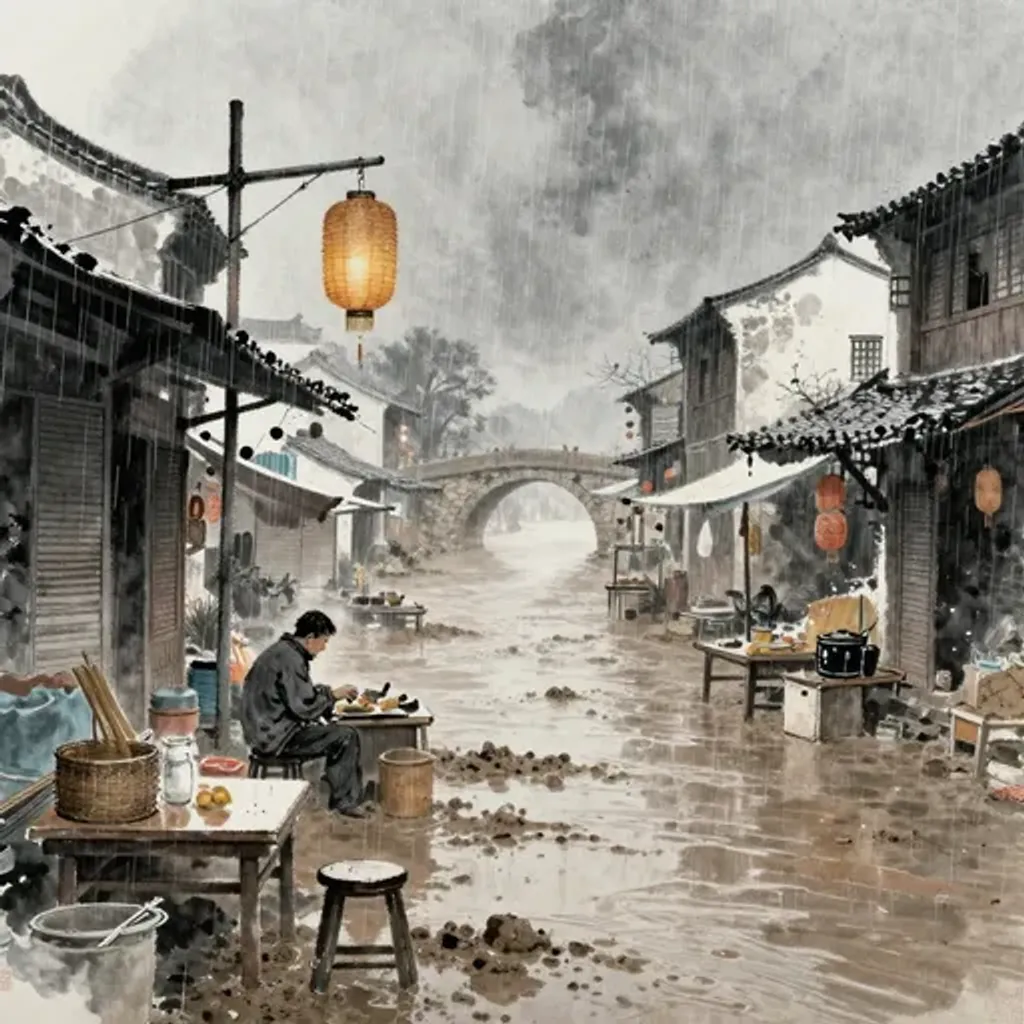
久陰霖雨,塗行泥潦;商人休止,市無所有。
Long drizzle, endless rain; the roads are muddy and flooded. Merchants halt their trade; the market has nothing left.
— Jiao Yanshou, Yilin (Forest of Changes), 1st century BC
Commentary
Earth holds the mountain low, and prolonged yin rain drenches the roads into mud and slush. Merchants halt their journeys; the marketplace stands empty with nothing to sell. The verse paints a world immobilized by relentless downpour — commerce suspended, roads impassable, the economy frozen. From Modesty to Duration, thunder and wind sustain each other endlessly. Duration's lesson is constancy, but here constancy manifests as unbroken misery: the rain that never stops, the market that never reopens. The transformation reveals Duration's dark edge — when the unchanging force is destructive rather than stabilizing, endurance becomes entrapment. Modesty's lowland, which normally receives blessings, here collects only floodwater and stagnation.
謙 → 遯
Hexagram 15 → Hexagram 33: Retreat
Changing lines: 4, 5, 6
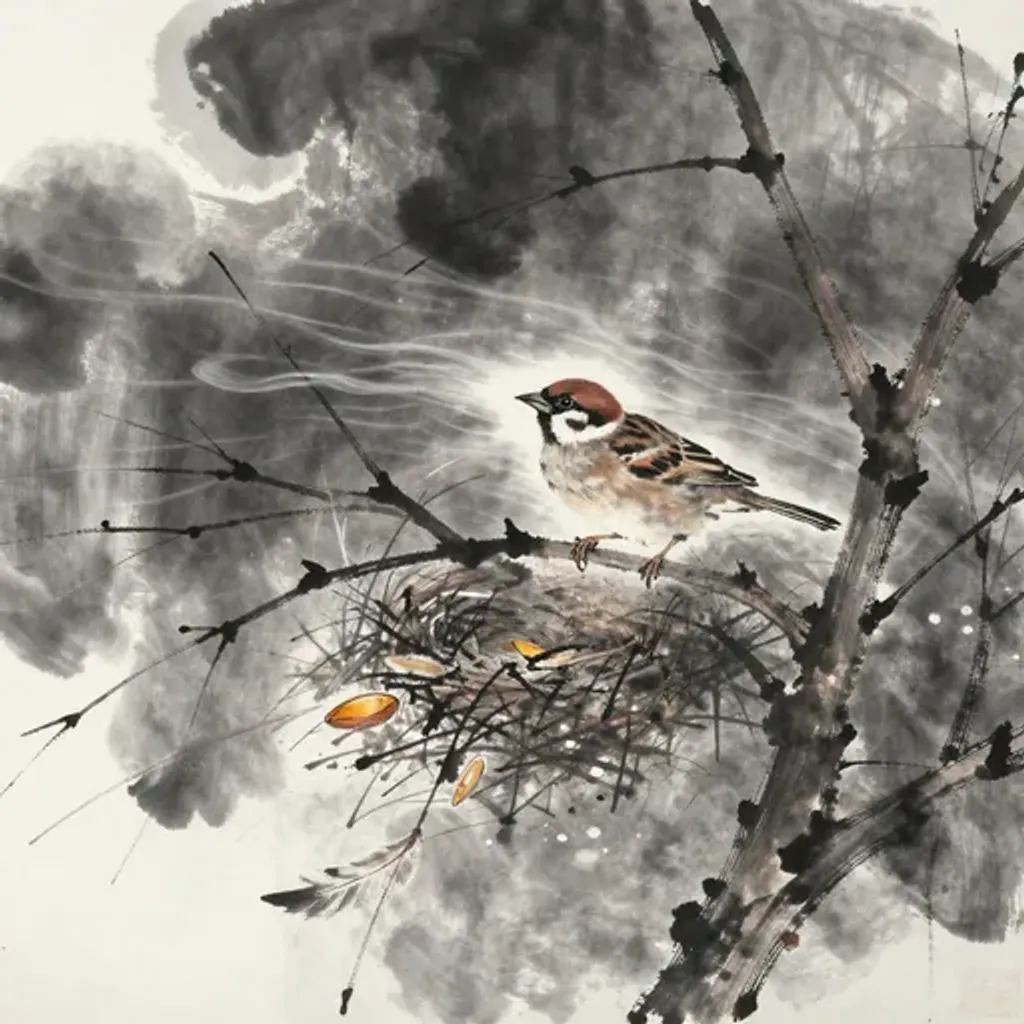
桃雀竊脂,巢於小枝;搖動不安,為風所吹;寒心慄慄,常憂殆危。
A sparrow pilfers grease, nesting on a slender branch. Shaking and never at rest; blown about by the wind. The heart is cold and trembling; always fearing peril and danger.
— Jiao Yanshou, Yilin (Forest of Changes), 1st century BC
Commentary
Earth holds the mountain still, but a sparrow that steals fat nests on a thin branch, swaying and unstable, blown about by the wind. Its heart is chilled with dread, always fearing danger. The thieving sparrow's precarious perch captures the anxiety of ill-gotten gains: stolen sustenance on an insecure foundation, constant terror of exposure. From Modesty to Retreat, heaven stands above the mountain — the noble one distances himself from petty people. The sparrow is precisely the petty creature that Retreat counsels avoiding: small, grasping, perched precariously on what cannot hold it. Modesty's mountain provides no stable roost for the greedy; the wind of heaven's withdrawal shakes them loose.
謙 → 大壯
Hexagram 15 → Hexagram 34: Great Power
Changing lines: 1, 2, 4
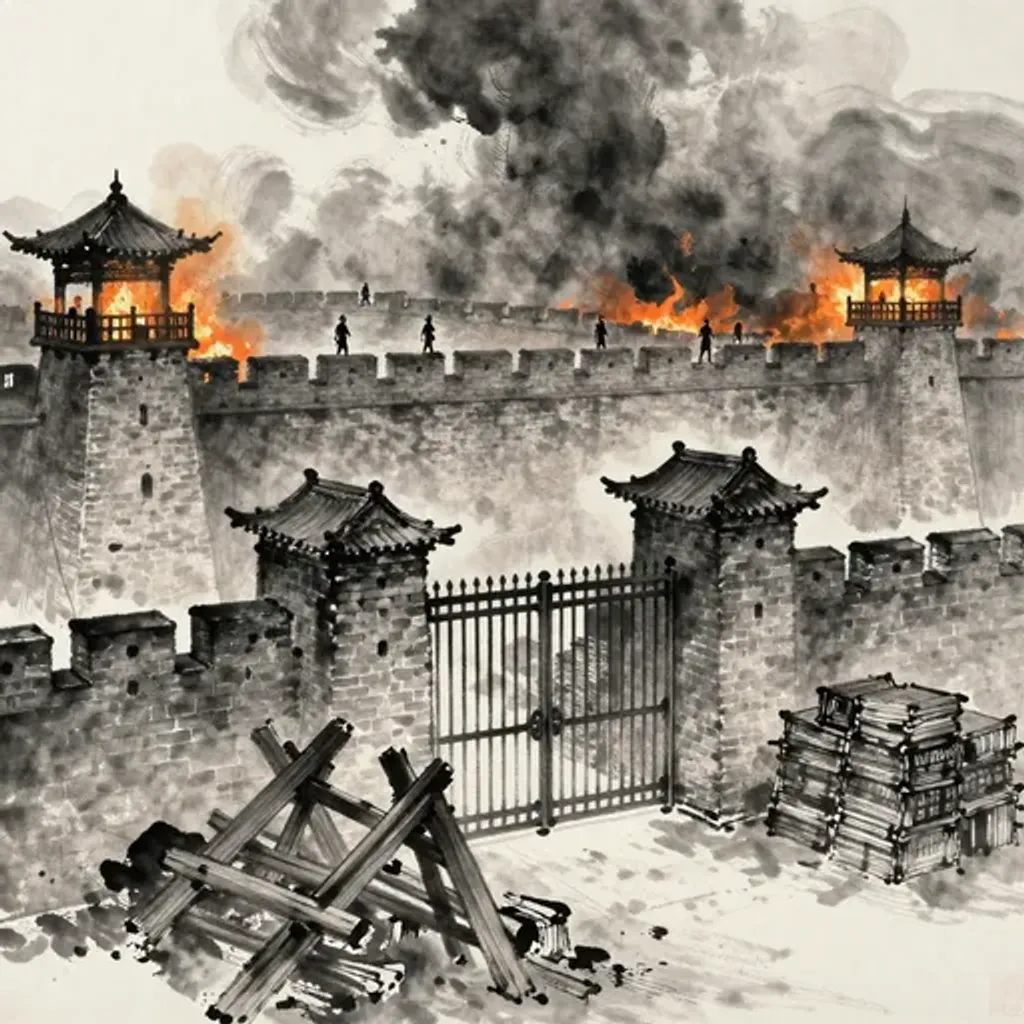
防患備災,凶惡不來;雖困無憂,未獲安休。
Guarding against calamity, preparing for disaster; fierce evils do not come. Though beset, one has no worry; yet one has not yet found peaceful rest.
— Jiao Yanshou, Yilin (Forest of Changes), 1st century BC
Commentary
Earth holds the mountain in preparation. One guards against disaster and prepares for calamity, so evil does not come. Though besieged by difficulty, there is no real worry — yet full rest and ease remain beyond reach. The verse describes a state of vigilant defense: the worst is averted, but the tension of readiness persists. From Modesty to Great Power, thunder roars above heaven, the image of overwhelming force restrained by propriety. Great Power's counsel — 'the noble one does not tread where propriety forbids' — resonates with the verse's prevention ethos: strength held in check, disaster forestalled but peace not yet secured. Modesty's careful preparation becomes Great Power's disciplined restraint, effective but never comfortable.
謙 → 晉
Hexagram 15 → Hexagram 35: Progress
Changing lines: 3, 4, 6
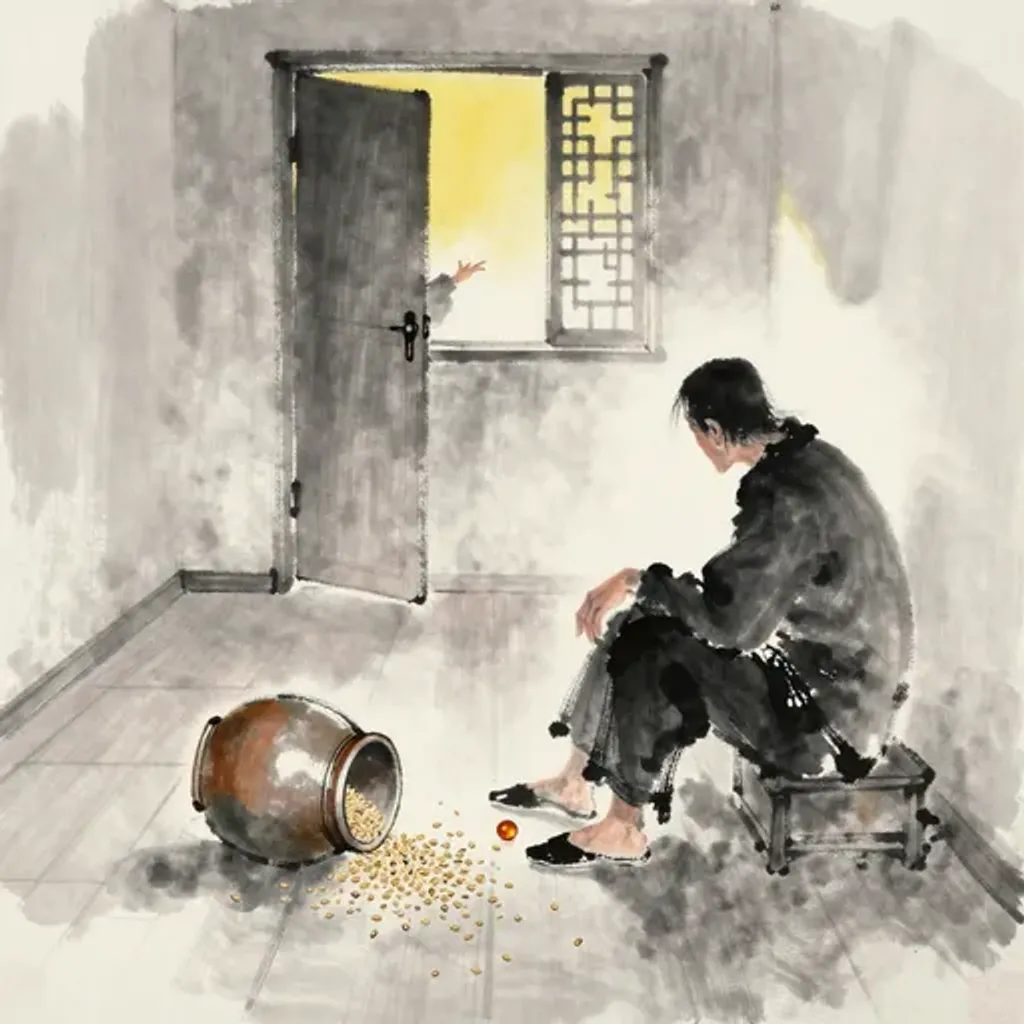
引順絕糧,與母異門;不見所懽,孰與共言?
Led along with rations cut; separated from mother by different gates. Not seeing those one loves; with whom can one share a word?
— Jiao Yanshou, Yilin (Forest of Changes), 1st century BC
Commentary
Earth holds the mountain in modesty, and now provisions are exhausted — 引順絕糧 — one follows the road but food has run out. Separated from one's mother, dwelling at different gates, unable to see the beloved: with whom can one share a word? The verse is a lament of destitution and isolation. From Modesty to Progress, fire rises above the earth — light emerging into the open, the image of advancement. Yet the verse shows the painful ground from which progress must start: hungry, motherless, alone. Progress demands that the noble one 'display bright virtue,' but this verse captures the pre-dawn moment when the light has not yet broken the horizon. The separation from the mother echoes the severed root — Progress begins from this desolation.
謙 → 明夷
Hexagram 15 → Hexagram 36: Darkening of the Light
Changing lines: 1
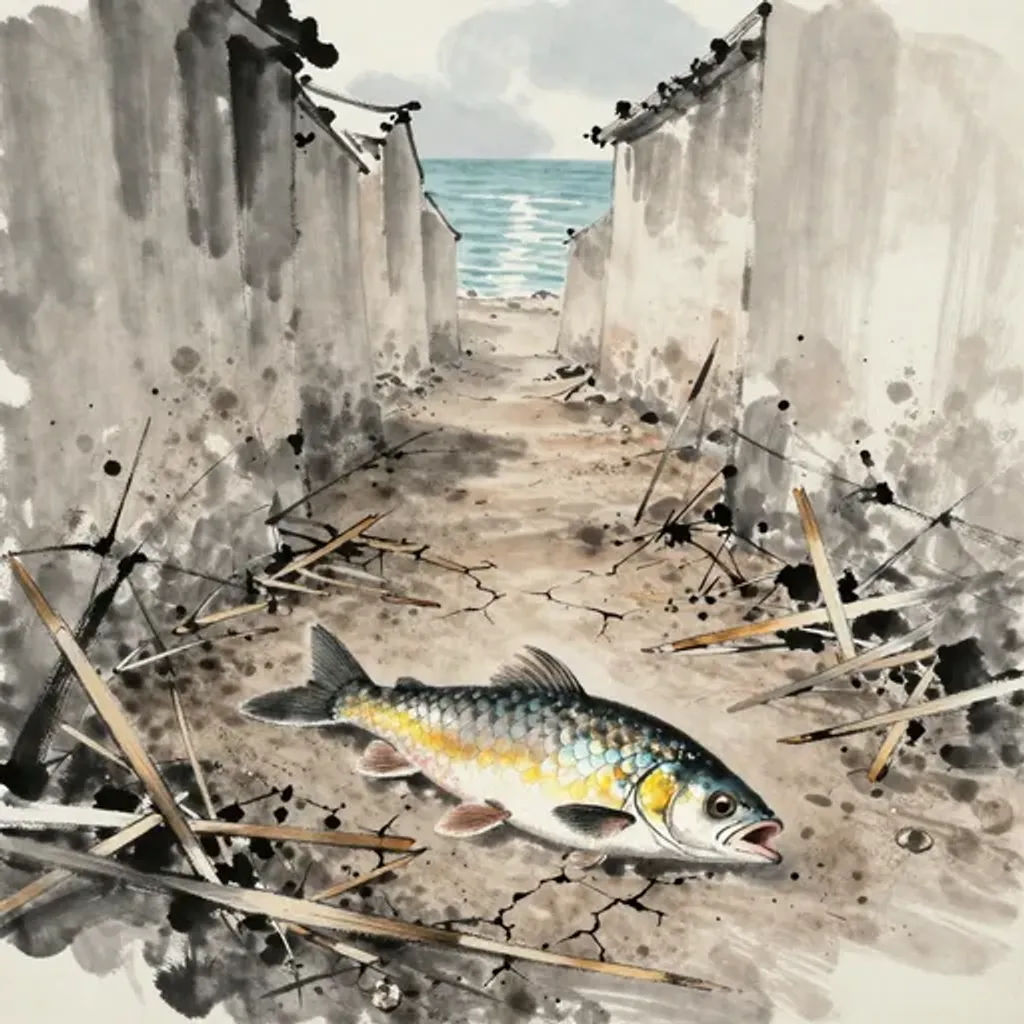
鰌鰕去海,藏於枯里;街巷褊隘,不得自在;南北極遠,渴餒成疾。
Loaches and shrimp leave the sea, hiding in a withered village. The lanes and alleys are narrow and cramped; one cannot move at ease. South and north are vastly far; thirst and hunger bring illness.
— Jiao Yanshou, Yilin (Forest of Changes), 1st century BC
Commentary
Earth holds the mountain, but loaches and shrimp have left the sea, hiding in dried-up burrows. The lanes are narrow and cramped, offering no freedom. North and south stretch impossibly far apart, and thirst and hunger breed illness. The aquatic creatures out of water represent talent displaced from its proper element — gasping in arid alleys rather than swimming in the open sea. From Modesty to Darkening of the Light, fire sinks into the earth, brightness buried and obscured. The verse embodies Ming Yi's central tragedy: the brilliant are forced underground, confined to narrow spaces, cut off from their proper environment. Modesty's earth, instead of sheltering the mountain, here suffocates what it contains. The darkened light is the loach in the dried channel — alive, but barely.
謙 → 家人
Hexagram 15 → Hexagram 37: The Family
Changing lines: 1, 5, 6
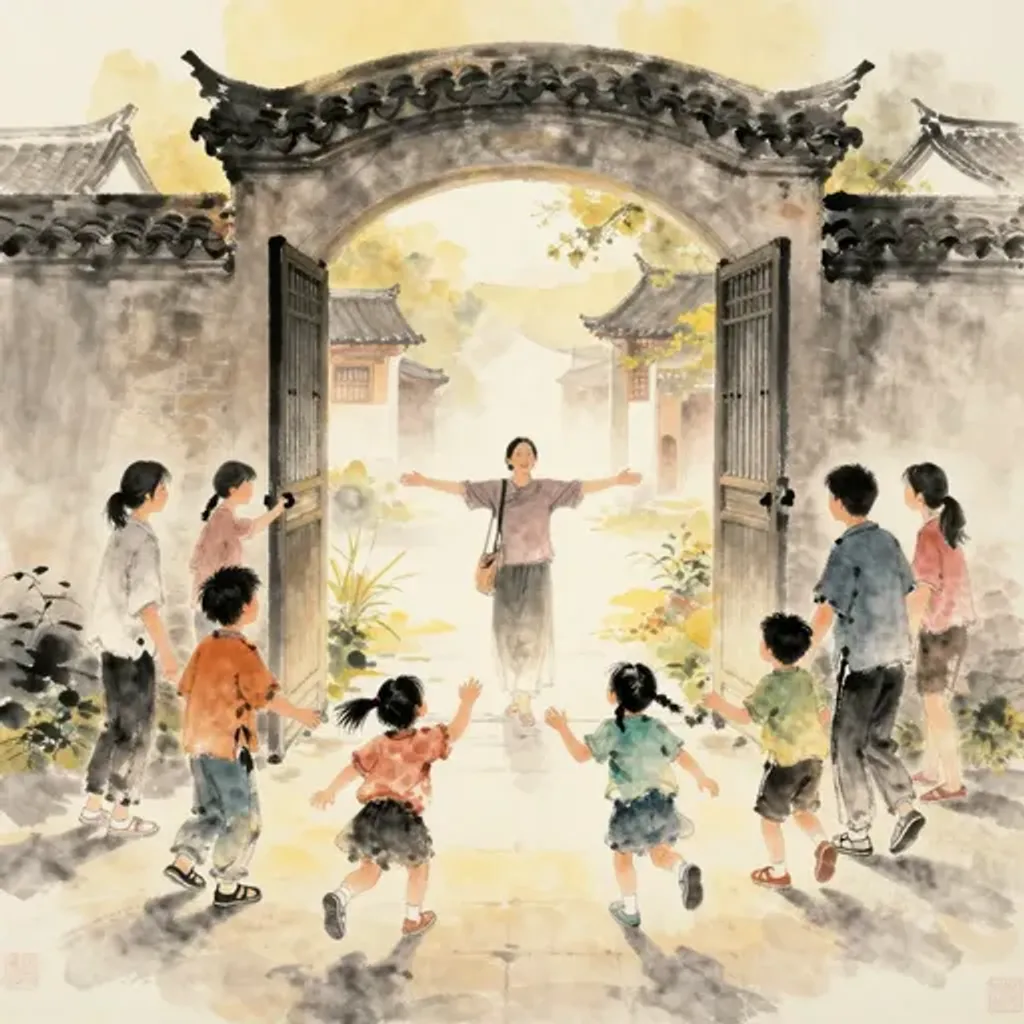
恭寬信敏,功加四海;辟去不祥,喜來從母。
Respectful, generous, trustworthy, and quick; merit extends across the four seas. Warding off the inauspicious; joy comes, following the mother.
— Jiao Yanshou, Yilin (Forest of Changes), 1st century BC
Commentary
Earth holds the mountain in modesty, and the verse names the Confucian cardinal virtues: respectful, generous, trustworthy, and diligent — 恭寬信敏. These four virtues extend their benefit across the four seas, dispelling misfortune and bringing joy home to the mother. The phrase echoes the Analerta, where Confucius names these as the marks of benevolence. From Modesty to The Family, wind emerges from fire — words have substance, actions have constancy. The Family hexagram describes how inner cultivation radiates outward through the household to the world. The verse enacts this precisely: personal virtue practiced with constancy generates blessings that reach the four seas and return as filial joy. Modesty's buried virtue becomes The Family's radiating warmth.
謙 → 睽
Hexagram 15 → Hexagram 38: Opposition
Changing lines: 1, 2, 3, 4, 6
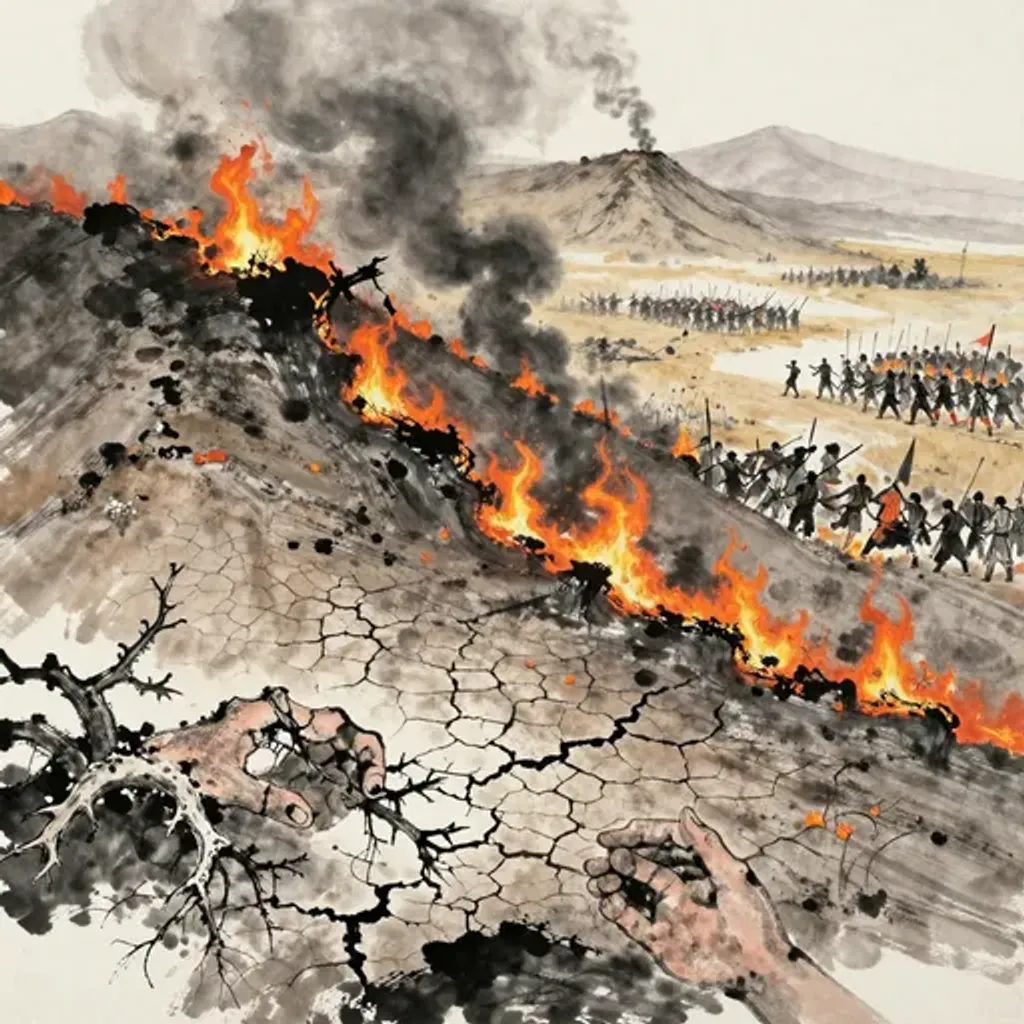
歲飢無年,虐政害民;乾谿驪山,秦楚結怨。
A year of famine, no harvest; cruel governance harms the people. Ganxi and Mount Li; Qin and Chu forge their grudge.
— Jiao Yanshou, Yilin (Forest of Changes), 1st century BC
Commentary
Earth holds the mountain, but famine ravages the land and cruel governance oppresses the people. Then the verse names two fatal sites: Qianxi, where King Ling of Chu camped before his army mutinied and he hanged himself in exile; and Lishan, where King You of Zhou died when the Quanrong invaded after his beacon-fire farce. Qin and Chu nurse their grudge between these two disasters. From Modesty to Opposition, fire above the lake — two forces moving apart, irreconcilable. The verse pairs two rulers whose arrogance destroyed them: Ling at Qianxi and You at Lishan, both brought down by the very systems they abused. Opposition's lesson is 'the same yet different' — and these paired catastrophes, centuries apart, share the identical pattern of overreach meeting ruin.
謙 → 蹇
Hexagram 15 → Hexagram 39: Obstruction
Changing lines: 5
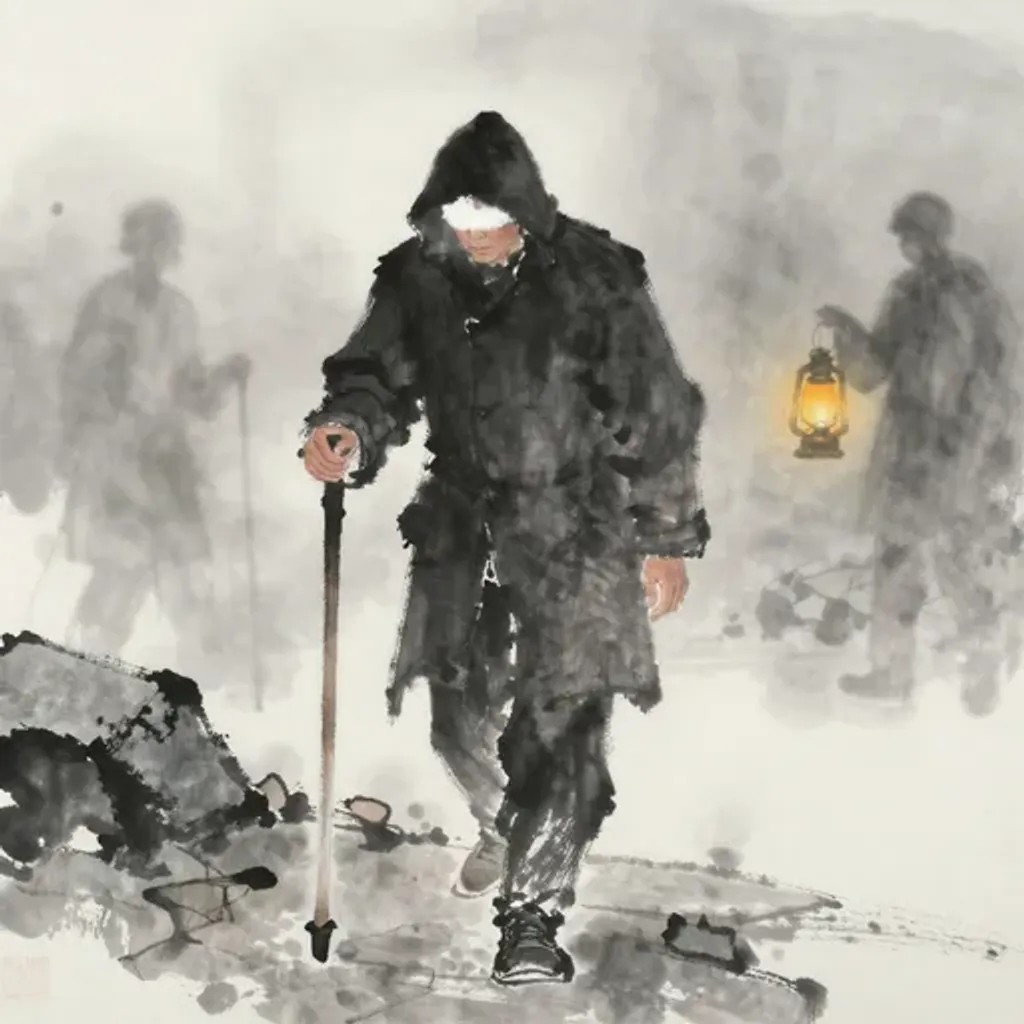
右目無瞳,偏視寡明;十步之外,不知何公?
The right eye has no pupil; one-sided vision, scant clarity. Beyond ten paces; one cannot tell who stands there.
— Jiao Yanshou, Yilin (Forest of Changes), 1st century BC
Commentary
Earth holds the mountain, but the right eye has no pupil — 偏視寡明 — seeing only from one side, perception dim and partial. Beyond ten paces, one cannot tell who stands there. The verse diagnoses impaired judgment: half-blind, unable to identify even nearby figures, stumbling through a world of shadows. From Modesty to Obstruction, water rests upon the mountain — the path ahead is treacherous, and the noble one turns inward to cultivate virtue. The half-blind traveler embodies Obstruction's predicament: the obstacle is not external but perceptual. One cannot navigate what one cannot see. Modesty's counsel to 'weigh things and distribute evenly' requires clear sight; without it, even the closest ally becomes an unrecognizable stranger.
謙 → 解
Hexagram 15 → Hexagram 40: Deliverance
Changing lines: 2, 3, 4
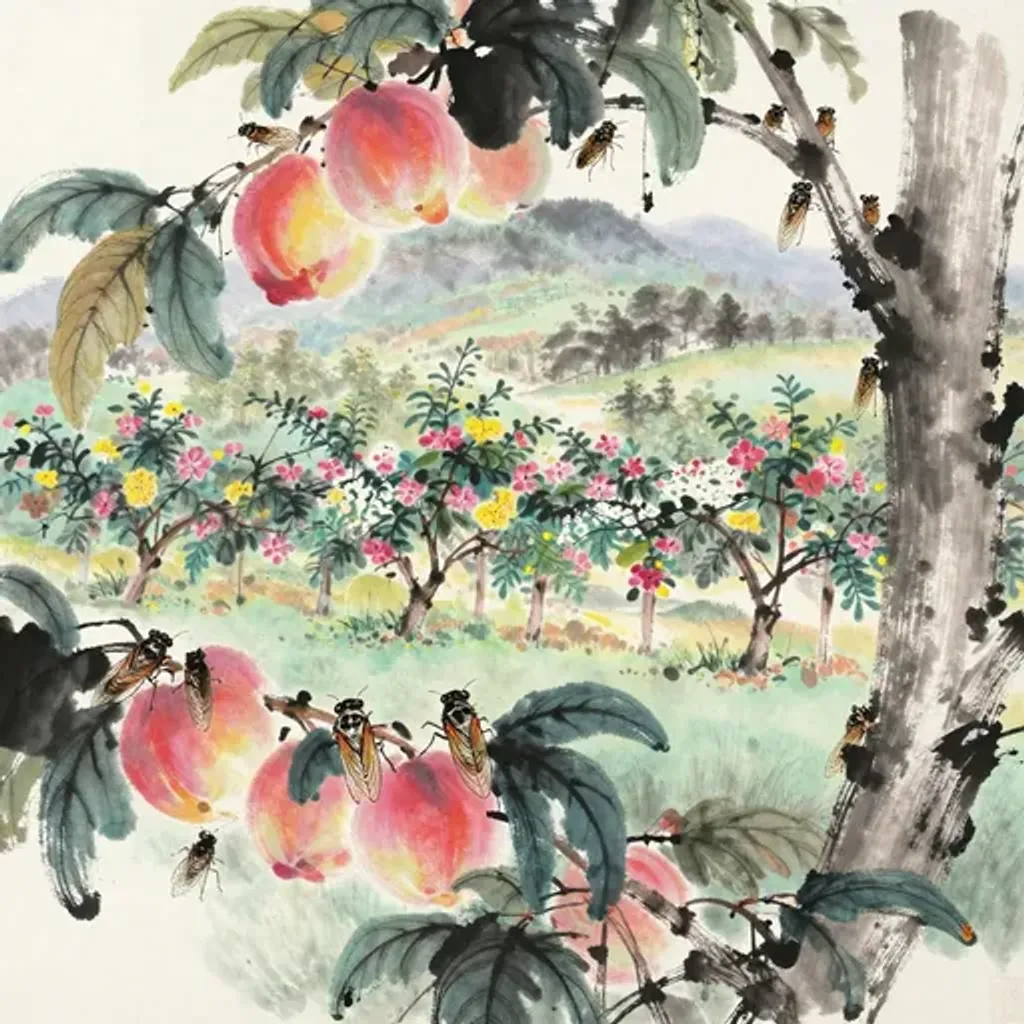
蜩螗歡喜,草木嘉茂;百菓蕃熾,日益多有。
Cicadas chirp in delight; grass and trees flourish lush. Every fruit thrives and multiplies; growing more abundant by the day.
— Jiao Yanshou, Yilin (Forest of Changes), 1st century BC
Commentary
Earth holds the mountain, and now cicadas sing with joy, grasses and trees flourish luxuriantly, a hundred fruits ripen and multiply, growing more abundant by the day. The verse is pure celebration of natural vitality — summer at its peak, the world humming with life. From Modesty to Deliverance, thunder and rain burst forth together, the image of release after tension. Deliverance pardons transgressions and dissolves blockages; the rain that breaks the drought is the thunderstorm of liberation. The cicadas' exuberance and the ripening fruit embody the relief that follows Deliverance's thunderclap. Modesty's quiet earth has been gathering potential beneath the surface; when the storm breaks, everything it nourished erupts into joyful, teeming life.
謙 → 損
Hexagram 15 → Hexagram 41: Decrease
Changing lines: 1, 2, 3, 6
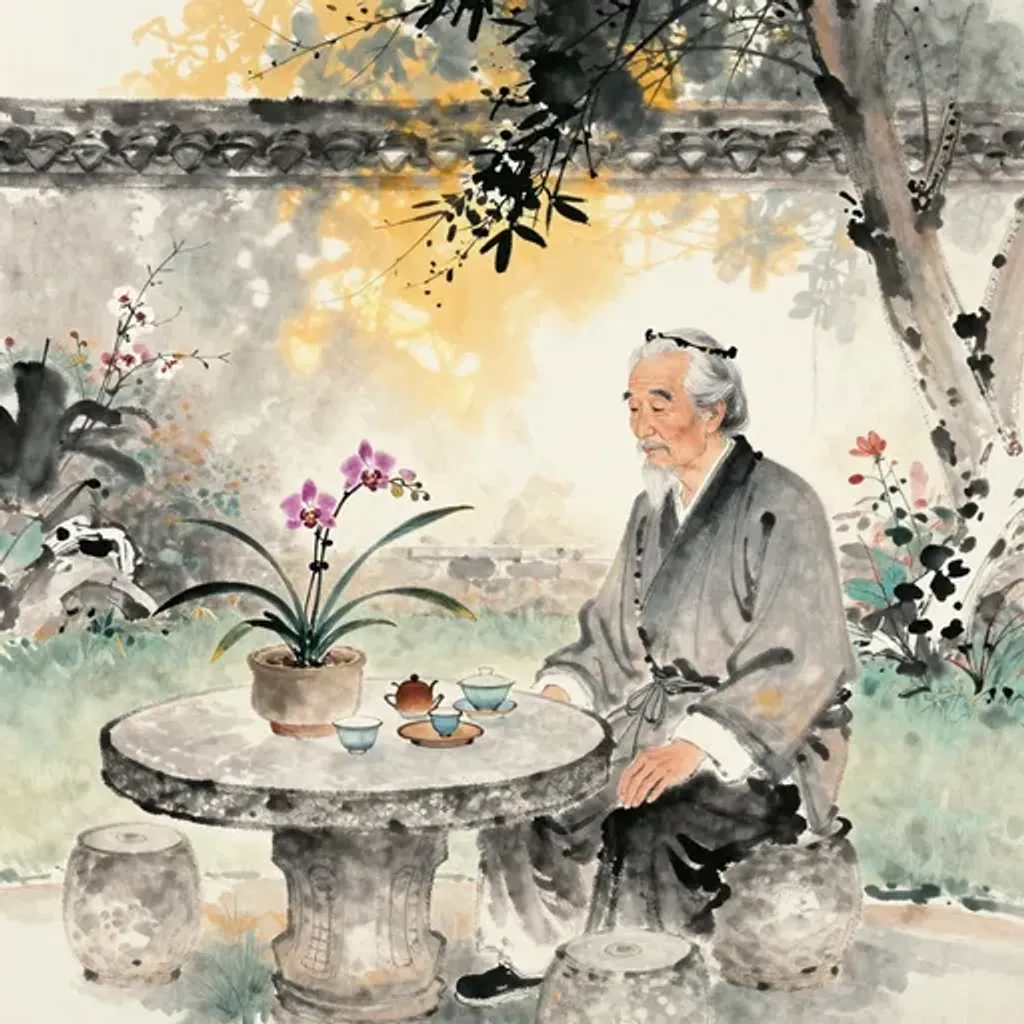
常德自如,安坐無尤;莘入貴鄉,到老安榮。
Constant virtue, composed as ever; sitting at ease, free of reproach. Entering a noble domain; reaching old age in peace and honor.
— Jiao Yanshou, Yilin (Forest of Changes), 1st century BC
Commentary
Earth holds the mountain in steady composure. Constant virtue, self-possessed, sitting at ease with no fault — then 'entering the honored village from Xin' and enjoying peace and glory into old age. The mention of Xin (莘) evokes the Youshen clan from which Yi Yin emerged: the humble servant who rose from obscurity to become the sage-minister of Shang. From Modesty to Decrease, the mountain towers above the lake — restraining anger and curbing desire. The verse embodies Decrease's paradox: by giving up ambition and maintaining steady virtue, one receives lasting honor. Yi Yin's story resonates here: the cook from Youshen who entered the noble household and served with constant virtue achieved glory precisely through selfless reduction of ego.
謙 → 益
Hexagram 15 → Hexagram 42: Increase
Changing lines: 1, 3, 5, 6
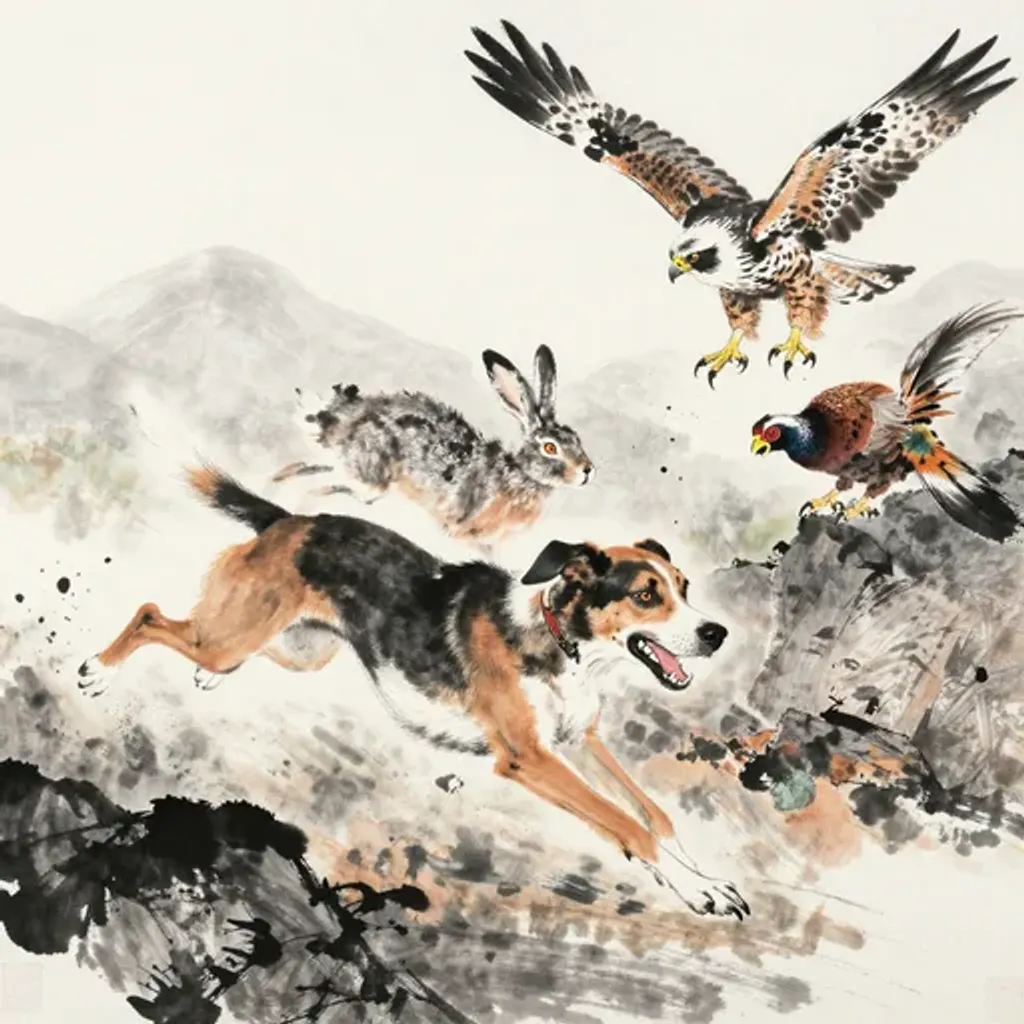
狡兔趯趯,良犬逐咋;雄雉受害,為鷹所獲。
The cunning hare zigzags and leaps; the fine hound snaps at its heels. The rooster pheasant meets its fate; captured by the hawk.
— Jiao Yanshou, Yilin (Forest of Changes), 1st century BC
Commentary
Earth holds the mountain still, but the field erupts into a hunt. The cunning rabbit leaps and bounds, the fine hound gives chase and snaps, the cock pheasant suffers harm, seized by the hawk. This is nature's hierarchy of predation laid bare — each creature both hunter and hunted in an escalating chain. From Modesty to Increase, wind and thunder reinforce each other, the noble one seeing good and emulating it, seeing faults and correcting them. The verse complicates Increase's benign image: increase for the hawk means decrease for the pheasant. The hunt reveals that the natural world's 'increase' operates through competitive pursuit, and the modest one who understands this dynamic can position wisely rather than becoming prey.
謙 → 夬
Hexagram 15 → Hexagram 43: Breakthrough
Changing lines: 1, 2, 4, 5
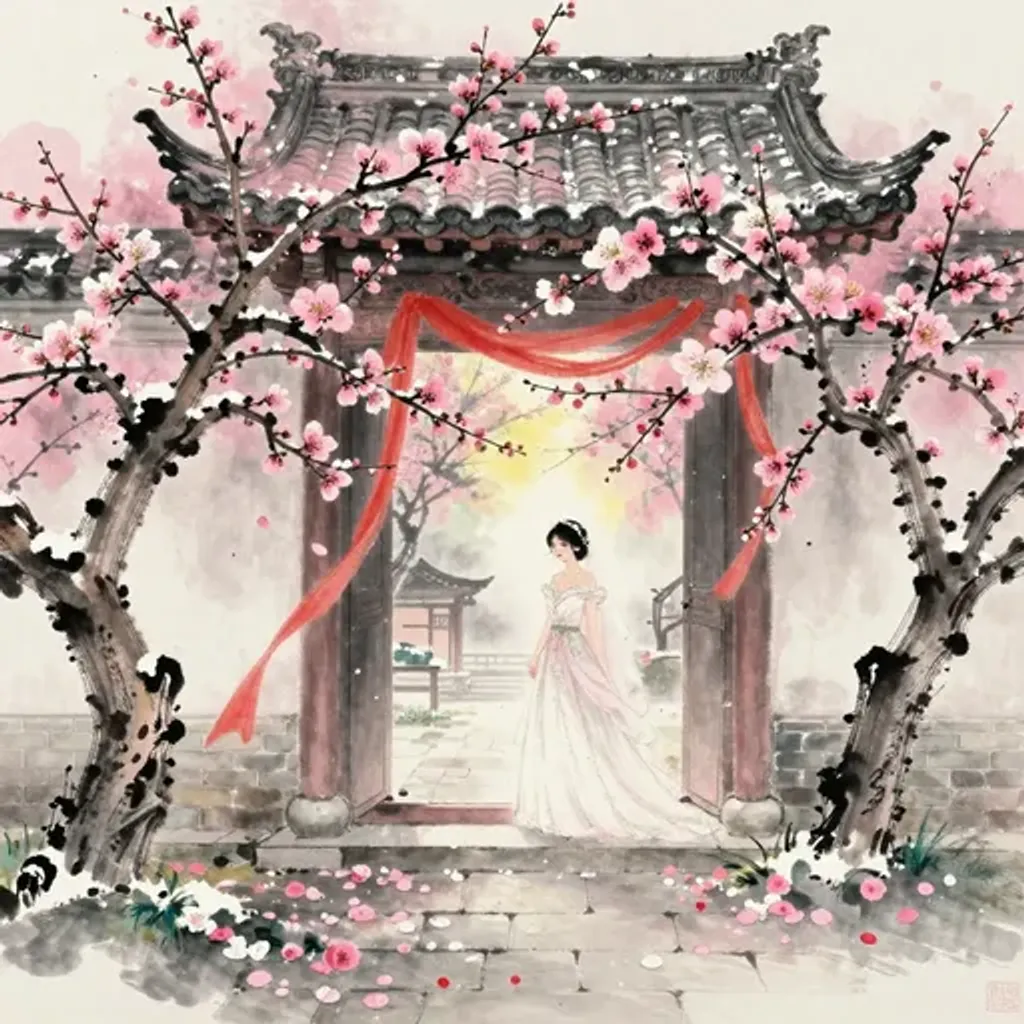
春桃生花,季女宜家;受福多年,男為封君。
Spring peach blossoms bloom; the youngest daughter graces her new home. Receiving blessing for many years; her son becomes an enfeoffed lord.
— Jiao Yanshou, Yilin (Forest of Changes), 1st century BC
Commentary
Earth holds the mountain, and spring peach trees burst into bloom. The youngest daughter settles well in marriage, receiving blessings for many years, her son becoming an enfeoffed lord. The imagery echoes the Shijing's 'Tao Yao' ode: the peach tree in full flower, the bride entering her household. From Modesty to Breakthrough, the lake rises above heaven — accumulated waters breaking through the barrier to cascade downward in generous distribution. The verse embodies Breakthrough's 'bestowing bounty upon those below': the well-married daughter's blessings overflow through generations, her son elevated to nobility. Modesty's hidden worth, when it finds its proper match, breaks through into visible, lasting prosperity that descends through the family line.
謙 → 姤
Hexagram 15 → Hexagram 44: Coming to Meet
Changing lines: 2, 4, 5, 6
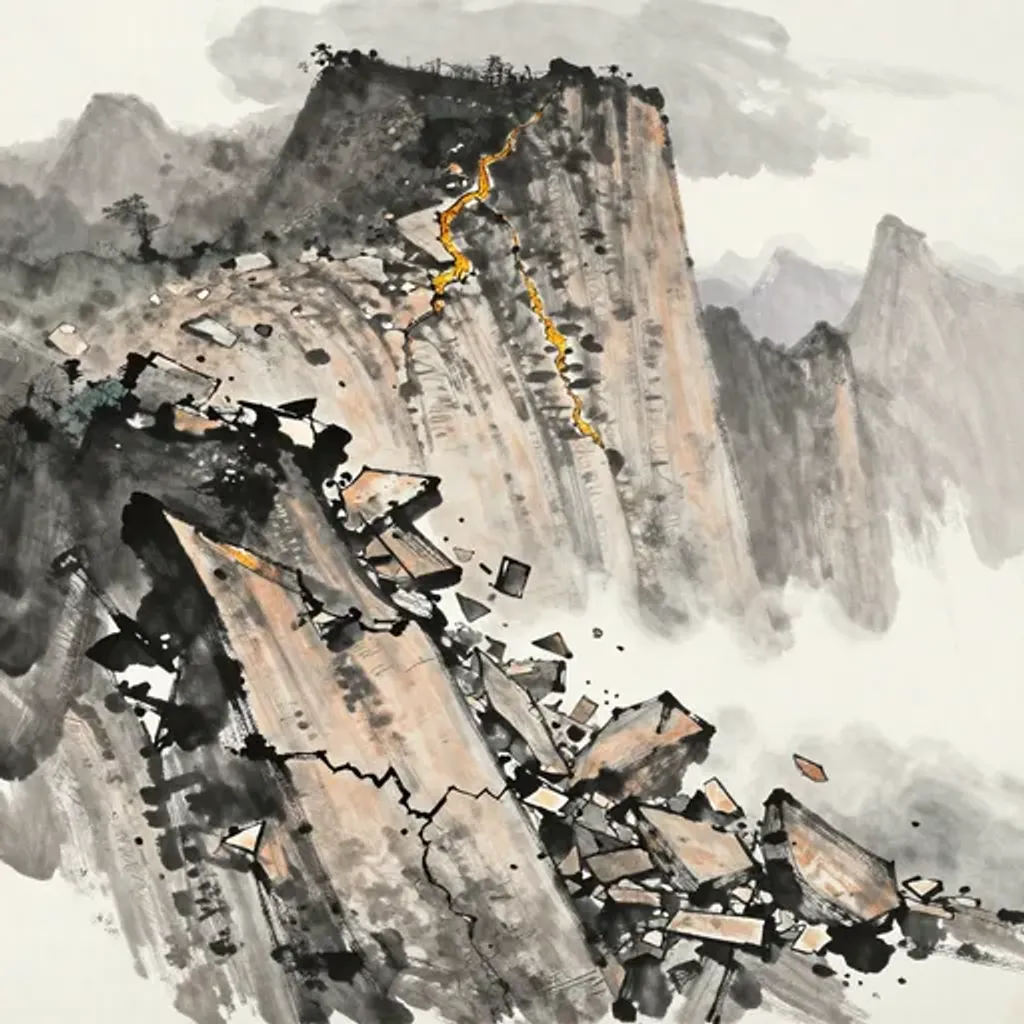
山石朽弊,稍崩墜落;上下離心,君受其祟。
Mountain stones crumble and decay; gradually they collapse and fall. Above and below lose trust in each other; the lord suffers their curse.
— Jiao Yanshou, Yilin (Forest of Changes), 1st century BC
Commentary
Earth holds the mountain, but the mountain's stone has rotted and crumbled, gradually collapsing and falling away. Above and below lose their shared purpose, and the ruler suffers the curse. The imagery of decaying rock captures institutional erosion: the mountain that should anchor stability is disintegrating from within, and the fracture between ruler and ruled completes the collapse. From Modesty to Coming to Meet, heaven stands above wind — the ruler's command spreading across the four directions. Yet the verse reveals what happens when that command meets a fractured foundation: orders issued from above encounter no solid ground below. Coming to Meet warns against the yin force's unexpected intrusion; here, the rot was always present, merely hidden by the mountain's surface.
謙 → 萃
Hexagram 15 → Hexagram 45: Gathering Together
Changing lines: 3, 4, 5
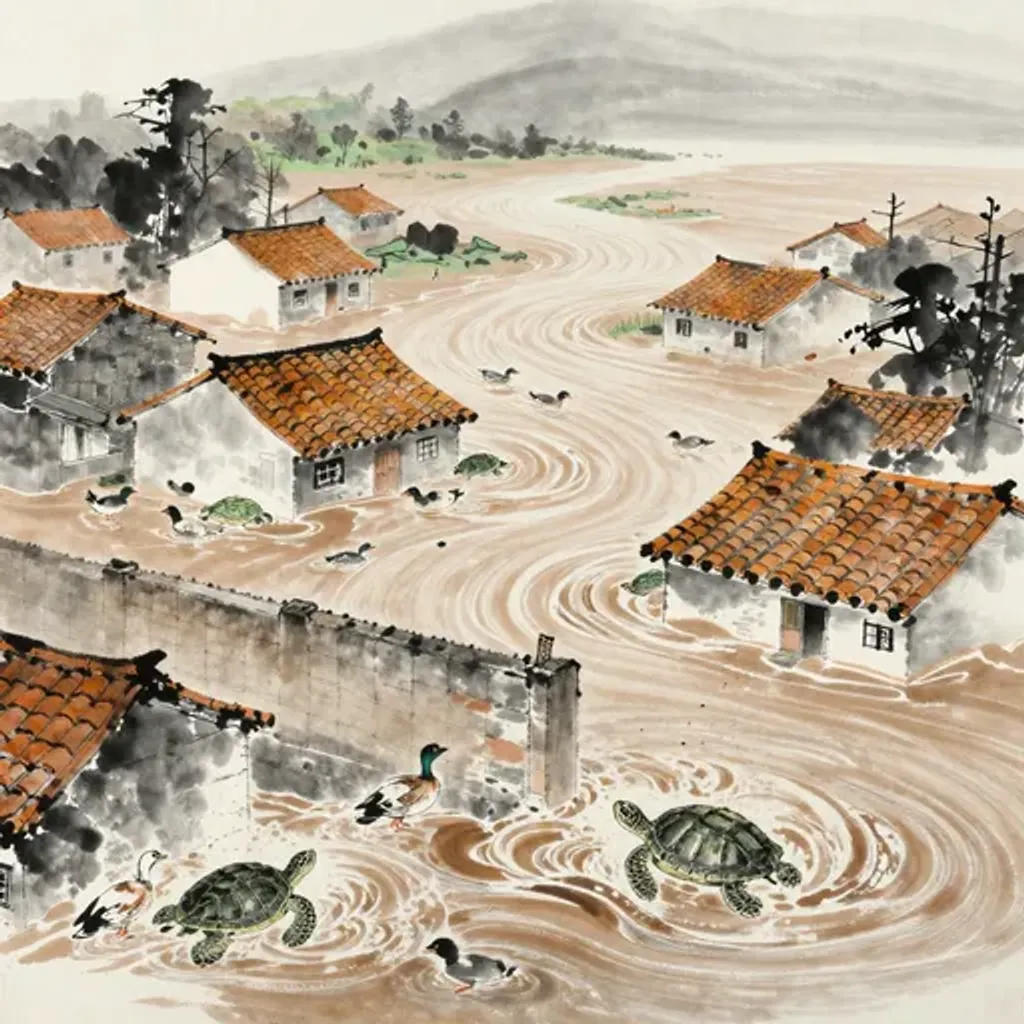
水壞我里,東流為海;龜鳧讙囂,不睹我家。
Water breaches our village, flowing east to the sea. Turtles and ducks cry in clamor; they cannot see our home.
— Jiao Yanshou, Yilin (Forest of Changes), 1st century BC
Commentary
Earth holds the mountain, but floodwater has destroyed the village, streaming eastward into the sea. Turtles and wild ducks clamor noisily where homes once stood — 'I cannot see my house.' The verse presents total displacement: the home is literally underwater, replaced by aquatic wildlife. From Modesty to Gathering, the lake rises upon the earth, and the noble one prepares weapons against the unexpected. The verse shows why such preparation is essential: when the gathering waters overwhelm rather than nourish, they sweep away everything familiar. Modesty's earth, which should have held the mountain steady, here lies submerged. Gathering's warning — 'guard against the unforeseen' — echoes through the ruins of the flooded village.
謙 → 升
Hexagram 15 → Hexagram 46: Pushing Upward
Changing lines: 2
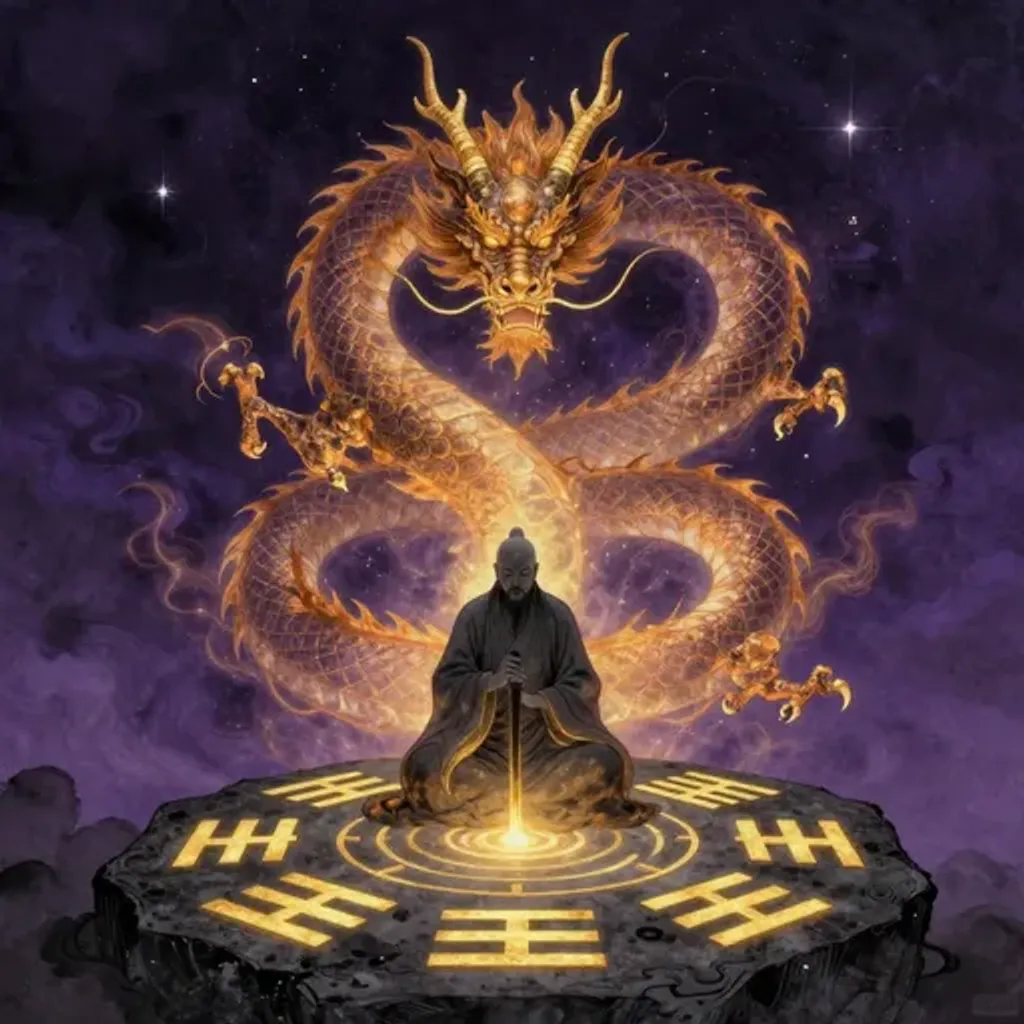
七竅龍身,造易八元;法天則地,順時施恩。富貴長存。
Seven-horned dragon body; he creates the Changes and the eight primal forces. Modeling heaven and measuring earth; bestowing grace in season. Wealth and honor endure forever.
— Jiao Yanshou, Yilin (Forest of Changes), 1st century BC
Commentary
Earth holds the mountain, and a seven-orificed dragon body creates the Yi with its eight primal elements — the language of cosmic origination, evoking Fu Xi's primordial patterning. Modeling heaven, following earth, governing by the seasons, bestowing grace: wealth and honor endure forever. From Modesty to Pushing Upward, earth covers wood, and trees grow slowly within the soil — the noble one 'accumulates small things to reach the great.' The dragon who patterns the cosmos through the eight trigrams embodies this patient upward growth. Modesty's hidden mountain provides the substrate from which the tree rises imperceptibly. The verse affirms that lasting prosperity comes not from sudden seizure but from aligning with cosmic pattern — the slow, rooted push that transforms buried potential into enduring greatness.
謙 → 困
Hexagram 15 → Hexagram 47: Oppression
Changing lines: 2, 3, 4, 5
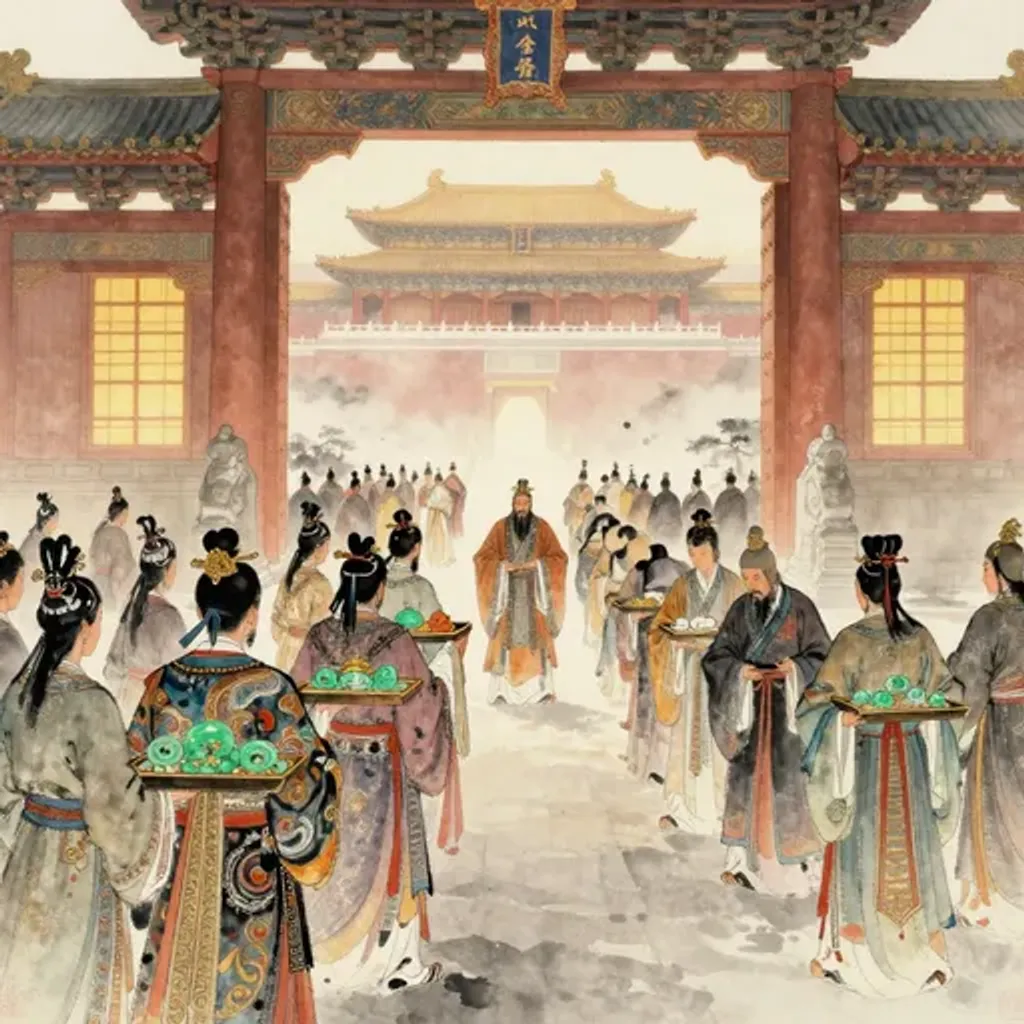
四夷慕德,來興我國;文君陟降,同受福德。
The four barbarian peoples admire our virtue; they come to prosper our state. The cultured lord ascends and descends; all share in blessing and virtue.
— Jiao Yanshou, Yilin (Forest of Changes), 1st century BC
Commentary
Earth holds the mountain in modesty, and the four barbarian peoples come admiring its virtue, arriving to invigorate the state. The cultured lord ascends and descends — a phrase evoking King Wen's ongoing spiritual presence — and all share in blessings. The verse describes the magnetic power of virtue: even distant peoples are drawn to a state governed by moral example. From Modesty to Oppression, the lake sits above water, drained and empty — yet the noble one 'stakes his life to pursue his purpose.' The paradox deepens: a verse of attraction and blessing leads to a hexagram of exhaustion. Perhaps the message is that the virtuous state endures even Oppression because its moral capital draws allies from afar. The mountain concealed within earth persists even when the surface waters drain away.
謙 → 井
Hexagram 15 → Hexagram 48: The Well
Changing lines: 2, 5
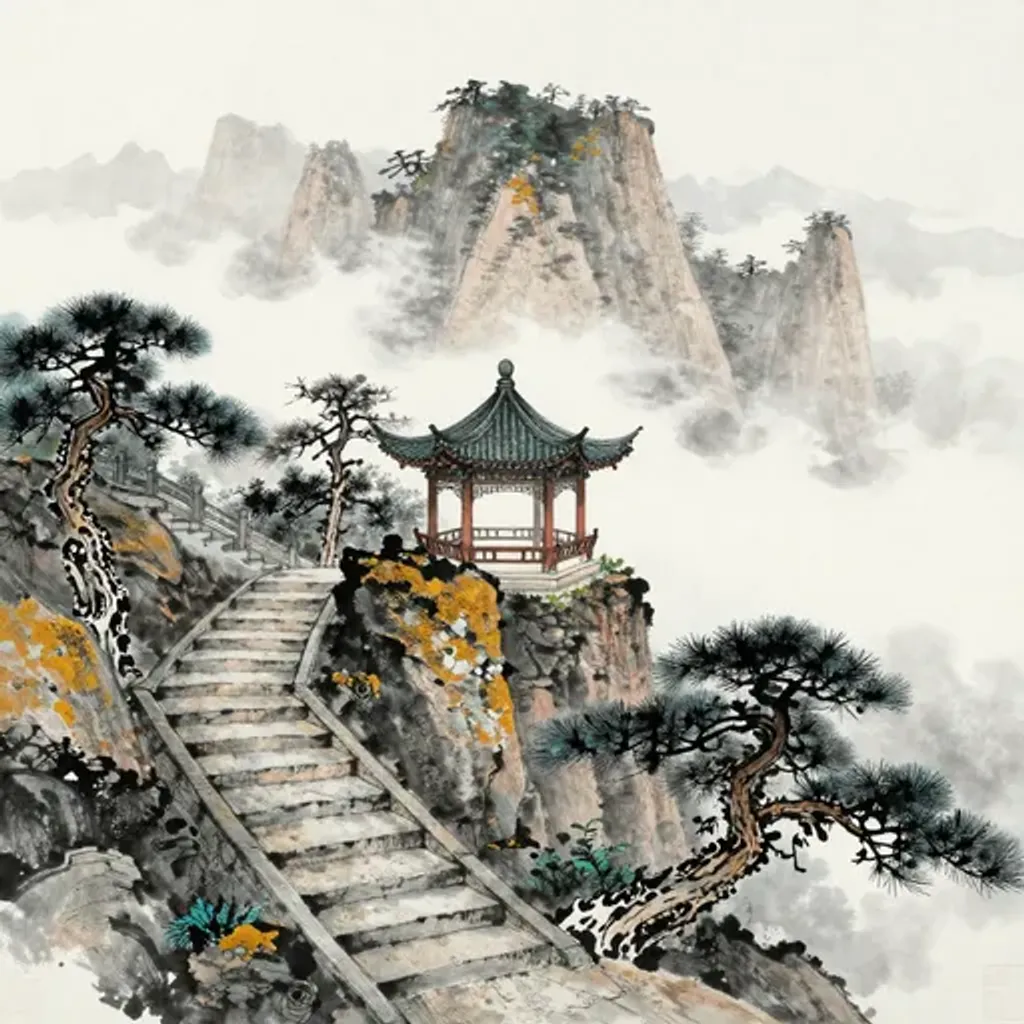
華首山頭,仙道所遊;利以居止,長無咎憂。
Atop Huashou Mountain; where the immortal way wanders. Favorable for settling and staying; forever without blame or worry.
— Jiao Yanshou, Yilin (Forest of Changes), 1st century BC
Commentary
Earth holds the mountain in quiet stillness. Huashou Mountain, a sacred peak where the immortal way is practiced — the verse evokes a Daoist refuge, a mountain summit where adepts wander in spiritual cultivation. To dwell there is beneficial; one remains forever without blame or worry. The imagery is pastoral and transcendent: the mountaintop as a place beyond human trouble. From Modesty to The Well, water rises above wood — the inexhaustible source that nourishes the community without being depleted. The verse connects Modesty's hidden mountain to The Well's unfailing spring: both offer sustenance from below the surface. The immortal's dwelling on the peak mirrors the well's quiet service — both are stable, enduring sources of nourishment that ask nothing in return.
謙 → 革
Hexagram 15 → Hexagram 49: Revolution
Changing lines: 1, 4, 5
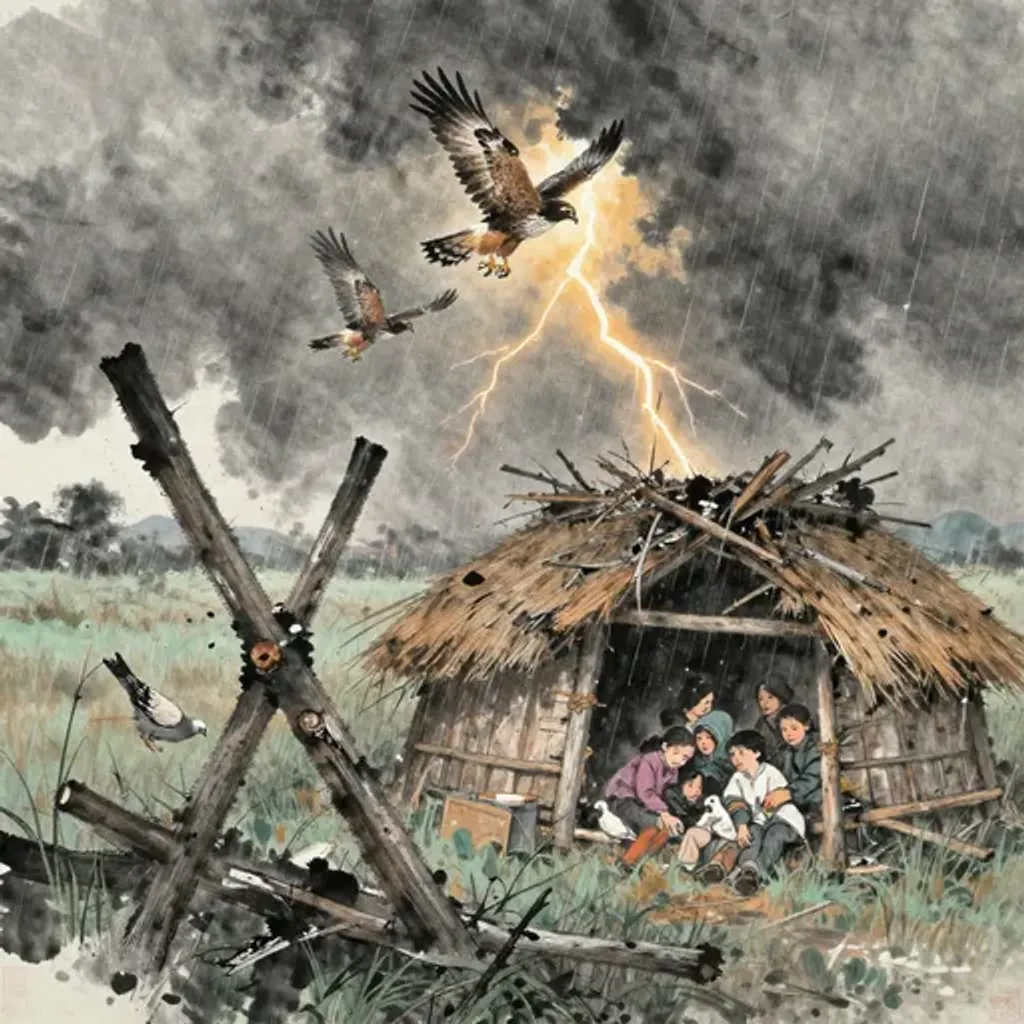
鸇鳩徒巢,西至平州;遭逢雷雹,闢我葦蘆。室家飢寒,思吾故初。
The hawk and dove abandon their nest; westward they reach Pingzhou. Meeting with thunder and hail; they tear away our reed hut. The household shivers in cold and hunger; longing for our former state.
— Jiao Yanshou, Yilin (Forest of Changes), 1st century BC
Commentary
Earth holds the mountain, but the sparrowhawk-turned-dove steals a nest rather than building one — an allusion to the Shijing ode 'Que Chao' about the cuckoo occupying another bird's nest, a metaphor for displacement. Traveling west to Pingzhou, the bird encounters hail and thunderstorms that destroy its reed shelter. The household shivers in hunger, longing for the old days. From Modesty to Revolution, fire burns within the lake — opposing forces demanding transformation. The verse shows Revolution's cost: the displaced creature, already occupying a borrowed home, loses even that to heaven's fury. Revolution strips away all pretense, exposing the fundamental instability of borrowed arrangements. Modesty's earth cannot shelter what was never truly rooted.
謙 → 鼎
Hexagram 15 → Hexagram 50: The Cauldron
Changing lines: 2, 4, 6
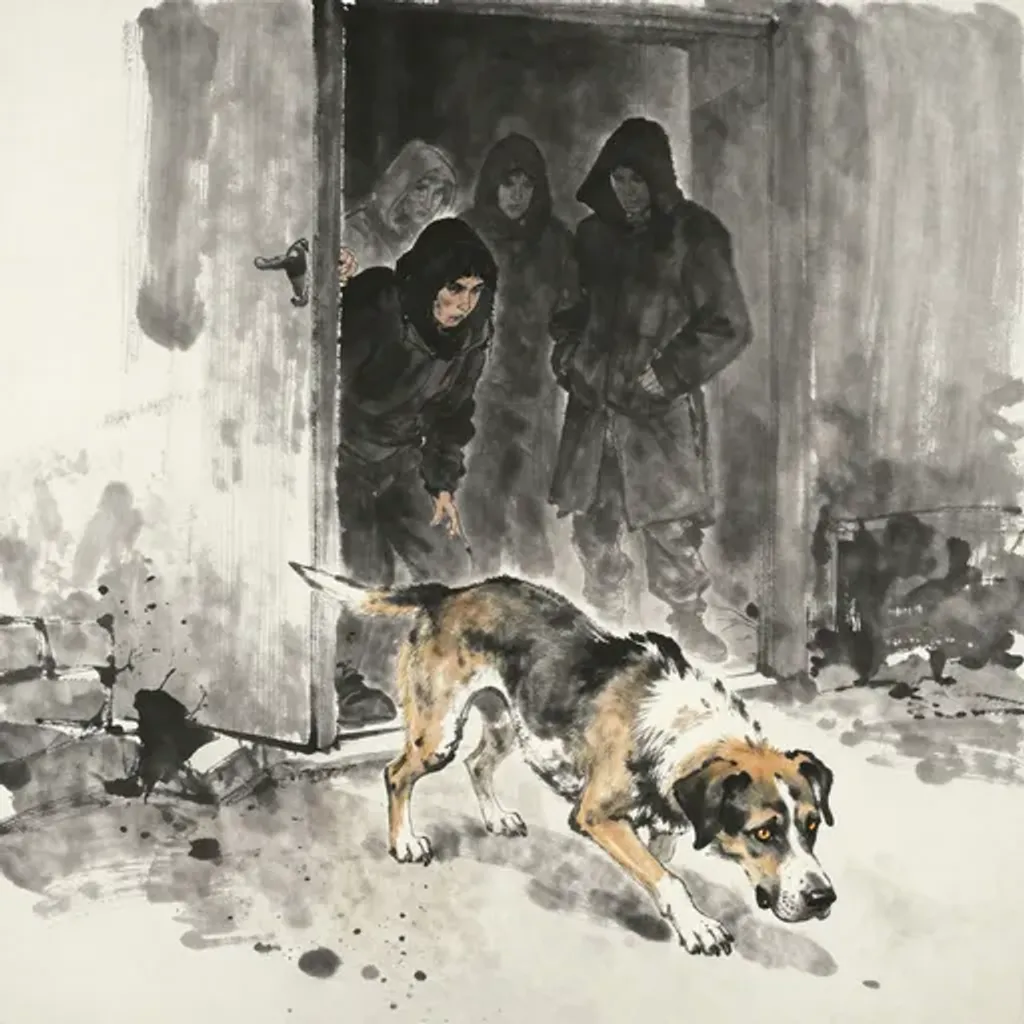
狗無前足,陰謀叛背;為身害賊。
A dog without forelegs; secret plots and treacherous betrayal. It becomes the body's own enemy and harm.
— Jiao Yanshou, Yilin (Forest of Changes), 1st century BC
Commentary
Earth holds the mountain, but a dog without front legs — crippled and desperate — plots rebellion and betrayal, becoming a danger to itself. The image is visceral: a maimed creature turning vicious, its disability breeding treachery rather than resignation. From Modesty to The Cauldron, fire blazes above wind, the vessel of civilization that transforms raw ingredients into refined nourishment. Yet the verse shows the Cauldron's inversion: when the vessel is entrusted to one who is fundamentally incapable (the legless dog), what should cook and transform instead breeds conspiracy. The Cauldron demands the right person in the right position; a creature without legs cannot carry it, and its frustration curdles into sabotage. Modesty without capacity produces not humility but resentment.
謙 → 震
Hexagram 15 → Hexagram 51: The Arousing Thunder
Changing lines: 1, 3, 4
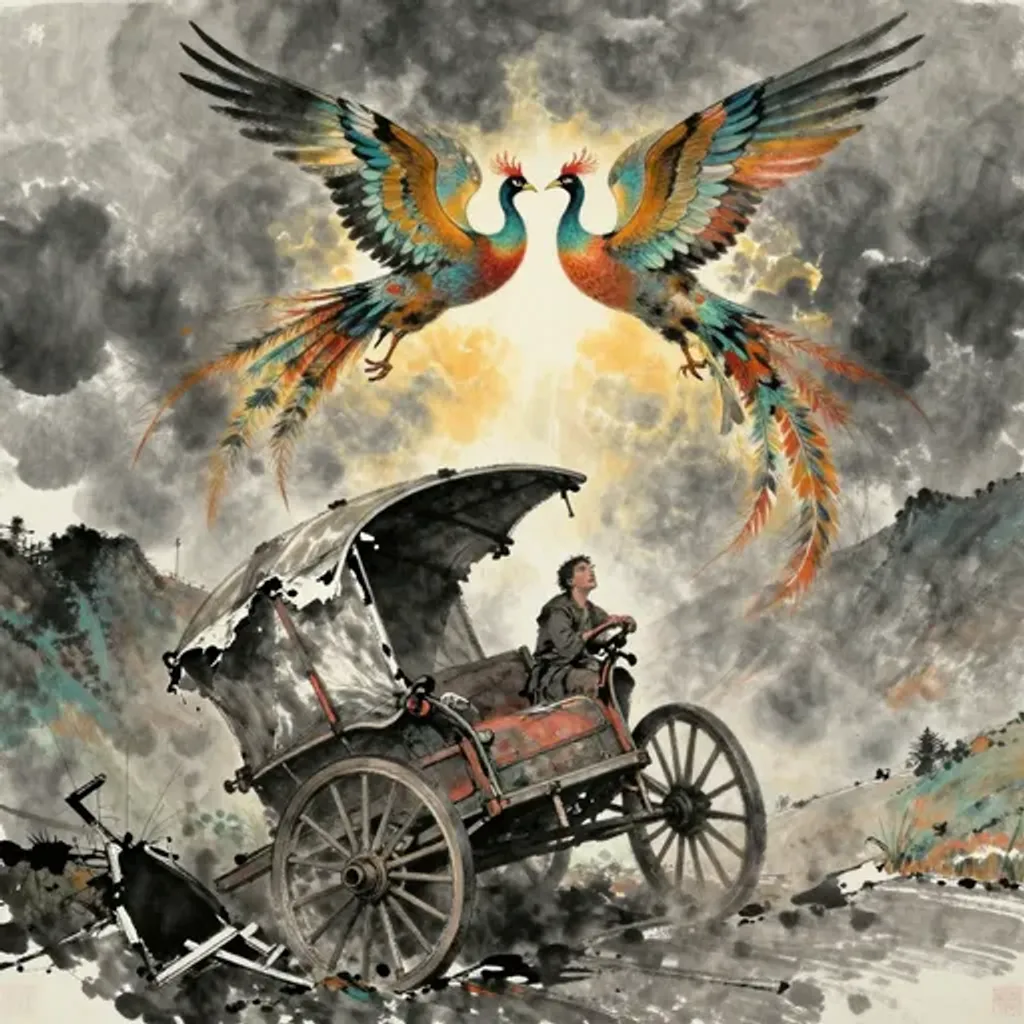
陽孤亢極,多所恨惑;車傾蓋亡,身常驚惶。乃得其願,雌雄相從。
Yang, solitary and at its extreme; much cause for resentment and bewilderment. The cart overturns, the canopy lost; the body is ever anxious and alarmed. Yet at last the wish is gained; female and male follow together.
— Jiao Yanshou, Yilin (Forest of Changes), 1st century BC
Commentary
Earth holds the mountain, and the solitary yang reaches its extreme — 陽孤亢極 — breeding regret and confusion. The chariot overturns, its canopy lost, and one lives in constant alarm. Yet suddenly the wish is granted: male and female come together at last. The arc moves from isolation and crisis to unexpected union. From Modesty to The Arousing, doubled thunder shakes the ground — the first son of heaven and earth bursting forth. The Arousing's shock breaks through the paralysis of lonely extremity. The overturned chariot and lost canopy represent the ego's collapse, and from that wreckage comes genuine pairing. Modesty's restraint, when pushed to its limit of solitary endurance, explodes into the thunderous renewal of finding one's counterpart.
謙 → 艮
Hexagram 15 → Hexagram 52: Keeping Still Mountain
Changing lines: 6
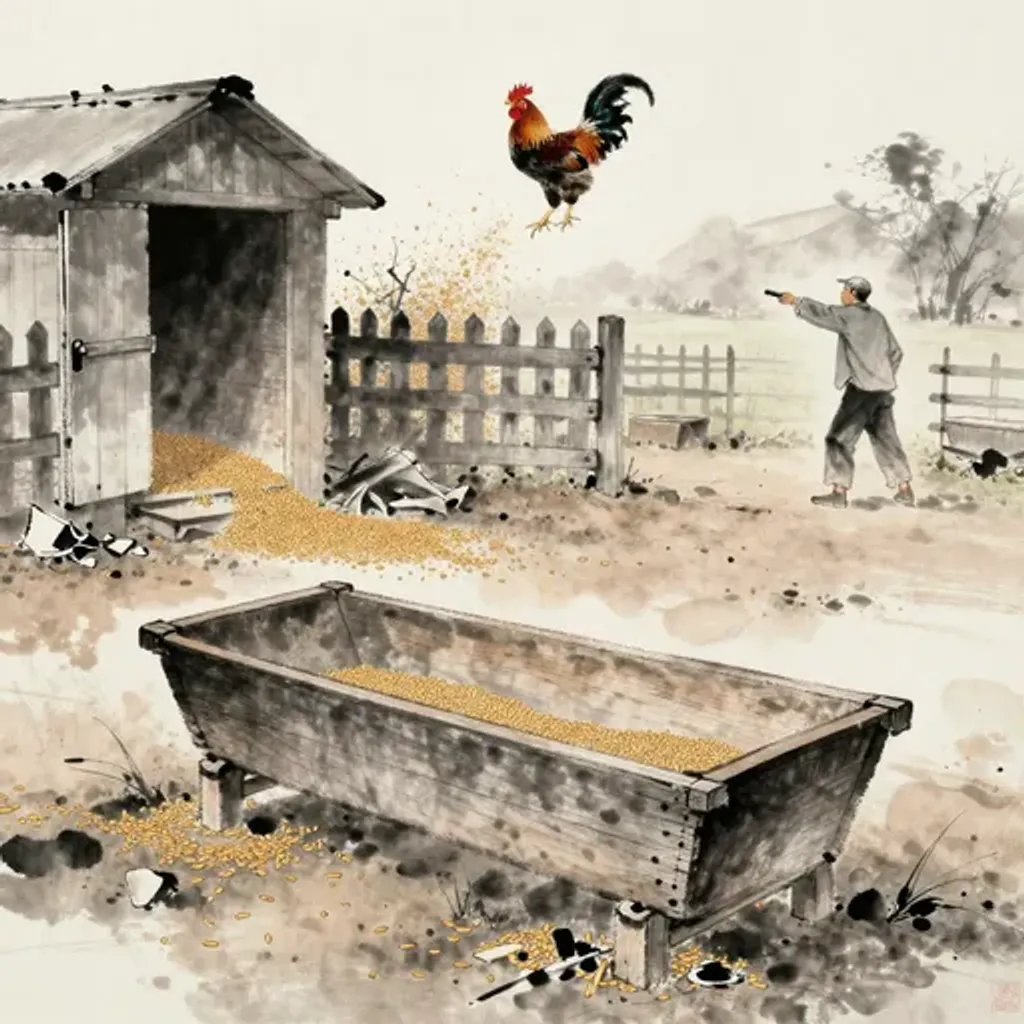
空槽注豬,豚彘不到;張弓祝雞,雄父飛去。
An empty trough set out for pigs; the swine never arrive. Drawing the bow to curse the rooster; the cock flies away.
— Jiao Yanshou, Yilin (Forest of Changes), 1st century BC
Commentary
Earth holds the mountain, but the trough is empty and the pigs do not come; the bow is drawn to bless the rooster, and the cock flies away. Every preparation meets its opposite: the feeding trough attracts nothing, the ritual meant to sanctify drives its subject off. From Modesty to Keeping Still, twin mountains stand face to face — 'thinking does not go beyond one's position.' The verse captures Keeping Still's counsel in negative form: attempts to attract or retain through outward gesture fail when the fundamental alignment is wrong. The empty trough and the fleeing rooster both suggest that forced hospitality repels rather than gathers. Modesty's earth offers nothing to those who will not come of their own accord; stillness means accepting what cannot be compelled.
謙 → 漸
Hexagram 15 → Hexagram 53: Development
Changing lines: 5, 6
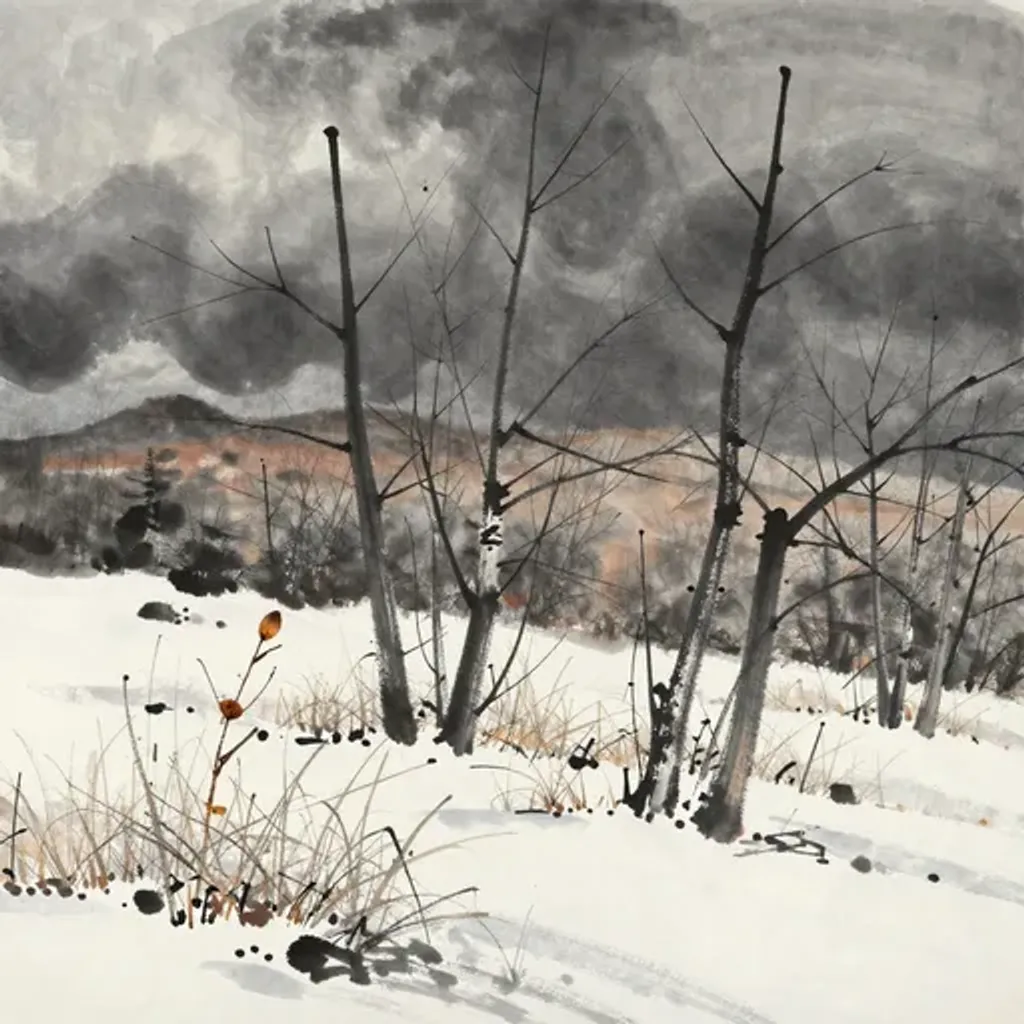
長夜短日,陰為陽賊;萬物空枯,藏於北陸。
Long nights, short days; yin preys upon yang. All things wither and empty; they are hidden in the northern land.
— Jiao Yanshou, Yilin (Forest of Changes), 1st century BC
Commentary
Earth holds the mountain, and the long night swallows the short day — yin thieves from yang, stripping its light. All things wither and empty out, retreating to their northern hiding places for winter's storage. The imagery is the winter solstice: darkness at its maximum, life withdrawn underground. From Modesty to Development, wind grows atop the mountain like trees slowly ascending the slope. The paradox is sharp: the verse describes winter's nadir while the target hexagram speaks of gradual growth. Yet Development begins precisely from this buried state — the tree's roots grow in winter darkness before the trunk pushes upward in spring. Modesty's earth holds the dormant mountain, and Development's slow unfolding starts from this very stillness, this very cold.
謙 → 歸妹
Hexagram 15 → Hexagram 54: The Marrying Maiden
Changing lines: 1, 2, 3, 4
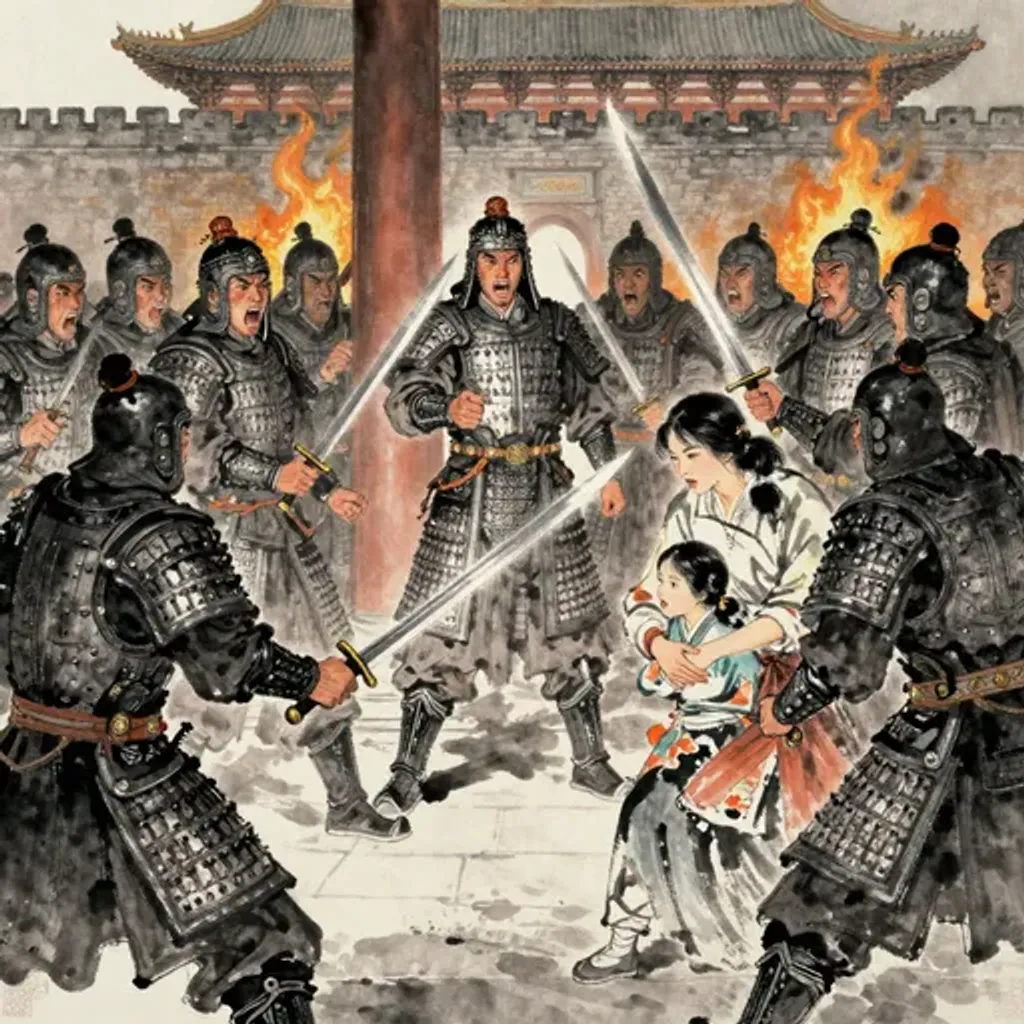
爪牙之士,怨毒祈父。轉憂與己,傷不及母。
Warriors with fangs and claws; they resent and curse their commander. Turning the trouble upon themselves; the injury does not reach the mother.
— Jiao Yanshou, Yilin (Forest of Changes), 1st century BC
Commentary
Earth holds the mountain, and the warriors — 'claws and teeth' of the king — voice their bitter grievance against the Qi Fu, the military commander. This directly echoes the Shijing ode 'Qi Fu' from the Xiao Ya: 'Qi Fu! I am the king's claws and teeth. Why do you deploy me endlessly, with no place to rest?' The soldiers redirect their resentment from the ruler to the officer, shielding the sovereign by absorbing the wound themselves: 'turning worry upon oneself, so harm does not reach the mother.' From Modesty to the Marrying Maiden, thunder moves above the lake, a union marred by subordination. The soldiers' complaint embodies this: bound in service they did not choose, swallowing bitterness to preserve the hierarchy.
謙 → 豐
Hexagram 15 → Hexagram 55: Abundance
Changing lines: 1, 4
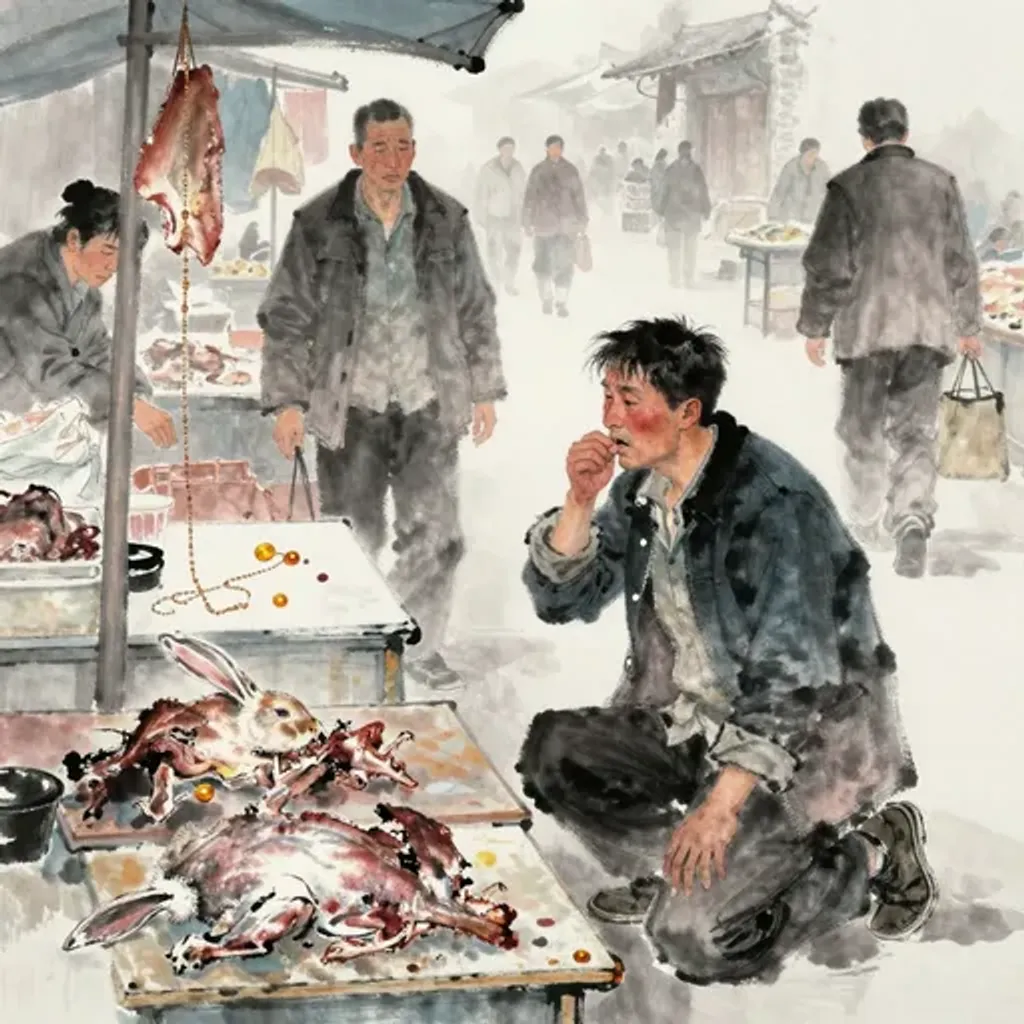
拜跪請兔,不德臭腐;挽眉衘指,低頭北去。
Bowing and kneeling to beg for a hare; one gets only rotting, stinking refuse. Knitting brows, biting fingers; one hangs one's head and goes north.
— Jiao Yanshou, Yilin (Forest of Changes), 1st century BC
Commentary
Earth holds the mountain in modesty, but someone kneels and begs for a rabbit, only to receive something rotten and foul-smelling. Frowning and biting fingers in frustration, one bows one's head and departs northward. The scene is one of humiliating petition met with contemptuous refusal — the supplicant debased, the gift worthless. From Modesty to Abundance, thunder and lightning arrive together in overwhelming display. Abundance's image is the judge wielding thunder and fire to render verdicts. The verse reveals the gap between supplication and justice: one who grovels receives filth, while Abundance demands the sovereign clarity to distinguish true claims from false. Modesty's deference, when it encounters corruption rather than reciprocity, produces only degradation.
謙 → 旅
Hexagram 15 → Hexagram 56: The Wanderer
Changing lines: 4, 6
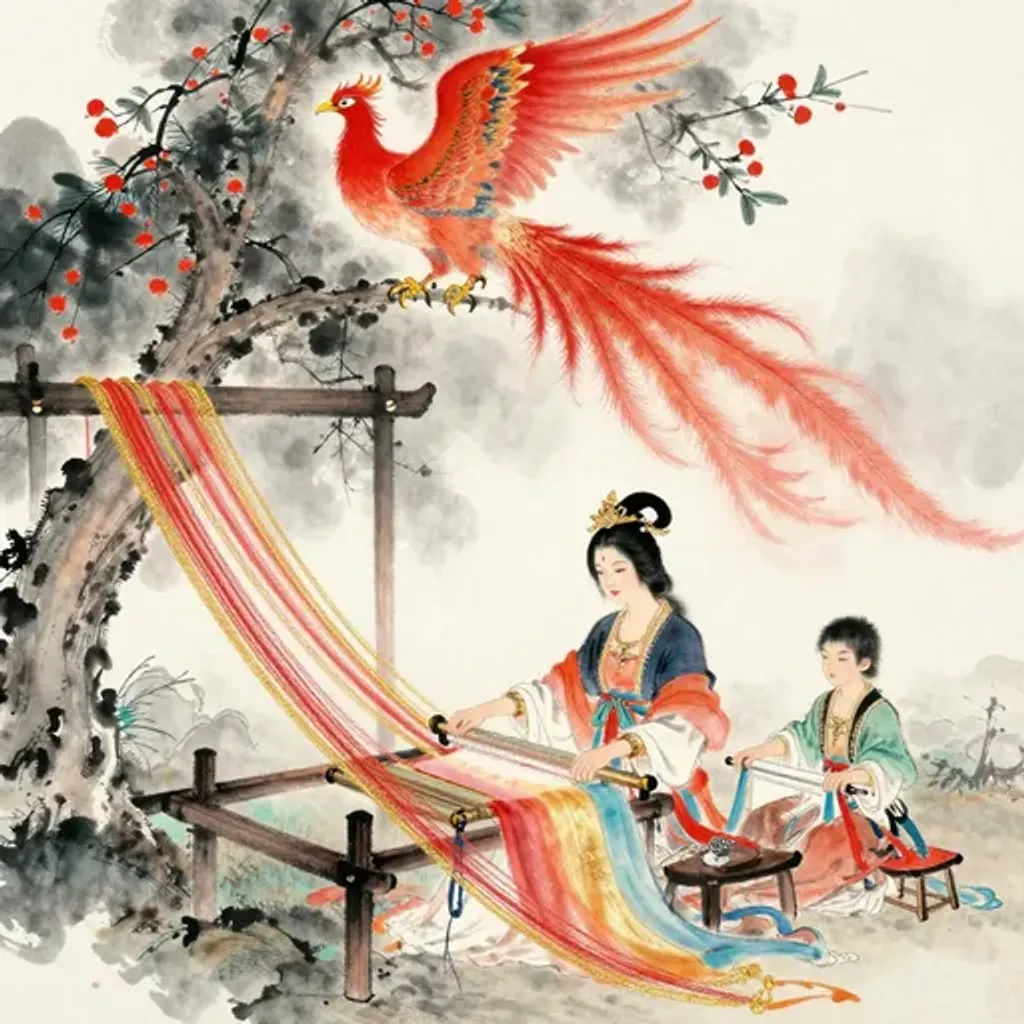
有莘季女,為夏妃后;貴夫壽子,母字四海。
A phoenix nests in the paulownia as sweet dew falls; the silkworm chamber produces five-colored thread. Her sons are like dragons standing at court — she is the model of motherhood, crowned among all women.
— Jiao Yanshou, Yilin (Forest of Changes), 1st century BC
Commentary
Earth holds the mountain, and the original verse identifies the youngest daughter of the Youshen clan who became consort to the Xia king. Her husband noble, her son long-lived, she is 'mother to the four seas' — the queen whose virtue encompasses the realm. The Youshen clan is the same lineage from which Yi Yin emerged as a kitchen servant before becoming Shang's greatest minister. From Modesty to The Wanderer, fire burns upon the mountain — the traveler's campfire, cautious and visible from afar. The verse connects a woman's journey from the Youshen household to the royal court with the Wanderer's theme of finding one's place far from home. Her modesty and virtue transform exile into enthronement, the stranger into the mother of a nation.
謙 → 巽
Hexagram 15 → Hexagram 57: The Gentle Wind
Changing lines: 2, 5, 6

季姜踟躕,待孟城隅;終日至暮,不見齊侯。
Lady Ji Jiang paces to and fro, waiting for the lord at the city wall. From dawn until dusk; she does not see the Lord of Qi.
— Jiao Yanshou, Yilin (Forest of Changes), 1st century BC
Commentary
Earth holds the mountain in stillness, and Ji Jiang — 'youngest Jiang,' a woman of the Jiang clan — paces hesitantly at the city wall, waiting for Meng at the corner. From morning until dusk she waits, but the lord of Qi never appears. The verse echoes the Shijing ode 'Jing Nu' (The Quiet Maiden): 'She waits for me at the city corner.' Yet here the meeting never occurs — the waiting is in vain. From Modesty to The Gentle, doubled wind penetrates softly but persistently. The verse inverts Xun's penetrating influence: instead of wind reaching everywhere, the woman's longing reaches nowhere. The lord does not come. Modesty's patience, when it meets permanent absence, becomes not virtue but melancholy endurance without resolution.
謙 → 兌
Hexagram 15 → Hexagram 58: The Joyous Lake
Changing lines: 1, 2, 3, 4, 5
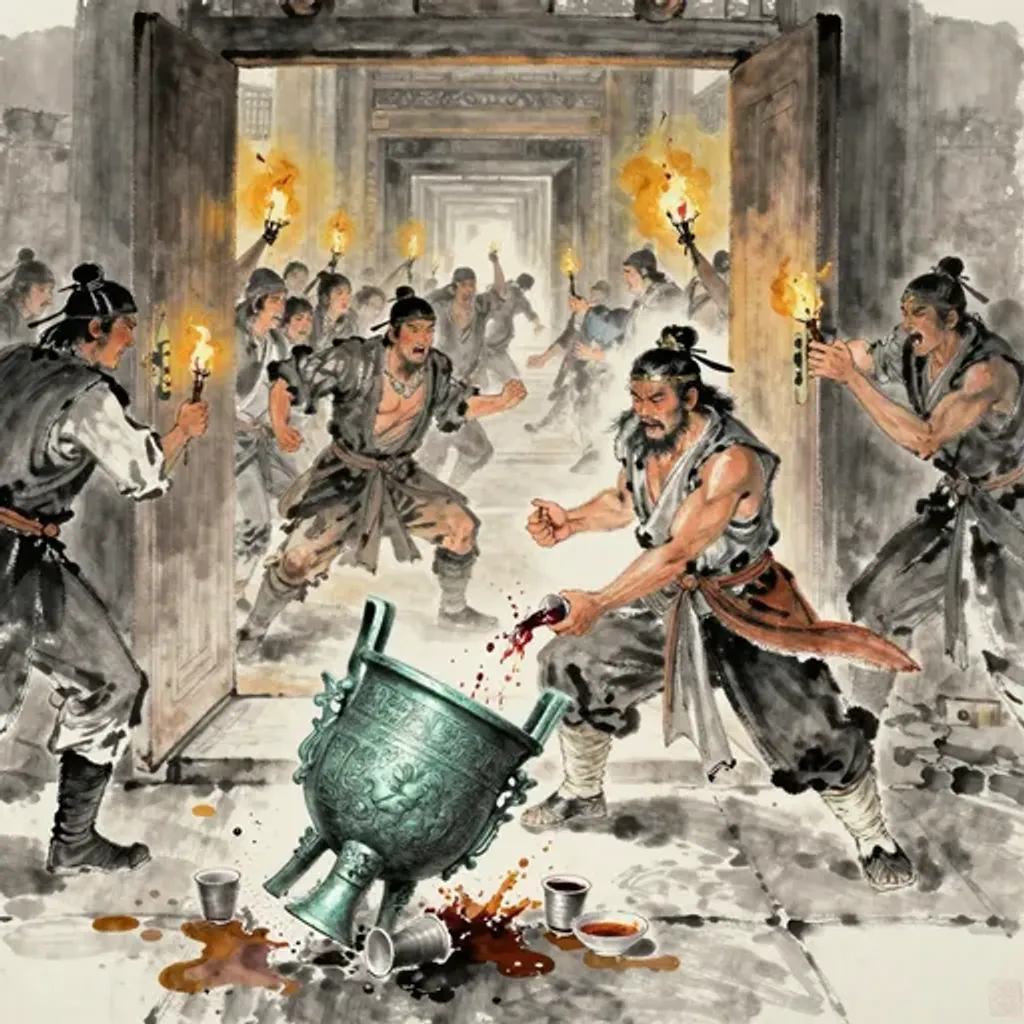
邯鄲反言,父兄生患;涉叔援俎,一死不還。
Handan's words are twisted; fathers and brothers fall into peril. Shashu seizes the ritual vessel; in one death, none returns.
— Jiao Yanshou, Yilin (Forest of Changes), 1st century BC
Commentary
Earth holds the mountain in modesty, but Handan breaks its word — 反言, reneging on a promise — and fathers and brothers are plunged into calamity. This alludes to the Handan Wu incident recorded in the Zuo Zhuan: Zhao Yang demanded the transfer of households, Handan Wu agreed but his father and brothers countermanded the promise, leading to Wu's imprisonment and execution, and the Zhao clan's devastating civil war. She Shu seizes the sacrificial stand (俎) — a desperate act of armed resistance at a ritual feast — and dies without return. From Modesty to The Joyous, paired lakes suggest open exchange and mutual delight. Yet the verse shows joy's dark inversion: broken promises at the feast table, the sacrificial vessel weaponized, bonds of trust shattered beyond repair.
謙 → 渙
Hexagram 15 → Hexagram 59: Dispersion
Changing lines: 2, 3, 5, 6
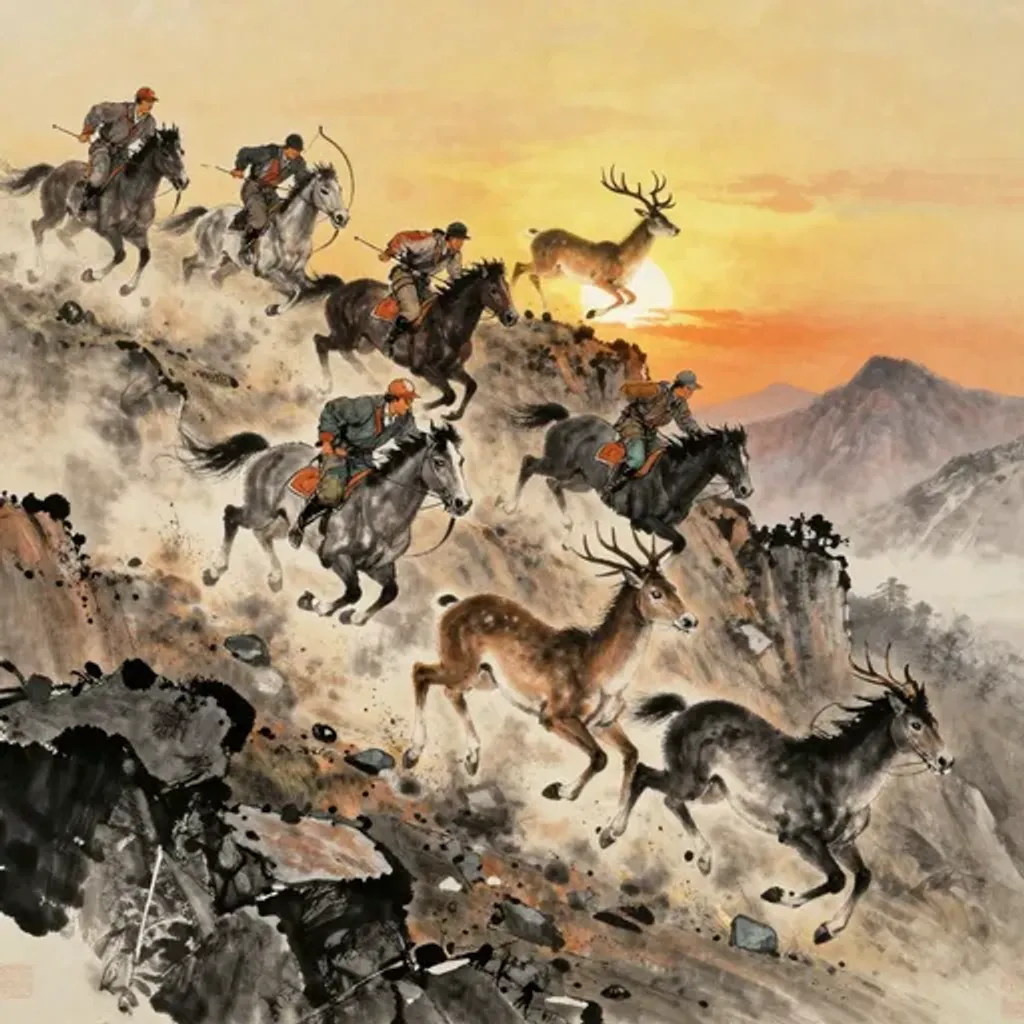
逐鹿山巔,利去我西;維邪南北,利無不得。
Chasing the deer up the mountain ridge; profit departs to our west. Branching out to south and north; there is no profit not gained.
— Jiao Yanshou, Yilin (Forest of Changes), 1st century BC
Commentary
Earth holds the mountain, and one chases a deer across the mountain ridge. Profit lies to the west; diverging south and north in every direction, there is nothing that does not yield gain. The hunt across high ground becomes a metaphor for opportunity radiating from a central pursuit — the deer leads westward, but all peripheral directions also prove profitable. From Modesty to Dispersion, wind moves across water, scattering what was gathered. The verse recasts Dispersion's scattering as beneficial dispersal: the hunter's path diverges in multiple directions, and each branching yields returns. Modesty's concentrated inner mountain gives way to the expansive distribution of Dispersion, where breaking apart from a single focus allows gains to flow from unexpected quarters.
謙 → 節
Hexagram 15 → Hexagram 60: Limitation
Changing lines: 1, 2, 3, 5
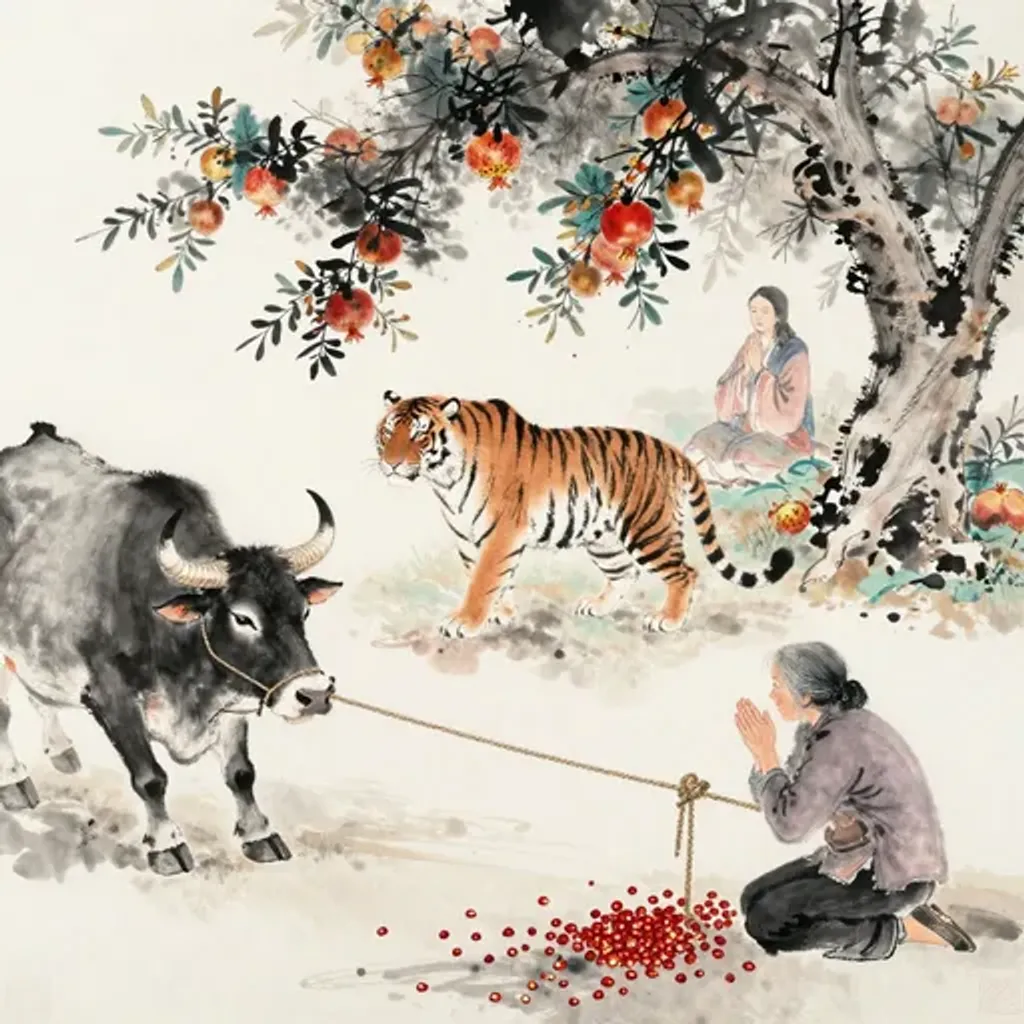
穿鼻繫株,為虎所拘;王母祝榴,禍不成災,突然自來。
A ring through the nose, tethered to a stake; held captive by the tiger. The Queen Mother blesses the pomegranate; disaster does not become calamity. It comes upon one suddenly.
— Jiao Yanshou, Yilin (Forest of Changes), 1st century BC
Commentary
Earth holds the mountain, and a beast is pierced through the nose and tethered to a post, held captive by the tiger. Then the Queen Mother of the West offers her blessing upon a pomegranate — a fruit symbolizing fertility and abundance — and disaster does not fully materialize, arriving suddenly but dissipating. The tethered beast and the tiger's grip evoke helpless constraint, yet the Queen Mother's intervention deflects the worst. From Modesty to Limitation, water rests upon the lake — the image of measured restraint, neither too much nor too little. The verse enacts Limitation's dual nature: the captive animal suffers excessive constraint, but the Queen Mother's blessing imposes a different kind of limit — capping the disaster before it overwhelms.
謙 → 中孚
Hexagram 15 → Hexagram 61: Inner Truth
Changing lines: 1, 2, 3, 5, 6
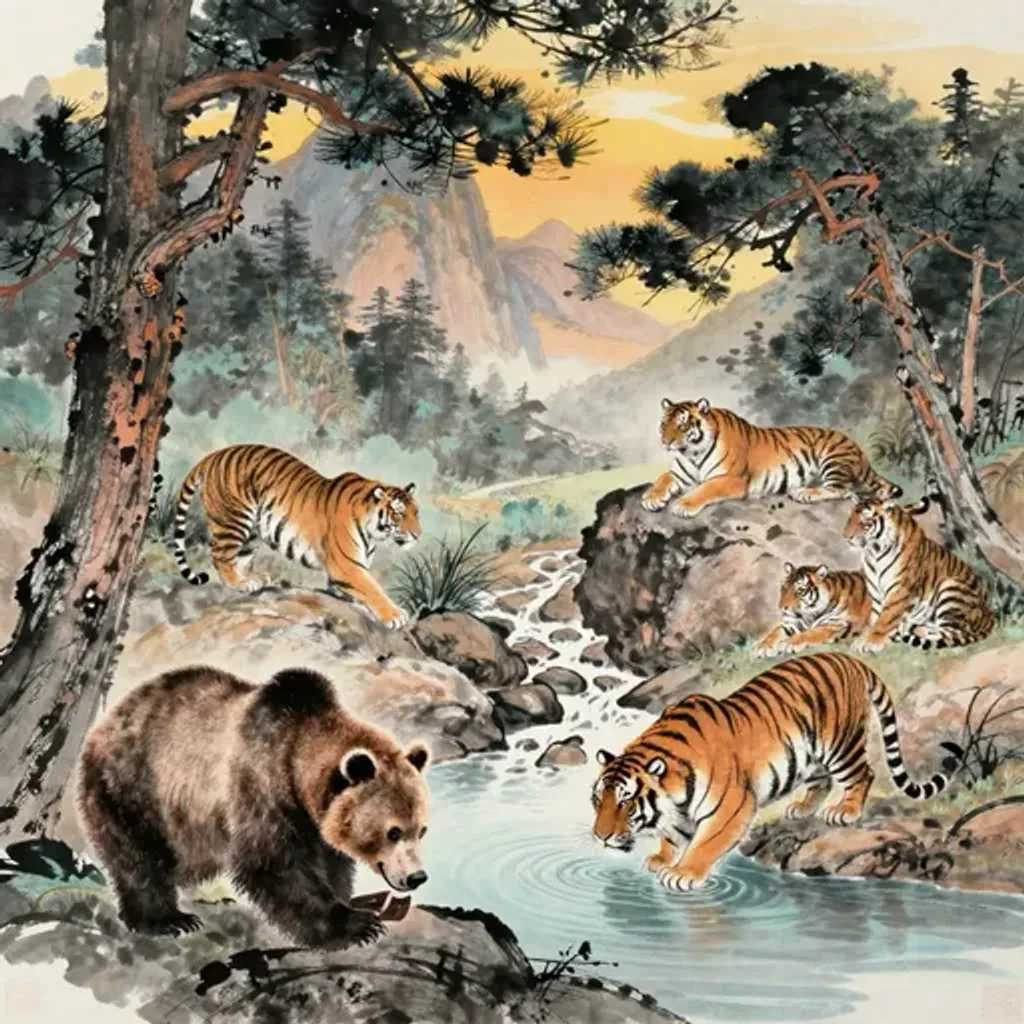
虎豹熊羆,遊戲山谷。君子仁賢,皆得所欲。
Tigers, leopards, bears, and grizzlies roam and play in the mountain valleys. The virtuous and benevolent noble man; all obtain what they desire.
— Jiao Yanshou, Yilin (Forest of Changes), 1st century BC
Commentary
Earth holds the mountain in peaceful containment. Tigers, leopards, bears, and grizzlies roam and play in the mountain valleys — fierce beasts at leisure, their power evident but unthreatened. The noble and benevolent man attains everything he desires. The verse presents a paradox of coexistence: the most dangerous creatures relaxed in their element, aggression suspended in a landscape of natural abundance. From Modesty to Inner Truth, wind blows over the lake, and the noble one deliberates on legal cases with clemency. Inner Truth's hollow center — two yin lines between solid yang — creates space for sincerity. The wild beasts at play embody this: when the environment provides genuine nourishment, even the fiercest creatures need not hunt. Trust in natural provision replaces the compulsion to seize.
謙 → 小過
Hexagram 15 → Hexagram 62: Small Exceeding
Changing lines: 4
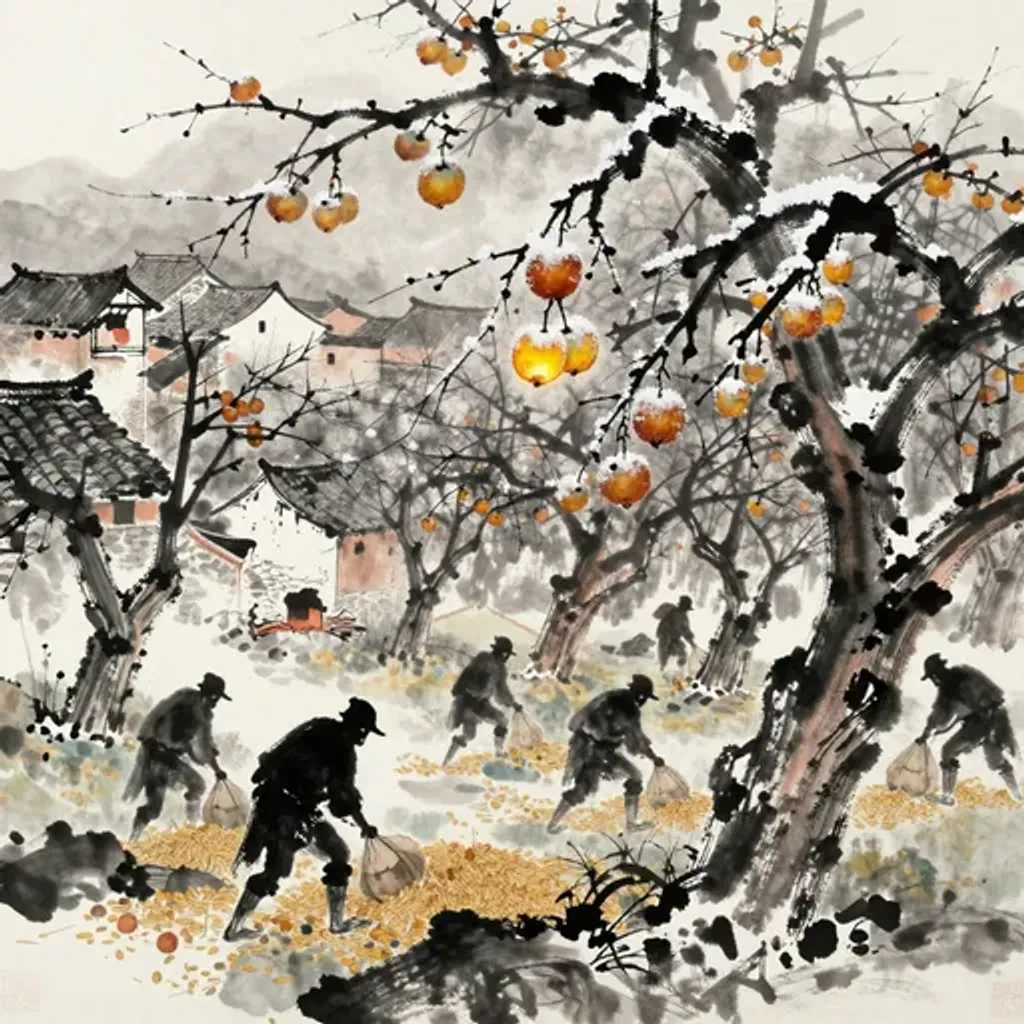
梅李冬實,國多賊盜;擾亂並作,王不能制。
Plum and apricot bear fruit in winter; the state swarms with thieves and bandits. Turmoil erupts on every side; the king cannot control it.
— Jiao Yanshou, Yilin (Forest of Changes), 1st century BC
Commentary
Earth holds the mountain, but plum and pear trees fruit in winter — a portentous inversion of natural order. The state is overrun with bandits; disorder erupts on all sides, and the king cannot control it. Trees bearing fruit out of season is a traditional omen of political chaos: nature's calendar disrupted mirrors governance gone awry. From Modesty to Small Exceeding, thunder rumbles atop the mountain, a small creature flying too high. Small Exceeding counsels humility in action — 'err on the side of deference, grief, and frugality.' Yet the verse shows a kingdom where even these modest correctives have failed: the king's authority is insufficient, and the bandits exceed all bounds. When seasonal order collapses, small excesses compound into uncontrollable disorder.
謙 → 既濟
Hexagram 15 → Hexagram 63: After Completion
Changing lines: 1, 5
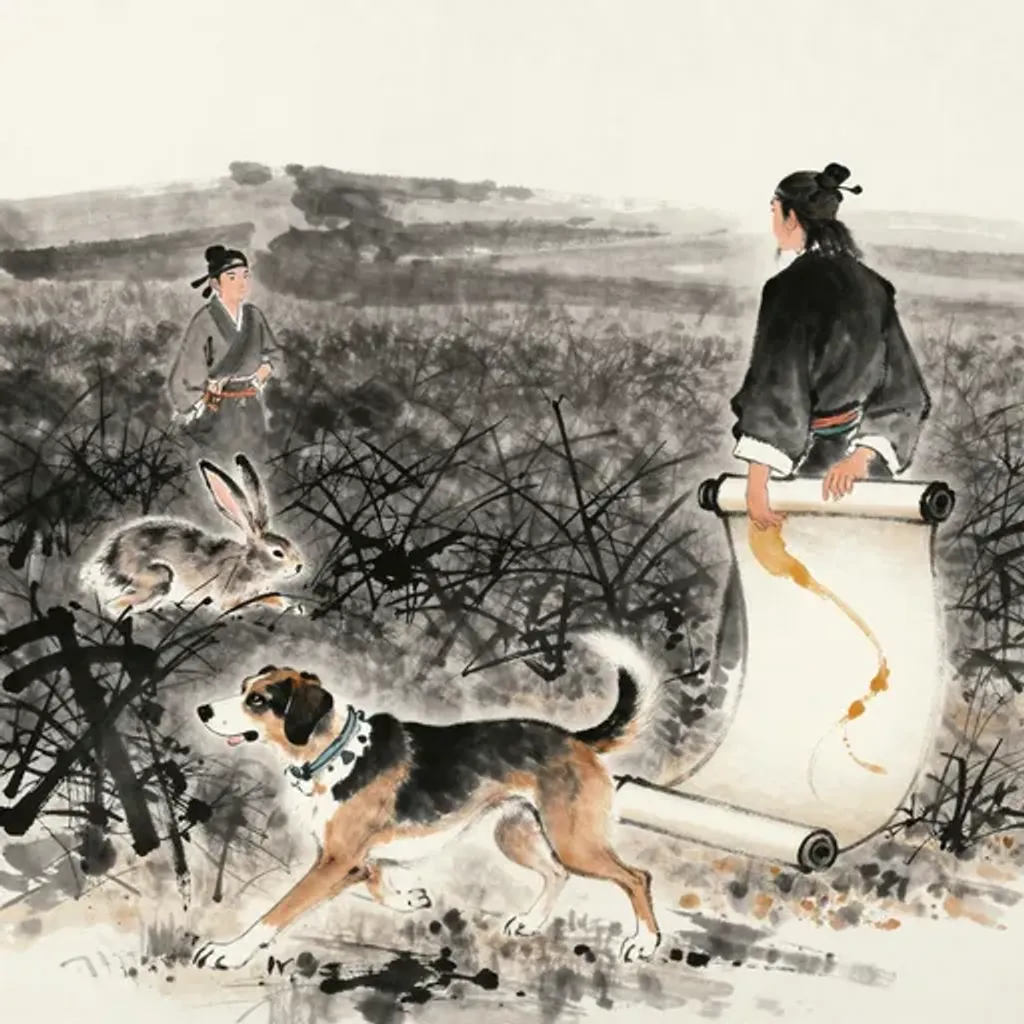
望幸不到,文章未就。王子逐兔,犬踦不得。
Hoping for favor, it does not arrive; the composition remains unfinished. The prince chases a hare; the lame hound cannot catch it.
— Jiao Yanshou, Yilin (Forest of Changes), 1st century BC
Commentary
Earth holds the mountain in patient expectation, but the hoped-for royal visit never arrives, and the literary work remains unfinished. A prince chases a rabbit, but the hound stumbles and cannot catch it. Every pursuit falls short: the audience with the king is denied, the composition breaks off, the quarry escapes. From Modesty to After Completion, water sits above fire in perfect but precarious balance — everything in place, yet the slightest shift means dissolution. The verse captures the frustration of near-completion: all elements are present but alignment eludes. After Completion warns against complacency precisely because its balance is so fragile. Here, modesty's patient waiting produces not fulfillment but the ache of perpetual almost — the rabbit always just beyond the hound's reach.
謙 → 未濟
Hexagram 15 → Hexagram 64: Before Completion
Changing lines: 2, 3, 4, 6
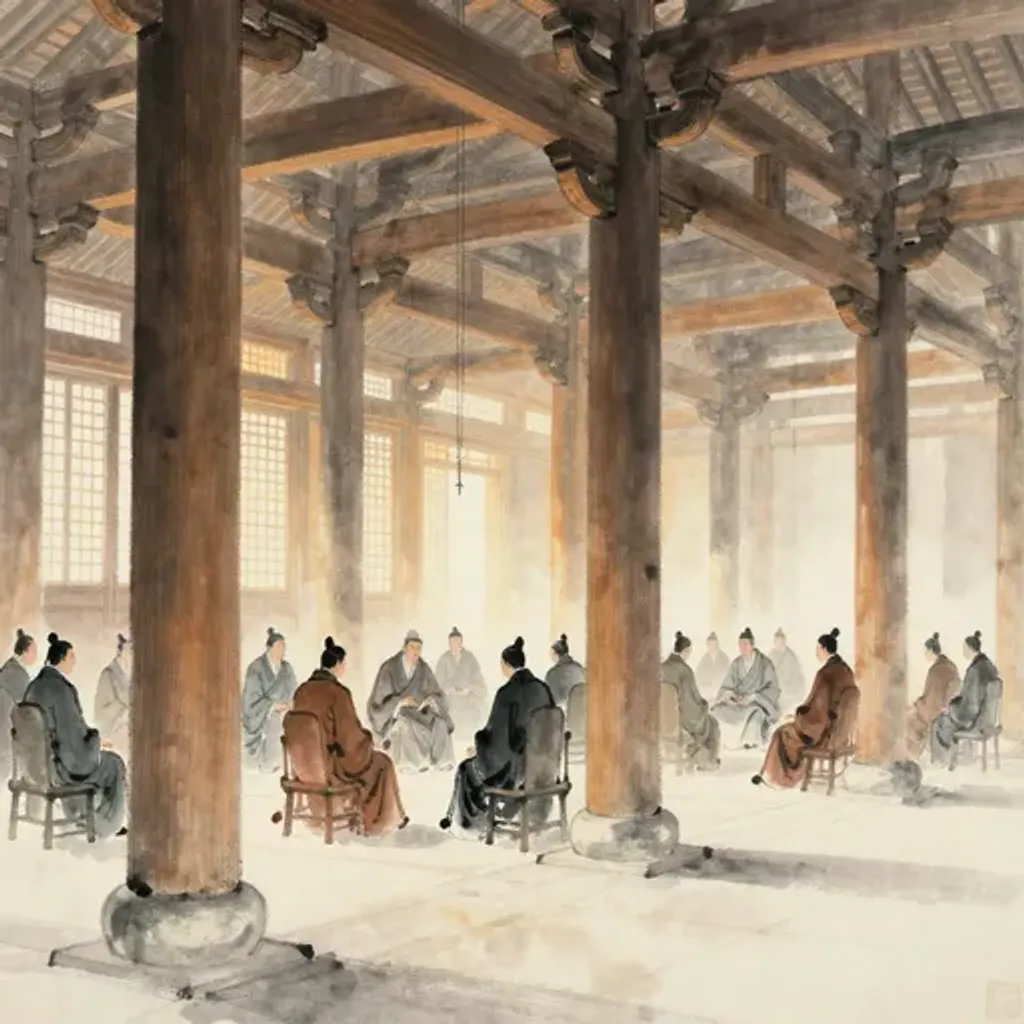
千柱百梁,終不傾僵;仁智輔聖,周宗寧康。
A thousand pillars, a hundred beams; in the end they never topple or lean. Benevolent wisdom assists the sage; the Zhou ancestral domain rests in peace.
— Jiao Yanshou, Yilin (Forest of Changes), 1st century BC
Commentary
Earth holds the mountain firm, and a thousand pillars with a hundred beams ensure the structure never tilts or collapses. Benevolence and wisdom assist the sage-ruler, and the house of Zhou enjoys lasting peace. The verse is an architectural metaphor for good governance: the redundant strength of a thousand columns guarantees stability even if some fail. From Modesty to Before Completion, fire sits above water — opposing elements not yet fused, the final crossing not yet made. Yet the verse projects confidence rather than anxiety: the structure's overwhelming solidity means that even in Before Completion's unresolved state, collapse is inconceivable. Modesty's hidden mountain becomes the foundation of a building so thoroughly supported that it endures through every transition, every unfinished passage.