Transformations of Hexagram 17
Every line of change out of Hexagram 17 隨 Following, with the Yilin verse for each of the 64 resulting hexagrams, its translation, and the original ink brush artwork.
隨 → 乾
Hexagram 17 → Hexagram 1: The Creative
Changing lines: 2, 3, 6
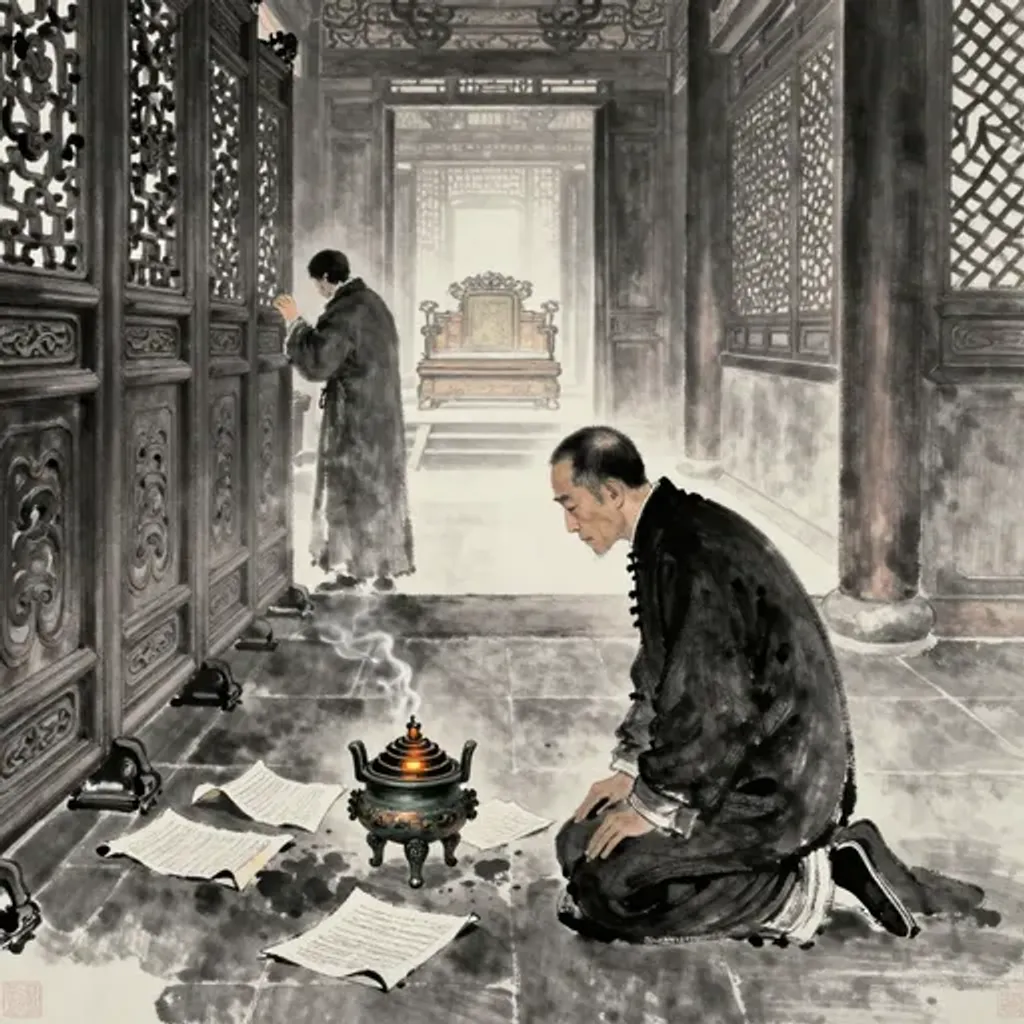
鼻目易處,不知香臭;君迷於事,失其寵位。
Nose and eyes switched places; one cannot tell fragrance from stench. The lord, confused in his affairs, loses his favored position.
— Jiao Yanshou, Yilin (Forest of Changes), 1st century BC
Commentary
Thunder rests within the lake, and all things follow the current of the season. Yet here nose and eyes have traded places — the organs of perception are disordered, unable to distinguish fragrant from foul. When a ruler loses his capacity for discernment, he grows confused in governance and forfeits his favored position. The verse draws on the classical motif of sensory inversion as political allegory: a lord who cannot 'smell' corruption around him will be displaced. From Following to the Creative, the transformation is stark — the yielding adaptability of Sui should give rise to heaven's self-generating initiative, but when perception itself is corrupted, the sovereign energy of Qian cannot activate, and power slips away.
隨 → 坤
Hexagram 17 → Hexagram 2: The Receptive
Changing lines: 1, 4, 5
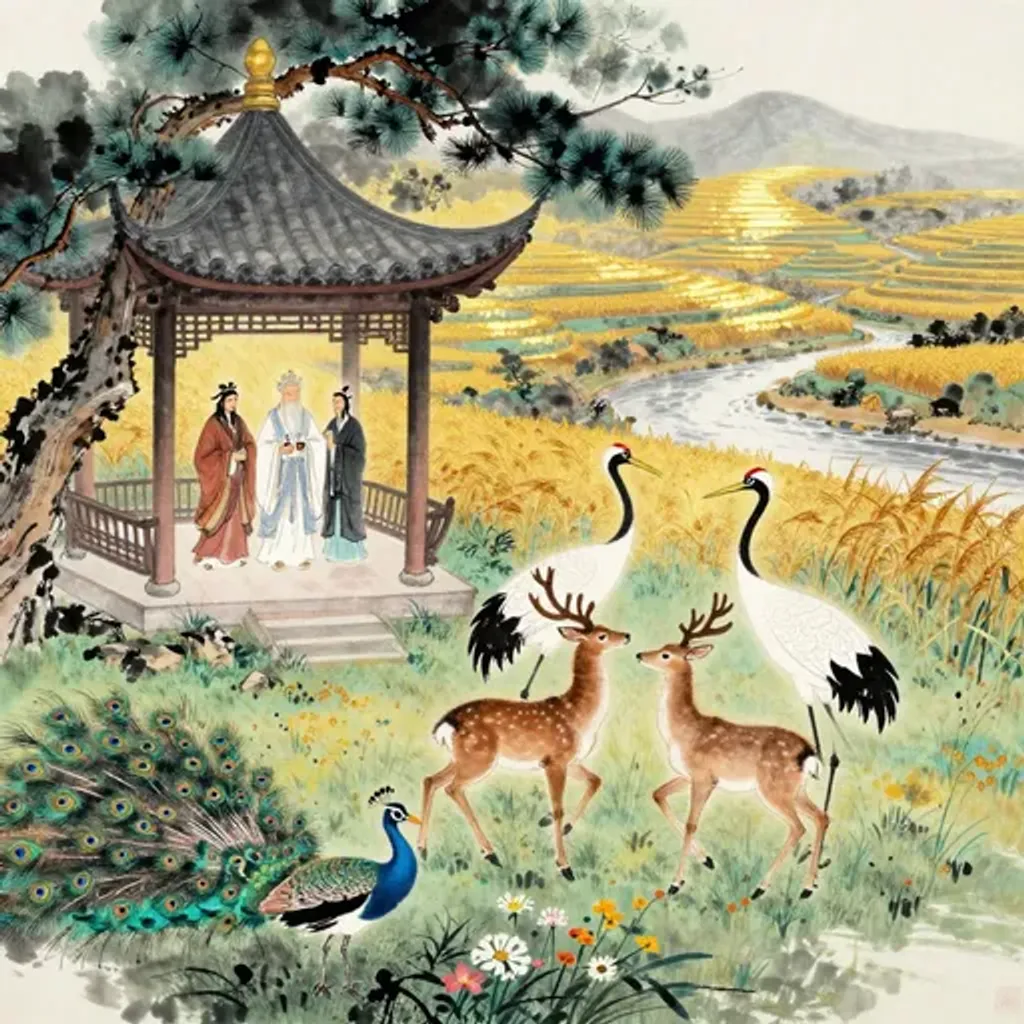
唐虞相輔,鳥獸喜舞;安樂無事,國家富有。
Tang and Yu assisted each other; birds and beasts danced with joy. Peaceful and without incident, the state grew rich.
— Jiao Yanshou, Yilin (Forest of Changes), 1st century BC
Commentary
Thunder rests within the lake as all beings follow in harmony. Yao and Shun govern together, and under their shared rule even birds and beasts dance with joy. The realm knows neither anxiety nor strife; the state overflows with abundance. This verse invokes the golden age of the sage-kings Tang (Yao) and Yu (Shun), whose benevolent co-regency is the Chinese archetype of perfect governance. When ruler and minister are aligned in virtue, prosperity arises without effort. From Following to the Receptive, the dynamic of willing obedience transforms into earth's boundless capacity to receive and sustain — the ideal polity where the people follow naturally and the land bears fruit of its own accord.
隨 → 屯
Hexagram 17 → Hexagram 3: Difficulty at the Beginning
Changing lines: 4
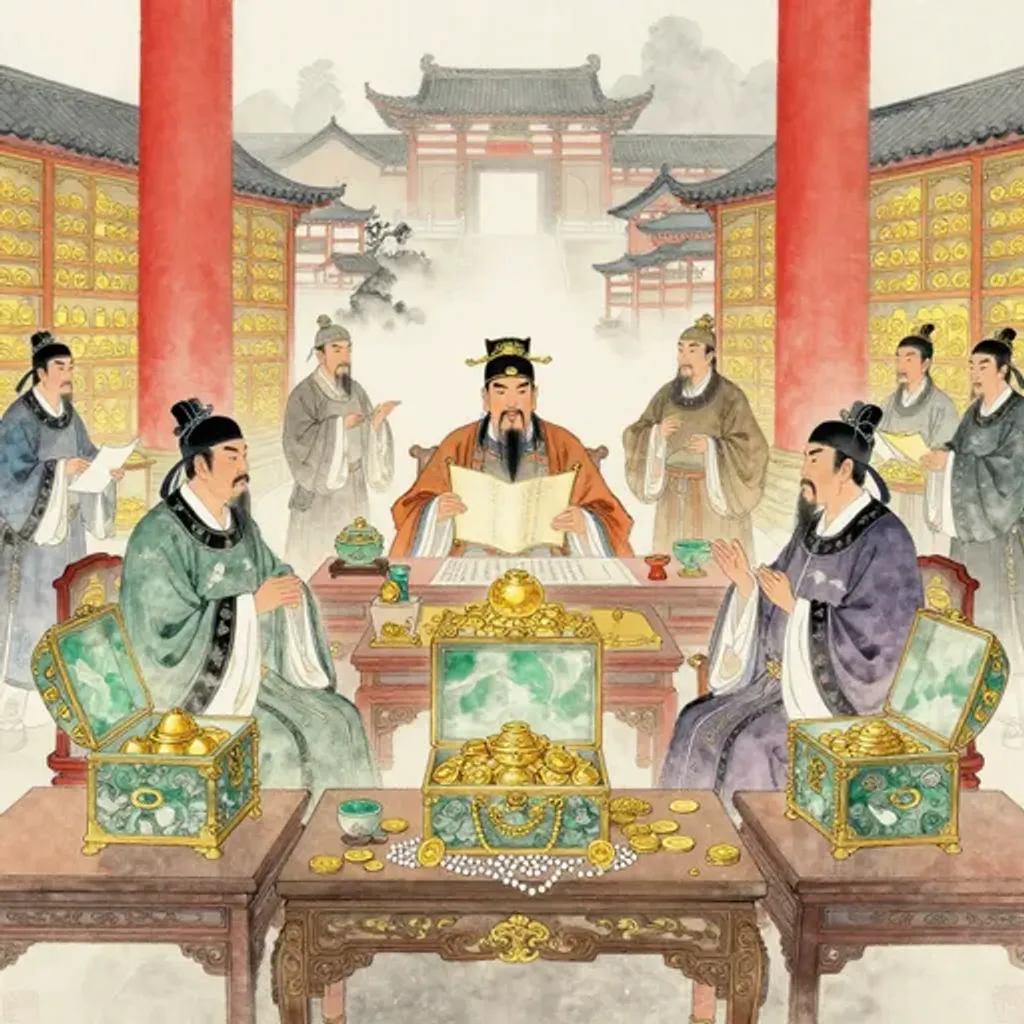
左輔右弼,金玉滿櫃;常盈不亡,富如敖倉。
Aided left and right; gold and jade fill the coffers. Always abundant, never depleted -- rich as the Ao Granary.
— Jiao Yanshou, Yilin (Forest of Changes), 1st century BC
Commentary
Thunder rests within the lake, and loyal counselors stand at left and right. With competent ministers flanking the throne, gold and jade fill the coffers. Wealth accumulates ceaselessly, rich as the great Ao Granary — the massive Qin-dynasty storehouse at Xingyang that became a strategic prize in the Chu-Han wars. The verse pictures ideal governance as a structure of mutual support: ruler follows good counsel, ministers follow a worthy lord. From Following to Difficulty at the Beginning, the pattern shifts from harmony to the perilous birth of new order — yet the wealth and loyalty described here are precisely the resources needed to weather the storm of Zhun's gathering clouds and thunder.
隨 → 蒙
Hexagram 17 → Hexagram 4: Youthful Folly
Changing lines: 1, 2, 4, 5, 6
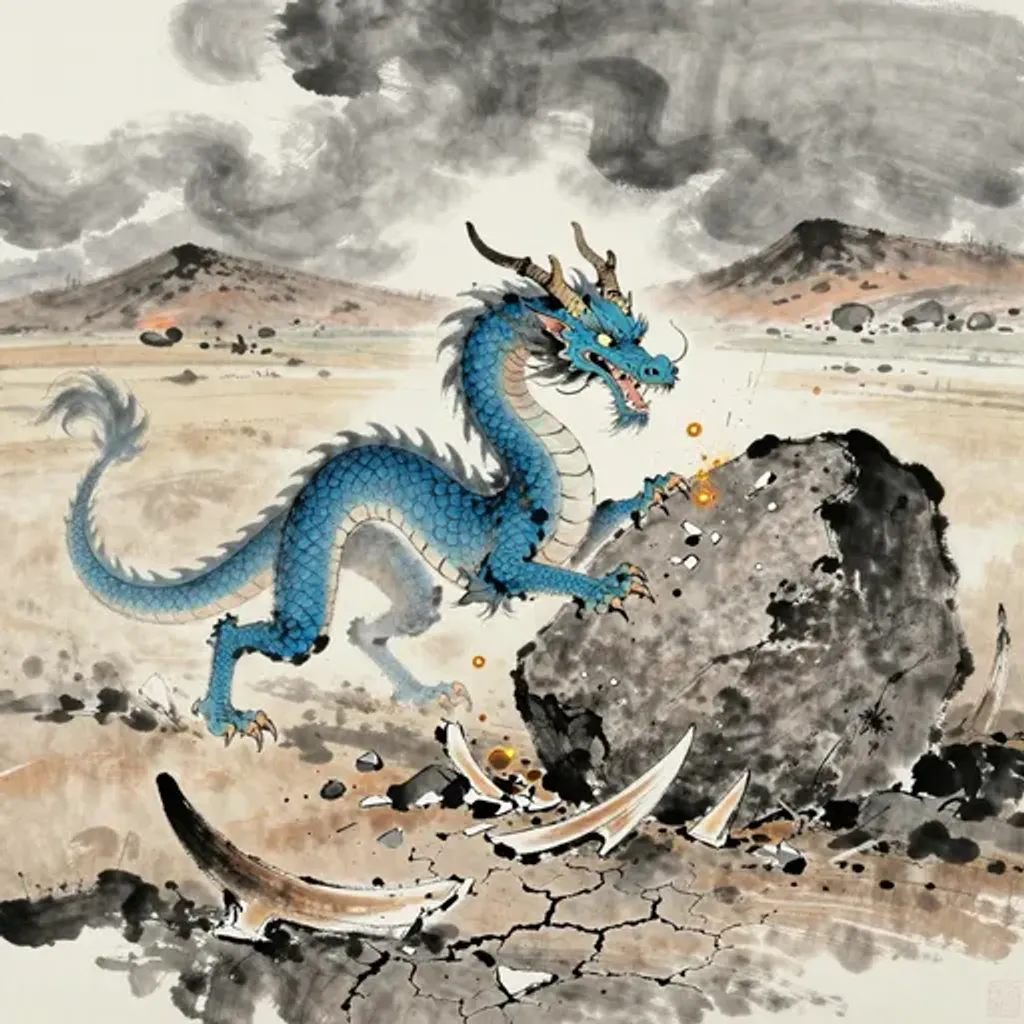
蒼龍單獨,與石相觸,摧折兩角。
The azure dragon, alone, collided with a boulder; both horns snapped and broke.
— Jiao Yanshou, Yilin (Forest of Changes), 1st century BC
Commentary
Thunder rests within the lake, but the Azure Dragon ventures forth alone. Solitary and without allies, it collides with a great stone and shatters both its horns. The Azure Dragon — celestial guardian of the east, emblem of spring's vital energy — is invincible when riding its proper season, yet devastating when it acts in isolation. Without companions or a supporting formation, even cosmic power breaks against brute resistance. From Following to Youthful Folly, the transformation reveals the cost of abandoning Sui's principle of adaptive companionship: the dragon that refuses to follow the current crashes headlong into the mountain's unyielding ignorance, its strength squandered in a needless collision.
隨 → 需
Hexagram 17 → Hexagram 5: Waiting
Changing lines: 2, 3, 4
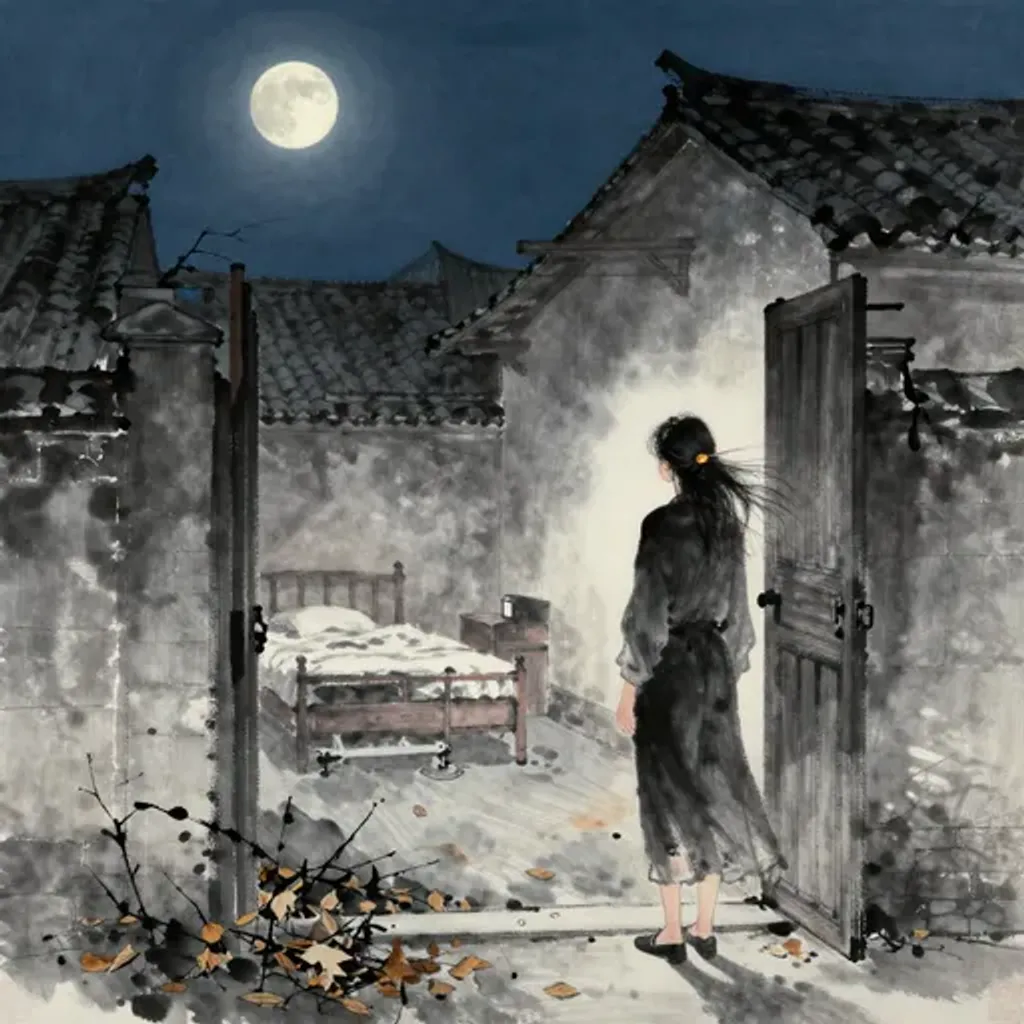
釣目厭部,善逐人走;來嫁無夫,不安其廬。
Alluring eyes and haughty bearing, adept at chasing men away; she comes to marry but finds no husband, and cannot settle in her home.
— Jiao Yanshou, Yilin (Forest of Changes), 1st century BC
Commentary
Thunder rests within the lake, but the scene turns to domestic disorder. Eyes dart and bodies chase — a household in disarray where people pursue and displace one another. A bride arrives but finds no husband waiting; she cannot settle in her home. The verse depicts the failure of Following's core promise: that willing adherence to the proper rhythm brings belonging. Instead, timing is off, connections misfire, and the newcomer finds emptiness where partnership should be. From Following to Waiting, the transformation underscores the irony — Xu's clouds gather above heaven, promising nourishment that has not yet arrived. The bride must wait, but waiting without a foundation yields only anxious displacement.
隨 → 訟
Hexagram 17 → Hexagram 6: Conflict
Changing lines: 1, 2, 6
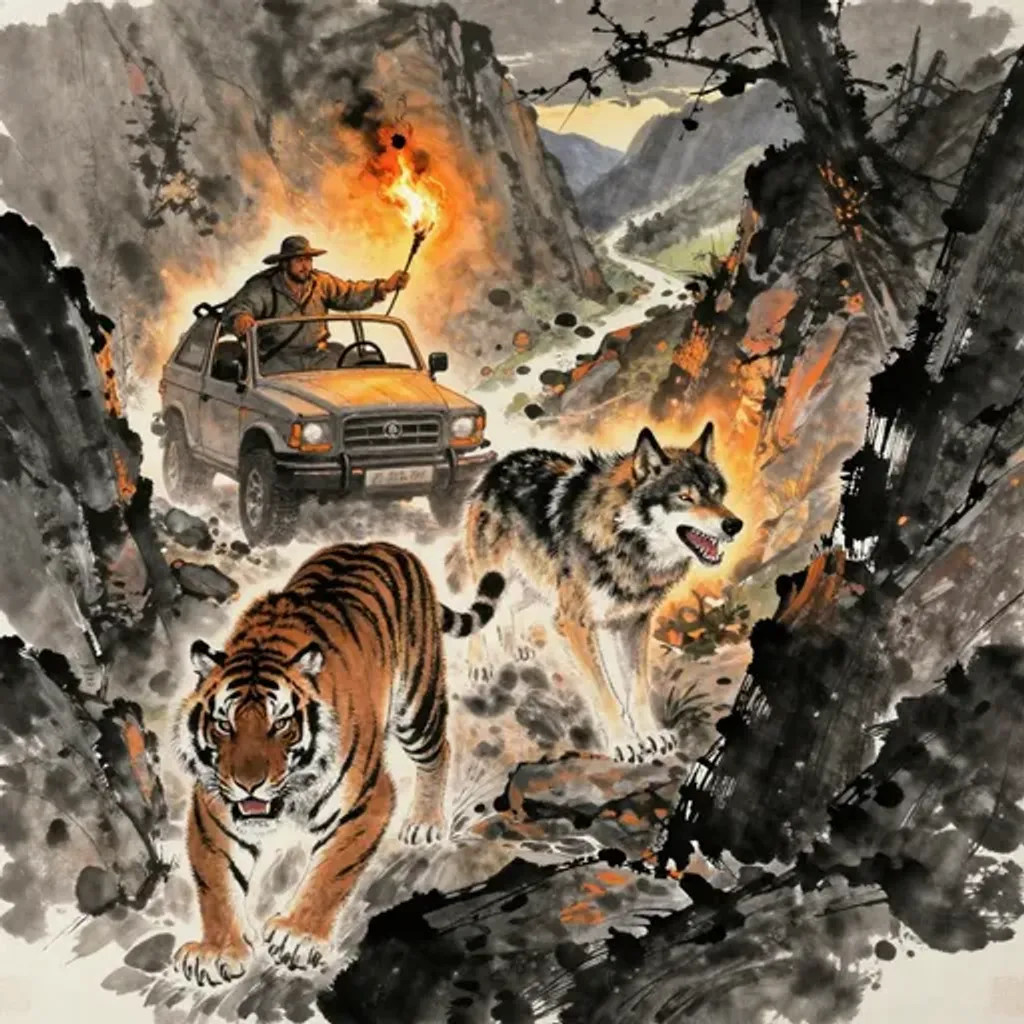
逐虎驅狼,避者不祥。凶惡北行,與喜相逢。
Driving tigers and wolves away -- those who linger court disaster. The fierce and evil go northward; there they meet with joy.
— Jiao Yanshou, Yilin (Forest of Changes), 1st century BC
Commentary
Thunder rests within the lake as predators are driven from the land. Tigers and wolves are chased away — whoever fails to flee courts disaster. Yet once the menace has been expelled northward, joy arrives in its wake. The verse reads as a purge: following the decisive moment, malevolence is cast out and fortune takes its place. The directional detail matters: north is associated with darkness and cold, the natural exile for forces of harm. From Following to Conflict, the dynamic shifts from willing alignment to the confrontation of opposed forces — yet here the conflict serves a cleansing purpose, driving what is vicious toward its proper quarter so that happiness can fill the space left behind.
隨 → 師
Hexagram 17 → Hexagram 7: The Army
Changing lines: 1, 2, 4, 5
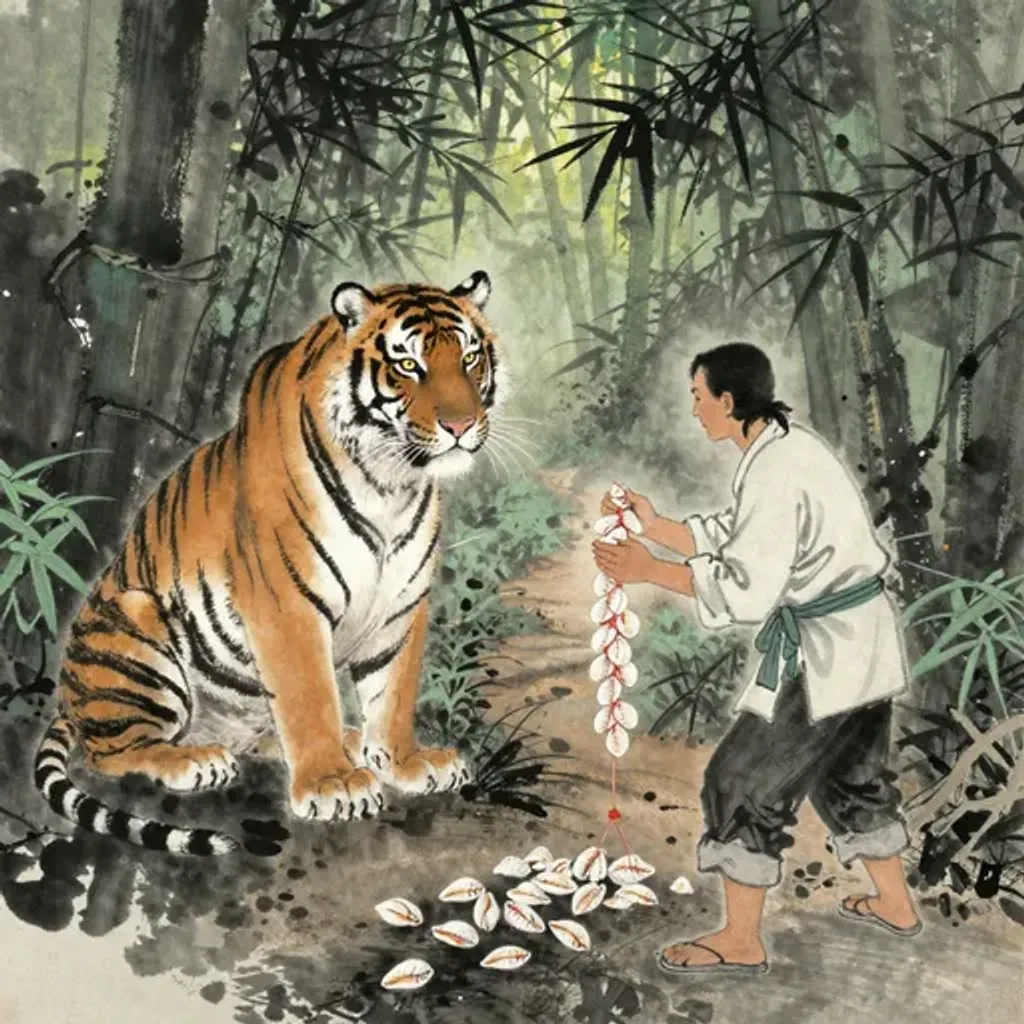
齎貝贖狸,不聽我辭。繫於虎鬚,牽不得來。
Bringing cowrie shells to ransom a wildcat, it will not heed my words. Tied to the tiger whiskers, it cannot be pulled free.
— Jiao Yanshou, Yilin (Forest of Changes), 1st century BC
Commentary
Thunder rests within the lake, but a ransom goes wrong. Someone offers cowrie shells to redeem a wildcat, yet the other party will not heed the plea. The creature is bound by the tiger's whiskers — tugging at it accomplishes nothing. One cannot negotiate with overwhelming power on trivial terms: offering small currency for something entangled with a predator's very bristles is futile. The verse warns against mismatched effort and immovable force. From Following to the Army, the transformation clarifies the lesson: what gentle persuasion cannot retrieve, disciplined collective force may secure. Sui's adaptive following must give way to Shi's marshaled authority when the adversary is beyond bargaining.
隨 → 比
Hexagram 17 → Hexagram 8: Holding Together
Changing lines: 1, 4
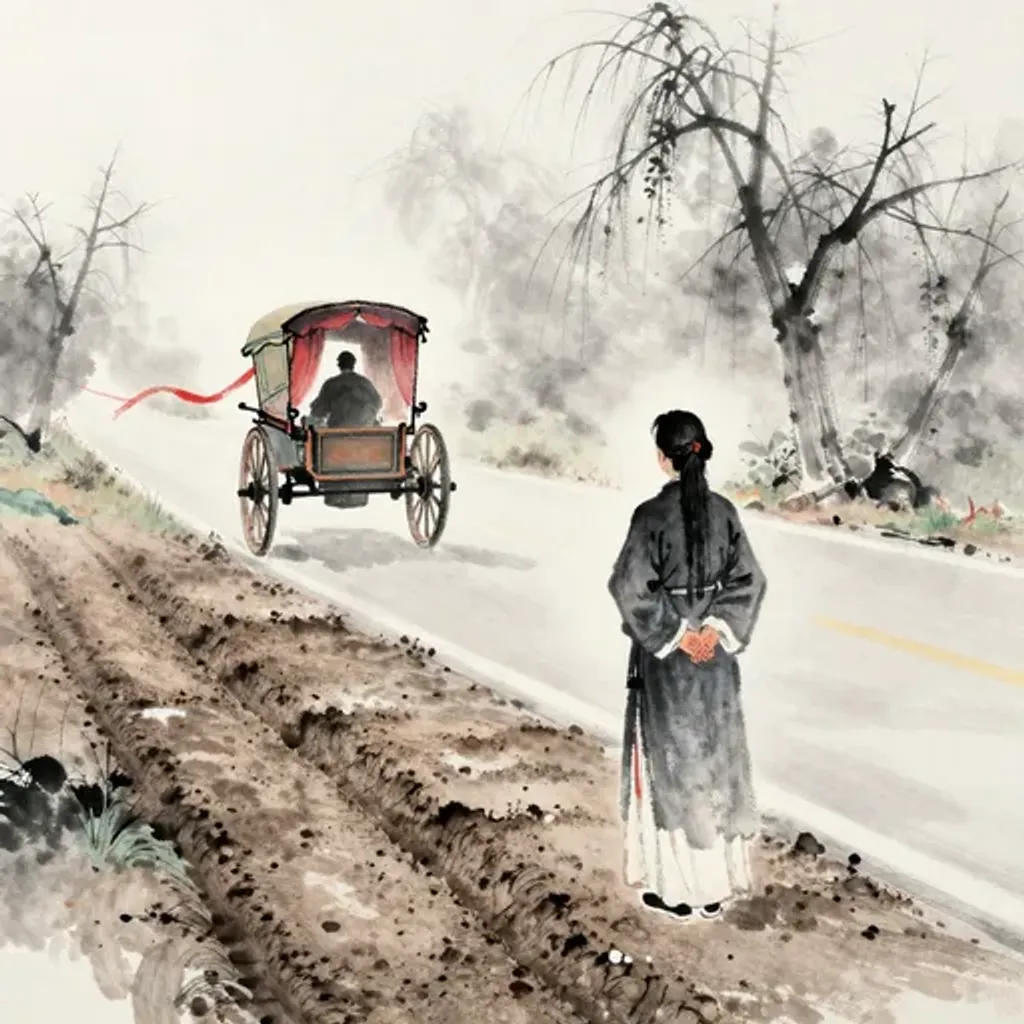
同載共輿,中道別去;喪我元夫,獨與孤居。
Riding in the same carriage, midway they part; I have lost my good husband and dwell alone in solitude.
— Jiao Yanshou, Yilin (Forest of Changes), 1st century BC
Commentary
Thunder rests within the lake, and two companions share a single carriage. Midway through the journey, one departs. The speaker loses her lord and husband, left to dwell alone in solitude. The shared carriage is an ancient metaphor for marital partnership — riding together signals union, parting mid-road signals abandonment. The verse captures the grief of severance at its most exposed: not a dramatic betrayal but a quiet divergence, one party simply stepping off the vehicle. From Following to Holding Together, the irony is piercing — Bi promises solidarity and alliance, yet this particular path to it passes through the experience of being left behind, teaching that true belonging is forged in the knowledge of what it means to be forsaken.
隨 → 小畜
Hexagram 17 → Hexagram 9: Small Taming
Changing lines: 2, 3, 4, 6
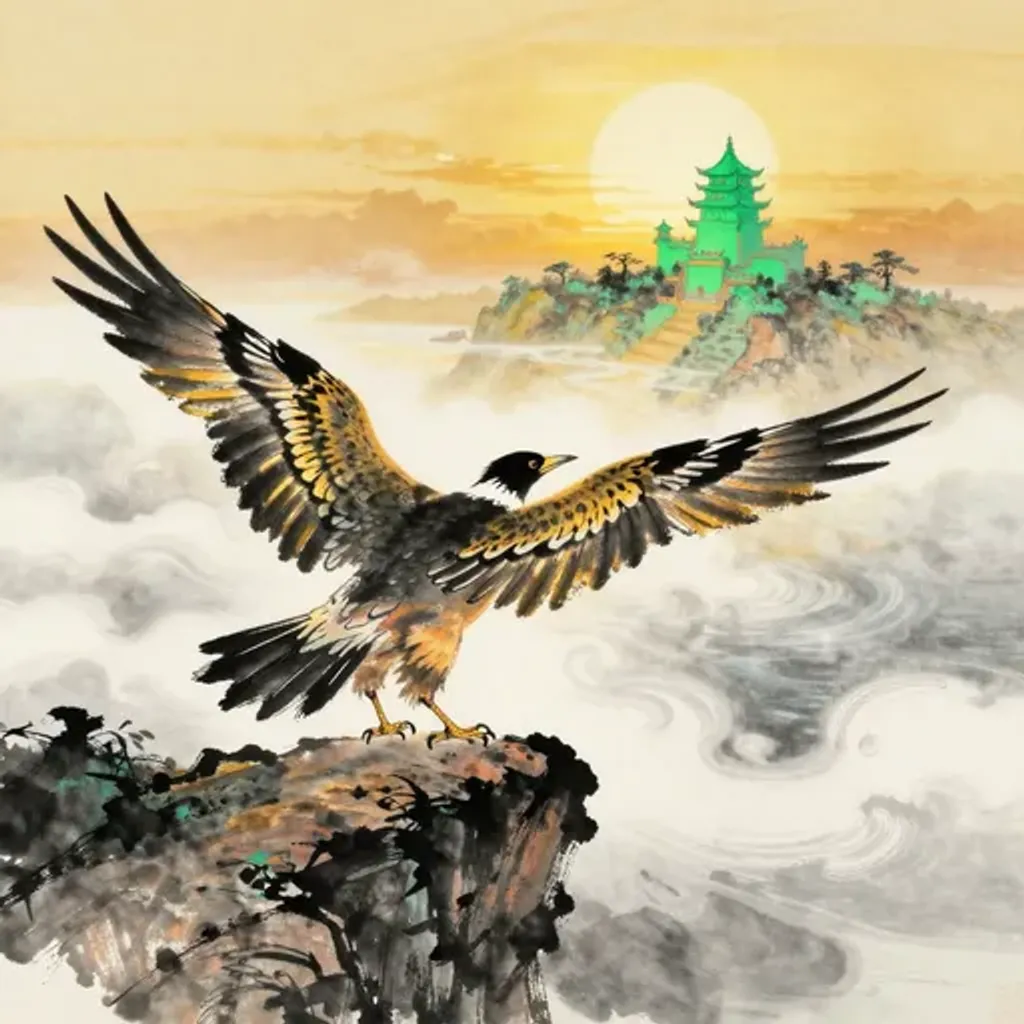
奮翅鼓翼,將之嘉國;愆期失時,反得所欲。
Spreading wings and beating pinions, heading for a fine land; missing the appointed time -- yet in the end gaining what was desired.
— Jiao Yanshou, Yilin (Forest of Changes), 1st century BC
Commentary
Thunder rests within the lake as a bird spreads its wings and prepares for flight toward a blessed land. Yet the journey is delayed — the proper season passes. Paradoxically, this missed timing brings what was originally desired. The verse inverts the usual logic of opportunity: sometimes the very failure to depart on schedule delivers a better outcome than punctual arrival would have. Wind moves across heaven in Small Taming, gently restraining heaven's impetuous force. From Following to Small Taming, Sui's readiness to move is checked by Xiao Xu's gentle holding back — and that restraint, rather than thwarting ambition, refines it into something the bird could not have reached by rushing.
隨 → 履
Hexagram 17 → Hexagram 10: Treading
Changing lines: 2, 6
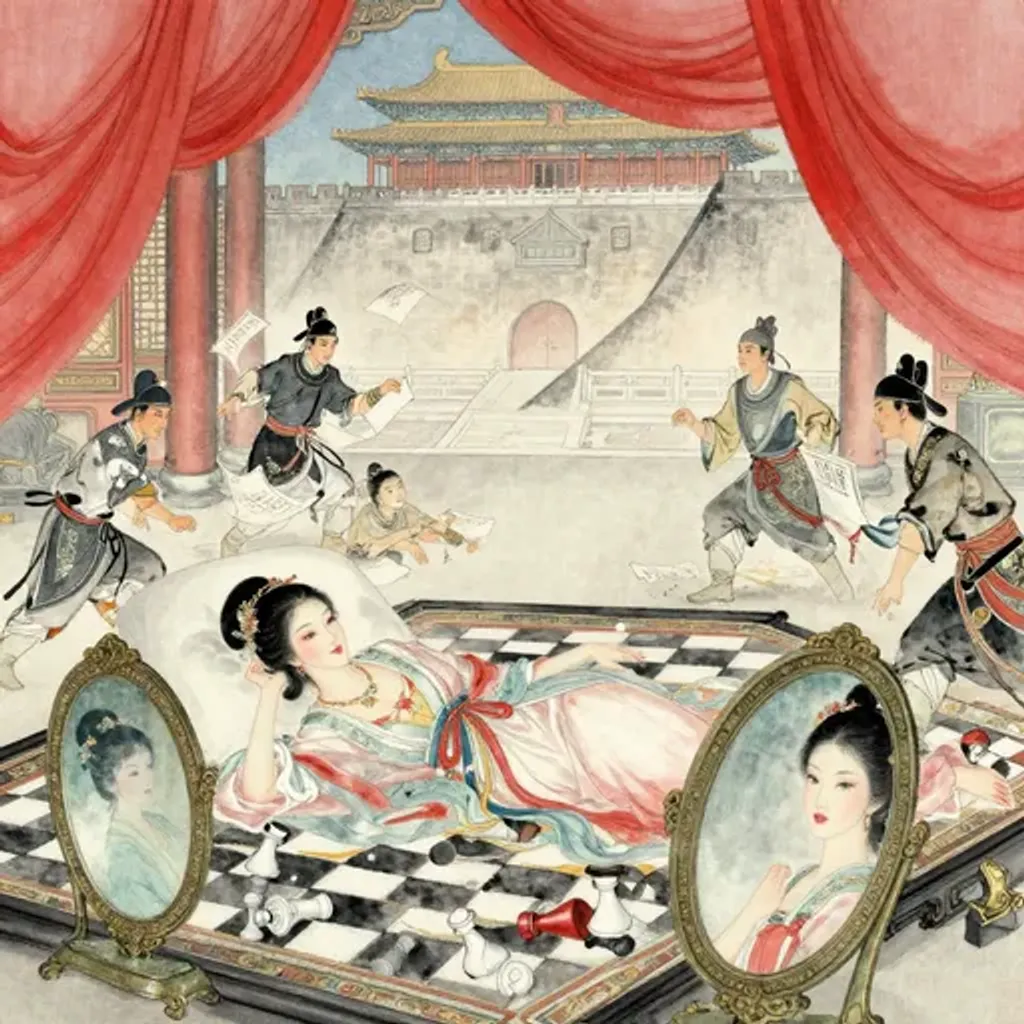
目傾心惑,夏姬在側;申公顛倒,巫臣亂國。
Eyes dazzled, heart beguiled, Lady Xia Ji at his side; Lord Shengong tumbles in ruin, Wu Chen throws the state into chaos.
— Jiao Yanshou, Yilin (Forest of Changes), 1st century BC
Commentary
Thunder rests within the lake, but the eye tilts and the heart is bewitched. Xia Ji stands beside the ruler — the legendary beauty of the state of Chen whose allure brought ruin to every man who pursued her. Shen Gong, the minister who schemed to possess her, is 'overturned'; Wu Chen, who eventually eloped with her to Jin, threw a state into chaos for her sake. According to the Zuo Zhuan, Xia Ji was blamed for the deaths of three husbands, one lord, and one son. From Following to Treading, the verse warns that blind following of desire inverts Lü's careful discernment of high and low — when passion leads, one treads on the tiger's tail without even noticing.
隨 → 泰
Hexagram 17 → Hexagram 11: Peace
Changing lines: 2, 3, 4, 5
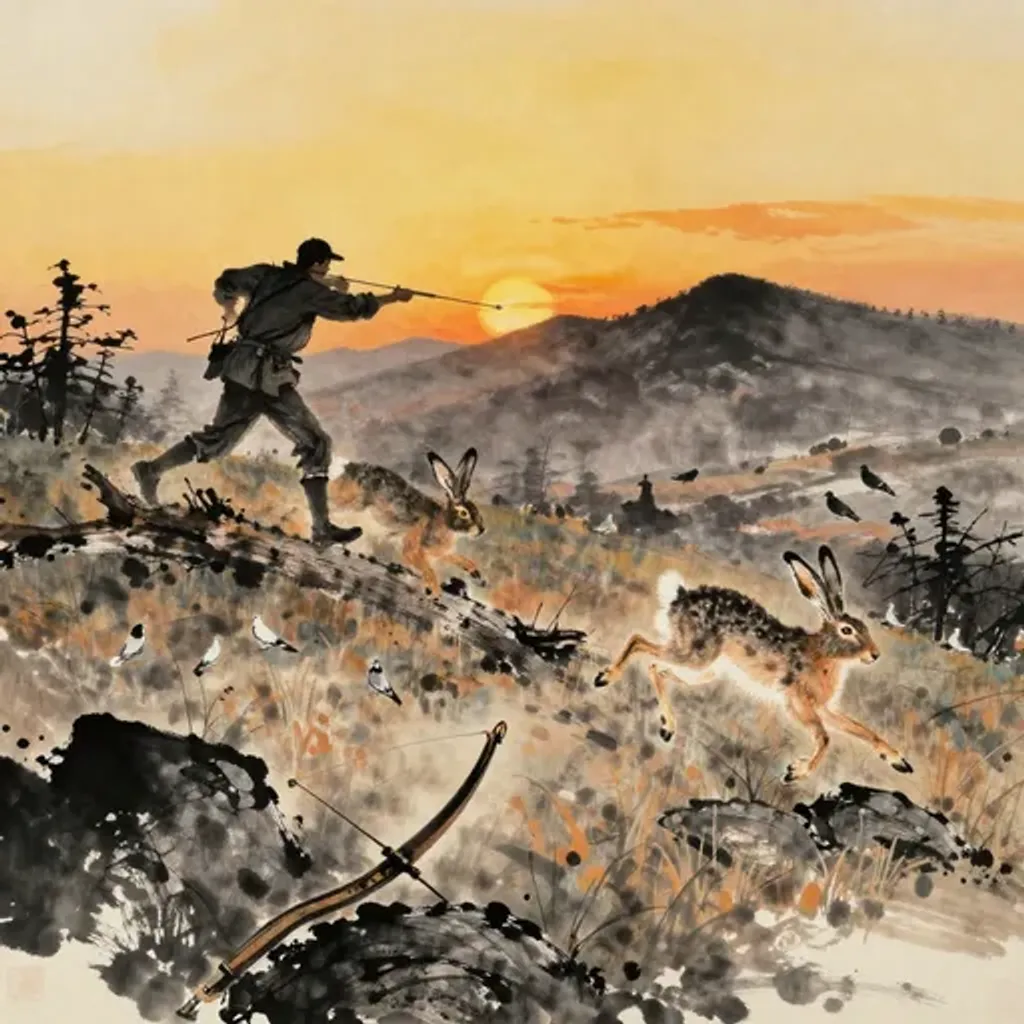
搏鳩彈鵲,逐兔山北;九盡日暮,失獲無得。
Shooting doves, pelting magpies, chasing hares north of the hill; by the ninth hour, day is done -- nothing caught, nothing gained.
— Jiao Yanshou, Yilin (Forest of Changes), 1st century BC
Commentary
Thunder rests within the lake, but the hunter scatters his efforts. He shoots at doves and catapults at magpies, chases rabbits north of the mountain — yet by nightfall, after exhausting all his chances, he has caught nothing. The number nine signals completion: every opportunity has been spent. The verse depicts diffused pursuit as guaranteed failure — spreading attention across too many targets yields none. From Following to Peace, the irony is sharp: Tai represents the perfect exchange between heaven and earth, effortless prosperity. But reaching that harmony requires focused commitment, not frantic dispersal. The hunter who follows every quarry follows none.
隨 → 否
Hexagram 17 → Hexagram 12: Standstill
Changing lines: 1, 6
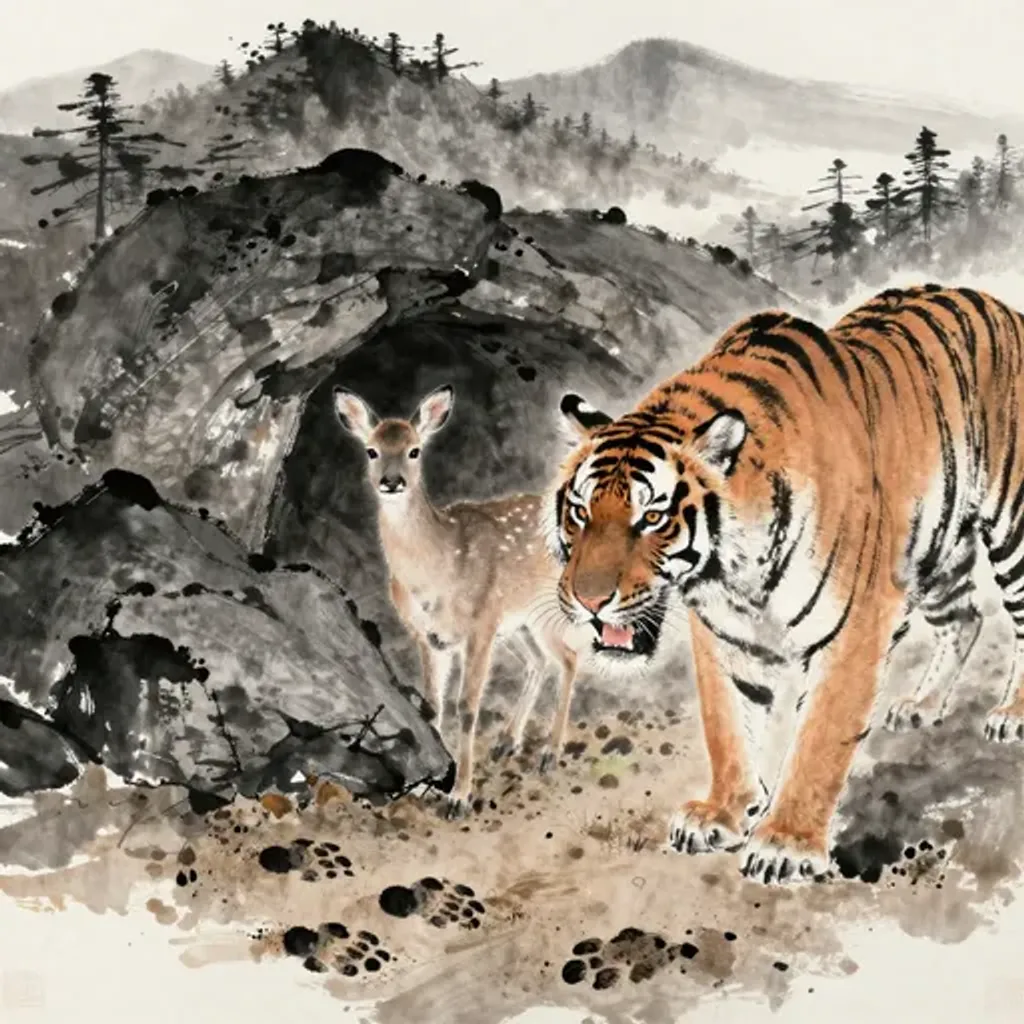
鹿求其子,虎廬之里;唐伯季耳,貪不我許。
A deer seeks her fawn, near the tiger lair; the lord of Tang, greedy, does not grant my request.
— Jiao Yanshou, Yilin (Forest of Changes), 1st century BC
Commentary
Thunder rests within the lake as a doe searches for her fawn within the tiger's lair. The verse then invokes Tang Bo and Ji Er — figures possibly identifiable with Tang Shuyu, founder of Jin, and his descendants, whose greed denied the speaker's request. A mother deer venturing into a predator's den is desperation embodied; the named lords refuse to grant aid, their avarice overriding duty. From Following to Standstill, the transformation is fitting: Pi's heaven and earth refuse to communicate, and those in power hoard their position. The doe's maternal urgency meets a wall of Standstill's blocked exchange, where the powerful neither give nor yield.
隨 → 同人
Hexagram 17 → Hexagram 13: Fellowship
Changing lines: 3, 6
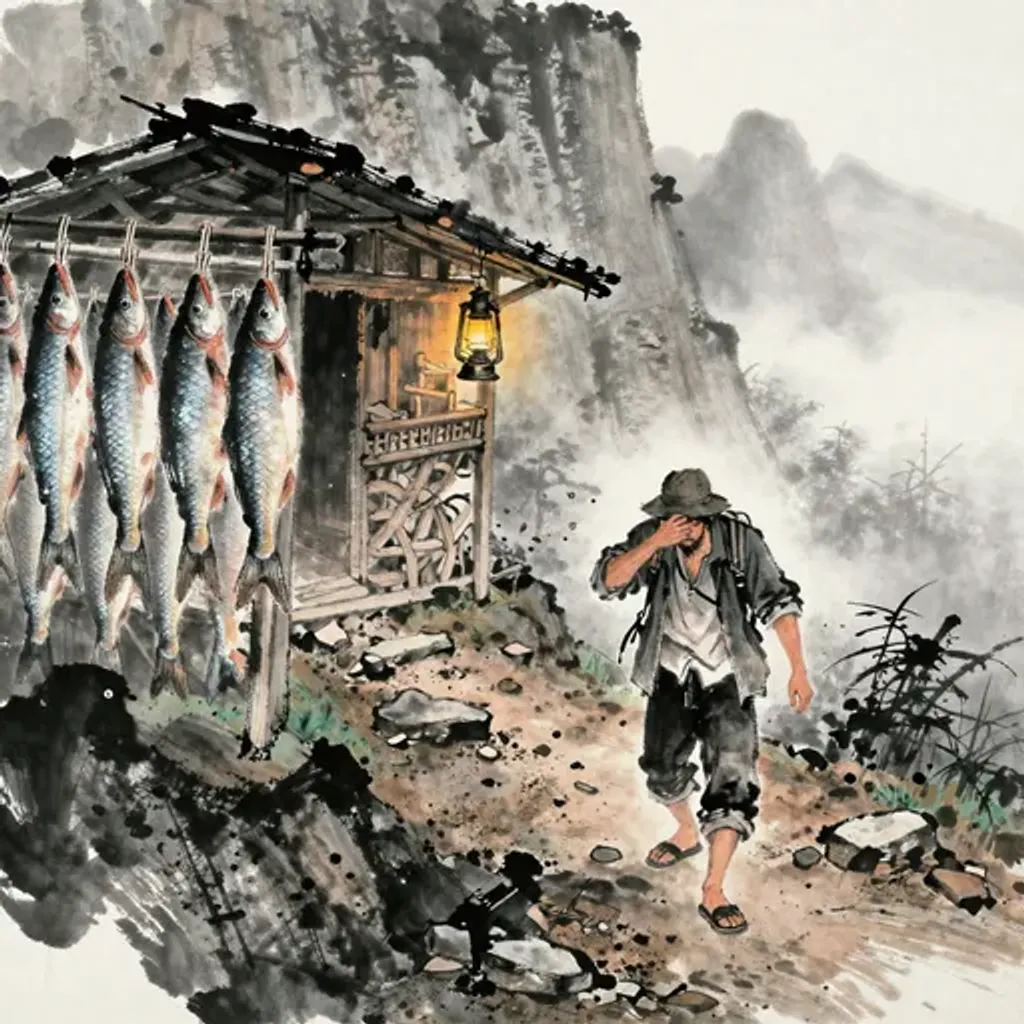
敗魚鮑室,臭不可息;上山履塗,歸傷我足。
Rotten fish in a stinking chamber, the smell cannot be endured; climbing the mountain through the mire, I return with injured feet.
— Jiao Yanshou, Yilin (Forest of Changes), 1st century BC
Commentary
Thunder rests within the lake, but the scene reeks of decay. Rotting fish in a brine-seller's shop fill the air with a stench that will not subside — an unmistakable image of corruption so deep it saturates everything. Then the speaker climbs a muddy mountain road and comes home with injured feet. The verse pairs moral defilement with physical hardship: once one enters a foul environment, the contamination clings, and the path back is itself damaging. From Following to Fellowship, the tension is deliberate — Tong Ren calls for union under heaven's clarity, yet this verse shows what happens when one follows the wrong company into a rotten space. True fellowship requires discernment about whom to join.
隨 → 大有
Hexagram 17 → Hexagram 14: Great Possession
Changing lines: 2, 3, 5, 6
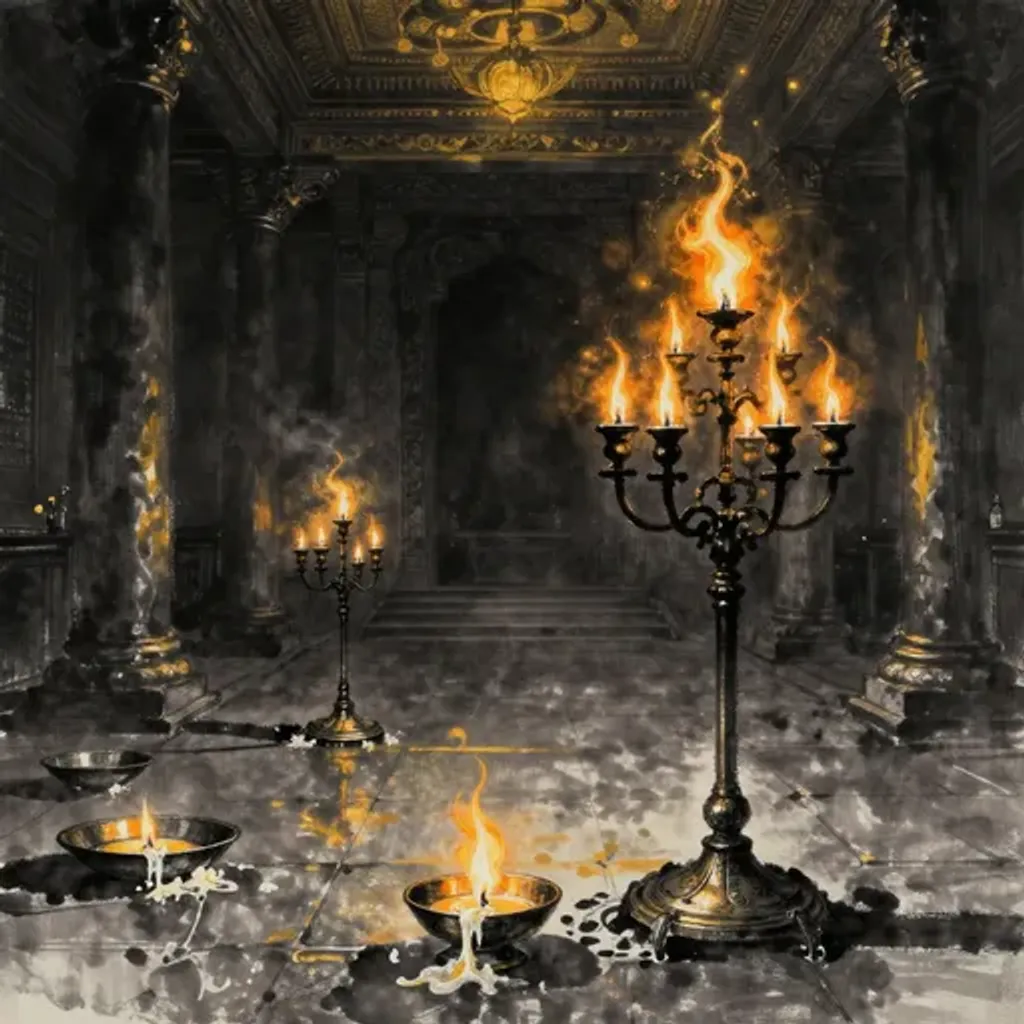
華燈百枝,消衰暗微;精光訖盡,奄有灰靡。
A splendid lamp of a hundred branches; its glow dims and fades. Its radiance spent and gone, it crumbles away to ash.
— Jiao Yanshou, Yilin (Forest of Changes), 1st century BC
Commentary
Thunder rests within the lake, and a grand chandelier of a hundred branches blazes in the hall. Yet its light gutters and fades, the radiance exhausting itself until only cold ash remains. The image is of splendor burning down to nothing — a court whose brilliance was real but unsustainable. Fire in heaven is Great Possession's image, the sun at its zenith. From Following to Great Possession, the verse inverts Da You's promise: instead of fire sustained by heaven's inexhaustible mandate, the hundred-branched lamp has no renewable source. It followed its nature — to burn — but without replenishment, magnificence consumes itself. Abundance without renewal is merely spectacular decay.
隨 → 謙
Hexagram 17 → Hexagram 15: Modesty
Changing lines: 1, 3, 4, 5
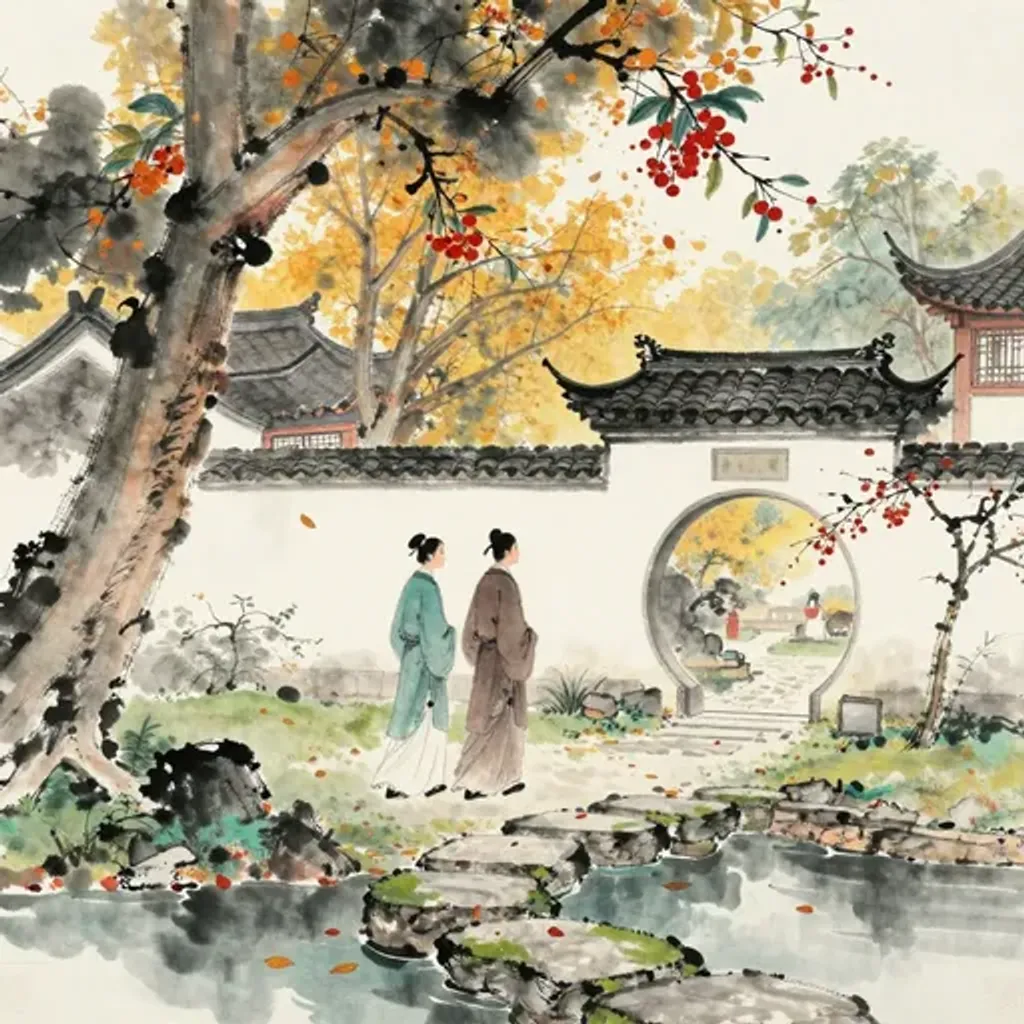
顏叔子夏,遨遊仁宇;溫良受福,不失其所。
Master Yan and Zixia roam the halls of benevolence; gentle and virtuous, they receive blessings, never losing their place.
— Jiao Yanshou, Yilin (Forest of Changes), 1st century BC
Commentary
Thunder rests within the lake, and two paragons of virtue roam the halls of benevolence. Yan Shuzi is celebrated in the Han Shi Waizhuan for his extraordinary propriety: when a neighbor woman sought shelter in a storm, he held a candle aloft through the night to maintain decorum, never approaching her. Paired here with Zi Xia, one of Confucius's foremost disciples known for literary learning and moral rigor, the verse depicts warmth tempered by principle. They receive blessings and never lose their rightful place. From Following to Modesty, the mountain hidden within the earth mirrors their quiet virtue — genuine worth held low, attracting fortune precisely because it does not grasp.
隨 → 豫
Hexagram 17 → Hexagram 16: Enthusiasm
Changing lines: 1, 5
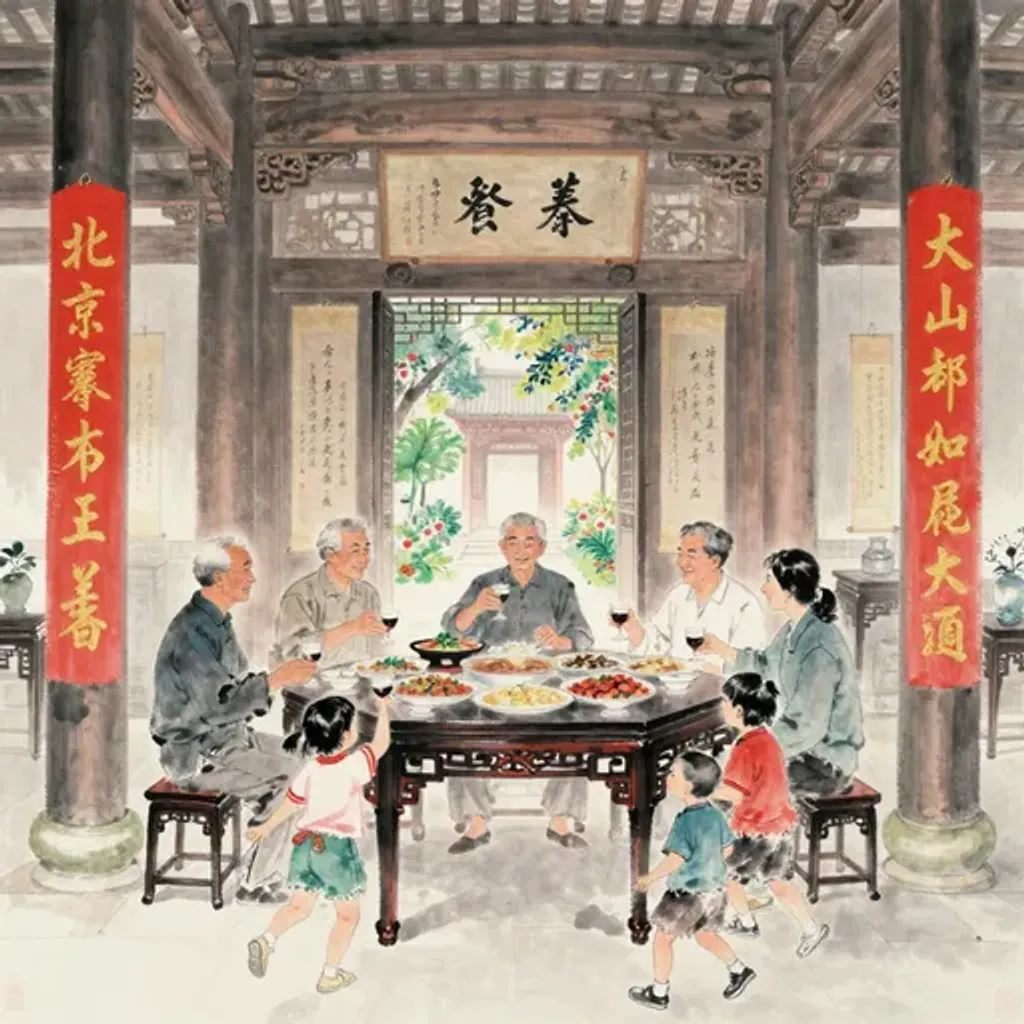
梁柱堅固,子孫蕃盛;福喜盈積,終無禍悔。
Beams and pillars stand firm; descendants flourish and multiply. Joy and blessings abound -- in the end, no disaster or regret.
— Jiao Yanshou, Yilin (Forest of Changes), 1st century BC
Commentary
Thunder rests within the lake, and the household's pillars and beams stand firm. When the structural frame holds, descendants flourish and multiply; blessings and joy accumulate without end, and no calamity or regret intrudes. The verse is pure domestic auspice — the strong ridgepole as metaphor for a family lineage supported by sound foundations. Unlike the sagging ridgepole of Great Exceeding, here the beam bears its load with ease. From Following to Enthusiasm, thunder breaks from the earth in Yü, the ancient kings' music resounding to heaven. The solid house of Sui becomes the festive hall of Yü: structural integrity generates the confidence from which celebration naturally erupts.
隨 → 隨
Hexagram 17 → Hexagram 17: Following
No changing lines — the hexagram is unchanged
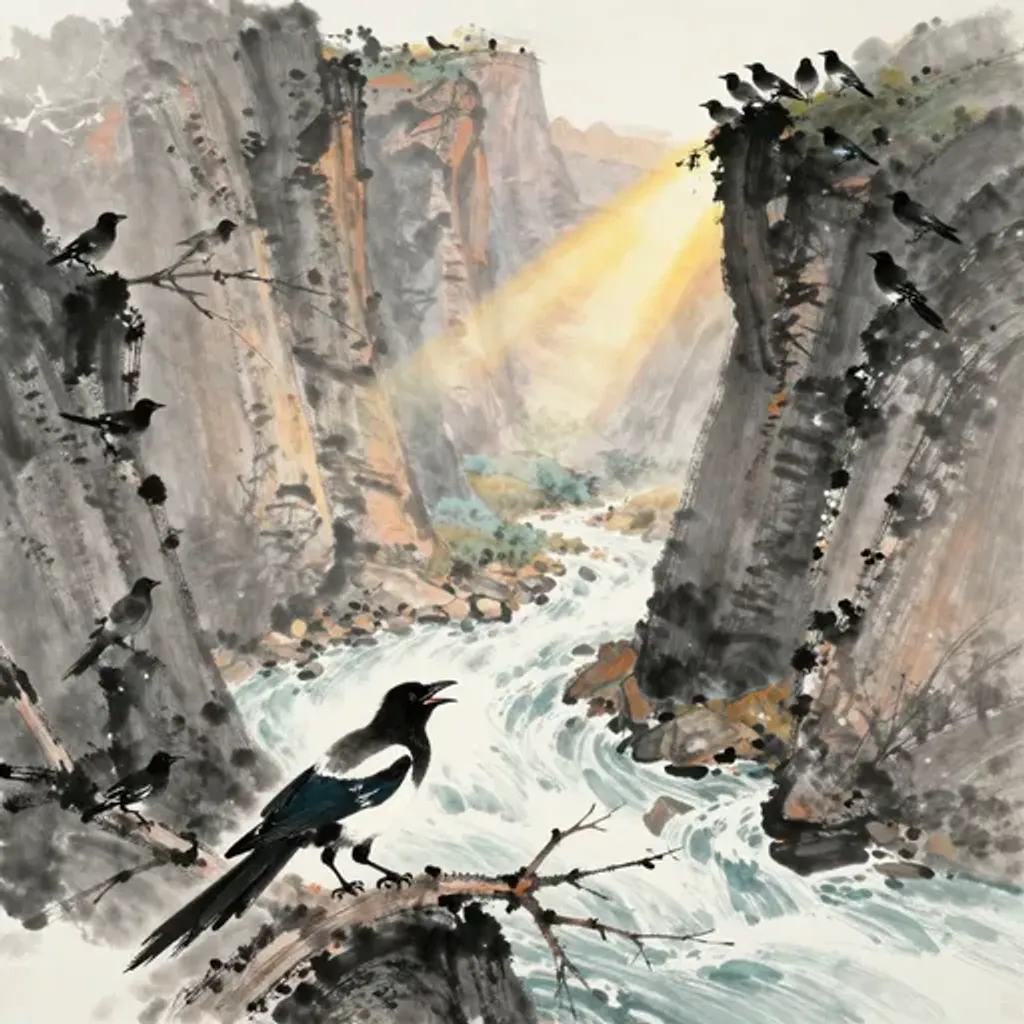
鳥鳴東西,迎其群侶;不得自專,空返獨還。
Birds call east and west, welcoming their flock; unable to act on their own, they return alone and empty.
— Jiao Yanshou, Yilin (Forest of Changes), 1st century BC
Commentary
Thunder rests within the lake, and a bird calls east and west, seeking its flock. Yet it cannot take the lead on its own terms and returns alone, empty-handed. This is Following turning upon itself — the hexagram doubled, Sui meeting Sui. The bird embodies the follower who longs for community but lacks the initiative to form it: calling in all directions, it waits for others to gather rather than establishing a rallying point. From Following to Following, the lesson is recursive: pure adaptiveness without anchor becomes aimless. One who only follows can never convene; the flock the bird seeks will never assemble around a voice that offers no direction.
隨 → 蠱
Hexagram 17 → Hexagram 18: Work on the Decayed
Changing lines: 1, 2, 3, 4, 5, 6
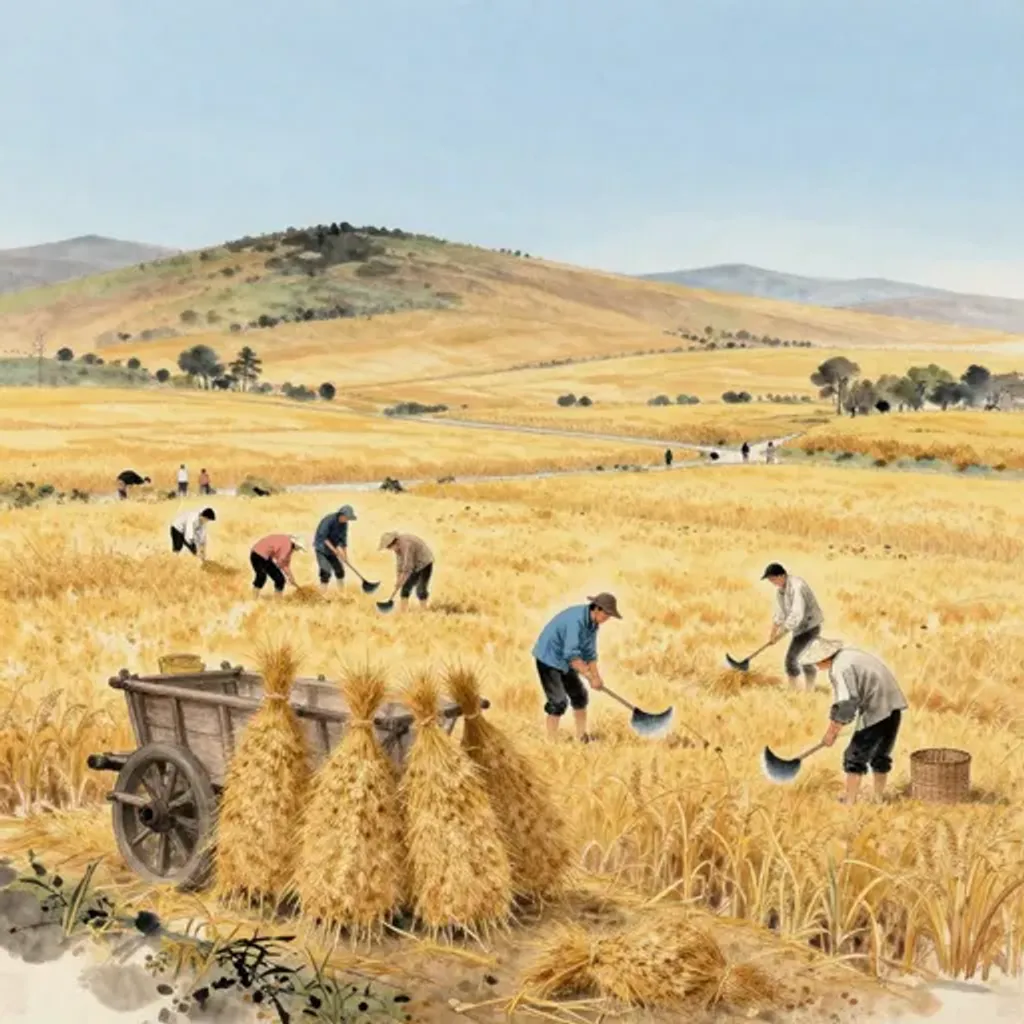
邊鄙不聳,民狎其野;穡人成功,年歲大有。
The borderlands are at peace; the people are familiar with their fields. The farmer succeeds in his work; the harvest is abundant.
— Jiao Yanshou, Yilin (Forest of Changes), 1st century BC
Commentary
Thunder rests within the lake, and the frontier lies quiet. No alarms stir the border; the people tend their fields at ease. Farmers reap successful harvests, and the year yields great abundance. The verse paints the ideal aftermath of good governance: when threats recede, agriculture thrives and civilians flourish without disturbance. From Following to Work on the Decayed, the transformation is counter-intuitive — Gu signals decay and corruption needing repair. Yet this verse shows Gu's constructive face: the wind beneath the mountain that ventilates stagnation. Peace at the border creates space for the slow, patient work of restoring what has fallen into disrepair, and the harvest proves that renovation has already begun to bear fruit.
隨 → 臨
Hexagram 17 → Hexagram 19: Approach
Changing lines: 2, 4, 5
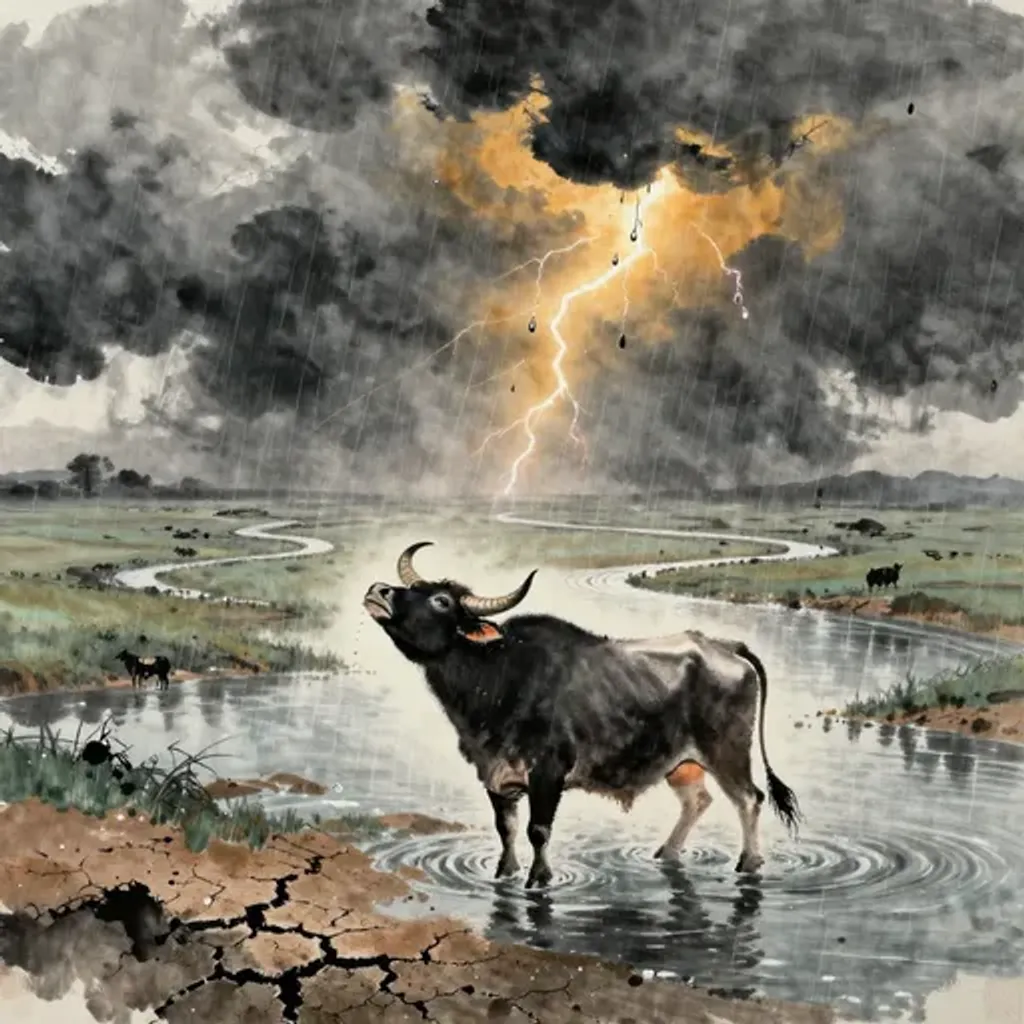
虵牛鳴呴,呼求水潦。雲雨大會,流成河海。
Serpent-ox bellows and calls, summoning rain and water. Clouds and rain converge in force, flowing into rivers and seas.
— Jiao Yanshou, Yilin (Forest of Changes), 1st century BC
Commentary
Thunder rests within the lake, and a serpentine ox bellows for water. The strange creature — part snake, part cattle — calls out, summoning rain and flood. Clouds and storms converge in a great assembly, and streams swell into rivers, rivers into seas. The image suggests a ritual invocation of rain: the mythic beast's cry activates the heavens, and what begins as a plea becomes an overwhelming torrent. From Following to Approach, the dynamic is one of gathering force — Lin's earth above the lake represents authority descending to meet what rises from below. The small cry becomes an ocean when heaven responds to the call of the depths.
隨 → 觀
Hexagram 17 → Hexagram 20: Contemplation
Changing lines: 1, 4, 6
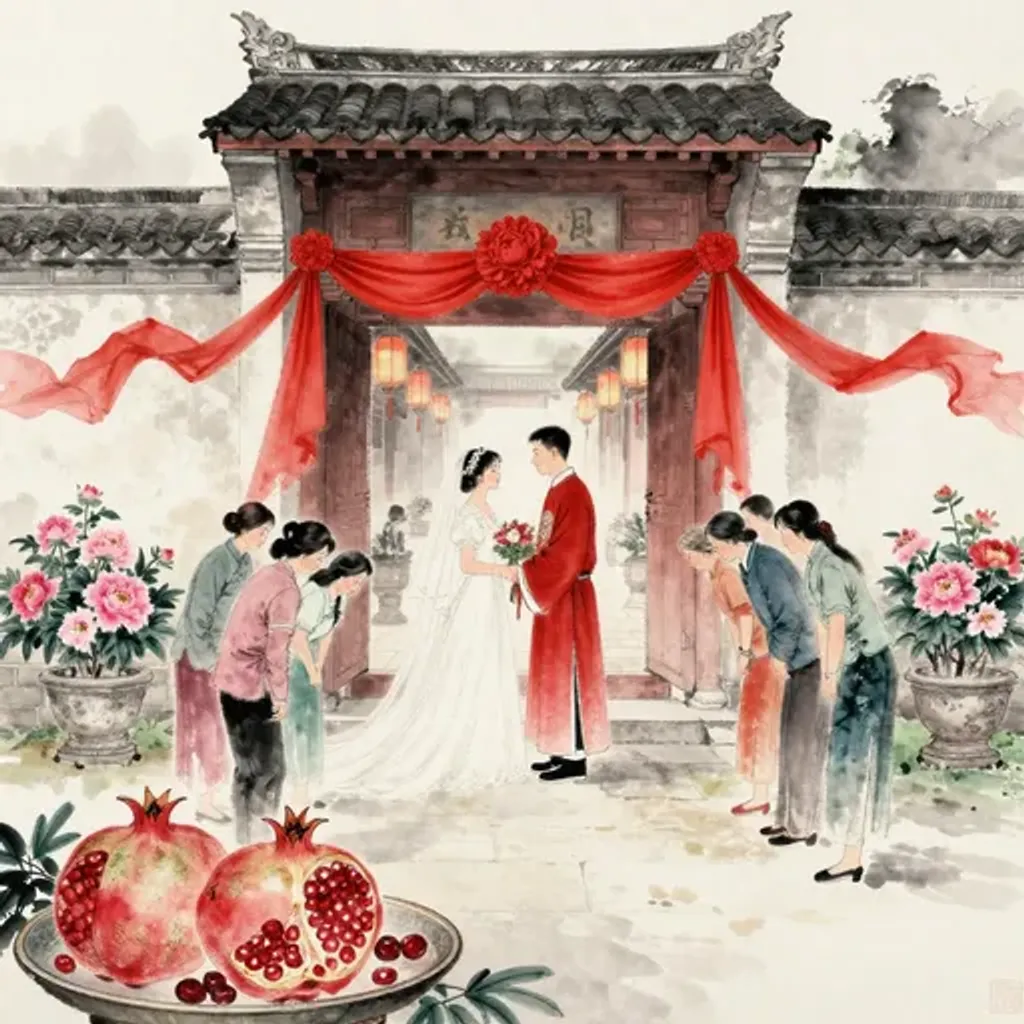
志合意同,姬姜相從;嘉耦在門,夫子悅喜。
Wills aligned, hearts in accord; the Ji and Jiang clans join together. A fine match stands at the gate; husband and master rejoice.
— Jiao Yanshou, Yilin (Forest of Changes), 1st century BC
Commentary
Thunder rests within the lake, and two hearts align as one. Ji and Jiang — the great aristocratic clans whose intermarriage structured Zhou political life — join together, following each other in purpose and desire. A fine match stands at the gate, and the lord of the house rejoices. The verse celebrates the ideal of marital harmony grounded in shared lineage and mutual respect: when the proper families unite, prosperity flows naturally. From Following to Contemplation, the wind sweeps across the earth and the sage-king surveys his people. The domestic felicity of a good marriage becomes the foundation from which broader vision and governance radiate outward.
隨 → 噬嗑
Hexagram 17 → Hexagram 21: Biting Through
Changing lines: 5, 6
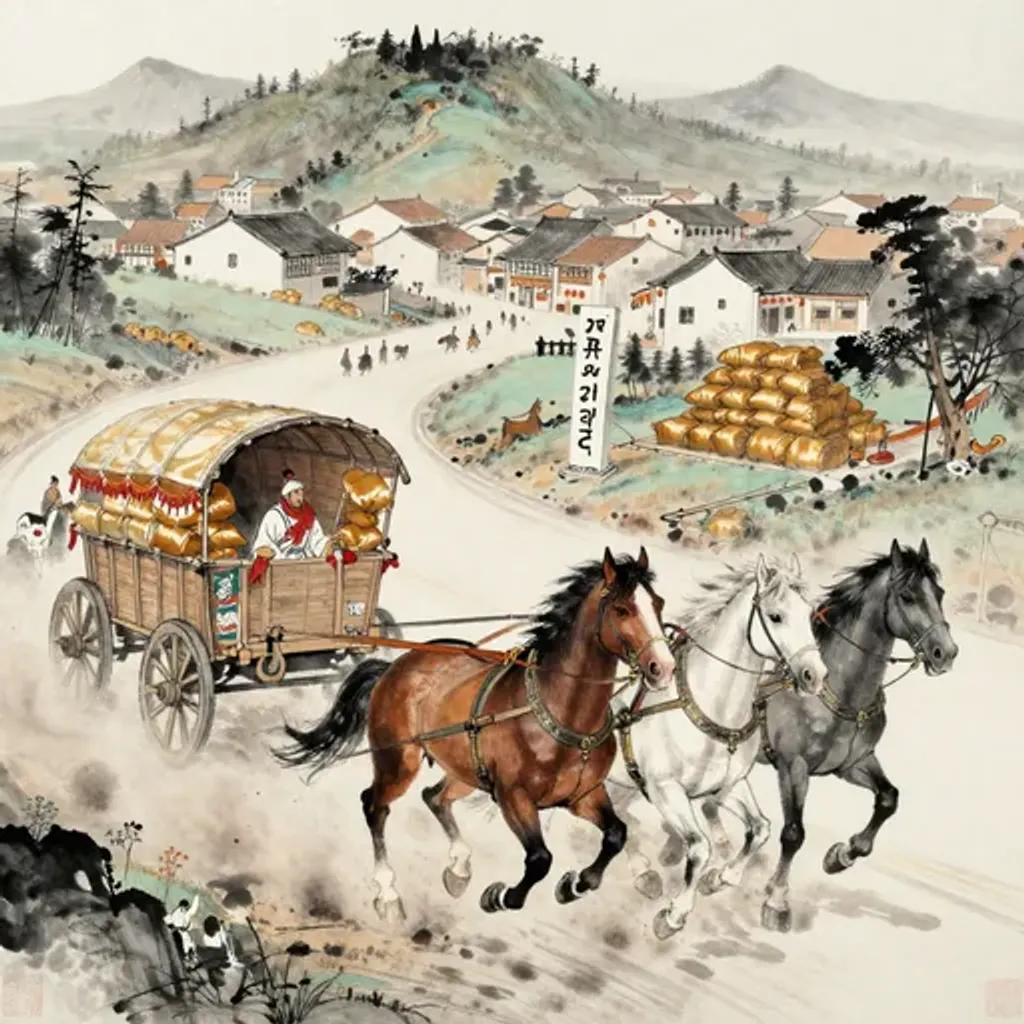
白馬駮騮,更生不休;富有商人,利得如丘。
White horse, dappled steed, breeding without cease; a wealthy merchant -- profits piled like hills.
— Jiao Yanshou, Yilin (Forest of Changes), 1st century BC
Commentary
Thunder rests within the lake, and fine horses — white, dappled, and bay — breed ceaselessly, generation after generation. Wealthy merchants accumulate profits heaped high as hills. The verse links animal husbandry with commercial abundance: when livestock multiply without pause, trade flourishes and fortune piles up. From Following to Biting Through, the dynamic shifts from organic growth to decisive action — Shi He's thunder and lightning enforce order through the market's natural law. The merchant follows the rhythm of supply and reproduction; Shi He's judicial bite ensures that transactions remain honest. Abundance generated through following natural cycles is then protected by the sharp teeth of market justice.
隨 → 賁
Hexagram 17 → Hexagram 22: Grace
Changing lines: 3, 4, 5, 6
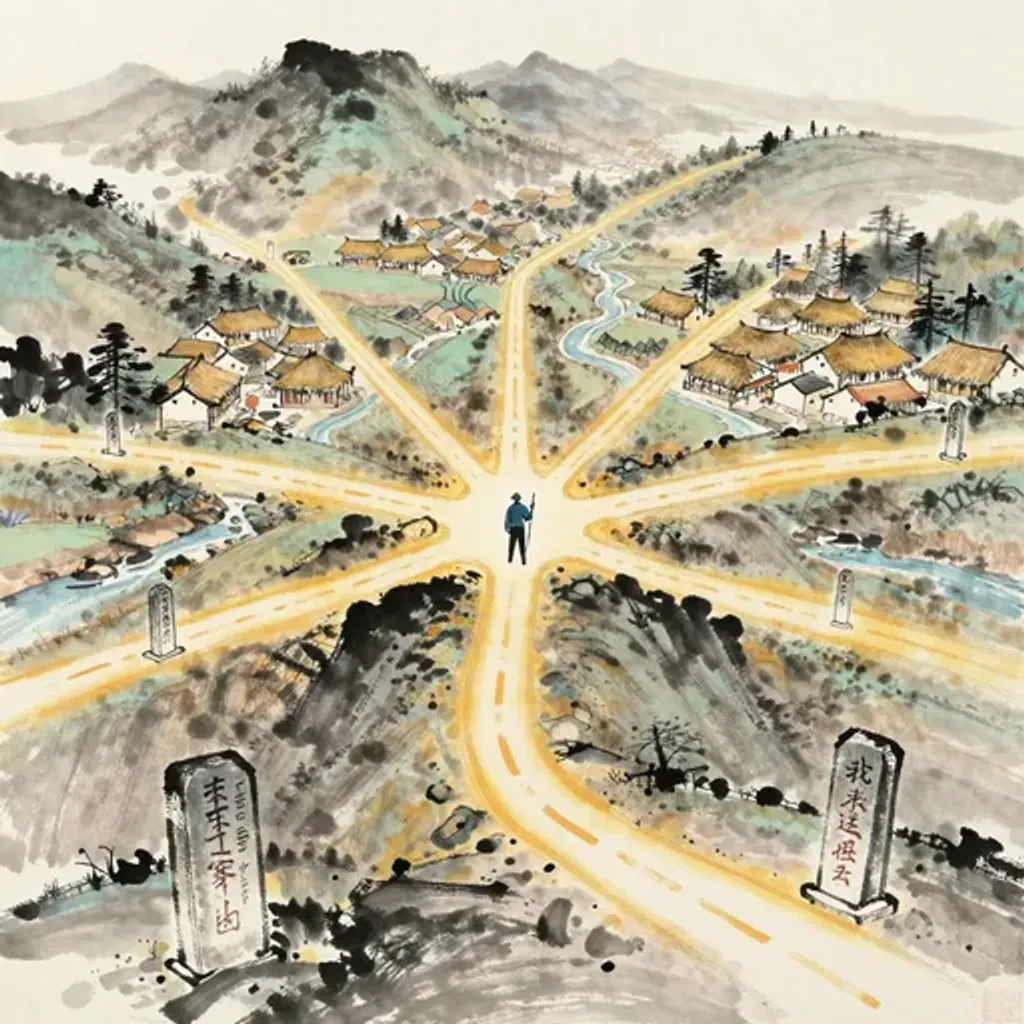
大姒夏禹,經啟九道;各有攸家,民得安所。
Great Si and the Xia Yu opened up the nine roads; each had their own domain, and the people found their place.
— Jiao Yanshou, Yilin (Forest of Changes), 1st century BC
Commentary
Thunder rests within the lake, and the verse invokes two great civilizers. Da Si — the consort of King Wen, mother of King Wu and the Duke of Zhou — and the great Yu who tamed the floods together represent the twin pillars of order: domestic virtue and the mastery of the landscape. Yu 'opened the nine routes,' carving channels for the waters so that each people might settle in their own domain. From Following to Grace, the transformation moves from raw following to cultivated beauty — the fire beneath the mountain that illuminates without consuming. Yu's engineering and Da Si's household governance both embody Bi's principle: adornment that serves structure, beauty rooted in function.
隨 → 剝
Hexagram 17 → Hexagram 23: Splitting Apart
Changing lines: 1, 4, 5, 6
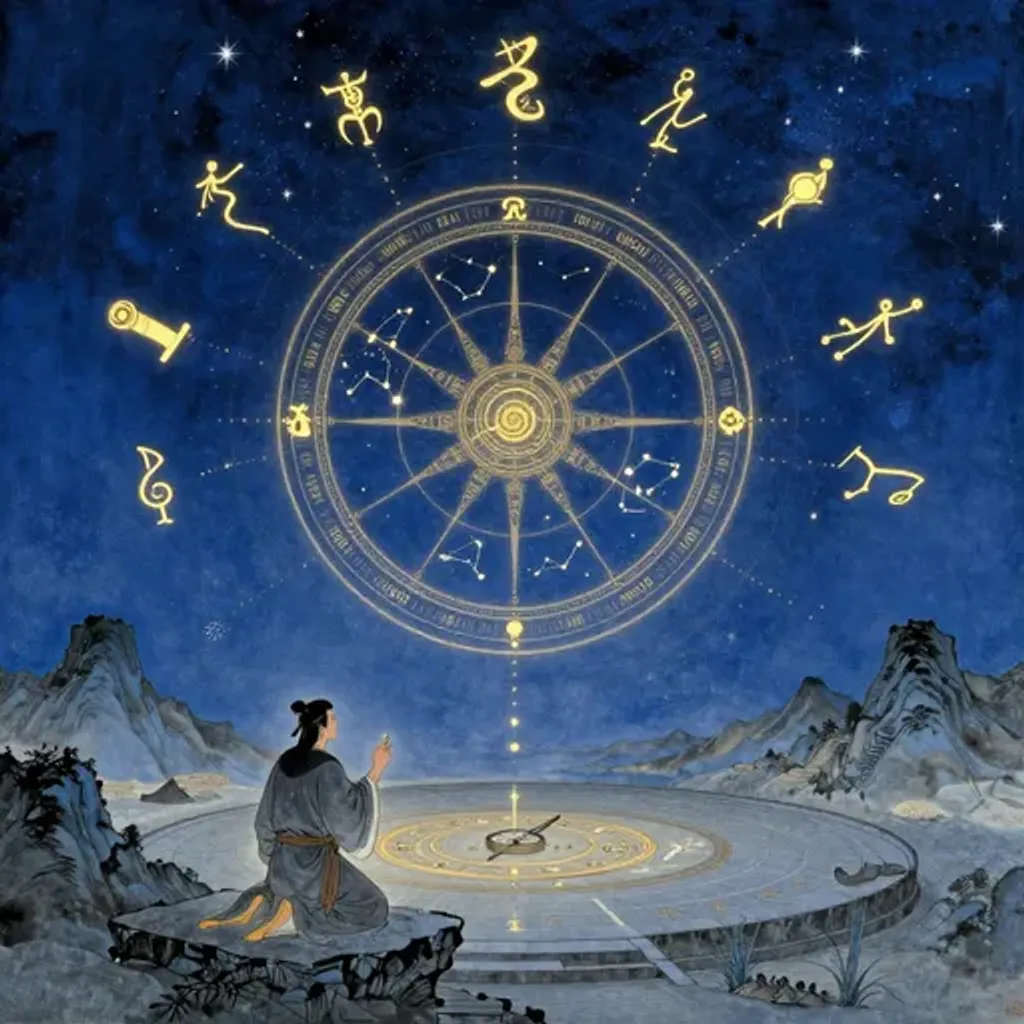
甲戊己庚,隨時轉行;不失其心,得且安寧。
Jia, wu, ji, geng -- turning with the seasons; not losing one heart, one gains peace and tranquility.
— Jiao Yanshou, Yilin (Forest of Changes), 1st century BC
Commentary
Thunder rests within the lake, and the Heavenly Stems cycle through their stations: jia, wu, ji, geng — each following the other in its appointed turn. The verse counsels following the rhythm of time without losing one's inner compass: 'Do not lose your heart, and you shall find peace and tranquility.' The Stems represent cosmological order, the rotation of days and seasons that governs all activity. From Following to Splitting Apart, the dynamic is sobering — Bo's mountain erodes upon the earth, all things stripped away. Yet the verse promises that one who keeps faith with the temporal cycle, adapting externally while holding firm internally, will remain secure even as structures crumble around them.
隨 → 復
Hexagram 17 → Hexagram 24: Return
Changing lines: 4, 5
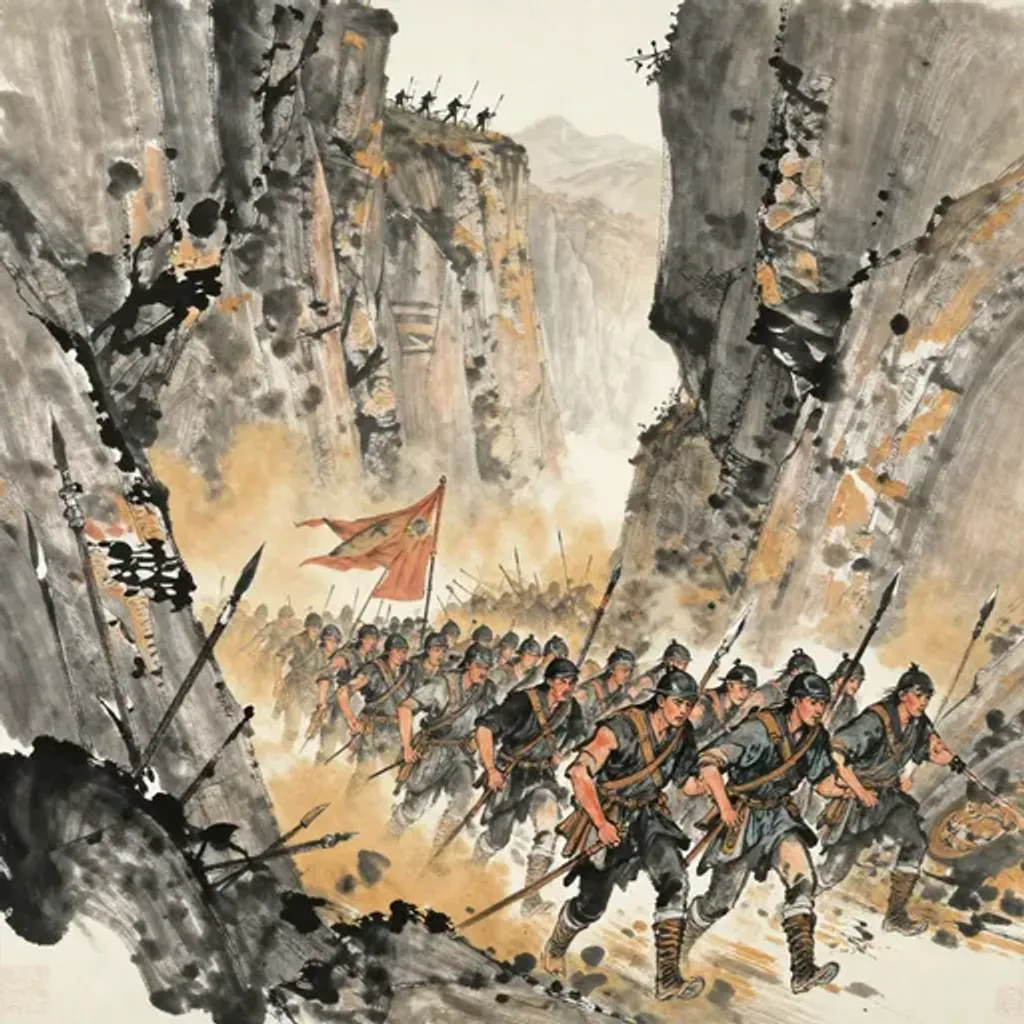
穆違百里,使孟厲武;將帥襲戰,敗於殽口。
Duke Mu defied the hundred-li rule, sending Meng to deploy Wu; the generals rushed to battle and were defeated at the pass of Xiao.
— Jiao Yanshou, Yilin (Forest of Changes), 1st century BC
Commentary
Thunder rests within the lake, and a cautionary tale unfolds. Duke Mu of Qin defied the counsel of Baili Xi and dispatched generals Meng Mingshi, Xi Qishu, and Bai Yibing on a long-range strike. The army marched to ambush Zheng but was intercepted at Xiao Pass by Jin forces in 627 BC, suffering a devastating defeat. 'Mu defied Baili' — the duke overrode his wisest minister's warning. The generals attacked recklessly and were routed at the pass's narrow mouth. From Following to Return, the verse embodies Fu's painful lesson: when arrogant advance fails, one must return to the starting point, humbled. Duke Mu eventually recovered by listening — true following restored through contrition.
隨 → 无妄
Hexagram 17 → Hexagram 25: Innocence
Changing lines: 6
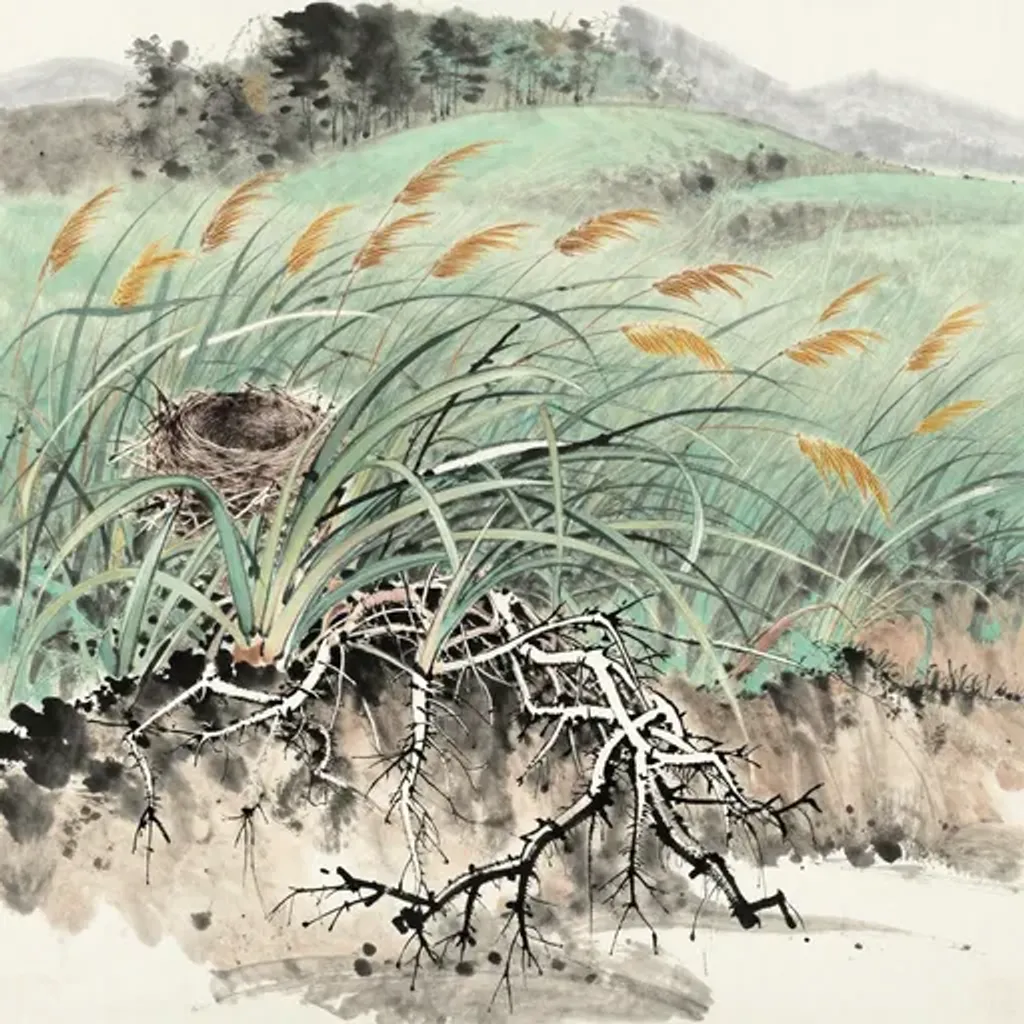
茅茹本居,與類相扶;顧慕群旅,不離其巢。
Cogon grass, rooted together, supporting its kind; gazing fondly at the flock, never leaving the nest.
— Jiao Yanshou, Yilin (Forest of Changes), 1st century BC
Commentary
Thunder rests within the lake, and rushes cling to their native soil, drawing each other up by the roots. The image echoes the I-Ching's own hexagram Tai, line six-four: 'Pulling up cogon grass by the roots, companions come along.' Here the community of plants — rooted together, supporting one another — gazes fondly at its traveling flock but never leaves the nest. The verse celebrates rootedness: following one's kind need not mean wandering abroad. From Following to Innocence, Wu Wang's thunder moves under heaven without contrivance. The rushes embody this naturalness — they do not scheme to hold fast; they simply grow where they belong, and belonging itself becomes their strength.
隨 → 大畜
Hexagram 17 → Hexagram 26: Great Taming
Changing lines: 2, 3, 4, 5, 6
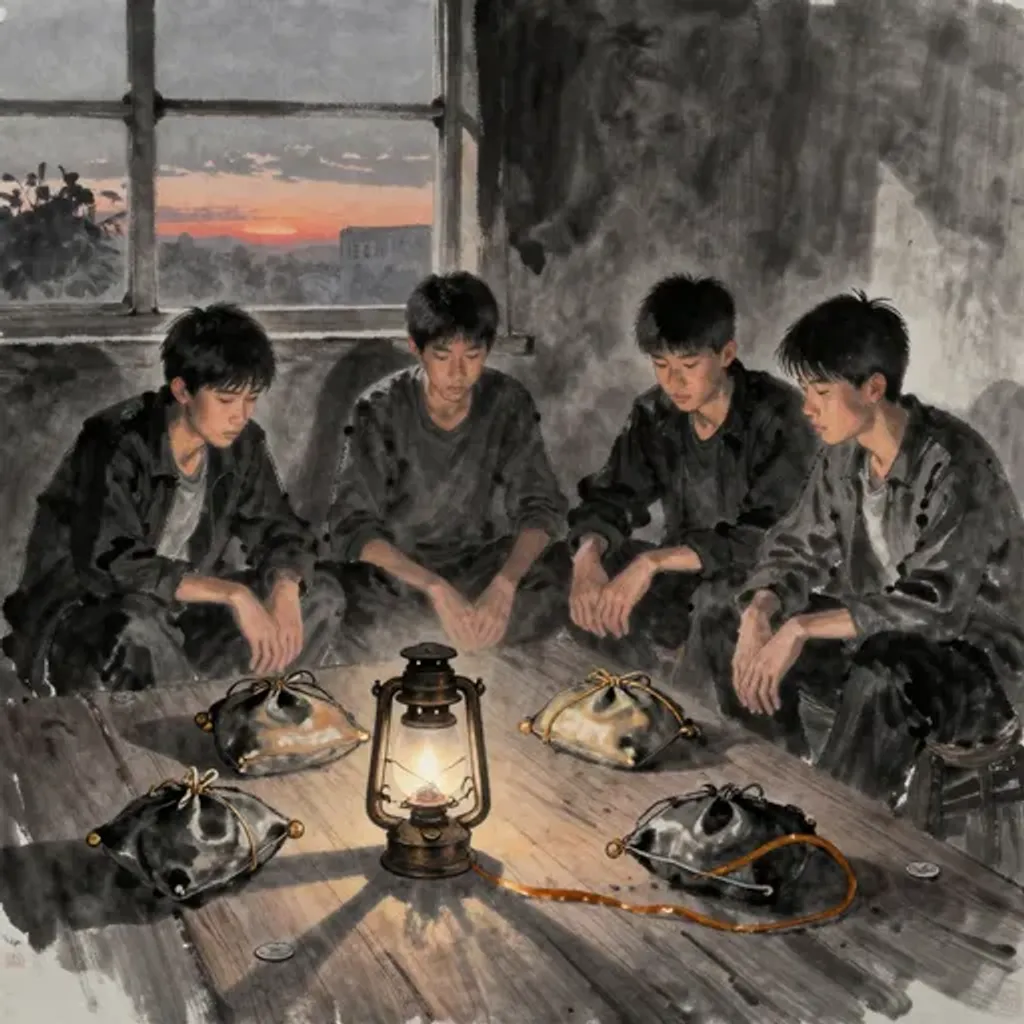
伯仲叔季,日暮寢寐;坐臥失明,喪其貝囊。
Eldest, second, third, and fourth -- at dusk they lie down to sleep. Sitting and reclining, they lose their sight; they lose their purse of coins.
— Jiao Yanshou, Yilin (Forest of Changes), 1st century BC
Commentary
Thunder rests within the lake, and four brothers — eldest, second, third, youngest — settle into evening sleep as the sun goes down. Sitting and lying in darkness, they lose their sight and their purse of cowries is stolen. The verse depicts a household drifting into negligent slumber: the orderly succession of brothers (bo, zhong, shu, ji) suggests a structured family, yet all fall asleep together and awaken to find their valuables gone. From Following to Great Taming, the irony cuts deep — Da Xu stores heaven within the mountain, accumulating wisdom and strength. Yet this family's store is plundered precisely because they followed the wrong impulse: the ease of sleep rather than the vigilance that true accumulation demands.
隨 → 頤
Hexagram 17 → Hexagram 27: Nourishment
Changing lines: 4, 5, 6
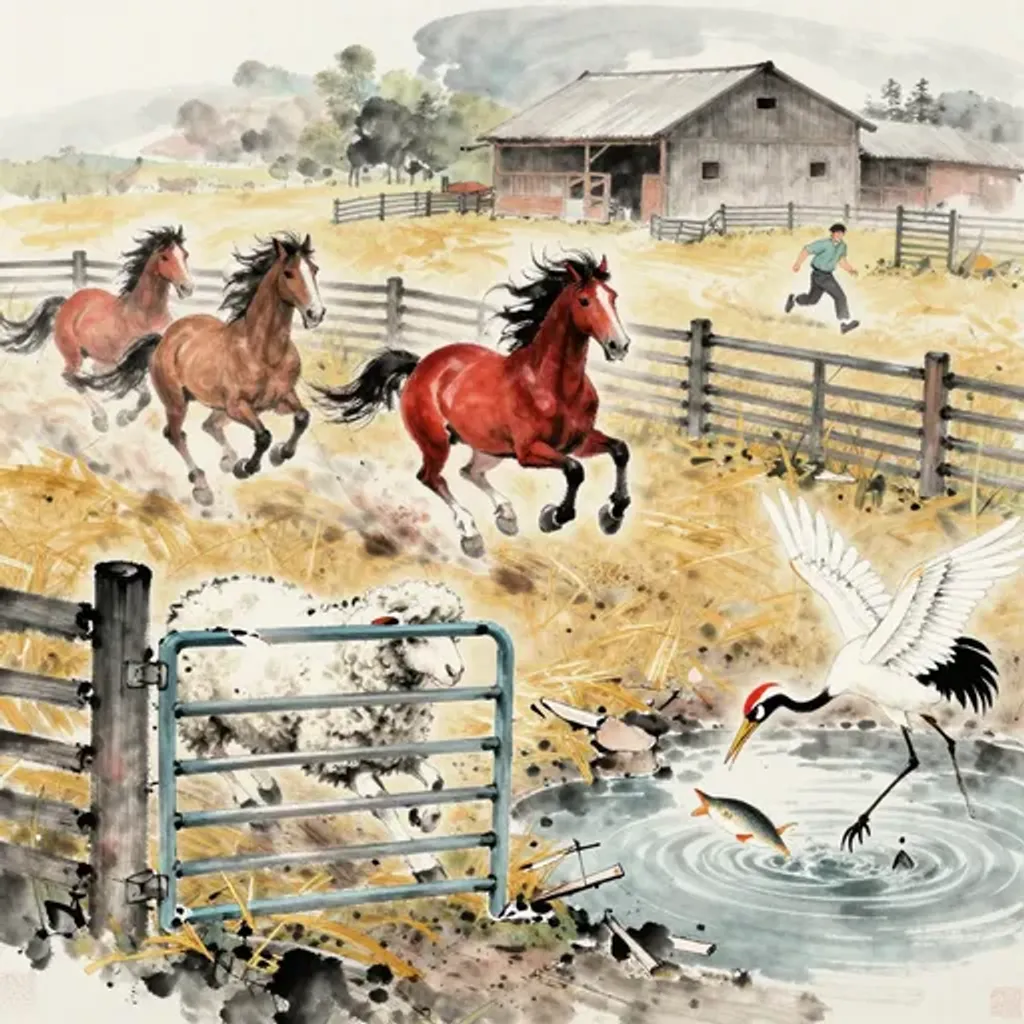
亡羊捕牢,張氏失牛;騂駟奔走,鵠盜我魚。
Mending the pen after losing the sheep; the Zhang clan lost their ox. Red horses bolt and run; the swan steals my fish.
— Jiao Yanshou, Yilin (Forest of Changes), 1st century BC
Commentary
Thunder rests within the lake, and losses multiply on every side. The sheep has fled — only now is the pen repaired, too late. The Zhang family loses its ox. Red-maned horses bolt in all directions, and a swan steals the fish. The verse piles image upon image of property slipping away: the proverb 'mend the pen after losing the sheep' signals belated action, while each subsequent loss compounds the futility. From Following to Nourishment, the transformation is pointed — Yi's mountain above thunder teaches careful speech and moderated consumption. Every lost animal here represents sustenance squandered through inattention. True nourishment requires guarding what one has before seeking more.
隨 → 大過
Hexagram 17 → Hexagram 28: Great Exceeding
Changing lines: 1, 2, 3
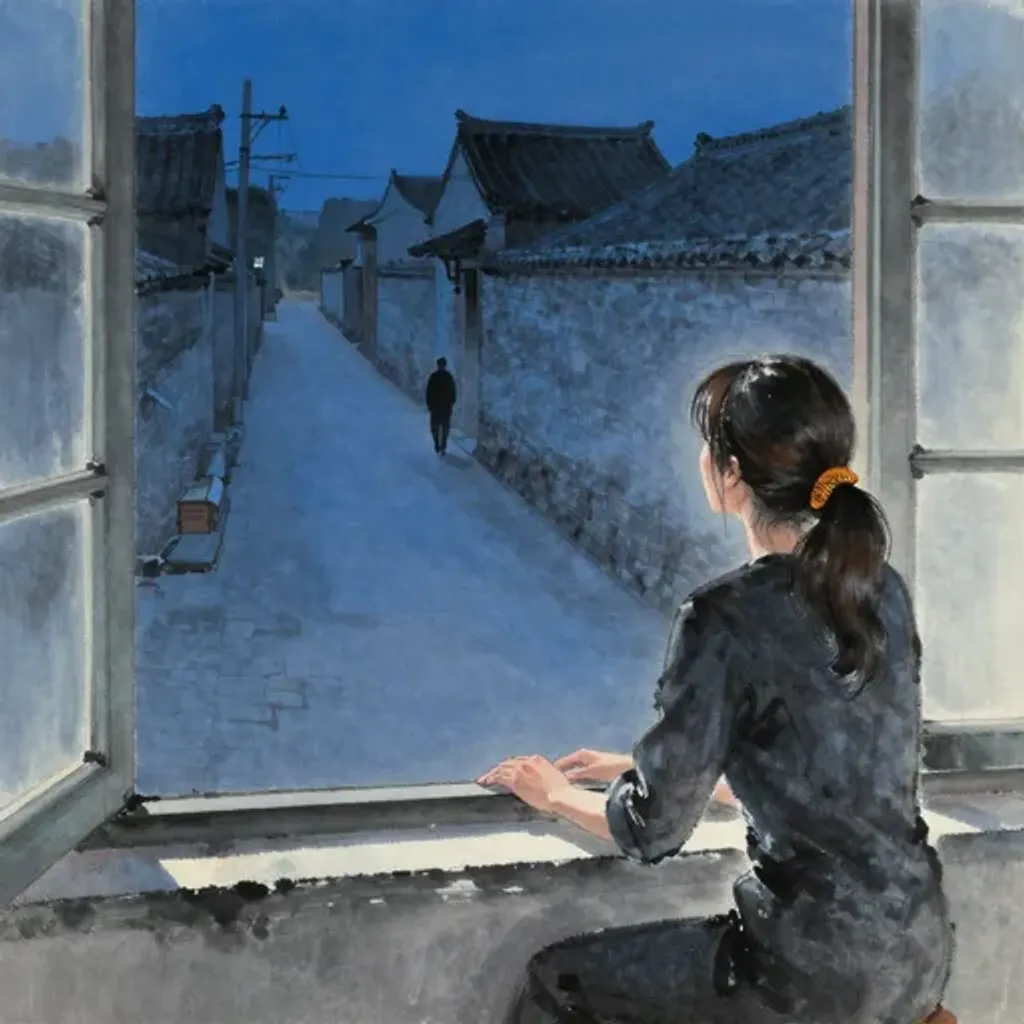
雀目燕顙,畏昏無光;思我狡童,不見子充。
Sparrow eyes, swallow forehead, fearing the dark and lacking light; I long for my handsome lad, but do not see young Zi Chong.
— Jiao Yanshou, Yilin (Forest of Changes), 1st century BC
Commentary
Thunder rests within the lake, but sparrow-eyes and a swallow's brow signal poor vision in the gathering dusk. Fearful of the dark, unable to see, the speaker yearns for a handsome youth but cannot find Zi Chong — an allusion to the Shijing ode 'Zi Chong' from the Zheng Feng, where a woman longs for her absent lover: 'I think of my roguish lad, but Zi Chong is nowhere to be seen.' The verse layers physical blindness over emotional longing: desire follows its object into darkness but cannot locate it. From Following to Great Exceeding, the lake overwhelms the trees below — excess emotion in failing light, a search pressed beyond the limits of what vision can sustain.
隨 → 坎
Hexagram 17 → Hexagram 29: The Abysmal Water
Changing lines: 1, 2, 4
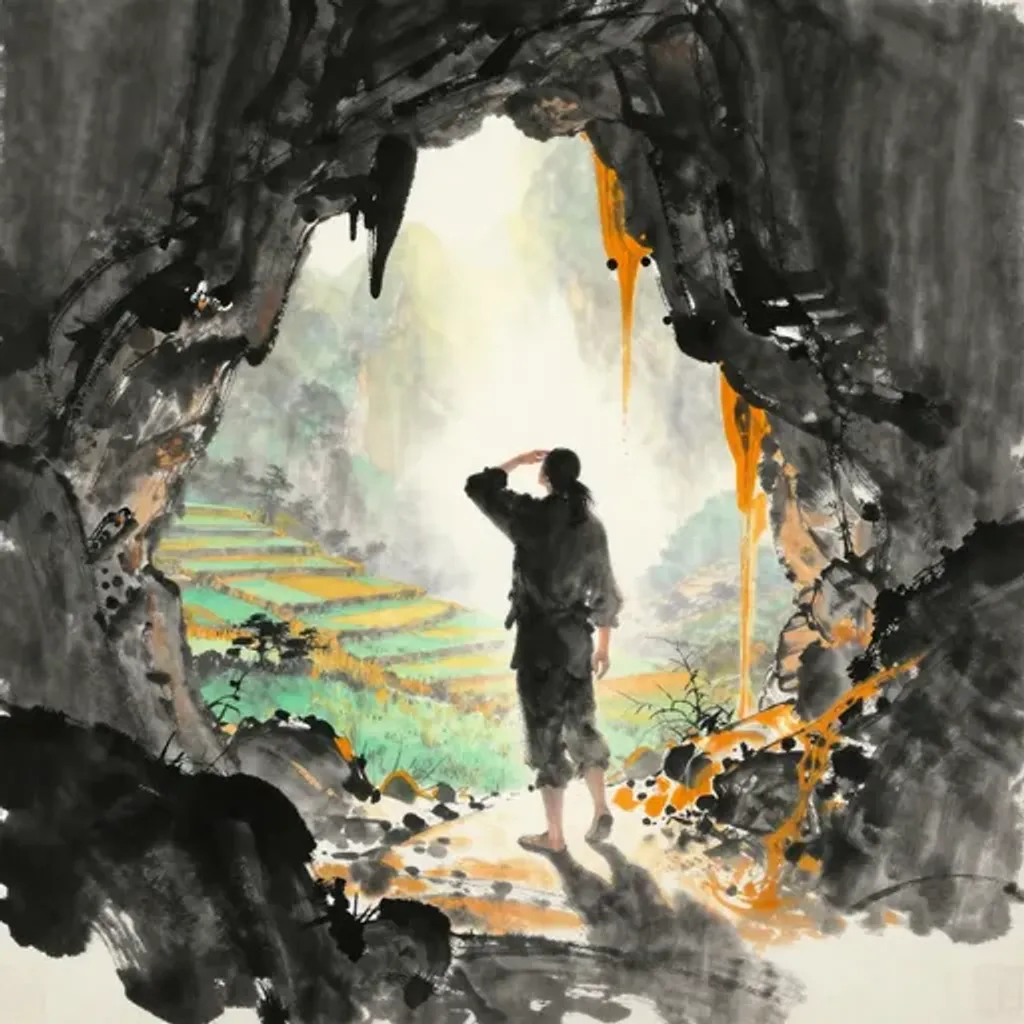
入暗出明,動作有光;運轉休息,常樂允康。
Entering darkness, emerging into light; every action has its radiance. Turning and resting in rhythm, ever joyful and at ease.
— Jiao Yanshou, Yilin (Forest of Changes), 1st century BC
Commentary
Thunder rests within the lake, and the journey moves from darkness into light. Actions shine with radiance; the cycle of effort and rest turns smoothly, bringing constant joy and abiding health. The verse is an unusually pure benediction — no danger, no irony, simply the natural rhythm of labor and repose producing wellbeing. From Following to the Abysmal, the paradox is striking: Kan represents doubled peril, water upon water, yet this verse finds within that repeated descent a rhythm of renewal. Entering darkness and emerging into light is precisely the Abysmal's discipline: one who follows the water's way — flowing through danger without resisting — discovers that the abyss itself teaches constancy.
隨 → 離
Hexagram 17 → Hexagram 30: The Clinging Fire
Changing lines: 3, 5, 6
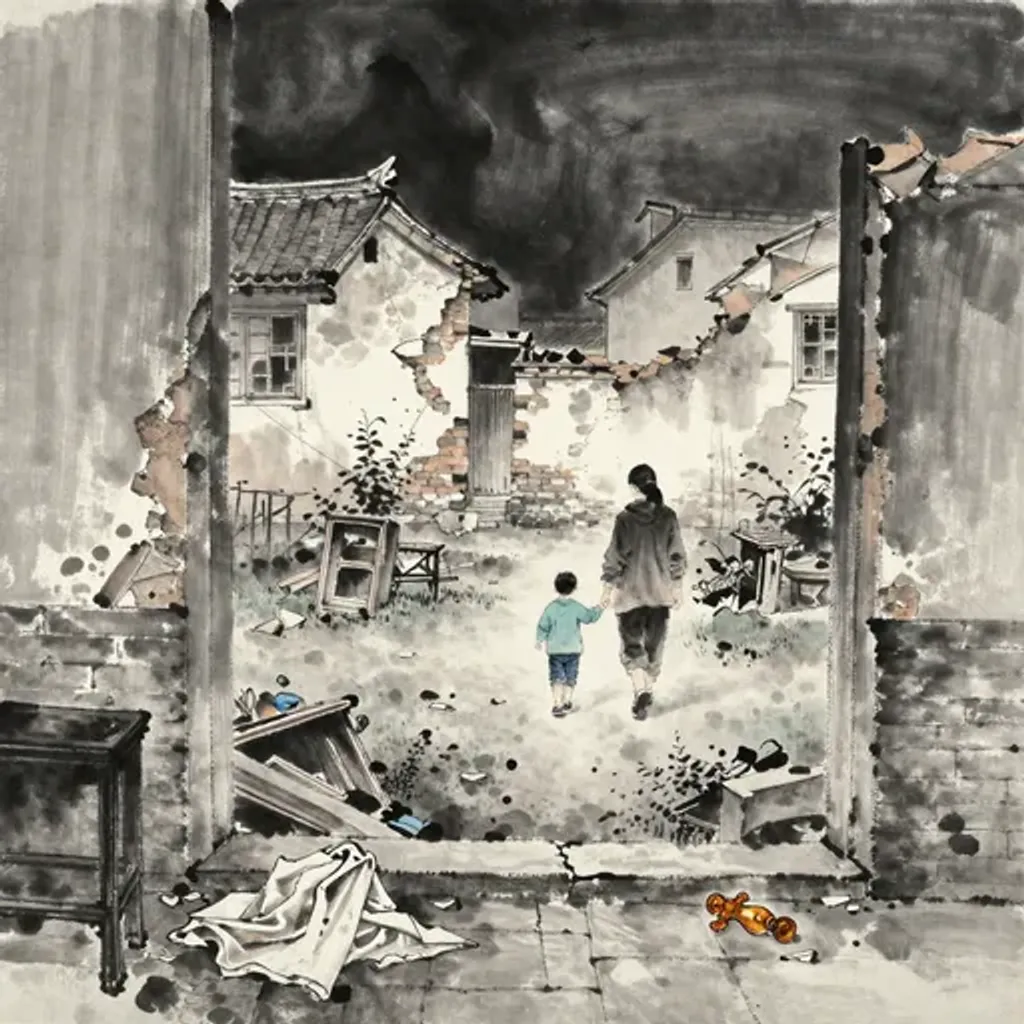
不勝私情,以利自嬰;北室出孤,毀其良家。
Unable to master private passions, entangled in self-interest; from the northern chamber an orphan emerges -- the good household is destroyed.
— Jiao Yanshou, Yilin (Forest of Changes), 1st century BC
Commentary
Thunder rests within the lake, but private desire overwhelms public duty. Unable to master selfish feeling, one entangles oneself in personal profit. From the northern chamber an orphan emerges, and a fine household is destroyed. The 'northern chamber' (北室) in classical usage often denotes the women's quarters or a concubine's room; the orphan born there signals an illicit entanglement that fractures the family. From Following to the Clinging, doubled fire illuminates without mercy — Li's clarity exposes what darkness concealed. The verse warns that following private passion rather than principle brings everything to light in the worst possible way, leaving the household in ruins.
隨 → 咸
Hexagram 17 → Hexagram 31: Influence
Changing lines: 1, 3
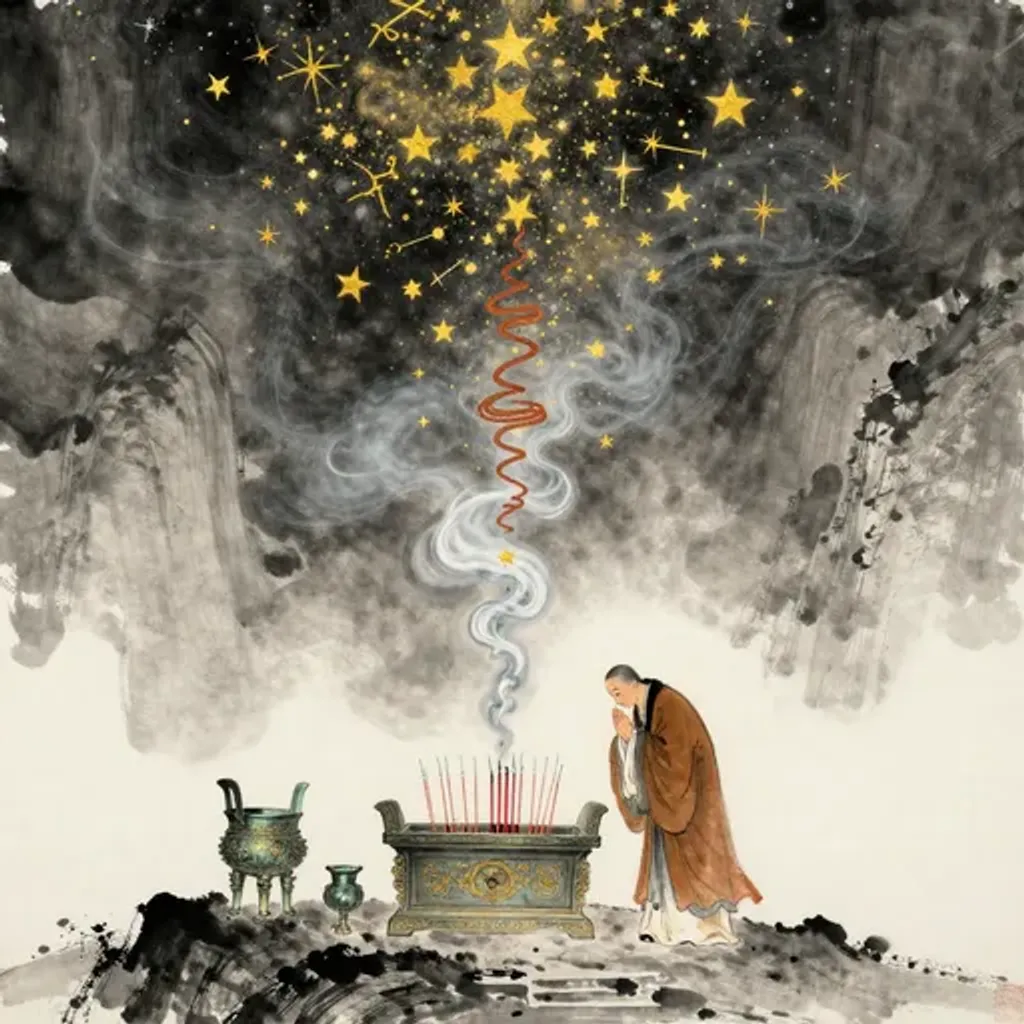
稱幸上靈,媚悅於神;受福重重,子孫蕃功。
Praising the blessings of the High Spirits, delighting the gods with offerings; blessings received in abundance -- descendants flourish and prosper.
— Jiao Yanshou, Yilin (Forest of Changes), 1st century BC
Commentary
Thunder rests within the lake, and the worshipper offers praise to the spirits above. Devotion and reverence delight the gods, who respond with blessings heaped upon blessings. Descendants multiply and achieve merit across generations. The verse depicts the ideal sacrificial exchange: sincere following of ritual protocol generates divine reciprocity. From Following to Influence, the lake atop the mountain captures heaven's moisture — Xian's open receptivity draws response from what is above. Just as the mountain's hollow summit collects dew, the empty heart of the worshipper receives the spirits' favor. Following here means following the rites with genuine feeling, and Influence confirms that such openness moves even the unseen.
隨 → 恆
Hexagram 17 → Hexagram 32: Duration
Changing lines: 1, 2, 3, 5
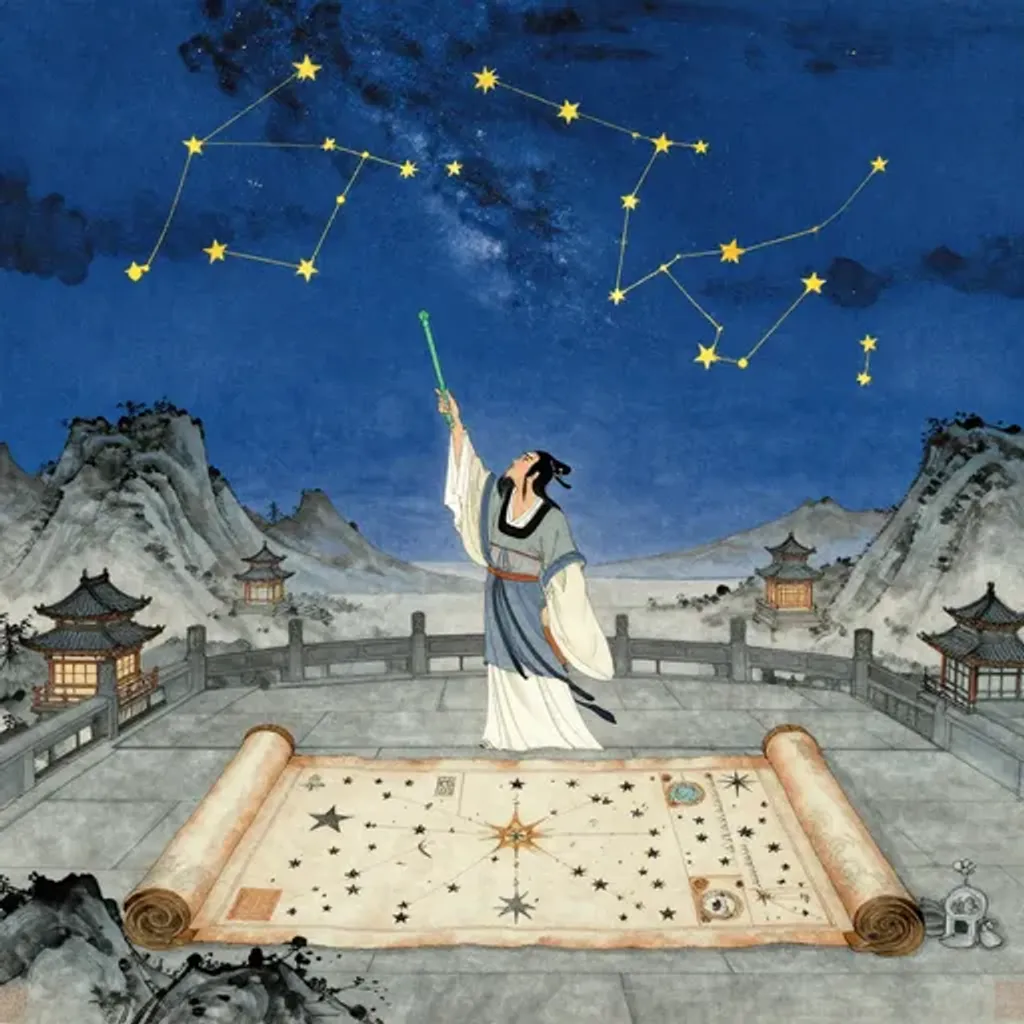
齊姜叔子,天文在位;實沉參墟,封為康侯。
Jiang of Qi and Shuzi -- the celestial pattern in its place. Shi Chen at the ruins of Shen; enfeoffed as the Marquis of Kang.
— Jiao Yanshou, Yilin (Forest of Changes), 1st century BC
Commentary
Thunder rests within the lake, and the verse weaves together marriage alliance and celestial mandate. Qi Jiang and Shu Zi — figures possibly referring to the Jiang consort of a Qi or Jin lord and a younger prince — are positioned under the governance of astral lodges. Shi Chen presides over the lodge of Shen (Orion), the stellar domain assigned to the state of Jin in the ancient fenye system of astral-territorial correspondence recorded in the Zuo Zhuan. The figure is enfeoffed as 'Marquis of Kang,' echoing the investiture of Kang Shu, founder of the state of Wei. From Following to Duration, thunder and wind sustain each other endlessly — a lineage established under heaven's stars endures because its mandate is woven into the cosmic pattern itself.
隨 → 遯
Hexagram 17 → Hexagram 33: Retreat
Changing lines: 1, 3, 6
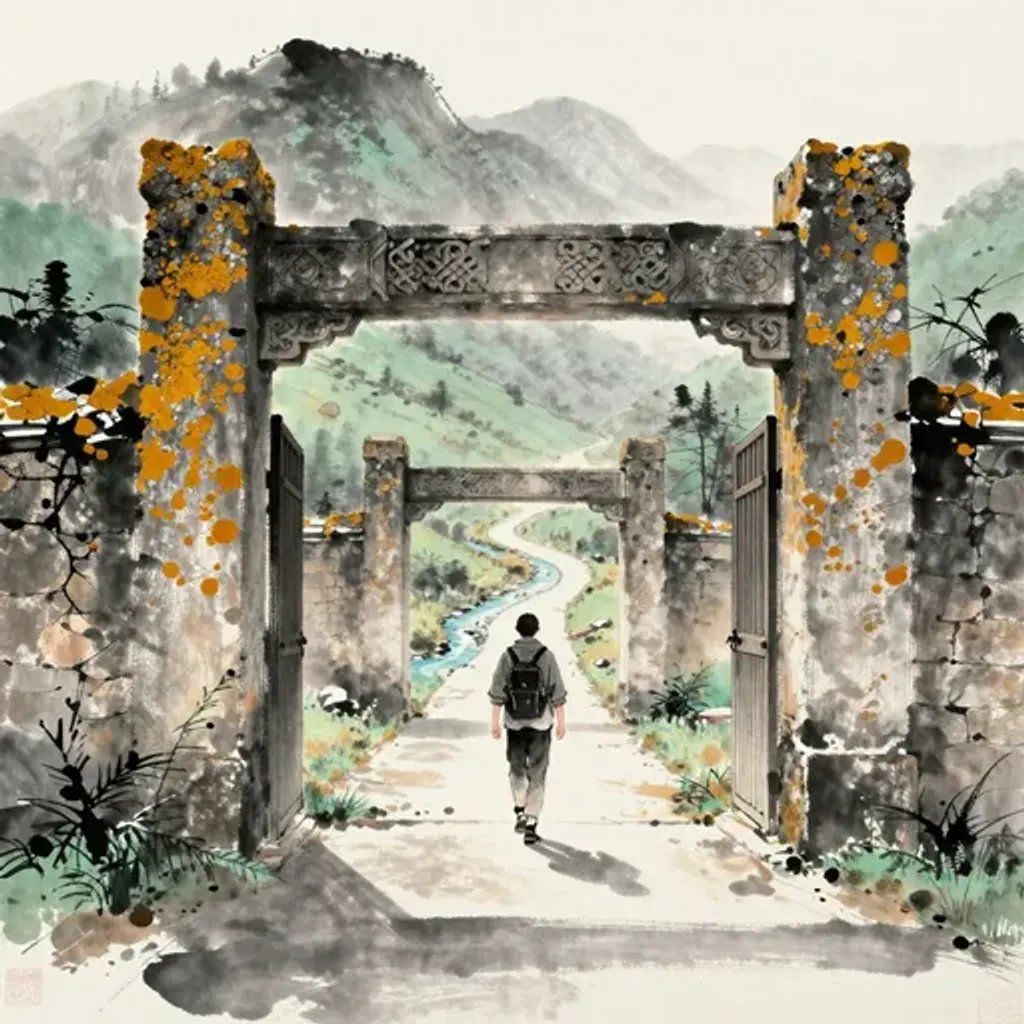
遨遊無患,出入安全;長受其懽,君子萬年。
Roaming without misfortune, going out and returning in safety; enjoying lasting happiness, the gentleman lives ten thousand years.
— Jiao Yanshou, Yilin (Forest of Changes), 1st century BC
Commentary
Thunder rests within the lake, and the wanderer moves freely without harm. Going out and coming in, all is safe and sound. Joy extends without end, and the gentleman lives ten thousand years. The verse is a pure blessing of longevity and security — the traveler who follows the proper path encounters no danger, and his happiness stretches to the horizon. From Following to Retreat, the apparent contradiction resolves beautifully: Dun's heaven above the mountain is the sage's strategic withdrawal from the world, not flight from danger but a chosen departure that preserves integrity. The gentleman's endless joy comes precisely from knowing when to retreat — following the wisdom of timely withdrawal ensures that pleasure endures forever.
隨 → 大壯
Hexagram 17 → Hexagram 34: Great Power
Changing lines: 2, 3, 5
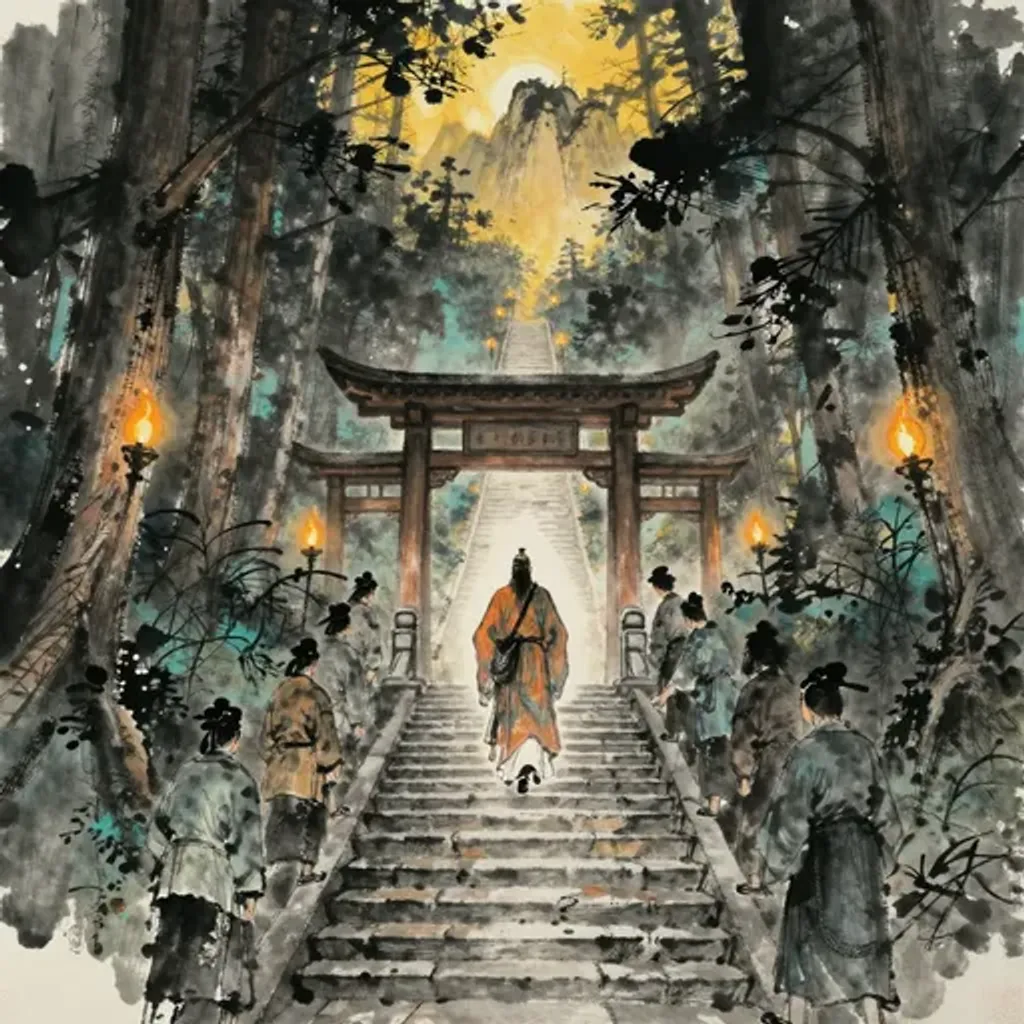
被服文德,升入大麓;四門雍肅,登受大福。
Clad in patterned virtue, ascending into the great mountain; the four gates solemn and reverent, he ascends to receive great blessings.
— Jiao Yanshou, Yilin (Forest of Changes), 1st century BC
Commentary
Thunder rests within the lake, and the verse recounts Shun's ascent to power. Clothed in civil virtue (文德), he enters the Great Forest — the test described in the Shiji where Yao sent Shun into the wilderness of wind and storm to prove his worthiness. The four gates of the court stand solemn and orderly, and Shun ascends to receive the supreme mandate. From Following to Great Power, thunder above heaven embodies irresistible force channeled through propriety. Shun did not seize power; he followed the path of virtue until power followed him. Da Zhuang's thunder does not rampage — the gentleman 'does not tread where propriety forbids.' Shun's greatness was earned by submission to tests, not by conquest.
隨 → 晉
Hexagram 17 → Hexagram 35: Progress
Changing lines: 1, 5, 6
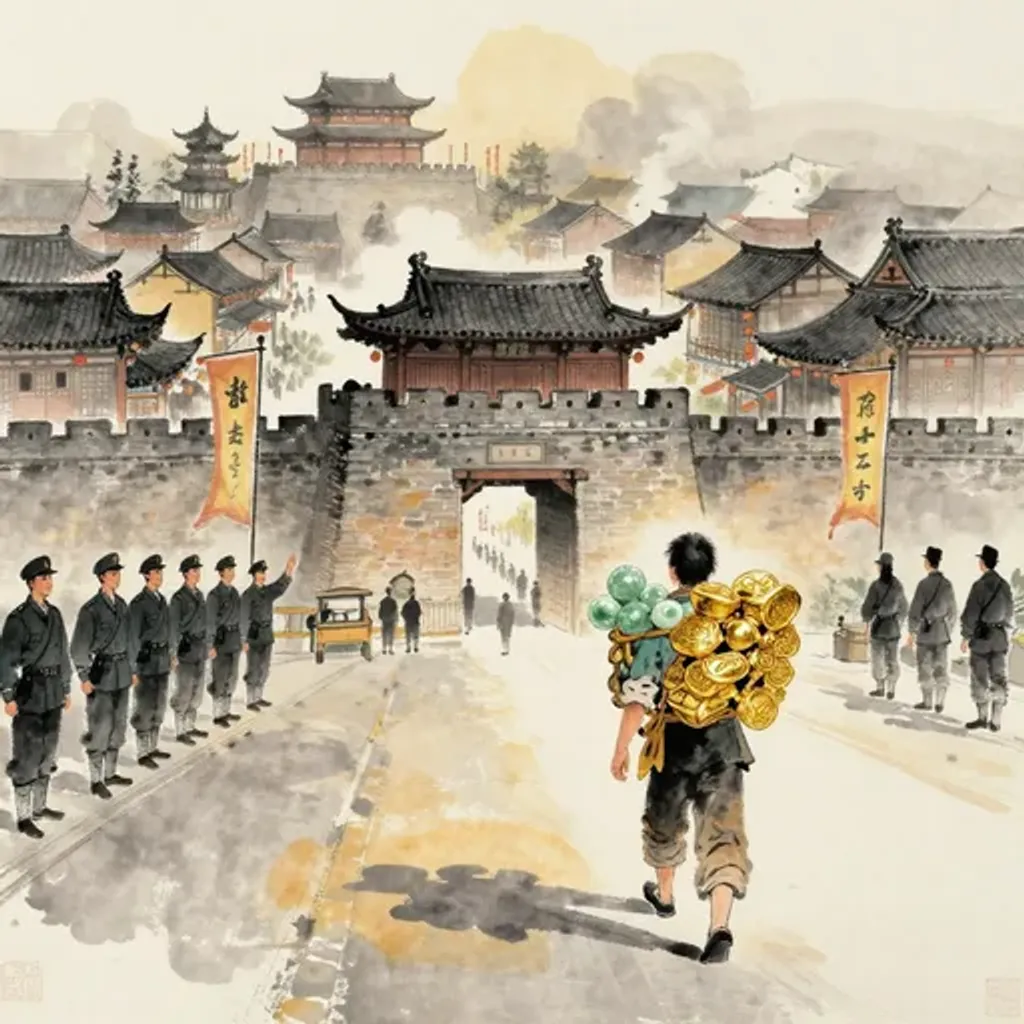
負金懷玉,南歸嘉國;蜂蠆不螫,利入我室。
Bearing gold, carrying jade, returning south to a fine land; wasps and scorpions do not sting -- profit enters my house.
— Jiao Yanshou, Yilin (Forest of Changes), 1st century BC
Commentary
Thunder rests within the lake, and the traveler carries gold on his back and jade against his breast, heading south toward a blessed homeland. Wasps and scorpions do not sting; profit enters the household unimpeded. The verse is a traveler's auspice of safe return with treasure — the road is free of venomous hazards, and wealth flows home. Southward movement is auspicious, associated with warmth and the fire trigram. From Following to Progress, fire emerges above the earth at dawn, the sun climbing the horizon. The safe journey southward mirrors Jin's dynamic of ascending illumination: following the proper direction with valuable cargo, one advances into the light without obstruction.
隨 → 明夷
Hexagram 17 → Hexagram 36: Darkening of the Light
Changing lines: 3, 4, 5
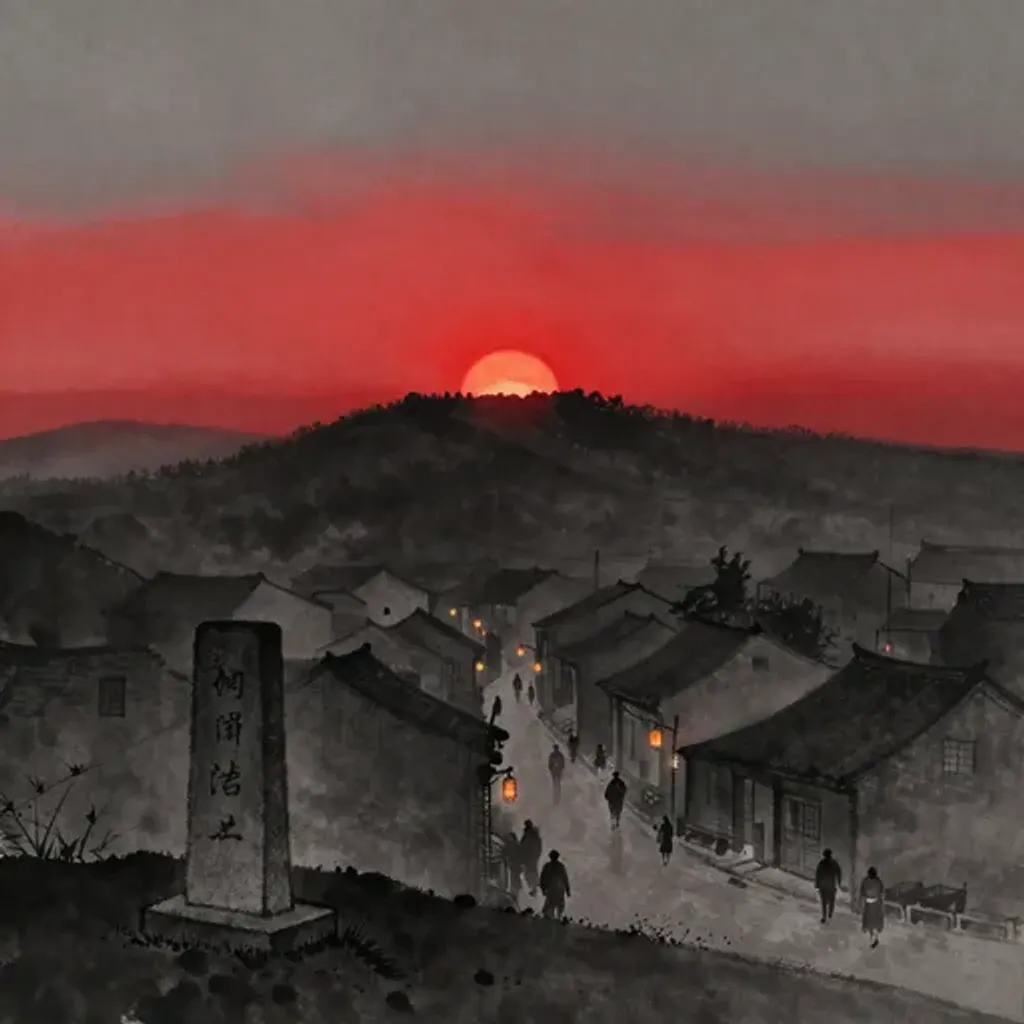
日在阜顛,鄉昧為昏;小人成群,君子傷倫。
The sun atop the hill, the countryside dims to dusk; petty men swarm together, the gentleman grieves for propriety.
— Jiao Yanshou, Yilin (Forest of Changes), 1st century BC
Commentary
Thunder rests within the lake, but the sun sits atop the hill's crest, tilting toward dusk. All that faces away from the light is shadow; twilight descends. Petty men gather in groups while the gentleman's moral order crumbles. The 'sun on the hill' is a precise image of the moment before darkness claims the sky — the exact tipping point where light yields to shadow. From Following to Darkening of the Light, fire enters the earth in Ming Yi, brilliance buried underground. The verse enacts this burial: as small men swarm, the gentleman finds his ethical bonds severed. Following in an age of declining light means following the darkness downward unless one has the wisdom to conceal one's brightness, as Ming Yi's image counsels.
隨 → 家人
Hexagram 17 → Hexagram 37: The Family
Changing lines: 3, 4, 6
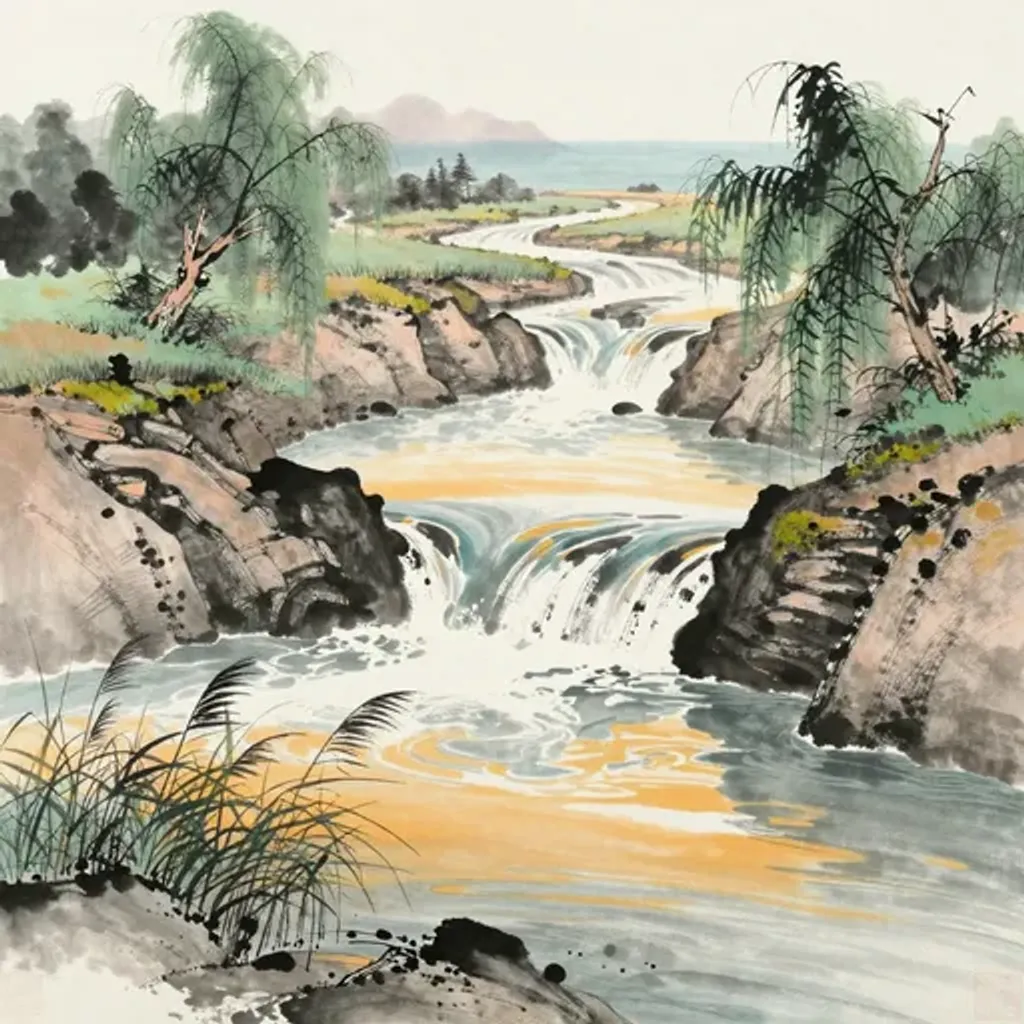
水父海母,先來鳴呴;澤皋之土,從高而處。
Water for father, sea for mother -- first they call in unison; at the marsh and the wetland, following the heights to make their dwelling.
— Jiao Yanshou, Yilin (Forest of Changes), 1st century BC
Commentary
Thunder rests within the lake, and cosmic parents call to their young. Water is the father, the sea is the mother — the primal couple whose union generates all moisture and life. They cry out first, summoning their offspring. Then the soil of marshes and wetlands, following the call, rises to settle on high ground. The verse presents a cosmogony of water and earth: parental waters call, and the land they nourish responds by seeking elevation. From Following to the Family, wind emerges from fire — warmth within radiates as influence outward. The primal family of water and earth mirrors Jia Ren's domestic order: when the parents' call is clear, each element finds its proper station.
隨 → 睽
Hexagram 17 → Hexagram 38: Opposition
Changing lines: 2, 5, 6
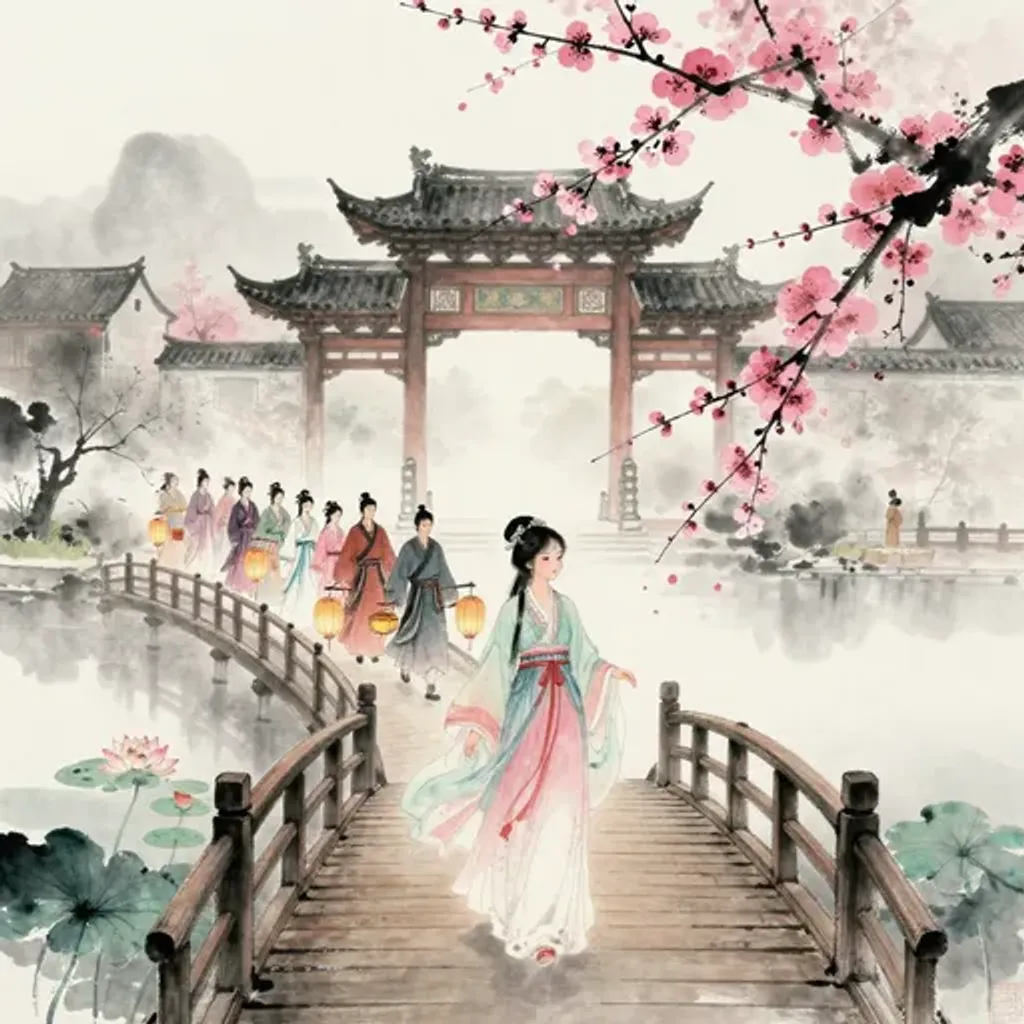
東鄰少女,為王長婦;柔順利貞,宜夫壽子。
The young woman of the eastern neighbor becomes the king chief wife; gentle, yielding, correct, and steadfast -- good for husband, blessed with sons.
— Jiao Yanshou, Yilin (Forest of Changes), 1st century BC
Commentary
Thunder rests within the lake, and a young woman from the eastern neighborhood becomes the king's chief consort. Gentle and steadfast, correct in her virtue, she brings longevity to her husband and good fortune to her children. The 'eastern neighbor's maiden' echoes the Shijing's imagery of proper courtship — the east is the direction of spring and new beginnings. Her qualities — softness, obedience, constancy — are the classical ideals of wifely virtue. From Following to Opposition, fire above and lake below pull in opposite directions, yet the gentleman 'seeks sameness within difference.' The verse shows that even within Kui's divergence, a woman of genuine virtue holds the household together, her steadfastness bridging what would otherwise fly apart.
隨 → 蹇
Hexagram 17 → Hexagram 39: Obstruction
Changing lines: 1, 3, 4
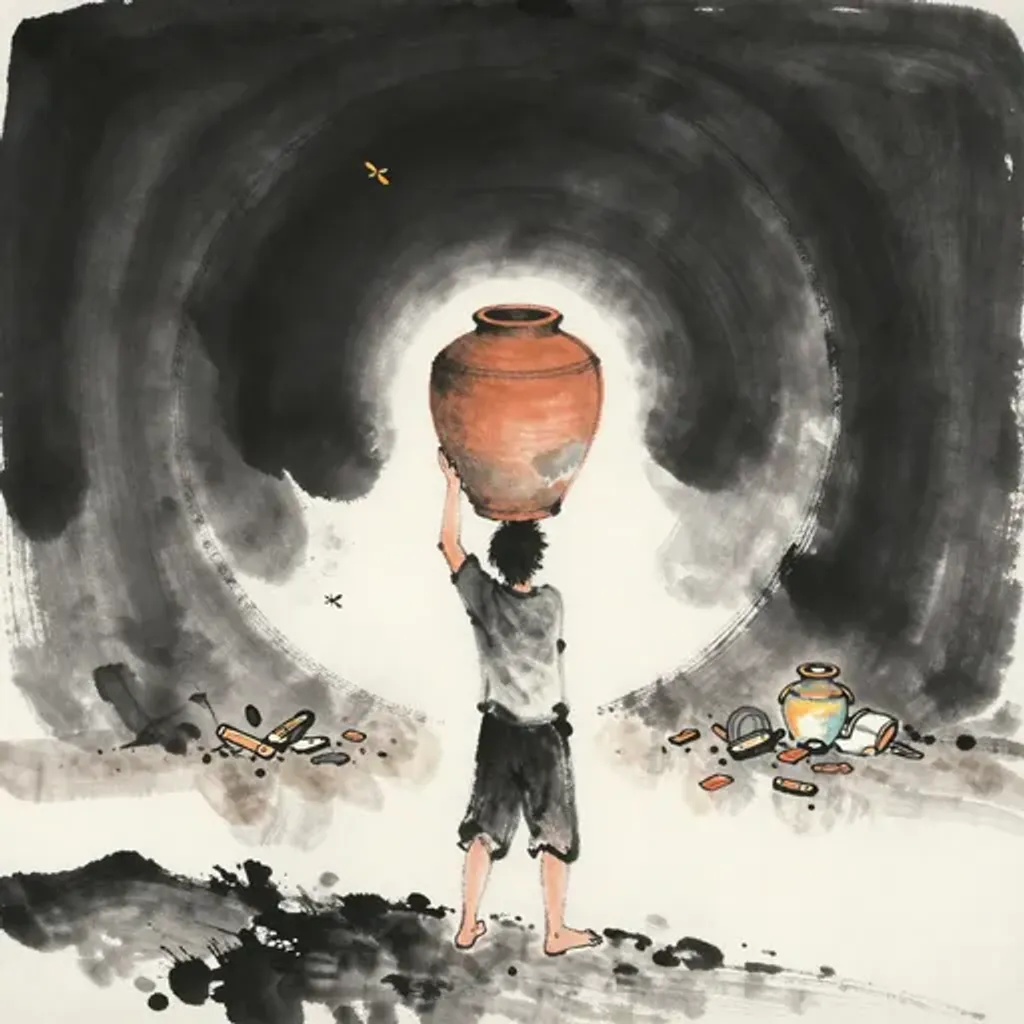
戴缾望天,不見星辰;願小失大,福逃於外。
Balancing a jar upon the head, gazing skyward; one sees no stars. Coveting the small, one loses the great -- fortune flees beyond reach.
— Jiao Yanshou, Yilin (Forest of Changes), 1st century BC
Commentary
Thunder rests within the lake, but someone balances a jar on their head and gazes at the sky, unable to see the stars. Wishing for something small, they lose what is great; fortune flees beyond reach. The image is absurd and instructive: wearing a vessel as a hat, one blocks one's own vision — the very act of grasping at a petty gain obscures the vast canopy of possibility overhead. From Following to Obstruction, water pools atop the mountain in Jian, blocking the forward path. The verse diagnoses how obstruction begins internally: the jar is self-imposed. One who follows trivial desires into blindness creates the very impediment that Jian's icy mountain road then makes impassable.
隨 → 解
Hexagram 17 → Hexagram 40: Deliverance
Changing lines: 1, 2, 5
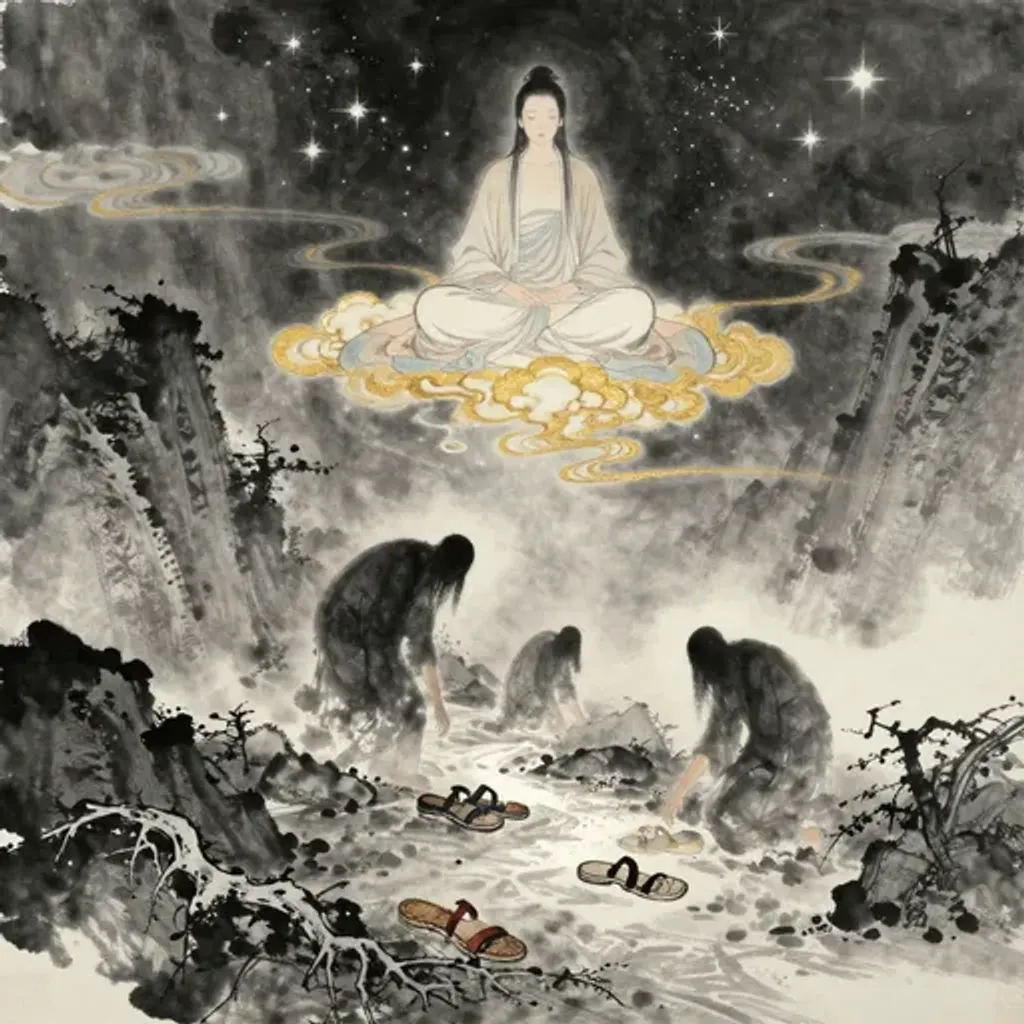
王喬不病,狗頭不痛;三尸失履,乏我逆從。
Wang Qiao knows no illness; the dog head feels no pain. The Three Worms have lost their shoes -- they lack my attendants to follow.
— Jiao Yanshou, Yilin (Forest of Changes), 1st century BC
Commentary
Thunder rests within the lake, and the immortal Wang Qiao knows no illness; the dog-headed spirits feel no pain. The Three Corpses — the Daoist inner demons that gnaw at one's vitality and hasten death — have lost their shoes and can no longer follow the adept. In Daoist physiology, the Three Corpses (三尸) reside within the body and scheme to shorten life; expelling them is the first step toward immortality. Here their 'lost shoes' signal impotence: they can neither track nor torment the practitioner. From Following to Deliverance, thunder and rain break the tension of Jie, releasing what was bound. The Three Corpses' defeat is a precise image of deliverance — bondage to internal decay is severed, and the body is freed.
隨 → 損
Hexagram 17 → Hexagram 41: Decrease
Changing lines: 2, 4, 5, 6
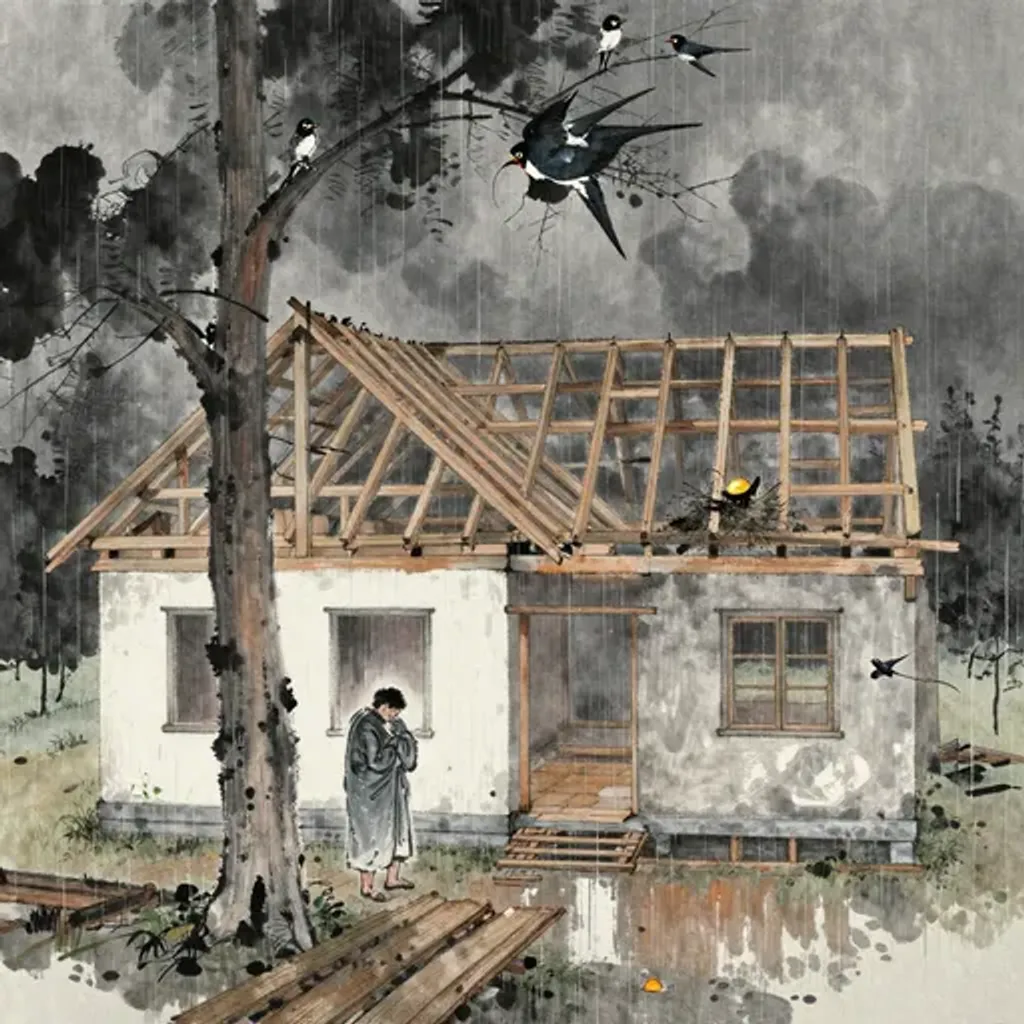
使燕築室,身無庇宿;家不容車,微我衣服。
Sending the swallow to build a house, yet having no shelter for oneself; the home cannot fit a cart -- my clothing grows threadbare.
— Jiao Yanshou, Yilin (Forest of Changes), 1st century BC
Commentary
Thunder rests within the lake, but someone commissions swallows to build a house. Predictably, the result offers no shelter — the dwelling cannot accommodate even a small cart, and the speaker's clothing is worn to threads. Enlisting migrant birds for construction is a parable of misplaced trust: swallows build mud nests under eaves, not habitable rooms. The verse satirizes futile delegation — following the wrong agent for the task at hand. From Following to Decrease, the mountain draws from the lake below in Sun, diminishing what is lower to benefit what is higher. Here the diminishment is pure waste: resources spent on an incompetent builder yield nothing, and even one's garments decay from exposure.
隨 → 益
Hexagram 17 → Hexagram 42: Increase
Changing lines: 4, 6
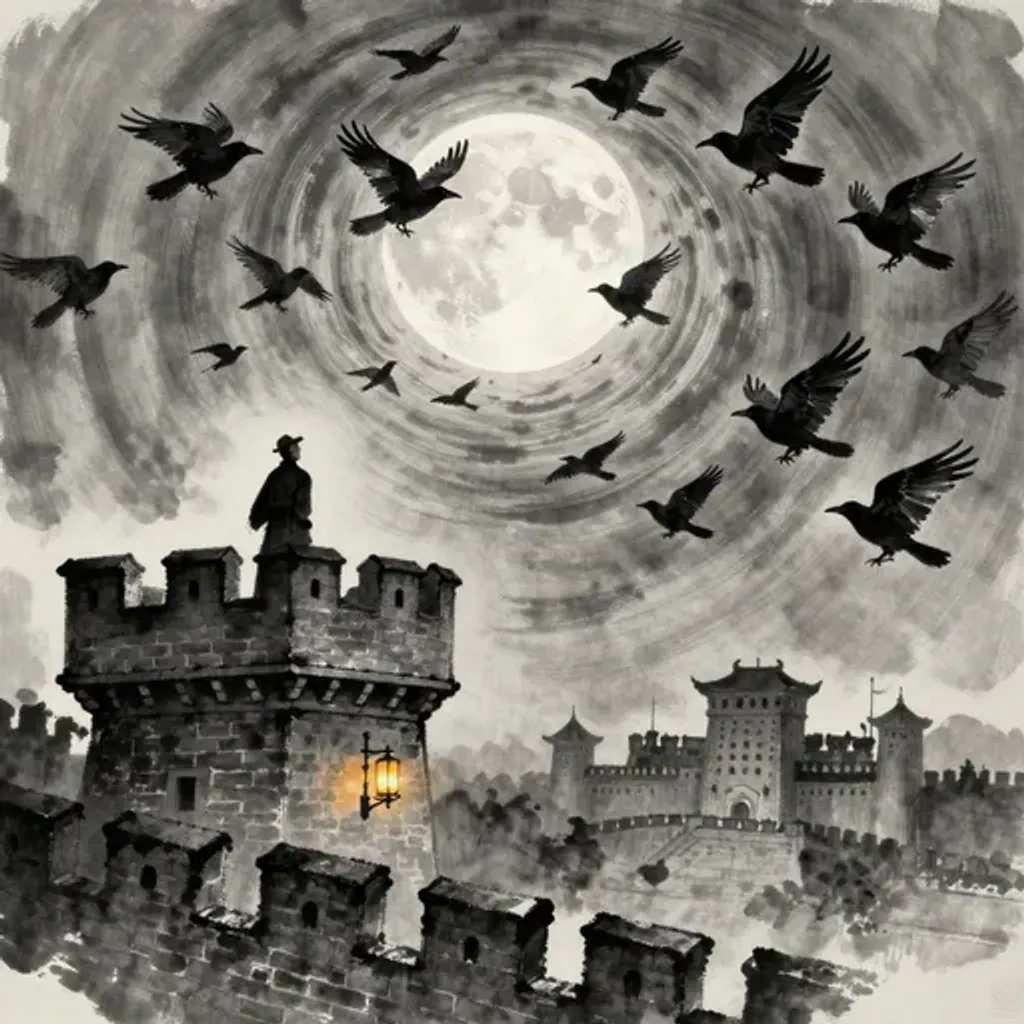
威權分離,烏夜徘徊;爭蔽月光,大人誅傷。
Authority and power split apart; crows circle restlessly by night. Vying to block the moonlight -- the great man is cut down.
— Jiao Yanshou, Yilin (Forest of Changes), 1st century BC
Commentary
Thunder rests within the lake, but authority and power have split apart. Crows circle in the night, contending to block the moonlight; a great man is struck down. The nocturnal scene is ominous: when legitimate power fragments, dark forces swarm to eclipse whatever illumination remains. The crows fighting over the moon suggest factional struggle obscuring the sovereign's radiance, and the 'great man' — the figure of central authority — is injured in the chaos. From Following to Increase, wind and thunder reinforce each other in Yi, the gentleman correcting faults and embracing virtue. The verse presents Increase's shadow: when following fractures into rivalry, even the mechanism of mutual enhancement becomes a weapon, and power meant to increase the whole instead devours its center.
隨 → 夬
Hexagram 17 → Hexagram 43: Breakthrough
Changing lines: 2, 3
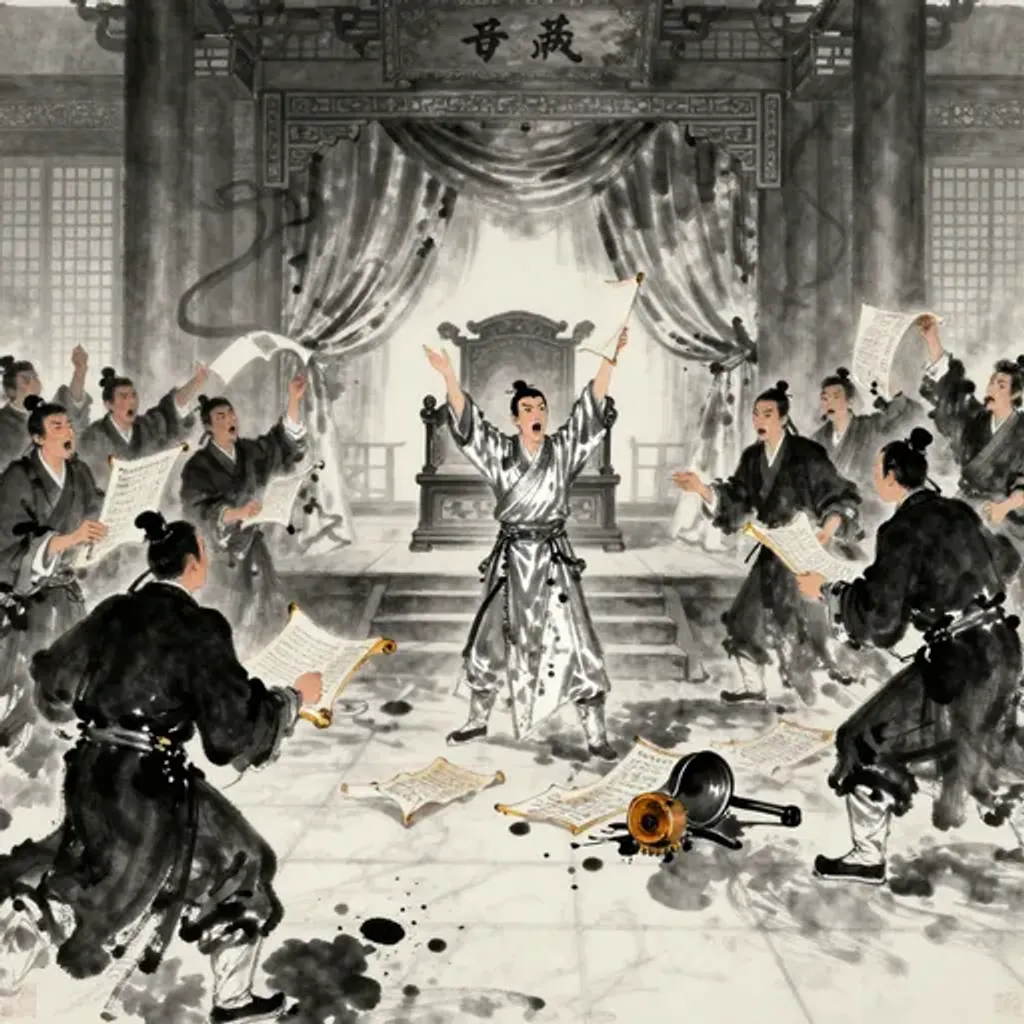
辯變白黑,巧言亂國;大人失福,君子迷惑。
Twisting black and white with clever arguments, glib words throw the state into chaos; the great man loses his fortune, the gentleman is led astray.
— Jiao Yanshou, Yilin (Forest of Changes), 1st century BC
Commentary
Thunder rests within the lake, and a silver tongue inverts black and white. Clever speech confounds the state, great men lose their good fortune, and the gentleman is bewildered. The verse targets the rhetorician who follows no truth, only persuasive effect — the sophist whose 'discernment' of right and wrong is actually the deliberate reversal of both. This recalls Zhao Gao's 'pointing at a deer and calling it a horse,' where rhetorical power overrides reality itself. From Following to Breakthrough, the lake rises above heaven in Guai, determination to expel what is corrupt. The verse shows why Guai's decisive action is necessary: when language itself has been weaponized, only a clean break can restore clarity.
隨 → 姤
Hexagram 17 → Hexagram 44: Coming to Meet
Changing lines: 1, 2, 3, 6
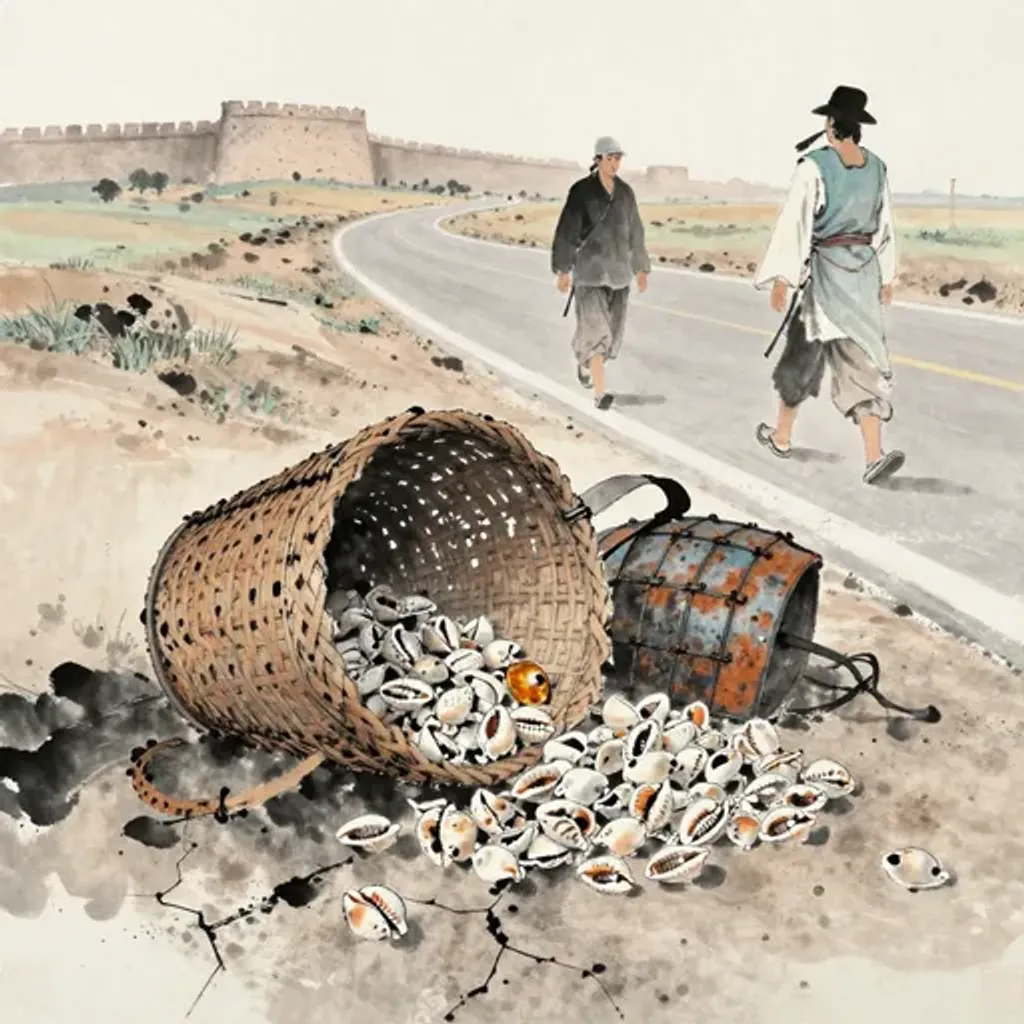
依踞甲鎧,敝筐受貝。大人不顧,少婦不取,棄捐於道。
Leaning on armor and breastplate, a worn basket receives cowrie shells. The great man does not look; the young wife will not take it -- abandoned on the road.
— Jiao Yanshou, Yilin (Forest of Changes), 1st century BC
Commentary
Thunder rests within the lake, and a figure leans against armor and battle-gear while a tattered basket holds cowrie shells. Yet neither the great man nor the young woman takes any notice — the treasure and the equipment are abandoned on the road. The verse paints a scene of valuables discarded: armor that once protected, currency that once bought loyalty, all cast aside and ignored. What should be followed — strength and wealth — finds no one willing to claim it. From Following to Coming to Meet, heaven's wind sweeps below in Gou, the unexpected encounter. Yet here the meeting is one of indifference: the encounter with abandoned value produces no uptake, and opportunity lies forsaken in the dust.
隨 → 萃
Hexagram 17 → Hexagram 45: Gathering Together
Changing lines: 1
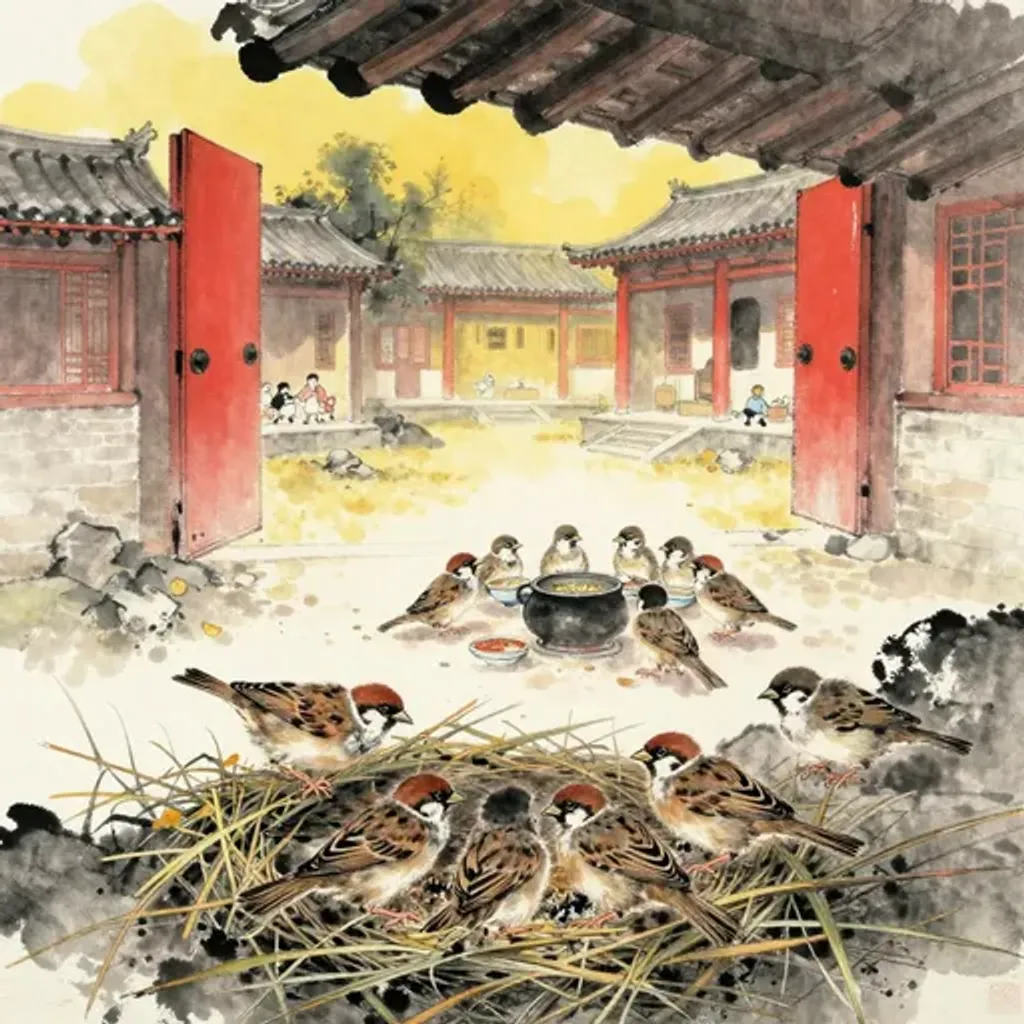
燕雀衘茆,以生孚乳。兄弟六人,妓好悌孝。得心歡欣,和悅相樂。
Sparrows and swallows carry straw to hatch and nurse their young. Six brothers, skilled in deference and filial piety -- hearts filled with gladness, harmonious and joyful.
— Jiao Yanshou, Yilin (Forest of Changes), 1st century BC
Commentary
Thunder rests within the lake, and sparrows and swallows carry straw to build nests where they brood and hatch their young. Six brothers live together in harmony, skilled and filial, delighting in one another's company with joyful concord. The nesting birds mirror the human family — natural instinct to build shelter and raise offspring becomes the foundation of fraternal love. From Following to Gathering, the lake upon the earth collects all streams. Cui's principle is congregation: what the family bonds together in affection, the state gathers through shared identity. The six brothers are a microcosm of the assembled community — following family bonds naturally scales into collective belonging.
隨 → 升
Hexagram 17 → Hexagram 46: Pushing Upward
Changing lines: 1, 2, 3, 4, 5
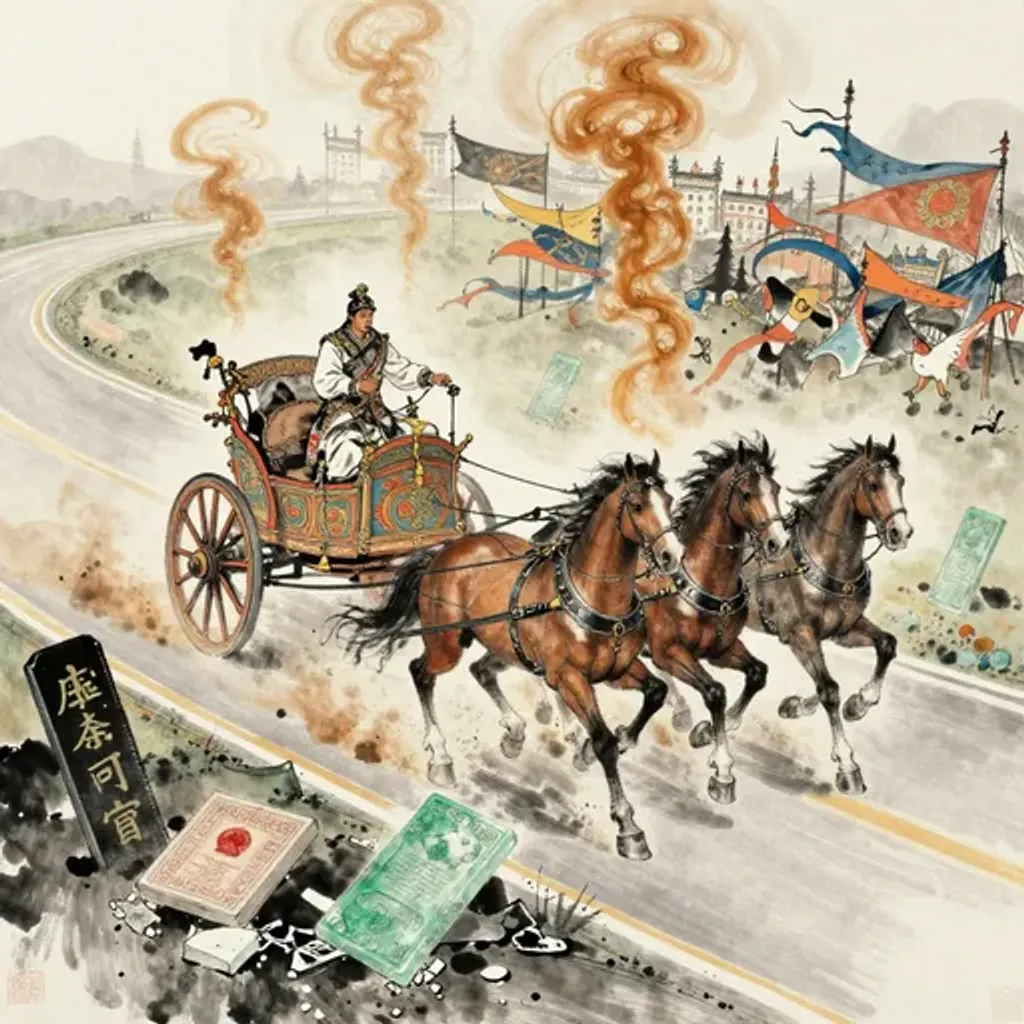
登几上輿,駕駟南遊;合從散衡,燕秦以僵。
Mounting the bench, ascending the carriage, driving four horses southward; the Vertical Alliance broken, the Horizontal dissolved -- Yan and Qin both stiffened to ruin.
— Jiao Yanshou, Yilin (Forest of Changes), 1st century BC
Commentary
Thunder rests within the lake as a lord ascends his carriage and drives a team of four horses south. The verse then invokes the great diplomatic game of the Warring States: the Vertical Alliance (合從) unites weaker states against Qin, while the Horizontal Alliance (散衡/連橫) is Qin's counter-strategy of bilateral deals to pick them off individually. The result: Yan and Qin are left in rigid deadlock. From Following to Pushing Upward, the earth conceals wood that grows slowly toward the light. The verse suggests that grand alliances, for all their strategic brilliance, can freeze into stalemate — true ascent requires organic growth from below, not top-down diplomatic maneuvering.
隨 → 困
Hexagram 17 → Hexagram 47: Oppression
Changing lines: 1, 2
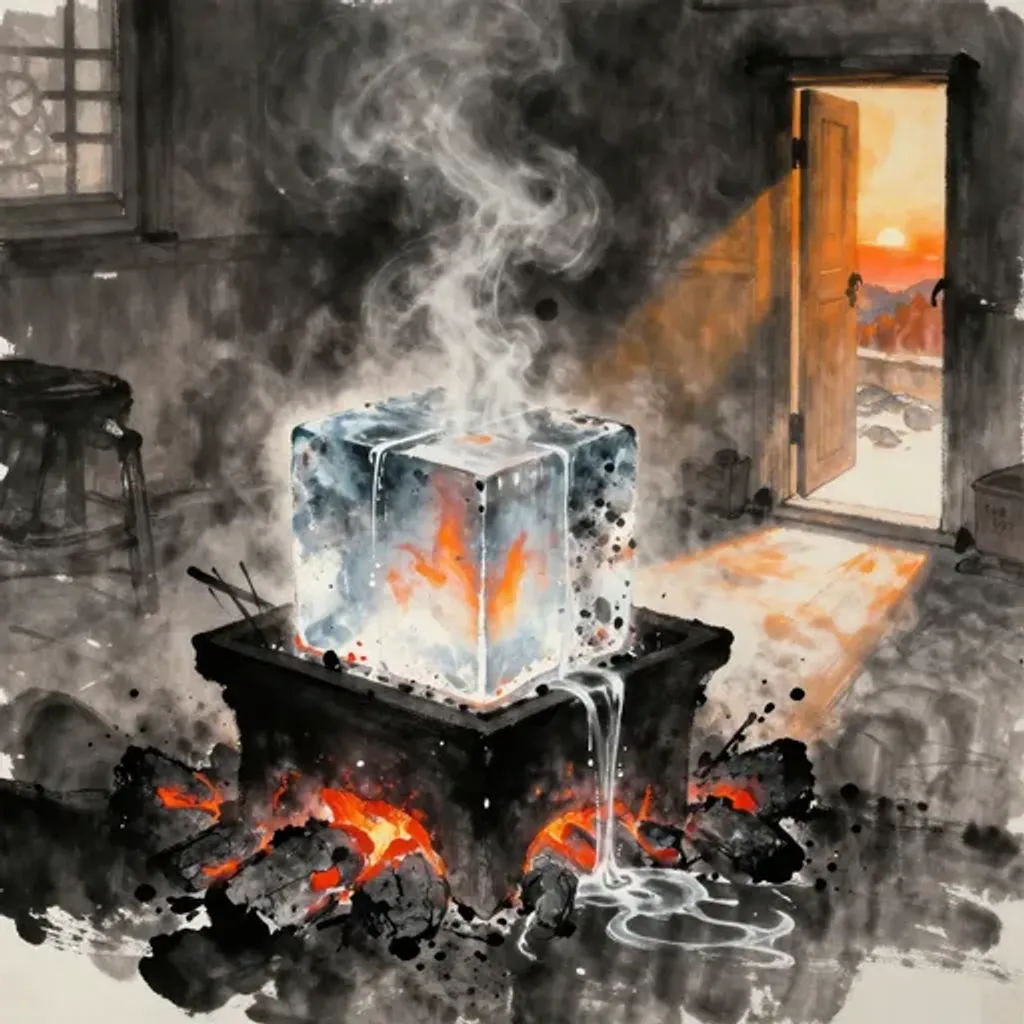
黷黷許許,仇偶相得;冰入炭室,消亡不息。
Mumbling and murmuring, enemies paired together; ice enters the charcoal chamber, melting away without cease.
— Jiao Yanshou, Yilin (Forest of Changes), 1st century BC
Commentary
Thunder rests within the lake, and a murmuring, whispering negotiation pairs enemies together. Adversaries find each other like ice entering a charcoal room — they dissolve and vanish ceaselessly. The image is thermodynamic: opposing forces brought into contact annihilate each other. The whispered match-making (黷黷許許) suggests something surreptitious about this union of contraries. From Following to Oppression, the lake has lost its water in Kun — what should sustain is drained. The verse reveals how following a hostile partner into close quarters leads to mutual destruction: both dissolve, both vanish, and the emptied lake of Kun is the residue of their fatal embrace.
隨 → 井
Hexagram 17 → Hexagram 48: The Well
Changing lines: 1, 2, 3, 4
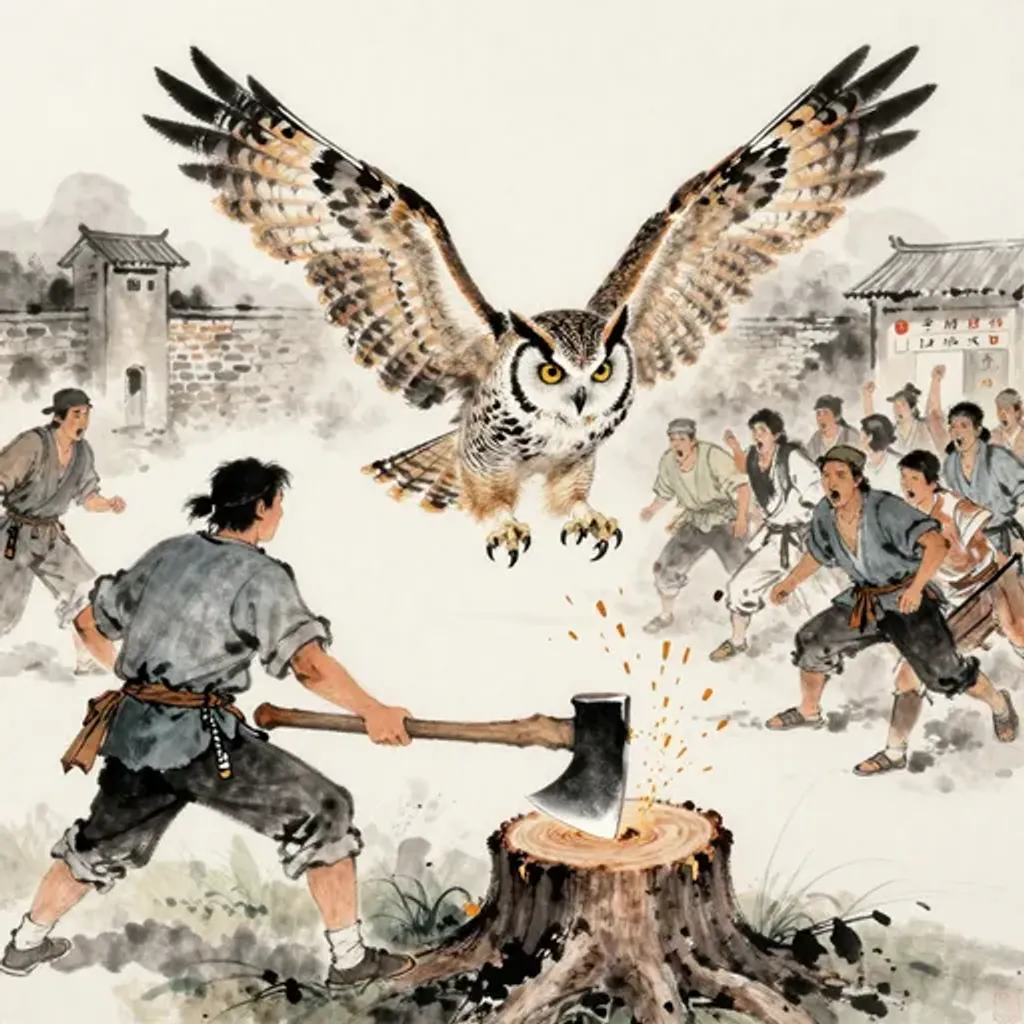
鴟鴞破斧,邦人危殆;賴其忠德,轉禍為福。傾亡復立。
The owl broke the axe; the people were in peril. Relying on his loyal virtue, he turned disaster into blessing. What was toppled stood again.
— Jiao Yanshou, Yilin (Forest of Changes), 1st century BC
Commentary
Thunder rests within the lake, and the owl has broken the axe — a direct allusion to the Shijing ode 'Chi Xiao' and the companion poem 'Po Fu' from the Odes of Bin, both attributed to the Duke of Zhou. In these poems, the owl threatens the nest and the axe is shattered in battle, representing the crisis when the Three Monitors rebelled against the young Zhou dynasty. The people stand in mortal peril. Yet loyal virtue saves them: catastrophe is transmuted into blessing, and what has been toppled is restored. From Following to the Well, water above wood draws nourishment from the depths. The Duke's fidelity functions like the well — inexhaustible, it sustains the state from below even when everything above has collapsed.
隨 → 革
Hexagram 17 → Hexagram 49: Revolution
Changing lines: 3
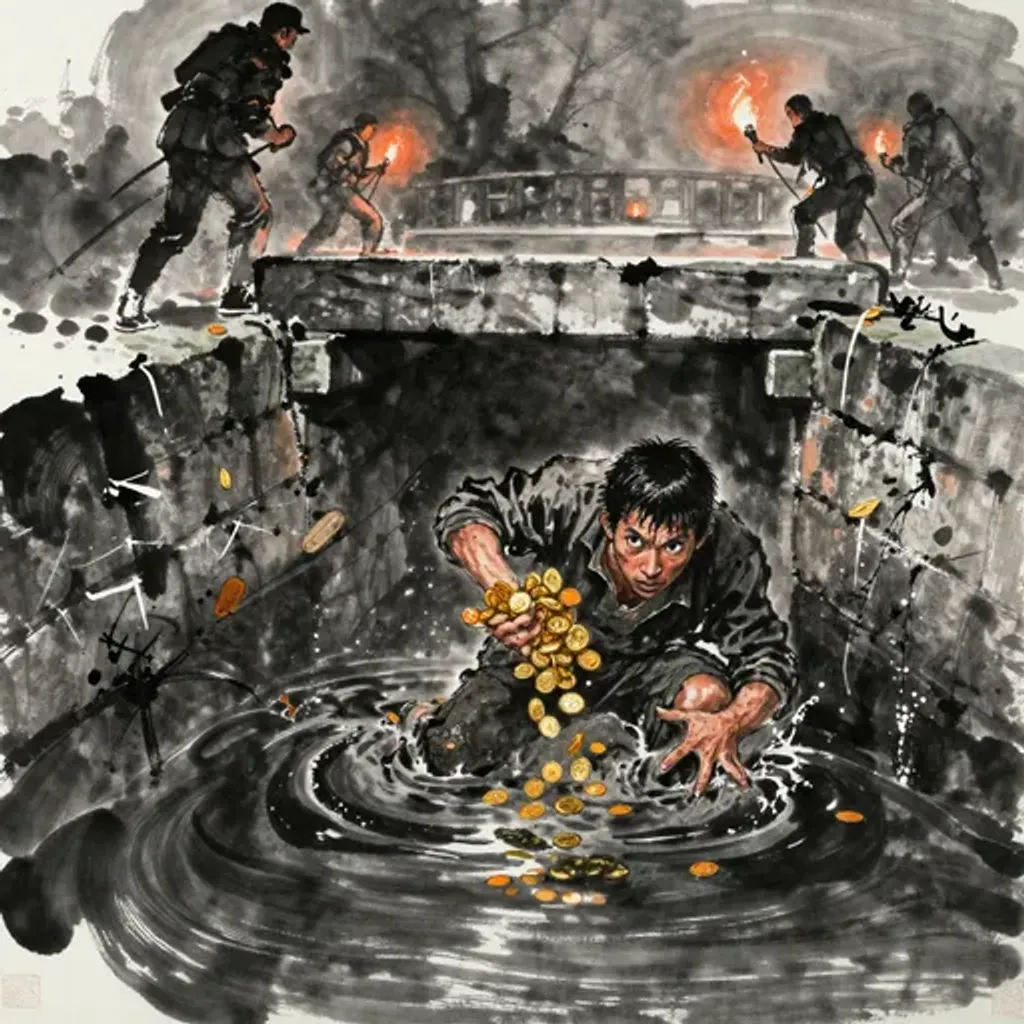
載金販狗,利棄我走;藏匿淵渠,悔折為咎。
Hauling gold, peddling dogs; profit gone, I flee. Hiding in a ditch and channel -- regret and ruin are my fault.
— Jiao Yanshou, Yilin (Forest of Changes), 1st century BC
Commentary
Thunder rests within the lake, and someone trades in gold while peddling dogs — a mercenary commerce mixing the precious with the base. Profit tempts them to flee, but hiding in ditches and channels only brings regret compounded into blame. The verse portrays a merchant caught between greed and escape: the gold is valuable but the dog-dealing is disreputable, and the combination drives the trader underground where concealment turns to self-recrimination. From Following to Revolution, fire within the lake transforms the nature of what it touches. Ge demands that what is corrupt be reformed, but this verse shows a figure who follows profit into hiding rather than facing the need for change — revolution deferred becomes accumulated guilt.
隨 → 鼎
Hexagram 17 → Hexagram 50: The Cauldron
Changing lines: 1, 2, 3, 5, 6
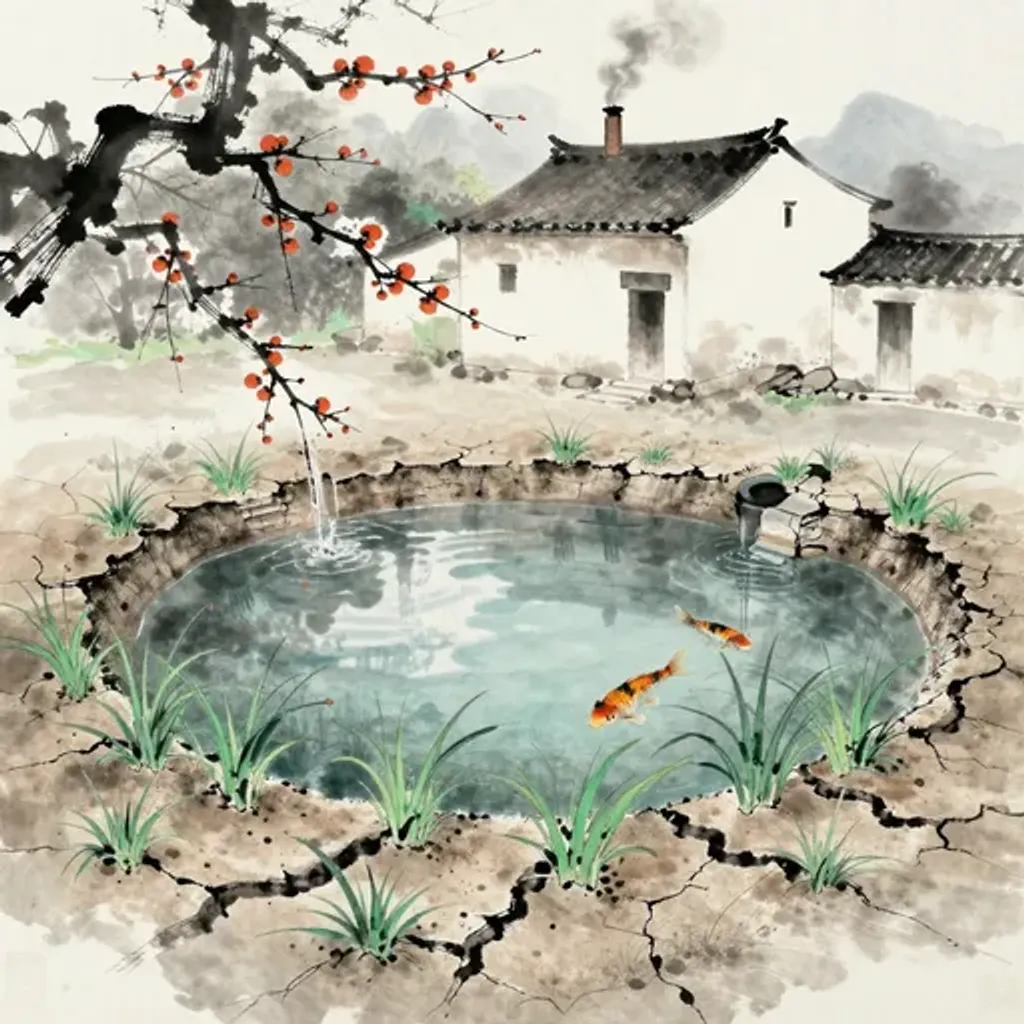
泉坑復平,宇室安寧;憂患解除,賴福長生。
The sinkhole filled, the ground leveled again; house and hall are at peace. Worries and troubles removed -- blessed with fortune, long life.
— Jiao Yanshou, Yilin (Forest of Changes), 1st century BC
Commentary
Thunder rests within the lake, and a pit-spring that once threatened the foundation is leveled smooth. The dwelling regains its peace; anxiety and affliction are dispelled. Blessed by fortune, one lives long. The image is architectural restoration: a dangerous sinkhole beneath the house — source of structural instability — is filled in and flattened. What was undermining from below is neutralized. From Following to the Cauldron, fire above wood in Ding cooks and transforms raw material into refined nourishment. The verse captures the moment when following the right corrective action — literally filling the threatening void — allows the household to become Ding's vessel of transformation, where danger is alchemized into lasting wellbeing.
隨 → 震
Hexagram 17 → Hexagram 51: The Arousing Thunder
Changing lines: 5
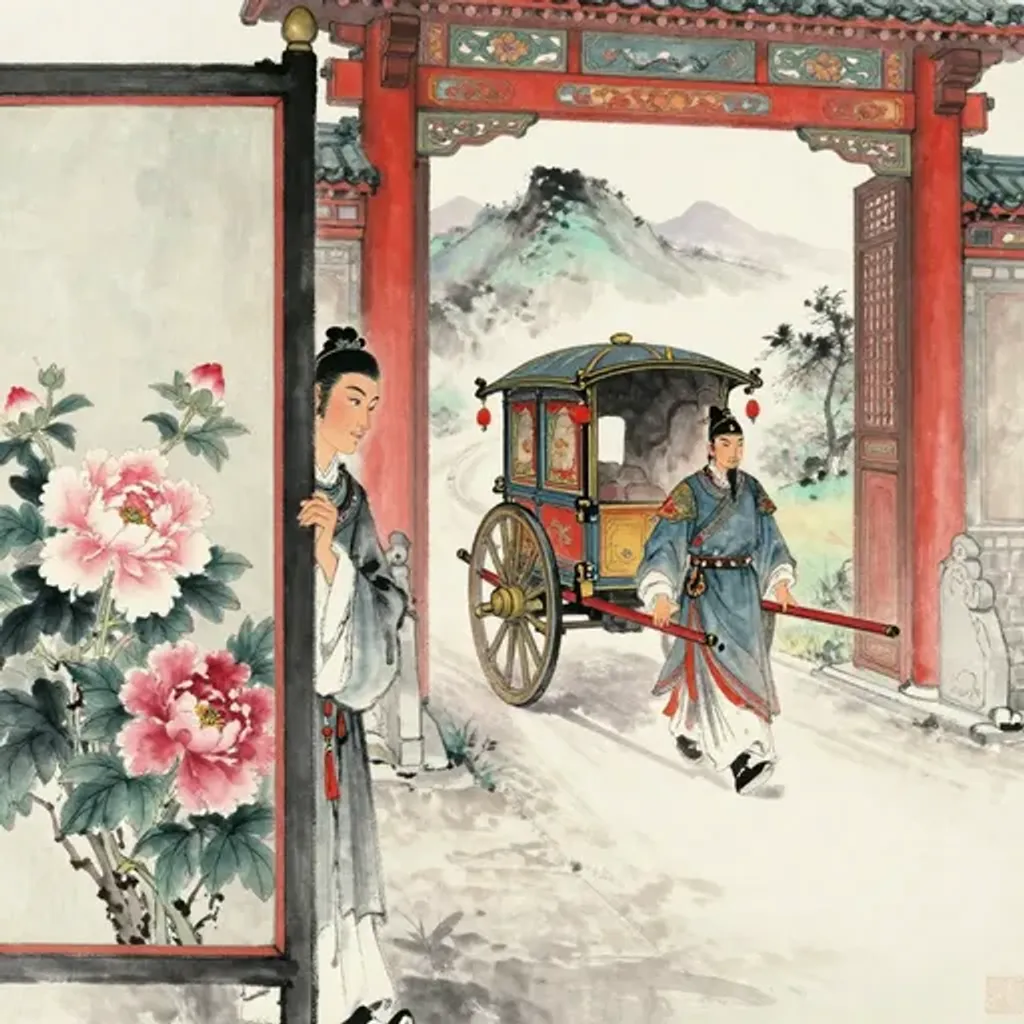
驪姬讒嬉,與二孽謀。譖啄恭子,賊害忠孝。駕出嘉門,商伯有喜。
Lady Li slandered and schemed, plotting with the two wicked ones. She maligned the dutiful prince, harming the loyal and filial. But the carriage departed through the fine gate -- the merchant lord found joy.
— Jiao Yanshou, Yilin (Forest of Changes), 1st century BC
Commentary
Thunder rests within the lake, and Lady Li schemes with her two accomplices. The scheming consort of Duke Xian of Jin slandered Crown Prince Shensheng, driving him to suicide, and forced the princes Chong Er and Yiwu into exile. The verse names her dark arts: 'playful slander with her two villains,' pecking at the dutiful prince like a venomous bird, destroying loyalty and filial piety. Yet the poem pivots — the carriage exits through the auspicious gate, and the 'Lord of Shang' finds joy. This may allude to Chong Er's eventual triumphant return as Duke Wen of Jin. From Following to the Arousing, doubled thunder shakes the world. The exile's endurance under Lady Li's persecution becomes the tremor that eventually restores him to power.
隨 → 艮
Hexagram 17 → Hexagram 52: Keeping Still Mountain
Changing lines: 1, 3, 4, 5, 6
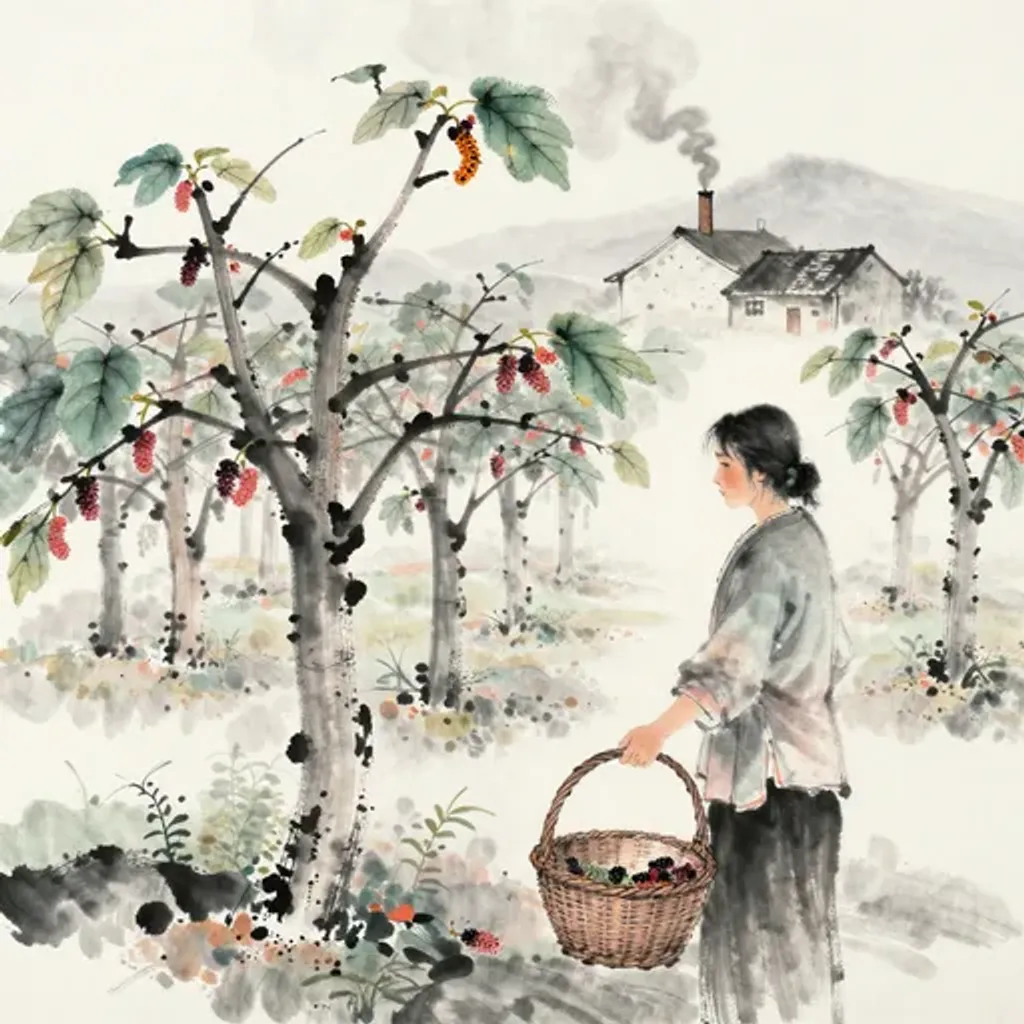
刺羊不當,血少無羹;女執空筐,不得採桑。
Slaughtering the sheep poorly -- too little blood for broth. The woman holds an empty basket; she cannot gather mulberry.
— Jiao Yanshou, Yilin (Forest of Changes), 1st century BC
Commentary
Thunder rests within the lake, but the butcher's blade strikes the sheep wrong — too little blood, not enough for broth. A woman holds an empty basket, unable to gather mulberry leaves. Every effort here misses its mark: the slaughter yields insufficient return, and the silk work cannot begin without raw material. The verse pairs two images of productive labor thwarted by poor execution or bad timing. From Following to Keeping Still, twin mountains stand immovable. Gen's stillness is not restful here but obstructive — the mountain blocks the path to productivity. When following leads to inadequate action, the result is Gen's paralysis: effort expended but nothing obtained, the worker frozen before an empty yield.
隨 → 漸
Hexagram 17 → Hexagram 53: Development
Changing lines: 1, 3, 4, 6
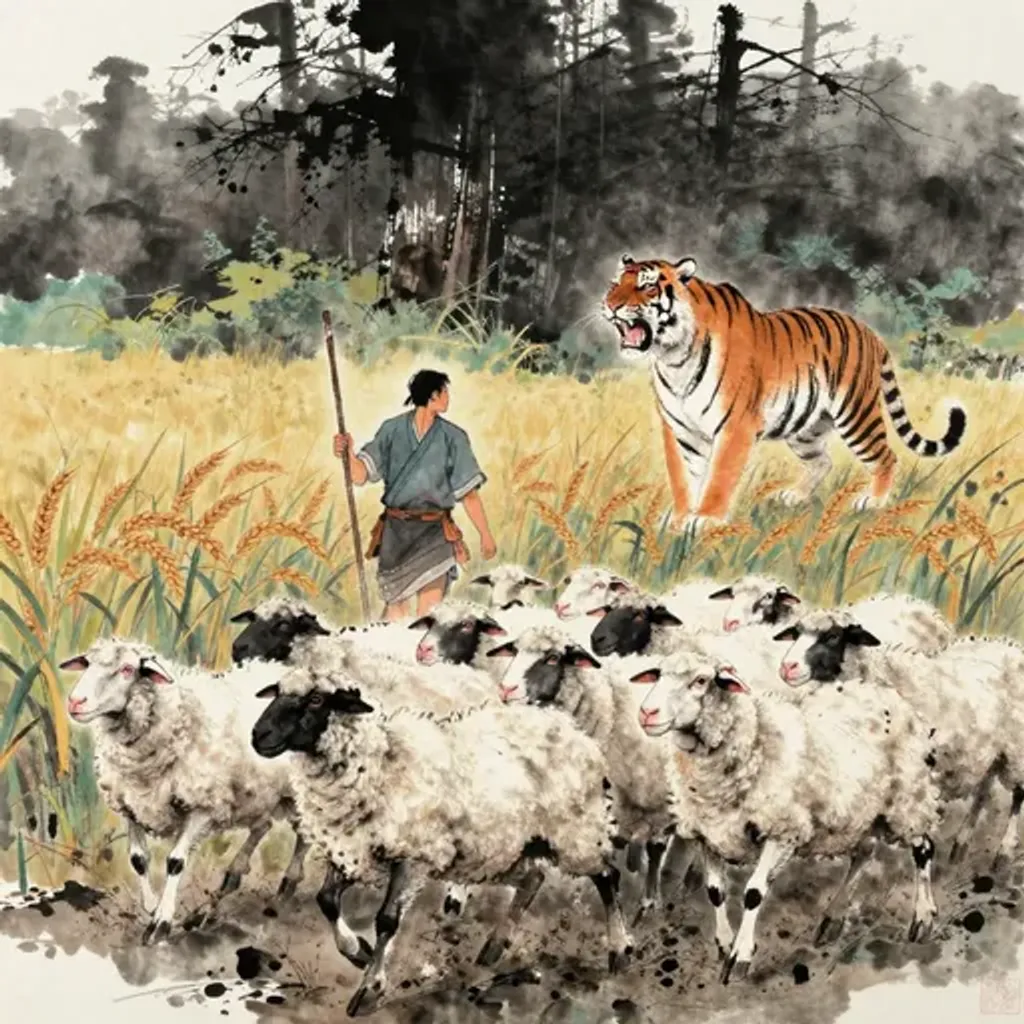
牧羊稻園,聞虎喧嚾;畏懼悚息,終無禍患。
Herding sheep in the rice paddy, hearing the tiger roar; trembling with fright, breath held still -- yet in the end, no disaster.
— Jiao Yanshou, Yilin (Forest of Changes), 1st century BC
Commentary
Thunder rests within the lake, and a shepherd tends his flock in a rice paddy when a tiger's roar erupts nearby. Fear grips him and he holds his breath — yet in the end, no disaster befalls him. The pastoral scene is shattered by a predator's voice, but the shepherd's instinctive stillness saves him. He does not run, which would trigger pursuit; he does not fight, which would ensure death. He simply freezes, and the danger passes. From Following to Development, the tree grows slowly upon the mountain in Jian — gradual, unhurried progress. The shepherd's survival mirrors Jian's wisdom: when confronted with sudden terror, the response is not rash action but patient immobility, allowing the threat to move on of its own accord.
隨 → 歸妹
Hexagram 17 → Hexagram 54: The Marrying Maiden
Changing lines: 2, 5
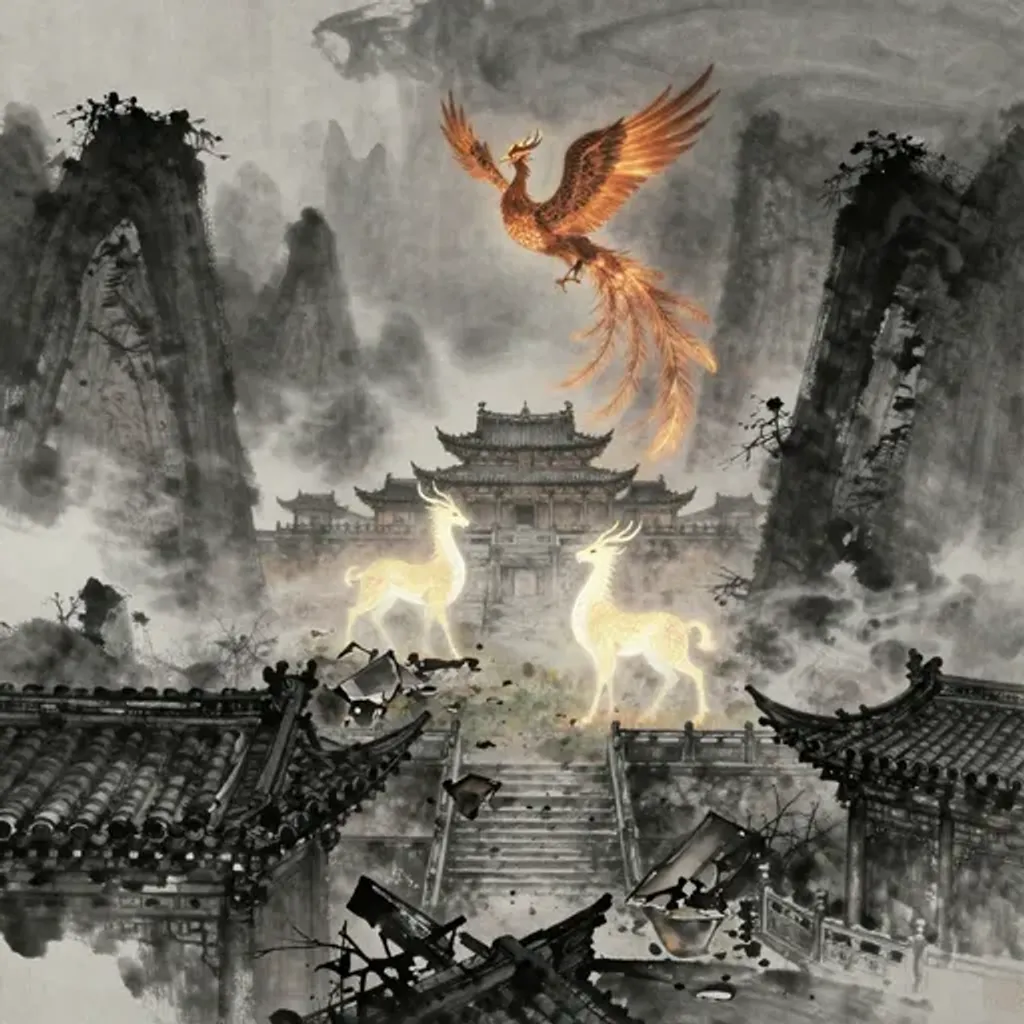
明德隱伏,麟鳳遠匿;周室傾側,不知所息。
Bright virtue lies hidden; qilin and phoenix retreat into seclusion. The house of Zhou tilts and totters, knowing not where to rest.
— Jiao Yanshou, Yilin (Forest of Changes), 1st century BC
Commentary
Thunder rests within the lake, but luminous virtue has gone into hiding. The qilin and phoenix — creatures that appear only under sage rule — have fled to distant concealment. The Zhou royal house tilts and totters, finding no place to rest. This verse laments a world that has lost its moral compass: when the auspicious beasts withdraw, Heaven itself signals that the age of virtuous governance is over. The absence of the qilin echoes Confucius's weeping at the Western Hunt. From Following to the Marrying Maiden, thunder above the lake in Gui Mei signals an irreversible transition — the maiden given in marriage does not return. The Zhou's collapse, like the maiden's departure, is a one-way threshold: what was cannot be restored.
隨 → 豐
Hexagram 17 → Hexagram 55: Abundance
Changing lines: 3, 5
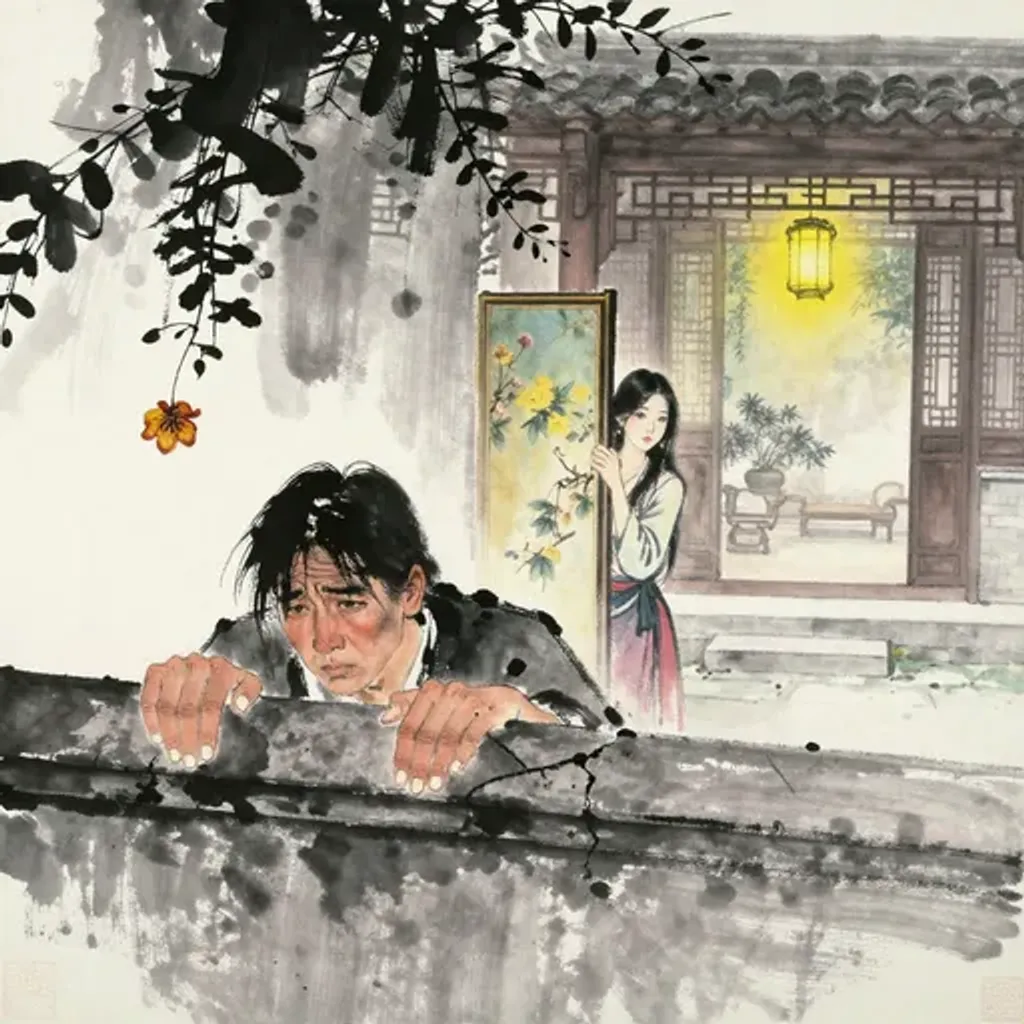
鄰不我顧,而求玉女;身多禿癩,誰肯媚者!
The neighbor does not look my way, yet I seek a beautiful maiden; my body covered with sores and scabs -- who would find me pleasing?
— Jiao Yanshou, Yilin (Forest of Changes), 1st century BC
Commentary
Thunder rests within the lake, but the neighbor pays no attention, while the speaker pursues a jade-like beauty far beyond his station. Covered in sores and scabs, who would find him attractive? The verse is brutally self-aware: the suitor follows his desire toward an impossible match, ignoring the reality that his own condition makes him repulsive. Ambition untempered by self-knowledge is its own humiliation. From Following to Abundance, thunder and lightning blaze together in Feng — brilliant illumination at the peak of power. Yet Feng also carries the warning that fullness tips into decline. The suitor's deluded pursuit mirrors the over-reaching inherent in Feng's excess: seeking the brightest prize while blind to one's own deficiencies.
隨 → 旅
Hexagram 17 → Hexagram 56: The Wanderer
Changing lines: 1, 3, 5, 6
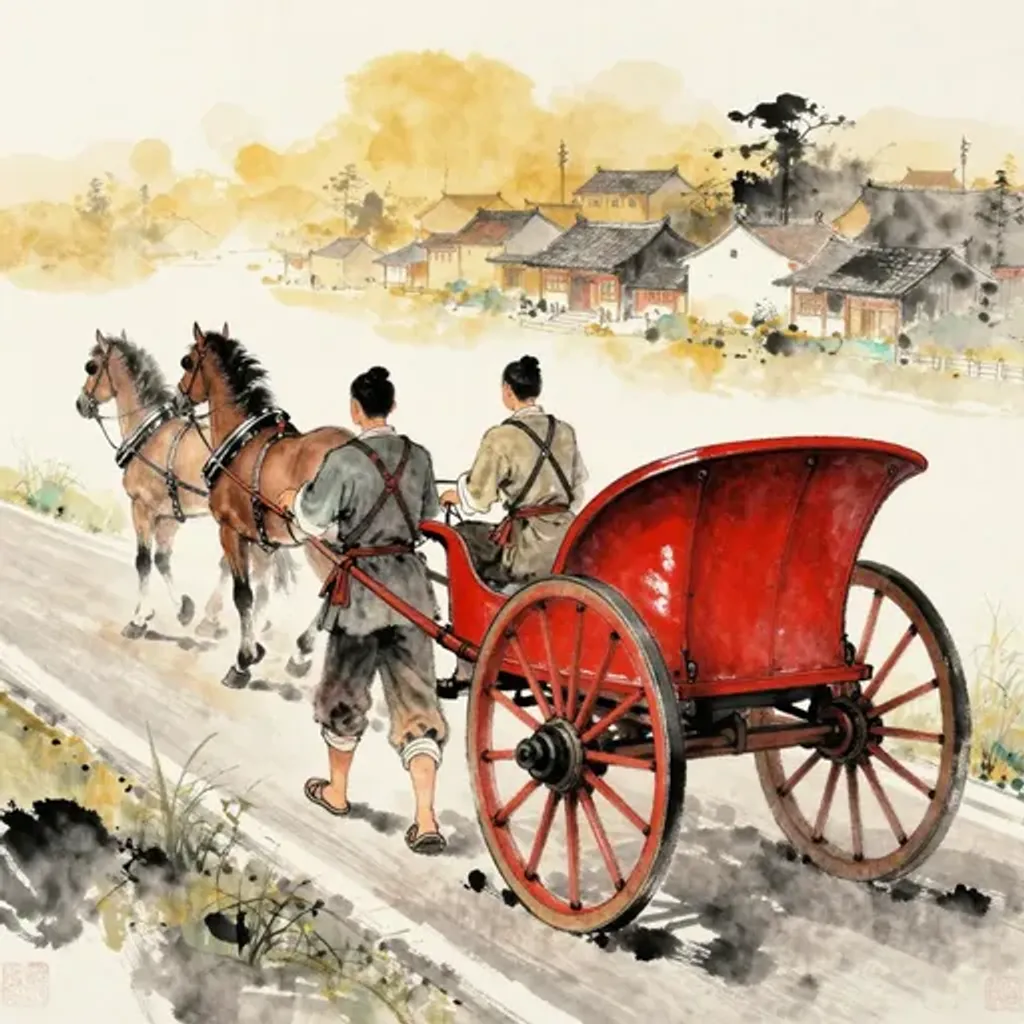
初雖無輿,後得戰車;賴幸逢福,不罹兵革。
At first without a carriage; later a war chariot was found. Fortunate to meet with blessing, one escapes the clash of arms.
— Jiao Yanshou, Yilin (Forest of Changes), 1st century BC
Commentary
Thunder rests within the lake, and the journey begins without a carriage. Yet later, a war chariot is obtained. Through fortunate timing, the traveler avoids the ravages of military conflict entirely. The verse narrates a reversal of circumstance: starting with nothing, one acquires the means of power, yet the real blessing is not the chariot itself but the fact that it was never needed for battle. From Following to the Wanderer, fire atop the mountain illuminates a transient path. Lü's traveler owns nothing permanently — even the war chariot is a temporary acquisition. The verse's deeper fortune lies in the wanderer's lightness: following circumstance rather than clinging to possessions, he passes through danger untouched.
隨 → 巽
Hexagram 17 → Hexagram 57: The Gentle Wind
Changing lines: 1, 2, 3, 4, 6
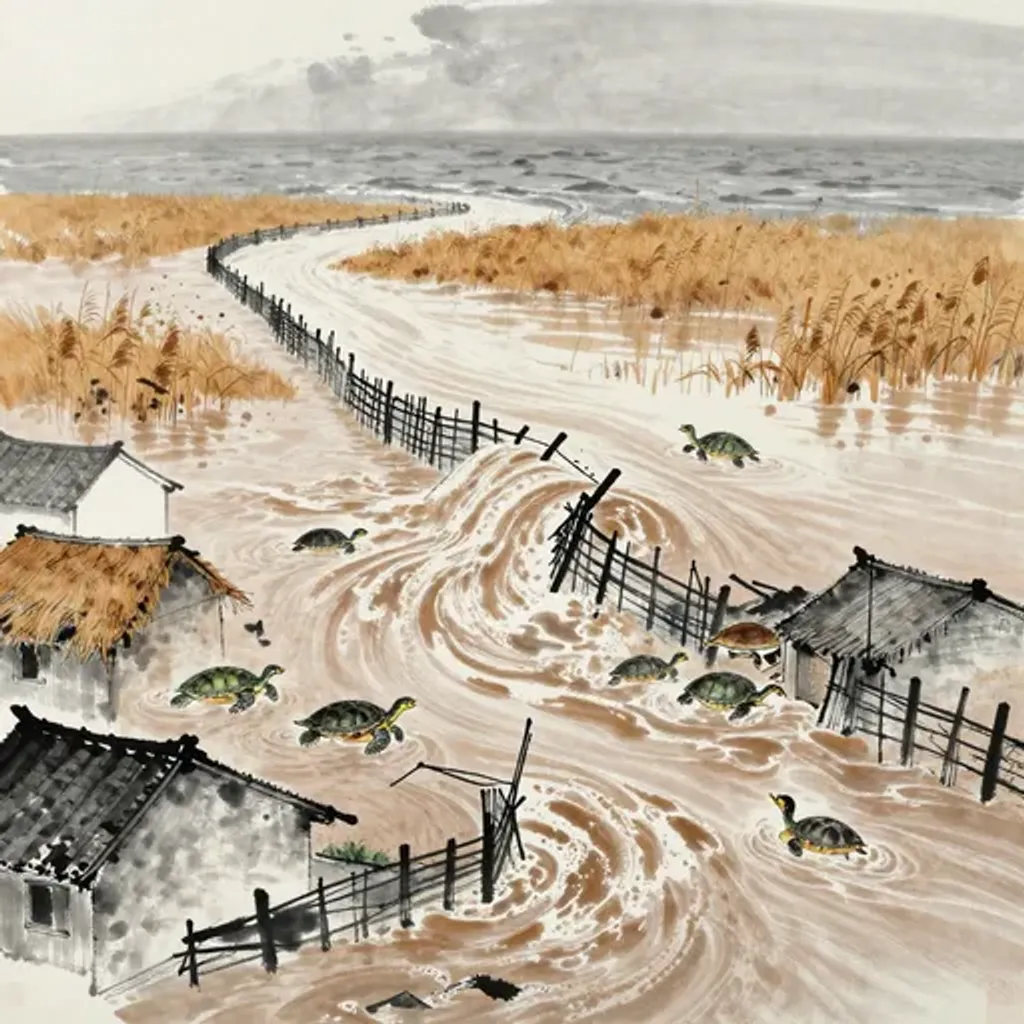
水壞我里,東流為海;龜鳧讙囂,不睹王母。
Floodwaters breach my village, flowing east to the sea; turtles and ducks clamor noisily -- the Queen Mother is not to be seen.
— Jiao Yanshou, Yilin (Forest of Changes), 1st century BC
Commentary
Thunder rests within the lake, but the waters have broken through the village. The flood courses eastward to the sea, and amid the clamor of turtles and waterfowl, the Queen Mother of the West is nowhere to be seen. When the waters overwhelm the settlement, even the divine guardian of immortality becomes inaccessible. The turtles and ducks — creatures at home in flood — celebrate where humans drown. The Queen Mother's absence means the hope of transcendence is cut off by the very waters that should nourish life. From Following to the Gentle, doubled wind penetrates everywhere. Yet Xun's pervasive influence here manifests as a flood that infiltrates every corner, dissolving the boundary between the mortal and the sacred.
隨 → 兌
Hexagram 17 → Hexagram 58: The Joyous Lake
Changing lines: 2
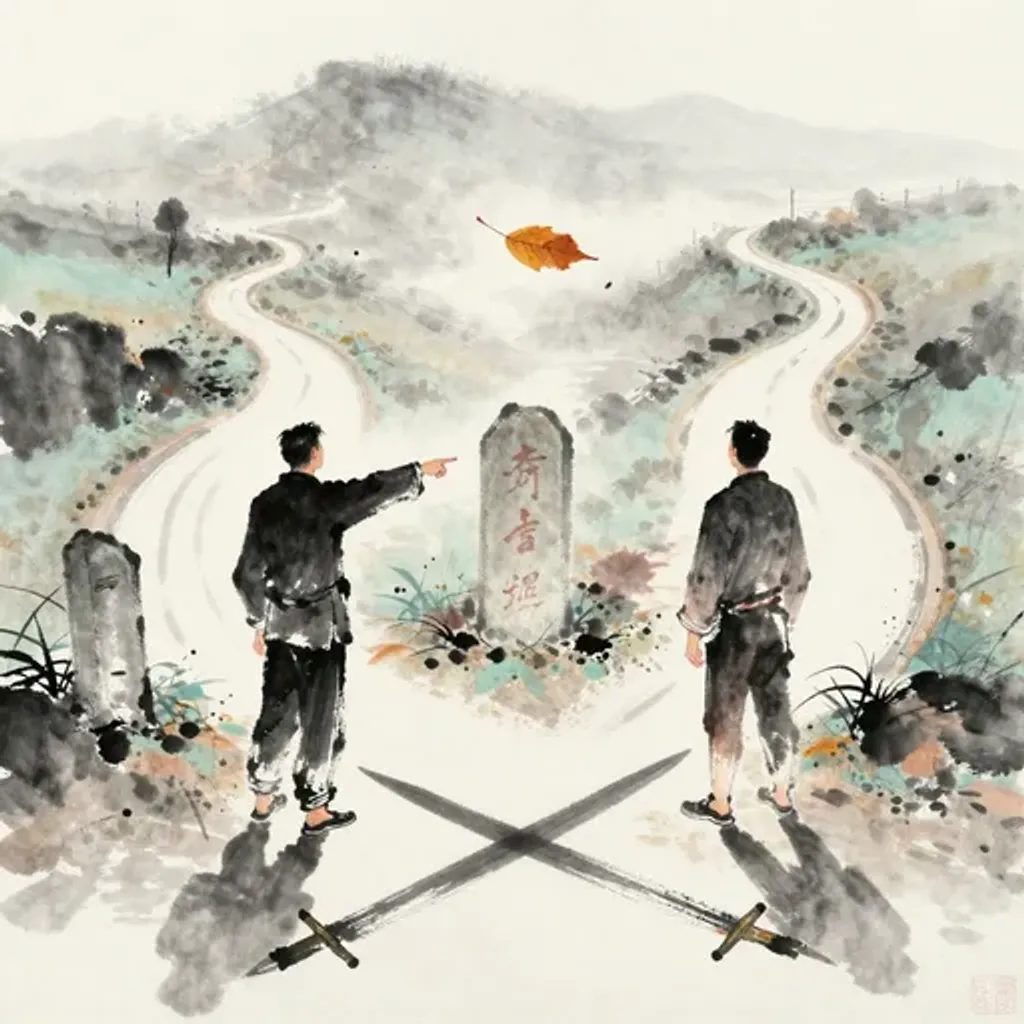
兩心不同,或欲西東;明論終始,莫適所從。
Two hearts not in accord; one would go west, the other east. Debating the matter from beginning to end, neither knows whom to follow.
— Jiao Yanshou, Yilin (Forest of Changes), 1st century BC
Commentary
Thunder rests within the lake, but two hearts pull in opposite directions — one wishes to go west, the other east. Even after a thorough analysis of beginning and end, there is no resolution about whom to follow. The verse distills the paralysis of indecision: when two equally compelling paths diverge, rational analysis provides no tiebreaker. From Following to the Joyous, paired lakes in Dui represent shared delight through mutual discourse — friends studying and debating together. Yet this verse shows the failure mode of Dui's doubled openness: two open mouths speaking at cross purposes, each joyfully certain of a different direction, producing not consensus but stalemate. Following requires choosing; endless discussion is its own form of refusal.
隨 → 渙
Hexagram 17 → Hexagram 59: Dispersion
Changing lines: 1, 2, 4, 6
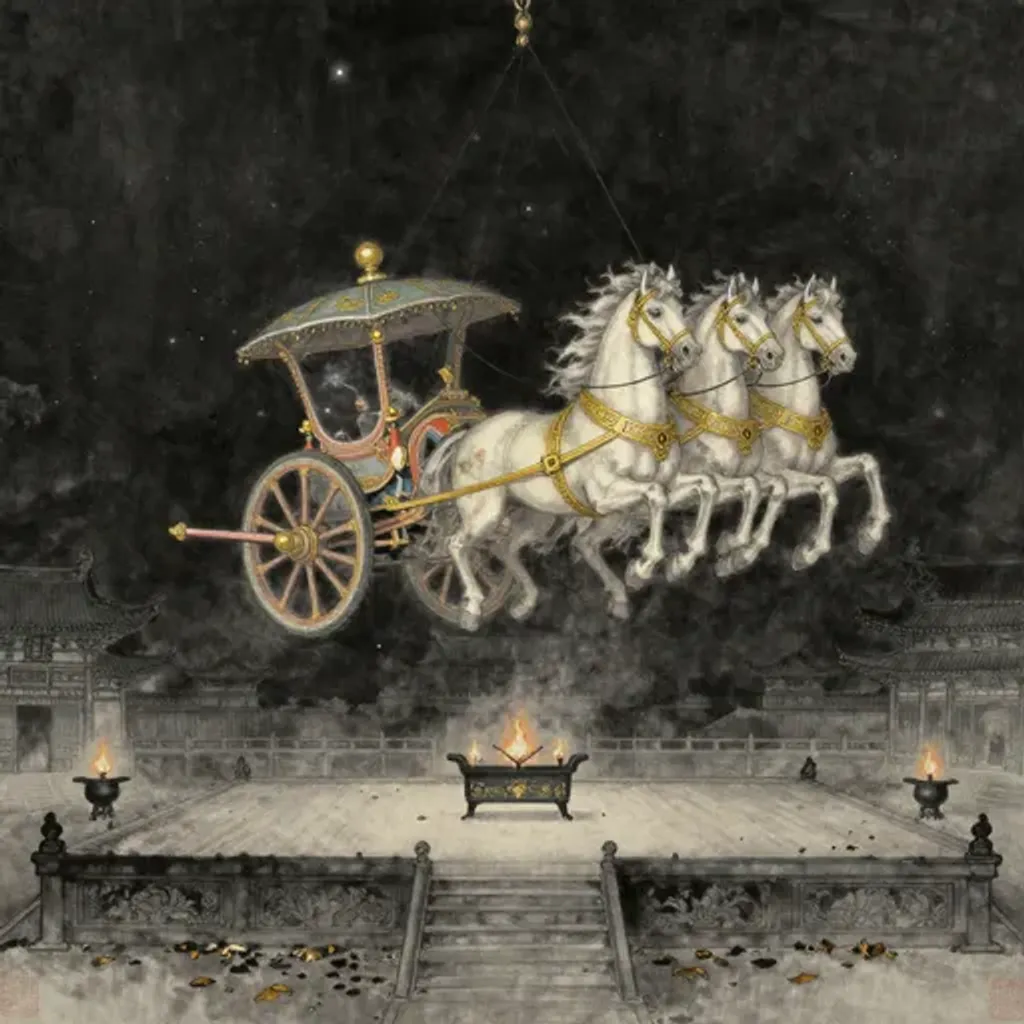
天帝懸車,廢禮不朝;禳福不制,失其寵家。
The Heavenly Emperor suspends his chariot; rites are abandoned, court audiences cease. Prayers for blessing are unregulated -- he loses his favored house.
— Jiao Yanshou, Yilin (Forest of Changes), 1st century BC
Commentary
Thunder rests within the lake, but the heavenly emperor has suspended his carriage. Ritual is abandoned and the court no longer assembles for audience. Prayers for blessing go unregulated; the favored household loses its standing. The image of a suspended celestial carriage suggests that heaven itself has withdrawn from governance — the cosmic order has paused, and without the regulating force of ritual, fortune dissipates. From Following to Dispersion, wind blows across water in Huan, scattering what was gathered. The verse enacts this dissolution: when the sovereign ceases to follow ritual protocol, the binding force that holds court and cosmos together unravels, and blessing — no longer channeled through proper ceremony — disperses into formlessness.
隨 → 節
Hexagram 17 → Hexagram 60: Limitation
Changing lines: 2, 4
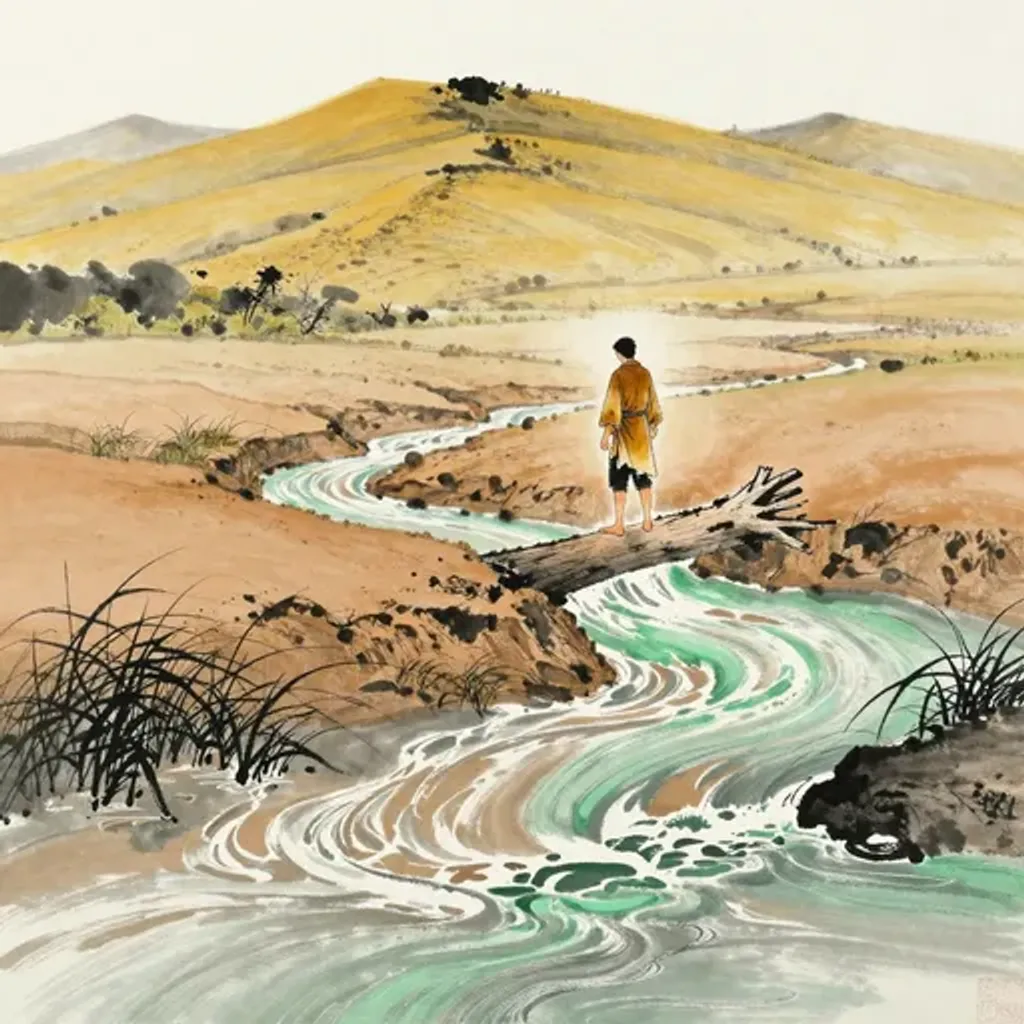
交川合浦,遠濕難處;水土不同,思吾皇祖。
Where rivers cross and shores converge, the far-off wetlands are hard to dwell in; water and soil are unfamiliar -- I long for my imperial ancestors.
— Jiao Yanshou, Yilin (Forest of Changes), 1st century BC
Commentary
Thunder rests within the lake, and the exile finds himself where rivers merge and coasts converge. The land is wet, remote, and difficult to inhabit; water and soil are alien to what he knows. In his displacement, he thinks longingly of his imperial ancestors — the homeland from which he has been severed. The verse echoes the Shijing's 'Yellow Bird' exile lament: a stranger in a hostile land, yearning for home. From Following to Limitation, water above the lake in Jie establishes boundaries and measures. The exile's suffering comes precisely from crossing beyond his natural limits — following circumstance into a territory where his roots cannot take hold. Jie counsels knowing one's proper boundaries; this verse shows the pain of having transgressed them.
隨 → 中孚
Hexagram 17 → Hexagram 61: Inner Truth
Changing lines: 2, 4, 6
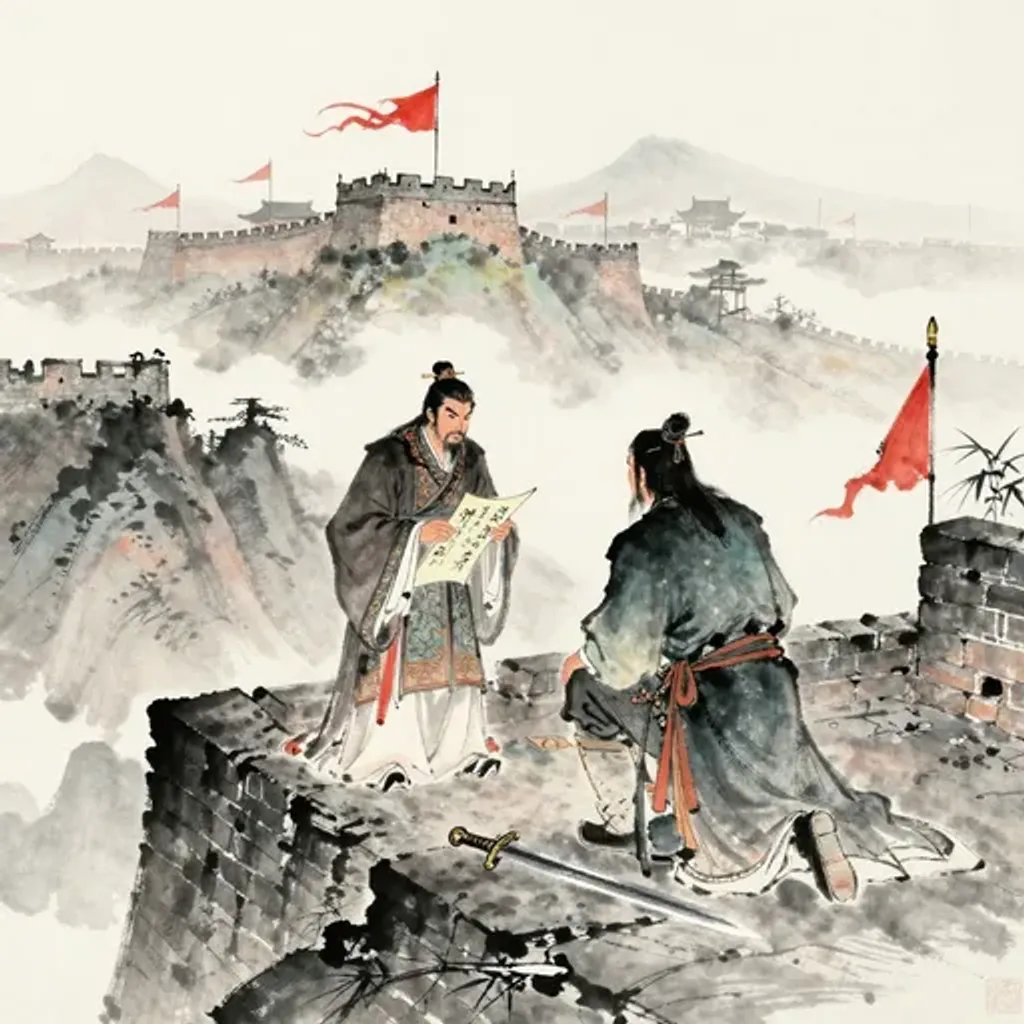
勾踐之危,棲於會稽;太宰機言,越國復存。
Goujian in his peril, besieged at Mount Kuaiji; the Grand Steward spoke with cunning -- the state of Yue was preserved.
— Jiao Yanshou, Yilin (Forest of Changes), 1st century BC
Commentary
Thunder rests within the lake, and King Goujian of Yue faces mortal peril, cornered at Mount Kuaiji after his catastrophic defeat by Wu. Yet the Grand Steward — likely referring to Bo Pi, the corrupt Wu minister bribed by Yue's envoy Wen Zhong — speaks the pivotal words that allow Yue's survival. Through a mixture of diplomacy and deception, the state of Yue is preserved from annihilation. From Following to Inner Truth, wind upon the lake in Zhong Fu moves what floats through sincerity's invisible influence. The paradox is rich: Goujian's survival depended on manipulative rhetoric aimed at a venal official, yet the deeper truth was Yue's genuine will to endure. Inner Truth sometimes wears the mask of expedient speech when survival itself is at stake.
隨 → 小過
Hexagram 17 → Hexagram 62: Small Exceeding
Changing lines: 1, 3, 5
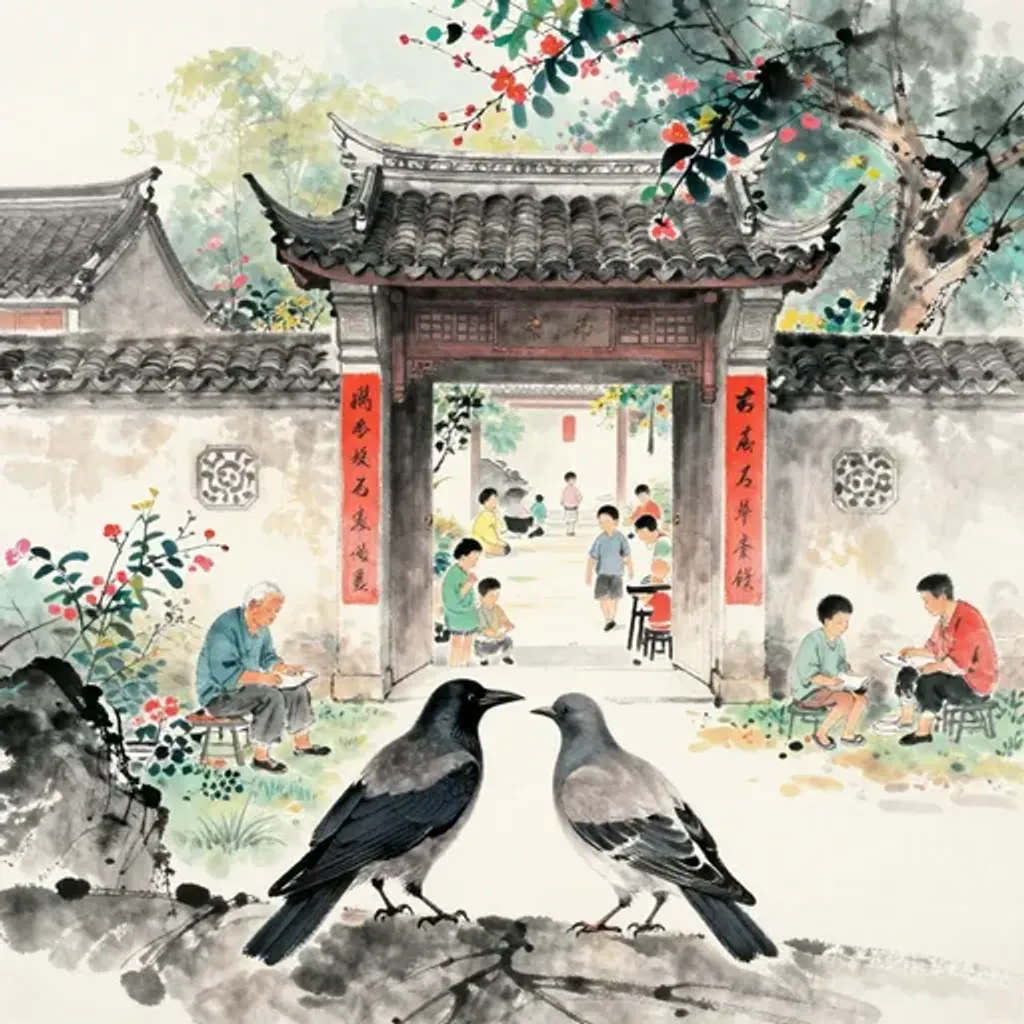
慈烏鳴鳩,執一無尤;寢門內治,君子悅喜。
Compassionate crow, cooing dove, holding to one thing without fault; at the sleeping-chamber gate, the household is governed -- the gentleman is pleased and glad.
— Jiao Yanshou, Yilin (Forest of Changes), 1st century BC
Commentary
Thunder rests within the lake, and the compassionate crow and cooing dove embody steadfast devotion. The crow — symbol of filial piety in Chinese tradition, as it feeds its aging parents — and the dove, known for even-handed distribution of food among its young, together represent constancy without blame: 'holding to one, no fault.' Within the household, the inner chambers are well governed, and the gentleman finds quiet satisfaction. From Following to Small Exceeding, thunder atop the mountain in Xiao Guo counsels going slightly beyond in humility and frugality. The verse shows how small, consistent virtues — filial feeding, fair nurture, domestic order — accumulate into the 'small excess' of goodness that Xiao Guo celebrates.
隨 → 既濟
Hexagram 17 → Hexagram 63: After Completion
Changing lines: 3, 4
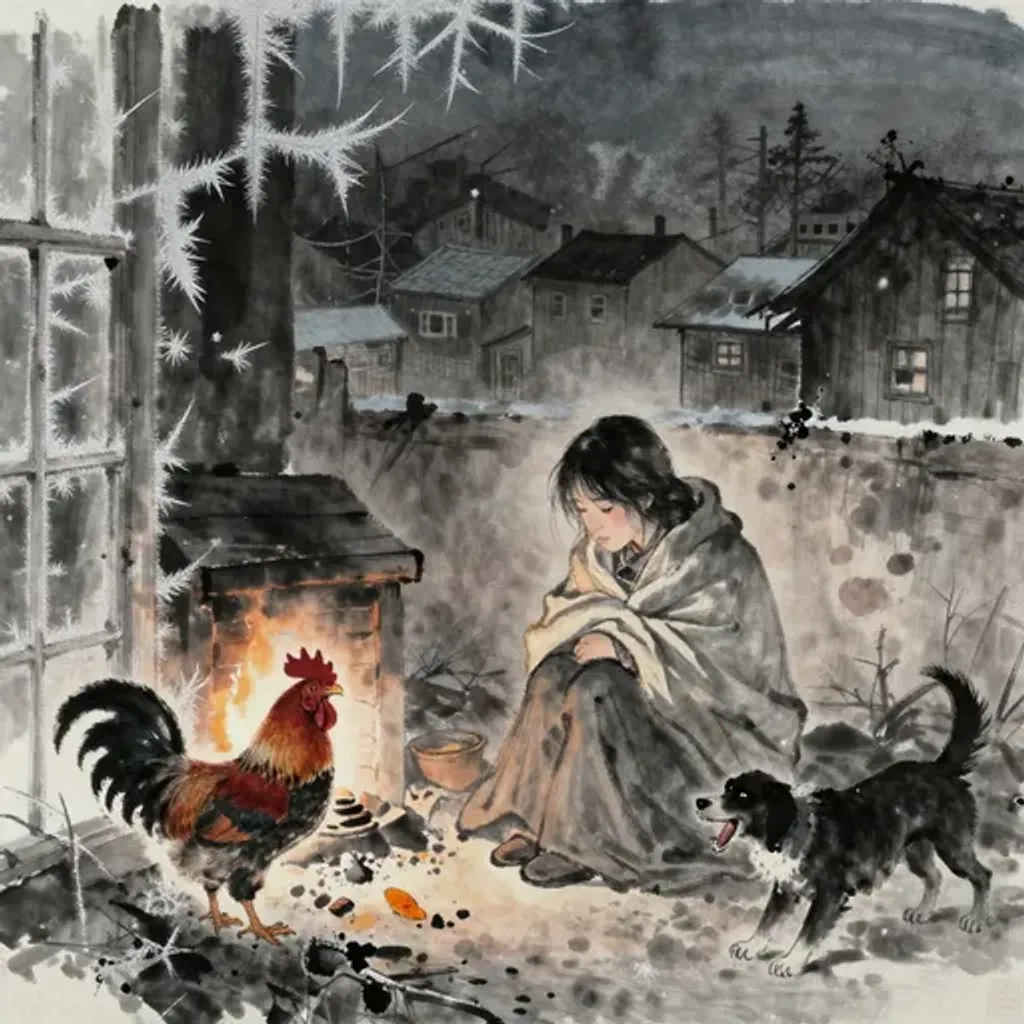
當年早寡,獨立孤居;雞鳴犬吠,無敢問諸。我生不遇,獨離寒苦。
Widowed young, dwelling alone in solitude; roosters crow, dogs bark, but no one dares ask after her. My fate has been unkind -- alone I endure cold and hardship.
— Jiao Yanshou, Yilin (Forest of Changes), 1st century BC
Commentary
Thunder rests within the lake, but a young widow stands alone. Widowed early, she dwells in solitude; roosters crow and dogs bark around the desolate homestead, yet no one dares inquire after her. Born into misfortune, she endures cold and hardship in isolation. The verse is raw elegy — no allusion softens the portrait of a woman abandoned by fate, her household reduced to animal sounds and human silence. From Following to After Completion, water above fire in Ji Ji achieves perfect balance — everything in its proper place. The bitter irony: the widow's world is 'complete' in the worst sense, every element of loss settled into final position. Completion here is not fulfillment but the crystallization of grief.
隨 → 未濟
Hexagram 17 → Hexagram 64: Before Completion
Changing lines: 1, 2, 5, 6
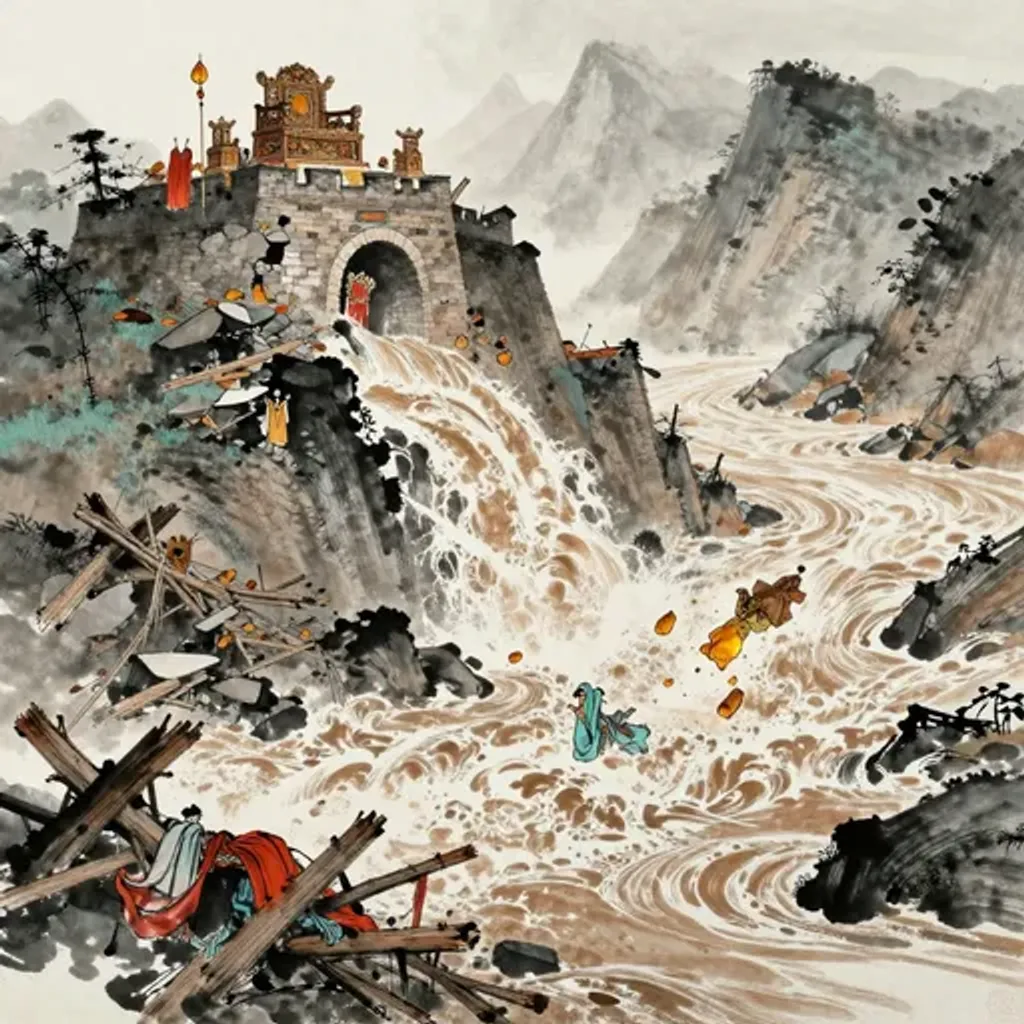
江河變服,淫湎無側;高位顛崩,寵祿反覆。
Rivers change their garments; excess and indulgence know no bounds. High positions crash and topple -- favor and fortune turn on themselves.
— Jiao Yanshou, Yilin (Forest of Changes), 1st century BC
Commentary
Thunder rests within the lake, but the rivers have changed their course and donned alien garments. Excess and indulgence know no restraint; those in high positions topple and collapse, favor and status reverse themselves overnight. The 'rivers changing clothes' is a striking image of natural order perverted — waterways abandoning their channels, the landscape itself in moral disarray. Drunkenness (淫湎) compounds the chaos: the ruler follows pleasure instead of duty. From Following to Before Completion, fire sits above water in Wei Ji — everything is in the wrong position, nothing has crossed over to fulfillment. The verse is Wei Ji at its starkest: following disorder to its conclusion, where even the elemental forces have traded places and no resolution is in sight.