Transformations of Hexagram 2
Every line of change out of Hexagram 2 坤 The Receptive, with the Yilin verse for each of the 64 resulting hexagrams, its translation, and the original ink brush artwork.
坤 → 乾
Hexagram 2 → Hexagram 1: The Creative
Changing lines: 1, 2, 3, 4, 5, 6
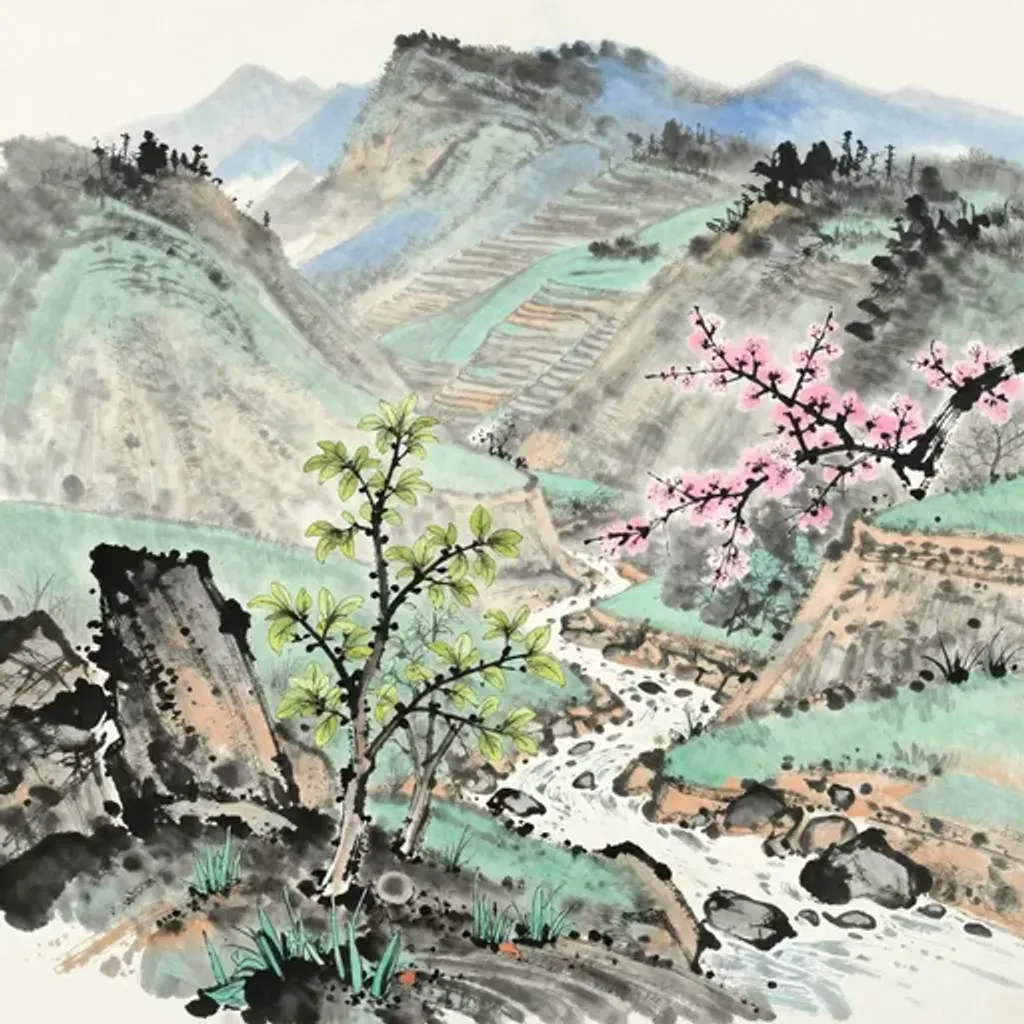
谷風布氣,萬物出生。萌庶長養,華葉茂成。
The valley wind spreads its breath; the ten thousand things come to life. Sprouts and seedlings grow and are nourished; flowers and leaves flourish to fullness.
— Jiao Yanshou, Yilin (Forest of Changes), 1st century BC
Commentary
Earth doubled yields to pure heaven doubled: the Receptive opens into the Creative. A valley wind spreads its breath and all living things emerge. Sprouts and seedlings grow tall, blossoms and leaves flourish to fullness. Kun, pure yin, embodies the earth that receives and supports; when it transforms into Qian, pure yang, the latent generative power within the earth erupts as self-sustaining creative force. The valley wind is the harbinger of spring — warm air rising from low ground to stir dormant life. From the Receptive to the Creative, the verse captures the moment when passive nurture ignites into active initiative: what the earth quietly held now rises of its own accord, needing no further coaxing.
坤 → 坤
Hexagram 2 → Hexagram 2: The Receptive
No changing lines — the hexagram is unchanged
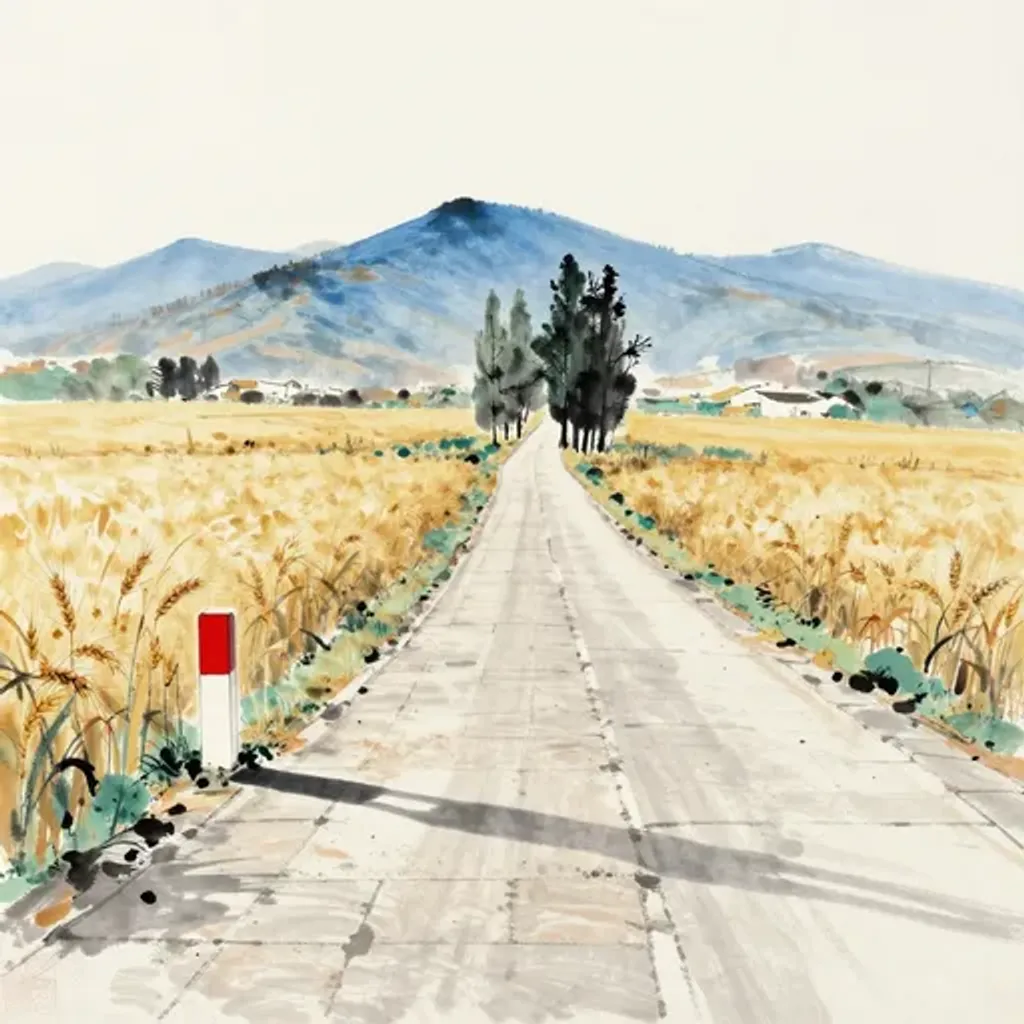
不風不雨,白日皎皎。宜出驅馳,通利大道。
No wind, no rain; the white sun shines bright. Fit to ride forth and gallop; the great road runs clear.
— Jiao Yanshou, Yilin (Forest of Changes), 1st century BC
Commentary
Earth doubled upon itself: the Receptive remains the Receptive. No wind, no rain — a white sun shining bright. One should venture forth, driving freely along the broad road. When Kun transforms into Kun, no change occurs; the earth's nature simply deepens. The verse paints a day of perfect clarity: the sky withholds both storm and gust, offering unobstructed passage. This is the Receptive at its most generous — the open field, the level plain, the road that runs straight without hindrance. The absence of drama is itself the gift. From Kun to Kun, the message is one of quiet confidence: when the ground beneath is steady, move forward without hesitation. The earth does not need to become anything else to serve the traveler well.
坤 → 屯
Hexagram 2 → Hexagram 3: Difficulty at the Beginning
Changing lines: 1, 5
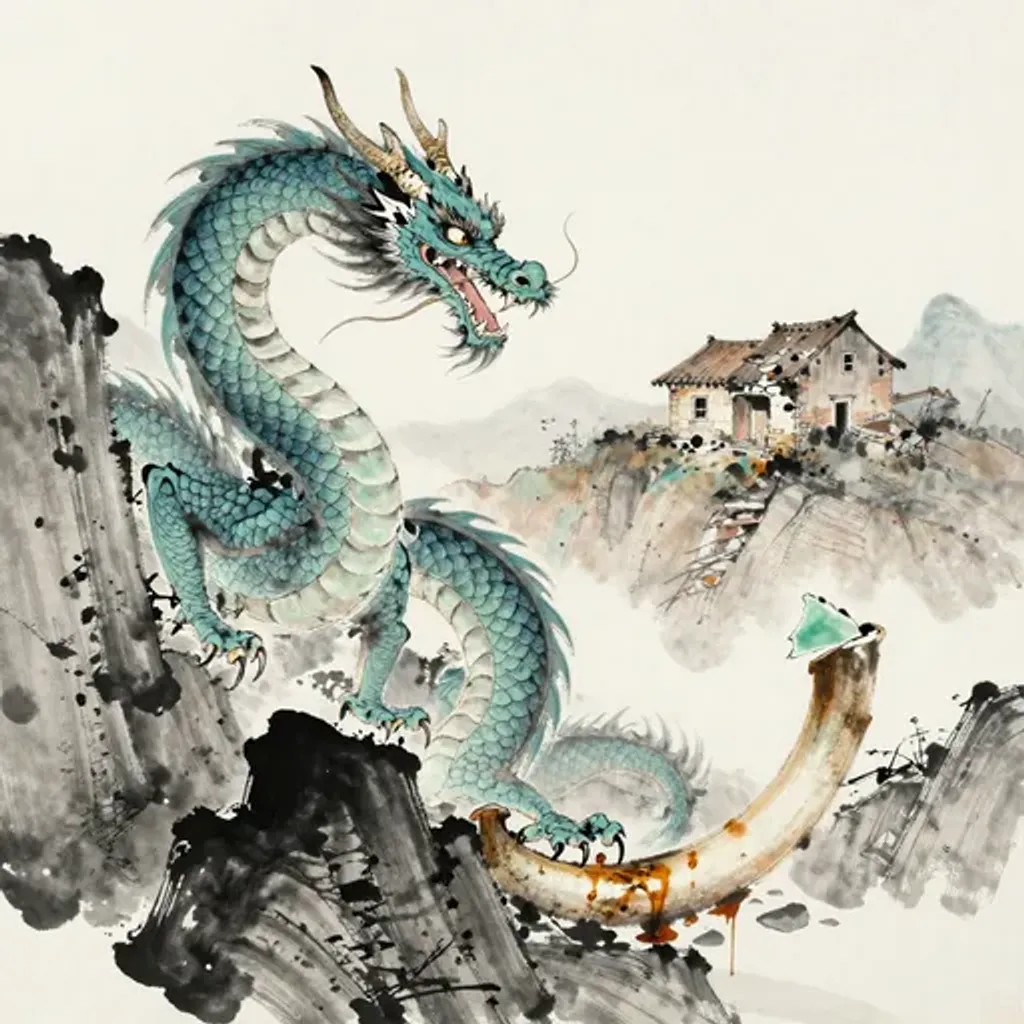
蒼龍單獨,與石相觸。摧折兩角,室家不足。
The blue dragon stands alone, striking against stone. Its two horns snap and break; house and home are left wanting.
— Jiao Yanshou, Yilin (Forest of Changes), 1st century BC
Commentary
Earth upon earth gives way to water above thunder — Difficulty at the Beginning. The Azure Dragon stands alone and collides with stone, breaking both horns; household and family fall short. The Azure Dragon (Canglong) is the celestial guardian of the east, associated with spring and renewal, one of the Four Symbols. Isolated and without support, even this mighty creature shatters itself against unyielding rock. Hexagram 3 depicts the storm of initial emergence — cloud and thunder churning in primal chaos. From the Receptive to Difficulty at the Beginning, the earth's passive support vanishes just as new life struggles to break through. The dragon's solitude is the key: without allies, even cosmic power is insufficient to navigate the birth pangs of a new order.
坤 → 蒙
Hexagram 2 → Hexagram 4: Youthful Folly
Changing lines: 2, 6
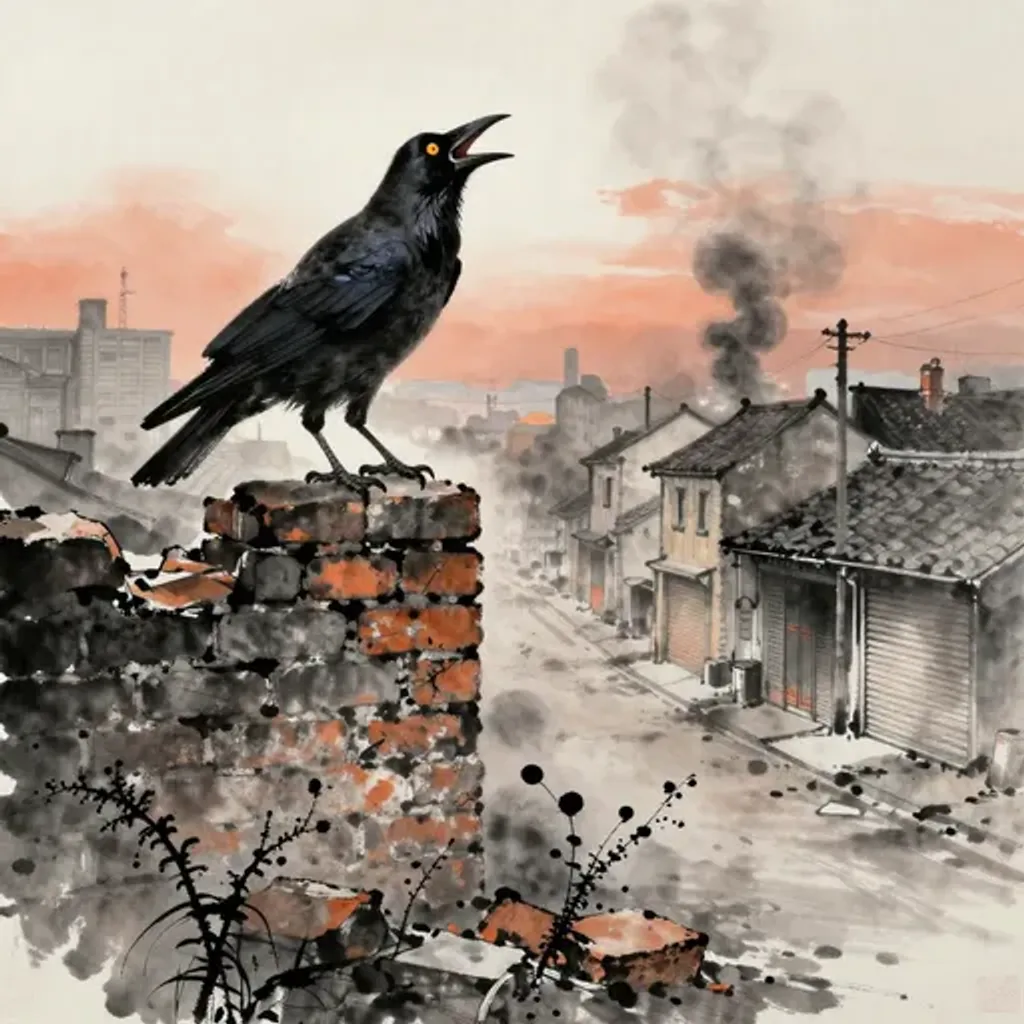
城上有烏,自名破家。招呼酖毒,為國患災。
On the city wall sits a crow, calling itself Breaker-of-Homes. It summons poison and venom, bringing plague and disaster to the state.
— Jiao Yanshou, Yilin (Forest of Changes), 1st century BC
Commentary
Earth upon earth transforms into mountain above water — Youthful Folly. A crow perches on the city wall, its very name meaning 'wreck the house.' It summons poison and brings calamity upon the state. The ominous bird on the ramparts is a classical image of ill portent, the creature whose nature is destruction insinuating itself into the seat of power. Mountain above water, the image of Meng, shows a spring emerging beneath the mountain but not yet knowing its course — youthful ignorance that can be guided or can ruin. From the Receptive to Youthful Folly, the earth's indiscriminate receptivity becomes its vulnerability: Kun accepts all comers, and when what arrives is poison disguised as a bird, the naive host is destroyed from within.
坤 → 需
Hexagram 2 → Hexagram 5: Waiting
Changing lines: 1, 2, 3, 5
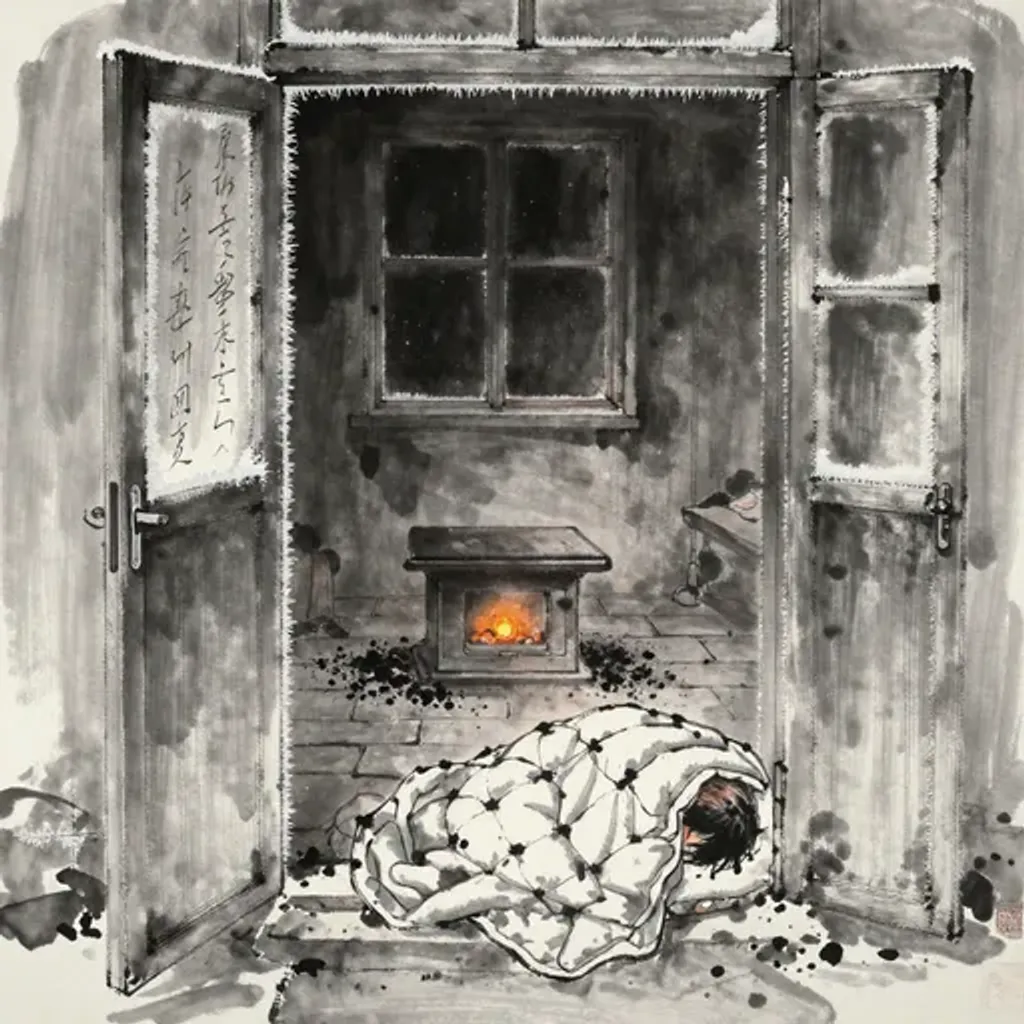
霜降閉戶,蟄虫隱處。不見日月,與死為伍。
Frost falls, doors are sealed; hibernating creatures hide away. Seeing neither sun nor moon; companions of the dead.
— Jiao Yanshou, Yilin (Forest of Changes), 1st century BC
Commentary
Earth upon earth yields to water above heaven — Waiting. Frost descends and doors close; hibernating creatures hide in their burrows. Sun and moon vanish from sight; one keeps company with death itself. The frost signals autumn's execution season — the ancient legal custom of carrying out sentences when nature's killing energy aligns with punitive authority. Here the Receptive's nurturing earth turns cold, sealing life underground. Yet the target is Waiting, which counsels patience through danger: clouds gather above heaven, but the gentleman drinks and eats in calm confidence. From the Receptive to Waiting, the verse captures the harrowing interval between burial and emergence — the seed entombed in frozen ground must endure the long wait before spring arrives.
坤 → 訟
Hexagram 2 → Hexagram 6: Conflict
Changing lines: 2, 4, 5, 6
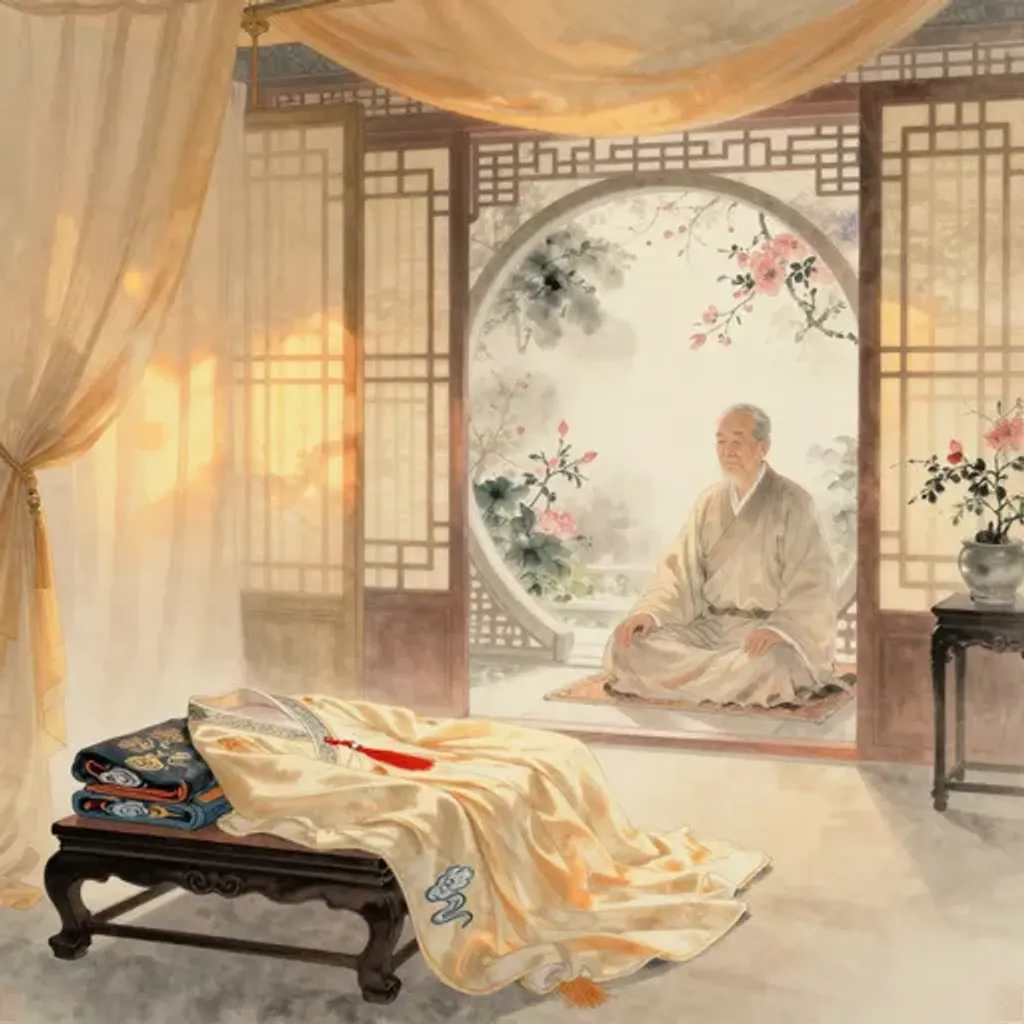
天之德室,溫仁受福。衣裳所在,凶惡不起。
Heaven’s hall of virtue; warmth and benevolence receive blessings. Where the ceremonial robes reside, no evil arises.
— Jiao Yanshou, Yilin (Forest of Changes), 1st century BC
Commentary
Earth upon earth gives way to heaven above water — Conflict, yet the verse speaks of peace. Heaven's chamber of virtue shelters with warmth and benevolence, bestowing blessings. Wherever propriety's garments are worn, violence does not arise. The transformation from the Receptive to Conflict seems paradoxical, but the verse addresses the remedy, not the disease: when heaven and water oppose each other, only the steady presence of moral authority prevents dispute from erupting. Kun's earth provides the stable ground on which ritual garments are donned — the outward form of civilized order. From the Receptive to Conflict, the verse prescribes the antidote to contention: dwell in virtue's warmth, and the very conditions that breed strife are forestalled before they ignite.
坤 → 師
Hexagram 2 → Hexagram 7: The Army
Changing lines: 2
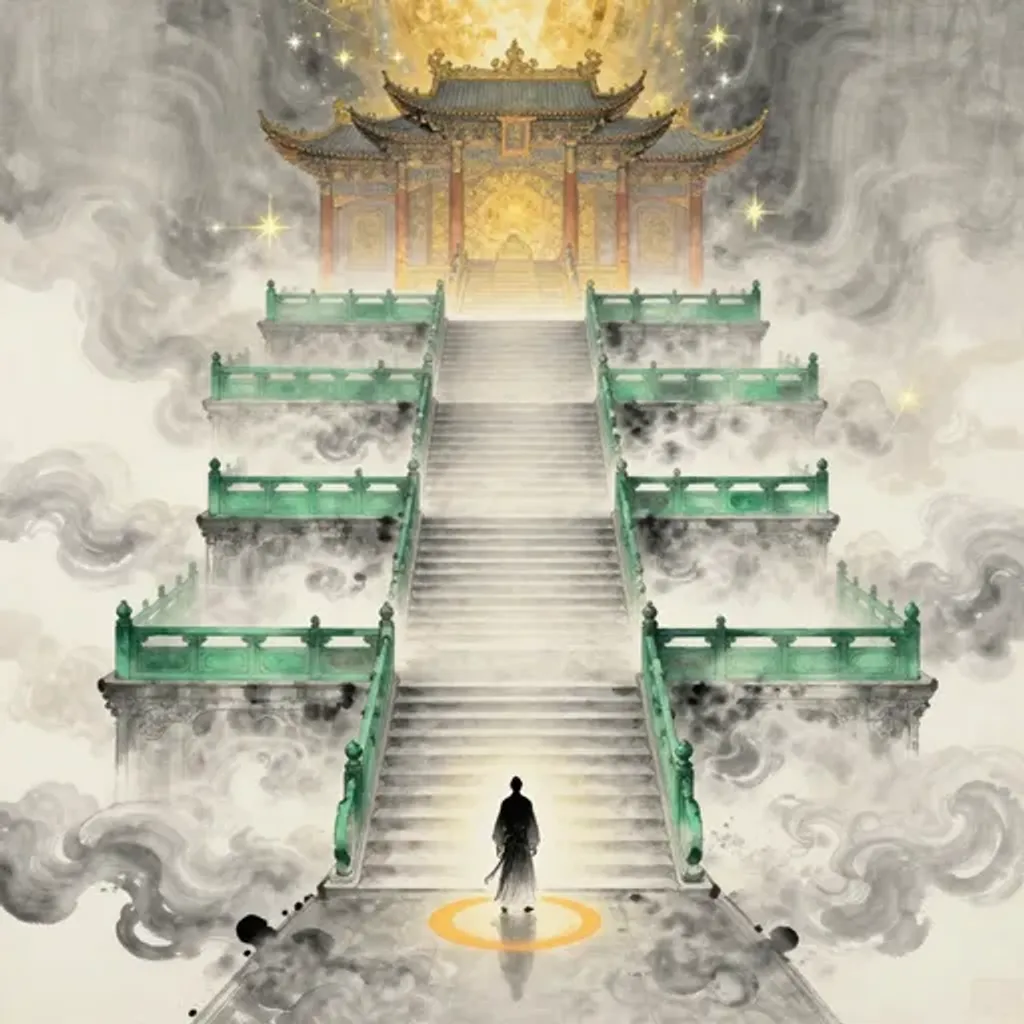
皇陛九重,絕不可登。未見王公,謂天蓋高。
The imperial stairs rise in nine tiers, utterly impossible to climb. Never having seen the lords and dukes, one calls heaven exceedingly high.
— Jiao Yanshou, Yilin (Forest of Changes), 1st century BC
Commentary
Earth upon earth transforms into earth above water — the Army. The imperial steps rise nine layers, absolutely impossible to climb. Without an audience with the king, one concludes that heaven's canopy must be impossibly high. Earth over water, the Army's image, is water hidden within the earth — disciplined force beneath a calm surface. The verse evokes the common person's perspective: the throne is unreachable, the ruler invisible, and the distance between subject and sovereign feels as vast as that between earth and sky. From the Receptive to the Army, Kun's humble earth confronts the vertical hierarchy of military-political order. The nine steps are simultaneously the obstacle and the structure that makes governance possible — the ranks that separate also organize.
坤 → 比
Hexagram 2 → Hexagram 8: Holding Together
Changing lines: 5
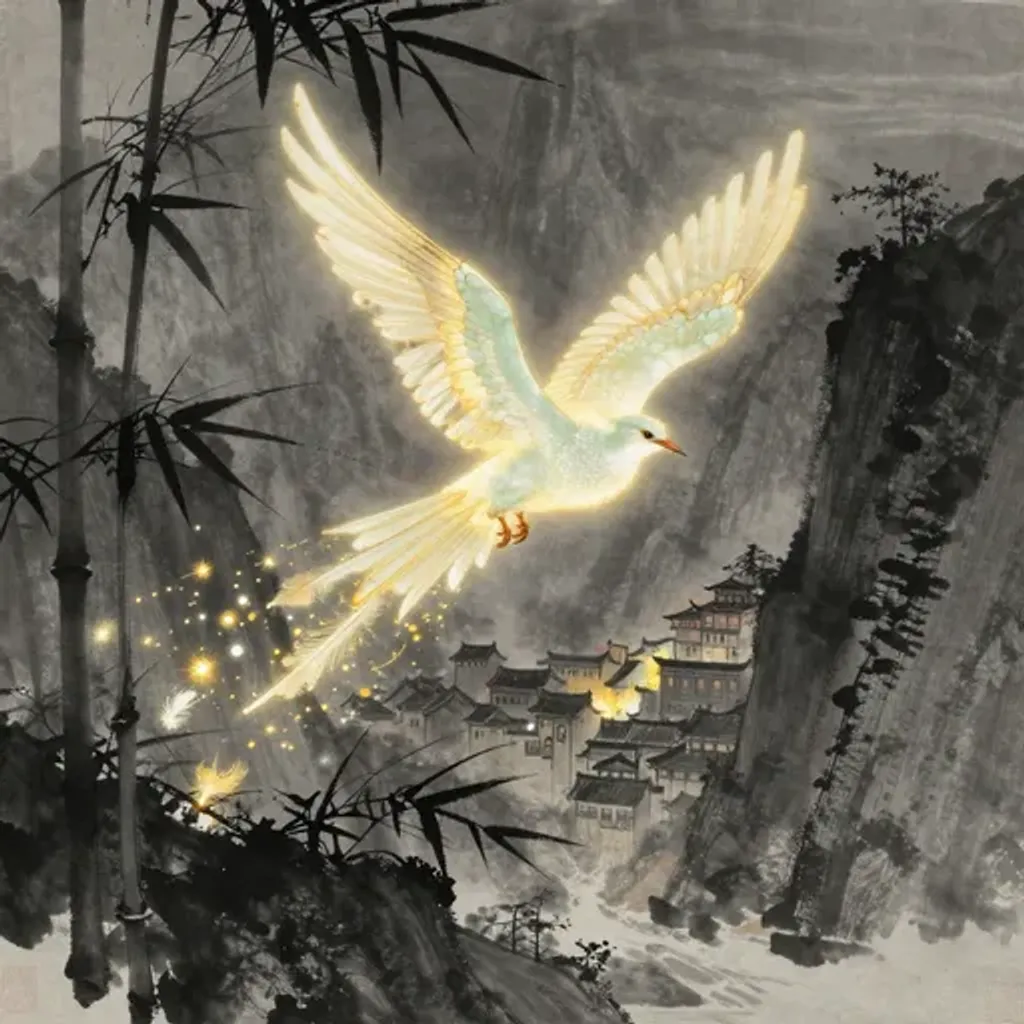
孔德如玉,出於幽谷。升高鼓翼,輝光照國。
Great virtue is like jade, rising from a dark valley. Ascending high, beating its wings; radiant light illuminates the land.
— Jiao Yanshou, Yilin (Forest of Changes), 1st century BC
Commentary
Earth upon earth yields to water upon earth — Holding Together. Virtue bright as jade emerges from a dark valley, rises high on beating wings, and its radiance illuminates the realm. The phrase 'Kong de' may allude to Confucius, whose virtue (de) shone despite his origins in obscurity. The jade-like quality emerging from a secluded valley echoes the Shijing image of the crane crying in hidden marshes, its voice heard in the open wild. From the Receptive to Holding Together, the earth that once merely supported now actively elevates: what was buried in Kun's lowland rises into public view. Water upon earth, the image of Bi, shows how luminous virtue draws others to congregate around it, creating bonds of allegiance through moral radiance rather than coercion.
坤 → 小畜
Hexagram 2 → Hexagram 9: Small Taming
Changing lines: 1, 2, 3, 5, 6
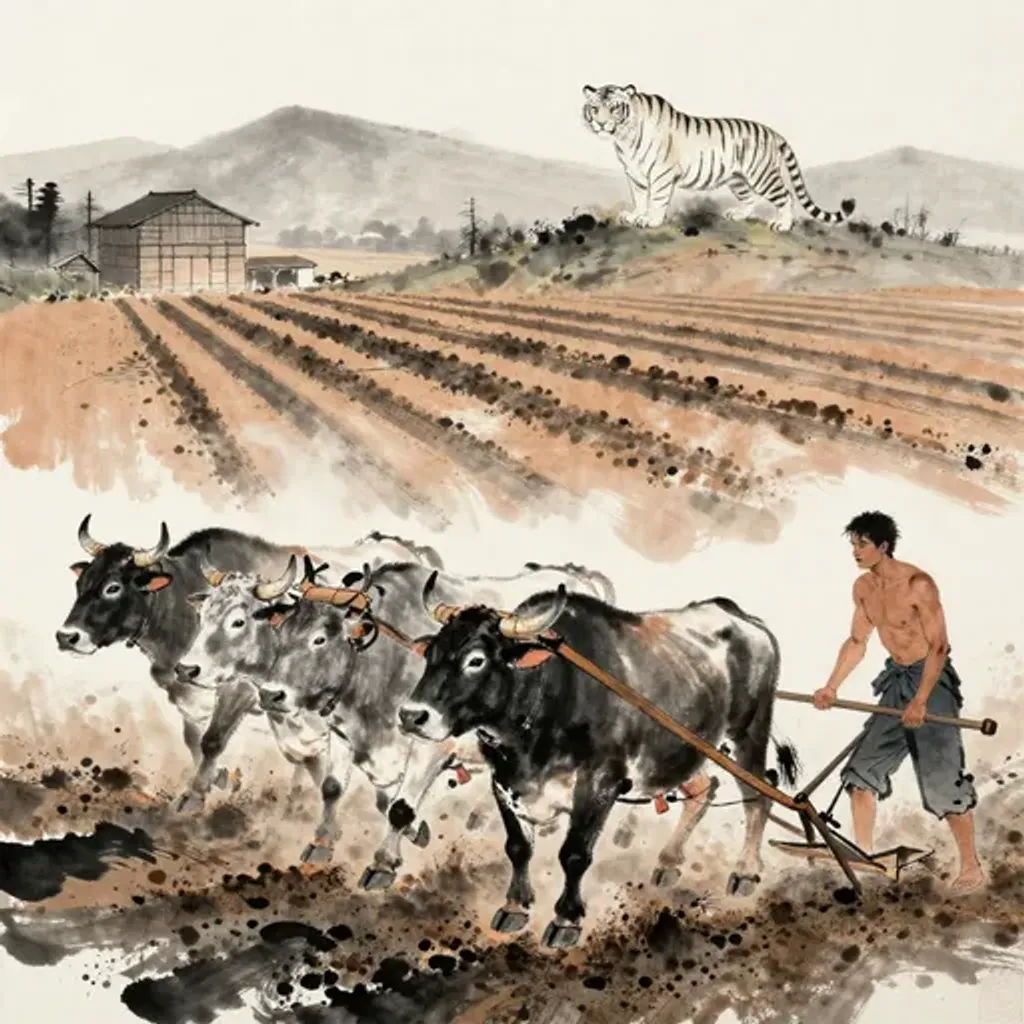
五軛四軌,復得饒有。陳力就列,騶虞悅喜。
Five yokes, four tracks; again one achieves abundance. Arraying one’s strength and taking position; the zouyu rejoices.
— Jiao Yanshou, Yilin (Forest of Changes), 1st century BC
Commentary
Earth upon earth softens into wind above heaven — Small Taming. Five yokes and four tracks yield abundant returns. Officials take their proper posts, and the Zouyu, the benevolent beast, rejoices. The Zouyu is a mythical creature from the Shijing ode of the same name — a righteous beast that treads on no living grass and harms no creature, appearing only in times of virtuous governance. Five yokes and four tracks suggest well-ordered agriculture and transport. From the Receptive to Small Taming, the earth's generous yield is gently channeled by wind's subtle influence. Small Taming restrains through cultivation of virtue rather than force. The Zouyu's appearance confirms the transformation: when the earth's bounty is wisely administered, even the auspicious beasts of legend manifest their approval.
坤 → 履
Hexagram 2 → Hexagram 10: Treading
Changing lines: 1, 2, 4, 5, 6
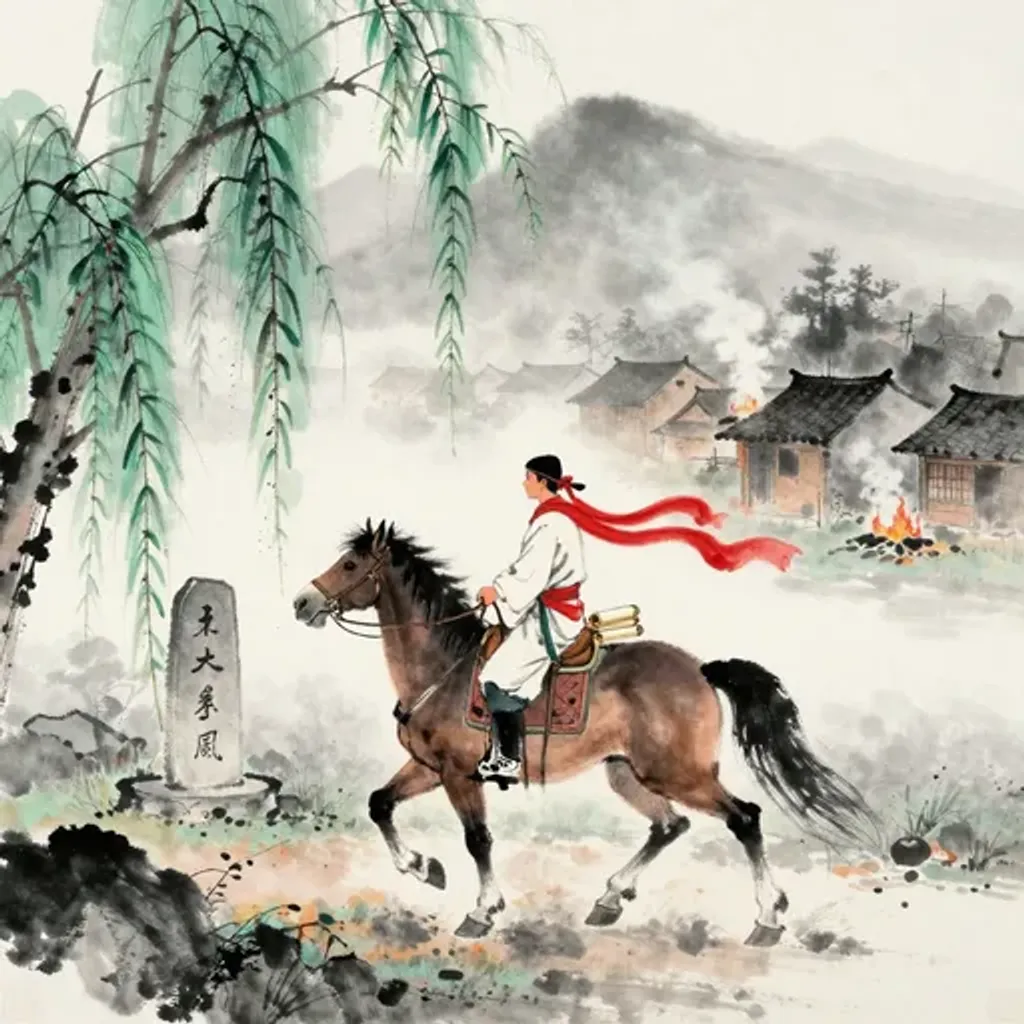
四足無角,君子所服。南征述職,以惠我國。
Four-footed and hornless, what the noble man wears. Traveling south to report on duties, thereby benefiting our state.
— Jiao Yanshou, Yilin (Forest of Changes), 1st century BC
Commentary
Earth upon earth transforms into heaven above the lake — Treading. A four-footed beast without horns — what gentlemen wear as their garment. Journeying south to fulfill official duties, it brings benefit to the realm. The hornless quadruped likely refers to the horse or the lamb: animals of service and docility, fit for the gentleman's use. Treading upon the tiger's tail, the image of Hexagram 10, demands propriety and careful conduct. The southward journey to report on one's duties (shuzhi) recalls the feudal practice of vassals presenting themselves at court. From the Receptive to Treading, the earth's yielding nature becomes the careful step of one who walks amid danger: humble as a hornless beast, dutiful as an official on inspection, navigating hierarchy through ritual propriety rather than aggression.
坤 → 泰
Hexagram 2 → Hexagram 11: Peace
Changing lines: 1, 2, 3
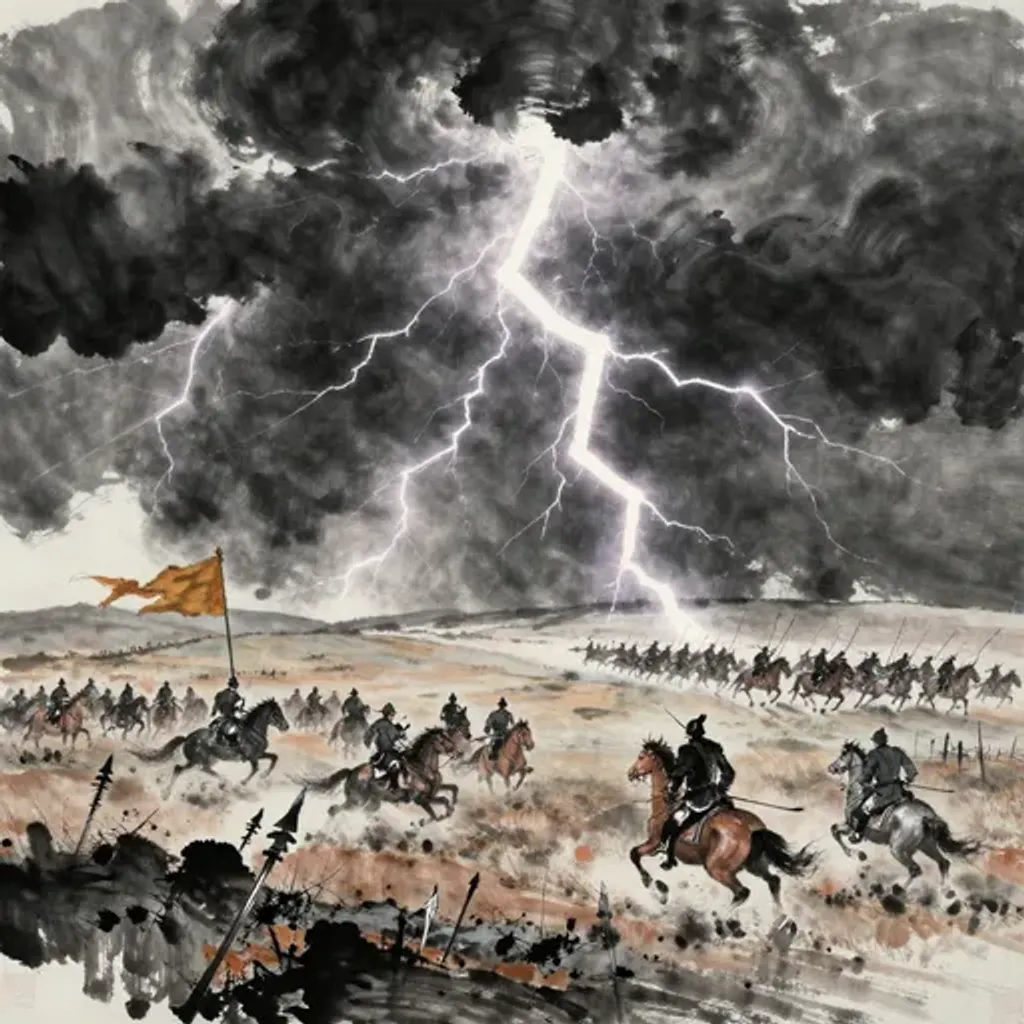
雷行相逐,無有攸息。戰于平陸,為夷所覆。
Thunder rolls in pursuit, without a moment’s rest. Battle on the open plains; defeated by the barbarians.
— Jiao Yanshou, Yilin (Forest of Changes), 1st century BC
Commentary
Earth upon earth opens into earth above heaven — Peace, where heaven and earth commune. Yet the verse is violent: thunder chases thunder without rest; battle on the flat plains ends in defeat by the Yi people. The paradox is deliberate. Hexagram 11, Peace, achieves its harmony through the mutual descent and ascent of heaven and earth — but this free exchange also opens the border. The Yi, typically representing northern or eastern frontier peoples, overrun the lowlands precisely because the terrain lies open and undefended. From the Receptive to Peace, Kun's flat earth becomes the battlefield where openness enables both communion and invasion. Peace is not passivity; without vigilance, the very conditions that permit exchange invite catastrophe.
坤 → 否
Hexagram 2 → Hexagram 12: Standstill
Changing lines: 4, 5, 6
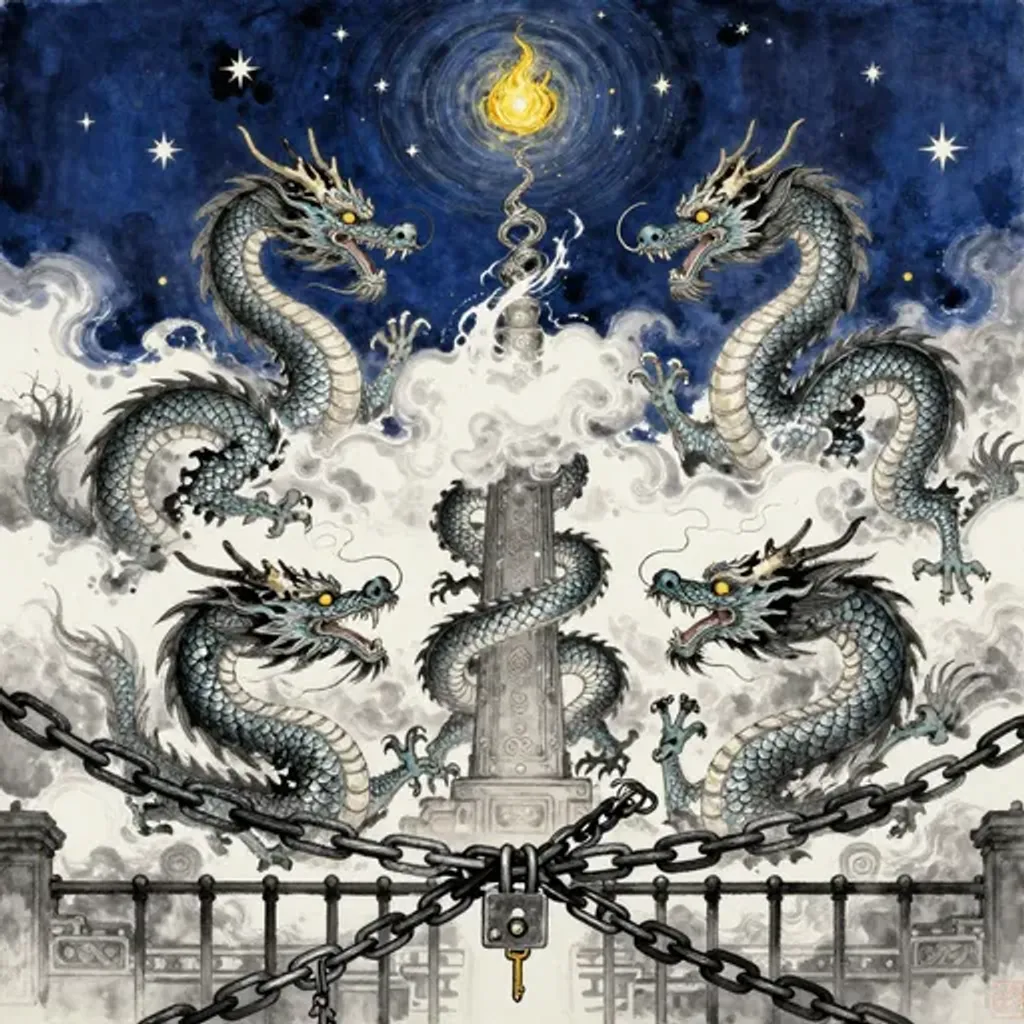
六龍爭極,服在下飾。謹慎管鑰,結禁毋出。
Six dragons contend for the summit; yielding, they serve below. Guard carefully the locks and keys; bind fast, do not venture out.
— Jiao Yanshou, Yilin (Forest of Changes), 1st century BC
Commentary
Earth upon earth yields to heaven above earth — Standstill, where heaven and earth refuse to communicate. Six dragons contend at the limit, forced to serve in subordinate finery. Guard the locks and keys with care; bind fast and do not emerge. When Kun becomes Pi, the earth that once supported everything now seals itself shut. The six dragons recall the Qian hexagram's six yang lines driven to extremity — competing forces that exhaust themselves. The verse counsels withdrawal and vigilance: lock the doors, secure the household, venture nothing. From the Receptive to Standstill, the earth's generosity inverts into defensive closure. Pi's image is heaven and earth not interacting — the time when the noble person withdraws, conserves virtue, and refuses to be drawn out by the promise of emolument.
坤 → 同人
Hexagram 2 → Hexagram 13: Fellowship
Changing lines: 1, 3, 4, 5, 6
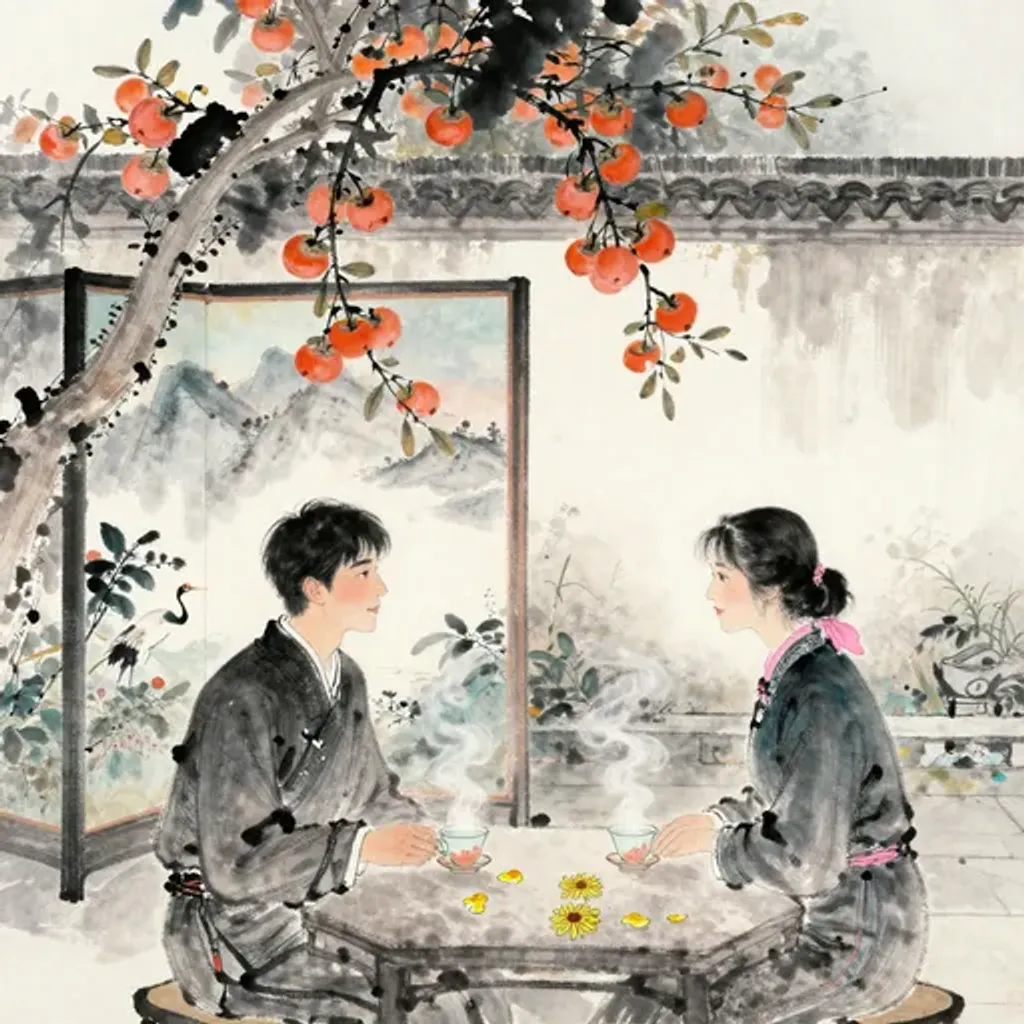
長男少女,相向共語,福祿歡喜。
The eldest son and the youngest daughter, facing each other in conversation; blessings, prosperity, and joy.
— Jiao Yanshou, Yilin (Forest of Changes), 1st century BC
Commentary
Earth upon earth gives way to heaven above fire — Fellowship with Men. An eldest son and a youngest daughter face each other in conversation, sharing blessings and delight. The image is intimate and auspicious: two people of complementary nature finding common ground. Heaven and fire share the same upward direction, the basis of Hexagram 13's harmony — fellowship arises from shared aspiration rather than identical nature. The eldest son (Zhen trigram) and youngest daughter (Dui trigram) represent the full range of the family reaching across generational distance. From the Receptive to Fellowship, the earth's capacity to hold all things becomes the ground on which diverse people gather in genuine accord. Communion requires both difference and willingness to meet.
坤 → 大有
Hexagram 2 → Hexagram 14: Great Possession
Changing lines: 1, 2, 3, 4, 6
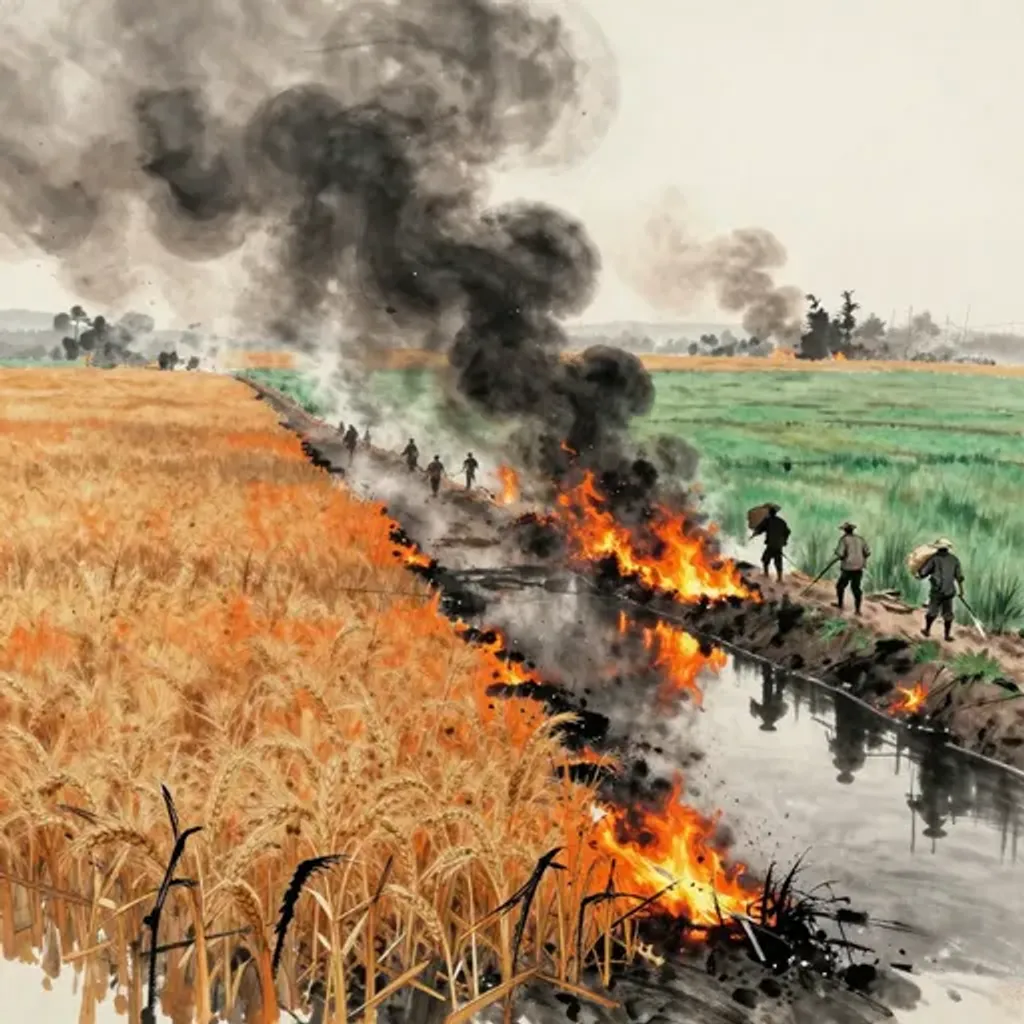
奸延惡人,使德不通。炎火為殃,禾穀大傷。
Treacherous and vile men obstruct virtue’s passage. Blazing fire brings ruin; grain and crops are greatly harmed.
— Jiao Yanshou, Yilin (Forest of Changes), 1st century BC
Commentary
Earth upon earth transforms into fire above heaven — Great Possession. Yet the verse is baleful: wicked people obstruct virtue's path, and fire becomes disaster, destroying the grain harvest. Fire in heaven, the image of Da You, represents abundance under illumination — fire above heaven, supreme clarity. But when that fire is wielded by the corrupt, illumination becomes conflagration. The grain — Kun's most essential product — is consumed. From the Receptive to Great Possession, the earth's bounty is placed under fire's dominion, and everything depends on who controls the flame. In the hands of the virtuous, fire crowns heaven with radiance; in the hands of the wicked, it burns the very crops the earth labored to produce.
坤 → 謙
Hexagram 2 → Hexagram 15: Modesty
Changing lines: 3
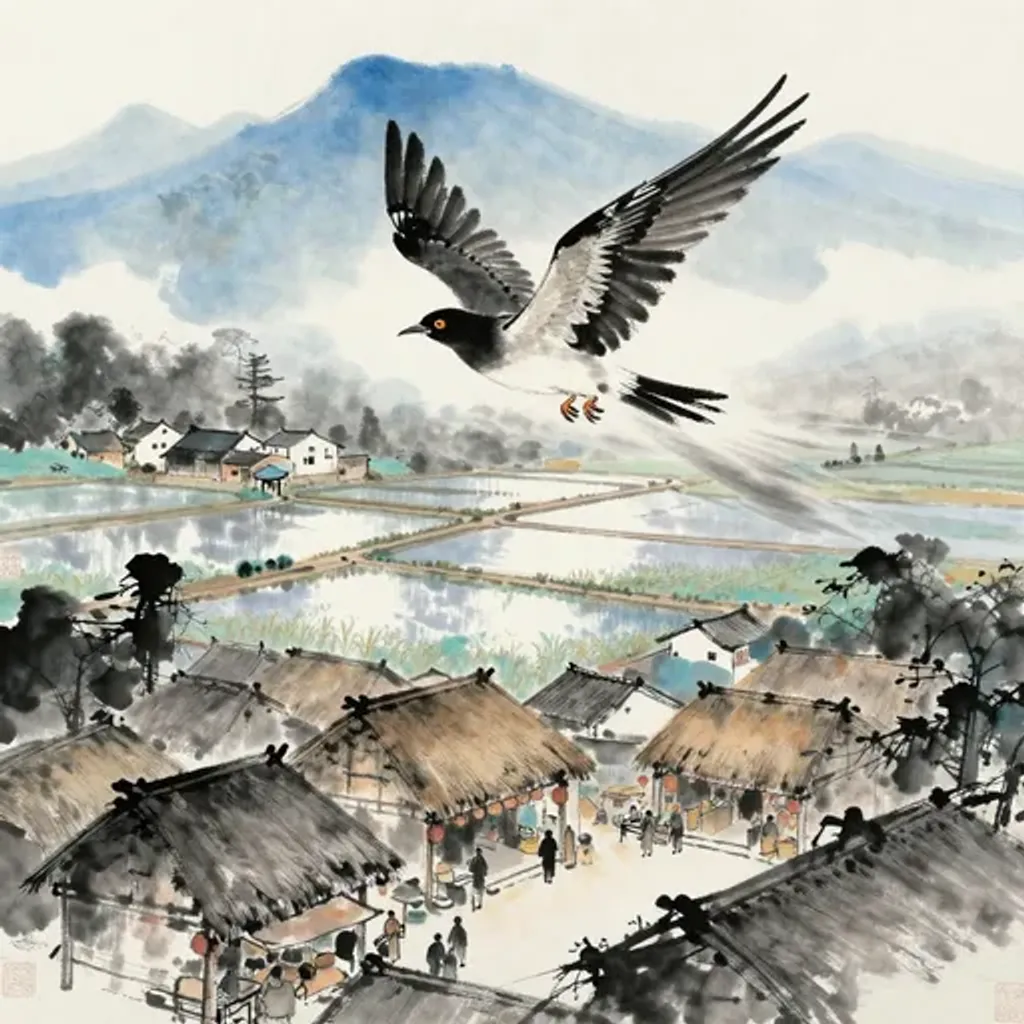
修其翰翼,隨風向北。至虞夏國,與舜相得。年歲大樂,邑無盜賊。
Grooming its wings, following the wind northward. Reaching the realm of Yu and Xia, meeting Shun there. The year brings great happiness; in the town, no thieves or bandits.
— Jiao Yanshou, Yilin (Forest of Changes), 1st century BC
Commentary
Earth upon earth yields to earth above the mountain — Modesty. A bird trims its wings and follows the wind northward, arriving at the land of Yu and Xia, where it finds favor with Emperor Shun. The years bring great joy; villages are free of thieves. Shun, the sage-king who rose from the humblest origins — plowing at Mount Li, fishing at Thunder Lake — embodies Modesty's deepest meaning: the mountain hidden within the earth, greatness that does not announce itself. The bird's northward flight to Shun's court mirrors the worthy who seeks out virtuous governance. From the Receptive to Modesty, the earth enfolds the mountain rather than displaying it. Shun's realm prospers precisely because authority wears the garment of humility.
坤 → 豫
Hexagram 2 → Hexagram 16: Enthusiasm
Changing lines: 4
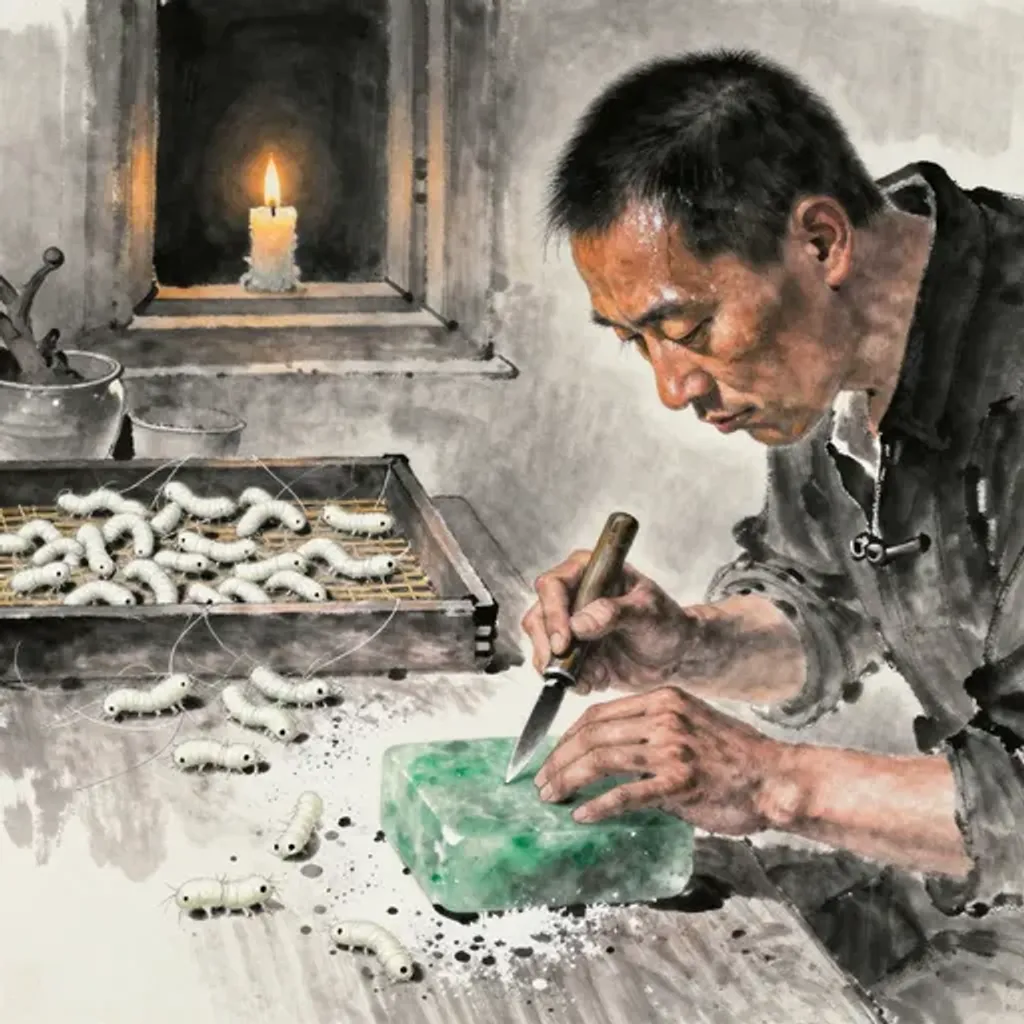
鈆刀攻玉,堅不可得。盡我筋力,眡蠒為疾。
A lead knife attacks jade; hard, it cannot be cut. Exhausting all sinew and strength; the silkworm cocoons become an affliction.
— Jiao Yanshou, Yilin (Forest of Changes), 1st century BC
Commentary
Earth upon earth transforms into thunder above earth — Enthusiasm. A lead knife tries to carve jade but cannot penetrate its hardness. One exhausts every sinew, squinting until the eyes blur like cocoon silk. Thunder emerging from the earth, the image of Yu, is the eruption of joyful energy — music, celebration, the mobilization of collective spirit. Yet the verse depicts futile effort: the wrong tool applied to the wrong material. Lead is too soft for jade, and no amount of straining changes this mismatch. From the Receptive to Enthusiasm, the earth's yielding nature confronts the need for explosive, thunderous action. The lesson is not that effort is worthless, but that enthusiasm misdirected — soft metal against hard stone — exhausts the worker without result.
坤 → 隨
Hexagram 2 → Hexagram 17: Following
Changing lines: 1, 4, 5
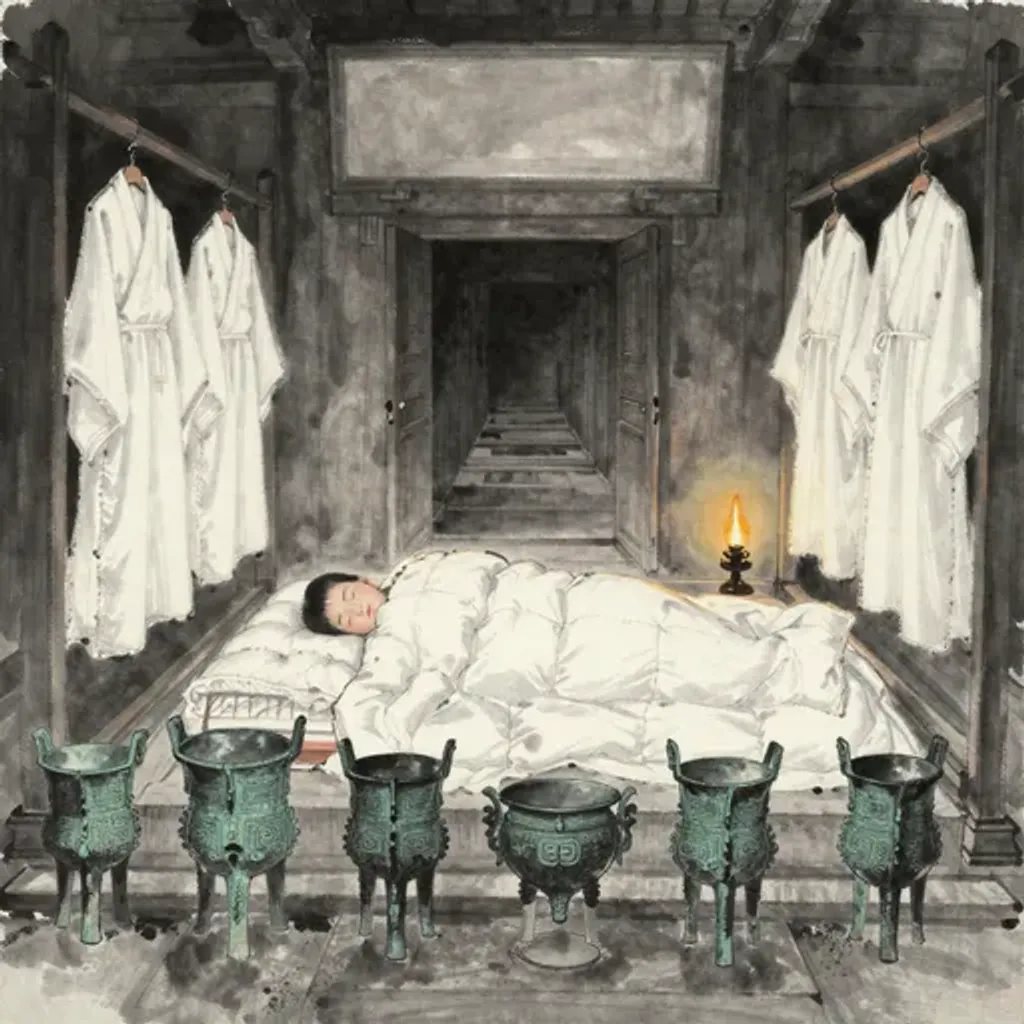
舉被覆目,不見日月。衣裳簠簋,就長夜室。
Lifting the quilt to cover the eyes, seeing neither sun nor moon. Garments and ritual vessels enter the long night’s chamber.
— Jiao Yanshou, Yilin (Forest of Changes), 1st century BC
Commentary
Earth upon earth yields to lake above thunder — Following. The quilt is pulled over the eyes, blocking out sun and moon. Clothes and ritual vessels are arranged, and one enters the chamber of eternal night. This is a burial scene: the deceased is covered, vestments and sacrificial bowls are laid out, and the body enters the tomb. Lake above thunder, the image of Sui, depicts evening rest — the gentleman retreats into darkness for renewal. The verse renders this literally: following one's fate into the grave. From the Receptive to Following, the earth that supports the living also receives the dead. Sui's principle of following the natural cycle — activity yielding to rest, day yielding to night — here reaches its ultimate expression in death itself.
坤 → 蠱
Hexagram 2 → Hexagram 18: Work on the Decayed
Changing lines: 2, 3, 6
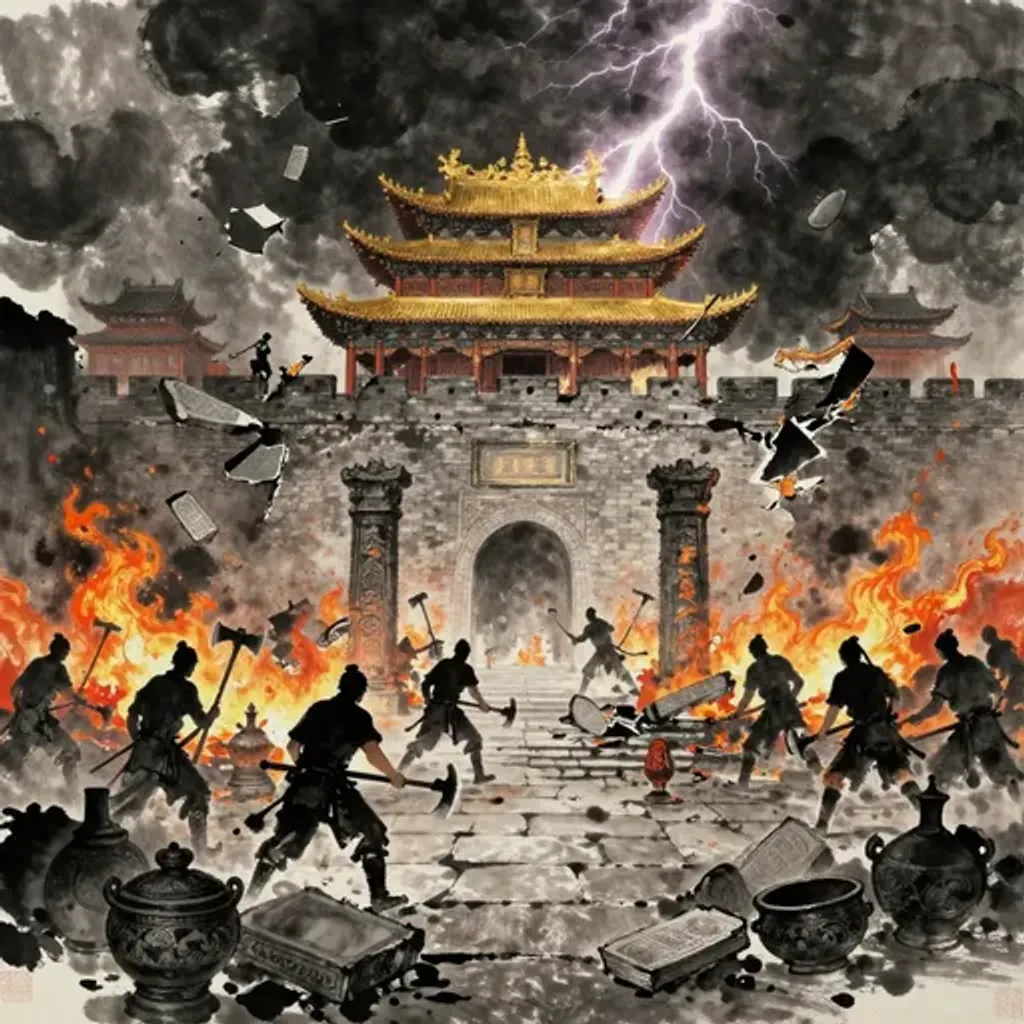
賊仁傷德,天怒不福。斬刈宗社,失其邦域。
Harming benevolence, wounding virtue; heaven is angry and withholds blessing. The ancestral altars are cut down; the domain is lost.
— Jiao Yanshou, Yilin (Forest of Changes), 1st century BC
Commentary
Earth upon earth transforms into mountain above wind — Work on the Decayed. One who harms benevolence and damages virtue draws heaven's wrath, forfeiting its blessings. Ancestral altars are cut down, and the state loses its domain. Gu, decay, shows the mountain pressing down on wind — corruption festering beneath a rigid surface. The verse diagnoses the cause: when a ruler actively injures the moral foundations (benevolence and virtue), heaven withdraws its mandate. The destruction of the ancestral shrine signals not mere political defeat but civilizational erasure. From the Receptive to Work on the Decayed, the earth that once nurtured all things is poisoned from above. Kun's receptivity becomes liability when what it receives is corruption that rots the roots.
坤 → 臨
Hexagram 2 → Hexagram 19: Approach
Changing lines: 1, 2
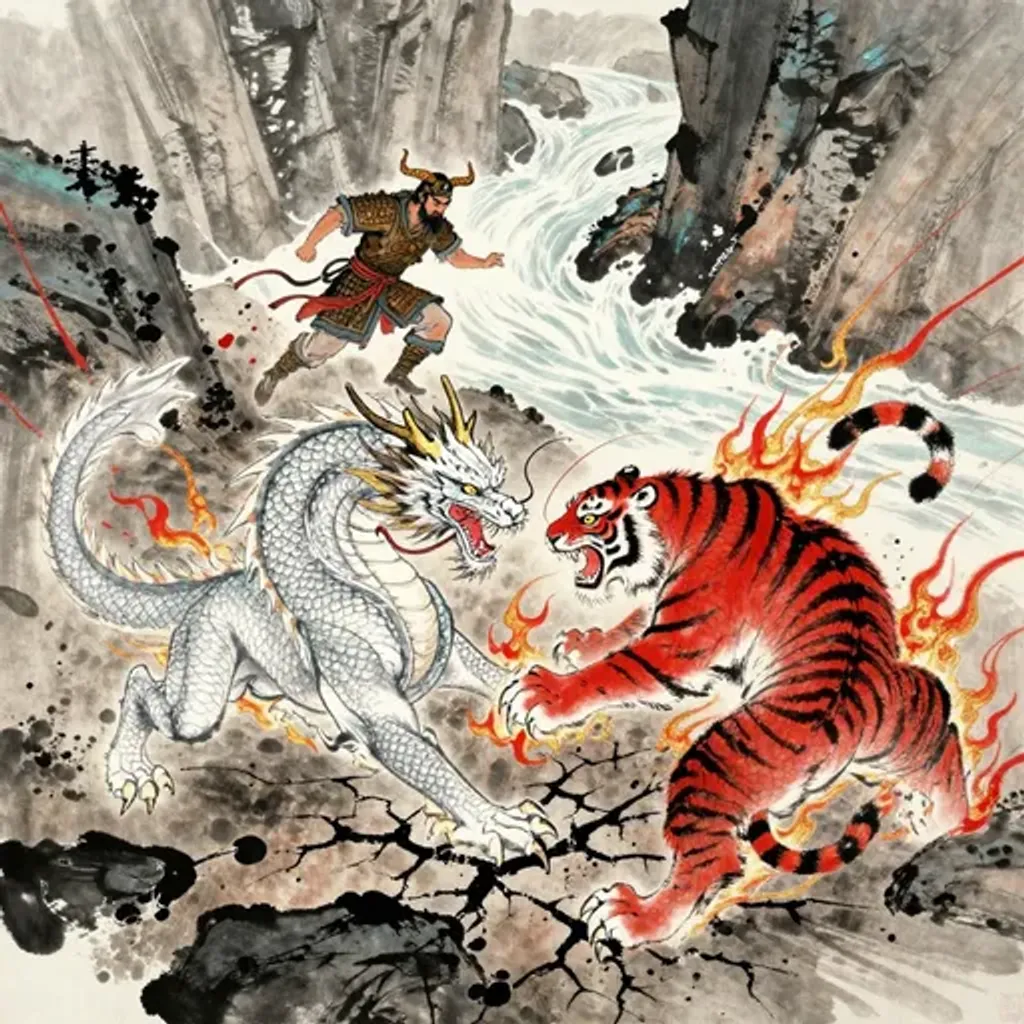
白龍赤虎,戰鬭俱怒。蚩尤敗走,死於魚口。
White dragon, red tiger; battling together in fury. Chiyou is routed and flees, dying at Yukou.
— Jiao Yanshou, Yilin (Forest of Changes), 1st century BC
Commentary
Earth upon earth yields to earth above the lake — Approach. A white dragon and a red tiger clash in furious battle. Chi You is routed and dies at Fish Mouth. Chi You, the bronze-headed war god, was defeated by the Yellow Emperor at the Battle of Zhuolu — one of the foundational battles of Chinese civilization. The white dragon and red tiger may represent the cosmic forces marshaled by the Yellow Emperor. Approach (Lin) depicts the lake beneath the earth — two yang lines rising from below, the image of authority drawing near. From the Receptive to Approach, the earth's passive ground becomes the arena where sovereign power advances decisively. Chi You's defeat marks the moment legitimate authority approaches and prevails over chaotic martial force.
坤 → 觀
Hexagram 2 → Hexagram 20: Contemplation
Changing lines: 5, 6
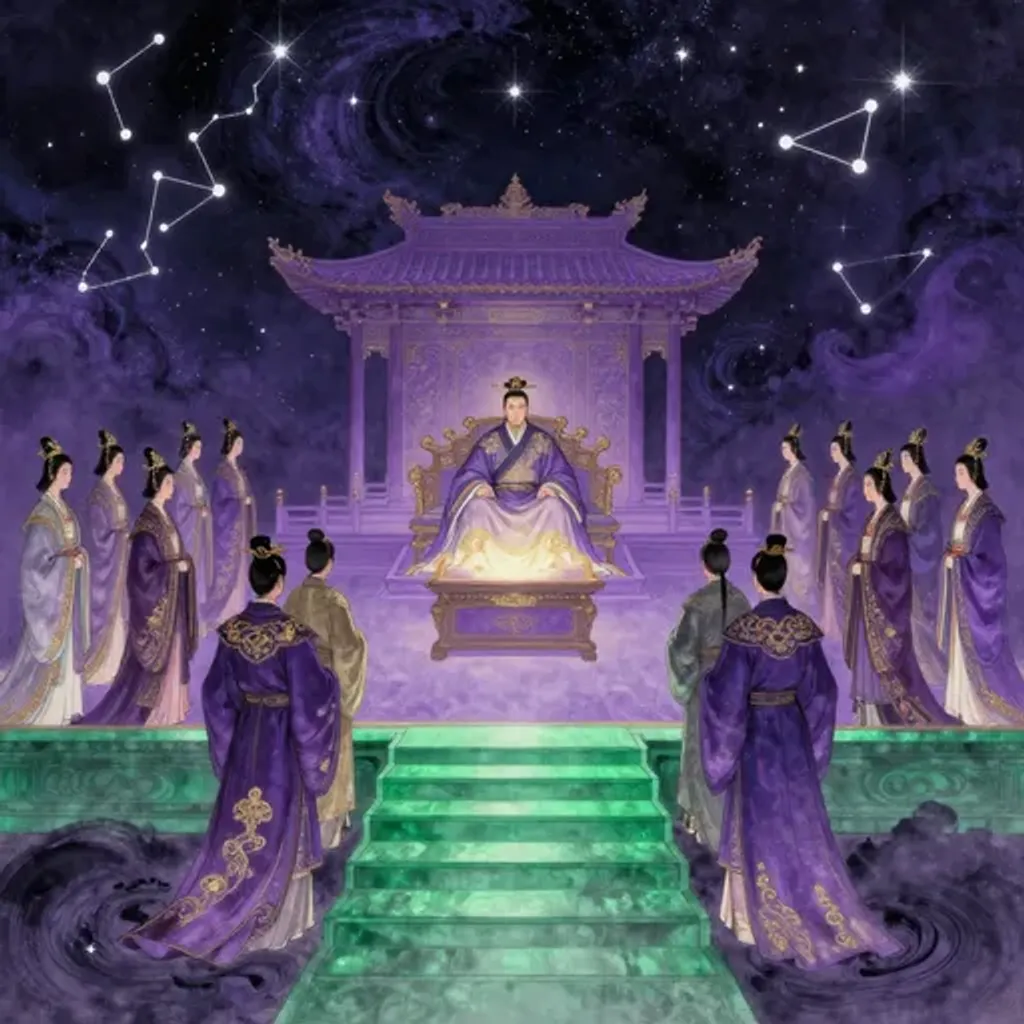
北辰紫宮,衣冠立中。含和建德,常受天福。
The North Star and the Purple Palace; robed and crowned, standing at the center. Embracing harmony, establishing virtue; always receiving heaven’s blessing.
— Jiao Yanshou, Yilin (Forest of Changes), 1st century BC
Commentary
Earth upon earth transforms into wind above earth — Contemplation. The Pole Star dwells in the Purple Palace; robed and crowned, one stands at the center. Embracing harmony and establishing virtue, one constantly receives heaven's blessings. The Purple Palace (Zigong) is the celestial enclosure surrounding the Pole Star — the cosmic seat of the emperor. Wind moving over the earth, the image of Guan, shows the ruler surveying all directions from a fixed center. The verse captures Contemplation's essence: the sovereign who stands still at the axis while influence radiates outward like wind. From the Receptive to Contemplation, the earth that carried all things now gazes upward at the cosmic model of governance — centered, virtuous, and effortlessly influential.
坤 → 噬嗑
Hexagram 2 → Hexagram 21: Biting Through
Changing lines: 1, 4, 6
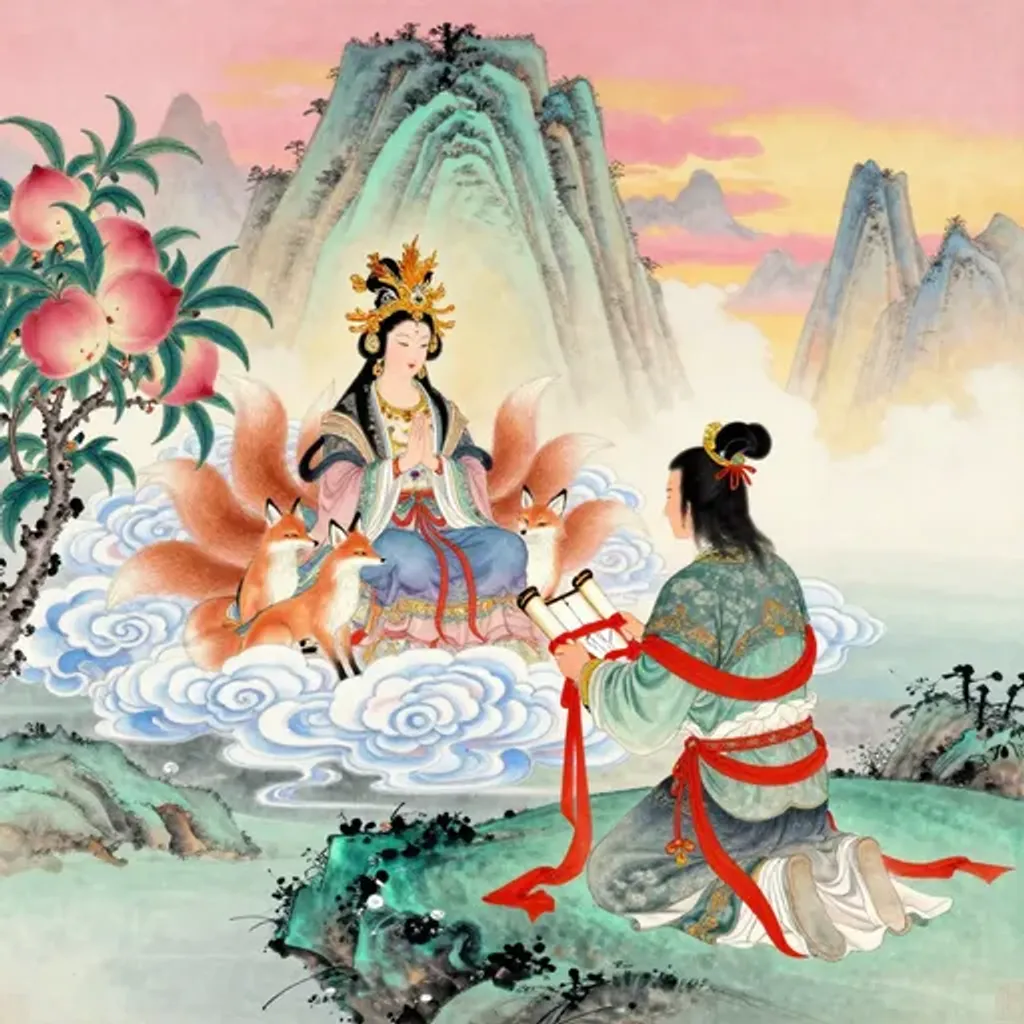
稷為堯使,西見王母。拜請百福,賜我善子。
Ji was sent by Yao west to visit the Queen Mother. Bowing to request a hundred blessings; grant me a fine son.
— Jiao Yanshou, Yilin (Forest of Changes), 1st century BC
Commentary
Earth upon earth yields to fire above thunder — Biting Through. Lord Millet, sent by Emperor Yao, journeys west to visit the Queen Mother of the West. He bows and requests a hundred blessings, begging for the gift of a virtuous heir. Hou Ji, ancestor of the Zhou people, served as Shun's minister of agriculture; here he acts as Yao's envoy. The Queen Mother of the West, dwelling on Mount Kunlun above the Weak Water, guards the peaches of immortality and bestows celestial blessings. Fire and thunder, the image of Shi He, represent decisive action that bites through obstruction. From the Receptive to Biting Through, the earth's patient cultivation sends its emissary to pierce the boundary between mortal and divine, seeking the blessing that no earthly effort alone can secure.
坤 → 賁
Hexagram 2 → Hexagram 22: Grace
Changing lines: 1, 3, 6
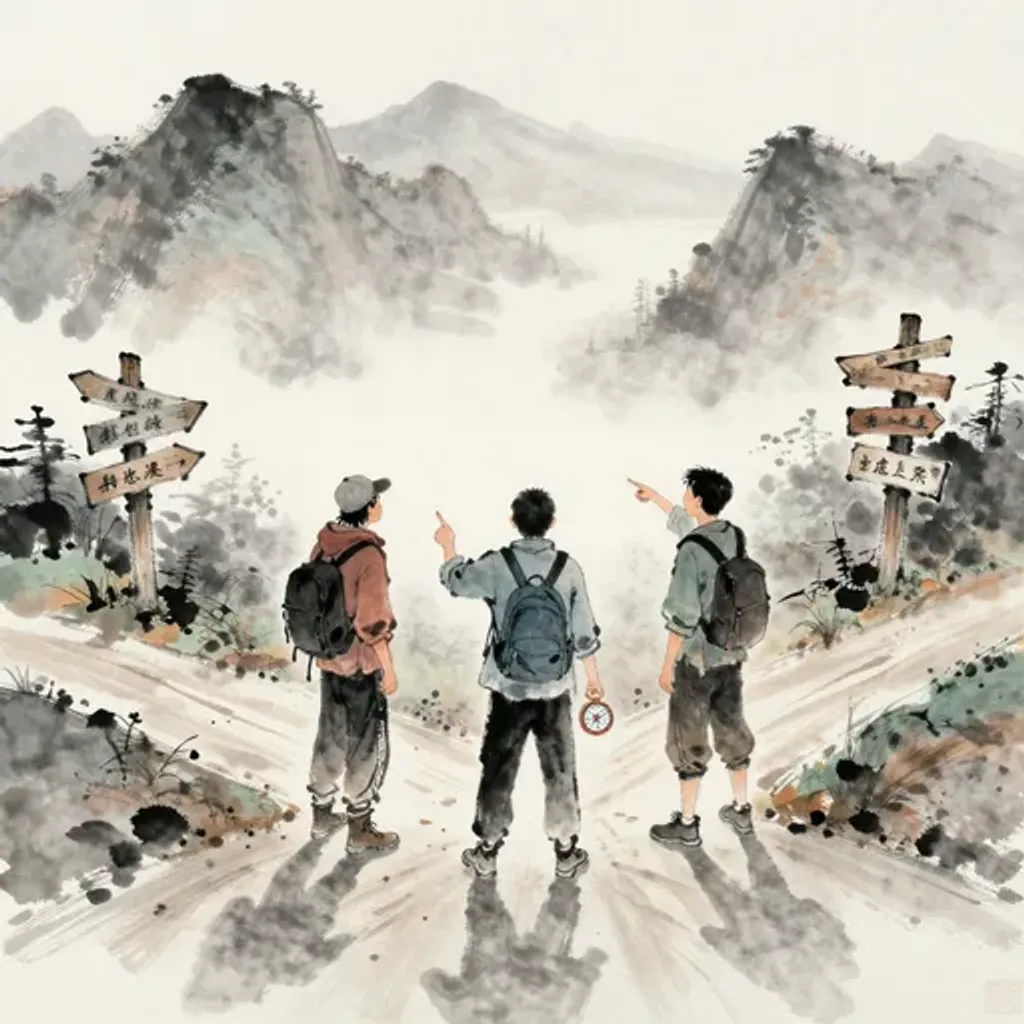
三人異趣,反覆迷惑。一身五心,亂無所得。
Three men with different aims; going back and forth in confusion. One body with five hearts; disordered, nothing is gained.
— Jiao Yanshou, Yilin (Forest of Changes), 1st century BC
Commentary
Earth upon earth transforms into mountain above fire — Grace. Three people pursue different interests, wavering back and forth in confusion. One body harbors five minds, and in the chaos nothing is achieved. Mountain above fire, the image of Bi, shows fire illuminating the mountain's base — beauty and adornment, but also the danger of mere surface. The verse depicts the opposite of grace: internal division so extreme that no coherent action is possible. Three people pulling in three directions, or one person with five contradictory inclinations, produce only paralysis. From the Receptive to Grace, the earth's undifferentiated receptivity must crystallize into aesthetic form, but when too many impulses compete for expression, the result is not refinement but fragmentation.
坤 → 剝
Hexagram 2 → Hexagram 23: Splitting Apart
Changing lines: 6
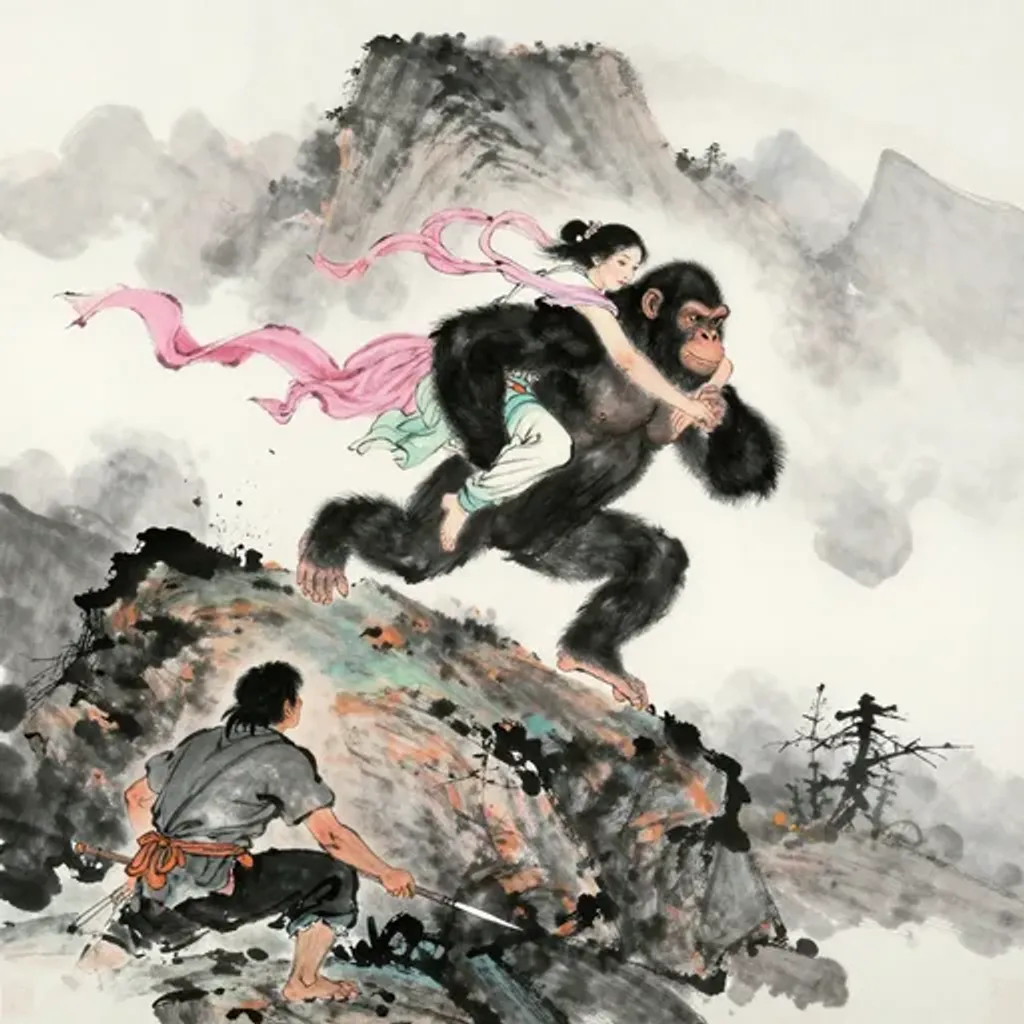
南山大玃,盜我媚妾。怯不敢逐,退而獨宿。
The great ape of the southern mountains steals my lovely concubine. Too timid to give chase, I retreat and sleep alone.
— Jiao Yanshou, Yilin (Forest of Changes), 1st century BC
Commentary
Earth upon earth yields to mountain above earth — Splitting Apart. A great ape of the southern mountains steals one's beloved concubine. Too timid to give chase, one retreats and sleeps alone. The great ape (jue) is a creature of classical lore — a large primate from the mountain wilderness that abducts women, representing raw bestial force encroaching on civilized life. Mountain resting on earth, the image of Bo, shows the mountain slowly eroding from below until it collapses. From the Receptive to Splitting Apart, the earth's yielding nature is exploited: unable to resist, the victim watches as what is precious is stripped away. Bo's counsel is to thicken the foundation (hou xia an zhai), but this verse captures the moment before that wisdom arrives — when passivity has already cost too much.
坤 → 復
Hexagram 2 → Hexagram 24: Return
Changing lines: 1
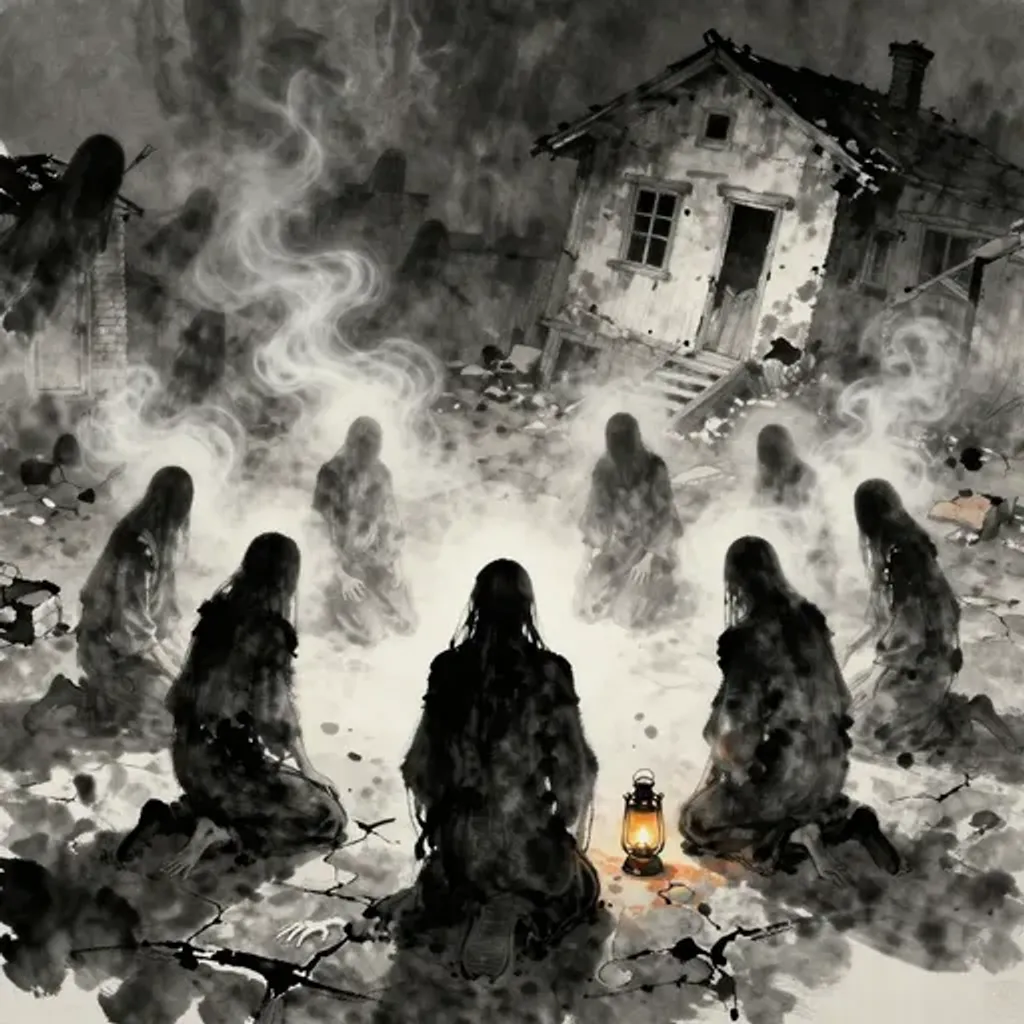
眾鬼所趨,反作大怪。九身無頭,魂驚魄去。不可以居。
Where the assembled ghosts converge, strange monstrosities arise. Nine bodies without heads; the soul is startled, the spirit flees. One cannot dwell there.
— Jiao Yanshou, Yilin (Forest of Changes), 1st century BC
Commentary
Earth upon earth transforms into earth above thunder — Return. Crowds of ghosts converge, conjuring monstrous apparitions. Nine bodies without heads — the soul startles, the spirit flees. This place cannot be inhabited. Thunder within the earth, the image of Fu, signals the first yang line returning at the winter solstice — the seed of renewal stirring underground. Yet the verse depicts horror: headless phantoms and spiritual panic. The paradox is that Return's moment of renewal is also the moment when accumulated darkness reaches its extreme. From the Receptive to Return, the earth that covered the dead now trembles with their restlessness. The ghosts are the final exhalation of the old cycle before the solstice light breaks through. One must leave before one can return.
坤 → 无妄
Hexagram 2 → Hexagram 25: Innocence
Changing lines: 1, 4, 5, 6
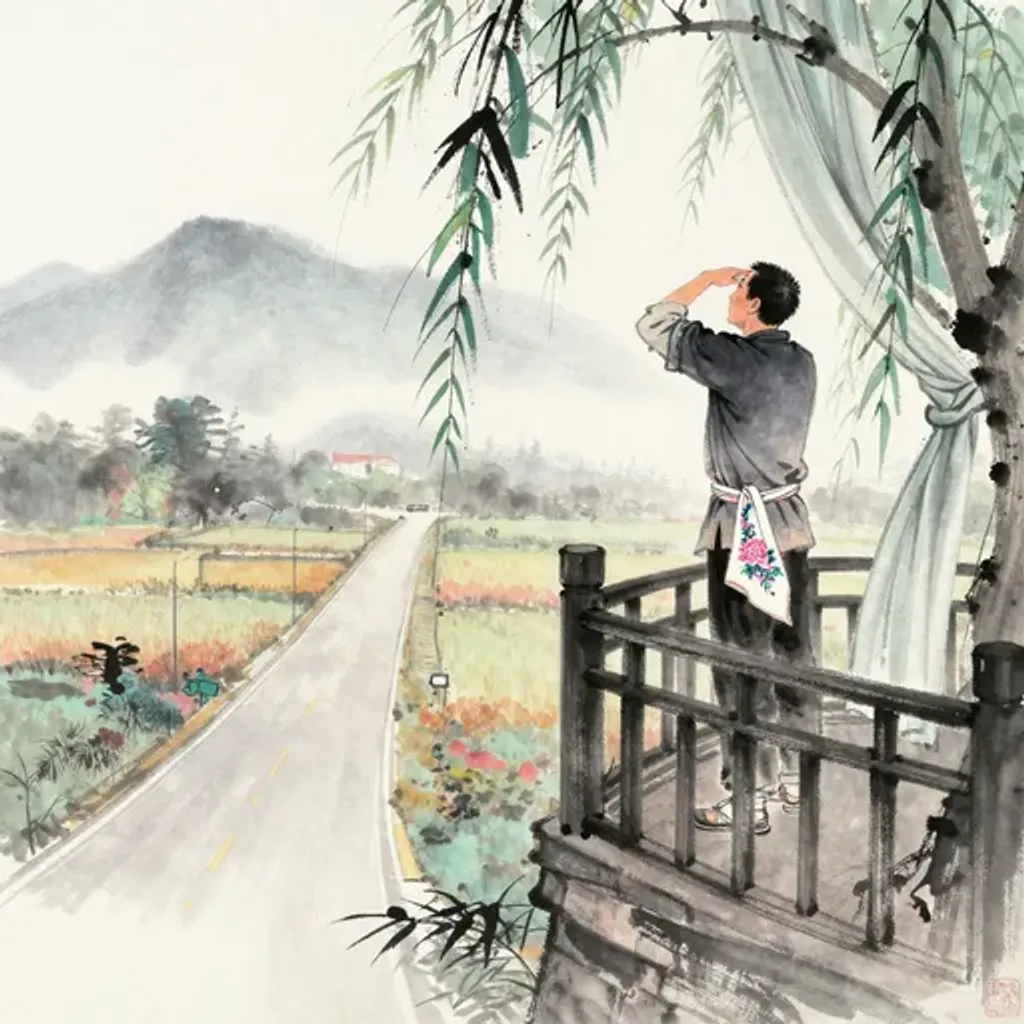
延頭遠望,眯為目疾。不見叔姬,使伯心憂。
Craning the neck, gazing far; squinting makes the eyes ache. Not seeing the younger sister; the elder brother’s heart is filled with worry.
— Jiao Yanshou, Yilin (Forest of Changes), 1st century BC
Commentary
Earth upon earth yields to heaven above thunder — Innocence. One stretches forward, peering into the distance, but straining causes the eyes to ache. One cannot see the younger sister, and this makes the elder brother grieve. Heaven and thunder below, the image of Wuwang, depicts all things moving in accordance with heaven's will — the state of innocence, free from ulterior design. The verse captures innocence thwarted: a brother's genuine, guileless longing to see his sister frustrated by sheer distance and physical limitation. No scheming is involved, no false motive — only sincere concern blocked by circumstance. From the Receptive to Innocence, the earth's inability to elevate the gaze becomes the ache of pure-hearted desire that cannot reach its object.
坤 → 大畜
Hexagram 2 → Hexagram 26: Great Taming
Changing lines: 1, 2, 3, 6
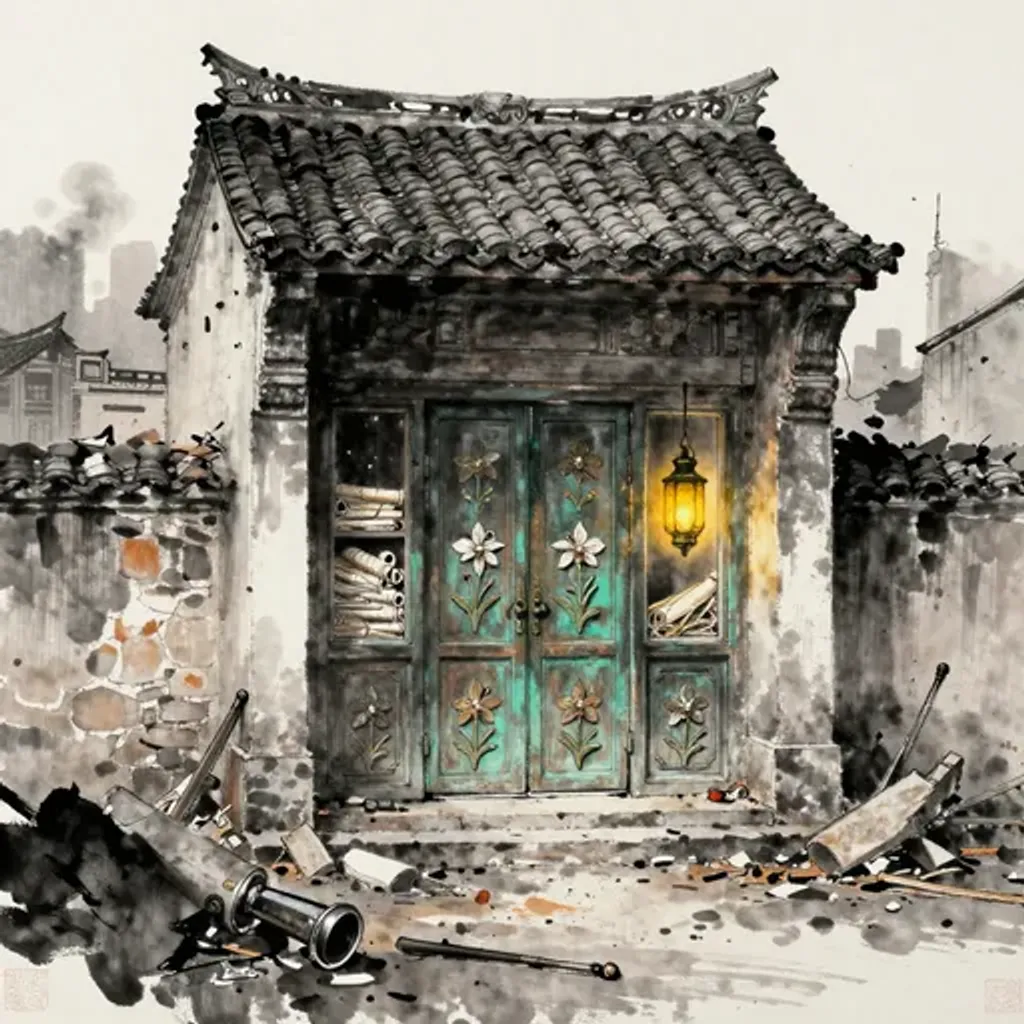
典冊法書,藏在蘭臺。雖遭亂潰,獨不遇災。
Canons, records, and legal texts, stored in the Orchid Terrace. Though chaos and ruin beset the land, alone they do not meet with disaster.
— Jiao Yanshou, Yilin (Forest of Changes), 1st century BC
Commentary
Earth upon earth transforms into mountain above heaven — Great Taming. Canonical texts and legal documents are stored in the Orchid Terrace. Though turmoil and collapse engulf the world, these alone escape disaster. The Orchid Terrace (Lantai) was the Han dynasty imperial archive, housing the realm's most precious records. Mountain above heaven, the image of Da Xu, shows heaven's vast energy tamed and stored within the mountain — the gentleman accumulates knowledge of past words and deeds to cultivate virtue. From the Receptive to Great Taming, the earth's passive holding becomes the mountain's deliberate preservation. When civilization crumbles, what survives is what was consciously archived. The verse celebrates the power of intentional accumulation: amid universal ruin, the treasured texts endure because someone chose to store them well.
坤 → 頤
Hexagram 2 → Hexagram 27: Nourishment
Changing lines: 1, 6
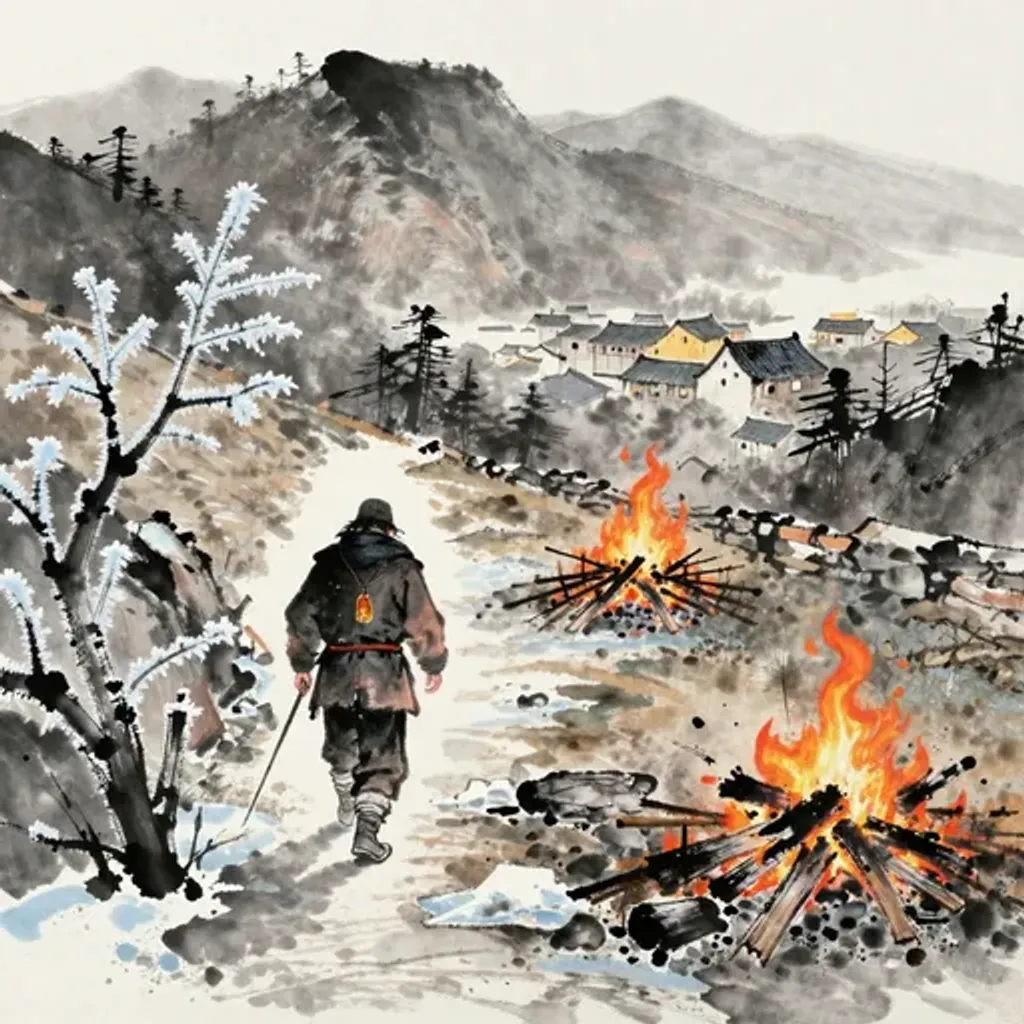
自衛反魯,時不我與。冰炭異室,仁道隔塞。
Returning from Wei to Lu; the times do not favor me. Ice and charcoal in separate rooms; the way of benevolence is blocked.
— Jiao Yanshou, Yilin (Forest of Changes), 1st century BC
Commentary
Earth upon earth yields to mountain above thunder — Nourishment. Returning to Lu from the state of Wei, the time has not favored me. Ice and charcoal dwell in separate rooms; the Way of benevolence is blocked. This directly alludes to Confucius, who traveled from Wei back to Lu lamenting that the age refused his teachings. Ice and charcoal in separate chambers — incompatible substances that cannot coexist — capture the sage's isolation from the political order he sought to nourish. Mountain above thunder, the image of Yi, depicts the mouth: careful about what enters and exits. From the Receptive to Nourishment, the earth that should sustain the sage instead starves him. Confucius's frustrated return embodies nourishment denied — the moral food he offered rejected by a world that preferred its own poison.
坤 → 大過
Hexagram 2 → Hexagram 28: Great Exceeding
Changing lines: 2, 3, 4, 5
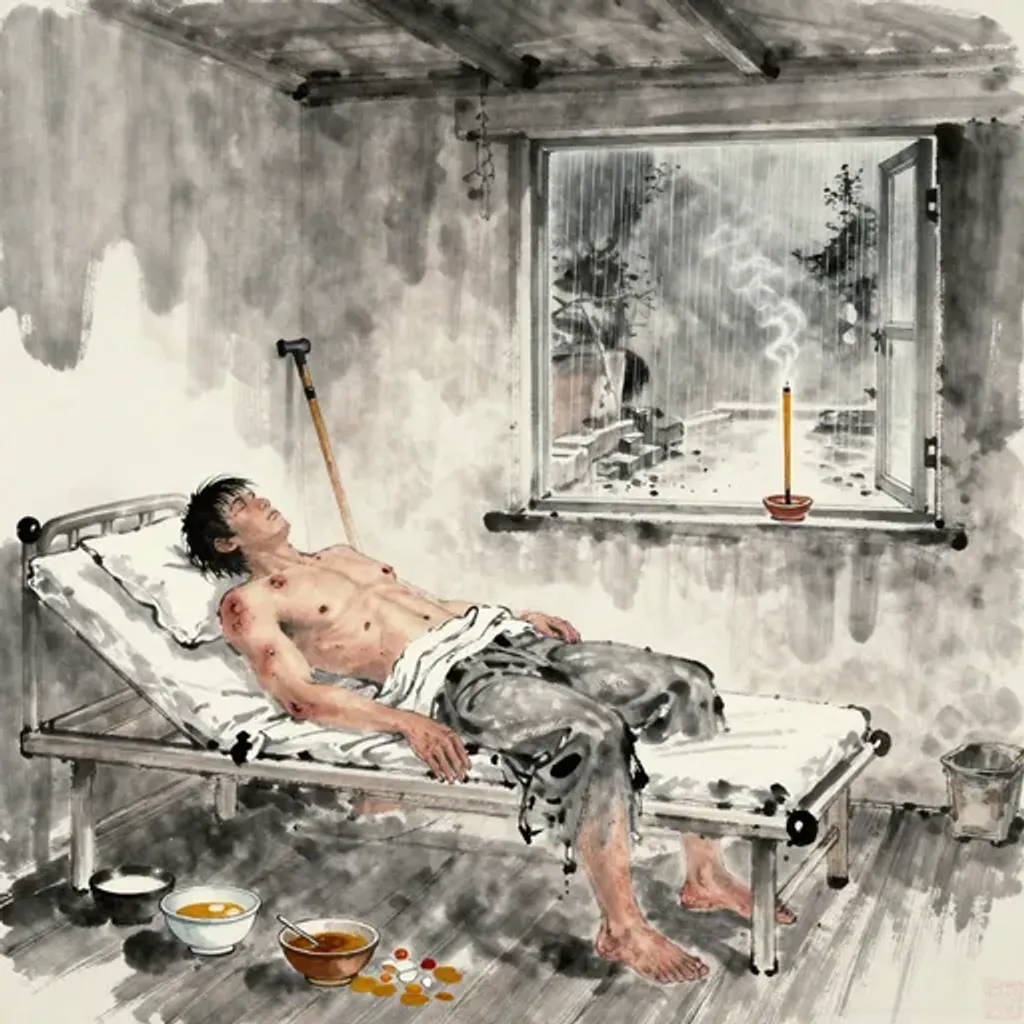
瘤癭禿疥,為身瘡害。疾病癃殘,常不遠逮。
Tumors, goiters, baldness, and scabies; sores and afflictions of the body. Illness and crippling disability; always one falls short and cannot reach.
— Jiao Yanshou, Yilin (Forest of Changes), 1st century BC
Commentary
Earth upon earth transforms into lake above wind — Great Exceeding. Tumors, boils, baldness, and scabies afflict the body as open wounds. Chronic illness and disability persist; one can never keep pace. Lake submerging wind, the image of Da Guo, shows the ridgepole sagging under unbearable weight — excess that strains past the breaking point. The verse renders this structurally: the body itself becomes the overloaded ridgepole, deformed by accumulated ailments until normal function is impossible. From the Receptive to Great Exceeding, the earth's capacity to absorb reaches its limit. What Kun bore patiently has accumulated beyond endurance, and the structure — whether body or state — buckles under the weight of what was never properly treated.
坤 → 坎
Hexagram 2 → Hexagram 29: The Abysmal Water
Changing lines: 2, 5
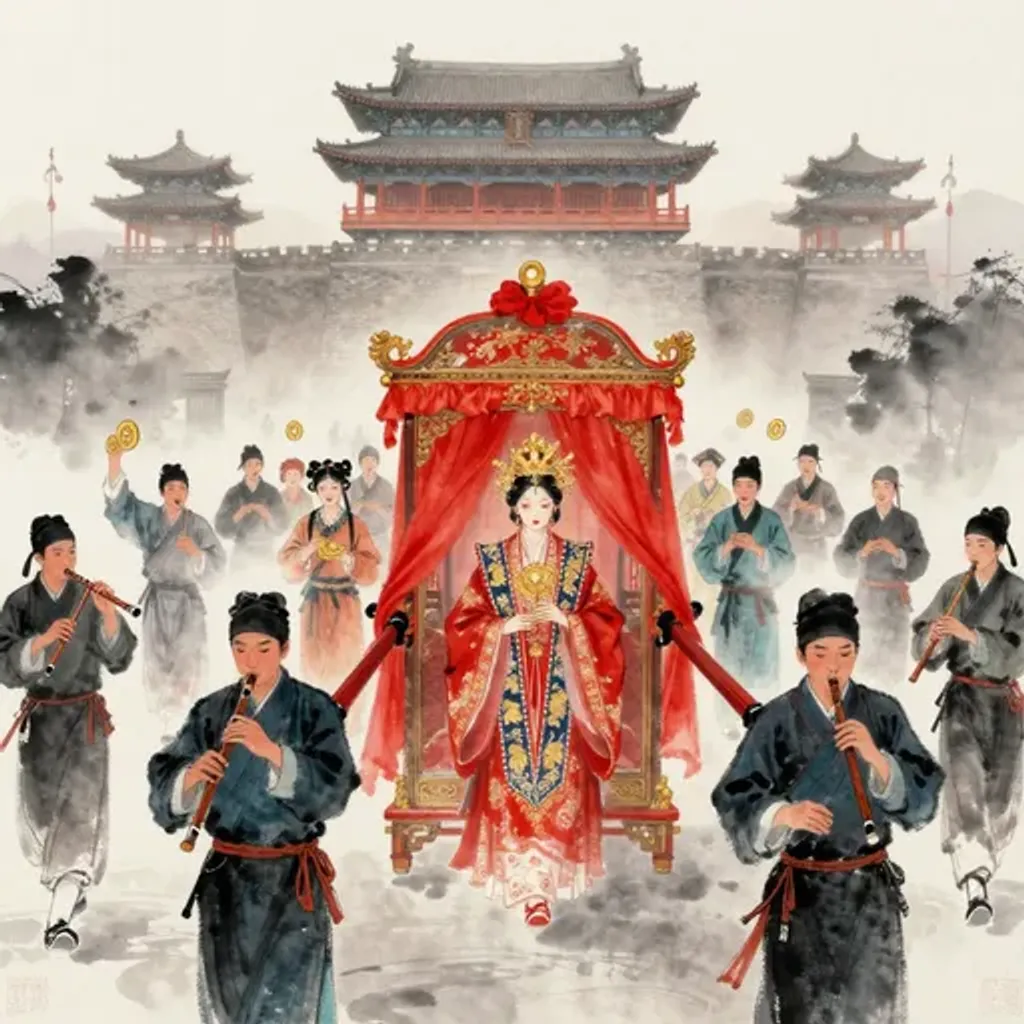
東齊郭盧,嫁於洛都。俊良美好,媒利過倍。
From Guo and Lu in eastern Qi, married into the capital of Luo. Fair and fine and lovely; the matchmaker’s profit doubles.
— Jiao Yanshou, Yilin (Forest of Changes), 1st century BC
Commentary
Earth upon earth yields to doubled water — the Abysmal. A woman of eastern Qi, from the households of Guo and Lu, marries into the capital at Luoyang. Handsome and fine, the matchmaker's profit doubles. Doubled water, the image of Kan, represents repeated danger — yet the verse is cheerful, depicting a profitable marriage alliance across great distance. The bride travels from Qi in the east to Luo in the west, a journey fraught with peril but rewarded handsomely. From the Receptive to the Abysmal, the earth's flat expanse becomes the treacherous road the bride must cross. The doubled danger of Kan is navigated successfully because the journey's purpose — union and alliance — justifies the risk. Even the abyss can be crossed when the destination is worthwhile.
坤 → 離
Hexagram 2 → Hexagram 30: The Clinging Fire
Changing lines: 1, 3, 4, 6
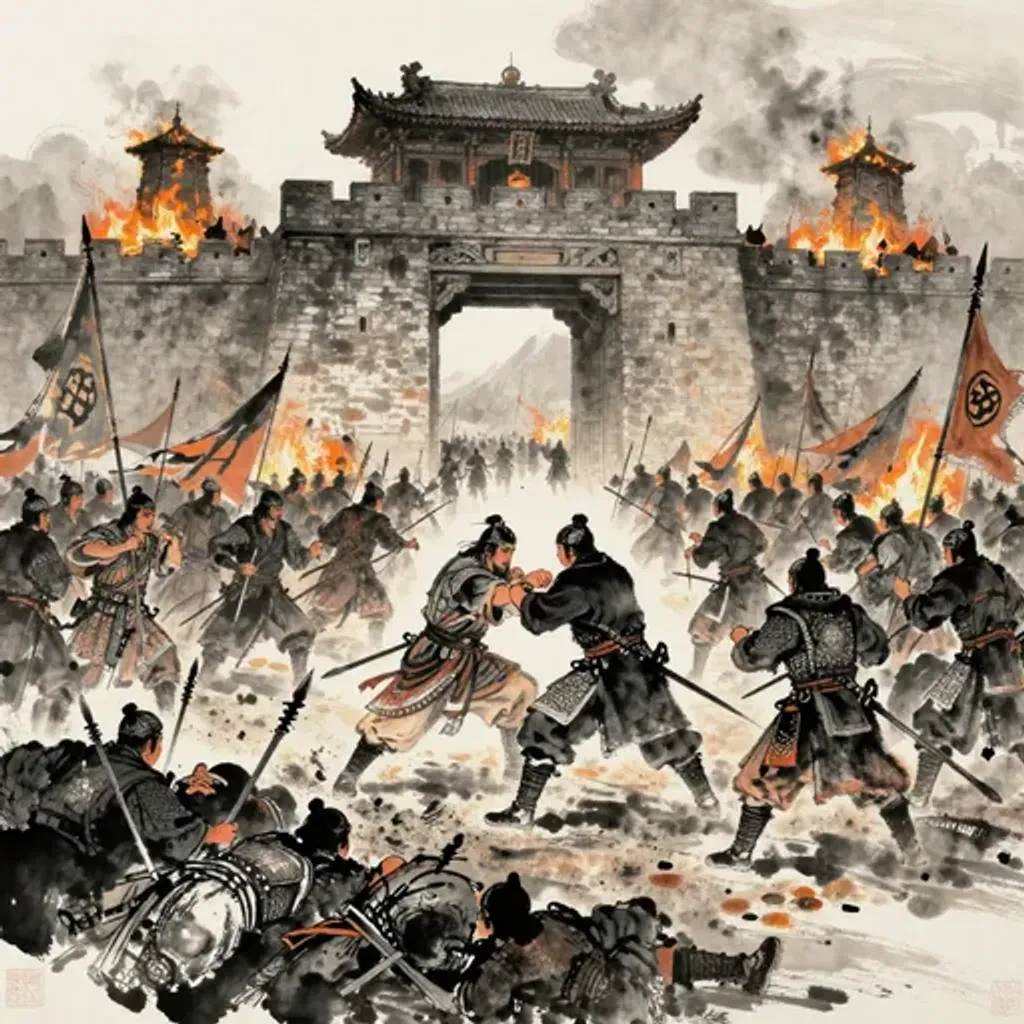
齊魯爭言,戰於龍門。搆怨連禍,三世不安。
Qi and Lu quarrel and contend; battle at Dragon Gate. Building grudges, linking calamities; three generations without peace.
— Jiao Yanshou, Yilin (Forest of Changes), 1st century BC
Commentary
Earth upon earth transforms into doubled fire — the Clinging. Qi and Lu quarrel bitterly and clash at Dragon Gate. Grudges compound into linked disasters; three generations know no peace. Dragon Gate (Longmen), the gorge on the Yellow River carved by Yu the Great, serves here as a battleground where two states entangle themselves in vendetta. Doubled fire, the image of Li, represents brightness upon brightness — clarity that can also mean exposure and burning. From the Receptive to the Clinging, the earth's stable ground is scorched by relentless conflict. Fire attached to fire feeds itself endlessly, just as grudges breed new grudges across generations. The verse warns: when contention is kindled and neither side relents, the flame becomes self-perpetuating.
坤 → 咸
Hexagram 2 → Hexagram 31: Influence
Changing lines: 3, 4, 5
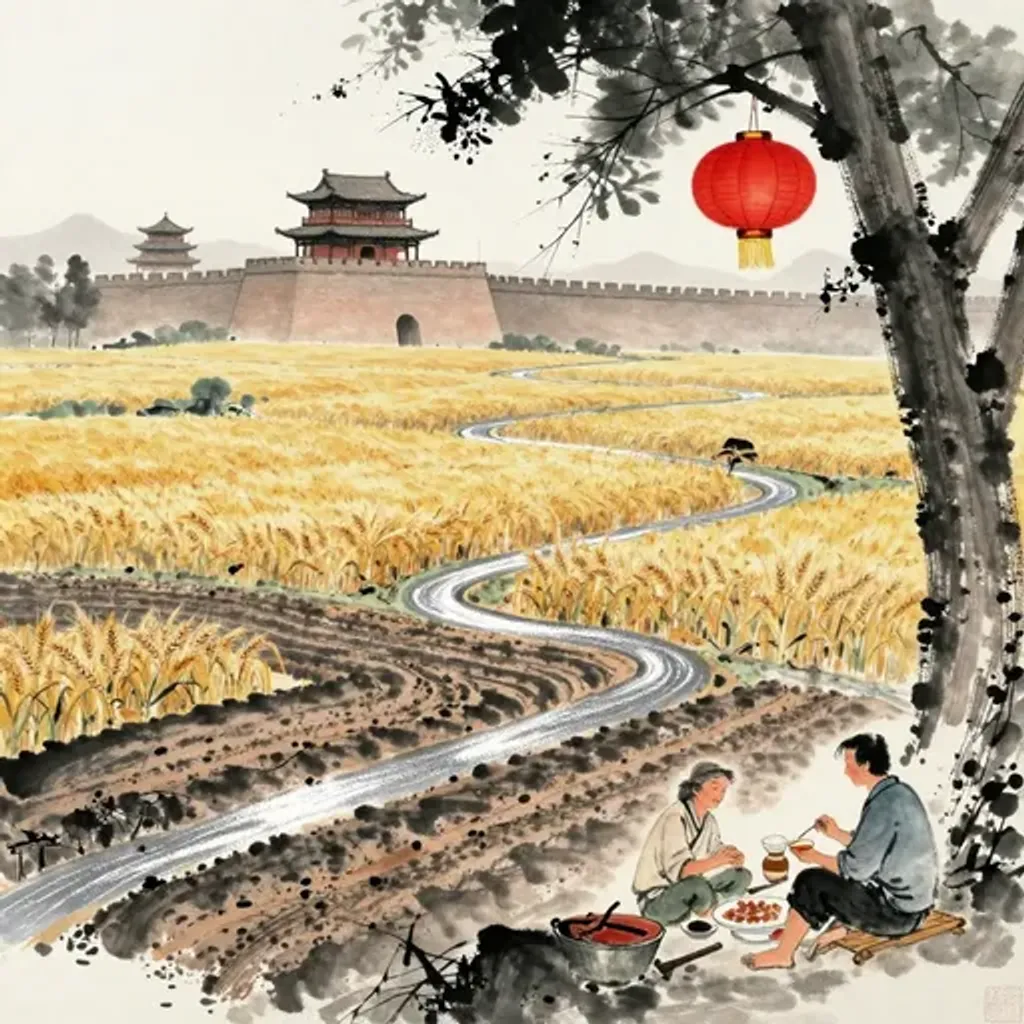
膏澤肥壤,農人豐敵。利居長安,歷世無患。
Rich soil, fertile fields; the farmers reap abundantly. Fit to dwell long in peace; for generations, no calamity.
— Jiao Yanshou, Yilin (Forest of Changes), 1st century BC
Commentary
Earth upon earth yields to lake above mountain — Influence. Rich and fertile soil rewards the farmer abundantly. One prospers in the long peace of Chang'an; generations pass without calamity. Lake above mountain, the image of Xian, shows water permeating the mountain from above — mutual attraction, the meeting of opposites that generates responsiveness. The verse evokes an agricultural paradise: moistened earth yielding generous harvests, communities settled in lasting security. Chang'an, whether literal or figurative, represents enduring peace. From the Receptive to Influence, the earth's receptive fertility meets the lake's downward percolation, creating the ideal conditions for sustained prosperity. The mountain receives the lake willingly; the farmer receives the rain gratefully. Mutual responsiveness produces abundance that endures across generations.
坤 → 恆
Hexagram 2 → Hexagram 32: Duration
Changing lines: 2, 3, 4
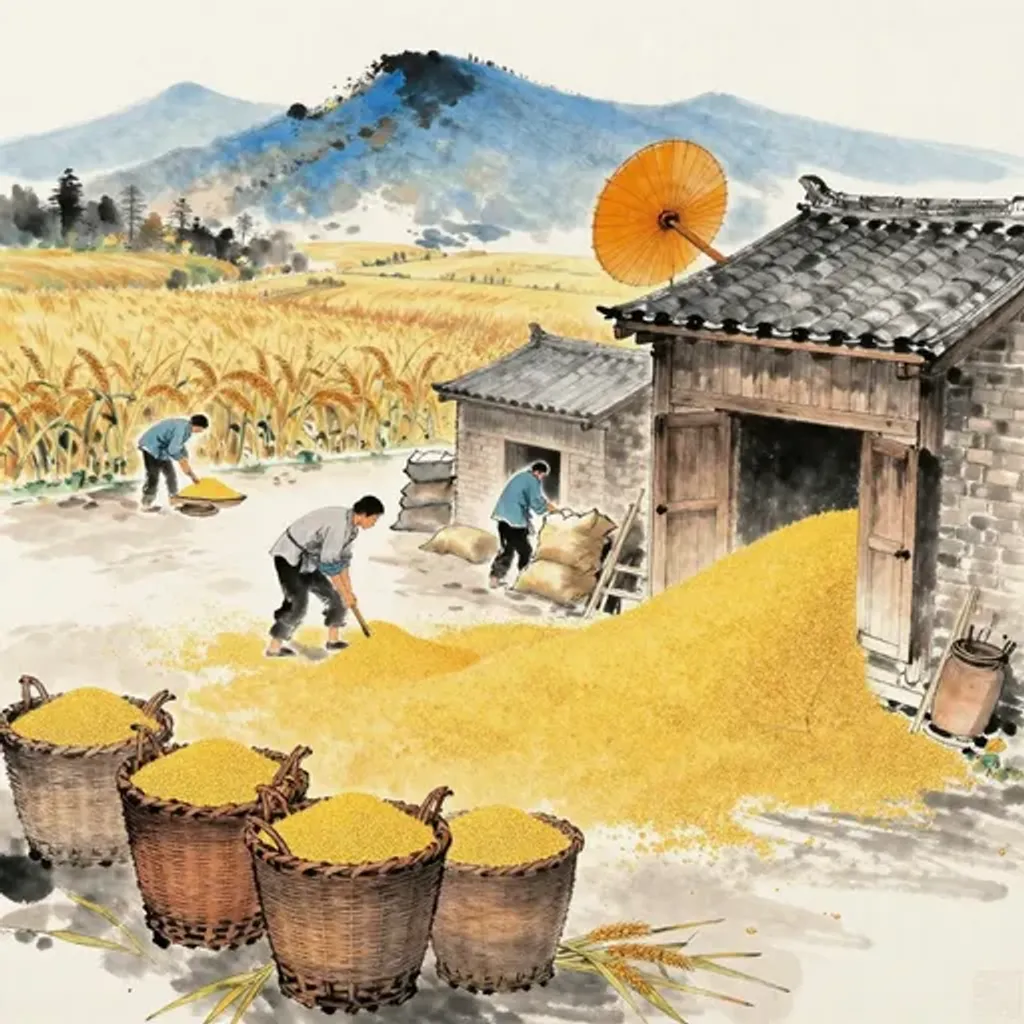
倉盈庾億,宜種黍稷。年豐歲熟,民得安息。
Granaries brim, storehouses overflow; fit for planting millet and grain. Year after year, harvest ripens; the people find rest.
— Jiao Yanshou, Yilin (Forest of Changes), 1st century BC
Commentary
Earth upon earth transforms into thunder above wind — Duration. Granaries overflow with hundreds of millions of measures; one should plant millet and grain. The year is bountiful, the harvest ripe, and the people rest in peace. Thunder and wind, the image of Heng, show the union of the eldest son and eldest daughter — sustained effort without change of direction. The verse depicts agricultural constancy: full storehouses, timely planting, reliable harvests, and popular contentment. From the Receptive to Duration, the earth's seasonal productivity becomes an enduring pattern. Heng's gentleman stands without changing his course, just as the farmer follows the unchanging rhythm of sowing and reaping. Prosperity is not a single windfall but the accumulated result of seasons faithfully observed.
坤 → 遯
Hexagram 2 → Hexagram 33: Retreat
Changing lines: 3, 4, 5, 6
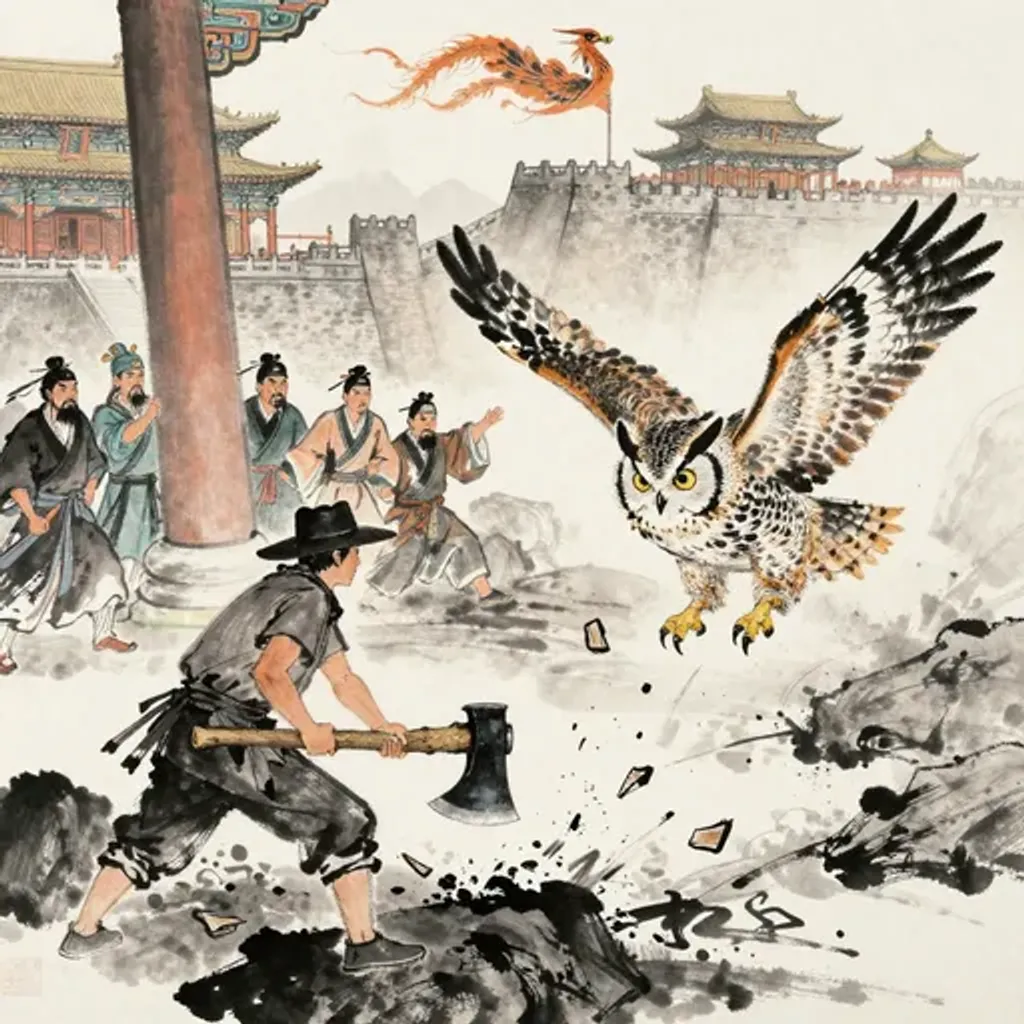
鴟鴞破斧,邦人危殆。賴其忠德,轉禍為福,傾危復立。
The owl breaks the axe; the people are in peril. By virtue of loyal integrity, disaster turns to blessing; the tottering is set upright again.
— Jiao Yanshou, Yilin (Forest of Changes), 1st century BC
Commentary
Earth upon earth yields to heaven above mountain — Retreat. The owl destroys the axe, and the people of the realm stand in peril. Yet through loyal virtue the crisis is reversed: disaster becomes blessing, and the tottering state stands again. This alludes to the Shijing ode 'Chi Xiao,' attributed to the Duke of Zhou, who used the metaphor of an owl threatening a bird's nest to describe enemies menacing the young Zhou state. Despite overwhelming danger, the Duke's steadfast loyalty — his refusal to abandon the throne during the rebellion of the Three Monitors — preserved the dynasty. From the Receptive to Retreat, the earth's supportive ground meets the mountain beneath heaven, where the wise know when to yield and when to stand firm. The Duke of Zhou's genius was not retreat itself, but knowing precisely what must be protected.
坤 → 大壯
Hexagram 2 → Hexagram 34: Great Power
Changing lines: 1, 2, 3, 4
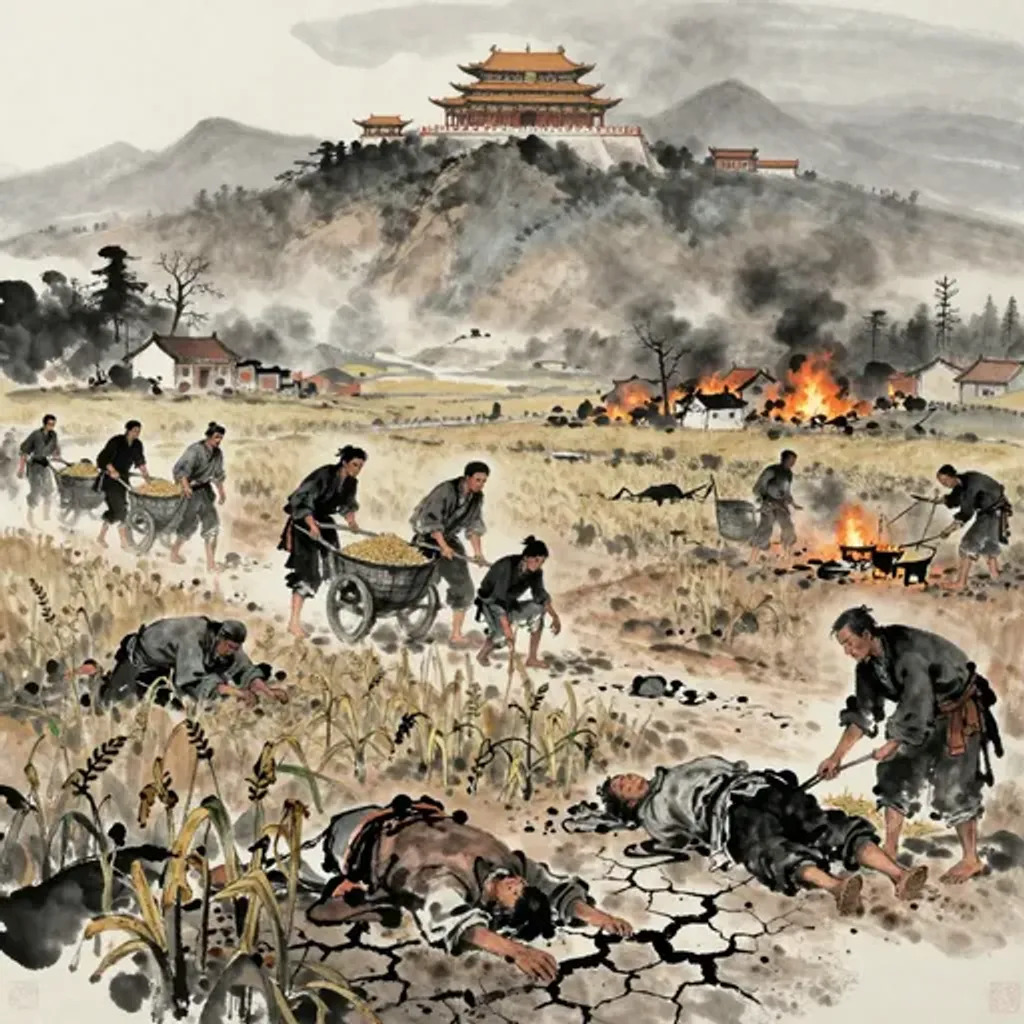
歲飢無年,虐政害民。乾溪驪山,秦楚結冤。
Famine year with no harvest; cruel governance harms the people. Qianxi, Lishan; Qin and Chu tie bitter grudges.
— Jiao Yanshou, Yilin (Forest of Changes), 1st century BC
Commentary
Earth upon earth transforms into thunder above heaven — Great Power. Years of famine and no harvest; tyrannical governance harms the people. Qianxi and Lishan: Qin and Chu are bound in grievance. Qianxi, where King Ling of Chu perished through hubris, and Lishan, site of Qin Shi Huang's excesses, are twin emblems of power turned to tyranny. Thunder above heaven, the image of Da Zhuang, warns the gentleman never to act contrary to propriety — precisely what these tyrants did. From the Receptive to Great Power, the earth that should nourish the people is instead exploited by rulers drunk on their own strength. Great Power misapplied becomes great destruction: the stronger the thunder, the more devastating its violence when unrestrained by moral limits.
坤 → 晉
Hexagram 2 → Hexagram 35: Progress
Changing lines: 4, 6
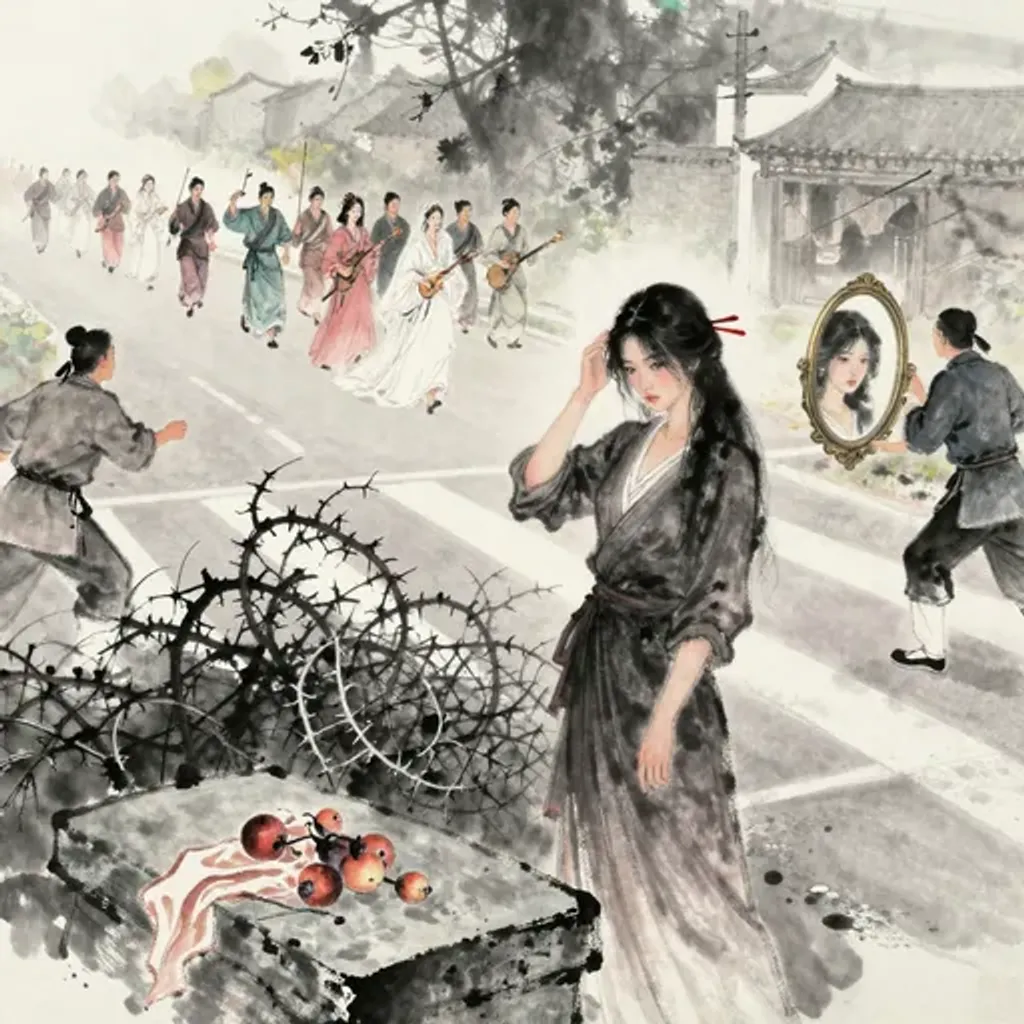
栵潔累累,締結難解。嫫母衒嫁,媒不得坐,自為身禍。
Thorns cluster upon cluster, knotted and hard to untangle. Momo the ugly woman parades herself for marriage; the matchmaker cannot rest. She becomes a calamity to herself.
— Jiao Yanshou, Yilin (Forest of Changes), 1st century BC
Commentary
Earth upon earth yields to fire above earth — Progress. Thorny branches grow thick and tangled, knotted beyond undoing. Mo Mu, the legendarily ugly woman, parades herself seeking a husband, but no matchmaker dares sit down to arrange the match — she brings calamity upon herself. Mo Mu, said to be a consort of the Yellow Emperor, represents inner virtue concealed behind a forbidding exterior. Fire emerging from the earth, the image of Jin, depicts the sun rising — progress, advancement, light breaking through. Yet Mo Mu cannot advance because her presentation repels. From the Receptive to Progress, the earth's hidden worth must emerge into daylight, but when the emergence is forced and the audience unprepared, even genuine virtue fails to find recognition. Progress requires not only merit but the right moment of revelation.
坤 → 明夷
Hexagram 2 → Hexagram 36: Darkening of the Light
Changing lines: 1, 3
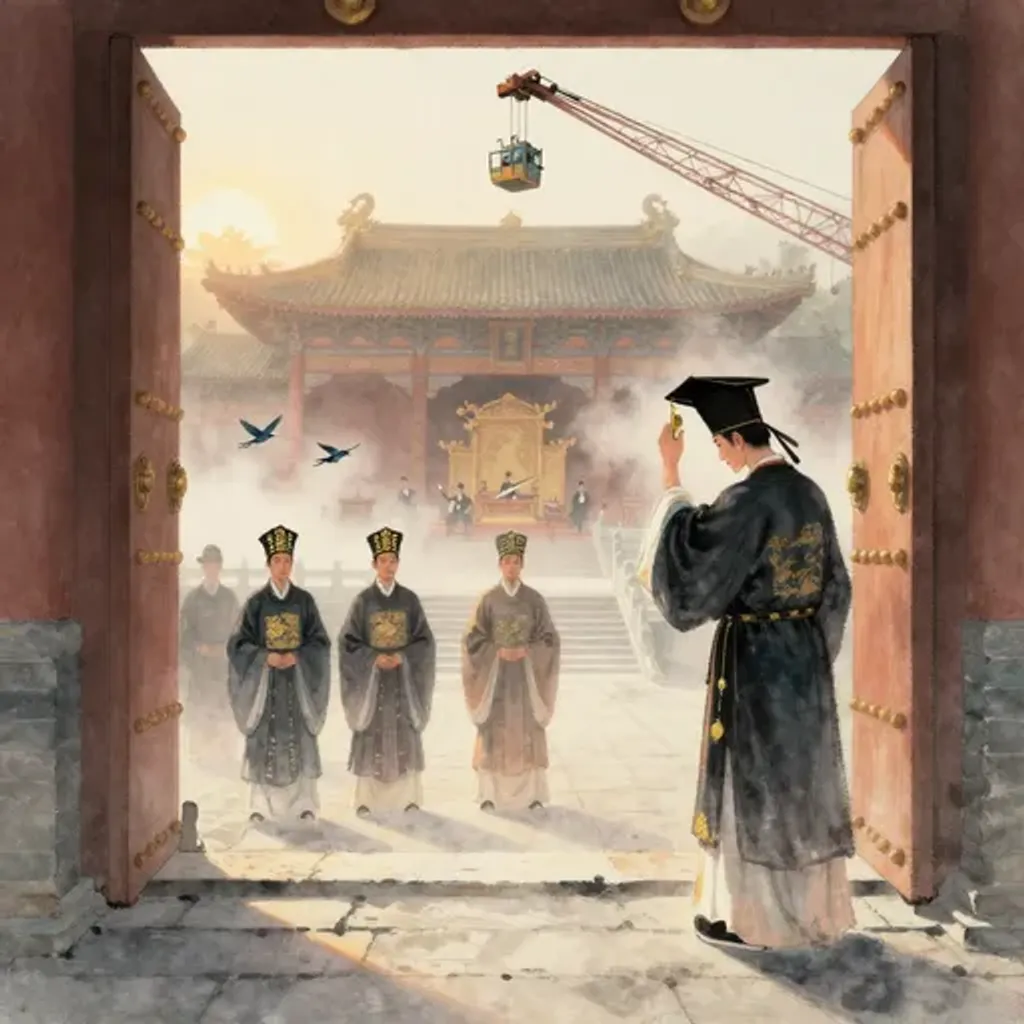
訾陬開門,鶴鳴彈冠。章甫進用,舞韶和鸞。三人翼事,國無災患。
In the month Zizou, the gate opens; a crane calls, caps are dusted off. The zhangfu cap is put to use; dancing the Shao, harmonizing with the luan. Three men assist the endeavor; the state has no plague or peril.
— Jiao Yanshou, Yilin (Forest of Changes), 1st century BC
Commentary
Earth upon earth transforms into earth above fire — Darkening of the Light. In the month of Zizou, the gate opens: cranes cry and caps are straightened. The ceremonial cap (zhangfu) is brought into service; the Shao music plays and luan bells harmonize. Three men join to manage affairs, and the state knows no disaster. The crane crying in the marshes, from the Shijing ode 'He Ming,' represents hidden talent making itself known. The zhangfu cap signifies proper Confucian ceremony restored to its rightful place. Fire buried beneath the earth, the image of Ming Yi, is light concealed — yet here, paradoxically, the concealed light emerges through music and ceremony. From the Receptive to Darkening of the Light, wise men operate within darkness by preserving the forms of civilization. The light is not extinguished but sheltered.
坤 → 家人
Hexagram 2 → Hexagram 37: The Family
Changing lines: 1, 3, 5, 6
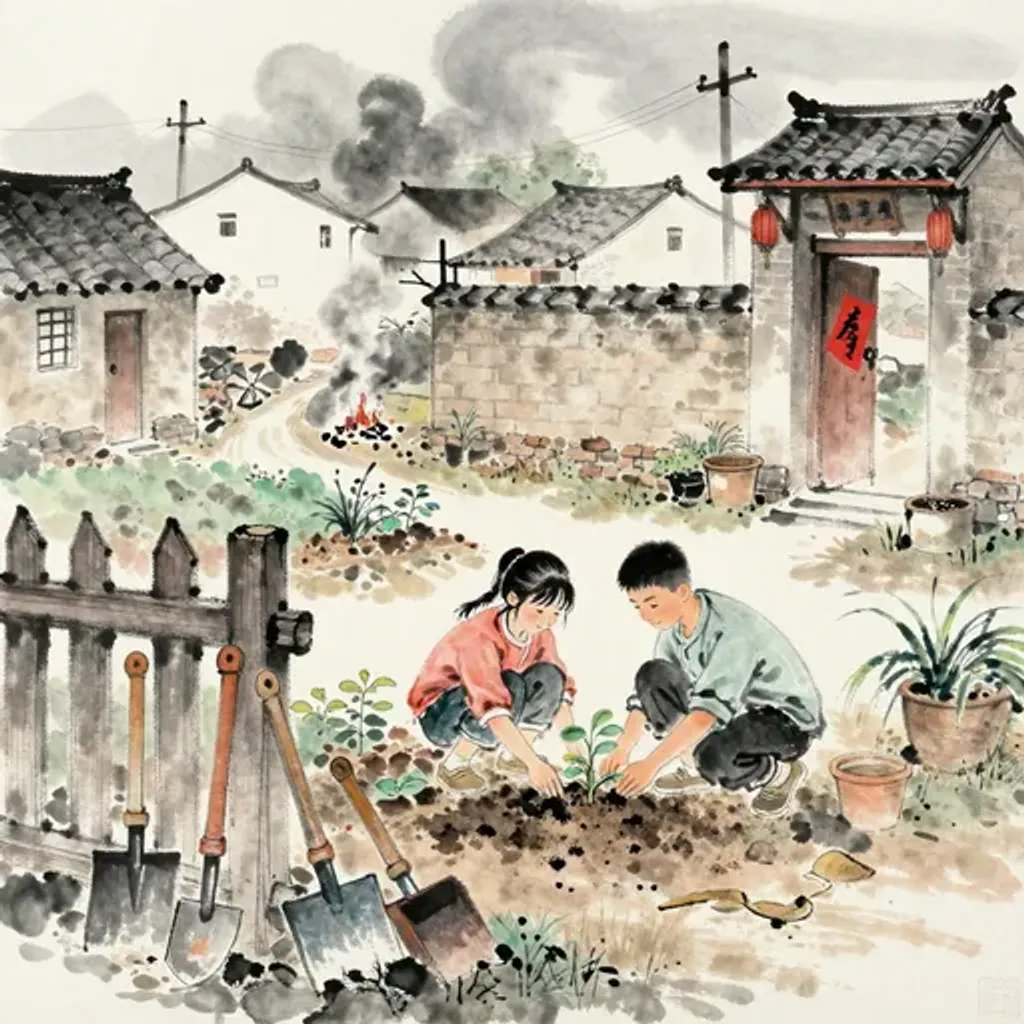
弟妹合居,與類相扶。願慕群醜,不離其處。
Brothers and sisters dwell together, supporting each other with their kind. Content among the humble multitude, they do not leave their place.
— Jiao Yanshou, Yilin (Forest of Changes), 1st century BC
Commentary
Earth upon earth yields to wind above fire — the Family. Brothers and sisters live together, supporting one another by kind. They admire their companions and refuse to leave their dwelling. Wind emerging from fire, the image of Jia Ren, captures the essence: warmth within the household radiates outward as gentle influence. The verse is simple and tender — siblings who cherish their shared life and find no reason to seek beyond it. The 'companions' (chou) suggests people of similar nature drawn together by affinity rather than obligation. From the Receptive to the Family, the earth's undifferentiated support crystallizes into the specific bonds of kinship. What Kun holds universally, Jia Ren arranges into the intimate order of the household, where words have substance and conduct has constancy.
坤 → 睽
Hexagram 2 → Hexagram 38: Opposition
Changing lines: 1, 2, 4, 6
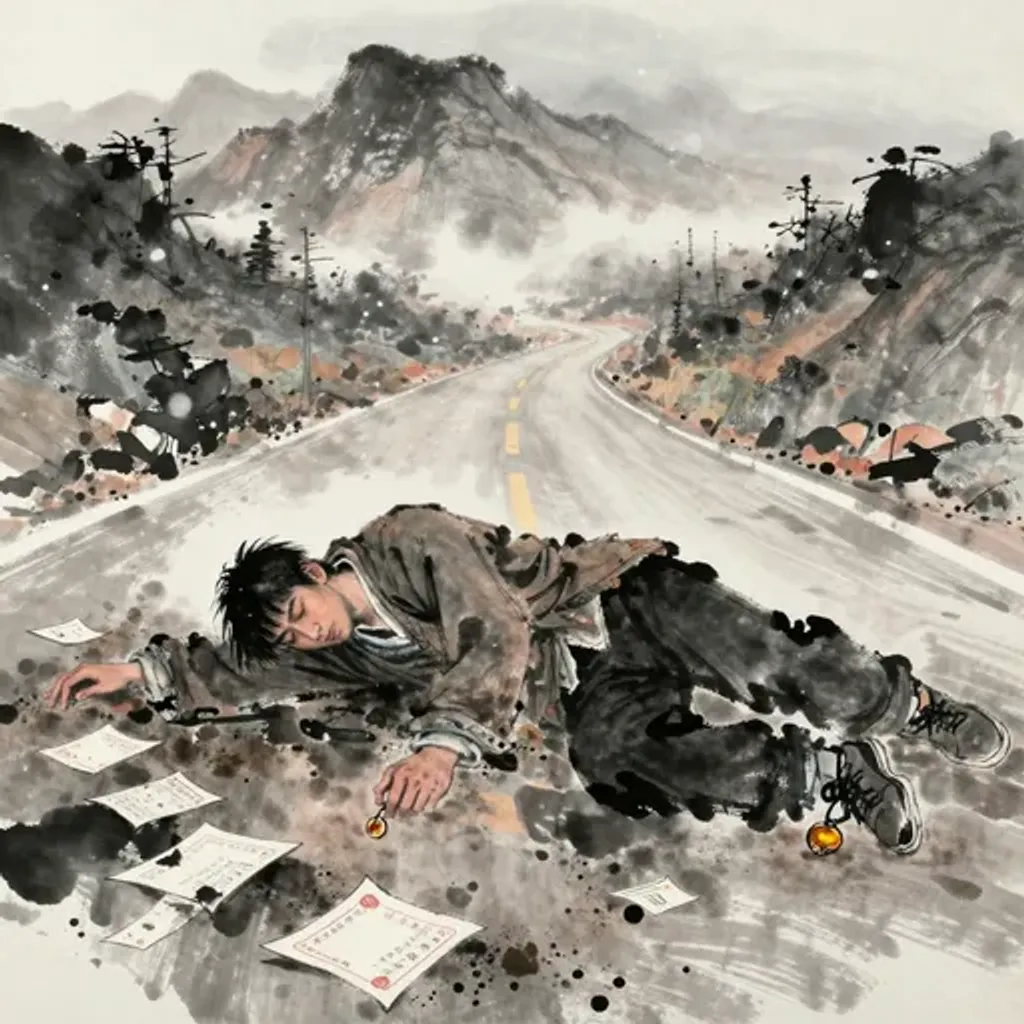
邯鄲反言,兄弟生患。涉叔憂恨,卒死不還。
Handan’s false words; brothers give rise to calamity. She Shu grieves and resents; in the end, he dies and does not return.
— Jiao Yanshou, Yilin (Forest of Changes), 1st century BC
Commentary
Earth upon earth transforms into fire above lake — Opposition. Handan speaks falsely, and brothers are plunged into strife. She Shu grieves with resentment, and in the end dies without returning. Handan, the capital of the state of Zhao, is proverbial for deception and reversed speech. Fire above lake, the image of Kui, depicts two elements that move in opposite directions — fire rises, water descends — the fundamental image of estrangement. The verse traces how a single lie from Handan fractures fraternal bonds: brothers turn against each other, and someone named She Shu (possibly a historical or literary figure) perishes in exile, never coming home. From the Receptive to Opposition, the earth that once united all upon its surface splits into irreconcilable halves. Falsehood is the wedge.
坤 → 蹇
Hexagram 2 → Hexagram 39: Obstruction
Changing lines: 3, 5
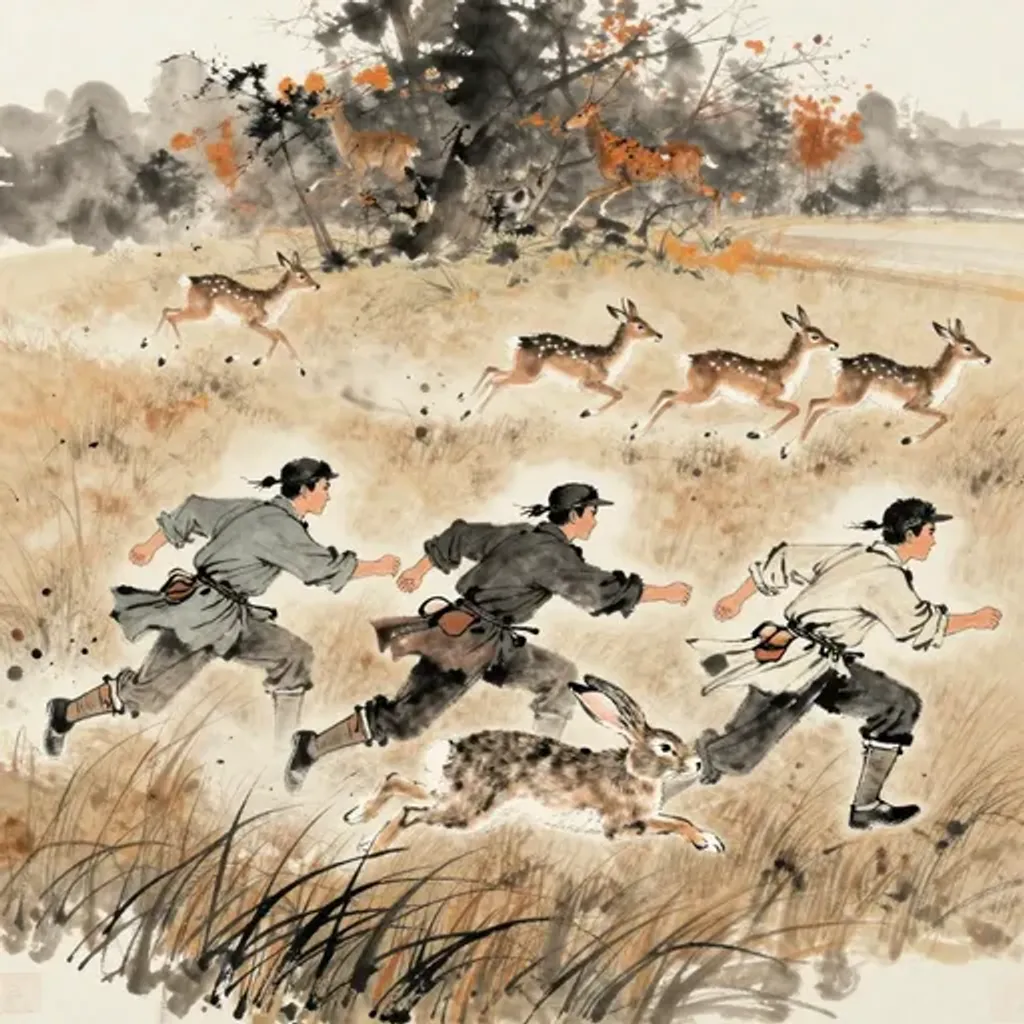
三人逐兔,各爭有得。愛亡善走,多獲鹿子。
Three men chase a rabbit, each striving to take it. Forgetting love, prizing speed; they catch many fawns instead.
— Jiao Yanshou, Yilin (Forest of Changes), 1st century BC
Commentary
Earth upon earth yields to water above mountain — Obstruction. Three men chase a rabbit, each competing to catch it. In their eagerness they let the prey escape, but end up capturing many fawns instead. Water atop the mountain, the image of Jian, represents obstruction — the path forward is treacherous and steep. Yet the verse offers an unexpected consolation: the original quarry escapes, but something else of value appears. The three hunters' competition creates the very obstruction that loses the rabbit, yet their combined effort drives other game toward them. From the Receptive to Obstruction, the earth's open ground becomes the mountain's difficult terrain. Jian's wisdom is to turn back and reflect (fan shen xiu de): when the direct path fails, the indirect reward may prove more generous.
坤 → 解
Hexagram 2 → Hexagram 40: Deliverance
Changing lines: 2, 4
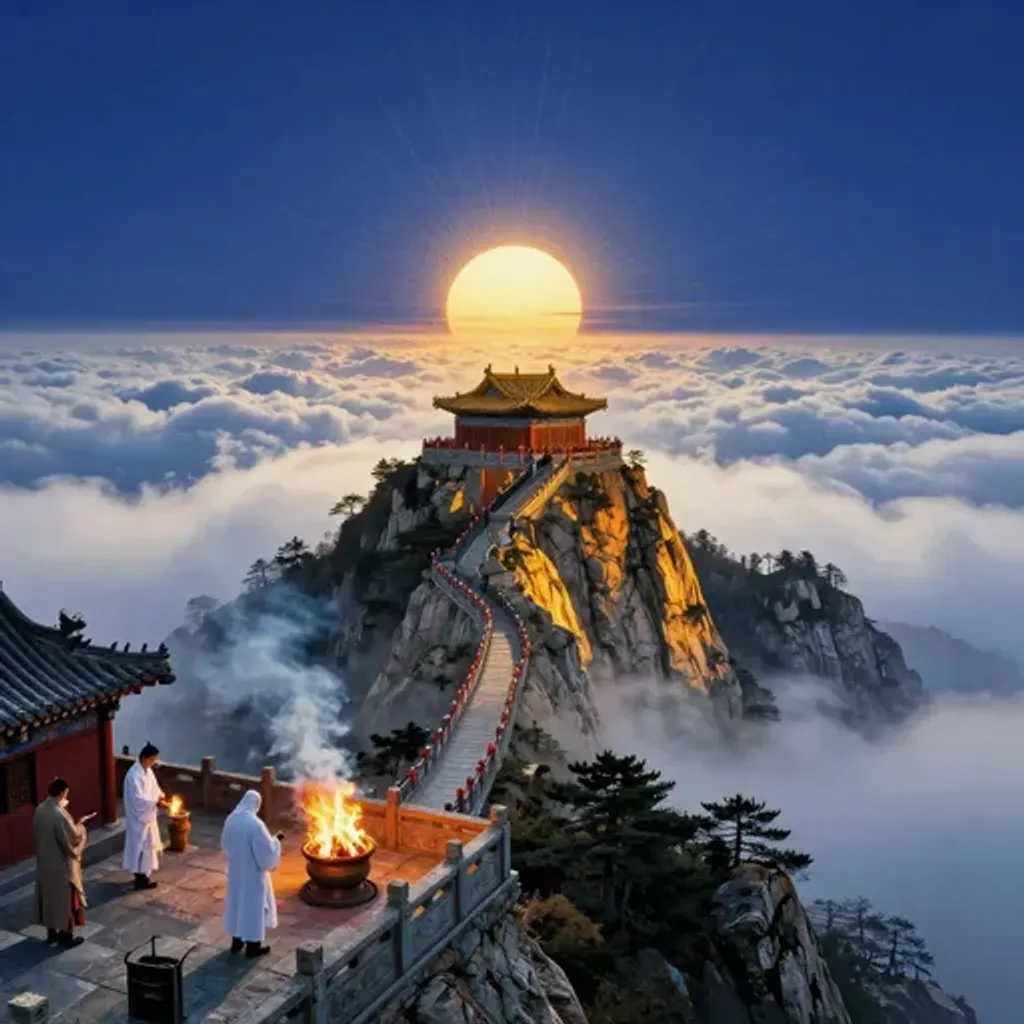
北辰紫宮,衣冠立中。含和建德,常受天福。
The Feng and Shan sacrifice at Mount Tai — heaven and earth communicate. Mist gathers on all sides; the sun illuminates the golden summit.
— Jiao Yanshou, Yilin (Forest of Changes), 1st century BC
Commentary
Earth upon earth transforms into thunder above water — Deliverance. The original verse reads: 'The Pole Star dwells in the Purple Palace; robed and crowned, one stands at the center. Embracing harmony and establishing virtue, one constantly receives heaven's blessings.' The Purple Palace (Zigong) is the celestial enclosure around the Pole Star — the emperor's cosmic counterpart, standing motionless while all stars revolve. Thunder and rain, the image of Jie, represent the release of tension — the storm that breaks the drought. From the Receptive to Deliverance, the earth's patient endurance reaches the moment when accumulated pressure dissolves. The centered sovereign who embodies harmony and virtue is precisely the one who can grant pardons and forgive faults — Jie's fundamental act of release and relief.
坤 → 損
Hexagram 2 → Hexagram 41: Decrease
Changing lines: 1, 2, 6
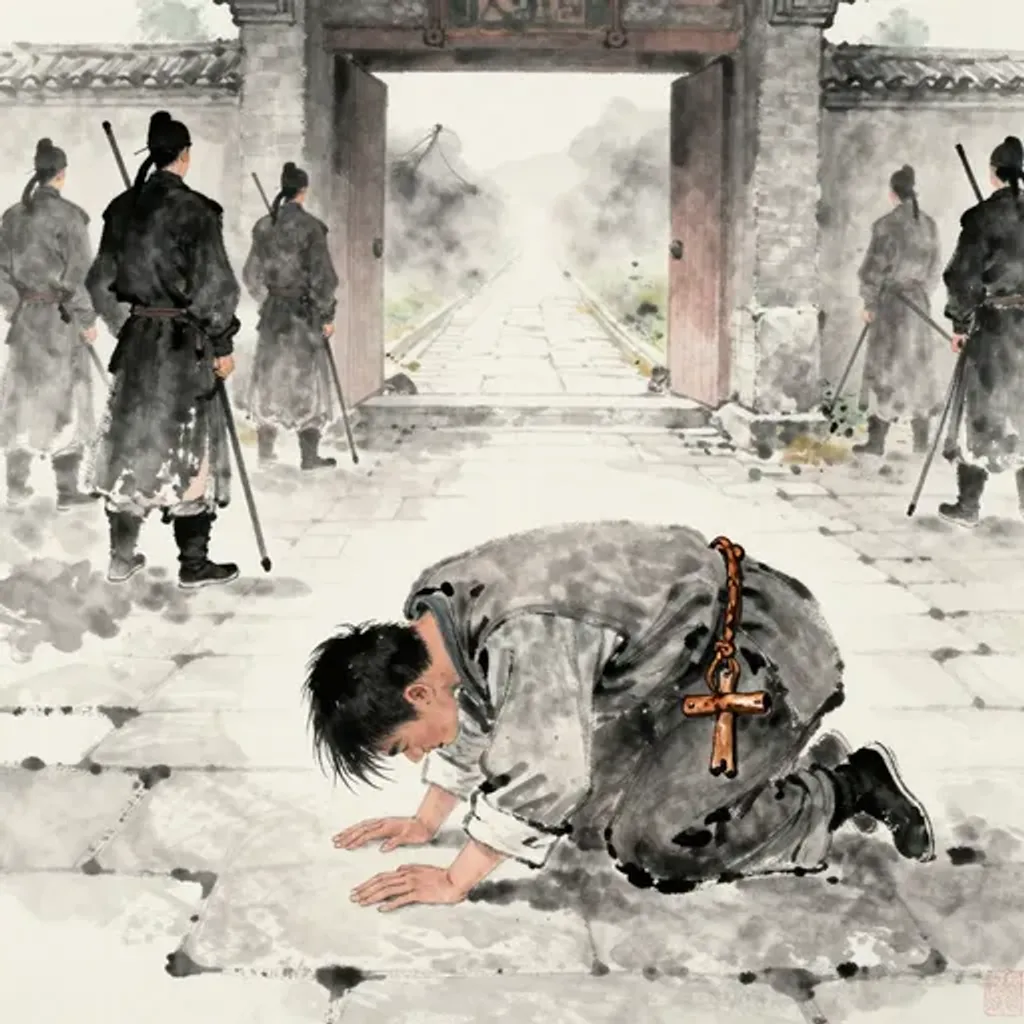
拜跪請免,不得其哺。俛首衘枚,低頭北去。
Bowing and kneeling, begging for reprieve; no sustenance is given. Head lowered, biting down on the gag; head bowed, departing northward.
— Jiao Yanshou, Yilin (Forest of Changes), 1st century BC
Commentary
Earth upon earth yields to mountain above lake — Decrease. One kneels and begs for pardon but receives no sustenance. Head bowed, biting on a wooden gag, one trudges northward in silence. The image is devastating: a supplicant denied, then forced to march in the manner of a prisoner or conscript — the wooden gag (xianmei) was placed in soldiers' mouths to enforce silence during night marches. Mountain above lake, the image of Sun, shows the lake's waters diminishing to nourish the mountain — decrease below to increase above. From the Receptive to Decrease, the earth's nourishment is redistributed upward, and those at the bottom are left with nothing. The verse enacts Decrease's harsh arithmetic: someone must absorb the loss, and here it falls on the one who has no power to refuse.
坤 → 益
Hexagram 2 → Hexagram 42: Increase
Changing lines: 1, 5, 6
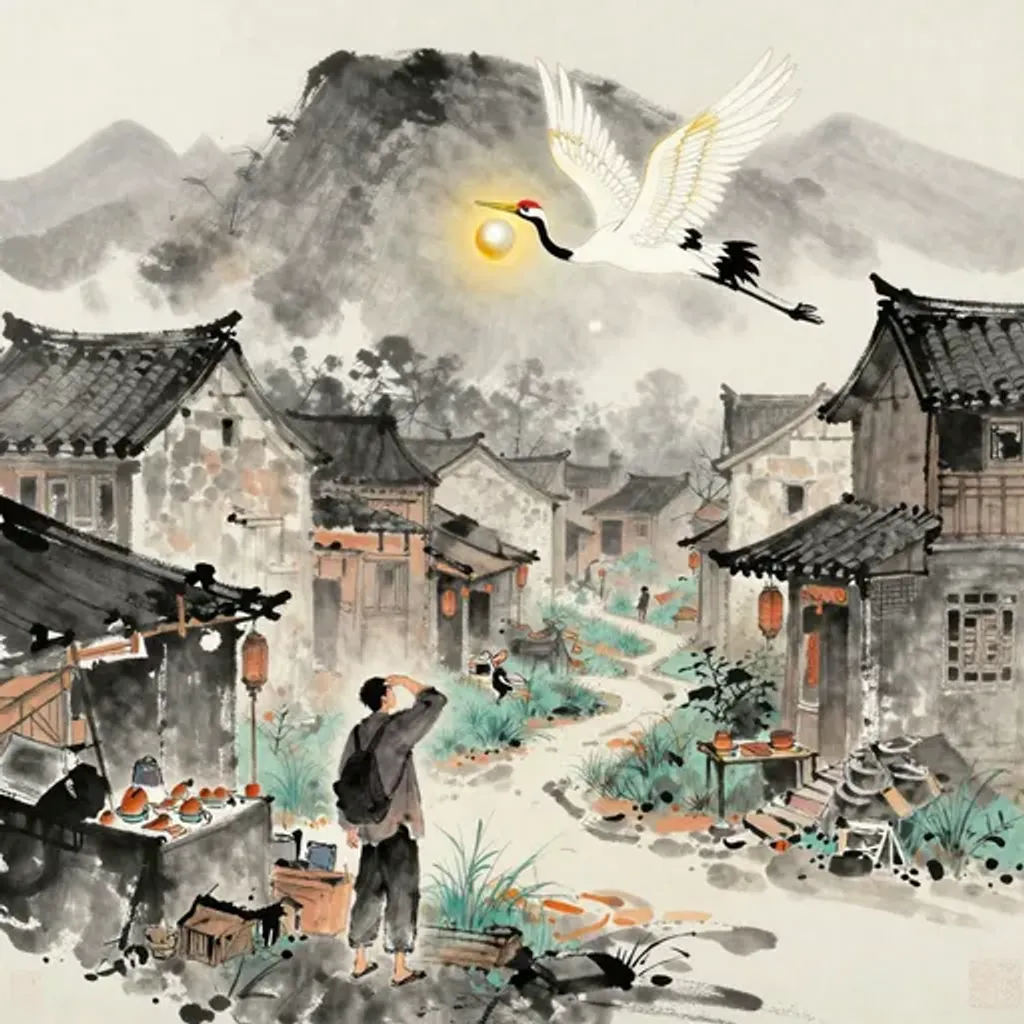
鶴盜我珠,逃於東隅。求之郭墟,不見所居。
The crane steals my pearl and escapes to the eastern corner. Searching the ruined market; its dwelling cannot be found.
— Jiao Yanshou, Yilin (Forest of Changes), 1st century BC
Commentary
Earth upon earth transforms into wind above thunder — Increase. A crane steals one's pearl and escapes to the eastern corner. Searching through the market ruins, one cannot find where it dwells. Wind and thunder, the image of Yi, represent increase — the ruler decreases himself to benefit the people. Yet the verse describes loss: the pearl is stolen, the thief vanishes, and the search is fruitless. The crane, normally an auspicious bird symbolizing hidden talent, here acts as trickster. From the Receptive to Increase, the earth's open ground should facilitate growth, but what has been increased is the thief's gain at the owner's expense. The verse offers a cautionary note on Yi's mechanism: increase for one may mean decrease for another, and not every increase flows in the intended direction.
坤 → 夬
Hexagram 2 → Hexagram 43: Breakthrough
Changing lines: 1, 2, 3, 4, 5
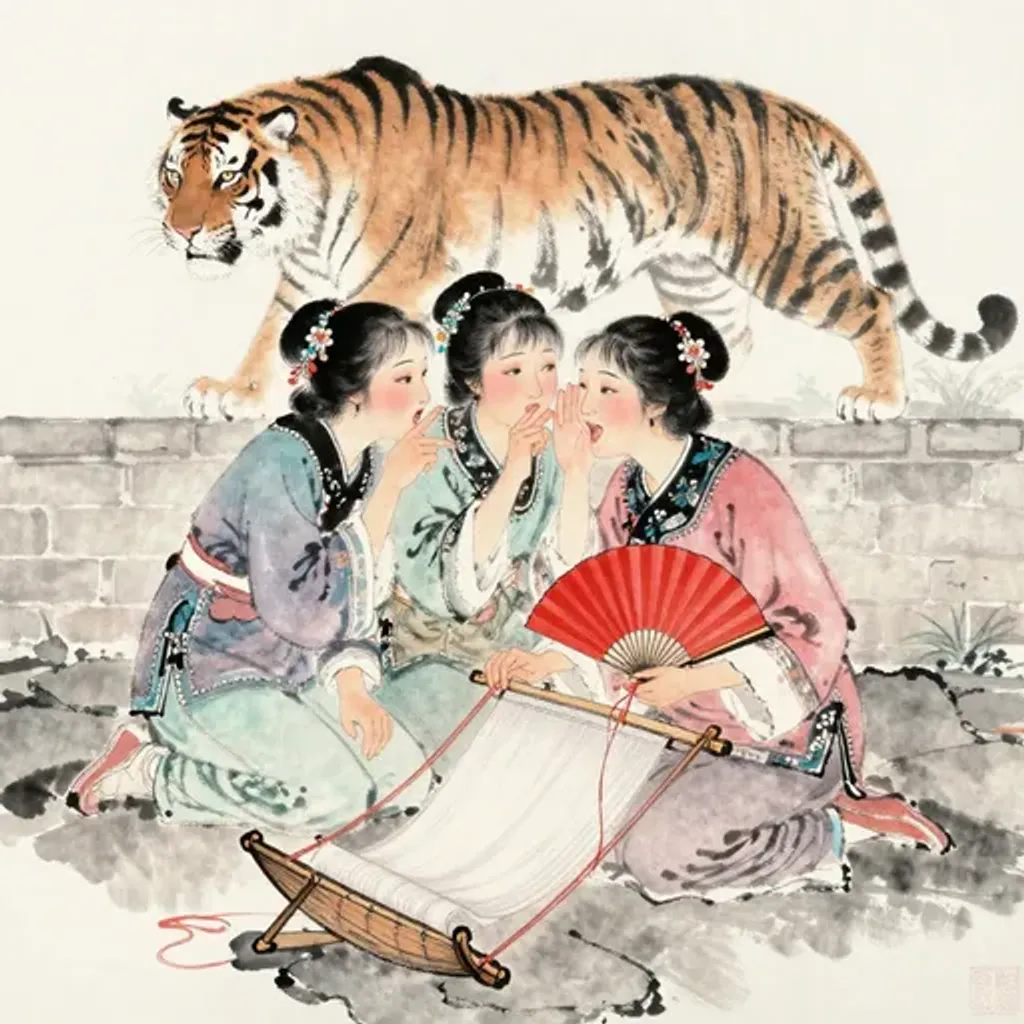
一簧兩舌,妄言謬語。三姸成虎,曾母投杼。
One reed, two tongues; reckless words, false speech. Three fabrications make a tiger; Zengzi’s mother throws her shuttle.
— Jiao Yanshou, Yilin (Forest of Changes), 1st century BC
Commentary
Earth upon earth yields to lake above heaven — Breakthrough. A reed pipe with two tongues speaks falsehoods and absurdities. Three beauties conjure a tiger, and Zeng's mother throws down her shuttle. The allusion is precise: three people told Zeng Shen's mother that her son had committed murder. She disbelieved the first two reports, but the third made her cast aside her weaving shuttle and flee. Lake above heaven, the image of Guai, represents decisive breakthrough — a single yin line expelled by five yang lines. From the Receptive to Breakthrough, the earth's indiscriminate reception becomes the breeding ground for slander that accumulates until it breaks through even the strongest trust. The verse warns that repeated falsehood has the force of breakthrough: lies told often enough become indistinguishable from truth.
坤 → 姤
Hexagram 2 → Hexagram 44: Coming to Meet
Changing lines: 2, 3, 4, 5, 6
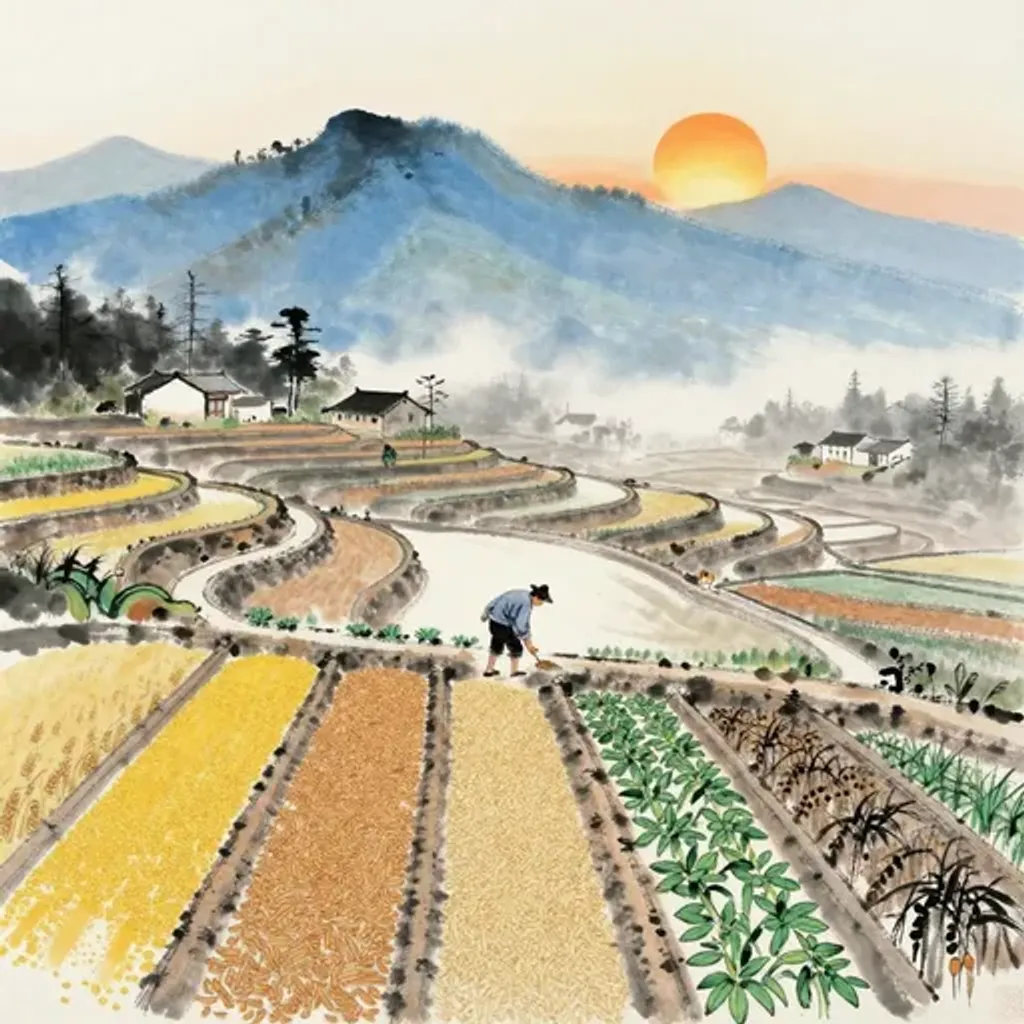
孤獨特處,莫與為旅。身日勞苦,使布五谷,陰陽順序。
Alone and solitary, with no companion. The body toils daily, yet plants the five grains; yin and yang follow their proper order.
— Jiao Yanshou, Yilin (Forest of Changes), 1st century BC
Commentary
Earth upon earth transforms into heaven above wind — Coming to Meet. Alone and solitary, with no companion for the journey. The body labors daily in hardship, sowing the five grains, and yin and yang follow their proper sequence. Heaven above wind, the image of Gou, is the one yin line encountering five yang lines from below — the unexpected meeting. The verse describes a solitary farmer: isolated, exhausted, yet faithfully sowing. The five grains and the orderly sequence of yin and yang suggest that even in loneliness, adherence to natural rhythm produces results. From the Receptive to Coming to Meet, the earth's solitary labor eventually encounters heaven's responsive force. The meeting is not sought but earned through patient cultivation — Gou's encounter comes to the one who tends the soil.
坤 → 萃
Hexagram 2 → Hexagram 45: Gathering Together
Changing lines: 4, 5
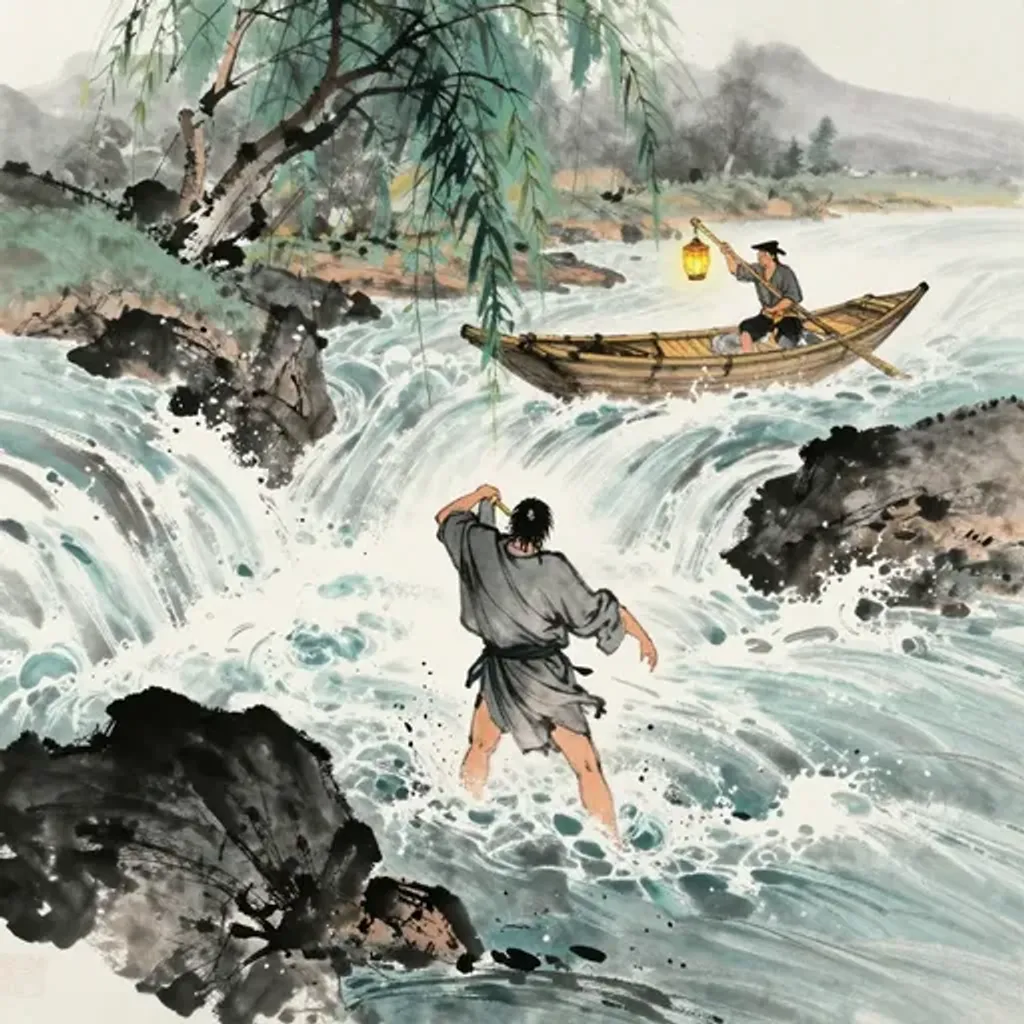
褰衣涉河,澗流浚多。賴遇舟子,濟脫無他。
Lifting robes to cross the river; the mountain stream flows swift and deep. Fortunately encountering a boatman; one is delivered and escapes without harm.
— Jiao Yanshou, Yilin (Forest of Changes), 1st century BC
Commentary
Earth upon earth yields to lake above earth — Gathering. Lifting one's garments to wade across the river, the rushing current is deep and swift. Fortunately one encounters a boatman, and crosses safely without mishap. Lake upon earth, the image of Cui, is the gathering of waters in a low place — people congregating where resources pool. The verse depicts the individual who cannot cross alone but is saved by the timely appearance of help. The boatman is the agent of Gathering: the person who enables passage by being in the right place. From the Receptive to Gathering, the earth's terrain creates both the obstacle and the meeting point. The deep ford is where the boatman waits, and where travelers naturally converge — danger itself produces the gathering that provides rescue.
坤 → 升
Hexagram 2 → Hexagram 46: Pushing Upward
Changing lines: 2, 3
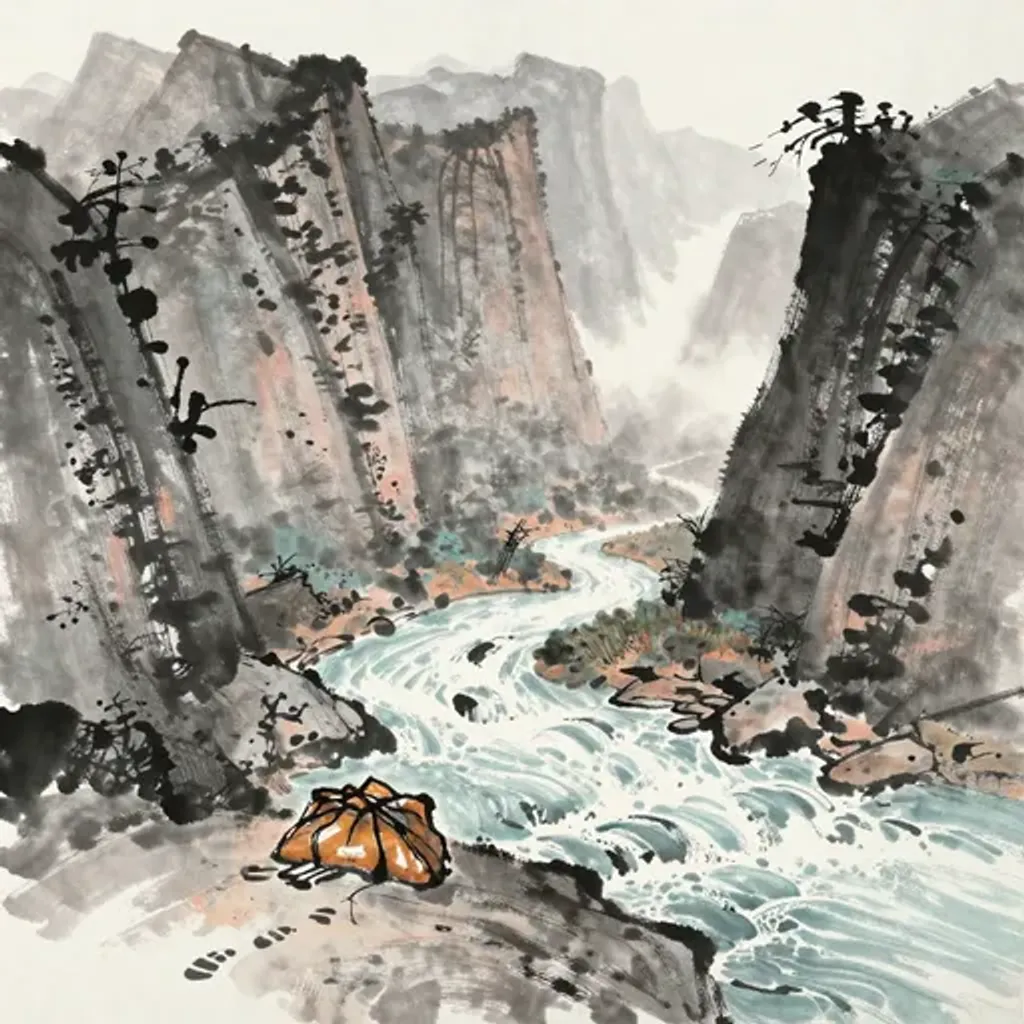
憑河登山,道路阻難,求事少便。
Fording the river, climbing the mountain; the road is blocked and difficult. One’s endeavors find little ease.
— Jiao Yanshou, Yilin (Forest of Changes), 1st century BC
Commentary
Earth upon earth transforms into earth above wind — Pushing Upward. Wading rivers and climbing mountains, the road is blocked and hard. Endeavors find little convenience. Trees growing within the earth, the image of Sheng, represent gradual, steady ascent — wood pushing upward through soil. Yet the verse highlights the difficulty: the terrain resists, and nothing comes easily. From the Receptive to Pushing Upward, the flat earth develops vertical ambition, but ascent from level ground means confronting slopes and currents that flat terrain never presented. The verse is brief and blunt, matching its message: Pushing Upward is inherently effortful. The seed must crack the soil; the climber must find footholds. There is no shortcut in Sheng's slow, organic rise.
坤 → 困
Hexagram 2 → Hexagram 47: Oppression
Changing lines: 2, 4, 5
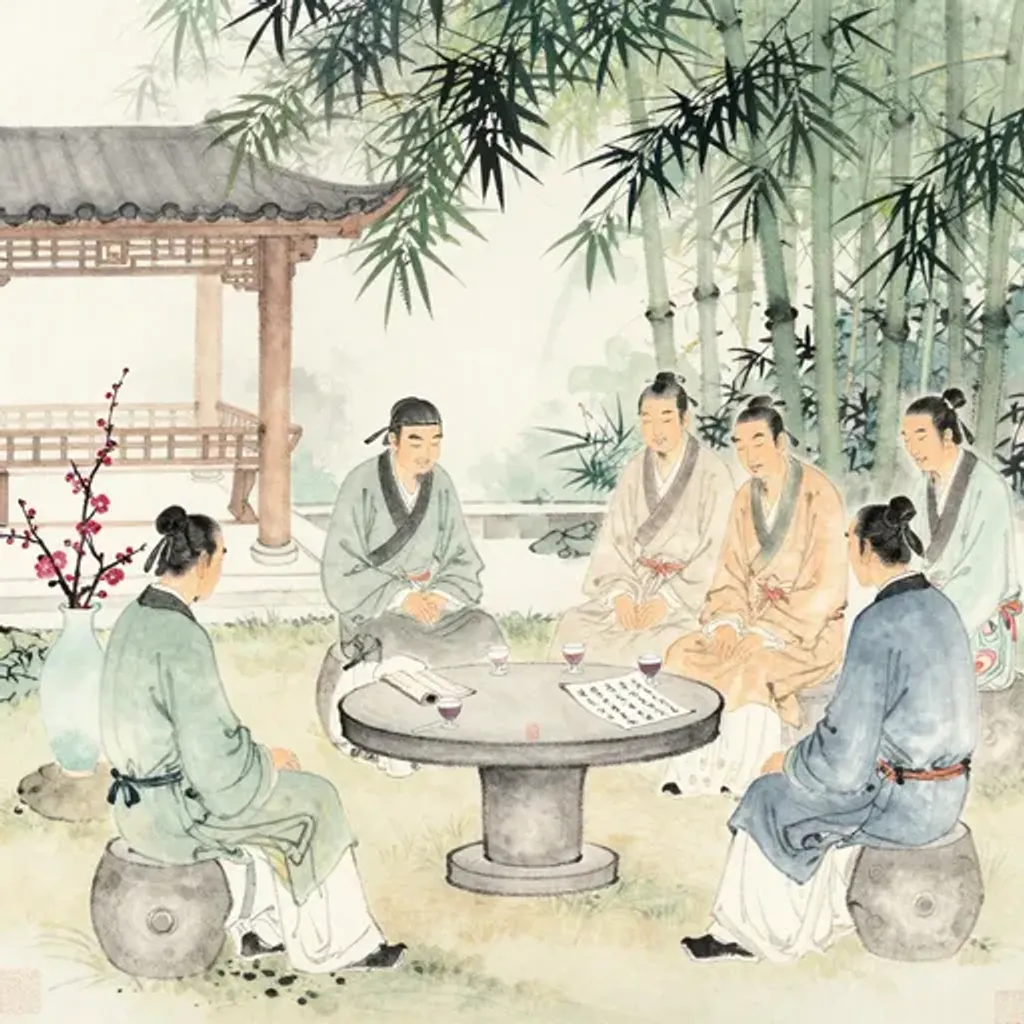
兔罝之容,不失其恭。和謙致樂,君子攸同。
The rabbit-snare’s bearing; never losing its respect. Harmonious and humble, achieving joy; the noble man’s companion.
— Jiao Yanshou, Yilin (Forest of Changes), 1st century BC
Commentary
Earth upon earth yields to lake above water — Oppression. The bearing of one who sets rabbit snares does not lose its respectfulness. Harmony and modesty bring joy — this is the way of the gentleman. The rabbit-snare reference echoes the Shijing ode 'Tu Ju' ('The Rabbit Nets'), which praises the dignified bearing of warriors even in humble tasks. Lake above water with no water in the lake, the image of Kun, depicts exhaustion — resources drained. Yet the verse counsels resilience through decorum: even when oppressed, maintain composure. From the Receptive to Oppression, the earth's supportive capacity is tested to exhaustion. The gentleman who sets snares with the dignity of a courtier demonstrates Kun's deepest teaching:致命遂志 — stake your life to fulfill your will. Even in oppression, bearing determines outcome.
坤 → 井
Hexagram 2 → Hexagram 48: The Well
Changing lines: 2, 3, 5
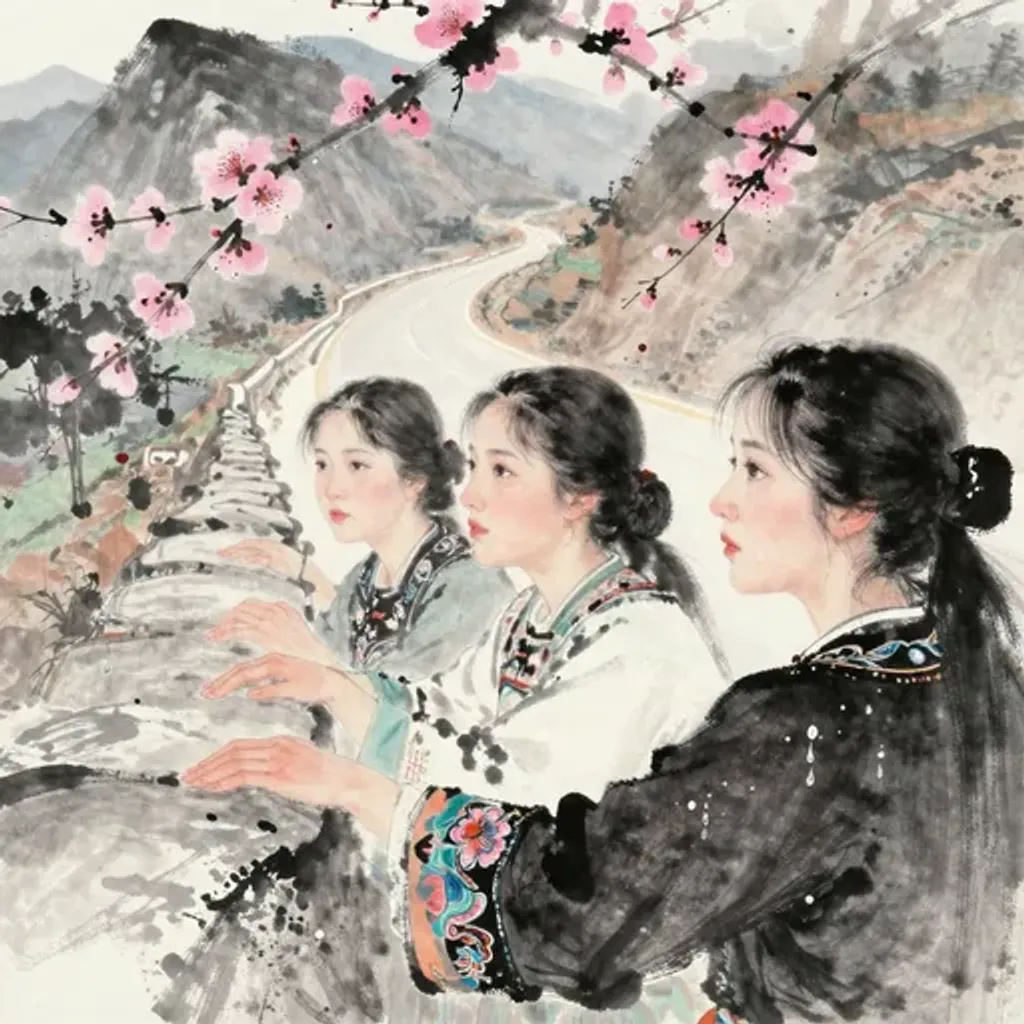
三女求夫,伺候山隅。不見復關,泣涕漣如。
Three women seek husbands, waiting and watching at the mountain’s bend. They do not see the returning carriage; tears flow in streaming drops.
— Jiao Yanshou, Yilin (Forest of Changes), 1st century BC
Commentary
Earth upon earth transforms into water above wind — the Well. Three women seek husbands, waiting by the mountain's edge. They do not see the watchtower's wall, and weep until their tears stream. This directly quotes the Shijing ode 'Mang' from the Wei feng: 'I climbed the ruined wall to gaze toward Fuguan... not seeing Fuguan, my tears flowed in streams.' The poem tells of a woman awaiting her lover who never appears. Water above wind, the image of Jing, depicts the well — a fixed structure that nourishes all who approach but cannot move to them. From the Receptive to the Well, the earth's open field becomes the fixed, patient source: the well does not go to the thirsty. The women's vigil mirrors the well's nature — they wait, they weep, but they cannot make the absent one appear.
坤 → 革
Hexagram 2 → Hexagram 49: Revolution
Changing lines: 1, 3, 4, 5
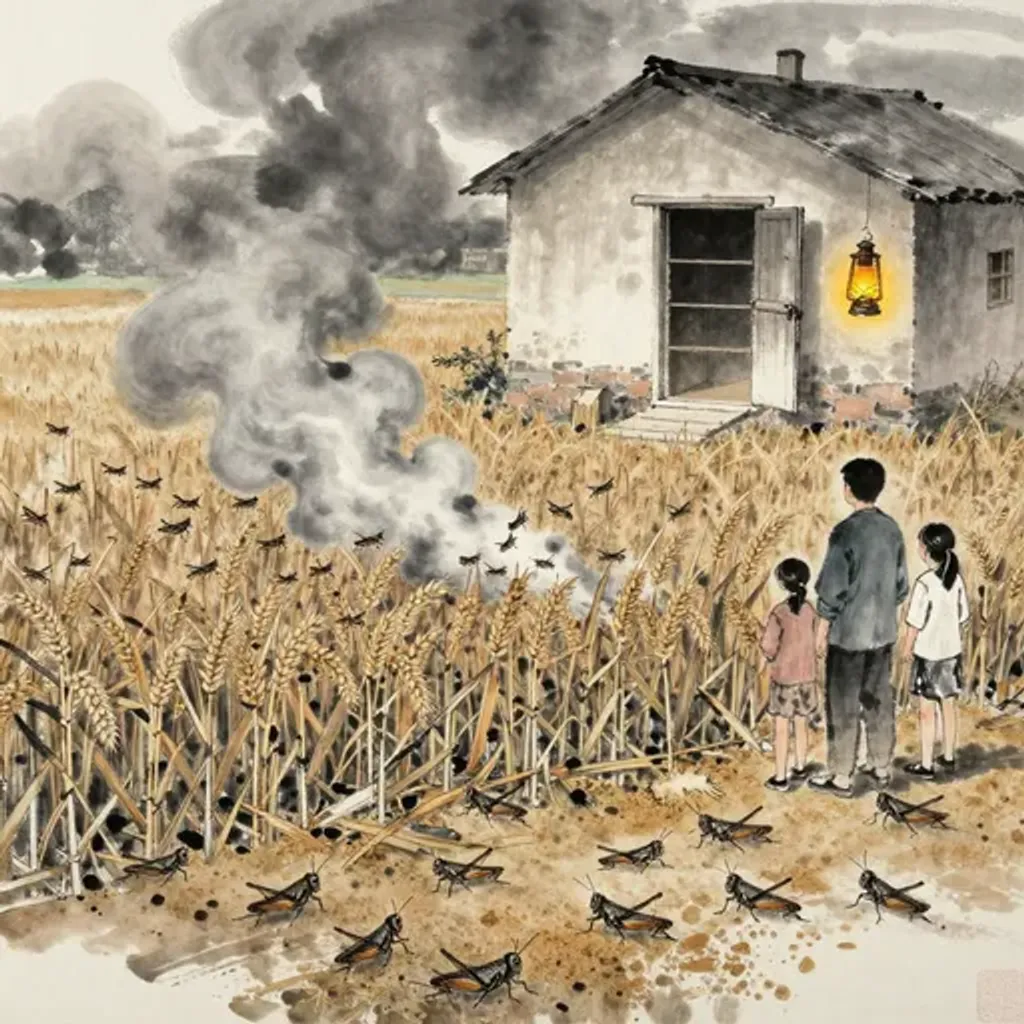
螟蟲為賊,害我五穀。中霤空虛,家無所食。
Crop-eating insects are the bandits; they harm my five grains. The household altar stands empty; the family has nothing to eat.
— Jiao Yanshou, Yilin (Forest of Changes), 1st century BC
Commentary
Earth upon earth yields to lake above fire — Revolution. Pest insects become thieves, destroying the five grains. The hearth stands empty at the center of the home; the family has nothing to eat. Lake and fire, the image of Ge, represent revolution — the two elements destroy each other, signaling the need for radical change. The verse presents the conditions that demand revolution: crop failure under pestilence, the larder stripped bare, the household unable to sustain itself. From the Receptive to Revolution, the earth that should produce is consumed by parasites. When the agricultural foundation collapses, the old order can no longer stand. Ge's revolution arises not from ambition but from necessity — when the crops fail entirely, the system that produced them must be overthrown and rebuilt.
坤 → 鼎
Hexagram 2 → Hexagram 50: The Cauldron
Changing lines: 2, 3, 4, 6
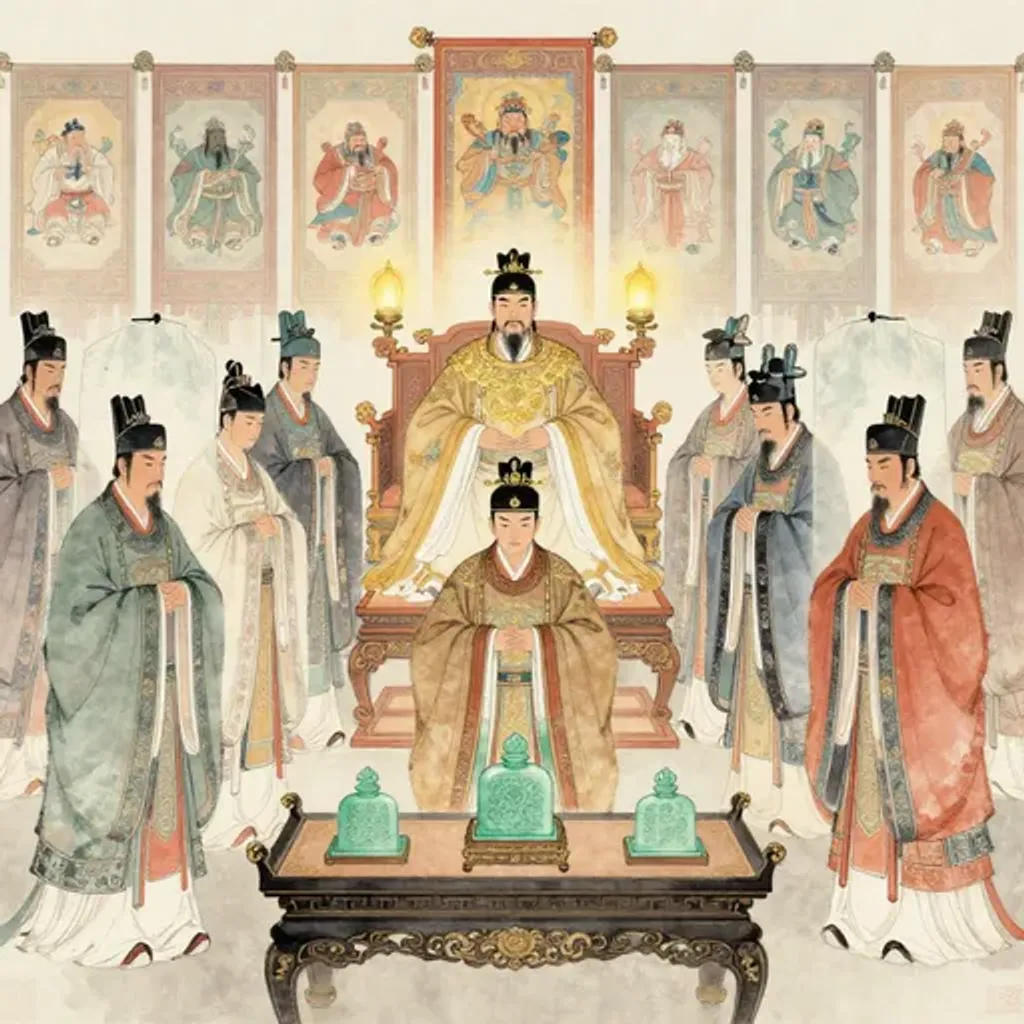
望尚阿衡,太宰國公。藩屏輔弼,福祿來同。
Hoping for the Grand Protector; Grand Minister, Duke of State. Screen and shield, support and aide; blessings and fortune come together.
— Jiao Yanshou, Yilin (Forest of Changes), 1st century BC
Commentary
Earth upon earth transforms into fire above wind — the Cauldron. One looks up to the great counselor Aheng, Grand Steward and Duke of the realm. He serves as bulwark and assistant to the throne; blessings and prosperity arrive together. Aheng is the title of Yi Yin, the sage minister who helped King Tang of Shang overthrow the tyrant Jie — originally a cook from the land of Youshen who rose to become chief minister. Fire above wind, the image of Ding, represents the ritual cauldron — the vessel of transformation where raw materials are cooked into nourishment, and where talents are refined into statesmen. From the Receptive to the Cauldron, the earth's raw produce enters the transformative vessel. Yi Yin, the cook-turned-chancellor, is the Cauldron's perfect avatar: humble origins, supreme refinement, and the alchemy of governance that turns good ingredients into a well-ordered state.
坤 → 震
Hexagram 2 → Hexagram 51: The Arousing Thunder
Changing lines: 1, 4
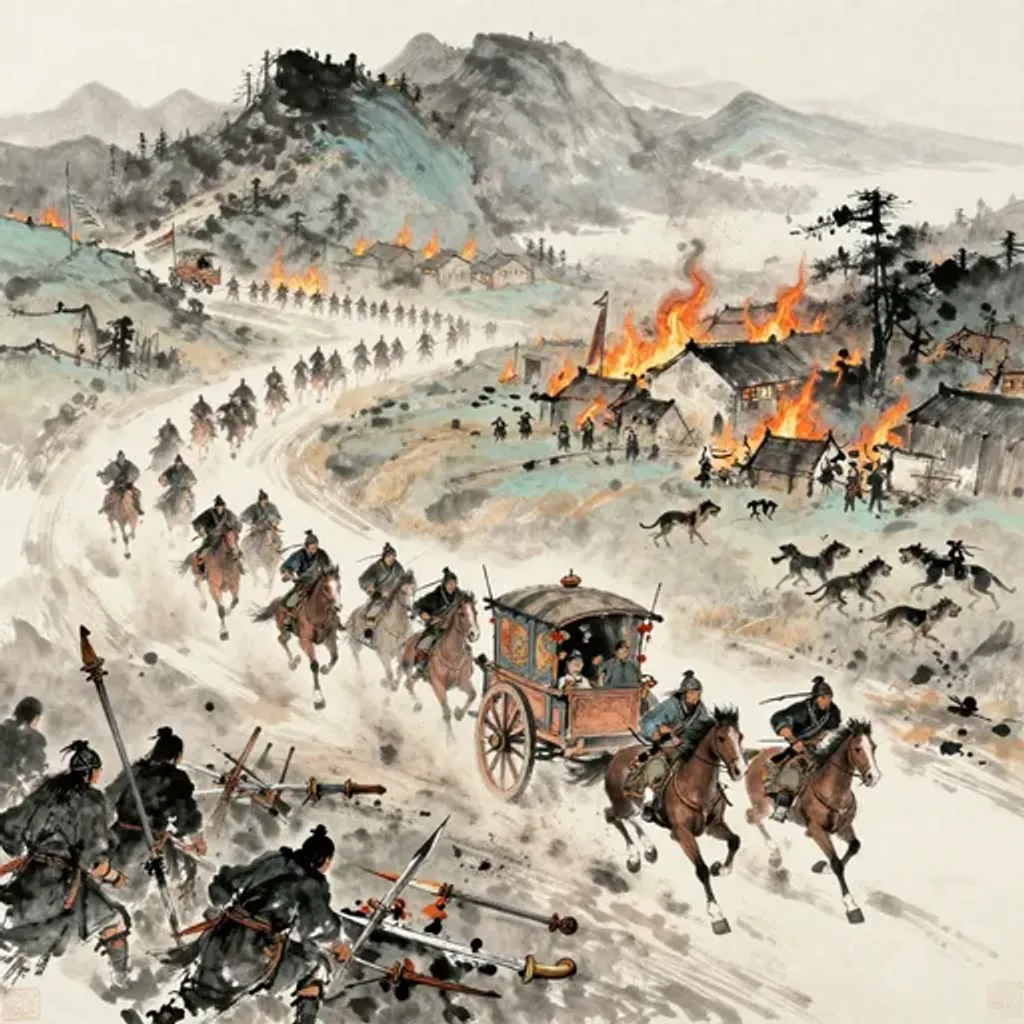
三年生狗,以戌為母。荊夷上侵,姬伯出走。
In the third year a dog is born, taking the xu-branch as mother. The Jing barbarians invade from the south; the lord of Ji flees.
— Jiao Yanshou, Yilin (Forest of Changes), 1st century BC
Commentary
Earth upon earth yields to doubled thunder — the Arousing. A dog born after three years takes the xu (dog) earthly branch as its mother — an image of confused origins and unnatural generation. The Jing and Yi peoples press northward, and the Ji earls are forced to flee. Doubled thunder, the image of Zhen, is shock upon shock — the arousing force that terrifies but also purifies. The verse combines cosmic disorder (a dog claiming the wrong lineage) with political disaster (frontier invasions driving aristocrats from their seats). From the Receptive to the Arousing, the earth's patient stability is shattered by repeated thunderbolts. The Ji earls, likely Zhou royal clan members, lose their ground when barbarian pressure overwhelms their defenses — thunder from the frontier that sends even the nobility running.
坤 → 艮
Hexagram 2 → Hexagram 52: Keeping Still Mountain
Changing lines: 3, 6
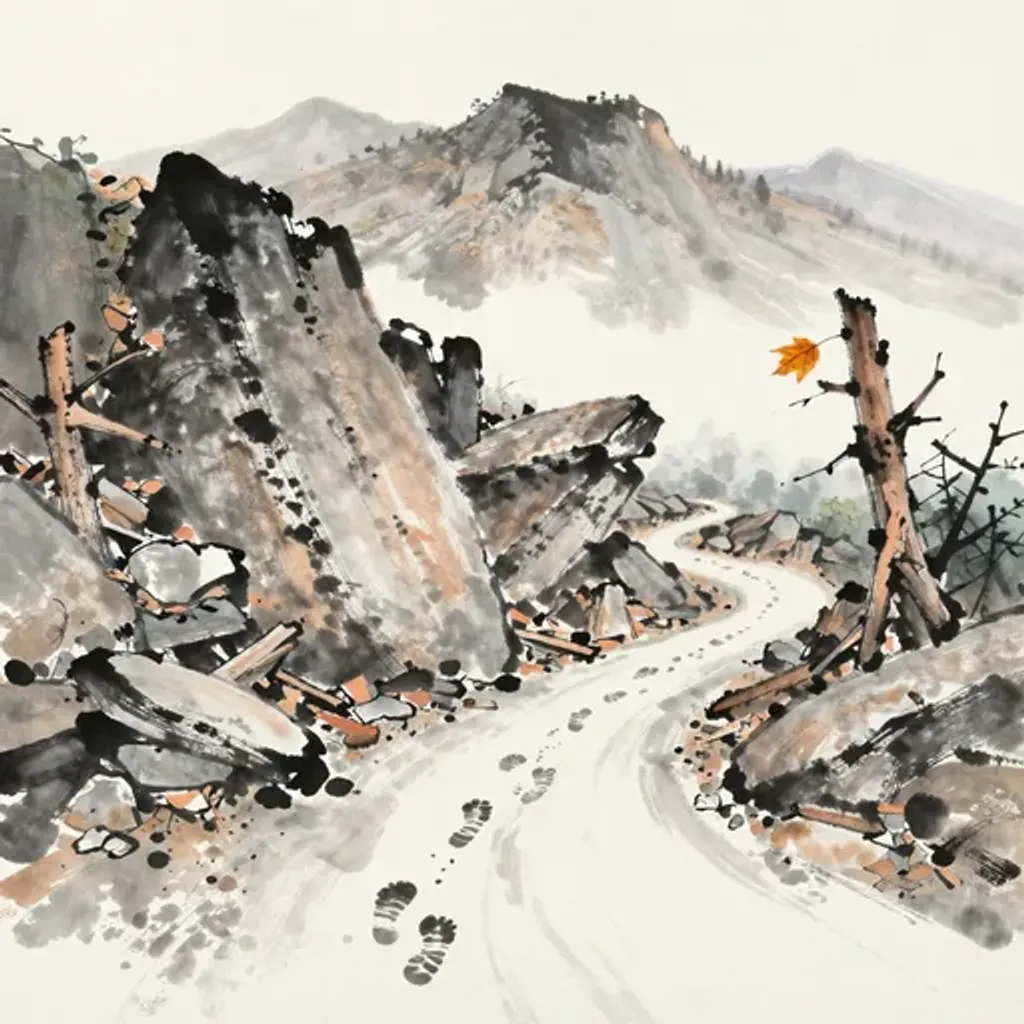
塗遏道塞,求事不得。
The road is blocked, the way sealed; endeavors are not achieved.
— Jiao Yanshou, Yilin (Forest of Changes), 1st century BC
Commentary
Earth upon earth transforms into doubled mountain — Keeping Still. The road is blocked and obstructed; what one seeks cannot be obtained. Two lines, terse and final. Doubled mountain, the image of Gen, is the ultimate stillness — the gentleman's mind does not go beyond its proper position. The verse enacts this principle through negation: no passage, no acquisition, no progress. Gen stops movement by its very nature, and this verse stops as abruptly as the hexagram demands. From the Receptive to Keeping Still, the earth's open expanse raises mountains that halt all traversal. What Kun offered freely — space, passage, receptivity — Gen withdraws. The brevity of the verse mirrors the teaching: when the time calls for stillness, there is nothing more to say.
坤 → 漸
Hexagram 2 → Hexagram 53: Development
Changing lines: 3, 5, 6
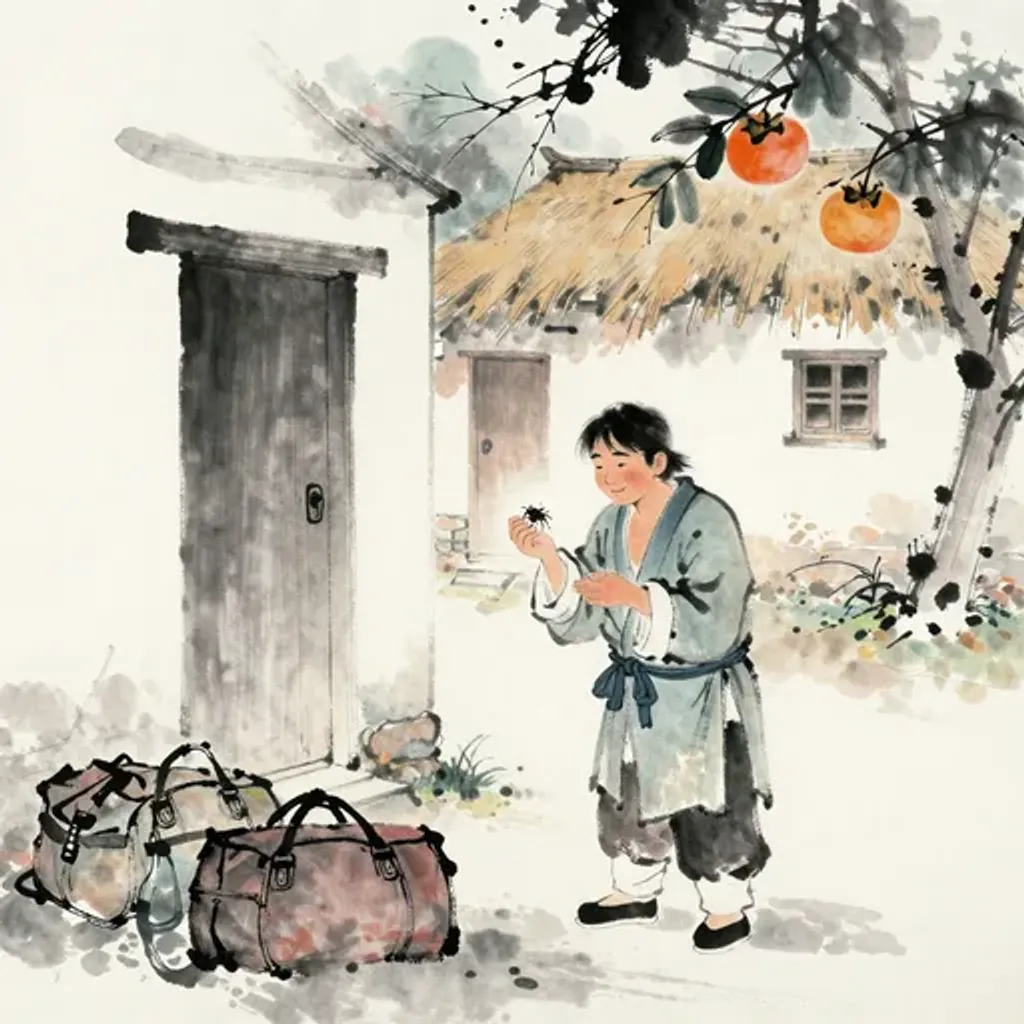
探懷得蚤,無有凶憂。所願失道,善居漸好。
Reaching into the robe, finding only a flea; yet no ill omen follows. What was wished for strays from the path, but a good dwelling gradually improves.
— Jiao Yanshou, Yilin (Forest of Changes), 1st century BC
Commentary
Earth upon earth yields to wind above mountain — Development. One reaches into one's breast and finds a flea — no cause for alarm. What was hoped for has missed its mark, but dwelling in patience, things gradually improve. Wind atop the mountain, the image of Jian, depicts trees growing slowly on the mountainside — development by degrees, like the wild goose's measured approach. The verse begins with a small, comic relief: a flea discovered is merely a flea, not a crisis. The larger wish has gone astray, but the counsel is to stay put and let time work. From the Receptive to Development, the earth's instant availability becomes the mountain's slow, organic growth. Jian forbids rushing; what improves does so gradually, like a tree on a ridge exposed to steady wind.
坤 → 歸妹
Hexagram 2 → Hexagram 54: The Marrying Maiden
Changing lines: 1, 2, 4
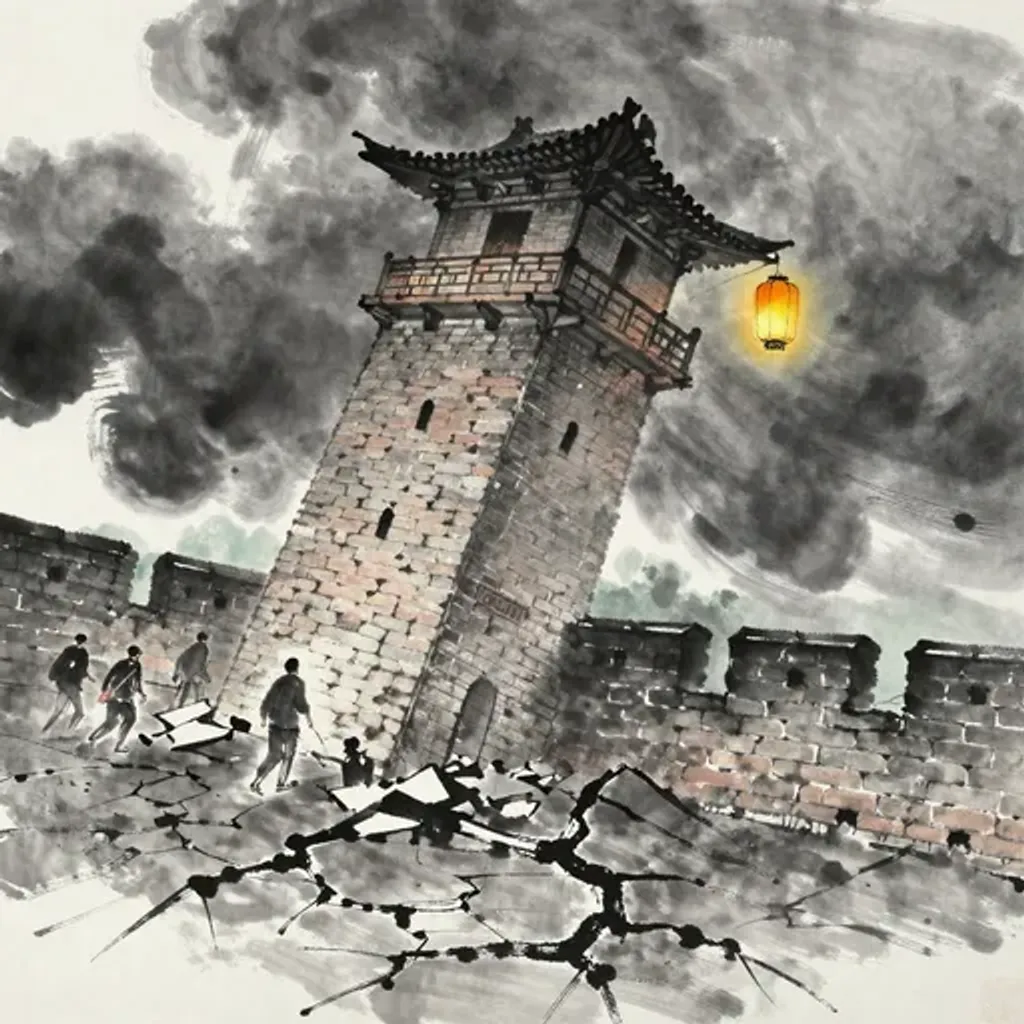
飛樓屬道,趾多攪垣。居之不安,覆厭為患。
The towering gallery joins the road; its footings disturb many walls. Dwelling there brings no peace; collapse and burial become the peril.
— Jiao Yanshou, Yilin (Forest of Changes), 1st century BC
Commentary
Earth upon earth transforms into thunder above lake — the Marrying Maiden. A flying tower connects to the road, but its foundations disturb the walls. The dwelling is unsafe; collapse and burial become constant threats. Thunder above lake, the image of Gui Mei, depicts the youngest daughter following the eldest son — an arrangement fraught with structural imbalance. The flying tower (feilou) is an elevated passageway that bridges buildings but destabilizes their foundations through its weight. From the Receptive to the Marrying Maiden, the earth's stable ground is compromised by a structure built above it that was never properly integrated. Gui Mei warns that arrangements entered into under improper conditions — however grand they appear — undermine the very foundations they depend upon.
坤 → 豐
Hexagram 2 → Hexagram 55: Abundance
Changing lines: 1, 3, 4
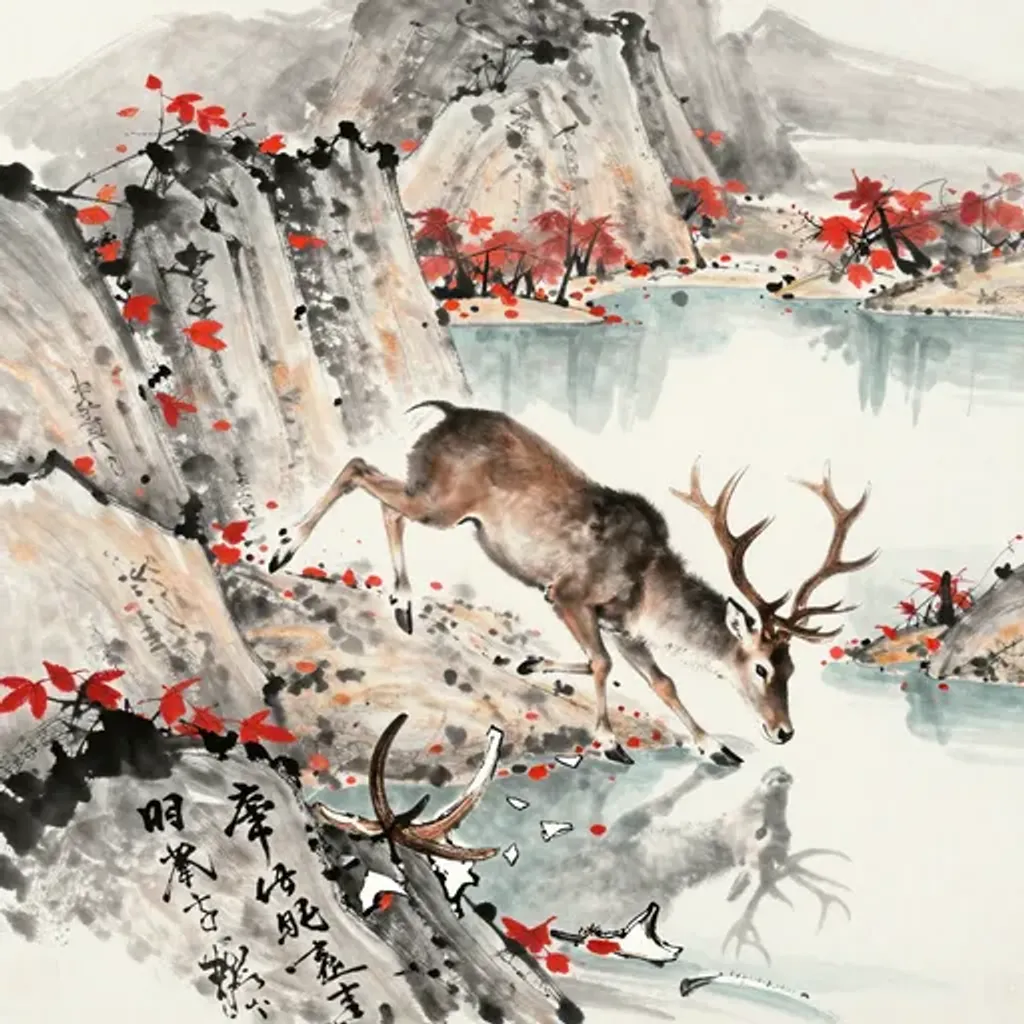
義不勝情,以欲自傾。幾危利寵,折角摧頸。
Duty cannot overcome desire; by craving, one topples oneself. Courting danger for favor and position; horns broken, neck snapped.
— Jiao Yanshou, Yilin (Forest of Changes), 1st century BC
Commentary
Earth upon earth yields to thunder above fire — Abundance. Righteousness cannot overcome passion; desire topples the self. Courting danger for favor's sake, horns are broken and necks are snapped. Thunder and lightning together, the image of Feng, represent maximum illumination — the zenith of brightness and power. Yet the verse warns of abundance's peril: when desire overwhelms principle, the very fullness that enables ambition becomes the force that destroys. Broken horns and snapped necks are images of power contests lost — the animal that charges recklessly. From the Receptive to Abundance, the earth's yielding nature feeds the thunderous expansion of Feng, but without moral restraint, abundance accelerates toward catastrophe. The fuller the vessel, the more violent its shattering.
坤 → 旅
Hexagram 2 → Hexagram 56: The Wanderer
Changing lines: 3, 4, 6
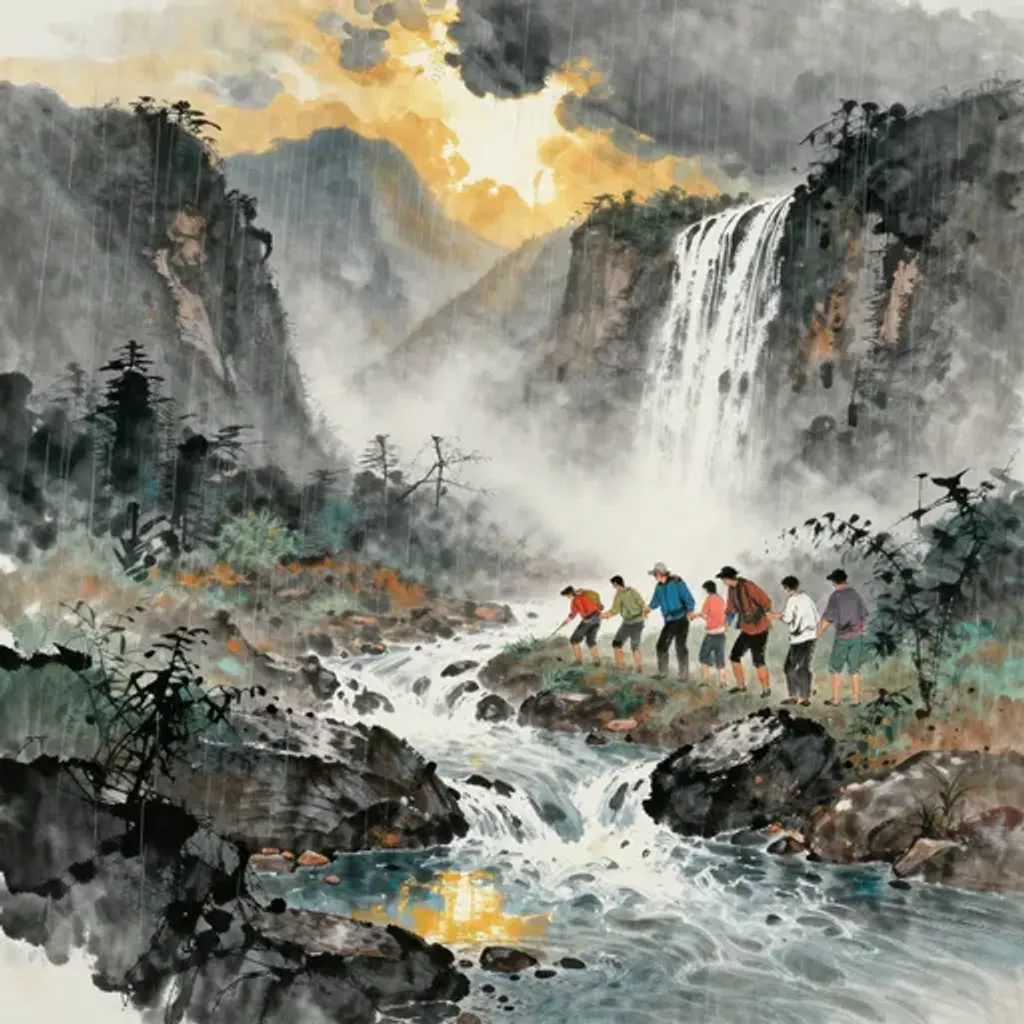
潼滃蔚薈,扶首來會。津液來降,流淹滂霈。
Thick and billowing, lush and dense; gathering with heads bowed. Moisture descends from above; flowing, drenching, soaking in abundance.
— Jiao Yanshou, Yilin (Forest of Changes), 1st century BC
Commentary
Earth upon earth transforms into fire above mountain — the Wanderer. Vapors rise thick and lush, gathering together in abundance. Moisture descends from above, flowing in heavy, soaking rain. Fire atop the mountain, the image of Lu, shows a blaze on the heights — transient, exposed, moving on. Yet the verse evokes not wandering but condensation: mist coalescing, fluids accumulating, rain pouring down. From the Receptive to the Wanderer, the earth's moisture is drawn upward and then released, traveling across the sky before falling far from where it rose. The verse captures the Wanderer's paradox: the water cycle is perpetual motion — nothing stays, nothing is lost. What departs from the earth returns to the earth, but always to a different place.
坤 → 巽
Hexagram 2 → Hexagram 57: The Gentle Wind
Changing lines: 2, 3, 5, 6
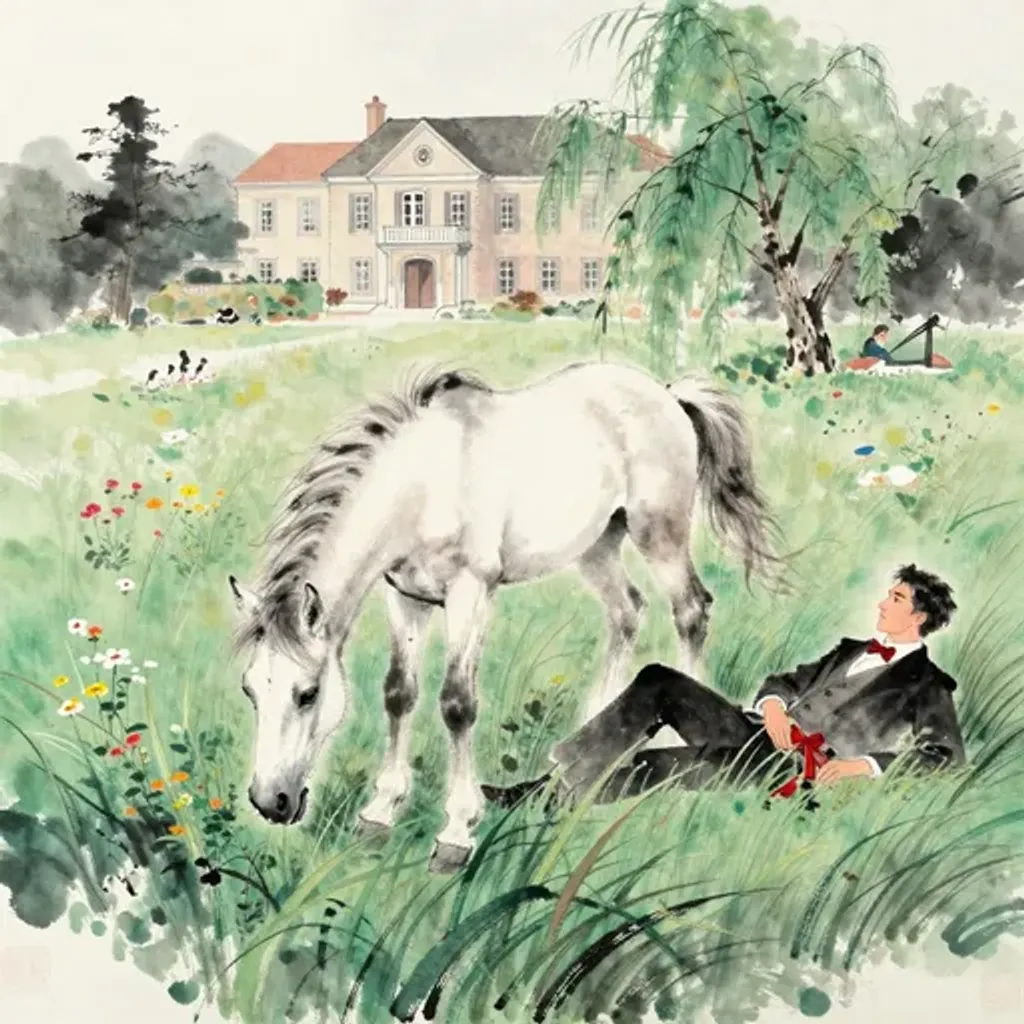
白駒生芻,猗猗盛姝。赫喧君子,樂以忘憂。
The white colt grazes on fresh grass, lush and luxuriant. Radiant and splendid, the noble man; joyful, he forgets his cares.
— Jiao Yanshou, Yilin (Forest of Changes), 1st century BC
Commentary
Earth upon earth yields to doubled wind — the Gentle. A white colt feeds on fresh grass, lovely and flourishing. The radiant gentleman takes pleasure and forgets his cares. This alludes to the Shijing ode 'Bai Ju' ('White Colt'): 'That dazzling white colt feeds on the young shoots in my field' — a poem about a worthy guest one wishes to detain. The white colt symbolizes the talented visitor nourished by one's hospitality. Doubled wind, the image of Xun, represents gentle penetration — influence that enters without force. From the Receptive to the Gentle, the earth's nurturing grass becomes the medium through which subtle bonds are formed. The colt stays because the pasture is good; the gentleman lingers because the welcome is genuine. Xun's power lies in what it offers, not what it demands.
坤 → 兌
Hexagram 2 → Hexagram 58: The Joyous Lake
Changing lines: 1, 2, 4, 5
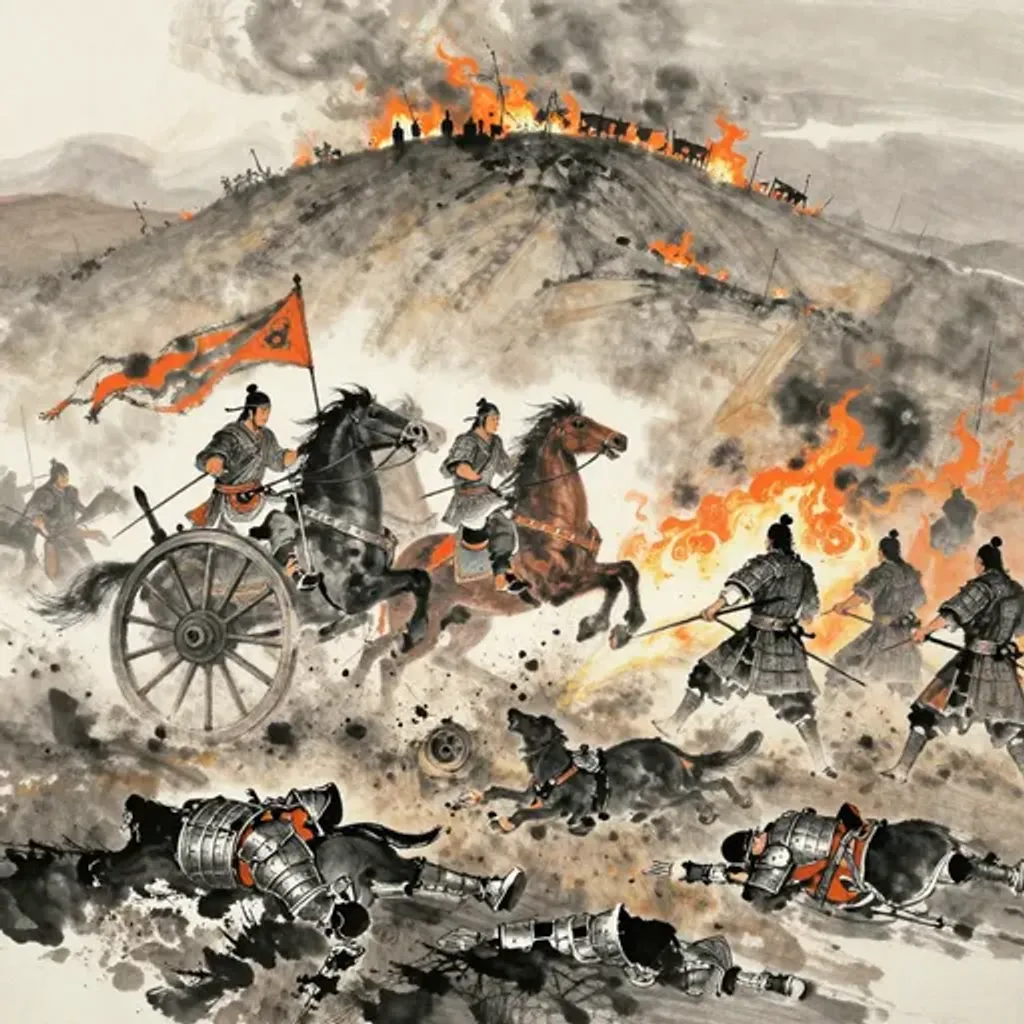
車馳人趍,卷甲相仇。齊魯寇戰,敗於犬丘。
Chariots race, men rush; donning armor, taking up feuds. Qi and Lu raid and battle; defeated at Dog Hill.
— Jiao Yanshou, Yilin (Forest of Changes), 1st century BC
Commentary
Earth upon earth transforms into doubled lake — the Joyous. Chariots race and men rush forward; armies roll up their armor for battle. Qi and Lu clash again, and defeat comes at Dog Hill. Doubled lake, the image of Dui, represents joyous exchange — friends gathering to study together. Yet the verse describes military catastrophe: the hollow enthusiasm of battle ends in rout. Dog Hill (Quanqiu) is a place name associated with frontier skirmishes. From the Receptive to the Joyous, the earth's yielding terrain becomes the battlefield where false joy — the thrill of martial excitement — leads to disaster. Dui's true joy is mutual discourse and shared learning; when its energy is perverted into military adventure, the doubled lake dries up in blood and dust.
坤 → 渙
Hexagram 2 → Hexagram 59: Dispersion
Changing lines: 2, 5, 6
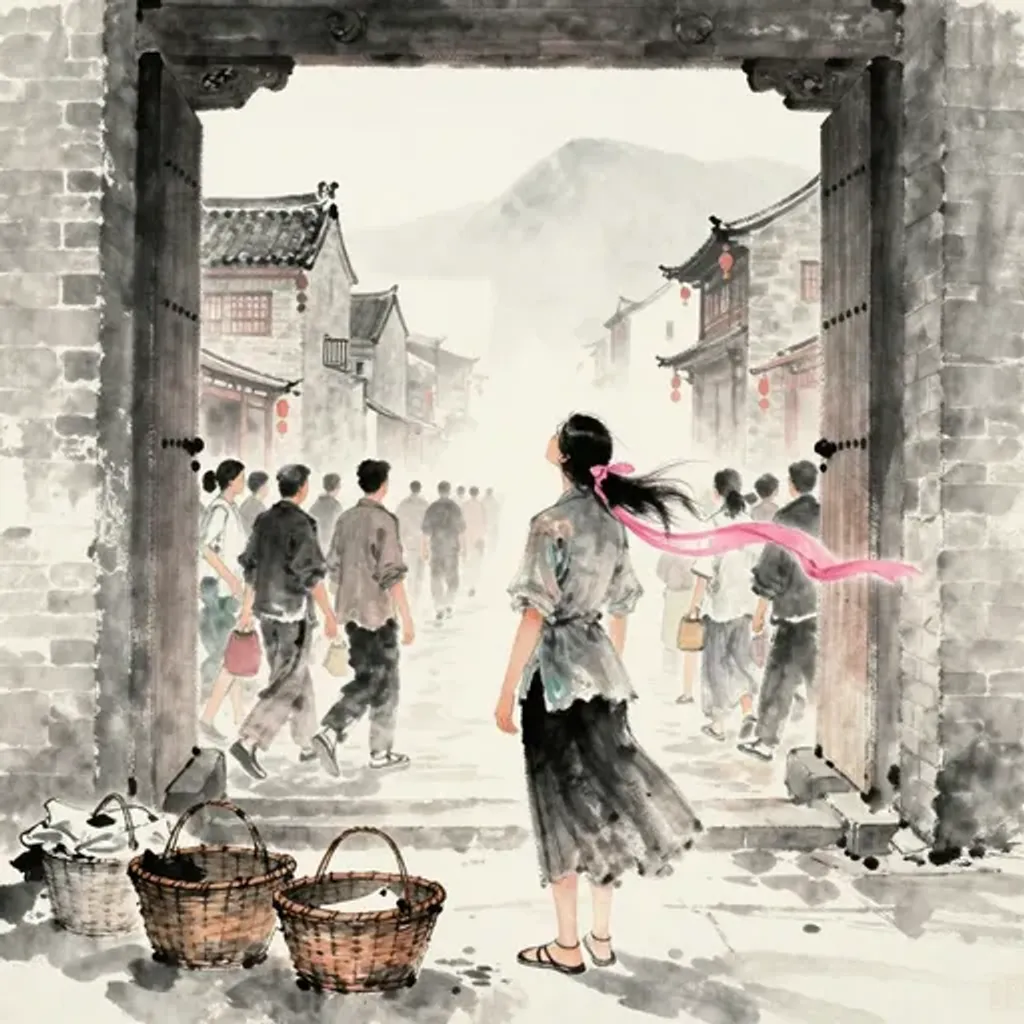
舉首望城,不見子貞,使我悔生。
Raising my head, I gaze toward the city; I do not see Zizhen. This makes me regret being alive.
— Jiao Yanshou, Yilin (Forest of Changes), 1st century BC
Commentary
Earth upon earth yields to wind above water — Dispersion. One raises one's head and gazes toward the city walls but cannot see Zi Zhen. This causes me to regret being alive. Wind upon water, the image of Huan, scatters what was gathered — dispersion, dissolution, the breaking apart of what held together. The verse is terse and desolate: a lover or friend gazes toward a fortified city where someone named Zi Zhen once dwelt, but sees no one. The absence is so devastating that life itself loses meaning. From the Receptive to Dispersion, the earth that once held everything together watches its connections dissolve. What Kun gathered, Huan scatters: the bond between two people disperses like wind on water, leaving only the ache of looking and not finding.
坤 → 節
Hexagram 2 → Hexagram 60: Limitation
Changing lines: 1, 2, 5
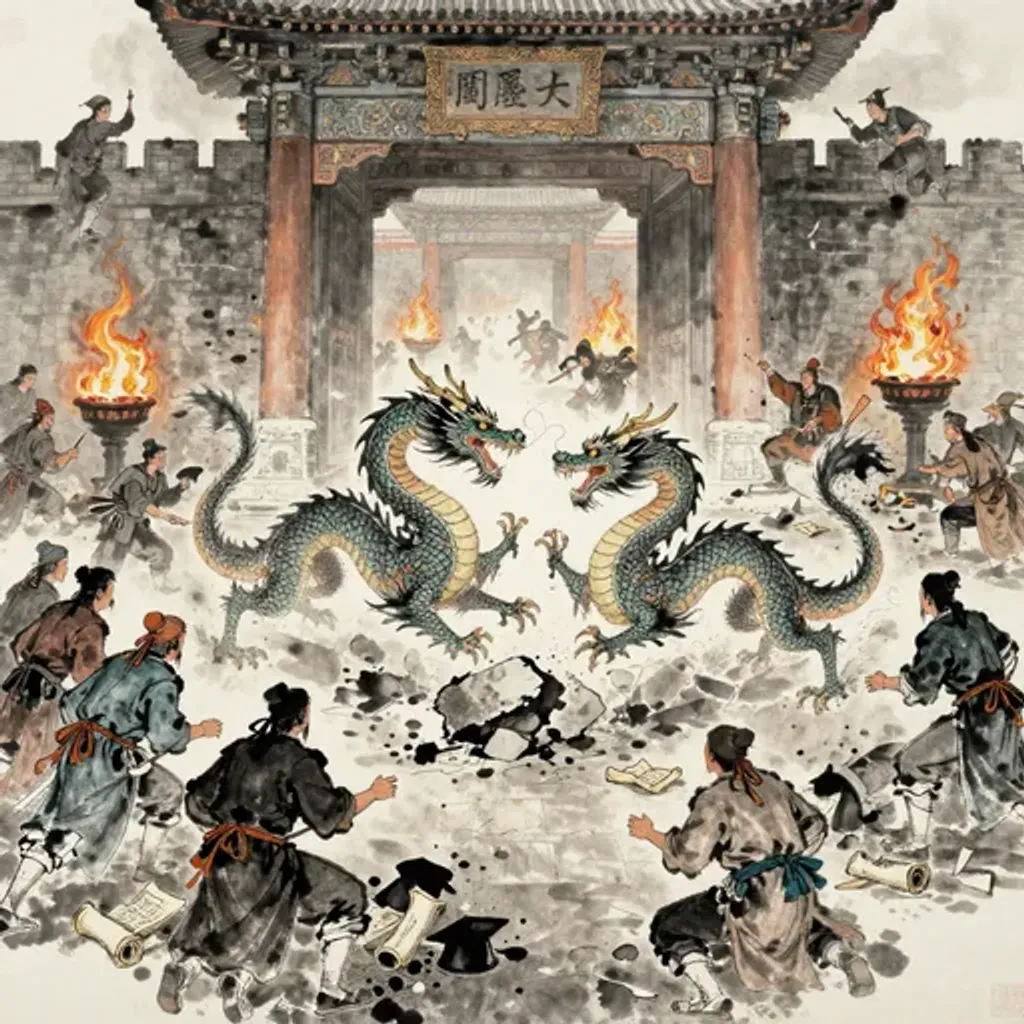
龍鬭時門,失理傷賢。內畔外賊,則生禍難。
Dragons battle at the seasonal gate; reason is lost, the worthy harmed. Rebellion within, raiders without; then calamity and trouble arise.
— Jiao Yanshou, Yilin (Forest of Changes), 1st century BC
Commentary
Earth upon earth transforms into water above lake — Limitation. Dragons battle at the gate of time, and reason is lost while the worthy are harmed. Internal rebellion and external brigandage produce calamity and hardship. Water above lake, the image of Jie, represents proper limits — the gentleman measures and deliberates before acting. Yet the verse depicts what happens when limits collapse: dragons fighting at the threshold signify power struggles at the boundary of order, internal and external threats converging simultaneously. From the Receptive to Limitation, the earth's boundless acceptance must learn to set boundaries. When it fails to do so, dragons contest the gates, loyal ministers suffer, and enemies breach the walls from both sides. Limitation is not restriction but survival — without it, chaos enters from every direction.
坤 → 中孚
Hexagram 2 → Hexagram 61: Inner Truth
Changing lines: 1, 2, 5, 6
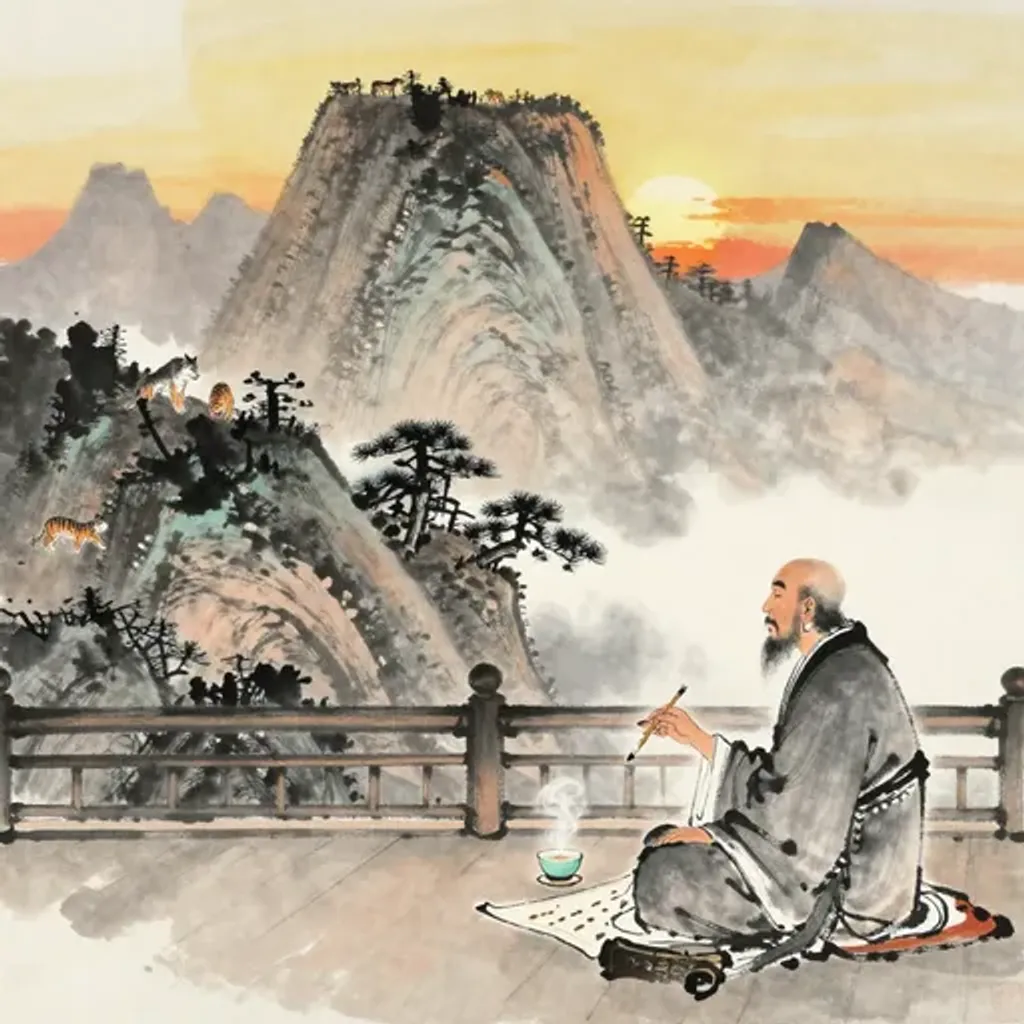
安如泰山,福喜屢臻。雖有豺虎,不致危身。
Secure as Mount Tai; blessings and joy arrive in abundance. Though wolves and tigers prowl, they do not endanger one’s person.
— Jiao Yanshou, Yilin (Forest of Changes), 1st century BC
Commentary
Earth upon earth yields to wind above lake — Inner Truth. Secure as Mount Tai; blessings and joys arrive in abundance. Though jackals and tigers prowl, they cannot endanger one's person. Mount Tai, the Eastern Sacred Mountain, is the holiest of the Five Sacred Mountains — site of the imperial feng and shan sacrifices, symbol of absolute stability and cosmic authority. Wind above lake, the image of Zhongfu, depicts the empty center — inner sincerity that moves even pigs and fish. The verse declares that when one is grounded in inner truth as firmly as Mount Tai, even predators pose no threat. From the Receptive to Inner Truth, the earth's passive stability is refined into the active, unshakable confidence of zhongfu. Tai's massiveness comes not from rigidity but from the authenticity that makes it immovable.
坤 → 小過
Hexagram 2 → Hexagram 62: Small Exceeding
Changing lines: 3, 4
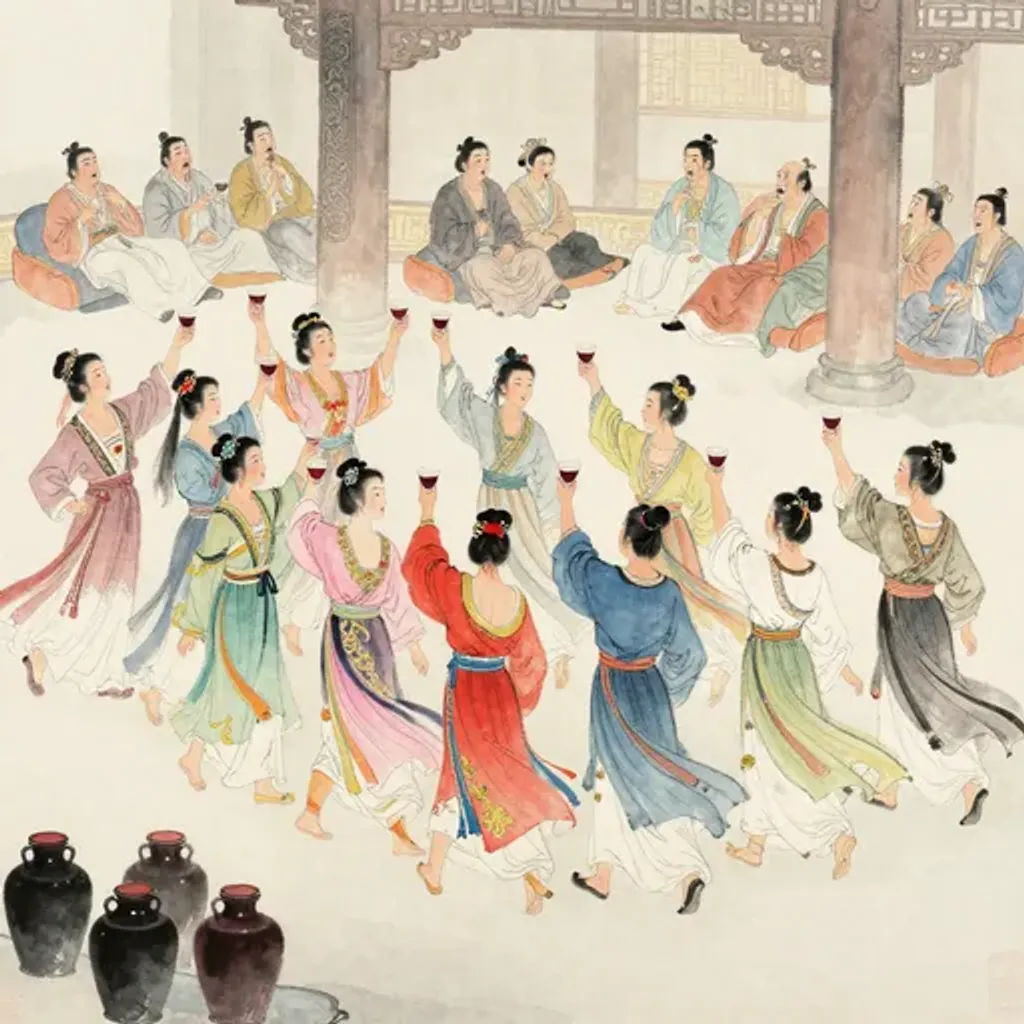
初憂後喜,與福為市。八佾列陳,飲御嘉友。
First worry, then joy; trading sorrow for blessings. Eight rows of dancers arranged; feasting and entertaining dear friends.
— Jiao Yanshou, Yilin (Forest of Changes), 1st century BC
Commentary
Earth upon earth transforms into thunder above mountain — Small Exceeding. Beginning in worry, ending in joy — one exchanges trouble for blessing. Eight rows of dancers line up in formation; one drinks with honored friends. Thunder atop the mountain, the image of Xiao Guo, is the small exceeding the great — the modest overstepping just slightly, as excessive humility in mourning or frugality in daily life. The eight-row dance (bayi) was the highest ritual privilege, reserved for the Son of Heaven. The verse traces an arc from anxiety to celebration, culminating in grand ceremony and companionship. From the Receptive to Small Exceeding, the earth's humility discovers that going slightly beyond — one degree past restraint — opens the door to joy. The key word is 'small': the excess that brings blessing is a gentle overflow, not a flood.
坤 → 既濟
Hexagram 2 → Hexagram 63: After Completion
Changing lines: 1, 3, 5
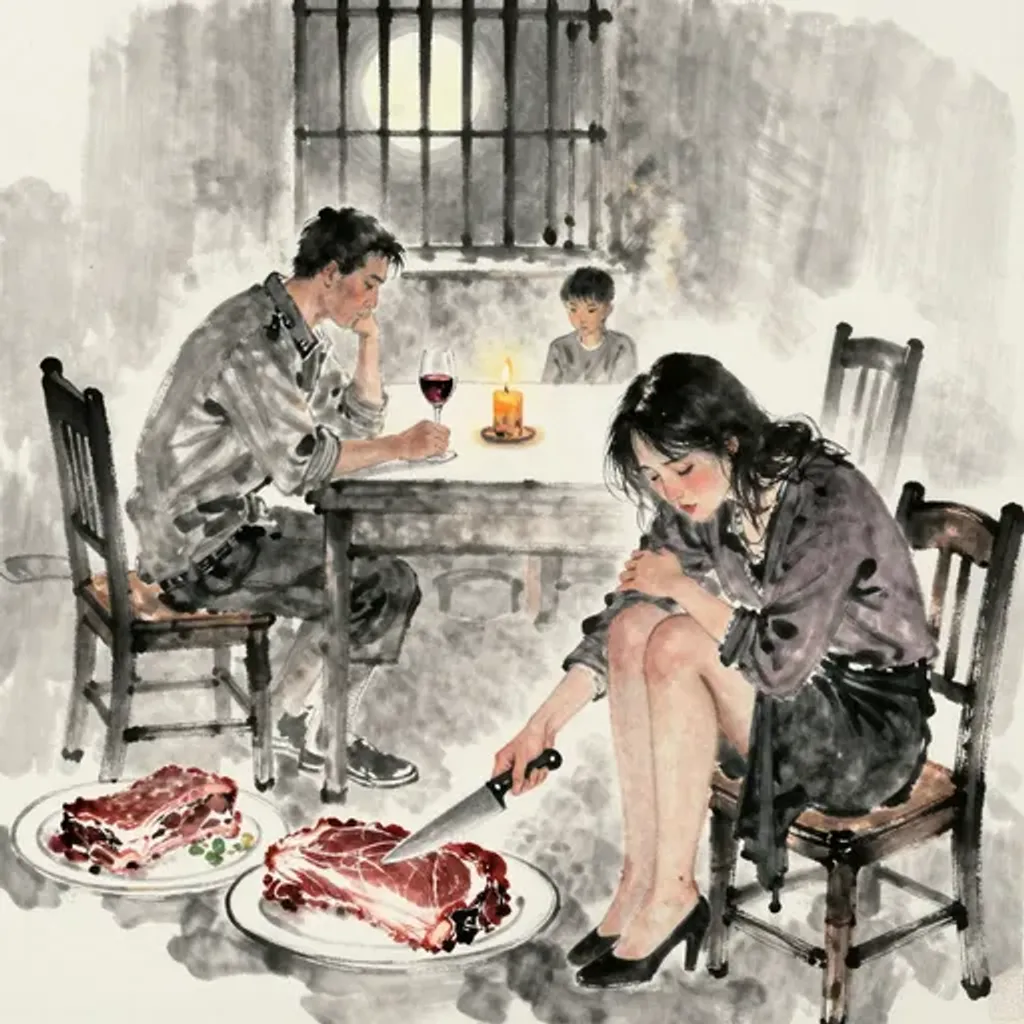
持刀操肉,對酒不食。夫行從軍,小子入獄,抱膝獨宿。
Holding knife, grasping meat; facing wine yet not eating. The husband has gone to war; the young son is in prison. Embracing the knees, sleeping alone.
— Jiao Yanshou, Yilin (Forest of Changes), 1st century BC
Commentary
Earth upon earth yields to water above fire — After Completion. Holding a knife and facing meat, confronting wine yet unable to eat. The husband has marched off to war, the young son is imprisoned; one embraces one's knees and sleeps alone. Water above fire, the image of Ji Ji, shows everything in its proper place — fire below heats water above, the ideal arrangement. Yet the verse paints desolation: food is present but cannot be consumed because those who should share it are gone. From the Receptive to After Completion, the earth has provided everything — meat, wine, sustenance — but completion without companionship is hollow. Ji Ji warns that even the most perfect arrangement can unravel: the order is right, but the people are missing. After Completion is also the beginning of reversal.
坤 → 未濟
Hexagram 2 → Hexagram 64: Before Completion
Changing lines: 2, 4, 6
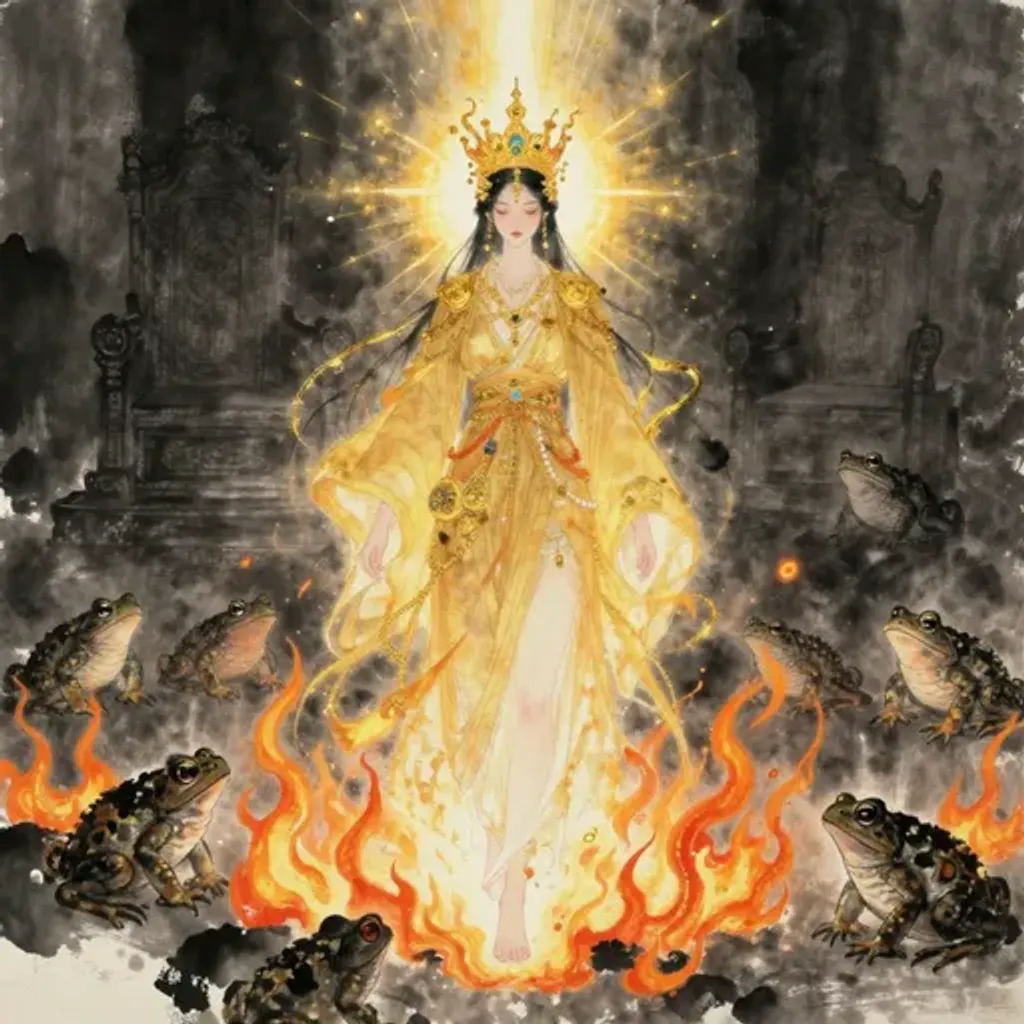
陰衰老極,陽建其德。履離戴光,天下昭明。功業不長,蝦䗫代王。
Yin wanes and reaches its extreme; yang builds its virtue. Treading on Li, wearing radiance; all under heaven grows bright. But achievements do not last long; the toad reigns in the king’s stead.
— Jiao Yanshou, Yilin (Forest of Changes), 1st century BC
Commentary
Earth upon earth transforms into fire above water — Before Completion. Yin wanes to its extreme and yang rebuilds its virtue. One treads on fire and wears radiance; the realm shines with brilliance. Yet achievement does not endure: the toad displaces the king. Fire above water, the image of Wei Ji, shows everything out of place — fire that should be below sits above, water that should be above sits below. The verse captures the cosmic pivot: yin exhausted, yang ascendant, light blazing forth. But the final line — the toad (likely a small, lowly creature) replacing the sovereign — warns that Before Completion never reaches completion. From the Receptive to Before Completion, the earth's spent yin yields its last energy to the rising yang, yet the new order is immediately challenged by an unworthy successor. The cycle never closes.