Transformations of Hexagram 20
Every line of change out of Hexagram 20 觀 Contemplation, with the Yilin verse for each of the 64 resulting hexagrams, its translation, and the original ink brush artwork.
觀 → 乾
Hexagram 20 → Hexagram 1: The Creative
Changing lines: 1, 2, 3, 4
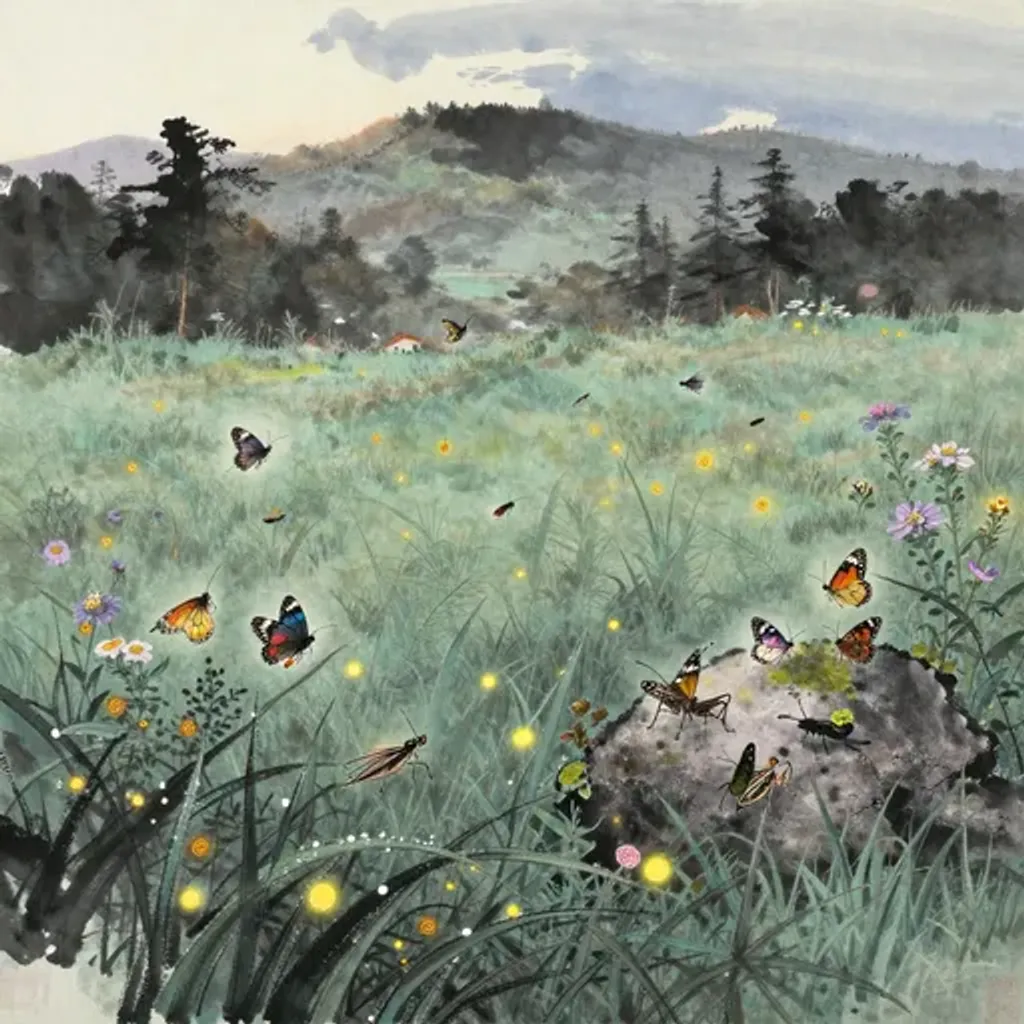
蜎飛蠕動,各有所配;歡悅相逢,咸得其處。
Winged insects and creeping things, each finds its destined mate; joyfully they meet and converge -- all find their proper place.
— Jiao Yanshou, Yilin (Forest of Changes), 1st century BC
Commentary
Wind sweeps across the earth, the gaze of Contemplation surveying all that moves. Wriggling insects and soaring birds each find their proper mate; joyful meetings end with every creature settled in its rightful place. The verse presents a cosmological vision of natural harmony where pairing is effortless and universal — the mating of all species proceeds not by command but by innate resonance. No force is needed because the ordering principle is already at work in nature itself. From Contemplation to the Creative, observation ripens into self-generating initiative: what begins as patient watching discovers the heaven-driven vitality that animates all living things, each moving toward its destined counterpart without coercion.
觀 → 坤
Hexagram 20 → Hexagram 2: The Receptive
Changing lines: 5, 6
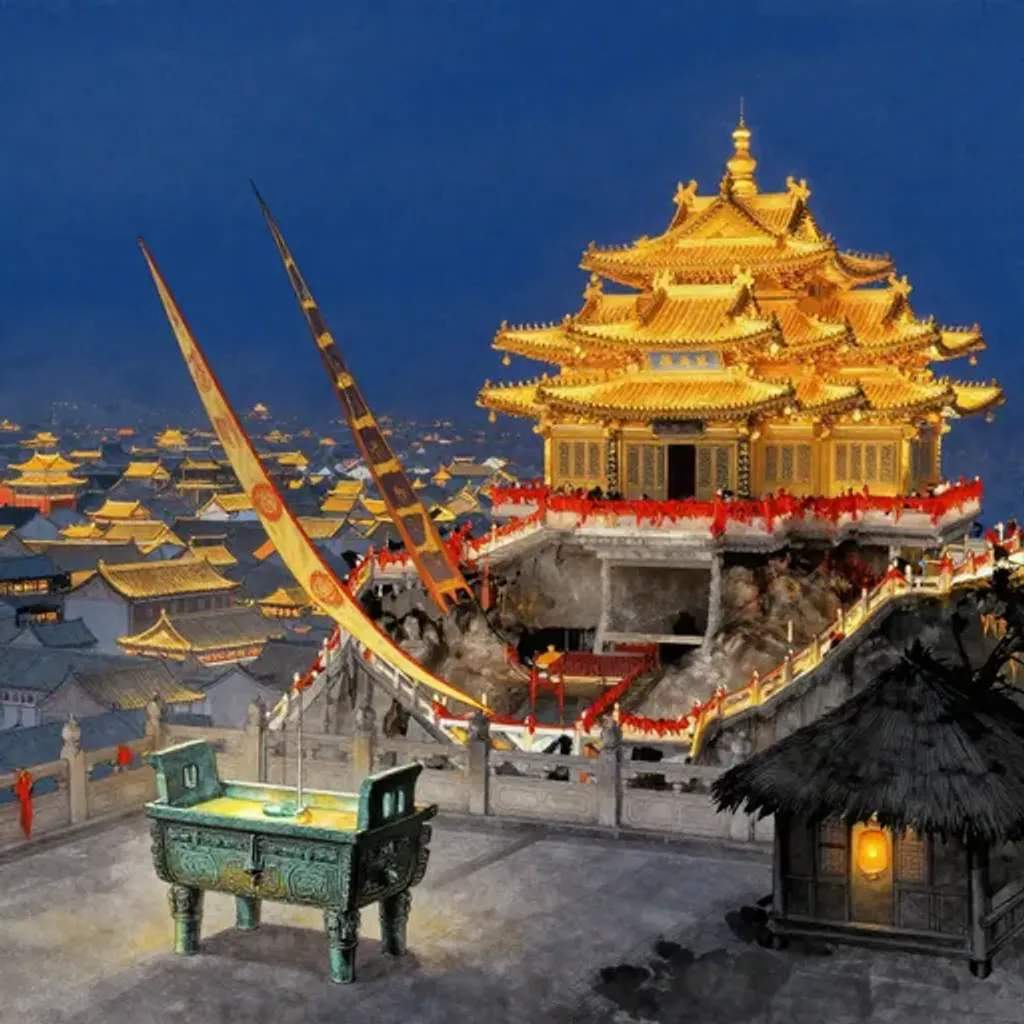
繼祀宗邑,追明成康;光照萬國,享世久長。疾病不醫,下即蒿廬。
Continuing the ancestral sacrifice at the clan seat, upholding the brilliance of Cheng and Kang; their light shines on ten thousand states, their era endures long. The illness cannot be cured -- one descends to the thatched grave.
— Jiao Yanshou, Yilin (Forest of Changes), 1st century BC
Commentary
Wind moves over the earth as the observer surveys dynastic continuity. The verse opens with ancestral rites carried forward, invoking the glory of Kings Cheng and Kang — the golden age of early Zhou peace when virtue radiated across ten thousand states. Yet the poem pivots sharply: illness goes untreated, and the sufferer sinks into a wormwood hut. The contrast between imperial splendor and destitute squalor is stark. Kings Cheng and Kang, son and grandson of King Wu, presided over an era so peaceful that punishments went unused for forty years. From Contemplation to the Receptive, lofty observation yields to earth's patient endurance: glory must be sustained through humble, ceaseless devotion, or it collapses into neglect.
觀 → 屯
Hexagram 20 → Hexagram 3: Difficulty at the Beginning
Changing lines: 1, 6
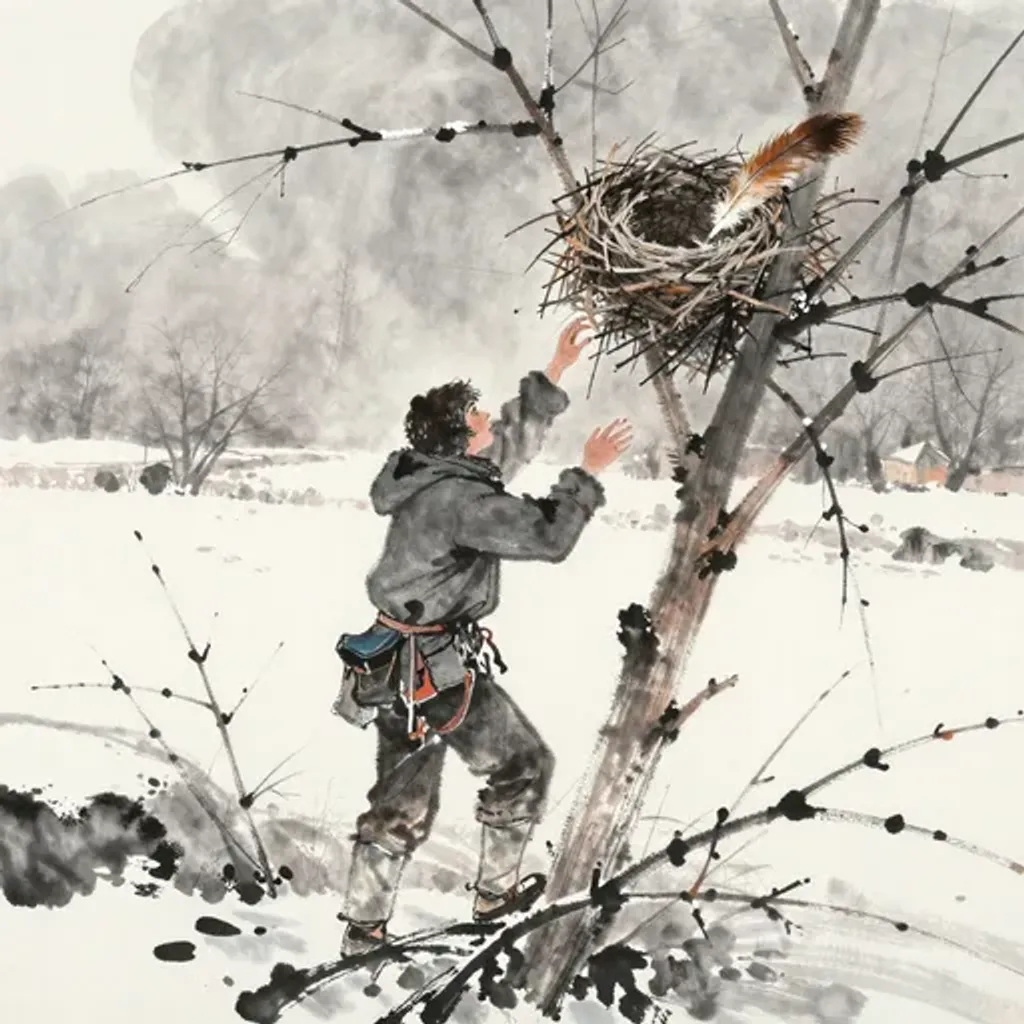
秋冬探巢,不得鵲雛;衘指北去,媿我少姬。
Searching the nest in autumn and winter, one finds no magpie fledgling; biting the finger, one departs northward -- shaming my young bride.
— Jiao Yanshou, Yilin (Forest of Changes), 1st century BC
Commentary
Wind sweeps the earth in contemplation, but the season is wrong. Someone searches a magpie's nest in autumn or winter — the fledglings are long gone. Biting a finger in frustration, the searcher heads north, ashamed before the young bride. The magpie builds its nest in spring; to raid it after the season reveals a fundamental misreading of timing. The shame before the bride suggests a failed provider, returning empty-handed. From Contemplation to Difficulty at the Beginning, the pattern is clear: observation that fails to read the moment correctly plunges into the cloud-and-thunder confusion of a difficult start. One who acts out of season finds only absence where abundance should have been.
觀 → 蒙
Hexagram 20 → Hexagram 4: Youthful Folly
Changing lines: 2, 5
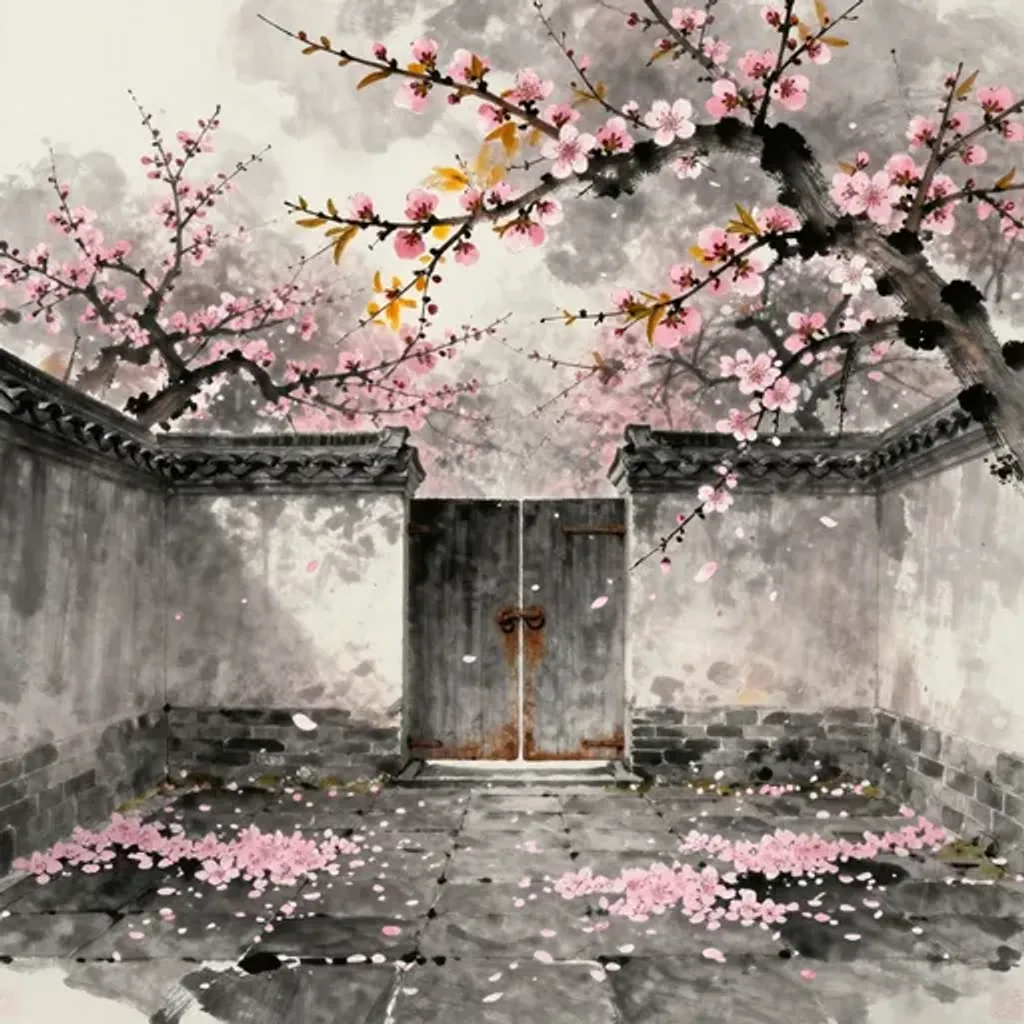
童妾獨宿,長女未室;利無所得。
Peach trees planted three years ago — blossoms open but no one comes to admire. The courtyard is deep, the door shut; fallen petals wilt on their own.
— Jiao Yanshou, Yilin (Forest of Changes), 1st century BC
Commentary
Wind over earth contemplates a household's quiet neglect. The original verse reads: a young maid sleeps alone, an elder daughter remains unmarried; no gain is to be had. Youth passes unwitnessed, womanhood unrealized. The imagery is domestic desolation — capable women left without partners, their potential unfulfilled. Mountain over water in Youthful Folly suggests obscured clarity: a spring emerges beneath the mountain but has not yet found its course. From Contemplation to Youthful Folly, the transformation reveals how passive observation without engagement leads to stagnation. What is seen but never acted upon withers, like talent that remains forever unrecognized within shuttered walls.
觀 → 需
Hexagram 20 → Hexagram 5: Waiting
Changing lines: 1, 2, 3, 6
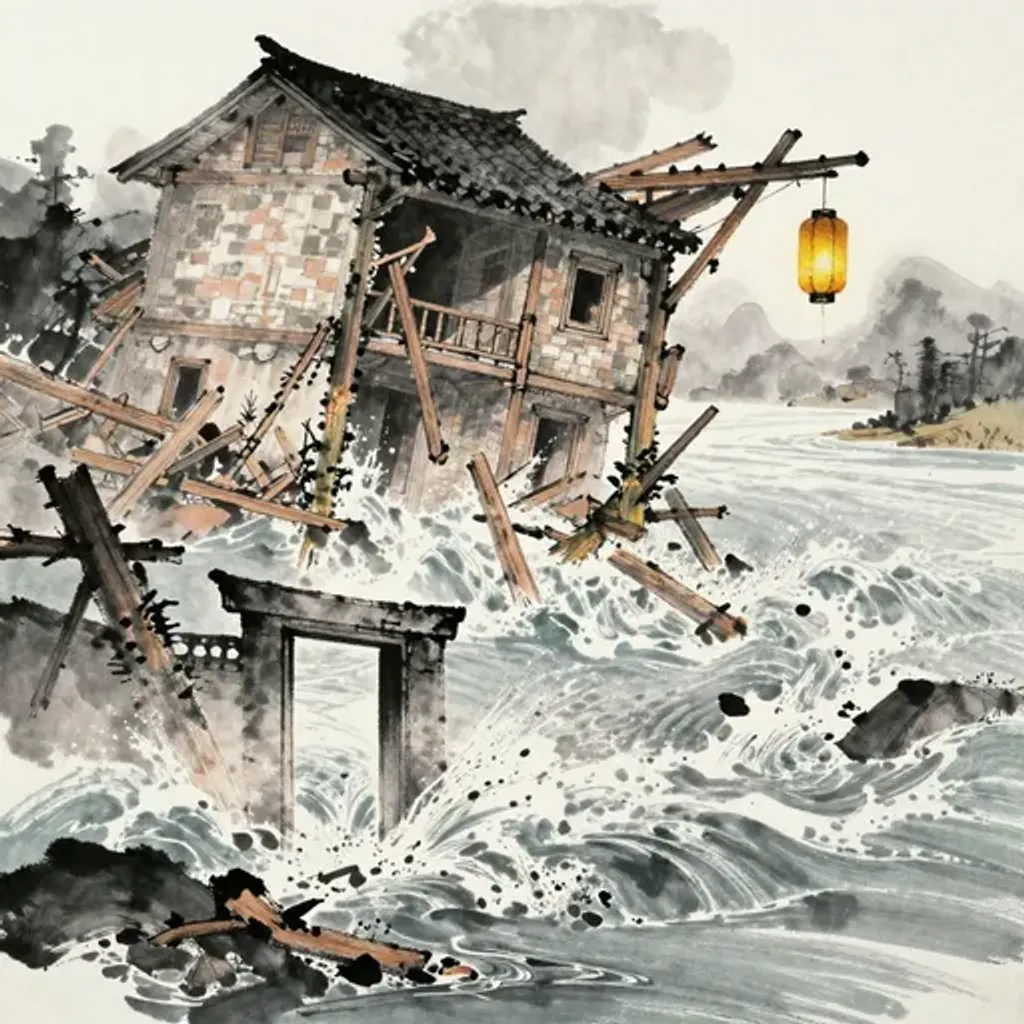
鴻波逆流,主人潛去,蒿蓬代柱,大屋顛仆。
A great wave surges upstream, the master slips away in secret; wormwood stalks replace the pillars -- the great house topples and falls.
— Jiao Yanshou, Yilin (Forest of Changes), 1st century BC
Commentary
Wind sweeps the earth while great waves surge against the current. The master of the house slips away in secret, and wormwood stems are propped up where pillars once stood — the grand mansion topples. The imagery is architectural collapse: floodwaters reverse the natural flow, the householder flees, and makeshift weeds replace structural timber. Wormwood cannot bear the weight of roof beams. From Contemplation to Waiting, the transformation warns that observation without preparation invites catastrophe. Water clouds gather above heaven in Waiting, demanding patience before the deluge. Here, however, no one waited: the flood arrived, the owner fled, and the house fell to ruin for want of sound foundations.
觀 → 訟
Hexagram 20 → Hexagram 6: Conflict
Changing lines: 2, 4
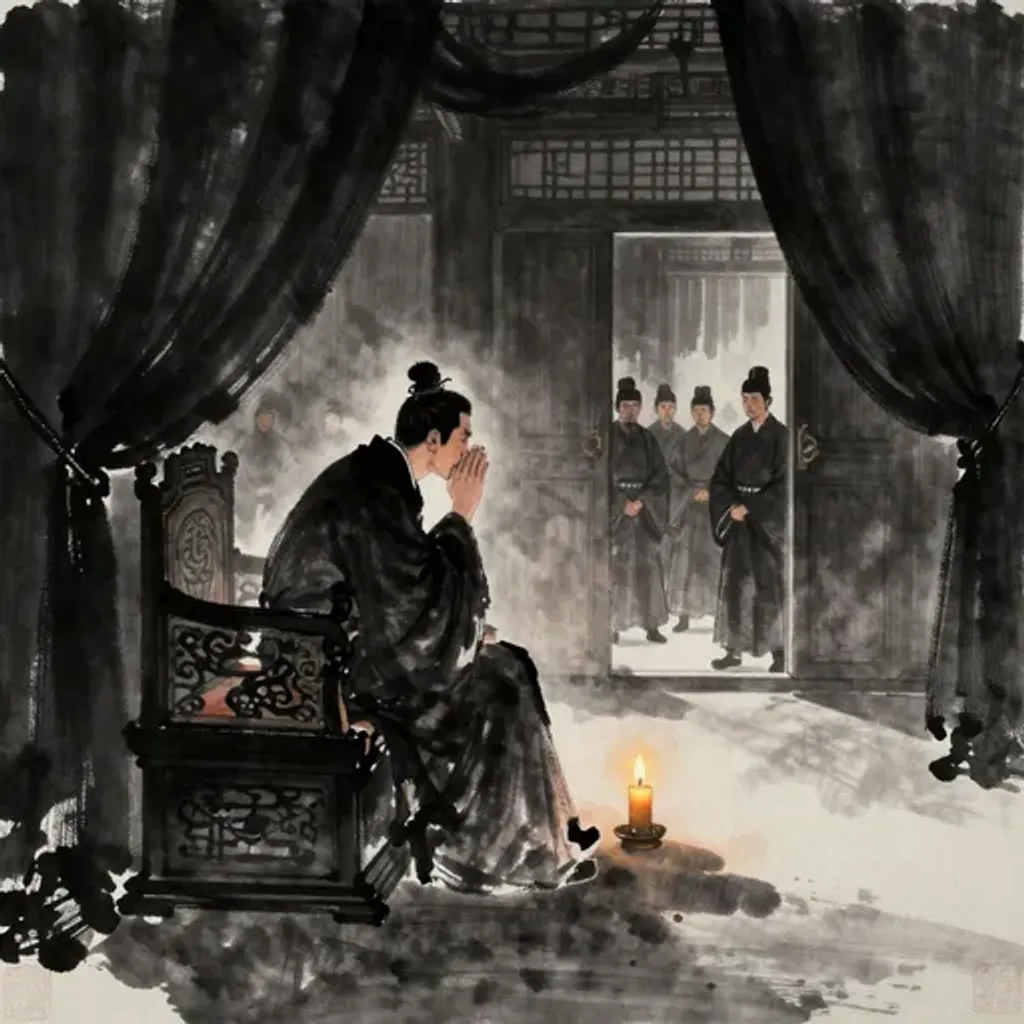
日闇不明,讒夫在堂;左辟疾瘁,君失其光。
The sun grows dark and gives no light, a slanderer stands in the hall; officials are struck by wasting illness -- the lord loses his brilliance.
— Jiao Yanshou, Yilin (Forest of Changes), 1st century BC
Commentary
Wind over earth reveals what should be seen, but the sun is dimmed and cannot shine. Slanderers occupy the hall, poisoning the ruler's counsel. The loyal minister is driven aside, afflicted and exhausted, while the lord loses his radiance. The verse echoes a perennial theme of Chinese political poetry: when flatterers crowd the court, light itself is eclipsed. Heaven moving contrary to water — the image of Conflict — captures the structural opposition between what is true and what is spoken. From Contemplation to Conflict, clear-eyed observation discovers that the court's inner workings are already adversarial, and the ruler, blinded by calumny, has forfeited the luminous authority that observation was meant to cultivate.
觀 → 師
Hexagram 20 → Hexagram 7: The Army
Changing lines: 2, 5, 6
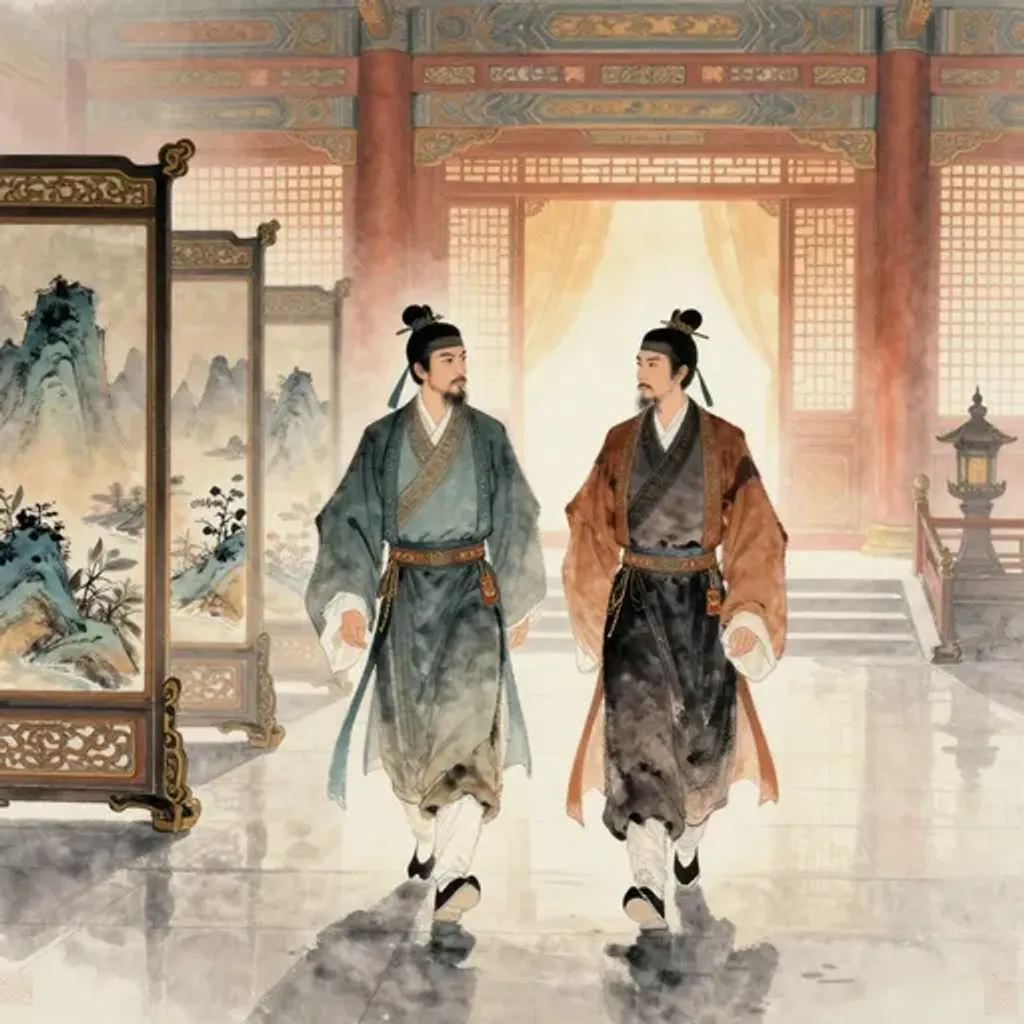
王孫季子,相與孝友。明允篤誠,昇擢薦舉;為國幹輔。
The royal grandson and young lord, together practice filial devotion and friendship. Bright, trustworthy, and deeply sincere, they are promoted and recommended -- pillars of the state.
— Jiao Yanshou, Yilin (Forest of Changes), 1st century BC
Commentary
Wind sweeps the earth and the observer discerns worthy men. Princes and younger sons practice mutual reverence and filial devotion. Bright, trustworthy, and earnest, they are recommended and promoted to become pillars of the state. The verse celebrates the ideal of meritocratic selection: virtue recognized and elevated to serve the commonwealth. Earth over water forms the Army: water contained within the earth represents disciplined masses under capable command. From Contemplation to the Army, the transformation shows observation fulfilling its highest purpose — identifying the right people, placing them where they can serve. The sage-ruler's gaze becomes the state's organized strength.
觀 → 比
Hexagram 20 → Hexagram 8: Holding Together
Changing lines: 6
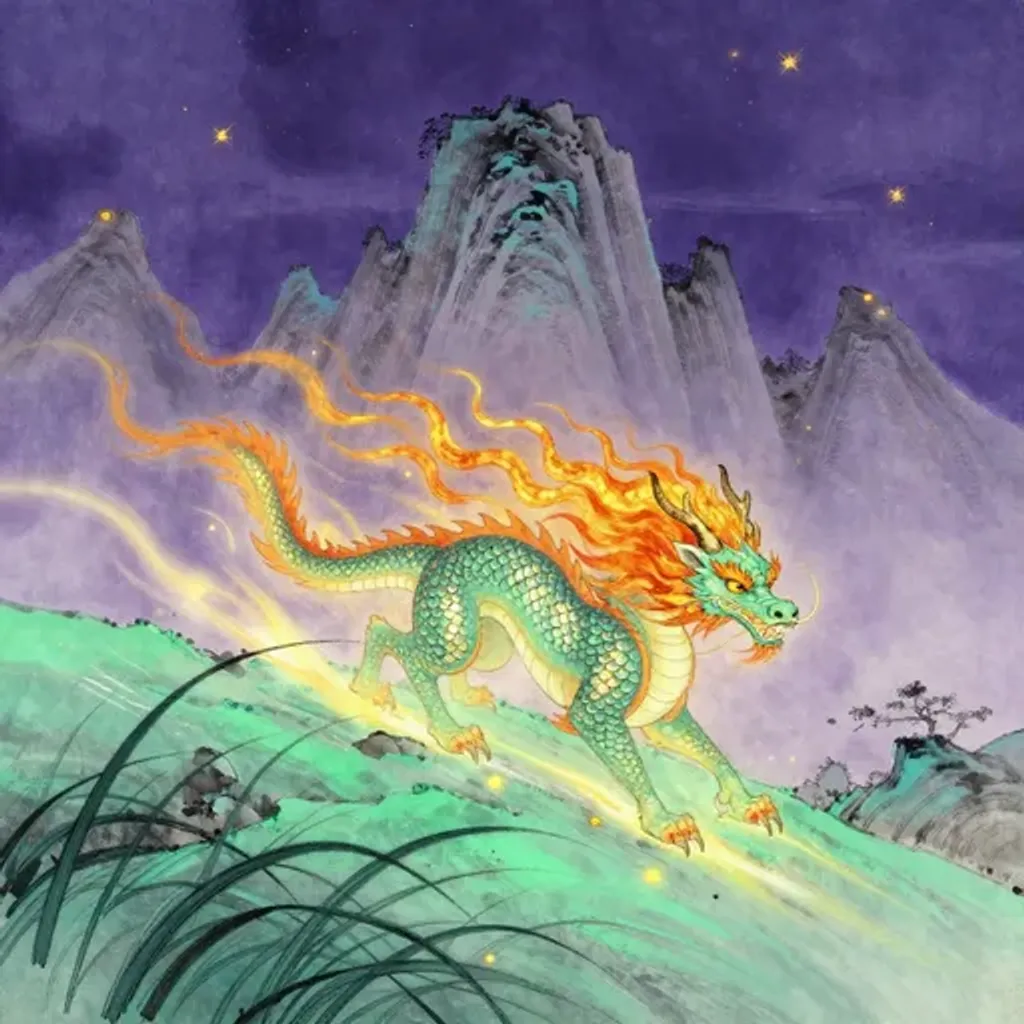
麟趾龍身,日取三千;南上蒼梧,與福為昏。道里夷易,安全無患。
Qilin hooves and dragon body, daily acquiring three thousand; southward ascending Cangwu, it weds with fortune. The road is smooth and easy -- safe and free from peril.
— Jiao Yanshou, Yilin (Forest of Changes), 1st century BC
Commentary
Wind over earth contemplates an auspicious journey southward. A creature with a qilin's hooves and a dragon's body earns three thousand a day, then travels south to Cangwu — the remote southern region where Emperor Shun died and was buried — and there weds good fortune itself. The road is smooth and level; safety prevails without danger. Cangwu, at the far reaches of civilization, represents the ultimate boundary. The qilin-dragon hybrid merges two supreme auspicious symbols. From Contemplation to Holding Together, the transformation shows how careful observation identifies the bonds worth forming: water upon earth gathers naturally, and the one who reads the signs correctly finds alliance even at the edge of the known world.
觀 → 小畜
Hexagram 20 → Hexagram 9: Small Taming
Changing lines: 1, 2, 3
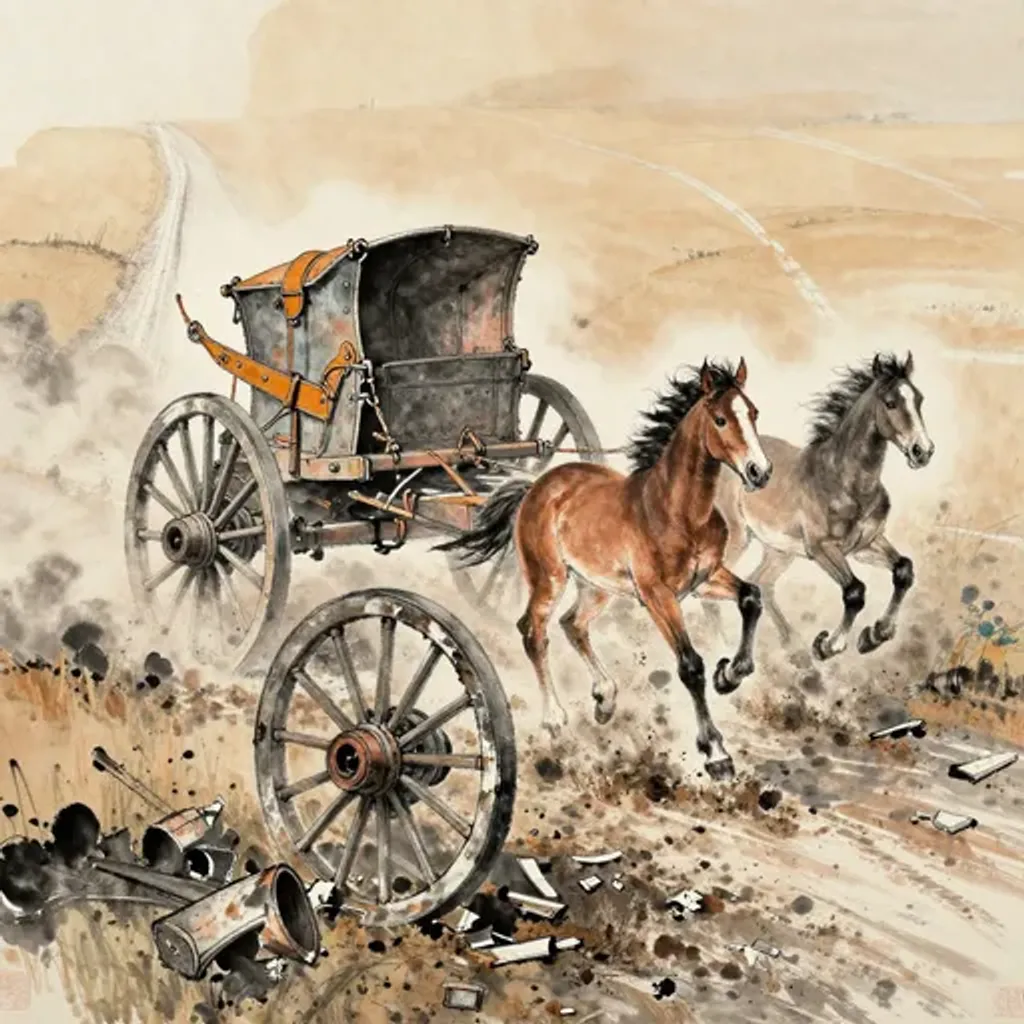
三子成駒,破其堅車;輪載空輿,後時失期。
Three colts become stallions and shatter the stout cart; wheels carry an empty carriage -- the hour is missed, the deadline lost.
— Jiao Yanshou, Yilin (Forest of Changes), 1st century BC
Commentary
Wind over earth observes the ruin of a vehicle. Three colts grow unruly and shatter the sturdy cart; now only bare wheels carry an empty carriage, arriving too late and missing its appointment. The verse captures the folly of entrusting power to those not yet trained to bear it. Young horses, full of raw energy but lacking discipline, destroy the very conveyance they should serve. Wind above heaven in Small Taming gently restrains creative force without breaking it. From Contemplation to Small Taming, observation reveals that strength must be tempered gradually. Unbridled vigor wrecks the structure it inhabits, and the missed deadline cannot be recovered.
觀 → 履
Hexagram 20 → Hexagram 10: Treading
Changing lines: 1, 2, 4
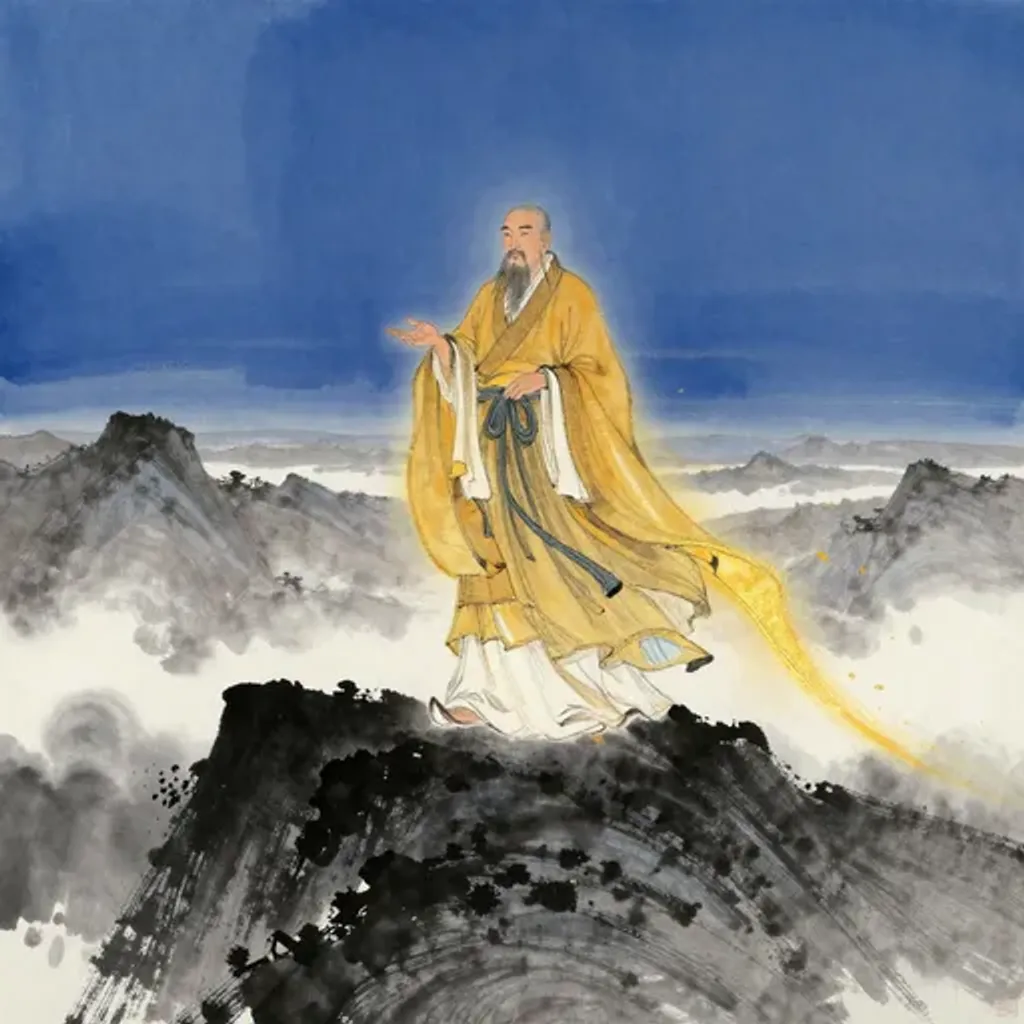
逐禍除患,道德神仙;遏惡萬里,常歡以安。
Driving out calamity and banishing misfortune, the Way, its virtue, and the immortals; evil held at bay for ten thousand miles -- ever joyful and at peace.
— Jiao Yanshou, Yilin (Forest of Changes), 1st century BC
Commentary
Wind over earth surveys a world made safe. Misfortune is chased away, calamity is expelled, and the Way of virtue shines like the immortals themselves. Evil is held at bay across ten thousand li, and constant joy brings lasting peace. The verse presents a vision of moral governance so thorough that its protective power extends beyond ordinary reach. Heaven above lake — the image of Treading — defines proper conduct by distinguishing high from low. From Contemplation to Treading, the observer's clarity becomes ethical action: to see rightly is to walk rightly, and one who treads the path of virtue banishes harm not through force but through the luminous certainty of proper conduct.
觀 → 泰
Hexagram 20 → Hexagram 11: Peace
Changing lines: 1, 2, 3, 5, 6
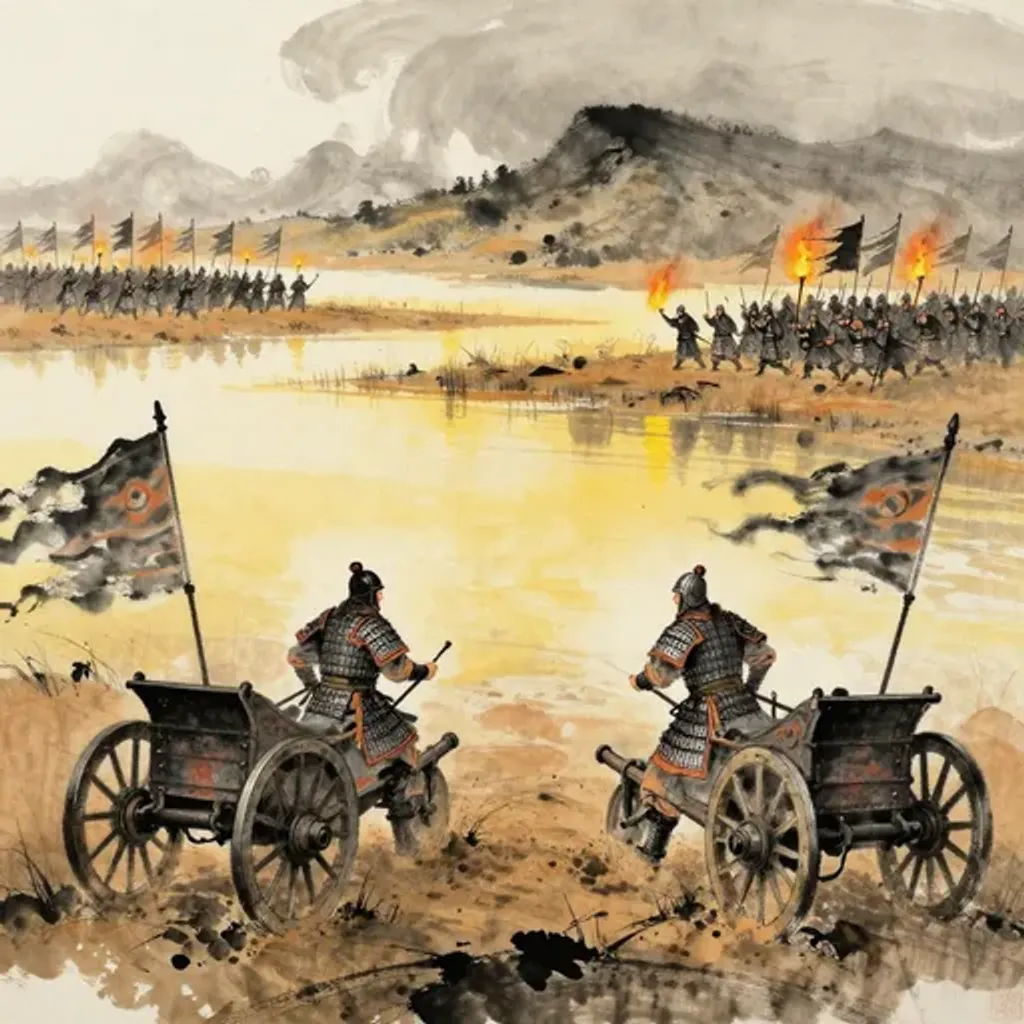
黃池之盟,吳晉爭強;勾踐為患,夷國不安。
At the covenant of Huangchi, Wu and Jin vied for dominance; Goujian became the scourge -- the foreign state knew no peace.
— Jiao Yanshou, Yilin (Forest of Changes), 1st century BC
Commentary
Wind over earth observes the grand theater of interstate rivalry. At the Conference of Huangchi in 482 BC, Wu and Jin contended fiercely for hegemony — King Fuchai of Wu and Duke Ding of Jin quarreled over precedence while their armies bristled. But far to the south, Goujian of Yue, who had spent years sleeping on brushwood and tasting gall, seized the moment to strike Wu's undefended heartland. The state that strained for glory abroad lost everything at home. Earth below heaven — the image of Peace — shows heaven and earth in proper exchange. From Contemplation to Peace, the transformation reveals the irony: true peace requires watching one's own foundations, not chasing prestige at distant conferences.
觀 → 否
Hexagram 20 → Hexagram 12: Standstill
Changing lines: 4
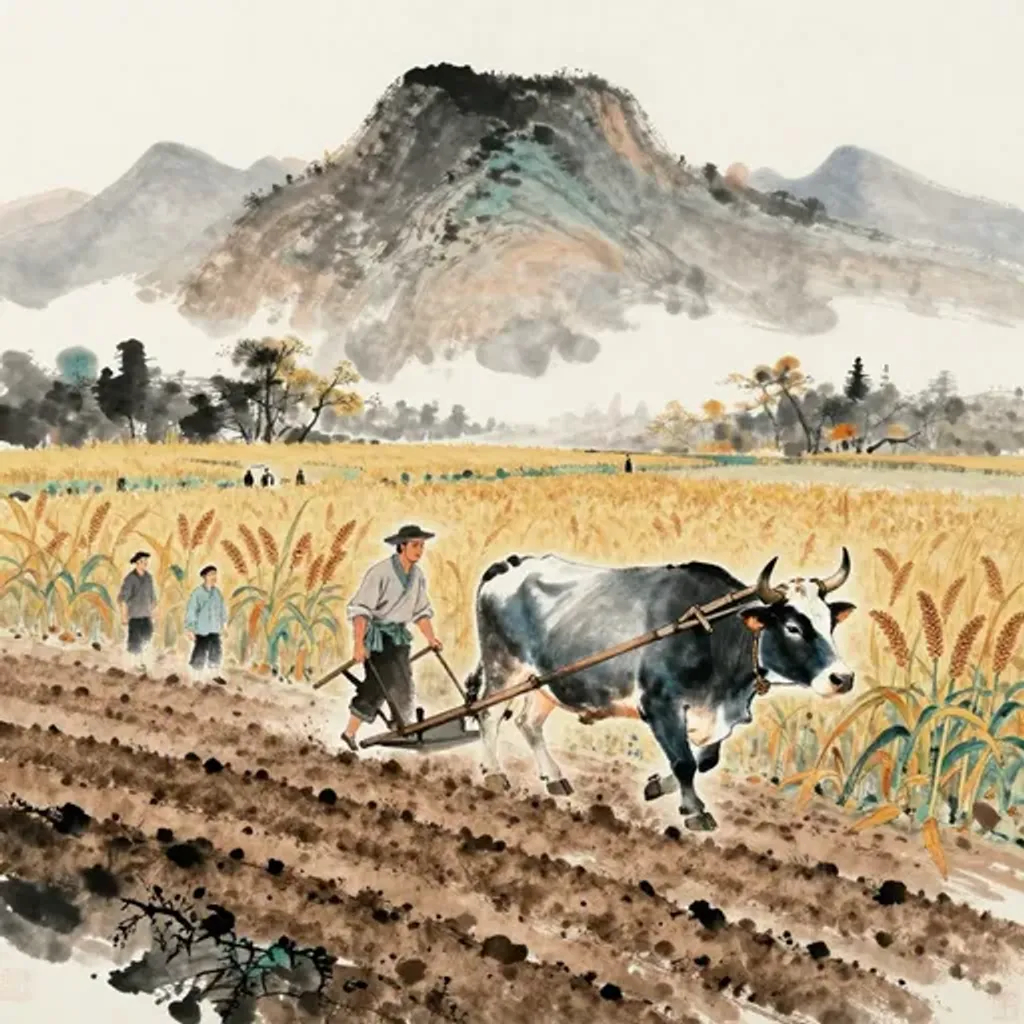
青牛白咽,呼我俱田;歷山之下,可以多耕。歲露時節,人民安寧。
A blue-grey ox with a white throat calls us together to the fields; below Mount Li, there is ample ground to plow. The seasons reveal their tidings -- the people dwell in peace.
— Jiao Yanshou, Yilin (Forest of Changes), 1st century BC
Commentary
Wind over earth contemplates a pastoral idyll that inverts expectation. A green ox with white throat calls out to join the plowing; beneath Mount Li — where Emperor Shun once farmed as a commoner — the fields stretch wide for abundant cultivation. The seasonal rains arrive on time, and the people dwell in peace. Mount Li carries deep resonance: Shun's virtue was so potent that even while tilling soil as a nobody, neighbors ceased quarreling over field boundaries. Heaven and earth failing to meet forms Standstill, yet this verse reverses the expected reading. From Contemplation to Standstill, the paradox unfolds: sometimes withdrawal from political striving brings truer prosperity than engagement. The farmer at Li prospers precisely because he stands still.
觀 → 同人
Hexagram 20 → Hexagram 13: Fellowship
Changing lines: 1, 3, 4
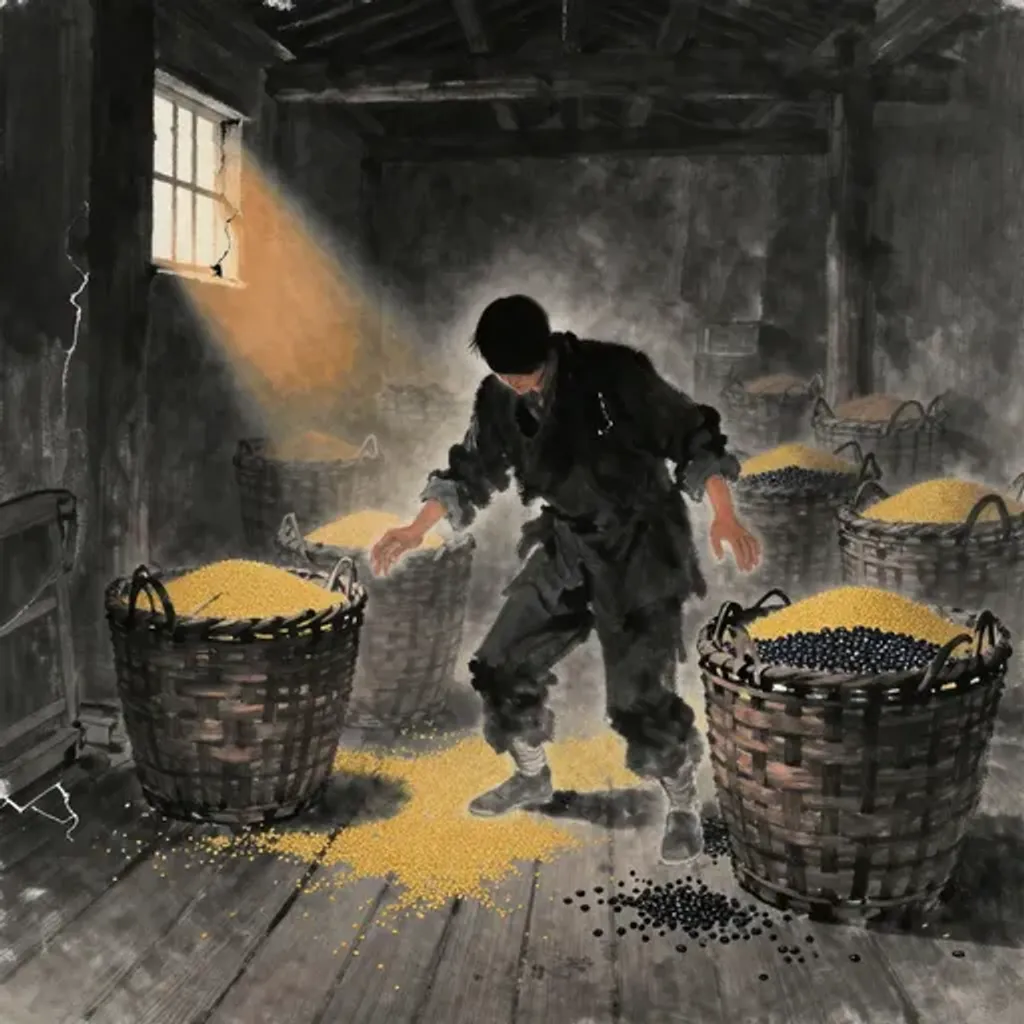
有頭無目,不見菽粟;消耗為疾,三年不復。
Having a head but no eyes, one cannot see the millet and beans; waste and decline turn to illness -- for three years there is no recovery.
— Jiao Yanshou, Yilin (Forest of Changes), 1st century BC
Commentary
Wind over earth gazes upon a figure who cannot see. Having a head but no eyes, unable to distinguish even beans from millet — the most basic grain — this blindness is not physical but perceptive. Wasting disease consumes the body, and for three years there is no recovery. The verse depicts a failure of discernment so total that nourishment itself becomes invisible. Heaven and fire together form Fellowship, which classifies and distinguishes all things. From Contemplation to Fellowship, the transformation is bitterly ironic: the hexagram that should bring clarity through shared understanding meets a subject incapable of the most elementary perception. Without the ability to see, no fellowship is possible, and isolation festers into chronic decay.
觀 → 大有
Hexagram 20 → Hexagram 14: Great Possession
Changing lines: 1, 2, 3, 4, 5
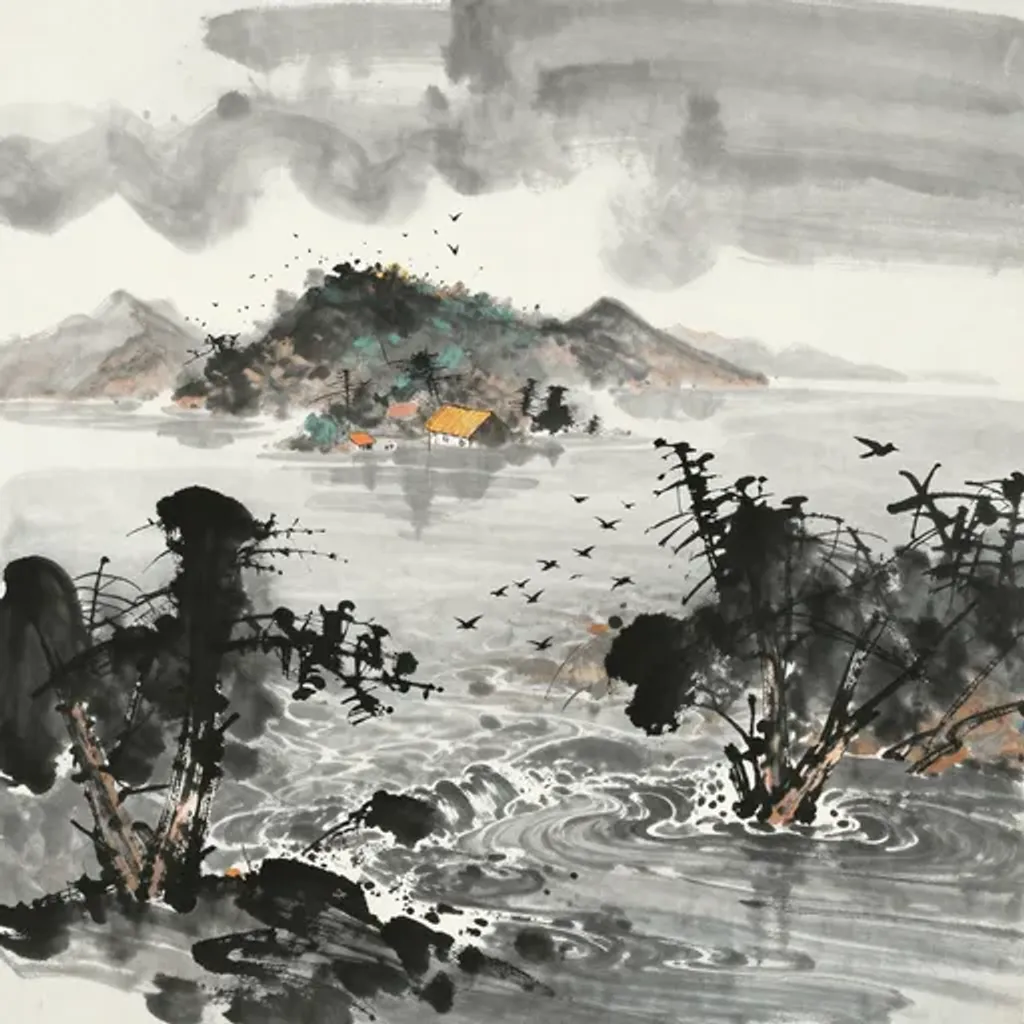
山沒丘浮,陸為水魚;燕雀無巢,民無室廬。
Mountains are drowned and hills set adrift, dry land becomes fish-water; swallows and sparrows have no nest -- the people have no dwelling.
— Jiao Yanshou, Yilin (Forest of Changes), 1st century BC
Commentary
Wind over earth surveys a landscape transformed by catastrophic flood. Mountains vanish beneath the water while hills float like rafts; dry land becomes a kingdom of fish. Sparrows and swallows lose their nests; the people lose their homes. The imagery inverts the natural order completely — mountains should stand firm, land should support life, birds should roost safely. Fire in heaven forms Great Possession, a hexagram of supreme abundance and illumination. From Contemplation to Great Possession, the contrast is devastating: the observer sees not abundance but annihilation. When the elemental order is overturned, even heaven's fire illuminates only ruin. Prosperity becomes meaningful only when the foundations beneath it remain intact.
觀 → 謙
Hexagram 20 → Hexagram 15: Modesty
Changing lines: 3, 5, 6
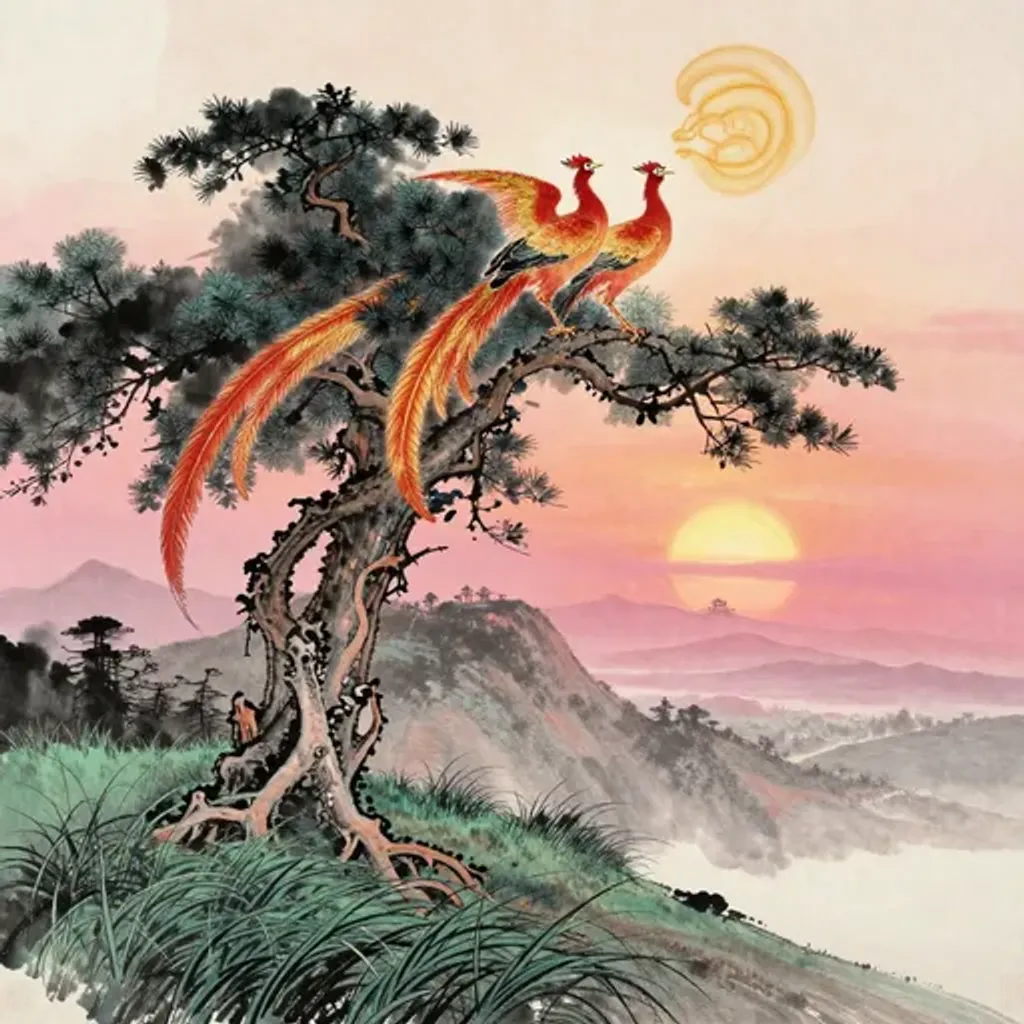
高崗鳳凰,朝陽梧桐;噰噰喈喈,菶菶萋萋。陳辭不多,以告孔嘉。
Phoenixes on the high ridge, morning sun on the paulownia; they cry yong-yong, they call jie-jie, lush and verdant all around. Few words are offered in address -- yet how excellently auspicious.
— Jiao Yanshou, Yilin (Forest of Changes), 1st century BC
Commentary
Wind over earth lifts the gaze toward a lofty ridge where phoenixes perch in morning sun, paulownia trees luxuriant beneath them. Their harmonious cries — yongong, jiejie — fill the air, while the trees flourish in dense, verdant splendor. The verse draws directly from the Shijing ode 'Juan A,' celebrating the phoenix appearing only where sage-rule prevails, nesting solely in paulownia. The offering of words is spare and modest, yet pronounced supremely auspicious. Earth over mountain, the image of Modesty, keeps the mountain hidden within the earth. From Contemplation to Modesty, observation discovers that true majesty conceals itself: the phoenix settles not on the highest peak but where virtue grows quietly, and the most auspicious message arrives in few words.
觀 → 豫
Hexagram 20 → Hexagram 16: Enthusiasm
Changing lines: 4, 5, 6
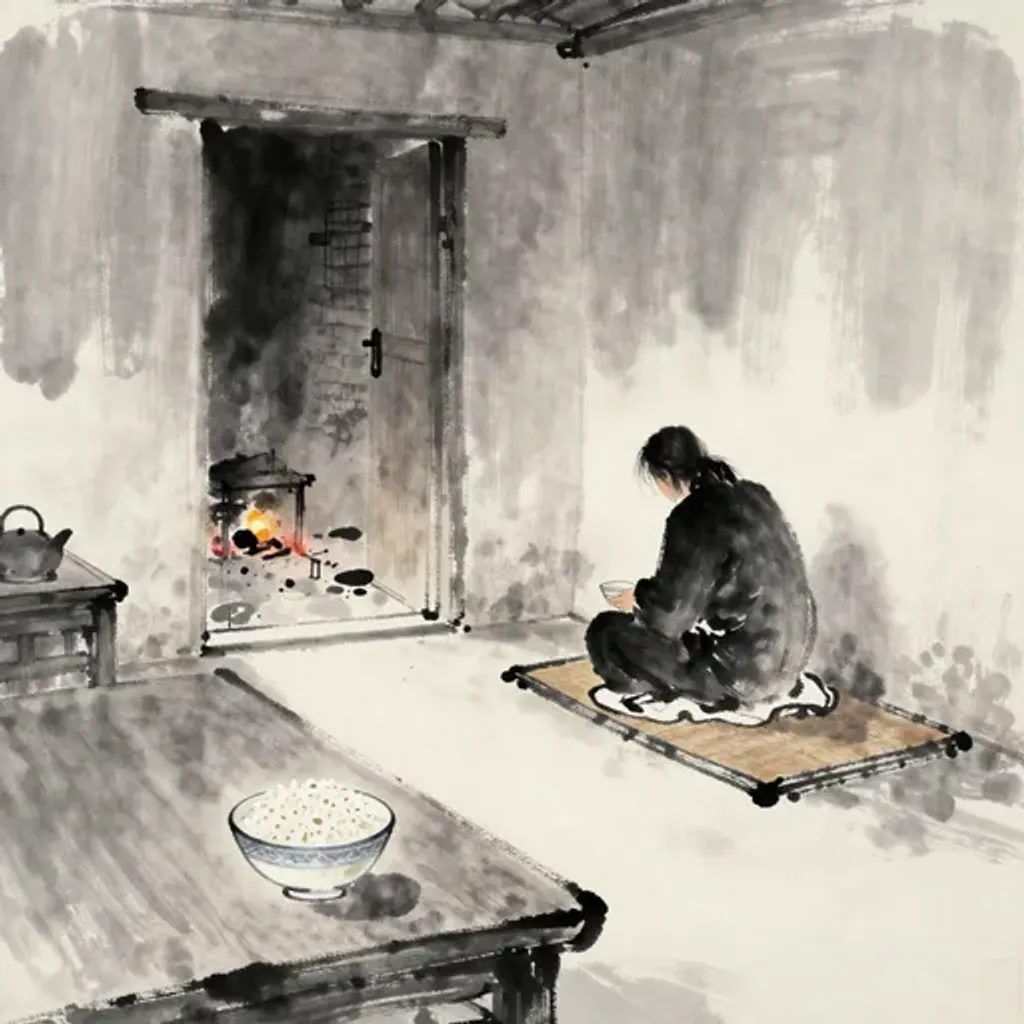
鰥寡獨宿,憂動胸臆;莫與宿食。
Bereft and alone, sleeping without a partner; worry stirs within the breast -- with none to share a meal or rest.
— Jiao Yanshou, Yilin (Forest of Changes), 1st century BC
Commentary
Wind over earth contemplates a scene of utter solitude. A widower sleeps alone, grief stirring in his chest, with no one to share a meal or a night's rest. The verse is stark domestic desolation — not grand tragedy but the quiet erosion of a life without companionship. Thunder bursting from the earth forms Enthusiasm, which moves through joy and communal celebration. From Contemplation to Enthusiasm, the contrast is poignant: the hexagram that should inspire collective exuberance meets a solitary figure for whom joy is inaccessible. Enthusiasm requires community; the widower's isolation makes the thunder within the earth a tremor felt by no one.
觀 → 隨
Hexagram 20 → Hexagram 17: Following
Changing lines: 1, 4, 6
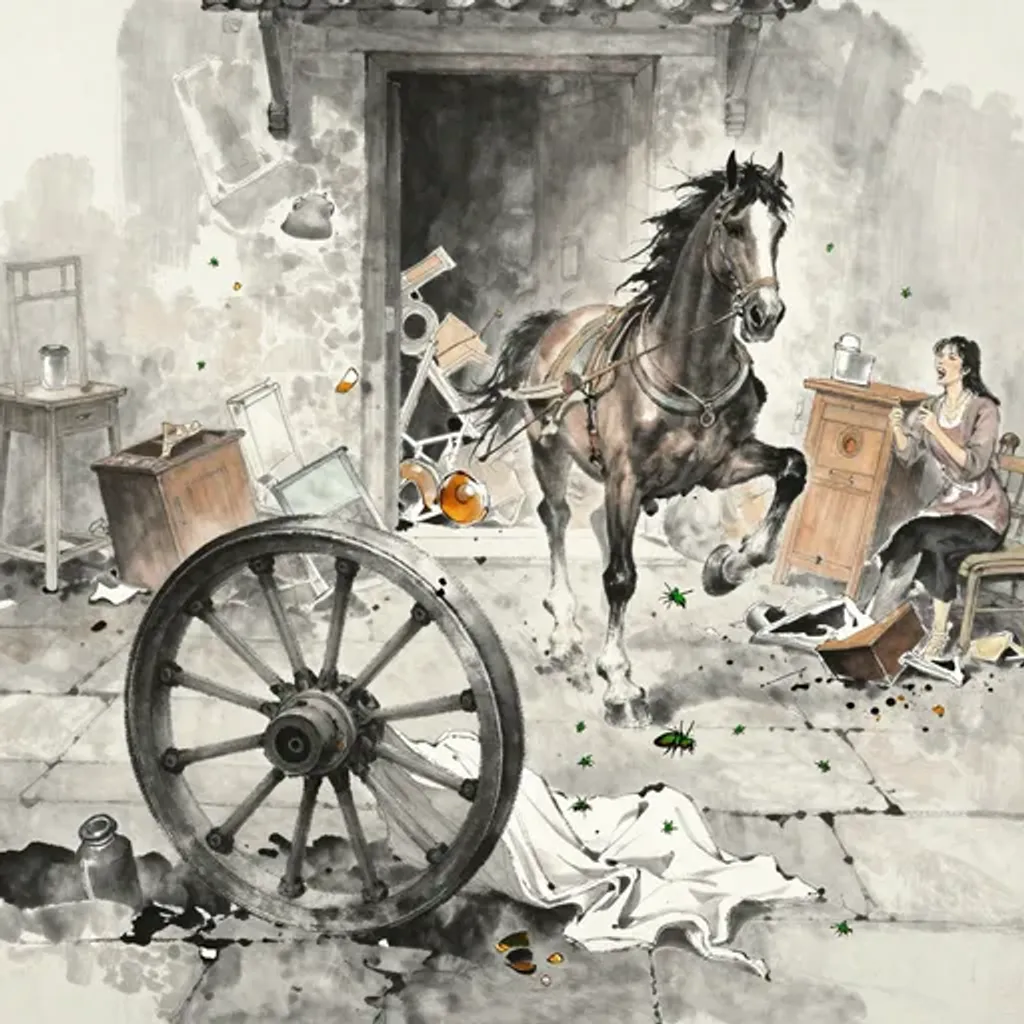
馬躓破車,惡婦破家;青蠅汙白,共子離居。
A stumbling horse wrecks the cart, a wicked wife wrecks the home; green flies stain the white -- Gongzi is driven from his dwelling.
— Jiao Yanshou, Yilin (Forest of Changes), 1st century BC
Commentary
Wind over earth observes a household falling apart. A stumbling horse wrecks the cart; a malicious wife ruins the family. Blue flies stain white silk — an image from the Shijing ode warning against slander — and parent and child are forced to live apart. The verse layers three parallel destructions: vehicular, domestic, and moral. The blue fly (qingying) allusion comes from the Xiao Ya section, where flies settle on white fabric as flatterers besmirch the innocent. Lake over thunder forms Following, which counsels yielding to the time. From Contemplation to Following, the lesson is bitter: following the wrong influence — the stumbling horse, the destructive spouse, the slanderer — leads not to harmony but to familial dissolution.
觀 → 蠱
Hexagram 20 → Hexagram 18: Work on the Decayed
Changing lines: 2, 3, 5
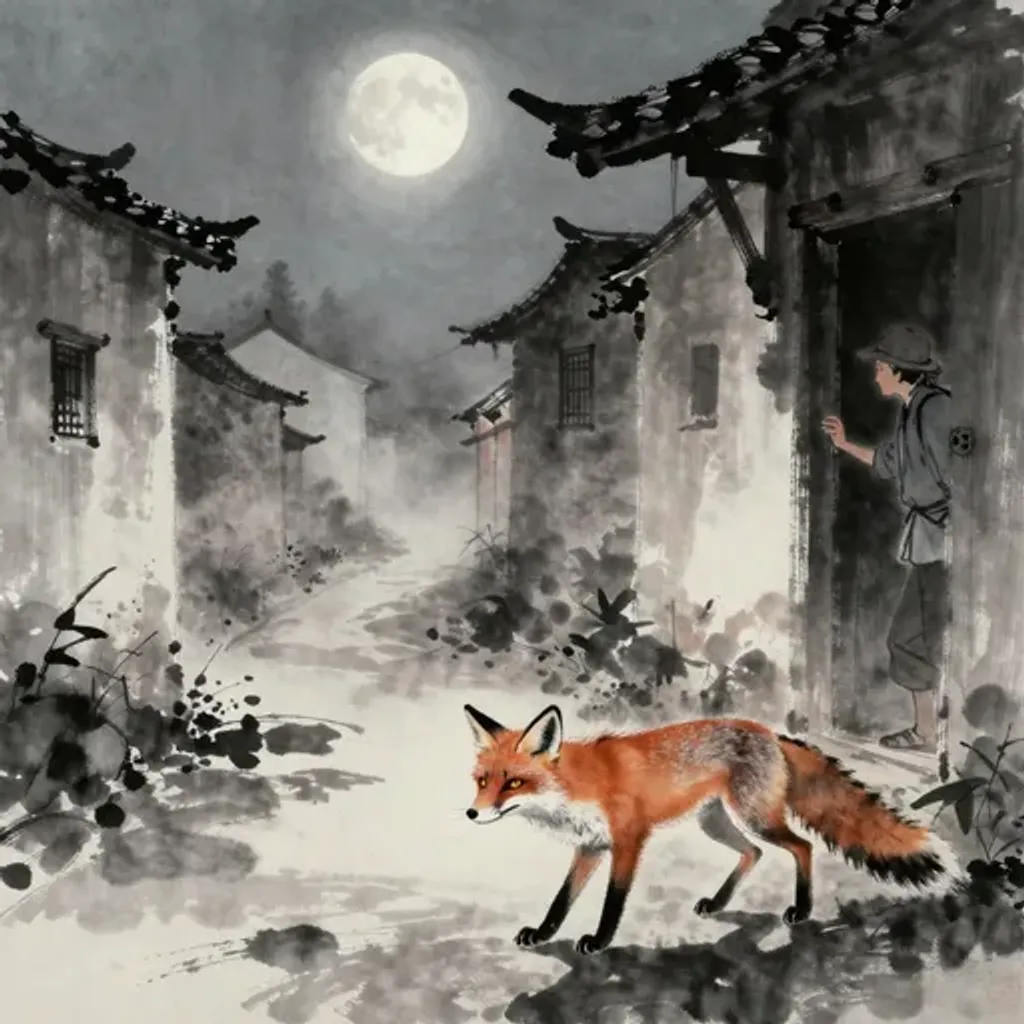
長女三嫁,進退不羞;逐狐作妖,行者離憂。
The elder daughter married thrice, advancing and retreating without shame; chasing the fox that works its sorcery -- the traveler departs in grief.
— Jiao Yanshou, Yilin (Forest of Changes), 1st century BC
Commentary
Wind over earth observes a woman of dubious repute. The eldest daughter marries three times, advancing and retreating without shame. A fox is chased away as it works its sorcery, yet the traveler departs burdened with worry. The thrice-married eldest daughter and the fox-spirit share a common thread: boundaries transgressed without remorse. Mountain over wind forms Work on the Decayed, which confronts corruption inherited from the previous generation. From Contemplation to Work on the Decayed, the observer witnesses moral rot that demands renovation. The eldest daughter's shamelessness and the fox's mischief are symptoms of a household whose norms have eroded, requiring the courage to address what has been neglected too long.
觀 → 臨
Hexagram 20 → Hexagram 19: Approach
Changing lines: 1, 2, 5, 6
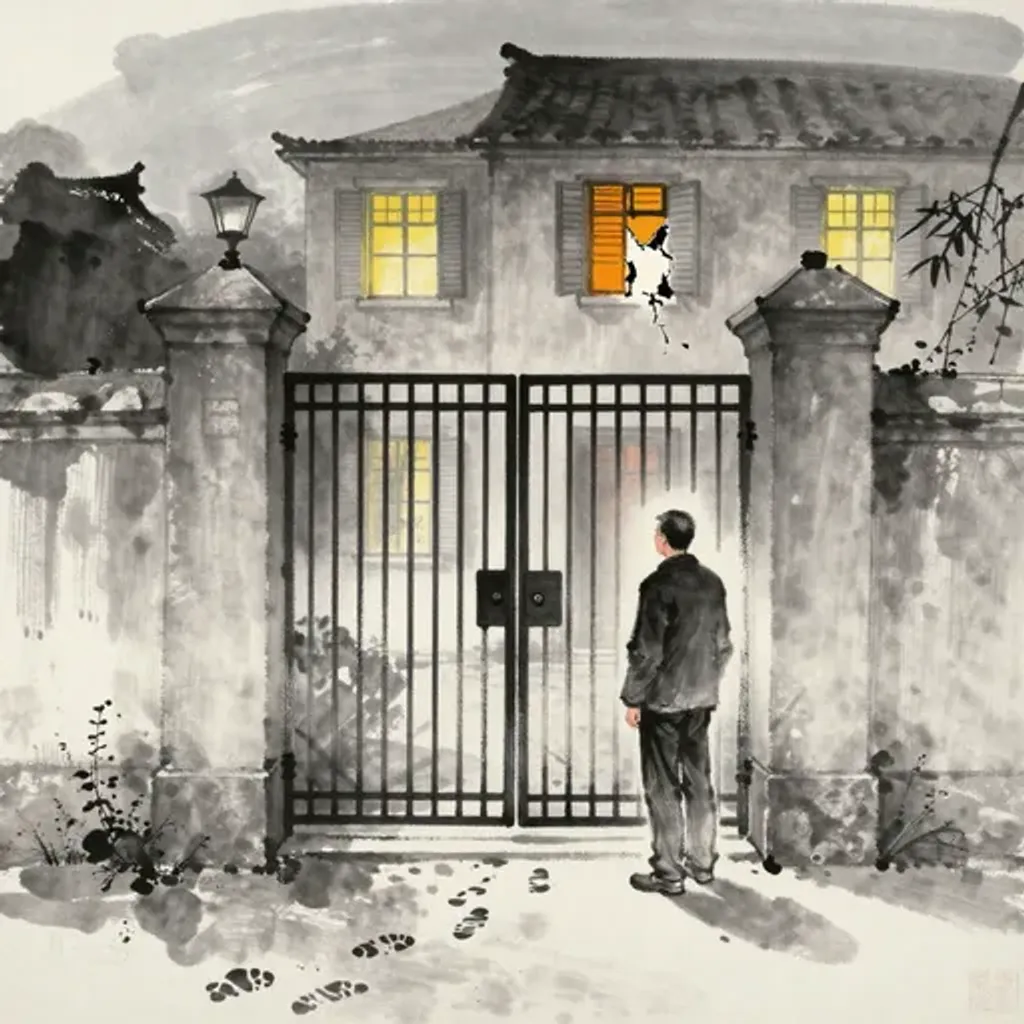
人無定法,緩除才出。地雄走歸,陽不制陰;男失其家。
People have no fixed method, the slow are removed and the able come forth. The earth-hero flees for home; yang cannot govern yin -- the man loses his household.
— Jiao Yanshou, Yilin (Forest of Changes), 1st century BC
Commentary
Wind over earth watches governance lose its moorings. People have no fixed laws; measures are loosened and laxly applied. The male pheasant flees, yang fails to govern yin, and the man loses his household. The verse paints a world of inverted authority: where rules should be firm they dissolve, where masculine principle should lead it retreats. Earth over lake forms Approach, which signifies authority drawing near from above. From Contemplation to Approach, the irony cuts: the hexagram of benevolent oversight meets a situation where oversight has collapsed entirely. The approaching authority finds nothing to govern because the man has already abandoned his post, and the household has no center to hold.
觀 → 觀
Hexagram 20 → Hexagram 20: Contemplation
No changing lines — the hexagram is unchanged
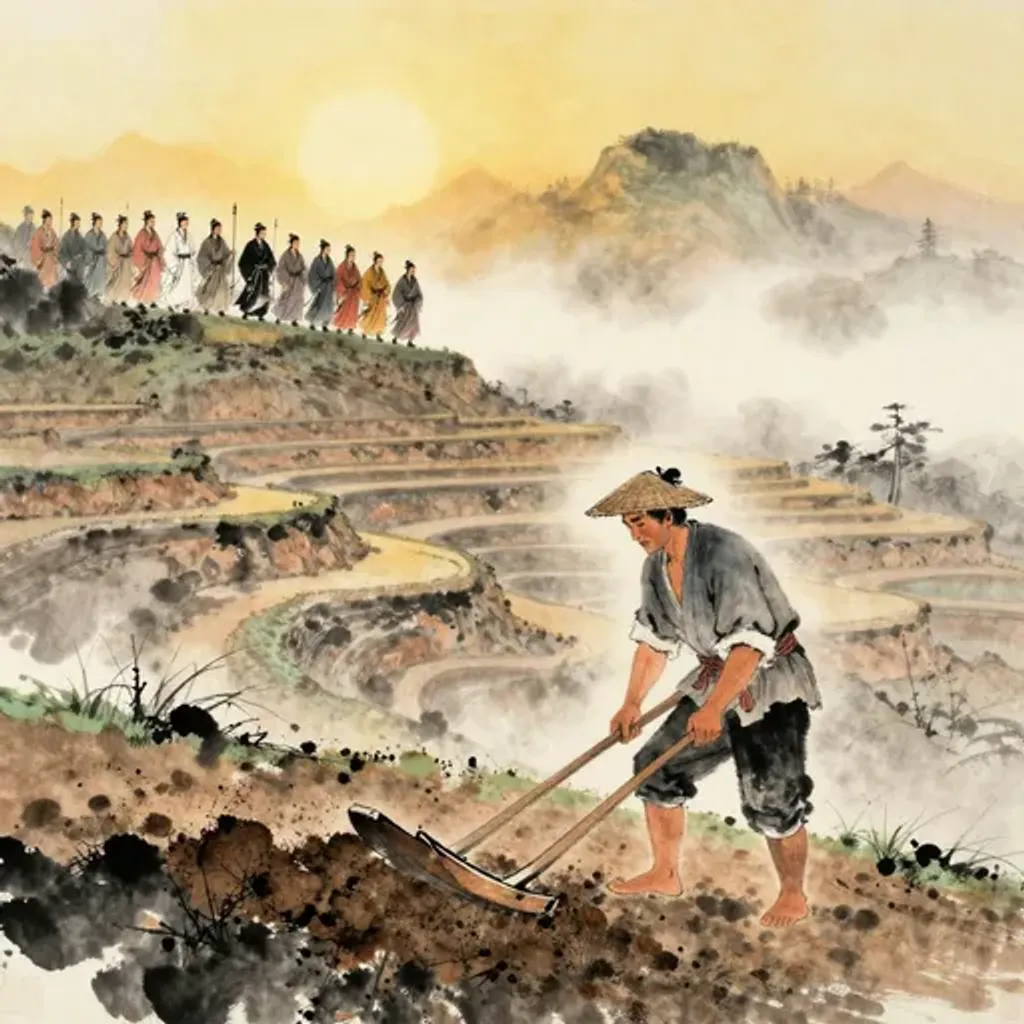
歷山之下,虞舜所處,躬耕致孝,名聞四海。為堯所薦,纘位天子。
Below Mount Li, where Shun of Yu once dwelt; he plowed the land himself in filial devotion, and his name was heard across the four seas. Recommended by Yao, he succeeded to the throne of the Son of Heaven.
— Jiao Yanshou, Yilin (Forest of Changes), 1st century BC
Commentary
Wind over earth, doubled: Contemplation gazing upon itself. Beneath Mount Li, Shun the humble farmer tills the soil and practices supreme filial piety. His renown spreads across the four seas despite his lowly station. Emperor Yao hears of him, recommends him, and Shun ascends to the throne of the Son of Heaven. According to tradition, Shun's father Gu Sou was blind and cruel, his stepmother malicious, yet Shun served them without resentment until his virtue became impossible to conceal. From Contemplation to Contemplation, the pattern is self-referential: the observer becomes the observed. Shun's quiet cultivation at Li was itself a form of contemplation that drew heaven's gaze downward, transforming the watcher into the watched, the farmer into the sovereign.
觀 → 噬嗑
Hexagram 20 → Hexagram 21: Biting Through
Changing lines: 1, 4, 5
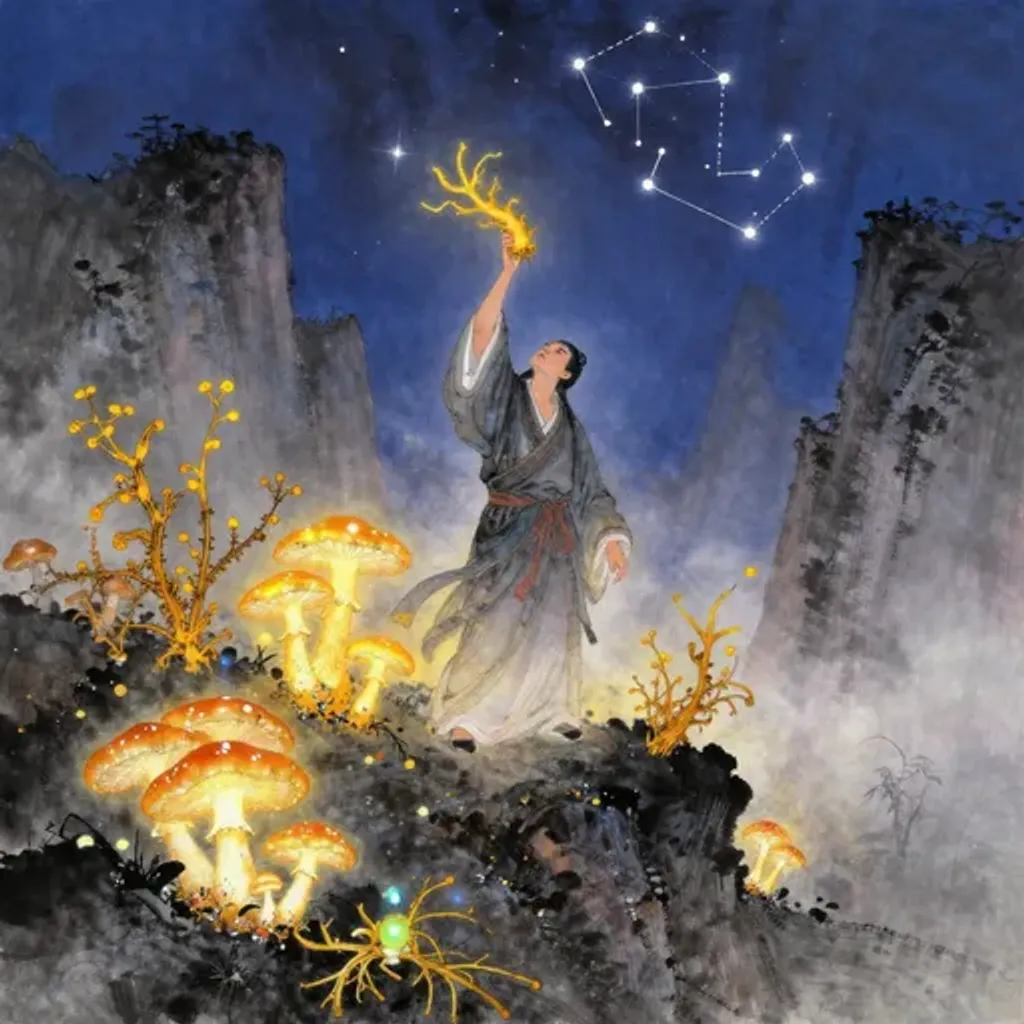
茹芝餌黃,飲食玉英;與神流通,長無憂凶。
Eating lingzhi and swallowing the golden elixir, drinking the jade essence; communing freely with the spirits -- long free from worry and ill fortune.
— Jiao Yanshou, Yilin (Forest of Changes), 1st century BC
Commentary
Wind over earth opens a vision of Daoist cultivation. One eats lingzhi mushrooms and yellow essence, drinks the jade nectar of heaven, and communes freely with the spirits, forever free from worry and misfortune. The verse evokes the longevity traditions of Han-era fangshi practitioners who sought immortality through herbal elixirs and spiritual communion. Lingzhi and jade essence are staples of the materia medica for transcendence. Fire over thunder forms Biting Through, which enforces order by removing obstructions. From Contemplation to Biting Through, the transformation suggests that spiritual nourishment clears the channel between the human and divine: what once obstructed is bitten through, and the practitioner flows unimpeded into communion with the numinous.
觀 → 賁
Hexagram 20 → Hexagram 22: Grace
Changing lines: 1, 3, 5
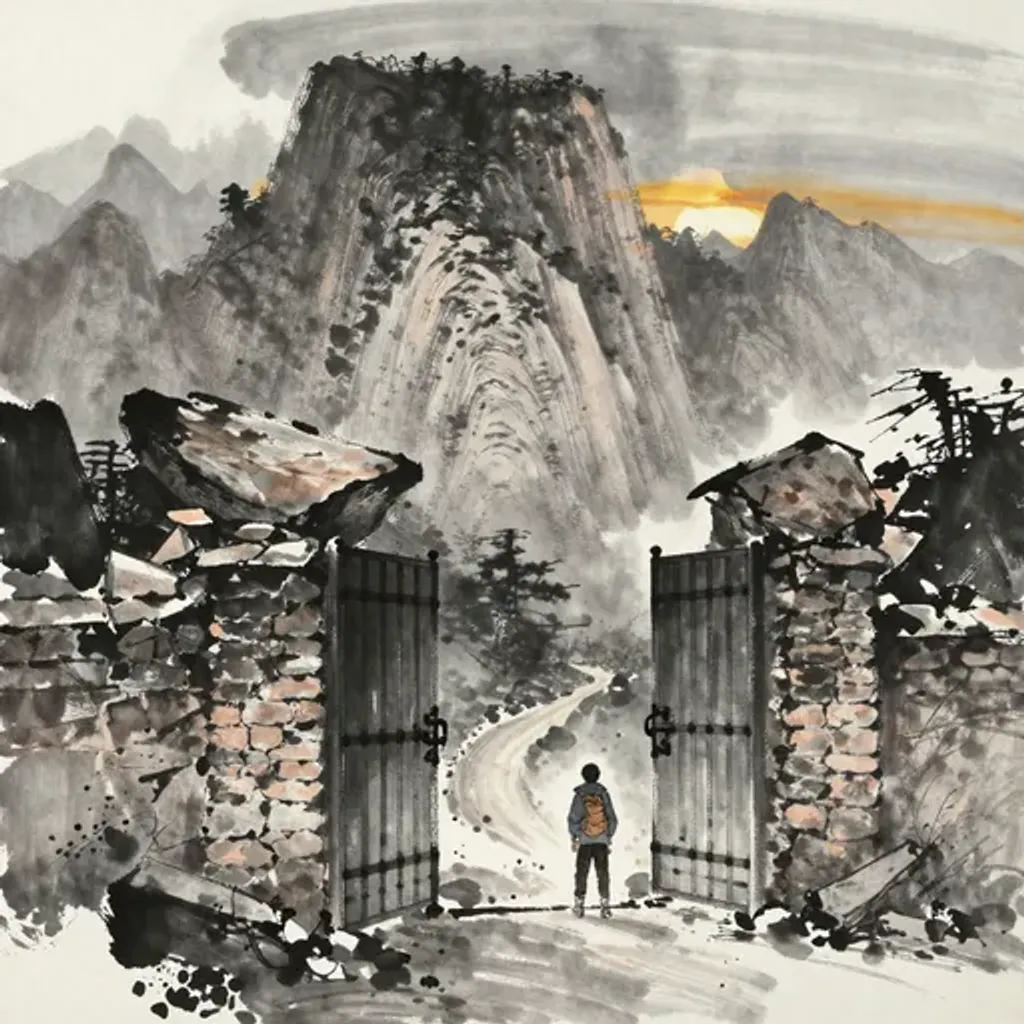
東行無門,西出華山;道塞畏難,遊子為患。
Eastward there is no gate, westward one exits toward Hua Mountain; the road is blocked and the pass forbidding -- the traveler is beset by peril.
— Jiao Yanshou, Yilin (Forest of Changes), 1st century BC
Commentary
Wind over earth observes a traveler trapped between impassable routes. Eastward there is no gate; westward Mount Hua blocks the way. Roads are choked with hazards, and the wanderer becomes a source of trouble. Mount Hua, the Western Sacred Mountain, is notoriously sheer — its single narrow path was proverbial for danger. The verse captures a figure hemmed in on every side, unable to advance in any direction. Mountain over fire forms Grace, which adorns and clarifies but cautions against rash judgment. From Contemplation to Grace, the irony emerges: beauty and form depend on finding the right path, but when all paths are closed, adornment becomes irrelevant. The traveler's predicament strips away ornament and leaves only obstruction.
觀 → 剝
Hexagram 20 → Hexagram 23: Splitting Apart
Changing lines: 5
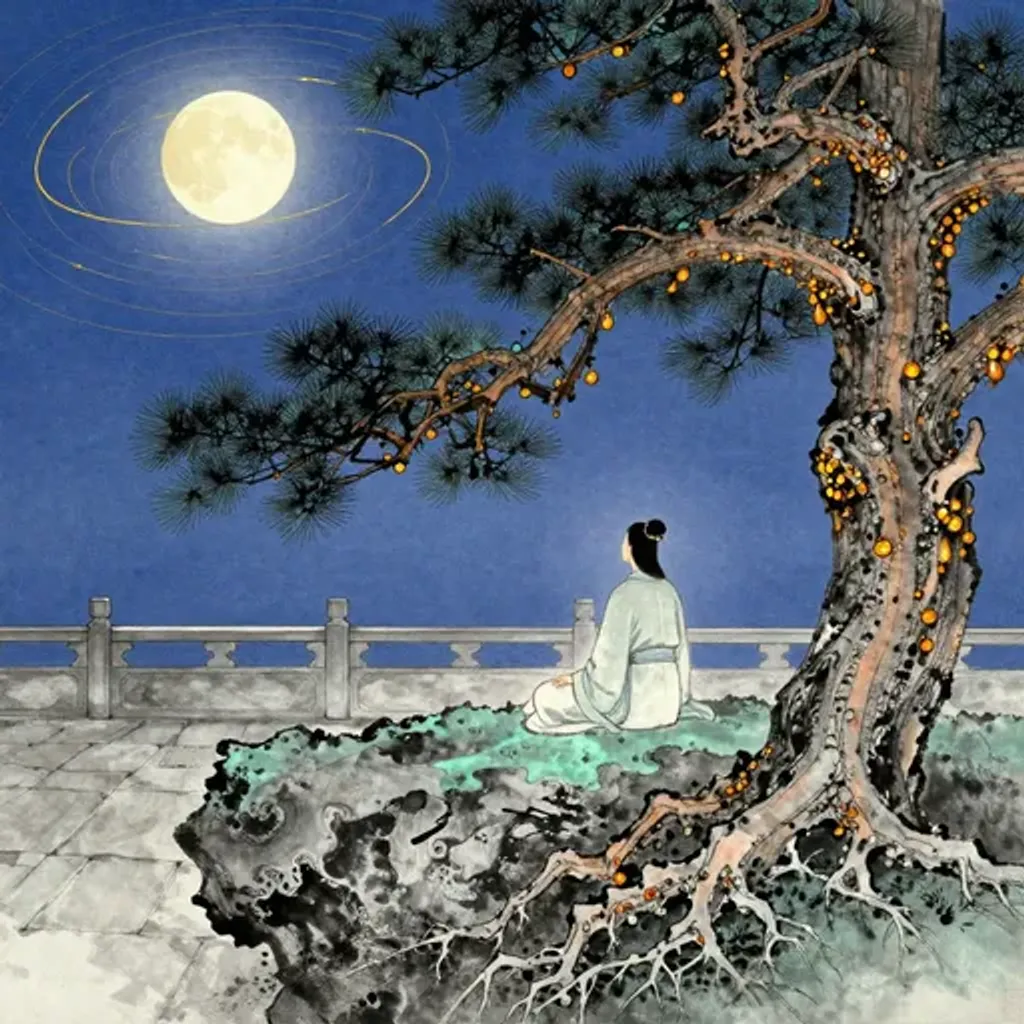
壽如松喬,與日月俱;常安康樂,不罹禍憂。
Long-lived as Song and Qiao, enduring alongside sun and moon; ever at peace and in good health, never suffering misfortune or worry.
— Jiao Yanshou, Yilin (Forest of Changes), 1st century BC
Commentary
Wind over earth contemplates a vision of immortal longevity. Life stretches as long as Chisongzi and Wang Qiao — the legendary Daoist immortals — enduring alongside the sun and moon. Constant peace and well-being prevail, with neither calamity nor sorrow. The two immortals, always mentioned together, represent transcendence of mortal limits: Chisongzi was Rain Master of Shennong's age, Wang Qiao a Zhou prince who ascended to heaven. Mountain over earth forms Splitting Apart, which strips away all that is inessential. From Contemplation to Splitting Apart, the paradox is striking: the hexagram of dissolution meets a promise of eternal life. Perhaps immortality itself requires the stripping away of everything mortal — only what is essential survives the splitting.
觀 → 復
Hexagram 20 → Hexagram 24: Return
Changing lines: 1, 5, 6
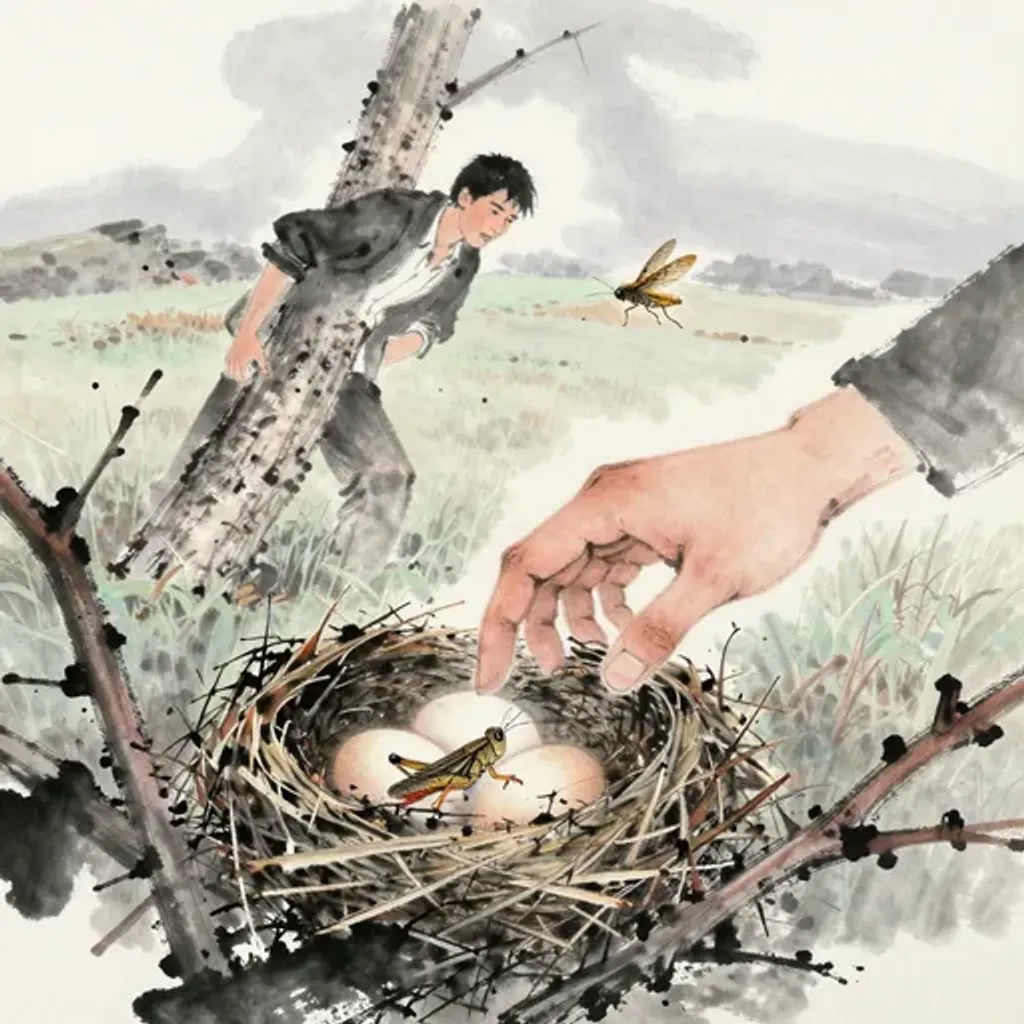
探鷇得螽,所願不喜;道宜小人,君子咎蹇。
Reaching into the nest one finds a grasshopper, not the prize one hoped for; the way favors the petty man -- the noble man meets obstruction and hardship.
— Jiao Yanshou, Yilin (Forest of Changes), 1st century BC
Commentary
Wind over earth searches a nest expecting fledglings but finds only locusts — a bitter disappointment. What was sought brings no joy, and the Way favors small-minded men while the gentleman stumbles into blame. The verse is one of inverted expectations: reaching into a bird's nest for chicks and pulling out insects is both comic and ominous. The road that should reward virtue instead rewards pettiness. Earth over thunder forms Return, where a single yang line re-enters at the bottom, signaling renewal. From Contemplation to Return, the transformation suggests that when current outcomes disappoint, one must return to fundamentals. The gentleman's path is temporarily blocked, but the turning point has already begun beneath the surface.
觀 → 无妄
Hexagram 20 → Hexagram 25: Innocence
Changing lines: 1, 4
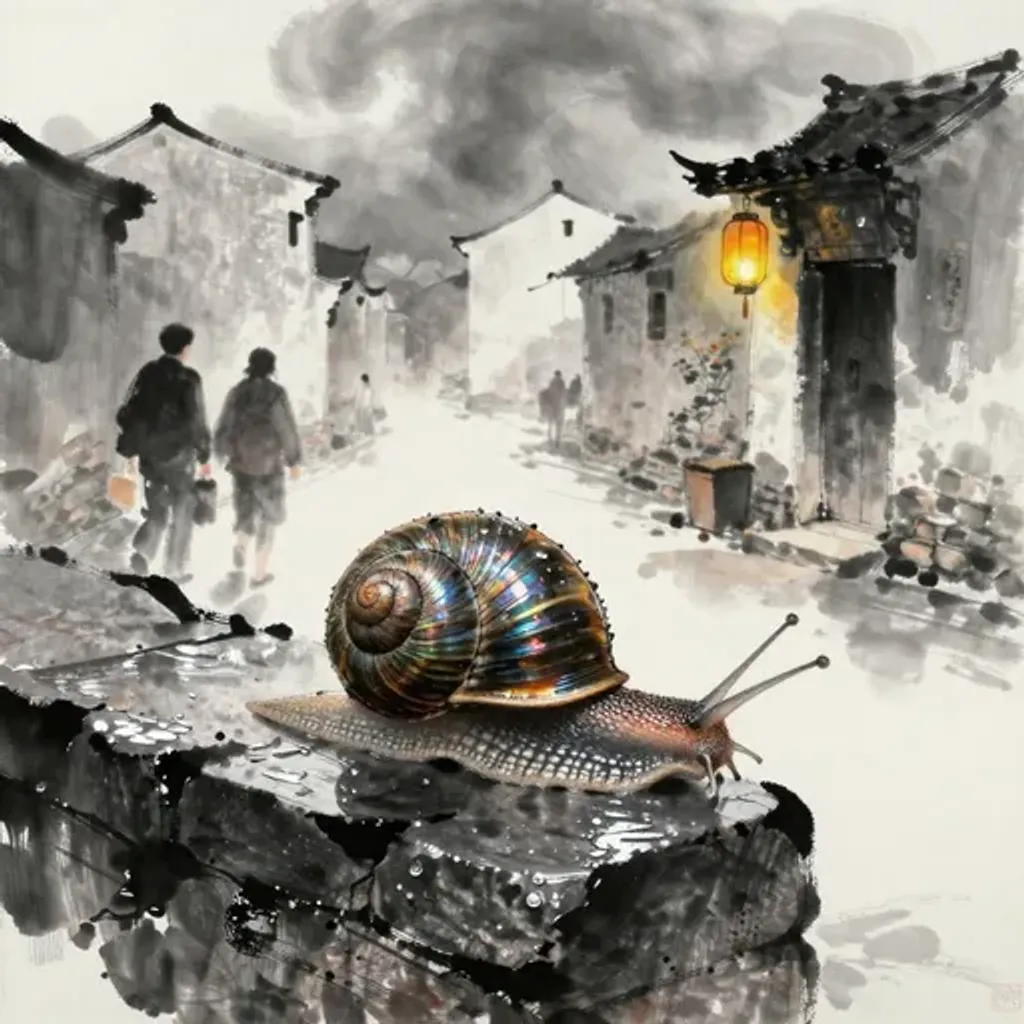
蝸螺生子,深目黑醜;雖飾相就,眾人莫取。
The snail bears its young, deep-eyed and dark and unsightly; though adorned and presented, no one among the crowd will take it.
— Jiao Yanshou, Yilin (Forest of Changes), 1st century BC
Commentary
Wind over earth observes a creature born ugly and unwanted. The snail bears offspring with deep-set eyes, dark and unsightly. Though adorned and presented, no one will take them. The verse is a parable of inherent nature resisting cosmetic remedy — no amount of decoration can overcome fundamental unattractiveness. Heaven over thunder forms Innocence, which insists on acting from genuine inner nature without artifice. From Contemplation to Innocence, the transformation carries a double lesson: on one hand, pretense cannot disguise what is flawed; on the other, Innocence values what is authentic over what is ornamented. The rejection is painful, but it preserves the honesty that Innocence demands.
觀 → 大畜
Hexagram 20 → Hexagram 26: Great Taming
Changing lines: 1, 2, 3, 5
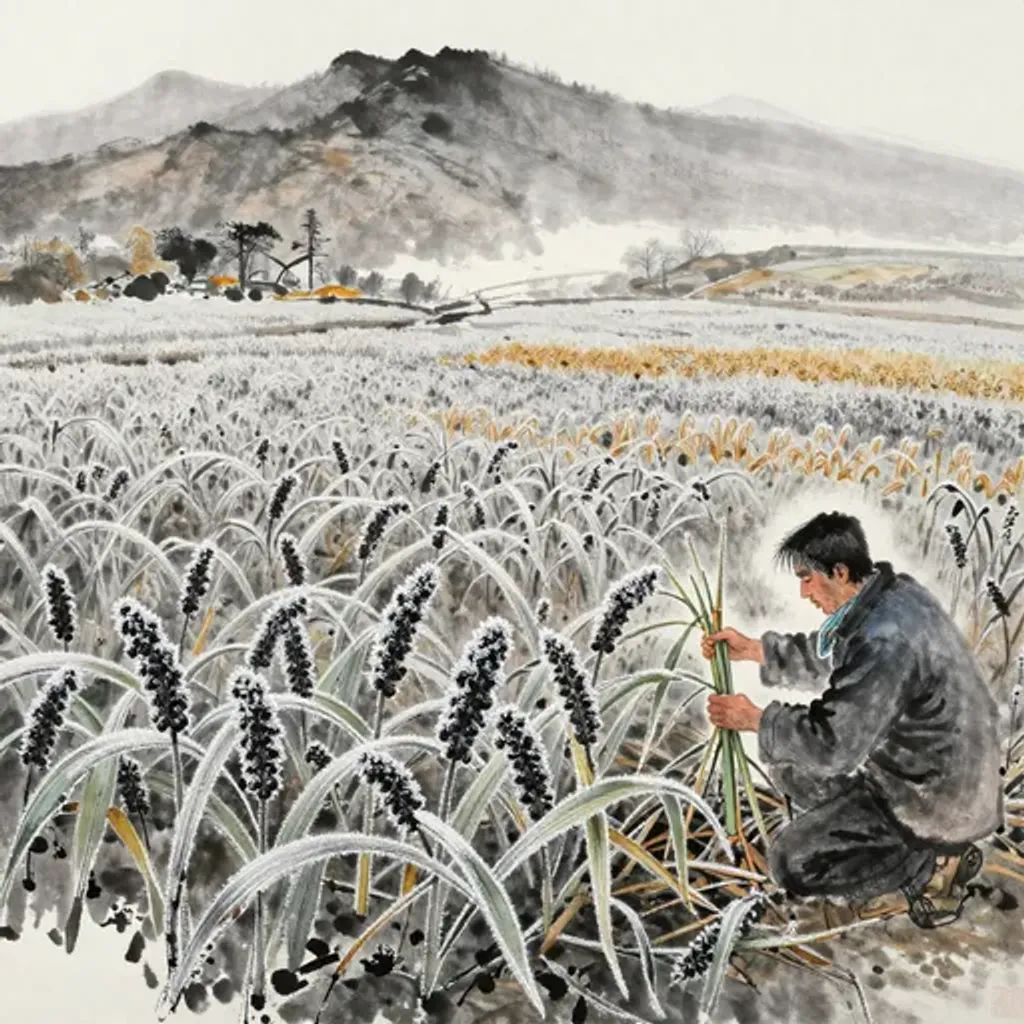
喜怒不時,雪霜為災;稼穡無功,后稷飢憂。
Wrath and favor come out of season, frost and snow bring calamity; the crops are sown in vain -- even Houji knows hunger and worry.
— Jiao Yanshou, Yilin (Forest of Changes), 1st century BC
Commentary
Wind over earth watches the sky rage without pattern. Joy and anger arrive out of season; frost and snow fall as disasters upon the crops. Agriculture yields nothing, and even Lord Millet — Hou Ji, ancestor of the Zhou people and minister of agriculture under Emperor Shun — suffers hunger and worry. When the founder of Chinese farming cannot feed himself, the disruption of natural order is absolute. Mountain over heaven forms Great Taming, which stores heaven's power within the mountain. From Contemplation to Great Taming, the paradox is severe: the hexagram of accumulated wisdom and stored strength meets a world where the most fundamental knowledge — when to plant, when to harvest — has been rendered useless by chaotic weather.
觀 → 頤
Hexagram 20 → Hexagram 27: Nourishment
Changing lines: 1, 5
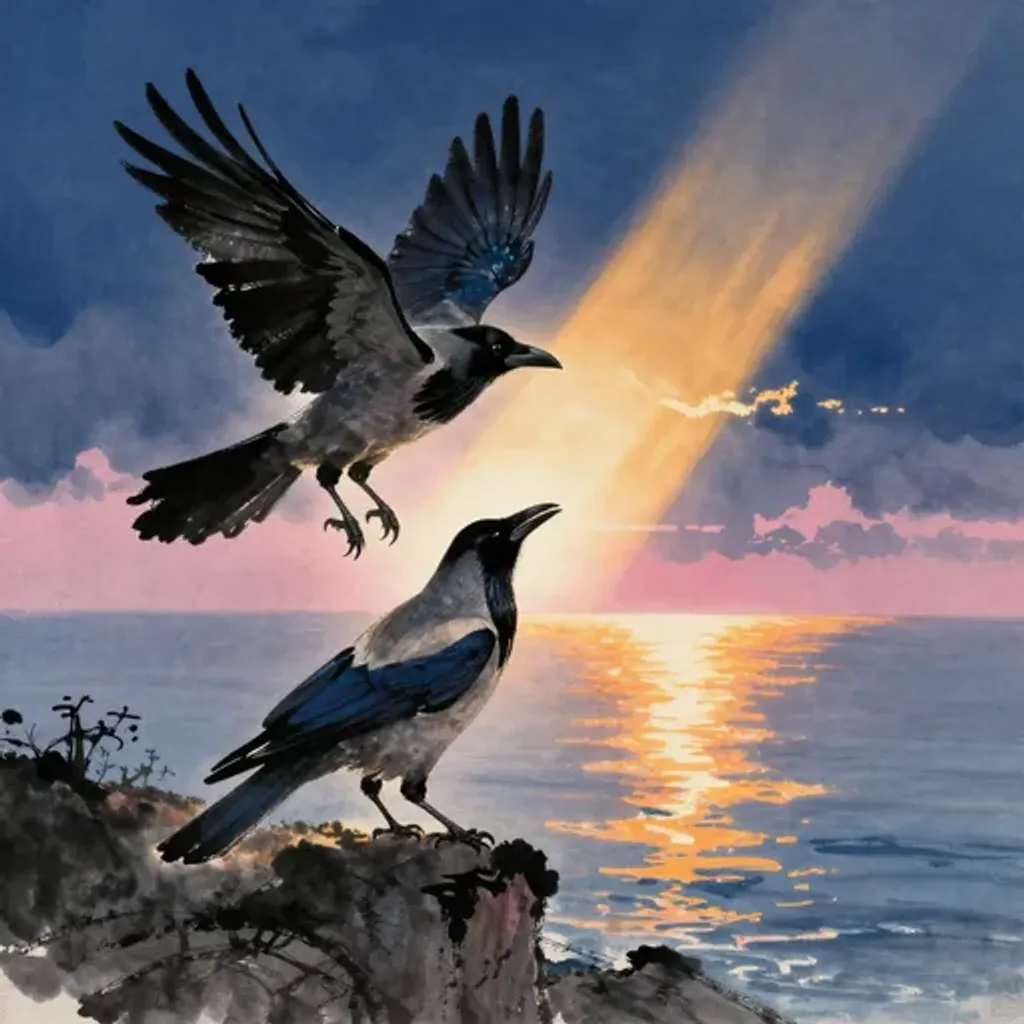
烏升鵲舉,照流東海。厖降庭堅,為陶叔後;封圻蓼六,履祿綏厚。
Crow rises and magpie soars, their light streaming over the eastern sea. Pang descended and Tingjian arose, becoming the ancestor of the Tao clan; enfeoffed at Liao and Lu, they trod upon ample fortune and bounty.
— Jiao Yanshou, Yilin (Forest of Changes), 1st century BC
Commentary
Wind over earth watches the sun and moon rise in splendor. Crow ascends and magpie soars — the sun-crow and moon-bird — illuminating the eastern sea. Then the verse shifts to genealogy: Pang descends to become Tingjian, ancestor of Tao Shu, whose descendants were enfeoffed at Liao and Liu. Ample emoluments and enduring blessing follow. The passage traces the lineage of Gao Yao, legendary minister of justice, whose descendants received fiefs for generations. Mountain over thunder forms Nourishment, which governs what one takes in and gives out. From Contemplation to Nourishment, celestial radiance nourishes earthly legacy: the rising light sustains a lineage that feeds the state through generations of righteous service.
觀 → 大過
Hexagram 20 → Hexagram 28: Great Exceeding
Changing lines: 2, 3, 4, 6
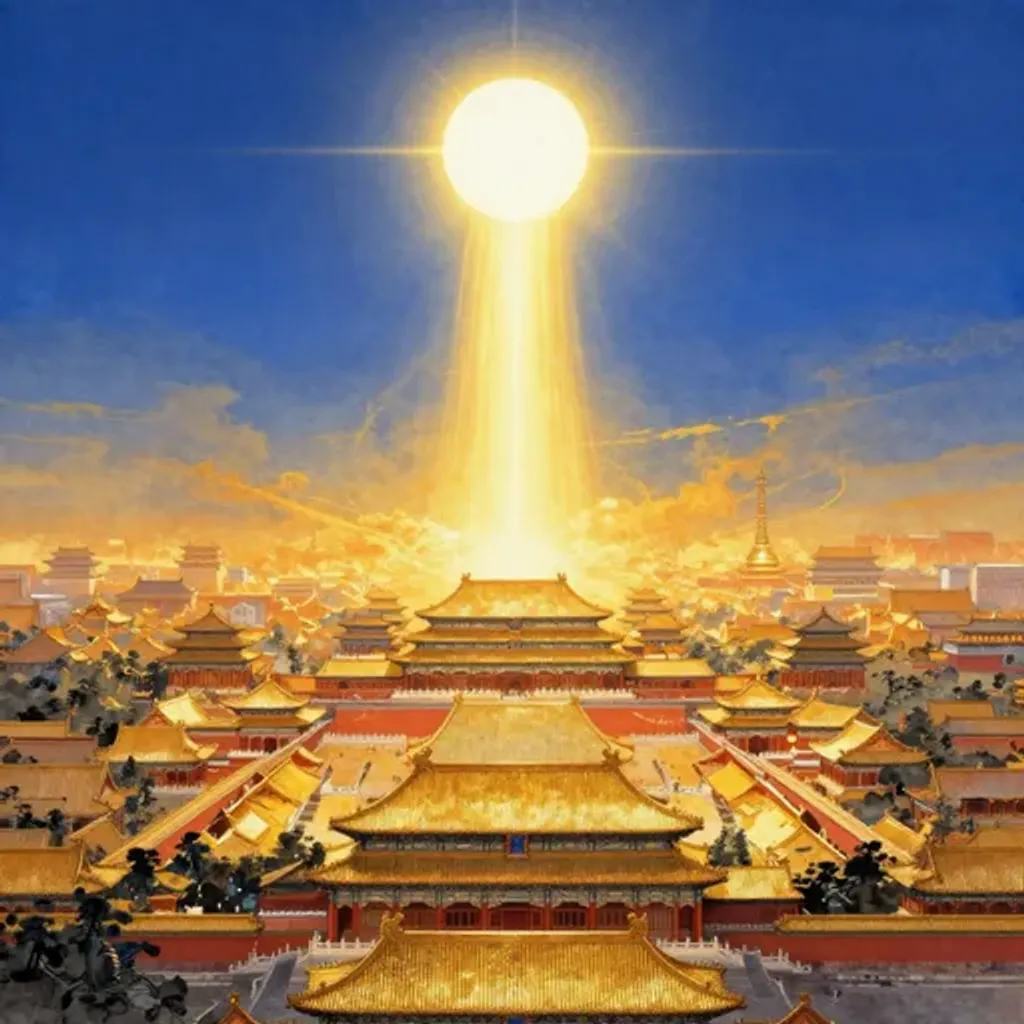
黃離白日,照我四國,元首昭明,民賴其福。
Radiant and splendid as the white sun, it shines upon our four kingdoms; the sovereign is illustrious and wise -- the people rely upon his blessing.
— Jiao Yanshou, Yilin (Forest of Changes), 1st century BC
Commentary
Wind over earth contemplates radiant illumination. A yellow brightness like the white sun shines across the four quarters of the realm. The head of state is luminous and wise, and the people depend upon his blessings. The verse is a hymn to sagely rulership in its purest form: the ruler as sun, his virtue as light, his people as beneficiaries. Lake over wind forms Great Exceeding, where the ridgepole bows under extraordinary weight. From Contemplation to Great Exceeding, the transformation warns even as it celebrates: brilliance this intense places extraordinary demands on the structure that bears it. The sage-king must be great enough to exceed normal limits, or the weight of universal expectation will break him.
觀 → 坎
Hexagram 20 → Hexagram 29: The Abysmal Water
Changing lines: 2, 6
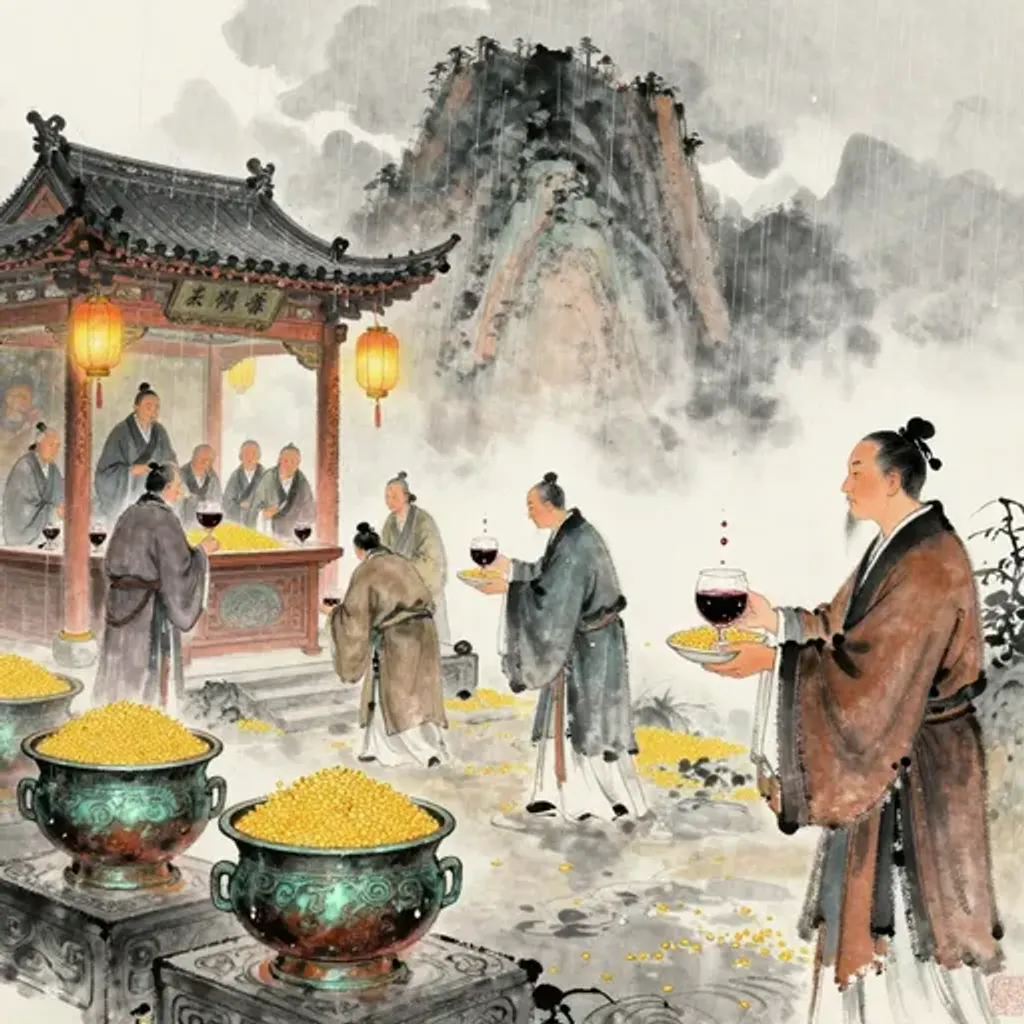
黍稷醇醲,敬奉山宗。神嗜飲食,甘雨嘉降;獨蒙福力,時災不至。
Millet and grain, rich and mellow, reverently offered to the mountain ancestor. The spirits savor the food and drink; sweet rain descends in blessing -- alone we receive heaven favor, and seasonal disasters do not come.
— Jiao Yanshou, Yilin (Forest of Changes), 1st century BC
Commentary
Wind over earth observes a solemn sacrifice yielding divine response. Rich millet and thick ale are offered reverently to the mountain spirits. The deities savor the feast, and sweet rain descends in blessing. The worshipper alone receives heaven's protective power; seasonal calamities do not arrive. The verse enacts the ideal covenant between human devotion and divine reciprocity: proper ritual performed with sincerity earns nature's cooperation. Doubled water forms the Abysmal, representing peril and the flow of sincerity through danger. From Contemplation to the Abysmal, devout observation navigates the abyss: where others face peril, the sincere ritualist passes through safely, shielded by the very waters that threaten the faithless.
觀 → 離
Hexagram 20 → Hexagram 30: The Clinging Fire
Changing lines: 1, 3, 4, 5
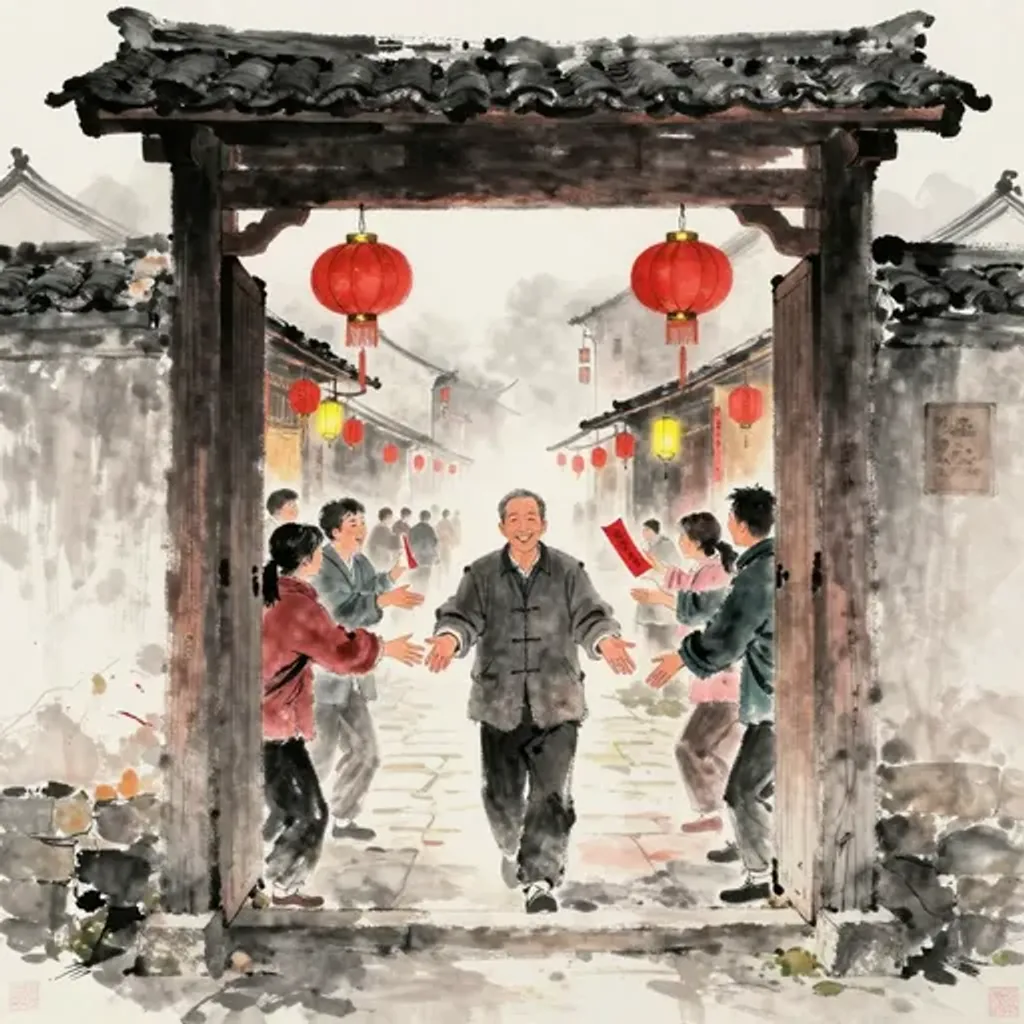
福過我里,入門笑喜;與吾利市。
Fortune passes through my village, enters the gate with laughter and delight; it brings us a profitable market.
— Jiao Yanshou, Yilin (Forest of Changes), 1st century BC
Commentary
Wind over earth, and blessings arrive at the village gate. Fortune passes through the neighborhood, enters the door to laughter and delight, and brings profit in the marketplace. The verse is concise and jubilant — three short phrases capturing the moment when good fortune literally walks through the door. Doubled fire forms the Clinging, where light sustains light in continuous illumination. From Contemplation to the Clinging, watchful observation is rewarded with radiance: the one who has been looking outward from the gate finally sees blessings approach, and the fire's warmth enters the household. Joy and profit arrive together, naturally and without contrivance, like flame passing from one torch to another.
觀 → 咸
Hexagram 20 → Hexagram 31: Influence
Changing lines: 3, 4, 6
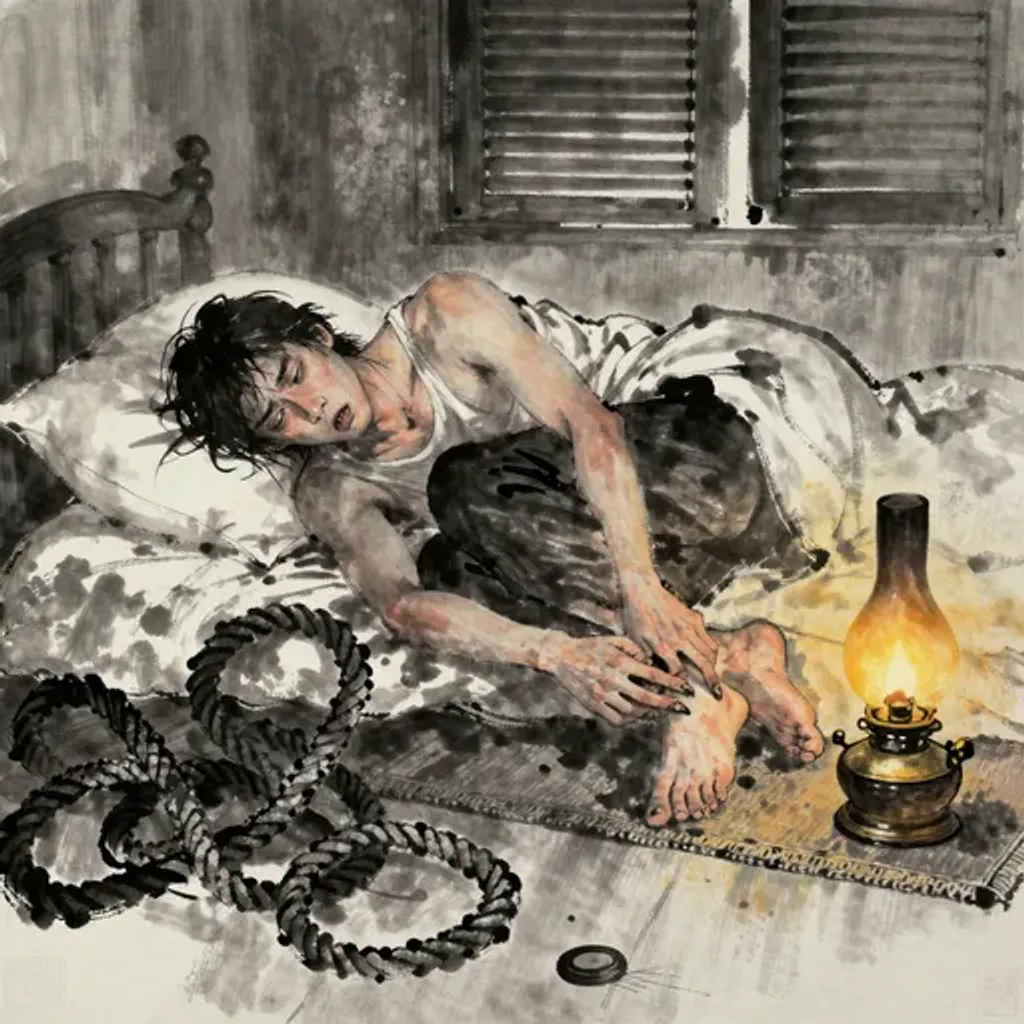
晝臥里門,悚惕不安;目不得閡,鬼搔我足。
Lying by day at the village gate, startled and ill at ease; the eyes cannot close -- ghosts scratch at my feet.
— Jiao Yanshou, Yilin (Forest of Changes), 1st century BC
Commentary
Wind over earth, but instead of serene contemplation, a noonday nightmare. Lying at the village gate in daylight, the sleeper is seized by dread: eyes cannot close, and a ghost scratches at the feet. The verse captures sleep paralysis or demonic visitation — consciousness trapped between waking and sleeping while malign forces encroach from below. Lake over mountain forms Influence, which moves through mutual sensation beginning at the toes. From Contemplation to Influence, the connection is visceral: Influence's trigram imagery begins with stimulation at the feet, and here that sensation is perverted into ghostly scratching. What should be joyful mutual response becomes uncanny violation — intimacy twisted into haunting.
觀 → 恆
Hexagram 20 → Hexagram 32: Duration
Changing lines: 2, 3, 4, 5, 6

春草榮華,長女宜夫;受福多年,世有封祿。
Spring grasses bloom in splendor; the elder daughter is well suited to her husband. She receives blessings for many years -- the line enjoys hereditary rank.
— Jiao Yanshou, Yilin (Forest of Changes), 1st century BC
Commentary
Wind over earth surveys a flourishing springtime scene. Spring grasses bloom in splendor, and the eldest daughter finds a fitting husband. Blessings last for many years, and the family enjoys hereditary rank and emolument generation after generation. The verse is a straightforward celebration of marital prosperity and dynastic continuity: the eldest daughter's marriage is fertile as spring grass, producing lasting fortune. Thunder over wind forms Duration, which establishes what endures through constancy. From Contemplation to Duration, the transformation shows observation confirming what will last: the spring marriage that takes root properly grows into an institution that persists across generations, as steady as thunder and wind reinforcing each other.
觀 → 遯
Hexagram 20 → Hexagram 33: Retreat
Changing lines: 3, 4
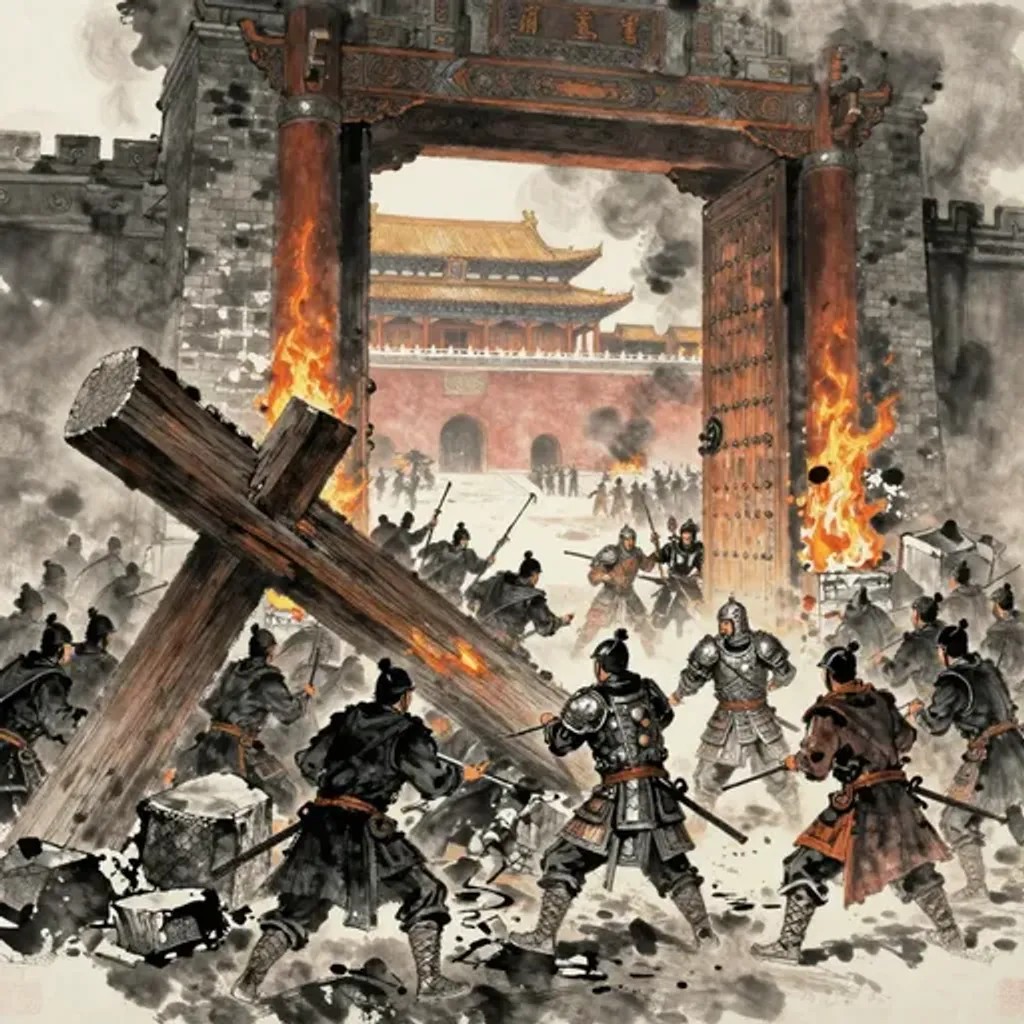
雍門內崩,賊賢傷人;暴亂狂悖,簡公失位。
Within the Yong Gate, collapse comes from within; the worthy are harmed and the good are struck down. In violent and reckless turmoil -- Duke Jian loses his throne.
— Jiao Yanshou, Yilin (Forest of Changes), 1st century BC
Commentary
Wind over earth witnesses internal collapse. Within the Yong Gate, rebellion erupts from within. Worthy men are harmed, villains run rampant, and in the violent chaos Duke Jian loses his throne. This alludes to the assassination of Duke Jian of Qi by the minister Tian Heng (Chen Chengzi) in 481 BC — an internal coup that dismantled legitimate authority from the inside. Heaven over mountain forms Retreat, which counsels timely withdrawal before the small overtakes the great. From Contemplation to Retreat, the lesson is grim: the observer who watches too long without acting sees the moment for retreat pass by. Duke Jian failed to withdraw when the Tian clan's power was still containable, and the palace gate became his grave.
觀 → 大壯
Hexagram 20 → Hexagram 34: Great Power
Changing lines: 1, 2, 3, 4, 5, 6
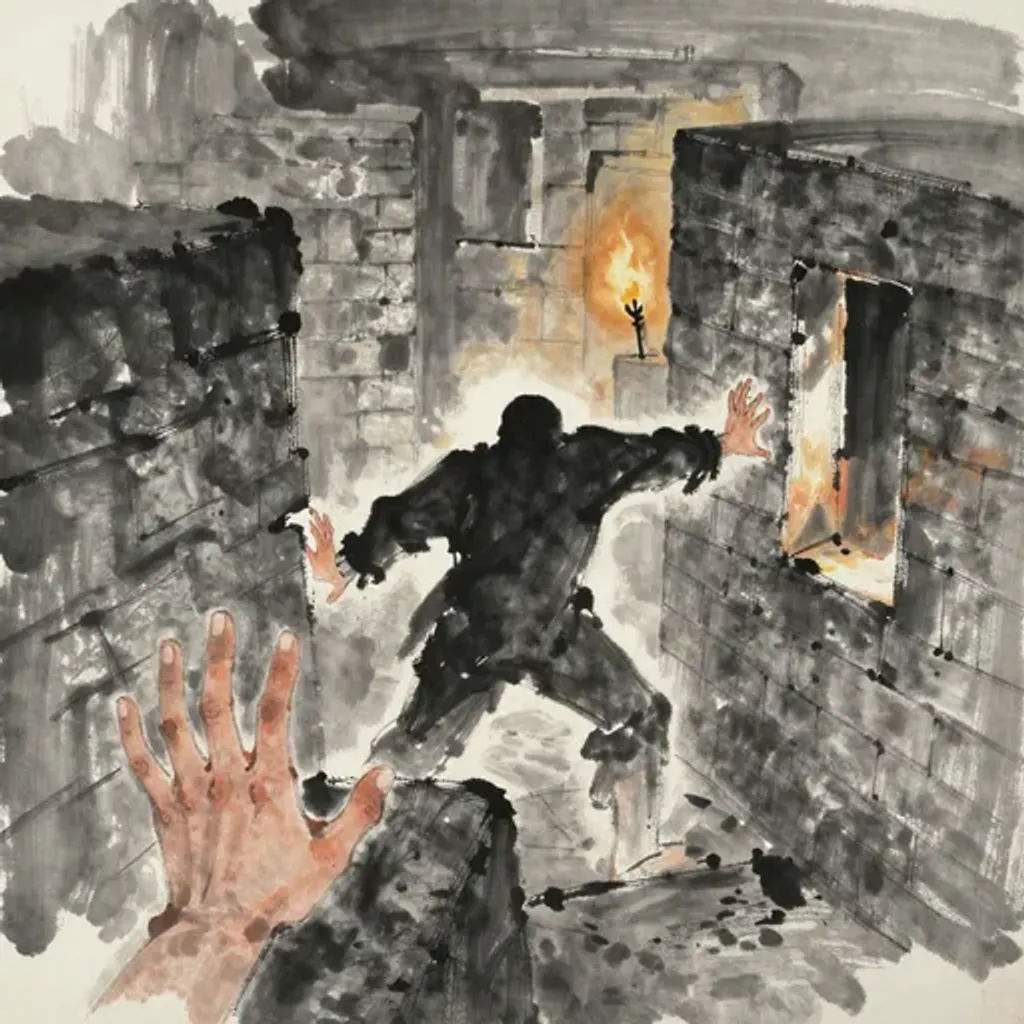
心志無良,昌披妄行;觸抵墻壁,不見戶房。
The heart intent is unwholesome, rashly rushing about in wild pursuit; crashing into wall after wall -- one cannot find door or room.
— Jiao Yanshou, Yilin (Forest of Changes), 1st century BC
Commentary
Wind over earth watches a man blunder without direction. His heart and will lack goodness; he rampages wildly and recklessly. Crashing into walls on every side, he cannot find the door to his own room. The image is of brute force misdirected — a bull-like charge that hits only stone. Thunder above heaven forms Great Power, which warns against misusing strength: the ram that butts into a hedge gets its horns tangled. From Contemplation to Great Power, the transformation is cautionary: power without vision is self-destructive. The verse mirrors Great Power's own warning — non-ritual action leads to entanglement. The man who cannot see the door despite having walls all around him embodies strength blind to its own direction.
觀 → 晉
Hexagram 20 → Hexagram 35: Progress
Changing lines: 4, 5
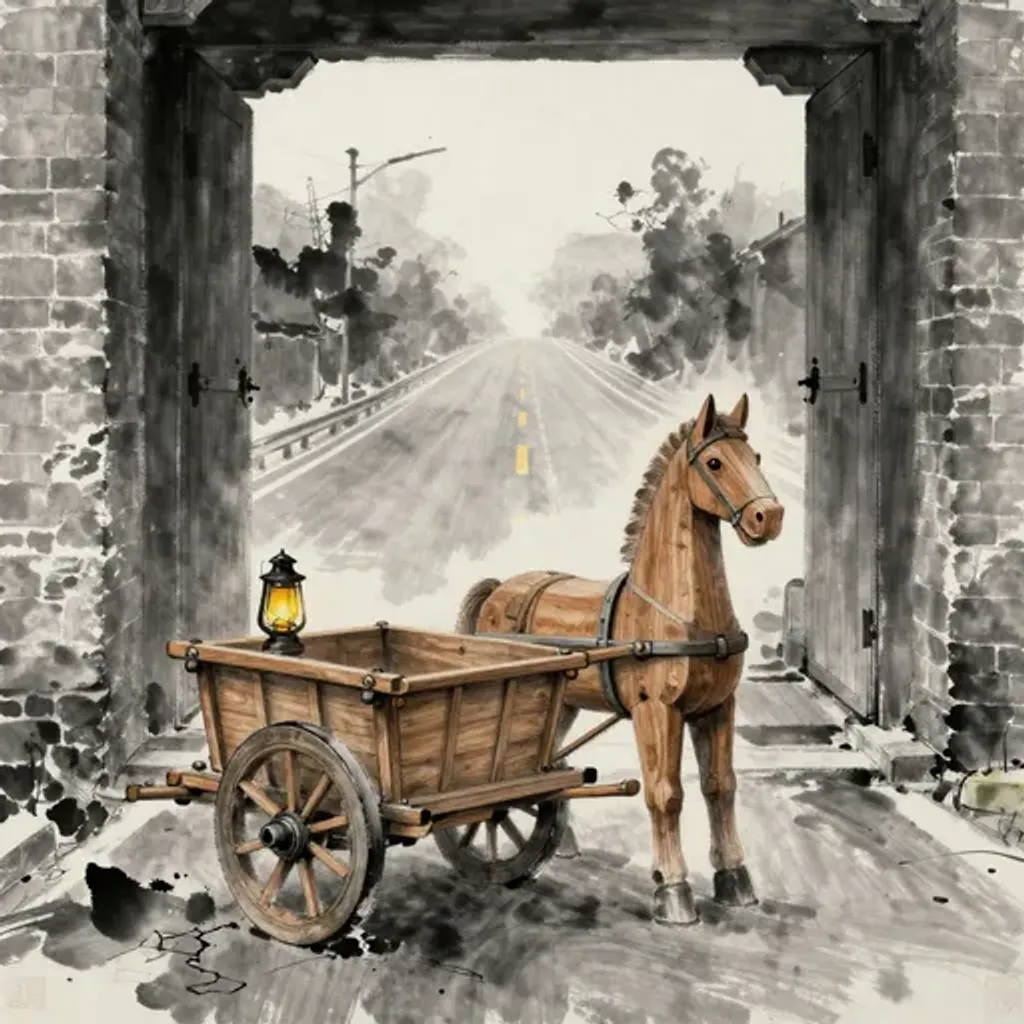
膠車木馬,不利遠賈;出門為患,安止得全。
A glued cart and a wooden horse, ill-suited for distant trade; stepping through the gate brings misfortune -- better to stay and be kept whole.
— Jiao Yanshou, Yilin (Forest of Changes), 1st century BC
Commentary
Wind over earth observes a merchant setting out with useless equipment. A cart glued together and a wooden horse — neither can withstand the rigors of distant trade. Venturing out brings nothing but trouble; staying put preserves one's safety. The glue-cart and wooden horse are vivid symbols of inadequate preparation: form without function, appearance without substance. Fire over earth forms Progress, where brightness emerges above the horizon. From Contemplation to Progress, the contrast is instructive: Progress demands genuine capacity rising from solid ground, but this traveler possesses only imitations. Advancement built on false foundations — the glued joint, the carved steed — collapses at the first test of the road.
觀 → 明夷
Hexagram 20 → Hexagram 36: Darkening of the Light
Changing lines: 1, 3, 5, 6
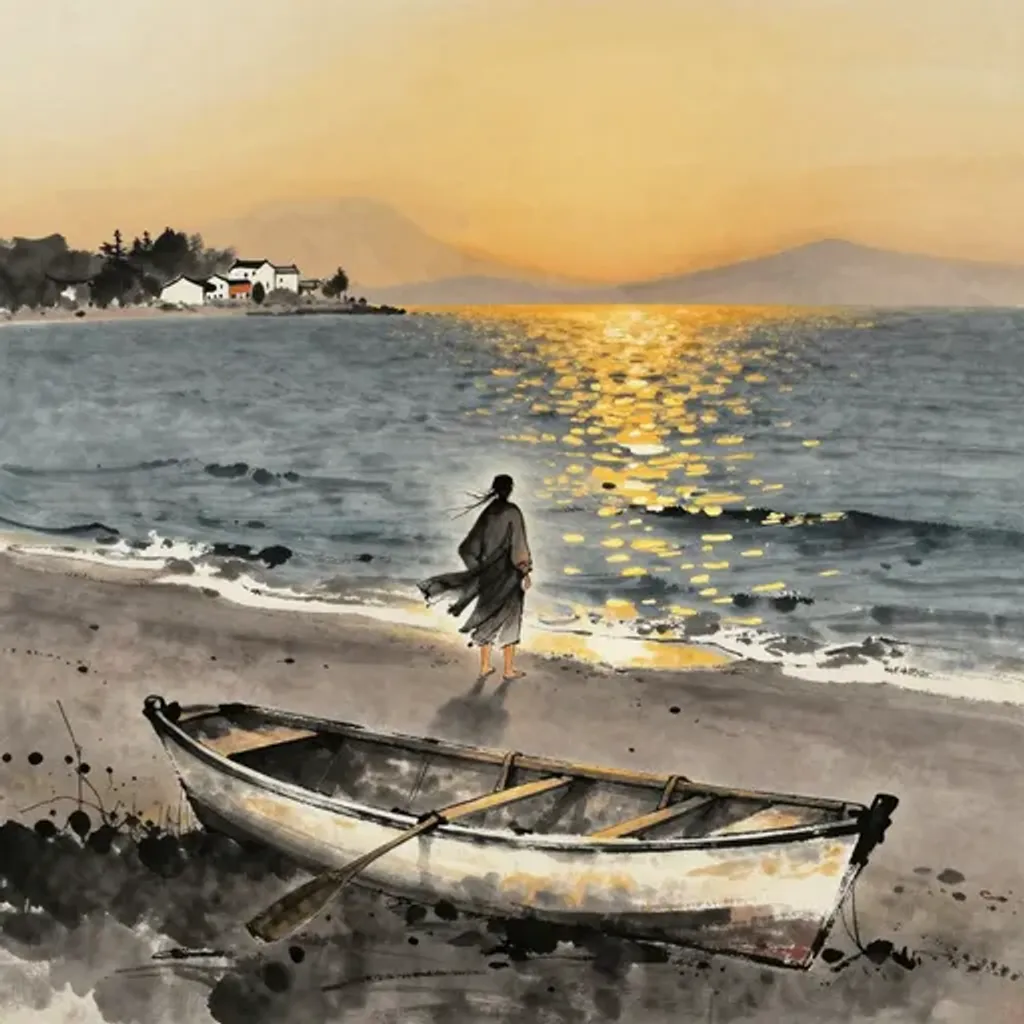
家在海隅,橈短流深;企立望宋,無木以趨。
The home stands at the sea edge, the oars are short, the current deep; standing on tiptoe gazing toward Song -- there is no timber for the crossing.
— Jiao Yanshou, Yilin (Forest of Changes), 1st century BC
Commentary
Wind over earth peers toward a distant shore but cannot reach it. The home stands at the sea's edge; the oar is too short for the river's depth. One stands on tiptoe gazing toward Song, but there is no timber to build a boat. Every element of the verse speaks to frustrated longing: the distance is visible, the destination named, yet the means of crossing are absent. Earth over fire forms Darkening of the Light, where brilliance sinks beneath the earth. From Contemplation to Darkening of the Light, the transformation is poignant: the observer can see what shines across the water, but the light descends and the crossing remains impossible. Vision without means is its own form of darkness.
觀 → 家人
Hexagram 20 → Hexagram 37: The Family
Changing lines: 1, 3
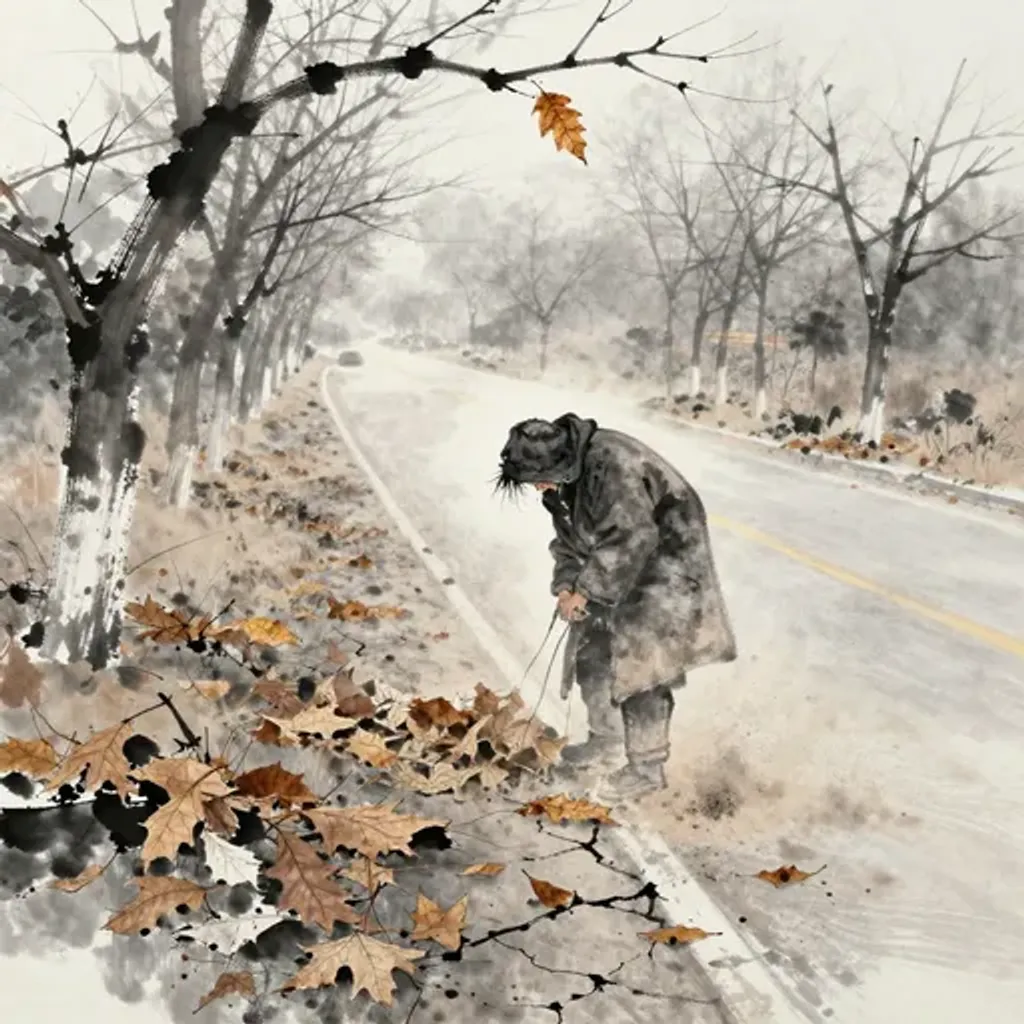
冬葉枯槁,當風於道;蒙被塵埃,左右勞苦。
Winter leaves, withered and dry, stand in the wind upon the road; blanketed in dust and grime -- toil and hardship on every side.
— Jiao Yanshou, Yilin (Forest of Changes), 1st century BC
Commentary
Wind over earth strips winter's desolation bare. Dead leaves, dried and brittle, stand exposed on the road against the wind. Covered in dust and grime, one labors left and right without respite. The verse captures exhaustion at its most elemental — no narrative, no historical figure, only a body worn down by wind and dust like the season's last withered foliage. Wind from fire forms the Family, where warmth radiates outward as domestic order. From Contemplation to the Family, the contrast is sharp: the hexagram of household warmth meets someone cast into the cold road. The winter leaf on the highway is the opposite of the hearthside — rootless, wind-battered, with no family shelter to return to.
觀 → 睽
Hexagram 20 → Hexagram 38: Opposition
Changing lines: 1, 2, 4, 5
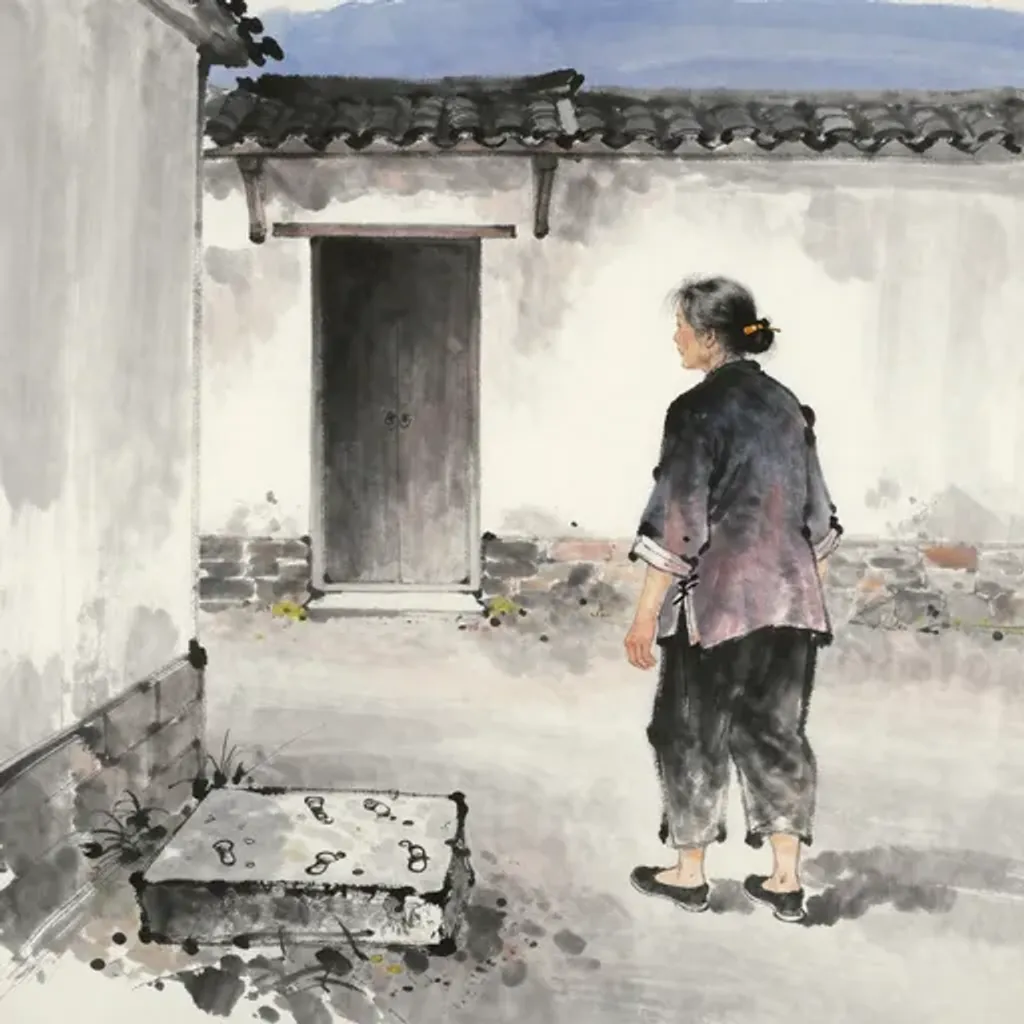
過時不行,妄逐王公;老女失度,不安其居。
Missing the proper time, failing to act; vainly chasing lords and dukes. The aging woman has lost her measure -- she cannot rest in peace.
— Jiao Yanshou, Yilin (Forest of Changes), 1st century BC
Commentary
Wind over earth watches someone miss the moment and pursue the wrong quarry. The right time passes but no action is taken; instead, one chases vainly after lords and princes. An aging woman has lost her proper measure and cannot remain settled in her dwelling. The verse layers temporal failure with social overreach: missing the season for appropriate action, then compounding the error by grasping at status beyond one's station. Fire over lake forms Opposition, where flame rises and water sinks — two forces that see each other but move apart. From Contemplation to Opposition, observation reveals irreconcilable divergence: the pursuer and the pursued move in opposite directions, and the aging woman's restlessness only deepens the estrangement.
觀 → 蹇
Hexagram 20 → Hexagram 39: Obstruction
Changing lines: 3, 6
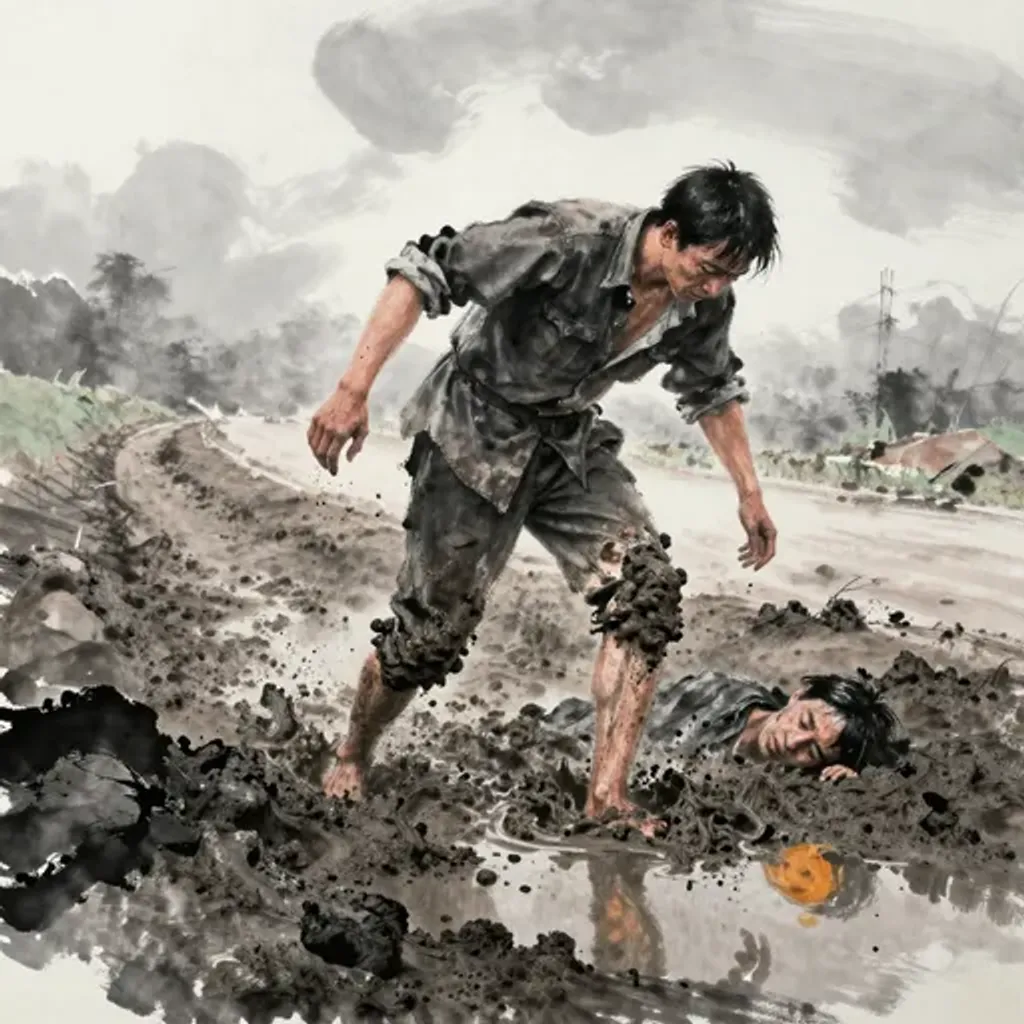
履泥污足,名困身辱;兩仇相當,身為疾病。
Treading through mud, feet soiled; reputation ruined, body shamed. Two rivals matched against each other -- the body falls prey to sickness.
— Jiao Yanshou, Yilin (Forest of Changes), 1st century BC
Commentary
Wind over earth treads into mud and finds no clean ground. Walking through mire dirties the feet, reputation is trapped, and the body suffers disgrace. Two enemies are evenly matched, and the body falls into illness. The verse presents a world where every step contaminates — there is no path that does not soil. Evenly matched foes suggest stalemate rather than resolution, and the body breaks down under prolonged conflict. Water over mountain forms Obstruction, where dangerous waters pool atop steep terrain. From Contemplation to Obstruction, observation discovers impasse: the view from the summit reveals only perilous water above and steep cliffs below. When the footing is treacherous everywhere, the sage turns inward to cultivate virtue rather than pressing forward.
觀 → 解
Hexagram 20 → Hexagram 40: Deliverance
Changing lines: 2, 4, 5, 6
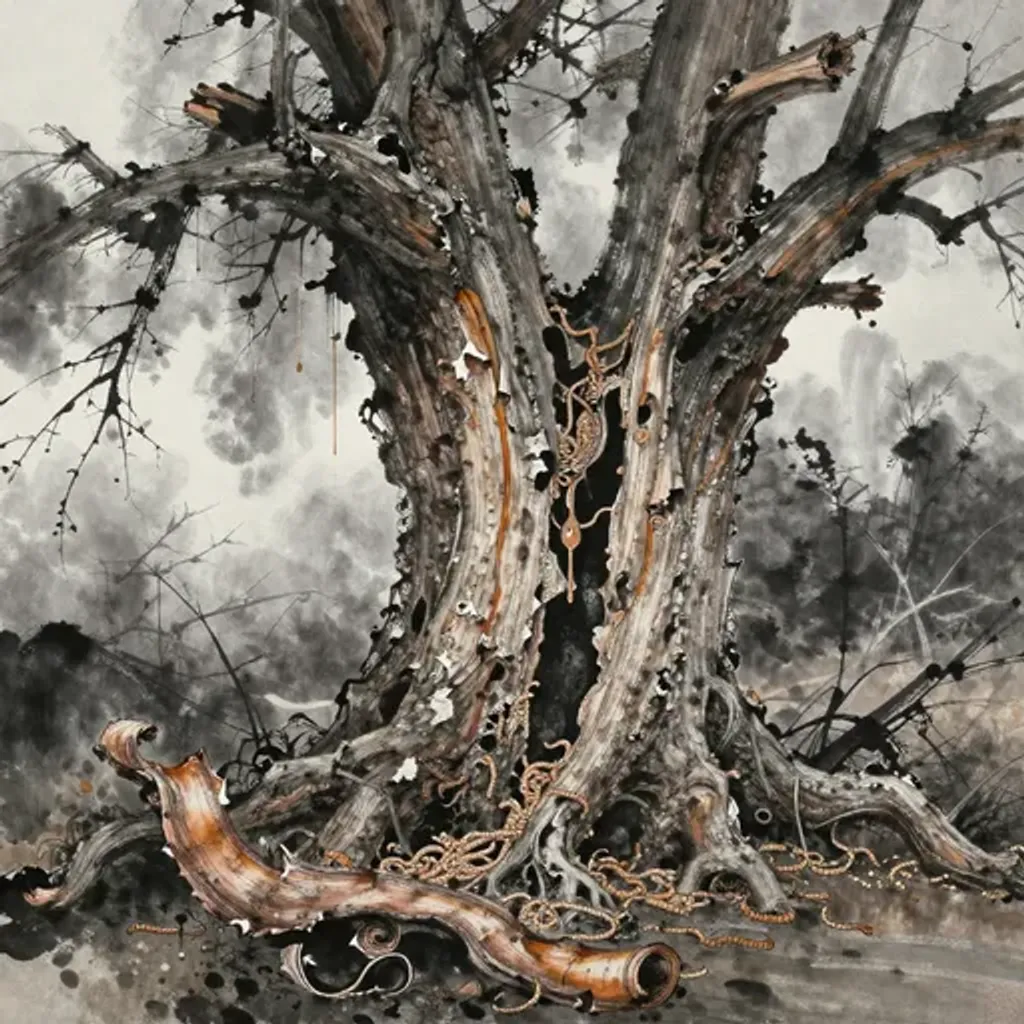
精華墮落,形體醜惡;齬齟挫頓,枯槁腐蠹。
Vital essence fades and falls, the form grows ugly and wretched; jarring clashes and stumbling setbacks -- withered, rotting, eaten by worms.
— Jiao Yanshou, Yilin (Forest of Changes), 1st century BC
Commentary
Wind over earth surveys total deterioration. Vital essence falls away, and the body becomes ugly and hideous. Teeth grind and clash in painful friction; everything dries out, rots, and is consumed by worms. The verse offers no narrative, no allusion — only the relentless catalog of decay. Thunder over water forms Deliverance, which releases tension after crisis, like a thunderstorm clearing the air. From Contemplation to Deliverance, the paradox is redemptive: the very extremity of corruption creates the conditions for liberation. When everything that can rot has rotted, when the last pretense of vitality is gone, only then does the thunderclap of release become possible. Decay, pushed to completion, becomes its own deliverance.
觀 → 損
Hexagram 20 → Hexagram 41: Decrease
Changing lines: 1, 2, 5
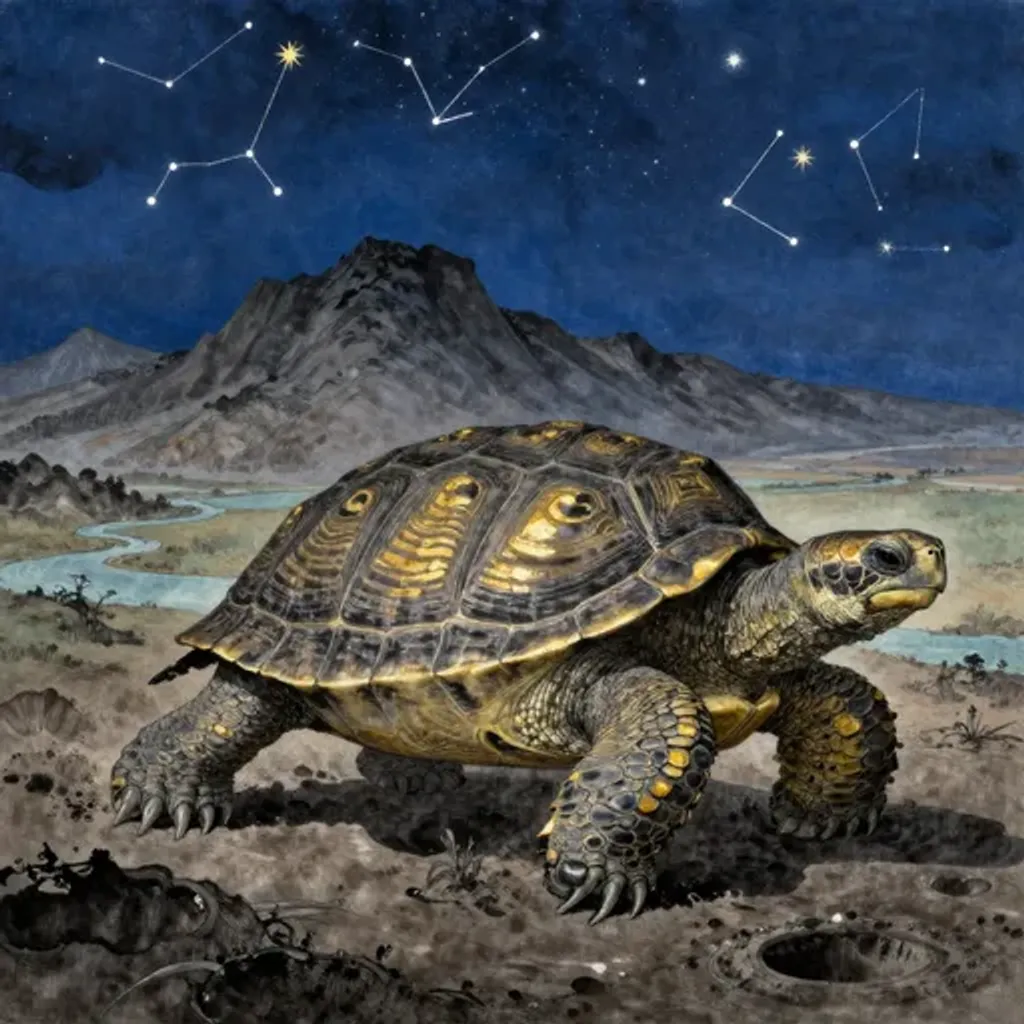
長生無極,子孫千億;柏柱載青,堅固不傾。
The turtle lives a thousand years, mountains and rivers on its back. Slow steps, never hurried — yet eventually reaching the four seas.
— Jiao Yanshou, Yilin (Forest of Changes), 1st century BC
Commentary
Wind over earth contemplates endurance across generations. The original verse reads: 'Eternal life without limit, descendants numbering a thousand myriad. Cypress pillars bearing green, firm and never toppling.' The imagery is architectural and dynastic — cypress, the most durable timber, supports a structure that stands across centuries, green with perpetual life. A thousand myriad descendants flow from this stability. Mountain over lake forms Decrease, which reduces the lower to benefit the upper. From Contemplation to Decrease, the transformation reveals that lasting structures require sacrifice: the cypress bears its weight silently, the foundation gives up its substance so the edifice above can endure. True longevity is built through willingness to diminish oneself for what must last.
觀 → 益
Hexagram 20 → Hexagram 42: Increase
Changing lines: 1
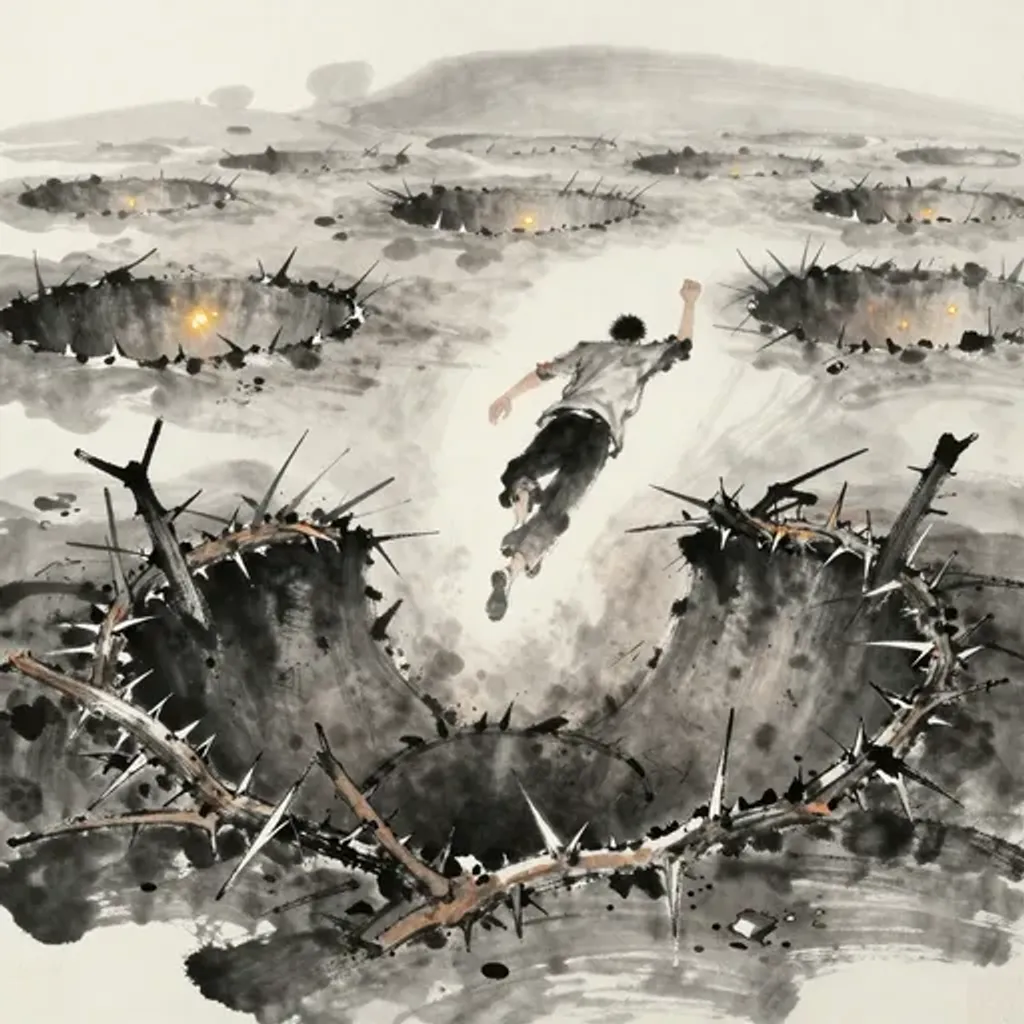
去辛就蓼,毒愈酷毒;避穽入坑,憂患日生。
Leaving the pungent for the bitter, the poison grows crueler still; fleeing the pit only to fall into another -- worry and misfortune multiply by the day.
— Jiao Yanshou, Yilin (Forest of Changes), 1st century BC
Commentary
Wind over earth observes a flight from one poison into another. Leaving the pungent, one turns to smartweed — an even harsher poison. Dodging a pit, one falls into a trench; worries multiply daily. The verse captures a cascading failure of judgment where each remedy worsens the disease. Smartweed (liao) is more acrid than the ginger-like plant (xin) abandoned. Wind over thunder forms Increase, which should augment and improve through timely action. From Contemplation to Increase, the irony is biting: the hexagram of beneficial addition meets someone whose every addition is subtraction. What should increase welfare instead increases suffering, because the observer lacks the discernment to distinguish true remedy from disguised harm.
觀 → 夬
Hexagram 20 → Hexagram 43: Breakthrough
Changing lines: 1, 2, 3, 4, 6
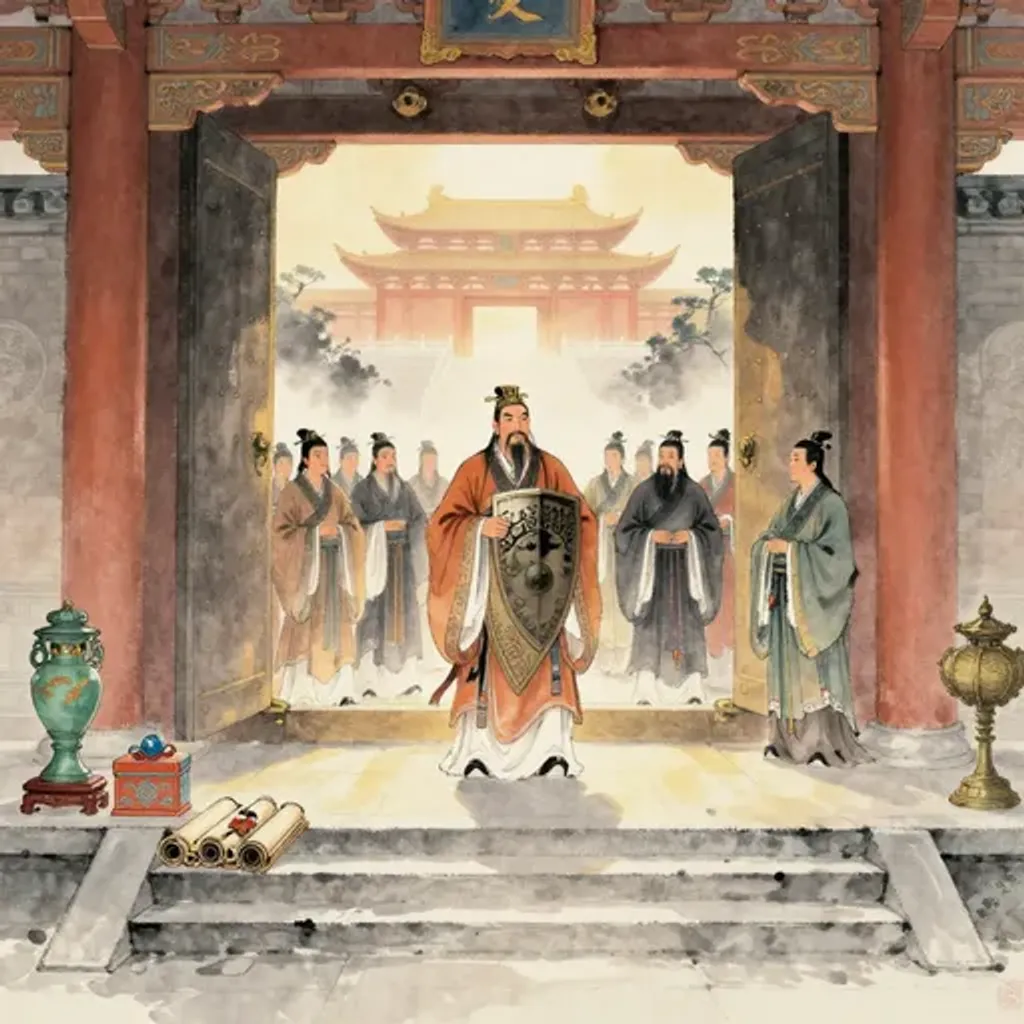
行堯欽德,養賢致福;眾英積聚,國無寇賊。
Practicing Yao reverent virtue, nurturing the worthy and winning blessing; the brilliant and talented gather together -- the state knows no brigands or thieves.
— Jiao Yanshou, Yilin (Forest of Changes), 1st century BC
Commentary
Wind over earth contemplates the governance of sage-kings. One practices the reverent virtue of Yao and nourishes the worthy to attract blessings. Outstanding men gather in abundance, and the state knows neither bandits nor thieves. Emperor Yao, the legendary sage-king, ruled through moral example rather than coercion, making meritocratic selection the cornerstone of good government. Lake over heaven forms Breakthrough, which resolutely removes what is corrupt. From Contemplation to Breakthrough, observation identifies the governing principle: when the worthy are gathered and nurtured, corruption has no foothold. The lake rises above heaven and overflows — abundance so great it cannot be contained, dispersing its blessings universally.
觀 → 姤
Hexagram 20 → Hexagram 44: Coming to Meet
Changing lines: 2, 3, 4
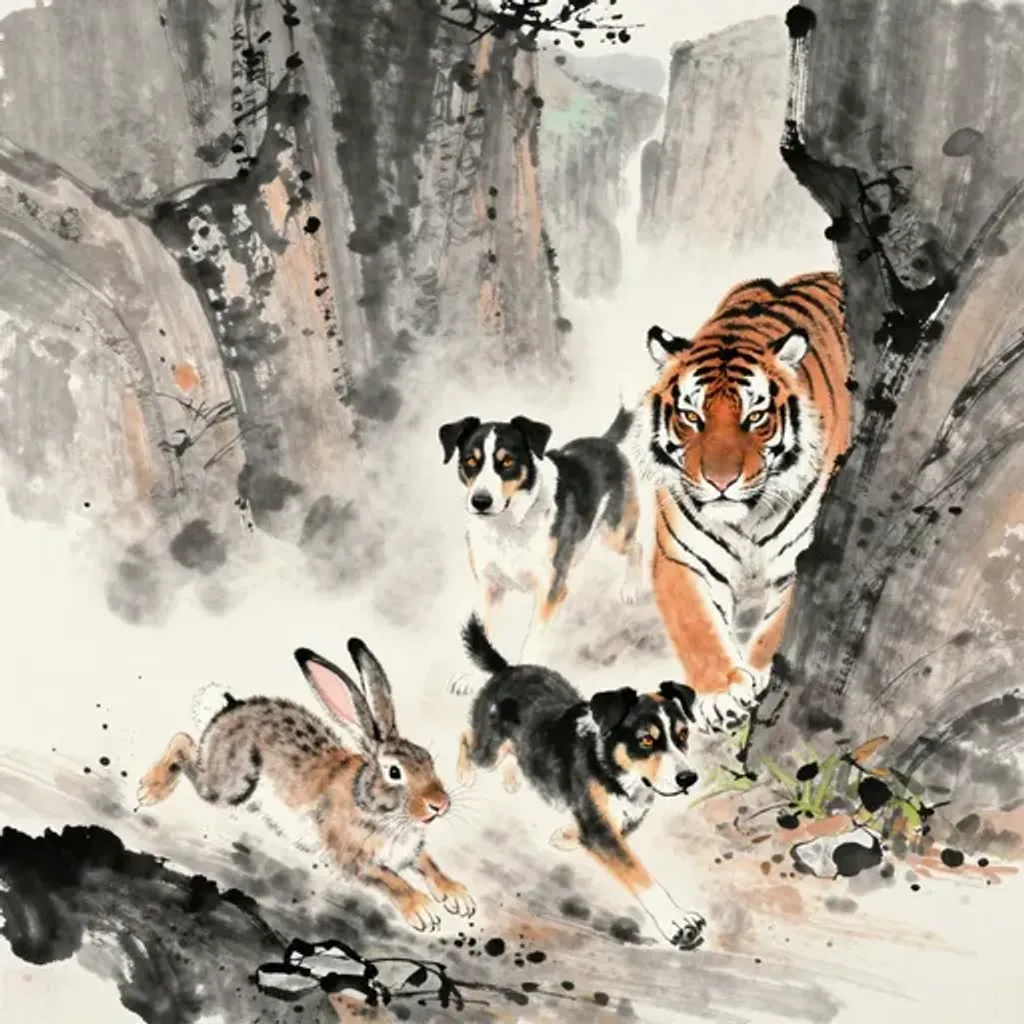
狗逐兔走,俱入谷口;與虎逢晤,迫不得去。
A dog chases a rabbit, both plunging into the mouth of the gorge; meeting the tiger face to face, pressed too close to withdraw.
— Jiao Yanshou, Yilin (Forest of Changes), 1st century BC
Commentary
Wind over earth watches a hunt go terribly wrong. A dog chases a hare, and both run into a valley's mouth — only to encounter a tiger. Pressed by the predator, there is no way to escape. The chain of pursuit inverts suddenly: the hunter becomes the hunted, the confined space that should trap the quarry traps everyone. Heaven over wind forms Coming to Meet, where an unexpected force enters from below. From Contemplation to Coming to Meet, the transformation captures the shock of the uninvited encounter: what emerges from the valley was never anticipated. The pursuit that seemed routine suddenly confronts overwhelming power, and the narrow gorge that funneled the chase now prevents retreat.
觀 → 萃
Hexagram 20 → Hexagram 45: Gathering Together
Changing lines: 4, 6
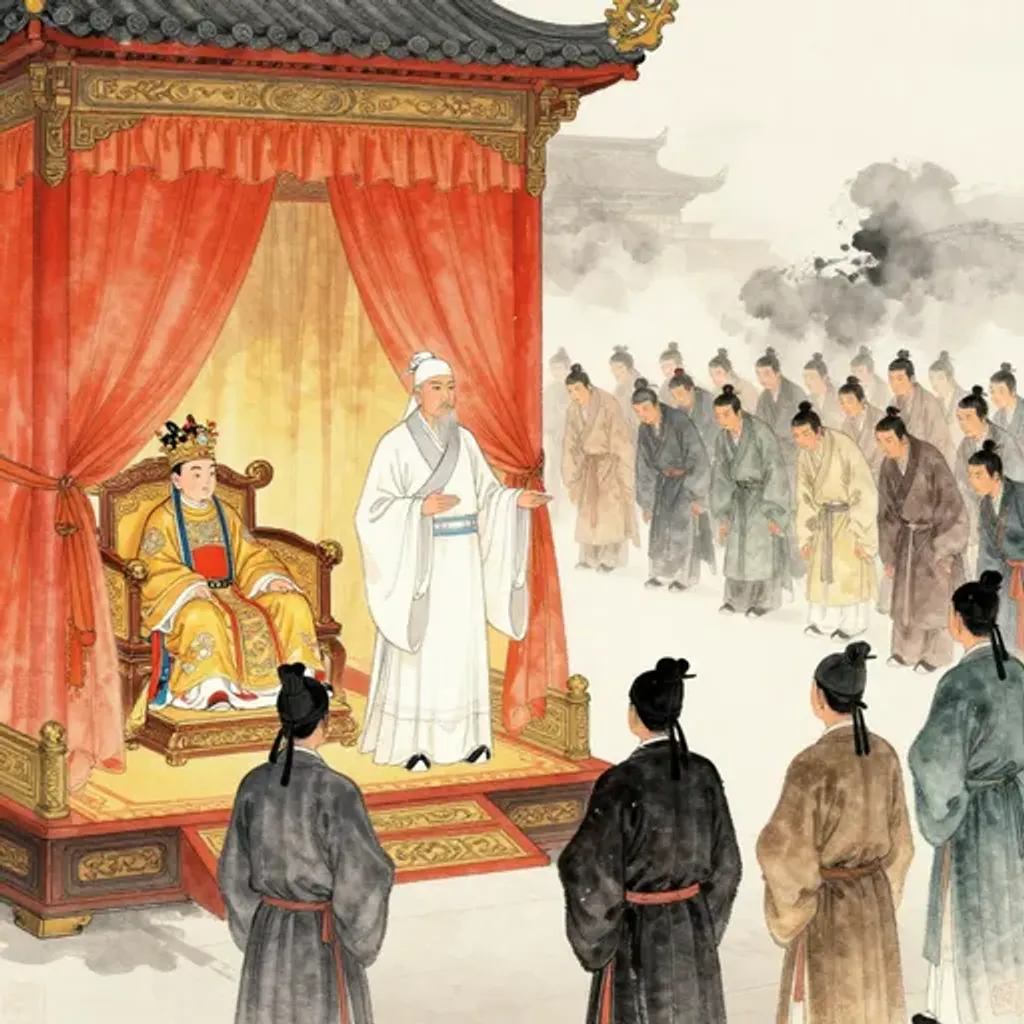
望尚阿衡,太宰周公,藩屏湯武,立為侯王。
The old minister supports the young lord, governing from behind the curtain. The state is steady as bedrock; the four quarters come to pay homage.
— Jiao Yanshou, Yilin (Forest of Changes), 1st century BC
Commentary
Wind over earth surveys the architecture of regency. The original verse reads: one looks up to Aheng — Yi Yin, sage minister of Shang — and to the Grand Steward, the Duke of Zhou. These two served as protective screens for Tang and Wu, establishing them as lords and kings. Yi Yin helped King Tang found the Shang dynasty; the Duke of Zhou served as regent for the young King Cheng after King Wu's death, stabilizing the young Zhou state. Lake over earth forms Gathering, which assembles people around legitimate authority. From Contemplation to Gathering, observation identifies the pattern of righteous stewardship: worthy ministers gather the state's forces around the throne, shielding the sovereign until he can stand alone.
觀 → 升
Hexagram 20 → Hexagram 46: Pushing Upward
Changing lines: 2, 3, 5, 6
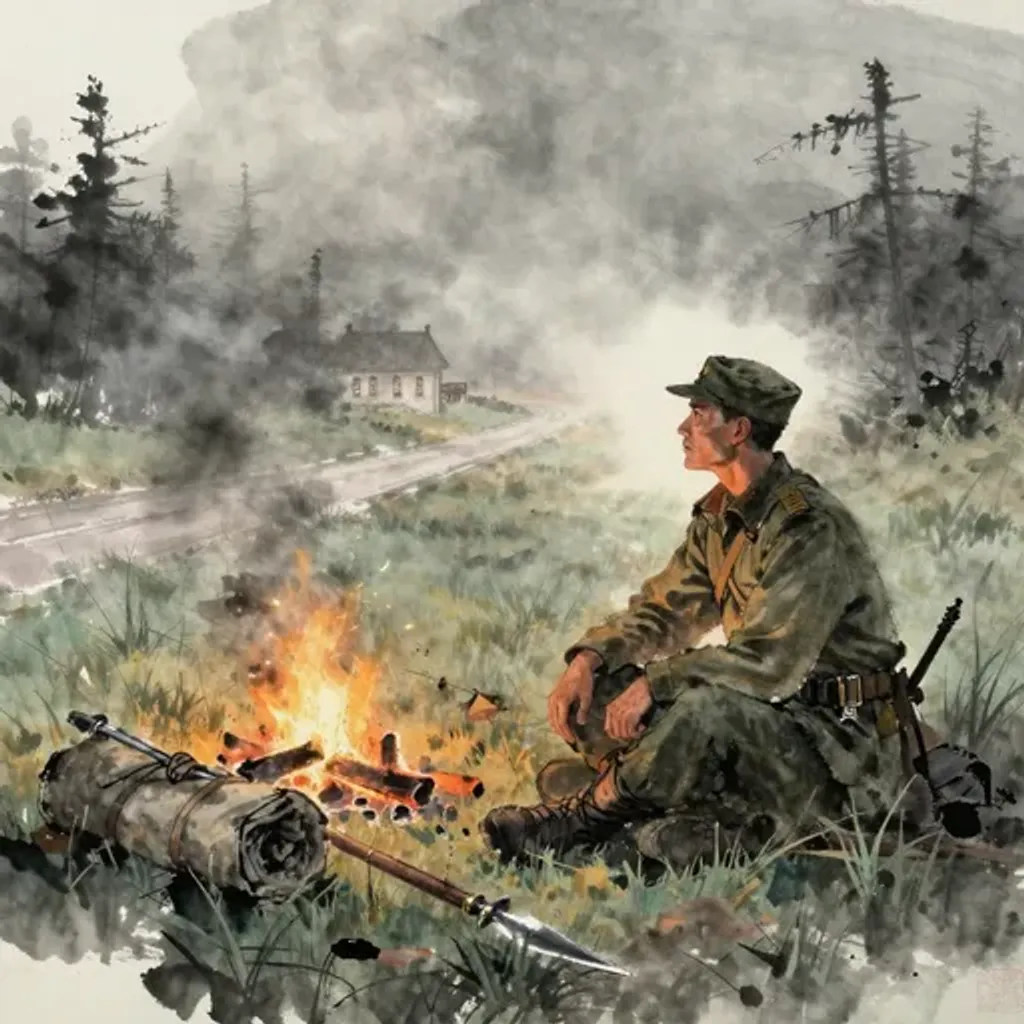
清人高子,久屯野外;逍遙不歸,思我慈母。
The men of Qing under Gao, long encamped in the open fields; roaming at ease, they do not return -- longing for my dear mother.
— Jiao Yanshou, Yilin (Forest of Changes), 1st century BC
Commentary
Wind over earth observes idle soldiers longing for home. The Men of Qing under Commander Gao — the garrison of the Shijing ode 'Qing Ren' — linger endlessly on the frontier, whiling away time without purpose. They wander but never return, and the soldier thinks of his kind mother far away. The Shijing poem satirizes Duke Wen of Zheng for stationing Gao Ke's troops at the border with no mission, wasting military strength on an idle garrison. Earth over wind forms Pushing Upward, which rises gradually through sustained effort. From Contemplation to Pushing Upward, the contrast bites: the hexagram of methodical ascent meets men stuck in purposeless stagnation. Their potential energy, never directed upward, dissipates into homesickness.
觀 → 困
Hexagram 20 → Hexagram 47: Oppression
Changing lines: 2, 4, 6
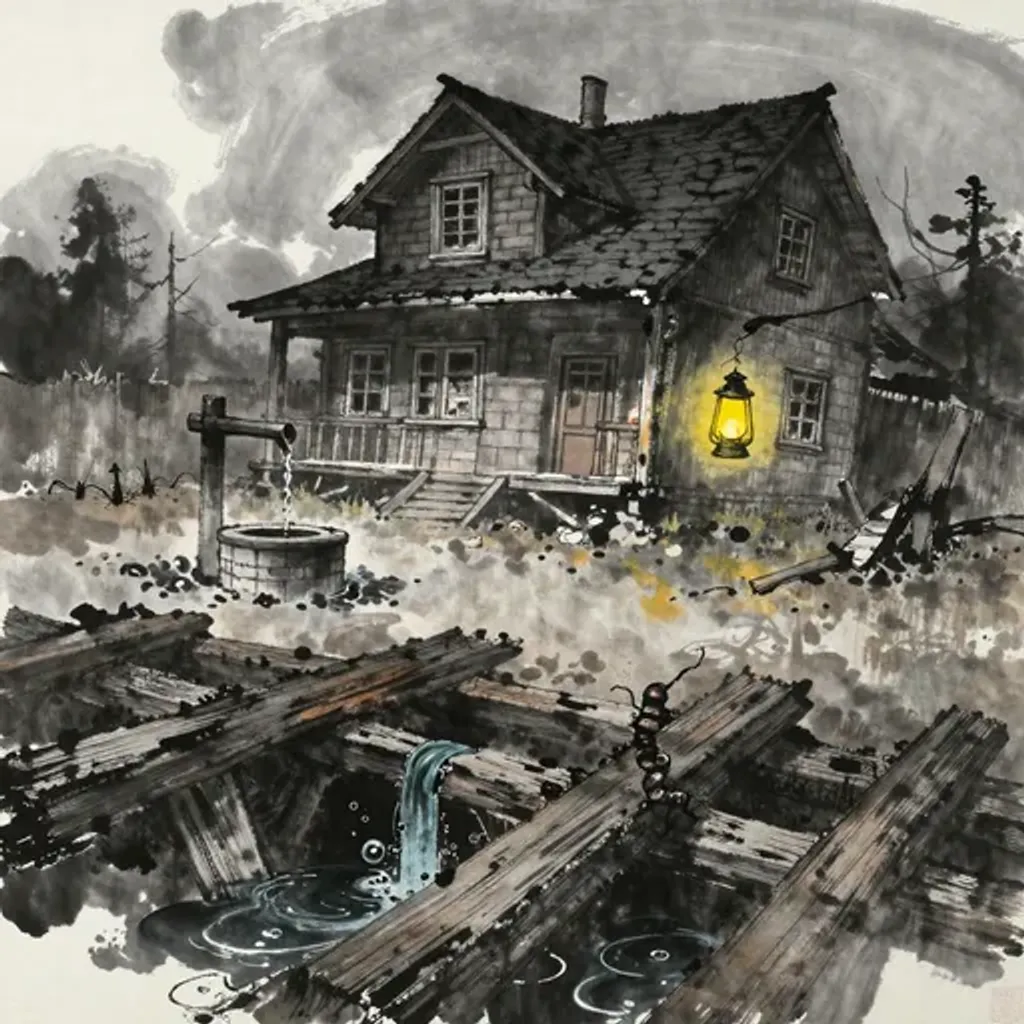
三虫作蠱,削跡無與;勝母盜泉,君不安處。
Three worms breed pestilence, traces obliterated and companions lost; at the hamlet called Shengmu and the spring called Daoqan -- the noble man finds no safe abode.
— Jiao Yanshou, Yilin (Forest of Changes), 1st century BC
Commentary
Wind over earth watches corruption consume a household from within. Three venomous worms breed decay, trails vanish, and no one comes near. The verse then invokes the allusion of 'Overcoming-Mother' hamlet and 'Robber's Spring' — places so inauspiciously named that a gentleman refuses to enter one or drink from the other, upholding moral caution even against appearances. The gentleman cannot dwell at ease in such contaminated ground. Lake over water forms Oppression, where water drains beneath the lake, leaving emptiness above. From Contemplation to Oppression, observation discovers a landscape of total moral depletion: the water has drained away, the names themselves repel the virtuous, and the worms consume what remains.
觀 → 井
Hexagram 20 → Hexagram 48: The Well
Changing lines: 2, 3, 6
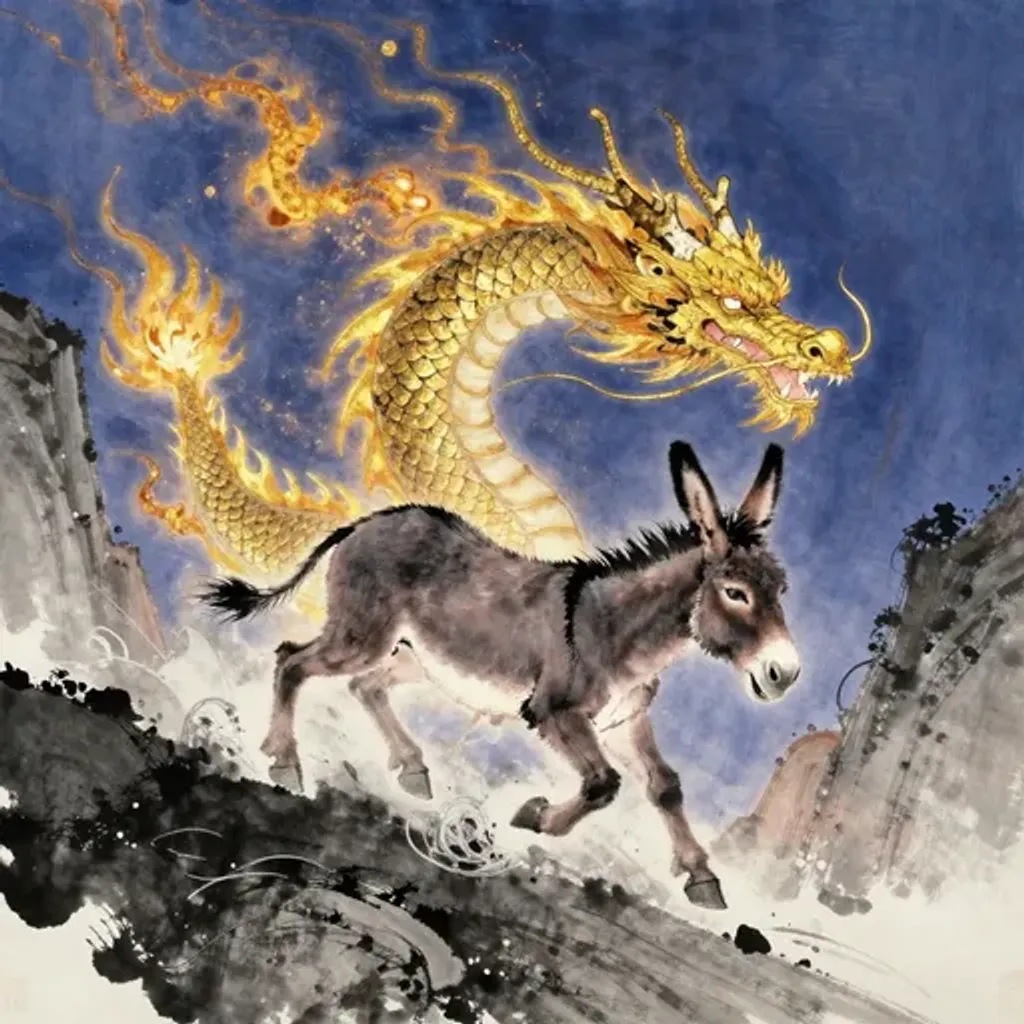
驢作龍身,進所無前;三日五夜,得其所欽。
A donkey takes on a dragon body, surging forward where none have gone before; after three days and five nights, it attains the one it revered.
— Jiao Yanshou, Yilin (Forest of Changes), 1st century BC
Commentary
Wind over earth observes an impossible transformation. A donkey acquires a dragon's body and advances where none could go before. After three days and five nights, it reaches what it most desired. The metamorphosis from humble beast of burden to mythical dragon reverses every expectation: the lowest carrier becomes the highest flier. Water over wind forms the Well, which draws sustenance from inexhaustible depths through steady effort. From Contemplation to the Well, the transformation reveals the wellspring of hidden potential: even the most unpromising vessel, given time and the right conditions, may tap into depths no one suspected. The three days and five nights mark the patient duration that such transformation demands.
觀 → 革
Hexagram 20 → Hexagram 49: Revolution
Changing lines: 1, 3, 4, 6
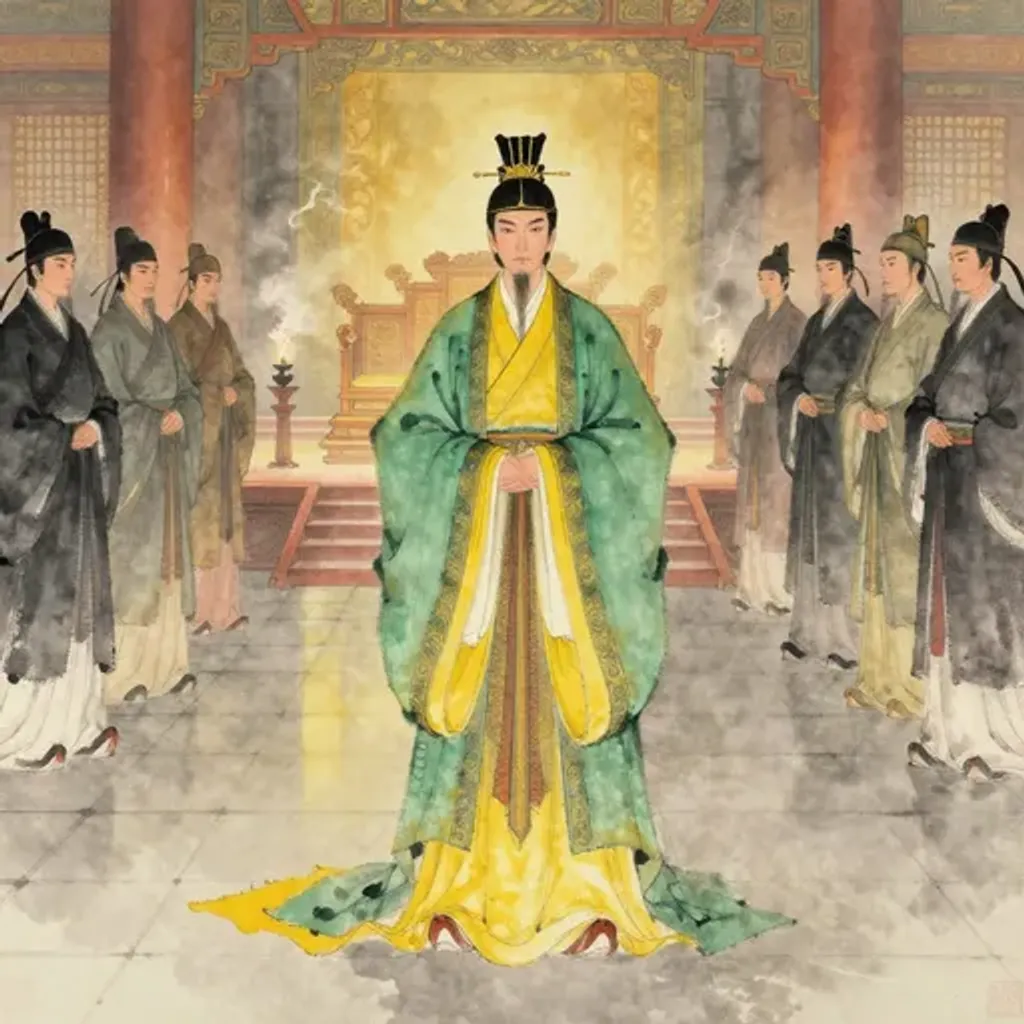
黃裏綠衣,君服不宜;淫湎毀常,失其寵光。
Yellow lining and green outer robe, garments unfitting for the lord; dissolute excess ruins the constant way -- he loses his favored brilliance.
— Jiao Yanshou, Yilin (Forest of Changes), 1st century BC
Commentary
Wind over earth observes a court in disorder of dress and morals. Yellow lining with a green outer robe — the ruler wears improper garments. This echoes the Shijing ode 'Lv Yi' from the Airs of Wei, where reversed colors symbolize a concubine displacing the rightful wife: yellow, the nobler color, is hidden inside while green, the lesser, shows on the surface. Excess and dissolution destroy proper custom, and favor's radiance is lost. Lake over fire forms Revolution, which transforms what has decayed through decisive change. From Contemplation to Revolution, the observer identifies what must be overthrown: when inside and outside, noble and base, are inverted, only revolutionary correction can restore the proper order of colors — and values.
觀 → 鼎
Hexagram 20 → Hexagram 50: The Cauldron
Changing lines: 2, 3, 4, 5
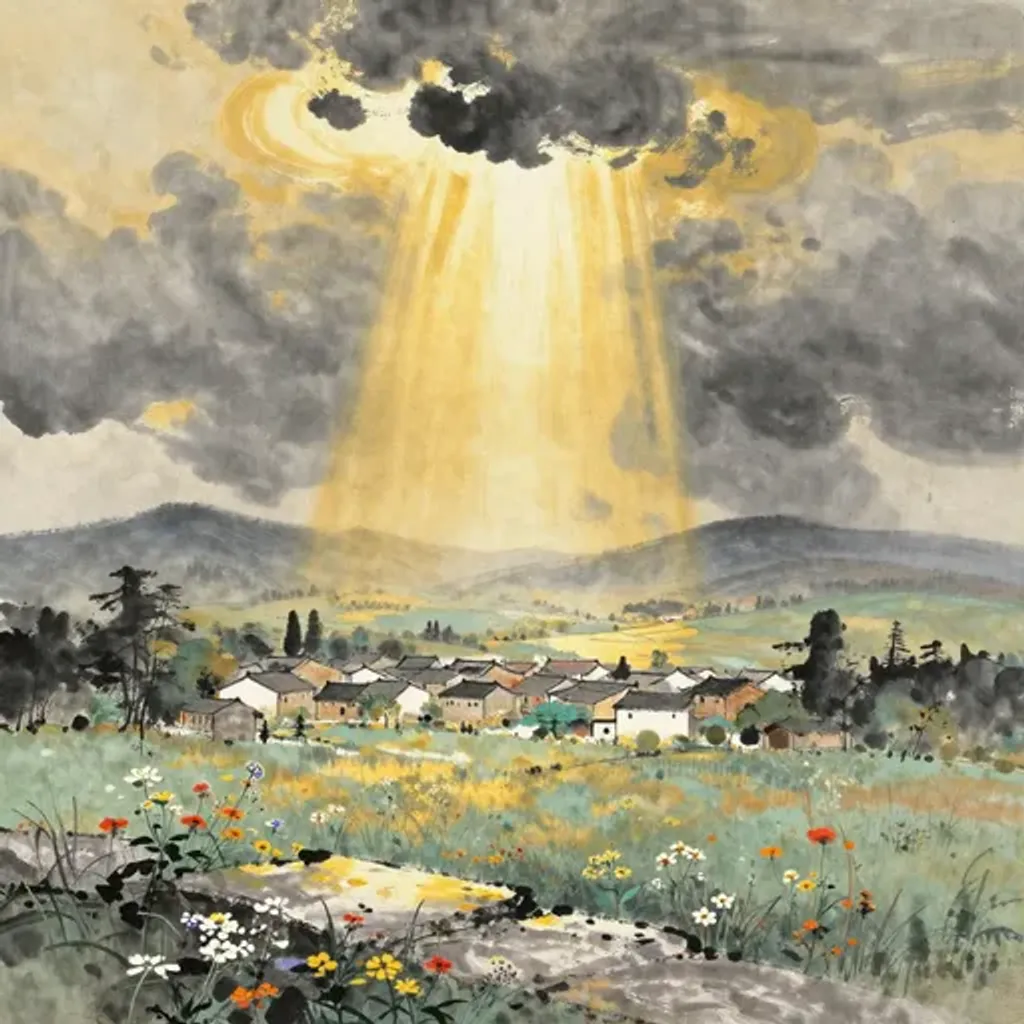
天所顧祐,禍災不至。安吉不懼。
What heaven looks upon with favor, calamity and disaster cannot reach. At peace, auspicious, and unafraid.
— Jiao Yanshou, Yilin (Forest of Changes), 1st century BC
Commentary
Wind over earth and heaven extends its protective gaze. What heaven watches over and blesses, no disaster can reach. Peace and auspiciousness prevail; there is nothing to fear. The verse is brief and absolute — a declaration of divine protection so total it needs no elaboration. Fire over wind forms the Cauldron, which transforms raw materials into refined nourishment through the proper application of heat. From Contemplation to the Cauldron, observation becomes consecration: the gaze of Contemplation, when aligned with heaven's own attention, creates the sacred vessel of the Cauldron. What is observed with devotion and offered upward becomes the refined substance that sustains civilization. Divine protection is not passive but active — heaven's gaze is the fire that refines.
觀 → 震
Hexagram 20 → Hexagram 51: The Arousing Thunder
Changing lines: 1, 4, 5, 6
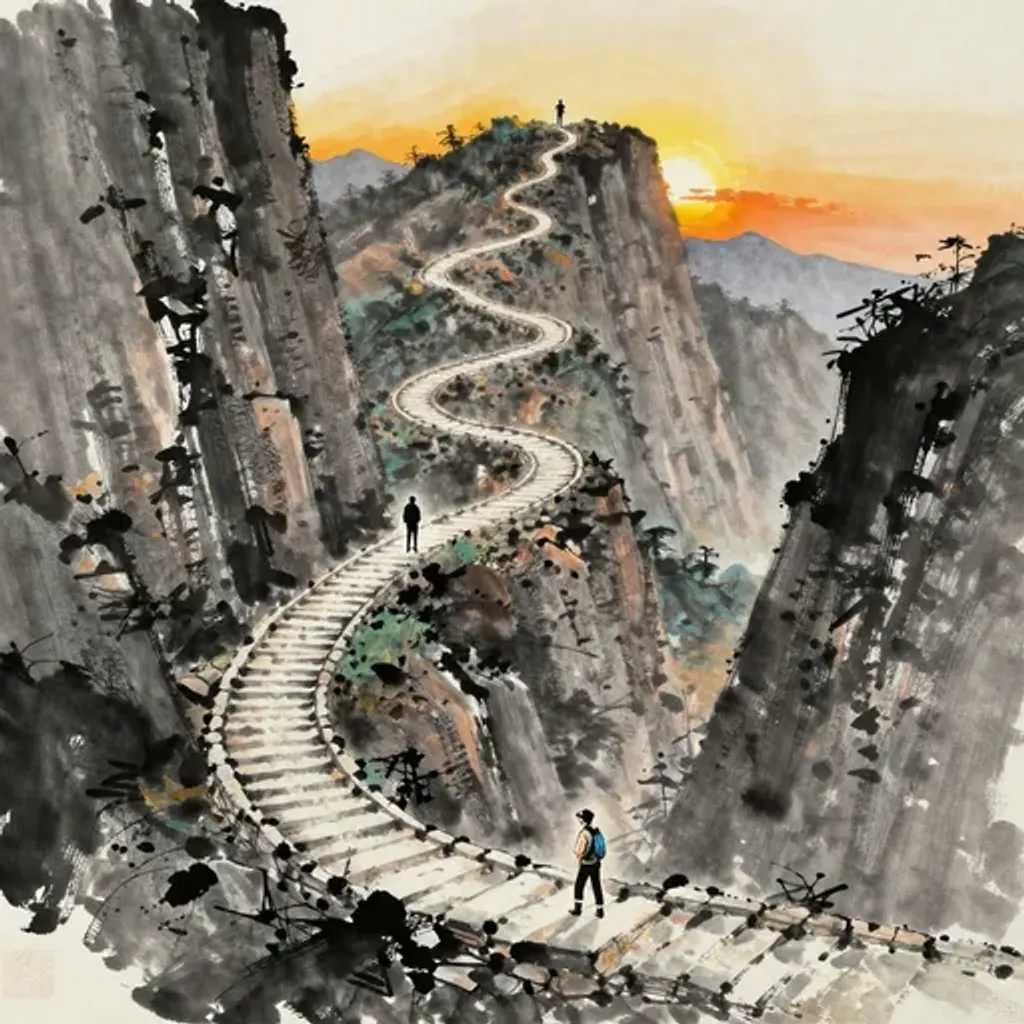
盤紆九迴,行道留難;止須子丘,乃睹所歡。
Winding and coiling through nine turns, the road is beset with hardship; halt and wait for the noble heir -- then you shall see the one you love.
— Jiao Yanshou, Yilin (Forest of Changes), 1st century BC
Commentary
Wind over earth traces a tortuous road. The path coils and twists through nine turns, every stretch fraught with hindrance. Yet at the mound of Zi — a resting place or meeting point — one finally sees the longed-for joy. The verse is a journey narrative reduced to its essence: obstacle after obstacle, then sudden arrival. Doubled thunder forms the Arousing, the shock that jolts one into motion after prolonged resistance. From Contemplation to the Arousing, the winding path resolves in a thunderclap of arrival: all the turns and delays were not purposeless but preparatory. The nine coils tested endurance; the thunder-moment rewards it. What was sought through patience stands revealed at the road's end.
觀 → 艮
Hexagram 20 → Hexagram 52: Keeping Still Mountain
Changing lines: 3, 5
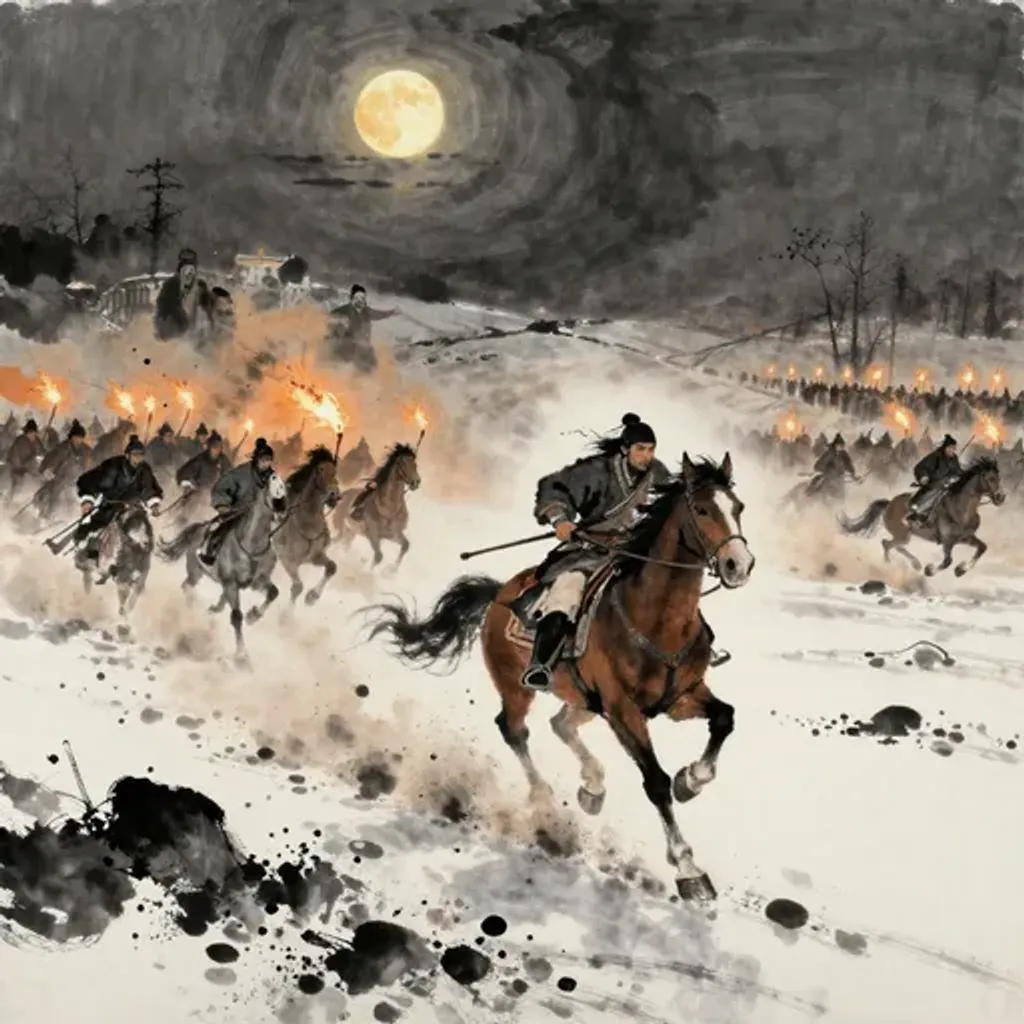
暴虐失國,為下所逐;北奔陰月,王居旄頭。
Tyrannical and cruel, he loses the kingdom and is driven out by those below; fleeing north under the dark moon -- the king dwells among the barbarian stars.
— Jiao Yanshou, Yilin (Forest of Changes), 1st century BC
Commentary
Wind over earth watches a tyrant driven from his throne. Violent and cruel, he loses his state, expelled by those below. He flees north to the dark month, his court reduced to the star Maotou — the constellation associated with military defeat and barbarian regions. The imagery suggests a ruler so brutal that his own people revolt, driving him into the cold, starless north. Doubled mountain forms Keeping Still, which counsels knowing when to stop. From Contemplation to Keeping Still, the transformation is a forced halt: the tyrant who would not stop his excesses is stopped by those he oppressed. The stillness he refused to practice voluntarily is imposed upon him in exile, beneath hostile stars.
觀 → 漸
Hexagram 20 → Hexagram 53: Development
Changing lines: 3
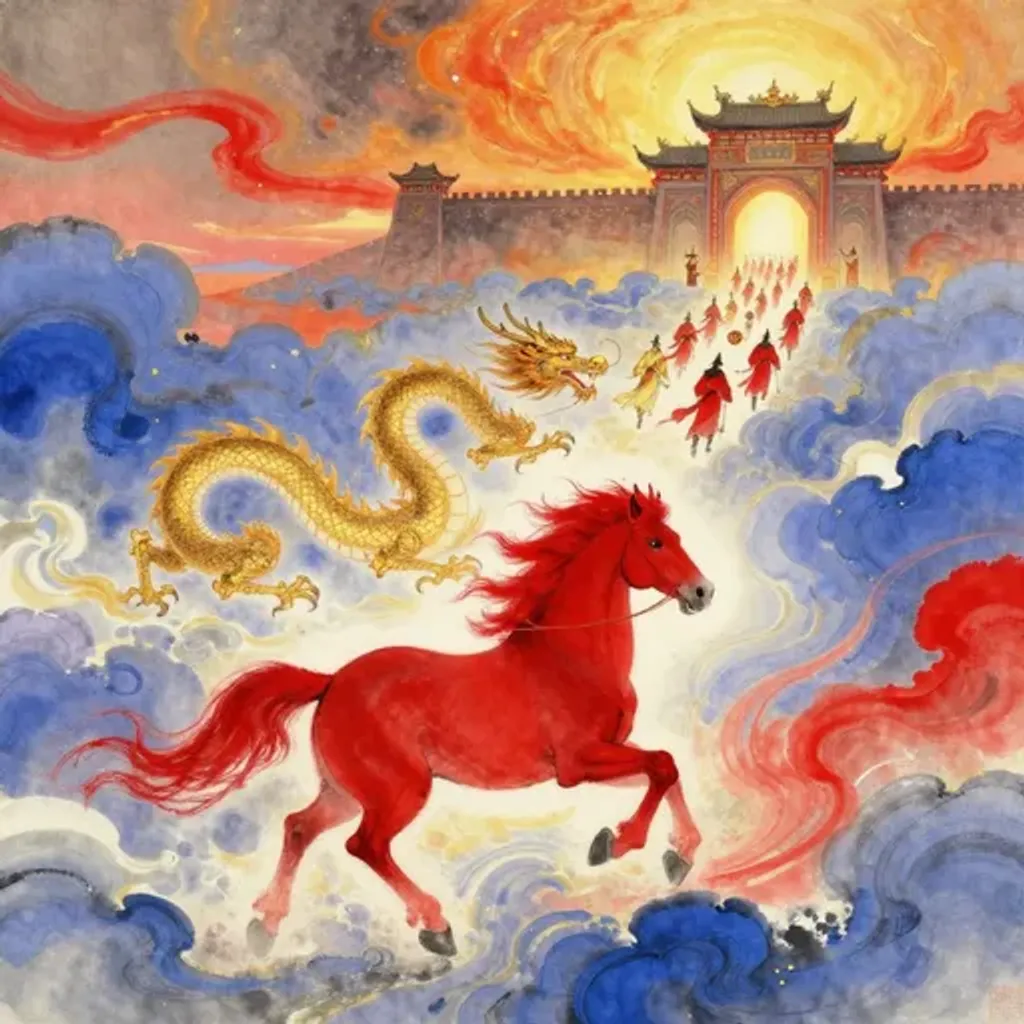
衘騂從龍,至于華東;與離相逢,送致于邦。
Bearing a scarlet horse, one follows the dragon eastward to Hua; meeting Li along the way -- it is escorted to the realm.
— Jiao Yanshou, Yilin (Forest of Changes), 1st century BC
Commentary
Wind over earth observes a sacred procession. Leading a red sacrificial bull in the dragon's train, one arrives at the eastern region of Hua. There, meeting with the spirit of departure, the offering is escorted safely to the capital. The red bull (xing) is the proper color for royal sacrifice; following the dragon suggests heavenly mandate. The journey eastward to Mount Hua and onward to the city enacts a ritual completion. Wind over mountain forms Development, the gradual progress of a wild goose landing in stages. From Contemplation to Development, the procession embodies measured, ceremonial advance: each step is proper, each station observed, until the offering reaches its destination in due order, like the goose settling stage by stage upon the shore.
觀 → 歸妹
Hexagram 20 → Hexagram 54: The Marrying Maiden
Changing lines: 1, 2, 4, 5, 6
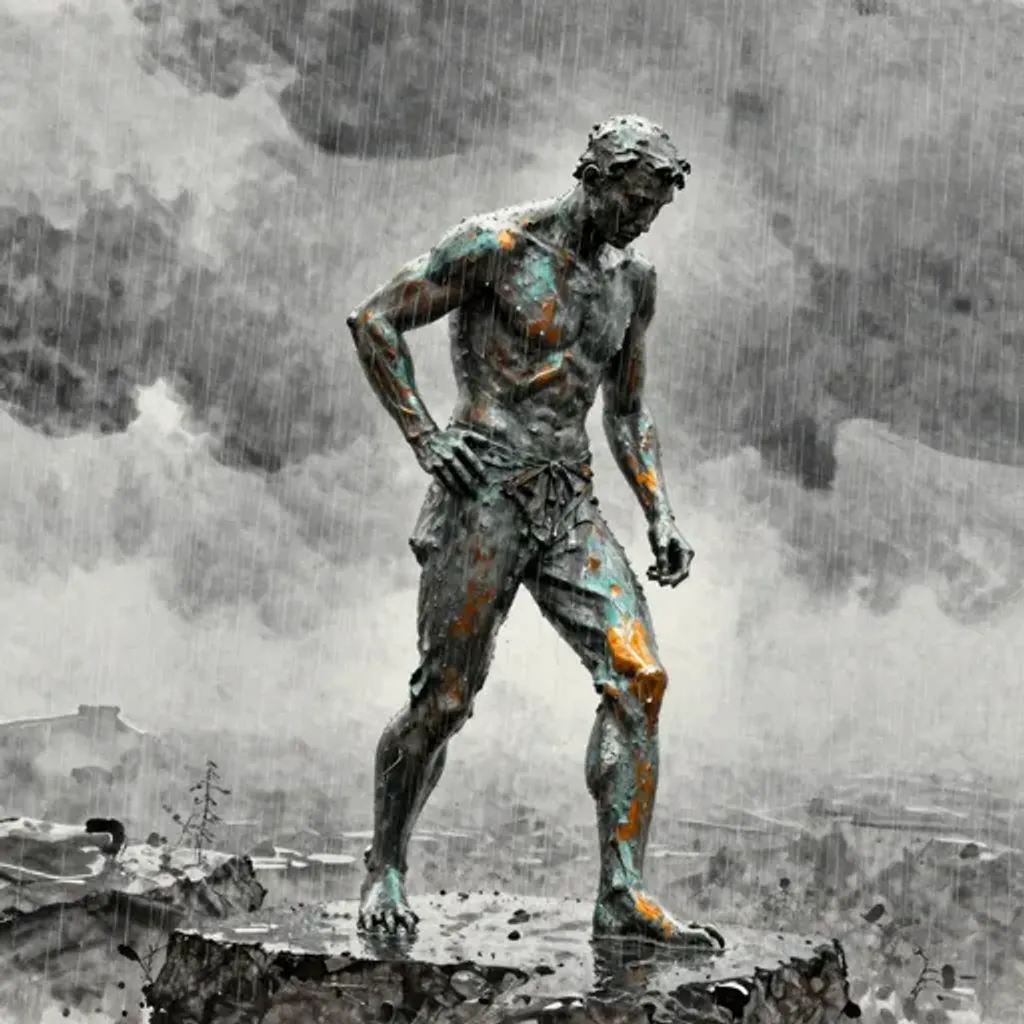
銅人鐵距,雨露勞苦;終日卒歲,無有休息。
A bronze figure with iron claws, enduring rain and dew in bitter toil; from dawn to dusk, from year end to year end -- there is never a moment of rest.
— Jiao Yanshou, Yilin (Forest of Changes), 1st century BC
Commentary
Wind over earth observes a figure of iron endurance trapped in endless labor. A bronze man with iron talons toils through rain and dew, suffering without pause. From the first day of the year to its last, there is no rest. The image is of mechanized servitude — not flesh but metal, yet still subjected to the grind of weather and labor. Thunder over lake forms the Marrying Maiden, which pairs the youngest daughter in a subordinate position. From Contemplation to the Marrying Maiden, the connection lies in constrained subordination: the bronze figure labors without autonomy, just as the marrying maiden enters a household where she serves at another's pleasure. Both endure because the structure demands it, knowing the arrangement's built-in limitation.
觀 → 豐
Hexagram 20 → Hexagram 55: Abundance
Changing lines: 1, 3, 4, 5, 6
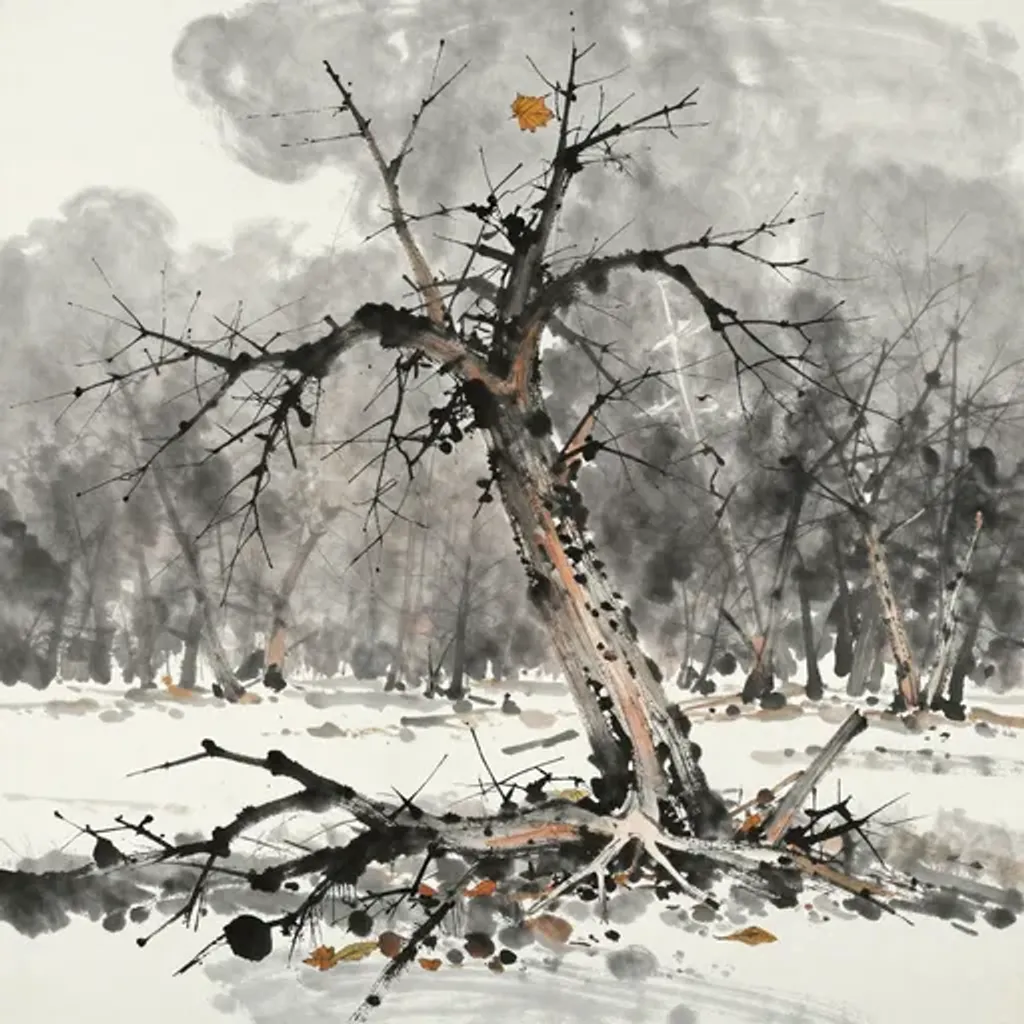
大人失宜,盈滿復虧;長冬之木,盛者滅衰。
The great man loses his due measure; what was full now wanes again. A tree in deep winter -- what flourished withers and decays.
— Jiao Yanshou, Yilin (Forest of Changes), 1st century BC
Commentary
Wind over earth surveys the inevitable decline of fullness. A great man loses his proper measure; what was brimming now wanes. Winter's trees stand as evidence — what once flourished decays, the vigorous fades. The verse states a cosmic law with lapidary concision: fullness is the precondition of emptying, and the height of flourishing already contains its recession. Thunder over fire forms Abundance, which pairs lightning and thunder in maximum brilliance. From Contemplation to Abundance, the transformation carries its own warning: Abundance's very definition includes the knowledge that it cannot be sustained. The sage does not grieve at the waning but recognizes that even the sun at midday must begin to set.
觀 → 旅
Hexagram 20 → Hexagram 56: The Wanderer
Changing lines: 3, 4, 5
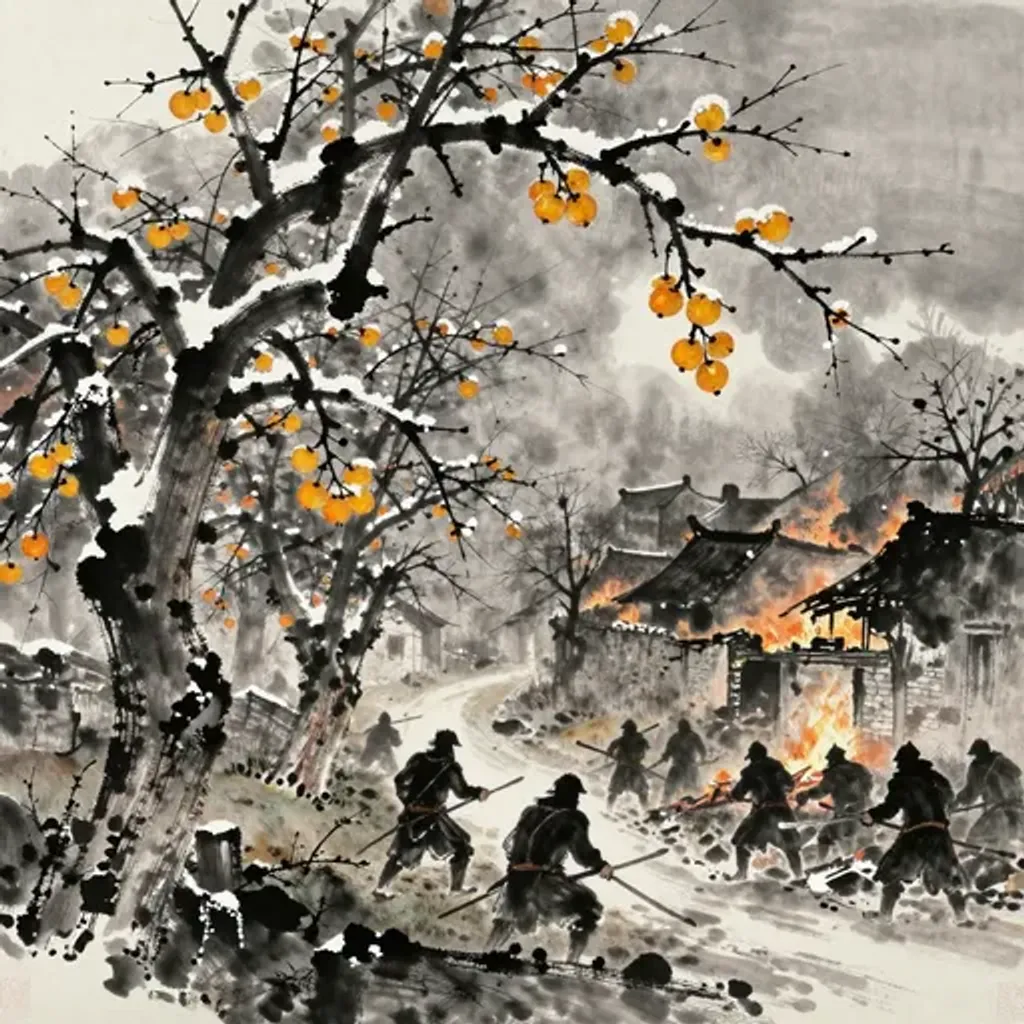
梅李冬實,國多盜賊;亂擾並作,王不能制。
Plum and pear bear fruit in winter, the state abounds with bandits and thieves; turmoil and upheaval arise together -- the king cannot impose control.
— Jiao Yanshou, Yilin (Forest of Changes), 1st century BC
Commentary
Wind over earth watches the natural order invert as disorder spreads. Plums and plum-trees bear fruit in winter — an unnatural portent — and the state swarms with bandits and thieves. Chaos erupts on every side, and the king cannot bring it under control. Fruit appearing out of season signals that nature's rhythms have broken down, mirroring social collapse. Fire over mountain forms the Wanderer, who must navigate hostile territory with caution and clear judgment. From Contemplation to the Wanderer, observation reveals a landscape unsafe for settlement: when seasonal norms fail and brigands roam, staying still is no longer viable. The observer must become a traveler, moving carefully through a world where neither nature nor governance can be trusted.
觀 → 巽
Hexagram 20 → Hexagram 57: The Gentle Wind
Changing lines: 2, 3
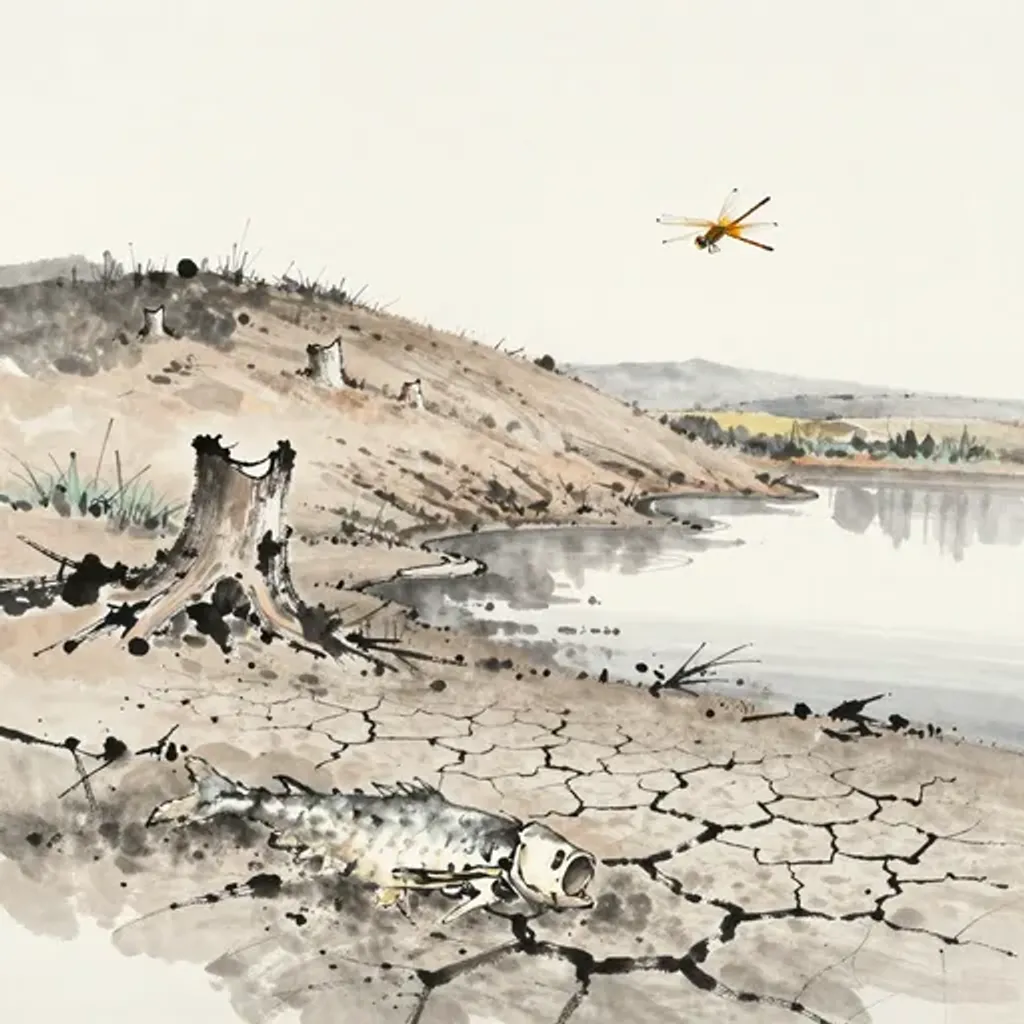
澤枯無魚,山童無株;長女嫉妬,使身空虛。
The marsh dries up, no fish remain; the mountain is stripped bare, no tree stands. The elder daughter seethes with jealousy -- she leaves the body spent and hollow.
— Jiao Yanshou, Yilin (Forest of Changes), 1st century BC
Commentary
Wind over earth surveys a landscape stripped bare. The marsh has dried up and holds no fish; the mountain is bald without a single tree. The eldest daughter seethes with jealousy, and her body is left empty and depleted. Every image speaks of resources exhausted: water without life, mountain without growth, woman without generosity. Jealousy itself is a form of depletion — it consumes the jealous one rather than replenishing her. Doubled wind forms the Gentle, which penetrates gradually and persistently. From Contemplation to the Gentle, the pattern is one of gradual hollowing: wind over wind erodes not through violence but through ceaseless, invisible wearing away. Jealousy operates the same way, emptying the vessel from within through persistent corrosion.
觀 → 兌
Hexagram 20 → Hexagram 58: The Joyous Lake
Changing lines: 1, 2, 4, 6
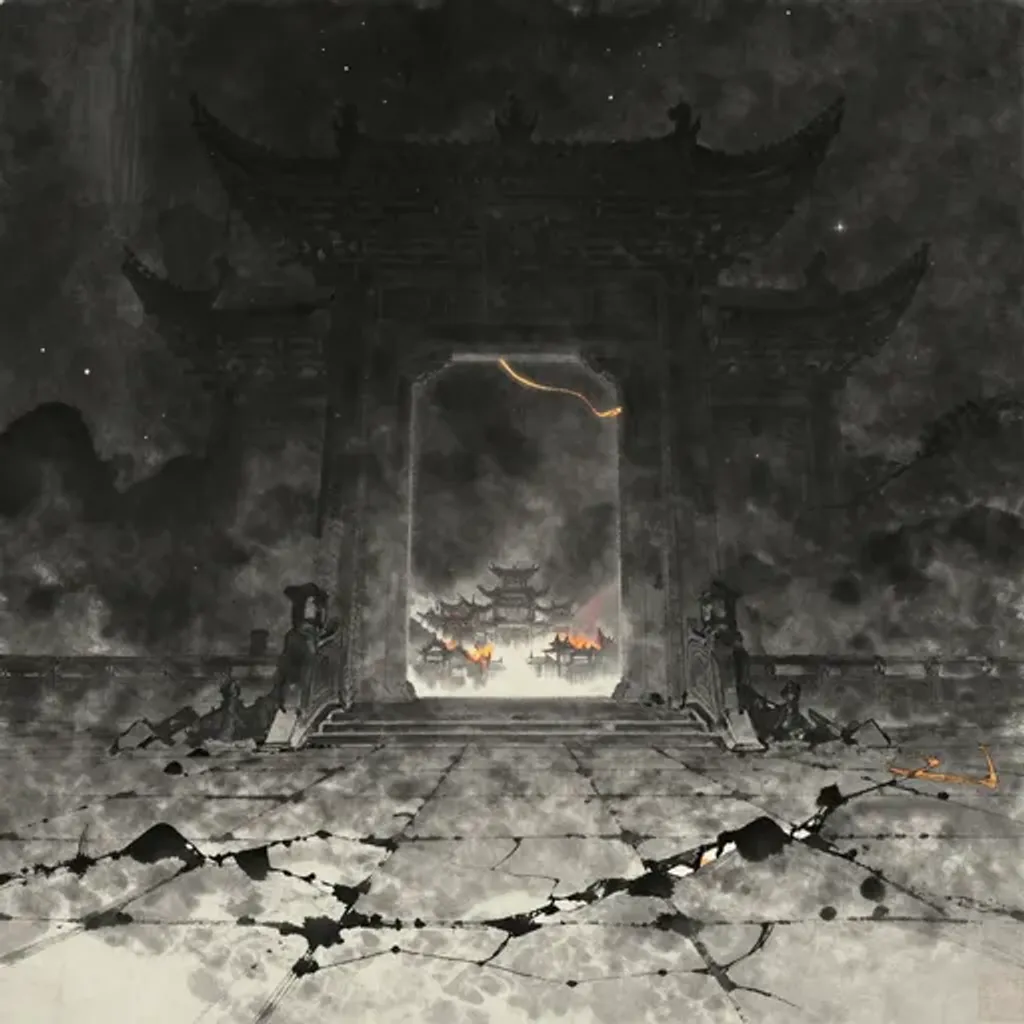
天門東虛,既盡為災;膉𦝢黯蒼,秦伯受殃。
The gate of heaven stands empty to the east, its mandate exhausted and turned to calamity; the offerings grow dark and ashen -- the lord of Qin receives his doom.
— Jiao Yanshou, Yilin (Forest of Changes), 1st century BC
Commentary
Wind over earth watches celestial portents turn ominous. The Gate of Heaven in the east stands empty; its energy exhausted, disaster follows. The body darkens and withers, and the Lord of Qin receives calamity. The 'Gate of Heaven' refers to a celestial region whose emptiness signals the withdrawal of heaven's favor. When the celestial gate stands vacant, the terrestrial ruler suffers. The Lord of Qin's downfall mirrors this cosmic depletion. Doubled lake forms the Joyous, which celebrates shared discourse and mutual delight. From Contemplation to the Joyous, the contrast is desolate: where there should be joy and exchange, there is emptiness and affliction. The celestial gate that should pour forth blessings stands vacant, and the earthly lord withers beneath it.
觀 → 渙
Hexagram 20 → Hexagram 59: Dispersion
Changing lines: 2
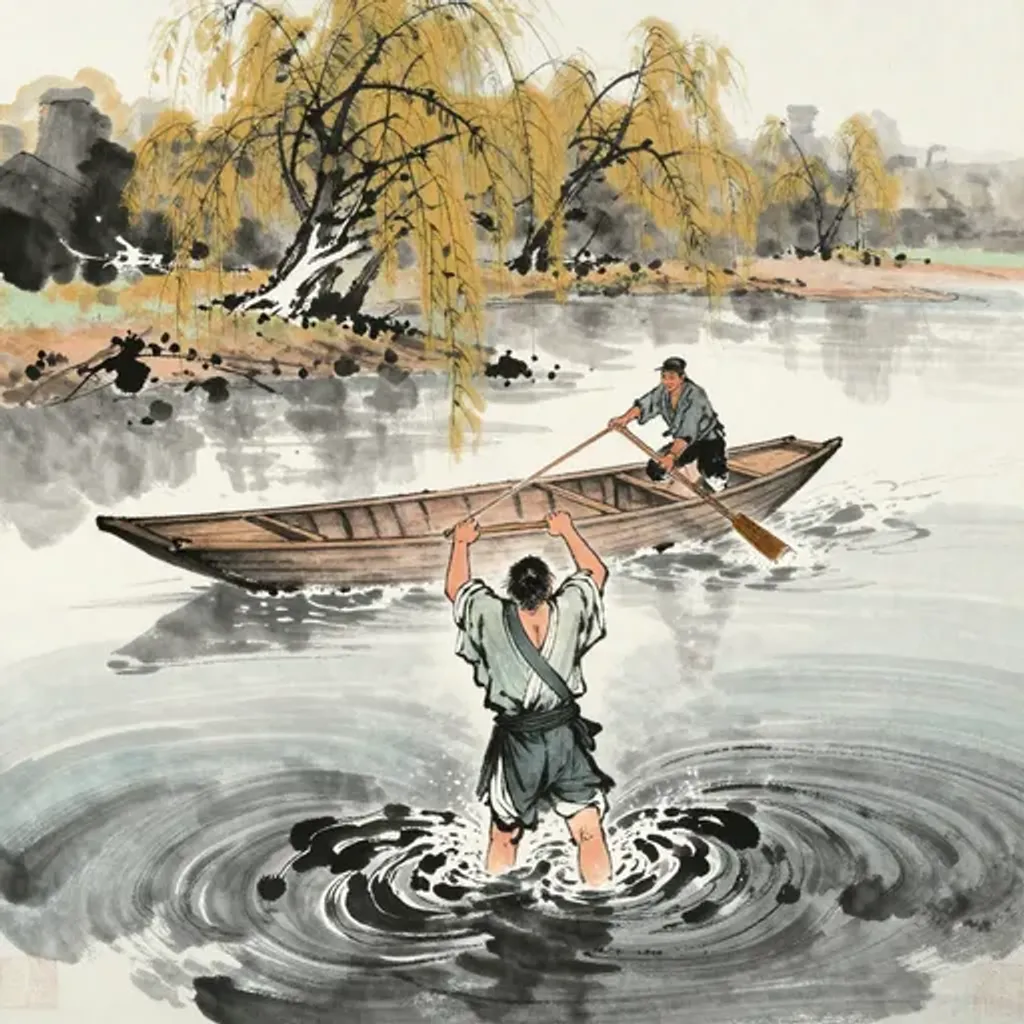
褰衣涉河,水深漬衣;賴幸舟子,濟脫無他。
Lifting one robes to ford the river, the water is deep and soaks the garments; fortunately the boatman is there -- one crosses safely without mishap.
— Jiao Yanshou, Yilin (Forest of Changes), 1st century BC
Commentary
Wind over earth approaches a river crossing. Hitching up robes to wade, the traveler discovers the water is too deep — clothes are soaked through. Fortunately, a boatman appears and ferries the traveler safely across without further mishap. The verse enacts a miniature drama of misjudgment and rescue: the self-reliant wader overestimates his ability, but help arrives from an unexpected quarter. Wind over water forms Dispersion, which scatters what has frozen through the penetrating action of wind on water. From Contemplation to Dispersion, the transformation shows that rigid self-sufficiency must be dispersed in favor of accepting aid. The boatman dissolves the crisis that pride alone could not cross.
觀 → 節
Hexagram 20 → Hexagram 60: Limitation
Changing lines: 1, 2, 6
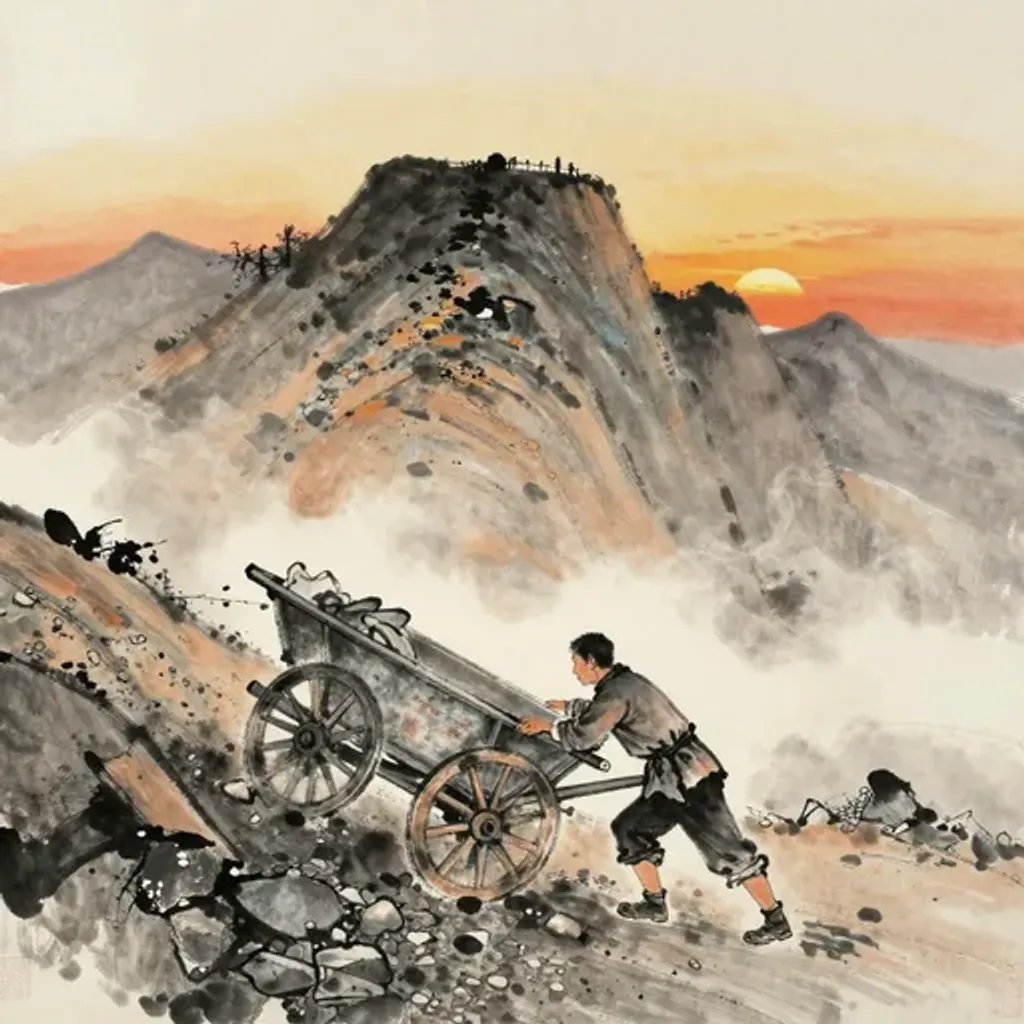
推車上山,高仰重難;終日至暮,惟見阜顛。
Pushing a cart uphill, the slope is steep and the load heavy; from daybreak to nightfall -- one sees only the hilltop summit.
— Jiao Yanshou, Yilin (Forest of Changes), 1st century BC
Commentary
Wind over earth watches Sisyphean labor. Pushing a cart uphill, the grade steep and the burden heavy, one labors from dawn to dusk — only to see the hilltop and nothing beyond. The verse captures the exhaustion of effort that produces no visible progress: the summit, once reached, reveals only another slope. There is no destination, only ascent. Water over lake forms Limitation, which sets proper boundaries to prevent excess. From Contemplation to Limitation, the lesson is implicit: without knowing when to stop pushing, effort becomes punishment. Limitation does not forbid labor but insists on measure. The cart-pusher who ignores the body's limits achieves nothing but a view of more hill ahead.
觀 → 中孚
Hexagram 20 → Hexagram 61: Inner Truth
Changing lines: 1, 2
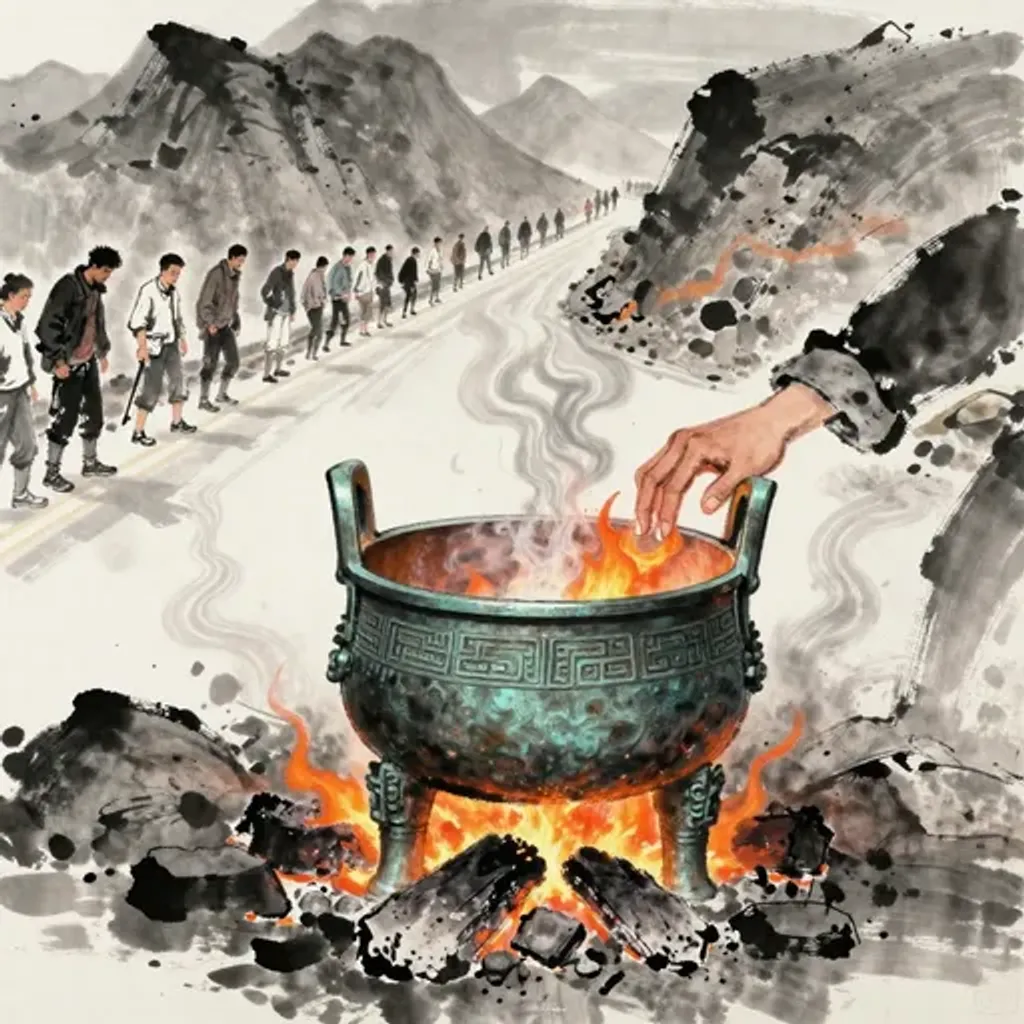
鼎易其耳,熱不可舉;大路壅塞,旅人心苦。
The cauldron has changed its handles, too hot to lift; the great road is choked and blocked -- the traveler heart is bitter.
— Jiao Yanshou, Yilin (Forest of Changes), 1st century BC
Commentary
Wind over earth observes instruments rendered useless. The cauldron has had its ears replaced — handles changed so the vessel is too hot to lift. Meanwhile the main road is choked and blocked, and travelers suffer bitterly. The cauldron's ears (handles) are the point of interface between the sacred vessel and human use; when they malfunction, the ding cannot serve its purpose. The blocked road compounds the paralysis: neither sacred nor mundane channels function. Wind over lake forms Inner Truth, which reaches others through sincerity's hollow center. From Contemplation to Inner Truth, the transformation reveals how impaired channels obstruct genuine communication. The cauldron cannot be grasped; the road cannot be traveled; the trust that Inner Truth requires finds no vessel to carry it.
觀 → 小過
Hexagram 20 → Hexagram 62: Small Exceeding
Changing lines: 3, 4, 5, 6
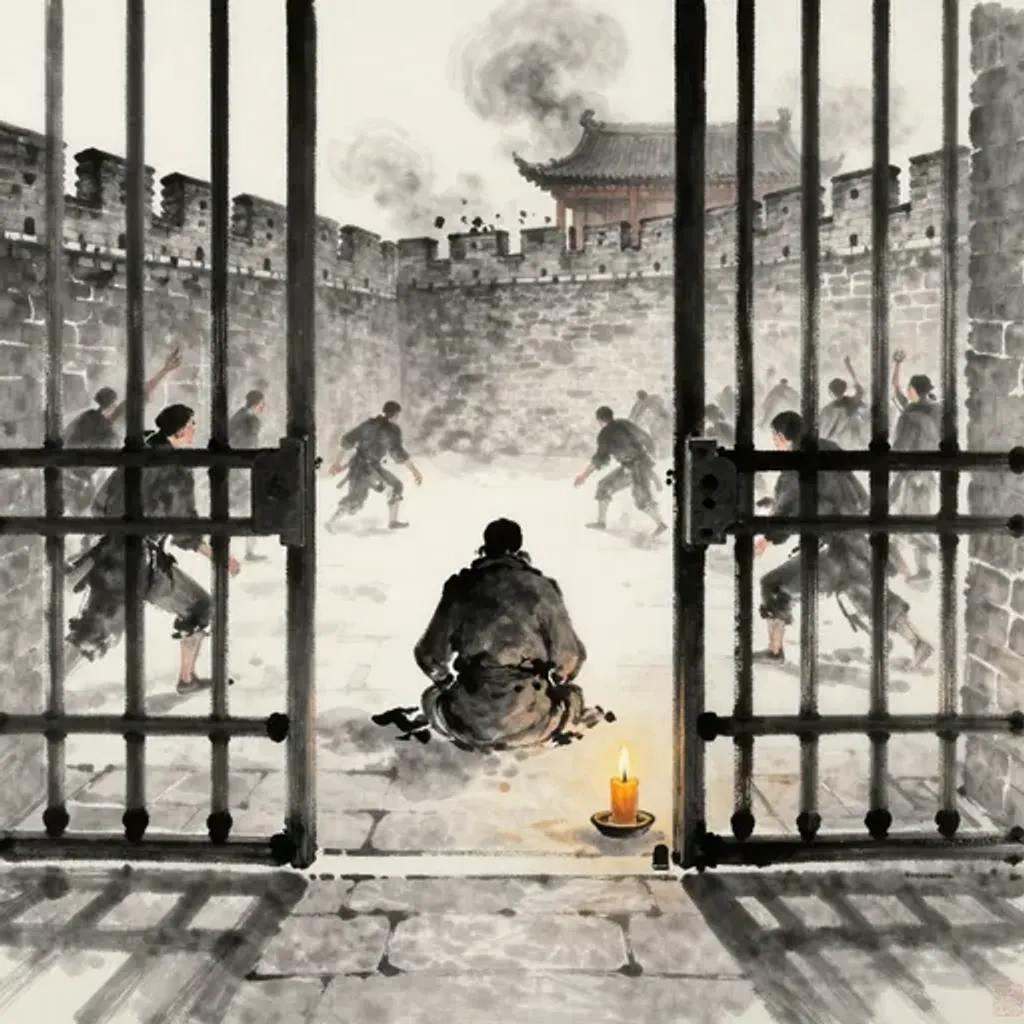
四亂不安,東西為患;退身止足,無出邦域。乃得完全,賴其生福。
Disorder on all four sides, east and west beset with peril; withdrawing the body, curbing one steps -- not venturing beyond the borders. Only then is one kept whole, relying on the blessing of life.
— Jiao Yanshou, Yilin (Forest of Changes), 1st century BC
Commentary
Wind over earth surveys chaos spreading in all directions. Disorder erupts on four sides, east and west both afflicted. The counsel is to retreat, hold still, keep one's feet within the borders — do not leave the domain. Only then can one preserve completeness and rely on life's blessings. The verse is pragmatic survival advice during a time of universal upheaval: withdraw, contain, do not overextend. Thunder over mountain forms Small Exceeding, which permits small acts but forbids grand ones — the flying bird whose cry descends rather than ascends. From Contemplation to Small Exceeding, the observer wisely scales down: in a world of total disorder, only modest, contained action survives. The small excess of caution is precisely what preserves life.
觀 → 既濟
Hexagram 20 → Hexagram 63: After Completion
Changing lines: 1, 3, 6
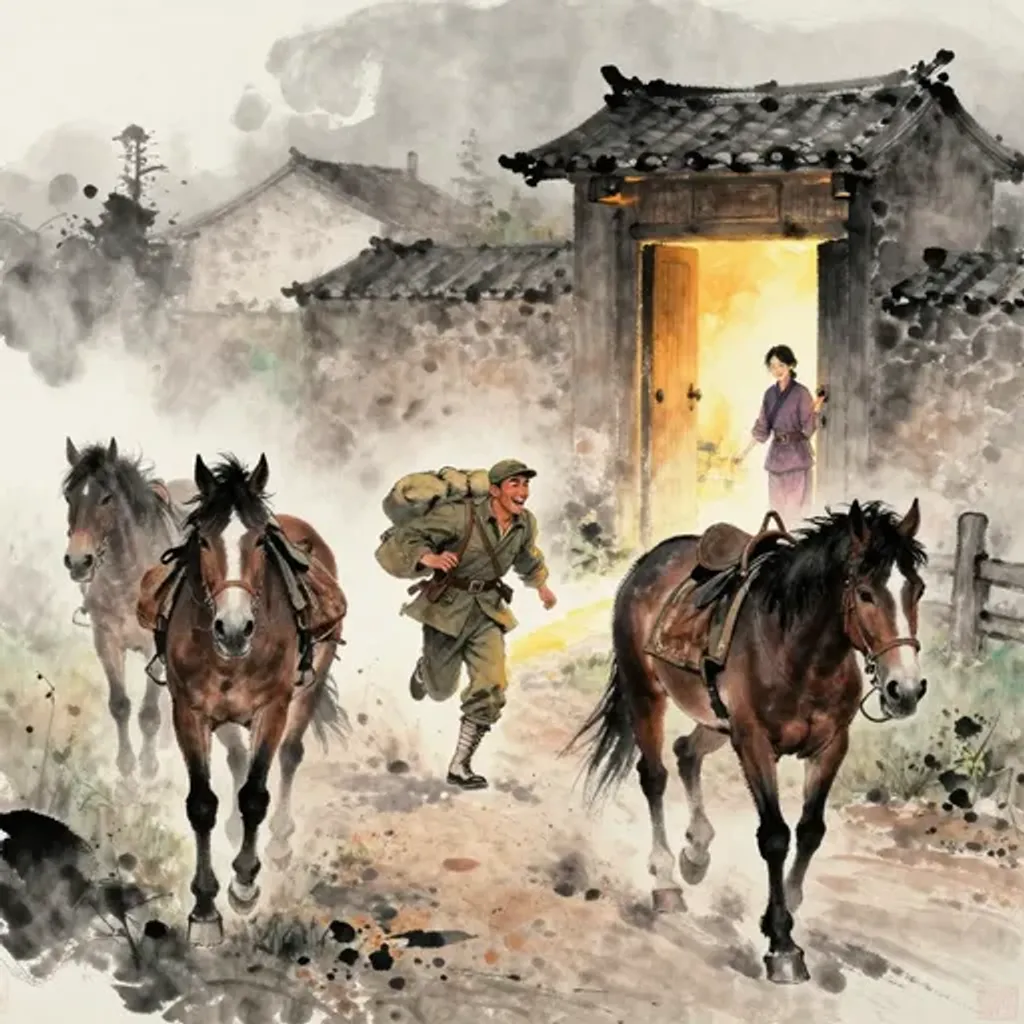
班馬還師,以息勞罷;役夫嘉喜,入戶見妻。
Mottled horses return with the army to relieve the weary and spent; the conscript soldiers rejoice -- entering the door, they see their wives.
— Jiao Yanshou, Yilin (Forest of Changes), 1st century BC
Commentary
Wind over earth watches an army returning home. The horses whinny as they part company and the troops disband, resting at last from their exhaustion. The conscript soldiers shout with joy as they walk through their doors to see their wives again. 'Ban ma' — horses dispersing at a march's end — is a classical image of military demobilization, carrying both relief and the bittersweet residue of campaign hardship. Water over fire forms After Completion, where every element is in its proper place. From Contemplation to After Completion, the observer witnesses the rarest of moments: a task genuinely finished. The soldiers' homecoming embodies the hexagram's promise — everything has crossed over, and the long labor finds its natural rest in reunion.
觀 → 未濟
Hexagram 20 → Hexagram 64: Before Completion
Changing lines: 2, 4, 5
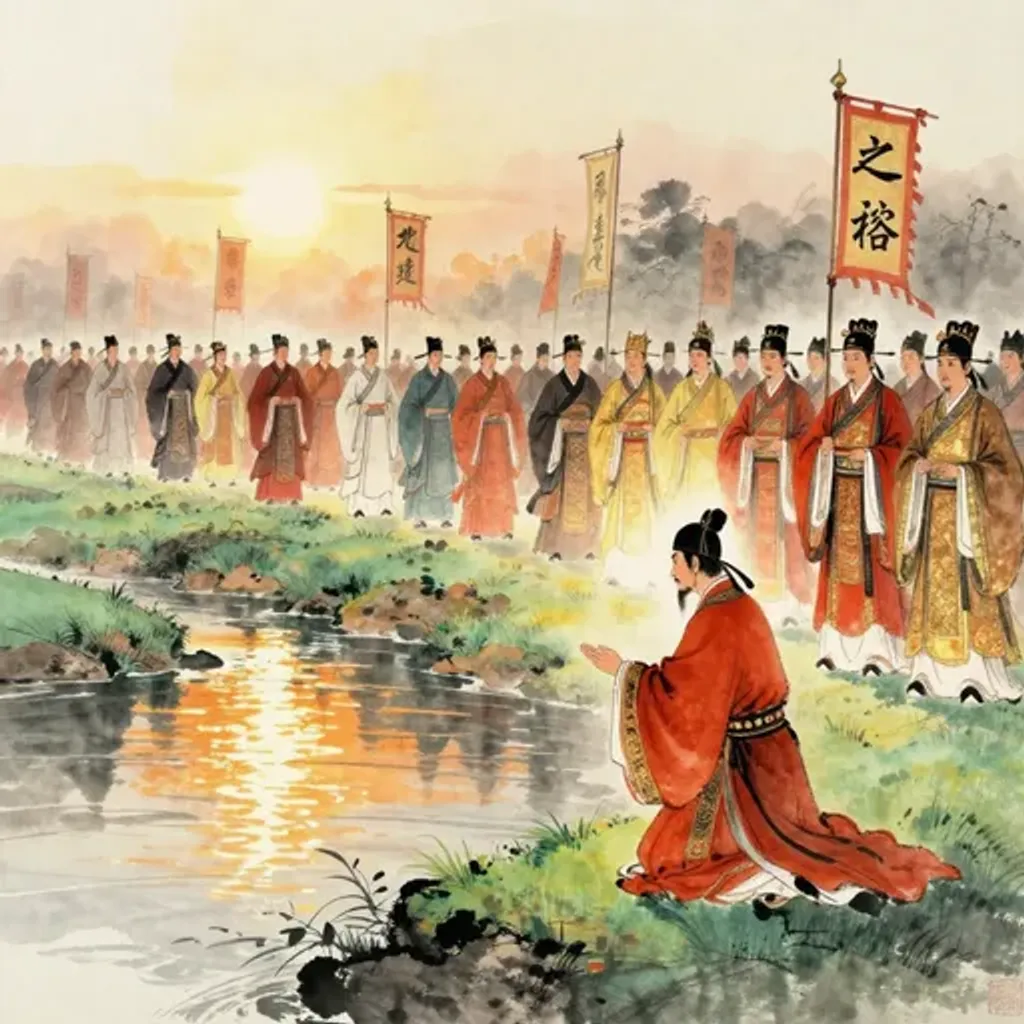
積德不怠,遇主逢時;載喜渭陽,身受榮光。
Amassing virtue without ceasing, one meets the sovereign at the destined hour; bearing joy at the north bank of the Wei -- the body receives glory and light.
— Jiao Yanshou, Yilin (Forest of Changes), 1st century BC
Commentary
Wind over earth closes the cycle with a vision of long-deferred reward. Accumulating virtue without weariness, one finally meets the right lord at the right time. Joy is borne forth at the Wei River's sunny bank, and the body receives glorious honor. The 'Wei Yang' alludes to the Shijing ode where the young Duke Kang of Qin escorts his uncle Chong Er back to his homeland, thinking of his deceased mother. The poem became a byword for timely reunion after long separation. Fire over water forms Before Completion, where elements have not yet found their final places. From Contemplation to Before Completion, the irony is hopeful: though the crossing is not yet finished, the accumulated virtue has already attracted its reward. The light is visible above the water.